Trump’s Aggressive Immigration Plan Released

When it comes to asylum seekers, a person under the Obama administration only needed to say they were seeking asylum. Trump’s plan raises the bar where conditions for being granted asylum must be proven.

Image result for trump immigration plan Image result for trump immigration detention centers

In part from Reuters:

WHAT IS “CREDIBLE FEAR”?

Under the Immigration and Nationality Act, an applicant must generally demonstrate “a well-founded fear of persecution on account of race, religion, nationality, membership in a particular social group, or political opinion.”

Immigration lawyers say any applicants who appear to meet that criteria in their initial interviews should be allowed to make their cases in court. They oppose encouraging asylum officers to take a stricter stance on questioning claims and rejecting applications.

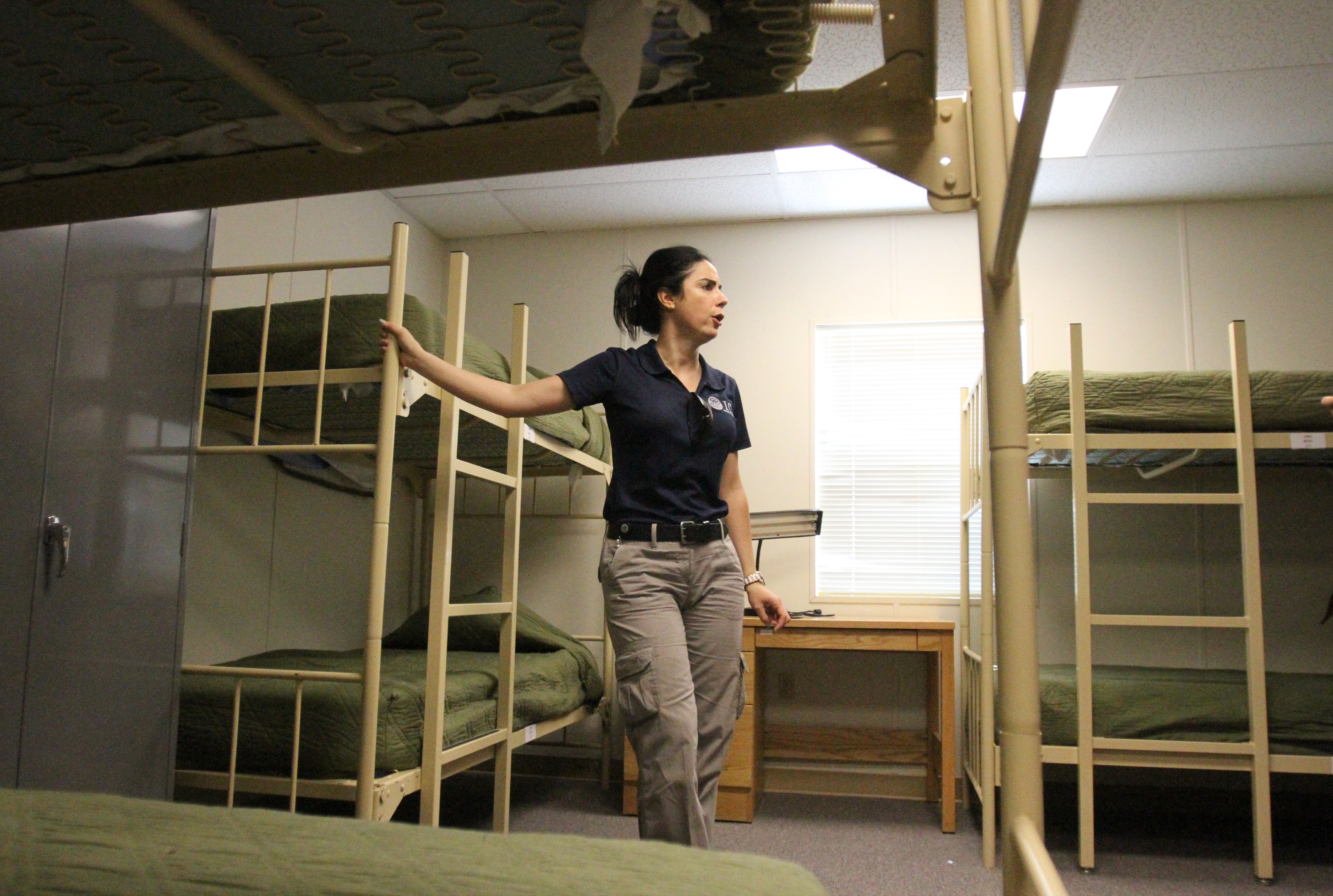
Interviews to assess credible fear are conducted almost immediately after an asylum request is made, often at the border or in detention facilities by immigration agents or asylum officers, and most applicants easily clear that hurdle. Between July and September of 2016, U.S. asylum officers accepted nearly 88 percent of the claims of credible fear, according to U.S. Citizenship and Immigration Services data.

Asylum seekers who fail the credible fear test can be quickly deported unless they file an appeal. Currently, those who pass the test are eventually released and allowed to remain in the United States awaiting hearings, which are often scheduled years into the future because of a backlog of more than 500,000 cases in immigration courts.

Between October 2015 and April 2016, nearly 50,000 migrants claimed credible fear, 78 percent of whom were from Honduras, El Salvador, Guatemala or Mexico, according to statistics from USCIS.

The number of migrants from those three countries who passed credible fear and went to court to make their case for asylum rose sharply between 2011 and 2015, from 13,970 claims to 34,125, according to data from the Justice Department. More here from Reuters.


Implementing the President’s Border Security and Immigration Enforcement Improvements Policies by USA TODAY on Scribd

FNC: Homeland Security Secretary John Kelly moved Tuesday to implement a host of immigration enforcement changes ordered by President Trump, directing agency heads to hire thousands more officers, end so-called “catch-and-release” policies and begin work on the president’s promised U.S.-Mexico border wall.

“It is in the national interest of the United States to prevent criminals and criminal organizations from destabilizing border security,” Kelly wrote in one of two memos released Tuesday by the department.

The memos follow up on Trump’s related executive actions from January and, at their heart, aim to toughen immigration enforcement.

The changes would spare so-called “dreamers.” On a conference call with reporters, a DHS official stressed that the directives would not affect Obama-era protections for illegal immigrants who came to the U.S. as children and others given a reprieve in 2014. But outside those exemptions, Kelly wrote that DHS “no longer will exempt classes or categories of removable aliens from potential enforcement.”

A DHS official said the agencies are “going back to our traditional roots” on enforcement.

The memos cover a sprawling set of initiatives including:

  • Prioritizing criminal illegal immigrants and others for deportation, updating guidance from previous administration
  • Expanding the 287(g) program, which allows participating local officers to act as immigration agents – and had been rolled back under the Obama administration
  • Starting the planning, design and construction of a U.S.-Mexico border wall
  • Hiring 10,000 Immigration and Customs Enforcement agents and officers
  • Hiring 5,000 Border Patrol agents
  • Ending “catch-and-release” policies under which illegal immigrants subject to deportation potentially are allowed to “abscond” and fail to appear at removal hearings

It’s unclear what timelines the secretary is setting for some of these objectives, and what budgetary and other constraints the department and its myriad agencies will face. In pursuing an end to “catch-and-release,” one memo called for a plan with the Justice Department to “surge” immigration judges and asylum officers to handle additional cases.

While congressional Republicans have vowed to work with Trump to fund the front-end costs associated with his promised border wall, the same memo also hints at future efforts to potentially use money otherwise meant for Mexico – following on Trump’s repeated campaign vow to make Mexico pay for the wall. The secretary called for “identifying and quantifying” sources of aid to Mexico, without saying in the memo how that information might be used.

Mexican officials repeatedly have said they will not pay for a border barrier. DHS said it has identified initial locations to build a wall where current fencing is not effective, near El Paso, Texas; Tucson, Ariz.; and El Centro, Calif.

The DHS directives come as the Trump White House continues to work on rewriting its controversial executive order suspending the U.S. refugee program as well as travel from seven mostly Muslim countries. The order was put on hold by a federal court, and Trump’s team is said to be working on a new measure.

The directives also come as the Trump administration faces criticism from Democratic lawmakers and immigration advocacy groups for recent ICE raids of illegal immigrants.

DHS officials on Tuesday’s conference call stressed that they are operating under existing law and once again shot down an apparently erroneous news report from last week claiming National Guard troops could be utilized to round up illegal immigrants. That will not happen, an official said.

“We’re going to treat everyone humanely and with dignity, but we are going to execute the laws of the United States,” a DHS official said on the conference call.

Trump Sanctions VP of Venezuela, Finally

U.S. Hits Venezuelan Vice President With ‘Kingpin’ Act Sanctions

  • Tareck El Aissami is highest-ranking Venezuelan on list
  • People on Treasury Department list have assets blocked
 
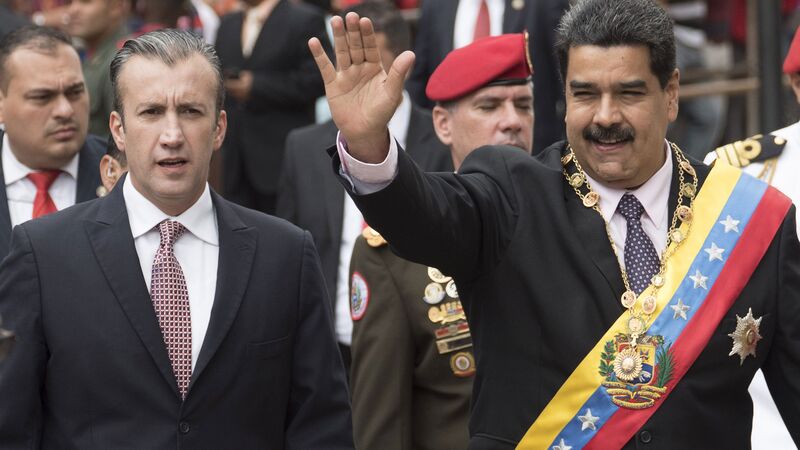
Nicolas Maduro, Venezuela’s president, right, waves to attendees while accompanied by Tareck El Aissami, Venezuela’s vice president, before the start of his annual address at the Supreme Court in Caracas on Jan. 15, 2017. Photographer: Carlos Becerra/Bloomberg

Bloomberg: The Trump administration imposed sanctions against Venezuelan Vice President Tareck El Aissami, after years of investigation by U.S. authorities into his alleged participation in drug trafficking and money laundering.

The Treasury Department announced the move Monday, placing El Aissami and another Venezuelan on a U.S. list of foreign nationals with suspected ties to drug trafficking. El Aissami has consistently denied all allegations against him. His office declined to comment on the U.S. decision after it was announced.

“He facilitated shipments of narcotics from Venezuela, to include control over planes that leave from a Venezuelan air base, as well as control of drug routes through the ports in Venezuela,” according to a Treasury Department statement. “He also facilitated, coordinated, and protected other narcotics traffickers operating in Venezuela.”

El Aissami is the highest-ranking Venezuelan hit by U.S. sanctions and the most-senior government leader of any country on the so-called Specially Designated Nationals list, according to a U.S. official, who discussed the matter on condition of anonymity. Those listed have their assets blocked and U.S. citizens, institutions and companies are prohibited worldwide from dealing with them, according to the Treasury Department.

The sanctions mark an extraordinary step against the second-in-command of a foreign government and are sure to lead to a further deterioration of U.S. relations with the government of Venezuelan President Nicolas Maduro, who appointed El Aissami as vice president on Jan. 4 amid a deepening economic and humanitarian crisis.

Business Associate

The U.S. also listed Samark Lopez Bello, a Venezuelan citizen with no public government affiliation, who’s considered to be El Aissami’s business associate. According to the official, El Aissami facilitated shipments of more than 1,000 kilograms of drugs on multiple occasions from Venezuela to U.S. and Mexico, and used Lopez Bello to acquire properties on his behalf.

“Lopez Bello is a key frontman for El Aissami and in that capacity launders drug proceeds,” according to the Treasury statement.

Sanctions were also imposed on eight companies based in Venezuela, the British Virgin Islands, Panama and the U.K. The U.S. also froze assets of five U.S.-based companies with real estate holdings in Miami, according to the statement. Together, the actions are designed to freeze tens of millions of dollars in assets, said the U.S. official.

While U.S. officials were gathering evidence under President Barack Obama and prior to El Aissami’s ascent to the vice presidency, action stalled until now. The designations didn’t require President Donald Trump’s personal approval, and Trump has not been involved in the discussions, according to another U.S. official, who also spoke on condition of anonymity.

Any Tool

“It is not a political message, an economic message, it is not a message between governments,” said William R. Brownfield, assistant U.S. secretary of state for international narcotics and law enforcement affairs and a former ambassador to Venezuela between 2004-2007. “It is not even a message of diplomacy. It is a message that says that we will in fact use any tool, any legal and lawful tool in our inventory, to go after those that are engaged in international drug trafficking.”

The measures are being imposed under the the Foreign Narcotics Kingpin Designation Act, which was signed into law by President Bill Clinton in 1999. It has targeted approximately 2,000 individuals since 1999, including eight Venezuelan officials, U.S. officials said.

Brownfield, who has served in his position since 2011, said in his experience the evidence behind the planned designations “is as tight an evidence package as I have seen.”

El Aissami, the son of Syrian and Lebanese immigrants, has long been one of Venezuela’s most controversial and feared politicians. In just over a decade, the 42-year-old climbed government ranks from a student leader in rural Venezuela, to interior minister, to his previous post as the governor of Aragua state.

Decree Powers

In the weeks since becoming vice president, El Aissami received wide-reaching decree powers from Maduro, who tapped him to lead a newly formed “commando unit” against alleged coup plotters and officials suspected of treason. Among the slew of arrests since the unit’s formation is a substitute legislator from a hard-line opposition party and a retired general who, years before, broke ranks with the government.

The sanctions are coming less than a week after a bipartisan group of U.S. lawmakers called for further measures against Maduro’s government. In a Feb. 8 letter to Trump, 34 members of Congress including Senators Ted Cruz and Robert Menendez cited El Aissami’s appointment and urged the U.S. to “take immediate action to sanction regime officials.”

The measures promise to worsen a relationship long strained by mistrust and Venezuelan accusations that Washington supported a failed attempt to overthrow then-President Hugo Chavez in 2002. In the years following the attempted coup, Chavez aggressively criticized U.S. ties to Latin America, helped lead rallies around South America against “Yankee aggression” and nationalized investments by companies including U.S.-based Exxon Mobil Corp.

Oil Prices

“It is obviously a decision for the government of Venezuela and its constitutional authorities to determine what steps they will take and how they will react to this designation,” Brownfield said.

Even under Obama, who generally avoided engaging publicly with Chavez or Maduro, ties between the two nations remained strained. In March 2015, Obama expanded U.S. sanctions against Venezuelan officials and declared worsening relations with the South American nation to be a national emergency as Maduro attempted to stifle dissent.

With the drop in oil prices that began in 2014, Venezuela’s economy collapsed. A nation that just a few decades ago was the wealthiest in Latin America has become synonymous with dysfunction, with consumers forced to wait in hours-long lines for basic goods, including medicine. An informal inflation index compiled by Bloomberg shows that prices are rising at almost 1,200 percent annually, the fastest rate in the world.

Political Network

It is in this context that El Aissami, nicknamed “the narco of Aragua” by Venezuela’s beleaguered opposition, has thrived. Critics allege he has used his vast political network to help turn the country into an international hub for drugs. The State Department, in its 2015 International Narcotics Control Strategy Report, described the Caribbean nation as a “major cocaine transit country,” citing “endemic corruption throughout commerce and government, including law enforcement.”

The vice president’s ties to the nation’s civil registry services before he became interior minister have also fueled accusations by U.S. investigators that he’s aided Middle Eastern extremists by allowing them to create Venezuelan identities and a web of front companies to move money outside the country’s borders.

El Aissami has previously denied any alleged drug ties, saying they are little more than media slander, and has offered to hand himself over to authorities if anyone could produce proof.

El Aissami has been investigated by the Homeland Security Department and Drug Enforcement Administration since at least 2011 for alleged money laundering to the Middle East, specifically Lebanon, according to two people familiar with the probe.

As the number two official in Venezuela, El Aissami would be in line to replace Maduro should he cede to opposition pressure to step aside because of the country’s economic implosion and social unrest. Maduro has so far quashed the opposition’s attempt to hold a referendum on his removal before his term ends in about two years.

***

Hat tip to Infodio for the summary dated 2013.

Hugo Chavez’s soft spot for terrorists wasn’t reserved to Basques only. For there’s extensive documentation (link is external) proving Chavez’s association, and support to Colombia’s narco-terrorists from FARC (link is external). With regards to Middle Eastern terrorists there’s been much in the way of talk but little proof. It has been said that Margarita Island in Venezuela is a Hezbollah hotbed. Others have claimed, without much evidence, that Venezuela has “sent shipments” of Uranium to Iran. However, the U.S. Department of the Treasury announced in June 2012 that it was targetting a money laundering network related to Hezbollah and its operations in Colombia and Venezuela (link is external). And here’s where things get interesting.

Tareck Zaidan El Aissami Maddah (DOB 12 Nov. 1974, ID. 12.354.211) is the current chavista Governor of Aragua state in Venezuela. He is one of five children of Zaidan Amin El Aissami El Musfi and May Maddah de El Aissami, a Muslim couple of Lebanese origin. El Aissami (TEAM) has had a meteoric rise within chavismo, owing to his excellent relations with Adan Chavez, brother and mentor of the late Hugo, whom he met while reading law in Universidad de los Andes. Despite his young age, El Aissami has been appointed to sensitive roles, such as Head of ONIDEX: Venezuela’s equivalent to the Home Office, responsible for identification and immigration.

The most interesting aspect of El Aissami’s operation however, is not money laundering by his proxies, but rather abuse of his station at ONIDEX to give Venezuelan IDs to a number of internationally wanted criminals / terrorists. The news from OFAC linked above reveal that Hezbollah operatives in South America got Venezuelan IDs under El Aissami’s “watch”. While in charge, ONIDEX created new identities for a number of people. Intelligence reports sent to us claim that as many as 173 individuals believed to be collaborating with terrorism, drug trafficking and money laundering were either naturalised, or got Venezuelan visas and IDs using fake names. Abbas Hussein HARB, for instance, identified by OFAC as part of a money laundering network related to Hezbollah and Ayman Saied JOUMAA, has two Venezuelan IDs (21495203 and 26405022). As of this writing both are valid. Kassem Mohamad SALEH, also designated as Hezbollah collaborator, has a valid Venezuelan ID (22075502), as shown in electoral records. Read the full summary here, excellent work.

Trump Targeting BLM and Drug Cartels with Executive Action

These 3 signatures today on Executive Orders will aid the newly sworn in U.S. Attorney General Jeff Sessions. As a matter of personal opinion, President Trump did not go far enough, he should have declared all known drug cartels and their operatives terror organizations and should have done the same with Black Lives Matter along with known gang operations and members. Yet, Trump promised to restore law and order and this is a step in the right direction.

Related reading: Chicago Murder Capitol due to Gangs and Illegals

Image result for trump executive order law enforcement .pdf

Trump signs executive orders on crime, law enforcement

CBS: President Trump signed three executive actions Thursday aimed at bolstering law enforcement and targeting violent crime and criminal drug cartels.

The first executive order, according to what Mr. Trump outlined during the signing ceremony in the Oval Office, is meant to direct the Departments of Justice and Homeland Security to “undertake all necessary and lawful action to break the back of the criminal cartels that have spread across our nation and are destroying the blood of our youth and many other people.”

The president signed the action Thursday after swearing in Attorney General Jeff Sessions. Among other powers, the action gives broad authority to increase intelligence and lawn enforcement information sharing with foreign powers in order to crack down on “transnational criminal organizations” and their subsidiaries. It also instructs an interagency panel to compile a report on crime syndicates within four months.

“These groups are drivers of crime, corruption, violence, and misery,” the order reads. “In particular, the trafficking by cartels of controlled substances has triggered a resurgence in deadly drug abuse and a corresponding rise in violent crime related to drugs.”

Mr. Trump hinted at exercising his executive power to combat drug cartels earlier this week while talking with Fox News’ Bill O’Reilly.

“We have to do something about the cartels,” the president said in the interview, a portion of which aired Monday. He said he’d spoken with his Mexican counterpart, President Enrique Peña Nieto, about working together on the issue.

“We’ve got to stop the drugs from coming into our country,” Mr. Trump told O’Reilly. “And if he can’t handle it — maybe they can and maybe they can’t or maybe he needs help — he seemed very willing to get help from us, because he has got a problem and it’s a real problem for us.”

The president signed two other actions Thursday, including one that creates a task force within the Justice Department dedicated to “reducing violent crime in America.”

The “Task Force on Crime Reduction and Public Safety” will have administrative and financial support from the Attorney General’s office, according to the text of the order.

The last action directs the DOJ to implement a plan to “stop crime and crimes of violence against law enforcement officers.”

The order itself instructs the department to “pursue appropriate legislation…that will define new Federal crimes, and increase penalties for existing Federal crimes, in order to prevent violence against Federal, State, tribal, and local law enforcement officers.” That recommended legislation could include “defining new crimes of violence and establishing new mandatory minimum sentences for existing crimes of violence.”

The order also directs a thorough evaluation of all grant funding programs currently administered by the Justice Department.

“It’s a shame what’s been happening to our great — truly great — law enforcement officers,” the president said at the signing. “That’s going to stop as of today.”

You Playing the Slot Machine Next to that Russian?

Russian organized crime is not a new phenomenon by any stretch and does operate in the United States. In 2011:

Russian organized crime syndicates and criminally linked oligarchs may attempt to collude with state or state-allied actors to undermine competition in strategic markets like natural gas, oil, aluminum, and precious metals, the National Security Council attests. At the same time, transnational criminal networks in Russia are establishing new ties to global drug trafficking networks to raise quick capital. Nuclear material trafficking is an especially prominent concern in the former Soviet Union, the report stated, adding that the US would continue to cooperate with Moscow and the nations of the region to combat illicit drugs and organized crime.

Image result for semion mogilevich fbi

The report singled out the Russian mob run by Semion Mogilevich. He is wanted by the US for fraud, racketeering, and money laundering and was recently added to the FBI’s Ten Most Wanted list.

Mogilevich and several members of his organization were charged in 2003 in the Eastern District of Pennsylvania in a 45-count racketeering indictment with involvement in a sophisticated securities fraud and money-laundering scheme, in which they allegedly used a Pennsylvania company, YBM Magnex, to defraud investors of more than $150 million. Even after that indictment—and being placed on the FBI’s Ten Most Wanted list—Mogilevich has continued to expand his operations. Mogilevich was arrested by Russian police on tax charges in January 2008 and was released pending trial in July 2009. Other members of his organization remain at large.

Mogilevich’s criminal empire currently operates in Europe (including Italy, Chech Republic, Switzerland and Russia) the United States, the Ukraine, Israel and the United Kingdom. He also allegedly has ties with organized crime in South America, Pakistan and Japan. Mogilevich is considered one of the smartest and most powerful gangsters in the world. More here from Forbes.

**** Meanwhile, about those casinos and the fun slot machines, at least for those who cheat…

Image result for slot machines in casinos

Wired: In early June 2014, accountants at the Lumiere Place Casino in St. Louis noticed that several of their slot machines had—just for a couple of days—gone haywire. The government-approved software that powers such machines gives the house a fixed mathematical edge, so that casinos can be certain of how much they’ll earn over the long haul—say, 7.129 cents for every dollar played. But on June 2 and 3, a number of Lumiere’s machines had spit out far more money than they’d consumed, despite not awarding any major jackpots, an aberration known in industry parlance as a negative hold. Since code isn’t prone to sudden fits of madness, the only plausible explanation was that someone was cheating.

Casino security pulled up the surveillance tapes and eventually spotted the culprit, a black-haired man in his thirties who wore a Polo zip-up and carried a square brown purse. Unlike most slots cheats, he didn’t appear to tinker with any of the machines he targeted, all of which were older models manufactured by Aristocrat Leisure of Australia. Instead he’d simply play, pushing the buttons on a game like Star Drifter or Pelican Pete while furtively holding his iPhone close to the screen.

He’d walk away after a few minutes, then return a bit later to give the game a second chance. That’s when he’d get lucky. The man would parlay a $20 to $60 investment into as much as $1,300 before cashing out and moving on to another machine, where he’d start the cycle anew. Over the course of two days, his winnings tallied just over $21,000. The only odd thing about his behavior during his streaks was the way he’d hover his finger above the Spin button for long stretches before finally jabbing it in haste; typical slots players don’t pause between spins like that.

On June 9, Lumiere Place shared its findings with the Missouri Gaming Commission, which in turn issued a statewide alert. Several casinos soon discovered that they had been cheated the same way, though often by different men than the one who’d bilked Lumiere Place. In each instance, the perpetrator held a cell phone close to an Aristocrat Mark VI model slot machine shortly before a run of good fortune.

By examining rental-car records, Missouri authorities identified the Lumiere Place scammer as Murat Bliev, a 37-year-old Russian national. Bliev had flown back to Moscow on June 6, but the St. Petersburg–based organization he worked for, which employs dozens of operatives to manipulate slot machines around the world, quickly sent him back to the United States to join another cheating crew. The decision to redeploy Bliev to the US would  prove to be a rare misstep for a venture that’s quietly making millions by cracking some of the gaming industry’s most treasured algorithms.

From Russia With Cheats

Russia has been a hotbed of slots-related malfeasance since 2009, when the country outlawed virtually all gambling. (Vladimir Putin, who was prime minister at the time, reportedly believed the move would reduce the power of Georgian organized crime.) The ban forced thousands of casinos to sell their slot machines at steep discounts to whatever customers they could find. Some of those cut-rate slots wound up in the hands of counterfeiters eager to learn how to load new games onto old circuit boards. Others apparently went to Murat Bliev’s bosses in St. Petersburg, who were keen to probe the machines’ source code for vulnerabilities.

By early 2011, casinos throughout central and eastern Europe were logging incidents in which slots made by the Austrian company Novomatic paid out improbably large sums. Novomatic’s engineers could find no evidence that the machines in question had been tampered with, leading them to theorize that the cheaters had figured out how to predict the slots’ behavior. “Through targeted and prolonged observation of the individual game sequences as well as possibly recording individual games, it might be possible to allegedly identify a kind of ‘pattern’ in the game results,” the company admitted in a February 2011 notice to its customers.

Recognizing those patterns would require remarkable effort. Slot machine outcomes are controlled by programs called pseudorandom number generators that produce baffling results by design. Government regulators, such as the Missouri Gaming Commission, vet the integrity of each algorithm before casinos can deploy it.

But as the “pseudo” in the name suggests, the numbers aren’t truly random. Because human beings create them using coded instructions, PRNGs can’t help but be a bit deterministic. (A true random number generator must be rooted in a phenomenon that is not manmade, such as radioactive decay.) PRNGs take an initial number, known as a seed, and then mash it together with various hidden and shifting inputs—the time from a machine’s internal clock, for example—in order to produce a result that appears impossible to forecast. But if hackers can identify the various ingredients in that mathematical stew, they can potentially predict a PRNG’s output. That process of reverse engineering becomes much easier, of course, when a hacker has physical access to a slot machine’s innards.

Knowing the secret arithmetic that a slot machine uses to create pseudorandom results isn’t enough to help hackers, though. That’s because the inputs for a PRNG vary depending on the temporal state of each machine. The seeds are different at different times, for example, as is the data culled from the internal clocks. So even if they understand how a machine’s PRNG functions, hackers would also have to analyze the machine’s gameplay to discern its pattern. That requires both time and substantial computing power, and pounding away on one’s laptop in front of a Pelican Pete is a good way to attract the attention of casino security.

The Lumiere Place scam showed how Murat Bliev and his cohorts got around that challenge. After hearing what had happened in Missouri, a casino security expert named Darrin Hoke, who was then director of surveillance at L’Auberge du Lac Casino Resort in Lake Charles, Louisiana, took it upon himself to investigate the scope of the hacking operation. By interviewing colleagues who had reported suspicious slot machine activity and by examining their surveillance photos, he was able to identify 25 alleged operatives who’d worked in casinos from California to Romania to Macau. Hoke also used hotel registration records to discover that two of Bliev’s accomplices from St. Louis had remained in the US and traveled west to the Pechanga Resort & Casino in Temecula, California. On July 14, 2014, agents from the California Department of Justice detained one of those operatives at Pechanga and confiscated four of his cell phones, as well as $6,000. (The man, a Russian national, was not indicted; his current whereabouts are unknown.)

The cell phones from Pechanga, combined with intelligence from investigations in Missouri and Europe, revealed key details. According to Willy Allison, a Las Vegas–based casino security consultant who has been tracking the Russian scam for years, the operatives use their phones to record about two dozen spins on a game they aim to cheat. They upload that footage to a technical staff in St. Petersburg, who analyze the video and calculate the machine’s pattern based on what they know about the model’s pseudorandom number generator. Finally, the St. Petersburg team transmits a list of timing markers to a custom app on the operative’s phone; those markers cause the handset to vibrate roughly 0.25 seconds before the operative should press the spin button.

“The normal reaction time for a human is about a quarter of a second, which is why they do that,” says Allison, who is also the founder of the annual World Game Protection Conference. The timed spins are not always successful, but they result in far more payouts than a machine normally awards: Individual scammers typically win more than $10,000 per day. (Allison notes that those operatives try to keep their winnings on each machine to less than $1,000, to avoid arousing suspicion.) A four-person team working multiple casinos can earn upwards of $250,000  in a single week.

Repeat Business

Since there are no slot machines to swindle in his native country, Murat Bliev didn’t linger long in Russia after his return from St. Louis. He made two more trips to the US in 2014, the second of which began on December 3. He went straight from Chicago O’Hare Airport to St. Charles, Missouri, where he met up with three other men who’d been trained to scam Aristocrat’s Mark VI model slot machines: Ivan Gudalov, Igor Larenov, and Yevgeniy Nazarov. The quartet planned to spend the next several days hitting various casinos in Missouri and western Illinois.

Bliev should never have come back. On December 10, not long after security personnel spotted Bliev inside the Hollywood Casino in St. Louis, the four scammers were arrested. Because Bliev and his cohorts had pulled their scam across state lines, federal authorities charged them with conspiracy to commit fraud. The indictments represented the first significant setbacks for the St. Petersburg organization; never before had any of its operatives faced prosecution.

Bliev, Gudalov, and Larenov, all of whom are Russian citizens, eventually accepted plea bargains and were each sentenced to two years in federal prison, to be followed by deportation. Nazarov, a Kazakh who was granted religious asylum in the US in 2013 and is a Florida resident, still awaits sentencing, which indicates that he is cooperating with the authorities: In a statement to WIRED, Aristocrat representatives noted that one of the four defendants has yet to be sentenced because he “continues to assist the FBI with their investigations.”

Whatever information Nazarov provides may be too outdated to be of much value. In the two years since the Missouri arrests, the St. Petersburg organization’s field operatives have become much cagier. Some of their new tricks were revealed last year, when Singaporean authorities caught and prosecuted a crew: One member, a Czech named Radoslav Skubnik, spilled details about the organization’s financial structure (90 percent of all revenue goes back to St. Petersburg) as well as operational tactics. “What they’ll do now is they’ll put the cell phone in their shirt’s chest pocket, behind a little piece  of mesh,” says Allison. “So they don’t have to hold it in their hand while they record.” And Darrin Hoke, the security expert, says he has received reports that scammers may be streaming video back to Russia via Skype, so they no longer need to step away from a slot machine to upload their footage.

The Missouri and Singapore cases appear to be the only instances in which scammers have been prosecuted, though a few have also been caught and banned by individual casinos. At the same time, the St. Petersburg organization has sent its operatives farther and farther afield. In recent months, for example, at least three casinos in Peru have reported being cheated by Russian gamblers who played aging Novomatic Coolfire slot machines.

The economic realities of the gaming industry seem to guarantee that the St. Petersburg organization will continue to flourish. The machines have no easy technical fix. As Hoke notes, Aristocrat, Novomatic, and any other manufacturers whose PRNGs have been cracked “would have to pull all  the machines out of service and put something else in, and they’re not going to do that.” (In Aristocrat’s statement to WIRED, the company stressed that it has been unable “to identify defects in the targeted games” and that its machines “are built to and approved against rigid regulatory technical standards.”) At the same time, most casinos can’t afford to invest in the newest slot machines, whose PRNGs use encryption to protect mathematical secrets; as long as older, compromised machines are still popular with customers, the smart financial move for casinos is to keep using them and accept the occasional loss to scammers.

So the onus will be on casino security personnel to keep an eye peeled for the scam’s small tells. A finger that lingers too long above a spin button may be a guard’s only clue that hackers in St. Petersburg are about to make another score.

 

20 Step Refugee Vetting Process, Nuts…

So, that is the process, allegedly done with extreme scrutiny…ahem. But what about those that come into the United States by other nefarious methods such as sneaking across our borders? They get a pass?

It is the exact time in our country to have this debate and the arguments must include the safety and financial consequences, both of which never are part of the wider discussion.

California is working to become a sanctuary state, putting all other CONUS states at extreme risk as people can travel freely. (CONUS = Continental United States).

Related reading: FBI: 7,700 Terrorist Encounters in USA in 2015

Related reading: Corruption, Shell Companies, Cartels and the Mexican President

San Francisco is at the hub of the issue, how so? The mayor via the police force refuse any collaboration as noted below:

SFPD Cuts Ties With FBI’s Joint Terrorism Task Force

San Francisco Police Department officials announced Wednesday that they have suspended participation with the FBI’s controversial Joint Terrorism Task Force.

According to San Francisco Police Commission protocol, all contracts require approval by the Board of Supervisors after 10 years.

The JTTF Memoranda of Understanding was signed in 2007, so that time has come, according to department officials.

The department will update its guideline for First Amendment activities and will “seek clarification” from the Police Commission as to this guideline’s application to JTTF investigations.

Once that new guideline is adopted, the department may consider renegotiating the JTTF memoranda with the FBI with guidance from the police commission.

Last month, the Asian Law Caucus, the Council on American-Islamic Relations’ San Francisco Bay Area office and the American Civil Liberties Union of Northern California sent a letter to San Francisco Police commissioners urging them to cease the department’s participation in the JTTF.

In the Jan. 5 letter, the groups speculate that, following President Donald Trump’s inauguration, the JTTF would likely increase surveillance of Muslim communities like the New York City police did after Sept. 11, 2001.

According to the FBI, 71 JTTF field offices have been established since 2001. The first was established in New York City in 1980.

“The SFPD is committed to public safety and will continue to work diligently to keep San Francisco safe for everyone,” San Francisco police Sgt. Michael Andraychak said in a statement.

(That last statement gets a BIG REALLY DUDE?)

*** Back in 2008:

Refugee Program Halted As DNA Tests Show Fraud

Thousands in Africa Lied about Families To Gain U.S. Entry

The State Department has suspended a humanitarian program to reunite thousands of African refugees with relatives in the U.S. after unprecedented DNA testing by the government revealed widespread fraud.

The freeze affects refugees in Kenya, Ethiopia, Uganda, Guinea and Ghana, many of whom have been waiting years to emigrate. More here from the WSJ. Lying and making up ghost people to get other permits? Hah….

*** Back in 2004, as a result of the 9/11 Commission Report on the issue of immigration, many robust recommendations were made of which all members of Congress at the time signed off on. They need to be reminded of that, as does the California legislature at a minimum. But going deeper in factual history, others need to be reminded of the following: (In part from Migration Policy dot org.)

Kerry Outlines Ideas on Immigration Reform

Democratic presidential candidate John Kerry on June 30 announced his platform on immigration reform. In a speech to the National Council of La Raza’s national conference, Kerry said that within 100 days of taking office, he would propose a four-part plan that would give “good people who are undocumented but living here, working here, paying taxes, [and] staying out of trouble . . . a path to equal citizenship.” In addition, he said that immigrants would be required to take civics and English classes. Kerry also promised to sign two bills currently pending in Congress: the AgJobs agricultural worker program, and the DREAM Act, which would allow young, out-of-status immigrants to pay in-state tuition rates while attending college. Both bills create a path for immigrants to eventually receive legal resident status.

In an interview with the Spanish-language network Telemundo on June 29, Kerry took stances on other immigration-related issues. He stated that granting driver’s licenses to undocumented immigrants violated the spirit of the law, and that immigration authorities had the right to perform raids to capture unauthorized immigrants who had broken other laws. Some analysts believe that Kerry’s comments regarding driver’s licenses could hurt his standing with Latino voters in the election. Nevertheless, the Washington Post reported on July 22 that Kerry currently has a 2 to 1 advantage over his opponent, President George W. Bush, among registered Latino voters.

Hmong Refugees Resettled to the United States

Around 15,000 Hmong refugees are expected to arrive in the United States this year. The first members of the group have already reached the U.S., and up to 3,000 more are expected by the end of August, with the remainder arriving by the end of 2004. The new arrivals fled their native country because of persecution they suffered due to their alliance with the U.S. during the Vietnam War. One third of the refugees will be resettled to Minnesota, a third will be sent to California, and the rest will be distributed among more than a dozen other states. Many of the refugees have been living illegally in a makeshift camp in Thailand, having passed up the opportunity for resettlement to the United States in the 1980s and 1990s as they clung to the hope of returning to Laos. Because the Thai military plans to close the camp by the end of 2004, most residents plan to accept the resettlement opportunity offered by the U.S. Department of State.

The refugees will receive initial assistance from U.S. resettlement agencies, which will help meet basic needs such as housing, school, language, employment, and health services. To fund these services, the U.S. Department of Health and Human Services on June 24 announced an additional $3.3 million allocation for Hmong resettlement costs. After one year of living in the U.S., refugees can apply to adjust their status to permanent residency and acquire a “green card.” They eventually become eligible for citizenship. In addition, unlike other immigrants, refugees are not barred from receiving welfare benefits in their first seven years of residence in the United States. The next group of Hmong refugees, approximately 2,000 individuals, is expected to arrive by the end of August.

U.S and Mexico Sign Pact on Social Security

The United States and Mexico on June 29 signed a pact enabling Mexican workers in the U.S. and American workers in Mexico to transfer social security benefits across national borders. The pact is similar to international Social Security agreements the U.S. has with Britain and Canada, and allows workers to contribute to only one benefits system at a time. According to estimates by U.S. Social Security officials, only 7,500 U.S. citizens working in Mexico will qualify for retirement benefits, as compared to 41,000 Mexican employees likely to qualify for Social Security in the United States. Even so, the plan will have an initially limited effect because it excludes, unless or until they are legalized, an estimated six to eight million undocumented Mexican workers currently employed in the United States. While the pact will not become law without legislative approval, the United States Congress and the Mexican Senate are expected to pass the measure; U.S. lawmakers have routinely approved similar agreements with 20 other nations. (For more information on International Agreements of the Social Security Administration, see this January 2004 Migration Policy Institute Immigration Fact Sheet)

State Department Halts Mail Renewal of Visas

The Department of State on July 16 stopped accepting applications for mail renewals of visas. Under the new policy, announced on June 23, foreigners who work in the United States must return to U.S. embassies abroad to be interviewed and fingerprinted for visa renewal. The policy, which does not apply to foreign diplomats or employees of international organizations, is part of the U.S. effort to improve border controls after the September 11, 2001 attacks. State Department spokesman Richard Boucher stated that the switch was made to overseas processing because of the better capacity of U.S. embassies abroad to interview and fingerprint visa applicants. More than 50,000 people from more than 60 countries were processed in 2003.