U.S. Naval Operations in the Caribbean VS. Maduro VS China

There are nine naval assets in the Caribbean due to Venezuela and Nicolas Maduro and his position as a drug king pin. the assets include destroyers, amphibious assault ships, reconnaissance, fighter aircraft, a submarine and drones.

Newsweek has a great map of the deployments and ship descriptions. Included in the Newsweek piece is the following:

The deployment reflects the Trump administration’s assertive approach to countering drug trafficking while signaling pressure on the Venezuelan government. Late on Tuesday, U.S. forces in the region launched a missile strike that destroyed a suspected drug boat linked to Venezuela, killing those on board, Trump said on his Truth Social platform.

By positioning advanced warships and long-range aircraft near Venezuelan waters, Washington is seeking to demonstrate both tactical capability and political resolve. In response, Venezuela is mobilizing troops and military assets, raising the prospect of a direct standoff in the southern Caribbean.

What is likely not revealed by these operations in the Caribbean is the matter of China. China has moved into the region in a huge force and very few are even aware of this threat. How so you ask?

In part: By 2022, ten countries had already joined Beijing’s so-called Belt and Road Initiative: Cuba, Suriname, Guyana, Trinidad and Tobago, Grenada, Barbados, Dominica, Antigua and Barbuda, the Dominican Republic, and Jamaica

China’s growing influence in Cuba and the broader Caribbean region has raised concerns among U.S. experts, who warn that Beijing’s expanding economic and military presence could pose a strategic threat to the United States.

China has significantly expanded its influence in the region through economic investments, diplomatic ties, and military cooperation, particularly with authoritarian regimes like Cuba. Experts warn that these efforts are part of a broader strategy to turn the Caribbean into a “Chinese lake,” according to Newsweek report published on Sunday.

According to World Trade Organization data, Chinese manufacturing exports surged to $1.81 trillion in 2023, a 30-fold increase from 2002, while the U.S. global trade deficit exceeded $1.2 trillion. Chinese trade with the Caribbean skyrocketed from $1 billion in 2002 to $8 billion in 2019, including $6.1 billion in exports and $1.9 billion in imports.

China’s Deepening Ties With Cuba

Cuba has been one of China’s most loyal allies in the region for decades, with strong economic and military cooperation. A significant uptick in this relationship was observed in 2021, following Cuba’s July 11 (11J) protests, when Chinese paramilitary forces trained Cuban elite security units responsible for suppressing dissent. The Brigada Especial Nacional (BEN), a unit under Cuba’s Ministry of the Interior, reportedly received tactical training from China’s People’s Armed Police (PAP), a paramilitary force specializing in riot control and counterterrorism.

Sources told ADN Cuba that PAP training in Cuba began approximately six years before the 2021 protests, focusing on sniper tactics, intervention strategies, and specialized training for elite Cuban security forces. This collaboration underscores China’s role in bolstering the Cuban regime’s ability to suppress political opposition.

Beyond infrastructure projects and military cooperation, China is also strengthening its diplomatic and cultural footprint in communist Cuba. In May 2024, Beijing and Havana resumed direct flights between the two countries. The Cuban regime has also introduced visa exemptions for Chinese citizens with ordinary passports, making travel between both nations easier. More details here.

20th anniv. of China-Bahamas ties marked in Beijing - Xinhua | English ...

*** FNC has called on experts to describe the Chinese threat so close to to the U.S. coastline.

China is steadily expanding in the Bahamas through projects that blur economic development and geopolitical aims, an expert warned.

“The People’s Republic of China has been making diplomatic, economic and even military and quasi-military inroads into the Caribbean, South and Central America for the past couple of decades,” retired Rear Adm. Peter Brown, former Homeland Security advisor to President Donald Trump, told Fox News Digital.

Brown pointed to the rise in dual-use infrastructure projects along the Bahamas coastline, which is located just 50 miles off the coast of Florida.

“It doesn’t take a lot of imagination for the People’s Republic of China to use its commercial footprint in the Bahamas to monitor, exploit and perhaps even do worse to [the] U.S.,” he said.

Pointing to the Chinese-controlled British Colonial Hotel in Nassau, Bahamas, Brown said that its location directly across from the U.S. Embassy could give way to intelligence gathering on U.S. personnel.

“It doesn’t take a lot of imagination to think that additional electronics were put in there with the purpose and the task of keeping an eye not only on the U.S. Embassy itself, but also the U.S. Embassy visitors,” he said.

The hotel is owned by a Chinese company, Chow Tai Fook Enterprises, which has raised geopolitical concerns given its location. Fox News Digital has reached out to the British Colonial Hotel for comment.

China has invested heavily in the Bahamas through a range of additional high-profile projects, including a $40 million grant for a national stadium, a $3 billion mega-port in Freeport, and $40 million for the North Abaco Port and Little Abaco Bridge.

Additionally, China EXIM Bank provided over $54 million in loans to construct a four-lane highway and nearly $3 billion to finance the development of the Baha Mar Resort.

*** You can bet our high tech naval assets are picking up information and reporting back to the national security council and Secretary of State Marco Rubio…it is no wonder he has spent a good deal of time in the region.

United States on the Cartel Cleanup

Only recently did Mexico agree to extradite 26 cartel leaders to the United States which actually is the second time in just a few months. We often wonder why it takes so long to get Mexico to cooperate much less build cases in a court of law to ensure a win. Well, for some background, Associated Press has published the following, which is a good explanation…so read on.

It begins with a car accident two years ago in Tennessee….

In part from the AP:  The cases, as outlined in court documents, provide a glimpse into how drugs produced by violent cartels in large labs in Mexico flow across the U.S. border and reach American streets. They also highlight the violent fallout that drug trafficking leaves in its path from the mountains of Mexico to small U.S. towns.

Inside Jalisco Mexican 'young team' cartel primed for new wave of evil ... Credit DailyRecord 


“These cases in particular serve as a powerful reminder of the insidious impacts that global cartels can have on our local American communities,” Matthew Galeotti, acting assistant attorney general in charge of the Justice Department’s criminal division said in an interview with The Associated Press. “The chain started with a violent cartel in Mexico and it ended with law enforcement being shot at in a small town.”

United Cartels is an umbrella organization made up of smaller cartels that have worked for different groups over time. It holds a fierce grip over the western state of Michoacan, Mexico.

United Cartels is not as widely known as Jalisco New Generation, but given its role as a prolific methamphetamine producer, it has become a top tier target for U.S. law enforcement. It was one of eight groups recently named foreign terrorist organizations by the Trump administration.

A car crash and an abandoned protective case

The case goes back to 2019, when two dealers got into a car accident in a small town outside Knoxville, Tennessee, according to a search warrant affidavit filed in court. While fleeing the scene of the crash, they threw a hardened protective case filled with meth behind a building before being caught by police, according to court documents.

Authorities began investigating, using wiretaps, search warrants and surveillance to identify a man believed to be leading a major drug ring in the Atlanta area: Eladio Mendoza.

The investigation into Mendoza’s suspected drug operation led law enforcement in early 2020 to a hotel near Atlanta. During their surveillance, authorities spotted a man leaving with a large Doritos bag. Troopers tried to stop the man after he drove from Georgia into Tennessee but he fled and fired an AK-style rifle at officers, hitting one in the leg before another trooper shot him. Inside the bag, police found meth and heroin, and identified him as a low-level dealer for Mendoza’s drug ring, court records say.

Weeks later, authorities searched properties linked to Mendoza and seized phones. They discovered messages between Mendoza and a close associate of “El Abuelo,” the leader of United Cartels, that showed the drugs were coming from Mexico, according to the court records. On one of Mendoza’s properties, investigators found a tractor trailer that had crossed from Mexico days earlier. When they searched it, authorities seized 850 kilograms of meth hidden in the floor of the truck and discovered more drugs inside a bus and a home on the property, court papers say.

Mendoza fled the U.S. a short time later and returned to Mexico, where he was killed by cartels leaders angry that U.S. authorities had seized their cash and drugs, according to prosecutors.

Cartels are targeted with terrorist designations

The case represents the latest effort by the Republican administration to turn up the pressure on cartels through not only indictments of the groups’ leaders but sanctions. The Treasury Department is also bringing economic sanctions against the five defendants as well as the United Cartels as a group and another cartel, Los Viagras.

“We have to pursue these criminals up and down the chain to make sure that the end result doesn’t result in violence and narcotics distribution on our streets,” Galeotti said.

In addition to “El Abuelo,” those facing U.S. indictments are Alfonso Fernández Magallón, or Poncho, and Nicolás Sierra Santana or “El Gordo,” who authorities say lead smaller cartels under the United Cartels organization. The two other defendants are Edgar Orozco Cabadas or “El Kamoni,” who was communicating with Mendoza, and Luis Enrique Barragán Chavaz, or “Wicho,” who serves as Magallón second-in-command, according to authorities.

The Trump administration has seen major cooperation from Mexico in recent months in turning over cartel leaders wanted by U.S. authorities.

In February, Mexico sent the U.S. 29 drug cartel figures, including drug lord Rafael Caro Quintero, who was behind the killing of a U.S. DEA agent in 1985, to the U.S. And on Tuesday, the Mexican government transferred to American custody 26 additional cartel leaders and other high-ranking members, including a man charged in connection to the killing of a Los Angeles County sheriff’s deputy.

“We’re working with the Mexican authorities to pursue these individuals,” Galeotti said. “We continue to work proactively with them, and we expect that they’ll be helpful with us in securing the presence of these individuals in United States courtrooms.”

Head and Neck Cancers High Risk due to Daily use of Cannabis

NEW YORK — Using marijuana daily for years may raise the overall risk of head and neck cancers three- to five-fold, according to a new study that analyzed millions of medical records.

“Our research shows that people who use cannabis, particularly those with a cannabis use disorder, are significantly more likely to develop head and neck cancers compared to those who do not use cannabis,” said senior study author Dr. Niels Kokot, a professor of clinical otolaryngology-head and neck surgery at the Keck School of Medicine at the University of Southern California in Los Angeles.

Cannabis use disorder is diagnosed when a person has two or more of such symptoms as craving weed, becoming tolerant to its effects, using more than intended, using marijuana even though it causes problems in life, using it in high-risk situations, experiencing withdrawal and being unable to quit, according to the US Centers for Disease Control and Prevention.

“While our study did not differentiate between methods of cannabis consumption, cannabis is most commonly consumed by smoking,” Kokot said in an email. “The association we found likely pertains mainly to smoked cannabis.”

Some 69% of people with a diagnosis of oral or throat cancer will survive five years or longer after their diagnosis, according to the National Cancer Institute. If the cancer metastasizes, however, that rate drops to 14%. About 61% of people diagnosed with cancer of the larynx will be alive five years later – a rate that drops to 16% if the cancer spreads.Take Your Cannabis Daily for Good Health - Weedist

The study used insurance data to look at the association of cannabis use disorder with head and neck cancers, said Dr. Joseph Califano, the Iris and Matthew Strauss Chancellor’s Endowed Chair in Head and Neck Surgery at the University of California, San Diego. He was not involved in the study.

“The researchers used a huge, huge dataset, which is really extraordinary, and there is enormous power in looking at numbers this large when we typically only see small studies,” said Califano, who is also the director of UC San Diego’s Hanna and Mark Gleiberman Head and Neck Cancer Center.

“On average, people with cannabis use disorder smoke about a joint a day and do so for at least a couple years, if not longer,” said Califano, who coauthored an editorial published Thursday in JAMA Otolaryngology-Head & Neck Surgery in conjunction with the new study.

However, he added, the study does not find an association between “the occasional recreational use of marijuana and head and neck cancer.”

Causes of head and neck cancers

In the United States, head and neck cancers make up 4% of all cancers, with more than 71,000 new cases and more than 16,000 deaths expected in 2024, according to the National Foundation for Cancer Research.

Tobacco use, which includes smoking cigarettes, cigars, pipes and smokeless tobacco, and the use of alcohol are the two most common causes of head and neck cancers, experts say. Other risk factors include poor oral hygiene; gastroesophageal reflux disease, or GERD; a weakened immune system; and a diet low in fruits and vegetables. Occupational risk factors include exposure to asbestos and wood dust.

A growing number of head and neck cancers are due to infection with the human papillomavirus or HPV, or the Epstein-Barr virus, or EBV, which are DNA viruses that affect genes, making them susceptible to malignancies.

Epstein-Barr virus is linked to infectious mononucleosis, also called the “kissing disease,” as well as various cancers. Researchers estimate that 90% of the world’s population is infected with EBV. A vaccine is available for HPV, which is linked to a high risk of developing cervical cancer and some non-Hodgkin lymphomas.

It’s possible to be infected with both viruses at once, and that combination is responsible for 38% of all virus-associated cancers, according to research.

How might cannabis cause cancers?

The study, published Thursday in JAMA Otolaryngology-Head & Neck Surgery, analyzed a database of 4 million electronic health records and found more than 116,000 diagnoses of cannabis use disorder among people with head and neck cancers. Those men and women, whose average age was 46, were then matched with people who also had head and neck cancers but were not diagnosed with cannabis use disorder.

The analysis showed that people with cannabis use disorder were about 2.5 times more likely to develop an oral cancer; nearly five times more likely to develop oropharyngeal cancer, which is cancer of the soft palate, tonsils and back of the throat; and over eight times more likely to develop cancer of the larynx. The findings held true for all age groups, according to the study.

Associated reading/study from 2019

What About Those Chinese Illegally Crossing our Borders?

Let us begin in Maine and the pot farms. Criminal networks with suitcases full of cash are buying up land of various sizes in Maine and elsewhere. In fact in Maine there are an estimated 270  farms and they are using exceptional electric power and water for the growing of the crops. A recent raid in Maine of just 34 properties included DEA, FBI and Homeland Security so no one can claim ignorance. 

How many are here that will soon be illegally exporting sensitive machinery or technology? Well just last month out of the San Francisco FBI field office, an investigation led to the arrest of two Chinese nationals conspiring to illegally export U.S. technology semi-conductors back to China. Are there more doing the same? According to FBI Director Christopher Wray…yes, including now former employees of Google for stealing AI secrets.

Remember those clandestine Chinese police stations around the country?

Now here is a case that did not get any press.

A San Gabriel Valley woman has admitted to defrauding the U.S. Postal Service of more than $150 million.

Lijuan “Angela” Chen, 51, of Walnut, carried out the scheme by using counterfeit postage to ship tens of millions of packages, according to the U.S. Attorney’s Office.

From November 2019 to May 2023, Chen and her accomplice, Chuanhua “Hugh” Hu, 51, owned and operated a package shipping business in the City of Industry.

The company provided shipping services for China-based logistics businesses.

To save money, Hu created fake postage stamps to ship packages by printing duplicate and counterfeit Netstamps, which are stamps purchased online from third-party vendors and printed onto adhesive paper.

In November 2019, authorities became aware of the counterfeit operation and Hu fled the country and moved to China where he continued making counterfeit postage, officials said.

Chen remained in the U.S. to oversee the warehouses that she and Hu were using to ship their packages during the scheme.

In 2020, the pair began using the counterfeit labels to send mail through the United States Postal Service.

They would receive parcels from vendors and apply fake shipping labels before arranging for the items to be transferred to USPS facilities.

“The shipping labels were fraudulent and frequently included, among other red flags, ‘intelligent barcode data’ recycled from previously mailed packages,” according to court documents. “Intelligent barcode data is used in some postage shipping labels to evidence the payment of required postage for the shipped item.”

From January 2020 to May 2023, Chen and Hu mailed over 34 million packages with counterfeit postage and shipping labels, officials said.

This scheme caused more than $150 million in losses to the USPS.

Chen pleaded guilty to one count of conspiracy to defraud the United States and one count of the use of counterfeit postage. She has been in federal custody since her arrest in May 2023.

As part of her plea agreement, Chen also agreed to forfeit funds that authorities seized from her bank accounts, insurance policies, and real estate in several cities including Walnut, Chino, Chino Hills, South El Monte, Diamond Bar, and West Covina.

Hu remains a fugitive believed to be residing in China. He was charged with one count of conspiracy to defraud the U.S., three counts of passing and possessing counterfeit obligations of the U.S., and one count of forging and counterfeiting postage stamps.

A sentencing hearing for Chen is scheduled for Aug. 2. If convicted, she could face up to five years in federal prison for each count.

This case was investigated by the U.S. Postal Inspection Service and IRS Criminal Investigation teams.

***

Those coming across are now part of a propaganda army using Tik Tok and other forms of social media. It was only a few days ago that former National Security Advisor to President Trump, Robert O’Brien was in Houston at Rice University for an event. He was met with the chanting of protestors numbering more than 100. When he looked closely, he said at least half of the protestors were Chinese.

***

Yet another under-reported scandal in birthing hotels. Many are located in California. Reported by the LA Times this past January, in part:

A new documentary streaming on PBS, called “How to Have an American Baby,” wrestles with that question. Filmmaker Leslie Tai embedded with a group of Chinese mothers for more than a decade as they navigated the underground industry, including one family staying at the Rowland Heights townhome complex targeted in the raid.

Tai began her film in 2013, when birth tourism was such an open secret in Southern California‘s suburbs that residents began to complain. Local officials could not work out whether enforcing federal immigration policy should be their job. Los Angeles County officials formed a birth tourism task force in 2015, but after complaints about the practice fell off in 2018, the task force ended, said Alex Garcia, who had helped lead the operation.

Even when the task force was operating, its primary purpose was to prevent improper uses of buildings and property, Garcia told me. But what troubled residents was the idea that foreigners were scamming their way into American citizenship. For months after the raid, I would get voicemails and emails leaving information on the movements of pregnant Asian women, with no guarantee that they were actually Chinese or violating immigration law.

Federal agents serve warrants and question several residents at the Pheasant Ridge Apartment complex in Rowland Heights, California, while investigating alleged 'birth tourism' centers on Tuesday (informational/education use source photo)

Tai’s film tackles this question by insisting on the humanity of the women involved. Her dogged camera work follows mothers into delivery rooms, doctors’ offices and into the hotels themselves. There’s little narration except the women’s interviews, but the point is clear anyway: Few, if any of these women are getting the American dream. Most women in modern China still struggle to exercise basic financial and personal independence. Gender discrimination is illegal on paper, but Chinese laws governing divorce, inheritance and childbirth always favor men.

The birth tourism industry is depicted as a world in which everyone seems to be scamming one another. In China, Tai captures salesmen marketing birth tourism packages arguing about whether to tell customers about price hikes and cost cutting. A maternity hotel operator instructs expectant mothers on what to say at the hospital to get the most time in the hospital bed. A mother who gives birth in America decides to stay and start her own birth hotel, lured by the rumors of easy money.

Even the drivers hired to ferry the women around discuss how to avoid being taken advantage of by the clients with more powerful, wealthy connections.

This is a condition going back to at least 2015, where these women are paid up to $80,000 each to give birth.

***

It is limitless on exactly the nefarious duties assigned to these illegal Chinese operatives….


Biden’s Immigration Policy is Designed to Alter the House of Representatives

A few months ago, this website published an article describing the new development in Texas called Colony Ridge. It is north of Houston and is only for migrants. Anew voting district underway to add another U.S. Representative for only migrants appears to be the mission. But let’s look at some other details for context and history.

  • During the Clinton administration, there were two initiatives launched to stop illegal immigration: Operation Gatekeeper and Operation Hold the Line. In fact during this time, the San Diego Sector was the area enduring the most chaos. so, President Clinton got his Department of Justice to act and AG Janet Reno made several visits and was shocked with what she saw.
  • The Biden Department of Justice is not prosecuting criminal cases of illegals that were previously deported.
    NYC secures $106M in federal funding for reimbursement of migrant costs after months of delays and the $106 million to NYC is just a portion of the $150 aid package promised by the Federal government thanks to Senator Chuck Schumer.
  • DHS failed to file paperwork which caused 200,000 cases to be tossed out under Biden and Mayorkas.Last week, the second-in-command of violent Colombian street gang Los Santanás was apprehended in New Braunfels, Texas, a suburb of San Antonio, by Homeland Security agents working with state and local authorities. He was subsequently handed over to US Immigration and Customs Enforcement.

    Aderbis Pirela, 29, was on INTERPOL’s top 10 most wanted list and has warrants out for his arrest in Colombia in connection with at least four murders, as well as drug trafficking and extortion. He had been in the United States since January after being allowed in by claiming political asylum.

    According to NBC15, Pirela managed to flee Colombia last year before making his way through Central America up to the Mexico-US border. Upon being granted permission to enter, he and his fellow gang members began conducting their business out of a migrant shelter.

    On January 27, authorities were made aware of his actions and began searching for him.

    As Fox News reports, police and the mayor of Bogotá are hoping national law enforcement will ensure he ends up in prison and is rendered unable to continue carrying out his crimes while behind bars.

  • The Chinese have built major marijuana grow operations in several states across the country. Who is buying the land? Some arrests have been made. 
  • A Lebanese man arrested at the southern border told U.S. authorities he traveled from the Middle East because he was a member of the terrorist group Hezbollah and planned to build a bomb once in the United States, the Washington Examiner has learned.
  • Even more interesting,Vadim Wolfson, a friend of Putin, a Russian oligarch was arrested in Texas.The arrest came from a federal warrant issued by the Southern District of New York. According to court documents, Wolfson and others have been indicted on federal charges related to violations of the International Emergency Economic Powers Act (IEEPA) and money laundering. Is he an operative of the Kremlin? Appears to be so according to the charging documents.
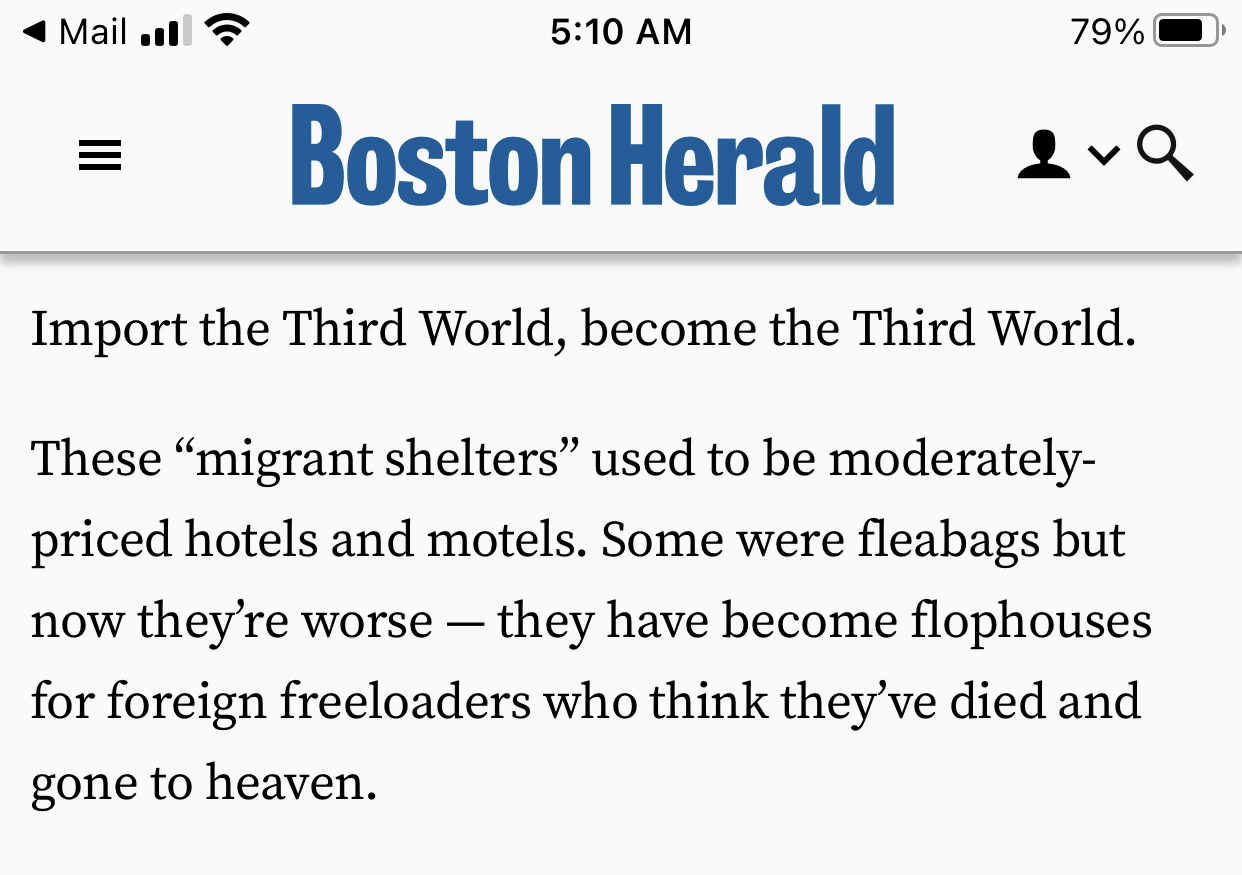
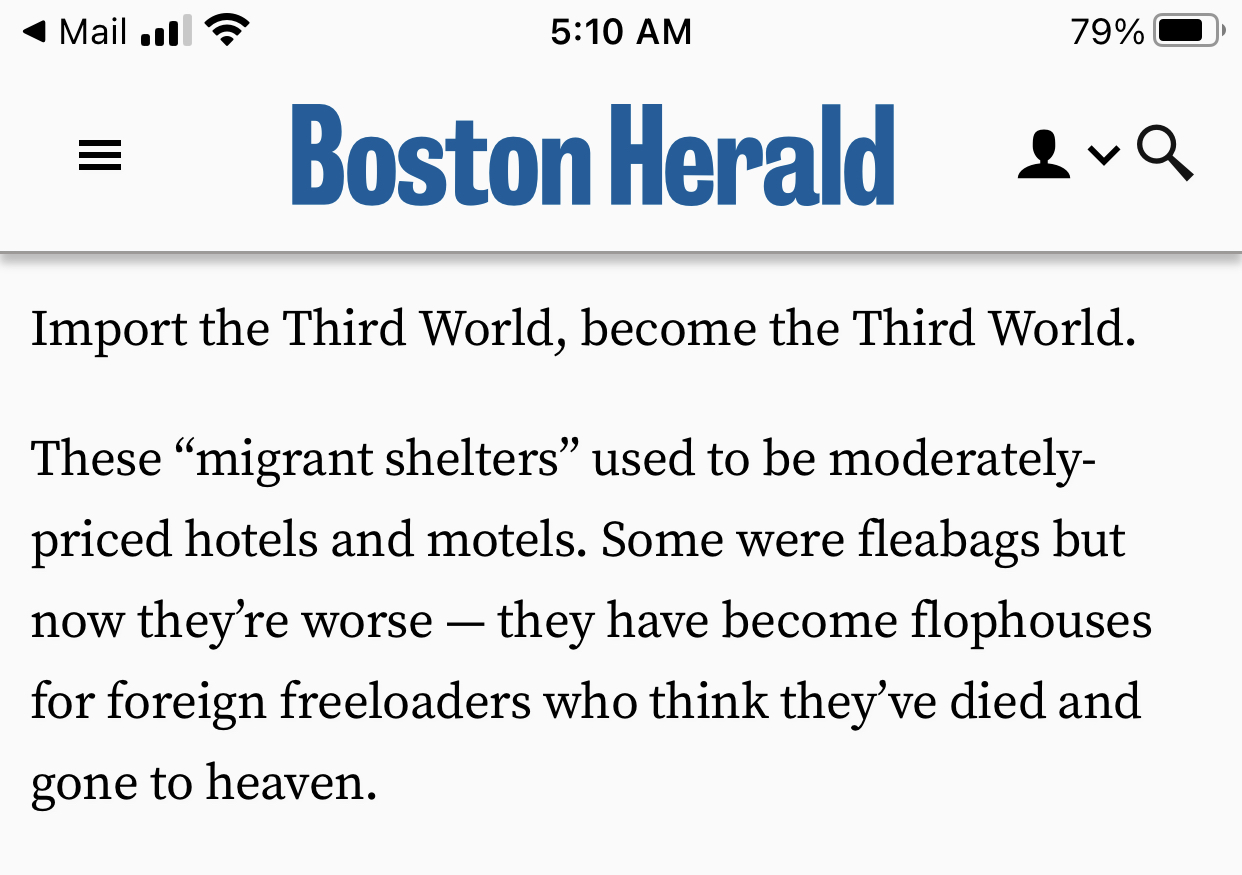
  • Bringing it forward many years to just yesterday as reported in part by the Boston Herald (pay-wall):
  • Do we really want these people here that will have representation if the U.S. Congress?