DHS’s Office for Community Partnerships, Stonewalling

Release Date:
September 28, 2015  <– Note Jeh Johnson created this department

DHS: Violent extremism – that which is inspired by foreign terrorist groups and that which is rooted in a range of domestic-based radical ideologies – pose a persistent and unpredictable threat to our homeland. Countering violent extremism has become a key focus of DHS’s work to secure the homeland. Last year I appointed a Department-wide coordinator for our efforts to counter violent extremism. As Secretary of Homeland Security, I am also personally committed to this mission, having traveled to Boston, Chicago, Columbus, Houston, Los Angeles, Minneapolis, New York City, northern Virginia and suburban Maryland to meet with community leaders as part of this effort. We heard many strongly-held views, generated conversations, and built some bridges.

It is now time to take our efforts to the next level.

Today I announce the creation of the DHS Office for Community Partnerships. This Office will be dedicated to the mission of countering violent extremism, but its ultimate mission is as its name suggests – community partnerships. My charge to this Office, to be set forth in a more detailed plan, is to continue to build relationships and promote trust, and, in addition, find innovative ways to support communities that seek to discourage violent extremism and undercut terrorist narratives. More here.

Problem? Either DHS was told to hide documents, not cooperate, there is collusion or the Obama White House applied executive privilege to the documents.

Just before Jeh Johnson left as Secretary of DHS:

For Immediate Release
Office of the Press Secretary
Contact: 202-282-8010

In 2016, Congress answered our call for federal grants, awarded and administered by the Department of Homeland Security, to support local efforts to counter violent extremism. Today, I am pleased to announce the first round of awards of these grants.

A total of 31 proposals, from various organizations in multiple communities, have been accepted to receive some part of the $10 million appropriated by Congress last year. The funding will go for activities that include intervention, developing resilience, challenging the narrative, and building capacity. The organizations approved for grants include local governments, universities, and non-profit organizations, in locations across the country such as Boston, Minneapolis, Los Angeles, Detroit, Nebraska, Houston, Illinois, New Jersey, Texas and New York City. Among the awardees are organizations devoted specifically to countering ISIL’s recruitment efforts in our homeland, and Life After Hate, an organization devoted to the rehabilitation of former neo-Nazis and other domestic extremists in this country. More here.

The lawsuit is found here.

Background:

Philadelphia – May 1, 2017 – The Middle East Forum has filed a lawsuit against the Department of Homeland Security (DHS) to secure the release of documents related to the Obama administration’s Countering Violent Extremism (CVE) grant program.

The grant program, which began last year, is intended to assist “efforts at the community level to counter violent extremist recruitment and radicalization to violence,” but MEF was concerned about U.S. Islamist groups – themselves radicals – receiving CVE funds. Indeed, grant recipients have included the Muslim Public Affairs Council (MPAC), an organization with ties to the Muslim Brotherhood and a long history of sanitizing Islamist terrorism.

On January 10, MEF filed a detailed Freedom of Information Act (FOIA) request with DHS seeking documents about the selection criteria and specific decisions in awarding CVE grants. The request indicated that the documents are mostly located at the DHS Office for Community Partnerships (OCP), headed by George Selim.

Having failed to receive even a response to its request within the 20-day period mandated by law, MEF contacted DHS. Finally, on March 23, DHS FOIA officer Ebony Livingston informed us that the request had been routed to the Federal Emergency Management System (FEMA), which found no pertinent records.

On April 26, MEF filed a lawsuit alleging that DHS violated the law by not only failing to produce the documents, but failing even to conduct a search for the documents.

The complaint, prepared by attorney Matt Hardin, a specialist in FOIA litigation, seeks injunctive relief compelling DHS “to search for and produce all records in its possession responsive to plaintiff’s FOIA request.”

“We filed a detailed FOIA request, specifying the documents we were looking for and where they likely were,” said MEF Director Gregg Roman. “DHS not only failed to produce the documents, it failed even to conduct a search and closed our case without bothering to tell us. This is not just unacceptable but illegal.”

The case has been assigned to Judge Royce C. Lamberth of the United States District Court for the District of Columbia. It bears noting that Judge Lamberth previously handled FOIA litigation concerning former Secretary of State Hillary Clinton’s emails.

“The CVE program should be canceled altogether,” said Sam Westrop, director of MEF’s Islamist Watch project. “And guidelines should be put in place to make sure that extremist groups like MPAC never receive taxpayer money to counter extremism.”

The Even Darker side of the Downward Spiral, Venezuela

Primer: It is just a few days ago, that Russia was muscling the United States with regard to policy in Venezuela. Really Moscow?

Image result for venezuela protests ABC

Russia Warns Against US Interference in Venezuela, Calls for Dialogue

Russia’s foreign ministry voiced its concern over violence by right-wing protests in Venezuela while rebuking recent threats by the U.S. Southern Command, saying these would only stoke violence and ultimately act against U.S. interests. More here.

Meanwhile: Venezuela’s state-run oil company, PDVSA, sent a tanker in October to the Caribbean with the expectation that its cargo of crude would fetch about $20 million – money the crisis-stricken nation desperately needs.

Instead, the owner of the tanker, the Russian state-owned shipping conglomerate Sovcomflot, held the oil in hopes of collecting partial payment on $30 million that it says PDVSA owes for unpaid shipping fees.

Despite a longstanding alliance between Venezuela and Russia, Sovcomflot sued PDVSA in St. Maarten, a Dutch island on the northeast end of the Caribbean.

“The ship owners … imposed garnishment on the aforementioned oil cargo,” reads a March decision by the St. Maarten court.

Five months after crossing the Caribbean, the NS Columbus discharged its cargo of crude at a storage terminal on St. Eustatius, an island just south of St. Maarten, under a temporary decision by the court. Another tribunal in England will decide if Sovcomflot will ultimately take the oil.

***

Update: Reuters: A prison riot in Venezuela’s eastern state of Anzoategui has left at least 12 people dead and 11 wounded, a spokesman at the Prisons Ministry said on Wednesday, the latest incident in the crisis-hit country’s overcrowded and violent jail system.

Venezuela’s public prosecutor’s office said it was investigating the deaths of “several” inmates on Tuesday during a shootout between the prisoners at the Jose Antonio Anzoategui prison.

Critics have said that Venezuela’s prisons are controlled by gangs with ready access to machine guns and even hand grenades.

“There are 12 people dead, nine shot, two due to drug overdoses, and one due to multiple injuries,” the spokesman told Reuters, asking not to be identified by name because he was not authorized to speak to media about the riot.

“It’s a prison that was going through a transition … the clashes were between those who wanted it and those who didn’t,” the official said in reference to a government push to end overcrowding and weapons in jails.

Further details were not immediately available. It was not immediately clear if all the dead were inmates.

Venezuela is one of the world’s most violent countries and inmates often plan kidnappings and robberies from their cells.

 Dark Times in Venezuela Signal Bright Future for Organized Crime

Venezuela Today

The social unrest in Venezuela over the last two weeks has been the most widespread since Leopoldo López, the opposition leader, was arrested and subsequently imprisoned by the administration of President Nicolás Maduro in 2015.

The latest anti-government demonstrations were sparked by a decision by the country’s Supreme Court, which is controlled by the regime, to nullify the National Assembly, which is dominated by the opposition. The Supreme Court later backtracked, but it was too late — critics of the regime had been emboldened once again by the audacious move. Luisa Ortega Díaz, the country’s attorney general and traditionally a supporter of Maduro, also condemned the Supreme Court’s attempt to consolidate power, further eroding Maduro’s legitimacy.

Their indignation was stoked by the move a few days later to ban Henrique Capriles, a prominent member of the opposition, from politics for 15 years. Capriles, who has run twice as a presidential candidate, is one of the opposition’s strongest hopes for winning presidential elections against Maduro’s United Socialist Party (Partido Socialista Unido de Venezuela – PSUV) at the end of 2018.

A chronic economic recession in Venezuela has provoked sky-high inflation, shortages of basic foods and goods, and a collapse in the health and education systems. Maduro’s popularity has dropped steadily, yet the Venezuelan people have so far showed incredible tolerance for what many of them have been reduced to — searching for food in the trash, waiting for hours in line to buy basic goods, often at inflated prices, and scouring the country for black market medicines as they watch their family members suffer and even die.

But the current economic and social predicament has had another sinister consequence: It has fed the growth of criminality and organized crime to unprecedented levels.

Venezuela’s homicide rate is one of the highest in the world, and Caracas is now the deadliest city on earth. New forms of organized crime have emerged in the country’s prisons, within its armed forces and on its streets in the form of megabandas since Hugo Chávez took power in 1999. Drug trafficking has penetrated the highest levels of the current regime, all the way up to the family of President Maduro. Armed, civilian groups known as colectivos, which were embraced and nurtured by Chávez as defenders of the revolution, have gone rogue and are increasingly supporting themselves through criminal earnings. Unbridled corruption has allowed for kleptocrats to plunder the country’s public coffers via artificial exchange rates and the state-owned oil company Petróleos de Venezuela (PdVSA).

Below, we look at some possible future scenarios and their implications for organized crime.

The Regime Remains or Renews

Criminal elements within the regime and outside it would like nothing more than to maintain the status quo.

The armed forces are the muscle and political backbone of the sitting government. Out of Maduro’s 32 government ministers, 11 of them are acting or retired military officers. Some have been sanctioned or indicted by the United States for their links to drug trafficking (see graphic below). The armed forces have deepened their role in transnational cocaine trafficking since 1999, in part as a direct result of political decisions by Hugo Chávez, and profit from other criminal incomes such as the sale of government-subsidized contraband petrol on the Colombian border and the process of food distribution, of which they are in charge. The National Guard controls the nation’s borders, airports and ports and has been implicated in some of the biggest cocaine seizures in recent years.

Venezuela-Gov Drugs insightcrime

Criminality isn’t just limited to military members of the government. Vice President Tareck El-Aissami was recently sanctioned by the United States for his alleged role in drug trafficking, dating back to his time as governor of the state of Aragua.

Should Maduro decide to fall on his sword, El Aissami is in line to replace him as president. That could result in a political shakeup and give the regime a chance to renew itself with some internal changes and shifts. If El Aissami changed tack on the regime’s economic policies and reversed some of the damage done in recent years, he could improve the PSUV’s chance of winning presidential elections at the end of next year — something that Maduro almost certainly couldn’t pull off at this stage.

It is unclear, however, which way El Aissami, a party hardliner, would go if he became president, and his status as a suspected drug trafficker might not inspire new confidence in Venezuelans already sick of corruption and the abuse of power within the current system.

For other criminal elements, maintaining the status quo remains the best option. The armed pro-government colectivos, many of which are perceived as violent thugs by those living in territories they control, depend utterly on the socialist regime for their survival. InSight Crime investigations in the 23 de Enero neighborhood of Caracas, once a bastion of Chavismo, show that these groups are increasingly profiting from criminal activities such as extortion and micro-trafficking.

They are also involved in anti-crime raids, known as Operation Liberation and Protection of the People (Operación de Liberación y Protección del Pueblo – OLP), in which they work alongside state security forces to supress criminal groups and megabandas.

Those raids were instigated as the result of the government’s failed “peace zone” policy, which handed swathes of territory over to the criminal gangs that occupied them. In effect, the plan made megabandas the de facto law in those areas, because security forces were prohibited from entering without prior permission. Many of those peace zones still exist. Although the megabandas openly attack patrols and headquarters of Venezuelan security forces, and have been forced to regroup following the elimination of many of their original leaders, they continue to run their criminal economies that include extortion, kidnapping, contract killing and micro-trafficking.

As for the country’s prisons, criminal business has never been so good, even though violence and overcrowding are serious human rights problems. The creation in 2011 of a Ministry of Penitentiary Services effectively handed governance of the country’s jails to the powerful bosses on the inside, known as “pranes,” who now run them like their own fiefdoms. Violence remains one of the main means of maintaining control.

The Regime and the Opposition Form a Joint Government

The decision to reverse the Supreme Court ruling to annul the National Assembly could be a sign that the Maduro administration is faltering. The Miami Herald reported this week that the president has secretly offered the opposition a deal that would result in regional elections supposed to take place this year, in which the opposition looks set to win a strong foothold.

Given the hostility between the government and the opposition, and the failure of Vatican-monitored talks at the end of last year, this seems like the least likely scenario. Should it happen, it is likely to be thwarted by infighting and disagreement between the different sides. The coalition would have to come to an agreement on long-term and fundamental issues such as the role of the military in the country, security, the prison system and economic controls.

In this unlikely scenario, the main casualty could be the colectivos, which the Maduro administration might be forced to call to heel as a condition of a joint government. They may have limits put on their weapons as well as their role as repressors of the media and critical protests. Other than that, there would be little change on the ground in the short term as far as criminal dynamics are concerned.

Armed Forces Stage a Coup or Force Maduro into a Political Transition

The importance of the support of the armed forces for President Maduro and the regime cannot be overstated. But factions have turned against the regime before, as was seen in the failed coup against Hugo Chávez in 2002, which removed him from power for a couple of days.

In the short term, the colectivos and the military itself would be the criminal elements most impacted by a move by parts of the military to force Maduro’s hand. The armed forces would want to assure their place at the table in the new government, and might offer the colectivos — who are despised and feared by the opposition — as a sacrificial lamb.

“Colectivos really imagine themselves as being put on the offing block as sacrificed pawns in a negotiated context,” Alejandro Velasco, author of the book Barrio Rising, told InSight Crime. “They very much imagine that the struggle to come is going to be a struggle, not against the opposition, but really against the military in the context of survival. Both of them are kind of in a maneuvre for survivability in a transition context.”

Should this scenario arise, the political uncertainty it could generate might push the reality on the streets in Venezuela to get worse before improving. It would have little immediate negative impact on the megabandas or the criminal enterprises being run in the prisons. If anything, criminality and impunity would only increase, giving these elements more freedom of movement. Longer-term, an administration capable of governing could take steps to curb their criminal freedoms and fiefdoms.

SEE ALSO: Venezuela News and Profiles

The military, as broker and mediator, would have to make some concessions of its own. Should the armed forces be involved in brokering or forcing this potential transition, implicit in its negotiations would be the continuation of its stewardship of the country’s ports, borders and airports — a fundamental element of its role in profiting from transnational organized crime.

The amount of coca and cocaine being produced in neighboring Colombia is booming, and the network of Venezuelan military officials involved in the drug trade, known loosely as the Cartel of the Suns, would want to keep its interests safe.

But heads would have to roll as part of a change in government, and many on the chopping block would be those military officials seen as being the most corrupt and most loyal to the socialist regime. There is little doubt, however, that they would be replaced with others equally willing to profit from their power and position in this key transit nation in the global cocaine trafficking industry.

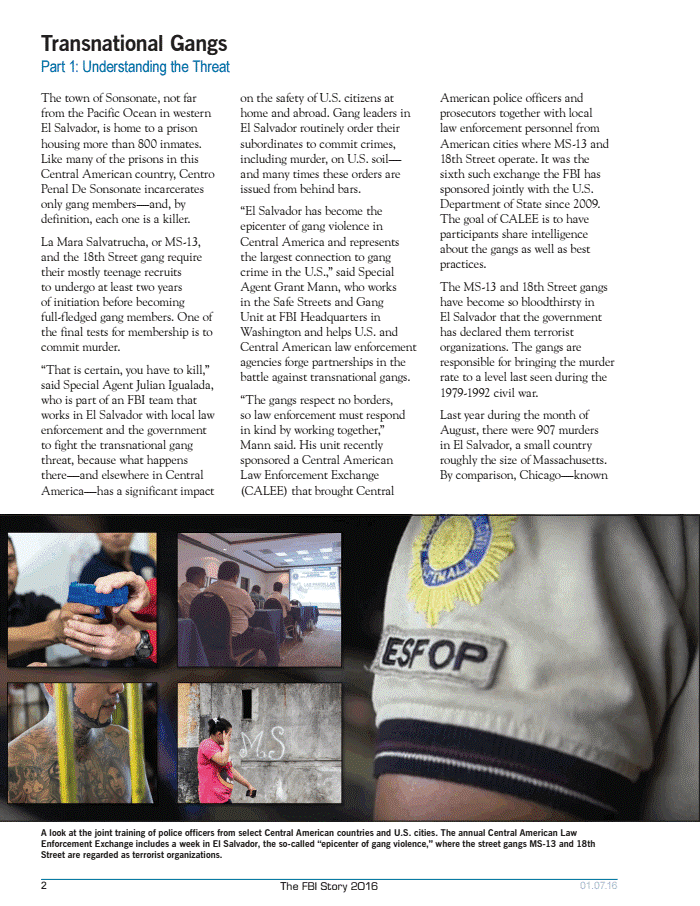
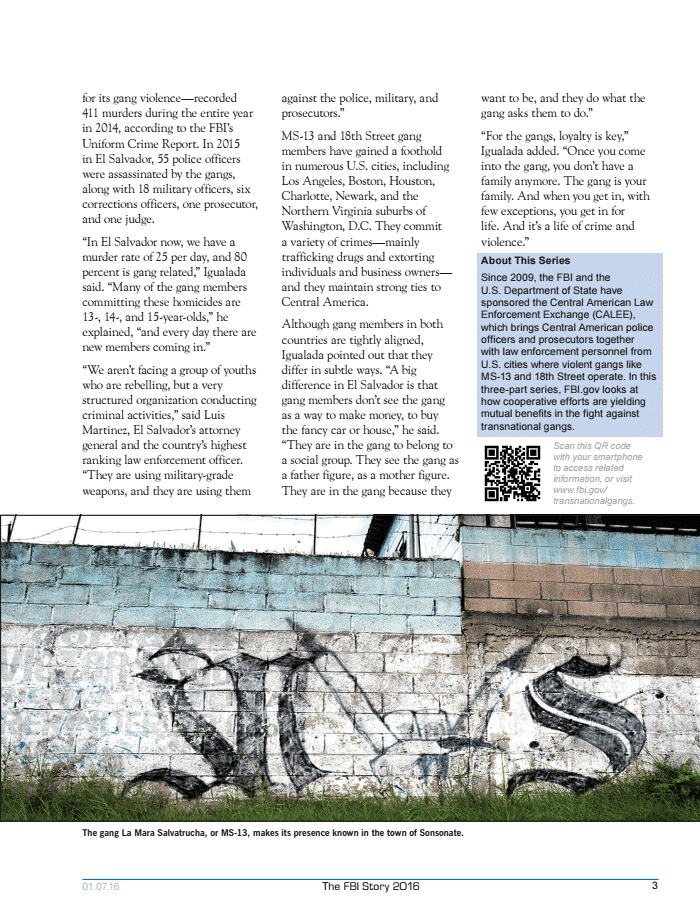
Jeff Sessions/FBI and MS-13

Four members of the violent, foreign MS-13 gang were convicted on federal racketeering charges, some of which involved murder.

Miguel Zelaya, 20-years-old, Luis Ordonez-Vega, 36-years-old, Jorge Sosa, 24-years-old and William Gavidia, 23-years-old, were all convicted on a count of conspiracy to commit racketeering, according to the Charlotte Observer:

Zelaya, who also goes by “Most Wanted” and “Ne Ne” is a member of MS-13’s “Coronados Little Cycos Salvatrucha” clique. On Dec. 18, 2013, he shot and killed Jose Orlando Ibarra, an associate of The Latin Kings, a rival gang, the release said.

Ordonez-Vega, also known as “Big Boy,” is a member of the Brentwood Locos Salvatrucha” clique, according to the news release. On June 6, 2013, Ordonez-Vega shot and killed Noel Navarro Hernandez in a strip mall parking lot in Charlotte, believing the victim was a member of a rival gang.

Sosa, who goes by “Koki” and “Loco” is a member of the “Charlotte Locotes Salvatrucha” clique. Prosecutors say he’s been involved in multiple gang-related crimes. In Feb. 2008, he flashed MS-13 gang signs at a rival gang member’s mother and pointed a gun at her while they were stopped in traffic. In June, 2013, he was involved in a gang-related shooting where he and another person followed victims in a neighborhood in Charlotte and opened fire with a high-caliber rifle, the release said.

All of the gang members are either immigrants or the children of immigrants in the U.S. and they are also facing state charges for their crimes.

“Today’s guilty verdicts underscore that even though gang membership may in some ways ‘protect’ gangsters from outsiders, it certainly won’t protect them from the vast reach of the US. Attorney’s Office and our law enforcement partners,” U.S. Attorney for the Western District of North Carolina Jill Westmoreland Rose said in a statement.

The MS-13 gang members were four of 37 who were charged with racketeering after an investigation into the criminal activity by the Organized Crime Drug Enforcement Task Force. Thirty of the other gang members charged with racketeering are either awaiting sentencing or have pleaded guilty to the charges.

According to the U.S. District Attorney, Ordonez-Vega and Zelaya were convicted on charges to murder in aid of racketeering. Those charges are connected to two separate murders. Meanwhile, Sosa was convicted for attempted murder in the aid of racketeering.

***

Image result for ms-13  InSightCrime

In 2015 the U.S. Treasury Department froze the assets of three members of the gang who were funneling funds back to higher-ups in El Salvador from prison. These actions were an attempt “disrupt” MS-13’s financial network by cutting off profits from illegal activities in the United States, the Treasury Department said. In 2012 the Obama administration designated MS-13 a transnational crime organization and implemented sanctions against six members in 2013.

While the U.S. government attempts to target MS-13’s earnings, targeting its culture is proving more difficult. The fierce loyalty among members is unique, Ron Hosko, former assistant director of the FBI’s Criminal Investigative Division, told FOX Business.

“They’re very cohesive and often directed by imprisoned bosses in El Salvador to recruit and expand in American communities. That tends to mean there’s an aggressive internal enforcement mechanism which equates to internal discipline involving physical violence and murder for disrespect or betrayal,” he said.

The FBI in El Salvador Because of MS-13:

Slave Labor Markets in Libya and Beyond

So, the United Nations reports this but so what? Is anyone at the United Nations taking action? Never heard anything out of the Obama White House either, did you? How about out of the Hillary Clinton or John Kerry State Department? Anything? Did WikiLeaks cables include any of this? Nah….

That whole Hillary Libya operation did not work out well at all, the country remains in a tailspin.

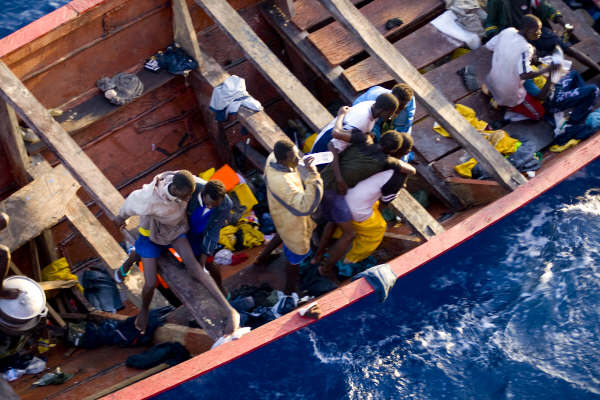
Migrant Smuggling – a deadly business

Currently, data is too scattered and incomplete to paint an accurate picture of numbers of people who are smuggled each year and the routes and methods used by those who smuggle them. Still, available evidence reveals the following trends and patterns:

  • Criminals are increasingly providing smuggling services to irregular migrants to evade national border controls, migration regulations and visa requirements. Most irregular migrants resort to the assistance of profit-seeking smugglers. As border controls have improved, migrants are deterred from attempting to illegally cross them themselves and are diverted into the hands of smugglers.
  • Migrant smuggling is a highly profitable business in which criminals enjoy low risk of detection and punishment. As a result, the crime is becoming increasingly attractive to criminals. Migrant smugglers are becoming more and more organized, establishing professional networks that transcend borders and regions.
  • The modus operandi of migrant smugglers is diverse. Highly sophisticated and expensive services rely on document fraud or ‘visa-smuggling’. Contrasted with these are low cost methods which often pose high risks for migrants, and have lead to a dramatic increase in loss of life in recent years.
  • Migrant smugglers constantly change routes and modus operandi in response to changed circumstances often at the expense of the safety of the smuggled migrants.
  • Thousands of people have lost their lives as a result of the indifferent or even deliberate actions of migrant smugglers.

These factors highlight the need for responses to combat the crime of migrant smuggling to be coordinated across and between regions, and adaptable to new methods. In this regard, UNODC seeks to assist countries in implementing the  Smuggling of Migrants Protocol while promoting  a comprehesensive response to the issue of migrant smuggling.

  More here. Has anyone heard from the African American community on this issue at all?

Image result for slave labor markets  PBS

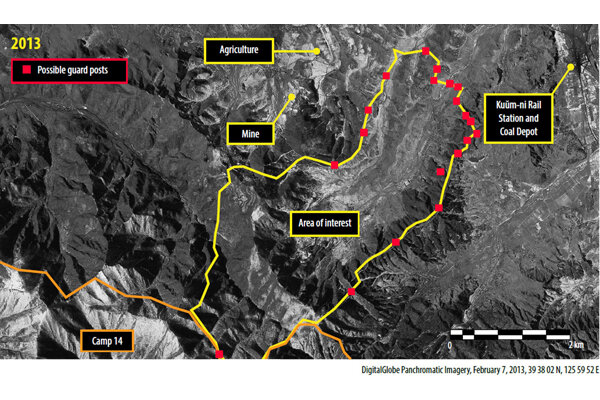
Back in 2013, the UN essentially reported the same conditions in North Korea.

North Korea’s hidden labor camps exposed: A new UN panel is vowing to hold North Korea’s Kim regime to ‘full accountability’ for decades of mass crime and murder. Will Pyongyang face ICC indictment?  More here from CS Monitor.

The Global Slavery Index also provides insight into the estimated absolute numbers of people in modern slavery, in 162 countries. When the estimated number of enslaved people is considered in absolute terms as a single factor, the country ranking shifts considerably.

The countries with the highest numbers of enslaved people are India, China, Pakistan, Nigeria, Ethiopia, Russia, Thailand, Democratic Republic of Congo, Myanmar and Bangladesh. Taken together, these countries account for 76% of the total estimate of 29.8 million in modern slavery.

The country with the largest estimated number of people in modern slavery is India, which is estimated to have between 13,300,000 and 14,700,000 people enslaved. The India country study suggests that while this involves the exploitation of some foreign nationals, by far the largest proportion of this problem is the exploitation of Indians citizens within India itself, particularly through debt bondage and bonded labour.

The country with the second highest absolute numbers of enslaved is China, with an estimated 2,800,000 to 3,100,000 in modern slavery. The China country study5 suggests that this includes the forced labour of men, women and children in many parts of the economy, including domestic servitude and forced begging, the sexual exploitation of women and children, and forced marriage.

The country with the third highest absolute number in modern slavery is Pakistan, with an estimated 2,000,000 to 2,200,000 people in modern slavery. Read the 2013 report here.


Veteran Wounded Warriors Become Hunters, Great Story

In War on Child Porn, US Turns Wounded Soldiers Into Hunters

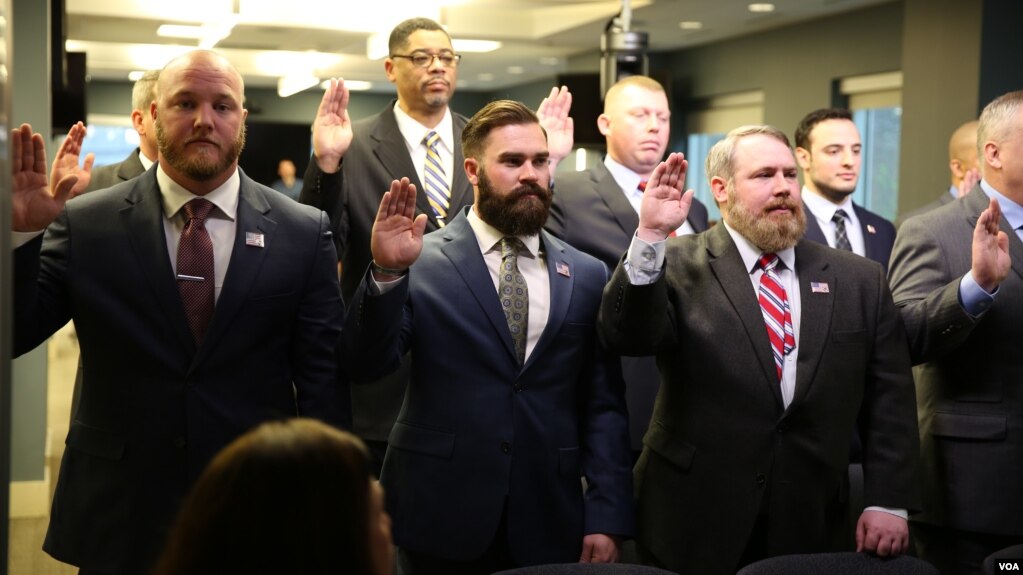
A group of military veterans take the oath at a U.S. Immigration and Customs Enforcement (ICE) ceremony, swearing them in to serve as analysts on child exploitation cases, at ICE headquarters in Washington, March 31, 2017. (B. Hamdard/VOA)

A group of military veterans take the oath at a U.S. Immigration and Customs Enforcement (ICE) ceremony, swearing them in to serve as analysts on child exploitation cases, at ICE headquarters in Washington, March 31, 2017. (B. Hamdard/VOA)

***

The language at a small graduation ceremony inside a federal office building in Washington Friday morning was militaristic: Fighting. Frontlines. Enemies. War.

For a fifth year, U.S. Immigration and Customs Enforcement (ICE) rather quietly has trained a small team of injured, wounded or sick military veterans for a different type of deployment – supporting the agency’s lesser-known investigative arm as analysts on child exploitation cases – the ones who will be able to take photos off a hard drive in a child pornography investigation, then help identify the perpetrator and build the case for an arrest.

“It is a battle. It is a war. And it needs to be,” said Daniel Ragsdale, ICE Deputy Director.

Since 2013, more than 100 veterans have learned computer forensics through the H.E.R.O. Child-Rescue Corps, an 11-week program in the nation’s capital, followed by a nearly year-long internship in ICE field offices around the country.

Chris Wooten, a U.S. Army ranger who was injured in a helicopter crash seven years ago while serving with a special operations regiment in Afghanistan — his fifth tour in Iraq and Afghanistan — felt like the program could return that sense of purpose and pride he felt serving in the military.

“I did have a lot of buddies who weren’t able to make it home, that were killed overseas or even individuals that took their own lives when they made it back just because they didn’t have that sense of purpose anymore,” he explains after the ceremony, before flying home to southwest Florida, where he starts his internship next week.

“I think this opportunity, even though we’re all wounded and can’t do our military job anymore, that this program allows us to serve our country again, and not only that, but help save some kids.”

‘Daunting’ task

It’s unpaid work that first year, working alongside agents to find suspects and build the cases, often looking at graphic, violent content for clues about the perpetrator, the victim, or even the location. But the program regularly leads to job offers from ICE, according to an agency spokesman.

The collaboration between ICE’s Homeland Security Investigations office, U.S. Special Operations Command, and the National Association to Protect Children builds the ranks of child sexual abuse investigators, as law enforcement across the United States scrambles to keep up with networks of elusive online suspects — the ones supplying the images and the ones demanding them.

Non-profit organizations like the National Center for Missing and Exploited Children that also work on these cases report that the trade in child pornography images is growing “exponentially.” They report receiving thousands of requests from law enforcement agencies to analyze millions of images and videos in one year.

Ragsdale, the second in command at ICE, says there aren’t enough analysts to meet the investigative demand. The agency is only one of several federal bureaus trying to dismantle the online exchange of child pornography, and in the week before Friday’s graduation, it posted three updates on three such cases:

  • “Tucson man sentenced to 10 years in prison for possessing and distributing child pornography”
  • “Idaho man sentenced to 25 years on federal child pornography charges”
  • “Southwest Texas man sentenced to nearly 16 years in federal prison for distributing child pornography”

“It’s daunting to see case after case after case… when you see 100-year sentences or multiple life sentences,” Ragsdale told the graduates. “Unfortunately, it’s still not enough. It’s certainly not tipping the scale to dissuade people who abuse children.”

“You are joining a fight that law enforcement is having a hard time winning,” he added.

*

‘Horrible photos’

Chosen to speak for the class at the ceremony, Wooten’s voice faltered at the podium; he spoke about friends who died in combat or after returning home. He mentioned the veteran suicide rate in the U.S. — about 20 a day. He talked of “scars, visible and invisible.”

More than the adrenaline rush of military work under high stress, Wooten says with the investigatory work “you get that sense of pride back.”

“In the military, you’re very proud to serve your country. And this, you almost get a sense of pride that ‘I’m able to handle the images,’” said Wooten, who at 29, is the father of five children. “I knew the struggle was going to be looking at horrible photos and videos that everyday people don’t even know goes on.

“This job, I’m actually going out and saving kids and stopping bad guys, and help putting bad guys behind bars by analyzing evidence and different things that help them get a prison sentence,” said Wooten. “Before, I was just sitting at a desk basically doing paperwork.”