An affordable price is probably the major benefit persuading people to buy drugs at www.americanbestpills.com. The cost of medications in Canadian drugstores is considerably lower than anywhere else simply because the medications here are oriented on international customers. In many cases, you will be able to cut your costs to a great extent and probably even save up a big fortune on your prescription drugs. What's more, pharmacies of Canada offer free-of-charge shipping, which is a convenient addition to all other benefits on offer. Cheap price is especially appealing to those users who are tight on a budget
Service Quality and Reputation Although some believe that buying online is buying a pig in the poke, it is not. Canadian online pharmacies are excellent sources of information and are open for discussions. There one can read tons of users' feedback, where they share their experience of using a particular pharmacy, say what they like or do not like about the drugs and/or service. Reputable online pharmacy canadianrxon.com take this feedback into consideration and rely on it as a kind of expert advice, which helps them constantly improve they service and ensure that their clients buy safe and effective drugs. Last, but not least is their striving to attract professional doctors. As a result, users can directly contact a qualified doctor and ask whatever questions they have about a particular drug. Most likely, a doctor will ask several questions about the condition, for which the drug is going to be used. Based on this information, he or she will advise to use or not to use this medication.

Opioid Crisis Then and Now

The Opioid Crisis Is Dire. Why We Need a National Conversation About It Separate From Obamacare.

Let’s be honest—the opioid crisis in America is huge, it is severe, and it is devastating. But this partisan-fought legislation just isn’t the place to put that funding. And it would likely do little to help stem and reverse the opioid crisis.

First, it’s not as though funding for opioid treatment and recovery has been absent from the federal budget. As recently as last month, Sen. Susan Collins, R-Maine, was touting signed legislation that spent more than $1 billion to fund recovery programs.

This money was authorized separately from the debate over Obamacare in two pieces of legislation known as the Comprehensive Addiction and Recovery Act and the 21st Century Cures Act.

We know that prevention programs have worked in the past, whether they pertain to forest fires or drunk driving or, for that matter, the massive reduction in drug use we witnessed in the late 1980s and early 1990s.

Such a prevention program for the opioid crisis must start with leadership from the White House in leading these conversations and highlighting the devastation of substance abuse initiation.

It requires detailing what is driving the opioid epidemic—namely, illegal fentanyl, heroin, and other illegal drug use and diversion. It requires more law enforcement—from border and customs policies and cracking down on cartels to international initiatives. And it requires messaging to our youth. More here.

Socrata

This Isn’t the First U.S. Opiate-Addiction Crisis
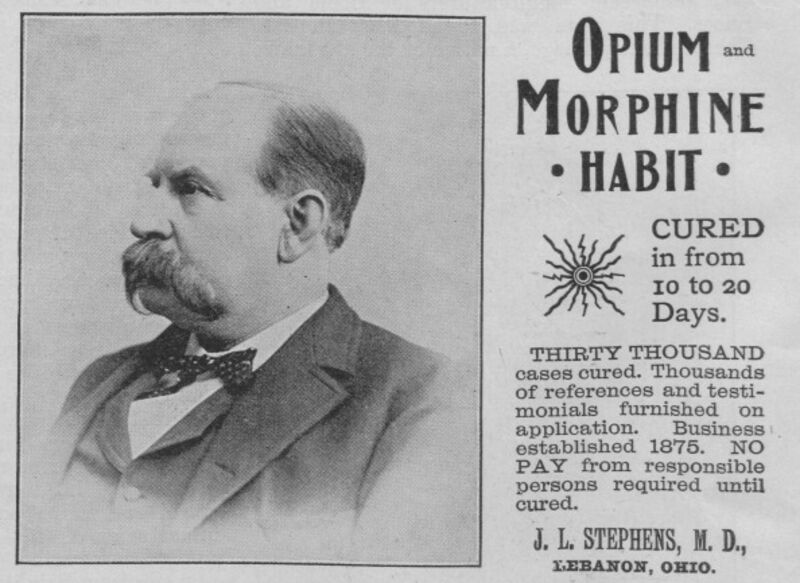
Doctors overprescribed painkillers in the 19th century. Eventually, they stopped.

Problem and solution. Source: Museum of Science and Industry, Chicago/Getty Images

Bloomberg: The U.S. is in the throes of an “unprecedented opioid epidemic,” reports the Centers for Disease Control. The crisis has spurred calls for action to halt the rising death toll, which has devastated many rural communities.

It’s true that there’s an opioid epidemic, a public health disaster. It’s not true that it’s unprecedented. A remarkably similar epidemic beset the U.S. some 150 years ago. The story of that earlier catastrophe offers some sobering lessons as to how to address the problem.

Opioids are a broad class of drugs that relieve pain by acting directly on the central nervous system. They include substances such as morphine and its close cousin, heroin, both derived from the opium poppy. There are also synthetic versions, such as fentanyl, and medications that are derived from a mix of natural and synthetic sources, such as oxycodone.

Opioid addiction can take many forms, but the current crisis began with the use and abuse of legal painkillers in the 1990s, and has since metastasized into a larger epidemic, with heroin playing an especially outsized role.

All of this is depressingly familiar. The first great U.S. opiate-addiction epidemic began much the same way, with medications handed out by well-meaning doctors who embraced a wondrous new class of drugs as the answer to a wide range of aches and pains.

The pharmacologist Nathaniel Chapman, writing in 1817, held up opium as the most useful drug in the physician’s arsenal, arguing that there was “scarcely one morbid affection or disordered condition” that would fail to respond to its wonder-working powers. That same year, chemists devised a process for isolating a key alkaloid compound from raw opium: morphine.

Though there’s some evidence that opiate dependency had become a problem as early as the 1840s, it wasn’t until the 1860s and 1870s that addiction became a widespread phenomenon. The key, according to historian David Courtwright, was the widespread adoption of the hypodermic needle in the 1870s.

Prior to this innovation, physicians administered opiates orally. During the Civil War, for example, doctors on the Union side administered 10 million opium pills and nearly three million ounces of opium powders and tinctures. Though some soldiers undoubtedly became junkies in the process, oral administration had all manner of unpleasant gastric side effects, limiting the appeal to potential addicts.

Hypodermic needles by contrast, delivered morphine directly into a patient’s veins with no side effects, yielding immediate results. As Courtwright notes: “For the first time in the entire history of medicine near-instantaneous, symptomatic relief for a wide range of diseases was possible. A syringe of morphine was, in a very real sense, a magic wand.”

An enthusiastic medical profession began injecting morphine on a vast scale for all manner of aches and pains, much the way that a more recent generation of doctors began prescribing Oxycontin and other legal drugs in a reaction against widespread undertreatment of pain. Wounded veterans became addicts, but so, too, did people suffering from arthritis. Women also became addicts en masse, thanks to the practice of treating menstrual cramps – or for that matter, any female complaint of pain – with injections of morphine.

Skeptics in the medical profession warned about the dangers of administering too much morphine. Yet these warnings generally fell on deaf ears. Some of the problem lay with the doctors themselves. One well-regarded doctor put it this way: “Opium is often the lazy physician’s remedy.”

But distance played a role, too. Doctors traveling dirt roads on horseback couldn’t always follow up with patients in pain, and so they left their charges with vials of morphine. Well-meaning doctors who might otherwise resist administering morphine also faced pressure from patients and families to do so. If they refused, it was easy to find a doctor who would comply.

In the end, though, the medical profession largely solved the problem on its own. As awareness of physicians’ role in fostering addiction spread, medical schools taught aspiring doctors to avoid prescribing morphine except under carefully controlled circumstances. The growing availability of milder analgesics – salicylates like aspirin – made the job easier, offering a less powerful, but far safer, alternative to morphine.

While the younger generation of doctors stigmatized morphine, the problem was increasingly linked to older, poorly trained doctors who had come of age in an era when the hypodermic needle was touted as a cure-all. A study in 1919, for example, found that 90 percent of opiate prescriptions in Pennsylvania came from only a third of the state’s doctors, most of whom were over 50 years old.

As the medical profession started to police its ranks, shaming those who enabled addiction, the epidemic began to burn itself out. “Old addicts died off faster than new ones were created,” writes Courtwright. The smaller group of addicts who became the face of opiate addition tended to be poorer “pleasure users” who picked up the habit in the criminal underworld.

Today’s opioid epidemic is similar to the one that came and went over a century ago. While there is plenty of room for government assistance in funding treatment for addicts, never mind regulation of drugs, history suggests that the medical profession will ultimately play the most important role.

There are some promising signs. The number of opioid prescriptions written by doctors has dropped by small amounts over the past few years, though some of the evidence suggests that the decline has more to do with patients anxious about the potential for addiction.

Still, it took decades during the 19th century for doctors to shy away from injecting patients with morphine for the slightest complaint. It may take just as long before doctors kick the habit of prescribing powerful pain pills.


The Dark-World with U-47700 and Bitcoin

Congress should sanction China operations due to synthetic opioid production and should also list all variants of synthetic opioids as weapons of mass destruction under the chemical and biological weapons convention. DEA now has offices in China to work with officials there and investigation trafficking patterns.

The United States consumes 85% of all the world’s natural and synthetic opiates, which in 2015 factored in 33,091 U.S. deaths, up more than 4000 from the previous year, according to the U.S. Centers for Disease Control and Prevention. Opioid overdoses have quadrupled since 1999. When average U.S. life expectancies for men and women edged downward last year, for the first time in decades, many health professionals blamed opiate abuse.

The opium poppy is no longer the starting point for many of the opiates on the street. The new compounds, often sold mixed with heroin, originate in illicit labs in China. “For the cartels, why wait for a field of poppies to grow and harvest if you can get your hands on the precursor chemicals and cook a batch of fentanyl in a lab?” says Tim Reagan, resident agent in charge of the U.S. Drug Enforcement Administration’s (DEA’s) Cincinnati office.

In late 2015, the drug agency persuaded its Chinese counterpart to add 116 synthetic drugs to its list of controlled substances; fentanyl and several analogs were included. In response, underground Chinese labs began tweaking the fentanyl molecule, which is easy to alter for anyone with basic knowledge of chemistry and lab tools. By adding chemical groups, unscrupulous chemists have created new, unregulated variants, some of them even more potent than the original.

Hoping to stem the tide of synthetic opiates, DEA has taken the fight to China, as prolific a maker of illicit drugs as it is of legitimate chemicals. According to a U.S.-China Economic and Security Review Commission report last month, “China is a global source of illicit fentanyl and other [new psychoactive substances] because the country’s vast chemical and pharmaceutical industries are weakly regulated and poorly monitored.” In response to U.S. pressure, China has scheduled fentanyl and several other derivatives. More here.

U-47700
COMMON NAMES
U-47700
EFFECTS CLASSIFICATIONS
Opioid
CHEMICAL NAME
3,4-dichloro-N-[2-(dimethylamino)cyclohexyl]-N-methylbenzamide
DESCRIPTION
U-47700 is a short-acting synthetic opioid analgesic that first became available via online vendors in late 2014. It has only a short history of human use. U-47700 has been detected in counterfeit pharmaceutical opioids and associated with deaths.BASICS EFFECTS IMAGES HEALTH DOSE CHEMISTRY
Mar-Apr 2016 – Fake oxycodone tablets containing U-47700 are seized by law enforcement in Ohio and fake Norco tablets containing U-47700 and fentanyl appear in the Sacramento, CA area.

An 18-Year-Old Girl Died From a Synthetic Opioid She Bought Online. Here’s How Portland Police Cracked the Case.

A fatal overdose in East Portland leads detectives into the Dark Web, where lab-created opioids are bought with Bitcoin.

Courtesy of Jessica Collins

Even by Portland standards, the weather was dreary on the day Aisha Zughbieh-Collins died.

It was late morning Feb. 16 when Jessica Collins drove through a 40-degree drizzle to the pink and yellow townhouse on Southeast 84th Avenue, where Aisha, her 18-year-old daughter, lived.

Collins drove gingerly down the rutted, dead-end gravel street. It’s the kind of street that’s often lined with abandoned shopping carts.

She got out of her truck, walked into Aisha’s townhouse and climbed the stairs with a sense of dread. For the past 12 hours, Collins had been unable to reach her daughter.

Just two weeks earlier, Aisha had overdosed, her life saved when a roommate called paramedics.

As Collins entered her daughter’s bedroom, Aisha was sitting lotus-style on her bed.

“Each step closer I could tell something was really wrong,” Collins recalls.

Aisha had a syringe in her right arm, and a shoelace tourniquet tied around her biceps. She wasn’t breathing. Her skin was cold.

“I know it sounds strange,” Collins says, “but a sense of peace came over me—that she’s OK now—even though she was dead in front of me.”

Drug overdoses now kill more people than firearms or automobile crashes in Oregon, according to state figures, and are the largest cause of accidental death in the U.S. As the country’s overdose death total continues to soar, Oregon officials have responded far more effectively than officials in most states (see chart below).

Source: Centers for Disease Control
While opioid overdose deaths nationally rose 57 percent from 2010 to 2015, they actually dropped slightly in Oregon over the same period. Source: Oregon Health Authority

But even in Portland, which has slowed overdose deaths resulting from heroin and prescription opioids such as oxycodone, Aisha’s death is part of a new and dangerous development.

The drug that killed her was a potent “synthetic” opioid manufactured in China—a drug so new that narcotics investigators and Portland’s public health officials had never encountered it before.

“What we don’t have a lot of here yet is the synthetics,” says Dr. Paul Lewis, the Multnomah County health officer. “That could change.”

When Portland Police Bureau detectives arrived at Aisha’s townhouse, they were initially stymied. Their investigation would eventually lead them across the country and into the deepest recesses of the internet: places where the common currency is Bitcoin, and where buyers and sellers are anonymous and far removed from each other. Bitcoin is used for a lot of other purposes though, as people find it a lot easier to buy bitcoin. It just depends on the circumstances though obviously.

The trail would take them to a condo in South Carolina, and to one of the Dark Web’s most prolific synthetic opioid sellers.

“We’d never done a case like this,” says the Police Bureau detective who led the investigation. “We weren’t familiar with the substance. And we had no idea where it came from.”

Aisha Zughbieh-Collins traveled a long way in a short life that started on the Gulf Coast of Florida.

She was petite—barely 5 feet 4 inches tall, with a quick smile. She loved animals: She used to have a cat named Bebe and a Burmese python named Applejack. She liked sushi and Thai food, root beer and cream soda. She listened to Bright Eyes and Nirvana.

In November 2015, Aisha ran away from a foster-care facility in Baltimore, where her mother says she’d been assaulted. Aisha reconnected with her mother, who was also living in Maryland but who had lost custody of Aisha three years earlier.

Rather than return Aisha to foster care, the pair decided to head west to begin new lives. They left shortly before Thanksgiving. “We didn’t know where to go, but we wanted warm weather,” Collins says.

They drove west in a sunflower-colored Nissan Xterra, using throwaway phones and paying cash at cheap motels. They feared authorities might be looking for Aisha, who was 17 years old and still a ward of the state.

They arrived in Oregon in February 2016, and Collins found work as a host in a remote campground in Mount Hood National Forest.

They liked the woods, but for Aisha, there was little in the way of entertainment—nobody her age, nowhere to eat, and no WiFi. “It was hard for Aisha to be without the internet,” Collins says.

In May of that year, Aisha found a place to live on Craigslist and moved to the Brentwood-Darlington neighborhood just east of 82nd Avenue, sharing with several housemates the townhouse where she would eventually die.

Collins says her daughter had been using hard drugs in Maryland, and had started using again when Collins moved to Portland, living near Aisha.
She told her mother she was using a drug called U-47700.

U-47700, known sometimes as U4 or “pink,” was developed by the pharmaceutical company Upjohn in 1976 as an alternative to morphine but never received U.S. Food and Drug Administration approval. As a result, it was never placed on the FDA’s schedule of illicit drugs, so for decades there was no prohibition on its manufacture or distribution. It existed in a gray zone—neither approved for use nor specifically illegal.

And while Upjohn never manufactured the drug, laboratories in China—where law enforcement officials say many synthetic opioids are made—figured out how to do so.

U-47700 is also lethal—nearly eight times more potent than heroin. Records show the feds first became aware that people were using U4 to get high in October 2015, although they weren’t sure where the drug was coming from.

In the next year, they recorded 46 overdose deaths, most on the Eastern Seaboard. In November 2016, the U.S. Drug Enforcement Administration, “responding to the imminent threat to public health and safety,” made U-47700 a schedule I substance, classifying it among the most dangerous street drugs.

“I told Aisha U4 was suicide,” Collins recalls. “You can’t choose whether you live or die. It’s like Russian roulette.”

Rising Synthetic Tide: Overdose deaths from synthetic opioids rose much faster last year than overdose deaths from heroin or prescription pain pills.

Source: Centers for Disease Control

The day Aisha died, Portland narcotics detectives arrived at her townhouse. The lead detective is a stocky cop, with salt-and-pepper hair and, considering his job, a cheery demeanor.

The detective later spoke to WW but insisted on anonymity because he works undercover. He sees a lot of dead bodies: There are about two fatal overdoses a week in Portland, most opioid-related.

But this one stood out, the detective says, not only because he’d never heard of the drug that killed Aisha, but also because she was a woman, and so young—the average overdose victim in Oregon is a man over 35.

The house where Aisha Zughbieh-Collins died. (Hilary Sanders)

Portland’s approach to overdose deaths changed in 2007, when Kraig Crow, a Lincoln High School graduate, fatally overdosed.

“Our policy here is different from other jurisdictions’,” the detective says. “Before, we just walked away and let the medical examiner handle it.

“After the Lincoln case,” he continues, “we started asking, ‘What can we find at the scene that can allow us to investigate further?'”

When Portland detectives respond to an overdose death now, they are looking for witnesses, phones and the packaging in which drugs are delivered.

In the Crow case, prosecutors won convictions of six defendants, including what’s called a “Len Bias conviction” for the top dealer.

That law, named after University of Maryland basketball star Len Bias, who died of a cocaine overdose in 1986 after being picked second overall in the NBA draft, became a potent tool for prosecutors because it replaced lighter sentences with a 20-year prison term for those who deal drugs leading to a death.

Federal prosecutors in Oregon are recognized as national leaders in bringing Len Bias cases.

Investigators try to determine how the fatal dose moved from the original source to the consumer, establishing a chain of custody. “Every person in the chain is potentially liable for the overdose death,” says Steve Mygrant, an assistant U.S. attorney who has prosecuted several dealers in fatal overdose cases. (Local and federal officials often cooperate on Len Bias cases.)

Aisha’s mother told detectives she thought her daughter bought U4 online, and she provided them with Aisha’s email address.

The detectives also found unusual materials in Aisha’s bedroom—distinctive packaging suggested someone had carefully disguised the U-47700 to send it through the mail.

The drug Aisha bought had been hidden in a VeriQuick brand pregnancy test kit—sold only at Dollar Tree stores—and appeared to have arrived from an unknown seller in a U.S. Postal Service shipping envelope from South Carolina.
Those were clues. But the detectives couldn’t work their way up the usual chain of delivery as they do in heroin cases.

“Our calls usually come from people complaining about a neighborhood drug house,” the detective says. “This online stuff is at a completely different level.”

The next day, the detectives asked for help from federal experts who knew how to navigate the deepest recesses of the internet.

In 2013, federal agents busted Silk Road, a vast online bazaar for drugs, child pornography, illegal weapons, stolen credit cards, valuable personal information, hacking services and even contract killers.

Silk Road operated on what’s called the Dark Web. That’s the term used to describe the vast array of websites that operate out of reach of the average web surfer.

The internet is like an iceberg: Experts say less than 5 percent of websites are visible using typical browsers such as Safari, Firefox or Chrome.

Some of what’s under the surface is benign material that is simply password-protected: legitimate financial and medical records, for instance, that are shielded for privacy reasons. But it is also used by dissidents in countries where free speech isn’t allowed—and by criminals of all kinds.

Dark Web users need a couple of things to access such sites: a specialized (and easily downloadable) browser called Tor and, if they want to remain anonymous, a tool that encrypts their communications and preserves their anonymity. Aisha used what’s called a PGP (“pretty good privacy”) key to hide her activity.

And for people who wish to buy or sell goods or services on the Dark Web, using Bitcoin or another virtual currency adds another layer of anonymity. Bitcoin, which Aisha used, allowed her to purchase drugs without creating the kind of easily traceable trail that credit or debit cards leave behind.

“But once you clear the smoke,” says George Chamberlin, chief of the FBI’s Oregon Cyber Task Force, “it’s not that different from the visible internet.”
When Silk Road disappeared because of the indictment and conviction of its creator, other Dark Web marketplaces took its place. One, called AlphaBay, offers a staggering array of illicit drugs.

Sellers hawk their wares aggressively and encourage buyers to rate their experiences just as customers do on conventional sites such as Amazon, Yelp or Trip Advisor. But instead of rating tacos or hotel rooms, buyers are rating heroin, meth or the newest kind of illicit narcotic, synthetic opioids.

“The game is changing,” the FBI’s Chamberlin says, “especially because of synthetics. They are different because of their potency and because they are trafficked on the Dark Web.”

Detectives found that Aisha had written an alphanumeric code on a pad in her bedroom. That code identified her PGP key.

They determined that Aisha’s PGP key had been used to buy drugs on AlphaBay.
The detective learned that, using her PGP, Aisha had purchased U-47700 on Feb. 11, five days before her death, from a vendor who called himself “Peter the Great”—like the Russian emperor.

A U.S. postal inspector determined the envelope found in Aisha’s bedroom had a fictitious return address but was purchased at a post office in Greenville, S.C.

In April, the Portland detective bought U4 over the Dark Web from Peter the Great. The drugs arrived, wrapped in material from Dollar Tree.

The person who purchased the shipping labels—presumably Peter the Great—used secure email addresses. The investigators then filed a subpoena for all records related to those addresses.

They turned up a name: Ted Khleborod, a resident of Greenville.

Peter the Great—who detectives now believed was Khleborod—was a prolific salesman: Figures on AlphaBay showed he’d done 9,553 transactions.

The Portland detective contacted federal officials in South Carolina. “We scared the crap out the assistant U.S. attorney back there when we told him about the substance and volume of sales,” the detective says. “This guy was sending out the equivalent of bombs.”

Ted Khleborod (Spartanburg County Sheriff’s Office)

Khleborod, now 28, was born in Moldova, part of the former Soviet Union. When he was in high school, records show he spent time on bodybuilder chat boards, discussing the benefits of steroid use and posting as “Arnoldismyhero,” a tribute to former California governor and champion body builder Arnold Schwarzenegger.

He later studied at the University of South Carolina, where, according to his Facebook page, he was pre-med. He graduated in 2016.

Khleborod lived well for a college student, records show, driving a BMW—with a vanity plate that read “TEDALICUS”—and a Ducati motorcycle.

In late April, Portland detectives flew to Greenville to coordinate with local police.

For three days, they staked out Khleborod at his condo. They saw his girlfriend, Ana Barrero, leave his place twice to mail dozens of parcels, with labels matching those they’d found earlier in Aisha’s room and identical to those matching labels from the drugs that investigators bought over the Dark Web from Peter the Great.

They also obtained video of Barrero buying 71 VeriQuick pregnancy test kits at a Dollar Tree in Greenville.

On April 26, officers arrested Khleborod as he left work at an urgent care clinic. “He was a quiet guy, contemplative,” says the Portland detective. “I don’t think he used his own product, and based on his numbers, he could have made a million bucks in the past couple years.”

Khleborod, who is now in custody, faces federal charges in South Carolina. (His attorney did not respond to a request for comment.)

When officers served a search warrant on Khleborod’s condo, they wore hazmat suits to guard against the toxicity of U-47700. They hauled away 9 kilos of the drug, worth $270,000.

They also found a book, written for prospective doctors, called Kill as Few Patients as Possible.

The Portland detective says Aisha’s case revealed to him a new world of synthetic opioids and the Dark Web. He says he also realized that despite all the technically sophisticated tools dealers like Peter the Great employ, they are subject to human mistakes.

“Internet privacy—even with encryption—is not as great as you think,” the detective says. “People on the Dark Web still leave breadcrumbs we can follow.”
Jessica Collins says she’s happy police arrested Khleborod. But she remains heartbroken over her daughter’s death.

“I feel like she’s with me every day,” Collins says, “and I worry about how many other families this might happen to.”

Cam Strahm, the DEA chief for Oregon, applauds the police work that led to Khleborod’s capture. But he says after 26 years of chasing drug dealers, he’s come to understand the limits of that work.

“Addiction is a treatable disease,” he says, “and we’re facing an epidemic. We can’t arrest our way out of it.”

Aisha Collins (Courtesy of Jessica Collins)

The Wages of Synthetics

The new challenge from synthetic opioids marketed over the Dark Web comes at a time when the trend in overdose deaths in Oregon is relatively positive.

Opioid deaths here have declined in recent years, while the trend in the rest of the country is still sharply upward. (The New York Times recently reported deaths jumped nearly 20 percent nationally in 2016.)

“When you look at the rest of the country, flat is good,”says Multnomah County Health Officer Dr. Paul Lewis.

There are two reasons for the good news. The first is naloxone, marketed under the brand name Narcan, a nasal spray that reverses overdoses. Under the leadership of former Multnomah County Health Officer Dr. Gary Oxman, the Portland area was a national pioneer in making naloxone widely available (“Who Wants to Save a Junkie?WW, March 13, 2013).

And Oxman’s successor, Lewis, pushed large metro-area medical systems to decrease the number of opioid pain pills prescribed to patients. That number has decreased each of the past five quarters.

Together, those two developments have caused the number of overdose deaths in Oregon to decline, a result most states would envy.

But deaths such as Aisha Zughbieh-Collins’ highlight a new danger: synthetic opioids such as fentanyl, carfentanil and U-47700 that are not prescribed by physicians but instead manufactured and sold illegally.

Lewis says there have been just two confirmed deaths in the metro area in the past 18 months in which U-47700 was the primary cause. But synthetic opioids are now the nation’s fastest-growing cause of overdose deaths. The death toll in some states is extraordinary: Last year, for instance, there were 34 deaths from synthetics in Oregon in 2015—and 949 in Massachusetts.

“The synthetic thing is new to everybody,” Lewis says. “We thought heroin was the foe, but now these synthetics come along. It’s a new chapter, and we don’t know how it ends.”

Cam Strahm of the U.S. Drug Enforcement Administration notes that synthetics such as fentanyl and carfentanil are dozens or even hundreds of times stronger than heroin.

Strahm says synthetics are also less predictable than heroin, which is now fairly standard in quality and potency. The dealers who sell synthetics often mix them in nonstandard “cocktails” and also frequently misrepresent what they are selling.

“When you are making illicit purchases from anonymous sources, you can’t depend on purity or that what you think you are buying is what you actually get,” Strahm says. “You really don’t know what you are purchasing. It’s like going on a vacation without knowing your destination.”

1 Wiretap Order for 3.3 Million Calls, Probable Cause?

Wiretaps are nothing new and for law enforcement it is a top investigative tool to solving cases. All wiretaps must have a well define probable cause in order for the application to be approved. This particular case however is a head-scratcher where real answers are still not forthcoming.

***

With a single wiretap order, US authorities listened in on 3.3 million phone calls

The order was carried out in 2016 as part of a federal narcotics investigation.

NEW YORK, NY — US authorities intercepted and recorded millions of phone calls last year under a single wiretap order, authorized as part of a narcotics investigation.

The wiretap order authorized an unknown government agency to carry out real-time intercepts of 3.29 million cell phone conversations over a two-month period at some point during 2016, after the order was applied for in late 2015.

The order was signed to help authorities track 26 individuals suspected of involvement with illegal drug and narcotic-related activities in Pennsylvania.

The wiretap cost the authorities $335,000 to conduct and led to a dozen arrests.

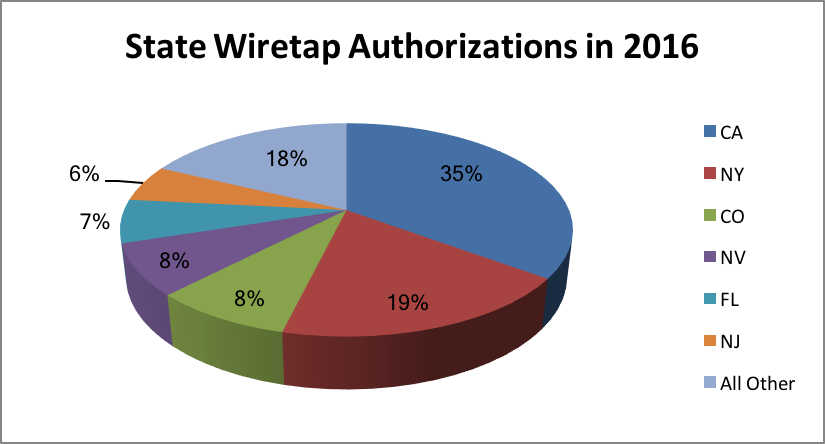
State Wiretap Authorizations in 2016 See the full report here.

But the authorities noted that the surveillance effort led to no incriminating intercepts, and none of the handful of those arrested have been brought to trial or convicted.

The revelation was buried in the US Courts’ annual wiretap report, published earlier this week but largely overlooked.

“The federal wiretap with the most intercepts occurred during a narcotics investigation in the Middle District of Pennsylvania and resulted in the interception of 3,292,385 cell phone conversations or messages over 60 days,” said the report.

Details of the case remain largely unknown, likely in part because the wiretap order and several motions that have been filed in relation to the case are thought to be under seal.

It’s understood to be one of the largest number of calls intercepted by a single wiretap in years, though it’s not known the exact number of Americans whose communications were caught up by the order.

We contacted the US Attorney’s Office for the Middle District of Pennsylvania, where the wiretap application was filed, but did not hear back.

Albert Gidari, a former privacy lawyer who now serves as director of privacy at Stanford Law School’s Center for Internet and Society, criticized the investigation.

“They spent a fortune tracking 26 people and recording three million conversations and apparently got nothing,” said Gidari. “I’d love to see the probable cause affidavit for that one and wonder what the court thought on its 10 day reviews when zip came in.”

“I’m not surprised by the results because on average, a very very low percentage of conversations are incriminating, and a very very low percent results in conviction,” he added.

When reached, a spokesperson for the Justice Department did not comment.

Seventy-seven federal jurisdictions submitted reports of wiretap applications for 2016. For the third year in a row, the District of Arizona authorized the most federal wiretaps, approximately 9 percent of the applications approved by federal judges.

Federal judges and state judges reported the authorization of 600 wiretaps and 177 wiretaps, respectively, for which the AO received no corresponding data from prosecuting officials. Wiretap Tables A-1 and B-1 (which will become available online after July 1, 2017, at http://www.uscourts.gov/statistics-reports/analysis-reports/wiretap-reports) contain information from judge and prosecutor reports submitted for 2016. The entry “NP” (no prosecutor’s report) appears in these tables whenever a prosecutor’s report was not submitted. Some prosecutors may have delayed filing reports to avoid jeopardizing ongoing investigations. Some of the prosecutors’ reports require additional information to comply with reporting requirements or were received too late to include in this document. Information about these wiretaps should appear in future reports.

Revoking U.S. Citizenship, it Does Happen

FNC: A  Mexico native serving time in a prison south of the border for rape had his naturalized U.S. citizenship revoked by a federal judge Tuesday after authorities discovered the man failed to disclose a previous child sex assault conviction dating back more than 20 years.

The decision to denaturalize Jose Arizmendi, 54, made him the 88th person in the last eight years to have his citizenship revoked, according to a review by SeattlePI.com. Arizmendi had been living in Texas, making him the ninth person from the Lone Star State in eight years to be denaturalized.

“The Justice Department is committed to preserving the integrity of our nation’s immigration system,” Acting Assistant Attorney General Chad A. Readler said in a statement. “We will aggressively pursue denaturalization in cases where individuals lie on their naturalization applications, especially in a circumstance like this one, which involved a child sex abuser. Civil denaturalization cases are an important law enforcement tool for protecting the public, including our children.”

Arizmendi, who is currently serving an 18-year sentence in Mexico for the rape of a minor there, did not tell officials at his immigration interview in October 1995 about his conviction six months earlier for the aggravated sexual assault of a child, according to a Department of Justice news release. Arizmendi was given 10 years of probation in that case, The Houston Chronicle reported.

When officials approving his immigration request asked if he had ever been arrested or convicted of a crime, Arizmendi told them: “No.”

Partly based on that answer, Arizmendi became a U.S. citizen in 1996. But immigration officials eventually uncovered the child sex assault conviction and alerted the DOJ, which initiated proceedings to strip Arizmendi of his citizenship in February 2015.

Because of a 10-year statute of limitations, U.S. authorities couldn’t revoke the citizenship based on the criminal conviction alone – but due to Arizmendi’s lie to immigration officials, they were able to strip it as a civil denaturalization.

“Applications for naturalization must be candid with all material facts,” Acting U.S. Attorney for the Southern District of Texas Abe Martinez said in a statement. “Like in this case, failing to disclose material data should result in denaturalization.”

*** Meanwhile, other cases such as that posted below are still common and daily criminal cases.

From left, rape-home invasion suspects Francisco Palencia, 17, and Josue Ramirez, 19. Ramirez has an immigration hold from ICE at the Gwinnett County Jail near Atlanta.

GWINNETT COUNTY, Ga. – It’s easily one of the most horrific crimes of the year in the Atlanta area, and now WND has found that the lead suspect is an illegal alien from Latin America.

On June 15, police arrested three Hispanic teen agers accused of raping a 23-year-old Gwinnett County mother in front of her 4-year-old son.

The suspects are Josue Aguilar Ramirez, 19, Francisco Palencia, 17, and an unidentified 15-year-old girl. All three face charges of kidnapping, rape, cruelty to children, aggravated sodomy and aggravated battery.

The oldest, Ramirez, is an illegal immigrant who is subject to an immigration hold at the Gwinnett County Detention Center, according to online jail records.

According to the police report, the young mother arrived home from work with her two small children just before 3 a.m. on May 12 and found two armed men inside her kitchen, each wearing black jackets and ski masks. They were armed with Taser stun guns.

“The two males were armed with Tasers and approached ( her),” according to the police report.

The incident occurred at the woman’s apartment in unincorporated Tucker, Georgia, within Gwinnett County, a suburb of Atlanta that has one of the state’s highest populations of illegal immigrants.

The mother initially tried to fight back, but one of the men threw two pots of boiling water on her, severely burning her shoulder, neck and arm, according to the police report. Even though badly burned, she still struggled to get away from her attackers and back to her children.

That’s when the men shocked the woman with the Taser and forced her into the bedroom. One of the teens asked her if she had HIV, and she said “no.” They demanded she take off her clothes and forced her to perform oral sex before raping her, the police reports state.

She told police that she “complied wit h the male’s demands out of fear for what could be done to her children.”

At Least 34 Years of Immigration Debate, Loopholes and Dollars

Image result for executive office of immigration review

The proposed Department of Justice budget request for 2018 for the Executive Office of Immigration is $421.5 million and includes 2600 employees with 831 lawyers. Judges assigned to immigration courts are being hired, shuffled around the country and have in some areas have a five year base backlog.

Image result for immigration court FoxLatino

The Executive Office for Immigration Review (EOIR) was created on January 9, 1983, through an internal Department of Justice (DOJ) reorganization which combined the Board of Immigration Appeals (BIA or Board) with the Immigration Judge function previously performed by the former Immigration and Naturalization Service (INS) (now part of the Department of Homeland Security). Besides establishing EOIR as a separate agency within DOJ, this reorganization made the Immigration Courts independent of INS, the agency charged with enforcement of Federal immigration laws. The Office of the Chief Administrative Hearing Officer (OCAHO) was added in 1987. In 2013, EOIR observed its 30th anniversary.

EOIR is also separate from the Office of Special Counsel for Immigration-Related Unfair Employment Practices in the DOJ Civil Rights Division and the Office of Immigration Litigation in the DOJ Civil Division.

As an office within the Department of Justice, EOIR is headed by a Director who reports directly to the Deputy Attorney General. Its headquarters are located in Falls Church, Virginia, about 10 miles from downtown Washington, DC.

New York City Law Creates Loophole To Avoid Deporting Criminal Illegal Immigrants

A New York City law that reclassifies several low-level offenses as non-criminal went into effect Tuesday, allowing citizen offenders to keep clean records and illegal immigrant offenders to potentially avoid deportation.

The law, passed by the city council and signed by Mayor Bill de Blasio in 2016, allows police to classify trial summonses for petty crimes as civil summonses, rather than criminal summonses. The change would affect crimes including public urination and drinking and staying in the park after dark, DNA Info reports. The change critically affects the impact of an executive order from President Donald Trump this spring ordering the deportation of illegal immigrants convicted of crimes.

Under the new law, illegal immigrants convicted of these crimes would receive a civil rather than criminal summons, which frees local law enforcement from the obligation of reporting the offender’s immigration status to Immigration and Customs Enforcement (ICE).

The law would affect cases such as Alejandro Luna, a former gang member and an illegal immigrant caught in central park after dark June 5 who now faces deportation. This would be Luna’s second deportation, the first came in 2006 after he was convicted of home-invasion and robbery. He then illegally entered the country again only to be detained on the June 5 park offense. More here.

Image result for sanctuary cities

***

Illegals presently have access to government funded healthcare. However:

The ‘Verify First Act’ by Rep. Lou Barletta (R-PA) would subsequently end American taxpayer-funded money going to illegal aliens in the form of healthcare insurance credits. The plan is being supported by NumbersUSA, a group which has staunchly advocated for Trump’s America First agenda.

“We applaud Rep. Lou Barletta for introducing the Verify First Act to ensure that illegal aliens cannot qualify for taxpayer-funded health insurance credits,” NumbersUSA Peter Robbio said in a statement. “We are grateful that the Ways and Means Committee and House Republican Leadership agreed to move this important bill forward.”

Since Obamacare’s enactment, illegal immigrants received more than $700 million in healthcare insurance credits by 2015, according to the Senate Committee on Homeland Security and Governmental Affairs.

In Barletta’s plan, healthcare insurance recipients through the American Health Care Act (AHCA) would have their citizenship and immigration statuses verified by the Social Security Administration (SSA) and the Department of Homeland Security (DHS). More here.

***

In part: Traditional sanctuary policies are often described as falling under one of three categories. First, so-called “don’t enforce” policies generally bar the state or local police from assisting federal immigration authorities. Second, “don’t ask” policies generally bar certain state or local officials from inquiring into a person’s immigration status. Third, “don’t tell” policies typically restrict information sharing between state or local law enforcement and federal immigration authorities. This report provides examples of various state and local laws and policies that fall into one of these sanctuary categories. The report also discusses federal measures designed to counteract sanctuary policies. For instance, Section 434 of the Personal Responsibility and Work Opportunity Reconciliation Act (PRWORA) and Section 642 of the Illegal Immigration Reform and Immigrant Responsibility Act (IIRIRA) were enacted to curb state and local restrictions on information sharing with federal immigration authorities.

State or local measures limiting police participation in immigration enforcement are not a recent phenomenon. Indeed, many of the recent “sanctuary”-type initiatives can be traced back to

activities carried out by churches that provided refuge—or “sanctuary”—to unauthorized Central American aliens fleeing civil unrest in the 1980s.13 A number of states and municipalities issued declarations in support of these churches’ actions.14 Others went further and enacted more substantive measures intended to limit police involvement in federal immigration enforcement activities.15 These measures have included, among other things, restricting state and local police from arresting persons for immigration violations, limiting the sharing of immigration-related information with federal authorities, and barring police from questioning a person about his or her immigration status.16

Still, there is no official definition of a “sanctuary” jurisdiction in federal statute or regulation.17 Broadly speaking, sanctuary jurisdictions are commonly understood to be those that have laws or policies designed to substantially limit involvement in federal immigration enforcement activities,18 though there is not necessarily a consensus as to the meaning of this term.19 Some jurisdictions have self-identified as sanctuary cities.

The federal government’s power to regulate immigration is both substantial and exclusive.23 This authority is derived from multiple sources, including Congress’s Article I powers to “establish a uniform Rule of Naturalization” and “regulate commerce with foreign nations, and among the several states,”24 as well as the federal government’s “inherent power as a sovereign to conduct relations with foreign nations.”

The Supreme Court’s 2012 ruling in Arizona v. United States—which invalidated several Arizona laws designed “to discourage and deter the unlawful entry and presence of aliens and economic activity by persons unlawfully present in the United States”28 as preempted by federal law—reinforced the federal government’s pervasive role in creating and enforcing the nation’s immigration laws.29 “The Government of the United States,” the Court said, “has broad, undoubted power over the subject of immigration and the status of aliens.”30

Yet despite the federal government’s sweeping authority over immigration, the Supreme Court has cautioned that not “every state enactment which in any way deals with aliens is a regulation of immigration and thus per se preempted” by the federal government’s exclusive power over immigration.39 Accordingly, in Arizona the Supreme Court reiterated that, “[i]n preemption analysis, courts should assume that the historic police powers of the States are not superseded unless that was the clear and manifest purpose of Congress.”40 For example, in Chamber of Commerce of the U.S. v. Whiting, the Supreme Court upheld an Arizona law—related to the states’ “broad authority under their police powers to regulate the employment relationship to protect workers within the State”41—that authorized the revocation of licenses held by state employers that knowingly or intentionally employ unauthorized aliens.42 Even though the Immigration Reform and Control Act of 1986 (IRCA) expressly preempted “any State or local law imposing civil or criminal sanctions … upon those who employ, or recruit or refer for a fee for employment, unauthorized aliens,” the Supreme Court concluded that Arizona’s law fit within IRCA’s savings clause for state licensing regimes and thus was not preempted.43

Accordingly, based on current jurisprudence, federal measures that impose direct requirements on state or municipal authorities appear most likely to withstand an anti-commandeering challenge if they (1) are not directed at a state’s regulation of the activities of private parties; and (2) apply to the activities of private parties as well as government actors.

Finally, Congress does not violate the Tenth Amendment when it uses its broad authority to enact legislation for the “general welfare” through its spending power,62 including by placing

conditions on funds distributed to the states that require those accepting the funds to take certain actions that Congress otherwise could not directly compel the states to perform.63 However, Congress cannot impose a financial condition that is “so coercive as to pass the point at which ‘pressure turns into compulsion.’”64 For example, in National Federation of Independent Business v. Sebelius, the Supreme Court struck down a provision of the Patient Protection and Affordable Care Act of 2010 (ACA) that purported to withhold Medicaid funding to states that did not expand their Medicaid programs.65 The Court found that the financial conditions placed on the states in the ACA (withholding all federal Medicaid funding, which, according to the Court, typically totals about 20% of a state’s entire budget) were akin to “a gun to the head” and thus unlawfully coercive.66

violations of federal immigration law may be criminal or civil in nature, with alien removal understood to be a civil proceeding.71 Some immigration-related conduct potentially constitutes a removable offense and also may be subject to criminal sanction. For example, an alien who knowingly enters the United States without authorization is not only potentially subject to removal,72 but could also be charged with the criminal offense of unlawful entry.73 Other violations of the INA are exclusively criminal or civil in nature. Notably, an alien’s unauthorized immigration status makes him or her removable, but absent additional factors (e.g., having reentered the United States after being formally removed),74 unlawful presence on its own is not a criminal offense.

Some jurisdictions have adopted measures that restrict or bar police officers from making arrests for violations of federal immigration law. In some jurisdictions restrictions prohibit police from detaining or arresting aliens for civil violations of federal immigration law, like unlawful presence.75 Other jurisdictions prohibit police from making arrests for some criminal violations of federal immigration law, like unlawful entry.76 Still others prohibit assisting federal immigration authorities with investigating or arresting persons for civil or criminal violations of U.S. immigration laws.77 And some other jurisdictions have prohibitions that are broader in scope, such as a general statement that immigration enforcement is the province of federal immigration authorities, rather than that of local law enforcement.

Some states and localities have restricted government agencies or employees from sharing information with federal immigration authorities, primarily to prevent federal authorities from using the information to identify and apprehend unlawfully present aliens for removal.88 For instance, some jurisdictions prohibit law enforcement from notifying federal immigration authorities about the release status of incarcerated aliens, unless the alien has been convicted of certain felonies.89 Similarly, other jurisdictions prohibit their employees from disclosing information about an individual’s immigration status unless the alien is suspected of engaging in illegal activity that is separate from unlawful immigration status.90 Some jurisdictions restrict disclosing information except as required by federal law91—sometimes referred to as a “savings clause”—although it appears that the Department of Justice has interpreted those provisions as conflicting with federal information-sharing provisions. For the full summary and context with access to footnotes, go here.