An affordable price is probably the major benefit persuading people to buy drugs at www.americanbestpills.com. The cost of medications in Canadian drugstores is considerably lower than anywhere else simply because the medications here are oriented on international customers. In many cases, you will be able to cut your costs to a great extent and probably even save up a big fortune on your prescription drugs. What's more, pharmacies of Canada offer free-of-charge shipping, which is a convenient addition to all other benefits on offer. Cheap price is especially appealing to those users who are tight on a budget
Service Quality and Reputation Although some believe that buying online is buying a pig in the poke, it is not. Canadian online pharmacies are excellent sources of information and are open for discussions. There one can read tons of users' feedback, where they share their experience of using a particular pharmacy, say what they like or do not like about the drugs and/or service. Reputable online pharmacy canadianrxon.com take this feedback into consideration and rely on it as a kind of expert advice, which helps them constantly improve they service and ensure that their clients buy safe and effective drugs. Last, but not least is their striving to attract professional doctors. As a result, users can directly contact a qualified doctor and ask whatever questions they have about a particular drug. Most likely, a doctor will ask several questions about the condition, for which the drug is going to be used. Based on this information, he or she will advise to use or not to use this medication.

For the FBI Haters, Check out Operation Cross Country

FBI Announces Results of Operation Cross Country XI

Underage Sex Trafficking Crackdown Leads to Recovery of 84 Minors

The Federal Bureau of Investigation, along with the National Center for Missing & Exploited Children (NCMEC), announced today that 84 minors were recovered and 120 traffickers were arrested as part of Operation Cross Country XI, a nationwide effort focusing on underage human trafficking that ran from October 12-15, 2017.

This is the 11th iteration of the FBI-led Operation Cross Country (OCC), which took place this year in 55 FBI field offices and involved 78 state and local task forces, consisting of hundreds of law enforcement partners. This year’s coordinated operations took place with several international partners, including Canada (Operation Northern Spotlight), the United Kingdom (Aident 8), Thailand, Cambodia, and the Philippines.

“We at the FBI have no greater mission than to protect our nation’s children from harm. Unfortunately, the number of traffickers arrested—and the number of children recovered—reinforces why we need to continue to do this important work,” said FBI Director Christopher Wray. “This operation isn’t just about taking traffickers off the street. It’s about making sure we offer help and a way out to these young victims who find themselves caught in a vicious cycle of abuse.”

Operation Cross Country XI

Story and Videos

Operation Cross Country XI

The 11th iteration of Operation Cross Country, the FBI’s annual law enforcement action focused on recovering underage victims of prostitution, concluded with the recovery of 84 sexually exploited juveniles.

As part of Operation Cross Country XI, FBI agents and task force officers staged operations in hotels, casinos, and truck stops, as well as on street corners and Internet websites. The youngest victim recovered during this year’s operation was 3 months old, and the average age of victims recovered during the operation was 15 years old. Minors recovered during Cross Country Operations are offered assistance from state protective services and the FBI’s Victim Services Division. Depending on the level of need, victims are offered medical and mental health counseling, as well as a number of other services.

“Child sex trafficking is happening in every community across America, and at the National Center for Missing & Exploited Children, we’re working to combat this problem every day,” said NCMEC President and CEO John Clark. “We’re proud to work with the FBI on Operation Cross Country to help find and recover child victims. We hope OCC generates more awareness about this crisis impacting our nation’s children.”

Operation Cross Country XI is part of the FBI’s Innocence Lost National Initiative, which began in 2003 and has yielded more than 6,500 child identifications and locations. For additional information on Operation Cross Country XI and the Innocence Lost initiative, please visit www.fbi.gov.

Examples of stories from various cities that took part in Operation Cross Country XI:

  • On October 13, FBI Denver recovered two minor girls—one 3-month-old and one five-year-old. The subject, a friend of the children’s family, offered an undercover officer access to the two children for sexual purposes in exchange for $600. The FBI is working with Child Protective Services to conduct a forensic interview and secure safe placement of the children. The subject was placed under arrest.
  • Also on October 13, a 16-year old female victim was recovered by FBI El Paso after an undercover agent called an online advertisement for entertainment. Shortly thereafter, the agent met with a 21-year-old female, who offered a fee of $200 to engage in sexual intercourse with her and another female, the 16-year-old victim. Further investigations revealed that a second adult female drove the minor and the 21-year-old to the undercover agent’s location. Both female subjects have been arrested on federal charges.

Note to Editors: B-Roll and interviews associated with Operation Cross Country can be downloaded at www.fbi.gov.

Drug Czar Nominee, Trump vs. 60 Minutes

photo

Primer: The Drug Enforcement Administration has proposed hiring its own prosecutor corps to bring cases related to drug trafficking, money laundering and asset forfeiture — a move that advocacy groups warn could exceed the DEA’s legal authority and reinvigorate the 1980s-era war on drugs.

Citing the epidemic in opioid-related overdoses, the DEA said it wants to hire as many as 20 prosecutors to enhance its resources and target the biggest offenders. The DEA said the new force of lawyers “would be permitted to represent the United States in criminal and civil proceedings before the courts and apply for various legal orders.” The agency would use money it gets from companies that manufacture and dispense certain kinds of prescription drugs under the federal Controlled Substances Act.

From the Federal Register

Joe Manchin calls Trump to pull drug czar nomination

Sen. Joe Manchin urged President Trump on Monday to withdraw his nomination for drug czar, Rep. Tom Marino, after a report noted he was the chief backer behind legislation that made it more difficult for the federal government to go after prescription drug companies for suspicious narcotic shipments.

Manchin does not mention in his letter that at the time he also had voted in favor of passing the bill, which received unanimous support in the Senate and was signed into law by former President Barack Obama.

“Congressman Marino led the effort in Congress to move through a bill that has made it significantly harder for the Drug Enforcement Agency to enforce our nation’s anti-drug diversion laws,” Manchin, D-W.Va., wrote to Trump in a letter. “For years, wholesale drug distributors were sending millions of pills into small communities – far more than was reasonably medically necessary.”

Manchin was responding to a report published Sunday by the Washington Post and CBS “60 Minutes,” which concluded that the Ensuring Patient Access and Effective Drug Enforcement Act of 2016 made it so the DEA could no longer bring enforcement actions against opioid distributors who give the painkillers to corrupt doctors and pharmacists.

As a result of the legislation one prescription opioid company shipped 20 million doses of oxycodone and hydrocodone to pharmacies in West Virginia between 2007 and 2012, including 11 million doses in a county where 25,000 people lived, according to the news investigation.

Trump tapped Marino, a Pennsylvania Republican, in September to lead the Office of National Drug Control Policy, which administers programs aimed at combating opioid abuse, including through drug monitoring programs or helping people access treatment.

“The head of this office … is a key voice in helping to push and implement strategies to prevent drug abuse, stop drug trafficking, and promote access to substance use disorder treatment,” Machin said, adding that the Washington Post report “calls into question Congressman Marino’s ability to fill this critical role in a manner that will serve the American people and end the epidemic. Congressman Marino no longer has my trust or that of the public that he will aggressively pursue the fight against opioid abuse.”

The opioid epidemic, which started after doctor overprescribing of prescription painkillers, resulted in more than 33,000 deaths in 2015, according to the Centers for Disease Control and Prevention. Because of such CDC reports, lawmakers were aware of the rising death toll and the contribution of the prescription drug industry to the trend when Obama signed the bill in April of 2016.

Many patients who were prescribed the drugs to treat pain then moved onto the drug’s cheaper alternative, heroin, which comprised an increased proportion of such deaths. West Virginia, in particular, has been hit hard, with 700 people dying from opioid overdoses in 700, according to Manchin’s office.

FBI Deployed Again to Puerto Rico over Corrupt Officials

FBI in Puerto Rico investigating if corrupt local officials are ‘withholding’ or ‘mishandling’ crucial supplies

FNC: FBI agents in Puerto Rico have been receiving calls from “across the island” with residents complaining local officials are “withholding” or “mishandling” critical FEMA supplies — with one island official even accused of stuffing his own car full of goods meant for the suffering populace.

The accusations come in the aftermath of deadly Hurricane Maria, which devastated the U.S. territory last month.

“The complaints we’re hearing is that mayors of local municipalities, or people associated with their offices, are giving their political supporters special treatment, goods they’re not giving to other people who need them,” FBI Special Agent Carlos Osorio told Fox News.

Osorio, an agent with the FBI in San Juan, said the bureau was investigating the allegations.

“The U.S. attorney has made it clear if anyone is caught mishandling FEMA supplies, they will be prosecuted and could end up facing anywhere from five to 20 years in prison,” Osorio said.

Some of the claims have come by phone and others have poured in over social media, but the allegations stretch across the island.

Osorio told of one allegation where a party official is accused of pulling his own car around the back of a government building and driving off after loading it full of FEMA supplies.

“We’re going out and investigating these claims,” Osorio said. “We don’t know yet if they’re accurate or not…but yes we have received many similar allegations from people in many different parts of the island.”

The allegations of misconduct come amid a pitched back-and-forth between island officials and President Trump over the federal response to Maria.

San Juan Mayor Carmen Yulin Cruz, a frequent Trump foil, reportedly accused Trump on Thursday of “genocide” for not doing more to aid in the relief efforts.

Cruz sent the accusation in a text message to Rep. Luis V. Gutirrez, D-Ill., who is of Puerto Rican heritage, The Washington Times reported.

Trump on Twitter has accused Cruz of poor management.

“…Such poor leadership ability by the Mayor of San Juan, and others in Puerto Rico, who are not able to get their workers to help…” Trump wrote.

The president raised eyebrows Thursday morning by tweeting that federal agencies, military officials and first responders couldn’t stay “in P.R. forever!”

Earlier Thursday, the Daily Caller reported the FBI was aware of misappropriation allegations in six of Puerto Rico’s 78 municipalities.

Rosa Emilia Rodriguez, a U.S. federal prosecutor on the island, told a local Puerto Rican radio station Monday she was investigating officials in the government — including mayors — regarding the misappropriation of supplies. Rodriguez, however, declined to name the government officials being looked at.

“Anybody that engaged in that kind of action whether civilian or representative should be looked at seriously because that’s unforgivable,” Rep. Adriano Espillat, D-N.Y., a member of the Congressional Hispanic Caucus, told The Daily Caller.

***

It is not the first time the FBI has been dispatched to the island. Just last year:

SAN JUAN – The Federal Bureau of Investigations (FBI) has allegedly requested documents from investment firms as part of a probe into the $3.5 billion general-obligation bond issue of 2014 and a $600 million bond issue by the Puerto Rico Electric Power Authority (Prepa) in 2013, according to sources with links to Wall Street.

The sources alleged investigators subpoenaed documents from Barclays PLC, Morgan Stanley and RBC Capital Markets regarding the two bond issues.

Barclays, Morgan Stanley and RBC Capital Markets served as joint lead managers for the $3.5 billion bond offering in March 2014, with Barclays acting as lead book-running manager, according to the Government Development Bank (GDB). The bonds will mature in 2035 and were issued at an 8% coupon and an 8.727% yield.

The power company of Puerto Rico is state owned and has been bankrupt for years and due to money issues, the stability of power is questionable at best. Brown-outs were common and lasted days. Then also in 2016:

The NYT’s reported in part:

The Federal Bureau of Investigation has identified possible suspects in its long-running investigation into the murder of a banker in Puerto Rico, but it is now asking the public for help in solving the 2011 killing.

Five years ago this week, Maurice Spagnoletti, a top executive at Doral Financial, the holding company that owned a Puerto Rico bank, was gunned down on his way home from work in San Juan.

In 2010: In the biggest crackdown on police corruption in the FBI’s 102-year history, authorities charged a total of 133 individuals in Puerto Rico Wednesday as the result of a probe into whether police provided protection for drug dealers.

photo

Wonder what the 17,000 U.S. military personnel on the island providing humanitarian aid including medical, power and food will have to report when their job is complete….

AG Sessions Announces Renewed Project SAFE Neighborhoods

photo

Sounds great but it costs money and well….the money goes to states in the form of grants….is your area included?

For Chicago, the stipulations are rather thin on substance:

The Chicago PSN team will implement the following promising strategies to achieve five violent crime reduction objectives: 1) improved murder and non-fatal shooting clearance rates; 2) increased number of illegal firearms recovered from the district;
3) reduced retaliatory violence; 4) improved community partnerships to reduce violent crime; and 5) improved use of technology and data to develop efficient
and effective local violence reduction strategies.

Attorney General Announces Reinvigoration of Project Safe Neighborhoods

ALEXANDRIA, Va. – Today, Attorney General Jeff Sessions announced several Department of Justice actions to reduce the rising tide of violent crime in America.

Foremost of those actions is the reinvigoration of “Project Safe Neighborhoods,” a program that has been historically successful in bringing together all levels of law enforcement to reduce violent crime and make our neighborhoods safer for everyone. In announcing this recommitment to Project Safe Neighborhoods, the Attorney General issued a memo directing United States Attorneys to implement an enhanced violent crime reduction program that incorporates the lessons learned since Project Safe Neighborhoods launched in 2001.

In a statement on the program, the Attorney General said, “According to the FBI, the violent crime rate has risen by nearly seven percent over the past two years, and the homicide rate has risen by more than 20 percent. We cannot be complacent or hope that this is just an anomaly: we have a duty to take action. Fortunately, we have a President who understands that and has directed his administration to reduce crime. The Department of Justice today announces the foundation of our plan to reduce crime: prioritizing Project Safe Neighborhoods, a program that has been proven to work. Let me be clear – Project Safe Neighborhoods is not just one policy idea among many. This is the centerpiece of our crime reduction strategy. Taking what we have learned since the program began in 2001, we have updated it and enhanced it, emphasizing the role of our U.S. Attorneys, the promise of new technologies, and above all, partnership with local communities. With these changes, I believe that this program will be more effective than ever and help us fulfill our mission to make America safer.”

The Attorney General also announced the following Department of Justice initiatives to help reduce violent crime:

Additional Assistant United States Attorney Positions to Focus on Violent Crime – The Department is allocating 40 prosecutors to approximately 20 U.S. Attorney’s Offices to focus on violent crime reduction.

-More Cops on the Streets (COPS Hiring Grants) – As part of our continuing commitment to crime prevention efforts, increased community policing, and the preservation of vital law enforcement jobs, the Department will be awarding approximately $98 million in FY 2017 COPS Hiring Grants to state, local, and tribal law enforcement agencies.

-Organized Crime and Drug Enforcement Task Force’s (OCDETF) National Gang Strategic Initiative –The National Gang Strategic Initiative promotes  creative enforcement strategies and best practices that will assist in developing investigations of violent criminal groups and gangs into enterprise-level OCDETF prosecutions.  Under this initiative, OCDETF provides “seed money” to locally-focused gang investigations, giving state, local, and tribal investigators and prosecutors the resources and tools needed to identify connections between lower-level gangs and national-level drug trafficking organizations.

-Critical Training and Technical Assistance to State and Local Partners –The Department has a vast array of training and technical assistance resources available to state, local and tribal law enforcement, victims groups, and others.  To ensure that agencies in need of assistance are able to find the training and materials they need, OJP will make available a Violence Reduction Response Center to serve as a “hot line” to connect people to these resources.

-Crime Gun Intelligence Centers (CGIC) – The Department has provided grant funding to support a comprehensive approach to identifying the most violent offenders in a jurisdiction, using new technologies such as gunshot detection systems combined with gun crime intelligence from NIBIN, eTrace, and investigative efforts.  These FY 2017 grants were awarded to Phoenix, AZ, and Kansas City, MO.

-Expand ATF’s NIBIN Urgent Trace Program – The Department will expand ATF’s NIBIN Urgent Trace Program nationwide by the end of the year.  Through this program, any firearm submitted for tracing that is associated with a NIBIN “hit” (which means it can be linked to a shooting incident) will be designated an “urgent” trace and the requestor will get information back about the firearm’s first retail purchaser within 24 hours, instead of 5 to 6 business days.

70 WH Points the Democrat Caucus Declared DOA

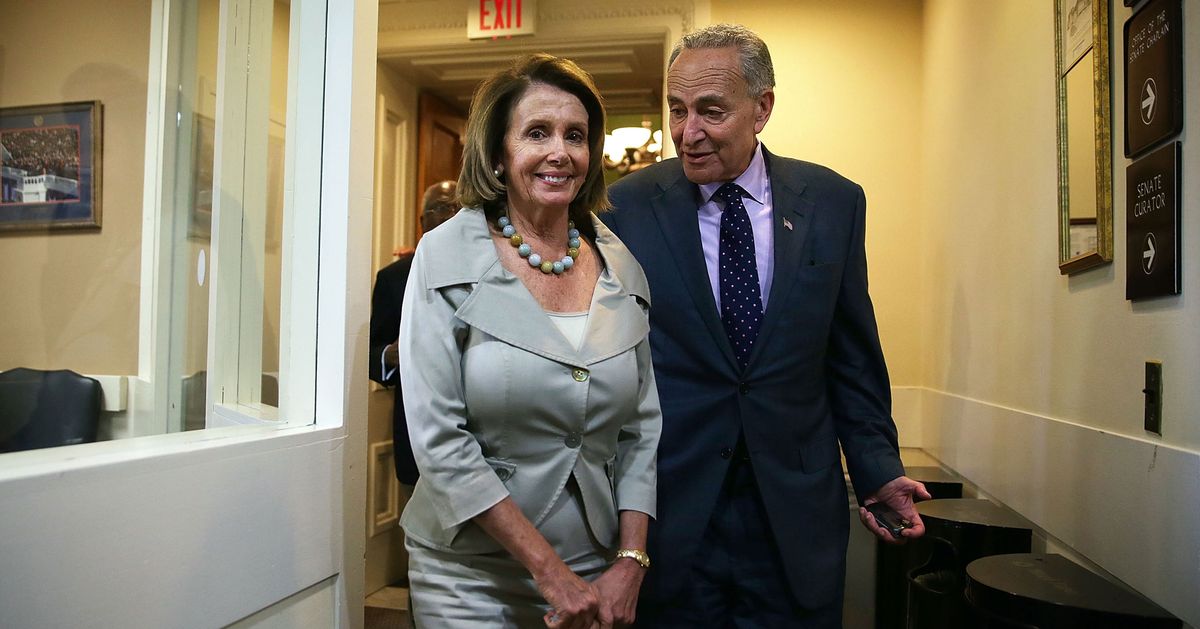
Poor Chuck and Nancy…

President Trump’s political dalliance with “Chuck and Nancy” already is running into problems, as the top congressional Democrats balk at the president’s new terms for a deal to help the roughly 800,000 young illegal immigrants known as ‘Dreamers.’

“This proposal fails to represent any attempt at compromise,” House Democratic Leader Nancy Pelosi and Senate Democratic Leader Chuck Schumer said in a joint statement, after the administration announced the demands Sunday night.

photo

*** But this could mean no other legislative business will advance for the balance of Trump’s first term.

WT: Determined to finally solve illegal immigration, the White House submitted a 70-point enforcement plan to Congress Sunday proposing the stiffest reforms ever offered by an administration — including a massive rewrite of the law in order to eliminate loopholes illegal immigrants have exploited to gain a foothold in the U.S.

The plans, seen by The Washington Times, include President Trump’s calls for a border wall, more deportation agents, a crackdown on sanctuary cities and stricter limits to chain migration — all issues the White House says need to be part of any bill Congress passes to legalize illegal immigrant “Dreamers” currently protected by the Obama-era deportation amnesty known as DACA.

But the plans break serious new ground on the legal front, giving federal agents more leeway to deny illegal immigrants at the border, to arrest and hold them when they’re spotted in the interior, and to deport them more speedily. The goal, the White House said, is to ensure major changes to border security, interior enforcement and the legal immigration system.

“Anything that is done addressing the status of DACA recipients needs to include these three reforms and solve these three problems,” a senior White House official told The Times. “If you don’t solve these problems then you’re not going to have a secure border, you’re not going to have a lawful immigration system and you’re not going to be able to protect American workers.”

All told, the list includes 27 different suggestions on border security, 39 improvements to interior enforcement and four major changes to the legal immigration system.

The White House said the list was built from the ground up, with input from the Justice, State and Labor Departments and the three main immigration agencies at Homeland Security, each of whom was asked what tools they needed to finally get a handle on illegal immigration.

Ideas poured in, ranging cracking down on sanctuary cities that shield illegal immigrants — a long-running battle — to new proposals, such as doling out assistance to other in the Western Hemisphere, enlisting them as partners in the effort to stop illegal immigrants heading north.

The running theme of the list, though, is closing loopholes that illegal immigrants have exploited:


• Lax asylum standards, which illegal immigrants have learned to game through saying “magic words” that earn them instant protections, would be stiffened.

• The Unaccompanied Alien Children — or UAC — who streamed to the U.S. under President Obama would have to prove they really are without parents and are fleeing abuse, in order to access generous humanitarian protections.

• Visitors who come legally but overstay their visas — perhaps now an even larger group of illegal immigrants than those who jump the border — would, for the first time, face a misdemeanor penalty.

• A 2001 Supreme Court decision that has forced the release of tens of thousands of illegal immigrants, including murderers, would be curtailed.

• The ability of federal, state and local authorities to detain illegal immigrants would be fully enshrined in law, helping settle a long-running question that’s fueled some sanctuary cities.

Also on the list are proposals that have been included in past immigration bills that garnered bipartisan support such as canceling the annual visa lottery that doles out 50,000 green cards at random, and requiring all businesses to use E-Verify, the government’s currently voluntary system for checking to make sure new hires are legally eligible to work.

Immigrant-rights advocates had feared the move, saying they believed Mr. Trump was giving in to hard-liners in his administration, including senior adviser Stephen Miller.

“President Trump and Members of Congress need to decide – do they want to resolve this crisis, or do they want to fall prey to Stephen Miller et al’s strategy to kill legislation and expose all 800,000 DACA beneficiaries to deportation?” Frank Sharry, executive director of America’s Voice, said in a statement last week in anticipation of the announcement.

Many of the items on the president’s list have drawn bipartisan support in the past, including more fencing, a massive boost in Border Patrol agents, the end to the diversity visa lottery and mandatory use of E-Verify.

Each of those was, in fact, part of the 2013 immigration bill the Senate approved, with the support of every single Democrat in the chamber.

But Democrats say they only supported those measures at the time as part of a broad compromise that offered legal status to some 8 million of the estimated 11 million illegal immigrants in the country at that point. They said a smaller legalization for Dreamers can’t be coupled with that broad an enforcement surge.

“Please do not put the burden on the Dreamers to accept every aspect of comprehensive immigration reform to get a chance to become citizens of the United States,” Sen. Richard Durbin, a Democrat who was part of the so-called “Gang of Eight” senators that wrote the 2013 bill, told top administration officials at a hearing last week. “That’s too much to ask.”

The senior White House official, though, said Mr. Durbin’s logic amounted to a “false pretense that the safety of the American people should be held hostage to some other goal.”

Congress doesn’t need an excuse to pass laws that make our streets safer or our country safer or make our jobs more secure. It’s just the right thing to do,” the official said.

The administration’s new list is likely to irk Senate Minority Leader Charles E. Schumer and House Minority Leader Nancy Pelosi, who emerged from a meeting with Mr. Trump last month insisting they had the outlines of a Dream Act-style deal that would grant a pathway to citizenship to Dreamers in exchange for limited border security, such as technology, boosting the Coast Guard or adding more inspectors at ports of entry.

The two leaders said they had explicitly won an agreement not to couple the Dream Act with any new action on Mr. Trump’s proposed border wall.