An affordable price is probably the major benefit persuading people to buy drugs at www.americanbestpills.com. The cost of medications in Canadian drugstores is considerably lower than anywhere else simply because the medications here are oriented on international customers. In many cases, you will be able to cut your costs to a great extent and probably even save up a big fortune on your prescription drugs. What's more, pharmacies of Canada offer free-of-charge shipping, which is a convenient addition to all other benefits on offer. Cheap price is especially appealing to those users who are tight on a budget
Service Quality and Reputation
Although some believe that buying online is buying a pig in the poke, it is not. Canadian online pharmacies are excellent sources of information and are open for discussions. There one can read tons of users' feedback, where they share their experience of using a particular pharmacy, say what they like or do not like about the drugs and/or service. Reputable online pharmacy canadianrxon.com take this feedback into consideration and rely on it as a kind of expert advice, which helps them constantly improve they service and ensure that their clients buy safe and effective drugs. Last, but not least is their striving to attract professional doctors. As a result, users can directly contact a qualified doctor and ask whatever questions they have about a particular drug. Most likely, a doctor will ask several questions about the condition, for which the drug is going to be used. Based on this information, he or she will advise to use or not to use this medication.
Sounds great until one notices there is little or no action in Cook County, Illinois, meaning Chicago.
Going back to 2013:
Chicago is the gang capital of the United States. According to the Chicago Crime Commission, a 2012 Chicago Police Department gang audit found there are more than 600 gang factions in the city, with a minimum combined membership of 70,000. As the number of gangs in the city increase, it’s difficult for gangs to control large areas. Instead, gangs cling to streets. Territory disputes mean increased rivalry and as a result, more shootings.
In 2011, a quarter of the 433 homicides in Chicago were gang motivated according to the Chicago Police Murder Analysis; 83 percent of all homicide victims died as a result of shootings.
The Chicago Crime Commission and Chicago Police Department generally define a gang as a group of individuals with regular meeting patterns, have recognizable geographical territory (typically identified by graffiti), leadership structure, a stated purpose or manifesto, and various levels of an organized, continuous course of criminal activities. More here.
By all statistical measure, nothing has improved in Chicago, rather official reports reveal otherwise. So, why is Chicago getting a pass on this? Could it be political correctness, ground zero for illegals and gangs and of course Mayor Rahm Emanuel protecting the sanctuary city status?
Leaders from three Chicago gangs reportedly met last week to discuss plans to kill police officers in response to the officer-involved shooting death of 18-year-old Paul O’Neal.
The Chicago Sun-Times, citing an alert issued to Chicago officers, reported Monday that the meeting took place on Thursday between the gangs Vice Lords, Black Disciples and Four Corner Hustlers.
According to the paper, the Four Corner Hustlers have “provided guns” and pinpointed a “sniper in place.” However, authorities are still unsure where the alleged sniper spot is placed. The gang is also funneling weapons to the other two gangs.
Senior law enforcement officials from the United States, El Salvador, Guatemala and Honduras announced here today criminal charges against more than 3,800 MS-13 and 18th Street gang members in the United States and Central America in a coordinated law enforcement action known as Operation Regional Shield. The charges were announced by Acting Assistant Attorney General Kenneth A. Blanco of the United States, Attorney General Douglas Meléndez of El Salvador, Attorney General Thelma Aldana of Guatemala, and Attorney General Oscar Chinchilla of Honduras, marking the six-month anniversary of the commitment to combat transnational organized crime initiated in March by U.S. Attorney General Jeff Sessions, together with the Attorneys General of the three Central American countries.
The more than 3,800 individuals charged announced today include over 70 individuals in the United States in California, Maryland, Massachusetts, New York, Ohio and Virginia. Law enforcement officers seized six firearms and charged 284 gang members in Guatemala; seized 14 businesses and 11 luxury vehicles and arrested 12 MS-13 money launderers in Honduras; and filed 3,477 criminal charges, resulting in more than 1,400 arrests in El Salvador.
Cases resulting from Operation Regional Shield include:
· One indictment unsealed yesterday in the District of Massachusetts charges Edwin Manica Flores aka Sugar, Chugar and Shugar, an MS-13 leader incarcerated for murder in El Salvador, with a RICO conspiracy for alleged criminal activity he directed in the United States as the leader of MS-13’s “East Coast Program.”
· Charges filed in Long Island on July 19 against 17 MS-13 members for 12 murders, including the April 11 quadruple murder of four men in Central Islip; racketeering; attempted murders; assaults; obstruction of justice; arson; conspiracy to distribute marijuana; and firearms.
On February 9, President Donald J. Trump issued an Executive Order on Enforcing Federal Law with Respect to Transnational Criminal Organizations and Preventing International Trafficking to dismantle and eradicate transnational gangs threatening the safety of our communities. Pursuant to that order, Attorney General Sessions has made dismantling transnational gangs, including MS-13, a top priority.
In March, Attorney General Sessions met with his counterparts from the region and developed strategies and concrete plans to give a strong and coordinated response to MS-13’s increasingly transnational criminal activities. Over the last six months, prosecution teams from the region have been sharing information, evidence and best practices to combat the gangs, as well as coordinating simultaneous operations against gangs that affect both the United States and Central America.
“MS-13 is one of the most violent and ruthless gangs in America today, endangering communities in more than 40 states. But under President Trump’s strong leadership, the Department of Justice is taking them off our streets,” Attorney General Sessions said. “Today, we are announcing that our partnership with law enforcement in Central America, has yielded charges against more than 3,800 gang members just in the last six months. More than 70 of these defendants were living in the United States, from California to Ohio to Boston. MS-13 coordinates across our borders to kill, rape, and traffic drugs and underage girls; we’ve got to coordinate across our borders to stop them. That’s exactly what our courageous and professional DOJ agents and attorneys are doing. We will continue to maintain this steadfast policy and dismantle this gang.”
“Studying their modus operandi, we realized tackling [the gangs] would require working jointly with the United States, Guatemala, and El Salvador,” said Honduran Attorney General Chinchilla Banegas. “This approach has allowed us to share information and strike the financial structures of the gangs.”
“We conducted simultaneous operations coordinated among all of our countries impacting the leadership structure of the gangs and with an emphasis on the gang cliques which are generating the most revenues and with the strongest transnational ties,” said El Salvadoran Attorney General Melendez Ruiz.”
“Our citizens demand prompt and effective responses from the security and justice system,” said Guatemalan Attorney General Aldana Hernandez. “We must therefore continue promoting and implementing actions such as Operation Regional Shield that effectively strengthen the rule of law and build safer, more supportive, more prosperous and fairer societies.”
In El Salvador, Guatemala, and Honduras, the investigation into MS-13 is being handled by regional gang prosecutors who receive State Department-funded training and mentoring from the FBI, U.S. Immigration and Customs Enforcement’s Homeland Security Investigations (HSI) and the Justice Department’s Office of Overseas Prosecutorial Development Assistance and Training (OPDAT). With support from State Department’s Bureau of International Narcotics and Law Enforcement, prosecutors from OPDAT helped establish task forces in the region and work with FBI’s local Transnational Anti-Gang (TAG) units, as well as HSI’s Transnational Criminal Investigative Units (TCIUs). These efforts have helped Central American partners convict thousands of criminals, seize over $1 billion in illicit assets, and coordinate on dozens of transnational investigations with their U.S. counterparts.
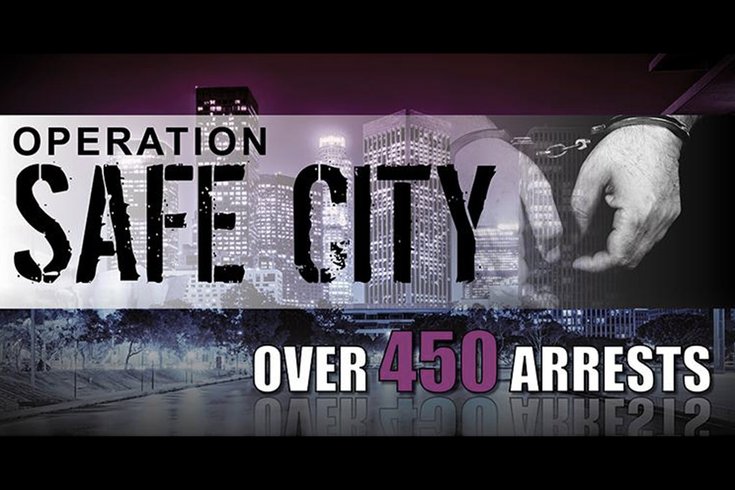
ICE arrests over 450 on federal immigration charges during Operation ‘Safe City’
WASHINGTON – U.S. Immigration and Customs Enforcement (ICE) Enforcement and Removal Operations (ERO) Fugitive Operations teams arrested 498 individuals from 42 countries for federal immigration violations in multiple cities across the U.S. during a four-day operation that ended Wednesday. Operation ‘Safe City’ focused on cities and regions where ICE deportation officers are denied access to jails and prisons to interview suspected immigration violators or jurisdictions where ICE detainers are not honored.
The operation targeted individuals who have violated U.S. immigration laws, prioritizing aliens with criminal convictions, pending criminal charges, known gang members and affiliates, immigration fugitives and those who re-entered the U.S. after deportation. Individuals with active DACA were not targeted for arrest.
“Sanctuary jurisdictions that do not honor detainers or allow us access to jails and prisons are shielding criminal aliens from immigration enforcement and creating a magnet for illegal immigration,” said ICE Acting Director Tom Homan. “As a result, ICE is forced to dedicate more resources to conduct at-large arrests in these communities.”
“ICE’s goal is to build cooperative, respectful relationships with our law enforcement partners to help prevent dangerous criminal aliens from being released back onto the streets. Non-cooperation policies severely undermine that effort at the expense of public safety,” he said.
Operation Safe City arrests took place in Baltimore (28), Cook County, Illinois (30), Denver (63), Los Angeles (101), New York (45), Philadelphia (107), Portland, Ore. (33), Santa Clara County, Calif (27); and Washington, D.C. (14) and the state of Massachusetts (50).
Among those arrested during this week’s operation were:
In Baltimore, a citizen of El Salvador who entered the U.S. illegally on a fraudulent passport, and was previously charged with attempted murder/conspiracy to commit murder and convicted of first degree assault. She was previously released from local custody before ICE could assume custody.
In Boston, a citizen of India who entered the U.S. illegally and who was convicted of indecent assault/battery on a person over 14 and was required to register as a sex offender.
In Denver, a citizen of Guatemala with lawful permanent legal status who was previously convicted of felony menacing, 6 DUIs, child abuse, assault and domestic violence harassment.
In Los Angeles, a citizen of Mexico and documented Colonia Chiques gang member who entered the United States illegally. At the time of his arrest, the subject rammed multiple law enforcement vehicles in an effort to evade arrest. After he was placed under arrest, a search of his person revealed a loaded handgun in his pocket. The subject was turned over to local authorities and charged with assault with a deadly weapon, probation in possession of firearm, carrying a concealed weapon and carrying a loaded firearm in public.
In New York, a citizen of Ecuador with lawful permanent resident status who was previously charged with sexual abuse of a minor and convicted of endangering the welfare of a child, and convicted of sexual abuse of a minor under 14. He was previously released from local custody before ICE could assume custody.
In Philadelphia, a citizen of the Dominican Republic, who entered the country illegally and who has previous convictions for possession of firearms. He was previously released from local custody before ICE could assume custody.
In San Francisco, a citizen of El Salvador who entered the country illegally and who has previous convictions for sex with a minor under 16. He was previously released from local custody before ICE could assume custody.
In San Jose, a citizen of Mexico who entered the U.S. on a visa and overstayed that visa for more than 10 years. He was previously convicted of felony possession and purchase of narcotics, possession of a controlled substance for sale, and felony child cruelty with the possibility of injury or death. He was previously released from local custody before ICE could assume custody.
In Seattle, a citizen of Mexico who entered the country illegally and who has previous convictions for DUI, reckless endangerment and negligent driving.
In Washington, D.C., a citizen of El Salvador who entered the country illegally and who has previous convictions for possession of an unregistered firearm and unlawful possession of ammunition.
Of the 498 individuals taken into custody during this operation for immigration violations:
317 had criminal convictions, as noted in the chart below;
68 are immigration fugitives;
104 are previously deported criminal aliens; and
18 are gang members or affiliates.
***
Seems we still cant get things right and comply with all the recommendations made in 2004 by the 9/11 Commission.
The Global Entry Program provides expedited clearance for pre-approved, low-risk international travelers and members of these programs can expect expedited processing when entering the United States using automated kiosks at airports. As an added benefit, Global Entry members are also eligible to participate in the TSA Pre✓™, the Transportation Security Administration’s expedited security program.
Travelers interested in enrolling in Global Entry can learn more about that and other CBP Trusted Traveler Programs or apply online through the CBP website. Read more here as a second center just re-opened again in Boston.
Primer: One of the easiest things to do is to scam and fraud the Federal government without consequence as noted by this report by the DHS Office of Inspector General when it comes to being illegal with multiple identities and claim any and or all benefits from entitlement programs and still not be deported.
The swelling population of illegal immigrants and their kids is costing American taxpayers $135 billion a year, the highest ever, driven by free medical care, education and a huge law enforcement bill, according to the the most authoritative report on the issue yet.
And despite claims from pro-illegal immigration advocates that the aliens pay significant off-setting taxes back to federal, state and local treasuries, the Federation for American Immigration Reform report tallied just $19 billion, making the final hit to taxpayers about $116 billion.
State and local governments are getting ravaged by the costs, at over $88 billion. The federal government, by comparison, is getting off easy at $45 billion in costs for illegals.
President Trump, Attorney General Jeff Sessions and conservatives in Congress are moving aggressively to deal with illegals, especially those with long criminal records. But their effort is being fought by courts and some 300 so-called “sanctuary communities” that refuse to work with federal law enforcement.
The added burden on taxpayers and the unfairness to those who have applied to come into the United States through legal channels is also driving the administration’s immigration crackdown.
The added burden on taxpayers and the unfairness to those who have applied to come into the United States through legal channels is also driving the administration’s immigration crackdown.
The report, titled “The Fiscal Burden Of Illegal Immigration on U.S. Taxpayers,” is the most comprehensive cost tally from FAIR. It said that the costs have jumped about $3 billion in four years and will continue to surge unless illegal immigration is stopped. It was provided in advance exclusively to Secrets.
“Clearly, the cost of doing nothing to stop illegal immigration is far too high,” said FAIR Executive Director Dan Stein. “President Trump has laid out a comprehensive strategy to regain control of illegal immigration and bring down these costs,” said Stein. “Building the wall, enhancing interior enforcement and mandating national E-Verify will go a long way in bringing these ridiculously high costs under control,” he added.
Over 68 often shocking pages, FAIR documents the average $8,075 in state, local and federal spending for each of the of 12.5 million illegal immigrants and their 4.2 million citizen children.
Broadly, the costs include $29 billion in medical care, $23 billion for law enforcement, $9 billion in welfare, $46 billion for education.
Just consider the cost of teaching an illegal alien child who doesn’t speak English. FAIR estimates an average cost of over $12,000 a year, and that can reach $25,000 in New York. Add to that welfare, health care, school lunches, and the per student price soars.
In state costs alone, California leads the list at $23 billion per year, followed by Texas at $11 billion, and New York at $7.4 billion.
And it also documents the taxes paid and how they don’t come close to offsetting the costs. What’s more, FAIR noted that 35 percent of the illegal population operate in an underground economy hidden from tax collectors. And worse, employers hire illegals and either pay them cheaply or under the table.
“The United States recoups only about 14 percent of the amount expended annually on illegal aliens. If the same jobs held by illegal aliens were filled by legal workers, at the prevailing market wage, it may safely be presumed that federal, state and local governments would receive higher tax payments,” said FAIR.
Key findings pulled from the report:
The staggering total costs of illegal immigrants and their children outweigh the taxes paid to federal and state governments by a ratio of roughly 7 to 1, with costs at nearly $135 billion compared to tax revenues at nearly $19 billion.
The nearly $135 billion paid out by federal and state and local taxpayers to cover the cost of the presence of 12.5 million illegal aliens and their 4.2 million citizen children amounts to approximately $8,075 per illegal alien and citizen child prior to taxes paid, or $6,940 per person after taxes are paid.
On the federal level, medical ($17.14 billion) is by far the highest cost, with law enforcement coming second ($13.15 billion) and general government services ($8 billion) third.
At the state and local level, education ($44.4 billion) was by far the largest expense, followed by general public services ($18.5 billion) and medical ($12.1 billion).
The top three states based on total cost to state taxpayers for illegal immigrants and their children: California ($23 billion); Texas ($10.9 billion), and New York ($7.5 billion).
BostonGlobe: The United States remains an easy mark for drug dealers, terrorists and others who prize anonymity when registering aircraft or getting licensed to fly. So much for the lessons of 9/11.
As he sought to unspool the story behind the tragedy, Asnaldo Del Valle Gonzalez would come face to face with what he calls “the monster,” the web of secrecy that surrounds thousands of planes like the one that devastated his family, making it nearly impossible to identify a plane’s real owners and hold them accountable.
A Spotlight Team investigation has found that lax oversight by the Federal Aviation Administration, over decades, has made it easy for drug dealers, corrupt politicians, and even people with links to terrorism to register private planes and conceal their identities. With the US stamp of approval — signified by a number on the tail fin that always begins with the letter “N” — owners often find more freedom from scrutiny and anonymity while traveling. This has allowed criminals and foreign government officials to mask illicit activities or keep wealth hidden from their home countries.
The registered owner of the crashed twin-engine Piper, a company called Aircraft Guaranty, is part of a nearly invisible private industry that sometimes operates from computer terminals inside FAA offices in Oklahoma, busily registering planes on behalf of foreign nationals — and working in a system that allows them to hide their names from the public. More than 1,000 planes are registered in Aircraft Guaranty’s name at an address in a Texas town of 2,500 that doesn’t have an airport. But it’s enough to give clients both anonymity and coveted US registration for their planes.
Gonzalez never did figure out who really owned the plane that crashed into his home — even when the name of the client Aircraft Guaranty had on file, Luis Nuñez, was revealed during court proceedings. A court official who visited the listed Miami address for Nuñez found cobwebs on the doorknob and a package addressed to someone else. A private detective working for Gonzalez’s attorneys spent a year searching for additional clues and for Nuñez, before concluding that he was nothing more than a “phantom person.” The Globe also was unable to locate Nuñez.
More than 16 years after aircraft were used as weapons in the worst terrorist attack in US history, the FAA still operates more like a file clerk than a reliable tool for law enforcement, enabling secrecy in the skies here and abroad. The price to register a plane is still just $5 — the same as in 1964, even though the agency has the power to raise it — generating little revenue that could be used to expand oversight. And the FAA does so little vetting of the ownership and use of planes listed in its aircraft registry that two of the airliners hijacked and destroyed on 9/11 were still listed as “active” four years after. And that’s prompt compared to this: The FAA didn’t cancel the registration for one TWA cargo plane until 2016, 57 years after it crashed in Chicago, killing the crew and eight people on the ground.
Today, thousands of planes are registered using practices that can allow for anonymity of ownership. A Spotlight review shows that one out of every six aircraft is registered through trusts, Delaware corporations, or using post office box addresses, techniques commonly used to make it hard to discern the true owner. The number is likely even higher because the FAA acknowledged that it does not verify the validity of documents filed for the registry’s more than 300,000 planes.
There are 314,529 aircaft with N-numbers in the FAA’s registry.
54,232 of those aircraft are registered using known secrecy tactics.
7,610 are registered to companies known for providing trust services to non-U.S. citizens.
Critics, including federal investigators who’ve scrutinized the aircraft registry, say it is little more than “a big file cabinet” in which precious little information has been verified, leaving the door open for people with bad intentions to hide behind a US registration.
FAA officials essentially agree. They stress that they have a “robust oversight system” that includes a team of special agents to investigate fraudulent plane ownership, but say they don’t have the resources to determine whether information on US plane registration forms is accurate.
“The FAA is constantly working to strengthen the integrity of Registry information,” according to an FAA statement to the Spotlight Team that came after months of correspondence about the registry’s shortcomings. “The agency is developing a plan to significantly upgrade and modernize the aircraft registration process.”
But that’s no guarantee reforms will come swiftly, if at all. The FAA has a reputation for making change at a snail’s pace even when problems are clearly identified: The agency, for example, still doesn’t put a photo of the pilot on airman’s licenses 13 years after Congress called for it.
“It is like walking through thick glue. They just don’t move very quickly at the FAA, and it’s a chronic problem,” said former North Dakota senator Byron Dorgan, who served as chairman for the Senate aviation panel in 2009 and 2010. “I would have thought after 2001 that we would have made more progress by now with respect to verifying the ownership of aircraft.”
Today, the public often only discovers the gaps in US oversight when something goes wrong or criminal investigators get involved:
The Venezuelan air force shot down a US-registered, drug-loaded plane near Aruba in 2015, leaving a trail of bodies and cocaine floating in the bright blue sea. Records showed the aircraft was registered to a Delaware shell company and managed by Conrad Kulatz, a Fort Lauderdale attorney in his late 70s.
Federal agents investigating US-registered planes that bore the hallmarks of drug smuggling in 2013 found that three had been illegally registered here in the name of a Mexican national. He fooled the FAA simply by listing a Texas strip mall near the Mexican border as his address and claiming to be a US citizen.
Early this year, US officials labeled Venezuela’s vice president, Tareck El Aissami, a foreign narcotics kingpin, freezing access to his US assets, including a luxury jet. The Treasury Department charged that the jet, registered at the FAA in the name of a shell company, was actually controlled by El Aissami, who, in addition to drug trafficking, also has been accused of aiding Islamic extremists. But, at the FAA, the jet’s registration remains valid in the name of 200G PSA Holdings.
In 2015, federal authorities broke up a scheme to deliver US airplanes registered through trusts to an Iranian airline that US officials say helps to transport troops and materiel to the brutal regime of Bashar Assad in Syria. Though the sale was stopped, the names of the people who planned to sell the airliners to Mahan Air were not revealed publicly.
With so little oversight, there may be more dangerous people in control of American-registered planes whose names have not come to light. The 9/11 conspirators considered using private crop-dusting planes to launch terror attacks before deciding to hijack commercial planes instead. Three months before the World Trade Center attack, terrorist Zacarias Moussaoui was trying to acquire crop dusters in Oklahoma. There is no reason to think his efforts would have been blocked or even noticed by the FAA’s Aircraft Registry just a few miles away in Oklahoma City.
Responding to the Globe’s findings, US Representative Stephen Lynch, a Massachusetts Democrat who has long promoted corporate transparency, said the public urgently needs to know whether there are other potential terrorists among the thousands of unknown individuals who control US-registered planes.
“The FAA has basically abdicated their responsibilities,” said Lynch, who in July filed a bill requiring that the real owners of US-registered planes be publicly disclosed. “We have all these aircraft being operated by who knows who and for what purpose. . . . It’s not the exception, it is the rule, and I think it is important to hold the FAA accountable.”
Family pictures, fitness schedules, sticky notes, and birthday balloons decorate the computer terminals inside the FAA Civil Aviation Registry’s public documents room in Oklahoma City.
This is where members of the public can look up information on US-registered planes, but the terminals at the back are rarely used, according to the man at the desk, and when a Globe reporter tried one, it was slow and balky. Most of the other terminals — many of them seemingly better machines equipped with double monitors — are used by the same people day after day, and they’ve dotted their workstations with personal items.
They work for aircraft title companies, law firms, and companies that create trusts — the way for foreign nationals to register their planes here legally and without attracting public attention. Companies actually lease terminals in the document room, allowing Aircraft Guaranty to boast to potential clients that it has an office inside the FAA’s Mike Monroney Aeronautical Center.
For anywhere from a few hundred to several thousand dollars, the agents will create a legal trust to “own” private aircraft on behalf of their actual owners, whose names are typically not disclosed to the public. The registration form itself is even easier to complete — less work than registering a car in most states. Once the paperwork is done, agents can turn it in at the cashier’s window in the corner of the document room, paying a $5 registration fee whether the plane is a $20,000 Piper Tomahawk or a $20 million Learjet.
Then, the FAA is supposed to review the registrations for completeness, but a 2013 outside review found that the FAA is not very thorough. The Department of Transportation inspector general audit estimated that records for more than half the aircraft registered to non-US citizens through trusts were incomplete.
In part because US plane registration is so cheap, easy, and often anonymous, it is extremely popular for people registering internationally. Two-thirds of business jet owners worldwide register their planes in the United States, according to a 2014 estimate on the website Corporate Jet Investor. Another bonus: US-registered planes are believed to attract less attention when traveling internationally.
Defenders of these “noncitizen trusts” say they’re an important tool for businesses, especially companies that include foreign nationals among their owners or executives. US corporations conducting global business might have key officers who do not meet the FAA’s citizenship requirements. Additionally, noncitizens who plan to relocate planes from the United States sometimes set up trusts so that the plane has a legal owner while in transit.
Under US law, foreigners can’t legally register a plane here unless they have a US citizen or US-based legal entity to serve as their representative in dealing with the FAA. It is a longstanding safeguard that, in practice, safeguards nothing.
Champions of the trust system also point out that the FAA has tightened up the rules in recent years, requiring the trustees to disclose agreements with their clients to the FAA at the time of application for registration. The trusts don’t have to keep the names of their clients in the FAA’s permanent record, but they are supposed to make the information available to investigators when asked.
The FAA checks for the completeness of the paperwork, and trusts are often reviewed by the agency’s legal counsel’s office. However, the agency does not verify that the trust information is accurate, nor are they required to under the law. When the Department of Transportation inspector general tried to get the names of the real owners directly from trust companies in 2013, investigators said some trustees either refused to provide the information or took months instead of the two days allowed by the FAA to turn over the names.
The FAA, similarly, puts few restrictions on who can hang out their shingle as a trust company set up to register aircraft. As a result, the industry is a hodgepodge of banks, businesses, and individuals, including several lacking recognizable websites or phone numbers. At least three operate offshore in Germany, the Netherlands, and the United Kingdom — even though the whole point of such trusts is that they are supposed to provide a US contact for the FAA.
A Georgia-based trust company called Plane Fun Inc. exemplifies the elusiveness of several of the trust agents contacted by the Spotlight Team. Plane Fun lists a modest, split-level home in Snellville, Ga., as its headquarters, with more than 200 planes registered to the address.
But the home is owned by Kathleen Schumacher, who told the Globe she is not involved with the business. “I handle nothing on it; my son does,” Schumacher said. Despite repeated attempts, the Globe was unable to reach Schumacher’s son, Kenneth, who she said is the operator of Plane Fun.
Aircraft Guaranty, with offices in Texas and Oklahoma, is much bigger and more visible than Plane Fun. The nearly 30-year-old business describes itself as “one of the most well respected and trusted Trustee Service providers in the aviation industry.” But, like the manager of Plane Fun, Aircraft Guaranty owner Debbie Mercer-Erwin didn’t want to talk about her work.
Only after numerous attempts to interview Mercer-Erwin, including a visit to the single-family home in Oklahoma City where she has an office, did the Globe receive a statement from the company’s attorney.
Aircraft Guaranty “fully complies with all US laws and FAA and other regulations in providing this specific service to its customers,” wrote attorney Wallace C. Magathan III of Miami. He noted that the firm voluntarily follows federal “know your customer” rules, which require company officials to collect “personally identifiable information” from clients that may include name, date of birth, address, and identification number.
Magathan added that Aircraft Guaranty “is not in the business of thoroughly investigating its customers’ private business affairs.” He declined to answer the Globe’s questions about individual clients.
But detailed information about some of Aircraft Guaranty’s more unsavory past clients has come to light. One of them, Fausto Veliz Urbina, was sentenced to 78 months in federal prison for cocaine trafficking before being deported to Mexico in 2010. According to federal court records in Florida, he registered a plane through Aircraft Guaranty on behalf of a Mexican shell company, Consorcio Melun SA de CV, in 2012, something investigators discovered while looking at a fleet of planes suspected of involvement in drug trafficking.
A former Guatemalan vice president, Roxana Baldetti, has been indicted in the United States on federal drug charges and is currently jailed in her homeland. According to media reports, she regularly jetted around in a Raytheon 400A that FAA records show was registered by Aircraft Guaranty on behalf of a Panamanian company, Best Advisors Group Inc. Baldetti resigned and was arrested on fraud charges in 2015 amid media reports of her many luxury purchases, including multimillion-dollar homes.
And there’s Luis Nuñez, the “phantom person” whose plane — registered through Aircraft Guaranty — crashed into Asnaldo Gonzalez’s house. Gonzalez’s inability to find the real owner prevented his family’s attorneys from suing for damages to rebuild his family’s life.
Analysts say there’s a good reason that trust companies like Aircraft Guaranty are attractive to shady characters: Anonymity is good for business.
“Criminals find that US planes allow them to fly under the radar far more easily than if using some dodgy Russian aircraft,” said Kathi Lynn Austin, an expert in arms trafficking and executive director of the Conflict Awareness Project. “The simple act of flying out of US airspace — where regulatory standards are perceived to be high — conveys a level of legitimacy on its aircraft and its operator. The American flag also makes it easier for corrupt officials to wittingly turn a blind eye.”
In 2009, a jet registered on behalf of a foreign owner through Wells Fargo crashed in a remote area of the Bahamas, triggering scrutiny of the FAA’s noncitizen trust policy. FAA officials briefly shut down the option for foreigners to register through noncitizen trusts, amid concern that some plane owners were making side agreements that made ownership hard to trace, especially in an emergency.
“There was a frustration that everybody had,” Joe Standell, counsel to the FAA’s Aeronautical Center at the time, recently told the Globe. “You let them register airplanes as an owner trust. But look what that does; nobody is accountable.”
Trust companies such as Aircraft Guaranty teamed up with businesses to ensure the survival of noncitizen trusts, arguing they are crucial to companies with multinational executives who want to own American-registered aircraft. In all, a dozen associations along with 70 companies and law firms combined forces to deluge the FAA with comments.
“If it isn’t broken, don’t fix it,” advised Conrad Kulatz, the Florida attorney linked to the drug-laden plane shot down off Aruba in 2015, in a 2012 e-mail to the FAA. “I have never had a problem arising from trustee registration of aircraft in over 30 years practicing law in South Florida.”
The FAA eventually backed off, allowing foreign plane owners to use noncitizen trusts as long as they met some new conditions: share the trust agreements with the FAA and agree to provide ownership information within 48 hours when requested.
A bright orange fireball erupted on the screen of Jeroen Lucas’s video camera while he filmed a commercial for his media firm in the early morning of Jan. 29, 2015. His frame captured the Aruba skyline twinkling at dawn as a flaming streak twisted and turned over the Caribbean Sea.
Minutes before the flash appeared, a business jet had failed to respond to air traffic controllers, and soon the Venezuelan Air Force marked the private jet in its crosshairs. A shot transformed the white and green Challenger 600 into a Roman candle spiraling through thick gray clouds. The plane crashed in the water, killing three people. More than a ton of cocaine floated on the waves.
The aircraft was obtained by two Colombian drug kingpins, Dicson Penagos-Casanova and Juan Gabriel Rios Sierra, who worked as key members of an international drug trafficking ring that supported multiple cartels bringing cocaine to the United States, federal prosecutors said in the indictment.
But the aircraft’s tail number, N214FW, told a different story, tracing the ownership of the plane to a company incorporated in Delaware, a state that often requires minimal public disclosure about the owners of a business. FAA records showed that the cocaine-packed plane was owned by Dinama Aircorp Inc., formed in Delaware less than two weeks before it purchased the airplane in 2013. According to FAA records, the president and sole officer of the firm was Kulatz, the Fort Lauderdale attorney who, a few years earlier, sent an e-mail to the FAA opposing efforts to make plane ownership more transparent.
There are nearly 200 other planes registered to the same address as Dinama Aircorp in Delaware, including a jet that was seized in 2014 by the Dominican Republic, according to a Globe analysis. Kulatz and another attorney are listed as the key officers of the firm that registered the seized plane.
Kulatz did not respond to repeated calls and correspondence from the Globe. At one point, a receptionist at his office said Kulatz had retired. In July, the Florida bar association listed him as ineligible to practice law because he did not meet the continuing legal education requirement.
Penagos-Casanova and Rios Serra are like many drug traffickers who actively seek American planes because they believe they can more easily “fly under the radar,” according to Benjamin Barron, an assistant US attorney in the Central District of California, who prosecuted the pair. To ensure success, they paid aircraft owners a fee of about 30 to 35 percent of the cocaine shipment and bribed Venezuelan military and government officials, according to federal court records. Kulatz has not been accused of wrongdoing in connection with the case.
“They hope they will attract less suspicion particularly by using expensive jets that are US-registered and might appear to be something that a corporation might use,” Barron said. “It’s all a way of avoiding detection and getting the cocaine safely from point A to point B.”
But Delaware makes hiding especially easy for corporations of all kinds, setting some of the nation’s most lenient rules. For as little as $90, people can create a Delaware-based company to “own” anything they don’t want to be associated with by name. Delaware goes further in protecting privacy than most states, not requiring a list of officers for some types of firms.
Transparency International, a global anticorruption organization, calls Delaware a haven for transnational crime and “a place where extreme corporate secrecy enables corrupt people, shady companies, drug traffickers, embezzlers, and fraudsters to cover their tracks when shifting dirty money from one place to another.”
More than one-third of all US aircraft — 122,336 — are registered to corporations. Of those, nearly 11,000 are registered to firms in Delaware.
A review of FAA records by the Globe found that about 3,500 aircraft are registered to more than 2,000 companies located at a single Wilmington address that is home to a business incorporator.
It is impossible to know how many planes are registered to non-US citizens through trusts because the FAA does not keep track. The Globe identified several businesses that provide the service. Together they have more than 7,500 aircraft registered across the country.
Law enforcement officials say these easy-to-create shell companies can be significant roadblocks in trying to convict criminals. A Los Angeles DEA agent who investigates narcotics-related aircraft said the dummy ownership makes it harder for him to draw a direct connection between drug dealers and their product.
“If I can’t demonstrate the individual who owned the aircraft or whose name was on the registration paperwork received money to knowingly and intentionally purchase this vessel in a drug transaction, then almost always there is no prosecution,” said the agent, who spoke on condition of anonymity because the case is ongoing.
Penagos-Casanova and Rios Serra acquired a second drug-loaded plane that crashed in the Caribbean Sea due to engine failure in May 2015, according to court papers. In all, authorities recovered more than $70 million worth of cocaine from the two planes.
Both men pleaded guilty in US District Court in Los Angeles to “conspiracy to possess cocaine on board a United States-registered aircraft with intent to distribute.” They are awaiting sentencing.
Colombian kingpins are not the only suspicious users of aircraft registered to corporations set up by Kulatz, the Florida attorney. He and his wife are listed as officers of Delaware-based Secure Aircorp Inc., which owns the Gulfstream American 2 jet that was seized in 2014 by the Dominican Republic, according to FAA records.
N522HS was seized as part of an investigation by the Dominican Republic’s Justice Ministry Anti-Corruption Department into possible money laundering and embezzlement by one of the country’s senators, Felix Bautista. According to Dominican media reports, authorities said Bautista attempted to evade prosecution and the forfeiture of his aircraft by changing the plane’s tail number about two months before he was indicted. While businesses and individuals may request specific tail numbers to act as vanity plates, criminals utilize the tactic to evade detection, much like switching a license plate on a car.
FAA officials in a statement said such number changes are routine: “The Registry does not generally deny requests for a number change,” in part because they can still track planes by their serial numbers.
Likewise, FAA officials appeared to have no idea that plane N214FW had been shot down off Aruba or that it was controlled by alleged international drug lords. About 15 months after the plane crashed, the agency sent a notice to Dinama Aircorp reminding the company to renew registration for N214FW. Over several months, the agency sent multiple letters to the same address and all came back to Oklahoma City marked “Return to sender.”
30 years of frustration
Ronald Reagan was president when Congress took the FAA to task for not doing enough to keep criminals from secretly acquiring US-registered planes as well as pilot’s licenses.
At the 1988 hearing held by the House Committee on Public Works and Transportation, members wanted to know why the FAA so rarely revoked aircraft and airmen certifications for individuals knowingly violating controlled substance laws in the Aviation Drug-Trafficking Control Act of 1984. Over a four-year period, the FAA revoked the certifications of only three aircraft and six airmen.
Law enforcement officials explained that criminals were able to hide behind a veil of anonymity created through fictitious owners, fake addresses, post office boxes, illegible signatures on documents, repeated changes in ownership, and the switching of tail numbers. These administrative issues — found on paper and documents — created hurdles for law enforcement officers attempting to fight the US war on drugs.
“Aircraft identification and registered owner identification is an elusive veil, behind which the smuggler finds refuge,” testified Carol Knapik, then a detective with Florida’s Broward County sheriff’s office. “All to his advantage that there is no true piece of identification required for the registration of an aircraft.”
Congress directed the agency to make information in the aircraft registry more reliable, prompting common-sense reforms at the FAA such as using computer software to validate addresses and requiring that signatures be legible.
But after 9/11, the continuing weakness of FAA oversight — and the urgent need for reliable information — became increasingly obvious. An internal agency audit of the aircraft registry in 2010 found unreported address changes and sales that left the ownership of about one-third of the more than 300,000 aircraft on the registry in question. In response, the FAA required reregistration of all aircraft with mandated renewal.
Three years later, the inspector general at the Department of Transportation identified a concerning pattern among trusts set up on behalf of foreigners: 5,600 of the aircraft records maintained by the FAA were incomplete, often lacking key information on owner identities. And, in a follow-up letter, the investigators identified several trust-owned aircraft that should have set off alarms:
An FAA inspector was unable to obtain information about who was flying a US trust-registered Boeing 737 in the United Arab Emirates. The plane was suspected of not following US regulations and possibly being used for illegal activity.
Hours before the United Nations Security Council met in 2011 to approve a no-fly zone over Libya, a US plane registered to a trust approached the Tripoli International Airport without a landing permit.
And one aircraft was registered in a trust arrangement on behalf of a Lebanese politician who was “backed by a well known US government-designated terrorist organization.”
It wasn’t until March 2017, after months of questions from the Globe, that FAA officials sat down with the inspector general to address its seven major concerns. After the meeting, the inspector general said the FAA had addressed three of them, tackling issues of data integrity and security.
‘A crown jewel target’
Today, US air security is a study in contrasts. Since the attacks of 9/11, the government has made enormous changes to security procedures in commercial air travel, creating a whole new agency to screen passengers before they board. Since hijackers seized and weaponized four commercial airliners that September morning in 2001, the public has gotten used to a host of small indignities, from removing shoes to whole-body scans and dogs sniffing their carry-ons, all in the name of safety on planes.
But there have been far fewer security improvements for planes used in general aviation that, collectively, represent three-quarters of all US air traffic.
Partly, that may reflect some security analysts’ view that private planes can do far less damage as tools of terror than airliners.
But private planes have been used in attacks such as Joseph Stack’s 2010 suicide crash into the IRS offices in Austin, Texas, which killed an IRS agent and injured 13 others. Stack had posted a suicide note about the “greed” of the IRS on the same day he burned down his own house and deliberately flew his Piper Dakota into the four-story office building.
The 9/11 conspirators had bigger ambitions for small planes. Zacarias Moussaoui, one of the masterminds who had looked into buying crop-dusters in Norman, Okla., and possessed “a computer disk containing information related to the aerial application of pesticides” when he was arrested, according to his 2001 indictment. The indictment said that lead hijacker Mohammed Atta made similar inquiries in Florida in 2000 and 2001.
In June, all these years later, the head of US Homeland Security called commercial aviation “a crown jewel target” for terrorists.
“The threat has not diminished. In fact, I am concerned that we are seeing renewed interest on the part of terrorist groups to go after the aviation sector,” said John Kelly, then-Department of Homeland Security secretary and now President Trump’s chief of staff, during remarks on enhanced aviation security for commercial flights in June.
Scars that won’t heal
For Asnaldo Gonzalez, the failed oversight of US-registered planes had a devastating effect. The federal lawsuit filed on his behalf by Podhurst Orseck, a Miami-based firm, against the plane’s owner was dropped partly because the true owner couldn’t be found to hold accountable. To this day, nine years later, Gonzalez still cannot afford to rebuild his shattered home.
“Absolutely everyone is in total and absolute silence,” said Alfredo Jose D’Ascoli Centeno, an attorney for the Gonzalez family in Caracas.
Before the crash, Gonzalez’s own multistory dwelling was the largest home on the block. It served as an imposing reminder of an accomplished dream — a house built to fit his entire extended family.
Now the cement walls peel with black and gray scars. The bedrooms, once filled with the laughter of his grandchildren, resemble oversized emptied ashtrays. An old couch, two plastic chairs, and wall decorations of homes shifted sideways are among the only family items left behind in the uninhabitable house.
“What I’m looking for is for everyone involved in this tragedy to be held responsible,” said Gonzalez, who continues to pursue the case in Venezuela. “My family and I are fighting without any type of economic resources, and we will fight to the end. “
As Gonzalez recounts his nightmare, voices of children echo from the elementary school across the street as they change classes and play at recess. His wife, Carmen, folds her hands inside of her lap and presses her lips together. The story makes her breathe in hard.
Gonzalez’s grandson, Joecruz, who was rescued from his burning crib and is now 9, paces in the background as he listens to the familiar story that always ends with the same terrifying climax: The explosion. The terror. The deaths.
Joecruz wears his baseball cap low, covering his dark hair and a burn scar that stretches across his forehead. Below his deep brown eyes on both of his cheeks are two more scars, constant reminders he’s unable to erase.
In the United States, with a starting number such as $500,000, you can buy a passport and with just a little more you can advance to citizenship under the EB-5 visa program. Swell huh? It has been going on for years and even Senator Dianne Feinstein has an issue with it. So, where is President Trump on the matter? Crickets…..
In February of this year, Senator Grassley and Feinstein introduced legislation to stop the EB-5 abuse.
The EB-5 program is inherently flawed,” Feinstein said in a joint statement with Grassley on Friday. “It says that U.S. citizenship is for sale. It is wrong to have a special pathway to citizenship for the wealthy while millions wait in line for visas.”
Roughly 10,000 EB-5 visas are awarded each year, with more than 85 percent going to Chinese investors in 2014, according to a study by Savills Studley, a real estate services firm. The program, begun in 1990 to stimulate the economy, has turned into a convenient way for wealthy Chinese citizens to become permanent U.S. residents and later bring over their family members. More here.
The Chinese, the Ukrainians and the Russians, all oligarchs are the largest exploiters of the program and most of these oligarchs are corrupt, paying for speedy processes with dirty money.
We know there are multiple investigations going on inside the DC Beltway regarding Russian interference and rightly so. Both Democrats and Republicans have some complicity in foreign collaboration.
In March of this year, this site published an extensive summary of Russian relations with people in the Trump camp as well as with Nancy Pelosi and Steny Hoyer. Few take a look at Secretary Wilbur Ross and his Cyprus connections. Cyprus is a location where abuse and corruption is as normal as breathing. One interesting person is Dmitry Rybolovlev, who happens to know Donald Trump as well as Wilbur Ross.
Beyond paying for a speedy process to obtain a passport or citizenship, there is also yet another method and that is money laundering illicit funds through U.S. real estate purchases where the buyer’s name is not listed if cash is paid. You dont say…..yup. This site published a summary of such activities in July of 2014.
So, while we have examined the issue in the United States and in Cyprus, it is the same for the European Union.
Russian and Ukrainian oligarchs suspected of corruption are among hundreds who have acquired EU passports under the “golden visa” program – a bourgeois shortcut to European citizenship in exchange for cash investments, the Guardian reported Sunday.
A list of recipients seen by The Guardian includes “prominent businesspeople and individuals with considerable political influence.”
The paper claims that Cyprus alone has made over $US 4 billion selling passports to international oligarchs, “granting them the right to live and work throughout Europe,” completely legally.
However, Cyprus is not alone. “The Golden Visa program for Spain, Portugal, Malta, Greece and Cyprus are the most prominent. Bulgaria and Hungary offer residency and citizenship by investment in Europe through government bonds,” the Golden Visa website states.
The BBC reported about this kind of purchasable citizenship three years ago.
“Just like you diversify an investment portfolio, you want to diversity your passport portfolio,” investment expert Christian Kalin, told the BBC.
The list of individuals who have received Cypriot citizenship includes Bashar al-Asad’s cousin, who was previously placed under American sanctions because of allegations he benefited from corruption. It also includes a former member of the Russian parliament and the founder of Ukraine’s largest bank.
According to Global Witness, an international NGO dedicated to exposing global corruption, global visas have the potential to give applicants fleeing persecution a “get out of jail for free card.”
Portuguese MEP, Ana Gomes, said golden visas are an immoral way to grant citizenship.
“I’m not against individual member states granting citizenship or residence to someone who would make a very special contribution to the country, be it in arts or science, or even in investment. But granting, not selling,” said Gomes.
Gomes also questioned the secrecy of obtaining golden visas. If they’re legal, why is it so hard to see who has them, asked Gomes.
The European Parliament will be debating the legality of golden visas in light of the leak, The Guardian reported.
So, for the leaders of respective countries, the definition of citizenship and the spirit of that loyalty means nothing when it comes to money, dirty money.
Perhaps we should be pushing harder for the Grassley/Feinstein legislation at a minimum….what say you?