Latin America, Hezbollah Moving Cocaine, Funding Terror

Hezbollah moving ‘tons of cocaine’ in Latin America, Europe to finance terror operations


Taylor/Dinan/WashingtonTimes: Hezbollah’s terrorism finance operations are thriving across Latin America months after the Drug Enforcement Administration linked the Iran-backed Lebanese militant group to drug cartels in the region, U.S. lawmakers were told this week.

Former DEA operations chief Michael Braun said Hezbollah is “moving [multiple] tons of cocaine” from South America to Europe and has developed “the most sophisticated money laundering scheme or schemes that we have ever witnessed.”

The agency announced in February that it had arrested several Hezbollah operatives accused of working with a major Colombian drug cartel to traffic drugs to Europe and launder money through Lebanon. Those arrests come against a backdrop of rising fears in Washington about smuggling connections between Middle East terrorist groups and the Western Hemisphere.

Hezbollah has “metastasized into a hydra with international connections that the likes of [the Islamic State] and groups like al Qaeda could only hope to have,” Mr. Braun told the House Financial Services Committee.

Adding to concerns about security threats from Central and South America, intelligence reports have also tracked how smugglers managed to sneak illegal immigrants from the Middle Eastern and South Asia straight to the doorstep of the U.S. — including helping one Afghan who U.S. authorities say was part of an attack plot in North America.

Immigration officials identified at least a dozen Middle Eastern men smuggled into the Western Hemisphere by a Brazilian-based network that connected them with Mexicans who guided them to the U.S. border, according to internal government documents reviewed this month by The Washington Times.
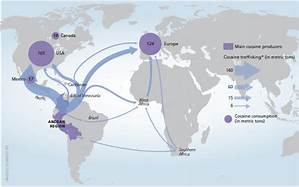
 

Those smuggled included Palestinians, Pakistanis and the Afghan man who Homeland Security officials said had family ties to the Taliban and was “involved in a plot to conduct an attack in the U.S. and/or Canada.”

Concerns about Hezbollah’s activities in Latin America have surged the DEA’s announcement in February that top operatives from the group’s so-called Business Affairs Component, or BAC, “have established business relationships” with South American drug cartels such as the Colombia-based Oficina de Envigado, a crime syndicate “responsible for supplying large quantities of cocaine to the European and United States drug markets.”

The DEA said several of the BAC’s Europe-based operatives had been arrested on charges of trafficking drugs and laundering money from South America to purchase weapons and finance the group’s military activities in Syria. The agency described an intricate network of money couriers who collect and transport millions of euros in drug proceeds from Europe to the Middle East.


“The currency is then paid in Colombia to drug traffickers,” it said, adding that “a large portion of the drug proceeds was found to transit through Lebanon, and a significant percentage of these proceeds are benefiting terrorist organizations, namely Hezbollah.”

The DEA said seven countries, including France, Germany, Italy and Belgium, were involved in an ongoing investigation. But few details were provided about how many suspects had been apprehended or where they are being held.

Officials said the most significant arrest was of Mohamad Noureddine, whom the DEA accused of being a Lebanese money launderer for Hezbollah. A week prior to the announcement, the Treasury Department had imposed sanctions freezing any U.S. accounts tied to Mr. Noureddine as well as to Hamdi Zaher El Dine, another suspected money launderer.

Decades of activity

U.S. officials have long been wary of Hezbollah, a Shiite Islamic group.

While it has a mainstream political arm in Lebanon, officials have linked the group to terrorist attacks in various corners of the world over the past 25 years — the vast majority targeting Israel. The State Department listed Hezbollah as a terrorist organization in the late 1990s and has characterized Iran as a leading state sponsor of terrorism largely on grounds that it supplies the group with weapons.

But the full scope of Hezbollah’s operations has long been a subject of debate in Washington. The DEA’s recent claims followed years of speculation about Iranian activities in Latin America.

Responding to pressure from Republican lawmakers, the State Department conducted a formal probe into the matter in 2013 and issued a report claiming that Iran was not supporting any active terrorist cells in the region.

While the report said the number of Iranian officials operating in Latin America had increased, the report concluded Tehran had far less influence in Latin America than critics claimed.

But former officials like Mr. Braun, who retired as DEA chief of operations in 2008, say Hezbollah is extremely active in the region.

President Obama signed the “Hizballah International Financing Prevention Act” last year, authorizing a range of actions, including sanctions, to block Hezbollah’s ability to fund itself.

Emanuele Ottolenghi, a senior fellow on Iran and illicit finance with the Foundation for Defense of Democracies, told lawmakers at Wednesday’s hearing that Congress and the administration should use the law to “aggressively focus” on Hezbollah’s presence in Latin America.

Brazilian connection

Mr. Ottolenghi pointed to the group’s “vast network of support,” particularly in Brazil, which is home to some 7 million people of Lebanese descent, including an estimated 1 million Shiite Muslims.

Hezbollah generates loyalty among the local Shia communities by managing their religious and educational structures,” Mr. Ottolenghi told the hearing. “It then leverages loyalty to solicit funds and use business connections to its own advantage, including, critically, to facilitate its interactions with organized crime.”

He cited a 2014 report by the Brazilian newspaper O Globo that outlined a connection between Hezbollah and the Primeiro Comando da Capital, a Sao Paulo-based prison gang, which is widely regarded to be among the country’s biggest exporters of cocaine.

“Drug cartels need middlemen, as well as commodity and service providers, for the supply line and delivery to cartels in Colombia, Venezuela and Central America,” Mr. Ottolenghi said. “They need assistance facilitating transit to West Africa before drugs cross the Sahara on their way to Western Europe and enabling the producers, refiners and cartels to launder their revenues and acquire the accessories for the trade in the process.”
 

Drug Cartel Zetas, Prison used as Extermination Camp

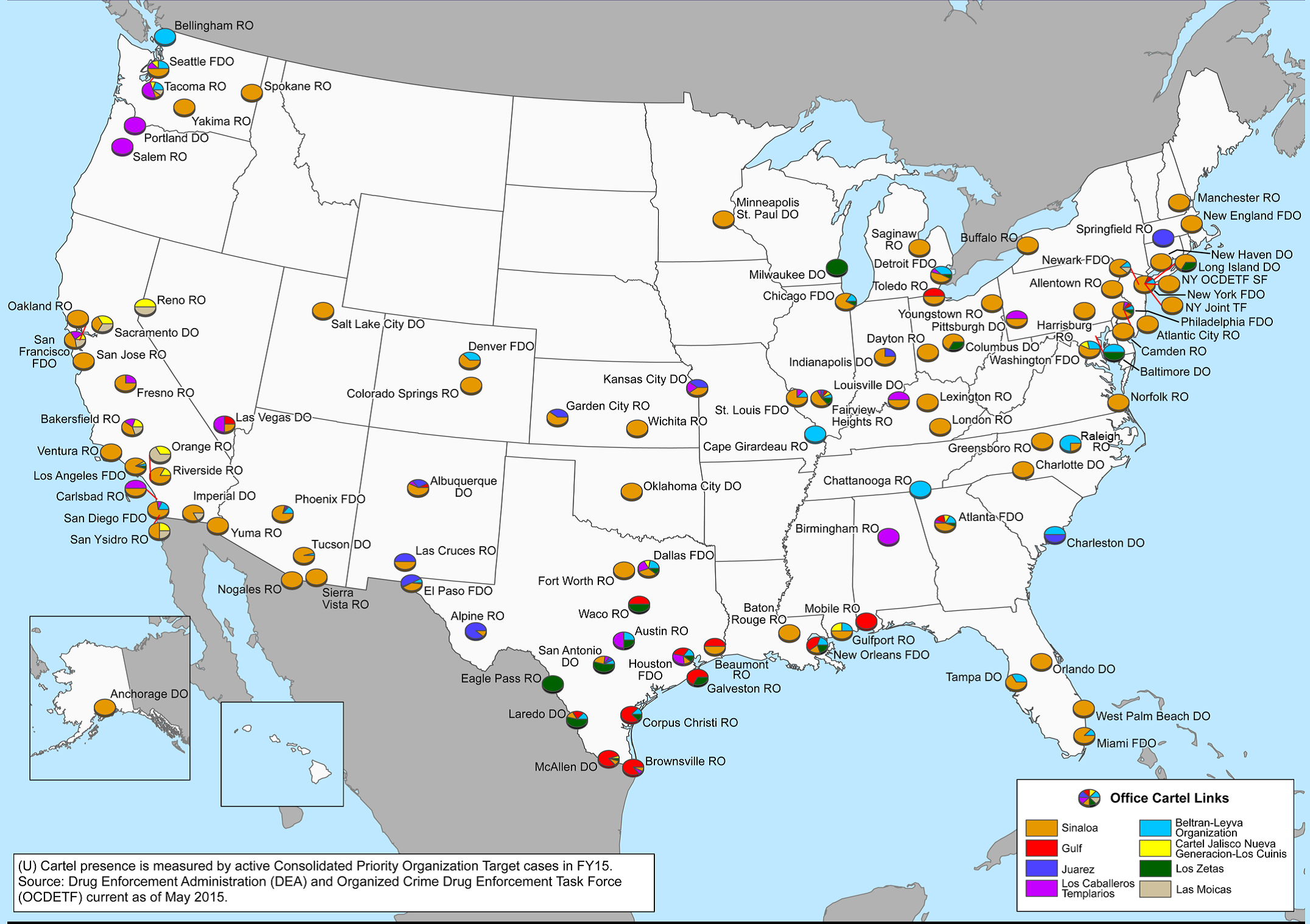
DEA Cartel footprintDeclassified: United States: Areas of Influence of Major Mexican Transnational Criminal Organizations

Mexican cartels such as the Gulf, Juarez, and Los Zetas hold more significant influence closer to the Southwest Border, but as shown on the map, their operational capacity decreases with distance from the border. As mentioned above, splinter groups from the disrupted LCT organization continue to traffic drugs from the Michoacán, Mexico area into the United States.

Zetas drug gang ‘used Mexico prison as extermination camp to kidnap and kill 150’

Telegraph: Members of the Zetas drug gang used a prison in northern Mexico as their private house of horrors where they tortured and killed kidnapping victims and underworld enemies, public prosecutors in the state of Coahuila have said.


Between 2009 and 2012, Piedras Negras prison became a virtual extermination camp, ruled with impunity by the notorious crime cartel as an operational base for their reign of terror in the US-Mexican border region.

After an investigation into the three-year period, authorities estimate that around 150 people were murdered inside the prison, with their bodies being burnt or broken down in acid-filled tanks before the remains were disposed of in a river some 20 miles away from the jail.

It is not clear to what extent the prison’s official guards actively cooperated with gang members or whether they merely allowed them to act with impunity in exchange for keeping order among inmates.

But prosecutors have revealed that Zetas’ prison leaders dressed up in uniforms as the prison’s de facto security force, wearing bulletproof vests and driving customised vehicles.

52 people died on August 25, 2011, when members of Los Zetas drug cartel doused the Casino Royale with gasoline and set it ablaze. More than 40.000 people have been killed in rising drug-related violence in Mexico since December 20052 people died on August 25, 2011, when members of Los Zetas drug cartel doused the Casino Royale nightlcub with gasoline and set it ablaze. More than 40.000 people have been killed in rising drug-related violence in Mexico since December 200 Credit: Getty Images

“We have received information that in this place was governed autonomously by the Zetas,” a spokesman for the Coahuila state prosecution force said on Wednesday after an investigation based on the testimony of 42 prisoners who were being held in Piedras Negras during that period.

The leader of the bloodthirsty Zetas prison gang has been identified as Ramón Burciaga Magallanes, who is currently in another jail serving time for kidnapping.

Besides Burciaga Magallanes, prosecutors served arrest warrants on four other suspects. All five are accused of participating in just seven murders because the remains of seven victims have been found and identifies within the prison compound.

The state prosecutor’s office said that it is searching for more missing persons who “were taken to the prison to be killed”.

Piedras Negras prison hit the headlines in September 2012, when 131 inmates escaped through the front door in what was reported as Mexico’s biggest-ever jailbreak.

That incident jolted state security forces from their passive stance and the prison was closed down later that year, with remaining inmates transferred elsewhere.

The case highlights the self-government that criminal gangs enjoy in Mexican prisons.

In February, 49 inmates were killed in a pitched battle in Monterrey, where two rival Zetas leaders were fighting for control of a prison.

Migrants linked to 69,000 would-be or actual crimes in Germany

Inviting in people of unknown backgrounds under the banner of humanitarian objectives is a dangerous policy, when innocent citizens are victims. This is occurring in the United States with wild abandon, yet apathy reigns and there are no real grass-roots efforts to demand and restore order or security.

Even if cases go to court, the judicial systems in Europe and in the United States render feeble sentences which is worse and almost no one is deported. Discretionary application of the law for the sake of an alleged culture, humanity and for refugee/asylum conditions with grow instability, clog and corrupt processes and cause illness or death.

Below, in the case of Germany the publication of this condition translate to a situation that is likely worse than actually being reported especially when Merkel had control over a media blackout.

Migrants linked to 69,000 would-be or actual crimes in Germany in first three months of 2016: police

Reuters: Migrants in Germany committed or tried to commit some 69,000 crimes in the first quarter of 2016, according to a police report that could raise unease, especially among anti-immigrant groups, about Chancellor Angela Merkel’s liberal migrant policy.

Immigrants are escorted by German police to a registration centre, after crossing the Austrian-German border in Wegscheid near Passau, Germany, October 20, 2015. REUTERS/Michael Dalder

There was a record influx of more than a million migrants into Germany last year and concerns are now widespread about how Europe’s largest economy will manage to integrate them and ensure security.

The report from the BKA federal police showed that migrants from northern Africa, Georgia and Serbia were disproportionately represented among the suspects.

Absolute numbers of crimes committed by Syrians, Afghans and Iraqis – the three biggest groups of asylum seekers in Germany – were high but given the proportion of migrants that they account for, their involvement in crimes was “clearly disproportionately low”, the report said.

It gave no breakdown of the number of actual crimes and of would-be crimes, nor did it state what percentage the 69,000 figure represented with respect to the total number of crimes and would-be crimes committed in the first three months of 2016.

The report stated that the vast majority of migrants did not commit any crimes.

It is the first time the BKA has published a report on crimes committed by migrants containing data from all of Germany’s 16 states, so there is no comparable data.

The report showed that 29.2 percent of the crimes migrants committed or tried to commit in the first quarter were thefts, 28.3 percent were property or forgery offences and 23 percent offences such as bodily harm, robbery and unlawful detention.

Drug-related offences accounted for 6.6 percent and sex crimes accounted for 1.1 percent.

In Cologne at New Year, hundreds of women said they were groped, assaulted and robbed, with police saying the suspects were mainly of North African and Arab appearance. Prosecutors said last week three Pakistani men seeking asylum in Germany were under investigation after dozens of women said they were sexually harassed at a music festival.

The number of crimes committed by migrants declined by more than 18 percent between January and March, however, according to the report.

Even CNBC is Sounding Alarm on Smuggling at Southern Border

I would say that when a liberal network media outlet is asking the hard questions and investigating the human smuggling at the Southern Border, it is time to challenge the Department of Homeland Security and Jeh Johnson much more aggressively, meaning calling for his removal as well as the Director of ICE.

When the coordinator of the smuggling operations is actually a resident inside the United States, we have issues that are not being debated or remedied.

‘A dangerous world’: What’s at stake when Syrian refugees are smuggled to US

CNBC: On July 27, 2015, five men appeared on the Mexican side of the sprawling Laredo port of entry at the United States border in Texas. They were all from Homs, Syria, which had seen ferocious fighting between ISIS and Syrian government forces over the previous months. All were in their early to mid-20s, except one, who was in his early 40s. And all five requested asylum in the United States.

This presented an immediate dilemma for U.S. officials. Who were these men? What did they want? And most pressingly, exactly how did five military-age males from one of the most gruesome battlefields in the world make their way to the U.S. border with Mexico?

Answers to many of those questions were spelled out in a detailed memo written by the Laredo field office of U.S. Customs and Border Protection and Department of Homeland Security investigators. The document, which was obtained by CNBC, details the operations of a previously unreported entity the U.S. government calls the “Barakat Alien Smuggling Organization.”

The leader of that group, the report found, specializes in smuggling Syrian men from Homs to the United States thought the southern U.S. border and St. Croix in the U.S. Virgin Islands. The memo identifies many of the key players: A naturalized Syrian woman in California, an Iraqi man in Turkey and smugglers and phony passport providers on four continents.

The report is stamped “Unclassified//Law Enforcement Sensitive,” and CNBC, for potential personal security risks, is withholding certain details from it, including dates of birth and numerical identification information of the Syrian refugees themselves as well as names and contact information for U.S. government officials involved in the investigation. Details in this account come from the report, as well as interviews with U.S. government officials and an attorney for one of the men.

The events laid out in the report came at a time the U.S. government was grappling with a rapidly unfolding Syrian refugee crisis worldwide. Ultimately, President Barack Obama would pledge to admit as many as 10,000 refugees to the United States. But critics said allowing any influx of immigrants from the war zone risked allowing ISIS infiltrators to come into the United States in the guise of refugees. They said that risk was highlighted by the ISIS inspired or coordinated attacks in Paris, Brussels, and San Bernardino, California.

Related reading from GOA: Alien Smuggling: DHS Could Better Address Alien Smuggling along the Southwest Border by Leveraging Investigative Resources and Measuring Program Performance

A spokeswoman for Immigration and Customs Enforcement said the agency has added 300 officers to its transnational criminal investigation units to work with foreign governments to target and dismantle human smuggling networks.

Controversy swirled over the vetting process for immigrants, and the difficulty for U.S. officials in determining who was coming to the United States in pursuit of a better life, and who may have darker motives. Meanwhile, Donald Trump was storming toward the Republican presidential nomination on the strength of his call to build a massive wall on the southern border with Mexico.

Even as that campaign rhetoric was reaching a crescendo in 2015, officials privately noted they were seeing a rise in Syrian immigrants trying to cross the border. “Over the past eighteen months there has been an increase of Syrian and Lebanese Nationals attempting to enter the United States along the southwest international border via Mexico,” the report found. “A majority of these individuals have arrived at major land ports of entry in the U.S. claiming credible fear of returning to their home countries.”

The Barakat Alien Smuggling Organization, the report found, was active along the Texas and California borders. The organization specialized in smuggling people who said they were Orthodox Syrian Christians.

The Barakat group, the report found, “is sophisticated enough to exploit the entire southern border.”

‘God be with you brother’

For the five Syrian men, the journey halfway around the world began on the internet, where they first made contact with the Barakat organization on Facebook. Elias was 25 years old. The other men were Albeer, 21, Rawad, 21, George, 26, and Alkhateb, the oldest of the group at 42.

Each of the men had a reason to leave Syria immediately. Elias, for example, said Syrian rebel forces had threatened him and demanded money. To show they were serious, they killed his dog.

It’s not clear whether the men traveled together for the entire trip. But U.S. officials pieced together the story step by step: From the Facebook page, the men were referred to the Baremoon Travel Agency in Homs, Syria. They paid $350 to $400 to a woman named Lucy for travel from Syria to Beirut, Lebanon, by taxi.

Related reading: From the U.S. State Department: Border Security/Alien Smuggling

On May 28, 2015, a post on the Facebook page of a man whose full name and biographical details match those of Elias shows a selfie of a young man with close cropped-hair and trim beard posing at the modern, sky-lighted departure lounge of the Beirut International Airport. The man identified as Elias is wearing a purple shirt and black vest, posing with a young woman in a leopard-print top. The caption says, “Traveling to Istanbul, Turkey.” Alongside the picture, friends posted more than 80 encouraging messages in Arabic, including “Good luck guys,” and “God be with you brother.”

The flight from Beirut to Istanbul is less than two hours. But once in Turkey, the men hit some kind of delay. In Istanbul, two of the men waited for more than 30 days before making contact at a coffee shop in the Aksaray neighborhood — a Syrian expat district in Istanbul crowded with refugees escaping the war and known as a major hub for sex trafficking.

At the coffee shop, the men met with a smuggler, Abu, who would arrange travel from Istanbul to the United States. They described Abu as in his 30s, thin, balding, and about 5-feet-10. Abu’s services did not come cheap. Two of the Syrian men said they paid him $15,000 for travel to the United States, a package deal including phony passports, airline tickets, guides in each country, food and transportation. It was a surprisingly businesslike operation: Abu even offered a grace period for the Syrians to obtain a refund if they didn’t make it to the United States within a certain time.

It’s not clear how the Syrians were able to afford such steep fees. One man said he had saved the money over three years. Another said his family sold land and property to raise funds. He also received $3,000 in a wire transfer initiated by a person in Burbank, California.

Wherever it came from, the money was good enough for Abu. He gave the travelling Syrians their documents: airline tickets and phony passports from Israel. The travel papers would now identify two of the men under the false Israeli names “Miller Idan” and “Halam Rotem.”

Abu also gave the men airline tickets from Turkey to Mozambique, with a layover in Addis Ababa, Ethiopia. But they never intended to go to Mozambique. Instead, the men switched destinations in Ethiopia, and used their new, phony Israeli passports to board a flight to either Rio de Janerio or Sao Paulo, Brazil. Instead of the African coast, the men took off for South America.

The men had no idea whom they would meet in Brazil. They didn’t have a name or phone number to call. But when they landed in South America, the smuggling organization had someone on the ground to meet them, identifying the Syrians using photos sent by Abu directly to the smugglers’ cellphones in South America. The men turned over their real Syrian passports to the smugglers — from here on out, they would be posing full time as Israelis. The smugglers, in turn, put the passports in packages and mailed them to final destination addresses in the United States. The passports would cross the U.S. border without their bearers.

From Brazil, the men boarded flights to Bogota, Colombia, still posing as Israelis. Then they caught yet another flight, this time to Guatemala City, Guatemala. There, the Syrians said they met a 30-year-old man they describe as tall and slender, with blond hair. The man spoke no Arabic and very little English. To the Syrians, the mysterious smuggler did not appear to be Guatemalan. The tall blond man drove them to the Guatemala-Mexico border, where the Syrians were transferred into the custody of yet another smuggler. The men said they crossed the border into Mexico without being approached at all by Mexican immigration officials.

It was a long drive north through Mexico: Five days in a late-model white four-door Toyota sedan. The Syrians say their latest smuggler was in contact with Abu in Turkey throughout the trip, which ended in the brutally hot border town of Nuevo Laredo, Mexico.

The border city is a far cry from the chaos of their hometown of Homs, but Nuevo Laredo is also wracked with violence: the rampages of the brutal Los Zetas drug cartel have prompted the State Department to warn Americans to defer travel to the region because of the prevalence of murder, robbery, carjacking, kidnapping, extortion and sexual assault.

But the Syrians didn’t intend to stay long. On July 27, they requested asylum at the Laredo point of entry to the United States. American Customs and Border Protection Agents processed them and sent them to a detention center in Pearsall, Texas, where they were interviewed by officials.

One of the men, Rawad, gave his destination as an address in Fall River, Massachusetts. But officials discovered that the telephone number he provided was linked to visa denials for three other Syrians. The oldest Syrian, Alkhateb, listed a friend named “Amnar” as a contact in the United States and provided a phone number for him with a California area code. U.S. officials found that number was linked to five other rejected visas from Syrian immigrants.

The Americans asked Elias — the refugee who said his dog had been killed — if he had ever volunteered or been paid to carry a weapon for any political or religious organization in Syria. Elias said he had not been part of any group or received weapons training. Instead, he told American officials, “God would provide protection.”

“Any underground smuggling operation is dangerous and even more so when you get to falsifications and people moving through many different countries. It’s a dangerous world.” -Lauren Mack, spokeswoman, Immigration and Customs Enforcement

The U.S. government intercepted the package the Syrians had mailed from Brazil when it arrived in Miami. Inside, they found military ID in Elias’ Syrian passport. The document indicates Elias was exempt from military service due to the death of his father. Still, the American interviewer thought Elias showed “nervous behavior” when asked about his military service.

It’s not entirely clear what happened to the five men after that. According to the report, Customs and Border Protection officers conducted what’s called a “credible fear” interview to determine their status. They were remanded to the South Texas Detention Center in Pearsall, Texas.

According to Facebook pages that appear to match the names and life histories of three of the men, they are still in the United States, either currently or formerly in California.

U.S. officials would not comment to CNBC on the report or the status of the five men. “Due to the sensitivity and nature of this report we are not going to be able to discuss anything about this case,” said Lauren Mack, a spokeswoman for Immigration and Customs Enforcement in San Diego, who requested that CNBC not identify the five men. “One of our top priorities is to investigate international human smuggling worldwide,” she said. “Our goal is to get ringleaders and people who are at the top levels of criminal networks who prey on individuals and put them at risk.”

Asked if the Barakat organization itself posed any danger to the United States, Mack said, “Any underground smuggling operation is dangerous and even more so when you get to falsifications and people moving through many different countries. It’s a dangerous world.”

An attorney for one of the Syrian men, who also requested his name not be used, said that his client’s asylum case was still pending before an immigration judge while he lives and works in the United States. The attorney said he represents several Syrians who applied for asylum at the U.S. border. “A lot of these people have never left Syria before, and suddenly they’re traveling through countries around the world. They come from a police state, they’re not very trusting. Back in Syria, their political beliefs are imputed to them because they’re Christians. People say, oh, you’re a Christian, so you’re fair game. They’re in a really bad situation.”

‘I always tell the truth, even when I lie’

The government document lists several “intelligence gaps” that investigators were left with after their interviews and research. Among the loose ends, the officials wanted to know how the Barakat organization got the Israeli passports, and whether they were forged or legitimately issued. They want to identify the specific smugglers in Guatemala and Mexico. They want to figure out just how the passport scheme worked in Addis Ababa, and why Ethiopian customs didn’t spot it.

And at the end the report asks one more question: “Are there more Syrian nationals destined for South Texas?”

Nearly four months later, the U.S. officials may have gotten their answer. In November, authorities in Honduras detained five Syrian men trying to reach the United States, this time on stolen Greek passports. Reuters reported that Honduran officials found the men had passed through Turkey, Brazil, Argentina and Costa Rica.

A Honduran police spokesman told reporters those men had nothing to do with terrorism. “They are normal Syrians,” he said.

Today, a Facebook page for a person with the same name and biographical details as Elias features as its main image a splashy image of Al Pacino in the 1983 gangster movie “Scarface.” The page says Elias is living in Los Angeles and working as a tattoo artist. As a sort of a personal motto, the Facebook page prominently features a quote from Pacino’s character: “You need people like me, so you can point your f—–‘ fingers and say, ‘that’s the bad guy.'”

It’s a line from an arresting scene in the classic film. Pacino’s character, a Cuban refugee who arrives in the United States with nothing and rises to become a drug kingpin, finds himself confused and out of place in an upscale American restaurant. He lashes out in a rage at the well-dressed Americans who surround him.

The outburst may seem to be an odd maxim for the Syrian refugee. But in the same speech, Pacino’s character also says this: “I always tell the truth, even when I lie.”

‘Extremist Islamic Movement’ in Latin America

US military eyes ‘extremist Islamic movement’ in Latin America

TheHill: The top U.S. military commander in Latin America said he and his regional counterparts are growing more concerned about radical Islamic extremists using the region as a pathway into the U.S.

“Radicalization is occurring,” said Adm. Kurt Tidd, commander of U.S. Southern Command, at a roundtable with reporters on Wednesday.

“We just have to recognize that this theater is a very attractive target and is an attractive pathway that we have to pay attention to,” he said.

Tidd, who became Southcom commander in January, said the Islamic State in Iraq and Syria has attracted between 100 and 150 recruits from Latin America, and a “small number” have attempted to return to the region.

“Or — and the one that I find much more worrisome — if they can’t get there, they’ve been told to engage in lone-wolf attacks where they’re located,” he said. “Those are the ones that have most of our regional security partners concerned because they’re so difficult to detect.

“It’s the extremist Islamist movement, and that very corrosive engagement that you’re seeing on the internet that they’ve demonstrated an effectiveness in,” he added.

He also said there is some movement of migrants from the Middle East to Latin America.

“I think we are beginning to see people coming into this hemisphere who have very, very questionable backgrounds, and our law enforcement agencies are paying close attention to that,” he added.

Tidd said leaders acknowledged at a regional security conference in January that Islamic radicalization is a problem.

“All of the countries recognize that this is something that — in the past they would say, ‘This is not a problem in my country,’ ” he said.

He said terrorists are attracted to illicit smuggling networks in Latin America.

But, he said, the U.S. and its partners should focus on the networks rather than exactly what they are smuggling, such as animals, drugs, weapons and people.

“It’s the ability that these networks have to pretty much be able to move anything that I think should give us all concern,” he said.

“If we focus on the networks we may have a better chance of catching things moving through,” he said.

*******


Radical Islam in Latin America and the Caribbean: Implications for U.S. National Security

by: Dr. R. Evan Ellis, PhD1

An estimated 1.5 million Muslims live among Latin America and the Caribbean’s approximately 600 million inhabitants, with approximately 2/3 of them concentrated in Argentina and Brazil.16 Although sometimes mistakenly called “turcos” (turks) the region’s Muslims are a diverse subset of persons who immigrated from Turkey, Syria, Lebanon, and other Middle Eastern countries from the beginning of the 20th Century and before.

This ethnic group, both muslim and non-muslim, is well-established, including some of the most politically and economically successful persons in the region. Indeed eight Latin American and Caribbean heads of state have been of Arabic origin: Antonio Saca (President of El Salvador from 2004 to 2009), Jamil Mahuad (President of Ecuador from August 1998 to January 2000), Carlos Flores (President of Honduras from 1998 to 2002), Carlos Menem (President of Argentina from 1989 to 1999), Abdalá Bucaram (President of Ecuador from August 1996 to February 1997), Jacobo Majluta (President of the Dominican Republic from July to August 1982), Julio Turbay (President of Colombia 1978 to 1982), and Julio Salem (leader of Ecuador May 1944).17

Other prominent citizens of Middle Eastern ancestry in the region include Mexican billionaire Carlos Slim, the actress Salma Hayek, and the pop music star Shakira.

To date, Iran has been the principal, but not the only Middle Eastern state pursuing interests in the region. Other state actors from the region have also played a modest role in the region in the past; Libya, prior to the fall of the regime of Muammar Gaddafi, was a significant partner for Bolivia.18 There is no reason why other Middle Eastern states could not also expand their profile in the region, including Syria, whose current regime has a long working relationship with Hezbollah, 19 currently the most powerful Islamic radical group in Latin America.

Iran’s agenda in the region in recent years has generally focused on using sympathetic regimes such as Venezuela, Ecuador, Nicaragua, Bolivia, and Suriname to escape international isolation and circumvent international sanctions, develop missiles and perhaps weapons of mass destruction, and to gain influence within Muslim groups and communities so as to potentially use them for actions against the United States, Jewish, or other Western interests if Iran’s regime perceives itself as gravely threatened in the future.20

While Iran seeks to mobilize and influence non-state Islamic actors in the region such as Hezbollah for its own purposes, the interests of such groups and the potential challenges they pose to hemispheric security are not limited solely to Iran’s agenda.

The combined challenges of both state and other radical Islamic actors in Latin America and the Caribbean may be grouped into three categories:

• Generation of resources for islamic radicals fighting in other parts of the world;

• Formation of logistics networks for and launching attacks on targets in the Western Hemisphere;

and

• Collaboration between radical Islamic actors and Latin American allies in evading international controls and developing weapons. The full report here.