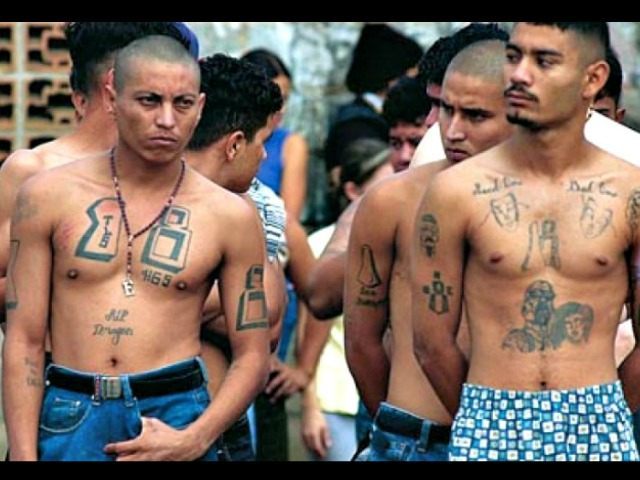
A Chilling Fact About Uncontrolled Immigration

The government at the Federal and local level knows the consequences and the threat. Sadly, objectives by the Democrats and the Obama White House dismiss factual conditions that threaten lives and safety. There was a paramount reason Ellis Island operated the way it did, even with flaws.

CDC Official Warned Staff of Health, Safety Risks During Influx of Illegal Alien Minors: “Plan on Many of the Kids Having TB,” “Be Wary of Personal Safety.”

JW: A government official warned employees deploying for the influx of illegal immigrant minors about health and safety risks because the new arrivals would have tuberculosis and some were young adults—not children—like the Obama administration proclaimed, according to records obtained by Judicial Watch. “We might as well plan on many of the kids having TB,” states a June 26, 2014 guidance e-mail from a Centers for Disease Control (CDC) environmental health scientist, Alaric C. Denton, as the agency prepared to handle the crisis. “Most of these kids are not immunized, so we need to make sure all our staff are immunized.” Denton, who is stationed at the CDC headquarters in Atlanta, Georgia, predicts in the directive that the agency will be overwhelmed pretty quickly and that screening requirements will be hard to keep up with.


Judicial Watch had to sue the CDC’s umbrella agency, the Department of Health and Human Services, (HHS) for the records. Though chunks have been redacted, the documents contradict the Obama administration’s public statements dismissing possible health and safety risks created by the tens of thousands of Unaccompanied Alien Children (UAC) fleeing violence in Central America. The CDC official reveals in the documents obtained by JW as a result of the lawsuit that “some of these kids are not really kids they are young adults, and we should be wary of personal safety.” JW reported this early on, when the first group of UACs arrived through the Mexican border in the summer of 2014. Homeland Security sources directly involved with the mess told JW that holding centers were jam-packed, rampant with diseases and sexually active teenagers. A veteran Border Patrol officer who heads the agency’s Tucson sector quickly established that many of the UACs were not little kids but rather 17-year-olds with possible ties to gang members in the U.S.

Weeks later JW reported that the nation’s most violent street gangs—including Mara Salvatrucha or MS-13—were actively recruiting new members at U.S. shelters housing illegal immigrant minors. A high-level Homeland Security source told JW the gangs used Red Cross phones at the shelters to communicate with the new recruits. Last fall the Texas Department of Public Safety confirmed that the MS-13 has been fortified and able to remain a top tier gang thanks to the influx of illegal alien gang members that recently crossed into the state. The MS-13 is a feared street gang of mostly Central American illegal immigrants that’s spread throughout the U.S. and is renowned for drug distribution, murder, rape, robbery, home invasions, kidnappings, vandalism and other violent crimes. The Justice Department’s National Gang Intelligence Center (NGIC) says criminal street gangs like the MS-13 are responsible for the majority of violent crimes in the U.S. and are the primary distributors of most illicit drugs.

This new batch of government records, part of an ongoing JW investigation into the UAC disaster, indicate the administration was well aware of the danger in allowing hordes of illegal immigrant youths to enter and stay in the U.S. At the very least it flies in the face of the administration’s false narrative involving the key issues of health and safety surrounding the new arrivals which have been relocated throughout the nation. Denton, the CDC environmental health scientist who warned colleagues prior to deployment, works at the agency’s Environmental, Safety and Health Compliance Office (ESHCO). Officials from other federal agencies, including the Food and Drug Administration (FDA) and the Environmental Protection Agency (EPA), were also involved in the exchanges. JW will continue receiving records from the government involving this issue as part of an agreement, supervised by a federal judge, stemming from our lawsuit.

*****

Wait there is more.

AP Exclusive: Color index for US border security is rejected

SAN DIEGO (AP) — Five years ago, the U.S. Department of Homeland Security dropped its color-coded terror threat index developed after the 9/11 attacks amid widespread confusion and ridicule. So what did it do when tasked by Secretary Jeh Johnson in 2014 with measuring security along the country’s borders?

Agency staff proposed another system of reds, yellows and greens.

The Institute for Defense Analyses, a consulting firm, was hired by DHS to review the idea and found the index simplistic and misleading, noting that colors were a “disaster” for communicating terror threats.

“DHS should learn from its own history and avoid repeating this error,” the consultants said in its 53-page report.

The DHS proposal was never made public, nor was the consulting firm’s $90,000 review. A copy of the report was obtained by The Associated Press and when AP this week asked the agency whether it would move ahead with the index, spokeswoman Gillian Christensen said: “Currently, there are no color-coded border security indexes or metrics being considered by the Department of Homeland Security.”

It was one of the latest attempts by the government to come up with a way to measure border security and help the public understand whether the billions of dollars devoted to it each year are being spent wisely.

In 2010, Homeland Security ended a five-year experiment measuring miles under “operational control,” where the Border Patrol was likely to capture illegal crossers. It reported only about 40 percent controlled in 2010, providing ammunition to those who argue the border is porous.

Then in 2013, Johnson’s predecessor, Janet Napolitano, abandoned plans for what was called the Border Conditions Index, which would have relied on various economic, crime and enforcement data.

John Sandweg, who was senior counselor to Napolitano, said there was internal consensus about what made up the index but not about how much weight to give each factor.

Sandweg, who advised the secretary when the color terror alert system was dropped, said he doesn’t see the value of a similar color-coded approach to the border.

“It seems to me like an oversimplification of a very complex problem,” he said.

The consultants hired by Johnson agreed.

“The red/yellow/green formulation, while intuitively attractive and easy to understand, will open the Department to charges that it is manipulating a complex problem in an effort to be seen as responding to public concerns,” the report said.

When the report was completed in June, California and New Mexico/West Texas were green (low risk) during the previous quarter, Arizona was yellow (medium risk), and South Texas was red (high risk). The consultants said that reality was more nuanced.

“A new set of metrics should work against this simplistic perception rather than reinforcing it. Instead, the new index does the opposite, by reporting the level of border security in just three large baskets, two of which (red and yellow) are likely to be seen by the public as evidence of a border ‘not controlled,'” the report said.

The consultants identified other problems. A color index might lead reporters with an appetite for eye-catching headlines to produce misleading stories of an out-of-control border. And DHS relations with Congress could be further strained, with administration officials constantly having to defend their color choices.

For example, a West Texas congressman would demand to know why his district is rated low risk when voters tell him the opposite. A South Texas congressman would want lots more money if the administration acknowledges his district is high risk, the report said.

Now, the most closely-watched public indicator is Border Patrol apprehensions, released annually. The number fell to a 44-year low last year, a figure cited by those who argue the border is relatively secure. But there is broad agreement that the apprehension tally gives an incomplete picture, just as a police department’s arrest count doesn’t fully reflect how safe a city is.

The color-coded index would have relied on 12 indicators for land borders and seven for maritime borders, each one weighted under a formula that produces reds, yellows and greens. Those indicators ranged from the number of border crossers with known or suspected terrorist ties to marijuana seizures.

The consultants’ report speaks favorably about developing a “dashboard” of key numbers, as many police departments do. Homeland Security recently began publishing the percent of illegal border crossers it says are caught or turned back — 80 percent in the 2015 fiscal year — and has developed other measures, including the percent caught who are repeat offenders.

FILE – In this Jan. 4, 2016 file photo, a U.S. Border Patrol agent drives near the U.S.-Mexico border fence in Sunland Park, N.M. U.S. Department of Homeland Security Secretary Jeh Johnson has rejected a new proposal of color-coded alerts to measure border security after a consultant called the system simplistic and misleading. (AP Photo/Russell Contreras, File)

FILE – In this Jan. 4, 2016 file photo, a U.S. Border Patrol agent drives near the U.S.-Mexico border fence in Sunland Park, N.M. U.S. Department of Homeland Security Secretary Jeh Johnson has rejected a new proposal of color-coded alerts to measure border security after a consultant called the system simplistic and misleading. (AP Photo/Russell Contreras, File)

Terrifying Truth on Who Obama is NOT Deporting

Goodlatte Urges DHS to Deport Thousands of Criminal Aliens with Federal Drug Convictions Set to Be Released Next Month

HouseJudiciaryCommittee: On April 30, 2014, the United States Sentencing Commission approved Amendment 782, which modified the United States Sentencing Guidelines to lower the base offense level for federal controlled substances offenses.  Amendment 782 was made retroactive by the Commission. As a consequence, approximately 2,000 convicted criminal aliens whose sentences were reduced are now eligible for release from the Federal Bureau of Prisons on or about November 1, 2015.

In the letter to Secretary Johnson, Chairman Goodlatte urges Secretary Johnson to remove these criminal aliens from the United States, noting that they are the highest enforcement priority based on the Obama Administration’s own written policy for priority enforcement.

Below is the text of Chairman Goodlatte’s letter to Secretary Johnson.


October 20, 2015

The Honorable Jeh Johnson
Secretary
U.S. Department of Homeland Security
Washington, D.C. 20528

Dear Secretary Johnson:

On April 30, 2014, the United States Sentencing Commission approved Amendment 782, which modified the United States Sentencing Guidelines to lower the base offense level for federal controlled substances offenses.  Amendment 782 was made retroactive by the Commission. As a consequence, approximately 6,000 convicted criminals whose sentences were reduced by the sentencing court pursuant to Amendment 782 are now eligible for release from the Federal Bureau of Prisons (BOP) on or about November 1, 2015, and approximately 8,500 additional prisoners will be eligible for early release by November 1, 2016.  Of the initial 6,000 inmates who will be released early, a significant number – approximately 2,000 – are criminal aliens.  These aliens are removable from the United States, either because they are unlawfully present or because of their criminal convictions.  In fact, based on their convictions for drug trafficking offenses, such aliens are the highest enforcement priority (Priority 1) for the Department of Homeland Security, based on your own written policy for priority enforcement, issued on November 20, 2014.

During your testimony before the House Judiciary Committee on July 14, 2015, Committee Members questioned you about the early release of aliens under Amendment 782.  In response, you stated, “I’m aware of this issue.  I’m aware of the adjustment to the Federal Sentencing Guidelines.  I’m aware that a number of individuals will be released as a result.  I’m aware that a number of them are probably undocumented, and we’ve been working with DOJ to do the most effective thing for public safety in that regard.”Given your response, I fully expect that U.S. Immigration and Customs Enforcement (ICE) will issue a detainer with the BOP for each alien expected to be released pursuant to Amendment 782, and that each alien will be taken into custody by ICE, as required by the Immigration and Nationality Act, for purposes of initiating removal proceedings or to execute the removal order of each alien who is already subject to a final order of removal from the United States.

Please confirm whether my expectation will be met and that the Department of Homeland Security is committed to ridding our streets of aliens peddling dangerous and illicit drugs to our children.  Additionally, please provide the following requested information:

    1. The specific number of aliens who will be released early by BOP pursuant to Amendment 782.
    2. Of those alien prisoners, how many have ICE detainers or requests for notification?
    3. Does ICE expect to issue detainers or requests for notification for every alien identified in (1) above prior to the prisoner’s release from BOP custody?
    4. Does ICE expect to take custody of every alien identified in (1) above for the purpose of initiating removal proceedings or to execute a final order of removal?  If not, why not?
    5. Please provide the number of aliens identified in (1) above who will not be taken into ICE custody upon release from BOP and provide an explanation for each alien as to why ICE will not take the alien into custody.

Please provide this information to me by October 30, 2015.  If your office has any questions, please contact Tracy Short, Counsel, Subcommittee on Immigration and Border Security, at (202) 225-3926.

Sincerely,

Bob Goodlatte
Chairman

**** Summary from Breitbart:

An overwhelming percentage of criminal aliens the Obama administration knows are in the U.S. are not detained but are instead living in neighborhoods and communities across the country, according to House Judiciary Committee Chairman Bob Goodlatte (R-VA).

Central American Gang Members AP

“The American public has been misled by the ‘enforcement priorities,’ ‘deferred action,’ and ‘executive action’ policies of this Administration, which categorize only certain quote, unquote ‘serious’ criminal aliens as worthy of immigration enforcement,” Goodlatte said at a House subcommittee hearing examining the victims of illegal immigrant crime. “However, this Administration’s actions demonstrate that it finds it acceptable to permit even serious criminal aliens to prey on our communities.”

According to the House Judiciary Committee, the Obama administration’s enforcement policies have allowed tens of thousands of criminal aliens to remain in the U.S.

“At least 95 percent of convicted criminal aliens known to [the Department of Homeland Security] are not detained,” Goodlatte said at Tuesday’s hearing.

The Virginia Republican argued against immigration activists’ contention that illegal immigration is a “victimless crime,” stressing that the opposite it true — “illegal immigration has consequences that can be devastating,” he said.

“Americans deserve to know why this Administration would release thousands upon thousands of criminal aliens from DHS custody – despite convictions that included a total of 473 homicide-related offenses, 375 kidnappings, 890 sexual assaults, and 10,731 assaults before their release,” he continued.

Goodlatte took additional aim at advocates and Democrats’ argument that the unaccompanied minors from Central America — who have been flooding across the border illegally by the tens of thousands and largely allowed to remain — are all helpless children.

“It is no coincidence that the spike in gang crime occurred during the same time that thousands of Central American minors were illegally entering at the southwest border. Sixty-four percent of validated gang members arrested in Frederick County in 2015 entered illegally through the southwest border as unaccompanied minors,” Goodlatte said, at the time foreshadowing the testimony of Sheriff Charles Jenkins of Frederick County, Maryland.

Goodlatte’s strong words preceded emotional testimony offered by two hearing witnesses whose children were killed by illegal immigrants.

“By releasing known criminal aliens and refusing to secure our border, the Administration has sent a clear message to the American people that their safety and security are far less important than ensuring that illegally present and criminal aliens will remain here,” Goodlatte added.

Mossack Fonseca Offices Raided, and Spies too?

Panama raids offices of Mossack Fonseca law firm

Reuters:Panama’s attorney general late on Tuesday raided the offices of the Mossack Fonseca law firm to search for any evidence of illegal activities, authorities said in a statement.

The Panama-based law firm is at the center of the “Panama Papers” leaks scandal that has embarrassed several world leaders and shone a spotlight on the shadowy world of offshore companies.

The national police, in an earlier statement, said they were searching for documentation that “would establish the possible use of the firm for illicit activities.” The firm has been accused of tax evasion and fraud.

Police offers and patrol cars began gathering around the company’s building in the afternoon under the command of prosecutor Javier Caravallo, who specializes in organized crime and money laundering.

Mossack Fonseca, which specializes in setting up offshore companies, did not respond to requests for comment on Tuesday.

Earlier, founding partner Ramon Fonseca said the company had broken no laws, destroyed no documents, and all its operations were legal.

Governments across the world have begun investigating possible financial wrongdoing by the rich and powerful after the leak of more than 11.5 million documents, dubbed the Panama Papers, from the law firm that span four decades.

The papers have revealed financial arrangements of prominent figures, including friends of Russian President Vladimir Putin, relatives of the prime ministers of Britain and Pakistan and of China’s President Xi Jinping, and the president of Ukraine.

There are more details. From Joseph FITSANAKIS of IntelNews in part:

The Süddeutsche Zeitung said on Monday that senior intelligence officials from Rwanda and Colombia are listed as Mossack Fonseca customers, but did not report the names of the individuals. It did, however, single out the late Sheikh Kamal Adham, who was director of Saudi Arabia’s General Intelligence Directorate in the 1960s and 1970s. During his 14-year directorship of the GID, the agency became a leading intermediary between the CIA and Arab intelligence agencies, notably those of Egypt and Iraq. Sheikh Adham was also a personal friend of CIA Director George Bush, who was later elected US president.

According to the Süddeutsche Zeitung, Sheikh Adham is one of many individuals with close CIA links whose names appear in the Panama Papers. Another is Farhad Azima, an Iranian-born American businessman, who is rumored to have leased aircraft to the CIA in the 1980s. The American intelligence agency is said to have used the aircraft, which belonged to Azima’s Kansas City, Missouri-headquartered Global International Airways, to transport weapons to Iran. The secret transfers were part of what later became known as the Iran-Contra scandal, in which US officials secretly sold weapons to Iran in return for the release of American hostages held by Iran-linked groups in the Middle East. The funds acquired from these weapons sales were then secretly funneled to the Contras, a medley of anti-communist paramilitary groups fighting the Sandinista-led government of Nicaragua.


WH to Employers, Make them Preferred Hiring Candidates

We have been enduring the misguided mission by the White House to release criminals early from their prison sentences ah…you know those that were based on drugs but non-violent. Pssst, the last jail break included 1/3 of them that were in prison for life sentences. Anyway, now the White House is becoming their advisors and promoters to get jobs for them, almost by force. Check this out. The corporations also have to take a pledge?

If employers spent more time implementing better hiring practices, then perhaps this wouldn’t be necessary. There are now more and more ways to find out if your new employee has a criminal record, for example, using something like https://www.nationalcrimecheck.com.au/. But, albeit, we live in a world where not everything is so straight forward.

Is this really the best use of time by the White House?

FACT SHEET: White House Launches the Fair Chance Business Pledge

“Now, a lot of time, [a] record disqualifies you from being a full participant in our society — even if you’ve already paid your debt to society. It means millions of Americans have difficulty even getting their foot in the door to try to get a job much less actually hang on to that job. That’s bad for not only those individuals, it’s bad for our economy. It’s bad for the communities that desperately need more role models who are gainfully employed. So we’ve got to make sure Americans who’ve paid their debt to society can earn their second chance.

President Barack Obama, Rutgers University, November 2, 2015

Today at the White House, Attorney General Loretta Lynch, Senior Advisor to the President Valerie Jarrett, and other White House officials hosted 19 companies from across the American economy who are standing with the Obama Administration as founding pledge takers to launch the Fair Chance Business Pledge. The pledge represents a call-to-action for all members of the private sector to improve their communities by eliminating barriers for those with a criminal record and creating a pathway for a second chance.

Companies signing the pledge today include: American Airlines, Busboys and Poets, The Coca-Cola Company, Facebook, Georgia Pacific, Google, Greyston Bakery, The Hershey Company, The Johns Hopkins Hospital and Health System, Koch Industries, Libra Group, PepsiCo, Prudential, Starbucks, Uber, Under Amour/Plank Industries, Unilever and Xerox.

Right now, there are approximately 2.2 million Americans behind bars. The United States accounts for 5 percent of the world’s population, and 25 percent of its inmates. Each year, more than 600,000 inmates are released from federal and state prisons, and another 11.4 million individuals cycle through local jails. Around 70 million Americans have some sort of criminal record — almost one in three Americans of working age.

Too often, that record disqualifies individuals from being a full participant in their communities — even if they’ve already paid their debt to society. As a result, millions of Americans have difficulty finding employment.

Since President Obama took office, this Administration has been committed to reforming America’s criminal justice system. Last summer, the President spoke about the importance of reducing barriers facing people who have been in contact with the criminal justice system and are trying to put their lives back on track. He then became the first President to visit a federal prison where he sat down with individuals who would be returning to their communities. In November, he visited with formerly incarcerated individuals and emphasized that a smarter approach to reducing crime and enhancing public safety must begin with investing in all of our communities. He also announced new efforts by this Administration to help formerly incarcerated individuals to rehabilitate and reintegrate back into their communities, including an upcoming rule from the Office of Personnel Management that will “ban the box,” delaying inquiries into criminal history until later in the federal hiring process. One way to prevent criminals in the workplace may be to use pre-employment tests (as found at https://www.berkeassessment.com/solutions) in order to find out more about your candidates before you accept their application for the role. Berke has many options available.

Building on these efforts, the White House issued a challenge to businesses to take on the Fair Chance Business Pledge. A broad array of businesses have come together to support the reforms needed to bring about this change.

By signing the Fair Chance Business Pledge, these companies are:

  • Voicing strong support for economic opportunity for all, including the approximately 70 million Americans who have some form of a criminal record.
  • Demonstrating an ongoing commitment to take action to reduce barriers to a fair shot at a second chance, including practices like “banning the box” by delaying criminal history questions until later in the hiring process; ensuring that information regarding an applicant’s criminal record is considered in proper context; and engaging in hiring practices that do not unnecessarily place jobs out of reach for those with criminal records.
  • Setting an example for their peers. Today’s announcement is only the beginning. Later this year, the Obama Administration will release a second round of pledges, with a goal of mobilizing more companies and organizations to join the Fair Chance Business Pledge.

Companies and organizations interested in joining the Fair Chance Business Pledge can so do by signing up HERE.

Building on today’s announcement, in the coming weeks, the White House and the Department of Justice will host events in Washington, D.C. and across the country to amplify leaders taking steps to provide fair chance opportunities:

  • The Justice Department has designated the week of April 24-30, 2016, as National Reentry Week and is coordinating reentry events across the country – from job fairs, to practice interviews, to mentorship programs, to events for children of incarcerated parents – designed to help prepare inmates for release. To learn more, click HERE.
  • In the coming weeks, the White House will host a Champions of Change event to honor individuals expanding fair chance opportunities. The event will highlight local leaders and programs that are improving their communities by partnering with the philanthropic and private sectors to help those who have been incarcerated rehabilitate and reintegrate. To learn more, click HERE.

THE FAIR CHANCE BUSINESS PLEDGE

We applaud the growing number of public and private sector organizations nationwide who are taking action to ensure that all Americans have the opportunity to succeed, including individuals who have had contact with the criminal justice system. When around 70 million Americans – nearly one in three adults – have a criminal record, it is important to remove unnecessary barriers that may prevent these individuals from gaining access to employment, training, education and other basic tools required for success in life. We are committed to providing individuals with criminal records, including formerly incarcerated individuals, a fair chance to participate in the American economy.

These companies put forth their pledges as follows:

AMERICAN AIRLINES: At American Airlines, our employees are the source of our success, with a clear connection between the quality of our team and the quality of the experience we can provide our customers. American is working hard to recruit, develop, retain and engage the very best people – those with unique perspectives and ways of thinking that will position us as a global leader – while recognizing the importance, in appropriate circumstances, of giving people a second chance.

To ensure we aren’t removing qualified individuals from employment consideration, we have banned the box and we don’t ask criminal history questions until someone accepts an offer. We are also conducting consistent, reliable, and fair-minded background checks as part of our hiring process.

We commend the Administration and applaud the many corporations and organizations that are taking similar actions to give all Americans a fair chance to succeed and enjoy everything our country has to offer. American Airlines is proud to take the Fair Chance Business Pledge.

THE COCA-COLA COMPANY: Fair chance policies and programs not only enhance the likelihood of success for the more than 600,000 individuals who are released annually from state and federal prisons – they also help to reknit families and rebuild communities. For these and other reasons as outlined below, The Coca-Cola Company is pleased to join the Fair Chance Business Pledge as a signatory.

The Coca-Cola Company has a long-standing commitment to equal opportunity. This spans our employment practices and development of existing employees. We are dedicated to maintaining workplaces that are free from discrimination or harassment on the basis of race, color, religion, sex, national origin, age, disability, pregnancy, veteran status, genetic information, citizenship status, marital status, sexual orientation, gender identity and/or expression, or any other reason prohibited by law. The basis for recruitment, hiring, placement, training, compensation and advancement at the Company is qualifications, performance, skills and experience.

We are particularly proud to share that The Coca-Cola Company and Coca-Cola Refreshments do not engage in background screening related to criminal history until after a decision to hire has been made. When there is a successful applicant who has a criminal history, our talent acquisition team has in place a process to review the relevancy of the history to make an informed decision. We recognize that creating a pathway for a second chance is an important first step in creating successful, sustained re-entry into mainstream society.

FACEBOOK: Facebook is a vocal supporter of equality and we are proud to stand with a growing number of companies who have chosen to ban the box. We strongly oppose hiring practices that discriminate against qualified applicants on the basis of criminal record.

Recently, Facebook collaborated with the California Department of Justice on the agency’s OpenJustice initiative, a program that promotes transparency in the criminal justice system to strengthen the public trust, enhance government accountability, and inform public policy development.

Signing the Fair Chance Hiring pledge allows us to reaffirm our commitment to find ways that our company can create opportunities for all to succeed. And we encourage other organizations and employers to do the same.

GOOGLE: Google has banned the box in its hiring process since 2011. In the last year alone, Google has advanced racial justice and criminal justice reform with grants to organizations and leaders totaling over $5 million. Google will continue its commitment to criminal justice reform and creating opportunities for formerly incarcerated Americans by:

  • Convening other leading technology companies to recruit more companies to ban the box and go beyond the box to support formerly incarcerated Americans re-entering the job market.
  • Conducting listening sessions with criminal justice organizations and formerly incarcerated leaders to understand what specific supports are needed and consider how Google products can be used to raise awareness of the issue of mass incarceration in America.
  • Hosting a series of regional forums on criminal justice reform with formerly incarcerated women and men.

GREYSTON BAKERY: As part of our Fair Chance Pledge, we commit to:

  • Banning the Box – by delaying criminal history questions until later in the hiring process, or not asking them at all and giving individuals a chance to prove themselves through hard work regardless of background;
  • Training human resources staff on making fair decisions regarding applicants with criminal records, and other employment barriers, and reporting data on the number of applicants through Open Hiring;
  • Ensuring jobs, internships, apprenticeships, and regular and progressive job trainings are available to individuals with criminal records and other employment barriers;
  • Keeping an open door policy for Open Hiring for anyone to sign up for a chance at a job, when one becomes available; in the meantime, accessing workforce development trainings for employment readiness;
  • Providing mentorship and “soft-skills” support once on the job to ensure retention and readiness, particularly through the apprenticeship/internship period;
  • Supporting with placement to area employers from workforce development training programs whenever possible, through matching services and providing trainings in demand;
  • Providing key worker benefits past the apprenticeship period including: subsidized childcare, access to lower-cost nutritious food, and access to affordable housing, to address the highest risk factors of low-income workers and previously incarcerated individuals in sustaining employment;
  • Working to provide a “living wage” to all our workers in addition to subsidized worker benefits, to help those with employment barriers sustainably break the cycle of poverty.

Greyston also takes action in our local community of Yonkers, NY by supporting other employers in considering Open Hiring in their businesses, de-risking fair chance employment for them by investing in workforce development and job training programs, to increase overall regional employability and job readiness, including in “soft skills” such as literacy and numeracy, mentorship, etc.

Greyston also provides other community programs such as an early childcare center, community gardens, and housing supports for both worker benefit as well as community health and well-being, to truly contribute to sustained Fair Chance employment.

THE JOHNS HOPKINS HOSPITAL AND HEALTH SYSTEM: The Johns Hopkins Hospital and Health System’s (JHHS) practice of providing access and opportunity to the returning citizens of Baltimore is not a charitable endeavor, but a strategic part of the way we conduct our business. We are not just an organization that conducts business in Baltimore, but an integral part of the community — interwoven and connected for 126 years and counting.

When Mr. Hopkins endowed the Hospital, he recognized that the service we provide can only have a positive lasting impact if all members of the community are a part of JHHS mission. We have made sure to keep Mr. Hopkins’ directives, which in many ways mirror the Fair Chance Business Pledge, at the forefront of all that we do. This is evidenced in our hiring practice, which embraces our community’s citizens who meet our hiring requirements — including returning citizens.

We have banned the box in our hiring process and have an established practice of individually reviewing applicants that have criminal background. This thoughtful, detailed process has enabled us to have a strong returning citizen hire rate over the years.

Our long standing partnerships with community based partners, particularly those that serve returning citizens, and understand our organization and the work we do, provides us with a pipeline of talented applicants. We share our practices with other Baltimore City companies and encourage dialogue on the importance of engaging all of our citizens in the employment process.

Lastly, our organizations unwavering commitment to Baltimore City and Maryland is reflected in our Institution’s leadership, managerial and supervisory staff, who understand that we have a lot of talented people in our community. We recognize that we cannot afford to let good talent get away — especially talent that might need a second chance.

KOCH INDUSTRIES AND GEORGIA PACIFIC: Koch Industries and Georgia-Pacific support the Fair Chance Business Pledge and applaud the leadership of the White House on this critically important issue. The Pledge is consistent with Koch and Georgia-Pacific’s mission to help people improve their lives and remove barriers to opportunity for all Americans, especially the least advantaged.

We believe that we shouldn’t be rejecting people at the very start of the hiring process who may otherwise be capable and qualified, and want an opportunity to work hard.

LIBRA GROUP: The Libra Group believes strongly in the twin values of hope and opportunity. Investing in the community isn’t just a matter of ‘paying back’ with the fruits of commerce; it is good business in its own right. A community with hope and opportunity is one better equipped to contribute in tomorrow’s world. Part of our responsibility in running an international business is to actively give something back. We do this through a series of 10 managed programs and initiatives which are broadly linked to the themes of community support and assisting people who have been denied or have limited opportunity, including the formerly incarcerated. Some of these initiatives include:

  • Drive Change: Libra Group supports Drive Change and its mission to use the food truck workplace to run a 1-year Fellowship for young people returning home from prison so they can obtain preferred employment and educational opportunities. Our monetary and in-kind support, in the form of essential skills trainings have allowed Drive Change to:
    • Hire a part-time “Truck Coach” who will empower the young people in the program to gain the most from their entire Drive Change experience;
    • Host hospitality trainings to make sure the Fellows are receiving quality instruction that can drive their future career opportunities;
    • Support instructors in developing courses in work-place readiness, social media, marketing, money management and small business development;
    • Provide management training for Executive Staff.
  • Defy Ventures: Libra Group provides funding to Defy Ventures to support its mission of harnessing the natural talents of formerly incarcerated individuals and redirecting them towards the creation of profitable and legal business ventures.
  • Libra Internship Program: Libra Group Internships are a unique opportunity for bright, talented young people with proven leadership potential to undertake a paid placement of up to six months’ duration with the Libra Group and its subsidiaries around the world. We work with organizations such as LEDA (Leadership Enterprise for a Diverse America), SEO, Prep for Prep, Harlem Children’s Zone, Miami Dade College, Olivier Scholars and CUNY, who are dedicated to provide educational opportunities to students coming from disadvantaged backgrounds.

Through Libra’s Internship Program, we support the children of formerly incarcerated parents. We have hosted a number of students who have grown up with either one or both parents in the criminal justice system.

PEPSICO: We all have a vested interest in creating conditions that allow individuals with criminal convictions to succeed. Finding a job is often one of the biggest barriers to a second chance; that’s why PepsiCo is proud to sign the Fair Chance Business Pledge. A fair chance at a good job significantly increases an individual’s chances of successfully re-entering society while strengthening the communities we all share.

We already “ban the box” by eliminating criminal history questions on our employment applications and delaying a background check until after a conditional offer of employment has been made. In cases of a criminal background, we individually review each case to understand the relevancy of the conviction, time passed, evidence of rehabilitation and other factors. All candidates have the opportunity to tell their unique story and will not be eliminated from consideration based solely on the fact of a criminal conviction.

PepsiCo has a long history of promoting equal opportunity. We evaluate current and prospective employees solely on their qualifications, experience and performance – and we have zero tolerance for discrimination of any kind.

We will continue our efforts to create opportunities for formerly incarcerated Americans by working with community partners to provide job readiness training and support, such as Stanford Law School’s Justice Advocacy Project, an effort to assist individuals with navigating the challenges of reentry.

PRUDENTIAL FINANCIAL: Prudential Financial is proud to take the White House Fair Chance Business Pledge, building upon our long-standing commitment to equal opportunity. Our efforts to date have focused on establishing internal policies and supporting programs that rebuild communities and provide second chances to individuals and families.

Internally, Prudential is committed to inclusive hiring practices when it comes to recruiting and retaining the best talent. We post our open roles publicly and do not inquire about an individual’s criminal history until after an offer of employment is extended. If it is revealed that a candidate does have a criminal record, that does not in and of itself necessarily disqualify him/her.

Additionally, Prudential has provided nearly $50 million to support fair chance hiring policies by investing in businesses and organizations who have demonstrated a commitment to inclusive hiring practices. These practices include assisting individuals with criminal backgrounds through workforce training, which includes occupational skills training and workplace soft skills training, so that they can successfully re-enter the workforce.

STARBUCKS: Starbucks continues to encourage its partners (employees) and others to recognize the choices we, as organizations and as citizens, can each can make every day to see a different story for America. The Company believes that equal access to opportunities, for those willing to work hard and play fair, continues to be the promise of our country. In many ways, Starbucks is demonstrating responsible, compassionate ways to provide more individuals a second chance:

  • Ban the Box: Starbucks does not inquire about criminal histories on initial job applications and runs background checks only after a conditional offer of employment. The intent is to provide applicants with a criminal history the chance to be evaluated as a whole person by having their circumstances considered on a case-by-case basis.
  • Access to Opportunity: In partnership with like-minded organizations, Starbucks has come up with creative solutions to open doors for transitioning veterans, aspiring students seeking debt-free college degrees, and Opportunity Youth- 16-24 year olds who face systemic barriers to jobs and education.
  • 100,000 Opportunities Initiative: Supported by many of the country’s youth and opportunity-focused nonprofit organizations, local governments, and participating funders, the 100,000 Opportunities Initiative is an employer led coalition of over 30 companies committed to engaging at least 100,000 opportunity youth by 2018 through experiential job fairs, apprenticeships, internships, and both part-time and full-time jobs. Since August, Starbucks has already hired over 7,000 opportunity youth, and plans to host its next hiring fair in its hometown of Seattle in May.

UBER: Providing economic opportunities to those with certain offenses on their records is a way for Uber to help reentering citizens find a way to earn a living. Driving for the Uber platform is a great option for someone looking to get back on their feet: it’s easy to get started and completely flexible.

We believe that the right path forward is to tailor our driver screening process to focus on issues that are directly relevant to providing a safe and reliable ride. We also conduct a transparent, up-to-date, and fair assessment of who should be on the Uber platform and who shouldn’t. This ensures rider safety without excluding people who deserve a fair shot at work opportunities.

To that end, in California—where more than 100,000 people drive with Uber—we’ve committed to:

  • Notifying people who don’t pass Uber’s pre-screening process that they could be eligible for getting felonies on their records adjusted under Proposition 47 (which they only have until November 2017 to do) and pointing them to resources to help them do that.
  • Aligning our pre-screening process with Proposition 47 to give people with low-level, nonviolent convictions on their records the same economic opportunities as everyone else.
  • Referring people who still don’t qualify to Defy Ventures to get work and entrepreneurship training as well as mentoring and job placement assistance.

We look forward to making similar commitments across the country, and we’re pleased that already, our technology and our background check processes—which include screening through national, state, and local databases—are reliable and accurate without unnecessarily discriminating against minorities as fingerprint-based checks do. We’re excited to continue working with community groups and reentry organizations across the country to explore ways our policies and technology can make our screening process fair for everyone.

UNDER ARMOUR AND PLANK INDUSTRIES: Under Amour and Plank Industries want to commend the Administration for their leadership in promoting the Fair Business Pledge with employers across this country and we are proud to take the pledge across all of our businesses. This initiative serves as an important reminder that while we all seek to improve our economy and create jobs, we must also consider the barriers that prevent qualified individuals from joining the workforce.

Under Armour comes from very humble beginnings in Baltimore, Maryland. Today, we are a global brand in performance footwear, apparel and technology with nearly $4 billion in annual revenue employing 12,000 teammates in 28 offices across 18 countries. Baltimore is home to Under Armour, and as we grow, so will the opportunities in this great city.

While Under Armour continues to be a catalyst for economic activity in Baltimore, we believe there is even more we can do to grow the economy. Taking the Fair Business Pledge is just one example of how we can make our hiring practices more inclusive for some in our community. Through the Blocal initiative, we have also pledged to work with other business leaders in Baltimore to promote locally owned businesses, hire more from the local community, buy from local suppliers and continue to give back to our local communities.

As leaders in business, we all focus on creating economic opportunity. As leaders in our community, we should also consider how everyone can participate in the opportunities we create.

UNILEVER: Through the Unilever Sustainable Living Plan, Unilever is committed to enhancing livelihoods and creating a brighter future for all. We believe that businesses like ours can and should play an important role in generating wealth and jobs around the world, improving skills and offering access to markets. Fairness in the workplace is about respecting the rights of all those who work with us. Furthermore, business can only truly flourish in societies and economies where human rights are respected and upheld.

Several years ago, Unilever was one of the first companies to implement the “banning the box” policy, meaning that we no longer ask applicants to declare a criminal record prior to being invited to interview for a position. More recently, we decided that we will not conduct criminal background checks until a contingent offer has been made to a potential applicant. By taking these actions, Unilever is proud to be a signatory of the Fair Chance Business Pledge. We are committed to providing equal opportunities to individuals with criminal records a fair chance to participate in the American economy.

XEROX: Xerox is proud to join other corporate leaders in “banning the box.” Xerox is committed to fostering an environment where everyone can contribute and succeed at every level of the corporation.

Our outreach into diverse and broad employment markets for qualified individuals results in hiring our talented workforce and allows us to build and maintain an inclusive corporate culture. We strive continually to strengthen our work environment on an ongoing basis by valuing employees with different backgrounds and perspectives.

Dept of Energy Computers, ah Really Nuclear Management

We often wonder just what kind of work the Department of Justice is doing if so many of the cases and crimes in the news never seem to have real consequences for the criminal…ahem Holder and Hillary.

Anyway, we will never know the scope of crimes that really do occur across the country and for sure those against the homeland from a foreign power or rogue actors.

There was the recent posting on this site about the industrial espionage or rather agricultural espionage by China against our farmers. Then there is the matter of drug cartels and money laundering.  For sure you can think of other cases and your comments are welcome.

Rarely do we understand the matter of cyber intrusions or attacks. The case noted below is but one such case.

Justice News

Department of Justice
U.S. Attorney’s Office
District of Columbia

Former U.S. Nuclear Regulatory Commission Employee Sentenced To Prison for Attempted Spear-Phishing Cyber-Attack On Department of Energy Computers

            WASHINGTON – Charles Harvey Eccleston, 62, a former employee of the U.S. Department of Energy (DOE) and the U.S. Nuclear Regulatory Commission (NRC), was sentenced today to 18 months in prison on a federal charge stemming from an attempted e-mail “spear-phishing” attack in January 2015 that targeted dozens of DOE employee e-mail accounts.

The sentencing was announced by Assistant Attorney General for National Security John P. Carlin, U.S. Attorney Channing D. Phillips of the District of Columbia, and Assistant Director in Charge Paul M. Abbate of the FBI’s Washington Field Office.

Eccleston pleaded guilty on Feb. 2, 2016, in the U.S. District Court for the District of Columbia, to one count of attempted unauthorized access and intentional damage to a protected computer.  In his guilty plea, Eccleston admitted scheming to cause damage to the computer network of the DOE through e-mails that he believed would deliver a computer virus to particular employees.  An e-mail spear-phishing attack involves crafting a convincing e-mail for selected recipients that appears to be from a trusted source and that, when opened, infects the recipient’s computer with a virus.

In addition to the prison time, U.S. District Judge Randolph D. Moss ordered Eccleston to forfeit $9,000, an amount equal to the sum the FBI provided to Eccleston during the course of the undercover investigation. Following his prison term, Eccleston will be placed on three years of supervised release.

“Eccleston’s sentence holds him accountable for his attempt to compromise, exploit and damage U.S. government computer systems that contained sensitive nuclear weapon-related information with the intent of allowing foreign nations to gain access to that information or to damage essential systems,” said Assistant Attorney General Carlin.  “One of our highest priorities in the National Security Division remains protecting our national assets from cyber intrusions.  We must continue to evolve and remain vigilant in our efforts and capabilities to confront cyber-enabled threats and aggressively detect, disrupt and deter them.”

“Charles Harvey Eccleston is a scientist and former government employee who was willing to betray his country and his former employer out of spite,” said U.S. Attorney Phillips.  “His attempts to sell access to sensitive computer networks demonstrate why the government must be so vigilant to prevent cyber-attacks. Thanks to the FBI, this defendant was apprehended before he could do any damage. Together with our law enforcement partners, we will continue to make the detection and prevention of cyber-crimes a top priority.”

“Today’s sentencing sends a powerful message that no one will be allowed to sabotage the U.S. Government’s cyber infrastructure or threaten our national security through the illicit sale of information to a foreign intelligence service,” said Assistant Director in Charge Abbate.  “The FBI will continue to investigate and pursue those who attempt to disclose sensitive knowledge about our nation’s information systems and bring them to justice.”

Eccleston, a U.S. citizen who had been living in Davao City in the Philippines since 2011, was terminated from his employment at the NRC in 2010.  He was detained by Philippine authorities in Manila, Philippines, on March 27, 2015, and deported to the United States to face U.S. criminal charges.  He has been in custody ever since.

According to court documents, Eccleston initially came to the attention of the FBI in 2013 after he entered a foreign embassy in Manila and offered to sell a list of over 5,000 e-mail accounts of all officials, engineers and employees of a U.S. government energy agency.  He said that he was able to retrieve this information because he was an employee of a U.S. government agency, held a top secret security clearance and had access to the agency’s network.  He asked for $18,800 for the accounts, stating they were “top secret.”  When asked what he would do if that foreign country was not interested in obtaining the U.S. government information the defendant was offering, the defendant stated he would offer the information to China, Iran or Venezuela, as he believed these countries would be interested in the information.

Thereafter, Eccleston met and corresponded with FBI undercover employees who were posing as representatives of the foreign country.  During a meeting on Nov. 7, 2013, he showed one of the undercover employees a list of approximately 5,000 e-mail addresses that he said belonged to NRC employees.  He offered to sell the information for $23,000 and said it could be used to insert a virus onto NRC computers, which could allow the foreign country access to agency information or could be used to otherwise shut down the NRC’s servers.  The undercover employee agreed to purchase a thumb drive containing approximately 1,200 e-mail addresses of NRC employees; an analysis later determined that these e-mail addresses were publicly available.  The undercover employee provided Eccleston with $5,000 in exchange for the e-mail addresses and an additional $2,000 for travel expenses.

Over the next several months, Eccleston corresponded regularly by e-mail with the undercover employees.  A follow-up meeting with a second undercover employee took place on June 24, 2014, in which Eccleston was paid $2,000 to cover travel-related expenses.  During this meeting, Eccleston discussed having a list of 30,000 e-mail accounts of DOE employees.  He offered to design and send spear-phishing e-mails that could be used in a cyber-attack to damage the computer systems used by his former employer.

Over the next several months, the defendant identified specific conferences related to nuclear energy to use as a lure for the cyber-attack, then drafted emails advertising the conference.  The emails were designed to induce the recipients to click on a link which the defendant believed contained a computer virus that would allow the foreign government to infiltrate or damage the computers of the recipients.  The defendant identified several dozen DOE employees whom he claimed had access to information related to nuclear weapons or nuclear materials as targets for the attack.

On Jan. 15, 2015, Eccleston sent the e-mails he drafted to the targets he had identified.  The e-mail contained the link supplied by the FBI undercover employee which Eccleston believed contained a computer virus, but was, in fact, inert.  Altogether, the defendant sent the e-mail he believed to be infected to approximately 80 DOE employees located at various facilities throughout the country, including laboratories associated with nuclear materials.

Eccleston was detained after a meeting with the FBI undercover employee, during which Eccleston believed he would be paid approximately $80,000 for sending the e-mails.

The investigation was conducted by the FBI’s Washington Field Office with assistance from the NRC and DOE.  The case is being prosecuted by Assistant U.S. Attorney Thomas A. Gillice of the District of Columbia and Trial Attorney Julie A. Edelstein of the National Security Division’s Counterintelligence and Export Control Section.  Trial Attorney Scott Ferber of the National Security Division’s Counterintelligence and Export Control Section assisted in the investigation of this matter.  The Department of Justice’s Office of International Affairs and the government of the Philippines also provided significant assistance.