SCOTUS: Illegals can be Deported for Minor Crimes

High court rules non-U.S. citizens can be deported if convicted of minor crimes

The Supreme Court is making it easier for the government to deport or otherwise remove people who are not U.S. citizens if they are convicted of seemingly minor state crimes.

The justices ruled 5-3 Thursday that a man who spent 23 years living in New York as a lawful permanent resident can be barred from re-entering the country because of a 1999 conviction for attempted arson.

George Luna Torres had served one day in prison and five years of probation after pleading guilty in state court but otherwise had a clean record since his parents brought him into the country from the Dominican Republic in 1983.

But the government argued that the state law conviction was equivalent to an aggravated felony for purposes of immigration law.

Under immigration law, a lawful permanent resident can be deported or denied re-entry to the United States after being convicted of an aggravated felony. Those offenses include certain federal crimes as well as state offenses that share the same elements.

Luna argued that the federal crime of arson is different from the state version because it must involve interstate commerce.

Writing for the court, Justice Elena Kagan said that is simply a technical difference needed to give Congress authority over arson crimes and not a meaningful distinction. She said Luna’s argument would also exclude more serious state crimes, such as kidnapping, from affecting immigration status simply because a kidnapper failed to cross state lines.

“The national, local or foreign character of a crime has no bearing on whether it is grave enough to warrant an alien’s automatic removal,” Kagan said.

In dissent, Justice Sonia Sotomayor said the majority was ignoring a strict textual reading of the federal law, which includes interstate commerce as part of the crime.

“An element is an element, and I would not so lightly strip a federal statute of one,” Sotomayor said.

She was joined by Justices Clarence Thomas and Stephen Breyer. *****

Mexican Airline Offering Migrants Free Airfare to Texas Border

Two foreign airline companies have begun offering steep discounts to Cuban migrants–set for border crossing into western Texas–as thousands rush to the United States in the aftermath of thawing relations with the communist island. Children under age 11 fly free of charge.

The Panamanian government confirmed to the Associated Press Wednesday that Panama City-based Copa Airlines and Mexico’s Global Air are now offering roughly 30 percent discounts for adult Cuban migrants hoping to cross into the United States with children enjoying complimentary seats. Since May 9, the airlines have reported that almost 2,500 have been shuttled to Ciudad Juarez for easy crossing into El Paso thereafter. An estimated 1,300 await flights booked in the weeks ahead under the promotion. More here from Breitbart.

****

Immigrants must pass stringent eligibility requirements in order to naturalize.  Naturalization is not an easy process.  In order to become a U.S. citizen, an immigrant must:

  • First reside in the United States continuously for five years as a Legal Permanent Resident (three years in the case of the spouse of a U.S. citizen).
  • Be of “good moral character,” as determined by a criminal background check with the FBI.
  • Be proficient in spoken and written English.
  • Demonstrate a basic understanding of U.S. government and history.
  • Take an Oath of Allegiance to the United States, its Constitution and laws, and renounce allegiance to any other nation.

Latino immigrants applying for U.S. citizenship in record numbers thanks to Trump

Donald Trump’s presidential campaign may actually be empowering the Latino vote.

No, really. At least that’s what a number of non-profit organizations and even the White House are working toward.

The Republican candidate’s harsh words toward immigrants and repeated campaign promises to deport millions of undocumented people and build an impermeable wall along the U.S.-Mexico border immediately propelled him to the front of the GOP pack, but it’s also driving a larger number of immigrants than usual to seek U.S. citizenship – and have a voice in whether or not Trump wins the White House this November.

Hortensia Villegas is a Colorado mother of two who immigrated from Mexico legally nearly 10 years ago. She never felt the need to become a citizen, she told the New York Times, until Trump rose in the polls.

“I want to vote so Donald Trump won’t win,” Villegas, 32, told the paper at a Denver union hall where volunteers were helping hundreds of immigrants to fill out citizenship applications. “He doesn’t like us.”

And Villegas is not alone. Her sister and parents, as well as the parents of her husband – Miguel Garfío, who is a U.S. citizen by virtue of having been born in Colorado –are part of the crush of Latino immigrants who are trying to naturalize in time to vote this year.

Applications for citizenship were up in the six months through the end of January by 14 percent over the same time frame the previous year, the Times reported. Activists say that the numbers are growing by the week, estimating that the total applications for fiscal year 2016, which lasts until the end of September, could wind up close to a million.

That’s a 20 percent increase over previous years.

Traditionally, Mexican immigrants have sought citizenship at lower rates than others – according to Pew Research Center data, 36 percent of eligible Mexicans in recent years have become citizens, compared to 68 percent of immigrants overall.

That may be changing, thanks to Trump.

FoxLatino: Maria Polanco, a Honduran migrant who has lived in Nevada for 26 years but is only now applying for citizenship, told the Guardian recently, “We [immigrants] are not perfect, but the majority of us are not what Donald Trump says. We came looking for better opportunities for us and our kids. My great pride is that my daughter graduated from college – I don’t think she could’ve done that in my country.”

“People who are eligible are really feeling the urgency to get out there,” Tara Raghuveer, the deputy director of the National Partnership for New Americans, told the Times. “They are worried by the prospect that someone who is running for president has said hateful things.”

“This is a big deal,” Jocelyn Sida of Mi Familia Vota, told the Guardian. “We as Latinos are always being told that we’re taking jobs or we’re anchor babies, and all these things are very hurtful. It’s getting to the point where folks are frustrated with that type of rhetoric. They realize the only way they can stop this is by getting involved civically.”

Labor unions and NGOs like the National Partnership are the main actors providing assistance to those of the 8.8 million non-citizen immigrants who may want to naturalize, but they are not alone.

The White House launched a national campaign in September to help people apply for citizenship, setting up “citizen corners” at public libraries and recruiting prominent immigrants like 1980s pitching star Fernando Valenzuela and Spanish chef José Andrés for ads.

Last week, $10 million dollars in federal grants were promised to NGOs helping immigrants through the application process.

Many conservatives see it as a blatant effort to expand Democratic support in battleground states with large numbers of immigrants like Florida, Colorado and Nevada.

“I certainly don’t care what party they register with; I just want them to become citizens,” said Leon Rodriguez, director of the Department of Homeland Security’s U.S. Citizenship and Immigration Service (USCIS), told the times.

The candidate himself has long suggested that he’ll win the Latino vote, and his campaign spokesperson, Hope Hicks, told the Times, “No one will benefit more from Mr. Trump’s pro-worker immigration reforms than the millions of immigrants who already call America home.”

Mary Victorio, 22, a Mexican-born student at the University of Colorado Denver, told the newspaper that while she didn’t support him politically, she was grateful to Trump. “He gave us that extra push we needed to get ready to vote, to prove to people who see us negatively they are wrong.”

Mexican Drug Cartels Worldwide, Even Australia

9NewsAustralia: Mexican drug cartels have infiltrated Australia and are supplying bikies, Middle Eastern gangs and Asian triads with cocaine and ice, according to a new report.

The cartels have made Australia a prime target because of “significantly higher” drug prices on our shores compared to the US and South America, The Daily Telegraph quotes a University of Canberra report as saying.

The report found a kilogram of cocaine in Australia can fetch up to $350,000, while the same amount would fetch around $73,000 in the United States.

“Their presence threatens to not only increase the supply of illicit drugs in Australia but encourage turf wars and increase the amount of guns in the country,” associate professor Dr Anthea McCarthy-Jones, and the report’s author, said.

Mexico is the world’s largest producer of ice, according to a 2015 United Nations report.

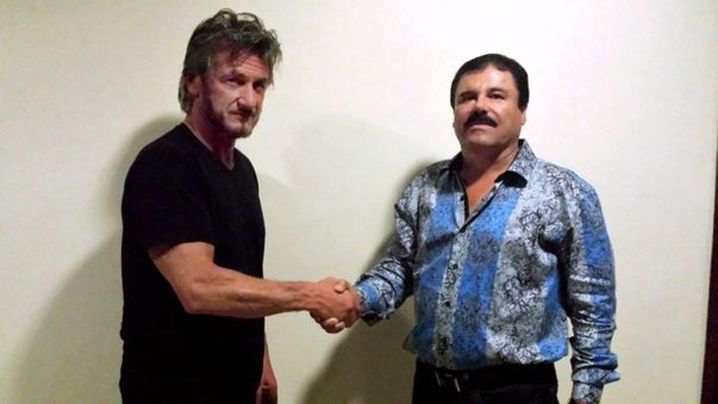
Actor Sean Penn with El Chapo shortly before he was recaptured. (Sean Penn/Rolling Stone)

Actor Sean Penn with El Chapo shortly before he was recaptured. (Sean Penn/Rolling Stone)

Drug importation offences in NSW have increased by 10.7 percent each year for the past 10 years, according to the NSW Bureau of Crime Statistics and Research.

Mexican drug cartels are some of the most violent and notorious in the world.

The head of the Sinaloa cartel, Joaquin ‘El Chapo’ Guzman, was recaptured in Mexico in January after being on the run for six months.

He is believed to be behind thousands of drug-related murders in the Mexico and the US.
Read more at http://www.9news.com.au/national/2016/05/09/06/28/mexican-drug-cartels-supplying-bikies-with-ice-report#WhI71ukRs8xZTLDk.99

Mexican drug cartels and dark-networks: an emerging threat to Australia’s national security

Over the past decade Mexican drug cartels’ power and the violent struggles between them have increased exponentially. Previously Mexico, and in particular the border regions with the US, were the key battle grounds for control of distribution routes. However, today Mexican drug cartels are now looking abroad in an attempt to extend their operations. This expansion has seen several cartels moving into lucrative international markets in Europe and the Asia Pacific.

It is in this context that Australia has now become a target of several Mexican cartels. They have already established linkages in the Asia Pacific and are further attempting to strengthen and expand these — with a particular focus on penetrating the Australian market. These developments show how Mexican drug cartels operate as ‘dark-networks’, successfully creating a global system that seeks to capture new markets, and further extend their control and dominance of the flow of illicit drugs around the world.

Full white paper document here.

  Source: Strategic and Defence Studies Centre (ANU) Owning Institution: Australian National University

For Australia, the emergence of Mexican drug cartels in local markets presents not only criminal but strategic challenges. The size of these operations, their resources and ‘dark-network’ structure makes

them a difficult opponent. Their presence threatens to not only increase the supply of illicit drugs in Australia, but encourage turf wars, increase the amount of guns in the country, tax border security resources and threaten the stability and good governance of South Pacific transit spots.

This represents the end of Australia’s ‘tyranny of distance’, which previously acted as a buffer and protected Australia from the interests of remote criminal groups such as the Mexican cartels.

The Clinton’s and Panama Papers Friends

There has been a constant recent argument that if you are a conservative and don’t vote Trump then you are effectively voting for Hillary. That is a straw man argument when the matter is twofold.


Newt Gingrich argued with Congressman Huelskamp over the weekend and admitted Trump is not a ‘Reagan conservative’ but he is better than Hillary. Of course that statement is true. The other matter is why are the Trump fans so fearful that Hillary will get the nomination? Of course she will. Are Republicans so terrified that Hillary cannot be defeated in the general election? If so, then where is the mettle and fire in the belly and force multiplier and a voting army defeat Hillary? If the will is there, the achievement can be so great such that no Democrat will successfully take over the Oval Office for perhaps up to 3 election cycles and it should that way given the last 8 years.

In case this argument needs more ammunition, here are some more political arrows for the quiver relating to the elitist circle of the Clintons. This demonstrates the alternate universe of collusion, money and favors.

Inside Panama Papers: Multiple Clinton connections

Washington/McClatchy:

Hillary Clinton recently blasted the hidden financial dealings exposed in the Panama Papers, but she and her husband have multiple connections with people who have used the besieged law firm Mossack Fonseca to establish offshore entities.


Among them are Gabrielle Fialkoff, finance director for Hillary Clinton’s first campaign for the U.S. Senate; Frank Giustra, a Canadian mining magnate who has traveled the globe with Bill Clinton; the Chagoury family, which pledged $1 billion in projects to the Clinton Global Initiative; and Chinese billionaire Ng Lap Seng, who was at the center of a Democratic fund-raising scandal when Bill Clinton was president. Also using the Panamanian law firm was the company founded by the late billionaire investor Marc Rich, an international fugitive when Bill Clinton pardoned him in the final hours of his presidency.

The ties are both recent and decades old, not surprising

for the Democratic presidential front-runner and her husband, who have been in public life since the 1970s.

Each is listed in the massive leak of data from Mossack Fonseca, a law firm with expertise in registering offshore companies, which can have legitimate business purposes, but can also be used to evade taxes and launder money. Several heads of state were found in the leak, leading to the departure of the leader of Iceland and investigations in several other countries.

McClatchy Newspapers and about 350 other journalists working under the umbrella of the International Consortium of Investigative Journalists have searched an archive containing more than 11.5 million Mossack Fonseca documents, including passports, financial records and emails. After a series of articles earlier this month revealed how business owners and politicians used offshores, authorities raided the law firm’s offices in Panama. The law firm has denied all accusations of wrongdoing.

Hillary Clinton condemned what she called “outrageous tax havens and loopholes that super-rich people across the world are exploiting.”

“Now, some of this behavior is clearly against the law, and everyone who violates the law anywhere should be held accountable,” she said, speaking at the AFL-CIO convention recently. “But it’s also scandalous how much is actually legal.”

The Clintons themselves do not appear to be in Mossack Fonseca’s database, nor does it appear that their daughter, Chelsea, or her husband, Marc Mezvinsky, who co-founded a hedge fund, are listed. But Bill and Hillary Clinton’s connections to people who have used offshores is fuel for her Democratic rival, Bernie Sanders.

Clinton has struggled throughout her campaign to show that she can relate to working Americans, while Sanders has cast her as a wealthy out-of-touch Washington insider who has accepted hefty paychecks for speeches and received millions of dollars in campaign contributions from those tied to big businesses. Her connection to the Panama Papers, even if indirect, could magnify that perception.

Lee Miringoff, director of the Marist Institute for Public Opinion in New York, said it would draw voters’ attention once again to Clinton’s ties to big money. “It certainly would play into Sanders’ narrative,” he said.

Sanders said Clinton’s support of a free-trade agreement between the U.S. and Panama – one that he claims has allowed the wealthy to avoid paying taxes – should disqualify her from being the Democratic nominee for president.

“I don’t think you are qualified if you supported the Panama free trade agreement, something I very strongly opposed, which has made it easier for wealthy people and corporations all over the world to avoid paying taxes owed to their countries,” Sanders said recently.

To be sure, a long life in politics has allowed the Clintons to accumulate relationships to wealthy people and businesses across the globe.

One such connection is to Jean-Raymond Boulle, a one-time diamond miner from the volcanic island nation of Mauritius whose company was once based in Bill Clinton’s hometown of Hope, Ark. In the mid 1990s, Boulle was listed as a director of Auk Limited, a British Virgin Islands offshore company, and Gridco Limited, a Bahamas offshore company.

After two meetings with Boulle, Bill Clinton, then-governor of Arkansas, signed legislation allowing his company to engage in exploratory mining in the state. Later, Boulle and his wife attended Clinton’s first inauguration. Boulle’s company did not respond to a message.

“Obviously there’s no wrongdoing – it’s a question of perception and values,” said Meredith McGehee, policy director at the Campaign Legal Center, a nonpartisan, nonprofit organization. “They’ve been in public life so long; when you enter that sphere you have these connections.”

Clinton campaign spokesman Brian Fallon declined to answer specific questions about her connections but referred to Clinton’s earlier comments that criticized the behavior last week. Bill Clinton’s office and the Clinton Foundation declined to comment.

Also among the Clinton connections is Fialkoff, now a senior adviser to New York Mayor Bill de Blasio and director of the city’s Office of Strategic Partnerships. She, her brother, Brett, and her late father, Frank, are listed as shareholders of UPAC Holdings Ltd, a British Virgin Islands offshore company incorporated in June 2012.

Gabrielle Fialkoff said in an email that she has “no knowledge” of the company and referred questions to her brother.

Brett Fialkoff, who serves as chief operating officer at his family’s business, Haskell Jewels, a New York-based designer, marketer and distributor of costume jewelry, initially told McClatchy he didn’t know why his family would be in the documents. Later, he said that someone must have opened an account in their names.

Still, later, he said he set up an offshore company to export accessories from China to the United States. The documents indicate the company’s files are registered in Beijing.

But, he said, he abandoned the new business to give more attention to his family’s jewelry company. He said there’s no money in any bank account overseas and declined to provide details about his compliance with U.S. tax laws.

“I have news for you: There is no money,” he said in a phone interview. “We’re not like Vladimir Putin, trying to hide money.”

The most recent Mossack Fonseca information of December 2015 shows the company remains active, registered on behalf of the Fialkoffs in the British Virgin Islands by a Hong Kong-based consulting company on June 6, 2012. Brett Failkoff acknowledged the company is still “legally alive” but said it does not – nor has it ever – conducted any business.

Gabrielle Fialkoff, a longtime friend of de Blasio, was finance director for Clinton’s 2000 Senate campaign, which de Blasio managed. After serving as Haskell’s president and chief operating officer, she chaired de Blasio’s inauguration and led New York’s unsuccessful bid to host the Democratic National Convention in 2016.

She has been a regular donor to Democratic candidates, including Clinton, according to the Center for Responsive Politics, which tracks money in politics. She also donated between $250 and $1,000 to the Clinton Foundation. Her father donated to Clinton as well. Her brother contributed money to Republicans, including presidential candidates Ben Carson and Rand Paul.

Another connection is Giustra, the director of UrAsia Energy Ltd, a British Virgin Islands offshore company registered in May 2005.

The company wanted to “conduct uranium exploration, development, production and marketing operations and related activities in Kazakhstan and Kyrgyzstan,” according to a draft of the shareholders’ agreement.

UrAsia, based in British Columbia, Canada, finalized a deal in September 2005 to buy uranium mines for $500 million in Kazakhstan, according to published reports.

The deal came after Giustra joined Bill Clinton in Kazakhstan for the launch of a Clinton Foundation health initiative and dined with him and Kazakhstan’s president, among others. The timing prompted questions about whether Bill Clinton played any role in the agreement. Giustra denied that, saying it came after months of negotiations.

The following year, Giustra, who is also involved in filmmaking and founded Lionsgate Entertainment, made a donation of more than $30 million to the Clinton Foundation, according to published reports.

In total, Giustra has committed $100 million to the foundation, according to at least one report, though foundation records don’t give an exact amount, saying only that he is one of the largest individual donors giving more than $25 million. In 2007, he started an affiliated charity that bears his name and initially kept its donors secret despite a 2008 agreement between the Clintons and the Obama administration to make public foundation contributors.

Bill Clinton has flown around the globe on Giustra’s plane, sometimes with him, including to Kazakhstan.

Giustra’s attorney David S. Brown wrote in a letter to McClatchy that his client “had no dealing with the law firm of Mossack Fonseca.”

He also said the use of a company such as UrAsia Energy Ltd. is common in international mining transactions and was used at the direction of an international accounting firm.

“Far from being secretive, opaque or clandestine, UrAsia Energy Ltd. BVI was fully disclosed to the public and to the applicable regulators in 2005 _ to be clear, there was absolutely nothing untoward in the use of this entity,” he wrote.

He declined to answer additional questions.

Former fugitive billionaire Marc Rich’s name doesn’t appear in the Panama Papers, but his company does. The Bahamas offshore Industrial Petroleum Limited was registered in 1992, established by the commodities firm Glencore International in Switzerland, inactivated in 2001.

The allegations against Rich, who died in 2013, ranged from tax evasion to trading with Iran despite bans to selling oil to South Africa’s apartheid government. He fled to Switzerland in 1983, but before the pardon, his ex-wife Denise made a $450,000 donation to Clinton’s presidential library in Little Rock.

Rich’s business partners appear in the data too. And they also give generously to the Clinton Foundation.

Sergei Kurzin, a Russian engineer and investor, appears in a draft shareholders agreement in partnership with Giustra in the British Virgin Islands offshore UrAsia Energy Ltd. Kurzin worked closely with Rich in the 1990s looking for opportunities in the former Soviet Union when it was opened to mining and oil investment.

Kurzin, who has given the Clinton Foundation between $50,000 and $100,000, appears in the Panama Papers as the director and chairman of various oil companies. Kurzin was also a partner in the uranium deal involving Giustra.

In a 2009 interview with Forbes, the British-Russian dual citizen boasted of giving generously to a Clinton-Giustra initiative, noting: “I wrote a check for a million dollars. I don’t think you can call it a small amount.”

Messages left for Kurzin were not returned this weekend.

Also in the Panama Papers is Ronald Chagoury, who along with brother Gilbert leads the Chagoury Group, a Nigerian family-run construction business. The brothers were associated with Nigerian dictator Sani Abacha, who died in 1998, and did business with Glencore and Rich, according to news reports.

Ronald Chagoury appears in the Panama Papers as the main shareholder of Echo Art Ltd. in the British Virgin Islands.

In 2009, the Chagoury Group pledged $1 billion in coastal erosion projects to the Clinton Global Initiative, an offshoot of the foundation, according to the initiative’s website.

The Chagoury Group is building Eko Atlantic, a peninsula city adjacent to Lagos that will be reclaimed from the Atlantic Ocean. The company’s website cites the Clinton Global Initiative’s praise for it as an “environmentally conscious city” under construction.

Gilbert Chagoury’s ties to the Clintons stretch back years. He has given to Bill and Hillary Clinton’s campaigns and has donated between $1 million to $5 million to Clinton Foundation, foundation records show. In 2003 he organized a trip to the Caribbean where Bill Clinton was paid $100,000 for a speech.

Messages left for the Chagourys were not returned this weekend.

Another businessman in the Panama papers, Ng, is listed as a shareholder of two British Virgin Islands companies – South South News International Group Ltd in May 2010 and GOLUCK Ltd. in 2004.

He leads a real estate development company in Macau, China, and is one of the world’s wealthiest people. He was accused in 1996 of sending more than $1.1 million to a Little Rock restaurant owner who then contributed hundreds of thousands of dollars to the Democratic National Committee, according to a 1998 Senate committee investigation.

The restaurant owner, Charlie Trie, pleaded guilty to violating campaign finance laws. Ng was not charged. Another congressional report criticized Ng and others for failing to cooperate during the investigation.

Published reports say Ng visited the White House 10 times from 1994 to 1996, had his photograph taken with Bill and Hillary Clinton, sat beside Bill Clinton at an event at a Washington hotel, and rode in an elevator with Hillary Clinton.

Last year, Ng was charged with bribing a United Nations official and lying about what he was doing with $4.5 million in cash he brought into the U.S. over two years. Investigators say instead of spending it at casinos or on art, antiques or real estate, he used the money for bribes as he sought investments in Antigua and China. Another man listed in the same criminal complaint is president of the New York-based South South News, the same name of the British Virgin Islands company.

Ng’s lawyer, Kevin Tung, has said that his charges are based on a misunderstanding. Tung, Benjamin Brafman and Hugh Mo, two others who are or have represented Ng, did not respond to requests for comment.

In 2011, Sanders predicted in a Senate speech that the Panama trade deal would make it easier for the wealthy to hide their cash in Panama.

“I wish I had been proven wrong about this, but it has now come to light that the extent of Panama’s tax avoidance scams is even worse than I had feared,” he said in a statement earlier this month.

Hillary Clinton had opposed the deal in 2008 when she was running for president. But later, as secretary of state, she helped push the agreement through Congress. Her supporters, however, say that the trade pact did not open the door to additional tax evasion.

A Democrat-controlled Senate approved the trade deal. In October 2012, then-Senate Finance Committee Chairman Max Baucus, D-Mont., lauded the deal’s “strong language to crack down on tax evasion and money-laundering in Panama.”

Both Clinton and Sanders have vowed to go after Americans who try to hide their wealth.

Clinton said she would shut down what she called the private tax system for the wealthy while Sanders has said he would end the trade deal with Panama within six months and investigate U.S. banks, corporations and individuals stashing their cash in Panama to avoid taxes.

“We’re going after all these scams and make sure that everyone pays their fair share here in America,” she said. “I’m going to hold them accountable, and we’re going to have a special effort to track all these resources wherever they might lead.”

McClatchy has much more here and it is worth the long read to understand more not only on the Clintons but of the elites around the world that our own elites entertained, manipulated, approved of and how some laws and sanctions were waived.

Questions and Anger on Transfer of El Chapo

The Transfer of Mexican Drug Boss ‘El Chapo’ to a Less-Secure Prison Raises Concerns
“It just doesn’t make any sense,” says the former head of the DEA


Time: (MEXICO CITY) — Questions arose on both sides of the border about the decision to relocate convicted drug lord Joaquin “El Chapo” Guzman to a region that is one of his cartel’s strongholds, and a Mexican security official acknowledged Sunday that the sudden transfer was to a less-secure prison.

The official said that in general the Cefereso No. 9 prison on the outskirts of Ciudad Juarez, across from El Paso, Texas, is not as impregnable as the maximum-security Altiplano facility near Mexico City where he had been held. The official wasn’t authorized to discuss Guzman’s case publicly and agreed to do so only if not quoted by name.

The official said, however, that Guzman is being held in a maximum-security wing where the same protocols are being enforced as in Altiplano, including 24-hour monitoring via a camera in his cell.

Multiple analysts told The Associated Press that there was no sign of a link between the prison switch and extradition.
There will be no escape, ” Duarte told local media. “If he was brought here from Altiplano it’s because the security conditions are way above those of Altiplano, that’s what the federal government settled on.”

Related reading from FBI

Authorities said the move was due to security upgrades at Altiplano and also part of a routine policy to rotate inmates for security reasons. Analysts said officials may also have wanted to shake up his confinement to thwart any escape plans that could have been in the works.

Vigil said it would be a mistake to try to hold Guzman in the Juarez prison for long.

“If they keep him there for a prolonged period of time, the Mexican government certainly is risking that he escapes,” Vigil said. “And if he escapes, it would just completely decimate the credibility of the Mexican government.”

According to a 2015 report by the governmental National Human Rights Commission, Cefereso No. 9 got the lowest overall quality rating for any of Mexico’s 21 federal prisons at 6.63 on a scale of 0 to 10. Altiplano was the 10th best, with a rating of 7.32.

Cefereso No. 9 got low marks for guaranteeing a “dignified” stay and for handling inmates with special requirements. It got middling scores for guaranteeing prisoners’ safety and well-being, and for rehabilitation.

It was also listed as somewhat overcrowded, with 1,012 inmates living in a facility designed to hold 848. Authorities acknowledge overcrowding is a widespread problem throughout Mexico’s penitentiary system.

Overall, Cefereso No. 9 got a “yellow” evaluation for 2015 on the report’s stoplight-style rating system. That was improved from “red” in 2014, even if its numerical score was still the country’s lowest.

“Governability” was the only area where the prison received a “green,” or good, rating. Altiplano also got a “green” rating for the category.

“El Chapo” first broke out of prison in 2001 and spent more than a decade on the run, becoming one of the world’s most-wanted fugitives. He was recaptured in 2014, only to escape the following year. Mexican marines re-arrested him in the western state of Sinaloa in January, after he fled a safe house through a storm drain.

Guzman was returned to Altiplano, where officials beefed up his security regimen. He was placed under constant observation from a ceiling camera with no blind spots, and the floors of top-security cells were reinforced with metal bars and a 16-inch (40-centimeter) layer of concrete. Prison authorities also restricted his visits.

There Goes Afghanistan

While we have been at war, or maybe not so much lately in Afghanistan, the forgotten war, the Taliban and al Qaeda have partnered once again in earnest. Further, al Qaeda is successfully competing for fighters, those leaving Islamic State. The reemergence of al Qaeda will likely go well in collaboration with the Taliban due in part to the Taliban’s increased revenue sources.

There are about 10,000 U.S. troops in Afghanistan; about 8,500 of them are soldiers.

Current plans call for that number to drop to about 5,000 in 2016, but the top commander in Afghanistan, Gen. John Campbell, testified on Capitol Hill earlier this month that he wants “greater flexibility” to potentially keep more troops in-country. More from ArmyTimes.

Taliban Gets ‘Windfall’ from Poppy Harvest to Fund Offensives

The Taliban will reap “windfall” profits from a bumper poppy harvest in Afghanistan this spring to fund coming offensives, a U.S. military spokesman in Kabul said Thursday.

“The poppy crop is really the engine that provides all the money that fuels the Taliban,” and the insurgents were expected to benefit from “this very good poppy crop that they had this year,” said Army Brig. Gen. Charles H. Cleveland.

“As a result, we do expect an uptick in Taliban efforts to attack” when the harvest is completed later this month, with offensives focused on southwestern Helmand province, the center of the Afghan narcotics trade, Cleveland, the deputy chief for communications of the Resolute Support mission, said in a video briefing from Kabul to the Pentagon.

Taliban fighters in recent weeks essentially dropped the fight to assist in the harvest, giving respite to the struggling 215th Division of the Afghan National Security Forces in Helmand province, Cleveland said.

“A lot of the Taliban fighters have been out harvesting the poppy,” he said. Once the harvest is complete later this month, “We think that will be the next big Taliban push,” he said. “We think it will come in Helmand.”

The poppy trade in in Afghanistan supplies about 90 percent of the world’s heroin and is estimated by the United Nations Office on Drugs and Crime to be worth about $3 billion annually to the Afghan economy.

Narcotics trafficking goes virtually unimpeded in Afghanistan. The U.S. has dropped its eradication and crop substitution efforts. The U.S. Drug Enforcement Administration still has an office in Kabul but no longer conducts field operations.

The United Nations estimated that the poppy crop fell by about 19 percent last year mostly due to poor weather, but plentiful rain this year was expected to produce a bumper crop.

“We are happy that we had a good harvest this year compared with previous years,” Abdul Rahim Mutmain, a farmer in Helmand, told The New York Times.

“There is no security concern for a single laborer being checked or robbed by the police,” he said. “The entire district is under Taliban control and the bulk of the harvesters are Taliban.”

A typical Afghan farmer can get $200 for a kilogram of opium produced from poppy, according to the United Nations. The same amount of green beans will fetch $1.

Cleveland said the U.S. has 700 to 800 troops in Helmand now to advise and assist the 215th Division in preparing for the expected Taliban offensive. The troops, including Special Forces and Army 10th Mountain Division troops, mostly work out of the grounds of the old Camp Leatherneck, the former headquarters for the U.S. Marine presence in Afghanistan, Cleveland said.

The Taliban’s strength and funding will be factors in the recommendations to higher command and President Barack Obama of Army Gen. John Nicholson, the new commander of U.S. and NATO forces in Afghanistan, on whether to continue with the planned U.S. troop withdrawal from Afghanistan.

Cleveland said Nicholson was expected to complete his assessment later this month. The U.S. currently has about 9,800 troops in Afghanistan and the current plan calls for that number to be reduced to about 5,500 by the end of this year.

Al-Qaeda Said To Boost Taliban Fight Against Afghan Government

al-Qaeda is working more closely with the Taliban in Afghanistan and could bolster the militant group’s fight against government forces, a NATO spokesman says.

“By themselves, we don’t think that they pose…a real significant threat, to the government of Afghanistan,” spokesman Brigadier General Charles Cleveland said on May 5.

“But because we think that Al-Qaeda is…beginning to work more with Taliban, they can present a bit of an accelerant for the Taliban. They can provide capabilities and skills and those types of things.”

Last fall, the head of Al-Qaeda, Ayman al-Zawahri, announced his backing for the new Taliban leader, Mullah Akhtar Mansur.

“Since that time, we have seen more interaction” between the two groups, Cleveland said.

He estimated that there are 100 to 300 Al-Qaeda members in Afghanistan.

“Although they have been significantly diminished, they do have the ability to regenerate very quickly, and they still do have the ability to pose a threat,” he said.

Cleveland said the Taliban will also get a boost this year from a bumper crop for poppies, its main source of funding.

***** The Afghanistan Failing Economy aids the Taliban

CNN: Several would-be recruits who talked to a local freelance cameraman working for CNN said the only reason they joined the Taliban was because they couldn’t put food on the table.
“I want to join them because of the lack of jobs and my other economic problems,” the first recruit told us.
The second man, who showed us his high school diploma, told us he’d been to university and still couldn’t find a job. The Taliban offered him more than he could earn in the army, he claimed.
“I don’t have anything to do with their viewpoints. My only reason to join them is my economical problems and unemployment,” he added.
A seven-month Taliban veteran who was trying to convince the pair to join their fight told us he’d been working for a foreign company who let him go when they ran out of contracts. It wasn’t long before he realized the Taliban were the only game in town, he said.
“I spent all my savings to feed my family and didn’t have another source of income, so I joined them.” More from CNN.