
Exactly When Does Fentanyl get Included in Title 42?

President Biden is completely absent and indifferent to this crisis and so is the Department of Justice. Just consider this from two days ago…

SANTA ANA, Calif. (KABC) — A Fullerton man is facing several felony charges for possessing enough fentanyl to kill 12 million people, nearly four times the population of Orange County, authorities announced Friday.

According to the Orange County District Attorney’s Office, 60-year-old Alfonso Gomez-Santana was arrested Wednesday when California Highway Patrol Officers pulled him over near South Lemon Street and Orangethorpe Avenue in Fullerton. Officers found four kilos of fentanyl inside his vehicle and 20 more kilos in his home. They also found $250,000 worth of fentanyl pills and 122 grams of methamphetamine, according to authorities.

Fentanyl Bust photo 1 Fentanyl Bust photo 2Fentanyl Bust photo 3 source

The district attorney’s office said it takes about 2 milligrams of fentanyl to be considered a lethal dose.

“It is unconscionable that someone who has the ability to kill 12 million people is facing just a handful of years in jail,” said Orange County District Attorney Todd Spitzer in a news release. “Fentanyl is a national epidemic that killed more than 100,000 Americans last year and it’s not going to stop unless we have the tools as prosecutors to hold these drug dealers and drug manufacturers accountable for peddling death. Every parent in America should be petrified that one day they are going to walk into their child’s bedroom and find them dead because their child thought they were experimenting with recreational drugs and instead drug dealers sold them a deadly dose of fentanyl. This is not fear-mongering; this is reality – and if we don’t start strengthening penalties for drug dealers it’s going to be the reality for you or someone you love.”

Gomez-Santana has been charged with one felony count of sale or transport of a controlled substance and two felony counts of possession of sale with intent to sell.He faces a maximum sentence of six years and eight months in jail if convicted on all counts.

In November, Orange County prosecutors issued a warning to drug dealers, manufacturers, and distributors, saying if their deals result in someone’s death, they could be charged with murder.

Now to the matter of Title 42….

There are many chapters inside Title 42….all under the code dealing with public health….it was originally launched in 1944 to prevent the spread of communicable diseases and is managed by the CDC. In short, it is to prevent entry into the United States anything that is a threat to U.S. health law. So how does fentanyl get into the United States? Mostly trafficking through the southern border and in other cases through the U.S. Postal system. We know precisely how the supply chain operates and who is responsible. Really you say?

Yes….learn about the King Pin Act –>

Introduction
The Administration has released the names of three Mexican organizations against which the President has decided to impose sanctions pursuant to the Foreign Narcotics Kingpin Designation Act (the “Kingpin Act”) (21 U.S.C. 1901-1908, 8 U.S.C. 1182).  Kingpin Act targets, on a worldwide basis, significant foreign narcotics traffickers, their organizations, and operatives.

Background
The Kingpin Act became law on December 3, 1999.  Its purpose is to deny significant foreign narcotics traffickers, their related businesses, and their operatives access to the U.S. financial system and to prohibit all trade and transactions between the traffickers and U.S. companies and individuals.  The Kingpin Act authorizes the President to take these actions when he determines that a foreign person plays a significant role in international narcotics trafficking.  Congress modeled the Kingpin Act on the effective sanctions program that the Department of the Treasury’s Office of Foreign Assets Control (“OFAC”) administers against the Colombian drug cartels pursuant to Executive Order 12978 issued in October 1995 (“Executive Order 12978”) under authority of the International Emergency Economic Powers Act (“IEEPA”).

Implementation
The Kingpin Act requires that the Secretary of the Treasury, the Attorney General, the Secretary of State, the Secretary of Defense, and the Director of the Central Intelligence Agency coordinate to identify drug kingpins and propose them to the President for sanctions.  The Department of Homeland Security and the Directorate of National Intelligence are also included in the process.  The Act calls for the President to report to specified congressional committees by June 1 of each year on those “foreign persons [he] determines are appropriate for sanctions” and stating his intent to impose sanctions upon those Significant Foreign Narcotics Traffickers pursuant to the Act.  While previous Presidential determinations have been tied to the statutory June 1 timetable, the President may also identify Significant Foreign Narcotics Traffickers at any other time pursuant to the Act.

Under the Kingpin Act, the President may identify foreign entities as well as foreign individuals as Significant Foreign Narcotics Traffickers, or “kingpins”: a foreign person is defined in the Act as “any citizen or national of a foreign state or any entity not organized under the laws of the United States, but does not include a foreign state.”  Likewise, the President is not required to designate Colombian persons exclusively under Executive Order 12978, and may impose sanctions on a Colombian individual or entity under the Kingpin Act, which is intended to be global in scope.

The long-term effectiveness of the Kingpin Act is enhanced by the Department of the Treasury’s authority (in consultation with appropriate government agencies and departments) under the Act to make derivative designations of foreign individuals and entities that provide specified types of support or assistance to designated traffickers, or that are owned or controlled by such traffickers, or that act on their behalf.  This authority broadens the scope of application of the economic sanctions against kingpins to include their businesses and operatives.  Including this year’s action, the President has named a total of 78 Significant Foreign Narcotics Traffickers since the first set of kingpins was announced on June 1, 2000.  The Department of the Treasury’s OFAC has issued a total of 496 derivative designations pursuant to its authorities under the Kingpin Act; these entities and individuals are subject to the same sanctions that apply to kingpins.

Individuals who violate the Kingpin Act are subject to criminal penalties of up to 10 years in prison and/or fines pursuant to Title 18 of the U.S. Code.  Entities that violate the Act face criminal penalties in the form of fines up to $10 million; officers, directors, or agents of an entity who knowingly participate in a violation of the Kingpin Act are subject to criminal penalties of up to 30 years in imprison and/or a $5 million fine.  The Kingpin Act also provides for civil penalties of up to $1.075 million against individuals or entities that violate its provisions.

So, most of us know about some king-pins….El Chapo was a king-pin…then there are the cartels that are making billions per month not only trafficking narcotics but people across our southern border.
It all begins in China and the CCP, the Chinese Communist Party. There are other countries for sure inside the supply chain map that include India, Laos, Myanmar, Cambodia, Thailand and more…the Chinese mafia is well connected to the Mexican mafia, hence the Mexican drug cartels.
The Sinaloa cartel has a sizeable network in China for narcotics including fentanyl but also for money laundering. Then in balance, China has a large network in Mexico. There are a couple of standout names of which you can research on your own but they include:
14K
Zheng Cartel
Broken Tooth
Tse Chi Lop’s Sam Gor Syndicate
Big Circle Boys
In closing but not the end of the story, the U.S. Treasury has a 33 page list of ‘sanctions pursuant to the Foreign Narcotics KingPin Designation Act. Sanctions dont work so well …..do they?


Texas Allowed to use Abandoned Border Wall Material to Build the Border Wall

A welder straightens out a post in a new section of border wall that is being constructed near Eagle Pass on Nov. 20, 2021.  A welder worked last November on a new section of border wall near Eagle Pass. Credit: Nick Wagner for The Texas Tribune
The state has said some border residents have offered to donate land to have barriers built on their property. But the state has refused to release the names of those private landowners or the location of those properties, saying that if those details were made public, the properties could be targeted by criminals and owners could drive up the land prices and hurt the Facilities Commission’s negotiations — an indication that the state is also looking to purchase property, although that option hasn’t been publicly discussed.

$30 Million in Grants for Kits of Crack, Cocaine and Meth, no Really

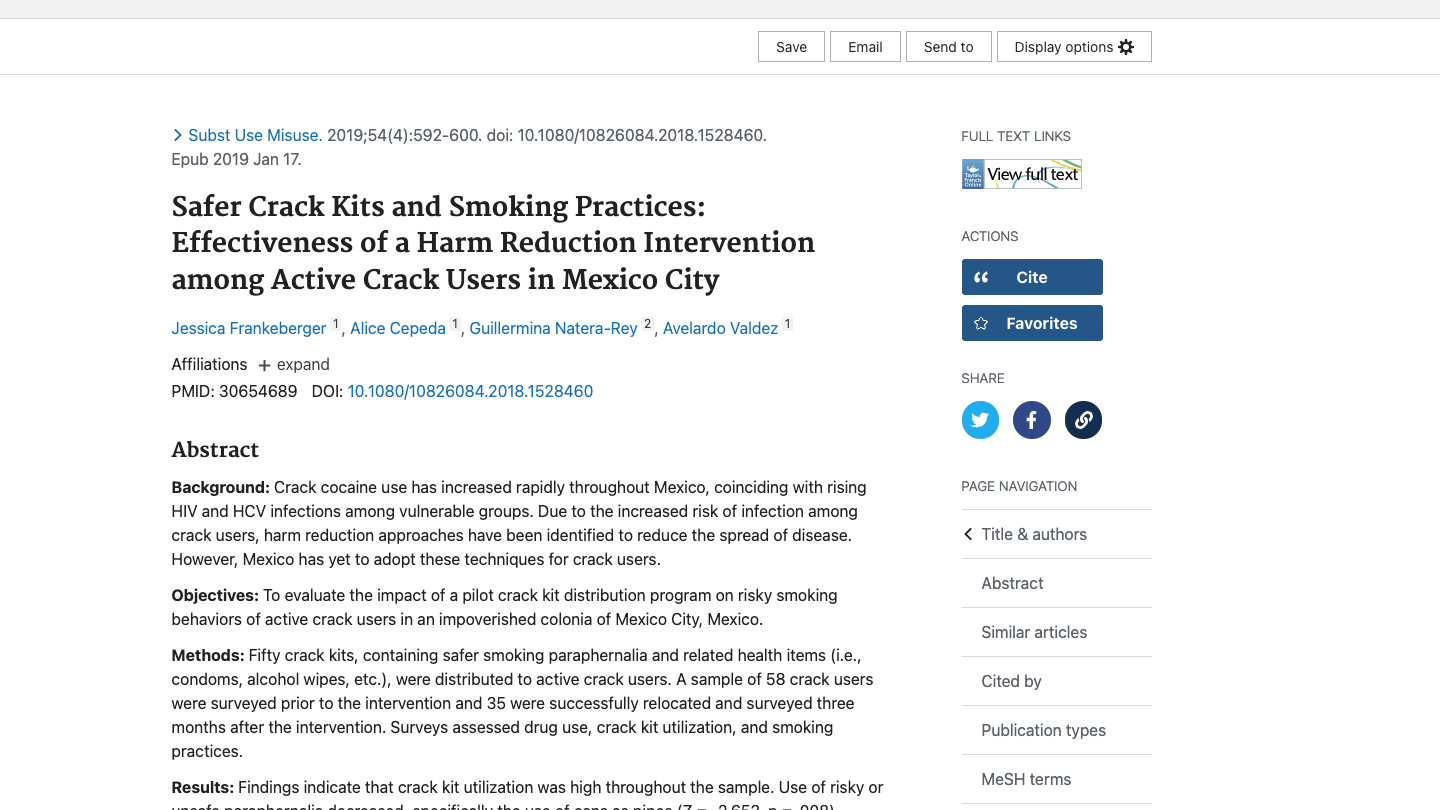
Update –> There is a BIG mess going on in DC about how ‘crack pipes’ are part of the ‘safe smoking kits’….HHS Secretary and the White House are saying that crack pipes are not included in the distribution…yeah okay…but hold on fact checkers….upon doing more checking seems our own government was funding a crack pipe study in Mexico….you know that Dr. Fauci agency….now we may know where this all started.

This is the page regarding the crack pipe study we paid for in 2019 in Mexico. 

This is the screenshot in case it goes away…giggles: 

When government become an illicit drug distributor….a bridge too far?

Source: In the name of harm reduction, the substance abuse arm of the Health and Human Services Agency will begin providing funds to help distribute “safe smoking kits” for the consumption of various illicit drugs like crack cocaine and crystal meth.

The Substance Abuse and Mental Health Services Agency (SAMHSA) has allocated roughly $30 million for a Harm Reduction Program Grant, which includes funding for syringe exchange programs, the opioid reversal drug naloxone, test kits to detect fentanyl and “safe smoking kits/supplies,” among other more traditional measures, like HIV testing and safer sex resources.

A grant program funded by the Biden administration will furnish syringes and “safe smoking kits” among other items as a means to advancing equity.

The deadline for the $30 million program is Monday, with the Department of Health and Human Services distributing funds to nonprofit groups and local governments. Among the items the grant will pay for are syringes and “safe smoking kits/supplies.”The kits will allow users to smoke crack cocaine, crystal methamphetamine, and other illicit substances. source

*** Per the Drug Enforcement Agency (DEA) website, the top paragraph reads –>

Drug Enforcement Administration

The Drug Enforcement Administration enforces the United States’ controlled substance laws and regulations and aims to reduce the supply of and demand for such substances.

Support for drug demand reduction and prevention programs through educational and other campaigns and initiatives including the Red Ribbon CampaignNational Takeback DayOperation Engage and One Pill Can Kill.

How does the Department of Justice of which the DEA is the authority square with this exactly? We now have local, state and the Federal governments contributing to the drug epidemic problem plaguing the whole country. Policymakers are just nuts and exactly how is this objective contributing to a positive outcome?

Article continues (…)

'Crack pipes is where we draw the line': Safe smoking kits ...

Harm reduction efforts, like testing for infectious diseases, needle exchanges and naloxone distribution programs, are nothing new, but providing federal taxpayer funds for paraphernalia used to smoke drugs is.

>>>


An HHS spokesperson reportedly confirmed to The Washington Free Beacon these “safe smoking kits” will provide pipes for the consumption of “any illicit substance” to reduce the risk of infection, which can potentially occur through cuts and sores.

Seattle previously distributed meth pipes to residents in 2015, according to Reuters, but it’s reportedly hard to tell the benefit such a program can have.

“It is plausible the intervention could be effective,” said Matthew Golden, a Seattle and King County disease control official and a University of Washington medical professor, when the program was launched. “It’s simply an unstudied idea.”

One nonprofit said it had conducted research which determined meth users would be less likely to inject the drug if given access to pipes, but there is little evidence to back up such a claim, Reuters reported.

San Francisco has handed out crack pipes as well, according to local reporting, where allegedly an estimated 25,000 people actively inject drugs.

The SAMHSA grant’s $30 million will be spread across three years, and the money will be prioritized for “underserved communities that are greatly impacted by substance use disorder (SUD).”

Other measures funded by the grant include harm reduction vending machines – including the contents to stock them, infectious disease test kits and medicines, vaccination services and wound care supplies.

The National Desk reached out to SAMHSA to see if the “safe smoking kits” will also be available at harm reduction vending machines across the country but did not receive an immediate response in time for publication. This story will be updated if a response is obtained.

Biden Admin is Forcing Every City/Town to be an Illegal Sanctuary

Where is the compliance to law on this?

Flying into the United States from any foreign country, passengers even though vaccinated with validated proof still go through extreme procedures due to Covid including additional testing, including American citizens returning home. Yet….walking across the Southern border requires….NOTHING. NOTHING. NOTHING.

According to CDC requirements, all air passengers two years of age or older traveling internationally, regardless of vaccination status, must provide a negative test to the airline before boarding the flight.

  • Passengers fully vaccinated must provide a negative test no more than three days before the flight’s departure from a foreign country, in addition to showing proof of vaccination.
  • Passengers over two years of age not fully vaccinated must provide a negative test no more than one day before the flight’s departure.  Except in the limited circumstances allowed by CDC, unvaccinated travelers will be US citizens and legal permanent residents.

Those who recently recovered from COVID-19 may travel with documentation of recovery and a letter from a licensed healthcare provider or public health official indicating the patient is cleared for travel.

However, it was just a few months ago that a Federal judge blocked portions of Florida law passed in 2019 preventing the entire state of Florida from being a sanctuary state.

A federal judge in Miami on Tuesday blocked Florida from enforcing a ban on so-called sanctuary cities, declaring portions of a law unconstitutional and tinged with “discriminatory motives.”

The judge’s ruling struck down a key portion of the 2019 law that prohibits local and state officials from adopting “sanctuary” policies for undocumented migrants, a main focus for Gov. Ron DeSantis, who vowed to ban “sanctuary cities” in Florida when running for governor in 2018 even though there were none in the state.

The judge also blocked the state from enforcing a provision in the law that requires law enforcementofficers and agencies to “use best efforts to support the enforcement of federal immigration law” when they are acting within their official duties. But the court allowed other provisions to stand, including one that required state and local law enforcement agencies to comply with immigration detainers — federal requests to hold undocumented immigrants past their release dates so that immigration agents can pick them up. The entire ruling is found here.

So, the Biden administration is taking advantage of this ruling by flying into the State of Florida, secretly and without any warning, several dozens flights full of illegal immigrants. Frankly, Governor De Santis should revoke all landing rights to DHS chartered flights…but read more….


TSA screeners face vaccine deadline with up to 40 percent lacking shots -  The Boston GlobePolicies and procedures are NOT law by the way…

Under a new policy, federal immigration law enforcement is now largely prohibited from arresting criminal aliens in your neighborhood if you live near a playground, a recreation center, a school, a place of worship or religious study, a location that offers vaccinations (such as a pharmacy), a community-based organization, any location that hosts weddings (such as a civic center, hotel, or park), any location with a school bus stop, any place “where children gather,” and many more places that are common to most towns.

What used to be safe spaces for law-abiding Americans and vulnerable members of society have been transformed into safe spaces for violent offenders with no right to be in the United States.

The scope is virtually limitless and prohibits all of the authorities of U.S. Immigration and Customs Enforcement (ICE) and U.S. Customs and Border Protection (CBP), such as “arrests, civil apprehensions, searches, inspections, seizures, service of charging documents or subpoenas, interviews, and immigration enforcement surveillance.”

Officers are prohibited from doing their job anywhere “near” a so-called “protected area,” an imprecise standard that Alejandro Mayorkas, the secretary of the Department of Homeland Security (DHS), admits has “no bright-line definition.” Mayorkas, who outlined the new policy last month, claims that putting a sanctuary in every community is a “noble” way to “advance our country’s well-being” and ensure that illegal aliens have access to “essential services” and can engage in “essential activities.”

DeSantis office claims Border officials secretly sent 70 planes of migrants  to Florida

ICE already had a sensitive locations policy that largely prohibited enforcement in religious institutions, at weddings, at hospitals, and at marked school bus stops when children are present, for example. The Biden administration’s new “protected areas” policy is meant to look similar, but it’s an overbroad, nationwide sanctuary policy in disguise and applies to locations that aren’t even open.

Because it “applies at all times and is not limited by hours or days of operation,” this means that ICE officers are now prohibited from making arrests or even conducting surveillance near any location where a wedding might occur even if a wedding isn’t occurring, or near any location that has an unmarked school bus stop in the middle of summer when school is out, or near a recreation center that’s closed for the winter, for example. When you plot out on a map the locations that are now no-go zones for federal law enforcement, it becomes clear that the real intent of this policy is to transform huge portions of our communities into safe havens for criminal aliens.

Biden’s DHS explains that the limitations don’t apply where there’s an “imminent” risk of harm or a “hot pursuit,” but those are rare circumstances. It means that officers are prohibited from arresting a known child abuser on the same street as a playground unless they observe the alien starting to victimize someone. Of course, officers are prohibited from conducting surveillance near playgrounds anyhow, so officers likely wouldn’t be present to stop an assault from happening.

The Biden administration has already limited which illegal aliens can be arrested; most foreigners who violate our immigration laws, including most criminal aliens, are currently allowed to run free. But even for those violent offenders the Biden administration claims to support arresting, the ability of ICE officers to make a targeted arrest (which often requires surveillance in order to confirm whether a target is at a location) has been dramatically curtailed by this policy. Public safety has taken a backseat to illegal alien advocacy.

To those who live in a neighborhood near a church, a school, a playground, or near any of the dozens of other locations implicated by this policy: Biden’s political appointees have decided that you and your family don’t deserve the protection you once had, and that shielding criminal aliens from the law is the top priority. source

Time to Sanction the Mexican Government for Violating Public Safety

In July of 2019: Mexico’s Congress passed an asset forfeiture bill; there were no additional changes to Mexico’s counterterrorism legislation in 2019. The government lacked adequate laws prohibiting material support to terrorists and relied on counterterrorism regimes in other countries to thwart potential threats. Additional reading here.

CARTEL monsters have hung nine bodies from a bridge in a chilling warning to rival gangs amid a bloody Mexico turf war.

A tenth victim was also found on a nearby road by horrified residents in the Zacatecas municipality of Cuauhtémoc on Thursday at around 6am.

Nine bodies were found suspended from a bridge in the municipality of Cuauhtémoc on Thursday

4
Nine bodies were found suspended from a bridge in the municipality of Cuauhtémoc on ThursdayCredit: Reuters
Officials believe the gruesome display is related to a dispute between cartels in the area

Officials believe the gruesome display is related to a dispute between cartels in the area Credit: AP

Officials warned the disturbing display was likely to be linked to a savage dispute between ruthless criminal gangs that operate in the area.

The nine bodies were eventually removed from the overpass by police at around 10am local time, as locals went about their day.

According to local media, the majority of the deceased were identified as residents of the small town Cuauhtémoc, which has a population of just 6,660.

“They pay for the sins of others, it is not fair that they do this to us because they pay for the sinners,” one spooked local told TV Azteca Noticias.

Another added: “It’s scary to go out at night. You have to go to sleep early and every night there is noise, motorcycles, screaming, things like that.”

An “intense investigation” was underway, the local government said, although no arrests have yet been made.

***

“Operation Lone Star,” is Gov. Greg Abbott’s evolving and expensive plan to secure the U.S.-Mexico border using thousands of state troopers and Texas National Guardsmen. The operation, launched in March, was initially billed by Abbott as an effort to “deny Mexican Cartels and other smugglers the ability to move drugs and people into Texas,” but has since become a sprawling and controversial experiment in the use of state power to secure an international border.

Democrats have denounced it as illegal and unconstitutional, and called for a Justice Department investigation. Republicans have praised Abbott for taking a stand and pushing the envelope.

Abbott has not asked the Biden administration for permission because he does not believe he needs it. Indeed, the entire operation has been designed to operate exclusively with state resources and agencies, and within the existing confines of state law. That’s both a strength of Abbott’s approach and, as I saw for myself in Del Rio, Texas, a major weakness.

Abbott’s Border Operation Is A Bureaucratic Morass

It’s a weakness because it severely limits what the operation can achieve. The basic idea is that Texas state troopers and National Guard troops will arrest illegal immigrants, who will in turn be prosecuted for misdemeanor criminal trespass in hopes that such prosecutions will serve as a deterrent. Whatever the merits of this approach to border security, it comes with a host of caveats and constraints.

To begin with, Texas is only arresting single adult men, not women, children, or family units, which means the state is targeting the migrant population most likely to be quickly expelled to Mexico under Title 42, the pandemic public health order that allows federal immigration officials to send migrants back over the border with minimal processing. The migrant men arrested by Texas law enforcement, by contrast, will remain in state custody for weeks or longer, rather than being sent back to Mexico.

Up until last week, migrant men arrested under Operation Lone Star who posted bond would be transferred to Immigration and Customs Enforcement, which would typically expel them under Title 42. But last week ICE told the state it would no longer take custody of these migrants. That means Texas will have to transfer them to U.S. Border Patrol, and as of this writing it remains an open question whether Border Patrol will expel them as they would have under Title 42, had federal agents arrested them, or process them as asylum-seekers.

If the latter, then Operation Lone Star might have the unintended effect of rewarding migrants caught by state authorities: once they’re processed and released by Border Patrol to pursue their asylum claims, migrants have legal status, are allowed to work, and can remain in the United States as their case wends its way through federal immigration courts — a process that can take up to five years.

But even before these problems arise there are strict conditions that have to be met before state authorities can even make an arrest. Migrants can only be arrested on private land where landowners have agreed to press charges, and only on those parcels of land where the Texas National Guard has managed to erect temporary barriers, usually some arrangement of concertina wire that migrants must cut or go over, to ensure the trespass charges will stick.

And before Texas National Guardsmen in particular can arrest anyone, they’re supposed to go through 40 hours of police training (in practice, I’m told that it’s more like a day-long training). Also, the migrants who are arrested have to be transported to state prisons that have been retrofitted to comply with state jail standards, since migrants are being held in pretrial confinement. That in turn means all the corrections officers have to be trained as jailers.

On top of all these requirements, the entire operation depends on the willingness of local county attorneys to prosecute a deluge of misdemeanor criminal trespass cases arising from all these arrests. In Kinney County, which has a population of less than 4,000, the county attorney is a young man named Brent Smith who just took office in January and has never before worked as a prosecutor. He now has about 1,300 cases and counting thanks to Operation Lone Star. (For context, in normal times the Kinney County prosecutor would only take on a couple dozen cases per year.)

By contrast, in neighboring Val Verde County, the local prosecutor, David Martinez, a Democrat, has rejected nearly half the cases that have come through his office from Operation Lone Star. Last month, Martinez told a local news station he rejected the cases either because the migrants in question were seeking asylum or because there was some other problem with the case. (He cited one case in which state troopers re-directed a group of migrants to cross onto private property so they could arrest them for trespassing.)

For all this, out of about 1,500 criminal trespass cases filed since July through Operation Lone Star, only about 3 percent have resulted in convictions, according to a recent report by the Wall Street Journal, which also cited court records showing that of the 170 Operation Lone Star cases resolved as of November 1, about 70 percent were dismissed, declined, or dropped. The remaining cases ended in plea agreements, with most migrants sentenced to time already served.

Meanwhile, all of this is costing Texas hundreds of millions of dollars. Earlier this year, Abbott shifted about $250 million in the state budget to launch the operation, and the GOP-led state legislature later approved an additional $3 billion. In Del Rio, you can see these dollars at work all over town: every hotel parking lot is full of Texas state trooper trucks and SUVs. Uniformed National Guardsmen drive around in armored Humvees. Along some stretches of private land  near the Rio Grande, sparkling new chain-link fencing topped by concertina wire stretches out for miles.

Locals seem to appreciate the effort and money being poured into their communities, especially landowners who feel betrayed and abandoned by the Biden administration. One woman told me her family’s ranch has been repeatedly vandalized this year by migrants — trashed, in fact, for the first time in generations. When they called Border Patrol, the answer came back that no one could be spared to come out and investigate. Their advice was, stay away from your ranch, or move. Their message was, incredibly, we can’t protect you.

Indeed, under the direction of Biden and Homeland Security Secretary Alejandro Mayorkas, Border Patrol has for the past ten months been overwhelmed with the endless task of processing and releasing migrants as fast as it possibly can, with little time or personnel available for patrolling the border. In Del Rio, I spoke to former Border Patrol chief Rodney Scott, who was forced out by the Biden administration in August, and he said agents are demoralized because they’re unable to do their jobs. Instead of intercepting drug and human traffickers or arresting criminals trying to evade detection — the actual job of Border Patrol agents — they’re stuck processing and transporting asylum-seekers.

Scott sees the border as a “national security issue,” but says the Biden administration has a completely different set of priorities. “Unfortunately since January 20, I haven’t seen a single action or even a single conversation while I was still in the chief’s position, to try to slow the flow to actually create a deterrent to illegal entry,” he says. “Every single action has been to basically be more welcoming. How can we process faster? And that’s just going to continue to be an invitation worldwide.”

Is Operation Lone Star Elaborate Political Theater?

Texas, then, really is on its own. Abbott is right that under the circumstances something must be done by the state, but so far his solution seems overly lawyerly and cautious, designed specifically to pass legal muster and win lawsuits rather than create a real deterrent to illegal immigration.


A cynic might suspect that Operation Lone Star, for all its complex interagency coordination and mass deployment of manpower and expensive price tag, is in the end mostly political theater. Its purpose might not be to secure the border so much as to secure Abbott’s right flank against a pair of Republican primary challengers, former GOP Texas Chairman Allen West and former state senator Don Huffines, who accuse Abbott of being too soft on the border.

Given the resources at Abbott’s disposal, West and Huffines — along with plenty of Texas conservatives who are frustrated about the ongoing border crisis — arguably have a point. Former Virginia attorney general Ken Cuccinelli, who led U.S. Citizenship and Immigration Services under Trump, has argued that border states have a strong constitutional case for securing their own international borders in the face of federal inaction. Cuccinelli and others cite Article I, Section 10, Clause 3 of the U.S. Constitution, which stipulates that no state can engage in diplomacy or war without the consent of Congress, “unless actually invaded, or in such imminent Danger as will not admit delay.”

The ongoing border crisis, which has seen a record 1.7 million arrests at the southwest border in the last 12 months, constitutes both an invasion and an imminent danger that will not admit delay, the argument goes, and states have a right to act. Not only could border state governors like Abbott invoke emergency powers to return illegal immigrants directly to Mexico, state legislatures could pass laws making it more difficult for illegal immigrants to remain in those states, mostly through strict licensure and screening requirements for sponsors and refugee resettlement organizations.

All of these things, and much else besides, lie far outside the scope of what Abbott is doing in Texas. There is no question at this point that Operation Lone Star, whatever its merits, will not significantly change the situation along the Rio Grande. The border crisis created by the Biden administration is here to stay — a new normal along the southwest border for as long as the White House desires it.

What could change that? Texas could. Abbott could. He has already demonstrated an impressive ability to mobilize and deploy thousands of Texas law enforcement and military personnel, along with every manner of vehicles, barriers, and transports. Nothing like Operation Lone Star has ever been undertaken, yet it is too little, too late — too pinched and small-minded a response to a rolling crisis that now appears to be permanent.

Abbott could wield these tools to press the constitutional question about what border states can do when the federal government leaves them to their own devices. If he doesn’t, he might find the people of Texas are ready to listen to someone who will. source