Heartless, Biden Admin Closes Office that Helps Victims of Crimes

In full disclosure, I personally have met several of the victims in recent years in Washington DC.

Biden admin closes office that helps victims of crimes committed by immigrants, opens immigrant services center

On Friday, the Biden administration announced that it would be closing a government office set up to help victims of crimes committed by immigrants, to be replaced with an office aiding in immigration services, according to the Associated Press.

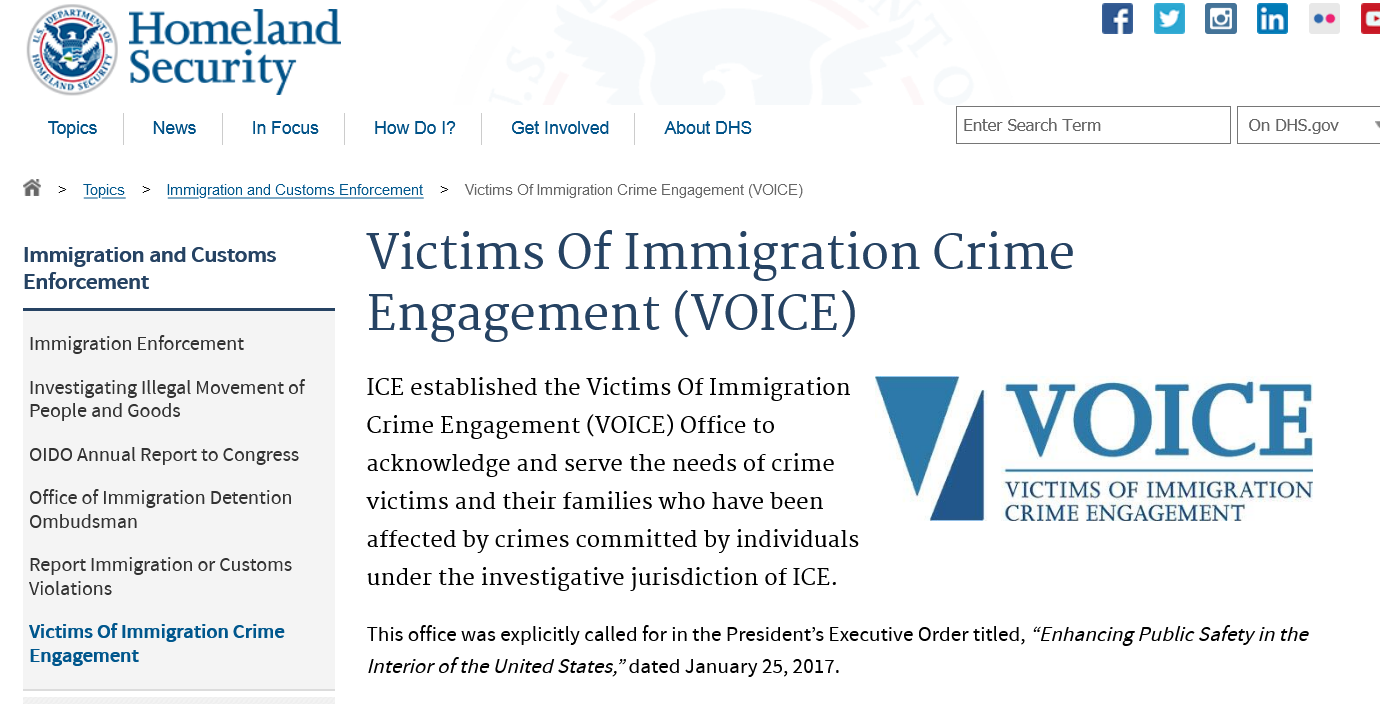
Created by the Trump administration during his first week in office, the Victim Of Immigration Crime Engagement Office, or VOICE, would be replaced with what the US Immigration and Customs enforcement called a “more comprehensive and inclusive victim support system.”
Replacing VOICE is the The Victims Engagement and Services Line, “which will combine longstanding existing services, such as methods for people to report abuse and mistreatment in immigration detention centers and a notification system for lawyers and others with a vested interest in immigration cases,” writes AP.
(the website of VOICE before it was closed)
“The new office will add a service for potential recipients of visas designated for victims of human trafficking or violent crimes in the United States,” they continue

“Providing assistance to society’s most vulnerable is a core American value. All people, regardless of their immigration status, should be able to access victim services without fear,” said Homeland Security Secretary Alejandro Mayorkas.
On Twitter Friday, Stephen Miller slammed the decision to close the office, stating “law enforcement is now forced to aid lawmakers.”** 


“This is in addition to all of the free help illegal aliens already get from mega-billionaires, the ACLU & powerful special interests. Americans have become second-class citizens in their own country. And grief-stricken families, mourning loved ones, are the collateral damage,” Miller continued.
According to the Associated Press, Miller stating that opening the new office would be like the DEA opening “a call center to help drug dealers get lawyers and amnesty for their crimes.” The Department of Homeland Security “is a law enforcement agency, not a legal help center for criminals and lawbreakers.”

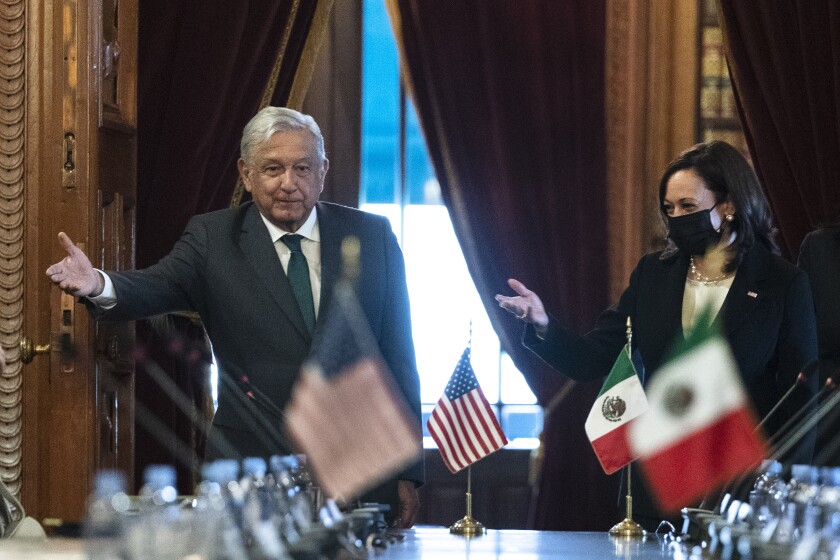
VP Harris Trip Results in Joint Task Force Alpha

Harris meets with Mexico's president, declares 'new era' - Los Angeles Times source

In part from USA Today: GUATEMALA CITY – Vice President Kamala Harris, during a trip to Guatemala, announced initiatives Monday to address corruption and human trafficking in Central America and urged people from the region not to come to the U.S.-Mexican border. Harris announced that a task force would be created to work with the Justice, Treasury and State Departments to investigate corruption in the region. U.S. officials will train law enforcement in Guatemala to conduct their own investigations.

Joint Task Force Alpha was established to enhance U.S. law enforcement efforts against human smuggling and trafficking groups in Mexico and the Northern Triangle countries of Guatemala, El Salvador and Honduras.

“I have personally worked on these cases in my career and can say that when we see some of the most vulnerable in our communities being taken advantage of, being sold for profit, being abused, it should be a priority for all of us who care about the human condition and humanity,” Harris said.

“Corruption really does sap the wealth of any country and in Central America is at a scale where it is a large percentage of GDP across the region,” said Ricardo Zuniga, the State Department’s special envoy for the Northern Triangle. “We see corruption as one of the most important root causes to be dealt with.”

Part of the strategy to slow the pace of migration is creating better living conditions and economic opportunities for people in the region through investment. Last month, Harris secured the commitment of 12 U.S. companies and organizations – including MasterCard, Microsoft and Chobani – to invest in Guatemala, Honduras and El Salvador.

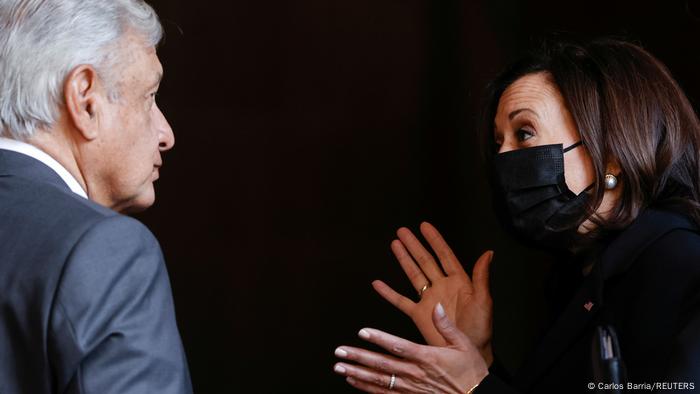
US: Kamala Harris declares Mexico, Guatemala trip ′a success′ | News | DW |  09.06.2021

From the DOJ:

“Transnational human smuggling and trafficking networks pose a serious criminal threat,” said Attorney General Garland. “These networks profit from the exploitation of migrants and routinely expose them to violence, injury, and death. The joint efforts we are announcing today will combine investigative, prosecutorial, and capacity-building efforts of both the Departments of Justice and Homeland Security. Our focus will remain on disrupting and dismantling smuggling and trafficking networks that abuse, exploit, or endanger migrants, pose national security threats, and are involved in organized crime. Together, we will combat these threats where they originate and operate.”

In addition to the work of the Joint Task Force, Attorney General Garland directed the Office of Prosecutorial Development, Assistance, and Training (OPDAT) and the International Criminal Investigative Training Assistance Program (ICITAP), in coordination with the State Department, to enhance the assistance provided to counterparts in the Northern Triangle countries and Mexico to support their efforts to prosecute smuggling and trafficking networks in their own courts.

The Joint Task Force will consist of federal prosecutors from U.S. Attorney’s Offices along the Southwest Border (District of Arizona, Southern District of California, Southern District of Texas, and Western District of Texas), from the Criminal Division and the Civil Rights Division, along with law enforcement agents and analysts from DHS’s Immigration and Customs Enforcement and Customs and Border Patrol. The FBI and the Drug Enforcement Administration will also be part of the Task Force. And it will work closely with Operation Sentinel, a recently announced DHS operation focused on countering transnational criminal organizations affiliated with migrant smuggling.


The Under Reported Threat to the US of Smuggling Chinese

We have watched for years the chaos at the U.S. Southern border with Mexico. While there is has been a single focus on Latin Americans crossing into the United States, very little has been reported about the volume of Chinese. This should stimulate some critical thinking and questions.

Is this espionage, operatives or the building of a force for other reasons? In February of 2020, NBC News was asking some of the same questions.

A Chinese student walked around a perimeter fence at a U.S. naval base in Key West, taking pictures of government buildings. Stopped by police, he said he was trying to capture images of the sunrise.

aerial view of nas key west naval air station base truman ...

And nine days after that, two more Chinese students drove past a guard at the same naval base. When stopped by security 30 minutes later, they voluntarily displayed the videos and photos they had taken of the base.

The first Chinese student arrested at the naval base in Key West was Zhao Qianli, 20, who was taken into custody on Sept. 26, 2018.

Zhao entered the base by walking along the facility’s secure fence line and trudging through the beach, court documents say.

Zhao headed directly to the Joint Interagency Task Force South property, according to court records, where he took several photographs on his Motorola cellphone and his Canon EOS digital camera.

His devices contained photos and videos of sensitive equipment at the facility’s “antenna farm,” as well as images of warning signs that read “Military Installation” and “Restricted Area,” according to court documents.

Zhao initially told military police that he was “lost” and that he was a “dishwasher from New Jersey.” In later conversations with the FBI, Zhao said he traveled to Key West to “see the sights, such as the Hemingway House,” but there were no images of tourist attractions on his phone, according to his sentencing memo.

Zhao admitted to receiving military training as a university student in China and was found to have a “police blouse” and a People’s Republic of China Interior Ministry belt buckle at his hotel, the memo says.


In 2016, Newsweek in part reported:

Smuggling Chinese across the southern U.S. border appeals to traffickers because it is more lucrative than smuggling individuals from Mexico or Central America. A longer journey commands a steeper price and the going rate per person is believed to be somewhere between $50,000 and $70,000; the total value of the trade for the Chinese mafias involved has been estimated at $750 million.

The role of Chinese mafia groups (triads) in bringing migrants across the border has also deepened their exposure to and ties with Latin American narcotics cartels, both in human smuggling and beyond.

An “alliance between Chinese and Latin American smuggling rings” was noted as early as 1993, but today the scope of this “alliance” encompasses not just smuggling, but also other illicit activity including the sale of drug precursors from Asia and pirated materials.

In Mexico, contact between triads and cartels occurs in various regions, including those ruled by the ruthless Los Zetas syndicate and the Gulf and Juarez cartels, depending on what routes are used for migrants. Triad groups are believed to operate in the Mexican state of Chiapas and the Red Dragon triad, which operates in Peru, is involved not only in smuggling, but also in extortion and drug trafficking within Latin America. The wide-ranging activities of transnational organized crime groups generate additional law enforcement concerns beyond border security.

But it is important to look to the other side of our country, the area of the Bahamas and South Florida. A few islands in the Bahamas are now fully owned by China, one such island is Bird Cay. From Forbes in 2019 in part:

Quoting CaribbeanNews.com directly:

“China has set its sights on The Bahamas and has invested billions of dollars in building new infrastructure and industry across the country.

New roads, new businesses, new hotels, and booming Chinese immigration has led to many companies being staffed with more Chinese workers than local Bahamians.”

Plus, “Reports show that over 200,000 Chinese are illegally smuggled into the Caribbean every year to open their shops or work at Chinese businesses, with many sending their money back to China.”

However, the local government doesn’t see how it’s in a good position to do anything about it since Chinese state banks are simultaneously flooding the islands with tens of millions of dollars… even going so far as to finance new ports there.

Private Islands for sale - Bird Cay - Bahamas - Caribbean Bird Cay, owned now by China

Hold on, there is South Florida where those smuggled Chinese are making their way into the United States aboard some very expensive yachts.

The Miami Herald just last year told us:

Dozens of Chinese nationals without proper papers have been smuggled from the Bahamas to South Florida by operators of luxury yachts who are charging them thousands of dollars each for the short Atlantic journey, according to federal criminal cases.

In recent instances, the Coast Guard stopped two vessels approaching the South Florida shore, leading to the arrests of three men accused of transporting a total of 26 Chinese passengers and one Bahamian, court records show. The alien smuggling operations were not related, however.

Rocco Oppedisano, a 51-year-old Italian national, is scheduled for arraignment in Miami federal court Wednesday on charges of conspiring to transport aliens into the United States and bringing them here for financial gain. Oppedisano told a magistrate judge this week that properties he once owned in the Northeast have been sold along with his Mercedes-Benz, Porsche and Fiat vehicles to pay for legal costs over his immigration troubles.

Oppedisano was stopped by the Coast Guard on Dec. 2 while he was commandeering a 63-foot Sunseeker yacht named INXS FINALLY with 14 Chinese passengers and one Bahamian, according to an indictment. Among the passengers was a Chinese national, Ying Lian Li, who was deported last April but tried to re-enter the country.

It is unclear why these Chinese nationals — unlike Cubans and Haitians smuggled here in both go-fast and rickety boats in the past — sought to come to South Florida. But over the past five years, the Bahamas has experienced an influx of Chinese workers flocking to the archipelago as part of a push by China to invest in the country’s hotel, tourism and trade industries.

In the other alien smuggling case, a Coast Guard cutter encountered a 70-foot Hatteras yacht about 20 miles east of South Florida on July 23, when officers radioed the vessel to ask how many people were on board. The yacht’s response: two crew and eight Japanese passengers with passports, who did not need additional visas to enter the United States.

It was all a lie, according to a Homeland Security Investigations criminal affidavit.

About 10 miles east of Port Everglades, Coast Guard officers boarded the yacht and asked crew member Robert L. McNeil Jr. to bring all the passengers on deck. The officers counted 12 passengers with passports from the People’s Republic of China but without required visas to enter the United States, according to the HSI affidavit.

The Coast Guard concluded that none of the 12 Chinese nationals possessed documents that would allow them to enter the United States legally. McNeil, and the yacht’s charter captain, James A. Bradford, along with the 12 Chinese nationals were transferred to the Coast Guard cutter.

During questioning, Bradford said he left South Florida on the Hatteras yacht bearing the name CAREFREE on July 22 and arrived in Nassau, Bahamas, that day. He admitted that the purpose of the trip was to pick up a “tour group of aliens” in the Bahamas, transport them to South Florida and return to the Bahamas on July 26.

Bradford, who has been a charter captain for decades, said “he never checked to see if the passengers had proper documents to come to the U.S.,” according to the affidavit.

A search of the yacht uncovered 10 cellphones in the bridge area; none of the Chinese nationals had mobile phones on them.

“Based on my knowledge and experience in human smuggling cases, smugglers often collect cell phones from migrants until they are paid for delivering the migrants to the U.S.” wrote HSI special agent David Jansen, who added that none of the passengers carried any luggage.

The search also uncovered $118,100 hidden behind the wall paneling of the yacht’s master bedroom, the affidavit said. Investigators also seized more than $2,800 from McNeil.

Both Bradford and McNeil were indicted on charges of conspiring to transport aliens into the United States and bringing them here for financial gain. To resolve his case, McNeil pleaded guilty earlier this month to one count of alien smuggling to make a profit. He faces up to 10 years in prison.

The Hill says this is a disturbing trend.

Matt Cardy/Getty Images

While it’s unclear why these Chinese nationals sought to come to South Florida, the move is part of a larger five-year trend in the region. The Bahamas has seen a surge of Chinese workers as China invests in the archipelago’s hospitality and tourism industries. China’s presence in the Bahamas reportedly stems from a burgeoning relationship between the two countries, after China provided disaster relief in a bid to establish trade.

 

Drug Cartels 1 Biden Administration 0

Primer: Secretary of State, Tony Blinken is traveling to Costa Rica to meet with several country leaders from Central America.It is said he will discuss regional issues including economic growth, the pandemic and climate change impacts. But wait, what about VP Kamala Harris, where is she? Furthermore, what about the issue of immigration, narcotics trafficking or human smuggling?

Meanwhile, the Biden administration is feckless when it comes to the real issues and solutions, especially the cartels….so read on.

Graphic: Bodies of drug runners, human traffickers ... source

MEXICO CITY (AP) — The notoriously violent Jalisco cartel has responded to Mexico’s “hugs, not bullets” policy with a policy of its own: The cartel kidnapped several members of an elite police force in the state of Guanajuato, tortured them to obtain names and addresses of fellow officers and is now hunting down and killing police at their homes, on their days off, in front of their families.

It is a type of direct attack on officers seldom seen outside of the most gang-plagued nations of Central America and poses the most direct challenge yet to President Andrés Manuel López Obrador’s policy of avoiding violence and rejecting any war on the cartels.

But the cartel has already declared war on the government, aiming to eradicate an elite state force known as the Tactical Group which the gang accuses of treating its members unfairly.

“If you want war, you’ll get a war. We have already shown that we know where you are. We are coming for all of you,” reads a professionally printed banner signed by the cartel and hung on a building in Guanajuato in May. Read more here.

***

Organized crime involving even the police is an integral part of the worsening immigration crisis. Criminal organizations are involved at every stage of the migration process, from motivating migrant departures for the United States to security along human smuggling routes through Mexico, to the mechanisms for entering the United States undetected.

There are two kinds of criminal groups at work here — transnational gangs and transnational criminal organizations. The brutal violence and unchecked extortion perpetrated by transnational gangs in the Northern Triangle (the nations of El Salvador, Honduras and Guatemala), targeting both civilian populations and rival gang members, motivate Central Americans to uproot their lives and families in the hope of a better, safer life in America.

Transnational criminal organizations control, regulate, and tax every land port along the southern border. They also control smuggling routes through Mexico and impose a tax, called a piso, on the smugglers and migrants who use them. These groups control the flow of migrant caravans, strategically diverting Border Patrol resources from sectors of the border that are used to smuggle illegal drugs into the United States.

For those who choose to leave the Northern Triangle for a better life in America, the escape from territory controlled by transnational gangs leads them into territory controlled by the transnational criminal organizations.

In most cases, they use coyotes — human smugglers and traffickers who charge them thousands of dollars. Human smugglers range from independent operators and loose networks to subsidiaries of the transnational criminal organizations themselves.

Beyond what migrants pay up front, as the Associated Press reports, many are kidnapped and tortured “until they reveal the phone numbers of relatives in the United States and holding them for ransom.”

If they can’t pay — or if their families can’t — they’re killed. As one analyst points out, “It’s a long trail of extortions, and it’s a very dangerous journey for all of them.”

The groups also sometimes use migrants as drug mules. They will coerce migrants traveling through their territory into carrying large bags, or mochilas, filled with illegal drugs. Not only does this perpetuate the stream of narcotics into the U.S., it also victimizes migrants, making them desperate to unlawfully enter and remain in the U.S. — even if imprisoned on drug charges — for fear of being killed if they are sent home.

The bottom line is that throwing open our borders — as President Biden has effectively done — only serves to empower these transnational criminal enterprises. His immigration policies aren’t humanitarian; they’re creating more victims.

HHS Shifting $2 Billion to UAC’s Confirms it is a Crisis

Shuffling money to cover for a self-made crisis at the border…..remember President Trump was excoriated for doing the same thing but this is different?

So, we sacrifice the national stockpile for pandemics for the border insurgency? This is $ billion but does that only cover what has already been spent or for the next month or so…inquiring minds want to know the full accounting..

*** The Trump administration is currently housing 12,800 ...

Politico: The Department of Health and Human Services has diverted more than $2 billion meant for other health initiatives toward covering the cost of caring for unaccompanied immigrant children, as the Biden administration grapples with a record influx of migrants on the southern border.

The redirected funds include $850 million that Congress originally allocated to rebuild the nation’s Strategic National Stockpile, the emergency medical reserve strained by the Covid-19 response. Another $850 million is being taken from a pot intended to help expand coronavirus testing, according to three people with knowledge of the matter.

The reshuffling, which HHS detailed to congressional appropriators in notices over the last two months, illustrates the extraordinary financial toll that sheltering more than 20,000 unaccompanied children has taken on the department so far this year, as it scrambled to open emergency housing and add staff and services across the country.

It also could open the administration up to further scrutiny over a border strategy that has dogged President Joe Biden for months, as administration officials struggle to stem the flow of tens of thousands of unaccompanied children into the U.S.

On its own, the $2.13 billion in diverted money exceeds the government’s annual budget for the unaccompanied children program in each of the last two fiscal years. It is also far above the roughly half-billion dollars that the Trump administration shifted in 2018 toward sheltering a migrant child population that had swelled as a result of its strict immigration policies, including separating children from adults at the border.

In addition to transferring money from the Strategic National Stockpile and Covid-19 testing, HHS also has pulled roughly $436 million from a range of existing health initiatives across the department.

“They’ve been in a situation of needing to very rapidly expand capacity, and emergency capacity is much more expensive,” said Mark Greenberg, a senior fellow at the Migration Policy Institute who led HHS’ Administration for Children and Families from 2013 to 2015. “You can’t just say there’s going to be a waiting list or we’re going to shut off intake. There’s literally not a choice.”

HHS spokesperson Mark Weber told POLITICO that the department has worked closely with the Office of Management and Budget to find ways to keep its unaccompanied minor operation funded in the face of rising costs.

“All options are on the table,” he said, adding that HHS has traditionally sought to pull funding from parts of the department where the money is not immediately needed. “This program has relied, year after year, on the transfer of funds.”

Health secretary Xavier Becerra has the ability to shift money among programs within the sprawling department so long as he notifies Congress, an authority that his predecessors have often resorted to during past influxes of migrant children.

But these transfers come as HHS has publicly sought to pump new funds into the Strategic National Stockpile and Covid-19 testing efforts by emphasizing the critical role that both play in the pandemic response and future preparedness efforts.

“The fight against Covid-19 is not yet over,” Becerra testified to a House panel on Wednesday in defense of a budget request that would allocate $905 million for the stockpile. “Even as HHS works to beat this pandemic, we are also preparing for the next public health crisis.”

Becerra later stressed the need to “make sure we’ve got the resources” to replenish the Strategic National Stockpile, which came under scrutiny early in the pandemic after officials discovered it lacked anywhere near the amount of protective equipment and medical supplies needed to respond to the crisis.

“We’ve learned that this is going to be a critical component of being able to respond adequately and quickly to any future health care crisis,” he told Rep. Debbie Dingell (D-Mich.).

In another exchange, Rep. Markwayne Mullin (R-Okla.) repeatedly pressed Becerra over whether HHS would benefit from Congress investing more in other parts of its operation, rather than funding a further expansion of Covid testing. Mullin specifically cited the record numbers of migrant children arriving at the border.

But Becerra batted that suggestion away, telling him that “we have to continue an aggressive testing strategy.”

“We have to continue to make investments to prevent the spread of Covid and its variants,” he said.

Beyond taking funding from the stockpile and Covid testing, Weber could not immediately say what other areas within HHS have been affected. After publication of this article, HHS insisted that additional public health funding Congress allocated as part of a Covid aid bill passed in February could be steered toward the stockpile and supplementing its pandemic response.

Still, funneling money away from existing HHS programs could raise fears of undermining other critical health initiatives and irritate the public health groups and lawmakers who advocate for the funding every year.

The Trump administration faced withering criticism in 2018 for transferring hundreds of millions of dollars meant for biomedical research, HIV/AIDS services and other purposes to cover the expenses tied to an unaccompanied child population that would peak close to 14,000 that year.

That scrutiny was driven in part by bipartisan disapproval over then-President Donald Trump’s “zero tolerance” policy that separated children from their parents, which left HHS with responsibility for carrying out a costly reunification effort.

The Biden administration, by contrast, has moved to unwind several of the Trump era’s most restrictive immigration policies. Yet as it confronts the need to care for an even greater number of migrant children, health groups have bristled at the prospect it could take away from public health priorities even as the U.S. combats a pandemic.

“It is concerning any time funds need to be diverted from their originally intended purpose because of limited resources,” said Erin Morton, executive director of the Coalition for Health Funding. “We have consistently asked our public health system to do more with less and we have underfunded essential programs that today are critical to addressing the multitude of challenges facing the country.”

The transfers could also stretch funding for other programs within HHS’ Administration for Children and Families, which oversees various social services including child care and support for newly arrived refugees.

Biden cited concerns about the strain on the HHS refugee office involved with both aiding refugees and caring for unaccompanied children in his initial refusal to raise the refugee admissions cap from historic lows — a decision he later reversed in the face of swift blowback.

“Obviously this will have a significant impact on the ability of ORR to serve refugees and asylees,” Bob Carey, who ran the Office of Refugee Resettlement from 2015 to 2017, said of the potential need to shift more funding toward sheltering migrant children.

Still, Carey and others defended the transfers as unfortunate yet necessary, and a consequence of the urgent need to get rising numbers of unaccompanied children out of jail-like facilities at the border.

After effectively sealing the southern border last year, the Trump administration never expanded its shelter capacity to the level that HHS has pegged as critical to its preparedness, Greenberg said, leaving the department shorthanded when Biden resumed allowing migrant children into the country.

The pandemic further handicapped HHS, halving its number of available beds due to the need to follow Covid-19 precautions. That forced a scramble to build out a dozen emergency shelters that have historically, on average, cost more than double the amount per day to house each child than it does in licensed facilities.

More than half the migrant children in HHS custody are now housed in emergency shelters, Weber confirmed. And implementing pandemic measures like testing and quarantine areas in shelters has cost HHS at least $850 million in additional expenses alone.

HHS in recent months has additionally agreed to hundreds of millions of dollars in no-bid contracts with an array of emergency response and logistics companies to build out services and staff at the emergency shelters.

“If they had started this year with 16,000 beds instead of 8,000, they could have managed in February and had time to determine how in an orderly way to expand capacity for the very large numbers in March,” Greenberg said. “Fundamentally, it’s this mix of: numbers were greater than expected, capacity was less than needed and there was tremendous pressure to alleviate crowding at [the border].”

Those dynamics are expected to hold for at least the next couple months, as hundreds of new unaccompanied minors arrive at the border daily and are transferred into the health department’s care.

And with no indication so far that the Biden administration will seek new emergency border aid from Congress, that means HHS’ expenses are only likely to balloon further, forcing additional costly transfers within the department.

“It’s going to be expensive,” Carey said. “I can’t think of a situation that’s more complex than this.”