An affordable price is probably the major benefit persuading people to buy drugs at www.americanbestpills.com. The cost of medications in Canadian drugstores is considerably lower than anywhere else simply because the medications here are oriented on international customers. In many cases, you will be able to cut your costs to a great extent and probably even save up a big fortune on your prescription drugs. What's more, pharmacies of Canada offer free-of-charge shipping, which is a convenient addition to all other benefits on offer. Cheap price is especially appealing to those users who are tight on a budget
Service Quality and Reputation Although some believe that buying online is buying a pig in the poke, it is not. Canadian online pharmacies are excellent sources of information and are open for discussions. There one can read tons of users' feedback, where they share their experience of using a particular pharmacy, say what they like or do not like about the drugs and/or service. Reputable online pharmacy canadianrxon.com take this feedback into consideration and rely on it as a kind of expert advice, which helps them constantly improve they service and ensure that their clients buy safe and effective drugs. Last, but not least is their striving to attract professional doctors. As a result, users can directly contact a qualified doctor and ask whatever questions they have about a particular drug. Most likely, a doctor will ask several questions about the condition, for which the drug is going to be used. Based on this information, he or she will advise to use or not to use this medication.

Arrests Made of Chinese Birthing Hotels in California

By the way, it is not just the Chinese in California, we also have a scandal of the same description in Miami of pregnant Russian women giving birth for US citizenship in Miami.

Any response from Senator Harris or Feinstein? How about Pelosi? Any? Nah….

'Maternity Hotel' In California Suspected Of Housing ...

***

Feds Raid California 'Maternity Hotels' for Birth Tourists ...

Primer:

An Irvine-based immigration attorney has been sentenced to 21 months in federal prison for obstructing justice in relation to a scheme in which he agreed to help a Chinese national flee from the United States after the woman had been designated as a “material witness” in a criminal investigation into “birthing houses” operating in Southern California.

Ken Zhiyi Liang, 39, of Irvine, was sentenced Monday afternoon by U.S. District Judge Andrew J. Guildford. Liang was found guilty in September of conspiring to obstruct justice, obstructing justice, and tampering with a witness, who is referred to in court papers as “D.L.”

Liang “was caught on hours of video and audio recordings selling and marketing his abilities to D.L. to help smuggle her out of the United States in violation of court orders, in exchange for a $6,000 fee to himself and a $1,500 to $3,000 fee for three co-conspirators who would assist him,” prosecutors wrote in a sentencing brief filed with the court.

SANTA ANA, Calif. – Following the arrests this morning of three defendants who allegedly operated “birth tourism” outfits that catered to Chinese clients, federal authorities today unsealed indictments that charge a total of 19 people linked to three schemes that operated across Southern California and charged clients tens of thousands of dollars to help them give birth in the United States.

The indictments charge operators and clients of three “maternity house” or “birthing house” schemes that were dismantled in March 2015 when federal agents executed 35 search warrants, which resulted from international undercover operations.

The 17 cases unsealed today contain the first-ever federal criminal charges brought against operators and customers of birth tourism businesses. The birth tourism operations not only committed widespread immigration fraud and engaged in international money laundering, they also defrauded property owners when leasing the apartments and houses used in their birth tourism schemes, according to the indictments.

These cases were investigated by U.S. Immigration and Customs Enforcement’s (ICE) Homeland Security Investigations (HSI) Los Angeles. Substantial assistance was provided by IRS Criminal Investigation, as well as the Irvine Police Department and the San Bernardino County Sheriff’s Department.

The indictments describe birth tourism schemes in which foreign nationals, mostly from China, applied for visitor visas to come to the United States and lied about the length of their trips, where they would stay, and the purposes of their trips – which were to come to the U.S. for three months to give birth so their children would receive U.S. birthright citizenship.

“America’s way of life is not for sale,” said Joseph Macias, Special Agent in Charge of HSI Los Angeles. “HSI will aggressively target those who would make a mockery of our laws and our values to benefit and enrich themselves. No one needs to be reminded about the national security and public safety implications of visa fraud and the crimes associated with it. Anyone who would exploit our nation’s generosity and our legal immigration system should be on notice – they may end up being the ones to pay a very steep price.”

According to the indictments that charge the operators of the schemes, they coached their Chinese customers how to pass the U.S. Consulate interview in China by falsely stating that they were going to stay in the U.S. for only two weeks. Their clients were also coached to trick U.S. Customs and Border Protection (CBP) at ports of entry by wearing loose clothing that would conceal their pregnancies. The indictments also allege that the customers were directed to fly to Hawaii from China – instead of directly to Los Angeles – because it was easier to get by CBP in Hawaii. The indictments allege that many of the Chinese birth tourism customers failed to pay all of the medical costs associated with their hospital births, and the debts were referred to collection.

“These cases allege a wide array of criminal schemes that sought to defeat our immigration laws – laws that welcome foreign visitors so long as they are truthful about their intentions when entering the country,” said Nick Hanna, U.S. Attorney for the Central District California. “Statements by the operators of these birthing houses show contempt for the United States, while they were luring clients with the power and prestige of U.S. citizenship for their children. Some of the wealthy clients of these businesses also showed blatant contempt for the U.S. by ignoring court orders directing them to stay in the country to assist with the investigation and by skipping out on their unpaid hospital bills.”

Three indictments returned Wednesday by a federal grand jury charge the operators of large birth tourism operations based in Orange, Los Angeles and San Bernardino counties. Pursuant to this week’s indictments, federal authorities this morning arrested three defendants: Dongyuan Li (李冬媛), 41, of Irvine; Michael Wei Yueh Liu (刘维岳), 53, of Rancho Cucamonga; and Jing Dong (董晶), 42, of Fontana. All three are charged with conspiracy to commit immigration fraud, international money laundering and identity theft. Liu is also charged with filing three false tax returns.

According to the indictments charging the operators, all three businesses touted the benefits of giving birth in the U.S., rather than in China, with claims of the U.S. having “the most attractive nationality”; “better air” and less pollution; “priority for jobs in U.S. government”; superior educational resources, including “free education from junior high school to public high school”; a more stable political situation; and the potential to “receive your senior supplement benefits when you are living overseas.”

The indictment naming Li alleges that she operated an Orange County-based business named You Win USA that advertised its “100-person team” in China and the U.S. had served more than 500 Chinese birth tourism customers. Li allegedly used 20 apartments in Irvine, charged each customer $40,000 to $80,000, and received $3 million in international wire transfers from China in just two years. The indictment details communications in which Li referred to U.S. immigration authorities as “the foreigners” and also discussed whether to refund a down payment because, once the customer found out “the baby is a girl, her husband arranged abortion for her.”

“Receiving a tourist visa from the United States Government is a privilege, not a right,” stated IRS Criminal Investigation Acting Special Agent in Charge Bryant Jackson.  “The indictments announced today confirm IRS Criminal Investigation’s commitment to following the money – from China to the United States – to help identify the promoters of this alleged illegal international birth tourism scheme. Using cash, fabricated financial documents, and nominee names for the transfer of money from China to the U.S., the promoters attempted to further their lucrative birth tourism enterprise.”

(The investigation into Li’s operation led to another investigation, which resulted in criminal charges against the 20th person to be charged in this matter. Attorney Ken Zhuyin Liang was sentenced to 21 months in federal prison for helping material witnesses flee to China in violation of court orders.)

Another indictment filed this week charges Wen Rui Deng (邓文瑞), 65, a former Irvine resident who is believed to now be in China, with operating Star Baby Care, a Los Angeles County-based operation that is believed to have been the largest birth tourism scheme in the U.S. On its websites, Star Baby Care boasted that it was founded in 1999 as the “number one designated maternity service to the pregnant mother from China, Hong Kong, and Taiwan,” and had “provided services to 8,000 pregnant women (4,000 from China) since we established.” The indictment alleges that Deng’s scheme used 30 apartments in Rowland Heights and 10 properties in Irvine, including some houses. Deng’s scheme served many customers alleged to be Chinese officials, including some associated with Chinese Central Television, China Telecom, Bank of China, and two local taxation bureaus.

In the third indictment filed this week, Liu and Dong are accused of operating USA Happy Baby Inc., a San Bernardino County-based company that charged “VIP” customers as much as $100,000. Using apartments in Rancho Cucamonga and Irvine, USA Happy Baby allegedly also served Chinese officials, including people associated with the Henan People’s Radio Station in Zhengzhou, the Public Security Bureau in the Beijing Municipal Government, and the Harbin Medical University in Heilongjiang Province. Liu and USA Happy Baby are also charged with filing false tax returns that failed to report more than $1.9 million received over three years. The indictment also alleges that Liu and Dong used 14 different bank accounts to receive more than $3.4 million in international wire transfers from China during 2013 and 2014 alone.

There are 16 fugitive defendants whose indictments were unsealed today include. They are:

  • Qiang Yan (闫强), 42, who is Dongyuan Li’s husband, was indicted in December 2018 on three counts of visa fraud for filing an application for an “O” visa premised upon being an “alien of extraordinary ability,” which falsely claimed that he had co-authored two books and attached fake copies of those books. The indictment naming his wife notes that when Yan was interviewed during a search of Li’s multi-million-dollar residence in Irvine, he told the federal agents that his birth tourism business investment was “chump change,” because he had more than $10 million in his bank accounts in China.
  • Xiao Yan Liu (刘小燕), 39, who was indicted in November 2018 for two counts of visa fraud and one count of lying to federal law enforcement. According to her visa application, she was the “Chief Physician” at the Henan Shangqiu Power Supply Company Staff Hospital.
  • Jun Xiao (肖俊), 30, and LongJing Yi (易珑静), 30, who were indicted in February 2018 on charges of conspiracy, visa fraud, obstruction of justice, and criminal contempt. According to their indictment, Xiao and Yi made false statements on their visa applications, namely that they would be staying in the United States for only 15 days. According to court documents in their case, Xiao and Yi paid only $4,600 of the $32,291 in hospital charges related to the birth of their baby. The indictments detail communications from Xiao after he had fled to China, where he continued to denigrate the Court’s Order requiring him to stay in the U.S.: “Anyway, I’m already home. U.S. can’t do anything to me.”
  • Dongjiang He (贺东江), 46, was indicted in February 2018 for fleeing with his wife to China, in violation of a federal court order. On his visa application, He listed his occupation as “Government” and his position as “Project Manager and Secretary General” for the China Nonferrous Metals Techno Economic Research Institute, which is located in the Haidian District in Beijing. He’s wife, Zhichan Yu (余芝婵), 40, also was indicted in February 2018 on charges of visa fraud, obstruction of justice, and contempt of court after fleeing to China in violation of a federal court order.
  • Jia Luo (罗佳), 30, was indicted in February 2018 for fleeing to China in violation of a federal court order. According to court documents, Luo lied on her visa application and lied to U.S. Customs officers in Hawaii when asked her if she was planning on having a baby in the United States.
  • Renlong Chen (陈人龙), 34, and his wife Wei Wang (王伟), 33, were indicted in February 2018 for fleeing to China, in violation of federal court orders. Chen and Wang are accused of making false statements on their visa applications by stating they would be visiting the United States for only eight days, when they actually made arrangements to stay at a maternity house in Rancho Cucamonga for three months so that Wang could give birth in the United States.
  • Jie He (何洁), 29, was indicted in February 2018 for fleeing to China in violation of federal court order. He allegedly made false statements on her visa application, including that she planned to stay in the United States for only 20 days, when she actually entered into a contract to pay approximately $50,000 to obtain a visa and stay in the United States for several months to give birth. According to court documents, Jie He told HSI special agents that she flew into Las Vegas, rather than Los Angeles, because the Chinese maternity operator had advised her that it was easier to enter through Las Vegas.
  • Eryun Zhang (张尔芸), 25; her husband, Liang Ni (倪梁), 25; and her mother, Ji Xu (徐激), 50, were indicted in February 2018 for fleeing to China in violation of federal court orders. According to court documents, Ni admitted that, during an interview conducted at the U.S. Consulate in China, he falsely stated that the purpose of their trip was for their honeymoon, rather than the true reason for Zhang to give birth in the United States.
  • Chao Chen (陈超), 34, a partner in the You Win USA scheme, was indicted in December 2018 with one count of contempt of court for fleeing the U.S. while he was pending sentencing. Chen previously pleaded guilty to visa fraud, marriage fraud and tax fraud.
  • Ji Zhu (朱洁), 31, who was indicted in March 2018 for one count of marriage fraud, for allegedly marrying a U.S. citizen to obtain U.S. citizenship, even though she really was married to Chao Chen. Zhu fled to China with Chao Chen, where they remain fugitives from justice.

An indictment contains allegations that a defendant has committed a crime. Every defendant is presumed innocent until and unless proven guilty beyond a reasonable doubt.

The three defendants arrested this morning are expected to be arraigned on the indictments this afternoon in U.S. District Court in Santa Ana.

HSI’s investigation into Dongyuan Li’s You Win USA scheme has resulted in seizure and/or forfeiture proceedings against three real properties with millions of dollars in equity, including her $2.1 million residence in Irvine; six vehicles, including four Mercedes Benz vehicles; more than $1 million from bank accounts; and many gold bars and coins.

 

US intelligence warns of ‘ever more diverse’ threats

Traditional adversaries will continue attempts to gain and assert influence, taking advantage
of changing conditions in the international environment—including the weakening of the
post-WWII international order and dominance of Western democratic ideals, increasingly isolationist
tendencies in the West, and shifts in the global economy. These adversaries pose challenges within
traditional, non-traditional, hybrid, and asymmetric military, economic, and political spheres. Russian
efforts to increase its influence and authority are likely to continue and may conflict with U.S. goals
and priorities in multiple regions. Chinese military modernization and continued pursuit of economic
and territorial predominance in the Pacific region and beyond remain a concern, though opportunities exist to work with Beijing on issues of mutual concern, such as North Korean aggression and continued
pursuit of nuclear and ballistic missile technology.
Despite its 2015 commitment to a peaceful nuclear program, Iran’s pursuit of more advanced missile
and military capabilities and continued support for terrorist groups, militants, and other U.S. opponents will continue to threaten U.S. interests. Multiple adversaries continue to pursue capabilities to inflict potentially catastrophic damage to U.S. interests through the acquisition and use of weapons of mass destruction (WMD), which includes biological, chemical, and nuclear weapons.
In addition to these familiar threats, our adversaries are increasingly leveraging rapid advances in
technology to pose new and evolving threats —particularly in the realm of space, cyberspace,
computing, and other emerging, disruptive technologies. Technological advances will enable
a wider range of actors to acquire sophisticated capabilities that were previously available only to
well-resourced states.
No longer a solely U.S. domain, the democratization of space poses significant challenges for the United States and the IC. Adversaries are increasing their presence in this domain with plans to reach or exceed parity in some areas. For example, Russia and China will continue to pursue a full range
of anti-satellite weapons as a means to reduce U.S. military effectiveness and overall security.
Increasing commercialization of space now provides capabilities that were once limited to global powers to anyone that can afford to buy them. Many aspects of modern society—to include our ability to conduct military operations—rely on our access to and equipment in space. Full report here.

Strategy Promotes Integration, Innovation, Partnerships, and Transparency
for the 17 Intelligence Elements

DIRECTOR OF NATIONAL INTELLIGENCE: Joint Statement from ...

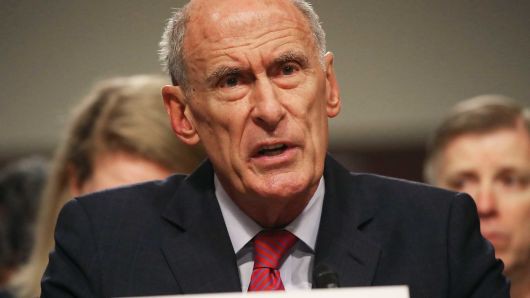
Director of National Intelligence Daniel R. Coats unveiled the 2019 National Intelligence Strategy (NIS) today. The NIS is the guiding strategy for the U.S. Intelligence Community (IC) and will drive the strategic direction for the Nation’s 17 IC elements for the next four years.

https://cdn.tuoitre.vn/2018/12/22/us-dni-dan-coats-afp-15454354274791453938449.jpg

The 2019 strategy is the fourth iteration for the NIS and seeks to make our nation more secure by driving the IC to be more integrated, agile, resilient, and innovative.

“This strategy is based on the core principle of seeking the truth and speaking the truth to our policymakers and the American people in order to protect our country,” said Director Coats. “As a Community, we must become more agile, build and leverage partnerships, and apply the most advanced technologies in pursuit of unmatched insights. The 2019 NIS provides a roadmap to achieve this end.”

The NIS is one of the most important documents for the IC, as it aligns IC efforts to the National Security Strategy, sets priorities and objectives, and focuses resources on current and future operational, acquisition, and capability development decisions. Also, the NIS provides the IC with the opportunity to communicate those national priorities to the IC workforce, partners, oversight, customers, and fellow citizens.

The 2019 NIS focuses on:


  • Integration – harnessing the full talent and tools of the IC by bringing the right information, to the right people, at the right time.
  • Innovation – making the IC more agile by swiftly enabling the right people and leveraging the right technology and using them efficiently to advance the highest priorities.
  • Partnerships – leveraging strong, unique, and valuable partnerships to support and enable national security outcomes.
  • Transparency – earning and upholding the trust and faith of the IC’s customers and the American people.

The NIS was developed in response to rapid advances made by our adversaries and the ODNI’s recognition that the IC needs to change to more effectively respond to those challenges.

In his 2019 NIS opening message, the DNI states, “We face a significant challenge in the domestic and global environment; we must be ready to meet 21st century challenges and to recognize emerging threats and opportunities. To navigate today’s turbulent and complex strategic environment, we must do things differently.”

To guide the IC in facing these challenges, the NIS identifies and explains the IC’s objectives – both what the Community must accomplish (mission objectives) and what capabilities the Community must build in order to do so (enterprise objectives).

The seven mission objectives are 1) strategic intelligence; 2) anticipatory intelligence; 3) current operations intelligence; 4) cyber threat intelligence; 5) counterterrorism; 6) counterproliferation; and 7) counterintelligence and security.

The seven enterprise objectives are 1) integrated mission management; 2) integrated business management; 3) people; 4) innovation; 5) information sharing and safeguarding; 6) partnerships; and 7) privacy, civil liberties, and transparency.

“These objectives will allow the IC to continue the crucial work of supporting our senior policymakers, warfighters, and democracy while increasing transparency and protecting privacy and civil liberties,” said Director Coats.

The NIS includes the seven Principles of Professional Ethics for the Intelligence Community: 1) mission; 2) truth; 3) lawfulness; 4) integrity; 5) stewardship; 6) excellence; and 7) diversity. The NIS also includes the Principles of Intelligence Transparency for the Intelligence Community.

“Transparency will be our hallmark, and I cannot stress this enough – this is not a limitation on us,” said Director Coats. “Transparency will make us stronger. It is the right thing to do, across the board. This is the reason we publish the NIS at the unclassified level.”

The Office of the Director of National Intelligence oversees the coordination and integration of the 17 federal organizations that make up the Intelligence Community. The DNI sets the priorities for and manages the implementation of the National Intelligence Program, which is the IC’s budget. Additionally, the DNI is the principal advisor to the President and the National Security Council on all intelligence issues related to national security.


More to the Venezuela Revolution, Carnet de la Patria

SOCIAL CONTROL

Let lil miss Alexandria Ocasio-Cortez in please on a few of these details:

Sorta president Nicolas Maduro blames the United States for leading the mission to remove him from office. He has cut off diplomatic relations with the United States, while calling for the expulsion of our diplomatic staff. Only non-essential personnel of the United States has been told to leave Venezuela.

Presently, a self declared president is in hiding for his own safety it seems, Juan Guaido. Guaido has been approved and recognized not only by the United States, but Europe and Canada as other countries in the region have done the same.

On January 10, 2019, the Organization of American States, a Latin American council have all agreed to not recognize the legitimacy of Nicolas Maduro’s new term, hence any political action he has taken since the beginning of 2019 has also been deemed as illegitimate.

Maduro put simply is a killer, criminal and globally corrupt.

It is also important to note Maduro’s #2 man in country, Tareck Zaidan El Aissami Maddah. He was born in Venezuela to a Lebanese mother and Syrian father. He is just as corrupt as noted by the United States.

According to PanAm Post, US prosecutors have alleged that El Aissami was Venezuela’s “liaison” with Hezbollah and has provided passports to “terrorist organizations.” A report by the Center for a Secure Free Society released in 2014 alleged that El Aissami has “developed a sophisticated financial network and multi-level networks as a criminal-terrorist pipeline to bring Islamic militants to Venezuela and neighboring countries, and to send illicit funds from Latin America to the Middle East.” The alleged “pipeline” consists of 40 shell companies which have bank accounts in Venezuela, Panama, Curacao, St. Lucia, Miami and Lebanon and is also involved in drug smuggling.

Most all of the El Aissami family worked for Saddam Hussein and the Baathist Party including in Iraq and in Venezuela.

Meanwhile, with the previous Venezuelan president Chavez and through Maduro, Venezuela has been under the multi track influence of China, Russia, Syria, Cuba and Iran.

While much political and national security debate in the United States has included Huawei, other other telecom threat is ZTE. ZTE along with Huawei have both been banned from any government use by legislation signed by President Trump.

ZTE is important to understand as millions of U.S. cell phones in use are manufactured by ZTE. There is spy intrusion technology inside these phones. But there is something much more nefarious about China, ZTE and Venezuela and that is the ‘carnet de la patria’ otherwise known as the ‘fatherland card’.

This application was created and is in use today in China so Venezuela is doing the same. Read on for the nastiness and here is what lil Ms. Ocasio-Cortez along with the rest of the socialists in Congress are subscribing to.

***  Venezuela’s Nicolas Maduro wins reelection, officials say ...

Caracas (Reuters) – In April 2008, former Venezuelan President Hugo Chavez dispatched Justice Ministry officials to visit counterparts in the Chinese technology hub of Shenzhen. Their mission, according to a member of the Venezuela delegation, was to learn the workings of China’s national identity card program.

Chavez, a decade into his self-styled socialist revolution, wanted help to provide ID credentials to the millions of Venezuelans who still lacked basic documentation needed for tasks like voting or opening a bank account. Once in Shenzhen, though, the Venezuelans realized a card could do far more than just identify the recipient.

There, at the headquarters of Chinese telecom giant ZTE Corp, they learned how China, using smart cards, was developing a system that would help Beijing track social, political and economic behavior. Using vast databases to store information gathered with the card’s use, a government could monitor everything from a citizen’s personal finances to medical history and voting activity.

“What we saw in China changed everything,” said the member of the Venezuelan delegation, technical advisor Anthony Daquin. His initial amazement, he said, gradually turned to fear that such a system could lead to abuses of privacy by Venezuela’s government. “They were looking to have citizen control.”

The following year, when he raised concerns with Venezuelan officials, Daquin told Reuters, he was detained, beaten and extorted by intelligence agents. They knocked several teeth out with a handgun and accused him of treasonous behavior, Daquin said, prompting him to flee the country.

Government spokespeople had no comment on Daquin’s account.

The project languished.

But 10 years after the Shenzhen trip, Venezuela is rolling out a new, smart-card ID known as the “carnet de la patria,” or “fatherland card.” The ID transmits data about cardholders to computer servers. The card is increasingly linked by the government to subsidized food, health and other social programs most Venezuelans rely on to survive.

And ZTE, whose role in the fatherland project is detailed here for the first time, is at the heart of the program.

As part of a $70 million government effort to bolster “national security,” Venezuela last year hired ZTE to build a fatherland database and create a mobile payment system for use with the card, according to contracts reviewed by Reuters.

A team of ZTE employees is now embedded in a special unit within Cantv, the Venezuelan state telecommunications company that manages the database, according to four current and former Cantv employees.

The fatherland card is troubling some citizens and human-rights groups who believe it is a tool for Chavez’s successor, President Nicolas Maduro, to monitor the populace and allocate scarce resources to his loyalists.

Opposition and drivers reject vehicle census in Venezuela ...

“It’s blackmail,” Hector Navarro, one of the founders of the ruling Socialist Party and a former minister under Chavez, said of the fatherland program. “Venezuelans with the cards now have more rights than those without.”

In a phone interview, Su Qingfeng, the head of ZTE’s Venezuela unit, confirmed ZTE sold Caracas servers for the database and is developing the mobile payment application. The company, he said, violated no Chinese or local laws and has no role in how Venezuela collects or uses cardholder data.

“We don’t support the government,” he said. “We are just developing our market.”

An economic meltdown in Venezuela is causing hyperinflation, widespread shortages of food and medicines, and a growing exodus of desperate citizens. Maduro has been sanctioned by the United States and is criticized by governments from France to Canada as increasingly autocratic.

In that, critics say, Maduro has an ally. The fatherland card, they argue, illustrates how China, through state-linked companies like ZTE, exports technological know-how that can help like-minded governments track, reward and punish citizens.

The database, according to employees of the card system and screenshots of user data reviewed by Reuters, stores such details as birthdays, family information, employment and income, property owned, medical history, state benefits received, presence on social media, membership of a political party and whether a person voted.

So far, the government’s disclosure of ZTE’s involvement in the fatherland project has been limited to a passing reference in a February 2017 press release that credited the company with helping to “fortify” the underlying database.

Venezuela’s government didn’t respond to requests for comment for this article. Nadia Perez, a spokeswoman for Cantv, the state-run telecoms firm, declined to comment and Manuel Fernandez, the company’s president, didn’t respond to emails or text messages from Reuters. China’s Justice Ministry and its embassy in Caracas didn’t respond to requests for comment.

Although ZTE is publicly traded, a Chinese state company is its largest shareholder and the government is a key client. ZTE has run afoul of Washington before for dealings with authoritarian governments.

The company this year paid $1 billion to settle with the U.S. Commerce Department, one of various penalties after ZTE shipped telecommunications equipment to Iran and North Korea, violating U.S. sanctions and export laws. The Commerce action was sparked by a 2012 Reuters report that ZTE sold Iran a surveillance system, which included U.S. components, to spy on telecommunications by its citizens.

Legal experts in the United States said it is unclear whether ZTE and other companies that supply the fatherland system are violating U.S. sanctions on Venezuelan leaders by providing tools that critics believe strengthen the government’s grip on power.

Fernandez, the Cantv president, is one of the targets of those sanctions because of the telecom company’s censorship of the internet in Venezuela, according to a U.S. Treasury Department statement. But the prohibitions thus far are meant primarily to thwart business with Maduro and other top officials themselves, not regular commerce in Venezuela.

Still, U.S. lawmakers and other critics of Maduro’s rule are concerned about ZTE’s role in Venezuela. “China is in the business of exporting its authoritarianism,” U.S. Senator Marco Rubio told Reuters in an email. “The Maduro regime’s increasing reliance on ZTE in Venezuela is just the latest example of the threat that Chinese state-directed firms pose to U.S. national security interests.”

To understand how the fatherland card works and how it came to be, Reuters reviewed confidential contracts and internal government documents related to its development. Reporters also interviewed dozens of current and former employees of ZTE, Venezuela’s government and Cantv, or Compania Anonima Nacional Telefonos de Venezuela, as the company is formally known.

They confirmed details of the project and the outlines of Daquin’s account of its origins.

“AN ATTEMPT TO CONTROL ME”

Maduro for the past year has urged citizens to sign up for the new card, calling it essential to “build the new Venezuela.” As many as 18 million people, over half the population, already have, according to government figures.

“With this card, we are going to do everything from now on,” Maduro said on state television last December.

To encourage its adoption, the government has granted cash prizes to cardholders for performing civic duties, like rallying voters. It has also given one-time payouts, such as awarding moms enrolled in the card a Mother’s Day bonus of about $2. The payment, last May, was nearly a monthly minimum wage – enough to buy a carton of eggs, given the current pace of inflation.

Maduro is also taking steps to force the card’s adoption. The government now says Venezuelans need it to receive public benefits including medicine, pensions, food baskets and subsidized fuel. In August, retirees protested outside social security offices and complained the fatherland rule limits access to hard-won pensions.

Benito Urrea, a 76-year-old diabetic, told Reuters a state doctor recently denied him an insulin prescription and called him “right wing” because he hasn’t enrolled. Like some other Venezuelan citizens, especially those who oppose the Maduro administration, Urrea sees the card with suspicion.

“It was an attempt to control me via my needs,” Urrea said in his Caracas apartment. Reuters was unable to contact the doctor.

Using the servers purchased from ZTE, the government is creating a database some citizens fear is identifying Venezuelans who support the government and those who don’t.

Some of the information, such as health data, is gathered with card usage. Some is obtained when citizens enroll. Cardholders and local human rights groups told Reuters that administrators ask questions about income, political activities and social media profiles before issuing the card.

Civil servants are facing particular pressure to enroll, according to more than a dozen state workers.

When scanning their cards during a presidential election last May, employees at several government offices were told by bosses to message photos of themselves at polls back to managers, they said. A Justice Ministry document reviewed by Reuters featured a list of state employees who didn’t vote.

After Chavez became president in 1999, he sought to empower “invisible” Venezuelans who couldn’t access basic services. In the following years, more citizens received documentation, but the cards were fragile and easily forged, according to a 2007 Justice Ministry report.

The report, reviewed by Reuters, recommended a new, microchip-enabled card that would be harder to counterfeit. No such effort got underway.

That December, after nearly a decade of soaring popularity, Chavez suffered his first electoral defeat, losing a referendum to scrap term limits. Oil prices plummeted shortly thereafter, hammering the economy.

Chavez worked to appease his working-class base, including throngs still lacking identity credentials. He sent Daquin, the top information security advisor at the Justice Ministry, to China.

The technology Daquin and colleagues learned about in Shenzhen underpinned what would become China’s “Social Credit System.”

The still-evolving system, part of which uses “smart citizen cards” developed by ZTE, grades citizens based on behavior including financial solvency and political activity. Good behavior can earn citizens discounts on utilities or loans. Bad marks can get them banned from public transport or their kids blocked from top schools.

ZTE executives showed the Venezuelans smart cards embedded with radio-frequency identification, or RFID, a technology that enables monitors through radio waves to track location and data. Other cards used so-called Quick Response, or QR, codes, the matrix barcodes now commonly used to store and process information.

After the trip, Venezuela turned to Cuba, its closest ally, and asked for help creating its own version of RFID cards. “The new goal was Big Data,” Daquin said.

In June 2008, Venezuela agreed to pay a Cuban state company $172 million to develop six million of the cards, according to a copy of the contract. Cuban government officials didn’t respond to questions about the agreement.

By 2009, Daquin grew uneasy about the potential for abuses of citizens’ privacy.

He expressed those concerns to officials including Vladimir Padrino, a general at the time and now Venezuela’s defense minister. The Defense Ministry didn’t respond to phone calls, emails or a letter presented by Reuters for comment.

On the morning of Nov. 12, at his local Caracas bakery, six armed officials in uniforms of Venezuela’s national intelligence agency awaited Daquin, he told Reuters.

They showed him photos of his daughter and forced him to drive east toward the town of Guatire. Off a back road, Daquin said, they beat him with pistols, forced a handgun into his mouth and dislodged several teeth, still missing.

“Why are you betraying the revolution?” one asked.

They demanded $100,000 for his release, Daquin said.

Daquin, who says he had been saving for years to buy property, went home, pulled cash from a safe and delivered it to the men. That evening, he booked a flight for himself, his wife and their three children to the United States, where he has lived since, working as an information security consultant.

His brother, Guy, who also lives in the United States, confirmed Daquin’s account. Documentation reviewed by Reuters corroborates his role at the ministry, and people familiar with Daquin’s work confirmed his involvement in the card project.

After Daquin fled, the Cuban contract went nowhere, according to another former advisor.

In March 2013, Chavez died. Maduro, his heir as Socialist Party candidate, was elected president the next month. The lingering oil crash dragged Venezuela into recession.

“WE’LL FIND OUT”

With hunger increasing, the government in 2016 launched a program to distribute subsidized food packages. It hired Soltein SA de CV, a company based in Mexico, to design an online platform to track them, according to documents reviewed by Reuters. The platform was the beginning of the database now used for the fatherland system.

Soltein’s directors, according to LinkedIn profiles, are mostly former Cuban state employees. A person who answered a telephone listed for Soltein denied the firm worked on the fatherland system. A woman at the company’s registered address in the resort city of Cancun told Reuters she had never heard of Soltein.

The system worked. Nearly 90 percent of the country’s residents now receive the food packages, according to a study published in February by Andres Bello Catholic University and two other universities.

Now more satisfied with its ability to track handouts, the government sought to know more about the recipients, according to people involved in the project. So it turned back to ZTE.

The Chinese company, now in Venezuela for about a decade, has over 100 employees working in two floors of a Caracas skyscraper. It first worked with Cantv, the telecommunications company, to enable television programming online.

Like many state enterprises in Venezuela, Cantv has grown starved for investment. ZTE became a key partner, taking on many projects that once would have fallen to Cantv itself, people familiar with both companies said.

ZTE is helping the government build six emergency response centers monitoring Venezuela’s major cities, according to a 2015 press release. In 2016, ZTE began centralizing video surveillance for the government around the country, according to current and former employees.

In its final push for the fatherland cards, the government no longer considered RFID, according to people familiar with the effort. The location-tracking technology was too costly.

Instead, it asked ZTE for help with QR codes, the black-and-white squares smartphone users can scan to get directed to web sites. ZTE developed the codes, at a cost of less than $3 per account, and the government printed the cards, linking them to the Soltein database, these people said.

In a phone call with Reuters in September, Su, the head of ZTE’s Venezuela business, confirmed the company’s card deal with Cantv. He declined to answer follow-up questions.

Maduro introduced the cards in December 2016. In a televised address, he held one up, thanked China for lending unspecified support and said “everybody must get one.”

The ID system, still running on the Soltein platform, hadn’t yet migrated to ZTE servers. Disaster soon struck. In May 2017, hackers broke into the fatherland database.

The hack was carried out by anonymous anti-Maduro activists known as TeamHDP. The group’s leader, Twitter handle @YoSoyJustincito, said the hack was “extremely simple” and motivated by TeamHDP’s mission to expose Maduro secrets.

The hacker, who spoke to Reuters by text message, declined to be identified and said he is no longer in Venezuela. A Cantv manager who later helped migrate the database to ZTE servers confirmed details of the breach.

During the hack, TeamHDP took screenshots of user data and deleted the accounts of government officials, including Maduro. The president later appeared on television scanning his card and receiving an error message: “This person doesn’t exist.”

Screenshots of the information embedded in various card accounts, shared by TeamHDP with Reuters, included phone numbers, emails, home addresses, participation at Socialist Party events and even whether a person owns a pet. People familiar with the database said the screenshots appear authentic.

Shortly after the hack, Maduro signed a $70 million contract with Cantv and a state bank for “national security” projects. These included development of a “centralized fatherland database” and a mobile app to process payments, such as the discounted cost of a subsidized food box, associated with the card.

“Imperialist and unpatriotic factions have tried to harm the nation’s security,” the contract reads.

It says an undisclosed portion of the funding would come from the Venezuela China Joint Fund, a bilateral financing program. A related contract, also reviewed by Reuters, assigns the database and payment app projects to ZTE. The document doesn’t disclose how much of the $70 million would go to the Chinese company.

ZTE declined to comment on financial details of its business in Venezuela. Neither the Venezuelan nor the Chinese government responded to Reuters queries about the contracts.

In July 2017, Soltein transferred ownership of fatherland data to Cantv, project documents show. A team of a dozen ZTE developers began bolstering the database’s capacity and security, current and former Cantv employees said.

Among other measures, ZTE installed data storage units built by U.S.-based Dell Technologies Inc, according to one ZTE document. Dell spokeswoman Lauren Lee said ZTE is a client in China but that Dell doesn’t sell equipment to ZTE in Venezuela. She said Dell reviewed its transactions in Venezuela and wasn’t aware of any sale to Cantv, either.

“Dell is committed to compliance with all applicable laws where we do business,” Lee said in an email. “We expect our customers, partners and suppliers to follow these same laws.”

In May, Venezuela held elections that were widely discredited by foreign governments after Maduro banned several opposition parties.

Ahead of the vote, ruling party officials urged voters to be “grateful” for government largesse dispensed via the fatherland cards. They set up “red point” kiosks near voting booths, where voters could scan their cards and register, Maduro himself promised, for a “fatherland prize.”

Those who scanned their cards later received a text message thanking them for supporting Maduro, according to several cardholders and one text message reviewed by Reuters. The prizes for voting, however, were never issued, cardholders and people familiar with the system said.

Current and former Cantv employees say the database registers if, but not how, a person voted. Still, some voters were led to believe the government would know. The belief is having a chilling effect.

One organizer of a food handout committee in the west-central city of Barinas said government managers had instructed her and colleagues to tell recipients their votes could be tracked. “We’ll find out if you voted for or against,” she said she told them.

State workers say they are a target.

An internal Cantv presentation from last year said the system can feed information from the database to ministries to help “generate statistics and take decisions.” After the vote, government offices including Banco Bicentenario del Pueblo, a state bank, sent Cantv lists with employees’ names to determine whether they had voted, according to the manager who helped set up the servers.

Banco Bicentenario didn’t respond to a request for comment. Officials at the Economy Ministry, which the bank reports to, didn’t respond to requests, either.

With personal data now so available, some citizens fear they can lose more than just their jobs, said Mariela Magallanes, an opposition lawmaker who headed a commission that last year investigated how the fatherland card was being linked to the subsidized food program.

The government, the commission said in a report, is depriving some citizens of the food boxes because they don’t possess the card. “The government knows exactly who is most vulnerable to pressure,” she said.

US Treasury’s Evidence Iran and Russia Cooperating in Syria

The U.S. Treasury Department sanctioned nine targets last week related to an illicit oil network between Iran and Russia.

“We are acting against a complex scheme Iran and Russia have used to bolster the [Bashar] Assad regime and generate funds for Iranian malign activity,” said Treasury Secretary Steven Mnuchin. “Central Bank of Iran officials continue to exploit the international financial system, and in this case even used a company whose name suggests a trade in humanitarian goods as a tool to facilitate financial transfers supporting this oil scheme.

“The United States is committed to imposing a financial toll on Iran, Russia and others for their efforts to solidify Assad’s authoritarian rule, as well as disrupt the Iranian regime’s funding of terrorist organizations,” he added.

Experts said this move was crucial in combating the Iranian threat.

“The scheme uncovered by the Treasury Department shows just how closely Iran and Russia are cooperating to not only help prop up the Assad regime financially, but to help finance the leading players in Iran’s global terrorism,” Boris Zilberman of the Foundation for Defense of Democracies told JNS. “So when Russia talks about cooperating with the United States to counter-terrorism this is empty rhetoric plain and simple.”

“As this scheme shows, Russia works hand in hand with some of the very terror groups we seek to counter,” he continued. “Russia is not a partner in our counter-terrorism efforts, but is, in fact, an adversary.”

“There are already sanctions on Russian arms exporters, but the United States should continue to uncover and sanction schemes such as this,” added Zilberman. “The administration could also consider, in conjunction with Israel, striking destabilizing arms transfers by Hezbollah.

“It’s an important step, and highlights just how much [Russian President Vladimir] Putin has supported Iran, Hezbollah and Assad, and how committed he is, despite hopes that Putin’s partnership with Iran is skin-deep short-lived,” the Washington Institute for Near East Policy’s Anna Borshchevskaya told JNS.

“Hard to tell if this pressure will succeed without being incorporated into a broader strategy,” she continued. “It comes as no surprise that the Kremlin said earlier this month it will continue to help Iran trade oil. It’s possible to imagine Moscow setting up another intermediary to continue shipping oil to the Syrian regime, but nonetheless, this is an important step.”

The State Department joined Treasury in sending a message to the Islamic Republic.

Islamic State crisis: US hits IS oil targets in Syria ...

“The sanctions levied today directly target the Iranian regime’s exploitation of the international financial system to hide revenue streams it uses to fund terrorist activity, provide support for sectarian militias responsible for abuses against civilian populations and destabilize the region,” said the department in a statement. “The Iranian regime, Iranian-commanded forces inside Syria and the proxy terrorist groups it supports such as those targeted today continue to foment instability to extend their malign influence. These actions by the Iranian and Assad regimes undermine the legitimate processes to resolve the conflict in Syria.”

This development preceded Secretary of State Pompeo blasting Iranian President Hassan Rouhani on Monday for calling Israel a “cancerous tumor” and a “fake regime.”

“This is a dangerous and irresponsible step that will further deepen Iran’s isolation,” warned Pompeo.

“The Iranian regime is no friend of America or Israel when they repeatedly call for the death of millions, including Muslims,” he added. “The Iranian people know better and do not agree with their government, which has badly represented them to the world for 39 years. The people have suffered under this tyranny for far too long.”

*** It is quite right that Iran is no friend of the United States or Israel. That Obama/Kerry nuclear deal was supposed to lay the groundwork for Iran to be a good citizen of the world….read on…not so much.

***

Two Iranian Men Indicted for Deploying Ransomware to Extort Hospitals, Municipalities, and Public Institutions, Causing Over $30 Million in Losses

A federal grand jury returned an indictment unsealed today in Newark, New Jersey charging Faramarz Shahi Savandi, 34, and Mohammad Mehdi Shah Mansouri, 27, both of Iran, in a 34-month-long international computer hacking and extortion scheme involving the deployment of sophisticated ransomware, announced Deputy Attorney General Rod J. Rosenstein, Assistant Attorney General Brian A. Benczkowski of the Justice Department’s Criminal Division, U.S. Attorney Craig Carpenito for the District of New Jersey and Executive Assistant Director Amy S. Hess of the FBI.

The six-count indictment alleges that Savandi and Mansouri, acting from inside Iran, authored malware, known as “SamSam Ransomware,” capable of forcibly encrypting data on the computers of victims.  According to the indictment, beginning in December 2015, Savandi and Mansouri would then allegedly access the computers of victim entities without authorization through security vulnerabilities, and install and execute the SamSam Ransomware on the computers, resulting in the encryption of data on the victims’ computers.  These more than 200 victims included hospitals, municipalities, and public institutions, according to the indictment, including the City of Atlanta, Georgia; the City of Newark, New Jersey; the Port of San Diego, California; the Colorado Department of Transportation; the University of Calgary in Calgary, Alberta, Canada; and six health care-related entities: Hollywood Presbyterian Medical Center in Los Angeles, California; Kansas Heart Hospital in Wichita, Kansas; Laboratory Corporation of America Holdings, more commonly known as LabCorp, headquartered in Burlington, North Carolina; MedStar Health, headquartered in Columbia, Maryland; Nebraska Orthopedic Hospital now known as OrthoNebraska Hospital, in Omaha, Nebraska and Allscripts Healthcare Solutions Inc., headquartered in Chicago, Illinois.

According to the indictment, Savandi and Mansouri would then extort victim entities by demanding a ransom paid in the virtual currency Bitcoin in exchange for decryption keys for the encrypted data, collecting ransom payments from victim entities that paid the ransom, and exchanging the Bitcoin proceeds into Iranian rial using Iran-based Bitcoin exchangers.  The indictment alleges that, as a result of their conduct, Savandi and Mansouri have collected over $6 million USD in ransom payments to date, and caused over $30 million USD in losses to victims.

“The Iranian defendants allegedly used hacking and malware to cause more than $30 million in losses to more than 200 victims,” said Deputy Attorney General Rosenstein.  “According to the indictment, the hackers infiltrated computer systems in 10 states and Canada and then demanded payment. The criminal activity harmed state agencies, city governments, hospitals, and countless innocent victims.”

“The allegations in the indictment unsealed today—the first of its kind—outline an Iran-based international computer hacking and extortion scheme that engaged in 21st-century digital blackmail,” said Assistant Attorney General Benczkowski.  “These defendants allegedly used ransomware to infect the computer networks of municipalities, hospitals, and other key public institutions, locking out the computer owners, and then demanded millions of dollars in payments from them. As today’s charges demonstrate, the Criminal Division and its law enforcement partners will relentlessly pursue cybercriminals who harm American citizens, businesses, and institutions, regardless of where those criminals may reside.”

“The defendants in this case developed and deployed the SamSam Ransomware in order to hold public and private entities hostage and then extort money from them,” said U.S. Attorney Carpenito.  “As the indictment in this case details, they started with a business in Mercer County and then moved on to major public entities, like the City of Newark, and healthcare providers, like the Hollywood Presbyterian Medical Center in Los Angeles and the Kansas Heart Hospital in Wichita—cravenly taking advantage of the fact that these victims depend on their computer networks to serve the public, the sick, and the injured without interruption.  The charges announced today show that the U.S. Attorney’s Office for the District of New Jersey will continue to act to disrupt such criminal acts, and identify those who are responsible for them, no matter where in the world they may seek to hide.”

“This indictment demonstrates the FBI’s continuous commitment to unmasking malicious actors behind the world’s most egregious cyberattacks,” said Executive Assistant Director Hess.  “By calling out those who threaten American systems, we expose criminals who hide behind their computer and launch attacks that threaten our public safety and national security.  The actions highlighted today, which represent a continuing trend of cyber criminal activity emanating from Iran, were particularly threatening, as they targeted public safety institutions, including U.S. hospital systems and governmental entities.  The FBI, with the assistance of our private sector and U.S. government partners, are sending a strong message that we will work together to investigate and hold all criminals accountable.”

Savandi and Mansouri are charged with one count of conspiracy to commit wire fraud, one count of conspiracy to commit fraud and related activity in connection with computers, two substantive counts of intentional damage to a protected computer and two substantive counts of transmitting a demand in relation to damaging a protected computer.

According to the indictment, Savandi and Mansouri created the first version of the SamSam Ransomware in December 2015, and created further refined versions in June and October 2017.  In addition to employing Iran-based Bitcoin exchangers, the indictment alleges that the defendants also utilized overseas computer infrastructure to commit their attacks.   Savandi and Mansouri would also use sophisticated online reconnaissance techniques (such as scanning for computer network vulnerabilities) and conduct online research in order to select and target potential victims, according to the indictment.  According to the indictment, the defendants would also disguise their attacks to appear like legitimate network activity.

To carry out their scheme, the indictment alleges that the defendants also employed the use of Tor, a computer network designed to facilitate anonymous communication over the internet.  According to the indictment, the defendants maximized the damage caused to victims by launching attacks outside regular business hours, when a victim would find it more difficult to mitigate the attack, and by encrypting backups of the victims’ computers.  This was intended to—and often did—cripple the regular business operations of the victims, according to the indictment.  The most recent ransomware attack against a victim alleged in the indictment took place on Sept. 25, 2018.

This case was investigated by the FBI’s Newark Field Office.  Senior Counsel William A. Hall Jr. of the Criminal Division’s Computer Crime and Intellectual Property Section (CCIPS) and Assistant U.S. Attorney and Chief of the Cybercrimes Unit Justin S. Herring of the District of New Jersey are prosecuting the case.  The Department thanks its law enforcement colleagues at the National Crime Agency (UK), West Yorkshire Police (UK), Calgary Police Service (Canada), and the Royal Canadian Mounted Police.  Significant assistance was provided by the Justice Department’s National Security Division and the Criminal Division’s Office of International Affairs.

Birthright v. Jurisdiction

Let’s begin with the 39th Congress shall we?

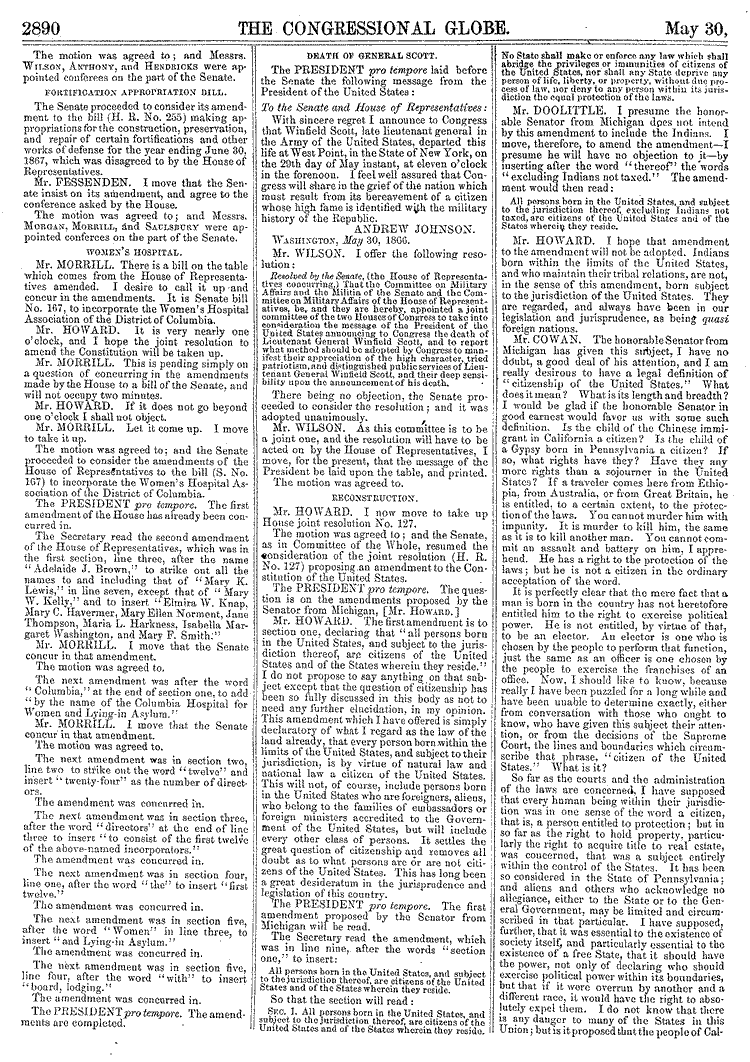
1865-1867, it was a time of reconstruction. For context, scan this summary of the activity of Congress.

On the matter of ratification of the 14th Amendment, a year long study was completed by a 15 member committee. Much of the debate was on citizenship for slaves. For reference, the Joint Resolution was H.R. 127.


Of particular note is the text in the middle column under ‘Reconstruction’. This document is found in the Library of Congress. This matter has been debated often over many decades and there is no law defining natural born v. foreign ownership, loyalty or jurisdiction. Hence the reason the debate continues and proposed legislation in addition to President Trump considering an Executive Order. Frankly, the common existing definition on birthright gives an additional argument to chain migration, somewhat in reverse.

Here is a cogent presentation on the case against birthright.

Need more?

Claremont Senior Fellow Matthew Spalding

Spalding raised the question in “Should the Children of Illegal Aliens Be U.S. Citizens?” and his U.S. News & World Report op-ed: “14th Amendment Doesn’t Make Illegal Aliens’ Children Citizens

Others

Frequent Claremont Review of Books contributor and summer fellowship faculty member Richard Samuelson provides more historical and legal context in his essay for The Federalist: “Birthright for Whom?”

*** Is it okay that there are actually birthing hotels in California where Chinese woman take full advantage?Federal agents raided several maternity hotels in January of 2018 where these pregnant women paid between $40,000 to $80,000 to give birth in the United States. This has been the case for many years. There was/is a list of sites for birthing tourism for California.

Chinese birth tourism booms in Southern California - The ... Channel 5 News Birth tourism raid in Irvine Ca. - YouTube

How about pregnant Russian women making the long trip to Miami just to give birth? Birthing tourism is a thriving business for Russians in Miami. It is all for dual citizenship. If the mainstream media complains about President Trump authorizing an Executive Order, the text is most important. He cannot alter any Constitutional amendment but he can issue an order to stop birthing tourism. Even NBC News is quite aware of the issue.

“for a growing number of Russian women, the draw isn’t sunny beaches or pulsing nightclubs. It’s U.S. citizenship for their newborn children. In Moscow, it’s a status symbol to have a Miami-born baby, and social media is full of Russian women boasting of their little americantsy.”

*** If President Trump signs an Executive Order it will be legally challenged with a lawsuit before the end of the day. Perhaps this is a good thing to begin a final legal opinion on the matter.