
Camp Trump in Poland?

The left’s heads are already exploding on that one and yet the White House is seriously considering the offer.

A major invitation has been presented by Poland to the United States that includes an investment by Poland of $2 billion for a U.S. military base in the country. Poland wants more arms and they are launching more advanced military projects. The threat to Poland? Yuppers….Russia.

In photos: Polish President Andrzej Duda visits White ...

President Andrzej Duda, of Poland visited the White House to nurture and advance the relationship between the two countries. The offer and investment to/for the United States was made last May and there is major urgency given the annexation of Crimea and the constant aggression of Russian in the whole region. Poland by the way has been paying more that the required share, which is 2% of GDP to NATO.

Beyond just a military base, Poland is including hospitals, schools and gyms for all military personnel and families. The formal offer was made to the United States Congress. The Defense Minister for Poland has made an official visit to the U.S. previously to make this offer and joint military policy.

Meanwhile, it was just a few days ago that Secretary of Defense Mattis condemned Russia for doing influence peddling in Macedonia. Russia is meddling in the voting and election process in Skopje. Pro-Russian groups have been dispatched to Macedonia to even plant the seed of Macedonia changing the name of the country to North Macedonia….huh really?

Yes, and Russia has swooped into Macedonia with major disinformation campaigns and the U.S. has given the tiny country $5 million in security assistance annually for decades.

Further, the joint military games between China and Russia have alarmed many countries including the United States where the Air Force is taking an aggressive posture.

Air Force Secretary Heather Wilson on Monday called for growing the Air Force from its current size of 312 operational squadrons to 386 by 2030, as it prepares for a possible conflict against a major nation such as China or Russia.

This 24 percent increase in squadrons is the centerpiece of the service’s “Air Force We Need” proposal, which has been in the works for six months. This proposal seeks to lay out what it would take for the Air Force to fight a peer adversary and win, as well as defend the homeland, provide a credible nuclear deterrent, counter a medium-sized rogue nation that might try to take advantage of the Air Force’s focus on the major adversary, and fight violent extremists such as the Taliban and the Islamic State.

This follows the National Defense Strategy that the Pentagon unveiled earlier this year, which is structured around the need to shift away from the violent extremist fight and instead focus on deterring or fighting nations with significant, well-developed militaries.

In her keynote address at the Air Force Association’s Air, Space, Cyber Conference, Wilson referenced the massive Russian military exercises launched last week, involving more than 300,000 of their troops, and China’s unveiling of its first aircraft carrier and its ongoing militarization of islands in the South China Sea to extend its long-range bombers’ reach.

“We must see the world as it is,” Wilson said. “That was why the National Defense Strategy explicitly recognizes that we have returned to an era of great power competition.”

Thwarted Plot of Swiss Laboratory Working the Novichok Case

Western intelligence agencies thwarted a plot involving two Russians intending to travel to a Swiss government laboratory that investigates nuclear, biological and chemical weapons, and hack its computer systems. According to two separate reports by Dutch newspaper NRC Handelsblad and Swiss newspaper Tages-Anzeiger, the two were apprehended in The Hague in early 2018. The reports also said that the Russians were found in possession of equipment that could be used to compromise computer networks. They are believed to work for the Main Intelligence Directorate, known as GRU, Russia’s foremost military intelligence agency. The apprehension was the result of cooperation between various European intelligence services, reportedly including the Dutch Military Intelligence and Security Organization (MIVD).

The laboratory, located in the western Swiss city of Spiez, has been commissioned by the Netherlands-based Organization for the Prohibition of Chemical Weapons (OPCW) to carry out investigations related to the poisoning of Russian double agent Sergei Skripal and his daughter Yulia in March of this year. It has also carried out probes on the alleged use of chemical weapons by the Russian-backed government of President Bashar al-Assad in Syria. In the case of the Skripals, the laboratory said it was able to duplicate findings made earlier by a British laboratory.

Switzerland’s Federal Intelligence Service (NDB) reportedly confirmed the arrest and subsequent expulsion of the two Russians. The Swiss agency said it “cooperated actively with Dutch and British partners” and thus “contributed to preventing illegal actions against a sensitive Swiss infrastructure”. The office of the Public Prosecutor in the Swiss capital Bern said that the two Russians had been the subject of a criminal investigation that began as early as March 2017. They were allegedly suspected of hacking the computer network of the regional office of the World Anti-Doping Agency in Lausanne. The Spiez laboratory was a target of hacking attempts earlier this year, according to a laboratory spokesperson. “We defended ourselves against that. No data was lost”, the spokesperson stated.

On April 14, Russian Minister of Foreign Affairs Sergei Lavrov stated that he had obtained the confidential Spiez lab report about the Skripal case “from a confidential source”. That report confirmed earlier findings made by a British laboratory. But the OPCW, of which Russia is a member, states that its protocols do not involve dissemination of scientific reports to OPCW member states. Hence, the question is how Foreign Minister Lavrov got hold of the document.

As intelNews reported in March, in the aftermath of the Skripals’ poisoning the Dutch government expelled two employees of the Russian embassy in The Hague. In a letter [.pdf] sent to the Dutch parliament on March 26 —the day when a large number of countries announced punitive measures against Russia— Holland’s foreign and internal affairs ministers stated that they had decided to expel the two Russian diplomats “in close consultation with allies and partners”. The Russians were ordered to leave the Netherlands within two weeks. It is unknown whether the two expelled Russian diplomats are the same two who were apprehended in The Hague, since none have been publicly named.

A November 2017 parliamentary letter from Dutch minister of internal affairs Kajsa Ollongren, states[4] that Russian intelligence officers are “structurally present” in the Netherlands in various sectors of society to covertly collect intelligence. The letter added that, in addition to traditional human intelligence (HUMINT) methods, Russia deploys digital means to influence decision-making processes and public opinion in Holland.

***

Meanwhile:

The investigation can be viewed here

An ongoing Bellingcat investigation conducted jointly with The Insider Russia has confirmed through uncovered passport data that the two Russian nationals identified by UK authorities as prime suspects in the Novichok poisonings on British soil are linked to Russian security services.

The reporting team determined that the passport data of Petrov is highly unusual and indicates that he is linked to Russian security services.

Alexander Petrov’s passport dossier is marked with a stamp containing the instruction “Do not provide any information”.  This stamp does not exist in standard civilian passport files. A source working in the Russian police force who regularly works with the central database confirmed to Bellingcat and The Insider that they have never such a stamp on any passport form in their career.  That source surmised that this marking reserved for operatives of the state under deep cover.

Hat tip.

Hey Moscow, What About the ‘neuroweapons’ Used in Cuba attacks

General view of the U.S. Embassy in Havana after the U.S. government pulled more than half of its diplomatic personnel out of Cuba in September 2017. (Photo: Ernesto Mastrascusa/Getty Images)

Primer:

Neurotechnologies as Weapons of Mass Disruption or Future Asymmetric Warfare: Putative Mechanisms, Emerging Threats, and Bad Actor Scenarios

Intelligence agencies investigating mysterious “attacks” that led to brain injuries in U.S. personnel in Cuba and China consider Russia to be the main suspect, three U.S. officials and two others briefed on the investigation tell NBC News.

The suspicion that Russia is likely behind the alleged attacks is backed up by evidence from communications intercepts, known in the spy world as signals intelligence, amassed during a lengthy and ongoing investigation involving the FBI, the CIA and other U.S. agencies. The officials declined to elaborate on the nature of the intelligence.

The evidence is not yet conclusive enough, however, for the U.S. to formally assign blame to Moscow for incidents that started in late 2016 and have continued in 2018, causing a major rupture in U.S.-Cuba relations.

Since last year, the U.S. military has been working to reverse-engineer the weapon or weapons used to harm the diplomats, according to Trump administration officials, congressional aides and others briefed on the investigation, including by testing various devices on animals. As part of that effort, the U.S. has turned to the Air Force and its directed energy research program at Kirtland Air Force Base in New Mexico, where the military has giant lasers and advanced laboratories to test high-power electromagnetic weapons, including microwaves.

Although the U.S. believes sophisticated microwaves or another type of electromagnetic weapon were likely used on the U.S. government workers, they are also exploring the possibility that one or more additional technologies were also used, possibly in conjunction with microwaves, officials and others involved in the government’s investigation say.

The U.S. has said 26 government workers were injured in unexplained attacks at their homes and hotels in Havana starting in late 2016, causing brain injuries, hearing loss and problems with cognition, balance, vision and hearing problems. Strange sounds heard by the workers initially led investigators to suspect a sonic weapon, but the FBI later determined sound waves by themselves couldn’t have caused the injuries. More here.

*** Truth be told, this investigation and the details are rather disjointed and weird.

Four scientists, including the first doctor to examine the diplomats reporting symptoms in Cuba, took part in a Pentagon-sponsored teleconference on Friday, where they announced new research results, including what they determined to be the probable use of “neuroweapons” in what they called the Havana Effect.

At issue are the more than two dozen U.S. government officials stationed in Havana, who have described hearing strange sounds, followed by a combination of medical symptoms, including dizziness, hearing loss and cognitive problems. More recently, a similar case has been reported in a U.S. embassy worker in Guangzhou, China. For months, a mix of secrecy and speculation has surrounded those incidents, including an increasingly popular theory that the diplomats were the victims of microwave weapons.

Michael Hoffer, an otolaryngologist at the University of Miami, who was the first to conduct tests on the embassy workers, said on the Friday call that the diplomats are suffering from a  “neurosensory dysfunction,” which is primarily affecting their sense of balance.

The Friday call was organized as part of a study program sponsored by the Pentagon and titled “Probable Use of a Neuroweapon to Affect Personnel of US  Embassy in Havana: Findings, Pathology, Possible Causes, and Disruptive Effects.”

A Pentagon official told Yahoo News that the briefing was offered by the scientific team for interested people in the Defense Department and was to gain “general knowledge” about their findings. “This didn’t have an operational element,” the official said.  Read on from here.

Middleweight Boxing Champion Led a Crime Syndicate

The Shulaya Enterprise was an organized criminal group operating under the direction and protection of Razhden Shulaya, a/k/a “Brother,” a/k/a “Roma,” a “vor v zakone” or “vor,” which are Russian phrases translated roughly as “Thief-in-Law” or “Thief,” and which refer to an order of elite criminals from the former Soviet Union who receive tribute from other criminals, offer protection, and use their recognized status as vor to adjudicate disputes among lower-level criminals.  As a vor, Shulaya had substantial influence in the criminal underworld and offered assistance to and protection of the members and associates of the Shulaya Enterprise.  Those members and associates, and Shulaya himself, engaged in widespread criminal activities, including acts of violence, extortion, the operation of illegal gambling businesses, fraud on various casinos, identity theft, credit card frauds, trafficking in large quantities of stolen goods, money laundering through a fraudulently established vodka import-export company, payment of bribes to local law enforcement officers, and the operation of a Brooklyn-based brothel.

The Shulaya Enterprise operated through groups of individuals, often with overlapping members or associates, dedicated to particular criminal tasks.  While many of these crews were based in New York City, the Shulaya Enterprise had operations in various locations throughout the United States (including in New Jersey, Pennsylvania, Florida, and Nevada) and abroad.  Most members and associates of the Shulaya Enterprise were born in the former Soviet Union and many maintained substantial ties to Georgia, Ukraine, and the Russian Federation, including regular travel to those countries, communication with associates in those countries, and the transfer of criminal proceeds to individuals in those countries.

Avtandil Khurtsidze VS Tommy Langford - ITS OFFICIAL - YouTube Not too sure he was not a spy either frankly.
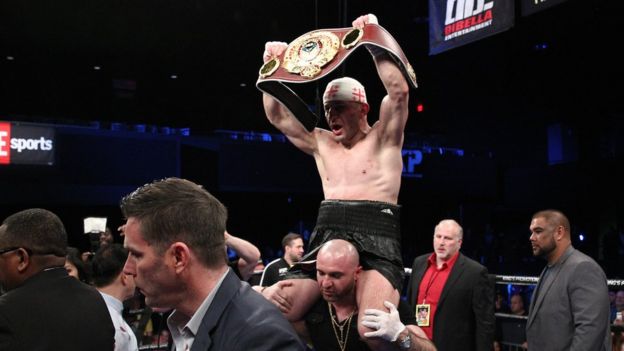
Georgian former boxing champion Avtandil Khurtsidze has been sentenced to 10 years in prison for working as the “chief enforcer” for an “elite” criminal enterprise.

He was convicted in June in New York of racketeering and wire fraud conspiracy.

Prosecutors said the 38-year-old boxer had “substantial influence” in the criminal underworld as part of a Soviet Union crime gang.

They said Khurtsidze used violence in service of the group’s activities.

He and his associates, known as the Shulaya Enterprise, were blamed for crimes across the US including extortion, wire fraud, illegal gambling and operating a brothel in Brooklyn.

Many of the crew’s activities were based in New York but they also operated in other major cities as well as abroad, a justice department statement said.

Officials say most of its members were born in the former Soviet Union, with strong ties to Georgia, where the boxer was born.

Khurtsidze was caught on film twice carrying out assaults, with prosecutors describing him as a “heavyweight enforcer” for the group’s members and leadership.

He was also accused of participating in a complex fraud scheme to predict casino slot machines algorithms, which involved kidnapping a software engineer in Las Vegas in 2014.

Khurtsidze on shoulders with a belt above head
Getty Image
Image caption Khurtsidze was arrested in 2017, scuppering his chances at the WBO middleweight title

On top of his decade federal jail sentence, the Georgian boxer was given two further years supervision on release.

“Thanks to our dedicated law enforcement partners around the globe, Khurtsidze’s reign of extortion and violence has been halted,” US attorney Geoffrey Berman said in a statement.

‘Just a waste’

Khurtsidze held the interim WBO middleweight title in 2017.

His last professional fight was against British boxer Tommy Langford in April 2017, which he won.

A later bout against Billy Joe Sanders was cancelled after Khurtsidze was arrested along with more than 30 others in a swoop against the organised crime syndicate.

Following his conviction, his former promoter Lou DiBella criticised the boxer for squandering his career.

“He let many people down who believed in him, but no one more than himself. Just a waste, and it’s all on him for choosing the dark side,” Mr DiBella told ESPN.

Nations Stand with Britain Against Russia and Poison Attack

The leaders of the United States, France, Germany and Canada on Thursday endorsed Britain’s assessment that a nerve-agent attack on a former Russian spy and his daughter in March was conducted by Russian military officers and “almost certainly” approved at a senior level of the Russian government.

The leaders urged Russia to provide a “full disclosure” of its Novichok nerve-agent program and said they would “continue to disrupt together the hostile activities of foreign intelligence networks on our territories.”

The joint statement was released shortly before London’s and Moscow’s envoys to the United Nations squared off in an emergency Security Council meeting called by Britain to brief diplomats on the investigation.

British ambassador Karen Pierce methodically outlined evidence that she said pointed to the Kremlin’s complicity in the attack, which occurred March 4 in the quiet English city of Salisbury.

Two Russians — using the names Alexander Petrov and Ruslan Boshirov — were charged Wednesday in absentia with attempting to murder Sergei Skripal and his daughter, Yulia, with Novichok, a military-grade nerve agent.

Pierce acknowledged the two suspects, who flew back to Russia shortly after the attack, cannot be extradited under the Russian constitution. But she said Britain will ask Interpol to issue an alert to arrest them if they ever leave Russian territory, so they can be tried in Britain. More here from the Washington Post.

Very important short video

Deeper dive:

Sergei Skripal, the Russian double agent who was poisoned with a military-grade nerve agent in England earlier this year, worked with Spanish intelligence after his defection to the United Kingdom, according to sources. Skripal, a former military intelligence officer who spied for Britain in the early 2000s, had kept a low profile while living in the English town of Salisbury. He was resettled there in 2010 by the British Secret Intelligence Service (MI6), after he was released from a Russian prison. But he and his daughter Yulia made international headlines in March, after they were poisoned by a powerful nerve agent that nearly killed them. The attack has been widely blamed on the Russian government, but the Kremlin denies that it had a role in it.

The attempt to kill Skripal surprised some intelligence observers due to the fact that the Russian government had officially pardoned the double agent prior to exchanging him with Russian spies who had been caught in the West. As intelNews wrote in May, “typically a spy who has been pardoned as part of an authorized spy-swap will not need to worry about being targeted by the agency that he betrayed. If it indeed tried to kill Skripal, the Russian government may therefore have broken the unwritten rules of the espionage game”. Eventually, however, it was revealed that, instead of retiring after his defection to the UK, Skripal traveled extensively in Eastern Europe, where he advised local intelligence agencies on how to defend against Russian espionage. The double agent participated in MI6-sponsored events in which he briefed intelligence practitioners in at least two countries, Estonia and the Czech Republic. These activities may have convinced the Kremlin that Skripal had broken the unwritten conditions of his release, namely that he would not participate in any intelligence-related activities against Russia.

Now The New York Times has claimed that, in addition to consulting for Czech and Estonian spies, Skripal also visited Spain, where he met with officers from the country’s National Intelligence Center (CNI). Citing an unnamed Spanish former police chief and Fernando Rueda, a Spanish intelligence expert, The Times said that Skripal advised the CNI about the activities of Russian organized crime in Spain and the alleged connections between Russian mobsters and the Kremlin. When he traveled to Spain under MI6 protection, said the paper, Skripal was effectively returning to the place where he had been initially recruited to spy for the British. Skripal spent several years in Spain, said The Times, serving as a military attaché at the Russian embassy in Madrid. It was there that he began to work secretly for MI6. However, the precise timing of Skripal’s return trips to Spain after 2010, as well as the content of his discussions with Spanish intelligence officials, remain unknown, according to The Times. Hat tip.