
Does DHS Secretary Kelly Know RAPS?

My friend Tom Del Beccaro explains in his summary at Forbes how the Federal government maintains primacy over the states for immigration law and item 8 U.S. Code Section 1182, which the liberal court chose never to previously challenge.

In spite of the 9th Circuit 3 judge panel ruling maintaining the stay on the Trump Executive Order for the travel restraining order, there is much work to do administratively as this continues to be challenged.

The data is private and protected:

Once the information is entered into the system, RAPS generates an appointment notice for the collection of fingerprints used to complete criminal and background checks and to create Employment Authorization Documents (EADs), as appropriate. The applicant will appear at a USCIS service center to provide fingerprints and confirm application information.

RAPS then automatically initiates several background security check processes: Federal Bureau of Investigation (FBI) Name Check, United States Visitor and Immigrant Status Indicator Technology (US-VISIT) and DHS’ Automated Biometric Identification System (IDENT), Customs and Border Protection (CBP) TECS, FBI Fingerprint, and the ENFORCE Alien Removal Module (EARM) (for a full discussion of the background check process, see Section 5.1). RAPS also stores the results of security checks.

Image result for USCIS Asylum Office Image result for USCIS Asylum Office

When a new application is entered into RAPS, it is forwarded to a USCIS Asylum Office for interview and adjudication.  Asylum Offices use RAPS to schedule an asylum interview to evaluate the claim of asylum status and to conduct various aspects of case maintenance such as address changes, updates of information pertaining to dependent claimants, to record preliminary and final decisions, and to generate decision documents. An individual who files for asylum may include in his or her application any spouse or child who is within the United States and appears for the asylum interview. This is because a grant received by the principal asylum applicant is conveyed to the spouse and children included in the family group if the spouse/child is in the U.S. and not otherwise barred from a grant of asylum.

RAPS is a comprehensive case management tool that enables USCIS to handle and process applications for asylum pursuant to Section 208 of the Immigration and Naturalization Act (INA) and applications for suspension of deportation or special rule cancellation of removal pursuant to NACARA § 203. DHS offices worldwide can access RAPS as a resource of current and historic immigration status information on more than one million applicants. DHS officials can use RAPS to verify the status of asylum applicants, asylees, and their dependents to assist with the verification of an individual’s immigration history in the course of a review of visa petitions and other benefit applications as well.

RAPS Typical Transaction

A typical transaction begins when an individual initiates the process to apply for asylum by completing and filing Form I-589, Application for Asylum and for Withholding of Removal, with a USCIS Service Center, or in certain circumstances directly with an asylum office. Service Center personnel receive the application in person or via mail and manually enter, most, but not all, of the information from a new application into RAPS.

As set forth in Section 451(b) of the Homeland Security Act of 2002, Public Law 107-296, Congress charged USCIS with the administration of the asylum program, which provides protection to qualified individuals in the United States who have suffered past persecution or have a well-founded fear of future persecution in their country of origin as outlined under INA § 208 and 8 CFR § 208. USCIS is also responsible for the adjudication of the benefit program established by Section 203 of the Nicaraguan Adjustment and Central American Relief Act (NACARA § 203) (discussed in more detail in Section B below), in accordance with 8 CFR § 240.60 and the maintenance and administration of the credible fear and reasonable fear screening processes, in accordance with 8 CFR §§ 208.30 and 208.31. USCIS developed RAPS and APSS in order to carry out its obligations in administering these benefit programs.

Functions

RAPS and APSS track case status and facilitate the scheduling of appointments and interviews and the issuance of notices (including receipt notices, appointment notices, and decision letters) at several stages of the adjudication process. USCIS Asylum Offices use RAPS and APSS to:

  • record decisions and to generate decision documents such as approval, dismissal, or rescission of an asylum or NACARA § 203 application,
  • denial of an asylum application,
  • administrative closure of an asylum application, or
  • referral of an asylum or NACARA § 203 application to Executive Office of Immigration Review (EOIR).

The systems also initiate, receive, and record responses for national security and background check screening and prevent the approval of any benefit prior to the review and completion of all security checks. Finally, the systems provide fully developed and flexible means for analyzing and managing program workflows and provide the Asylum Program with statistical reports to assist with oversight of production and processing goals.

Read more from the two DHS documents here and here.
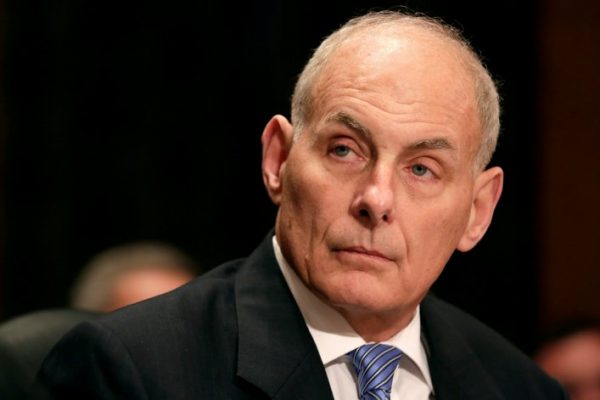
Image result for DHS Secretary

***

GAO Raps DHS for Failure to Get Security Data from Visa Waiver Countries

One of the requirements for allowing visa-free entry of tourists from countries in the Visa Waiver Program (VWP) is that those governments share with us information on nationals with terrorism links and/or criminal histories. According to a report of the Government Accountability Office (GAO) issued in May 2016, the Department of Homeland Security (DHS) has obtained those agreements with most of the countries, but more than a third of  the agreements have not been implemented, and no data have been received from them.

In addition, Congress has required reports from DHS on implementation of the VWP with each of the participating countries, but GAO found that DHS has failed to provide many of those reports when due.

The recommendation of agency (GAO-16-498) is that, “DHS should (1) specify time frames for working with VWP countries on the requirement to implement information-sharing agreements and (2) take steps to improve its timeliness in reporting to Congress on whether VWP countries should continue in the program.”

FAIR has consistently pointed to the VWP as a national security threat and called for its termination. This GAO report underscores the security flaw and finds that it is exacerbated by cavalier implementation by DHS
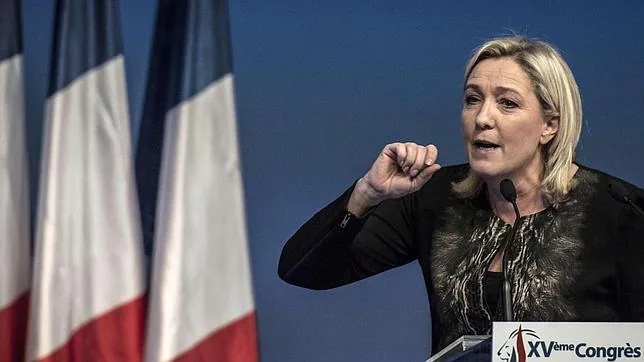

 

Putin Financing Marine Le Pen’s Presidential Run

Marine Le Pen’s links to Russia under US scrutiny

Image result for marine le pen and putin

Ms Le Pen’s Front National party has made no secret of the fact that it has taken foreign loans to help bankroll its presidential campaigns because, it has argued, French banks refuse to stump up the funds.

But in light of allegations of Russian interference in the US election of Donald Trump, scrutiny has now turned to Ms Le Pen, who is polled to reach the final round of France’s presidential elections in May.

In an extract of a letter dated November 28 to James Clapper, who heads up 17 American intelligence organisations and agencies, he notes that the Front National “publicly acknowledged that it had received a $9.8 million loan from a Russian bank with links to the Kremlin, allegedly brokered by a sanctioned Russian Duma deputy, according to French press reporting.”

The bank in question was First Czech Russian Bank (FCRB) in Moscow. Mr Turner goes on: “In February 2016, the FN asked Russia for a $30 million load to fund the FN leader Marine Le Pen’s 2017 campaign. More here from the Telegraph.

dgse franceFITSANAKIS: France’s primary intelligence agency warned the country’s government this week that Russia has launched a secret operation to try to influence the outcome of the upcoming French presidential election in favor of the far right. According to the Paris-based weekly newspaper Le Canard Enchaîné, France’s Directorate-General for External Security (DGSE) has notified the country’s leadership that a covert operation by the Kremlin is already underway, and is expected to intensify in the run-up to April’s election. The spy agency allegedly believes that Russian efforts aim to promote Marine Le Pen, leader of the ultra-right National Front. Le Pen wants to curb immigration to France and remove the country from the European Union.

In an article published on Wednesday, Le Canard Enchaîné said the DGSE’s warning has alarmed the Élysée Palace. The paper also said that French President François Hollande, who chairs the country’s defense council, has decided to devote the entire agenda of the council’s next meeting to the subject of Russia’s alleged interference in the election. Anonymous sources told the paper that, according to a classified DGSE report, Russian spy agencies are using automated systems designed to “fill the Internet with tens of millions” of articles, images and memes that support the National Front candidate. Additionally, several news media that are controlled by Moscow will try to discredit Le Pen’s rivals for the presidency. At the same time, websites such as WikiLeaks —which some American commentators accuse of working with Moscow— will publish leaked information designed to damage Le Pen’s competitors.

The Le Canard Enchaîné allegations sound very similar to accusations leveled against the Kremlin by American intelligence agencies and by members of the United States Democratic Party. However, these allegations have not been supported by concrete evidence, and Russia denies that it had any involvement in last November’s presidential election in the US, which was won by Donald Trump.

*** Meanwhile…. As top U.S. commanders are sounding the alarm of the forgotten war in Afghanistan due to the terror factions operating there including the even more deadly Taliban, Russia is legitimizing them to counter NATO. Are the Western leaders nurturing relationships with the Kremlin good with that as coalition countries have troops in Afghanistan?

Image result for russia taliban

In part from The Hill:

“The Russian involvement this year has become more difficult,” Gen. John Nicholson told the Senate Armed Services Committee. “First, they have begun to publicly legitimize the Taliban. This narrative that they promote is that the Taliban are fighting Islamic State and the Afghan government is not fighting Islamic State and that, therefore, there could be spillover of this group into the region. This is a false narrative.”

“I believe its intent is to undermine the United States and NATO,” he later added.

Nicholson was testifying about the current situation in Afghanistan, which he called a stalemate that he needs a few thousand more troops to break.

Among the challenges in the country are the actions of external actors such as Pakistan, Iran and Russia, Nicholson said.

He said Russia’s meddling in Afghanistan started in 2016 and continues to increase.

In addition to spreading a narrative that the Taliban is fighting the Afghan branch of the Islamic State in Iraq and Syria (ISIS), Russia has also organized a series of meetings to discuss the future of Afghanistan without inviting the Afghan government, Nicholson said. More here.


Trump Targeting BLM and Drug Cartels with Executive Action

These 3 signatures today on Executive Orders will aid the newly sworn in U.S. Attorney General Jeff Sessions. As a matter of personal opinion, President Trump did not go far enough, he should have declared all known drug cartels and their operatives terror organizations and should have done the same with Black Lives Matter along with known gang operations and members. Yet, Trump promised to restore law and order and this is a step in the right direction.

Related reading: Chicago Murder Capitol due to Gangs and Illegals

Image result for trump executive order law enforcement .pdf

Trump signs executive orders on crime, law enforcement

CBS: President Trump signed three executive actions Thursday aimed at bolstering law enforcement and targeting violent crime and criminal drug cartels.

The first executive order, according to what Mr. Trump outlined during the signing ceremony in the Oval Office, is meant to direct the Departments of Justice and Homeland Security to “undertake all necessary and lawful action to break the back of the criminal cartels that have spread across our nation and are destroying the blood of our youth and many other people.”

The president signed the action Thursday after swearing in Attorney General Jeff Sessions. Among other powers, the action gives broad authority to increase intelligence and lawn enforcement information sharing with foreign powers in order to crack down on “transnational criminal organizations” and their subsidiaries. It also instructs an interagency panel to compile a report on crime syndicates within four months.

“These groups are drivers of crime, corruption, violence, and misery,” the order reads. “In particular, the trafficking by cartels of controlled substances has triggered a resurgence in deadly drug abuse and a corresponding rise in violent crime related to drugs.”

Mr. Trump hinted at exercising his executive power to combat drug cartels earlier this week while talking with Fox News’ Bill O’Reilly.

“We have to do something about the cartels,” the president said in the interview, a portion of which aired Monday. He said he’d spoken with his Mexican counterpart, President Enrique Peña Nieto, about working together on the issue.

“We’ve got to stop the drugs from coming into our country,” Mr. Trump told O’Reilly. “And if he can’t handle it — maybe they can and maybe they can’t or maybe he needs help — he seemed very willing to get help from us, because he has got a problem and it’s a real problem for us.”

The president signed two other actions Thursday, including one that creates a task force within the Justice Department dedicated to “reducing violent crime in America.”

The “Task Force on Crime Reduction and Public Safety” will have administrative and financial support from the Attorney General’s office, according to the text of the order.

The last action directs the DOJ to implement a plan to “stop crime and crimes of violence against law enforcement officers.”

The order itself instructs the department to “pursue appropriate legislation…that will define new Federal crimes, and increase penalties for existing Federal crimes, in order to prevent violence against Federal, State, tribal, and local law enforcement officers.” That recommended legislation could include “defining new crimes of violence and establishing new mandatory minimum sentences for existing crimes of violence.”

The order also directs a thorough evaluation of all grant funding programs currently administered by the Justice Department.

“It’s a shame what’s been happening to our great — truly great — law enforcement officers,” the president said at the signing. “That’s going to stop as of today.”

Russian Hacking, We knew Because we had an Inside Operative(s)

This Executive Order is in draft form and does not include Russia, which is quite curious. The question of ‘why’ must be asked based on information noted below.

The Trump administration’s draft of the executive order on cybersecurity obtained by the Washington Post by April Glaser on Scribd

Those people involved in internet forensics and that track hackers, malicious code, malware, ransomware and intrusions are all dedicated to finding the cracks in code and even more finding the hackers while further understanding their code and patterns. I get emails about this topic every day that include a variety of global companies operating in this realm.

Back in December of 2015, ODNI James Clapper announced Russian intrusions into several American infrastructure locations. This was before the announcement of Russian intrusions into the U.S. political apparatus. In can be presumed the United States has long had the help of operatives inside adversarial countries, most of all Russia. Spies are out there and further, it is estimated there are 100,000 foreign spies inside the United States as of this moment. Heh, before Barack Obama left his presidency, he did expelled many Russians and closed two Russian compounds.

IN 2014, U.S. Cyber operations quietly penetrated Russian systems without declaring in specific language the exact operations.

In 2014, National Security Agency chief Adm. Mike Rogers told Congress that U.S. adversaries are performing electronic “reconnaissance” on a regular basis so that they can be in a position to disrupt the industrial control systems that run everything from chemical facilities to water treatment plants.

“All of that leads me to believe it is only a matter of when, not if, we are going to see something dramatic,” he said at the time.

Rogers didn’t discuss the U.S.’s own penetration of adversary networks. But the hacking undertaken by the NSA, which regularly penetrates foreign networks to gather intelligence, is very similar to the hacking needed to plant precursors for cyber weapons, said Gary Brown, a retired colonel and former legal adviser to U.S. Cyber Command, the military’s digital war fighting arm. More here.

It is unclear if we have recruited people inside Russia to work on the behalf of the United States, but clues tell us we did, with success.

In part from RFEL: At the simplest level, two FSB officers working in cyberdefense, Sergei Mikhailov and Dmitry Dokuchayev, as well as Ruslan Stoyanov, a former Interior Ministry official who works for the cyber security company Kaspersky Lab, are reportedly being charged with espionage.

According to Russian media reports, Mikhailov is suspected of alerting U.S. intelligence to the FSB’s connection to a Russian server-rental company called King Servers.

Last year, the U.S.-based cybersecurity firm ThreatConnect had identified King Servers as the nexus for hacking attacks against the United States.

If U.S. intelligence did indeed have a highly placed source like Mikhailov, it would explain why it was able to conclude with such a high degree of confidence that Russia was behind the cyberattacks during the election campaign.

The timing of the arrests and the timing of the decision by former U.S. President Barack Obama to declassify and make public parts of the U.S. intelligence report on the alleged Russian hacking also makes sense.

Mikhailov was arrested in December. And the U.S. released the intelligence report a month later, in January.

If Mikhailov was indeed a source, then Washington would have been reluctant to declassify its intelligence for fear of compromising him.

After he was arrested, this, of course, would no longer be an issue.

So far, so straightforward. Until it isn’t.

Leaks to the Russian media have also connected Mikhailov and his subordinate Dokuchayev to a hacker group known as Shaltai-Boltai, or Humpty Dumpty, which in the past has released embarrassing material about top Russian officials.

Vladimir Anikeyev, the founder of Shaltai-Boltai, has also been arrested, but is not being charged with espionage.

Moreover, Russian media reports claim that Dokuchayev is actually a former hacker known as Forb, who was serving a prison sentence for credit-card theft when he was recruited by the FSB, where he held the rank of major.

As Leonid Bershidsky notes in his column for Bloomberg, “parallel to their official duties, officers often run private security operations involving blackmail and protection. If Mikhailov ran such a business out of the FSB’s Information Security Center, he wouldn’t stand out among his colleagues.”

And it’s also not unusual for the FSB to recruit former hackers. In fact, it’s pretty much standard practice.

This is where the story diverts into the murky world of FSB officers and their civilian collaborators monetizing their positions and forming protection rackets.

“An FSB officer, recruited from the hacking community, can use his rank and position to obtain compromising material and sell it to wealthy clients. A team profiting from these opportunities can include both officers and civilians,” Bershidsky writes.

“The Russian government can hire such a team through intermediaries if it needs something sensitive done — but so can foreign intelligence services. It’s a murky world in which actors are both predator and prey. The Kremlin enjoys access to brilliant and unscrupulous people; the downside, of course, is that they may be hard to control.”

If you follow this line of logic, then it’s easy to imagine that Mikhailov and Dokuchayev inadvertently or unwittingly sold information exposing King Server’s FSB connections to a front for U.S. intelligence.

But the fact of the matter is we simply don’t know.

And if things aren’t confusing enough yet, there is also the matter of the bitter personal and clan rivalries in the shadow world of the Russian security services.

In a recent post on his blog KrebsOnSecurity, Brian Krebs, author of the book Spam Nation: The Inside Story Of Organized Cybercrime, suggested the whole affair might be traced to a personal rivalry between Mikhailov and Pavel Vrublevsky, an Internet businessman whose partner owns King Servers.

Mark Galeotti, an expert on Russia’s security services and a senior research fellow at the Institute of International Relations in Prague, notes that the FSB’s Information Security Center, which Mikhailov headed and where Dokuchayev was his subordinate, has emerged as “a pivotal agency” and “a source of power.”

And this makes it a prime arena for fierce rivalries and power plays.

“This is probably an intelligence leak that is being cleared up. But the question is: why now? And I wonder if domestic politics explains the leaking of the information now. It could be a rebuke to the FSB for having messed up,” Galeotti said on last week’s Power Vertical Podcast.


For Those Scoffing at Russian Penetration into American Democracy

This site has posted often on General Gerasimov and his doctrine. The games and propaganda that the Kremlin applies is still not taken seriously by the American people as they continue to scoff at Russian intrusions into our culture.

Russia is playing a double game and it is time to set aside manufactured notions and seek the expertise of countless Russian scholars as well as what the Pentagon and intelligence communities are publishing.

Related reading: Russia’s “Ambiguous Warfare” and Implications for the U.S. Marine Corps, 2015

Using the sources that Russian officials use themselves is a valuable tool as noted here:

“Military-industrial courier”

International Maritime Defence Show

«Military-industrial courier» is a weekly illustrated All-Russian newspaper. The main topics of the newspaper are politics and economics, role of legislative and executive power in the process of military reform providing. «Military-industrial courier» is position on the newspaper market as a respectable edition which highlights defence industries and institutions, adds to military products promotion to the domestic and foreign markets.

The newspaper boasts of domestic military chiefs and defence leaders interviews in which most important issues of that sector of the economy are raised.

For a short period of time «Military- industrial courier» has achieved recognition with the Russian high-ranking military officials.

The newspaper is distributed on a subscription and by retail within the Russian Federation and abroad. The circulation is more than 50000 copies.

Here goes yet another attempt.

****

Narrative, Cyberspace and the 21st Century Art of War

In February 2013, an article insipidly entitled “The Value of Science in Prediction” appeared in the Russian publication Military-Industrial Courier. The article was penned by Valery Gerasimov, chief of the general staff of the Russian Federation. Few in the West recognized the article at all, much less its significance, at the time of its publication.

In the article, Gerasimov analyzed “new-type conflicts.” These conflicts entail an array of strategies and tactics employed in the gray zone to achieve national interests, even military, without a declaration of war and without crossing the threshold that would provoke a kinetic response.

“The very ‘rules of war’ have changed,” Gerasimov wrote.

Dr. Mark Galeotti, an expert on Russian history and security issues who annotated an English translation of Gerasimov’s article, identified the most important line as, “The role of nonmilitary means of achieving political and strategic goals has grown and, in many cases, they have exceeded the power of force of weapons in their effectiveness.”

Gerasimov’s “nonmilitary means” included “broad use of political, economic, informational, humanitarian and other nonmilitary measures – applied with the protest potential of the population.”

Experts see one hybrid tactic – narrative and cyber – playing an increasingly prominent role in current conflicts.

War Narratives

An old Wall Street adage goes, “You’d have to be a paranoid Russian poet to understand global finance.” Today, that maxim might be paraphrased for an equally unexpected insight: “It helps to be a literary critic in understanding contemporary warfare.”

In The Art of War, Sun Tzu described the “five constant factors” of conventional warfare, but none included narrative. Experts now point to the influential role of narrative in military, geopolitical and ideological “new-type conflicts.”

Nations like Russia and China, as well as terrorist organizations like the Islamic State of Iraq and Syria (ISIS), are using narrative to motivate audiences, advance agendas and engage adversaries.

Scholars have long argued that literary techniques are not the special purview of novelists, poets and playwrights. From philosophers’ research on metaphor to cognitive scientists’ investigations into parable, literary devices reveal and appeal to basic human cognition. Perhaps that’s why narrative’s use by governments, institutions, businesses and ideologues is not new.

When employed in military or geopolitical conflicts, Brad Allenby and Joel Garreau, co-directors of The Weaponized Narrative Initiative of the Center on the Future of War, call it “weaponized narrative.” And they believe its recent effectiveness will encourage further use.

In an email interview, Allenby said, “Weaponized narrative is not a temporary or passing phenomenon. It is based on significant recent advances in science, technology and social use of technology.”

Combined with tactics afforded by cyberspace, narrative’s influence broadens. But Dr. Ajit Maan, affiliate scholar at the Center for Narrative and Conflict Resolution and CEO of Narrative Strategies, notes that narrative’s power precedes technology.

In an email interview with Fifth Domain, Maan said:

Advanced technologies work to disseminate messages farther and wider than they would be otherwise, but narratives are already there, on the ground, in people’s heads. The enemies of the U.S. and her allies understand this very well. Advanced technology is a tool. The center of gravity is the narrative.

The “Era of Cybered Conflict”

Current conflicts play out, at least partly, in cyberspace.

Dr. Chris C. Demchak, RDML Grace Murray Hopper professor of cybersecurity and director of the Center for Cyber Conflict Studies at the U.S. Naval War College, characterizes today’s environment as one of “cybered conflict.”

In an interview – in which she offered her views and not the views of the U.S. government, U.S. Navy or U.S. Naval War College – Demchak said:

Due to the massively insecure technology of the global cyberspace, we in the West have created a widely spread, poorly secured cyberspace “substrate” that allows attackers in any numbers, from anywhere, with any tools and for any reason to cheaply reach into our critical systems with minimal chances of being punished. The result is that the world has been thrust into an era of “cybered conflict.”

Like Gerasimov’s blurred line between war and peace, Demchak described cybered conflicts as “stretch[ing] from peace through traditional war.” Importantly, Demchak highlighted the strategic advantages of cybered conflict relative to conventional war:

Most cybered conflict – which can have existential consequences – does not involve killing anyone or destroying something explosively. Rather, it is marked by exceptional advantage to deception in what tools are used and opaqueness in who, in what numbers, are using them. Going to the end of the spectrum – to “cyberwar” – is relatively inefficient and opens oneself up to direct retaliation throughout one’s own societal systems. Instead, one can slowly demolish an opponent without ever killing someone or destroying something with a kinetic tool traceable back to oneself … [which] is much safer, reliable and easier to outsource.

Russia, China and ISIS are all leveraging the advantages afforded by cybered conflict to employ hybrid warfare tactics – from hacking to weaponized narrative.

Russia and the Grand Nationalist Narrative

Russia’s use of hybrid warfare long predates Gerasimov’s article. Noting the Soviet Union’s traditional outward posture since the Cold War’s advent, Demchak said, “Russia innovated the strategy of disinformation and personalized brutality to ‘eat a democracy from the inside out’ … producing the involuntary servitude of the former Warsaw Pact.”

Allenby noted favorable conditions for disinformation persist today: “The Russian system tends to reward the cynical, morally relativistic psychology that best aligns with developing and deploying weaponized narratives.”

As foreshadowed by Gerasimov, Russia has displayed its hybrid capabilities during the Ukraine conflict. Allenby points to Russia resurrecting the historical “Novorossiya” and adopting the newer “Russian Eurasian Empire” narratives.

Such narratives matter, Allenby explained, “Because suborning an adversary through weaponized narrative is far, far less costly than a conventional attack. Weaponized narrative offered an important way to achieve Russian ends while not justifying a conventional response under the UN charter.”

Allenby also noted the hybrid approach, which included narrative and “fomenting insurrection and insurgency, and judicious application of ‘little green men,’” or suspected Russian troops.

Allenby added, “Was the invasion [of Crimea] effective? Absolutely. Was it a strategic success? For that, we’ll have to wait and see.”

Asked about the similarities and differences between Russia’s tactics in Ukraine and the alleged activities carried out during the 2016 U.S. presidential election, Allenby said:

The two are similar, in that causing a degree of confusion and social fragmentation in the target is a major strategic goal. The tools are different because the cultures are very different, and the follow through is different … Nonetheless, the underlying processes, operations and design of weaponized narrative campaigns must be similar because they are based on the same advanced science, new technologies and rapidly evolving understanding of human psychology.

China and the Sovereignty Narrative

China is also using narrative to further its geopolitical agenda. China’s interest in expanding territorial sovereignty in the South China Seas is well known. Less so is China’s “cyber sovereignty” narrative, which Demchak has examined.

At issue is, Demchak wrote, “China wants her borders in cyberspace and will take nothing less.” Whereas the West sees the internet as a tool for global democratization, “the Chinese narrative accentuates the instability and greater dissent that can accrue with a border-spanning open internet.”

China’s view implicitly acknowledges Gerasimov’s “protest potential of the population.”

To achieve cyber sovereignty, China has employed hybrid gray-zone tactics.

“China,” Demchak wrote, “is also hoping to hurry along the [U.S.’s] apparent decline with narratives, money and stealth and yet control the narrative of a no-threat peaceful rise well enough to stay short of physical conflict.”

China’s cyber sovereignty is part of a grander narrative. “China justifies its rise in the world – its ‘rightful place’ – on the basis of its population,” Demchak said. “China will not over time tolerate U.S. obstruction of its ‘rightful’ rise as the global hegemon.”

ISIS and the Narrative of the Islamic Caliphate

The rise of ISIS surprised many in the West. Narrative and cyberspace played a central role, experts say.

Counterterrorism scholars have studied the “messaging and counter-messaging” of ISIS. Maan thinks ISIS’s narratives are more “profound and pervasive” than simple messaging.

“It is through narrative that identity is constructed: Personal identity, communal/clan identity and national identity,” she said. “It is formative in the identity layers of all parties to communication long before any communication has taken place between them.”

In her writing, Maan has examined a common idea across ISIS’s communications: “Islam is under attack.” That is a title, not the narrative, she explained.

Despite the West’s claims otherwise, “Islam is under attack” resonates with ISIS followers in many forms. “Narrative provides and determines the meaning of events,” Maan said. “Events don’t speak for themselves. Narratives speak for events.”

Maan argues, rather than focusing on counter-narrative, which oftentimes “emboldens” the original, the West should develop its own. To succeed, Maan thinks the West’s narratives must be credible and based on the “production of common sense.”

“That is how successful narratives appear. They don’t seem like a construction. They seem to reflect ‘just the way things are,’” she said.