Will Mueller’s Russian Probe Include Viktor Medvedchuk?

Primer: Remember the media told us and the polls told us Hillary would win. When Trump prevailed, the left went into action in earnest and that is being aided by television and print media. All things Russia will be in our daily lives for a long while and there is good cause for that. There are truths that are being omitted, frankly we need complete truth, wherever it leads. For the sake of the country and gaining any kind of confidence in political leaders, the double edged sword will draw blood.

So, here we go and will Robert Mueller and his team perform and provide a final report that is honest, complete and true? America needs President Trump to succeed, of this there is no question. There is a legislative agenda that must advance.

Read on.
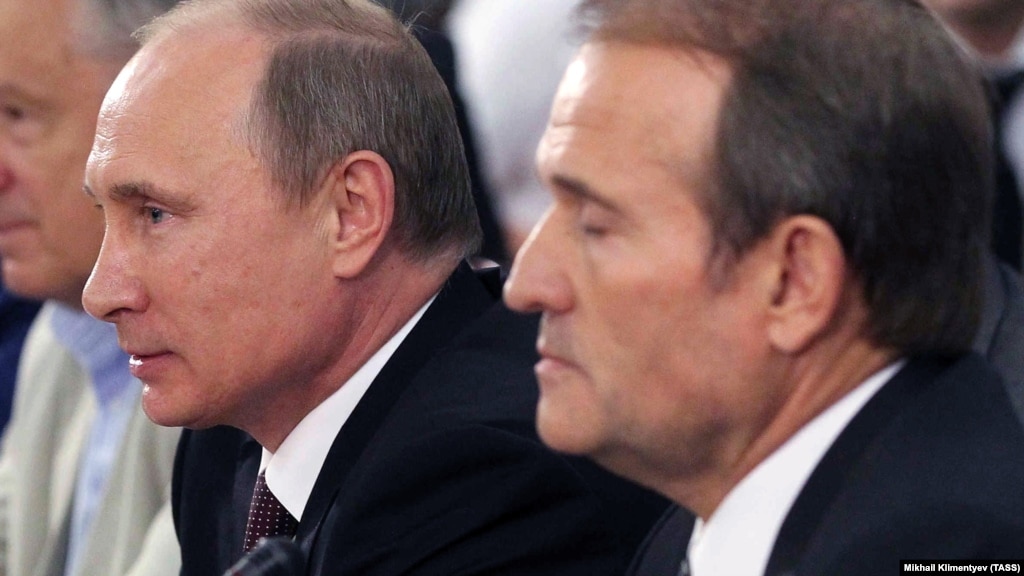
Image result for viktor medvedchuk

When it comes to Moscow’s long term operation to bring Ukraine under Russian influence, Medbedchuk is Putin’s man. Viktor Medvedchuk continues to work diligently to keep Ukraine from any membership into the European Union or NATO. As an aside, Viktor is also the god-father to Putin’s daughter Darina.

With historical targets by the Kremlin to hold power over Ukraine, Medvedchuk was trusted by the KGB/FSB using all the normal KGB tactics.

Viktor is a Russian oligarch with extravagant taste and is said to be worth $800 million.

yacht Royal Romance

Superyacht Royal Romance, owned by Ukrainian oligarch Viktor Medvedchuk

P4-GEM Viktor Medvedchuk

Medvedchuk’s private jet with registration P4-GEM

So, why is Medvedchuk important? He has some nasty history inside Ukraine. Further, those members of the Trump campaign and transition team had communications with Medvedchuk. Would one of those on the Trump team be Paul Manafort? Yes, glad you asked. Manafort was tapped to aid Yanukovych’s victory as Prime Minister of Ukraine until matters fell apart and he fled Ukraine for Russia. Manafort was in country when this occurred and stayed in Ukraine to rally old supporters and create a new party that would oppose pro-Westerner Poroshenko and alter the parliament. That black ledger discovered by a Ukraine government investigations shows that Manafort was paid $12.7 million for his work.

A side note, the law firm Wilmer Hale, is where Reginald Brown is representing Paul Manafort, happens to be the same law firm that now independent counsel for the Russian probe, Robert Mueller worked. So, is this new independent investigation a ploy due to history and conflicts of cases and legal representation? Humm, let’s continue.

***

Exclusive: Trump campaign had at least 18 undisclosed contacts with Russians: Sources

Michael Flynn and other advisers to Donald Trump’s campaign were in contact with Russian officials and others with Kremlin ties in at least 18 calls and emails during the last seven months of the 2016 presidential race, current and former U.S. officials familiar with the exchanges told Reuters.

The previously undisclosed interactions form part of the record now being reviewed by FBI and congressional investigators probing Russian interference in the U.S. presidential election and contacts between Trump’s campaign and Russia.

Six of the previously undisclosed contacts described to Reuters were phone calls between Sergei Kislyak, Russia’s ambassador to the United States, and Trump advisers, including Flynn, Trump’s first national security adviser, three current and former officials said.

Conversations between Flynn and Kislyak accelerated after the Nov. 8 vote as the two discussed establishing a back channel for communication between Trump and Russian President Vladimir Putin that could bypass the U.S. national security

bureaucracy, which both sides considered hostile to improved relations, four current U.S. officials said.

In January, the Trump White House initially denied any contacts with Russian officials during the 2016 campaign. The White House and advisers to the campaign have since confirmed four meetings between Kislyak and Trump advisers during that time.

The people who described the contacts to Reuters said they had seen no evidence of wrongdoing or collusion between the campaign and Russia in the communications reviewed so far. But the disclosure could increase the pressure on Trump and his aides to provide the FBI and Congress with a full account of interactions with Russian officials and others with links to the Kremlin during and immediately after the 2016 election.

The White House did not respond to requests for comment. Flynn’s lawyer declined to comment. In Moscow, a Russian foreign ministry official declined to comment on the contacts and referred Reuters to the Trump administration.

Separately, a spokesman for the Russian embassy in Washington said: “We do not comment on our daily contacts with the local interlocutors.”

The 18 calls and electronic messages took place between April and November 2016 as hackers engaged in what U.S. intelligence concluded in January was part of a Kremlin campaign to discredit the vote and influence the outcome of the election in favor of Trump over his Democratic challenger, former secretary of state Hillary Clinton.

Those discussions focused on mending U.S.-Russian economic relations strained by sanctions imposed on Moscow, cooperating in fighting Islamic State in Syria and containing a more assertive China, the sources said.

Members of the Senate and House intelligence committees have gone to the CIA and the National Security Agency to review transcripts and other documents related to contacts between Trump campaign advisers and associates and Russian officials and others with links to Putin, people with knowledge of those investigations told Reuters.

The U.S. Justice Department said on Wednesday it had appointed former FBI Director Robert Mueller as special counsel to investigate alleged Russian meddling in the U.S. presidential campaign and possible collusion between Trump’s campaign and Russia. Mueller will now take charge of the FBI investigation that began last July. Trump and his aides have repeatedly denied any collusion with Russia.

‘IT’S RARE’

In addition to the six phone calls involving Kislyak, the communications described to Reuters involved another 12 calls, emails or text messages between Russian officials or people considered to be close to Putin and Trump campaign advisers.

One of those contacts was by Viktor Medvedchuk, a Ukrainian oligarch and politician, according to one person with detailed knowledge of the exchange and two others familiar with the issue.

It was not clear with whom Medvedchuk was in contact within the Trump campaign but the themes included U.S.-Russia cooperation, the sources said. Putin is godfather to Medvedchuk’s daughter.

Medvedchuk denied having any contact with anyone in the Trump campaign.

“I am not acquainted with any of Donald Trump’s close associates, therefore no such conversation could have taken place,” he said in an email to Reuters.

In the conversations during the campaign, Russian officials emphasized a pragmatic, business-style approach and stressed to Trump associates that they could make deals by focusing on common economic and other interests and leaving contentious issues aside, the sources said.

Veterans of previous election campaigns said some contact with foreign officials during a campaign was not unusual, but the number of interactions between Trump aides and Russian officials and others with links to Putin was exceptional.

“It’s rare to have that many phone calls to foreign officials, especially to a country we consider an adversary or a hostile power,” Richard Armitage, a Republican and former deputy secretary of state, told Reuters.

FLYNN FIRED

Beyond Medvedchuk and Kislyak, the identities of the other Putin-linked participants in the contacts remain classified and the names of Trump advisers other than Flynn have been “masked” in intelligence reports on the contacts because of legal protections on their privacy as American citizens. However, officials can request that they be revealed for intelligence purposes.

U.S. and allied intelligence and law enforcement agencies routinely monitor communications and movements of Russian officials.

After Vice President Mike Pence and others had denied in January that Trump campaign representatives had any contact with Russian officials, the White House later confirmed that Kislyak had met twice with then-Senator Jeff Sessions, who later became attorney general.

Kislyak also attended an event in April where Trump said he would seek better relations with Russia. Senior White House adviser Jared Kushner, Trump’s son-in-law, also attended that event in Washington. In addition, Kislyak met with two other Trump campaign advisers in July on the sidelines of the Republican convention.

Trump fired Flynn in February after it became clear that he had falsely characterized the nature of phone conversations with Kislyak in late December – after the Nov. 8 election and just after the Obama administration announced new sanctions on Russia. Flynn offered to testify to Congress in return for immunity from prosecution but his offer was turned down by the House intelligence committee.


Mueller, Zebley, Quarles Named Special Counsel, Russia Probe

It is important to note, this is not a special prosecution team, it is a legal investigative team. All three lawyers have formally resigned their positions, which is required from the law firm Wilmer Cutler Pickering Hale and Dorr.

Image result for robert mueller Robert Mueller

From the National Law Journal in part: Zebley was Mueller’s former chief of staff at the FBI and Quarles worked as an assistant special prosecutor for the Watergate investigation. Mueller worked on a range of issues including cybersecurity, criminal litigation and internal investigations. Last year, he was appointed to oversee settlement negotiations in class action lawsuits over Volkswagen A.G.’s emissions scandal.

The task of this team is solely to investigate the matter of Trump’s campaign operatives having any cooperation or interaction with any Russian entities into the campaign infrastructure in 2016.

Mueller served as U.S. Attorney for the Northern District of California prior to joining the FBI. He graduated from Princeton University in 1966 and went on to receive his J.D. from the University of Virginia. Mueller has gained the approval of the ACLU, former Attorney General and head of Main Justice, Eric Holder as well as many democrats in both chambers of Congress.

Another partner at the law firm, is Reginald Brown, who worked in the Bush White House and runs the firm’s financial institutions group and congressional investigations practice, is advising Paul Manafort as of this spring. Manafort, who ran Trump’s presidential campaign for six months, may be ensnared in the Russia investigation because of a consulting client he represented in Ukraine who had ties to the Kremlin.

Top Clinton administration alumni at Wilmer include former Solicitor General Seth Waxman and former Deputy Attorney General Jamie Gorelick, who’s boosted her own resume in recent months by advising Ivanka Trump and Jared Kushner on government ethics.

“I determined that it is in the public interest for me to exercise my authorities and appoint a special counsel to assume responsibility for this matter,” Mr. Rosenstein said in a statement. “My decision is not a finding that crimes have been committed or that any prosecution is warranted. I have made no such determination.”

While a special counsel would remain ultimately answerable to Mr. Rosenstein — and by extension, the president — he would have greater autonomy to run an investigation than a United States attorney would. Mr. Mueller will be able to choose to what extent to consult with or inform the Justice Department about his investigation as it goes forward.

“He’s an absolutely superb choice,” said Kathryn Ruemmler, a former prosecutor and White House counsel under Mr. Obama. “He will just do a completely thorough investigation without regard to public pressure or political pressure.”

She added: “I cannot think of a better choice.”

John S. Pistole, who served as the F.B.I.’s deputy director under Mr. Mueller, also praised the appointment.

“You need an independent assessment of what the president has done, how he has done it and perhaps why he has done it,” said Mr. Pistole, who is now president of Anderson University in Indiana. “The appointment of Director Mueller is exactly what is needed to attempt to bring credibility to the White House when there are so many questions about the president’s actions and motives.”

The order to appoint Mr. Mueller was signed by Mr. Rosenstein on Wednesday, drawing on a regulation granting the attorney general the authority to appoint a special counsel for only the second time in history. The first time it was used was in 1999 by Janet Reno, who appointed Jack Danforth, a former Republican senator from Missouri, to lead an investigation into the botched federal raid on the Branch Davidian compound in Waco, Tex., in 1993 that killed 76 people.

In his capacity as special counsel, Mr. Mueller will be able to request additional resources for the investigation. Those requests will be reviewed by Lee Lofthus, assistant attorney general for administration. More here.

The Trump White House only had this response to the naming of this team:

There is no information that has been released how this legal team will address matters relating to Hillary Clinton, John Podesta or other related issues. It should be noted that only last week, did the Senate Democrats that are also part of a Senate Intelligence Committee investigation on similar Russian probes hired April Doss. Doss held an early career at the NSA and just resigned also from her law firm of Saul Ewing.

Image result for april doss saul

Both Mueller’s law firm and Doss’ law firm each has legal specialties in the cyber industry.

One last item, since Paul Manafort was mentioned above:

Former Trump campaign manager Paul Manafort took out a $3.5 million mortgage through a shell company just after leaving the campaign, but the mortgage document that explains how he would pay it back was never filed — and Manafort’s company never paid $36,000 in taxes that would be due on the loan.

Image result for paul manafort

On August 19, 2016, Manafort left the Trump campaign amid media reports about his previous work for a pro-Russian political party in Ukraine, including allegations he received millions of dollars in payments.

That same day, Manafort created a holding company called Summerbreeze LLC. Several weeks later, a document called a UCC filed with the state of New York shows that Summerbreeze took out a $3.5 million loan on Manafort’s home in the tony beach enclave of Bridgehampton.

Manafort’s name does not appear on the UCC filing, but Summerbreeze LLC gives his Florida address as a contact, and lists his Bridgehampton home as collateral.

Who Can be Fired at the VA for Cause? No One

Bipartisan Senate Group Unveils New Bill to Speed Up VA Firing, Bonus Recoupment

The new bill comes just days after a federal appeals court ruled Congress’ previous attempt at hastening VA’s disciplinary process — through the 2014 Veterans Access, Choice and Accountability Act — was unconstitutional. The measure stripped Senior Executive Service employees of their right to a second-level appeal before the Merit Systems Protection Board’s presidentially-appointed, Senate-confirmed panel. VA had already stopped using the new authority after its constitutionality was questioned in court and the Obama administration declined to defend it.

The senators have been working on their new bill for weeks, but they said the court ruling reinforced the need for reform. “This legislation would improve on the law we enacted in 2014,” Rubio said.

The bill would allow the department’s secretary to fire, suspend or demote an employee with only 15 days notice. Affected workers would then have seven days to issue a response before a final decision is made. Any employee facing removal, suspension of at least 14 days or a demotion would have 10 days to appeal the action to the Merit Systems Protection Board. MSPB would then have 180 days to issue a decision, a much longer period than the 45-day timeline set up in the House bill. Employees would maintain the right to appeal an MSPB decision to federal court.

Employees covered by a collective bargaining agreement would also maintain the right to appeal a negative personnel action through the grievance process, though it would have to be resolved within 21 days. Read more here.

Image result for  Veterans admin

Meanwhile, there is that blasted union problem at the VA:

An estimated 346 employees in the Department of Veterans Affairs do no actual work for taxpayers. Instead, they spend all of their time doing work on behalf of their union while drawing a federal salary, a practice known as “official time.”

That’s according to a report by the nonpartisan Government Accountability Office. But exactly what those VA workers are doing and why so many are doing it is not clear. The VA doesn’t track that, and the GAO report offers no clue.

Rep. Jody Arrington, R-Texas, a member of the House Veterans’ Affairs Committee, thinks the number on 100 percent official time may be much higher. He also notes that the 346 workers don’t include those who spend most, not all, of their time doing union work.

“The lack of accountability at the VA when it comes to monitoring official time suggests it might be worse,” said Arrington, who has introduced legislation that would require the department to track the use of official time, among other reforms.

Pointing to the waiting list scandals at the department, Arrington said the official time situation is reflective of the “broken culture at the heart of the VA” and adds, “I haven’t heard one good, acceptable reason why the practice has continued.”

The VA was not eager to discuss the matter with the Washington Examiner. After several days of inquiries, it responded with the following statement: “VA believes that the appropriate use of official time can be beneficial and in the public interest as stated in the Federal Service Labor-Relations Statute, which governs how executive branch agencies treat official time. VA takes the position that labor and management have a shared responsibility to ensure that official time is authorized and used appropriately. VA practices are in compliance with the Federal Service Labor-Relations Statute.”

Official time is allowed under the 1978 Civil Service Reform Act. The idea behind it is to ensure that a federal employee who is also a union official won’t be penalized for being away from work if he or she is negotiating a contract or addressing a worker grievance, for example. It is essentially a trade-off for the limitations put on federal unions, such as prohibitions on striking.

At least 700 federal workers do nothing but work on official time, according to the GAO and data obtained from various Freedom of Information Act requests. The VA uses official time far more than any other agency.

“Employees spent approximately 1,057,00 hours on official time for union representation activities … In addition, the data show that 346 employees spent 100 percent of their time on official time,” the GAO found in a January report.

It is possible that even those figures are conservative. The GAO said the said the VA’s poor monitoring meant the data was “inconsistent and not reliable.”

The GAO didn’t know what the employees are doing with all of that time. “We just didn’t get into that in that particular study,” said Cindy Barnes, the GAO’s director of education, workforce and income security issues and author of the report.

Part of the explanation is that the VA is one of the largest federal agencies with 373,000 workers, making it second only to the Pentagon in the sheer size of its workforce. About 250,000 VA workers are covered by collective bargaining agreements, according to the GAO, citing 2012 data. Arrington puts the covered figure at 285,000.

By comparison, the Department of Homeland Security has 240,000 workers and the Department of Commerce has just under 44,000 workers. But those departments get by with proportionately far fewer people working exclusively on official time. DHS has 39, while Commerce has just four.

Another factor is that the VA’s workforce is represented by no less than five unions: The American Federation of Government Employees, the National Association of Government Employees, National Nurses United, the National Federation of Federal Employees and the Service Employees International Union.

National Nurses United representative Irma Westmoreland was the only union official willing to talk about the practice with the Washington Examiner. She is one of five nurses union members who work exclusively on union time at the VA. The union has another nine who spent 80 percent of their time at the VA on official time, she said.

Westmoreland said her work was necessary because nurses can’t simply stop taking care of a patient to do something like address a worker grievance. People such as her do the union work and make it possible for the other nurses to focus on providing care.

“I have to travel across the country working with 23 VA facilities in four time zones,” she said. “The management teams want somebody at 100 percent official time so they don’t have to pull somebody out of care.”

But not everyone at the VA is involved in care. So what are the other 341 exclusive official time workers doing? Westmoreland had no insight.

“I don’t know how the other people do it,” she said.

American Federation of Government Employees President J. David Cox told Arrington’s subcommittee in February that official time involved activities such as “designing and delivering joint training of employees on work-related subjects and introduction of new programs and work methods that are initiated by the agency or by the union.”

He added that “in no way did the [February GAO] report suggest that the use of official time presents problems for the department.” The report sought only to quantify the amount of time used.

Arrington argues that the practice has to change if the VA is ever to be truly reformed. He has sponsored the Veterans, Employees and Taxpayer Protection Act, which would require the VA to track the use of official time. It also would prohibit employees involved with direct patient care from spending more than a quarter of their work hours on union activities and bar any VA employee from spending more than half of their time on official time.

The legislation would effectively put VA employees under right-to-work protection. The VA would be prohibited from agreeing to union contracts that force workers to join or otherwise support a union as a condition of employment.

Westmoreland said she has no trouble with better tracking the use of official time but warns against putting any limitations on its use.

“It makes it very difficult if you cannot have set official time,” she said.

Trump’s EO on Voter Fraud Commission

Read the text here. The ‘voting rights’ division at the Justice Department may just have an issue with this, but the commission should happen along with a technology fix going into the future. We cannot forget that DHS contacted several states prior to the voting season last Fall concerning registration databases and voting machines. Some states cooperated while others frankly did not only not trust government intrusion but DHS.

Image result for voter fraud

Trump signs executive order launching voter fraud commission

President Trump signed an executive order on Thursday to launch a commission to review alleged voter fraud, a White House official confirmed to Fox News, after months of claiming voter fraud in the 2016 presidential election.

The order, titled “Presidential Commission on Election Integrity,” would establish a bipartisan commission, chaired by Vice President Mike Pence, to review alleged voter fraud and suppression. Kansas Secretary of State Kris Kobach, who has investigated voter fraud in Kansas, will serve as vice chair.

“The commission will also include individuals with knowledge and experience in election management and voter integrity,” White House Deputy Press Secretary Sarah Huckabee-Sanders said on Thursday at the White House daily press briefing. “The commission will review policies and practices that enhance or undermine confidence in elections and identify system vulnerabilities.”

Huckabee-Sanders announced five members to the commission on Thursday: Indiana Secretary of State Connie Lawson (R), New Hampshire Secretary of State Bill Gardner (D), Maine Secretary of State Matthew Dunlap (D), Christie McCormick, commissioner of the election assistance commission, and former Ohio Secretary of State Ken Blackwell(R).

The White House said the commission will review practices that affect the integrity of federal elections–spanning improper registrations, improper voting, fraudulent registrations, fraudulent voting and voting suppression.

“We expect the report to be complete by 2018,” Huckabee-Sanders said. “The experts will follow the facts where they lead–we’ll share updates as we have them.”

Trump originally vowed to create such a commission in January. Days after his inauguration, Trump took to Twitter calling for a “major investigation into VOTER FRAUD,” saying that depending on the results of the investigation, “we will strengthen up voting procedures!” He cited “illegal” voters and “those registered to vote who are dead (and many for a long time)” which he claimed cost him the popular vote, which Hillary Clinton won by 3 million votes.

But on Thursday, Senate Minority Leader Charles Schumer, D-N.Y., slammed the commission.

“Putting an extremist like Mr. Kobach at the helm of this commission is akin to putting an arsonist in charge of the fire department,” Schumer said. “President Trump has decided to waste taxpayer dollars chasing a unicorn and perpetuating the dangerous myth that widespread voter fraud exists.”

Voting experts and many lawmakers have said they haven’t seen anything to suggest that millions of people voted illegally, including House Oversight Committee Chairman Jason Chaffetz. The Utah Republican said his committee won’t be investigating voter fraud.

In a lunch meeting with senators in February, Trump said that he and former Republican Sen. Kelly Ayotte would have won in New Hampshire if not for voters bused in from out of state. New Hampshire officials have said there was no evidence of major voter fraud in the state.

In a February interview with Bill O’Reilly, Trump said the main issue of voter fraud was registration, and vowed to look at the situation “very, very carefully.”

“When you look at the registration and you see dead people that have voted, when you see people that are registered in two states, that have voted in two states, when you see other things, when you see illegals, people that are not citizens and they are on registration roles,” Trump said. “We can be babies, but you take a look at registration, you have illegals, you have dead people, you have this, it’s a really bad situation, it’s really bad.”

The decision to revisit the voter fraud issue comes during a tumultuous week, after Trump on Tuesday fired FBI Director James Comey. The administration cited Comey’s handling of the Clinton email probe, but Democrats also question what role his bureau investigation into Russian meddling in the 2016 race played.

In a House Intelligence Committee hearing on Russian election tampering in March, voter fraud became a topic of questioning — Committee Chairman Devin Nunes, R-Calif., asked Comey if the FBI had any evidence that votes were changed in states like Pennsylvania, North Carolina, Florida, and Ohio, to which Comey answered “No.”

After winning the election, Trump singled out several states and claimed fraud in their voting system, but officials in those states insisted that his claims were unfounded.

Obama WH Notes on Hillary’s Sever/Emails

kennedy notes

DING DING DING and it seems there are still 2 missing boxes…

FNC: The Obama administration’s White House counsel was directly involved in deliberations over the release of Hillary Clinton emails as early as spring 2015, according to handwritten FBI agent notes released by the bureau late Friday.

The notes read: “Pat Kennedy (early May ’15) calls interagency MTG (meeting) re: scheduled release by JAN ’16, asking quick turnarounds – WH Counsel, CIA, etc…OSD, DNI, NSC and (redacted)”

The notes offer a raw account of the case from the perspective of FBI agents. Much of the content already had been documented in previously released FBI interview summaries, called 302s. The reference to “Counsel,” however, appears to be the earliest confirmation of White House involvement.

fbi notes

From the outset, the White House tried to put distance between itself and the former secretary of state’s personal email controversy.   The records were also released to Judicial Watch which sued in federal court.

On March 7, 2015, then-President Barack Obama told CBS News that he learned about Clinton’s private server for government business from the media. “The same time everybody else learned it, through news reports,” he said. But an email sent from Clinton aide Cheryl Mills later that day, and published by WikiLeaks, shows she told Clinton Campaign Chairman John Podesta otherwise: “We need to clean this up. He has emails from her — they do not say state.gov.”

The newly released notes, from an interview with a State Department employee, also show how the department’s No. 3 at the time, Patrick Kennedy, tried to convince an FBI agent to change the classification of the Clinton emails, arguing they did not contain sensitive information. This was first reported by Fox News in September 2015, and later described in an FBI summary released last year as a “quid pro quo.” 

At the time, Kennedy and the State Department denied the charge, which was credible.

The notes also cover how FBI agents were expecting 14 bankers boxes of Clinton emails from her lawyer’s firm Williams & Connolly, but only received 12, as Fox News reported in October. The two boxes have never been accounted for.