IG Report: Improper Accounting at HUD, $516 Billion

What We Found  Full 126 page Inspector General Report is here.

Image result for julian castro hud

Of note, Speaker Boehner hired a law, Jonathan Turley to represent the House in a lawsuit, where Treasury under Barack Obama was ordered to take monies from other agencies to fund Obamacare and pay insurers. That lawsuit case is found here. Where is the case now? In May 2016, Collyer ruled that the payments were illegal. The case is already on appeal to the D.C. Circuit and will probably be argued in early 2017.

Meanwhile, how about fraud at HUD, where Julian Castro was Secretary? Julian is a radical and a LaRaza advocate. Further, Politico reported that Julian Castro’s name was floated early as a Hillary running mate.
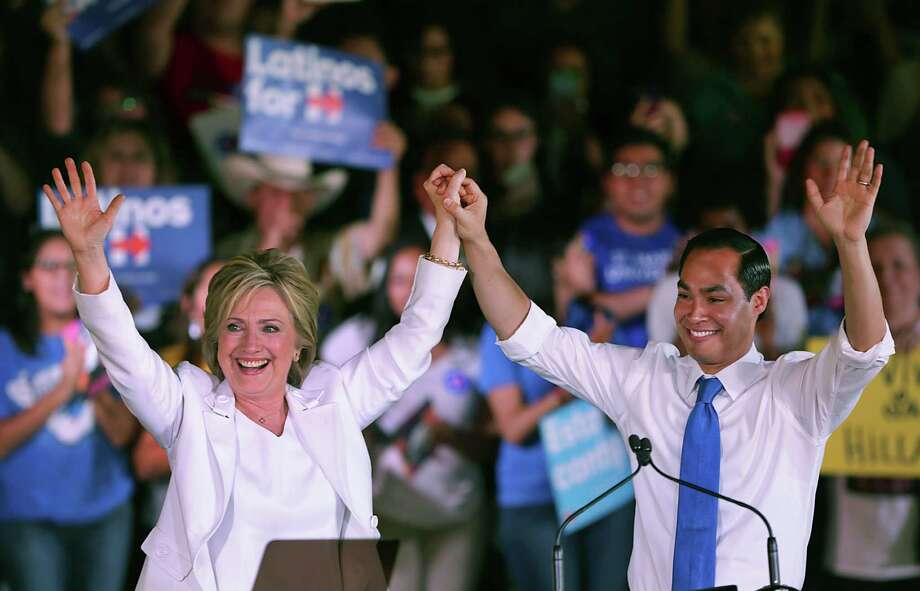
Image result for julian castro hillary clinton   Back to the half a trillion dollars….

The total amounts of errors corrected in HUD’s notes and consolidated financial statements were

$516.4 billion and $3.4 billion, respectively. There were several other unresolved audit matters,

which restricted our ability to obtain sufficient, appropriate evidence to express an opinion.

These unresolved audit matters relate to (1) the Office of General Counsel’s refusal to sign the

management representation letter, (2) HUD’s improper use of cumulative and first-in, first-out

budgetary accounting methods of disbursing community planning and development program

funds, (3) the $4.2 billion in nonpooled loan assets from Ginnie Mae’s stand-alone financial

statements that we could not audit due to inadequate support, (4) the improper accounting for

certain HUD assets and liabilities, and (5) material differences between HUD’s subledger and

general ledger accounts. This audit report contains 11 material weaknesses, 7 significant

deficiencies, and 5 instances of noncompliance with applicable laws and regulations.

What We Recommend

In addition to recommendations made in audit reports 2017-FO-0001, 2017-FO-0002, and 2017-

FO-0003, we recommend that HUD (1) reassess its current consolidated financial statement and

notes review process to ensure that sufficient internal controls are in place to prevent and detect

errors, (2) evaluate the current content of HUD’s consolidated note disclosures to ensure

compliance with regulations and GAAP, and (3) develop a plan to ensure that restatements are

properly reflected in all notes impacted.

On November 15, 2016, we issued an independent auditor’s report1 stating that the U.S.

Department of Housing and Urban Development (HUD) was unable to provide final fiscal years

2016 and 2015 consolidated financial statements and accompanying notes in a timeframe that

would allow us to obtain sufficient, appropriate evidence to determine whether they were free

from material misstatement. We also reported on the delays encountered in the material

weakness, Weak Internal Controls Over Financial Reporting Led to Errors and Delays in the

Preparation of Financial Statements and Notes.2

The delays were due to insufficiently designed and implemented financial reporting processes

and internal controls that were put into place because of HUD’s transition of its core financial

system to a Federal shared service provider (FSSP). HUD inadequately planned and tested the

changes to HUD’s financial reporting process before the transition. Additionally, late

restatements performed by HUD’s component entities, the Government National Mortgage

Association (Ginnie Mae) and Federal Housing Administration (FHA), contributed to the delay

in providing final consolidated financial statements.3 As a result, we were unable to provide an

opinion on HUD’s fiscal years 2016 and 2015 financial statements. While there were other

material matters that supported our basis for disclaimer, this was the primary reason for our

disclaimer of opinion.
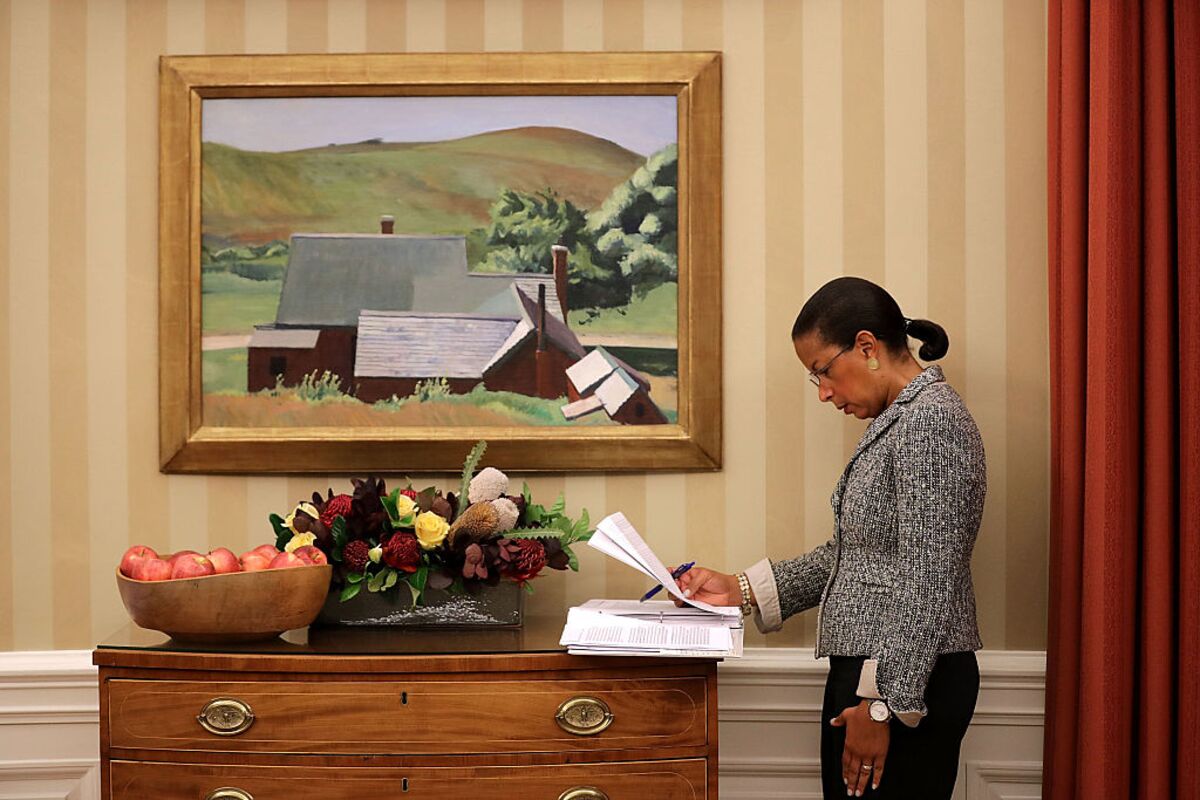
Unmasker/Leaker, was it Susan Rice?

Primer: On Septmber 12, 1992, Susan Rice married her Stanford romantic interest, Ian Cameron, who was working as a television producer in Toronto for the Canadian Broadcasting Corporation. The couple lived in Canada until 1993, when Rice took a job with the National Security Council in Washington, D.C., under President Clinton.

The 5 Sunday talk shows, Benghazi was due to an video lady, who also told us that Bowe Bergdahl served with honor and distinction…yeah that was Susan Rice….


Social media blew up late Sunday night with the notion that Susan Rice was the leaker. Okay, so is there evidence? Well, no smoking gun yet…but where are the dots leading us?

Mike Cernovich is a journalist, documentary filmmaker, wrote a piece that pointed to Ambassador Rice, who was also on president Obama’s national security council at the White House.

Susan Rice, who served as the National Security Adviser under President Obama, has been identified as the official who requested unmasking of incoming Trump officials, Cernovich Media can exclusively report.

The White House Counsel’s office identified Rice as the person responsible for the unmasking after examining Rice’s document log requests. The reports Rice requested to see are kept under tightly-controlled conditions. Each person must log her name before being granted access to them. Upon learning of Rice’s actions, H. R. McMaster dispatched his close aide Derek Harvey to Capitol Hill to brief Chairman Nunes.

 ***

The U.S. intelligence official who “unmasked,” or exposed, the names of multiple private citizens affiliated with the Trump team is someone “very well known, very high up, very senior in the intelligence world,” a source told Fox News on Friday.

Intelligence and House sources with direct knowledge of the disclosure of classified names told Fox News that House Intelligence Committee Chairman Devin Nunes, R-Calif., now knows who is responsible — and that person is not in the FBI.

***

Resurgent writes for us: Susan Rice Sought Trump Data From Intelligence Reports. Is This Why The CIA Wanted Ezra Cohen-Watnick Ousted?

Eli Lake has an explosive report on who in the Obama Administration was seeking Trump staffers’ names in intelligence reports. Turns out it was Susan Rice.

White House lawyers last month discovered that the former national security adviser Susan Rice requested the identities of U.S. persons in raw intelligence reports on dozens of occasions that connect to the Donald Trump transition and campaign, according to U.S. officials familiar with the matter.

The pattern of Rice’s requests was discovered in a National Security Council review of the government’s policy on “unmasking” the identities of individuals in the U.S. who are not targets of electronic eavesdropping, but whose communications are collected incidentally. Normally those names are redacted from summaries of monitored conversations and appear in reports as something like “U.S. Person One.”

Now, there is an interesting other nugget in Lake’s report.

The person charged with investigating the unmasking was Ezra Cohen-Watnick, the National Security Council’s senior director of intelligence. This is relevant because of this report from the Politico.

President Donald Trump has overruled a decision by his national security adviser, Lt. Gen. H.R. McMaster, to sideline a key intelligence operative who fell out of favor with some at the Central Intelligence Agency, two sources told POLITICO. On Friday, McMaster told the National Security Council’s senior director for intelligence programs, Ezra Cohen-Watnick, that he would be moved to another position in the organization.

So the guy who uncovers Rice’s connection suddenly falls out of favor with the CIA, which pressures McMaster to remove him?

Hmmmm . . .

What are the odds of that?

*** More from Bloomberg:

Rice’s requests to unmask the names of Trump transition officials does not vindicate Trump’s own tweets from March 4 in which he accused Obama of illegally tapping Trump Tower. There remains no evidence to support that claim.

But Rice’s multiple requests to learn the identities of Trump officials discussed in intelligence reports during the transition period does highlight a longstanding concern for civil liberties advocates about U.S. surveillance programs. The standard for senior officials to learn the names of U.S. persons incidentally collected is that it must have some foreign intelligence value, a standard that can apply to almost anything. This suggests Rice’s unmasking requests were likely within the law.

The news about Rice also sheds light on the strange behavior of Nunes in the last two weeks. It emerged last week that he traveled to the White House last month, the night before he made an explosive allegation about Trump transition officials caught up in incidental surveillance. At the time he said he needed to go to the White House because the reports were only on a database for the executive branch. It now appears that he needed to view computer systems within the National Security Council that would include the logs of Rice’s requests to unmask U.S. persons.

The ranking Democrat on the committee Nunes chairs, Representative Adam Schiff, viewed these reports on Friday. In comments to the press over the weekend he declined to discuss the contents of these reports, but also said it was highly unusual for the reports to be shown only to Nunes and not himself and other members of the committee.

Indeed, much about this is highly unusual: if not how the surveillance was collected, then certainly how and why it was disseminated.

2nd in Charge at FBI McCabe Under Investigation

Should we be demanding document and evidence preservation? Sure, but as along as there is a pile on, put it out there, eh?

Image result for andrew mccabe

Senate committee targets FBI No. 2 in Trump dossier probe

Sen. Charles Grassley, chairman of the Senate Judiciary Committee, has sent a letter to FBI Director James Comey demanding the story behind the FBI’s reported plan to pay the author of a lurid and unsubstantiated dossier on candidate Donald Trump. In particular, Grassley appears to be zeroing in on the FBI’s deputy director, Andrew McCabe, indicating Senate investigators want to learn more about McCabe’s role in a key aspect of the Trump-Russia affair.

Grassley began his investigation after the Washington Post reported on February 28 that the FBI, “a few weeks before the election,” agreed to pay former British spy Christopher Steele to investigate Trump. Prior to that, supporters of the Hillary Clinton presidential campaign had paid Steele to gather intelligence on Clinton’s Republican rival. In the end, the FBI did not pay Steele, the Post reported, after the dossier “became the subject of news stories, congressional inquiries and presidential denials.” It is not clear whether Steele worked under agreement with the FBI for any period of time before the payment deal fell through.

“The idea that the FBI and associates of the Clinton campaign would pay Mr. Steele to investigate the Republican nominee for president in the run-up to the election raises further questions about the FBI’s independence from politics, as well as the Obama administration’s use of law enforcement and intelligence agencies for political ends,” Grassley wrote in a letter to Comey dated March 28.

Grassley demanded the FBI turn over all its records relating to Steele and the dossier, in addition to “all FBI policies, procedures, and guidelines applicable when the FBI seeks to fund an investigator associated with a political opposition research firm connected to a political candidate, or with any outside entity.”

Image result for andrew mccabe CNBC

But the most noteworthy thing about Grassley’s letter is its focus on McCabe. Grassley noted that McCabe is already under investigation by the FBI‘s inspector general for playing a top role in the Hillary Clinton email investigation even though McCabe’s wife accepted nearly $700,000 in political donations arranged by a close Clinton friend, Virginia Gov. Terry McAuliffe, for her run for state senate in Virginia.

“While Mr. McCabe recused himself from public corruption cases in Virginia…he failed to recuse himself from the Clinton email investigation,” Grassley wrote, “despite the appearance of a conflict created by his wife’s campaign accepting $700,000 from a close Clinton associate during the investigation.”

Now, Grassley wrote, there could be a problem with McCabe’s participation in the Trump-Russia probe. If McCabe had a conflict being too close to Clinton, how could he then investigate Trump? A key passage from Grassley’s letter:

Mr. McCabe’s appearance of a partisan conflict of interest relating to Clinton associates only magnifies the importance of those questions. That is particularly true if Mr. McCabe was involved in approving or establishing the FBI‘s reported arrangement with Mr. Steele, or if Mr. McCabe vouched for or otherwise relied on the politically-funded dossier in the course of the investigation. Simply put, the American people should know if the FBI’s second-in-command relied on Democrat-funded opposition research to justify an investigation of the Republican presidential campaign.

Grassley followed with a dozen questions, all targeted at McCabe. Has McCabe been involved “in any capacity” in investigating alleged collusion between TrumpWorld and Russia? Has McCabe been involved in surveillance or intercepts of any sort in the case? Has McCabe “made any representations to prosecutors or judges” regarding the Steele dossier? Has McCabe had any interactions with Steele himself? Did McCabe brief anyone in the Obama administration on the Trump-Russia investigation? Was McCabe ever authorized by the FBI to speak to the media about the case? Did he ever do so without authorization? Has anyone in the FBI raised questions about McCabe’s possible Clinton-Trump conflict of interest? Has any complaint been filed about it? Has anyone at the FBI recommended or requested that McCabe recuse himself from the Russia-Trump investigation?

****

McCabe’s background:

Director James B. Comey has named Andrew G. McCabe executive assistant director of the FBI’s National Security Branch. Mr. McCabe most recently served as the assistant director of the Counterterrorism Division.

Mr. McCabe began his career as a special agent with the FBI in 1996. He first reported to the New York Division, where he investigated a variety of organized crime matters. In 2003, he became the supervisory special agent of the Eurasian Organized Crime Task Force, a joint operation with the New York City Police Department.

In 2006, Mr. McCabe shifted his focus to counterterrorism matters when he was promoted to FBI Headquarters as the unit chief responsible for extraterritorial investigations of Sunni extremist targets. He later served as the assistant section chief of International Terrorism Operations Section One (ITOS-1), where he was responsible for the FBI’s counterterrorism investigations in the continental United States.

In 2008, Mr. McCabe was promoted to assistant special agent in charge of the Washington Field Office’s Counterterrorism Division, where he managed several programs, including the division’s National Capital Response Squad, Rapid Deployment Team, Domestic Terrorism Squad, Cyber-CT Targeting Squad, and the Extraterritorial Investigations Squads. He received the FBI Director’s Award for his work on the 56th presidential inauguration.

In September 2009, Mr. McCabe was selected to serve as the first director of the High-Value Interrogation Group. In May 2011, he returned to the Counterterrorism Division at FBI Headquarters as deputy assistant director to oversee the international terrorism investigation program.

Before entering the FBI, Mr. McCabe worked as a lawyer in private practice. He received a Bachelor of Arts degree from Duke University in 1990 and Juris Doctor from Washington University School of Law in 1993. In 2010, Mr. McCabe was certified by the Director of National Intelligence as a senior intelligence officer.

BLM’s McKesson Files for Lawsuit to be Dismissed

Attorneys for BLM Activist Try to Get Officer’s Lawsuit Dismissed

An attorney for Black Lives Matter activist DeRay Mckesson urged a federal judge Monday to dismiss a lawsuit by an unnamed Baton Rouge police officer who claims he was injured during a protest four days after the deadly police shooting of Alton Sterling in the city.

A lawyer for the officer, however, asked Chief U.S. District Judge Brian Jackson to allow the suit to move forward and for the officer who filed it to remain anonymous for health and safety reasons.

Jackson took the arguments under advisement and said he would issue a ruling in the coming days, the Advocate reports.

Billy Gibbens, who represents Mckesson argued the suit against Mckesson should be thrown out because it makes only unsupported, speculative allegations.

Donna Grodner, one of the officer’s attorneys, acknowledged in court that it is not known who threw a piece of concrete at the officer, causing him to lose teeth and suffer other injuries during the July 9 protest outside Baton Rouge Police Department headquarters.

The suit, filed in November, alleges Mckesson came to Baton Rouge in July “for the purpose” of “rioting to incite others to violence against police and other law enforcement officers.”

Image result for deray mckesson baton rouge Image result for blm baton rouge protest

Meanwhile in November of 2016 at a Baton Rouge City Council meeting this happened:

BATON ROUGE, LA (WAFB) –

Protesters arrested in July after the police shooting of Alton Sterling should each get a few hundred dollars in a settlement, but that didn’t sit well with one of the council members Tuesday night.

“To me, this encourages that same type of behavior to happen again in the future, and under no circumstances will I ever vote for this. I don’t care if we’re paying them a penny. This sets a very dangerous precedent that encourages people to come to Baton Rouge. Mr. McKessen is from out of state, many of these people are from out of state or out of city, to come to our city and protest in our city and then we’re paying them for the privilege of doing so. No thanks,” said Delgado.

Despite objections from John Delgado, the city government, Louisiana State Police, the East Baton Rouge Sheriff’s Office, and District Attorney’s office all plan to split the payout amongst the protesters, rather than risk a trial.

Image result for  baton rouge protest blm RawStory

What is DeRay McKesson doing now? Well, he is on the advisory board of the Democrat National Committee under Tom Perez. Beyond that, DeRay is still quite busy with ‘Campaign Zero’.

The Grio reports: Campaign Zero, an anti-police violence resource, launched an online tool that will help activists see where laws that would threaten civil rights are being considered on a state-by-state basis.

The tool, called “Our States,” which was previewed exclusively by Mic, breaks down state proposals and bills that would hurt minorities. The goal is to take the focus off of the federal-level attempts by the Trump administration to enact their promises and to put the focus on Republican-controlled state and local governments that are already moving forward.

“The purpose of Our States is to ensure that citizens know the legislation being proposed in their respective state, so that they can mobilize to either support or oppose it,” activist and Campaign Zero co-founder Deray Mckesson said in a statement to Mic. “The stakes are high.”

“In many of these states, you have Trump’s agenda already being legislated,” Sam Sinyangwe, the data scientist behind Campaign Zero and lead coordinator of the Our States project, said. “If we don’t engage in the states to block them, it will in effect enact Trump’s agenda, despite our efforts to stop it in Washington.”

The website not only provides data on a state-by-state basis for immigration, policing and protest, reproductive justice, voting rights and LGBTQ equality; it also includes suggested strategies to influence change, such as face-to-face meetings and protests.

“Our States is created out of the realization that, in the conversation that we’re having about equity and justice, state level politics rarely comes up in that conversation,” Sinyangwe said in the interview. “If we’re going to block [Trump’s agenda] from happening, we’ve got to create avenues for people to get informed.”


Sanctuary Cities Don’t Comply Face Loss of Federal Dollars/Clawback

AG: Sanctuary Cities Face Ineligibility for Future Federal Funds, ‘Clawback’ of Funds Already Awarded

(CNSNews.com) – Attorney General Jeff Sessions said Monday that states and localities that refuse to comply with federal immigration laws will be deemed ineligible for federal grants.

“Today, I’m urging  states and local jurisdictions to comply with these federal laws, including 8 U.S.C. Section 1373. Moreover, the Department of Justice will require that jurisdictions seeking or applying for Department of Justice grants to certify compliance with 1373 as a condition of receiving those awards,” he said, adding that the policy “is entirely consistent with the Department of Justice’s Office of Justice Program’s guidance that was issued just last summer under the previous administration.

“This guidance requires state and local jurisdictions to comply and certify compliance with Section 1373 in order to be eligible for OJP grants. It also made clear that failure to remedy violations could result in withholding grants, termination of grants, and disbarment or ineligibility for future grants,” Sessions added.

“The Department of Justice will also take all lawful steps to clawback any funds awarded to a jurisdiction that willfully violates 1373. In the current fiscal year, the Department of Justice’s Office of Justice Program and Community Oriented Policing services anticipates awarding more than $4.1 billion in grants,” he said.

The attorney general said that in one week alone, “there were more than 200 instances of jurisdictions refusing to honor ICE detainer requests with respect to individuals charged or convicted of a serious crime,” according to a report released recently by the Department of Homeland Security.

“The charges and convictions against these aliens included drug-trafficking, hit-and-run, rape, sex offenses against a child, and even murder. Such policies cannot continue. They make our nation less safe by putting dangerous criminals back on the streets,” Sessions said.

He pointed to the murder of 32-year-old Kate Steinle who was killed two years ago in San Francisco as an example.

“The shooter, Francisco Sanchez, was an illegal immigrant who had already been deported five times and had seven felony convictions,” Sessions pointed out.

“Just 11 weeks before the shooting, San Francisco had released Sanchez from its custody, even though Immigration and Customs Enforcement officers had filed a detainer requesting that he be held in custody until immigration authorities could pick him up for removal. Even worse, Sanchez admitted the only reason he came to San Francisco was because it was a sanctuary city,” the attorney general said.

“A similar story unfolded just last week, when Ever Valles, an illegal immigrant and a Mexican national was charged with murder and robbery of a man at a light rail station. Valles was released from a Denver jail in late December, despite the fact that ICE has lodged a detainer for his removal,” he said.

“The American people are not happy with these results. They know that when cities and states refuse to help enforce immigration laws, our nation is less safe. Failure to deport aliens who are convicted of criminal offenses puts whole communities at risk, especially immigrant communities in the very sanctuary jurisdictions that seek to protect the perpetrators,” Sessions said.

Sessions said recent polling shows that 80 percent of Americans “believe that cities that arrest illegal immigrants for crime should be required to turn them over to immigration authorities.”

“DUIs, assaults, burglaries, drug crimes, gang rapes, crimes against children, and murderers — countless Americans would be alive today and countless loved ones would not be grieving today if these policies of sanctuary cities were ended. Not only do these policies endanger lives of every American — just last May, the Department of Justice inspector general found that these policies also violate federal law,” he said.

***

Nine Bipartisan Homeland Security-Related Bills Passed by House

What the House Committee on Homeland security described as an “unprecedented number of bipartisan [bills] aimed at keeping Americans safe,” were passed this last week by the House which deal with a variety of aspects of homeland Security.

The nine pieces of legislation, the committee said, are designed “to … also save taxpayer dollars by improving the acquisition process at the Department of Homeland Security [DHS] and make important reforms to the operations of the Transportation Security Administration [TSA].”

“It is critical that we continue to re-examine our strategy, technology and the infrastructure we currently have in place to strengthen the Department of Homeland Security and stop terrorists from reaching our shores,” said committee chairman Michael McCaul (R-TX). “The evolving threats we face demand action to address vulnerabilities in our defenses. I commend the work of my Committee—particularly the bipartisan nature in which these bills were advanced—to make our country safer.”

The nine bills out the Homeland Security Committee passed by the House included a key counterterrorism bill, the Terrorist and Foreign Fighter Travel Exercise Act of 2017 (HR 1302), which expands on the work of last Congress.

The other key pieces of legislation passed this past week include the:

DHS Multiyear Acquisition Strategy Act of 2017 (HR 1249), introduced by Rep. Brian Fitzpatrick (R-PA), and amends the Homeland Security Act of 2002 to require a multiyear acquisition strategy of DHS.

DHS Acquisition Authorities Act of 2017 (HR 1252), introduced by Rep. Clay Higgins (R-LA), amends the Homeland Security Act of 2002 to provide for certain acquisition authorities for the Under Secretary of Management of DHS.

Reducing DHS Acquisition Cost Growth Act (HR 1294), introduced by Rep. John Rutherford (R-FL), amends the Homeland Security Act of 2002 to provide for congressional notification regarding major acquisition program breaches.

TSA Administrator Modernization Act of 2017 (HR 1309), introduced by Rep. John Katko (R-NY), streamlines the office and term of the administrator of TSA.

Quadrennial Homeland Security Review Technical Corrections Act of 2017 (HR 1297), introduced by Rep. Bonnie Watson Coleman (D-NJ), amends the Homeland Security Act of 2002 to make technical corrections to the requirement that the Secretary of Homeland Security submit quadrennial homeland security reviews.

Transparency in Technological Acquisitions Act of 2017 (HR 1353), introduced by Rep. Kathleen Rice (D-NY), amends the Homeland Security Act of 2002 to require certain additional information to be submitted to Congress regarding the strategic 5-year technology investment plan of the TSA.

Read Homeland Security Today’s report on the bill here.

Securing our Agriculture and Food Act (HR 1238), introduced by Rep. David Young (R-IA), amends the Homeland Security Act of 2002 to make the Assistant Secretary of Homeland Security for Health Affairs responsible for coordinating the efforts of DHS related to food, agriculture and veterinary defense against terrorism.

Read Homeland Security Today’s report on the legislation here.

Terrorist and Foreign Fighter Travel Exercise Act of 2017 (HR 1302), introduced by Rep. Martha McSally (R-AZ), requires an exercise related to terrorist and foreign fighter travel, and for other purposes.

Department of Homeland Security Acquisition Innovation Act (HR 1365), introduced by Rep. Lou Correa (D-CA), amends the Homeland Security Act of 2002 to require certain acquisition innovation.