Trump Sanctions IRGC, Iran’s Terror History

For a list of sanctions placed on Iran, Hezbollah and the Iranian Revolutionary Guard Corps, go here.

Today, President Trump delivered his talk about formally decertifying the JCPOA and naming all of the IRGC a terror organization, finally. This is a significant decision and it puts countries like Iraq, Yemen, Syria and Lebanon on notice to purge all IRGC from their territories.

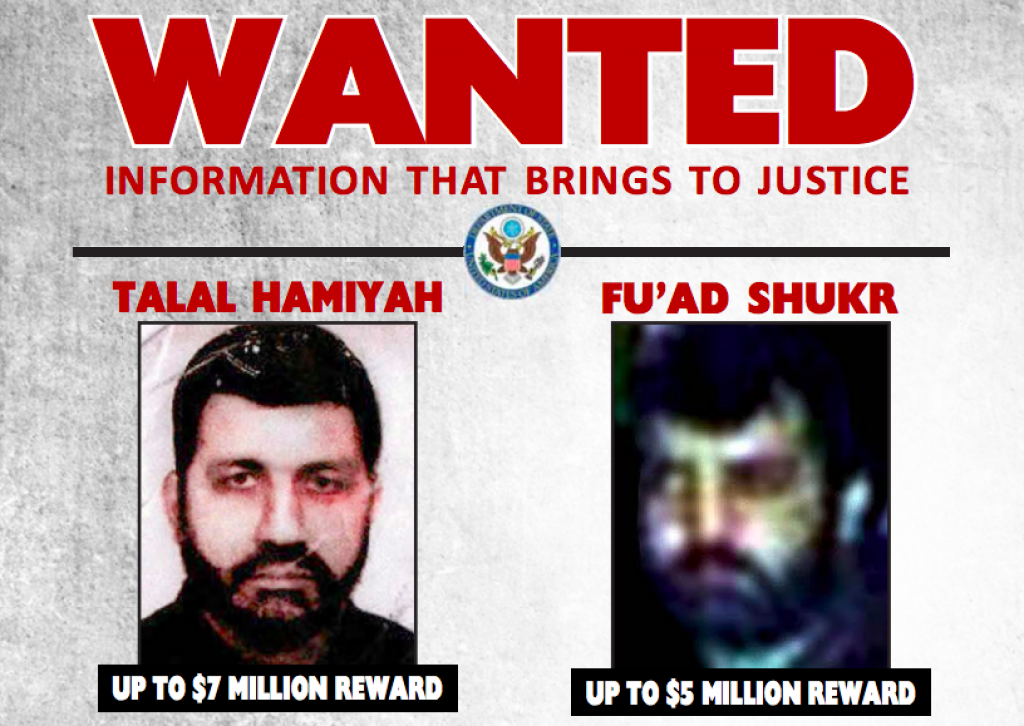
Earlier this week, the Trump administration was laying the groundwork as it related to Hezbollah by offering a reward for 2 Hezbollah leaders.

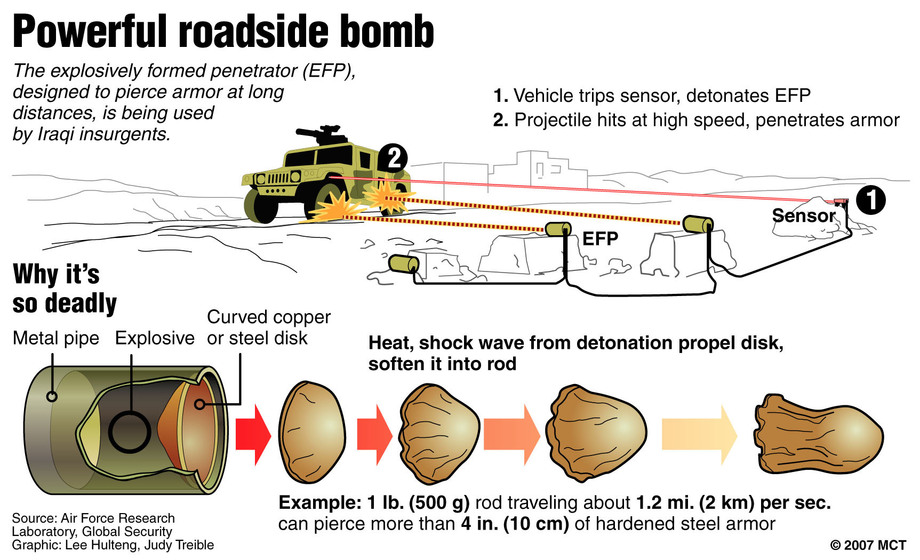
None of these actions are without future conflict and militancy by Iran. Just in recent days, the Iranian militia in Iraq it appears has been planting advanced EFP’s, where one did in fact kill an American military soldier that was on a major road in Salahuddin province, north of Baghdad

“It was a classic ambush spot,” White said of the assault site, adding that the penetrator used was steel. Operation Inherent Resolve spokesman Army Col. Ryan Dillon did not cast blame on any particular actor on the battlefield telling the Washington Post, “investigations are continuing into the type and quality of the bomb to better determine where it originated. To say whether or not ISIS did it or not — we have not determined that yet. We are not ruling anything out.”

Chairman of the Joint Chiefs of Staff Marine Gen. Joseph Dunford told Congress in 2015, “I know the total number of soldiers, sailors, airmen and Marines that were killed by Iranian activities, and the number has been recently quoted as about 500,” in a reference to EFP use in Iraq.

“What makes E.F.P.’s so deadly is that they form “slugs” at detonation that maintain their shape over distances of over 100 yards or more, traveling at speeds of nearly a mile per second. This allowed insurgent forces to hide these weapons far from the road, better camouflaging them and making them far more deadly,” The New York Times explained in 2013. More here.
  photo

Related reading: Trump Decertifying and Re-tooling Iran Nuclear Deal

Treasury Designates the IRGC under Terrorism Authority and Targets IRGC and Military Supporters under Counter-Proliferation Authority

10/13/2017

WASHINGTON – Today, the U.S. Department of the Treasury’s Office of Foreign Assets Control (OFAC) designated Iran’s Islamic Revolutionary Guard Corps (IRGC) pursuant to the global terrorism Executive Order (E.O.) 13224 and consistent with the Countering America’s Adversaries Through Sanctions Act.  OFAC designated the IRGC today for its activities in support of the IRGC-Qods Force (IRGC-QF), which was designated pursuant to E.O. 13224 on October 25, 2007, for providing support to a number of terrorist groups, including Hizballah and Hamas, as well as to the Taliban.  The IRGC has provided material support to the IRGC-QF, including by providing training, personnel, and military equipment.
Additionally, today OFAC designated four entities under E.O. 13382, which targets weapons of mass destruction proliferators and their supporters, for their support to the IRGC or Iran’s military.
“The IRGC has played a central role to Iran becoming the world’s foremost state sponsor of terror.  Iran’s pursuit of power comes at the cost of regional stability, and Treasury will continue using its authorities to disrupt the IRGC’s destructive activities,” said Treasury Secretary Steven T. Mnuchin.  “We are designating the IRGC for providing support to the IRGC-QF, the key Iranian entity enabling Syrian President Bashar al-Assad’s relentless campaign of brutal violence against his own people, as well as the lethal activities of Hizballah, Hamas, and other terrorist groups. We urge the private sector to recognize that the IRGC permeates much of the Iranian economy, and those who transact with IRGC-controlled companies do so at great risk.”
IRGC
The IRGC was designated today for the activities it undertakes to assist in, sponsor, or provide financial, material, or technological support for, or financial or other services to or in support of, the IRGC-QF.  The IRGC, which is the parent organization of the IRGC-QF, was previously designated pursuant to E.O. 13382 on October 25, 2007, in connection with its support to Iran’s ballistic missile and nuclear programs, and pursuant to E.O. 13553 on June 9, 2011 and E.O. 13606 on April 23, 2012, in connection with Iran’s human rights abuses.
The IRGC has provided material support to the IRGC-QF, including by providing training, personnel, and military equipment.  The IRGC has trained IRGC-QF personnel in Iran prior to their deployments to Syria, and has deployed at least hundreds of personnel from its conventional ground forces to Syria to support IRGC-QF operations.  IRGC personnel in Syria have provided military assistance to the IRGC-QF, and have been assigned to IRGC-QF units on the battlefield, where they provide critical combat support, including serving as snipers and machine gunners.
Additionally, the IRGC has recruited, trained, and facilitated the travel of Afghan and Pakistani nationals to Syria, where those personnel are assigned to, and fight alongside, the IRGC-QF.  The IRGC also has worked with the IRGC-QF to transfer military equipment to Syria.  The IRGC used both IRGC bases and civilian airports in Iran to transfer military equipment to Iraq and Syria for the IRGC-QF.
Further, while it is group think to bid Senator Corker good riddance, there is yet a fact that Corker introduced in 2015 INARA, legislation that Trump is advancing and included in his talking points regarding Iran.

Iran Nuclear Agreement Review Act of 2015

(Sec. 2) This bill amends the Atomic Energy Act of 1954 to direct the President, within five days after reaching an agreement with Iran regarding Iran’s nuclear program, to transmit to Congress:

  • the text of the agreement and all related materials and annexes;
  • a related verification assessment report of the Secretary of State;
  • a certification that the agreement includes the appropriate terms, conditions, and duration of the agreement’s requirements concerning Iran’s nuclear activities, and provisions describing any sanctions to be waived, suspended, or otherwise reduced by the United States and any other nation or entity, including the United Nations; and
  • a certification that the agreement meets U.S. non-proliferation objectives, does not jeopardize the common defense and security, provides a framework to ensure that Iran’s nuclear activities will not constitute an unreasonable defense and security risk, and ensures that Iran’s permitted nuclear activities will not be used to further any nuclear-related military or nuclear explosive purpose, including any related research.

The Secretary is directed to prepare a report assessing:

  • the Secretary’s capacity to verify Iran’s compliance with the agreement,
  • the adequacy of the agreement’s safeguards to ensure that Iran’s permitted activities will not be used to further any nuclear-related military or nuclear explosive purpose, including research; and
  • the International Atomic Energy Agency’s capacity to implement the required verification regime.

In preparing a report the Secretary shall assume that Iran could:

  • use all measures not expressly prohibited by the agreement to conceal activities that violate its obligations under the agreement; and
  • alter or deviate from standard practices in order to impede verification efforts.

The foreign relations committees shall hold hearings and briefings to review an agreement during the 30-day period following the President’s transmittal of such agreement.

The congressional review period shall be 60 days for an agreement, including all materials required to be transmitted to Congress, that is transmitted between July 10, 2015, and September 7, 2015.

The President may not waive, suspend, reduce, provide relief from, or otherwise limit the application of statutory sanctions with respect to Iran or refrain from applying sanctions pursuant to an agreement prior to and during the transmission period and during the congressional review period.

The President may not waive, suspend, reduce, provide relief from, or otherwise limit the application of statutory sanctions with respect to Iran or refrain from applying sanctions pursuant to an agreement for:

  • 12 days after the date of passage of a congressional joint resolution of disapproval, and
  • 10 days after the date of a presidential veto of a congressional joint resolution of disapproval.

Specified deferrals, waivers, or other suspensions of statutory sanctions are excepted from such prohibitions.

It is the sense of Congress that:

  • the sanctions regime imposed on Iran by Congress is primarily responsible for bringing Iran to the table to negotiate on its nuclear program;
  • these negotiations are a critically important matter of national security and foreign policy for the United States and its closest allies;
  • this Act does not require a vote by Congress for the agreement to commence;
  • this Act provides for congressional review, including for approval, disapproval, or no action on statutory sanctions relief under an agreement; and
  • even though the agreement may commence, because the sanctions regime was imposed by Congress and only Congress can permanently modify or eliminate that regime, it is critically important that Congress have the opportunity to consider and take action affecting the statutory sanctions regime.

An action involving statutory sanctions relief by the United States pursuant to an agreement or the Joint Plan of Action:

  • may be taken if, during the review period, Congress enacts a joint resolution stating that Congress favors the agreement;
  • may not be taken if, during the review period, Congress enacts a joint resolution stating that Congress does not favor the agreement; or
  • may be taken if, following the review period, there is not enacted any such joint resolution.

The President shall keep Congress fully and currently informed of all aspects of Iranian compliance with respect to an agreement.

The President shall:

  • within 10 days of receiving information relating to a potentially significant breach or compliance incident by Iran submit it to Congress;
  • within 30 days after submitting such information determine whether it constitutes a material breach or compliance incident and report that determination to Congress as well as Iran’s action or failure to act that led to the material breach, actions necessary for Iran to cure the breach, and the status of Iran’s efforts to cure the breach; and
  • at least every 180 days thereafter report to Congress on Iran’s nuclear program and compliance with the agreement.

The President shall keep Congress fully informed of any initiative or negotiations with Iran concerning Iran’s nuclear program, including any new or amended agreement.

The President shall, at least every 90 days, determine whether the President is able to certify that:

  • Iran is fully implementing the agreement,
  • Iran has not committed a material breach of the agreement,
  • Iran has not taken any action that could significantly advance its nuclear weapons program, and
  • suspension of sanctions against Iran is appropriate and proportionate to measures taken by Iran with respect to terminating its illicit nuclear program and vital to U.S. national security interests.

It is the sense of Congress that:

  • U.S. sanctions on Iran for terrorism, human rights abuses, and ballistic missiles will remain in place under an agreement;
  • issues not addressed by an agreement on Iran’s nuclear program, including compensation for Americans held in captivity after the seizure of the U.S. Embassy in Tehran, Iran, in 1979, the freedom of Americans held in Iran, the human rights abuses of the government of Iran against its own people, and the continued support of terrorism by the government of Iran, are matters critical to ensure justice and U.S. national security, and should be addressed;
  • the President should determine the agreement in no way compromises the U.S. commitment to Israel’s security, nor its support for Israel’s right to exist; and
  • in order to implement any long-term agreement reached between the P5+1 countries and Iran, it is critically important that Congress have the opportunity to review any agreement and take action to modify the statutory sanctions regime imposed by Congress.

If the President does not submit such certification or has determined that Iran has materially breached an agreement, Congress may initiate within 60 days expedited consideration of legislation reinstating statutory sanctions against Iran. Sets forth House and Senate provisions regarding such expedited consideration.

Nothing in this Act shall be construed as:

  • modifying the President’s authority to negotiate, enter into, or implement executive agreements, other than the restrictions on implementation of the agreements specifically covered by this Act;
  • allowing any new waiver, suspension, reduction, or other relief from statutory sanctions with respect to Iran under any provision of law, or allowing the President to refrain from applying any such sanctions pursuant to an agreement during the period for congressional review;
  • revoking or terminating any statutory sanctions imposed on Iran; or
  • authorizing the use of military force against Iran.

Linking Iran Including Marine Barracks Bombing

photo

This is hardly a complete snapshot, however with President Trump considering the decertification of the JCPOA with Iran, adding the IRGC to the terror list and now seeking the arrest of two Hezbollah leaders from the 1983 Marine barracks bombing…the case against Iran is building. Iran is watching closely as it too has threatened a response which includes U.S. military bases as targets.

Iran, as rightly noted by Trump has exported terror for decades and the previous administration dismissed all that terror history for the sake of a deal with Iran. It also cannot be overlooked that Hezbollah took attacks into our hemisphere with two in Argentina. Noted here and here.

Talal Hamiyah is a top military leader of Hezbollah in charge of orchestrating its operations abroad. Hamiyah heads Hezbollah’s External Security Organization (ESO).* The ESO is responsible for planning and executing Hezbollah’s terrorist activities outside of Lebanon.*

Hamiyah is suspected of involvement in the 1994 Hezbollah attacks in Argentina.* Security officials recorded Hamiyah praising “our project in Argentina” in a conversation with his predecessor, Imad Mugniyah.* Hamiyah replaced Mughniyeh after the latter was killed in 2008.*

There have not been any attacks specifically attributed to the ESO since 1994.* Israeli intelligence officials believe Hamiyah is recruiting Hezbollah cells around the world, primarily in South America, Western Europe, and Africa.* Sympathetic Shiite communities offer Hamiyah opportunities for recruitment and fundraising.* Israeli intelligence has accused Hamiyah of coordinating with Moqtada Sadir’s Mahdi Army and other Shiite militias in Iraq following the U.S. invasion.* Hamiyah’s cells reportedly rely on Iranian embassies to help transfer weapons.

State Department offers rewards for 2 Hezbollah leaders

The State Department announced today that it is offering millions of dollars as rewards for information concerning the whereabouts of two senior Hezbollah leaders. The two Lebanese men are Hezbollah veterans with well-established terrorist credentials. One of the two allegedly “played a central role” in the 1983 Marine Barracks bombing in Beirut, Lebanon. That suicide bombing helped inspire a generation of Shiite and Sunni jihadists.

State is offering a $7 million bounty for Talal Hamiyah, the head of Hezbollah’s External Security Organization (ESO). The ESO “maintains organized cells worldwide” and is “responsible for the planning, coordination, and execution of terrorist attacks outside of Lebanon.” The ESO “primarily” targets “Israelis and Americans.”

The US designated Hezbollah as a terrorist organization in 1997, but State modified the designation in June, adding some of the group’s aliases. Foggy Bottom noted that both the Foreign Relations Department (FRD) and the ESO are “key components” of Hezbollah.

The ESO is “also known as the Islamic Jihad Organization” (IJO) and “was established by” Imad Mughniyah, a notorious Hezbollah leader who was killed in 2008. Mughniyah is widely credited with orchestrating some of Hezbollah’s most notorious acts of terror against the US.

After Mughniyah’s death, Hamiyah assumed leadership of the ESO/IJO. Hamiyah was added to the US government’s list of specially designated global terrorists in Sept. 2012.

Hamiyah’s wing of Hezbollah has been operational since the early 1980s, when it carried out a series of attacks against American and Western interests inside Lebanon and elsewhere. The ESO/IJO has continued to plot around the globe in the decades since.

In June, the Department of Justice announced the arrests of two alleged Hezbollah operatives who worked for the ESO/IJO. The men are accused of performing surveillance on prospective American and Israeli targets in Panama and New York City, as well as other acts. [For more on the arrests and the history of the ESO/IJO, see FDD’s Long War Journal report, Analysis: 2 US cases provide unique window into Iran’s global terror network.]

State also announced a reward of $5 million for information on Fuad Shukr, “a longtime senior advisor on military affairs.” Both Hamiyah and Shukr answer to Hezbollah’s Secretary General, Hasan Nasrallah.

Shukr is “a senior Hezbollah operative” and a “military commander” in charge of the group’s forces in southern Lebanon. He “serves on Hezbollah’s highest military body, the Jihad Council,” according to Foggy Bottom.

Shukr’s dossier of “activities” stretches back “over 30 years,” according to State. He “was a close associate of” Mugniyah.

The US government says Shukr “played a central role in the planning and execution of the Oct. 23, 1983 US Marine Corps Barracks Bombing in Beirut, Lebanon, which killed 241 US service personnel.”

The 1983 attack was a seminal event in the history of modern jihadism. Hezbollah conducted near simultaneous suicide bombings on the barracks for Marines and French service members. Both America and France had contributed military personnel to a multinational peacekeeping force in Lebanon. While France retaliated by bombing Iran’s Islamic Revolutionary Guard Corps, which is intertwined with Hezbollah, America failed to respond with force. The bombing at the Marine Barracks contributed to the Reagan administration’s decision to withdraw from Lebanon.

Iranian-backed terrorists weren’t the only jihadists emboldened by the American withdrawal from Lebanon. So were Sunni jihadists, including a young Osama bin Laden.

Al Qaeda modeled 1998 US Embassy bombings on Hezbollah’s 1983 attacks

The 1983 bombings on the Marine and French barracks served as a model for al Qaeda’s most devastating attack prior to the 9/11 hijackings: the Aug. 7, 1998 US Embassy bombings in Kenya and Tanzania. The twin attacks left 224 people dead.

The 9/11 Commission documented this key link in its final report. Discussions between al Qaeda and Iran in the early 1990s were brokered by Hassan al-Turabi, who was then a prominent Islamist in Sudan’s government. Al Qaeda was based in Sudan at the time and Turabi’s country housed various bad actors looking to cut deals with one another. Turabi advocated big tent jihadism when it came to confronting the US and the West. Turabi was even nicknamed the “Pope of Terrorism” for his ecumenical approach. Consistent with his vision of a grand anti-Western alliance, Turabi “sought to persuade Shiites and Sunnis to put aside their divisions and join against the common enemy,” according to the 9/11 Commission.

The discussions between “al Qaeda and Iranian operatives led to an informal agreement to cooperate in providing support – even if only training – for actions carried out primarily against Israel and the United States,” the 9/11 Commission found. “Not long afterward, senior al Qaeda operatives and trainers traveled to Iran to receive training in explosives.” During the “fall of 1993, another such delegation went to the Bekaa Valley in Lebanon for further training in explosives as well as in intelligence and security.” The Bekaa Valley has long been a Hezbollah stronghold.

The training taught al Qaeda operatives how to carry out suicide bombings such as those orchestrated by Shukr and Mughniyah in Lebanon. The 9/11 Commission wrote that Bin Laden “reportedly showed particular interest in learning how to use truck bombs such as the one that had killed 241 US Marines in Lebanon in 1983.”

Federal prosecutors in the Clinton administration discovered Iran’s and Hezbollah’s training of al Qaeda operatives. They included the relationship in their indictment of al Qaeda in 1998, noting that bin Laden and his men had “forged alliances” with the Sudanese regime, as well as “the government of Iran and its associated terrorist group Hezbollah for the purpose of working together against their perceived common enemies in the West, particularly the United States.”

More details concerning Iran’s and Hezbollah’s assistance came to light during the trial of some of the al Qaeda operatives responsible for the 1998 US Embassy bombings.

In his plea hearing before a New York court in 2000, Ali Mohamed – an al Qaeda operative who was responsible for performing surveillance used in the bombings – testified that he had set up the security for a meeting between bin Laden and Mugniyah. “I arranged security for a meeting in the Sudan between Mugniyah, Hezbollah’s chief, and bin Laden,” Mohamed told the court.

Mohamed also confirmed that Hezbollah and Iran had provided explosives training to al Qaeda. “Hezbollah provided explosives training for al Qaeda and [Egyptian Islamic] Jihad,” Mohamed explained. “Iran supplied Egyptian Jihad with weapons.” Mohamed was originally a member of Egyptian Islamic Jihad, an organization that merged with bin Laden’s enterprise and closely cooperated with the al Qaeda founder’s men well before the formal merger.

Mohamed explained al Qaeda’s rationale for seeking assistance from Iran and Hezbollah:

And the objective of all this, just to attack any Western target in the Middle East, to force the government of the Western countries just to pull out from the Middle East…Based on the Marine explosion in Beirut in 1984 [sic: 1983] and the American pull-out from Beirut, they will be the same method, to force the United States to pull out from Saudi Arabia.

Jamal al Fadl, an operative who was privy to some of al Qaeda’s most sensitive secrets, conversed with his fellow al Qaeda members about Iran’s and Hezbollah’s explosives training, which included take-home videotapes so that al Qaeda’s terrorists would not forget what they learned. “I saw one of the tapes, and he [another al Qaeda operative] tell me they train about how to explosives big buildings,” Al Fadl told federal prosecutors.

One of the al Qaeda leaders who attended the training was Saif al Adel, who has long been wanted for his role in the embassy bombings. Al Adel fled to Iran after the 9/11 hijackings and was tied to operations elsewhere, including inside Saudi Arabia. His status was murky for years, but the Iranians reportedly freed him from some form of detention in 2015. Some reports have placed him in Syria, but al Adel’s current location has not been confirmed.

Although many assume that Iran and al Qaeda couldn’t cooperate because of their ideological differences, the 9/11 Commission concluded “that Sunni-Shia divisions did not necessarily pose an insurmountable barrier to cooperation in terrorist operations.” The 9/11 Commission (pp. 240-241) also found intelligence connecting Mugniyah’s men to some of the flights taken by al Qaeda’s hijackers and called for the US government to investigate further.

In more recent years, the Iranian government has allowed al Qaeda to operate a “core facilitation pipeline” on Iranian soil. According to the US government, this facilitation network exists despite the fact that the two sides are on opposite sides of the wars in Syria and Yemen.

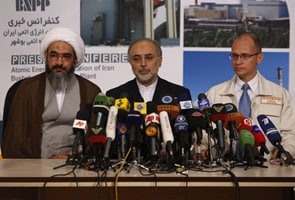
Iran Will Not Allow Inspections of Secret Nuclear Sites

Primer: The Iranian Resistance has been monitoring the Islamic Revolutionary Guard Corps-controlled entity tasked with building the nuclear bomb, the Organization of Defensive Innovation and Research (Sazman-e Pazhouheshhaye Novin-e Defa’i), known by its Persian acronym SPND, for nearly two decades. SPND is comprised of 7 subdivisions, each of which carries out a certain portion of nuclear weapons research.

The unit responsible for conducting research and building a trigger for a nuclear weapon is called the Center for Research and Expansion of Technologies for Explosion and Impact (Markaz-e Tahghighat va Tose’e Fanavari-e Enfejar va Zarbeh), known by its acronym METFAZ.

Since April 2017, when the NCRI found out about a new military location being used by SPND, the coalition has focused its attention on all the potential SPND sites that we suspected were tasked with building the bomb. The NCRI’s investigation inside Iran was conducted by the network associated with the Mujahedin-e Khalq (MEK), which was responsible for blowing the cover off the program, particularly since 2002. More here.

photo

***

In December 2015, the IAEA decided to “close” the file on outstanding concerns about possible military dimensions of Iran’s nuclear program.
Without ever admitting to weaponization activities, Iran convinced the international community to wipe the slate clean. The IAEA’s report on the possible military dimensions of Iran’s nuclear program left many questions unanswered. In addition to prohibiting on site inspections of suspected military sites, Iran can delay IAEA
inspections of suspected sites without facing consequences. The JCPOA creates a minimum of a 24 day delay possibly longer between a formal IAEA request to access
a suspicious site and the date Iran must allow access. As Mr. Tobey explains, “24 days … [is] ample time for Iran to hide or destroy evidence.” More here.

***

“Iran’s military sites are off limits,” he said. “All information about these sites are classified. Iran will never allow such visits. Don’t pay attention to such remarks that are only a dream.”

Iranian President Hassan Rouhani followed up later by saying the U.S. call was unlikely to be accepted by the U.N. nuclear watchdog.

So much for what John Kerry and Barack Obama pledged to America right?

***

Decertifying the nuclear deal without walking away gives the Trump administration an opening to confront the Islamic Republic’s foreign meddling.

Jonathan Schanzer
11 October 2017 The Atlantic

President Donald Trump is taking considerable heat for his expected announcement this week that he will “decertify” the 2015 Iran nuclear deal. Critics say he is heedlessly discarding a deal that has been working, and needlessly putting America on a collision course with Iran.

As it turns out, Trump is actually not poised to “rip up the deal.” By decertifying it, the president and his advisors are, in fact, signaling their intent to strengthen it, with the help of Congress, so that the deal advances U.S. national security interests. Those interests are key criteria for the certification process, which takes place every 90 days, as laid out in the Iran Nuclear Agreement Review Act (INARA) of 2015. Right now, with the Iranians hindering inspection of military sites, working feverishly on their ballistic missile program, and banking on the nuclear deal’s sunset clauses, which all but guarantee Tehran an advanced nuclear program in roughly a decade, it’s hard to argue the deal is working for the United States.

Decertification has the potential to change all of that. The move will plunge Iran and the other parties involved in the nuclear deal into a state of limbo. It will prompt all sides to consider what the deal is worth to them, and what further compromises they may be willing to make to satisfy the national interests of the United States, as laid out by the Trump administration.

Under President Barack Obama, whose foreign-policy legacy was anchored to the nuclear deal, the promise of deferring (not preventing) Iran’s nuclear ambitions superseded all else. As a result, the fear of Iran walking away paralyzed Washington and prevented the Obama White House from making even reasonable demands of Tehran. The credible threat of a U.S. response to Iranian aggression was effectively off the table. So was the imposition of meaningful new sanctions, for that matter.

The coming decertification announcement provides an opportunity to break this paralysis. Trump is effectively telling Tehran that he sets the terms for the nuclear deal because he is not tethered to its success the way Obama was. The administration will then have a chance to chart its own Iran policy. As the 60-day INARA review period plays out, Trump can regain U.S. leverage, establish new red lines on Iranian behavior, and (unlike his predecessor) actually enforce them. If he does it right, he can do all of this without exiting the deal.

In response to decertification, Iran’s leadership will undoubtedly threaten to walk away from the table. But it’s not that simple. There are benefits the Iranians have yet to reap from the deal—beyond the more than $100 billion in released oil funds—ranging from increased foreign investment to greater integration with the global economy after years of economic isolation. In other words, Iran can still cash in considerably, but not if it balks at Trump’s calls to fix the deal.

The Europeans, Russians, and Chinese, are also reluctant to go along with Trump’s certification gambit. Some are already howling with disapproval. But some are already voicing their willingness to work with the White House. As the primary investors in Iran’s recent economic rebound, they have little choice but to try to resolve American concerns.

Of course, even the Chinese, Russians, and Europeans understand that they have a daunting task ahead of them. Iran is on a collision course with the West, one that has little to do with the nuclear file. Rather, it is about what the nuclear deal negotiators chose to ignore: Iran’s aggression across the Middle East.

Iran has harassed American ships in the Persian Gulf, held American sailors at gunpoint, bankrolled the murderous Assad regime in Syria, supported the Houthi rebels in Yemen, and furnished the majority of Hezbollah’s operating budget. And those are just a few of the highlights.

Tehran’s broader efforts to dominate the Middle East are also intensifying. From the deployment of its Revolutionary Guard Corps to far-flung corners of the region to the conscripting of Shiite irregular proxies to fight or hold territory in Syria and Iraq, Iran’s footprint continues to grow.

For American policymakers, Iran’s bid for regional hegemony is just as troubling as its nuclear ambitions. Together, they represent a dual Iranian strategy that cannot be separated, despite the P5+1’s efforts to do so back in 2015. This is why Trump should build on his decertification announcement with the rollout of a new Iran policy that actively counters these activities.

As it happens, the timing is fortuitous. The administration is slated to complete and roll out its Iran Policy Review by October 31st. If the policy lives up to the hints dropped by senior officials, the United States will once again push back on Iran’s malign behavior. If done right, it will do so wherever possible, and by using every pressure point available.

Such a policy would include designating the Revolutionary Guards as a terrorist group (a move mandated by statute by October 31st), but also new tranches of Treasury sanctions on Iranian bad actors, and other economic pressure. The financial targets figure to be non-nuclear in nature, to ensure that the United States remains compliant with the nuclear deal. But the pressure should be palpable.

From there, Washington is also expected to actively target Hezbollah, Iran’s most powerful and active proxy. The Trump administration and Congress have already signaled they will take aim at Hezbollah’s economic interests, while also weakening their positions across the Middle East.

Beyond that, Washington can take further steps to strengthen America’s allies, such as the Sunni Arab states and Israel, who are also willing to challenge Iranian aggression. This could mean greater intelligence-sharing and bilateral cooperation, but could also include new hardware and military capabilities. More broadly, the United States must signal that Iranian threats to its allies will be seen as threats to the United States itself.

Admittedly, none of this will be easy. The Middle East is a dangerous region that doesn’t respond well to change. The same can be said for Washington in the Trump era. But whatever challenges loom will be the cost of shattering the paralysis in Washington that has reduced America’s Iran policy to a false binary of either hewing to the nuclear deal or war.

The choices to counter Iranian aggression before the nuclear deal were many. President George W. Bush understood this at the tail end of his presidency. President Obama even understood this at the beginning of his. But Obama then chose to limit his options through the nuclear deal. This has not served America well. It’s time to restore those options. Decertification and a new Iran policy, if done right, can potentially put America back in the driver’s seat after two years of going along for the ride.

WC-135 Dispatched to Investigate Europe for Radiation

Gotta look deep for information and there are two theories, one is Russia as the other is the medical industry. Humm….it goes something like this…. By the way, the dates could easily lineup.

Related reading: US sends specialist ‘nuke sniffer’ plane to the UK as ‘radiation spike’ sparks fears Putin has tested nuclear weapon in the Arctic

Primer:

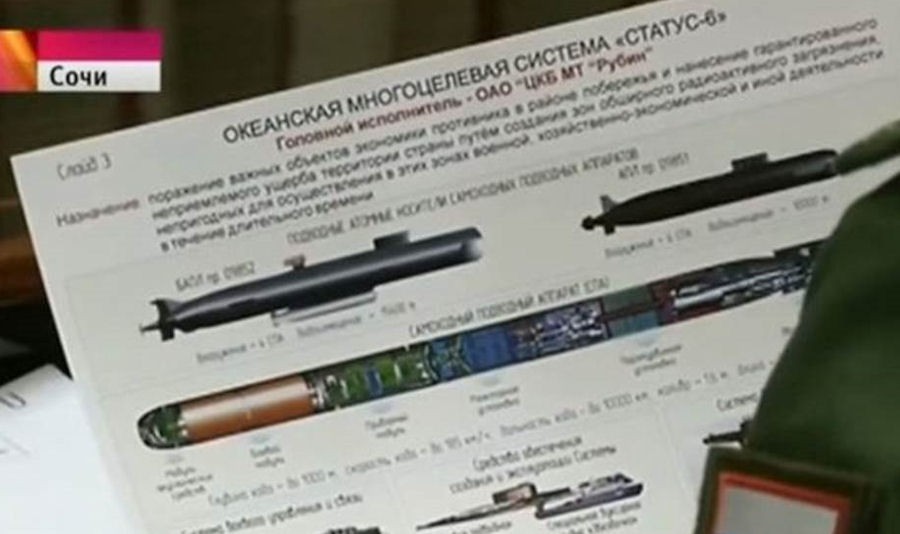
The Washington Free Beacon quotes Pentagon officials saying the unmanned underwater vehicle, code named Kanyon by the Pentagon, was test-launched from the Sarov-class submarine on November 27th.

What Pentagon names Kanyon is what in Russia is known as the «Ocean Multipurpose System Status-6» – a top secret weapon system the world has never seen anything like before.  A year ago, Russian state-TV Channel One showed a glimpse of a graphic slide of the Status-6, later on said to be an unauthorized leak of a secret weapon development plan. 

The drawings on the slide could very well be a purpose leak aimed at telling the world what weapon-systems are under development. The TV news covered the meeting in Sochi where President Putin was told by high-ranking officers in the Strategic forces how Russia’s nuclear deterrence strategy is developing. Moscow are looking for ways to overcome the United States’ Anti-Ballistic Missile Defence system, and one answer is to go deep with the nukes. Highly suggested reading more here.

Mysterious Radiation Spike Across Europe

Nuclear scientists are struggling to determine the source of small amounts of nuclear radiation that bloomed over Europe throughout January.

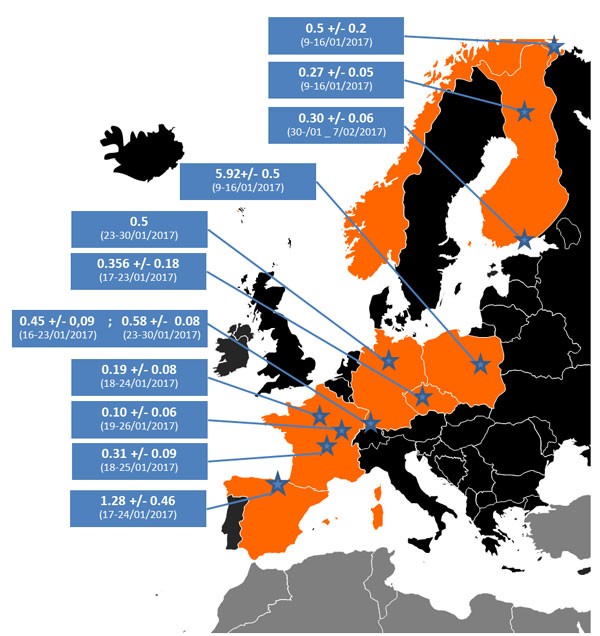
France’s IRSN institute, the public body for radiological and nuclear risks, announced in a statement on February 13 that Iodine-131, a radionuclide of human origin, was detected in trace amounts at ground-level atmosphere in continental Europe. First detected in the second week of January over northern Norway, Iodine-131 presence was then detected over Finland, Poland, Germany, Czech Republic, France, and Spain. However, the levels have since returned to normal and scientists have yet to determine the source of the radiation.

Norway’s Radiation protection Authority (NRPA), which first detected the Iodine-131 over its northern Russian border, told Motherboard over the phone today that the levels present essentially no risk to human health. “I can assure you that the levels are low,” said a press a spokesperson.

But with a half-life of just eight days, the detection of Iodine-131 is proof of a recent release, said IRSN in its statement to the media.

Rumors are circulating, of course, that Russia has secretly tested a low-yield nuclear weapon in the Arctic, possibly in the Novaya Zemlya region—historically used for Russia’s nuclear tests. Iodine-131, discovered by two University of California researchers in 1938, is a radioisotope synonymous with the atomic bomb tests carried out by the US and Russia throughout the 1950s, and has recently presented threats from leaking during the Chernobyl nuclear power plant disaster and the 2011 Fukushima nuclear accident.

But Iodine-131 is also found in the medical industry, commonly used for treating thyroid-related illnesses and cancers. Astrid Liland, head of the section for emergency preparedness at the NRPA, told Motherboard in an email today, “Since only Iodine-131 was measured, and no other radioactive substances, we think it originates from a pharmaceutical company producing radioactive drugs.
Iodine-131 is used for treatment of cancer.”

Particulate Iodine-131 (value +/- uncertainty) in the atmosphere(µBq/m3). Image: IRSN

Britain’s Society for Radiological Protection (SRP) also told Motherboard that the exclusive presence of Iodine-131 suggests the source is not a nuclear incident, but rather a medical facility such as a hospital or a supplier of radio-pharmaceuticals. “The release was probably of recent origin. Further than this it is impossible to speculate,” the SRP’s Brian Gornall told Motherboard in an email.

Still, where exactly that pharma company could be located is unknown. “Due to rapidly changing winds, it is not possible to track exactly where it came from. It points to a release source somewhere in Eastern Europe,” Liland told Motherboard.

The Iodine cloud prompted the United States Air Force to send over a specialized particle-sniffing aircraft to investigate. As per reports on The Aviationist, a US Air Force WC-135 deployed to Royal Air Force base Mildenhall in the UK on February 17, equipped to test the atmosphere over Europe for radiation. The aircraft’s last intercontinental expedition was to analyse the atmosphere over the Korean Peninsula following an alleged North Korean nuclear test.

The deployment spurred on rumors of a nuclear test from Russia, but a spokesperson for the the Comprehensive Nuclear-Test-Ban Treaty Organization (CTBTO), an international body that monitors nuclear weapon tests, told Motherboard in an email today, “Although some readings of I-131 above minimal detection level have been observed since beginning of year in Europe nothing extraordinary has been measured.”

The IRSN said in its statement that the data has now been shared between the members of the informal European network called Ring of Five, a group of organizations that research radiation levels in the atmosphere.

Russia has Provided N Korea Additional Hacking Platforms

Hackers from North Korea are reported to have stolen a large cache of military documents from South Korea, including a plan to assassinate North Korea’s leader Kim Jong-un.

Rhee Cheol-hee, a South Korean lawmaker, said the information was from his country’s defence ministry.

The compromised documents include wartime contingency plans drawn up by the US and South Korea.

They also include reports to the allies’ senior commanders.

Plans for the South’s special forces were reportedly accessed, along with information on significant power plants and military facilities in the South.

Mr Rhee belongs to South Korea’s ruling party, and sits on its parliament’s defence committee. He said some 235 gigabytes of military documents had been stolen from the Defence Integrated Data Centre, and that 80% of them have yet to be identified.

The hack took place in September last year. In May, South Korea said a large amount of data had been stolen and that North Korea may have instigated the cyber attack – but gave no details of what was taken.

North Korea denied the claim. The isolated state is believed to have specially-trained hackers based overseas, including in China. More here.

Russia is always part of the rogue nation process, it is curious of the timing as you read on. TransTeleCom is owned by Russia’s state-run railway company and has fiber optic cables that follow all the country’s main train lines, including all the way up to the North Korean border.

photo

Related reading: North Korea gets new internet access via Russia

Reuters: North Korea has opened a second internet connection with the outside world, this time via Russia, a move which cyber security experts said could give Pyongyang greater capability to conduct cyber attacks.

Previously traffic was handled via China Unicom (0762.HK) under a deal dating back to 2010. TransTeleCom now appears to be handling roughly 60 percent of North Korean internet traffic, while Unicom transmits the remaining 40 percent or so, Dyn said.

The new external connection was first reported by 38 North, a project of the U.S.-Korea Institute at Johns Hopkins School of Advanced International Studies (SAIS).

TransTeleCom declined to confirm any new routing deal with the North Korean government or its communications arm. In a statement, it said: “TransTeleCom has historically had a junction of trunk networks with North Korea under an agreement with Korea Posts and Telecommunications Corp signed in 2009.”

North Korea’s internet access is estimated to be limited to somewhere between a few hundred and just over 1,000 connections. These connections are vital for coordinating the country’s cyber attacks, said Bryce Boland, chief technology officer for the Asia-Pacific region at FireEye, a cyber-security company.

Boland said the Russian connection would enhance North Korea’s ability to command future cyber attacks.

Having internet routes via both China and Russia reduces North Korea’s dependence on any one country at a time when it faces intense geo-political pressures, he said.

Many of the cyber attacks conducted on behalf of Pyongyang came from outside North Korea using hijacked computers, Boland said. Those ordering and controlling the attacks communicate to hackers and hijacked computers from within North Korea.

“This will improve the resiliency of their network and increase their ability to conduct command and control over those activities,” Boland said.

The Washington Post reported earlier that the U.S. Cyber Command has been carrying out denial of service attacks against hackers from North Korea designed to limit their access to the internet. (wapo.st/2yRbg8w)

In February 2005, the TTK became the largest party in terms of the European Internet Exchange London Internet Exchange (LINX). In July 2005, the TTK became the fifth operator in Russia, received the right to provide long-distance services (after Rostelecom, Tsentrinfokoma, Golden Telecom and MTT). “TransteleCom” JSC provides communications services in Kazakhstan and for a map of locations and services, go here.