Testimony: Hezbollah, the Illicit Networks Global Reach

Place of Origin: Lebanon

Year of Origin: 1982

Founder(s): Ali Akbar Mohtashemi—Iran’s then-ambassador to Syria; Imad Fayez Mughniyeh; Grand Ayatollah Muhammad Hussein Fadlallah; Abbas al-Musawi

Places of Operation: Lebanon, Syria, Germany, Mexico, Paraguay, Argentina, Brazil, Iran, United Arab Emirates

photo

*** Related reading: Egypt’s Sisi against idea of strikes on Iran, Hezbollah

Emanuele Ottolenghi
House Committee on Foreign Affairs, Western Hemisphere Subcommittee
8 November 2017

Chairman Cook, allow me first to congratulate you on your recent appointment as the new chairman of this subcommittee. Mr. Chairman, Ranking Member Sires, members of the subcommittee, thank you for the opportunity to testify on behalf of the Foundation for Defense of Democracies and its Center on Sanctions and Illicit Finance.

In 2011, the U.S. Drug Enforcement Administration (DEA) indicted Ayman Saied Joumaa, a Lebanese-Colombian dual national whose global network of companies operating out of Latin America, West Africa, and Lebanon laundered money for Mexican and Colombian cartels to the tune of $200 million a month of drug proceeds.[1] Joumaa worked with Hezbollah as the kingpin in one of many networks Hezbollah runs globally to sustain its financial needs. When his case came to light, the New York Times quoted a DEA official as saying that Hezbollah operated like “the Gambinos on steroids.”[2]

The United States cannot continue to combat a threat of such magnitude unless it leverages all its tools of statecraft in a combined, sustained, and coordinated fashion. Over the past decade, Hezbollah’s terror finance outside Lebanon has evolved from a relatively small fundraising operation involving trade-based money laundering and charitable donations into a multi-billion dollar global criminal enterprise.

Increasing quantities of Schedule 2 drugs like cocaine invade the U.S. from Latin America, adding fuel to the opioid pandemic that has already cost so many lives.[3] Cocaine consumption is as much a national epidemic as opioids, Mr. Chairman, and Hezbollah helps make it available to U.S. consumers.

This makes Hezbollah, its senior leadership, and its numerous operatives involved in running illicit drug-trafficking and money-laundering operations on a global scale the perfect candidates for Kingpin and Transnational Crime Organization designations, in addition to the terrorism and terror finance designations already in place.

The U.S. government has, over the years, developed remarkably sharp and effective tools to counteract Hezbollah’s terror finance threat, but is not using them as vigorously as it should. The Kingpin Act is one such instrument. But like all other instruments of statecraft, its impact would be much greater if used consistently and in conjunction with other tools. The challenge for Congress, the executive branch, the intelligence community, and law enforcement agencies is to leverage these tools in a manner that will outsmart Hezbollah and disrupt its cash flows enough to inflict irreparable damage to the terror group’s finances.

In pursuit of this goal, America needs to better coordinate the application and enforcement of all instruments available from the formidable toolbox created over the past two decades by legislation and executive orders, including leveraging Executive Orders 13581 and 13773 on combating transnational organized crime, Executive Order 13224 on combating sources of terror finance, the 1999 Foreign Narcotics Kingpin Designation Act, the 2015 Hezbollah International Financing Prevention Act (HIFPA), the Global Magnitsky Human Rights Accountability Act of 2016, and soon the Hezbollah International Financing Prevention Act Amendment of 2017, which is now awaiting reconciliation between its House and Senate versions and which will, once approved, expand on HIFPA.

In doing so, it should focus significantly on the Western Hemisphere, where Hezbollah’s global footprint, especially in Latin America, is most menacing.

Hezbollah’s regional operations are part of a global network of illicit financial and commercial enterprises whose goal is to fund Hezbollah’s activities in the Middle East. Where and when needed, these networks can also be activated to provide logistical support to operatives engaged in planning terror attacks. The United States therefore needs to think and act globally to disrupt Hezbollah’s illicit finance networks. Latin America is a very good place to start doing that.

In the remainder of my testimony, I will discuss evidence demonstrating the magnitude of the threat posed by Hezbollah’s terror finance to the national security of the United States. I will also provide evidence of the high-ranking nature of Hezbollah’s operatives in Latin America – a sure sign of the importance of Hezbollah’s Latin American networks to the organization’s budget. And I will discuss the impact of U.S. policy and actions on disrupting Hezbollah’s terror finance activities. The evidence I am presenting today, hopefully, will highlight both strengths and weaknesses of present U.S. policy and offer ways to improve results.

Download the full testimony here.

[1] U.S. Department of the Treasury, Press Release, “Treasury Targets Major Lebanese-Based Drug Trafficking and Money Laundering Network,” January 26, 2011. (https://www.treasury.gov/press-center/press-releases/Pagés/tg1035.aspx); see also: U.S. Department of the Treasury, Press Release, “U.S. Charges Alleged Lebanese Drug Kingpin with Laundering Drug Proceeds for Mexican and Colombian Drug Cartels,” December 13, 2011. (https://www.justice.gov/archive/usao/vae/news/2011/12/20111213joumaanr.html)

[2] Jo Becker, “Beirut Bank Seen as a Hub of Hezbollah’s Financing,” The New York Times, December 13, 2011. (http://www.nytimes.com/2011/12/14/world/middleeast/beirut-bank-seen-as-a-hub-of-hezbollahs-financing.html)

[3] Nick Miroff, “American cocaine use is way up. Colombia’s coca boom may be why,” The Washington Post, March 4, 2017. (https://www.washingtonpost.com/news/worldviews/wp/2017/03/04/colombias-coca-boom-is-showing-up-on-u-s-streets/?utm_term=.d370be3ebe9c)

photo

*** A short briefing from the State Department on October 10, 2017 by National Counter-terrorism Center Director, Nick Rasmussen:

Hizballah’s use of terrorism across the globe, which has persisted for several decades; second, the group’s continued effort to advance terrorism acts worldwide; and third, the fact that the organization is, in fact, focused on U.S. interests, including here in the homeland. And that is part of the reason why we are here today.

Lebanese Hizballah has repeatedly demonstrated for the world its true character. It is an organization that relies on terrorism as well as other forms of violence and coercion to achieve its goals. And this takes place in spite of the group’s attempts to portray itself as a legitimate political party. Prior to September 11th, I think everybody knows Hizballah was responsible for the terrorism-related deaths of more U.S. citizens than any other foreign terrorist organization.

Now, for many Americans, their introduction to the threat posed by this group came after Hizballah’s attack on the U.S. embassy in Beirut in April of 1983. That horrific attack killed 63 and wounded an additional 120 individuals, and it was followed by an even more deadly attack on our Marine barracks in October of 1983 which killed 241 Americans and wounded an additional 128 Americans.

So Hizballah’s penchant for violence has not changed over the last three decades. We’ve seen time and time again with its international terrorism unit, the External Security Organization, also known as the IJO, the Islamic Jihad Organization, and Unit 910, 9-1-0. But its deployment of operatives to nearly every corner of the globe continues to engage in terrorism-related activity.

In 2012 the group carried out a bomb attack in Bulgaria that killed five Israeli tourists and one Bulgarian national, and a number of Hizballah operatives have been caught laying the groundwork for attacks in places like Azerbaijan, in Egypt, in Thailand, in Cyprus, and in Peru. And there are other instances of Hizballah-related arrests and disruptions around the world that are at this point unpublicized and remain classified.

But all of this together shows us that the group seeks to develop and maintain a global capability to carry out acts of terror. I can assure you that the conversation today would be much different had some of these disrupted plots actually succeeded. Casualty counts would be higher and many innocent lives would have been forever altered. The group is also known to focus on areas populated by tourists, almost guaranteeing that with their attacks innocent victims – innocent civilians will be victims.

Now, with respect to the homeland here in the United States, let me say this. While much of our work in the government since 9/11 has focused on al-Qaida and more recently on ISIS, in the 20 years since Hizballah’s designation as a foreign terrorist organization, we have never taken our focus off of Hizballah and on the threat it represents to the homeland.

***

Syria, ISIS, and the Broader Middle East
As an Iranian proxy, Hezbollah has taken up arms alongside Syrian and Iranian forces in defense of the Syrian regime in that country’s civil war. In 2012, the U.S. Treasury levied additional sanctions on Hezbollah for its support of Syrian President Bashar al-Assad’s regime. According to Treasury, since the beginning of the Syrian civil war in early 2011,
Hezbollah provided “training, advice and extensive logistical support to the Government of Syria’s increasingly ruthless efforts to fight against the opposition.” 45
As of October 2016, Hezbollah and Syrian forces were reportedly besieging some 40,000 Syrians in three towns, preventing them access to medical treatment. 46
During an October 2016 rally in Beirut, Nasrallah promised that Hezbollah
would “continue to bear our great responsibilities of jihad” in Syria. 47
In January 2015, in response to Israeli airstrikes on alleged weapons shipments to Hezbollah in Syria, Nasrallah called the strikes an aggression against Syria’s regional allies.
As such, Syria’s allies have the right to retaliate, according to Nasrallah. 48
Hezbollah’s activity in Syria has its domestic detractors as well. Subhi al-Tufayli, Hezbollah’s first secretary-general from 1989 to 1991, has accused Hezbollah of being
a “partner in the killing of the Syrian people.” He denounced Hezbollah members who fight alongside Russians, and called on the Hezbollah leadership to heed Lebanese opposition to the group’s involvement in Syria. 49
Hezbollah’s role in Syria is not limited to fighting anti-government rebels. Under Iranian direction, Hezbollah has also fought against ISIS, which Nasrallah described as a growing threat to the region and an existential threat to Lebanon in an August 2014 interview with the Lebanese newspaper Al-Akhbar. 50
Hezbollah has also fought against the Nusra Front (Jabhat Fateh al-Sham).51
On October 19, 2016, Qassem told Hezbollah’s Al-Manar TV that Hezbollah “will not leave Syria as long as there is a need to confront takfiri groups.” 52
In November 2016, Hezbollah held a public parade in the Syrian city of Qusair to highlight its role in the conflict. The terror group showcased U.S. and Russian armored personnel carriers and tanks. The U.S. State Department issued a statement that it was “gravely concerned” and investigating how Hezbollah acquired U.S. equipment. 53
The United States provides aid to the Lebanese military, which denied that U.S.-provided weaponry had been transferred to Hezbollah 54. Read the full report here.
Saudi Arabia says Lebanon Declares War

photo

It is all about Iran….

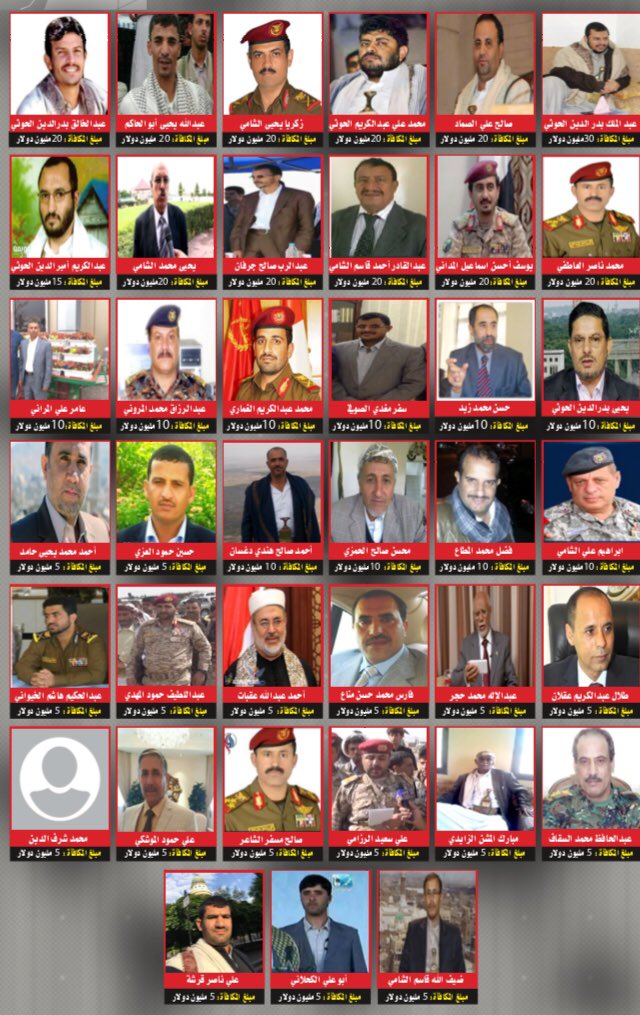
Arabia reveals list of wanted members of the terrorist militias in the region including

What did President Trump know or what was he told?

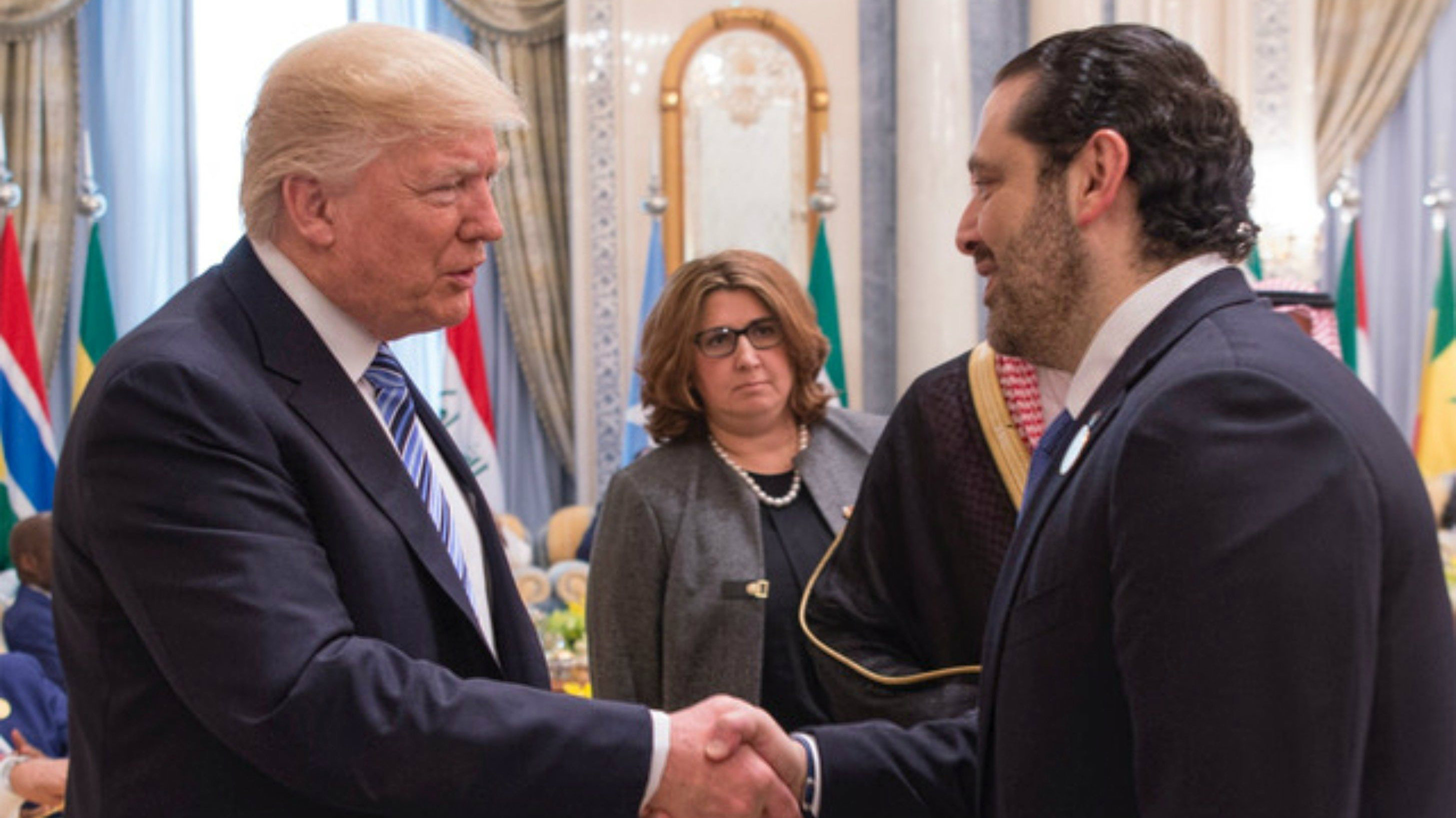
Remarks by President Trump and Prime Minister Hariri of Lebanon in Joint Press Conference

Saudi Arabia says Lebanon declares war, deepening crisis

BEIRUT (Reuters) – Saudi Arabia accused Lebanon on Monday of declaring war against it because of aggression by the Iran-backed Lebanese Shi‘ite group Hezbollah, a dramatic escalation of a crisis threatening to destabilize the tiny Arab country.

Lebanon has been thrust to the center of regional rivalry between Saudi Arabia and Iran since the Saudi-allied Lebanese politician Saad al-Hariri quit as prime minister on Saturday, blaming Iran and Hezbollah in his resignation speech.

Saudi Gulf affairs minister Thamer al-Sabhan said the Lebanese government would “be dealt with as a government declaring war on Saudi Arabia” because of what he described as aggression by Hezbollah.

Faulting the Hariri-led administration for failing to take action against Hezbollah during a year in office, Sabhan said “there are those who will stop (Hezbollah) and make it return to the caves of South Lebanon”, the heartland of the Shi‘ite community.

In an interview with Al-Arabiya TV, he added: “Lebanese must all know these risks and work to fix matters before they reach the point of no return.”

He did not spell out what action Saudi Arabia might take against Lebanon, a country with a weak and heavily indebted state that is still rebuilding from its 1975-90 civil war and where one-in-four people is a Syrian refugee.

There was no immediate comment from the Lebanese government.

Hezbollah is both a military and a political organization that is represented in the Lebanese parliament and in the Hariri-led coalition government formed last year.

Its powerful guerrilla army is widely seen as stronger than the Lebanese army, and has played a major role in the war in neighboring Syria, another theater of Saudi-Iranian rivalry where Hezbollah has fought in support of the government.

Lebanese authorities said on Monday the country’s financial institutions could cope with Hariri’s resignation and the stability of the Lebanese pound was not at risk.

But the cash price of Lebanon’s U.S. dollar-denominated bonds fell, with longer-dated maturities suffering hefty losses as investors took a dim view of the medium- to longer-term outlook for Lebanon.

HARIRI FREE TO TRAVEL, SAUDI FM SAYS

Hariri cited a plot to assassinate him during his unexpected resignation speech broadcast from Saudi Arabia which caught even his aides off guard. He also slammed Hezbollah and Iran, accusing them of sowing strife in the Arab world.

Hezbollah leader Sayyed Hassan Nasrallah has said he will not comment on Hariri’s speech, calling it a “Saudi statement” and saying Riyadh had forced Hariri to resign.

The sudden nature of Hariri’s resignation generated speculation in Lebanon that his family’s Saudi construction business had been caught up in an anti-corruption purge and he had been coerced into resigning. More here.

photo

Western intelligence services warned Lebanon’s former Prime Minister Saad al-Hariri of an assassination plot against him, thus prompting him to resign on Sunday, according to Saudi news media. Hariri is a Saudi-born Lebanese politician, reputed to be one of the world’s wealthiest people. He is the second son of the late Rafiq Hariri, who ruled Lebanon for much of the 1990s but was assassinated in 2005. Saad al-Hariri spent most of his life in Saudi Arabia, the United States and France, but returned to Lebanon in 2014 to lead the Future Movement, a center-right political party supported by Sunni Muslims and some Christians. He became prime minister in 2016.

On Friday, Hariri flew from Beirut to Riyadh for a scheduled high-level visit. But on Sunday he shocked the Arab world by announcing his resignation from the post of prime minister. He did so in a surprise television address from the Saudi capital, which was broadcast live in Lebanon. Hariri told stunned Lebanese audiences that he was resigning in order to protect himself from a plot that was underway to assassinate him. He added that the political climate in Lebanon was intolerably tense and reminded him of the conditions that led to the assassination of his father 12 years ago. He also accused Iran and Hezbollah of acting as the primary destabilizing factors in Lebanon and much of the Middle East. Hariri and his supporters believe that Hezbollah was behind his father’s assassination in 2005. There was intense speculation in Lebanon on Monday that Hariri would remain in Saudi Arabia for the foreseeable future, fearing for his life if he returned to Lebanon.

On Sunday, the Saudi-based newspaper Asharq al-Awsatclaimed that Hariri decided to resign after he “received warnings from Western governments” that there would be an assassination plot against him. The newspaper did not name the Western governments, nor did it identify those who are allegedly trying to kill Hariri. Later on Sunday, Saudi television station al-Arabiya al-Hadath alleged that an assassination attempt against Hariri had been stopped at the last minute in the Lebanese capital Beirut earlier in the week. Both news media cited “sources close” to the Lebanese leader, but did not provide specific information, nor did they give details of the alleged plot or plots. It is worth noting, however, that Lebanese security officials denied these reports from Riyadh. Lebanese media quoted senior security official Major General Abbas Ibrahim as saying that no information about assassination plots had been uncovered. Major Ibrahim, who heads Lebanon’s General Directorate of General Security, said that his agency had no information about attempts to kill Hariri or other Lebanese political figures.

This could mean that the information about a possible assassination plot against Hariri was given directly to him by Western intelligence agencies, probably because the latter fear that Lebanese security agencies are infiltrated by Hezbollah sympathizers. Or it could mean that the Saudi media reports are inaccurate. Lebanon is now awaiting further details by Hariri regarding the alleged assassination plot against him. In the meantime, the already fragile political life of Lebanon appears to be entering a period of prolonged uncertainty.

Hey Harry Reid, Ken Salazar, Kislyak What About Uranium One?

Note the date of this article….

In 2009, Gregory B. Jaczko was appointed to head the Nuclear Regulatory Commission by Barack Obama and his previous position was working for Harry Reid as his appropriations advisor as well as his science advisor.

U.S. officials said Wednesday that they have proposed ending the Obama administration’s ban on new uranium mining leases on public land outside Grand Canyon National Park.

The Forest Service proposed the change in response to President Donald Trump’s executive order for federal agencies to eliminate restrictions on energy production. The Trump administration has moved to unravel former President Barack Obama’s environmental regulations aimed at curbing climate change.

“Adoption of this recommendation could reopen lands to mineral entry pursuant to the United States mining laws facilitating exploration for, and possibly development of, uranium resources,” according to a report last week by the Forest Service’s parent agency, the Department of Agriculture.

The Oct. 25 report also said it’s in the national interest “to promote the clean and safe development of America’s vast energy resources.” Nuclear power plants use uranium as fuel.

Conservationists are decrying the Forest Service’s move, saying that past uranium mining in the region has polluted soils, washes, aquifers and drinking water.

“The Forest Service should be advocating for a permanent mining ban, not for advancing private mining interests that threaten one of the natural wonders of the world,” said Amber Reimondo, energy program director of the Grand Canyon Trust based in Flagstaff.

In 2012, then-Interior Department Secretary Ken Salazar banned new hard rock mining for 20 years on more than 1 million acres of national forest and Bureau of Land Management land near the Grand Canyon. He said he was acting to protect a “priceless American landscape.”

The ban did not affect existing mining claims in the region.

***  photo

TheHill: After the Obama administration approved the sale of a Canadian mining company with significant U.S. uranium reserves to a firm owned by Russia’s government, the Nuclear Regulatory Commission assured Congress and the public the new owners couldn’t export any raw nuclear fuel from America’s shores.

“No uranium produced at either facility may be exported,” the NRC declared in a November 2010 press release that announced that ARMZ, a subsidiary of the Russian state-owned Rosatom, had been approved to take ownership of the Uranium One mining firm and its American assets.

A year later, the nuclear regulator repeated the assurance in a letter to Sen. John Barrasso, a Wyoming Republican in whose state Uranium One operated mines.

“Neither Uranium One Inc. nor AMRZ holds a specific NRC export license. In order to export uranium from the United States, Uranium One Inc. or ARMZ would need to apply for and obtain a specific NRC license authorizing the exports of uranium for use in reactor fuel,” then-NRC Chairman Gregory Jaczko wrote to Barrasso.

The NRC never issued an export license to the Russian firm, a fact so engrained in the narrative of the Uranium One controversy that it showed up in The Washington Post’s official fact-checker site this week. “We have noted repeatedly that extracted uranium could not be exported by Russia without a license, which Rosatom does not have,” the Post reported on Monday, linking to the 2011 Barrasso letter.

Yet NRC memos reviewed by The Hill show that it did approve the shipment of yellowcake uranium — the raw material used to make nuclear fuel and weapons — from the Russian-owned mines in the United States to Canada in 2012 through a third party. Later, the Obama administration approved some of that uranium going all the way to Europe, government documents show.

NRC officials said they could not disclose the total amount of uranium that Uranium One exported because the information is proprietary. They did, however, say that the shipments only lasted from 2012 to 2014 and that they are unaware of any exports since then.

NRC officials told The Hill that Uranium One exports flowed from Wyoming to Canada and on to Europe between 2012 and 2014, and the approval involved a process with multiple agencies.

Rather than give Rosatom a direct export license — which would have raised red flags inside a Congress already suspicious of the deal — the NRC in 2012 authorized an amendment to an existing export license for a Paducah, Ky.-based trucking firm called RSB Logistics Services Inc. to simply add Uranium One to the list of clients whose uranium it could move to Canada.

The license, reviewed by The Hill, is dated March 16, 2012, and it increased the amount of uranium ore concentrate that RSB Logistics could ship to the Cameco Corp. plant in Ontario from 7,500,000 kilograms to 12,000,000 kilograms and added Uranium One to the “other parties to Export.”

The move escaped notice in Congress.

Officials at RSB, Cameco and Rosatom did not return repeated phone calls or emails seeking comment.

Uranium One’s American arm, however, emailed a statement to The Hill on Wednesday evening confirming it did export uranium to Canada through the trucking firm and that 25 percent of that nuclear fuel eventually made its way outside North America to Europe and Asia, stressing all the exports complied with federal law.

“None of the US U308 product produced to date has been sold to non-US customers except for approximately 25% which was sold via book transfer at the conversion facilities to customers from Western Europe and Asia,” executive Donna Wickers said. “Any physical export of the product from conversion facilities to non-US destinations is under the control of such customers and subject to NRC regulation.”

The United States actually imports the majority of the uranium it uses as fuel. In 2016, according to the U.S. Energy Information Administration, 24 percent of the imports came from Kazakhstan and 14 percent came from Russia.

The sale of Uranium One to a Russian state-owned firm, however, has created political waves that have led to multiple congressional investigations. Republicans say they want to learn how the sale could have been approved and whether there was political interference.

“The more that surfaces about this deal, the more questions it raises,” Sen. Chuck Grassley (R-Iowa) said in a statement released after this story was published. Grassley, the chairman of the Senate Judiciary Committee, has launched an investigation into Uranium One.

“It now appears that despite pledges to the contrary, U.S. uranium made its way overseas as a part of the Uranium One deal,” Grassley said in the statement. “What’s more disturbing, those transactions were apparently made possible by various Obama Administration agencies while the Democrat-controlled Congress turned a blind eye.

“Americans deserve assurances that political influence was not a factor in all this. I’m increasingly convinced that a special counsel — someone with no prior involvement in any of these deals — should shine a light on this ordeal and get answers for the American people.”

Government officials told The Hill that the NRC was able to amend the export license affecting Uranium One because of two other decisions previously made by the Obama administration as part of a Russian “reset” in President Obama’s first term.

First, Obama reinstated a U.S.-Russia civilian nuclear energy cooperation agreement. President George W. Bush had signed the agreement in 2008, but withdrew from it before it could take effect after Russia became involved in a military conflict with the former Soviet republic of Georgia, a U.S. ally, and after new concerns surfaced that Moscow was secretly aiding Iran’s nuclear weapons ambitions.

Obama re-submitted the agreement for approval by the Democrat-controlled Congress in May 2010, declaring Russia should be viewed as a friendly partner under Section 123 the Atomic Energy Act of 1954 after agreeing to a new nuclear weapons reduction deal and helping the U.S. with Iran.

“I have concluded: (1) that the situation in Georgia need no longer be considered an obstacle to proceeding with the proposed Agreement; and (2) that the level and scope of U.S.-Russia cooperation on Iran are sufficient to justify resubmitting the proposed agreement to the Congress,” Obama said in a statement sent to Congress.

Congress took no action, which allowed the deal to become effective 90 days later.

The other step that allowed uranium from the Russian-controlled mines in the United States to be exported came in 2011, when the Commerce Department removed Rosatom, Uranium One’s owner, from a list of restricted companies that could not export nuclear or other sensitive materials or technologies without special approval under the Export Administration Regulations.

“This final rule removes the Federal Atomic Power of Russia (Rusatom) now known as the Russian State Corporation of Atomic Energy (Rosatom),” the Commerce Department’s Bureau of Industry and Security declared in a May 24, 2011, notice in the Federal Register that created few waves.

Rosatom had been on the list for a long time, so long in fact that it was still listed in the federal database under its old name, Rusatom. Officials said the effort to remove the Russian nuclear firm was a “policy decision” driven by the State Department, Energy Department, Commerce Department and other agencies with Russia portfolios designed to recognize that bilateral relations between Russia and the United States had improved slightly.

Nine months after Rosatom was removed from the export restrictions list, the NRC issued its license amendment to the trucking firm in March 2012 that cleared the way for Uranium One exports, making it effective for nearly five years, to the end of 2017. But the NRC also stipulated that Uranium One’s uranium should be returned to the United States.

“The uranium authorized for export is to be returned to the United States,” the NRC instructed in the export license amendment.

But that, too, didn’t happen. Officials told The Hill that the Energy Department subsequently gave approval for some of the American fuel to depart Canada and be exported to European enrichment centers, according to a 2015 letter the NRC sent to Rep. Pete Visclosky (D-Ind.).

The NRC explained to Visclosky that it had originally stipulated that after the American uranium was treated in Canada, it had to “then return the uranium to the U.S. for further processing.”

“That license stated that the Canadian Government needed to obtain prior approval before any of the U.S. material could be transferred to any country other than the U.S.,” the letter added. “Subsequently the U.S. Department of Energy granted approval for some re-transfers of U.S. uranium from the Canadian conversion facilities to European enrichment plants.”

The NRC added, however, it did not believe any of the American uranium made its way “directly” to Russia. And it added that the whole supply chain scenario was made possible by the resubmission of Obama’s Section 123 agreement in 2010.

“The transfer of the U.S.-supplied uranium from Canada to Europe noted above also was subject to applicable Section 123 agreements,” the NRC noted. Section 123 is the part of the Atomic Energy Act that allows for the U.S. to share civilian nuclear technology and goods with allies.

The Uranium One deal has been controversial since at least 2015, when The New York Times reported former President Bill Clinton received a $500,000 speech fee from a Russian bank and millions in donations to his charitable foundation from sources interested in the deal around the time the Uranium One sale was being reviewed by Secretary of State Hillary Clinton’s State Department and eight other federal agencies.

Hillary Clinton has said she delegated the approval decision to a deputy on the Committee on Foreign Investment in the United States (CFIUS) and did not apply any pressure. Bill Clinton has said the monies he received had no bearing on his wife’s policymaking decisions.

The 2015 Times article included a single reference to Uranium One officials saying they believed some of its American uranium made its way to Europe and Japan without any reference to how that occurred.

NRC officials said the multiple decisions documented in the memos, including the 2012 amendment of the third-party export license, provide the most complete description to date of how Russian-owned uranium ended up getting exported from the United States.

The entire Uranium One episode is getting a fresh look after The Hill disclosed late last month that the FBI had gathered extensive evidence in 2009 — before the mine sale was approved — that Rosatom’s main executive in the United States was engaged in a racketeering scheme that included bribery, kickbacks, extortion and money laundering.

The probe was enabled by an undercover informant working for the FBI inside the Russian nuclear industry, court records show. But the Justice Department did not make that evidence public until 2014, long after Rosatom benefited from multiple favorable decisions from the Obama administration.

The Senate Judiciary, House Intelligence and House Oversight committees have all announced plans to investigate the new revelation, and the Justice Department has given approval for the undercover informant to testify for the first time about what he witnessed the Russians doing to influence Obama administration decisions favorable to Rosatom between 2009 and 2014.

Hillary Clinton and other Democrats have described the renewed focus on the Uranium One deal as simply a distraction from the current investigation into Russian interference in the 2016 election, in which Donald Trump became the 45th president. She also says that concerns about the Uranium One sale have long ago been “debunked.”

But it’s not just Republicans who have said that the revelation the FBI had evidence that Rosatom was engaged in criminality during the time it was receiving favorable decisions from the U.S. government deserves fresh scrutiny.

Sen. Dianne Feinstein (D-Calif.), a member of both the Senate Intelligence and Judiciary committees, told The Hill she would like to learn more about what the FBI knew.

Rep. Elijah Cummings (D-Md.) has criticized Republicans for investigating Clinton, but said on “Morning Joe” last month he has “no problem looking into” the Uranium One deal.

And Sen. Angus King (I-Maine) said Sunday on CNN that he believed it was appropriate for Congress to investigate the new information.

“One of the House committees has already begun an oversight committee hearing,” King said. “I always think oversight hearings are appropriate. I’ve been trying to understand this deal.”

King also repeated the oft-quoted narrative that the “company changed hands, but the uranium that is mined in the United States cannot leave the United States.” The NRC license now shows now that Uranium One was, in fact, allowed to export American uranium.

A legal expert on the CFIUS process told The Hill that the new revelation that the FBI knew that a Rosatom official was engaged in illegality on U.S. soil before the sale was approved could very well have affected the decision if that evidence had been made public in real time.

“Criminal behavior would be something the committee would take into consideration when evaluating a transaction with a foreign company,” said Stewart Baker, a foreign commerce law expert at the Steptoe Johnson firm. “It is a consideration, but it is not something that would guarantee a particular outcome.”

He said the committee board would need “to consider how serious the criminal behavior is, in the context of this transaction, how likely is it that someone acting against U.S. security interest would take action,” he added.


Read letter to Barrasso by kballuck1 on Scribd


Read NRC license amendment by kballuck1 on Scribd

Read Visclosky letter by kballuck1 on Scribd

Read Obama Section 123 statement by kballuck1 on Scribd

More here from The Hill

U.S Should Follow Europe’s Lead on Cyber

Imagine that….Europe may be more right on this issue than the United States is due to congress where decisions just cannot be made.

Going back to 2011, the Pentagon has concluded that computer sabotage coming from another country can constitute an act of war, a finding that for the first time opens the door for the U.S. to respond using traditional military force.

In 2016, Pentagon leaders are still working to determine when, exactly, a cyber-attack against the U.S. would constitute an act of war, and when, exactly, the Defense Department would respond to a cyber-attack on civilian infrastructure, a senior Defense Department official told lawmakers on Wednesday.

A cyber strike as an act of war “has not been defined,” Acting Assistant Secretary of Defense for Homeland Defense and Global Security Thomas Atkin told the House Armed Services Committee. “We’re still working toward that definition.” More here.

photo

Related reading: North Korea’s Elite Cyber Soldiers Hacked Top Secret Warship Blueprints, Seoul Lawmaker Says

So, is Europe ahead of the United States on this issue?

EU governments to warn cyber attacks can be an act of war

European Union governments will formally state that cyber attacks can be an act of war in a show of strength to countries such as Russia and North Korea.

Diplomats and ambassadors in Brussels have drafted a document, obtained by The Telegraph, that represents an unprecedented deterrent aimed at countries using hackers and cyber espionage against EU members.

The document, set to be agreed by all 28 EU members states, including Britain, in the coming weeks warns that individual member states could respond “in grave instances” to cyber attacks with conventional weapons.

The British government has now said it was all but certain that North Korea was behind the “WannaCry” malware attack that hit NHS IT systems in May. Work on the EU paper began among fears that Russia would attempt to influence this year’s German elections and over hybrid warfare employed in Ukraine. More here.

This could be a pretext for what is a probable threat.

photo

Banks fearing North Korea hacking prepare defenses: cyber experts

WASHINGTON/TORONTO (Reuters) – Global banks are preparing to defend themselves against North Korea potentially intensifying a years-long hacking spree by seeking to cripple financial networks as Pyongyang weighs the threat of U.S. military action over its nuclear program, cyber security experts said.

North Korean hackers have stolen hundreds of millions of dollars from banks during the past three years, including a heist in 2016 at Bangladesh Bank that yielded $81 million, according to Dmitri Alperovitch, chief technology officer at cyber security firm CrowdStrike.

Alperovitch told the Reuters Cyber Security Summit on Tuesday that banks were concerned Pyongyang’s hackers may become more destructive by using the same type of “wiper” viruses they deployed across South Korea and at Sony Corp’s (6758.T) Hollywood studio.

The North Korean government has repeatedly denied accusations by security researchers and the U.S. government that it has carried out cyber attacks.

North Korean hackers could leverage knowledge about financial networks gathered during cyber heists to disrupt bank operations, according to Alperovitch, who said his firm has conducted “war game” exercises for several banks.

“The difference between theft and destruction is often a few keystrokes,” Alperovitch said.

Security teams at major U.S. banks have shared information on the North Korean cyber threat in recent months, said a second cyber security expert familiar with those talks.

“We know they attacked South Korean banks,” said the source, who added that fears have grown that banks in the United States will be targeted next.

Tensions between Washington and Pyongyang have been building after a series of nuclear and missile tests by North Korea and bellicose verbal exchanges between U.S. President Donald Trump and North Korean leader Kim Jong Un.

John Carlin, a former U.S. assistant attorney general, told the Reuters summit that other firms, among them defense contractors, retailers and social media companies, were also concerned.

“They are thinking ‘Are we going to see an escalation in attacks from North Korea?’” said Carlin, chair of Morrison & Foerster international law firm’s global risk and crisis management team.

Jim Lewis, a cyber expert with Washington’s Center for Strategic and International Studies, said it is unlikely that North Korea would launch destructive attacks on American banks because of concerns about U.S. retaliation.

Representatives of the U.S. Federal Reserve and the Office of the Comptroller of the Currency, the top U.S. banking regulators, declined to comment. Both have ramped up cyber security oversight in recent years.

For other Reuters Cyber Summit news click on www.reuters.com/cyberrisk

bin Ladin Files, Iran Did Give Funding to al Qaeda

And you can bet that the Obama White House and the John Kerry State Department knew all of this when they concocted the JCPOA, the nuclear deal, which by way almost now seems like America reimbursed Iran for the financial support of al Qaeda. (that was $1.7 billion in all cash in addition to $400 million)

Anyway…this is some great news if you want to know more about Usama bin Ladin and the al Qaeda network which still exists today.

Long forgotten now was the legal case in New York where the Judge ordered Iran, al Qaeda and the Taliban to pay up for the 9/11 attack. Iran was ordered to pay $10.5 billion to the victims families and to the insurance companies. Do you think that will be paid? Nah…

photo

***

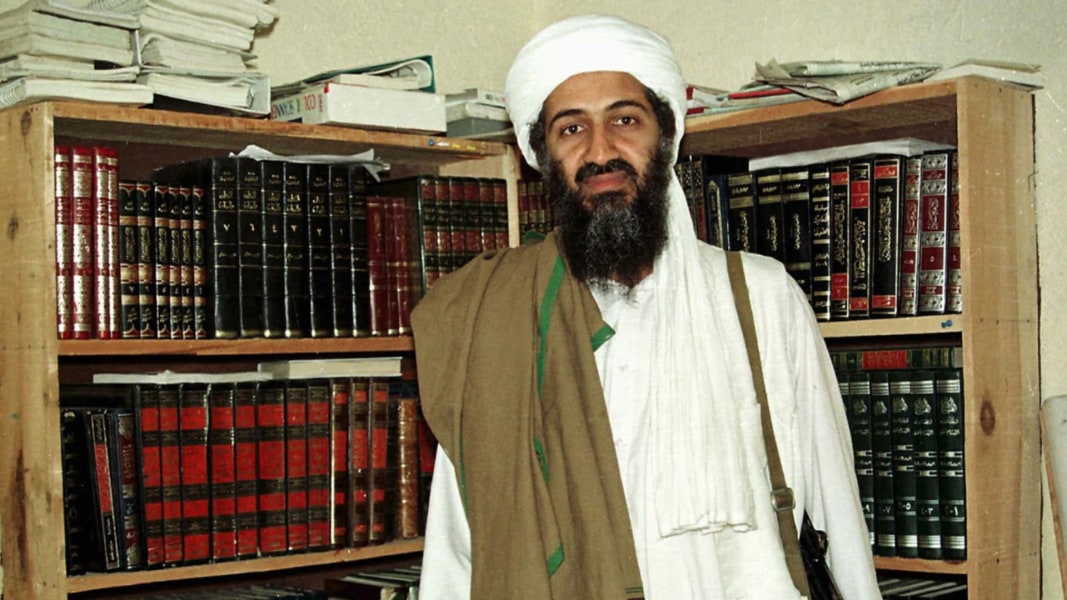
photo

TLWJ: The CIA is releasing hundreds of thousands of documents, images, and computer files recovered during the May 2011 raid on Osama bin Laden’s compound in Abbottabad, Pakistan. The newly-available material provides invaluable insights into the terrorist organization that struck America on September 11, 2001.

FDD’s Long War Journal has advocated for the release of bin Laden’s secret cache since 2011, arguing that such transparency would help to better inform the American people, experts and policymakers. Today’s release goes a long way toward satisfying that goal. We applaud the CIA and Director Mike Pompeo for making this material available to the public.

While the world has changed dramatically since the al Qaeda founder’s death more than six years ago, many of the files are still relevant today. Indeed, the CIA has withheld an unspecified number of documents for reasons related to protecting national security. We don’t doubt that some documents are still sensitive, but we hope that everything can be eventually released.

The CIA provided FDD’s Long War Journal with an advance copy of many of the files. It will take years for experts and researchers to comb through this treasure trove of information. However, we offer some preliminary observations below.

Al Qaeda has survived more than sixteen years of war. The group has failed to execute another 9/11-style attack inside the US, despite bin Laden’s continued desire to bring mass terror to America’s shores. Numerous plots have been thwarted by counterterrorism and intelligence professionals. And bin Laden’s organization has suffered setbacks, including the loss of key leaders.

But al Qaeda has adapted and in some ways grown, spreading its insurgency footprint in countries where it had little to no capacity for operations in 2001. The newly-released files help to explain how al Qaeda groomed supporters everywhere from West Africa to South Asia.

With that perspective in mind, here is some of what we’ve already learned from the files posted online today.

The world can see Hamza bin Laden’s face, as a young man, for the first time.

Since 2015, al Qaeda has released a string of audio messages from Osama bin Laden’s son, Hamza. Al Qaeda is clearly attempting to capitalize on the bin Laden brand name and build Hamza’s profile in jihadi circles. Yet, the organization has refused to release current images of Hamza, likely fearing that this would increase the threats to his safety. On the most recent anniversary of the Sept. 11 attacks, for example, al Qaeda produced an image of the World Trade Center with a stock photo of Hamza as a young boy superimposed on one of the towers.

Two newly-released videos show scenes from Hamza’s wedding, publicly revealing his face as a young adult for the first time. The images are not current, but they are much more recent than the photo al Qaeda is willing to distribute. That same video footage shows other senior al Qaeda figures, including Mohammed Islambouli, the brother of Anwar Sadat’s assassin. Islambouli lived in Iran for much of the post-9/11 period and, in more recent times, has been in Turkey.

The public can finally examine Osama bin Laden’s personal journal.

One of the newly-available files is a handwritten, 228-page journal kept by Osama bin Laden himself. The notebook contains the al Qaeda master’s private reflections on the world and al Qaeda’s place in it. Some of the pages contain bin Laden’s thoughts on the 2011 Arab uprisings, which bin Laden wanted his men to capitalize on. While al Qaeda did not predict the revolutions that swept through North Africa and the Middle East, it moved quickly to set up operations in countries such as Libya.

Bin Laden was in charge of al Qaeda’s global network.

The Abbottabad repository confirms that bin Laden was anything but retired when US forces knocked down his door. He was not a mere figurehead. During the final months of his life, Osama bin Laden was communicating with subordinates around the globe. Recovered memos discuss the various committees and lieutenants who helped bin Laden manage his sprawling empire of terror.

In fact, al Qaeda’s network was a great deal more cohesive than was widely suspected in May 2011. Groups such as Al Qaeda in the Arabian Peninsula (AQAP), Al Qaeda in the Islamic Maghreb (AQIM), and Shabaab (in Somalia) regularly sought and received the al Qaeda master’s direction. Other organizations, such as the Pakistani Taliban, are featured throughout the documents as well. And al Qaeda continued to maintain a significant footprint inside Afghanistan, relocating personnel to the country in 2010 and fighting alongside the Taliban.

Bin Laden wasn’t always pleased with the course his subordinates pursued and his men debated a variety of matters internally. The al Qaeda master sometimes instructed his followers to hide their allegiance to him, calculating that it would cause additional problems if their fealty was acknowledged. The al Qaeda founder also viewed the world through a conspiratorial lens, often misjudging his main adversary: America.

However, bin Laden kept up with current events and studied America’s approach to the wars in Afghanistan and Iraq. One of his minions even translated sections of Bob Woodward’s 2010 book, Obama’s Wars, so that he could understand the Obama administration’s strategy for those conflicts.

The files provide new details concerning al Qaeda’s relationship with Iran.

One never-before-seen 19-page document contains a senior jihadist’s assessment of the group’s relationship with Iran. The author explains that Iran offered some “Saudi brothers” in al Qaeda “everything they needed,” including “money, arms” and “training in Hezbollah camps in Lebanon, in exchange for striking American interests in Saudi Arabia and the Gulf.” Iranian intelligence facilitated the travel of some operatives with visas, while sheltering others. Abu Hafs al-Mauritani, an influential ideologue prior to 9/11, helped negotiate a safe haven for his jihadi comrades inside Iran. But the author of the file, who is clearly well-connected, indicates that al Qaeda’s men violated the terms of the agreement and Iran eventually cracked down on the Sunni jihadists’ network, detaining some personnel. Still, the author explains that al Qaeda is not at war with Iran and some of their “interests intersect,” especially when it comes to being an “enemy of America.”

Bin Laden’s files show the two sides have had heated disagreements. There has been hostility between the two. Al Qaeda even penned a letter to Ayatollah Khamenei demanding the release of family members held in Iranian custody. Other files show that al Qaeda kidnapped an Iranian diplomat to exchange for its men and women. Bin Laden himself considered plans to counter Iran’s influence throughout the Middle East, which he viewed as pernicious.

However, bin Laden urged caution when it came to threatening Iran. In a previously released letter, bin Laden described Iran as al Qaeda’s “main artery for funds, personnel, and communication.” And despite their differences, Iran continued to provide crucial support for al Qaeda’s operations.

In a series of designations and other official statements issued since July 2011, the US Treasury and State Departments have repeatedly targeted al Qaeda’s “core facilitation pipeline” inside Iran. Sources familiar with the intelligence used to justify those designations say they are based, in part, on the Abbottabad files. It is likely that still more revelations concerning al Qaeda’s relationship with Iran remain to be found in the cache made available today.

The files are vital for understanding the history of the Iraqi insurgency and al Qaeda’s role in it.

Since bin Laden’s death, Abu Bakr al Baghdadi’s Islamic State (ISIS) rose to prominence, becoming an international menace in its own right and al Qaeda’s main jihadi competitor. FDD’s Long War Journal has reviewed dozens of audio files and other documents pertaining to the Iraqi insurgency. This valuable, primary source material provides new details on the history of al Qaeda’s efforts in the Iraq, ranging from Abu Musab al Zarqawi’s earliest days inside the country before the war, to the creation of the Islamic State of Iraq (ISI) and Baghdadi’s appointment as its chief.

One newly-available audio file contains a biography for Zarqawi, placing him in Baghdad before the American-led invasion and tracing his travels to Iran, Syria and elsewhere. Other audio files summarize al Qaeda’s opinions of various Saudi sheikhs, some of whom supported the jihadis’ efforts in Iraq.

An assessment of bin Laden’s support network in Pakistan will require careful analysis.

Many people will be interested in what the files have to say about bin Laden’s network inside Pakistan. He was, of course, hunted down in Abbottabad, near a Pakistani military academy. It is likely that the files contain new details concerning the personalities in Pakistan who supported al Qaeda in one way or another, including jihadists sponsored by the state. Parts of the Pakistani military and intelligence establishment have opposed al Qaeda and helped capture senior operatives. Al Qaeda has also helped direct an insurgency against Pakistani forces in the northern part of the country. Some of the files decry Pakistan’s supposed betrayal of the mujahideen after 9/11.

But Pakistan is a complex country, with multiple competing factions, and it is widely suspected that some in the military and intelligence apparatus were complicit in bin Laden’s operations. There may never be a “smoking gun,” but a meticulous review of the documents will likely shed light on previously unknown aspects of bin Laden’s Pakistani-based network. Specifically, any “former” military and intelligence figures named in the files should be closely examined, as should jihadi personalities who have cozy relations with the state. For instance, the New York Times first reported that American officials found contacts between bin Laden’s most trusted courier and Harakat ul Mujahedin (HUM). The contacts were discovered on the courier’s cellphone, which was seized during the Abbottabad raid. FDD’s Long War Journal does not know if this information is included in today’s release, but similar data can be used to build a composite picture of bin Laden’s Pakistani supporters.

The US service members who raided bin Laden’s compound risked their lives to bring the terror master to justice and did an incredible service by seizing the files released today. They did not have the time to recover everything. Pakistani authorities reportedly scooped up the intelligence left behind. We do not know if any of those files were shared with American officials, or if some of them are included in today’s release. But we hope that material will come to light as well.

Today’s release creates a unique opportunity for experts, researchers and journalists to garner a better understanding of al Qaeda.