Maduro is Taking Venezuela Where Castro Tells Him

The rogue countries across the globe are Russia, Iran, North Korea, China and Cuba. What is in common here is they have each other and they work their foreign policy agendas in locations that threaten the West at every turn including militarily.

Iran, China and Russia are running the influence operations in North Korea. Russia is running the influence operation in Cuba, Nicaragua, Bolivia and Syria. China and Pakistan is the enabler to North Korea. China is in Africa, Russia is in Africa, Iran is in Iraq and Afghanistan….they are all policy, money and oil opportunists….crazy right?

The Star

A video showing more than a dozen men dressed in military fatigues, some carrying rifles, began circulating widely on social media around that time. In the recording, a man who identified himself as Capt. Juan Caguaripano said the men were members of the military who oppose Maduro’s socialist government and called on military units to declare themselves in open rebellion.

“This is not a coup d’etat,” the man said. “This is a civic and military action to re-establish the constitutional order.” More from the Associated Press.

So, while Venezuela is in a full blown tailspin….who owns the chaos there via Maduro? Cuba…

2004, the agreement was signed.

To further help, the University of Miami has an archived summary here.

So, it goes like this and the burden belongs to Obama and John Kerry for the plight of Venezuelans.

Photo

The Guns of Venezuela

Castro is calling the shots in Caracas. Sanctions have to be aimed at him.

WSJ: In a video posted on the internet Sunday morning, former Venezuelan National Guard captain Juan Caguaripano, along with some 20 others, announced an uprising against the government of Nicolás Maduro to restore constitutional order. The rebels reportedly appropriated some 120 rifles, ammunition and grenades from the armory at Fort Paramacay in Valencia, the capital of Carabobo state. There were unconfirmed claims of similar raids at several other military installations including in Táchira.

The Cuba-controlled military regime put tanks in the streets and unleashed a hunt for the fleeing soldiers. It claims it put down the rebellion and it instructed all television to broadcast only news of calm. But Venezuelans were stirred by the rebels’ message. There were reports of civilians gathering in the streets to sing the national anthem in support of the uprising.

Note to Secretary of State Rex Tillerson: Venezuelans want to throw off the yoke of Cuban repression. They need your help.

Unfortunately Mr. Tillerson so far seems to be taking the bad advice of his State Department “experts.”

The same bureaucrats, it should be noted, ran Barack Obama’s Latin America policy. Those years gave us a rapprochement with Havana that culminated with the 44th president doing “the wave” with Raúl Castro at a baseball game in 2016. Team Obama also pushed for Colombia’s surrender to the drug-trafficking terrorist group FARC in a so-called peace deal last year. And it supported “dialogue” last year to restore free, fair and transparent elections in Venezuela. The result, in every case, was disaster.

Any U.S.-led international strategy to liberate Venezuela must begin with the explicit recognition that Cuba is calling the shots in Caracas, and that Havana’s control of the oil nation is part of its wider regional strategy.

Slapping Mr. Maduro’s wrist with sanctions, as the Trump administration did last week, won’t change Castro’s behavior. He cares only about his cut-rate Venezuelan oil and his take of profits from drug trafficking. To affect things in Venezuela, the U.S. has to press Cuba.

Burning Cuban flags, when they can be had, is now practically a national pastime in Venezuela because Venezuelans understand the link between their suffering and Havana. The Castro infiltration began over a decade ago when Fidel sent thousands of Cuban agents, designated as teachers and medical personnel, to spread propaganda and establish communist cells in the barrios.

As I noted in this column last week, since 2005 Cuba has controlled Venezuela’s citizen-identification and passport offices, keeping files on every “enemy” of the state—a k a political opponents. The Venezuelan military and National Guard answer to Cuban generals. The Venezuelan armed forces are part of a giant drug-trafficking operation working with the FARC, which is the hemisphere’s largest cartel and also has longstanding ties to Cuba.

These are the tactical realities of the Cuba-Venezuela-Colombia nexus. The broader strategic threat to U.S. interests, including Cuba’s cozy relationship with Middle East terrorists, cannot be ignored.

Elisabeth Burgos is the Venezuelan ex-wife of the French Marxist Regis Debray. She was born in Valencia, joined the Castro cause as a young woman, and worked for its ideals on the South American continent.

Ms. Burgos eventually broke free of the intellectual bonds of communism and has lived in Paris for many years. In a recent telephone interview—posted on the Venezuelan website Prodavinci—she warned of the risks of the “Cuban project” for the region. “Wherever the Cubans have been, everything ends in tragedy,” she told Venezuelan journalist Hugo Prieto. “Surely we have no idea what forces we face,” Mr. Prieto observed—reflecting as a Venezuelan on the words of Ms. Burgos—because, as she said, there is “a lot of naiveté, a lot of ignorance, about the apparatus that has fallen on [Venezuelans]: Castroism.”

Cuban control of citizens is as important as control of the military. In Cuba this is the job of the Interior Ministry. For that level of control in Venezuela, Ms. Burgos said, Mr. Maduro must rely on an “elite of exceptional experts” Castro grooms at home.

Cuba, Ms. Burgos said, is not “simply a dictatorship.” For the regime it is a “historical political project” aiming for “the establishment of a Cuban-type regime throughout Latin America.” She noted that along with Venezuela the Cubans have taken Nicaragua, Bolivia, Ecuador, and are now going after Colombia. “The FARC, turned into a political party and with all the money of [the narcotics business], in an election can buy all the votes that it wants.”

Mr. Tillerson is forewarned. Castro won’t stop until someone stops him. To get results, any U.S.-led sanctions have to hit the resources that Havana relies on to maintain the repression.

We Know the Locations of N Korea Nuclear Sites

Within a measure of feet…..

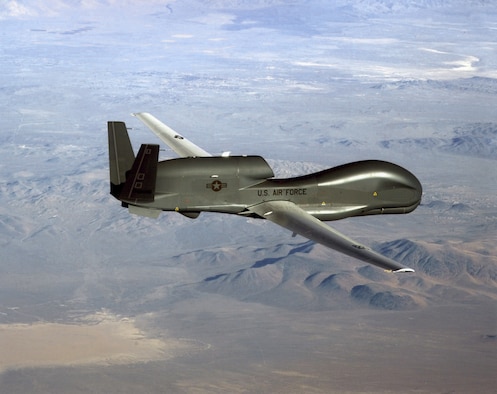
The United States has likely deployed the Global Hawk. An RQ-4 Global Hawk soars through the sky to record intelligence, surveillence and reconnaissance data. Air Force and Navy officials met to discuss joint training with the RQ-4. (Courtesy photo)

Mission 
The RQ-4 Global Hawk is a high-altitude, long-endurance, remotely piloted aircraft with an integrated sensor suite that provides global all-weather, day or night intelligence, surveillance and reconnaissance (ISR) capability. Global Hawk’s mission is to provide a broad spectrum of ISR collection capability to support joint combatant forces in worldwide peacetime, contingency and wartime operations. The Global Hawk provides persistent near-real-time coverage using imagery intelligence (IMINT), signals intelligence (SIGINT) and moving target indicator (MTI) sensors.

Features 
Global Hawk is currently fielded in three distinct blocks. Seven Block 10 aircraft were procured, but were retired from the Air Force inventory in 2011. Block 20s were initially fielded with IMINT-only capabilities, but three Block 20s have been converted to an EQ-4 communication relay configuration, carrying the Battlefield Airborne Communication Node (BACN) payload. Block 30 is a multi-intelligence platform that simultaneously carries electro-optical, infrared, synthetic aperture radar (SAR), and high and low band SIGINT sensors. Block 30 Initial Operating Capability (IOC) was declared in August 2011. Eighteen Block 30s are currently fielded, supporting every geographic combatant command as well as combat missions in Operations Enduring Freedom and Iraqi Freedom/ New Dawn. Block 30s also supported Operation Odyssey Dawn in Libya and humanitarian relief efforts during Operation Tomodachi in Japan. Block 40 carries the Radar Technology Insertion Program (RTIP) active electronically scanned array radar which provides MTI and SAR data. Block 40 Early Operating Capability (EOC) was declared in Sep 2013 and eleven Block 40s are currently fielded, supporting operations in four combatant commands.

Add other resources already in theater including the THAAD systems and we can determine the locations at least within a differential of feet and we can likely predict the location of the next launch. When it comes to cyber activity and the NSA, be assured those systems are in full use as well.

THAAD Terminal High-Altitude Area Defence

Thanks to dedicated scientists in the United States in key locations, they work wonders by reading waves and ripples and testing air.

How earthquake scientists eavesdrop on North Korea’s nuclear blasts

Waves and ripples in the Earth can reveal the location and depth of an explosion

illustration of seismic waves under a mountain

NUCLEAR SHAKEDOWN  Rumblings of seismic waves reveal clues about North Korea’s nuclear weapons tests, detonated in a mountain. Nicolle Rager Fuller

On September 9 of last year, in the middle of the morning, seismometers began lighting up around East Asia. From South Korea to Russia to Japan, geophysical instruments recorded squiggles as seismic waves passed through and shook the ground. It looked as if an earthquake with a magnitude of 5.2 had just happened. But the ground shaking had originated at North Korea’s nuclear weapons test site.

It was the fifth confirmed nuclear test in North Korea, and it opened the latest chapter in a long-running geologic detective story. Like a police examiner scrutinizing skid marks to figure out who was at fault in a car crash, researchers analyze seismic waves to determine if they come from a natural earthquake or an artificial explosion. If the latter, then scientists can also tease out details such as whether the blast was nuclear and how big it was. Test after test, seismologists are improving their understanding of North Korea’s nuclear weapons program.

The work feeds into international efforts to monitor the Comprehensive Nuclear-Test-Ban Treaty, which since 1996 has banned nuclear weapons testing. More than 180 countries have signed the treaty. But 44 countries that hold nuclear technology must both sign and ratify the treaty for it to have the force of law. Eight, including the United States and North Korea, have not.

To track potential violations, the treaty calls for a four-pronged international monitoring system, which is currently about 90 percent complete. Hydroacoustic stations can detect sound waves from underwater explosions. Infrasound stations listen for low-frequency sound waves rumbling through the atmosphere. Radio­nuclide stations sniff the air for the radioactive by-products of an atmospheric test. And seismic stations pick up the ground shaking, which is usually the fastest and most reliable method for confirming an underground explosion.

Seismic waves offer extra information about an explosion, new studies show. One research group is exploring how local topography, like the rugged mountain where the North Korean government conducts its tests, puts its imprint on the seismic signals. Knowing that, scientists can better pinpoint where the explosions are happening within the mountain — thus improving understanding of how deep and powerful the blasts are. A deep explosion is more likely to mask the power of the bomb.

Story continues after map

map of North Korea

EARS TO THE GROUND Using seismic wave data, researchers calculated the likely locations of five nuclear tests in North Korea’s Mount Mantap (satellite image shown).

  S.J. GIBBONS ET AL/GEOPHYS. J. INT. 2017, GOOGLE EARTH

Separately, physicists have conducted an unprecedented set of six explosions at the U.S. nuclear test site in Nevada. The aim was to mimic the physics of a nuclear explosion by detonating chemical explosives and watching how the seismic waves radiate outward. It’s like a miniature, nonnuclear version of a nuclear weapons test. Already, the scientists have made some key discoveries, such as understanding how a deeply buried blast shows up in the seismic detectors.

The more researchers can learn about the seismic calling card of each blast, the more they can understand international developments. That’s particularly true for North Korea, where leaders have been ramping up the pace of military testing since the first nuclear detonation in 2006. On July 4, the country launched its first confirmed ballistic missile — with no nuclear payload — that could reach as far as Alaska.

“There’s this building of knowledge that helps you understand the capabilities of a country like North Korea,” says Delaine Reiter, a geophysicist with Weston Geophysical Corp. in Lexington, Mass. “They’re not shy about broadcasting their testing, but they claim things Western scientists aren’t sure about. Was it as big as they claimed? We’re really interested in understanding that.”

Natural or not

Seismometers detect ground shaking from all sorts of events. In a typical year, anywhere from 1,200 to 2,200 earthquakes of magnitude 5 and greater set off the machines worldwide. On top of that is the unnatural shaking: from quarry blasts, mine collapses and other causes. The art of using seismic waves to tell one type of event from the others is known as forensic seismology.

Forensic seismologists work to distinguish a natural earthquake from what could be a clandestine nuclear test. In March 2003, for instance, seismometers detected a disturbance coming from near Lop Nor, a dried-up lake in western China that the Chinese government, which signed but hasn’t ratified the test ban treaty, has used for nuclear tests. Seismologists needed to figure out immediately what had happened.

One test for telling the difference between an earthquake and an explosion is how deep it is. Anything deeper than about 10 kilometers is almost certain to be natural. In the case of Lop Nor, the source of the waves seemed to be located about six kilometers down — difficult to tunnel to, but not impossible. Researchers also used a second test, which compares the amplitudes of two different kinds of seismic waves.

Earthquakes and explosions generate several types of seismic waves, starting with P, or primary, waves. These waves are the first to arrive at a distant station. Next come S, or secondary, waves, which travel through the ground in a shearing motion, taking longer to arrive. Finally come waves that ripple across the surface, including those called Rayleigh waves.

In an explosion as compared with an earthquake, the amplitudes of Rayleigh waves are smaller than those of the P waves. By looking at those two types of waves, scientists determined the Lop Nor incident was a natural earthquake, not a secretive explosion. (Seismology cannot reveal the entire picture. Had the Lop Nor event actually been an explosion, researchers would have needed data from the radionuclide monitoring network to confirm the blast came from nuclear and not chemical explosives.)

For North Korea, the question is not so much whether the government is setting off nuclear tests, but how powerful and destructive those blasts might be. In 2003, the country withdrew from the Treaty on the Nonproliferation of Nuclear Weapons, an international agreement distinct from the testing ban that aims to prevent the spread of nuclear weapons and related technology. Three years later, North Korea announced it had conducted an underground nuclear test in Mount Mantap at a site called Punggye-ri, in the northeastern part of the country. It was the first nuclear weapons test since India and Pakistan each set one off in 1998.

By analyzing seismic wave data from monitoring stations around the region, seismologists concluded the North Korean blast had come from shallow depths, no more than a few kilometers within the mountain. That supported the North Korean government’s claim of an intentional test. Two weeks later, a radionuclide monitoring station in Yellowknife, Canada, detected increases in radioactive xenon, which presumably had leaked out of the underground test site and drifted eastward. The blast was nuclear.

But the 2006 test raised fresh questions for seismologists. The ratio of amplitudes of the Rayleigh and P waves was not as distinctive as it usually is for an explosion. And other aspects of the seismic signature were also not as clear-cut as scientists had expected.

Researchers got some answers as North Korea’s testing continued. In 2009, 2013 and twice in 2016, the government set off more underground nuclear explosions at Punggye-ri. Each time, researchers outside the country compared the seismic data with the record of past nuclear blasts. Automated computer programs “compare the wiggles you see on the screen ripple for ripple,” says Steven Gibbons, a seismologist with the NORSAR monitoring organization in Kjeller, Norway. When the patterns match, scientists know it is another test. “A seismic signal generated by an explosion is like a fingerprint for that particular region,” he says.

With each test, researchers learned more about North Korea’s capabilities. By analyzing the magnitude of the ground shaking, experts could roughly calculate the power of each test. The 2006 explosion was relatively small, releasing energy equivalent to about 1,000 tons of TNT — a fraction of the 15-kiloton bomb dropped by the United States on Hiroshima, Japan, in 1945. But the yield of North Korea’s nuclear tests crept up each time, and the most recent test, in September 2016, may have exceeded the size of the Hiroshima bomb.

This U.S. atmospheric nuclear test took place in April 1953 in Nevada. No surprise, North Korea’s buried tests are harder to spot.

CTBTO/FLICKR (CC BY 2.0)

Digging deep

For an event of a particular seismic magnitude, the deeper the explosion, the more energetic the blast. A shallow, less energetic test can look a lot like a deeply buried, powerful blast. Scientists need to figure out precisely where each explosion occurred.

Mount Mantap is a rugged granite mountain with geology that complicates the physics of how seismic waves spread. Western experts do not know exactly how the nuclear bombs are placed inside the mountain before being detonated. But satellite imagery shows activity that looks like tunnels being dug into the mountainside. The tunnels could be dug two ways: straight into the granite or spiraled around in a fishhook pattern to collapse and seal the site after a test, Frank Pabian, a nonproliferation expert at Los Alamos National Laboratory in New Mexico, said in April in Denver at a meeting of the Seismological Society of America.

Researchers have been trying to figure out the relative locations of each of the five tests. By comparing the amplitudes of the P, S and Rayleigh waves, and calculating how long each would have taken to travel through the ground, researchers can plot the likely sites of the five blasts. That allows them to better tie the explosions to the infrastructure on the surface, like the tunnels spotted in satellite imagery.

One big puzzle arose after the 2009 test. Analyzing the times that seismic waves arrived at various measuring stations, one group calculated that the test occurred 2.2 kilometers west of the first blast. Another scientist found it only 1.8 kilometers away. The difference may not sound like a lot, Gibbons says, but it “is huge if you’re trying to place these relative locations within the terrain.” Move a couple of hundred meters to the east or west, and the explosion could have happened beneath a valley as opposed to a ridge — radically changing the depth estimates, along with estimates of the blast’s power.

Gibbons and colleagues think they may be able to reconcile these different location estimates. The answer lies in which station the seismic data come from. Studies that rely on data from stations within about 1,500 kilometers of Punggye-ri — as in eastern China — tend to estimate bigger distances between the locations of the five tests when compared with studies that use data from more distant seismic stations in Europe and elsewhere. Seismic waves must be leaving the test site in a more complicated way than scientists had thought, or else all the measurements would agree.

When Gibbons’ team corrected for the varying distances of the seismic data, the scientists came up with a distance of 1.9 kilometers between the 2006 and 2009 blasts. The team also pinpointed the other explosions as well. The September 2016 test turned out to be almost directly beneath the 2,205-meter summit of Mount Mantap, the group reported in January in Geophysical Journal International. That means the blast was, indeed, deeply buried and hence probably at least as powerful as the Hiroshima bomb for it to register as a magnitude 5.2 earthquake.

Other seismologists have been squeezing information out of the seismic data in a different way — not in how far the signals are from the test blast, but what they traveled through before being detected. Reiter and Seung-Hoon Yoo, also of Weston Geophysical, recently analyzed data from two seismic stations, one 370 kilometers to the north in China and the other 306 kilometers to the south in South Korea.

The scientists scrutinized the moments when the seismic waves arrived at the stations, in the first second of the initial P waves, and found slight differences between the wiggles recorded in China and South Korea, Reiter reported at the Denver conference. Those in the north showed a more energetic pulse rising from the wiggles in the first second; the southern seismic records did not. Reiter and Yoo think this pattern represents an imprint of the topography at Mount Mantap.

“One side of the mountain is much steeper,” Reiter explains. “The station in China was sampling the signal coming through the steep side of the mountain, while the southern station was seeing the more shallowly dipping face.” This difference may also help explain why data from seismic stations spanning the breadth of Japan show a slight difference from north to south. Those differences may reflect the changing topography as the seismic waves exited Mount Mantap during the test.

Four ways to verify a nuclear weapons test

Seismic: 170 stations worldwide monitor ground shaking to identify the location, strength and nature of a seismic event.

Hydroacoustic: 11 stations listen in the oceans, where sound waves can propagate far.

Infrasound: 60 stations detect low-frequency sound waves inaudible to humans.

Radionuclide: 80 stations sniff for radioactive particles dispersed in the wind after a test.

Learning from simulations

But there is only so much scientists can do to understand explosions they can’t get near. That’s where the test blasts in Nevada come in.

The tests were part of phase one of the Source Physics Experiment, a $40-million project run by the U.S. Department of Energy’s National Nuclear Security Administration. The goal was to set off a series of chemical explosions of different sizes and at different depths in the same borehole and then record the seismic signals on a battery of instruments. The detonations took place at the nuclear test site in southern Nevada, where between 1951 and 1992 the U.S. government set off 828 underground nuclear tests and 100 atmospheric ones, whose mushroom clouds were seen from Las Vegas, 100 kilometers away.

For the Source Physics Experiment, six chemical explosions were set off between 2011 and 2016, ranging up to 5,000 kilograms of TNT equivalent and down to 87 meters deep. The biggest required high-energy–density explosives packed into a cylinder nearly a meter across and 6.7 meters long, says Beth Dzenitis, an engineer at Lawrence Livermore National Laboratory in California who oversaw part of the field campaign. Yet for all that firepower, the detonation barely registered on anything other than the instruments peppering the ground. “I wish I could tell you all these cool fireworks go off, but you don’t even know it’s happening,” she says.

The explosives were set inside granite rock, a material very similar to the granite at Mount Mantap. So the seismic waves racing outward behaved very much as they might at the North Korean nuclear test site, says William Walter, head of geophysical monitoring at Livermore. The underlying physics, describing how seismic energy travels through the ground, is virtually the same for both chemical and nuclear blasts.

Technicians lower an enormous canister of explosives into the ground in southern Nevada for a chemical explosion — part of the Source Physics Experiment series — to mimic the physics of nuclear blasts.

GARY STRIKER/LAWRENCE LIVERMORE NATIONAL LAB

The results revealed flaws in the models that researchers have been using for decades to describe how seismic waves travel outward from explosions. These models were developed to describe how the P waves compress rock as they propagate from large nuclear blasts like those set off starting in the 1950s by the United States and the Soviet Union. “That worked very well in the days when the tests were large,” Walter says. But for much smaller blasts, like those North Korea has been detonating, “the models didn’t work that well at all.”

Walter and Livermore colleague Sean Ford have started to develop new models that better capture the physics involved in small explosions. Those models should be able to describe the depth and energy release of North Korea’s tests more accurately, Walter reported at the Denver meeting.

A second phase of the Source Physics Experiment is set to begin next year at the test site, in a much more rubbly type of rock called alluvium. Scientists will use that series of tests to see how seismic waves are affected when they travel through fragmented rock as opposed to more coherent granite. That information could be useful if North Korea begins testing in another location, or if another country detonates an atomic bomb in fragmented rock.

For now, the world’s seismologists continue to watch and wait, to see what the North Korean government might do next. Some experts think the next nuclear test will come at a different location within Mount Mantap, to the south of the most recent tests. If so, that will provide a fresh challenge to the researchers waiting to unravel the story the seismic waves will tell.

“It’s a little creepy what we do,” Reiter admits. “We wait for these explosions to happen, and then we race each other to find the location, see how big it was, that kind of thing. But it has really given us a good look as to how [North Korea’s] nuclear program is progressing.” Useful information as the world’s nations decide what to do about North Korea’s rogue testing.

Pentagon Recommends Suspension of MAVNI, Foreign Infiltration

It does not take but just a few to go AWOL or to flee the program to create a domestic national security disaster. Further, was the original vetting and background procedure watered down in recent years such that the vulnerability to this growing security risk manifested?

What the heck is really going on here? Remember in October of 2016 when Reuters reported this?

Forty-four Afghan troops visiting the United States for military training have gone missing in less than two years, presumably in an effort to live and work illegally in America, Pentagon officials said.

Although the number of disappearances is relatively small — some 2,200 Afghan troops have received military training in the United States since 2007 — the incidents raise questions about security and screening procedures for the programs.

There was yet another very similiar AWOL event in 2010 in Texas. 17 involved there.

The MAVNI program was limited to 5,200 people in Fiscal Year 2016. The fact sheet is here.


FNC/EXCLUSIVE: Defense Department investigators have discovered “potential security risks” in a Pentagon program that has enrolled more than 10,000 foreign-born individuals into the U.S. armed forces since 2009, Fox News has learned exclusively, with sources on Capitol Hill and at the Pentagon expressing alarm over “foreign infiltration” and enrollees now unaccounted for.

After more than a year of investigation, the Pentagon’s inspector general recently issued a report – its contents still classified but its existence disclosed here for the first time – identifying serious problems with Military Accessions Vital to the National Interest (MAVNI), a DOD program that provides immigrants and non-immigrant aliens with an expedited path to citizenship in exchange for military service.

Defense Department officials said the program is still active but acknowledged that new applications have been suspended.

Created in the final weeks of the Bush-Cheney administration and launched under then-President Barack Obama, MAVNI was designed to recruit individuals with foreign-language and other skills the Pentagon deems useful and in short supply. The program has had many success stories – most notably the Army’s Soldier of the Year in 2012, Sgt. Saral Shrestha, originally of Nepal – and independent analyses have found MAVNI recruits out-perform non-MAVNI soldiers in critical areas.

Yet concern over management of the program has grown over recent months.

“The lack of discipline in implementation of this program has created problems elsewhere,” said Rep. Steve Russell, R-Okla., a retired Army officer who sits on the House Armed Services subcommittee on military personnel. It was Russell who first publicly sounded alarms. During the markup of the latest defense authorization bill, on June 28, Russell noted: “The program has been replete with problems, to include foreign infiltration – so much so that the Department of Defense is seeking to suspend the program due to those concerns.”

Another lawmaker, whose committee does not enjoy jurisdiction over MAVNI – but whose panel could well come to focus on these problems, depending on their severity – told Fox News that the program had been “compromised” and that DOD officials have not presented answers to his questions about missing enrollees: “Where are they? What do they know? Where are they serving? What are their numbers?”

Contacted by Fox News, Army Lt. Col. Paul Haverstick, a Pentagon spokesman, said in a statement: “The Department of Defense is conducting a review of the MAVNI pilot program due to potential security risks associated with the program.” Beyond that, however, Haverstick declined to comment, citing “pending litigation.”

Defense Secretary James Mattis, whom sources said had developed his own concerns about MAVNI, was named as the sole defendant in a lawsuit filed in February by seven foreign-born MAVNI enrollees. The lawsuit alleged that a decision by top brass in September to tighten up access to security clearances issued through MAVNI had had the effect of “crippling their military careers.”

Sources said MAVNI’s problems included a vetting backlog that led to enrollment of many soldiers prior to completion of their background checks, and an attendant “drift” in the program’s criteria, with MAVNI being used as a vehicle for the hiring of workers – like cooks, drivers and mechanics – who did not possess the specialized skills the program was created to exploit.

The title of the inspector general’s classified report – “Evaluation of Military Services’ Compliance with Military Accessions Vital to the National Interest Program Security Reviews and Monitoring Programs” – hints at the problems, with its references to “security reviews” and “monitoring” of enrolled individuals.

Some lawmakers have received classified briefings on the matter. Sources said some of the countries of origin for MAVNI enrollees are “of concern,” but as of yet there is no evidence in the public domain that ISIS, Al Qaeda, or any other terrorist groups have penetrated the MAVNI program. Still, such a development remains an active concern.

“ISIS has always had desire to use migration as way to penetrate into countries,” said retired U.S. Army General Jack Keane, a Fox News military analyst. “They have done that successfully in Europe because of open borders, mass immigration with no vetting. In the U.S., we haven’t had any record of their penetration. And certainly if this program is compromised and there’s a possibility of that kind of penetration, it’s got to be thoroughly investigated.”

But, President Trump Hosted Saad Hariri at the White House

So…surely President Trump knew who Hezbollah was and their history right? Oh..perhaps Hariri brought it up in the conversation that the ordnance for the next major battle against Israel has 150,000 missiles under ground in Lebanon, right?

Okay, how about how Iran and Hezbollah are one in the same in Lebanon..surely this was covered in that meeting….uh?

Did President Trump ask Prime Minister Hariri about what he knew regarding Iran’s missile launch and that satellite that failed? Did he ask Hariri why Iran needed a space program?

Anything? Well yes, Hariri asked the President Trump for money to control Hezbollah. The whole country is controlled by Hezbollah…what the heck?

Alright, more facts here.

Iran’s space program has emerged from a three-year dormancy initiated by Rouhani but probably issuing from technical and budgetary constraints as well. Further launches can be expected in the near future, likely renewing concerns over the nature of Iran’s missile and SLV programs. The scenario is especially worrisome when considering assessments that a ballistic-missile derivative of the Simorgh could potentially achieve intercontinental range. Iran insists its inherently military-run space program is for peaceful purposes only and that its ballistic missiles are for conventional deterrence at a range no greater than 2,000 kilometers. Such rhetoric and Iran’s technical limitations notwithstanding, the mere possibility of diverted know-how from an SLV to an ICBM program will unsettle many Western capitals. Previous close cooperation between Tehran and Pyongyang will provide no further solace. Detailed summary here.

photo

Then we have those pesky missiles that seem to get ignored until the WSJ posted a chilling summary:

In a rare moment of disagreement between Benjamin Netanyahu and Donald Trump, Israel’s prime minister last month rejected a U.S.-Russia cease-fire agreement that he said could cement the buildup of Hezbollah and Iranian forces along Israel’s border with Syria.

Mr. Netanyahu has good reason to be concerned. Israel’s head of military intelligence, Maj. Gen. Herzl Halevi, confirmed in June a Kuwaiti newspaper report that largely went unnoticed: Iran’s Islamic Revolutionary Guard Corps, in cooperation with Hezbollah, has been constructing missile-production facilities in Lebanon.

Buried more than 50 meters below ground and protected from aerial attack, these facilities could produce highly sophisticated rockets with ranges of more than 300 miles and equipped with advanced guidance systems.

Israeli officials now say that pre-emptive strikes may be necessary to destroy these missile capabilities before they’re operational. The result could be a bloody war that would see thousands of Hezbollah missiles hurled into Israeli airspace, with punishing Israeli reprisals and hundreds—if not thousands—of civilian deaths on both sides. It would be more chaos for Washington policy makers scrambling to manage a region already in flames.

Iran has long transferred missiles by ground and air through Syria to Hezbollah in Lebanon. In recent years, Israel repeatedly struck these transfers of what their officials call “game-changing” weaponry—weapons that could challenge Israel’s military superiority and pose severe threats to its civilians.

Despite significant success against many of these transfers, Hezbollah’s inventory has expanded to more than 150,000 missiles today from an estimated 50,000 missiles at the beginning of the second Lebanon War in 2006. And while many of these projectiles are crude, an increasing number are highly accurate, capable of delivering a massive payload to anywhere in Israel.

Israel, of course, has advanced short-, medium- and long-range missile defenses: the Iron Dome, David’s Sling and Arrow systems. But Iran and Hezbollah are now seeking an arsenal that can overwhelm these systems. More of the story here.

***

A top North Korean politician recently left Pyongyang for a 10-day trip to Iran, a country that may still be cooperating militarily with the Kim Jong Un regime.

Workers’ Party newspaper Rodong Sinmun reported Tuesday chairman of the Presidium of the Supreme Assembly of North Korea Kim Yong Nam left Pyongyang on Monday to attend the inauguration ceremony for President Hassan Rouhani.

Lastly, the U.S. is detecting significant North Korean submarine activity. And from The U.S. Air Force was preparing Tuesday to test an unarmed Minuteman 3 intercontinental ballistic missile with a launch from California, the fourth such test this year.

The 30th Space Wing says the missile was to be launched between 12:01 a.m. and 6:01 a.m. Wednesday from Vandenberg Air Force Base, about 130 miles (209 kilometers) northwest of Los Angeles.

An Air Force statement said the test would show the effectiveness, readiness, and accuracy of the weapon system.

Minuteman missiles are regularly tested with launches from Vandenberg that send unarmed re-entry vehicles 4,200 miles (6,800 kilometers) across the Pacific to a target area at Kwajalein Atoll.

North Korea Kim Jung un, Cyber Theft of Currency

Going back to the 1970’s, North Korea was counterfeiting U.S. currency. In 2006, it was the super note, a perfect $100 dollar bill.

Training for such skills as counterfeiting, illicit drugs, weapons, cyber warfare and bootleg merchandise comes out of Office 39. Clandestine and fraudulent transactions including management operations flowing through Office 39 is estimate in the $6-8 billion range.

In 2014, one defector fleeing to Russia had $5 million of the Office 39 funds money with him.

Those highly selected North Koreans assigned to Office 39 arrive from having received an education in these specialties from elite universities or academies in China and Russia. Other highly selected North Koreans are also required to attend an in country school known as Mirim College. This school was founded by Kim Jong Il in 1986.

According to a defector:

this college has a highly confidential mission—education of world-class IT warriors—its security is so exhaustively kept that individual guard units are dispatched to the college solely for security. The security manual distributed to guards indicates that, “Without the permission of the college commander, no car should be allowed entrance to college grounds except for that of Kim Jong Il.”

Students of the college wear the same uniform as military officials, but on their shoulders they brandish special stars, on which hak (meaning is learning) is printed. A “Kim Il Political Military University” badge is worn on the left side of the chest.

Kim Jung Il lived the high life while his own people suffered to not only beatings but to death by starvation. His son, Kim Jung Un, taking over the country lives much the same yet due to sanctions and isolation by the international community, illicit activities continue.

Counterfeiting of currency is not so much a common practice in North Korea and the country has been dabbling in bitcoin fraud and now through cyber activity, they steal currency.

Just recently, Reuters published an item referring to a report analyzed suspected cyber attacks between 2015 and 2017 on South Korean government and commercial institutions, identified another Lazarus spinoff named Andariel.

“Bluenoroff and Andariel share their common root, but they have different targets and motives,” the report said. “Andariel focuses on attacking South Korean businesses and government agencies using methods tailored for the country.”

Pyongyang has been stepping up its online hacking capabilities as one way of earning hard currency under the chokehold of international sanctions imposed to stop the development of its nuclear weapons program.

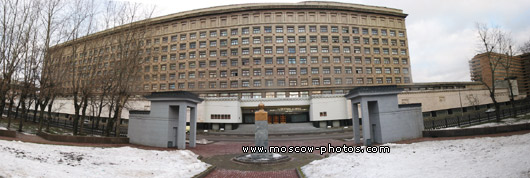
North Korea has cooperated with China, Russia and Iran to improve their cyber capabilities. China is especially complicit in that cooperation by providing the communications network inside the DPRK and inside China. Additionally, China has provided hardware, servers, routers. Russia is not without major blame and shares the guilt by dispatching Russian professors from Frunze Military Academy to train North Koreans to be professional hackers.

Additionally, Russia has sold to North Korea GPS jamming equipment in the area of sea navigation and also provides financial aid to North Korea supporting it’s abilities to interfere and disrupt command and control systems.

North Korea operates yet another location known as Office 91. It has four units:

110= Technology Reconnaissance Team for DDoS attacks

35= External Offensive Cyber Operations

121= Strictly assigned for cyber attacks on South Korea

204= Enemy Secret Cyber Psychological Warfare Unit

In total, it is estimated that North Korea has close to 10,000 people assigned the the cyber and hacking operations in country. Additionally, North Korea maintains a force of up to 1000 in China performing cyber warfare.

While it is common for headlines to refer to Kim Jung Un as a nutcase, that is hardly a fitting description for him. While he may be militant and spontaneous, he is well educated. He attended Liebefeld-Steinhölzli Schule, a Swiss state school gaining access to Western culture, but had lousy grades. He has two degrees, one in physics from Kim il Sung University and another as an Army officer obtained from the Kim Il Sung Military University.

He does maintain an asymmetrical military strategy that has astounded the West and countries in the region with his advanced missile systems and launch abilities. All this is funded by cyber theft of currency and information and cooperation with Iran, China and Russia. North Korea does have IP proxy locations for operations that include New Zealand, Malaysia, Indonesia an several others. The ‘darknet’ is full of countries co-opting servers and jump points all doing the same thing.


The Frunze Military Academy Panorama