An affordable price is probably the major benefit persuading people to buy drugs at www.americanbestpills.com. The cost of medications in Canadian drugstores is considerably lower than anywhere else simply because the medications here are oriented on international customers. In many cases, you will be able to cut your costs to a great extent and probably even save up a big fortune on your prescription drugs. What's more, pharmacies of Canada offer free-of-charge shipping, which is a convenient addition to all other benefits on offer. Cheap price is especially appealing to those users who are tight on a budget
Service Quality and Reputation
Although some believe that buying online is buying a pig in the poke, it is not. Canadian online pharmacies are excellent sources of information and are open for discussions. There one can read tons of users' feedback, where they share their experience of using a particular pharmacy, say what they like or do not like about the drugs and/or service. Reputable online pharmacy canadianrxon.com take this feedback into consideration and rely on it as a kind of expert advice, which helps them constantly improve they service and ensure that their clients buy safe and effective drugs. Last, but not least is their striving to attract professional doctors. As a result, users can directly contact a qualified doctor and ask whatever questions they have about a particular drug. Most likely, a doctor will ask several questions about the condition, for which the drug is going to be used. Based on this information, he or she will advise to use or not to use this medication.
Suit: U.S. Firms’ Bribes Funded Iraq Militia Attacks on Americans
WASHINGTON — A group of American veterans filed a federal lawsuit Tuesday against U.S. and European drug companies and medical device makers, accusing them of supporting an Iran-backed Iraqi militia that killed and wounded hundreds of Americans.
The suit is filed under a law that allows Americans injured by terrorism overseas to seek civil damages. The more than 100 plaintiffs include injured U.S. Iraq war veterans and their families. The defendants are either parent companies or subsidiaries of AstraZeneca plc (AZN); Johnson & Johnson (JNJ); Pfizer Inc. (PFE); Roche Holding AG (RHHBY); and the General Electric Company (GE).
The 203-page lawsuit accuses the companies of paying bribes to officials of Iraq’s health ministry that benefited the Mahdi Army, an Iranian-backed militia that the suit says worked closely with Hezbollah, a Lebanese group that has been designated a terrorist organization by the U.S. government.
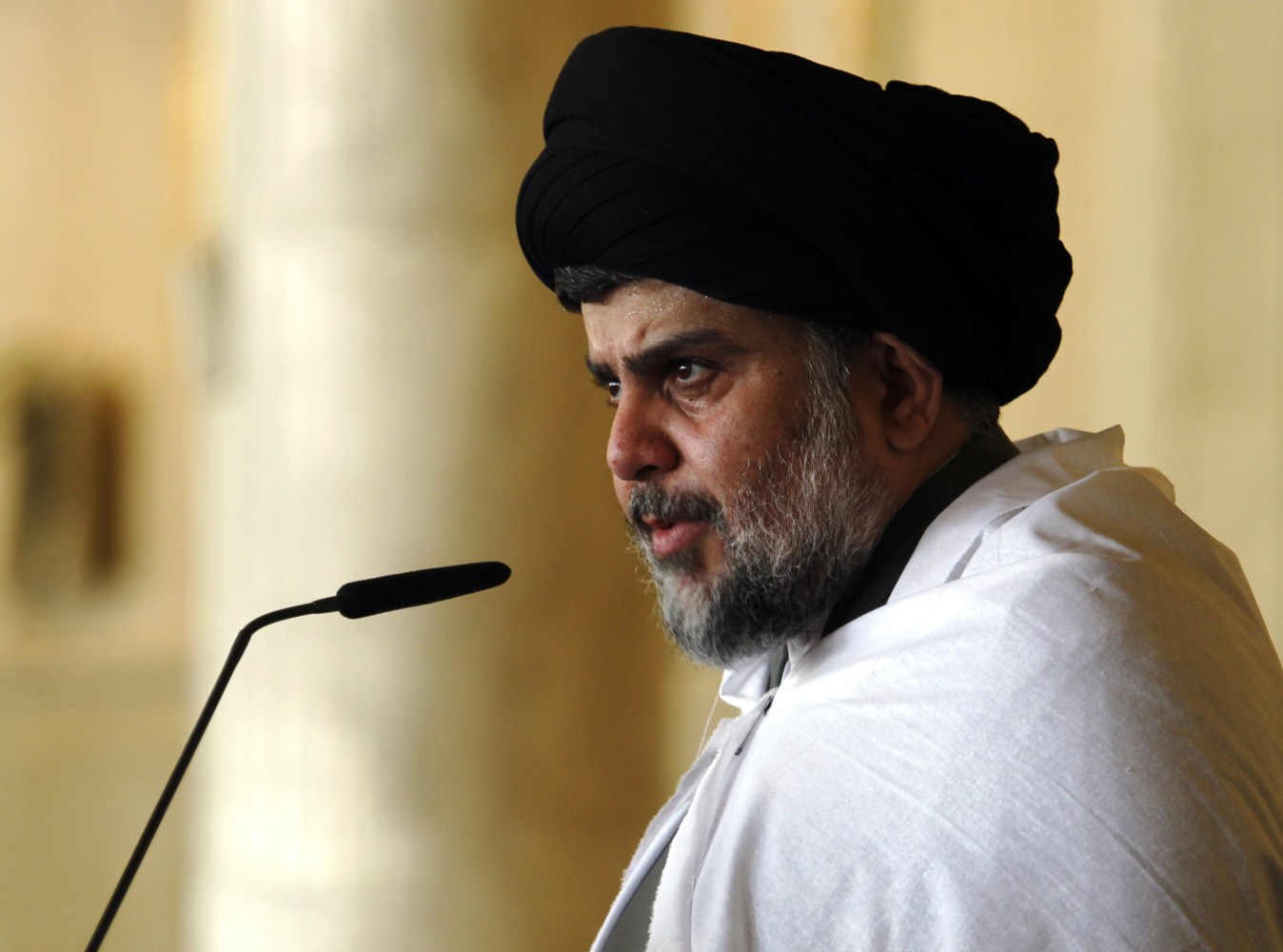
Iraqi Shiites of the Mahdi Army militia loyal to cleric Moqtada al-Sadr vow to fight ISIS in a show of strength in a military parade on June 21, 2014 in the Sadr City district of Baghdad, Iraq.Scott Peterson / Getty Images file
The companies sold Iraq’s government-run healthcare system millions of dollars worth of drugs and medical devices, and paid the bribes, the suit alleges, as a cost of doing business.
Related reading: By late 2006, at the height of sectarian violence, the Sadrists were a formidable military force. In the wake of the February 2006 bombing of the al-Askari Mosque in Samarra (one of the holiest Shi’a shrines) and frequent attacks by al Qaeda in Iraq, JAM positioned itself as a security guarantor for the Shi’a. However, the organization also spawned death squads responsible for sectarian cleansing.9 By mid-2006 these militias were engaged in a violent campaign of expansion into Sunni and mixed Sunni-Shi’a neighborhoods. JAM soon controlled large areas of Baghdad and they increasingly relied upon corruption, intimidation, and extortion to enhance their wealth and power. More here.
After the U.S. invasion, Iraq’s political factions divvied up government departments under a political spoils system, and the Mahdi Army’s political wing took control of the health ministry. The state-owned drug purchasing monopoly, Kimadia, demanded a 20 percent “religious tax” from the vendors on every contract, the lawsuit said.
“That policy required, as a general matter, companies doing business with Kimadia to pay commissions of at least 20 percent on every contract, the lawsuit says. “This was sometimes paid in the form of in-kind bribes but was often paid in cash as well. Such cash payments were typically called ‘commissions’ — the Iraqi euphemism for bribes. From 2004-2013, it was standard practice for companies dealing with (the Ministry of Health) to pay ‘commissions’ on every major sales contract.”
The in-kind bribes were in the form of what were known as “free goods,” including drugs and medical devices, that Iraqi officials would sell on the black market, says the lawsuit, which specifically accuses each defendant of paying such bribes.
The suit says the defendants paid the bribes even though they knew or should have known that the money was going to a dangerous armed faction.
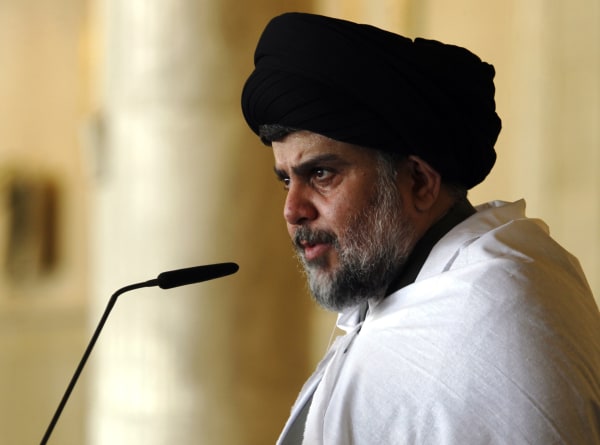
Iraqi Shiite cleric Moqtada al-Sadr delivers a speech to his supporters following Friday prayers at the grand mosque of Kufa in the holy city of Najaf, on April 3, 2015.Haidar Hamdani / AFP/Getty Images file
“Defendants knew or recklessly disregarded that their transactions helped fund Jaysh al-Mahdi attacks on Americans,” the suit says, using an Arabic term for the Mahdi Army.
In a statement, Pfizer said it “categorically denies any wrongdoing.” Roche said it had not been served with the suit and could not comment. A GE spokesperson said the company became aware of the complaint Tuesday and is “thoroughly reviewing the allegations.” The other companies did not immediately respond to requests for comment.
The Mahdi Army, led by Muqtada al-Sadr, is an Iranian-backed militia that opposed the American invasion and occupation of Iraq. It was never designated a terrorist organization by the U.S., a fact that could pose a legal hurdle for the plaintiffs. The suit argues that it acted as a terrorist organization and worked closely with Hezbollah, a designated terrorist organization.
Sadr posed a problem for the American war effort from the start, when he allegedly stabbed to death a U.S.-backed political opponent in 2003. American authorities issued a warrant for his arrest on murder charges but never executed it, fearful of the backlash it might cause among his Shiite supporters.
The U.S. thrice contemplated operations to kill Sadr but decided against doing so, a former CIA officer with personal knowledge told NBC News.
Sadr and his militia fought on and off for years against U.S. forces. In 2004, after the U.S. closed his newspaper, his forces seized control of Shiite areas around Iraq, leading to fighting that killed at least 19 Americans.
The lawsuit cites media and government reports asserting that the Mahdi Army worked closely with Hezbollah to attack American forces, including with sophisticated Iranian-build roadside bombs that penetrated U.S. armor.
Those bombs, known as explosively formed penetrators, or EFPs, killed 196 Americans and wounded 861 from 2005 to 2011, according to a U.S. military study cited in the lawsuit.
The suit was brought by the Washington, D.C.-based law firms of Sparacino & Andreson PLLC and Kellogg, Hansen, Todd, Figel & Frederick, PLLC.
One of the plaintiffs’ lawyers, David C. Frederick, represented NFL players in their suit against the NFL over brain injuries. That case resulted in a $765 million settlement fund for players.
Some of the defendants have been accused in the past of violating the U/S. law against bribing foreigners to secure business.
In 2010, GE paid $23.4 million to the federal government to settle allegations by the Securities and Exchange Commission that its subsidiaries had violated the Foreign Corrupt Practices Act in connection with alleged kickbacks paid in Iraq under the United Nations’ oil-for-food program. The GE subsidiaries were selling medical and water purification equipment to the Iraqi government.
The kickbacks were paid from 2000 to 2003 and consisted of cash, computer equipment, medical supplies, and services to the Iraqi Health Ministry or the Oil Ministry, the government said at the time.
In 2011, Johnson & Johnson agreed to pay a $21.4 million penalty to resolve criminal FCPA charges with the Justice Department, and another $48.6 million in disgorgement and prejudgment interest to settle the SEC’s civil charges, in a case alleging improper payments to doctors in Greece by J&J subsidiary DePuy Inc.
Last year, AstraZeneca PLC agreed to pay more than $5 million in penalties after the SEC accused it of violating the books and records and internal controls provisions of the Foreign Corrupt Practices Act in connection with allegedly illegal payments made by subsidiaries in China and Russia to boost drug sales. AstraZeneca settled the enforcement action without admitting or denying the SEC’s findings.
A recent cyber-heist that targeted a bank in Taiwan has been linked by security researchers to an infamous threat group believed to be operating out of North Korea.
Hackers exploited the SWIFT global financial network to steal roughly $60 million from Taiwan’s Far Eastern International Bank. The money was transferred to several countries, but bank officials claimed they had managed to recover most of it. Two individuals were arrested earlier this month in Sri Lanka for their role in the operation.
Researchers at BAE Systems have identified some of the tools used in the attack and found connections to the North Korean threat actor known as Lazarus. This group is also believed to be behind the 2014 attack on Sony Pictures and campaigns targeting several banks, including Bangladesh’s central bank.
The attack on the Bangladesh bank, which resulted in the theft of $81 million, also involved the SWIFT system. Similar methods were also used to target several other banks, but SWIFT said some of the operations failed due to the new security measures implemented by the company.
While it’s still unclear how attackers gained access to the systems of Far Eastern International Bank, an analysis of various malware samples apparently involved in the attack suggests that the hackers may have used a piece of ransomware as a distraction.
The ransomware involved in the attack is known as Hermes. According to Bleeping Computer, the threat surfaced in February and its latest version has an encryption mechanism that makes it impossible to recover files without paying the ransom.
However, researchers at McAfee discovered that the Hermes variant used in the attack on the Taiwanese bank did not display a ransom note, which led them to believe it may have been only a distraction.
“Was the ransomware used to distract the real purpose of this attack? We strongly believe so,” McAfee researchers said. “Based on our sources, the ransomware attack started in the network when the unauthorized payments were being sent.”
BAE Systems has seen samples that drop a ransom note in each encrypted folder, but even they believe Hermes may have been used to distract the bank’s security team.
Another malware sample linked by BAE Systems to this attack is a loader named Bitsran, which spreads a malicious payload on the targeted network. This threat contained what appeared to be hardcoded credentials for Far Eastern International’s network, which suggests the threat group may have conducted previous reconnaissance.
Some pieces of malware discovered by BAE Systems are known to have been used by the Lazarus group, including in attacks aimed at financial organizations in Poland and Mexico. The malware includes commands and other messages written in Russia, which experts believe is likely a false flag designed to throw off investigators.
It’s worth noting that the Hermes ransomware samples checked the infected machine’s language settings and stopped running if Russian, Ukrainian or Belarusian was detected. This is common for malware created by Russian and Ukrainian hackers who often avoid targeting their own country’s citizens. However, this could also be a false flag.
Another piece of evidence linking the Taiwan bank attacks to Lazarus is the fact that money was transferred to accounts in Sri Lanka and Cambodia, similar to other operations attributed to the group.
Some experts believe that these bank heists and the WannaCry attack, which has also been linked by some to Lazarus, are campaigns launched by North Korea for financial gain. However, many of these operations don’t appear to have been very successful on this front.
“Despite their continued success in getting onto payment systems in banks, the Lazarus group still struggle getting the cash in the end, with payments being reversed soon after the attacks are uncovered,” BAE Systems researchers explained.
“The group may be trying new tricks to disrupt victims and delay their ability to respond – such as different message formats, and the deployment of ransomware across the victim’s network as a smokescreen for their other activity. It’s likely they’ll continue their heist attempts against banks in the coming months and we expect they will evolve their modus operandi to incorporate new ways of disrupting victims (and possibly the wider community) from responding,” they added.
photo
*** Related reading: The Lazarus (aka DarkSeoul group) is allegedly controlled by Bureau 121, a division of the Reconnaissance General Bureau, a North Korean intelligence agency. Bureau 121 is responsible for conducting military cyber campaigns.
*** By the way, some of the North Korean hackers not only operate in China but many of those hackers are from India….
6,000 is the number of hackers working for North Korea, traced by American and British security officials.
Once scoffed at, North Korea’s cyber technology has now developed to a brink where it can create a havoc in the world’s cybersecurity. From theft to political agenda, North Korea now launches attacks in the form of ransomware, digital bank heists, online video game cracks and Bitcoin exchanges.
In the first week of October, India’s Ministry of External Affairs issued a strongly-worded statement condemning North Korea for conducting a powerful nuclear test. Few weeks down the line, a stunning report from the New York Times claims that India serves as a base for North Korea’s cyber warfare.
Citing a report by the Recorded Future, the American publication said nearly a fifth of the Pyongang’s attacks originate from India.
The report claims that most of North Korean cyber operations are carried out from foreign countries like India, Malaysia, New Zealand, Nepal, Kenya, Mozambique, and Indonesia. While in some cases, the North Korean hackers route their attacks through their computers from abroad, in cases like that in India, hackers are physically stationed to carry out attacks.
The cyber mission as envisaged by Kim Jong-il in the 1990s was expanded by his dictator son Kim Jong-Un after he took power in 2011.
On of the most successful cyber attacks carried out by North Korea dates back to 2014 on Sony pictures to prevent them from releasing a comedy film that was based on the assassination of Kim Jong Un.
Last May, a widespread global ransomware attack caused panic and briefly stalled the Britain’s National Health Services.
The digital bank heists in Philippines in 2015 and in Vietnam in the same year also earned them some hard cash from cyber attacks.
The report by Recorded Future also indicates that India, despite serving as a base for North Korea’s cyberwar, also remains at a potential threat from similar attacks. While the world lives under the fear of North Korea emerging as a nuclear superpower, the country is silently building a strong brigade of hackers.
Hey President Trump, fire Brett McGurk. Qassem Suleimani has been declared a terrorist and has countless sanctions, why is he allowed to travel including 3 trips to Moscow?
Why is the United States neutral?
Kirkuk, home to some 1 million Arabs, Kurds, Turkmen and Christians, has been at the heart of a long-running dispute between the autonomous Kurdish region and the central government in Baghdad. Both are close allies of the U.S. There are 35 million Kurds in 4 countries, they are essentially stateless….McMaster, you out there? What say you?
photo
On Sunday, Qassem Suleimani, Iran’s chief spymaster, travelled to the Iraqi city of Sulaimaniya to meet with the leaders of the Patriotic Union of Kurdistan, or P.U.K., one of the two main Kurdish political parties. For years, the P.U.K. and its sister party, the Kurdish Democratic Party, or K.D.P., have been struggling to break away from the rest of Iraq and form an independent state. A Kurdish republic is opposed by all the region’s countries—the governments in Baghdad, Turkey, and Iran—which fear that sizable Kurdish minorities in all three nations will begin to act autonomously.
It is not known what Suleimani—the Middle East’s most cunning operative—told the P.U.K.’s leaders. But, within hours, their fighters began abandoning their posts, making way for Iraqi military units just across the front lines. Not long after, Iraqi forces took over the former Kurdish positions and a stretch of oil fields near the city of Kirkuk. With the Iraqi Kurds now split in two—the P.U.K. on one side and the K.D.P. on the other—hopes for an independent Kurdish state appear to be fading fast. “It was a horrible, horrible betrayal,” a senior official in the Kurdish Regional Government told me.
“Everyone is calling it the P.U.K. drug deal,” a former senior American official who works in the region told me. Notably, many P.U.K. units refused the order to stand down and fought the oncoming Iraqi units.
Last week, Iraqi military units began massing near the Kurdish-Iraqi border. The Iraqi units are dominated by “popular mobilization forces,” which is another way of saying Iranian-trained militias that operate inside Iraq. Those militias—controlled by Suleimani—are staunch backers of the Shiite-led government of Prime Minister Haider al-Abadi, in Baghdad. Most of these groups have dark pasts; the main militia that moved into Kurdish territory this morning was Asa’ib Ahl al-Haq, which battled American soldiers in Iraq during the war there. Its leader, Qais Khazali, is believed to be the principal planner of the kidnapping and execution of four American soldiers in Karbala in 2007. The military operation in the Kurdish region is very much a joint Iraq-Iran project; the flag of Asa’ib Ahl al-Haq was planted at one of the Kurdish bases that was taken over. Also accompanying Iraqi forces in Kirkuk was Abu Mahdi al-Muhandis, an Iraqi militia commander convicted of bombing the American Embassy in Kuwait in 1983; he has been designated a terrorist by the United States government. More here from NYT’s.
*** Iraq Shiite Hashd al-Shaabi enters Yezidi town of Sinjar following Peshmerga withdrawal. Hashd al-Shaabi group cuts electricity in Kirkuk city as it seeks to take control of Kurdish Peshmerga positions. Iraqi military says it has seized large oil fields near Kirkuk from Kurdish forces.
***
How bad was it and where does this go for the Kurds?
At the start of October 15, the central and Kurdish regional governments were in the middle of heavy talks to resolve the crisis in Kirkuk. The problem started when Prime Minister Haidar Abadi mobilized the joint forces and demanded that the Kurds withdraw from areas they occupied in 2014 including several military bases, an airport and the Bai Hassan and Avana oil fields in southern Kirkuk. Baghdad demanded that the Kurds abide by the constitution and cancel the results of the September independence referendum. It also accused the Kurds of moving in fighters from the Turkey’s Kurdistan Workers’ Party (PKK) into Kirkuk in a bald attempt to get Ankara more involved in the dispute. The Kurdistan Regional Government (KRG) rejected those calls as the Kurdistan Democratic Party (KDP) and Patriotic Union of Kurdistan (PUK) met in Dokan. Talks were held there because the KDP and PUK were so far apart on this crisis. The KDP has been steadfast in rejecting any terms set by Baghdad. It has also been beating the war drum accusing the Abadi government of acting like the Baath and constantly warning that the federal government was going to attack Kirkuk. The PUK on the other hand is divided. Many in the party’s leadership are open to making compromises, but others such as Kirkuk Governor Najmaldin Karim and Vice President Kosrat Rasul are siding with the KDP and calling for a defense of Kirkuk. Iranian General Qasim Suleimani of the Quds Force was also in Kurdistan, while America’s Brett McGurk arrived in Baghdad, both trying to mediate. There were reports on social media that the PUK had made a local deal to allow the federal forces into certain areas of the province, but that broke down and fighting ensued.
There were clashes in both southern Kirkuk and Tuz Kharmato in Salahaddin. First, the government had given the Peshmerga until October 15 to withdraw from several positions in Kirkuk. That expired, and talks were still going on between both sides. On October 16, the Golden Division, the army’s 9th Division, and Federal Police began advancing along two axes from Dibis in the west and Hawija in the south towards the K1 military base and the Bai Hassan and Avana oil fields. When the Golden Division entered an industrial district fighting broke out that included mortars and artillery. There were also clashes in Tuz Kharmato, and the Hashd were said to be moving to cut the road from there to Kirkuk.
There are various factors leading to this huge breakdown in Iraq, but there’s also a good chance that the conflagration won’t last. First, Kurdish President Massoud Barzani pushed through the independence referendum on his own without consulting with other Kurdish parties, but rather assuming they would all come on board, which they didn’t. There was also no preparation for Baghdad’s response, and the KDP constantly attacked the federal government for not following the constitution and being a reincarnation of the Saddam regime. Second, Prime Minister Haidar Abadi was put under intense pressure by parliamentarians demanding the Kurds be punished for the election. Abadi had to respond to the KRG as a result imposing a flight ban, talked about shutting down border points, etc. Third, he took it from those measures that were largely symbolic to demanding that the Kurds withdraw from southern Kirkuk to their pre-2014 positions, which was a huge escalation and threatened a military confrontation. That blew up in his face. All the while, Baghdad and Irbil offered talks, but on terms that neither would agree upon. The Americans started off telling the Kurds not to hold the referendum, to offering to defuse the situation, but came in too late. With fighting underway Washington is likely to pressure the two sides to halt. However, getting the two sides to come together and achieve anything substantial will be hard at best as the political repercussions of this clash will run deep.
Can the U.S. and allies counter the Chinese program of armed drones or Iran’s?
Beijing has developed an arsenal of unmanned aerial systems ranging from stealthy combat drones to networked-drone swarms. While the U.S. military still remains superior in technology and in number of drones – with the U.S. military reportedly operating some 7,000 and Chinese military operating at least 1,300 – China is quickly gaining traction.
China’s CH-3 and Ch-4 are broadly modeled off variations of the U.S. Predator and Reaper drones. The next iteration, the CH-5, with a 4400-mile flight range over 60 hours – soon to be 12,000 miles over 120 hours – and payload of over one ton of weapons and sensors, including modules designed for electronic warfare and early warning radar to detect enemy aircraft, is the country’s most advanced drone to date. It can even communicate with other combat drones such as earlier CH-3 and CH-4 models to conduct joint missions. Similarly, the smaller CH-805 Stealth Target Drone, which can fly at near supersonic speeds to mimic Chinese fighters on air defense systems, would likely be used operationally as a wingman for manned aircraft.
Notably, however, China must tailor its military doctrine to engage a conventionally superior foe in the United States, who has prioritized expensive and highly advanced drone hardware such as the Global Hawk. For this reason China has sought to foster drones that will enable it an asymmetric capability – an inexpensive attack force operating together and capable of quick yet not decisive attacks. For this reason, Beijing has sought swarms of small, low-tech, possibly 3-D printable drones linked together through high-tech artificial intelligence to create a cognitive hive mind, or swarm.
For example, China’s SW-6 is a small “marsupial” drone with folding wings that can be dropped en mass from cargo chutes or helicopters to conduct persistent surveillance, jam enemy communications, or even relay friendly communications in contested airspace. While the drone is unarmed, it could network with other SW-6s to hunt, swarm, and even dive-bomb enemy targets. This would allow Beijing to project power within its sphere of influence with a lower probability of outright military confrontation – the presence of unarmed drones do not trigger escalation in the same way that fighter jets or aircraft carriers do.
“Should a U.S. warship all of sudden get swarmed by hundreds if not a thousand small unarmed drones, it could have disruptive and distracting effects – impacting electronics and target acquisition for U.S. weapons systems by blinding them,” says Doug Wise, former Deputy Director of the U.S. Defense Intelligence Agency. “By having the nonlethal drone military capability, it also gives the Chinese a non-kinetic way to conduct military operations in the prosecution of the sovereign Chinese seas – expedite control of a disputed island or interdict maritime traffic to control the waters.”
Part of the reason the Chinese military has likely kept its drones near the mainland could be a lack of space-based communications for over-the-horizon flight control where there is not a direct line of sight between the Chinese-based ground control and the drone. But China has already displayed an ability to do conduct such operations in a limited fashion, and as Beijing’s constellation of satellites grows, so will its ability to conduct remote operations in far off places where it has national interests, such as Africa and the Middle East, where drones could be launched from its new military base strategically positioned in Djibouti.
While drones might play a narrow asymmetric roll in Chinese military doctrine at the moment, the prominence of Chinese drone technology in defense trade shows suggests Beijing is also seeking to incorporate the technology into its broader foreign policy. Besides the United States, who has sold armed drones to the British and Italian militaries, China is the only other exporter of lethal drones, providing them to governments with questionable human rights records, such as Pakistan, Iraq, Nigeria, Saudi Arabia, Egypt, the United Arab Emirates, and possibly even the Somali military. China is even building factories for its drones outside of its borders, in places like Saudi Arabia, Pakistan, and Myanmar, essentially bypassing plausible export restrictions all together.
But while China is becoming a true competitor of the U.S. in the provision of key weapons systems such as drones, it is also replacing Russia as the cheaper and less restricted alternative supplier. For example, a Chinese CH-4 drone costs a mere $4 million on the global market, while the MQ-1 Predator and ground station costs a reported $20 million. More here.
***
On Oct. 5, 2017, Maghreb Confidentiel — a professional journal covering Africa’s intelligence services — revealed that the Libyan National Army has obtained Iranian-made Mohajer-2 drones.
War Is Boring’s own sources in Libya confirmed the claim. A photo provided by LNA militants shows one of the Iranian UAVs at an unspecified air base.
The Libyan engineer in the picture – his face obscured for security reasons – works with the LNA. But the provenance of the drone is unclear.
There are two sources plausible sources. Iran and Sudan.
The Mohajer-2 is powered by a 25-horsepower WAE-342 twin-cylinder piston engine. Generally unarmed, the Mohajer-2 is optimized for reconnaissance missions. It boasts a 50-kilometer range and a maximum speed of 200 kilometers per hour. Its ceiling around 3,350 meter. Its endurance — 90 minutes or so.
Iran, Sudan and Venezuela all use the Mohajer-2.
The first possibility is that Iran itself supplied the drones to the Tobruk-based Libyan regime, possibly via an intermediary such as Russia, which has also transferred MiG-23s and spare parts to the LNA.
The transfer could have occurred via the air cargo companies that regularly visit LNA bases, including Moldovan firms Sky Prim Air and Oscar Jet.
All that said, some of the LNA’s strongest backers are Sunnia-Arab countries — major opponents of Iran. In accepting drones from Tehran, even indirectly, Tobruk could risk alienating its most important backers.
That leaves Sudan. Khartoum has, in general, supported militants in Misrata and the Libyan Government of National Accord — a rival of the LNA. Sudan has provided ammunition, spare parts and technical maintenance and Sudanese crews for the pro-GNA Libya Dawn Air Force.
But there are indications that Khartoum has occasionally aided the LNA.
The Justice and Equality Movement and the Sudan Liberation Movement are Sudanese Islamist opposition groups, most of whose members are Darfuris. They are part of the Sudanese Revolutionary Front, an alliance of Sudanese factions opposed to the government of Pres. Omar Al Bashir.
Rebels from these two armed groups regularly enter Libyan territory, notably the Kufra region. In February 2016, JEM and SLM fighters attacked the city of Kufra, which was then under the control of the Tobruk-based House of Representative.
Since October 2015, the main armed group in the area has been the Subol Al Salam brigade – a Salafist militia – which is said to be operating in alliance with the LNA’s leader Khalifa Haftar.
In October 2016, this militia reportedly killed 13 JEM militants and destroyed two vehicles near the oasis town of Jaghboub. Despite this, Sudan regularly complains that Libya — that is to say, the Tobruk government — does nothing to prevent the various Darfuri rebel groups from crossing into Libya.
Lacking infrastructure in the south of Libya, the LNA can only use light armed-reconnaissance aircraft – SIAI Marchetti SF.260s – to monitor the Sudanese-Libyan border. One of these Italian-made small planes crashed south of Kufra in May 2017, killing the two crew members.
Khartoum has operated Iranian-made UAVs since 2008, as Africa Confidential reported. That year, the Sudan Liberation Movement-Unity Commanda shot down a Ghods Ababil-3 over Darfur. According to Africa Confidential editor Patrick Smith, the drone was probably controlled by Iranian technicians in Sudan.
The Sudanese air force has used many types of UAVs and lost at least six in combat – most of them shot down by rebels.
Despite past tensions between Tobruk and Khartoum due to Sudan’s support of the regime in Tripoli, an agreement between the Libyans and Sudanese may have facilitated Sudan’s supply of Mohajer-2s to Tobruk and the training of operators, all in order to monitor and prevent the crossing of the Libyan border by JEM and SLM militants.
Of course, it’s also possible that the LNA captured the drones from the GNA when the former seized Al Jufra air base in June 2017. The LNA could have grabbed Mohajer-2s along with the ex-Libya Dawn MiG-23UB fighter that LNA fighters found at the base.
Let THAT sink in… Plus…we have no clue where those 5 Taliban commanders are in the world, or do we?
As many as 90 Obama administration officials knew about plans to swap five captured Taliban leaders for Sgt. Bowe Bergdahl. The National Defense Authorization Act requires Obama to inform Congress about a prisoner swap 30 days in advance.
Humm…
Only a handful of people knew about Saturday’s extraction, Hagel told reporters traveling with him.
“We couldn’t afford any leaks anywhere, for obvious reasons,” he said.
“We found an opportunity. We took that opportunity,” Hagel said later on Meet the Press. “I’ll stand by that decision.”
The Taliban handed Bergdahl over to special operations forces in eastern Afghanistan, and later in the day the detainees were flown from the Guantanamo detention center to Qatar.
Hagel said the special operations forces conducting the mission took every precaution, using intelligence gathering, surveillance, well-positioned security assets and a lot of helicopters to ensure that things did not go wrong.
***
FORT BRAGG, N.C. (AP) — Army Sgt. Bowe Bergdahl told a military judge on Monday that he’s pleading guilty to desertion and misbehavior before the enemy.
“I understand that leaving was against the law,” Bergdahl said.
“At the time, I had no intention of causing search and recovery operations,” Bergdahl added, saying that now he does understand that his decision to walk off his remote post in Afghanistan in 2009 prompted efforts to find him.
Bergdahl, 31, is charged with endangering his comrades by walking away from his post. Despite his plea, the prosecution and defense have not agreed to a stipulation of facts in the case, according to one of his lawyers, Maj. Oren Gleich, which is an indication that they did not reach a deal to limit his punishment.
The misbehavior charge carries a maximum penalty of life in prison, while the desertion charge is punishable by up to five years. He appears to be hoping for leniency from the judge, Army Col. Jeffery R. Nance.
The guilty pleas bring the highly politicized saga closer to an end eight years after his disappearance in Afghanistan set off search missions by scores of his fellow service members. President Barack Obama was criticized by Republicans for the 2014 Taliban prisoner swap that brought Bergdahl home, while President Donald Trump harshly criticized Bergdahl on the campaign trail.
The serious wounds to service members who searched for Bergdahl are still expected to play a role in his sentencing. The guilty pleas allow him to avoid a trial, but he still faces a sentencing hearing that’s expected to start on Oct. 23. Bergdahl’s five years of captivity by the Taliban and its allies also will likely factor into what punishment he receives.
Bergdahl, who’s from Hailey, Idaho, previously chose to have his case heard by a judge alone, rather than a jury.
Legal scholars have said that several pretrial rulings against the defense have given prosecutors leverage to pursue stiff punishment against Bergdahl. Perhaps most significant was the judge’s decision in June to allow evidence of serious wounds to service members who searched for Bergdahl at the sentencing phase. The judge ruled that a Navy SEAL and an Army National Guard sergeant wouldn’t have wound up in separate firefights that left them wounded if they hadn’t been searching for Bergdahl.
The defense also was rebuffed in an effort to prove President Donald Trump had unfairly swayed the case with scathing criticism of Bergdahl, including suggestions of harsh punishment. The judge wrote in a February ruling that Trump’s campaign-trail comments were “disturbing and disappointing” but did not constitute unlawful command influence by the soon-to-be commander in chief.
Defense attorneys have acknowledged that Bergdahl walked off his base without authorization. Bergdahl himself told a general during a preliminary investigation that he left intending to cause alarm and draw attention to what he saw as problems with his unit. He was soon captured.
But the defense team has argued that Bergdahl can’t be held responsible for a long chain of events that included many decisions by others on how to conduct the searches.
The military probe of Bergdahl began soon after he was freed from captivity on May 31, 2014, in exchange for five Taliban prisoners. Facing Republican criticism, Obama noted that the U.S. doesn’t leave its service members behind.
Bergdahl has been assigned to desk duty at a Texas Army base while his case unfolds.
Staff Sergeant Clayton Bowen, 29, of San Antonio, Texas, and Private 1st Class Morris Walker, 23, of Chapel Hill, N.C., were killed by a roadside bomb in Paktika province on Aug. 18, 2009, while trying to find Bergdahl. Like Bergdahl, they were part of the 4th BCT from Fort Richardson, Alaska.
Bowen’s mother last heard from her son the night before he died. “Clay called me around midnight to tell me I
wouldn’t hear from him for a few days,” she said. She never heard from him again, although she can still hear his voice in the two CDs he recorded with the 82nd Airborne All-American Chorus. “He was the only bass in the group,” she said, “so you could always hear him.”
“What I think of first when I think of Morris is his smile because he was always smiling,” his junior-high teacher,
WalkerArmy
Wanda Bordone, told the Associated Press after he died. “He had a great sense of humor, lots of friends.”
Staff Sergeant Kurt Curtiss, 27, of Murray, Utah, died Aug. 26 in Paktika Province, Afghanistan, of wounds suffered when he was shot while his unit was supporting Afghan security forces during an enemy attack. Like Bergdahl, Bowen and Walker, he was part of the 4th BCT.
CurtissArmy
“I’ll never forget you Kurt,” Adrian Ramirez a fellow soldier from Fort Richardson, posted on a memorial site. “You were my first team leader from the beginning and my squad leader to the end. I will miss you and all the memories I have shared with you.”
2nd Lieutenant Darryn Andrews, 34, of Dallas, Texas, died Sept. 4 in Paktika Province when enemy forces attacked his vehicle with an improvised explosive device and a rocket-propelled grenade. Like Bergdahl, Bowen, Walker and Curtiss, Andrews was part of the 4th BCT.
AndrewsArmy
“We grew up with an enormous amount of pride for our nation,” Andrews’ mother, Sondra, told the Amarillo Globe-News. That was understandable: his father. grandfather and uncle had served in uniform. “We passed it on to our children, never thinking we would pay the ultimate sacrifice.”
Staff Sergeant Michael Murphrey, 25, of Snyder, Texas, died Sept. 6 in Paktika province after being wounded by an IED. Like Bergdahl, Bowen, Walker, Curtiss and Andrews, Murphrey was part of the 4th BCT.
“On his 17th birthday his family took him skydiving and after that,” his obituary read, “he decided he wanted to be an Army paratrooper.”
MurphreyArmy
On Sept. 4, 2009, Private 1st Class Matthew Martinek, 20, of DeKalb, Ill., was seriously wounded in Paktika province when Taliban forces attacked his vehicle with an improvided explosive device, a rocket-propelled grenade and small-arms fire.
The U.S. military rushed him to Landstuhl Regional Medical Center in Landstuhl, Germany—the same medical facility where Bergdahl is now being treated.
Bergdahl is expected to fly home to the U.S. soon for additional care and counseling.
Martinek never got that chance. He died a week after the attack—on Sept. 11.
Martinek “tried not to talk too much about what he was doing, but he said he liked helping people,” his brother, Travis Wright, told the AP.
MartinekArmy
Like Bergdahl, Bowen, Walker, Curtiss, Andrews and Murphrey, Martinek was part of the 4th BCT.
The diversion of these men and their units to the hunt for Bergdahl thinned the ranks of U.S. troops elsewhere in the region, contributing to several more American KIAs, U.S. soldiers who were there at the time believe.
Military justice can be swift and merciless, although that appears unlikely in this case. But the past cannot be erased, and it’s that legacy that gives the troops involved a markedly different view of Bergdahl and his rescue than that of most Americans sitting at home, paying scant attention to the nation’s only soldier missing in action in Afghanistan until Saturday.
The reason, for anyone who has been in combat, is pretty simple. Soldiers never forget. Civilians rarely remember.

Iraqi Shiites of the Mahdi Army militia loyal to cleric Moqtada al-Sadr vow to fight ISIS in a show of strength in a military parade on June 21, 2014 in the Sadr City district of Baghdad, Iraq.Scott Peterson / Getty Images file
 photo
photo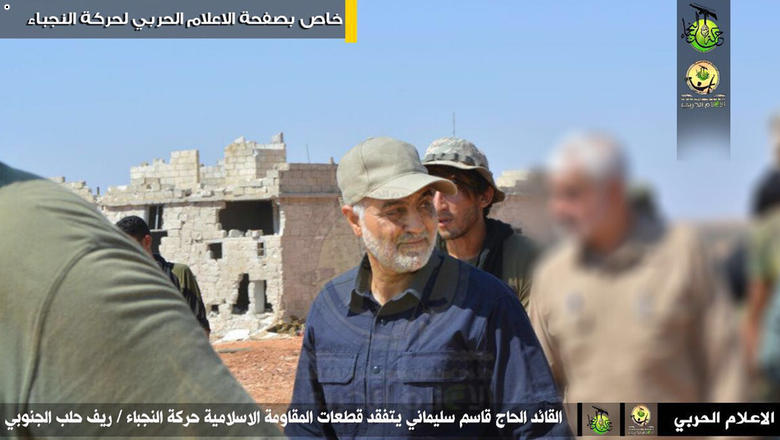 photo
photo


 Staff Sergeant Clayton Bowen, 29, of San Antonio, Texas, and Private 1st Class Morris Walker, 23, of Chapel Hill, N.C., were


