Lebanon Has Fallen, Anyone Care?

Lebanon was once known as the ‘Switzerland of the East’ because post the Lebanese Civil War, the country had calm and prosperity excelling in tourism, commerce, agriculture and banking. Lebanon was a major center of Christianity under Roman Empire rule.

Image result for lebanon

Today, Christians in Lebanon are called Maronites. Christians, Muslims and Druze including some Greek Orthodox make up separate enclaves to co-exist. 40% of the country is Christian, 55% is Muslim and the rest is Druze or Greek Orthodox.
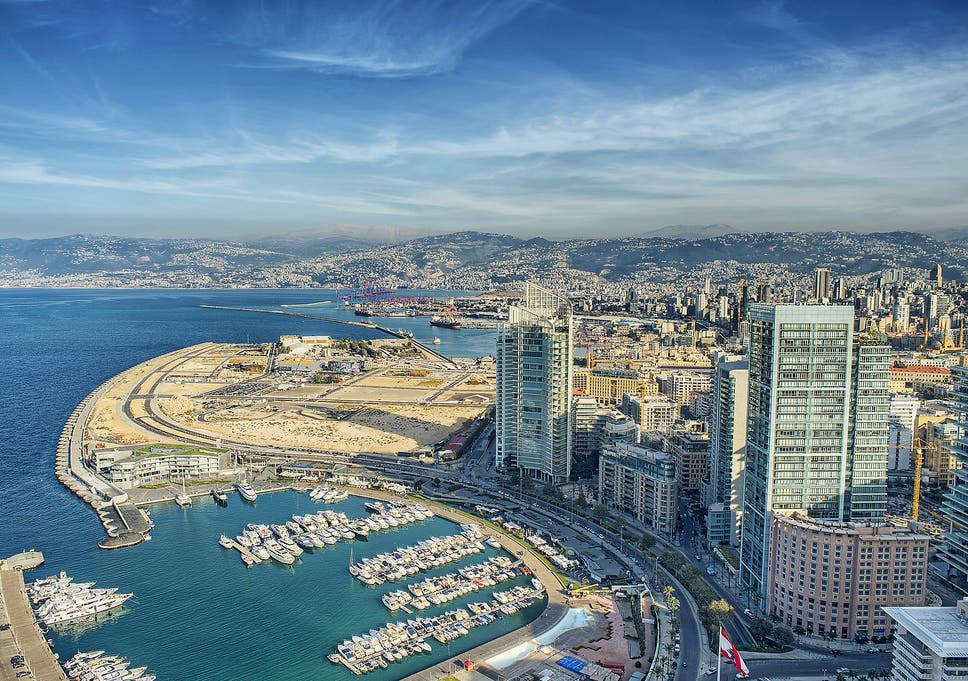
Image result for lebanon

After the war against Israel in 1948, Lebanon has an estimated 500,000 Palestinians that fled the military conflict.

In 2000, Israel withdrew from Southern Lebanon and the Syrian military occupied the country. In 2005, the former Prime Minister was assassinated by a car bomb explosion. This triggered the Cedar Revolution which demanded Syria withdraw troops which was completed by mid 2005. Yet in 2006, Hezbollah launched a series of rocket attacks into Israel from Lebanon. Israel responded in earnest.
In 2008, the Lebanese government declared Hezbollah in the country was illegal as this was considered an attempted coup that later the Doha Agreement was signed where the Lebanese government was forced to cave to all opposition demands.
Still having sectarian violence, opposing factions have caused more political unrest where being forced to accept 1.5 million Syrian refugees has added to the debt and increased taxes.

The government of Lebanon is essentially ruled by Hezbollah which is fully backed by Iran. Many within the political system as well as the religious factions are demanding an end to the sectarian system that Hezbollah relies on to leverage power. This chaos is demanding tactical decisions on behalf of the United States, the Arab leaders, Israel, Europe and the United Nations. There is no leader, al Hairi resigned.
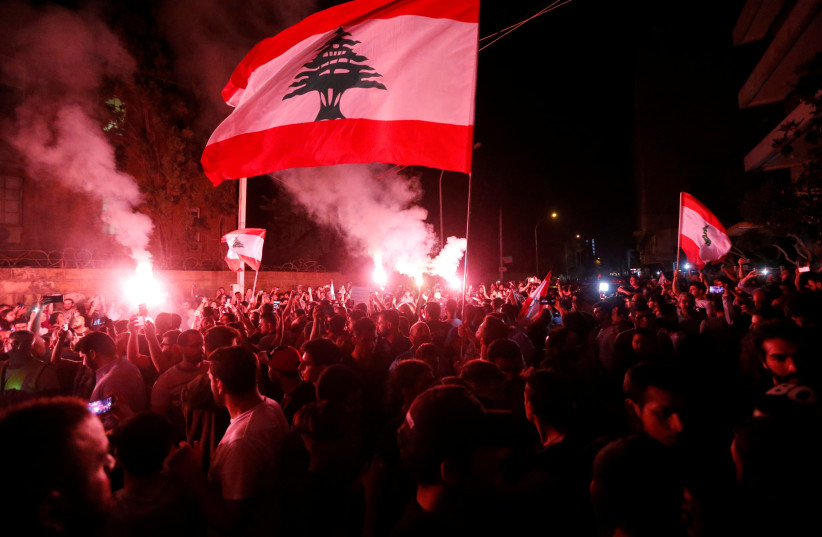
Image result for lebanon

Today: Newspaper al-Joumhuria cited Berri, an ally of the Shi’ite group Hezbollah, as telling visitors that efforts to form a new government were “completely frozen” and awaiting developments at any moment.

Struggling with a massive public debt and economic stagnation, Lebanon has sunk into major political trouble since protests erupted against its ruling elite a month ago, leading Prime Minister Saad al-Hariri to quit on Oct. 29.

On Sunday, banks, which have mostly been closed since the protests began, announced temporary measures including a weekly cap of $1,000 on cash withdrawals and restricting transfers abroad to cover urgent personal spending only. Efforts to form a new government, needed to enact urgent reforms, hit a setback at the weekend when former finance minister Mohammad Safadi withdrew his candidacy for the post of prime minister, sparking bitter recriminations.

Berri said he still hoped Hariri would agree to form a new cabinet, al-Joumhuria reported.

“The country is like a ship that is sinking little by little,” the paper quoted him as saying. “If we don’t take the necessary steps, it will sink entirely.”
It is Bigger than Burisma and the Bidens, Trump Knows

Speaker Pelosi held a press conference after the first day of the open impeachment inquiry hearing declaring that she is the smartest when it comes to intelligence and she will defend and protect the whistle-blower with all her might. HPSCI Chairman Adam Schiff said at least twice that he does not know nor has he spoken to the whistle-blower. Sheesh really? REALLY?

Pelosi and Schiff are for sure covering for something much larger and it is in Ukraine and likely at least a few other countries. There was a historic theft from PrivatBank a few years ago that was in excess of $5 BILLION. Then Ukraine was forced to nationalize the bank until such time the monies were tracked, found or recovered, which still has not happened. The country was financially suffering and the reputation of corruption in Ukraine continued to fester.

Seems our own U.S. State Department was enlisted to step up operations in Ukraine using several government agencies and non-government agencies known as NGO’s.

The matter of the whistle-blower is but one piece of all things Ukraine even while 2 State Department officials, George Kent and William Taylor provide testimony in the first round of the public hearing. (BTW, Kent’s wife is of Crimean-Tatar ancestry) Kent and Taylor are in the thick of all things Ukraine and beyond even while responding in open testimony they were unaware of key political events stateside.

Our not so favorite nefarious operator George Soros is very much at the center of much of the chaos in Ukraine, the Hillary Clinton/John Kerry State Department and some of those NGO’s.

List below are some bullet items for reference. It is difficult to piece together the whole mess but the facts below may help the reader with the long game plot against President Trump because his handful of phone calls with Ukraine President Zelensky regarding investigations into corruption(s) has struck a nerve that the power-brokers in DC are driven to stop and protect.

  • To boost legitimacy of Ukraine and Burisma, the Obama administration partnered Burisma with USAID.
  • USAID was enlisted to prepare for a new generation of Ukrainian politicians.
  • From the U.S. Ukraine Business Council: Briefing by Vadym Pozharskyi, Advisor to the Board of Directors, Burisma Holdings Ukraine’s largest independent gas producer, 30% market share by gas output volume in 2015

    Vadym Pozharskyi currently serves as an Advisor to the Board of Directors at the Burisma Holdings. He is also in charge of the Holding’s overseas expansion, GR & PR block. Prior to that, he worked for 4 years in the public sector, inter alia, on positions of the Head of the International Relations Department at the Ministry of Ecology and Natural Resources of Ukraine and the Deputy Head of the State Environmental Investment Agency of Ukraine.

    During these engagements he extensively cooperated with international organizations, led the negotiations group to UNFCCC on the restoration of Ukraine’s status in Kyoto protocol. From 2010 until 2014, Mr. Pozharskyi was the Global Environment Facility (GEF) Focal point in Ukraine.

    Burisma Holdings, www.BURISMA.com, since its launch in 2002, has rapidly become the largest gas producer in Ukraine.  Burisma Holdings consists of 4 operating companies, engaged in exploration and production of hydrocarbons (dealing with hydrocarbon production).  Burisma Holdings has expanded its operations beyond Ukraine and now operates in Germany, Mexico, Italy, and Kazakhstan.

    Burisma Geothermal is a new branch of Burisma Holdings.  It is a 100% owned subsidiary which specializes in geothermal energy development and electricity production from renewable and environmentally friendly energy sources in Europe.  Burisma Holdings has purchased equipment and technologies from such USA companies as Halliburton and Caterpillar.

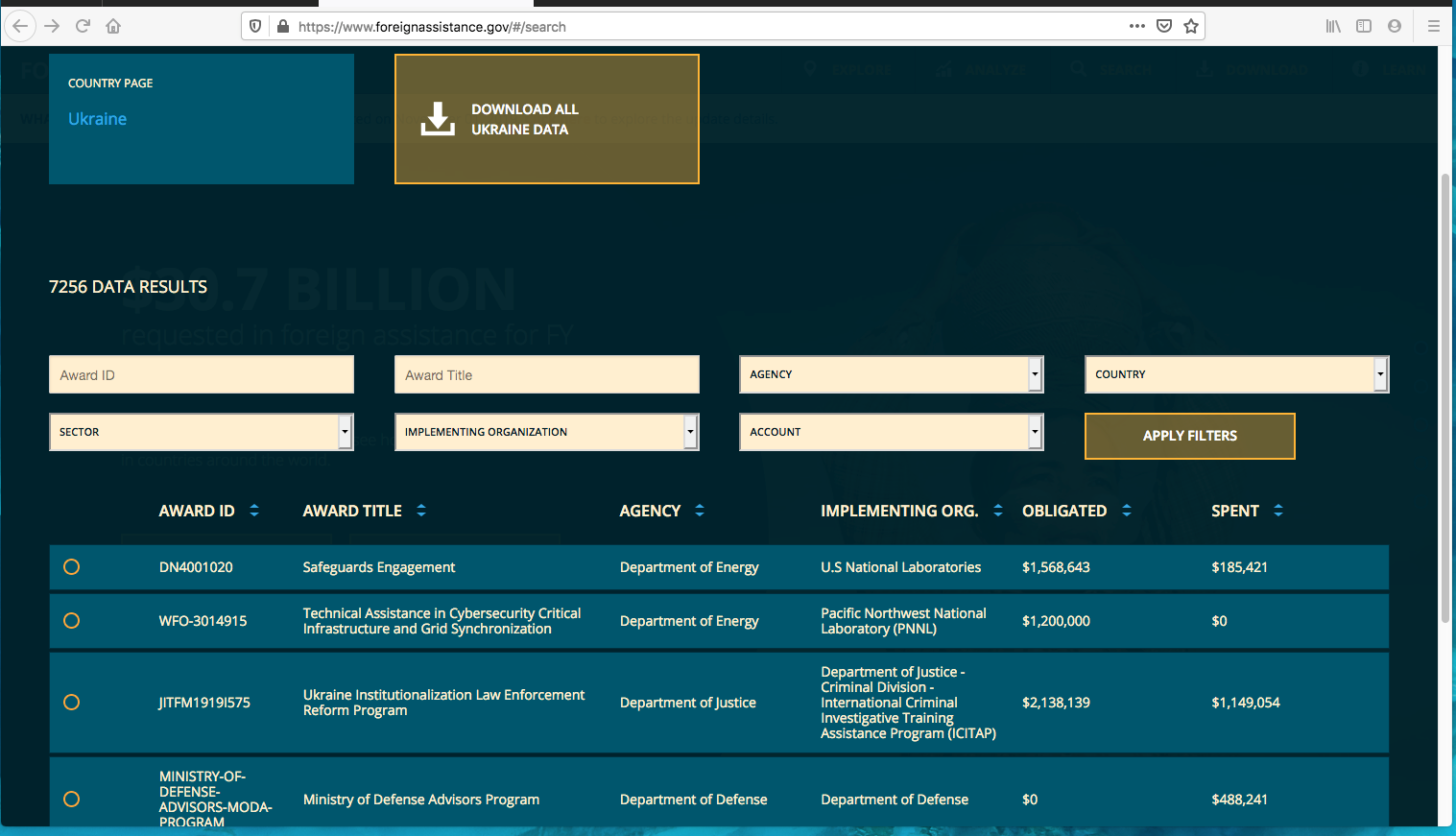
  • Several U.S. government agencies were tapped to provide financial assistance to Ukraine and President Trump is right to ask harder questions as there is no Inspector General assigned to Ukraine to track that spending for legitimacy. Remember the legacy of corruption in Ukraine and Trump has a duty to see if he can trust a brand new leader in Zelensky who was never a politician.


  • William B. Taylor is the executive vice president at the U.S. Institute of Peace. Earlier, he was the special coordinator for Middle East Transitions in the U.S. State Department. He oversaw assistance and support to Egypt, Tunisia, Libya and Syria. He served as the U.S. ambassador to Ukraine from 2006 to 2009. Ambassador Taylor became chargé d’affaires ad interim for Ukraine in June 2019. In picking through some of the other names in the membership of The American Academy of Diplomacy  (NGO) which includes Taylor, they are: Madeleine Albright, Hillary Clinton, Jon Huntsman Jr., John Kerry, Victoria Nuland, Thomas Pickering, Susan Rice, Wendy Sherman, Strobe Talbott and Kent Volker.
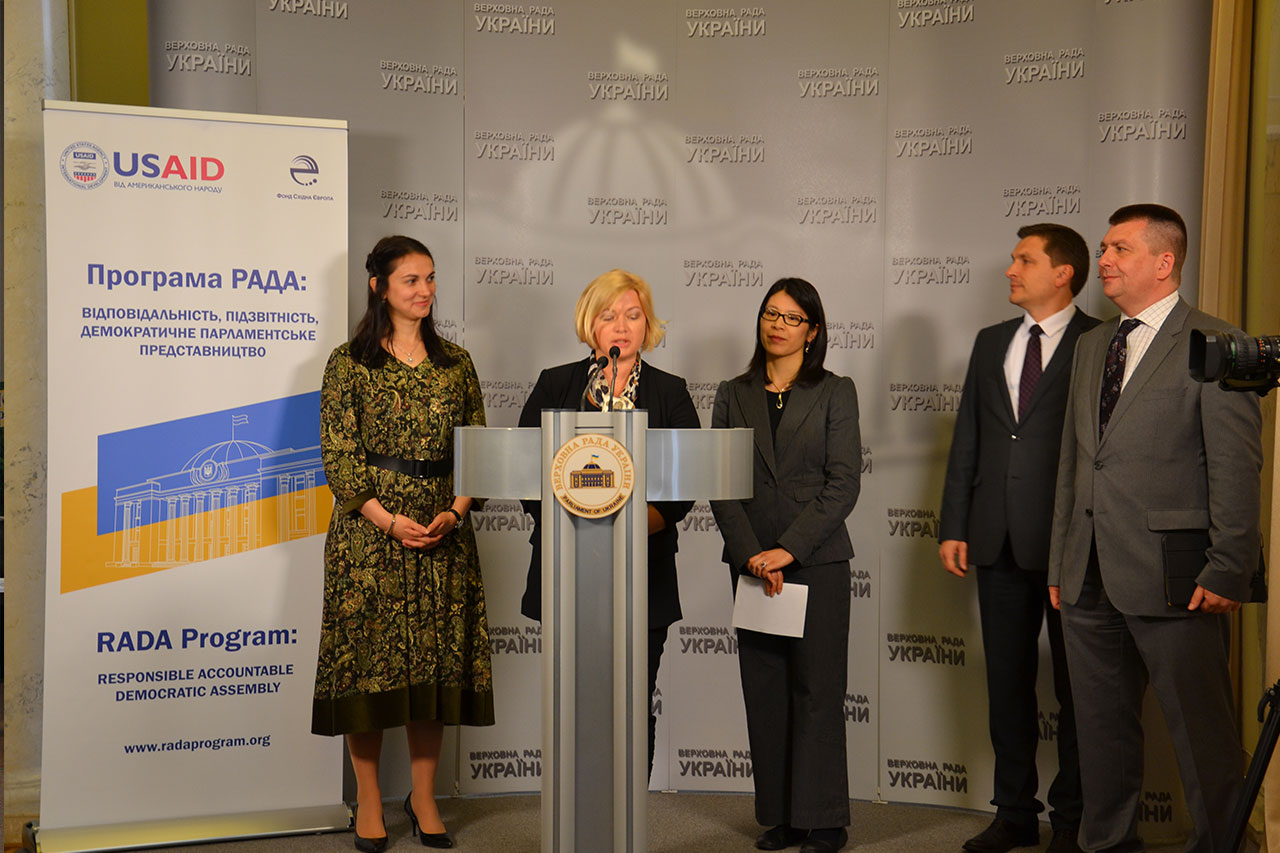
  • Willam Taylor as part of the U.S. Institute of Peace, not only was USAID a deeper partner in Ukraine but Google is also. USAID was/is a sponsor of RADA. RADA and the USAID program that launched in November of 2013 collectively took to the streets in Ukraine for what is known as the Revolution of Dignity coordinating with Members of Parliament and civil society organizations and other international experts.
  • President Trump mentioned Crowdstrike in the phone call. Crowdstrike was hired by Perkins Coie to investigate the hacking of he DNC server. Perkins Coie was the law firm of record for the DNC and hired Fusion GPS. Trump has the notion that Crowdstrike also may have operated out of Ukraine that clues point to Crowdstrike was part of foreign interference into our 2016 elections. It should be noted that a independent group of journalists based in Britain are seeking a UK report of Russian/Ukraine interference their Britain’s election. As a matter of fact, Crowdstrike has an office in London.


  • With all this political power and international resumes, how was it that Russia was allowed to annex Crimea and invade Ukraine in the first place? Where was Taylor, Nuland, Kerry, Rice or Obama? Too busy with the Iran nuclear deal it seems. The United States needed Russia’s cooperation with the Iran JCPOA so Obama did not grant the request of Ukraine for military aide other than to ship MRE’s and blankets. Congress (read Democrats) never complained until President Trump was in a phone call and approved the eventual shipment of real military aide.

So, back to the beginning, where does this whistle-blower fit in? Seems he was/is the Ukraine expert assigned to VP Biden who was assigned by Obama to be the leader of the envoy for all things Ukraine. At least 6 emails obtained from a FOIA list the Ciaramella in the email chain. Others include Victoria Nuland, George Kent and Kathleen Kavalec. There are other names in the email discussion(s) dated June 2016.

This is a larger operation that has a genesis in Ukraine. There are known quantities of moving parts but it is clear that Pelosi, Schiff and perhaps many others at NGO’s, the State Department, the previous members of the Obama White House are in fact just a little nervous that Trump and his lawyer Rudy Giuliani are treading in waters made dark by operatives they are working to hide, defend and protect.


Erdogan of Turkey to Visit Trump White House

This visit is on and off and maybe on again. The meeting is scheduled the same day as the open impeachment inquiry hearings begin.

President Erdogan is angry with the United States due to Congress moving legislation to apply sanctions that would affect Turkey as a result of the invasion into Syria.

Turkey has been threatening Europe, especially Germany with more migrants and Chancellor Merkel capitulated. Erdogan is in fact deporting what he calls ISIS fighters to their home countries including the United States. Stating that Turkey is not a hotel, even if the home country has revoked citizenship, he is deporting them.

Now that Erdogan feels like he is in the driver’s seat, he has been also bombing Iraq as recently as last week.

On Tuesday morning Turkish air strikes targeted Kurdish forces on Sinjar Mountain in northern Iraq.

According to initial reports, the Turkish Air Force struck at bases used by the Kurdistan Workers Party, or PKK, and its ally, the Yazidi Shingal Protection Units.

If Erdogan does meet President Trump it is going to be an interesting session. Trump is slated to confront Erdogan about buying the Russian air defense system and the recent three sanctions that Trump lifted could easily be applied again. Tensions are in fact high.

This is what happened the last time Erdogan was in Washington DC.
U.S. Secret Service agents were among those attacked during the May 16, 2017 protests. Two Diplomatic Security special agents, six U.S. Secret Service officers and one MPD officer sustained multiple injuries, with at least one taken to the hospital.

THAWING TIES: Erdogan to meet Trump | Local News for ...

Just last month, the House of Representatives passed a resolution 405-11 reaffirming the United States’ condemnation of “the killing of 1.5 million Armenians by the Ottoman Empire from 1915 to 1923.”

“Whereas Raphael Lemkin, who coined the term genocide in 1944, and who was the earliest proponent of the United Nations Convention on the Prevention and Punishment of Genocide, invoked the Armenian case as a definitive example of genocide in the 20th century,” the resolution states.

Turkey does not recognize the loss of 1.5 Armenians as genocide.

Meanwhile, a closer look at Turkey reveals the following:


  • In Germany, Turkey controls 900 mosques out of a total of 2,400. These Islamic centers not only serve members of the Turkish diaspora, but also stop them from assimilating into German society. Speaking with Turks in Germany, Erdogan urged them not to assimilate, and called the assimilation of migrants in Europe “a crime against humanity.”
  • Erdogan has also been expanding Turkey beyond its borders – starting with Cyprus, the Greek Islands, Suakin Island (Sudan) and Syria.
  • Mosques, migrants and the military are now Erdogan’s new weapons in his threats against the West.

Erdogan is the head of NATO’s second-largest army; he has spies throughout Europe through a network of mosques, associations and cultural centers; he has brought his country to the top of the world rankings for the number of imprisoned journalists and has shut the mouth of German comedians with the threat of legal action. By keeping migrants in Turkish refugee camps, he controls immigration to Europe.

The worse Erdogan behaves, the greater his weight in Europe. In a 2015 meeting, Erdogan reportedly was “openly mocking” European Commission President Jean-Claude Juncker and other “senior European leaders”, as Juncker asked Erdogan to consider how he was treated “like a prince” at a Brussels summit.

Turkey’s 2018 military budget increased to $19 billion, 24% higher than 2017, according to a report by the Stockholm International Peace Research Institute. Erdogan has placed Turkey’s military — once a bastion of Turkish nationalism and secularism — under his political authority. While Europe is pacifist and refuses to invest in its own security or, like Germany, support NATO’s budget, Turkey is belligerent.

Ever since his Justice and Development Party (AKP) became Turkey’s dominant political force in 2002, for Erdogan, elevating the public role of Islam has been more than a slogan. At public gatherings, the Turkish president has made the “rabia“, a hand gesture of four fingers raised and the thumb hidden, to protest the overthrow of Egypt’s Islamist then President Mohamed Morsi by Egypt’s military. Erdogan evidently sees himself as a global Islamic leader with national elections to win. Through four million Turkish Muslims in Germany and vast communities in the Netherlands, France, Austria and beyond, Erdogan does indeed have enormous influence in Europe.

Erdogan has also been expanding Turkey beyond its borders – starting with Cyprus, the Greek Islands, Suakin Island (Sudan) and Syria. “We are a big family of 300 million people from the Adriatic to the Great Wall of China”, Erdogan said in a recent speech from Moldova. The borders of Turkey, he stated in Izmir, span “from Vienna to the shores of the Adriatic Sea, from East Turkistan (China’s autonomous region of Xinjiang) to the Black Sea”. More here.


Iran’s Underground Enrichment Facility

Under the Iran deal, Iran agreed to redesign, convert and limit its nuclear facilities.

Particular focus was put on Iran’s uranium-enrichment capabilities, putting serious limitations on uranium-enrichment facilities in Iran – Natanz and Fordow. Among other resolutions, Iran also agreed to allow inspection of all its nuclear facilities and the IAEA inspectors will be able to request visits to military sites. However, it doesn’t guarantee them access to military sites.

Fordow is Iran’s second fuel enrichment facility, buried under a mountain in the Great Salt Desert near the holy city of Qom. Before the Iran deal, the bunker was filled with 2,710 centrifuges that could enrich uranium to weapons-grade materials.

Under the nuclear agreement, Iran agreed to stop any uranium enrichment and uranium enrichment R&D at Fordow and turn the plant into a nuclear physics and technology center that will produce radioisotopes for use in medicine, agriculture, industry and science.

Reported in part by Free Beacon:

U.S. State Department officials described Iran’s blocking of an international nuclear inspector from accessing key nuclear sites last week as an “outrageous and unwarranted act of intimidation” amid growing concerns Iran is hiding undeclared nuclear materials.

The administration suspects that Iran is trying to prevent international inspectors from confirming its work with prohibited nuclear materials.

“The United States is deeply concerned about the two issues the IAEA acting director general described in today’s special session of the IAEA Board of Directors,” the official said. “First, that the IAEA has detected evidence of potential undeclared nuclear material in Iran, and second, the detention of an IAEA inspector. Along with Iran’s expansion of proliferation-sensitive nuclear activity, this pattern of deception and intimidation is unacceptable. All nations should be concerned that Iran is not fully cooperating with the IAEA and should demand Iran immediately redress these serious problems.”

The diplomatic escalation comes as Iran breaches limits on the amount of enriched uranium it produces and the enrichment methods it uses. It escalated installations of advanced centrifuges in the past week and has vowed to continue doing so.

Nuclear experts told the Free Beacon that Iran’s behavior raises multiple questions and concerns about the nature of its ongoing work.

“Assuming the IAEA version of events is correct and she did not have explosive contamination on her person, then Iran may be testing what the reaction is to denying inspectors access to safeguarded sites,” David Albright, a former weapons inspector and president of the Institute for Science and International Security, told the Free Beacon.

“How long does it take for this episode to be reported to the board and media?” he asked. “Does the IAEA send a replacement quickly? How many countries and which ones believe the Iranian rationale? Is there outrage or are there divisions that delay a coordinated response?”

Andrea Stricker, a nonproliferation analyst and research fellow at the Foundation for Defense of Democracies, described Iran’s actions as “highly provocative.”

It “gives the impression that Iran could be considering curtailing inspection authorities as a future step to draw down its JCPOA commitments,” Stricker said. “It’s a hostile sign for sure.”

Deaths Rise in Libya Due to Russians

Whatever vision that Hillary Clinton and the Obama administration had to Libya is now best described as a Russian operation where death and destruction manifests.

As Fox News Anchor, Bret Baier says each night, ‘beyond our borders’ there is a very ugly nasty world that is hardly if at all reported.

From the United Nations Mission in Libya:

17 Oct 2019

How bad it is really? What about Russia?

Russia dominated Syria’s war. Now it’s sending mercenaries to Libya photo

TRIPOLI, Libya — The casualties at the Aziziya field hospital south of Tripoli used to arrive with gaping wounds and shattered limbs, victims of the haphazard artillery fire that has defined battles among Libyan militias. But now medics say they are seeing something new: narrow holes in a head or a torso left by bullets that kill instantly and never exit the body.

It is the work, Libyan fighters say, of Russian mercenaries, including skilled snipers. The lack of an exit wound is a signature of the ammunition used by the same Russian mercenaries elsewhere.

The snipers are among about 200 Russian fighters who have arrived in Libya in the last six weeks, part of a broad campaign by the Kremlin to reassert its influence across the Middle East and Africa.

After four years of behind-the-scenes financial and tactical support for a would-be Libyan strongman, Russia is now pushing far more directly to shape the outcome of Libya’s messy civil war. It has introduced advanced Sukhoi jets, coordinated missile strikes, and precision-guided artillery, as well as the snipers — the same playbook that made Moscow a kingmaker in the Syrian civil war.

Related image

The Russians have intervened on behalf of the militia leader Khalifa Hifter, who is based in eastern Libya and is also backed by the United Arab Emirates, Egypt, Saudi Arabia and, at times, France. His backers have embraced him as their best hope to check the influence of political Islam, crack down on militants and restore an authoritarian order.

Mr. Hifter has been at war for more than five years with a coalition of militias from western Libya who back the authorities in Tripoli. The Tripoli government was set up by the United Nations in 2015 and is officially supported by the United States and other Western powers. But in practical terms, Turkey is its only patron.

The new intervention of private Russian mercenaries, who are closely tied to the Kremlin, is just one of the parallels with the Syrian civil war.

The Russian snipers belong to the Wagner Group, the Kremlin-linked private company that also led Russia’s intervention in Syria, according to three senior Libyan officials and five Western diplomats closely tracking the war.

In both conflicts, rival regional powers are arming local clients. And, as in Syria, the local partners who had teamed up with the United States to fight the Islamic State are now complaining of abandonment and betrayal.

The United Nations, which has tried and failed to broker peace in both countries, has watched as its eight-year arms embargo on Libya is becoming “a cynical joke,” as the United Nations special envoy recently put it.

Yet in some ways, the stakes in Libya are higher.

More than three times the size of Texas, Libya controls vast oil reserves, pumping out 1.3 million barrels a day despite the present conflict. Its long Mediterranean coastline, just 300 miles from Italy, has been a jumping-off point for tens of thousands of Europe-bound migrants.

And the open borders around Libya’s deserts have provided havens for extremists from North Africa and beyond. Read on.