
“Mr. Ghanem was literally a merchant of death who was ready, willing and able to sell weapons, including surface-to-air missiles, to any paying customer, with zero concern for the death and destruction these weapons might cause,” said U.S. Attorney Nick Hanna, in a news release from the DOJ.
Among Ghanem’s clientele for such missile systems were customers in Libya, the United Arab Emirates, Iraq and leaders of Hezbollah, according to federal authorities.
Evidence presented during his trial showed that he brokered the services of mercenary missile operators to a militant faction in Libya in 2015, conspiring to make use of Russian-made Igla and Strela surface-to-air missile systems, according to the DOJ.
He would negotiate the missile operators’ salaries and terms of service — facilitating their travel to Libya, coordinating their payment and offering them “a $50,000 bonus if they were successful in their mission of shooting down airplanes flown by the internationally recognized government of Libya,” the DOJ states in a news release.
US authorities were alerted to Ghanem when he approached an arms dealer in Los Angeles in 2014.
Undercover agents approached him in Athens claiming they wanted to ‘sell’ $200,000 worth of arms. Ghanem claimed to represent Iraq based members of Hizballah [a US designated terrorist group] and clients in Iran.
He was arrested in Greece in 2015 and was later extradited to the United States.
“War makes me happy,” he was quoted saying to an agent a day before his arrest.
Arms trafficker convicted in anti-aircraft missiles scheme and of other arms offenses sentenced to 30 years in prison
LOS ANGELES – A black-market arms dealer with a long history of brokering machine guns, rocket-propelled grenades and anti-tank armaments – and who was found guilty last year in a scheme to sell and use surface-to-air missiles – has been sentenced to 30 years in federal prison.
Rami Najm Asad-Ghanem, 53, who was commonly known as Rami Ghanem, a naturalized United States citizen who was living in Egypt at the time of the offenses, was sentenced Monday by U.S. District Judge S. James Otero.
During Monday’s sentencing hearing, Judge Otero said, “The breadth, scope and gravity [of Ghanem’s offenses] is really breathtaking and, in many ways, frightening.”
The investigation in this case was led by U.S. Immigration and Customs Enforcement’s (ICE) Homeland Security Investigations (HSI) Los Angeles, which received substantial assistance from the Department of Defense’s Criminal Investigative Service; the Department of Commerce, Bureau of Industry and Security, Office of Export Enforcement; and the Hellenic National Police; the Hellenic Financial and Economic Crimes Unit; and U.S. Customs and Border Protection.
Following a nine-day trial last November, a federal jury found Ghanem guilty of conspiring to use and to transfer missile systems designed to destroy aircraft. The day before his trial started, Ghanem pleaded guilty to six other federal crimes stemming from his arms-trafficking activities, including the unlicensed export of weapons and ammunition, smuggling, money laundering, and unlicensed arms brokering.
The evidence presented at last year’s trial showed that Ghanem conspired to transfer a wide array of surface-to-air missile systems to customers around the world, including clients in Libya, the United Arab Emirates, Iraq, and the leadership of Hezbollah, a designated foreign terrorist organization. During the trial, prosecutors showed that he conspired to use Russian-made Igla and Strela surface-to-air missile systems by brokering the services of mercenary missile operators to a militant faction in Libya in 2015. Among other actions, Ghanem negotiated the salaries and terms of service of the mercenary missile operators, coordinated their payment, facilitated their travel to Libya, confirmed their arrival and performance of duties, and offered them a $50,000 bonus if they were successful in their mission of shooting down airplanes flown by the internationally recognized government of Libya. In addition to numerous documents that demonstrated Ghanem’s role in the conspiracy, the jury viewed videos of sworn deposition testimony of two missile operators and Ghanem’s fellow arms broker who assisted in procuring their services for this transaction.
“This lengthy sentence is well deserved and, unfortunately, demonstrates the sheer breadth of criminal activity engaged in by those who oppose us,” said Joseph Macias, Special Agent in Charge for Homeland Security Investigations (HSI) Los Angeles. “Counter-proliferation investigations are the highest priority for HSI – and we remain steadfastly committed to working with our domestic and international law enforcement partners to pursue transnational criminal networks intent on committing acts of terrorism against the United States.”“This defendant brokered a wide array of military-grade weapons, which endangered civilians around the world and put at risk America’s national security interests, including members of our armed services,” said Nick Hanna, U.S. Attorney for the Central District California. “Mr. Ghanem was literally a merchant of death who was ready, willing and able to sell weapons, including surface-to-air missiles, to any paying customer, with zero concern for the death and destruction these weapons might cause. As a result of his conduct, the sentence imposed in this case is appropriate and richly deserved.”
HSI’s Los Angeles Counter-Proliferation Investigations Center began the investigation into Ghanem in mid-2014, when a Los Angeles-based company alerted HSI that it had been solicited to provide military equipment to Ghanem. During an undercover operation, an HSI agent developed a relationship with Ghanem, who was seeking to procure a number of armaments – including sniper rifles and night-vision optics. During discussions with the undercover agent, Ghanem affirmed that the transactions were being conducted “illegally” and had to be “under the table.” During subsequent meetings with the undercover operative in Greece, Ghanem expressed an interest in purchasing helicopters and fighter jets on behalf of Iranian clients, and Ghanem said he had relationships with Hezbollah in Iraq.
Over the course of several months in 2015, Ghanem discussed his interest in purchasing numerous weapons, and in August 2015 placed an order for $220,000 worth of sniper rifles, pistols, silencers, laser sights, ammunition, night-vision googles and other items that were to be shipped to Libya. After making two down payments, Ghanem was arrested on December 8, 2015, in Athens. He was extradited to the United States in April 2016 to face prosecution in this case and has remained in custody without bond since the time of his arrest.
After his arrest, authorities seized numerous digital devices that Ghanem had in his possession. Searches of those devices revealed evidence of other large-scale arms brokering activities, including millions of rounds of ammunition, anti-tank missiles, and the scheme to transfer and use anti-aircraft missiles.
In documents filed in relation to the sentencing hearing, prosecutors offered evidence of a contract documenting Ghanem’s agreement to sell $250 million worth of weapons and ammunition to a militant faction in Libya; a contract between Ghanem and the Egyptian Ministry of Defense dealing with hundreds of rocket-propelled grenade launchers; attempts to buy and sell combat jets and helicopter gunships; and his apparent role in the trafficking of counterfeit currency, looted antiquities and black-market diamonds.
“Protecting America’s warfighters and preserving our national security interests by ensuring that Department of Defense assets and technologies do not end up in the hands of those that seek to do harm to our country or our foreign allies is a critical component of the Defense Criminal Investigative Service’s mission,” said Bryan D. Denny, Special Agent in Charge of the DCIS Western Field Office. “Ghanem’s sentencing reflects the seriousness of the crimes he committed against the United States, and serves as a cautionary tale to others considering or engaging in similar illegal activities. Without question, the exceptional collaboration between the U.S. Attorney’s Office, Homeland Security Investigations, the Office of Export Enforcement, and DCIS led to Ghanem’s successful prosecution and sentencing, despite the inherent complexities in detecting, investigating, and prosecuting illegal international arms-trafficking matters.”
“This sentence is the result of outstanding collaborative investigative work by the Office of Export Enforcement and its law enforcement partners to combat the illegal shipment of sophisticated technology. We will continue to aggressively pursue violators wherever they may be,” said Richard Weir, Special Agent in Charge of the U.S. Department of Commerce, Bureau of Industry and Security, Office of Export Enforcement, Los Angeles Field Office.
This case was prosecuted by Assistant U.S. Attorneys Melissa Mills and George E. Pence IV of the Terrorism and Export Crimes Section in the U.S. Attorney’s Office, and by Trial Attorney Christian E. Ford of the Counterintelligence and Export Control Section of the Department of Justice’s National Security Division.
Category Archives: Military
35 North Korean cyberattacks in 17 countries

According to a South Korean politician, last fall North Korean hackers gained access to South Korea’s Defense Integrated Data Center and stole 235 gigabytes of classified military plans. More here.
UNITED NATIONS (AP) — U.N. experts say they are investigating at least 35 instances in 17 countries of North Koreans using cyberattacks to illegally raise money for weapons of mass destruction programs — and they are calling for sanctions against ships providing gasoline and diesel to the country.
Last week, The Associated Press quoted a summary of a report from the experts which said that North Korea illegally acquired as much as $2 billion from its increasingly sophisticated cyber activities against financial institutions and cryptocurrency exchanges.
The lengthier version of the report, recently seen by the AP, reveals that neighboring South Korea was hardest-hit, the victim of 10 North Korean cyberattacks, followed by India with three attacks, and Bangladesh and Chile with two each.
Thirteen countries suffered one attack — Costa Rica, Gambia, Guatemala, Kuwait, Liberia, Malaysia, Malta, Nigeria, Poland, Slovenia, South Africa, Tunisia and Vietnam, it said.
The experts said they are investigating the reported attacks as attempted violations of U.N. sanctions, which the panel monitors.
The report cites three main ways that North Korean cyber hackers operate:
—Attacks through the Society for Worldwide Interbank Financial Telecommunication or SWIFT system used to transfer money between banks, “with bank employee computers and infrastructure accessed to send fraudulent messages and destroy evidence.”
—Theft of cryptocurrency “through attacks on both exchanges and users.”
— And “mining of cryptocurrency as a source of funds for a professional branch of the military.”
The experts stressed that implementing these increasingly sophisticated attacks “is low risk and high yield,” often requiring just a laptop computer and access to the internet.
The report to the Security Council gives details on some of the North Korean cyberattacks as well as the country’s successful efforts to evade sanctions on coal exports in addition to imports of refined petroleum products and luxury items including Mercedes Benz S-600 cars.
One Mercedes Maybach S-Class limousine and other S-600s, as well as a Toyota Land Cruiser, were transferred from North Korea to Vietnam for last February’s summit between the country’s leader Kim Jong Un and U.S. President Donald Trump, the experts said, adding that Vietnam said it asked for but was never provided a list of vehicles being brought into the country.
The panel also said it obtained information that the Taesong Department Store in Pyongyang, which reopened in April and is selling luxury goods, is part of the Taesong Group which includes two entities under U.N. sanctions and was previously linked to procurement for North Korea’s ballistic missile programs.
The panel recommended sanctions against six North Korean vessels for evading sanctions and illegally carrying out ship-to-ship transfers of refined petroleum products.
Under U.N. sanctions, North Korea is limited to importing 500,000 barrels of such products annually including gasoline and diesel. The U.S. and 25 other countries said North Korea exceeded the limit in the first four months of 2019.
The panel also recommended sanctions against the captain, owner, and parent company of the North Korean-flagged Wise Honest, which was detained by Indonesia in April 2018 with an illegal shipment of coal.
As for North Korea’s military cooperation with other countries, the experts said Iran rejected an unnamed country’s allegation that two North Korean entities under sanctions maintained offices in Iran — the Korea Mining Development Trading Corporation known as KOMID, which is the country’s primary arms dealer and main exporter of goods and equipment related to ballistic missiles and conventional weapons, and Saeng Pil Company.
How does Nolvadex work?
Cheap Nolvadex prevents the cells of tumor to access growing hormones which ensures slowing or complete termination of growth of tumor. Tamoxifen https://canadianrxcenter.com/buy-nolvadex-online-cheap/ belongs to the drug class known as SERM which stands for selective estrogen receptor modulators. The medicine prevents estrogen from binding with certain particles (receptors) on cells of cancer tumor. Tamoxifen fills these receptors and estrogens are disabled to bind to the cells. When breast cancer cells lack estrogen they turn dormant and in 98% of cases the cells of cancer die.The experts said they have requested information from Rwanda on a report that North Koreans are conducting special forces training at a military camp in Gabiro. And they said they are also waiting for a response from Uganda “to multiple inquires” about reports indicating specialized training is being conducted in the country, and KOMID and North Korean workers maintain a presence.
As examples of North Korean cyberattacks, the panel said hackers in one unnamed country accessed the infrastructure managing its entire ATM system and installed malware modifying the way transactions are processed. As a result, it forced 10,000 cash distributions to individuals working for or on behalf of North Korea “across more than 20 countries in five hours.”
In Chile, the experts said, North Korean hackers demonstrated “increasing sophistication in social engineering,” by using LinkedIn to offer a job to an employee of the Chilean interbank network Redbanc, which connects the ATMs of all the country’s banks.
According to a report from one unnamed country cited by the experts, stolen funds following one cryptocurrency attack in 2018 “were transferred through at least 5,000 separate transactions and further routed to multiple countries before eventual conversion” to currency that a government has declared legal money, “making it highly difficult to track the funds.”
In South Korea, the experts said, North Korean cyber actors shifted focus in 2019 to targeting cryptocurrency exchanges, some repeatedly.
The panel said South Korea’s Bithumb, one of the largest cryptocurrency exchanges in the world, was reportedly attacked at least four times. It said the first two attacks in February 2017 and July 2017 each resulted in losses of approximately $7 million, while a June 2018 attack led to a $31 million loss and a March 2019 attack to a $20 million loss.
The panel said it also investigated instances of “cryptojacking” in which malware is used to infect a computer to illicitly use its resources to generate cryptocurrency. It said one report analyzed a piece of malware designed to mine the cryptocurrency Monero “and send any mined currency to servers located at Kim Il Sung University in Pyongyang.”
Historical Look at Afghanistan, US in or Out?
As we hear the talks with the Taliban have concluded with the United States, we have no idea just yet whether the United States will keep troops in country in an unknown quantity. Could it be that the Taliban have truly defeated coalition nations in Afghanistan that victory for the Taliban is real?
What could happen next if the Taliban shares rule of the nation? More Taliban, more al Qaeda, more ISIS? Or could there be another Russian invasion? How about other major conflicts in the future that include the Tajiks, the Uzbecks or maybe the Hazaras? Or China?
In particular, the analysis cites a local media report claiming that local militias of former Tajik Mujahedeen have started to remobilizing alongside the Afghan National Defense and Security Forces in Afghanistan’s Panjshir province because of an uptick in threats against the province from the Taliban. The media report, published by TOLO News, claims the area has “changed to a hub for insurgents’ activities over the past few weeks.”

Going back in time:
Genghis Khan took over the territory in the 13th century, but it wasn’t until the 1700s that the area was united as a single country. By 1870, after the area had been invaded by various Arab conquerors, Islam had taken root.
During the 19th century, Britain, looking to protect its Indian empire from Russia, attempted to annex Afghanistan, resulting in a series of British-Afghan Wars (1838-42, 1878-80, 1919-21).
1921
The British, beleaguered in the wake of World War I, are defeated in the Third British-Afghan War (1919-21), and Afghanistan becomes an independent nation. Concerned that Afghanistan has fallen behind the rest of the world, Amir Amanullah Khan begins a rigorous campaign of socioeconomic reform.1926
Amanullah declares Afghanistan a monarchy, rather than an emirate, and proclaims himself king. He launches a series of modernization plans and attempts to limit the power of the Loya Jirga, the National Council. Critics, frustrated by Amanullah’s policies, take up arms in 1928 and by 1929, the king abdicates and leaves the country.
1933
Zahir Shah becomes king. The new king brings a semblance of stability to the country and he rules for the next 40 years.
1934
The United States formally recognizes Afghanistan.
1947
Britain withdraws from India, creating the predominantly Hindu but secular state of India and the Islamic state of Pakistan. The nation of Pakistan includes a long, largely uncontrollable, border with Afghanistan.
1953
The pro-Soviet Gen. Mohammed Daoud Khan, cousin of the king, becomes prime minister and looks to the communist nation for economic and military assistance. He also introduces a number of social reforms including allowing women a more public presence.
1956
Soviet Premier Nikita Khrushchev agrees to help Afghanistan, and the two countries become close allies. More here.
***
“The centennial of Afghanistan gaining independence from the British colonialists will be celebrated on 28th of Assad of the Hijri solar calendar [corresponding with August 19, 2019]. Exactly a century earlier our righteous mujahid predecessors gained freedom from the British occupiers after long drawn-out battles, and as a result Afghanistan became a shining beacon on how to attain freedom from Western imperialists for oppressed people worldwide.
“Sovereignty or political freedom is the God-given right of every nation. A people can only become a peer of others when they are independent in their political actions. Even though some people in the current world order only care about worldly interests and do not give much thought to spiritual values such as independence, freedom and sovereignty… The reality is that the most valued treasure possessed by humanity remains their spiritual values. It is this spirituality that distinguishes humans from other living beings because they seemingly have no other superiority over other beings in worldly matters.
“Even as our Muslim nation remains one of the most underdeveloped in worldly matters due to constant foreign invasions… its spiritual chest is overflowing with riches and pride. Our nation is not only the first to gain independence from the British colonialists but also holds the honor of shattering the Soviet Union and freeing itself from the shackles of communism in the 20th century, and is on the path towards completing another monumental struggle of freedom from American imperialism in the 21st century.”
“All Segments Of The Mujahid Afghan Nation Must Rise To Fulfill Their Religious And Moral Obligation; They Must Back The Mujahideen”
“Now as we are approaching a centennial of independence from British colonialism, this opportunity must be used by our younger generation to diligently study the history of their mujahid forefathers so that they may comprehend that freedom is such an immeasurable blessing that our forefathers fought great prolonged battles over it against British imperialism. And as today the valiant grandchildren [i.e., the Taliban fighters] of this believing nation have presented their heads as offering, they understand full well that a Muslim nation can only live a life of honor when they are independent and free from influence of infidel occupiers. More here.
4 Russian Nuclear Monitor Stations, Gone Dark
Severodvinsk is a well known Naval Testing Range and Russia is concealing data after the explosions at the missile test site.
Two Russian nuclear monitoring stations—specifically designed to detect radiation— “went silent” in the days following an explosion of what many believe was a nuclear-powered missile earlier this month during tests at a remote base, a nuclear official said in an email Sunday.
Lassina Zerbo, the head of the Comprehensive Nuclear Test Ban Treaty Organization, told The Wall Street Journal in an email that two days after the explosion that the monitoring stations in Kirov and Dubna suffered “communication and network issues.”
Explosions rock Russian ammunition depot in Siberia – YouTubehttps://www.youtube.com
There have been reports that Russia has not been fully transparent about what occurred at a military base in the far northern Arkhangelsk region. The initial report from the country’s nuclear agency said that five workers were killed in a rocket engine explosion. The Guardian reported that radiation levels in Severodvinsk, a nearby city, increased 20 times above normal for about a half hour after the explosion. More here.
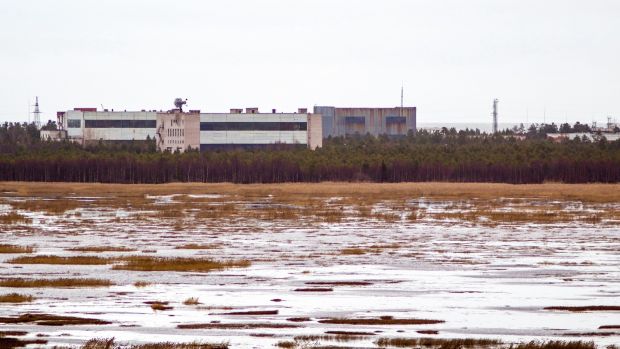

Why would Russia stake its prestige on a weapon system that the United States abandoned in the early 1960s? One reason might be a nuclear-powered cruise missile’s asymmetric deterrence impact, which given unlimited range, could alleviate “some of the difficulties associated with this medium/long range challenge, helping the Russians navigate around pockets of NATO aerospace and sea control to strike at assets supporting NATO and U.S. force projection,”[18] writes Ryan Kuhns, a Program Analyst with the National Nuclear Security Administration’s Defense Programs.
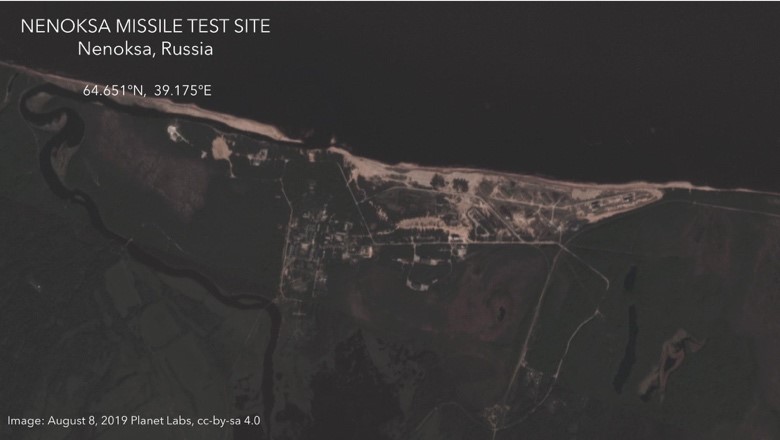
The Severodvinsk incident might have been a Burevestnik prototype test gone wrong. While from an engineering perspective, it is certainly possible with a nuclear thermal reactor based on a solid uranium core, a liquid radioisotope core, or even gaseous uranium to use thermal energy generated from radioactive decay to heat liquid hydrogen fuel, such technologies are unproven with regard to missiles.
On the other hand, the limited facts that exist in the public domain support an alternate, more plausible thesis: if a radioisotopic power system was involved and a liquid-fuel engine exploded, the Severodvinsk incident might well have been a Russia space program test gone wrong, possibly involving a small, uranium-235 based fission reactor. The Severodvinsk venue makes sense: the Russian Navy was involved in the country’s space program in the 1990s and 2000s. There is ample technical precedent as well. In April 1965, the United States successfully flight tested a flight-qualified fission reactor, the SNAP (Space Nuclear Auxiliary Power) 10A. The SNAP 10A converted heat from radioactive decay directly into electricity by means of a radioisotope thermoelectric generator (RTG). The radioactive isotope strontium-90, for example, has been used in both American and Russian RTGs.
If true, it could be suggested the Russian government used a false Burevestnik accident narrative to support a larger, perhaps equally fictitious one regarding Russian missile prowess and the penetrability of Western anti-missile defense. The Office of the Secretary of Defense’s 2019 Missile Defense Review[19] noted that “Russian strategy and doctrine emphasize the coercive and potential military uses of nuclear weapons, particularly including nuclear-armed, offensive missiles”:
Russian leaders also claim that Russia possesses a new class of missile, the hypersonic glide vehicles (HGV), which maneuver and typically travel at velocities greater than Mach 5 in or just above the atmosphere. . . . Russian leaders also claim that Russia possesses a new class of missile, the hypersonic glide vehicle (HGV), that enables Russian strategic missiles to penetrate missile defense systems. HGVs challenge missile defense capabilities because they are maneuvering vehicles that typically travel at velocities greater than Mach 5 and spend most of their flight at much lower altitudes than a ballistic missile. [20]
Russia’s hypersonic Nuclear Explosions
It appears there have been at least two explosions.
Several are dead, several are injured and total evacuations of nearby towns are underway due to extreme radiation levels being tested by bordering countries. Our own military and intelligence agencies are participating in countless meetings to review data, intelligence and evidence.

At issue is the work Russia is performing by placing a new nuclear reactor on hypersonic missiles and testing a jet propulsion system.
Remember, Vladimir Putin told the world about this several months ago.

The center of these operations is in Sarov, Russia, hosting a facility that somewhat emulates our own Los Alamos. This is not a new secret city as during the height of the Cold War, it was known to the United States as Arzamas-16. At this location, a nuclear powered cruise missile is being developed and tested called the Burevestnik. NATO refers to it as the SCC-X-Skyfall.
Authorities in northern Russia detected a brief rise in radiation levels following an explosion at a military training ground there, Russian state news agency TASS reported Thursday.
Severodvinsk has a naval base and shipyard and TASS, citing emergency services, initially said the incident began onboard a ship.
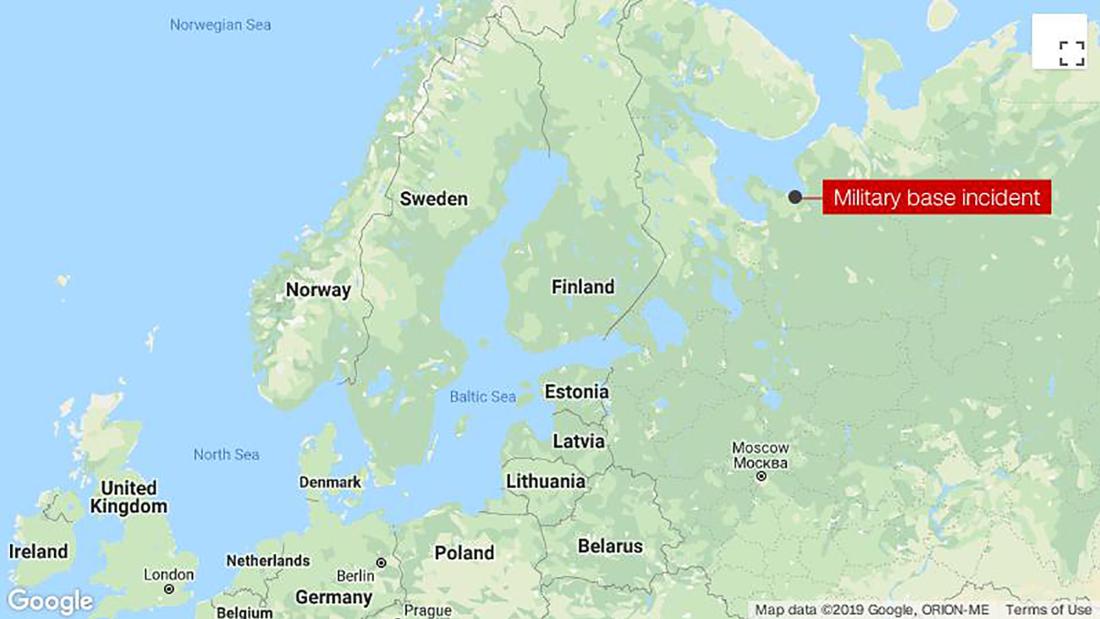
Russian authorities admitted that radiation levels in the city of Severodvinsk were up to 16x the normal rate after a nuclear reactor exploded last week. Five nuclear scientists died in the blast. Iodine was quickly distributed to panicked residents but supplies are now empty.
Russia has several nuclear cities (per NTI) so look for activity in other locations due to these explosions, at least our own intelligence agencies will be doing that.
Sarov (location of VNIIEF-Federal Nuclear Center and Avangard Electromechanical Plant). Formerly known as Arzamas-16.
Snezhinsk (location of VNIITF-Federal Nuclear Center). Formerly known as Chelyabinsk-70.
Zarechnyy (location of Start Production Association). Formerly known as Penza-19.
Novouralsk (location of Ural Electrochemical Combine). Formerly known as Sverdlovsk-44.
Lesnoy (location of Elektrokhimpribor Combine). Formerly know as Sverdlovsk-45.
Ozersk (location of Mayak Production Association). Formerly known as Chelyabinsk-65.
Trekhgornyy (location of Instrument Making Plant). Formerly know as Zlatoust-36.
Seversk (location of Siberian Chemical Combine). Formerly know as Tomsk-7.
Zheleznogorsk (location of Mining and Chemical Combine). Formerly known as Krasnoyarsk-26.
Zelenogorsk (location of Electrochemical Plant). Formerly known as Krasnoyarsk-45.