Facts of the Guzman Re-Capture, Warning Graphic

Sean Penn is gonna make a movie? He used a Mexican actress as the go-between? Signals intelligence and cell (burn) phone tracking? Yes all of those but much more.

The region where el Chapo Guzman lives is well protected by all other residents in the area, they are on the Guzman payroll. We have known for years his location, at issue was crafting a well organized and well trained military style operation to re-capture him. There is some chatter that finally too, Mexico will extradite Guzman to the United States, but that could take at least a year. What is worse, Guzman was not taken to another prison with higher security but rather back to the very prison from which he escaped. What????

So, what role did the United States play in this recent capture of Guzman? A BIG one.

JSOC’s Secretive Delta Force Operators on the Ground for El Chapo Capture

Delta Force Operators on the Ground for El Chapo Capture

Murphy/SofRep: Mexico’s most notorious drug lord, Joaquín Guzmán Loera, better known as El Chapo, was recaptured following an intense firefight between Mexican Marines and Chapo’s goons in Sinaloa, Mexico, last Friday. Although Mexican officials claimed that the entire operation to recapture El Chapo after he escaped from prison for the second time was planned and executed by Mexico, multiple sources report to SOFREP that American law enforcement officers and JSOC operators were involved in the mission.

The operation, dubbed “Black Swan” by the Mexican government, was actually targeting Chapo’s lead sicario (assassin) but came across the cartel leader by chance. The Mexican Marines stormed the house, and in the ensuing firefight five cartel gunmen were killed and six were injured. One Marine was also injured. During the firefight, Chapo escaped through a series of tunnels and then tried to flee in a stolen vehicle. Federal agents caught sight of him and arrested him on the spot. According to one account, the arresting agents had not even been aware of the larger mission being carried out in the area by Mexican Marines. Arresting Chapo was simply a chance encounter, a stroke of good luck.

Rumors of American special operations personnel roaming around the badlands of Mexico have been floating around for well over a decade at this point, but the idea of bearded, ball cap- and Oakley-wearing American soldiers south of the border has been more fiction than fact. JSOC maintained a small analysis cell in Mexico, but the Mexican government has been extremely wary of an American military presence on the ground. Much of this has to do with fears of neocolonialism, as well as Latin American machismo—insecurity over the fact that Mexico cannot manage its own internal affairs.

chaporaid2

(Pics of the recent raid that resulted in the capture of El Chapo)

While America’s so-called “war on drugs” is perhaps at an all-time low socially and politically, with our focus on the Middle East, the capture of El Chapo is still a tactical win for the United States, even if it only gets us incrementally closer to securing the rule of law in Mexico.

In the lead for the capture were the Mexican Marines, who are the go-to preferred force for counter-drug cartel operations in a country where public officials are often hopelessly corrupt. It is interesting to see how, around 2006 or 2007, the Mexican Marines suddenly became very effective at direct-action (DA) raids. Such raids were responsible for capturing and killing high-value targets (HVTs), causing speculation that the Marines were receiving a little help from their North American neighbors. America has also leveraged its significant signals intelligence (SIGINT) capabilities to help the Mexican authorities track down drug cartel leaders.

chaporaid1

(Another Chapo goon killed in the raid that resulted in his capture)

In regards to the latest El Chapo capture, SOFREP has been told that it was actually the U.S. Marshals who had an important role in tracking down the drug lord. Also on the ground was the U.S. Army’s elite counterterrorism unit, Delta Force. Operators from Delta served as tactical advisors but did not directly participate in the operation.

This type of arrangement is hardly unprecedented, as Delta also worked in the shadows during the search for, and eventual killing of, Pablo Escabar in Colombia. They’ve also served in advisory capacities during hostage-rescue missions in places as diverse as Sudan and Peru. Delta Force has also remained behind the scenes in the capture of other HVTs, from Manuel Noriega in Panama during the 1989 invasion, to the killing of Uday and Qusay Hussein in Iraq in 2003. Also worth noting is the unit’s role in tracking down and arresting Bosnian war criminals in the 1990s.

Although Delta had some level of involvement in the operation, their presence is probably less interesting than many would assume.  Law enforcement agencies often request the presence of Delta operators as advisors to sensitive operations.  These operators are often there putting in face time to appease the request of a federal agency, but may have little if any actual participation in the planning and execution of events.  Such was the case when Delta was asked to consult on the Waco stand-off between the ATF, FBI, and the Branch Davidians in 1993.  Law enforcement agencies are said to regard the presence of a JSOC operator as a sort of lucky talisman.

The good news is that it is now unlikely that Chapo will be escaping from prison a third time as the Mexican government is signaling that he will be extradited to the United States to face prosecution.  When the black Chinook comes for Chapo, we will know that he will finally face the justice that he has long evaded.


Cartel Leader Guzman Recaptured in Shootout

The Mexican Navy said in a statement that marines acting on a tip raided a home in the town of Los Mochis before dawn. They were fired on from inside the structure. Five suspects were killed and six others arrested. The marine’s injuries were not life threatening.

At the home marines seized two armoured vehicles, eight long guns, one handgun and a rocket-propelled grenade launcher.

BREAKING NEWS: Joaquin ‘Chapo’ Guzman recaptured in Mexico

FoxLatino: Mexican President Enrique Peña Nieto confirmed on Friday that authorities have captured fugitive drug lord Joaquín “El Chapo” Guzman  in his hometown of Sinaloa.

“Mission accomplished: we have it,” Peña Nieto tweeted Friday.” I want to inform Mexicans Joaquin Guzman Loera has been arrested.”

The arrest of Guzmán was followed by a raid at a home in the town of Los Mochis, before dawn by Mexican marines, the AP is reporting. They were fired on from inside the structure. Five suspects were killed and six others arrested, the AP is reporting. The marine’s injuries were not life threatening.

It is unclear if the this was connected to the arrest.

At the home marines seized two armored vehicles, eight long guns, one handgun and a rocket-propelled grenade launcher.

The statement said they believed a regional commander for a criminal organization was present, but escaped.

The area has been the site of other military operations in recent months as the government continues to search for Joaquin “El Chapo” Guzman, leader of the Sinaloa cartel.

Guzmán fled in July through a mile-long tunnel dug from what authorities say was a building especially set up for the prison break in plain sight of the prison. The tunnel was equipped with a ventilation system and even a customized motorcycle most likely used to remove the dirt while digging towards the shower area of the drug lord’s prison cell.

U.S. Arms Exports to Mexico Mostly to Blame for Violence

US arms, exported legally, are behind many violent crimes in Mexico (CHARTS)


Mexican military and police authorities are still at war with the country’s drug trafficking organizations. And the fight still isn’t going well. Since 2006, the conflict has generated as many as 164,345 civilian deaths. Experts are still unable to agree if murders are going up or down.

More Mexicans have died violently over the past decade than Afghan or Iraqi civilians over the same period, combined. High-powered weaponry, along with handguns, is playing a key role in driving the violence.

Many commentators assume that arms and ammunition are flooding into the arsenals of drug cartels from illegal dealers spanning the US-Mexican border. There are empirical studies substantiating this claim. Other analysts contend that some military-grade firepower consists of stolen and leftover kit from Central American conflicts of the 1970s and ’80s. They are also partly right.

But the full picture is more complex.

In fact, at least 50 countries have exported military-grade weapons and associated materiel to Mexico over the past five decades —with well over half of them exceeding $1 million in sales over the period. There has been a steady uptick in sales since 2006, and especially since former President Felipe Calderon ratcheted up the drug war.

According to UN customs data compiled by NISAT, a research group, the United States is by far the largest exporter of military arms to Mexico. The sums are not trivial. The US has exported more than $300 million worth of “military style” weapons to Mexican authorities since the 1960s; more than half of those sales have been since the year 2000. Top exporters following the US are Italy, Belgium, France and Israel, some of the world’s largest manufacturers.

These firearms include crew-serviced machine guns, assault rifles, rocket-propelled grenade launchers, heavy explosives and related munitions, parts and accessories. However, the US and others also sell vast quantities of “civilian-style” weapons, including shotguns, handguns, and related ammunition.

An arms mapping visualization developed by the Igarapé Institute with partners including Google Ideas shows that Mexican imports of all types of weaponry increased steadily from 2006 onward. Moreover, the share of all imports that included military-style weapons shot up from around 10-25 percent a year to 30-50 percent each year during this timeframe.

While many of these weapons are officially destined for the Mexican armed forces and the country’s more than 1,600 federal, state and local police agencies, some of them fall into the hands of cartels and militia. In Mexico, military-style arms are frequently diverted and leaked from official arsenals. In some cases weapons are sent to the wrong customers altogether. For example, a recent high-profile case involved 9,000 firearms shipped illegally to Mexico by a German firm.

Of course, military-issue firearms and ammunition are routinely trafficked across international borders, including from the US. The Bureau of Alcohol, Tobacco, Firearms and Explosives (ATF) has traced high-powered rifles and handguns shipped by land, air and sea. One especially controversial operation dubbed Fast and Furious allowed weapons from the US to be smuggled to Mexican cartels for tracking purposes —hundreds were lost en route and linked to subsequent crimes.

Igarapé Institute and University of San Diego research has determined that a considerable proportion of illegally acquired firearms in Mexico were originally sold by federally licensed dealers in the US. Meanwhile, older issue US and Soviet-style weaponry is also trafficked from post-conflict Central American countries, including via El Salvador, Honduras and of course Guatemala.

Military and police stocks in some of these Central American countries were singled out by the International Commission against Impunity in Guatemala as the largest source of illegal firearms in the region. Twentieth-century M16s and AK-47s have surfaced in the arsenals of the Juarez, Sinaloa, Zeta and Gulf cartels, though the quantities are comparatively modest.

Making matters more complicated, the Mexican authorities lack a robust marking and tracing system. They have traditionally relied on their US counterparts for background checks on seized weapons. Getting a handle on leaked and trafficked weapons has simply not been a priority of successive governments.

In the past, samples of seized weapons were submitted to the ATF (using eTrace). Extrapolations generated from these assessments suggest that up to 70 percent of recovered firearms were from the US, though these numbers are disputed on both sides of the border.

While internationally supportive of more gun regulation, Mexico is not especially transparent when it comes to reporting on weapons exports, imports or recovery, as the Small Arms Survey arms barometer makes clear. It is also unable to comprehensively get to grips with where illegal guns are coming from.

At least part of the problem is that under Mexican law, all firearms seized by the government must be surrendered to the armed forces within 48 hours. The military is charged with “safeguarding” these arms and is under no compulsion to assist in related law enforcement investigations. The fact that the armed forces may well be one of the key sources of illicit arms is problematic, to say the least.

In the case of the US, ATF officials are required to submit a formal request to the Mexican Attorney General for each and every weapon (with accompanying data on the firearm type/caliber). As a result, most weapons are simply not traced and abusers go unpunished.

The development of a more effective system for tracing the origins of illicit firearms is a priority for both the US and Mexican governments. The current approach is deeply inefficient. If Mexico wants to do more to stop the shooting, it cannot afford to keep asking questions later.


Drug Traffickers Hacking Surveillance Drones

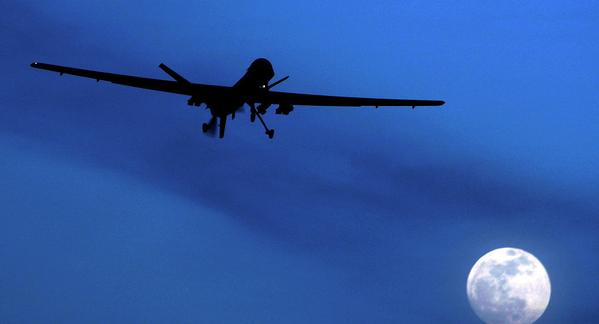
DefenseOne; The drug cartels aren’t just buying golden Uzis anymore. As the U.S. Customs and Border Protection agency, or CBP, has upped its drone patrols along America’s Mexican border, narcotics traffickers have responded with expensive technology of their own.

The U.S. Department of Homeland Security and local law enforcement confirmed that Drug Traffickers are hacking surveillance drones on the border.

Small drones are another powerful tool used by the US Department of Homeland Security to monitor its borders, but drug traffickers already adopting countermeasures. In order to avoid surveillance, drug traffickers are hacking US surveillance drones used to patrol the border.

US surveillance drones

According to Timothy Bennett, a Department of Homeland Security program manager, drug traffickers are using technology to spoof and jam the US surveillance drones.

“The bad guys on the border have lots of money. And what they are putting money into is spoofing and jamming of GPSs, so we are doing funding to look at small UAS that we can counter this,” Bennett said during a panel at the Center for Strategic & International Studies. 

The principle behind the GPS spoofing attack is that sending to control system of the drone fake geographic coordinates it is possible to deceive the onboard system hijacking the vehicle in a different place for which it is commanded. Non-military GPS signals are not encrypted, this makes drones vulnerable to this kind of attacks.

Using jamming techniques against drones, it is possible to interrupt the GPS receiving transmitted to the UAVs. In this scenario the aircraft could potentially lose the capability to monitor its route and to calculate its location, altitude, and the direction in which it is traveling.

Both attack techniques are adopted by drug traffickers that belong to well-funded organizations that has access to modern advanced hacking technology.

DHS hasn’t provided further details on the attacks, but Bennett confirmed that the attacks are interfering with the operations conduced by members of the law enforcement.

“You’re out there looking, trying to find out this path [they’re] going through with drugs, and we can’t get good coordinate systems on it because we’re getting spoofed. That screws up the whole thing. We got to fix that problem,” Bennett told Defense One.

Entire Police Dept. Busted for Laundering Drug Money

Entire Florida police department busted for laundering millions for international drug cartels

RawStory: The village of Bal Harbour, population 2,513, may have a tiny footprint on the northern tip of Miami Beach, but its police department had grand aspirations of going after international drug traffickers, and making a few million dollars while they were at it.

The Bal Harbour PD and the Glades County Sheriff’s Office set up a giant money laundering scheme with the purported goal of busting drug cartels and stemming the surge of drug dealing going on in the area. But it all fell apart when federal investigators and the Miami-Herald found strange things going on.

The two-year operation, which took in more than $55 million from criminal groups, resulted in zero arrests but netted $2.4 million for the police posing as money launderers. Members of the 12-person task force traveled far and wide to carry out their deals, from Los Angeles to New York to Puerto Rico.

Along the way, the small-town cops got a taste of luxury as they used the money for first-class flights, luxury hotels, Mac computers and submachine guns. Meanwhile, the Bal Harbour PD and Glades County Sheriffs were buying all sorts of fancy new equipment.

Besides these “official” uses of the money, confidential records obtained by the Miami-Herald show that officers withdrew hundreds of thousands of dollars with no record of where the money went.

“They were like bank robbers with badges,” said Dennis Fitzgerald, an attorney and former Drug Enforcement Administration agent who taught undercover tactics for the U.S. State Department. “It had no law enforcement objective. The objective was to make money.”

The operation, which was not fully reported to federal authorities, funneled millions of dollars to overseas criminals and interfered with investigations being carried out on known money launderers.

The latest revelations show that at least 20 people in Venezuela were sent drug money from the Florida cops, including William Amaro Sanchez, the foreign minister under Hugo Chavez and now special assistant to President Nicolas Maduro.

They wired a total of $211,000 to Sanchez, even while the U.S. government was investigating Venezuelan government leaders involved in the drug trade. Instead of reporting their knowledge of Sanchez to federal agencies, the cops went on laundering money, taking their cut, and all the while aiding Sanchez in his machinations, which likely included political corruption.

Four other Venezuelan criminals and smugglers were major recipients of the millions being wired from the Bal Harbour PD and Glades County Sheriff’s Office, including a figure tied to one of the largest drug cartels in the hemisphere.

These actions violated strict federal bans on sending illegal money overseas, and the Florida cops never investigated the backgrounds of the people receiving their laundered drug money.

“I can’t think of a more podunk town than Bal Harbour — not in a bad way. But in the sense that these cops would have otherwise been stopping traffic or shooting radar,” said Ruben Oliva, who has represented alleged narco-traffickers since the 1980s. “In reality they were being launderers. The minute they started doing busts, it would have been over.

“This is like a movie. You’ve got these guys and they’re flying all over. They’re saying, ‘Hey, I’m in the big leagues.’ I’ve seen every kind of law enforcement money-laundering investigations. I’ve never seen anything like this. It’s really one for the ages.”

After the Department of Justice busted the Bal Harbour PD for misspending seized money to pay police salaries, the Miami-Herald began deeper investigations and found a much bigger pool of money that was never noticed by the feds. Soon after that, the ambitious sting operation—which was really just a money-making scheme—began to fall apart.

“The Miami Herald gained unprecedented access to the confidential records of the undercover investigation, reviewing thousands of records including cash pickup reports, emails, DEA reports, bank statements and wire transfers for millions of dollars. The inquiry found:

▪ Police routinely withdrew cash — thousands at a time — totaling $1.3 million from undercover bank accounts, but to this day there are no records to show where the money was spent. “In all my years of law enforcement, I’ve never seen anything like it,” Chief Overton said.

▪ Bal Harbour officials say they cannot find receipts for hundreds of thousands in expenses, including five-star hotel bookings, dinners that ran up to $1,000 and scores of purchases like laptops, iPads, electronic money counters, flower deliveries, and even iTunes downloads.

▪ While posing as launderers, police delivered nearly $20 million to storefront businesses in Miami-Dade to launder the money for drug groups — gathering critical evidence against the business owners — yet took no action against them. Years later, the businesses are still open, some still suspected by federal agents of laundering for the cartels.”

Cash deposits to SunTrust Bank totaling $28 million do not appear anywhere in police records. It’s no coincidence that the operation was launched “at a time law enforcement agencies across Florida were looking to boost their budgets during one of the state’s toughest economic periods.”

“We had to find a revenue stream,” said Duane Pottorff, chief of law enforcement for Glades. “It allowed us to have resources we wouldn’t normally have.”

Federal authorities and the Florida Department of Law Enforcement have launched probes into the Bal Harbour police, which will surely confirm the rampant abuses of power. However, the fact that these types of shady operations, carried out with the help of agencies such as Immigration and Customs Enforcement, can occur at all is even more troubling.

Government creates a black market of drugs and blood money through prohibition, then under the War on Drugs it grants itself the power to break the law and get involved in money laundering operations. While the professed goal is to “sting” the bad guys, government rakes in millions upon millions of dollars to further bolster its prohibition and war on drugs.