An affordable price is probably the major benefit persuading people to buy drugs at www.americanbestpills.com. The cost of medications in Canadian drugstores is considerably lower than anywhere else simply because the medications here are oriented on international customers. In many cases, you will be able to cut your costs to a great extent and probably even save up a big fortune on your prescription drugs. What's more, pharmacies of Canada offer free-of-charge shipping, which is a convenient addition to all other benefits on offer. Cheap price is especially appealing to those users who are tight on a budget
Service Quality and Reputation
Although some believe that buying online is buying a pig in the poke, it is not. Canadian online pharmacies are excellent sources of information and are open for discussions. There one can read tons of users' feedback, where they share their experience of using a particular pharmacy, say what they like or do not like about the drugs and/or service. Reputable online pharmacy canadianrxon.com take this feedback into consideration and rely on it as a kind of expert advice, which helps them constantly improve they service and ensure that their clients buy safe and effective drugs. Last, but not least is their striving to attract professional doctors. As a result, users can directly contact a qualified doctor and ask whatever questions they have about a particular drug. Most likely, a doctor will ask several questions about the condition, for which the drug is going to be used. Based on this information, he or she will advise to use or not to use this medication.
Category Archives: UN United Nations Fraud Corruption
Enslaved in Libya: One woman’s extraordinary escape from Islamic State
Islamic State fighters in Libya have abducted at least 540 refugees in six separate ambushes over the past 18 months. Many of the women captives are being turned into sex slaves to reward the extremist group’s warriors.
HELD: Ruta Fisehaye was kidnapped by Islamic State militants in June last year and finally escaped in April. She is now in Germany. REUTERS/Antonio Parrinello
On the night of June 2, 2015, gunmen blocked a highway on Libya’s northern coast and stopped a white truck speeding toward Tripoli, the capital. The men trained their assault rifles on the driver. Three climbed aboard to search the cargo.
Ruta Fisehaye, a 24-year-old Eritrean, was lying on the bed of the truck’s first trailer. Beside her lay 85 Eritrean men and women, one of whom was pregnant. A few dozen Egyptians hid in the second trailer. All shared one dream — to reach Europe.
The gunmen ordered the migrants off the truck. They separated Muslims from Christians and, then, men from women. They asked those who claimed to be Muslims to recite the Shahada, a pledge to worship only Allah. All of the Egyptians shouted the words in unison.
“There is no god but God. Muhammad is the messenger of God.”
“Allahu Akbar,” the gunmen called back.
Fisehaye realized then that she was in the hands of Islamic State of Iraq and Syria. Her captors wore robes with beige camouflage print — clothes she had not seen on other men in Libya. Most of them hid behind black ski masks. A black flag waved from one of their pickup trucks.
“We were certain that they were taking us to our deaths,” recalled Fisehaye, a Christian who wears a black-thread necklace to symbolize her Orthodox faith. “We cried in despair.”
Her captors had another end in mind.
As Islamic State battles to expand in Libya, it is rewarding its warriors by exploiting the great exodus of African migrants bound for Europe.
Since the group emerged in Libya in late 2014, some 240,000 migrants and refugees have traversed the war-torn country. Over the past 18 months, Islamic State fighters have abducted at least 540 refugees in six separate ambushes, according to 14 migrants who witnessed the abductions and have since escaped to Europe.
Because of its proximity to southern Europe, and its shared borders with six African nations, Libya is Islamic State’s most important outpost outside Syria and Iraq. It is territory that the group is fighting hard to defend.
In August, U.S. fighter jets bombed Sirte — the stronghold of Islamic State in Libya — in an attempt to wrench the city from the group’s control. The airstrikes have revived a stalled military assault that Libyan brigades launched earlier this summer.
Sirte is strategically important for Islamic State. The city sits on a highway connecting two hubs of Libya’s people-smuggling trade — Ajdabiya in the northeast, where migrants stop to settle fees with smugglers, and fishing ports in the west, where boats depart for Europe every week.
From this bastion, Islamic State has found numerous ways to profit from the refugee crisis, despite the group’s declaration that migration is “a dangerous major sin” in the September issue of its magazine, “Dabiq.”
The extremist group has taxed smugglers in exchange for safe passage and has used well-beaten smuggling routes to bring in new fighters, according to Libyan residents interviewed by phone, a senior U.S. official and a U.N. Security Council report published in July.
Brigadier Mohamed Gnaidy, an intelligence officer with local forces mustered by the nearby town of Misrata, says Islamic State has recruited migrants to join its ranks, offering them money and Libyan brides.
It has also extracted human chattel from the stream of refugees passing through its territory, according to the accounts of Fisehaye and the other survivors who were interviewed. Five of six mass kidnappings verified by Reuters took place on a 160-km stretch near Sirte in March, June, July, August and September of last year. The sixth occurred near Libya’s border with Sudan this January.
This story is based on interviews with Fisehaye, eight other women enslaved by Islamic State, and five men kidnapped by the group. Reuters spoke to the refugees in three European countries over four months. Two women agreed to speak on the record, risking the stigma that besets survivors of sexual violence. Reuters was unable to reach the Islamic State fighters in Libya or independently corroborate certain aspects of the women’s accounts.
BETTER SHOT THAN BEHEADED
Before she left Eritrea, Fisehaye (rhymes with Miss-ha-day) felt trapped in her job as a storekeeper for a government-owned farm. Like most young Eritreans, she was a conscript in the country’s long-term national service, which lasts well beyond the 18 months mandated by law. She could hardly get by on her meager wages of $36 a month. But she also felt she could not quit and risk angering the state, which is often accused of human-rights violations.
Fisehaye, a petite woman whose smile easily takes over her entire face, decided to take a risk. In January 2015, she walked across the border into Sudan with a cousin and two friends, her heart set on Europe.
In Khartoum, Sudan’s capital, Fisehaye spent four months raising the $1,400 she needed to pay a smuggler for a trip to Libya. She tried and failed to find a lucrative job. So, like thousands of refugees before her, she called on relatives abroad to pitch in. She talked to recent émigrés and found an Eritrean smuggler whose clients gave him a glowing review.
Before setting off into the desert, she heard stories about armed outlaws who rape women in Libya. She paid a doctor for a contraceptive injection that would last for three months.
“Once you leave Eritrea, there is no going back. I did what any woman would do,” she said.
The first leg of her journey went off without a hitch. In May, her convoy crossed the Sahara and reached Ajdabiya in northeast Libya. Fisehaye believed the worst was behind her. Though no one counts migrants who die from sickness, starvation and violence in the desert, refugee groups say more may perish there than drown in the Mediterranean Sea.
“No one stopped us in the Sahara … and the smugglers told us we shouldn’t worry about Daesh,” she said, using an Arabic acronym for Islamic State. “I never expected to see an organized state like theirs in Libya.”
She was wrong.
On the night of the kidnapping, the armed Islamic State fighters ordered Fisehaye and the other Christians back onto the truck. The men climbed onto the front trailer and the women, 22 in all, onto the back. They drove east, threading the same road they had driven hours earlier. A pickup truck with a mounted machine gun trailed close behind.
A half hour later, the truck turned right onto a dirt road and the soft glow of a town’s lights shimmered ahead. A few male captives had seen videos of Islamic State beheadings. Realizing the gunmen belonged to the group, the men jumped off and ran into the flat desert. Gunfire erupted. Some fell dead, others were rounded up. A few got away.
“We thought it would be better to get shot than beheaded,” Hagos Hadgu, one of the men who jumped off the truck, said in an interview in Hållsta, Sweden. He wasn’t caught that night and made it to Europe two months later. “We didn’t want to die with our hands and legs bound. Even an animal needs to writhe in the hour of death.”
The fighters deposited the migrants at an abandoned hospital perched in a scrubland near a desert town called Nawfaliyah. They searched the women for jewelry, lifting their sleeves and necklines with a rod, and hauled them into a small room where a Nigerian woman was being kept.
The next morning, one of the fighters’ leaders, a man from West Africa, paid the women a visit. He brought a young boy, one of at least seven Eritrean children Islamic State had kidnapped in March, to serve as his translator.
“Do you know who we are?” the man asked.
The women were silent.
“We are al-dawla al-Islamiyyah,” the man explained, using the Arabic for Islamic State.
EXECUTION: Islamic State militants stand behind Ethiopian Christians along a beach in Libya. This image, taken from an undated video posted on a social media website on April 19, 2015, shows the migrants just before they were killed. REUTERS/Social Media Website via Reuters TV
He reminded the women that Islamic State was the group that had slain 30 Eritrean and Ethiopian Christians back in April, filmed the massacre, and posted the video online. The caliphate would spare their lives because they were women, he assured them, but only if they converted to Islam.
“Or we will let you rot here,” he warned.
Fisehaye found conversion an unholy thought. Along with the other women, she fired a volley of questions at the man: Can we call our families and tell them where we are? Can they pay you a ransom for our freedom? Can you tell us what you did to our brothers? Our husbands?
The man offered few answers and no solace.
Three weeks later, in the first week of Ramadan in June, fighter jets bombed the abandoned hospital compound and some of the buildings collapsed. It is difficult to determine who was behind the attack. Both the U.S. military and western Libyan groups have claimed raids on nearby towns around that time.
In the ensuing chaos, Fisehaye and the other women sprinted past the debris and ran barefoot into the desert. The hot ground seared their feet. The captive men, who had been held in the same compound all along, ran ahead.
Before long, the fleeing captives made out the silhouettes of a pickup truck and men with assault rifles ahead of them. The armed men waved for the migrants to stop then opened fire. The women stopped. Most of the migrant men escaped, but eleven were rounded up and flogged. Their whereabouts are unknown.
The airstrikes continued through the week. Eventually, Islamic State fighters moved the women to the abandoned quarters of a Turkish construction company in Nawfaliyah, two hours away.
PRISON: Fighters allied to Libya’s U.N.-backed government told Reuters this Sirte house was used by Islamic State as a prison. None of the migrants Reuters spoke with were held here, though some were held in similar buildings. REUTERS/Goran Tomasevic
“I could see no other way out. Islam was one more step to my freedom.”
The makeshift prison housed graders and dozers from road-work projects of the mid-2000s, their metal bodies rusting under the intense heat. Itinerant workers had scribbled their names and countries on the compound’s walls. Fisehaye and the other women stayed in a small room where the drywall sweated when temperatures rose. A Korean family — a pediatrician, his wife and her brother — were jailed in another room.
It only took a week for Fisehaye and the other women to attempt another breakout. Nine escaped, but not Fisehaye. Instead, she was brought back to the makeshift prison and whipped for days. The Korean doctor tended to her wounds.
A few weeks later, in early August, 21 other Eritrean women joined Fisehaye’s group. They too had been kidnapped along a stretch of highway in central Libya. One woman came with her three children, aged five, seven and eleven.
CONVERSION
Throughout the summer, Islamic State consolidated its hold in central Libya. In Sirte, Islamic State fighters crushed a Salafist uprising by executing dissenters and hanging their bodies from lampposts. In Nawfaliyah, they paraded decapitated heads to silence dissent.
Then, in September, the group’s emir in Libya, Abul-Mughirah Al-Qahtani (more commonly known as Abu Nabil), advertised his domain’s “great need of every Muslim who can come.” He summoned fighters, doctors, legal experts and administrators who could help him build a functioning state. He levied hefty taxes on businesses and confiscated enemy property, just as his group had done in Syria and Iraq.
The ranks of Islamic State fighters swelled. At its peak, the group may have had 6,000 fighters in Libya, based on the U.S. Army’s estimates, although the Pentagon drastically cut that estimate this month to a thousand fighters in Sirte.
The single men, most of whom flocked from other parts of Africa, needed companions, and Islamic State enlisted older women in Sirte to help. The women, called ‘crows’ because they dressed in black, visited townspeople’s homes and registered single girls older than 15 as potential brides, says Brigadier Gnaidy of the Misrata forces.
BILLBOARD: A sign in Libya reads: “The city of Sirte, under the shadow of Sharia.” Forces aligned with Libya’s new unity government have advanced on the city over the past few months, pushing Islamic State to the south. REUTERS/Reuters TV
As the group’s ambitions grew that summer, so did its need for women. Islamic State’s take on sharia permits men to take sex slaves. The kidnapped women, unprotected and far from home, became easy targets. In mid-August, more than two months after Fisehaye was abducted, Islamic State fighters moved the 36 women in their custody to Harawa, a small town they controlled some 75 kilometers (46 miles) from Sirte.
As Fisehaye and the seven other women Reuters interviewed describe it, life in Harawa was almost quotidian at first.
There were no air strikes, beatings or threats of sexual violence. The captives — the Eritreans kidnapped in June and August, including Fisehaye, two Nigerians, and the Korean couple and their relative — lived in a large compound by the town’s dam. In the next few weeks, they were joined by 10 Filipino medical workers kidnapped from a hospital in Sirte, a Bangladeshi lecturer taken from a Sirte university, a pregnant Ghanaian captured in Sirte, and an Eritrean woman captured with her 4-year-old son on the highway to Tripoli.
It was here that Fisehaye bonded with Simret Kidane, a 29 year-old who left her three children with her parents in Eritrea to seek a better life in Europe. She was among the women kidnapped in August.
Kidane befriended one of the guards, Hafeezo, a Tunisian mechanic turned jihadist in his early 30s. Hafeezo helped the women navigate their new life in captivity. He brought them groceries and relayed their demands to his superiors in Sirte. He comforted them when they cried. He counseled them to forget their past lives and embrace Islam. That way, he promised, they may be freed to find a husband among the militants. They may even be allowed to call home.
The women asked for religious lessons, and Hafeezo brought them a copy of the Koran translated into their first language, Tigrinya. He also brought a small Dell laptop and a flash drive on which he had uploaded religious texts and lessons on the lives of fallen jihadists.
Fisehaye succumbed first. In September, after three months of captivity, she converted to Islam and took on a Muslim name, Rima. Her conversion had a domino effect across the compound; Kidane and the others followed suit a month later.
“I could see no other way out,” Fisehaye said. “Islam was one more step to my freedom. They told us we would have some rights as Muslims.”
After their conversion, Hafeezo brought them black abayas and niqabs, loose garments some Muslim women wear to cover themselves. He kept his distance and refused to make eye contact. Instead, he supervised their piety from afar.
Another guard, an older Sudanese fighter, taught them to pray. He recited verses from the Koran and made the women write down and repeat his words. When the guard moved to a new job in Sirte, Hafeezo brought a flat-screen TV and played them videos of religious lessons and suicide missions. As promised, Hafeezo allowed the women to call their families.
In December, frequent gunfire punctured the relatively quiet life in Harawa. Food became scarce. Hafeezo was often called to the frontline and disappeared for days. One day, he took Kidane aside and told her to prepare for what was to come. The leadership had changed — Islamic State’s emir in Libya had died in a U.S. airstrike a month earlier — and the women’s fate along with it.
FIRE: Libyan forces allied to the U.N.-backed government battle with Islamic State militants in Sirte last month. REUTERS/Goran Tomasevic
“No one ever showed us which part of the Koran says they could turn us into slaves.”
“You are now sabaya,” Hafeezo told Kidane, using the archaic term for slave. There were four possible outcomes for her and the other women, he explained. Their respective owners could make them their sex slaves, give them away as gifts, sell them to other militias, or set them free.
“Do not worry about what will happen to you in the hands of men,” Kidane says Hafeezo told her. “Concern yourself only with where you stand with Allah.”
Kidane did not share this detail with Fisehaye or the other women, hoping to save them from despair.
Later, one of Hafeezo’s superiors came to the compound to take a census. He wrote the women’s names and ages on a ledger. He asked them to lift their veils and examined their faces. He returned a week later and took two of the youngest women, aged 15 and 18, with him. On December 17, he sent for Kidane. That day, he gave her to a Libyan member of an Islamic State brigade in Sirte. Despite her repeated pleas, her new owner refused to reunite her with Fisehaye.
Kidane and the teenage women escaped and are now seeking asylum in Germany.
SABAYA
In late January, a stomach ulcer confined Fisehaye to her bed. Stress made matters worse. Returning from a hospital visit one afternoon, she witnessed a child, no older than 9, shoot a man in the town square.
Soon after, she and the remaining female captives moved to a warehouse in Sirte where Islamic State stored appliances, fuel and slaves. A group of 15 Eritrean women, who had been kidnapped in July, and three Ethiopian women kidnapped in January joined them that week.
The warehouse became, to the women, a last frontier of defiance. As new Muslims, they argued for better healthcare and the abolition of their slavery. They absorbed beatings in response.
Resistance proved futile. An Eritrean fighter called Mohamed, who had often dropped by to survey the women, purchased Fisehaye in February. He never said how much he paid for her. But he seemed gentle at first, asking after her waning health and her past life in Eritrea.
“I was confused. I thought he was going to help me. Maybe he had infiltrated Daesh. Maybe he wasn’t really one of them. I started harboring hope,” Fisehaye said.
Instead, he raped her, repeatedly, for weeks.
“No one ever showed us which part of the Koran says they could turn us into slaves,” Fisehaye said. “They wanted to destroy us…so much evil in their hearts.”
She plotted her escape but could not find a way out.
Then her owner lent her to another man, a Senegalese fighter. Known by the nom de guerre Abu Hamza, the Senegalese had brought his wife and three children to the Libyan frontline. Fisehaye was to work, unpaid, in Abu Hamza’s kitchen.
The work was busy but bearable, until one night in mid-February when Abu Hamza brought an Eritrean woman from the warehouse. He raped the woman all night.
“She was screaming. Screaming. It tore my heart,” Fisehaye recalled. “His wife stood by the door and cried.”
The next morning, Fisehaye convinced the battered woman to run away with her. They left the city behind and ran into the desert. No one stopped to help them and they were caught by religious police on patrol outside the city.
The police returned both women to captivity. The battered Eritrean woman went back to Abu Hamza. Mohamed took Fisehaye to a three-story building in Sirte that he shared with two other fighters.
Fisehaye moved in with a 22-year-old Eritrean woman and her 4-year-old son, both of whom belonged to a Tunisian commander named Saleh. Another 23-year-old Eritrean lived down the hall with her 2-year-old son and a daughter to whom she gave birth while in Islamic State custody. That woman and her children belonged to a Nigerian fighter who called himself al-Baghdadi.
Fisehaye’s roommates said the men raped them on multiple occasions. They told their stories on condition of anonymity.
“There was no one there to help me. So I kept quiet and took the abuse,” the Eritrean mother of two later said. “I stopped resisting. He did as he pleased with me.”
ESCAPE
In April of this year, Libya’s nascent unity government stationed itself in a naval base in Tripoli. Separately, rival factions — the Petroleum Facilities Guard in the east and brigades from towns in the west — plotted to attack Islamic State from opposite flanks.
“There was no one there to help me. So I kept quiet and took the abuse.”
In Sirte, meanwhile, Fisehaye and her roommates learned that one of them, the mother of two, would soon be sold to another man.
The revelation pushed them to plot an escape. They pretended to call their relatives but talked, instead, to Eritrean smugglers in Tripoli. They studied their captors’ schedules. They surveyed their surroundings whenever the Tunisian commander Saleh, in a cruel prank, left the house keys with his slave but took her son with him.
Finally, on the early morning of April 14, the women grabbed 60 Libyan dinars, about $40, from Saleh’s bag and broke out of the house through a backdoor. But Sirte looked ominously deserted in the early morning and, fearing they would be caught, the women returned to the house.
They ventured out again, hours later, when the city came to life. They walked for hours before a cab stopped for them. Fisehaye negotiated with the driver in halting Arabic. She told him they were maids who had been swindled by an employer. She gave him a number for an Eritrean smuggler in Tripoli.
The driver negotiated with the smuggler over the phone. He agreed to drive them for 750 dinars ($540), to be covered by the smuggler once the women arrived in Bani Walid, five hours away.
In the end, it took the women 12 hours to get to Bani Walid. As promised, the Eritrean smuggler paid for their escape and took them to a holding cell. There, they shucked off their niqabs and cried with joy. They prayed for the dozens they had left behind.
Fisehaye borrowed the smuggler’s phone and called her father in Eritrea. Soon, word of her escape spread among her friends and relatives. They settled her debt and paid the smuggler another $2,000 to get her on a boat to Europe.
In May, during a month when 1,133 refugees drowned at sea, Fisehaye crossed the Mediterranean. Her 10 months of captivity had come to an end.
She traversed a path trod by many refugees, across Italy and Austria, and reached Germany a month after her escape. She is now seeking asylum there.
Gebrekidan reported from Ulm and Hanover, Germany; Catania and Rome, Italy; and Hållsta, Fur and Vetlanda, Sweden. Additional reporting by Patrick Markey and Aidan Lewis in Sirte, Libya; Ali Al-Shouky in Marsa Matrouh, Egypt; and Jonathan Landay in Washington.
It came to my attention a few weeks ago that the United States was removing the 50+ stored nuclear weapons in Incirlik, from Turkey to Romania. Seems with some slight additional reporting that could be an accurate condition due to the unrest that persists since the failed coup of Erdogan. It is also reported that he is clearing some 38,000 prisoners from prisons to make room for those he has designated as participating in the coup. Meanwhile, the United States has dispatched a team to Ankara to talk over the demand by Erdogan to extradite Fethullah Gulen to Turkey after a complete docier was provided, complete with evidence that Gulen was part of the coup operations. (Note: Turkey is the only Islamic country that is a member of NATO). (Another note: Gulen is a friend and protected by Hillary)
While there are thousands of moving parts here with regard to Turkey, it is quite worthy to mention that after Turkey shot down a Russian fighter in the Turkman region the anger of Moscow grew towards Turkey, but that is no longer the case, in fact Putin and Erdogan have moved beyond history and have re-established collaboration and relations.
Meanwhile, now that Turkey is no longer and issue for Russia, it remains a big thorn for the United States and NATO. So, what is Russia doing now? The Kremlin is taking on more old relationships and making them new again. Beyond Syria, Venezuela, Cuba, Nicaragua, there is Africa and of course Iran and Yemen. What do you mean Yemen? Yes and all of these objectives are to take control of the Mediterranean, the Black Sea and of course NATO.
Yemen has been at the center of hostilities due to the Iranian backed Houthis where Saudi Arabia has worked towards control and a regime change there. It is also notable that Yemen was a top location for the CIA drone operations towards al Qaeda in the Arabian Peninsula, AQAP, until Iran and then Yemen fell and the United States was forced to flee.
Looking at this map carefully, not the maritime traffic with oil tankers which are always challenged by Iran as are navies.
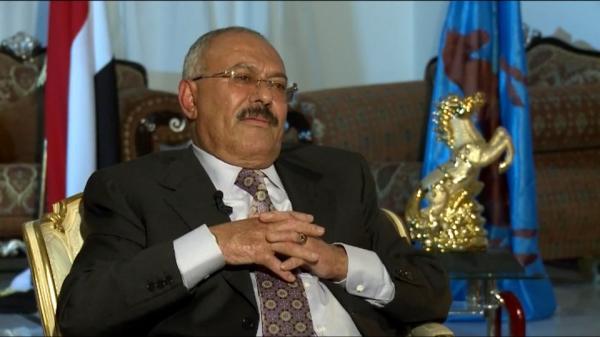
In a TV interview today, Yemen’s ex-president, Ali Abdullah Saleh, appeared to invite Russian military intervention in the country’s conflict. He talked of reactivating old Yemeni agreements with the Soviet Union and offfered “all the facilities” of Yemen’s bases, ports and airports to Russia. Saleh seemed to be advocating something similar to what happened in Syria, where Russia and Iran joined the conflict on the Assad regime’s side under the guise of fighting terrorism. A video of the interview is here, with a transcript in Arabic here. Saleh, who was ousted from the presidency in 2012, is allied to the Houthis who currently control the Yemeni capital and large parts of the country, especially in the north. For more than a year Saudi-led forces, who back Saleh’s exiled successor, Abd-Rabbu Mansour Hadi, have been bombing Houthi-controlled areas of Yemen. Meanwhile the Houthis, who have some Iranian backing, have attacked Saudi territory in the border area.
Talks in Kuwait aimed at ending the war recently collapsed. Separately from the Houthi-Saleh-Hadi conflict there are frequent attacks in Yemen by Islamist militants. In the Russian TV interview, Saleh described Russia as “the closest kin to us”, adding that it has “a positive attitude” in the UN Security Council. Saleh continued: “We extend our hands to Russia. We have agreements with the Russian Federation which were with the Soviet Union. The legitimate heir to the Soviet Union is the Russian Federation, we are ready to activate these treaties and agreements that were between us and the Soviet Union. “We agree on a principle, which is the struggle against terrorism … We extend our hands and offer all the facililties, and the conventions and treaties … We offer them in our bases, in our airports and in our ports – ready to provide all facilities to the Russian Federation.”
Former New York congressman Anthony Weiner Photo: Illustration Emil Lendof/New York Post
NYP: First he was Carlos Danger. Now — in yet another sexting scandal — he’s a randy “mongoose.”
Sext fiend Anthony Weiner boasted of his animal prowess — claiming he was “deceptively strong . . . like a mongoose” — and gave his cellphone number to a college student during a flirty, private online chat on a recent trip to Los Angeles, The Post has learned.
But the joke was on the horndog pol, whose wife, Huma Abedin, is a top aide and close confidante of Hillary Clinton.
The target of his online affection was really a dude. More here. **** But back to Huma…
Hillary Clinton’s top campaign aide, and the woman who might be the future White House chief of staff to the first female US president, for a decade edited a radical Muslim publication that opposed women’s rights and blamed the US for 9/11.
One of Clinton’s biggest accomplishments listed on her campaign Web site is her support for the UN women’s conference in Bejing in 1995, when she famously declared, “Women’s rights are human rights.” Her speech has emerged as a focal point of her campaign, featured prominently in last month’s Morgan Freeman-narrated convention video introducing her as the Democratic nominee.
Hillary Clinton and Huma Abedin arrive for a NATO Foreign Minister family photo in front of the Brandenburg Gate in 2011. Photo: Getty Images
Hillary Clinton talks with aide Huma Abedin. Photo: Getty Images
Clinton and Abedin in Queens. Photo: Getty Images
Hillary Clinton greets people. Huma Abedin is seen at center. Photo: Getty Images
However, soon after that “historic and transformational” 1995 event, as Clinton recently described it, her top aide Huma Abedin published articles in a Saudi journal taking Clinton’s feminist platform apart, piece by piece. At the time, Abedin was assistant editor of the Journal of Muslim Minority Affairs working under her mother, who remains editor-in-chief. She was also working in the White House as an intern for then-First Lady Clinton.
Headlined “Women’s Rights are Islamic Rights,” a 1996 article argues that single moms, working moms and gay couples with children should not be recognized as families. It also states that more revealing dress ushered in by women’s liberation “directly translates into unwanted results of sexual promiscuity and irresponsibility and indirectly promote violence against women.” In other words, sexually liberated women are just asking to be raped
“A conjugal family established through a marriage contract between a man and a woman, and extended through procreation is the only definition of family a Muslim can accept,” the author, a Saudi official with the Muslim World League, asserted, while warning of “the dangers of alternative lifestyles.” (Abedin’s journal was founded and funded by the former head of the Muslim World League.)
“Pushing [mothers] out into the open labor market is a clear demonstration of a lack of respect of womanhood and motherhood,” it added.
In a separate January 1996 article, Abedin’s mother — who was the Muslim World League’s delegate to the UN conference — wrote that Clinton and other speakers were advancing a “very aggressive and radically feminist” agenda that was un-Islamic and wrong because it focused on empowering women.
“‘Empowerment’ of women does more harm than benefit the cause of women or their relations with men,” Saleha Mahmood Abedin maintained, while forcefully arguing in favor of Islamic laws that have been roundly criticized for oppressing women.
“By placing women in the ‘care and protection’ of men and by making women responsible for those under her charge,” she argued, “Islamic values generate a sense of compassion in human and family relations.”
“Among all systems of belief, Islam goes the farthest in restoring equality across gender,” she claimed. “Acknowledging the very central role women play in procreation, child-raising and homemaking, Islam places the economic responsibility of supporting the family primarily on the male members.”
She seemed to rationalize domestic abuse as a result of “the stress and frustrations that men encounter in their daily lives.” While denouncing such violence, she didn’t think it did much good to punish men for it.
She added in her 31-page treatise: “More men are victims of domestic violence than women . . . If we see the world through ‘men’s eyes’ we will find them suffering from many hardships and injustices.”
She opposed the UN conference widening the scope of the definition of the family to include “gay and lesbian ‘families.’ ”
Huma Abedin does not apologize for her mother’s views. “My mother was traveling around the world to these international women’s conferences talking about women’s empowerment, and it was normal,” she said in a recent profile in Vogue.
Huma continued to work for her mother’s journal through 2008. She is listed as “assistant editor” on the masthead of the 2002 issue in which her mother suggested the US was doomed to be attacked on 9/11 because of “sanctions” it leveled against Iraq and other “injustices” allegedly heaped on the Muslim world. Here is an excerpt:
“The spiral of violence having continued unabated worldwide, and widely seen to be allowed to continue, was building up intense anger and hostility within the pressure cooker that was kept on a vigorous flame while the lid was weighted down with various kinds of injustices and sanctions . . . It was a time bomb that had to explode and explode it did on September 11, changing in its wake the life and times of the very community and the people it aimed to serve.”
Huma Abedin is Clinton’s longest-serving and, by all accounts, most loyal aide. The devout, Saudi-raised Muslim started working for her in the White House, then followed her to the Senate and later the State Department. She’s now helping run Clinton’s presidential campaign as vice chair and may end up back in the White House.
The contradictions are hard to reconcile. The campaign is not talking, despite repeated requests for interviews.
Until now, these articles which Abedin helped edit and publish have remained under wraps. Perhaps Clinton was unaware she and her mother took such opposing views.
But that’s hard to believe. Her closest adviser served as an editor for that same Saudi propaganda organ for a dozen years. The same one that in 1999 published a book, edited by her mother, that justifies the barbaric practice of female genital mutilation under Islamic law, while claiming “man-made laws have in fact enslaved women.”
And in 2010, Huma Abedin arranged for then-Secretary of State Clinton to speak alongside Abedin’s hijab-wearing mother at an all-girls college in Jeddah, Saudi Arabia. According to a transcript of the speech, Clinton said Americans have to do a better job of getting past “the stereotypes and the mischaracterizations” of the oppressed Saudi woman. She also assured the audience of burqa-clad girls that not all American girls go “around in a bikini bathing suit.”
At no point in her long visit there, which included a question-and-answer session, did this so-called champion of women’s rights protest the human-rights violations Saudi women suffer under the Shariah laws that Abedin’s mother actively promotes. Nothing about the laws barring women from driving or traveling anywhere without male “guardians.”
If fighting for women’s rights is one of Clinton’s greatest achievements, why has she retained as her closest adviser a woman who gave voice to harsh Islamist critiques of her Beijing platform?
The next Benghazi? State Department leaves contractors in Afghanistan without escape plan
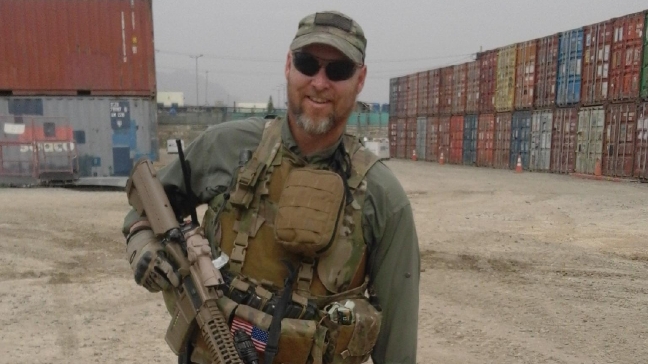
Circa: The concerns are heightened by the fact that many of those civilians doing the security and nation-building work of the U.S. government hold sensitive security clearances, making them an attractive target for the enemy.
And the situation could become even more precarious after the U.S. military in Afghanistan draws down to just 8,400 troops by year’s end.
“It’s not just a political nightmare for somebody, it’s people’s lives at stake,” said Kevin Ofchus, head of Georgia-based firm Host Nations Perspectives Southwest Asia (HNPSWA) that has security contracts in Afghanistan.
The current situation
“The State Department says there’s a lack of infrastructure to support an emergency response after we’ve spent 15 years and billions of dollars on infrastructure,” he added.
Ofchus’s company is a member of the State Department’s Overseas Security Advisory Committee, and it chairs the Crisis Management Advisory Subcommittee in Kabul, which advises companies about security working in hot-zones.
And his sentiments are widely shared by a dozen other federal contractors in theater interviewed by Circa, some of whom would only talk on condition of anonymity because they feared reprisal from Washington.
“I was told ‘don’t bother going to Kabul, grab your weapon and fight your way through until you can reach an aircraft’ or whatever,” said one contractor working in Afghanistan, who spoke on condition of anonymity.
“I don’t think any of us count on State Department to have their shit together. I’ve never seen, heard or prepared for any evacuation plan.”
— -Anonymous contractor
So is there a plan?
State Department officials told Circa that there is an evacuation plan, but they could not release any details about it because it was classified.
Mike Warren, a security director for the USAID-backed Mining Investment and Development for Afghanistan Sustainability Project, known as MIDAS, says he believes State has a very remedial plan but it fails on almost every security protocol.
“The Department of State, in close coordination with the Department of Defense, has a crisis response plan for Afghanistan that encompasses civilians and contractors. U.S. Forces-Afghanistan, in close coordination with the U.S. Embassy in Kabul, maintains a classified Non-Combatant Evacuation Operations plan to support the chief of mission,” the department wrote in an email.
“I know the U.S. Embassy was working on a plan, but it’s a shell of what they need,” Warren said in a phone interview from Kabul. “There appears to be a lack of coordinated effort between the U.S. Embassy and the American companies and personnel here in Afghanistan.”
“I know the U.S. Embassy was working on a plan, but it’s a shell of what they need.”
— Mike Warren, security director for MIDAS
Circa obtained a Memorandum of Understanding (MOU) between the State Department and Department of Defense governing the protection and evacuation of U.S. citizens and nationals from threatened areas overseas. The document specifically outlines the duties and requirements of the various agencies.
The Secretary of State “will prepare the plans for the protection and evacuation of all U.S. citizens and nationals and designated other persons abroad, including the Department of Defense (non-combatants).” More terrifying details here from Circa.
*****
In part: Now, as President Obama prepares to hand off combat operations in Iraq, Afghanistan, Syria, and elsewhere, to his successor, he’s also bequeathing a way of war that relies on large numbers of guns-for-hire while, at least formally, restricting the number of American “troops” sent overseas. Since 2009, the ratio of contractors to troops in war zones has increased from 1 to 1 to about 3 to 1.
Private military contractors perform tasks once thought to be inherently governmental, such as raising foreign armies, conducting intelligence analysis and trigger-pulling. During the Iraq and Afghanistan wars, they constituted about 15 percent of all contractors. But don’t let the numbers fool you. Their failures have an outsized impact on U.S. strategy. When a squad of Blackwater contractors killed 17 civilians at a Bagdad traffic circle in 2007, it provoked a firestorm in Iraq and at home, marking one of the nadirs of that war.
Contractors also encourage mission creep, because contractors don’t count as “boots on the ground.” Congress does not consider them to be troops, and therefore contractors do not count again troop-level caps in places like Iraq. The U.S. government does not track contractor numbers in war zones. As a result, the government can put more people on the ground than it reports to the American people, encouraging mission creep and rendering contractors virtually invisible.
For decades now, the centrality of contracting in American warfare—both on the battlefield and in support of those on the battlefield—has been growing. During World War II, about 10 percent of America’s armed forces were contracted. During the wars in Iraq and Afghanistan, that proportion leapt to 50 percent. This big number signals a disturbing trend: the United States has developed a dependency on the private sector to wage war, a strategic vulnerability. Today, America can no longer go to war without the private sector. More here from DefenseOne.
This is surrender of the one place in the world where there is some freedom, the internet. The transfer date is September 30, 2016. Is this a big deal? Yes…..China and Russia don’t have a 1st amendment and it appears only one senator is waging the war to stop the transfer, Ted Cruz.
“From the very first days of the internet, the American government has maintained domain names and ensured equal access to everyone with no censorship whatsoever,” Cruz says in the video. “Obama wants to give that power away.”
That move poses a “great threat” to national security, Cruz said. Starting on the transfer date of Sept. 30, ICANN control could allow foreign governments to prohibit speech that they don’t agree with, he added.
Cruz has added an amendment to the Senate’s Highway Bill that would require an up-or-down vote on the administration’s plan to give ICANN control over names and numbers. And Cruz’s Protecting Internet Freedom Act, proposed with Republican Rep. Sean Duffy (Wis.), would prevent the transfer of authority to the global group. More from The Blaze.
*****
Twenty-five advocacy groups and some individuals have told leaders in the Senate and the House of Representatives that key issues about the transition are “not expected to be fully resolved until summer 2017.”
“Without robust safeguards, Internet governance could fall under the sway of governments hostile to freedoms protected by the First Amendment,” wrote the groups, which include TechFreedom, Heritage Action for America and Taxpayers Protection Alliance. “Ominously, governments will gain a formal voting role in ICANN for the first time when the new bylaws are implemented.” Read more here from PCWorld.
America to hand off Internet in under two months
WashingtonExaminer: The Department of Commerce is set to hand off the final vestiges of American control over the Internet to international authorities in less than two months, officials have confirmed.
The department will finalize the transition effective October 1, Assistant Secretary Lawrence Strickling wrote on Tuesday, barring what he called “any significant impediment.”
The move means the Internet Assigned Numbers Authority, which is responsible for interpreting numerical addresses on the Web to a readable language, will move from U.S. control to the Internet Corporation for Assigned Names and Numbers, a multistakeholder body that includes countries like China and Russia.
Critics of the move, most prominently Texas Republican Sen. Ted Cruz, have pointed out the agency could be used by totalitarian governments to shut down the Web around the globe, either in whole or in part.
Opponents similarly made the case that Congress has passed legislation to prohibit the federal government from using tax dollars to allow the transition, and pointed out that the feds are constitutionally prohibited from transferring federal property without approval from Congress. A coalition of 25 advocacy groups like Americans for Tax Reform, the Competitive Enterprise Institute, and Heritage Action sent a letter to Congress making those points last week.
While those issues could, in theory, lead to a legal challenge being filed in the days following the transfer, the administration has expressed a desire to finish it before the president leaves office, a position that Strickling reiterated.
“This multistakeholder model is the key reason why the Internet has grown and thrived as a dynamic platform for innovation, economic growth and free expression,” Strickling wrote. “We appreciate the hard work and dedication of all the stakeholders involved in this effort and look forward to their continuing engagement.”