North Korea and Friends, Cyber War, Nerve Gas and WMD

Hey, look over there –>

WikiLeaks Reveals ‘AfterMidnight’ & ‘Assassin’ CIA Windows Malware Frameworks

When the world was dealing with the threat of the self-spreading WannaCry ransomware, WikiLeaks released a new batch of CIA Vault 7 leaks, detailing two apparent CIA malware frameworks for the Microsoft Windows platform. Dubbed “AfterMidnight” and “Assassin,” both malware programs are designed to monitor and report back actions on the infected remote host computer running the Windows operating system and execute malicious actions specified by the CIA. Since March, WikiLeaks has published hundreds of thousands of documents and secret hacking tools that the group claims came from the US Central Intelligence Agency (CIA). This latest batch is the 8th release in the whistleblowing organization’s ‘Vault 7’ series.

‘AfterMidnight’ Malware Framework

According to a statement from WikiLeaks, ‘AfterMidnight’ allows its operators to dynamically load and execute malicious payload on a target system. The main controller of the malicious payload, disguised as a self-persisting Windows Dynamic-Link Library (DLL) file and executes “Gremlins” – small payloads that remain hidden on the target machine by subverting the functionality of targeted software, surveying the target, or providing services for other gremlins. Once installed on a target machine, AfterMidnight uses an HTTPS-based Listening Post (LP) system called “Octopus” to check for any schedu led events. If found one, the malware framework downloads and stores all required components before loading all new gremlins in the memory. According to a user guide provided in the latest leak, local storage related to AfterMidnight is encrypted with a key which is not stored on the target machine. A special payload, called “AlphaGremlin,” contains a custom script language which even allows operators to schedule custom tasks to be executed on the targeted system. More detail here.

Meanwhile….

North Korean hacking group is thought to be behind cyber attack which wreaked havoc across the globe
  • Technical clues suggest North Korean hacking group is behind cyber attack
  • Ransomware left the NHS crippled with operations cancelled over the weekend
  • The virus is now thought to have been released by the Lazarus Group
  • It has already been blamed for a string of hacks dating back to at least 2009
  • It includes the 2014 attack on Sony that left its network offline for weeks

Okay maybe….while other IT cyber professionals point to Russian thug hackers….

Rex Tillerson last month spoke about a quasi red line with North Korea….when is enough, enough? Well his answer was, ‘we will know it when we see it’.

Nonetheless, what more needs to be known about North Korea that the media is not reporting? Plenty…..

‘Unrestricted Warfare’ (超限战, literally “warfare beyond bounds”) is a book on military strategy written in 1999 by two colonels in the People’s Liberation Army, Qiao Liang (乔良) and Wang Xiangsui (王湘穗). Its primary concern is how a nation such as China can defeat a technologically superior opponent (such as the United States) through a variety of means. Rather than focusing on direct military confrontation, this book instead examines a variety of other means. Such means include using International Law (see Lawfare) and a variety of economic means to place one’s opponent in a bad position and circumvent the need for direct military action.[1]  Go here for more information.

This already tells us and the Pentagon, to not trust China….right? So how can we place trust and the burden of dealing with North Korea on Beijing? We cant.

The RGB is the KGB….

The RGB is the North Korean Reconnaissance General Bureau….much like that of the KGB, now in Russia known as the FSB.

In 2015, North Korea spies infiltrated the United Nations agencies including the World Food Program which is a major supplier of food aid to North Korea. Somehow, the Obama White House and other government agencies neglected to take real action on that or even earnestly report it. Prior to that little event, in 2010, the U.S. Treasury via and Obama Executive Order targeted North Korea for proliferation and other illicit activities including arms trafficking, money laundering and smuggling narcotics.

Barack Obama, simply annexed a GW Bush Executive Order adding a few new items noted below:

President Obama also identified the following entities and individual for sanctions by listing them on the Annex to the Order:

·   The Reconnaissance General Bureau (RGB), North Korea’s premiere intelligence organization involved in North Korea’s conventional arms trade;

·       RGB commander Lieutenant General Kim Yong Chol;

·   Green Pine Associated Corporation, a North Korean conventional arms dealer subordinated to the control of the RGB; and

·   Office 39 of the Korean Workers’ Party, which provides critical support to North Korean leadership in part through engaging in illicit economic activities and managing the leadership’s slush funds.

The U.S. government has longstanding concerns regarding North Korea’s involvement in a range of illicit activities conducted through government agencies and associated front companies. North Korea’s nuclear and missile proliferation activity and other illicit conduct violate UN Security Council Resolutions 1718 and 1874, and these activities and their other illicit conduct violate international norms and destabilize the Korean Peninsula and the entire region. In signing this Order, President Obama has frozen the property and interests in property of the three entities and one individual listed on the Annex. This Order provides the United States with new tools to disrupt illicit economic activity conducted by North Korea.

As a matter of note, in recent days, Russia has stepped in to offer some diplomatic assistance dealing with North Korea as it appears China is dragging the diplomatic and political anchor dealing with the DPRK. Ah Russia again right? The in depth study is here on North Korea, It includes, history, terror attacks, cyber attacks, assassination attempts, raids and details on unrestricted warfare.

Just for some context, Russia and China have been aiding North Korea for decades…..but has the media done their work to expose this or the State Department? Nope…
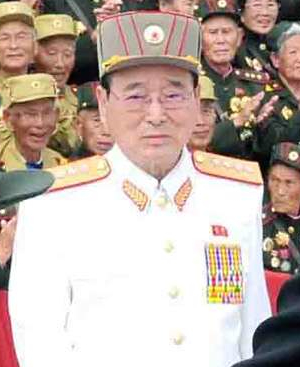
Image result for north korea general o kuk ryol Courtesy

You see, General O Kuk ryol and Kim Jong Un both manage Unit 121. Unit 121, is part of the RGB and did the Sony hack, remember that? Well General O, is a graduate of the Mangyongdae Revolutionary School and the Kim Il sung University….but most importantly, he graduated also from Frunze Military Academy in 1962….where is that? Ah….Moscow, and at the time, it was the Soviet Union.

Frunze Military Academy in Devichie pole, Moscow

Strategy: Integrate their cyber forces into an overall battle strategy as part of a combined arms campaign. Additionally they wish to use cyber weapons as a limited non-war time method to project their power and influence.

Experience: Hacked into the South Korea and caused substantial damage; hacked into the U.S. Defense Department Systems. More here.

Meanwhile, we also have the Korea Computer Center…there are 9 production facilities and 11 regional centers. However, the KCC also has offices in China, Germany and Syria..further it should be noted that an estimated 10,000 North Korean IT developers operate in China, where it is common that $500.00 of their monthly salary goes back to the North Korean state.

So, we have Syria, Russia, China all colluding with North Korea….Iran is as well but the United Nations too? Yup…

FNC: For more than a year, a United Nations agency in Geneva has been helping North Korea prepare an international patent application for production of sodium cyanide — a chemical used to make the nerve gas Tabun — which has been on a list of materials banned from shipment to that country by the U.N. Security Council since 2006.

The World Intellectual Property Organization, or WIPO, has made no mention of the application to the Security Council committee monitoring North Korea sanctions, nor to the U.N. Panel of Experts that reports sanctions violations to the committee, even while concerns about North Korean weapons of mass destruction, and the willingness to use them,  have been on a steep upward spiral.

Fox News told both U.N. bodies of the patent application for the first time late last week, after examining the application file on a publicly available WIPO internal website.

Information on the website indicates that North Korea started the international patent process on Nov. 1, 2015 — about two months before its fourth illegal nuclear test. The most recent document on the website is a “status report,” dated May 14, 2017 (and replacing a previous status report of May 8), declaring the North Korean applicants’ fitness “to apply for and be granted a patent.”

CLICK HERE FOR THE STATUS REPORT

During all that time, however, the U.N.’s Panel  of Experts on North Korea “has no record of any communication from WIPO to the Committee or the Panel regarding such a serious patent application,” said Hugh Griffiths, coordinator of the international U.N. expert team, in response to a Fox News question.

The Panel of Experts has now officially “opened an investigation into this matter,” he said.

“This is a disturbing development that should be of great concern to the U.S. administration and to Congress, as well as the U.S. Representative to the U.N.,” William Newcomb, a member of the U.N. Panel of Experts for nearly three years ending in 2014, told Fox News.

Said an expert familiar with the sanctions regime:  “It undermines sanctions to have this going on. The U.N. agencies involved should have been much more alert to checking these programs out.”

Questions sent last week to the U.S. State Department about WIPO’s patent dealings with North Korea had not been answered before this story was published.

For its part, a WIPO spokesperson told Fox News by email, in response to the question of whether it had reported the patent application to the U.N. sanctions committee, only that the organization “has strict procedures in place to ensure that it fully complies with all requirements in relation to U.N. Security Council sanction regimes.”

The spokesperson added that “we communicate with the relevant U.N. oversight committees as necessary.”

But apparently, help with preparing international patent applications for a sanctioned nerve gas “chemical precursor” does not necessarily count as grounds for such communication, if the Panel of Experts records are correct.

This is by no means the first time that WIPO, led by its controversial director general, Francis Gurry, has flabbergasted other parts of the U.N. and most Western nations with its casual and undeclared assistance, with potential WMD implications, to the bellicose and unstable North Korean regime.

And, as before, how the action is judged may depend upon razor-thin, legalistic interpretations of U.N. sanctions law on the one side vs. staggering violations of, at a minimum, common sense in dealing with the unstable North Korean regime, which among other things has never signed the international convention banning the development, production, stockpiling and use of chemical weapons.

While the patent process went on at WIPO, that regime has conducted five illegal nuclear tests — two in the past year, while the patent process was under way — and at least ten illegal ballistic missile launches since 2016, while issuing countless threats of mass destruction against its neighbors and the U.S.

In 2012, Fox News reported that WIPO had shipped U.S.-made computers and sophisticated computer servers to North Korea, and also to Iran, without informing sanctions committee officials.

The shipments were ostensibly part of a routine technology upgrade. Neither country could obtain the equipment on the open market, and much of it would have required special export licenses if shipped from the U.S.

The report kicked off an uproar, but after a lengthy investigation, the U.N. sanctions committee decided that the world organization’s porous restrictions had not been violated, while also noting WIPO’s defense that as an international organization, it was not subject to the rules aimed at its own member states.

Nonetheless, the investigators declared that “we simply cannot fathom how WIPO could have convinced itself that most Member States would support the delivery of equipment to countries whose behavior was so egregious it forced the international community to impose embargoes.”

The investigators also declared that “WIPO, as a U.N. agency, shares the obligation to support the work of other U.N. bodies, including the Sanctions Committees,” and that in response to the furor, WIPO had “implemented new requirements to check on sanctions compliance in advance of program implementation.”

There is no doubt about the banned nature of sodium cyanide — which can also be used to produce deadly cyanide gas, another weapon of mass destruction.

The chemical appears on a Security Council list of “items, materials, equipment, goods and technology” related to North Korea’s “other weapons of mass destruction programs” beyond nuclear weapons, which first appeared after U.N. Security Council resolution 1718 was approved in 2006.

CLICK HERE FOR THE LIST

That resolution, voted after North Korea conducted its first nuclear test, ordained that  member states  “prevent the direct or indirect supply, sale or transfer” to the regime known as the Democratic People’s  Republic of Korea, or DPRK, of  the listed items “which could contribute to DPRK’s nuclear-related, ballistic missile-related or other weapons of mass destruction-related programs.”

It also declared that “all member states shall prevent any transfers to the DPRK by their nationals or from their territories, or from the DPRK by its nationals or from its territory, of technical training, advice, services or assistance related to the provision, manufacture, maintenance or use of the items” listed.

Additionally, it demanded a freeze by U.N. member states or all “funds, other financial assets and economic resources” that could be used in the mass destruction-related programs.

CLICK HERE FOR RESOLUTION 1718

A subsequent Security Council resolution, 2270, in 2016 broadened things by declaring that “economic resources” referred to in Resolution 1718 “includes assets of every kind, whether tangible or intangible, movable or immovable, accrual or potential, which potentially may be used to obtain funds, goods or services” by DPRK.

This may open up another controversial aspect of the cyanide patent application, since, along with its mass-destructive uses, the chemical is considered the most common agent in the extraction of gold from ores and concentrates.

Further, according to the North Korean application to WIPO, the new process it wants to make ready for international patenting is a lower-cost process that produces ultra-high-grade product.

CLICK HERE FOR THE PROCESS APPLICATION DESCRIPTION

In WIPO’s response to Fox News, the agency’s spokesperson emphasized that “WIPO is not a patent-granting authority. Its role in handling these applications is to ensure that they conform to the procedural requirements” of the 152-member Patent Cooperation Treaty, or PCT, “and to publish them in accordance with the provisions of the treaty.”  North Korea is a PCT signatory.

Translation:  WIPO is merely a neutral, technical pass-through mechanism. As the spokesperson put it: “The decisions concerning whether or not to ultimately grant the patent are the sole purview of each jurisdiction where protection is being sought, in accordance with national law.”

While that may be true, it is also true, according to the WIPO website, that the U.N. agency gives those who use its services a lot of financially meaningful help.

That starts with the fact that by filing an international filing application with the agency, you have to pay only one fee rather than more than 150 to get an application acceptable in all PCT countries (which include the U.S. as one of the treaty’s biggest users).

WIPO also provides one-stop research on whether a patent overlaps with those elsewhere, and offers the possibility of widespread dissemination and publicity — i.e., stimulating demand, and thus at least the potential for sanctions-breaking in any subsequent licensing the North Korean patent.

Igniting controversy has been a characteristic of Director General Gurry’s reign — indeed, even before he first took WIPO’s top executive office in 2008.

In 2015, the U.N.’s watchdog Office of Internal Oversight Services (OIOS) was asked by WIPO’s own General Assembly chair to investigate Gurry for allegedly ordering, in 2008, break-ins of the offices of staffers to seek DNA evidence that they wrote anonymous letters against him. Gurry was WIPO’s No. 2 at the time.

A year later, after much byzantine maneuvering, a heavily redacted version of the report declared that “while there were indications that Mr. Gurry had a direct interest in the outcome of the DNA analysis, there is no evidence that he was involved in the taking of DNA samples.”

But the same document also found that Gurry had bent the organization’s rules and steered a sensitive cyber-security contract to a business acquaintance, , something alleged by one of Gurry’s former top deputies, James Pooley.

Under Gurry, WIPO also has been the only U.N. agency ever sanctioned by the U.S. State Department, on the grounds that it failed to adopt “best practices” in ethics and whistle-blower standards — a punishment first meted out by the pro-U.N. Obama administration in September 2015.

Among the whistle-blowers who say they were forced to leave WIPO during Gurry’s tenure for drawing attention to the agency’s previous computer shipments to North Korea is Miranda Brown, formerly Gurry’s senior strategic advisor.

Brown has repeatedly asked for her reinstatement at the WIPO, and just as often has been turned down by Gurry’s office.


With GPS, Drug Cartels Move Shipments to Europe Until

Drug cartels heavily rely on GPS devices to track shipments, feds say

The GPS has increasingly become a drug dealer’s new partner in crime.

Drug-smuggling groups are relying on the device to keep tabs on drug packages as they wind their way through Central America to the United States, according to published reports.

The criminals attach the drug shipments to buoys, send them off in the Pacific Ocean, and use signals they give off to track a package’s location by using special codes, InSight Crimes reports.

The GPS gives dealers the advantage of having drug shipments picked up by others monitoring their movements without being detected by authorities.

GPS devices are also allowing drug cartels to keep track of lower-level smugglers to ensure they are doing what they were told, say U.S. officials.

Barbara L. Carreno, public affairs officer for the U.S. Drug Enforcement Administration, said drug dealers have been using the tracking device for years. But recently, as the once bulky devices have become smaller and cheaper, their use has increased, she said.

“Traffickers need to know that their mules are doing what they are supposed to do and delivering their very valuable shipments where they are supposed to go,” Carreno said. “We often find GPS devices in shipments we seize.”

Traffickers won’t use a computerized system that would lead law enforcement back to them or create records that would implicate them.

– Barbara L. Carreno, spokeswoman, U.S. Drug Enforcement Administration

The GPS is simple enough, the DEA says, that it actually eludes more sophisticated tools used for drug interdictions by government agencies of various countries.

“Traffickers wouldn’t use a computerized system that would lead law enforcement back to them or create records that would implicate them,” Carreno said. “They want something cheap, unsophisticated and untraceable.”

Salvadoran officials say that Ecuadorean boatmen have become a core part of the criminal activity. They move the shipments to places off coasts of El Salvador, Guatemala and Costa Rica.

Once the shipments are left at certain locations in the Pacific, traffickers use the GPS to alert those waiting for them by sending information to mobile telephones and computers, the website said, citing the Salvadoran national police’s anti-narcotics division.

One of the most notorious drug kingpins, Ecuador’s Washington Prado Alava, was said by Colombian authorities to have run a highly sophisticated trafficking operation. But his operation, which moved 250 metric tons of cocaine to the United States over a four-year span, was dependent on GPS locators, Insight Crime reported. More here from FNC.

***

Anti-drug forces from several European and American countries intercepted a total of eight tons of cocaine in a double bust that is being dubbed as one of the largest in history.

In the larger one, Spanish authorities cooperated with Ecuadorean police to intercept a ship off that Latin American country bringing more than 5.5 metric tons of cocaine to Spain.

The ship was loaded with Colombian cocaine in the Pacific and planned to travel through the Panama Canal and across the Atlantic to Europe, officials said in a statement.

Una operación de la junto a la de Ecuador ha permitido interceptar un buque con 5.529 kilos de cocaína y detener a 24 personas.


In a separate drug seizure, Spanish police stopped a Venezuela-flagged fishing vessel carrying 2.5 metric tons of cocaine near Martinica.

The ship was intercepted on May 4 and was towed to Las Palmas in Spain’s Canary Islands.

The U.S. Drug Enforcement Agency and Britain’s National Crime Agency also took part in the joint operation.

The cargo seized off the coast of Ecuador has an estimated value of $250 million. Ecuadorean agents boarded it when it was almost three nautical miles off Santa Elena province.

Spain’s Interior Minister Juan Ignocio Zoido said to El Pais that the first operation resulted in the capture of 24 suspected drug traffickers.

“It is one of the largest cocaine seizures in history and it takes apart a large drug-trafficking organization between South America and Spain,” he said.

The massive operation began after Spain found out in January that a South American ring with links in Spain was organizing a large shipment.

That information was corroborated by intelligence also gathered by the U.S., Britain and Portugal, the statement said.

Since the beginning of 2017, Ecuador has confiscated about 30 tons of cocaine.

Large seizures of cocaine and cannabis aren’t uncommon in the Iberian Peninsula, which is seen as a drug gateway to Europe.

Spanish police captured almost eight metric tons of cocaine from four vessels in 2015 and 2016 and arrested 80 people, the police statement said.


Mexico’s Cartel Kids and a Deadly State

Reuters: The Mexican army says its fight against surging opium production that feeds U.S demand is increasingly complicated by the rise of smaller gangs disputing wild, ungoverned lands planted with ever-stronger poppy strains.

The gangs have engulfed the state of Guerrero in a war to control poppy fields, turning inaccessible mountain valleys of endemic poverty and famous beach resorts into Mexico’s bloodiest spots.

Colonel Isaac Aaron Jesus Garcia, who runs a base in one of the state’s most unruly cities, Ciudad Altamirano, told Reuters on an operation to chop down poppies high in the Guerrero mountains that violence increased two years ago when a third gang, Los Viagra, began a grab for territory.

Bodies are discovered almost daily across the state, tossed by roads, some buried in mass graves. In Ciudad Altamirano, the mayor was killed last year and a journalist gunned down in March at a car wash.

“These fractures (in the gangs) started two years ago, and that caused this violence that is all about monopolizing the production of the drug,” Jesus Garcia said.

From this frontline of the fight against heroin, Jesus Garcia sees a direct link between a record U.S. heroin epidemic that killed nearly 13,000 people in 2015 and violence on his patch.

“The increase of consumers for this type of drug in the United States has been exponential and the collateral effect is seen here,” Jesus Garcia said.

REUTERS/Henry Romero

Heroin use in the United States has risen five-fold in the past decade and addiction has more than tripled, with the biggest jumps among whites and men with low incomes.

Jesus Garcia said the task of seeking out poppy fields in one of Mexico’s poorest and least accessible regions, rising above the beach resorts of Acapulco and Ixtapa, was practically endless.

His 34th Battalion and others send platoons of troops on foot for month-long expeditions every season. They set up camps and fan through treacherous terrain, part of a campaign that destroys tens of thousands of fields a year.

One such field visited by Reuters was deep in a lawless region six hours from Ciudad Altamirano through winding dirt roads thick with dust that rose into the mountains.

It was irrigated by a lawn sprinkler mounted on a pole that spritzed water over less than a hectare of poppies and fertilizer bags were piled nearby, basic farming techniques the soldiers nevertheless said were a sign of growers’ new sophistication.

A dozen troops fanned out, chopping down the flowers with machetes.

HIGHER YIELDS

Army officials said gangs use poppy varieties that produce higher yields and more potent opium from smaller plots, and that its higher value is driving violent competition between gangs.

“Now we see more production of poppy in less terrain, and it has to do with the quantity of bulbs each plant has,” said Lieutenant Colonel Jose Urzua as he showed bulbs oozing valuable gum from slits. He explained opium is often harvested by families.

In these tiny mountain hamlets opium has grown for decades, officials said, but a coffee plague and the U.S. opiate epidemic has led farmers to plant much more.

The harvest has become central to Guerrero’s economy, also dependent on cash sent home by immigrants.

One army official said the field seen by Reuters could produce around 3 kilos (6.6 lb) of opium, fetching up to $950 per kilo from traffickers who sell it for up to $8,000.

“There aren’t many alternatives here,” said a woman selling soft drinks and snacks from a pine shack by a dirt road. Her husband grows poppies, and she said anyone who runs a business faces extortion by gangs.

***   Image result for cnn no way out cartel kids CNN

(CNN)It was the second deadliest conflict in the world last year, but it hardly registered in the international headlines.

As Syria, Iraq and Afghanistan dominated the news agenda, Mexico’s drug wars claimed 23,000 lives during 2016 — second only to Syria, where 50,000 people died as a result of the civil war.
“This is all the more surprising, considering that the conflict deaths [in Mexico] are nearly all attributable to small arms,” said John Chipman, chief executive and director-general of the International Institute for Strategic Studies (IISS), which issued its annual survey of armed conflict on Tuesday.
“The wars in Iraq and Afghanistan claimed 17,000 and 16,000 lives respectively in 2016, although in lethality they were surpassed by conflicts in Mexico and Central America, which have received much less attention from the media and the international community,” said Anastasia Voronkova, the editor of the survey.   
In comparison, there were 17,000 conflict deaths in Mexico in 2015 and 15,000 in 2014 according to the IISS.

Rising death toll

Voronkova said the number of homicides rose in 22 of Mexico’s 32 states during 2016 and the rivalries between cartels increased in violence.
“It is noteworthy that the largest rises in fatalities were registered in states that were key battlegrounds for control between competing, increasingly fragmented cartels,” she said.
“The violence grew worse as the cartels expanded the territorial reach of their campaigns, seeking to ‘cleanse’ areas of rivals in their efforts to secure a monopoly on drug-trafficking routes and other criminal assets.”
Mexican drug cartels take in between $19 billion and $29 billion annually from US drug sales, according to the Department of Homeland Security.
Rivalries between the cartels wreak havoc on the lives of civilians who have nothing to do with narcotics. Bystanders, people who refused to join cartels, migrants, journalists and government officials have all been killed.

Not on news agenda

Jacob Parakilas, assistant head of the US and the Americas Programme at London-based think tank Chatham House, said part of the reason for the relative lack of attention paid to Mexico in the international media is “it’s not a war in the political sense of the word. The participants largely don’t have a political objective. They’re not trying to create a breakaway state. It doesn’t come with the same visuals. There are no air strikes.
“Also this has been going on since the beginning of the modern drug trade in the Americas. It’s not news in that sense. And Mexico is one of the most dangerous countries in the world to be a journalist. They are intentionally targeted in Mexico, which puts a dampener on the ability to report on this.”
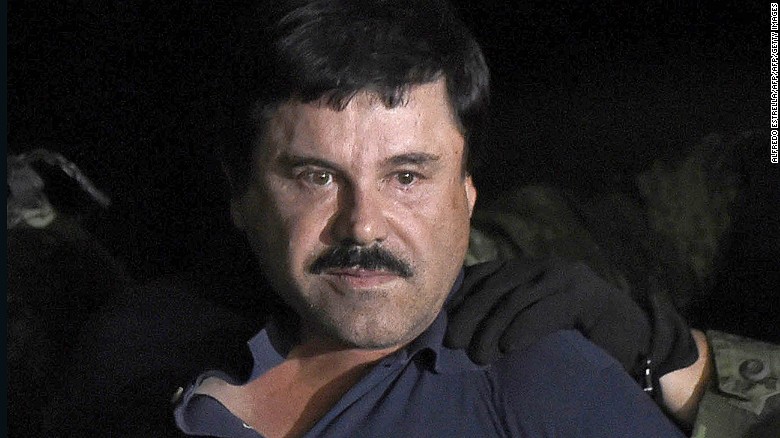
Drug kingpin Joaquin "El Chapo" Guzman is facing trial in New York.

There have, however, been significant arrests in relation to the Mexican drug trade in recent times.
Damaso Lopez Nunez, a high-ranking leader of Mexico’s Sinaloa drug cartel, was arrested on May 2 in Mexico City and could face charges in the US, authorities said.
His arrest follows January’s extradition of Joaquin “El Chapo” Guzman, who is accused of running the Sinaloa cartel — one of the world’s largest drug-trafficking organizations.
He awaits trial in New York on 17 counts accusing him of running a criminal enterprise responsible for importing and distributing massive amounts of narcotics and conspiring to murder rivals.

World conflict deaths fall

The number of conflict fatalities globally edged down last year, from 167,000 to 157,000, according to the IISS.
This was the second successive annual drop — 180,000 people were killed in 2014.
The number of deaths in Syria fell from 55,000 in 2015. But there were 1,000 more deaths in Afghanistan last year than 2015 and 4,000 more in Iraq.
Voronkova from the IISS said: “Civilians caught amid conflict arguably suffered more than in the preceding years. Between January and August, 900,000 people were internally displaced in Syria alone.”
The internal displacement figures were 234,000 for Iraq and 260,000 for Afghanistan.


China Gave Trump an Ultimatum to Deal with N. Korea?

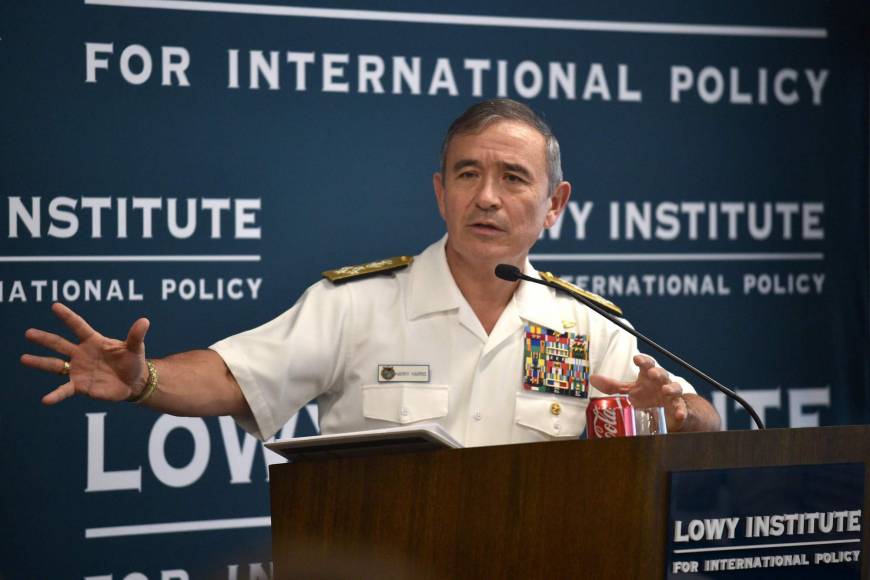
 China urged the United States to sack the head of the U.S. Pacific Command in return for exerting more pressure on North Korea amid concerns over its growing nuclear and missile threats, a source close to U.S.-China ties said Saturday.

The Chinese leadership headed by President Xi Jinping made the request, through its ambassador in the United States, to dismiss Adm. Harry Harris, known as a hard-liner on China, including with respect to the South China Sea issue, the source said.

China urged U.S. to fire Pacific Command chief Harris in return for pressure on North KoreaAdm. Harry Harris, head of the U.S. Pacific Command, addresses the Lowy Institute think tank in Sydney last December. | AFP-JIJI

China’s envoy to the United States, Cui Tiankai, conveyed the request to the U.S. side, to coincide with the first face-to-face, two-day meeting between President Donald Trump and Xi in Florida from April 6, but the Trump administration likely rejected it, the source said.

China is a longtime economic and diplomatic benefactor of North Korea.

As the head of Pacific Command, Harris, who was born in Japan and raised in the United States, plays a vital role in the security of the region.

He was responsible in ordering last month the dispatch of the USS Carl Vinson aircraft carrier to waters near off the Korean Peninsula in a show of force amid signs the North was preparing to test-fire another ballistic missile or conduct a sixth nuclear test.

The Trump administration has called for exerting “maximum pressure” on North Korea to prod it to give up its nuclear and missile programs. The administration has said all options — including a military strikes — remain on the table.

Harris has pushed for the U.S. deployment of the advanced Terminal High Altitude Area Defense (THAAD) anti-missile system to South Korea. China has opposed the deployment, saying it could undermine its security interests and the strategic balance of the region.

He has also called for continuing U.S. “freedom of navigation” operations in the contested South China Sea. Overlapping territorial claims, as well as land construction and militarization of outposts in disputed areas in the sea, remain a source of tension in the region.

According to the source, Cui also asked the Trump administration not to label China as a currency manipulator. As per the request, the United States did not label China as such, in light of Beijing’s role in helping Washington deal with the North Korean issue.

*** Related reading: 2013 Study Finds North Korea Has Indigenous Capabilities to Produce Nuclear Weapons

An example of the open-source evidence used for Kemp's study: A 2011 image from a television broadcast in North Korea showing Kim-Jong Il inspecting a flow-forming machine located in an underground tunnel. This type of machine is able to produce centrifuge rotors for North Korea's uranium-enrichment program.

An example of the open-source evidence used for Kemp’s study: A 2011 image from a television broadcast in North Korea showing Kim-Jong Il inspecting a flow-forming machine located in an underground tunnel. This type of machine is able to produce centrifuge rotors for North Korea’s uranium-enrichment program.

***

Is the United States partners in the Asia Pacific region ready to deal with 5000 tunnels and an underground operation?

Image result for north korea underground tunnel  The entrance of an ‘intrusion tunnel’ under the DMZ between South and North Korea, Telegraph

North Korea’s Secret Strategy in a War with America: Go Underground

North Korea, one of the most secretive countries in the world, is no stranger to building underground military facilities. Whether a tunnel dug under the demilitarized zone designed to pass thousands of troops an hour, or bunkers to accommodate the regime’s leadership, North Korea has built extensive underground facilities designed to give it an edge in wartime.

One of the earliest examples of North Korean underground engineering was the discovery of several tunnels leading from North Korea under the demilitarized zone to South Korea. The first tunnel was located in 1974, extending one kilometer south of the DMZ. The tunnel was large enough to move up to two thousand troops per hour under the DMZ. A U.S. Navy officer and South Korean Marine corporal were killed by a booby trap while investigating the tunnel. Thanks to a tip from a North Korean defector, an even larger tunnel was discovered in 1978, a mile long and nearly seven feet wide.

Since then at least four tunnels have been discovered, with reinforced concrete slabs, electricity for lighting and fresh air generation, and narrow railway gauges to shuttle dirt and rock back to the tunnel entrance. Collectively, the four tunnels would have likely been able to move a brigade’s worth of troops an hour under South Korea’s defenses.

It’s difficult to determine how many tunnels exist. One report says that Kim Il-sung, the founder of the North Korean state and Kim Jong-un’s grandfather, ordered each of the ten frontline combat divisions to dig two tunnels. If completed, that would theoretically mean another dozen or so tunnels remain undiscovered. A former South Korean general, Han Sung-chu, claims there are at least eighty-four tunnels—some reaching as far as downtown Seoul. The South Korean government does not believe Han’s numbers—nor the claimed ability to reach Seoul—are credible. A forty-mile tunnel would reportedly generate a seven-hundred-thousand-ton debris pile, which has not been picked up by satellite. Despite the warnings, the last major tunnel was discovered in 1990 and South Korea seems to believe that the tunneling danger has passed.

If it has passed, it may be because North Korea has decided to tunnel in different ways. The North Korean People’s Liberation Army Air Force is believed to have three different underground air bases at Wonsan, Jangjin and Onchun. The underground base at Wonsan reportedly includes a runway 5,900 feet long and ninety feet wide that passes through a mountain. According to a defector, during wartime NK PLAAF aircraft, including MiG-29 fighters and Su-25 Frogfoot ground-attack aircraft, would take off from conventional air bases but return to underground air bases. This is plausible, as one would expect North Korean air bases to be quickly destroyed during wartime.

Another underground development is a series of troop bunkers near the DMZ. A North Korean defector disclosed that, starting in 2004, North Korea began building bunkers capable of concealing between 1,500 and two thousand fully armed combat troops near the border. At least eight hundred bunkers were built, not including decoys, meant to conceal units such as light-infantry brigades and keep them rested until the start of an invasion.

Other underground facilities are believed to have been constructed to shelter the North’s leadership. According to a South Korean military journal, the United States believes there are between six thousand and eight thousand such shelters scattered across the country. This information was reportedly gathered from defectors in order to hunt down regime members in the event of war or government collapse.

North Korea is believed to have hundreds of artillery-concealing caves just north of the DMZ. Known as Hardened Artillery Sites, or HARTS, these are usually tunneled into the sides of mountains. An artillery piece, such as a 170-millimeter Koksan gun or 240-millimeter multiple-launch rocket system, can fire from the mouth of the cave and then withdraw into the safety of the mountain to reload. These sites are used to provide artillery support for an invasion of South Korea or direct fire against Seoul itself. As of 1986, and estimated two hundred to five hundred HARTS were thought to exist.

According to a report by the Nautilus Institute, North Korea is also thought to have “radar sites in elevator shafts that can be raised up like a submarine periscope; submarine and missile patrol boat bases in tunnels hewn in rock; tunnels a kilometer or more in length for storing vehicles and supplies, or to hide the population of a nearby city.”

How would the United States and South Korea deal with these underground facilities in wartime? First, it would have to locate the facilities. These facilities are hard to spot via satellite, and gleaning information from defectors is perhaps the best way to learn about them in peacetime. Once war commences, signal intelligence will pick up radio transmissions from previously unknown underground locations, enemy troops will from concealed positions or tunnel entrances, and artillery counter-battery radars will fix the positions of HARTS. It is likely that, despite advance preparations, many of these positions will be a surprise to Washington and Seoul.

Once located, there are three ways of dealing with the sites. The first and safest way to deal with them is to bomb them from above. This presents the least risk to allied forces, but it will also prove difficult to determine whether air or artillery strikes have had good effect. The use of bombs or artillery shells may cause cave-ins that prevent allied forces from entering an underground complex and exploiting any intelligence found inside.

Another option is to simply station troops outside tunnels and shoot anyone who ventures outside. While also a safer option, an underground complex will always have multiple exits—the tunnels Kim Il-sung ordered his divisions to dig were to each have four or five exit points. The most thorough way to deal with the tunnels would be to enter them. This would be by far the most effective way to deal with regime holdouts, but also the most dangerous.

Pyongyang’s eventual defeat in any wartime scenario is a given, but its underground headquarters, fortifications and troop depots have the potential to not only enhance the Korean People’s Army’s ability to mount a surprise attack, but also to prolong the war, confounding the high-tech armed forces of its adversaries. Such underground shelters, wherever they are, will likely be the site of the endgame phase of the war, as the regime is driven underground by rapidly advancing allied forces. Only then will we discover the true extent of North Korea’s extensive underground empire.

Syria: Memorandum signed, De-escalation Zones are NOT Safe Zones

This is terrifying for the Syrian people that remain in country and just as bad as the millions of refugees, noted to be about 11 million that have fled the country. Their hopes of ever returning to their home country fades each day.

It is also notable that the United States and coalition countries do have boots on the ground in Syria and the matter of an offensive operation to liberate Raqqa Syria, the headquarters for Islamic State is not even mentioned in this newly signed document. There is no mention of the United States operations in Syria along with other allied countries. Are the skies to be conflicted again? Any mention of the use of U.S. operations out of Incirlik, Turkey? Nope.

Some will read this and reply that the United States has no interest in Syria. As long as refugees and migrants continue to arrive across the United States each month and as long as there are more than 1000 open terror cases being investigated by the FBI and DHS, we DO have a dog in this hunt.

“The functioning of the checkpoints and observation posts as well as the administration of the security zones shall be ensured by the forces of the Guarantors by consensus”


6 May 201712:41

Memorandum on the creation of de-escalation areas in the Syrian Arab Republic Official website of The Ministry of Foreign Affairs of the Russian Federation

http://www.mid.ru/en/foreign_policy/news/-/asset_publisher/cKNonkJE02Bw/content/id/2746041


The Islamic Republic of Iran, the Russian Federation and the Republic of Turkey as guarantors of the observance of the ceasefire regime in the Syrian Arab Republic (hereinafter referred to as “Guarantors”):

-guided by the provisions of UNSC resolution 2254 (2015); -reaffirming their strong commitment to the sovereignty, independence, unity and territorial integrity of the Syrian Arab Republic; -expressing their determination to decrease the level of military tensions and to provide for the security of civilians in the Syrian Arab Republic, have agreed on the following.

1.the following de-escalation areas shall be created with the aim to put a prompt end to violence, improve the humanitarian situation and create favorable conditions to advance political settlement of the conflict in the Syrian Arab Republic:

– Idlib province and certain parts of the neighbouring provinces (Latakia, Hama and Aleppo provinces); -certain parts in the north of Homs province; -in eastern Ghouta; -certain parts of southern Syria (Deraa and Al-Quneitra provinces).

The creation of the de-escalation areas and security zones is a temporary measure, the duration of which will initially be 6 months and will be automatically extended on the basis of consensus of the Guarantors.

2.Within the lines of the de-escalation areas:

-hostilities between the conflicting parties (the government of the Syrian Arab Republic and the armed opposition groups that have joined and will join the ceasefire regime) with the use of any kinds of weapons, including aerial assets, shall be ceased; -rapid, safe and unhindered humanitarian access shall be provided; -conditions to deliver medical aid to local population and to meet basic needs of civilians shall be created; -measures to restore basic infrastructure facilities, starting with water supply and electricity distribution networks, shall be taken; -conditions for the safe and voluntary return of refugees and internally displaced persons shall be created.

3.Along the lines of the de-escalation areas, security zones shall be established in order to prevent incidents and military confrontations between the conflicting parties.

4.The security zones shall include:


– Checkpoints to ensure unhindered movement of unarmed civilians and delivery of humanitarian assistance as well as to facilitate economic activities;


– Observation posts to ensure compliance with the provisions of the ceasefire regime.

The functioning of the checkpoints and observation posts as well as the administration of the security zones shall be ensured by the forces of the Guarantors by consensus. Third parties might be deployed, if necessary, by consensus of the Guarantors.

5.The Guarantors shall:

-take all necessary measures to ensure the fulfillment by the conflicting parties of the ceasefire regime; -take all necessary measures to continue the fight against DAESH/ISIL, Nusra Front and all other individuals, groups, undertakings and entities associated with Al-Qaeda or DAESH/ISIL as designated by the UN Security Council within and outside the de-escalation areas; -continue efforts to include in the ceasefire regime armed opposition groups that have not yet joined the ceasefire regime.

6.The Guarantors shall in 2 weeks after signing the Memorandum form a Joint working group on de-escalation (hereinafter referred to as the “Joint Working Group”) composed of their authorized representatives in order to delineate the lines of the de-escalation areas and security zones as well as to resolve other operational and technical issues related to the implementation of the Memorandum.

The Guarantors shall take steps to complete by 4 June 2017 the preparation of the maps of the de-escalation areas and security zones and to separate the armed opposition groups from the terrorist groups mentioned in para.5 of the Memorandum.

The Joint Working Group shall prepare by the above-mentioned date the maps of the de-escalation areas and security zones to be agreed by consensus of the Guarantors as well as the draft Regulation of the Joint Working Group.

The Joint Working Group shall report on its activities to the high-level international meetings on Syria held in Astana.

The present Memorandum enters into force the next day after its signing.

Done in Astana, 4 May 2017 in three copies in English, having equal legal force.


Signatures

Islamic Republic of Iran   Russian Federation   Republic of Turkey

***

Russia is telling the entire Western world they are in control and alleges full cooperation and approval not only from the United Nations but claims the Trump administration has also agreed. Read on as it also shows maps of the ‘de-escalation zones’.

Russian Defense Ministry Held A Briefing Titled “Principles Of Implementation Of The Memorandum On Syria De-Eescalation Zones Signed In Astana”

Russian Defence Ministry held a briefing titled “Principles of implementation of the Memorandum on Syria de-escalation zones signed in Astana”


Speech of the Deputy Defence Minister of Russia

Lieutenant General Alexander Fomin

Good day, ladies and gentlemen!

The Ministry of Defence of the Russian Federation is holding a briefing on the main points and principles of implementation of the Memorandum on Syria de-escalation zones signed in Astana.

The event is participated by the Chief of the Main Operational Directorate – the First Deputy Chief of the General Staff of the Russian Armed Forces Colonel General Sergei Rudskoy and Deputy Chief of the Main Operational Directorate Lieutenant General Stanislav Gadjimagomedov.

As you know, yesterday, after two-day negotiations held in Astana, plenipotentiaries from Russia, Iran and Turkey signed a Memorandum on Syria de-escalation zones.

For reference:

The Russian party was represented by the Special envoy of the President of the Russian Federation on the settlement of the Syrian conflict A. Lavrentiev.

The Turkish party was represented by the Deputy Minister of Foreign Affairs of Turkey S. Onal.

Iran is represented by the Deputy Minister of Foreign Affairs of Iran H. Ansari.

First, we should briefly inform you about the preparation of the agreement, its participants and ideas.

The document had been elaborated by the Russian Defence Ministry upon the direct order of the Supreme Commander-in-Chief of the Russian Armed Forces Vladimir Putin to maintain the ceasefire on the territory of Syria.

The adoption of the Memorandum had been preceded by a thorough work with all the participants of the negotiation process.

The political settlement in Syria had been numerously discussed by the President of the Russian Federation with the leadership of Turkey, the USA and other states.

In particular, de-escalation zones were negotiated in the course of the talks with the Heads of Russia and Turkey on May 3 in Sochi.

The Russian Defence Minister held bilateral talks with Ministers of Defence of Iran, Turkey, Syria and Israel.

Intelligence services and foreign affairs departments cooperated with each other permanently. A large work was done in order to convince the Syrian leadership and leaders of armed opposition formations to take measures aimed to deescalate the conflict.

Constructive attitude of Iran and Turkey, which had supported building up of the ceasefire regime, has played an important role in operative development of the Memorandum.

Position of the United States positively influenced on establishment of the de-escalation zones. The US supported measures aimed to reduce violence in Syria, improvement of humanitarian situation and creation of conditions promoting political settlement of the conflict.

António Guterres, the Secretary-General of the United Nations, supported the signing of the Memorandum. He welcomed decisions on stoppage of use of weapons and increasing of opportunities for providing humanitarian aid to the population.

Efforts of Staffan de Mistura, the United Nations Envoy to Syria, are highly appreciated. Staffan de Mistura jointly with a group of high-qualified experts had arrived in Astana to support the negotiations.

Memorandum is a landmark document, implementation of which will allow to separate the opposition from the ISIS and Jabhat al-Nusra.

Free access in the de-escalation zones for providing medical, product and other assistance to the Syrian population will be granted.

Recovery of infrastructural objects will be organized.

All these issues will create conditions for safe and voluntary return of refugees and internally displaced persons.

Implementation of the Memorandum will allow to stop warfare and civil war in Syria.

That is why the document is important for political settlement of conflict in the Syrian Arab Republic.

Not everybody appreciates it. At the same time, its signing supported by all main interested players: the UN, the US administration, the leadership of Saudi Arabia and other countries. That is a guarantee of its implementation.

The Memorandum comes into effect tomorrow, i.e. from 00.00 May 6, 2017.


Speech of the Chief of the Main Operational Directorate

Colonel General Sergei Rudskoy

Command staff of the Russian force grouping has taken a complex of measures, which had provided favourable conditions for signing the Memorandum.

Starting from May 1, the Russian Aerospace Forces have stopped operating in the de-escalation zones determined by the Memorandum.

On May 2 and 3, The Russian Centre for reconciliation of opposing sides jointly with leadership of the Syrian Arab Republic organized delivery of a humanitarian convoy of the United Nations, International Committee of the Red Cross, and the Syrian Arab Red Crescent in Duma and the Eastern Ghouta region.

Military police units of the Russian Armed Forces escorted the 51-automobile convoy. Four unmanned aerial vehicles covered the moving convoy.

Russian military servicemen detected and neutralized a suicide bomber armed with 10-kilogram explosives and grenades. They handed him over to representatives of the Syrian security service.

The Memorandum provides creation of four de-escalation zones in the Syrian Arab Republic.

First one is most extensive located in the north of Syria. It includes the Idlib province as well as north-eastern areas of the Latakia province, western areas of the Aleppo province, and northern areas of the Hama province. There are more than 1 million people in the zone. 14,500-men strong armed formations are controlling this zone.

The second one is in the north of the Homs province. It includes al-Rastan and Tell Bisa as well as nearest areas controlled by the opposition groups. The groups consist of up to 3,000 insurgents. There are about 180,000 civilians in the zone.

The third one is Eastern Ghouta. About 9,000 insurgents are controlling it.

About 690,000 civilians live in Eastern Ghouta. The Syrian authorities have deployed eight checkpoints for their transfer. In the morning, most civilians leave Eastern Ghouta for Damascus for earning money, and, in the evening, they come back.

This zone does not include the area of Kabun controlled by insurgents of Jabhat al-Nusra. The Damascus city, and the Russian Embassy in particular, are shelled from there. Operation aimed to eliminate terrorists in this area is continued.

The fourth zone is located in the south of Syria and includes areas of the Daraa and Quneitra provinces. This zone is mainly controlled by units of so-called Southern Front (15,000 men strong). Up to 800,000 civilians live there.

The Memorandum provides additional de-escalation zones if necessary.

In the de-escalation zones, warfare between the government troops and armed opposition units joined or are to join the ceasefire regime is being stopped.

This refers to use of all types of weapons, including aviation strikes.

Special attention is paid to control implementation of the ceasefire regime.

In order to prevent incidents and combat actions between the opposing sides along the de-escalation zone borders, security lanes are established. These lanes include posts for observation of reconciliation regime and checkpoints for controlling movement of civilians without weapons, delivery of humanitarian aid, and support of economical activity.

Operation of the checkpoints and observation posts as well as control over security zones will be provided by personnel from Russia, Iran, and Turkey. Forces from other countries can be involved under agreement of state-guarantors.

Command staff of the Russian grouping under the leadership of the General Staff of the Russian Armed Forces is determining the number of necessary checkpoints and observation posts as well as forces supporting their operation.

Within two weeks, representatives of state-guarantors will form a Joint working group. The group will present borders of the de-escalation zones and safety lanes as well as maps for separating formations of armed opposition from terrorist groupings by July 4, 2017.

It is to be stressed that signing of the Memorandum on creation of the de-escalation zones in the Syrian Arab Republic does not stop fighting against terrorists of the ISIS and Jabhat al-Nusra in Syria.

State-guarantors undertake to continue fighting against formations of these and other terrorist organizations in the de-escalation zones as well as provide assistance to the government troops and armed opposition in fighting insurgents in other areas of Syria.

After establishing of the de-escalation zones, the government troops will be sent to continue offensive on the ISIS formations in the central and eastern parts of Syria as well as to liberate areas located along the River Euphrates.

The Russian Aerospace Forces will support these actions.


Speech of the Deputy Chief of the Main Operational Directorate

of the General Staff of the Russian Armed Forces

Lieutenant General Stanislav Gadjimagomedov

Ladies and gentlemen!

Active preliminary work with our partners has contributed to the results of negotiations in Astana. To this purpose, the working group of the Russian Defence Ministry held a meeting with the leadership of Syria on April 25 in Damascus and on April 26 – in Ankara with representatives of Turkey and leaders of armed formations of the opposition.

In the course of the meetings, we have explained in detail to our partners the methods of creation of safety zones, the mechanism of control over the implementation of the agreements, organization of the humanitarian access and restoration of the peaceful life.

Delegations of the Russian Defence Minister conducted the same work simultaneously in Tehran and Amman.

Just in the course of the preliminary work, we managed to enlist support of guarantor states and the opposing sides for our initiatives.

These activities ensured constructive work of the representatives from Turkey, Iran, the UN and the Syrian government at the meeting in Astana.

The lack of trust between the representatives of the Syrian government and the oppositions gave rise to some difficulties in the course of negotiations.

Despite the intention of all the delegations to sign the document, the initial points of view of the parties differed. First, that concerned the issues of security of the civil population in the de-escalation zones and organization of control over the implementation of the ceasefire agreements by the parties.

The peculiarity of negotiations in Astana is the fact that the opposition was represented by field commanders who really control the situation “on the ground”, but not politicians or emigrants.

Despite the conflict with the government troops, these people realize their responsibility for the future of the united Syrian state.

In the course of frank talks, common methods of stabilization of the situation in Syria were elaborated. We managed to agree on Memorandum with the field commanders of 27 detachments active in the de-escalation zones.

The constructive position of representatives from Iran and Turkey played an important role in achieving agreements as both countries as guarantor states had incurred the responsibility for implementation of the ceasefire.

The Special Envoy of the UN Secretary General Staffan de Mistura made an important contribution to the most tough periods of negotiations. He held several meetings with opposition representatives and convinced them of the importance of the Memorandum for stabilization of the situation in Syria.

It is also important that the results of the talks in Astana are considered by Staffan de Mistura as an influential contribution to the political dialogue in Genève.

The UN experts have rendered considerable assistance, their peace-making experience, practical recommendations were took into account during the elaboration of the Memorandum.

The high level of organization of negotiations provided by the leadership of the Republic of Kazakhstan also contributed to the success of the talks. During each stage of the conversations all the delegations were provided with support by our Kazakh colleagues.

In the near future, the main efforts will be concentrated on the establishment of a Joint working group for de-escalation, preparation of maps with coordinates of safe margins and buffer zones and their negotiation with the partners.

The reports on the activities of the Group will be heard during the international meetings on the Syrian conflict settlement within the Astana process.

Moreover, the mechanism of effective control over the implementation of agreements mentioned by Colonel General Sergei Rudskoy will be elaborated jointly with the partners. This work has already been started.

We plan to continue the work with partners on elaboration of additional trust-building measures for the opposing sides. First of all, this concerns the liberation of persons retained forcibly by both sides of the conflict as well as the humanitarian mine clearance.

We expect further interaction with our partners within the Astana process, the observer countries as well as the support of international organizations, first of all the UN.

Thank you for your attention.


Media representatives’ questions

Yekaterina Babayeva, reporter, KSB TV-channel (Republic of Korea) – a question to Colonel General Sergei Rudskoy

– After the adoption of the Memorandum on Syria de-escalation zones, where will the main efforts of the Aerospace Forces be concentrated for elimination of terrorist groupings?

Sergei Rudskoy:

– De-escalation zones will allow the government troops to release many units. The Russian Aerospace Forces will continue supporting the Syrian Armed Forces while eliminating illegal armed groups of the ISIL international terrorist organization.

The main efforts will focused on the development of the offensive in the east from Palmyra and further lifting a siege of the Deir ez-Zor city, which is besieged for over three years as well as on the liberation of the north-eastern territories in the Aleppo province along the Euphrates River.

Yaroslav Kurashov, reporter of NHK TV-channel (Japan), a question to Lieutenant General Stanislav Gadjimagomedov

Which measures are prescribed for the violators of the Memorandum?

Stanislav Gadjimagomedov:

First, a thorough investigation will be held. According to the results, the measures applied to the violators will be defined. Among them – neutralization by fire.

Alexey Konopko, reporter of the Россия-24 TV-channel, a question to Colonel General Sergei Rudskoy

– Is Russia planning to recommence the Memorandum between Russia and the USA on prevention of incidents in the air space over Syria?

Sergei Rudskoy:

– This agreement is an effective means of prevention of incidents in the air. After the US cruise missile strike against the Shayrat Air Base, the Russian party has suspended its participation in this agreement.

The question of returning to the cooperation within the Memorandum on prevention of incidents in the air space over Syria will be discussed in the course of bilateral contacts with the American colleagues in the nearest future.

Antonio Rondon Garcia, reporter of the Prensa Latina (Cuba), a question to Lieutenant General Alexander Fomin

– Is it planned to extend the number of participants in the de-escalation process?

Alexander Fomin:

Yes, it is. Now we are working on this issue with Jordan and a number of other states.

In the conclusion, I would like to thank you for responding to our invitation.

Traditionally, the Russian Defence Ministry pays great attention to the covering of its activities by the media. We will continue informing you about the most important events including the Syrian topic.

Taking the opportunity, I would like to congratulate all of you with the upcoming Victory Day and to wish you peaceful sky.

Thank you for your attention.