CIA Did not Get it Wrong on DPRK Nukes, Policymakers Did

CIA Director Mike Pompeo said on Fox News Sunday with Chris Wallace that the CIA provided accurate intelligence on the DPRK nuclear program and policymakers too, were well aware even before Pompeo took over the agency.

When you look closely enough you will find serial numbers belonging to Pakistan, China and Russia…

Related reading and the graphs: Where did Iran get its military arms over the last 70 years?

Related reading: The Audacity Of Silence On Possible Iran-North Korea Nuclear Ties

Looking back and open source information is that statement accurate? When investigative media does the job of investigating and informs, Pompeo is correct. Furthermore, Iran was and is part of all the variables such that Barack, Hillary and John overlooked it all. How so? That pesky JPOA. Then cultivating the original Wikileaks cables, there was more….
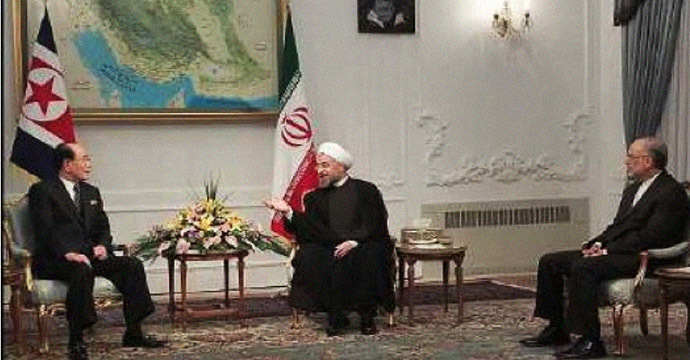
  NKNews

In the shank of the Obama administration, 2011 please note the following:

http://www.trust.org/alertnet/news/analysis-west-fears-possible-iran-north-korea-nuclear-links/

17 Sep 2011 22:26

Source: reuters // Reuters

By Fredrik Dahl

VIENNA, Sept 18 (Reuters) – It is one of the West’s biggest nuclear
proliferation nightmares — that increasingly isolated Iran and North
Korea might covertly trade know-how, material or technology that could be
put to developing atomic bombs.

“Such a relationship would be logical and beneficial to both North Korea
and Iran,” said Mark Hibbs, an expert of the Carnegie Endowment for
International Peace.

Last year, a U.N. report suggested that impoverished, reclusive North
Korea might have supplied Iran as well as Syria and Myanmar with banned
atomic technology.

In what could be a sign of this, a German newspaper last month reported
that North Korea had provided Iran with a computer programme as part of
intensified cooperation that could help the Islamic state build nuclear
weapons.

“There are reports and rumours, which governments and the IAEA (the U.N.
International Atomic Energy Agency) have not denied, indicating that there
may be a track record of bilateral nuclear cooperation between North Korea
and Iran,” Hibbs said.

But while this could make sense for two states facing tightening sanctions
— and potentially earn Pyongyang some badly needed funds — the extent
and nature of any such dealings, if they take place at all, remain
shrouded in mystery.
“It seems to be very difficult to sort out what the relationship in the
nuclear world between DPRK (North Korea) and Iran is. We just simply do
not know,” prominent U.S. nuclear scientist Siegfried Hecker said.

This was in contrast to missile cooperation between the two countries,
where North Korea has helped Iran both with the weapons and in building
related factories, he said.

Hecker, who has often visited the east Asian state, said possible
Tehran-Pyongyang atomic technology transfers would be a major concern for
everyone dedicated to preventing the proliferation of nuclear weapons.

Iran’s nuclear programme is based on uranium enrichment, activity which
can have both civilian and military purposes.

North Korea has twice tested plutonium-based nuclear devices, drawing
international condemnation, although it last year revealed the existence
also of a uranium enrichment site, potentially giving it a second pathway
to bombs.
“They complement each other so well (in terms of their expertise). There
is just a lot of synergy in how they would be able to exchange
capabilities,” Hecker said at a seminar for diplomats in Vienna, the
IAEA’s headquarters, this month.
Citing Western intelligence sources, the Munich newspaper Sueddeutsche
Zeitung said in August that North Korea had this year delivered software,
originally developed in the United States, that could simulate neutron
flows.

Such calculations, which can help scientists identify self-sustaining
chain reactions, are vital in the construction of reactors and also in the
development of nuclear explosives.

With the help of the programme, Iran could gain important knowledge of how
to assemble nuclear weapons, the paper said.

WESTERN INTELLIGENCE HUNT

There has been no public confirmation or denial of the report in the West.
But Hecker did not rule it out, saying Pyongyang had demonstrated
experience in this field.

He said North Korea must have some “nuclear code capabilities” which they
would have been able to assess in comparison with the result of an atomic
test.
“So to some extent they have had an opportunity to verify or check their
codes,” Hecker said. “Iran has not had a chance to do that. So exchanging
that type of information … you could see as being very useful.”

North Korea tested nuclear devices in 2006 and 2009, but still has not
shown it has a working nuclear bomb.

Proliferation experts have said the country has enough fissile material
for up to 10 nuclear weapons. But they don’t believe Pyongyang is yet
capable of miniaturising the material to fit into the cone of a missile.

While North Korea has made no secret of its nuclear weapons ambitions,
Iran denies Western allegations that it is covertly seeking to develop an
atomic arms capability.

The Islamic Republic says its nuclear programme is for purposes of
electricity generation, but its refusal to halt uranium enrichment and its
stonewalling of a U.N. nuclear watchdog probe have stoked suspicions
abroad.

The Vienna-based U.N. nuclear watchdog said this month in a report that it
was “increasingly concerned” about possible work in Iran to develop a
nuclear missile.

For several years, the IAEA has been investigating Western intelligence
reports indicating Iran has coordinated efforts to process uranium, test
high explosives and revamp a ballistic missile cone to accommodate a
nuclear warhead.

Iran says the allegations are baseless and forged.

In a separate report on North Korea, from which its inspectors were
expelled in 2009, the IAEA suggested past nuclear-related ties with Syria
and Libya, but it made no mention of Iran.
Proliferation expert Mark Fitzpatrick said it would not be hard for Tehran
and Pyongyang to put “well-practised trade deals and transfer routes” from
their ballistic missile cooperation to use also in the nuclear field.
Still, there were few signs of any nuclear cooperation between the two
countries.

“It is not for lack of looking. Western intelligence agencies are
intensively targeting nuclear acquisition efforts by Iran and North
Korea,” Fitzpatrick, a former senior U.S. State Department official, said.

“Yet finding nuclear weapons-related trade is akin to the proverbial
needle in a haystack. In the vastness of ocean and sky routes, most forms
of nuclear-related cargo are so minute as to be almost undetectable.”

Hibbs said any nuclear dealings with North Korea would pose risks for
Iran: “Were this traffic to be confirmed, that would deepen the suspicion
that Iran is involved in nuclear activities which are clandestine and
military in nature.”

***

What about China selling weapons to Iran and operating groups being still worried about non-proliferation by North North Korea? Lots of chatter of that and left unresolved:

5. (S) Noting a decrease in the sales of Chinese conventional weapons to Iran, DASD Sedney expressed appreciation for China’s efforts to limit conventional arms sales to Iran. Sedney emphasized that Iran’s spreading of conventional BEIJING 00000058 002 OF 003 weapons to Iraq, Afghanistan, and Lebanon poses the serious problem of Chinese weapons killing U.S. soldiers. Sedney expressed concern about Iran’s nuclear program. More on that cable here, of note is the distribution list.


***

So under Obama it seems we left the A.Q. Khan sanctions to the Export Import Bank and the IAEA: From Secretary of State to the United Nations/Vienna by method deliver of a telegram and SIPDIS

DE RUEHC #2552 0092353 ZNY SSSSS ZZH O 092336Z JAN 09 FM SECSTATE WASHDC TO USMISSION UNVIE VIENNA IMMEDIATE 0000

4. (SECRET/rel IAEA) — I wanted to inform you of a legal process that has concluded in the U.S. — U.S. nonproliferation law requires that sanctions be imposed in certain circumstances; the activities of Dr. Khan and some of his associates fall under the requirements of this law. — The U.S. has decided to impose sanctions on individuals and companies listed in a media note that was released on January 12. — This is a very complex case that involved a large volume of information and many people and companies across the globe. — The U.S. sanctions laws and executive orders involved include the Nuclear Proliferation Prevention Act (NPPA), the Export Import Bank Act (EXIM), and Executive Orders (E.O.) 12938 and 13382. — This legal non-paper describes in more detail the specific sanctions and penalties involved. — The U.S. decision was announced on January 12 and will soon be printed in the Federal Register. — This U.S. decision is not directed at any country. In fact, as we highlight in our public statement, many countries contributed to international efforts to shut down and investigate the network. — The sanctions decision reflects the diverse and global nature of the network. — No sanctions were imposed on governments. — As IAEA knows, the actions of the A.Q. Khan network have irrevocably changed the proliferation landscape and will have lasting implications for international security. — These sanctions will help prevent and deter future proliferation-related activities and provide a warning to other would-be proliferators. — It is imperative that all countries remain vigilant in order to ensure that Khan network associates or others seeking to pursue similar proliferation activities will not become a future source for sensitive nuclear information or equipment. — If Asked: Will there be any additional sanctions on these individuals? We don,t foresee, at this time, the imposition of additional sanctions related to these activities. — If Asked: Will you share your findings with us? We can not share details of the sanction decision but don,t believe the information we have would contribute to a different understanding of the activities than you already have. End suggested talking points. ————– LEGAL NONPAPER ————– 5. (U) Begin non-paper: Nuclear Proliferation Prevention Act (NPPA) The NPPA provides for the mandatory imposition of a ban on U.S. procurement from any person who, on or after June 30, 1994, knowingly and materially contributes, through the export of nuclear-related goods or technology, to the efforts of any individual, group, or non-nuclear weapon state to acquire a nuclear explosive device or unsafeguarded special nuclear material. Once imposed, the sanction shall apply for a period of at least 12 months, but can thereafter be terminated if reliable information indicates that (1) the sanctioned person has ceased to aid or abet any individual, group, or non-nuclear-weapon state in its efforts to acquire unsafeguarded special nuclear material or any nuclear explosive device, and (2) the United States has received reliable assurances from the sanctioned person that such person will not, in the future, aid or abet any individual, group, or non-nuclear-weapon state in its efforts to acquire unsafeguarded special nuclear material or any nuclear explosive device. Export Import Bank Act (EXIM) The EXIM provides for the mandatory imposition of a ban on the Export-Import Bank,s guaranteeing, insuring, or extending credit, or participating in the extension of credit in support of United States exports to any person who, after September 23, 1996, knowingly aids or abets a non-nuclear weapon state to acquire a nuclear explosive device or unsafeguarded material. This sanction can be terminated if the U.S. determines and certifies in writing to the Congress that reliable information indicates that the sanctioned person has ceased to aid or abet any non-nuclear weapon state to acquire any nuclear explosive device or acquire un-safeguarded special nuclear material; and steps have been taken to ensure that the sanctionable activities will not resume. The sanction may also be terminated if the appropriate government has taken certain corrective actions. Executive Orders 12938 and 13382 These Executive Orders (E.O.) provide the authority to impose measures against a foreign person that has engaged or attempted to engage in activities or transactions that have materially contributed to, or pose a risk of materially contributing to, the proliferation of weapons of mass destruction (WMD) or their means of delivery. The sanctions under E.O. 12938 include: a ban on USG departments, and agencies, procurement from, or entering into contracts for procurement with, the sanctioned person or entity; a ban on providing any USG assistance to, and any participation in USG assistance programs by, the sanctioned person or entity; and a ban on the importation into the U.S. of goods, technology or services procured or provided by the sanctioned person or entity. The E.O. 12938 sanctions may be terminated if there is reliable evidence that the foreign person has ceased the activities that led to the imposition of sanctions. The sanction under E.O. 13382 is that all property and interests in property of the designated entity, that are in the U.S. or subject to the jurisdiction of the U.S. (i.e., U.S. persons anywhere) are blocked and may not be transferred, paid, exported, withdrawn, or otherwise dealt in. Sanctions under E.O. 13382 may be lifted when circumstances no longer warrant their imposition. End non-paper. ———- MEDIA NOTE ———— 6. (U) Post can draw from the following Media Note after 0900 EST January 12. Begin Media Note: For Immediate Release January 12, 2009 Designation of A.Q. Khan and Associates for Nuclear Proliferation Activities Today, the Department of State announced that sanctions will be imposed on 13 individuals and three private companies for their involvement in the A.Q. Khan nuclear proliferation network. This announcement comes after a multi-year U.S. government review of the available information pertaining to the activities of this network. We believe these sanctions will help prevent future proliferation-related activities by these private entities, provide a warning to other would-be proliferators, and demonstrate our ongoing commitment to using all available tools to address proliferation-related activities. Dr. A.Q. Khan led an extensive international network for the proliferation of nuclear equipment and know-how that provided &one stop shopping8 for countries seeking to develop nuclear weapons. He and his associates provided Iran and Libya with centrifuge components, designs, and, in some cases, complete centrifuges. The United States also believes that Khan and his associates provided centrifuge designs, equipment, and technology to North Korea. Dr. Khan also provided Libya with nuclear weapon designs. With the assistance of Khan,s network, countries could leapfrog the slow, incremental stages of other nuclear weapons development programs. In 2004, following Libya,s welcome decision to renounce its nuclear program, the United States removed from Libya items it had received from the network. The network,s actions have irrevocably changed the proliferation landscape and have had lasting implications for international security. Governments around the world, including Pakistan, South Africa, Turkey, the United Kingdom, Germany, the United Arab Emirates, Switzerland, and Malaysia, worked closely with the United States to investigate and shut down the network. Governments have also joined together to put in place United Nations Security Council Resolution 1540 to criminalize proliferation and have worked cooperatively to establish the Proliferation Security Initiative (PSI) to enhance international tools to interdict and prevent trade in sensitive technologies. Many of Dr. Khan,s associates are either in custody, being prosecuted, or have been convicted of crimes. Dr. Khan publicly acknowledged his involvement in the network in 2004, although he later retracted those statements. While we believe the A.Q. Khan network is no longer operating, countries should remain vigilant to ensure that Khan network associates, or others seeking to pursue similar proliferation activities, will not become a future source for sensitive nuclear information or equipment. Sanctions have been imposed under the following statutes as follows: Nuclear Proliferation Prevention Act (NPPA): Selim Alguadis, Kursad Zafer Cire, Muhammad Nasim ud Din, EKA Elektronik Kontrol Aletleri Sanayi ve Ticaret A.S., ETI Elektroteknik Sanayi ve Ticaret A.S., Muhammad Farooq, Paul Griffin, Peter Griffin, Abdul Qadeer Khan, Shamsul Bahrin bin Rukiban, Buhary Seyed Abu Tahir, and Shah Hakim Shahnazim Zain Export-Import Bank Act (EXIM): Selim Alguadis, Kursad Zafer Cire, Muhammad Nasim ud Din, EKA Elektronik Kontrol Aletleri Sanayi ve Ticaret A.S., ETI Elektroteknik Sanayi ve Ticaret A.S., Muhammad Farooq, Daniel Geiges, Paul Griffin, Peter Griffin, Abdul Qadeer Khan, Gotthard Lerch, Shamsul Bahrin bin Rukiban, Buhary Seyed Abu Tahir, Gerhard Wisser, and Shah Hakim Shahnazim Zain Executive Order 12938: Selim Alguadis, Kursad Zafer Cire, Muhammad Nasim ud Din, EKA Elektronik Kontrol Aletleri Sanayi ve Ticaret A.S., ETI Elektroteknik Sanayi ve Ticaret A.S., Muhammad Farooq, Daniel Geiges, Paul Griffin, Peter Griffin, Abdul Qadeer Khan, Gotthard Lerch, Shamsul Bahrin bin Rukiban, Buhary Seyed Abu Tahir, Tradefin Engineering, Gerhard Wisser, and Shah Hakim Shahnazim Zain Executive Order 13382: Selim Alguadis, Kursad Zafer Cire, Muhammad Farooq, Daniel Geiges, Paul Griffin, Peter Griffin, Abdul Qadeer Khan, Gotthard Lerch, Buhary Seyed Abu Tahir, and Gerhard Wisser End media note. ————– Press Guidance —————– 7. (U) Post can draw from the ISN Press Guidance after 0900 EST January 12. Begin Press Guidance: ISN Contingency Press Guidance January 12, 2009 A.Q. Khan Network: Sanctions General Questions Q: What specifically did A.Q. Khan and his network transfer? What did these people do to trigger sanctions? These entities were sanctioned for engaging in nuclear-related proliferation activities as part of the international A.Q. Khan network. In particular, Dr. Khan and his associates in a number of countries provided Iran and Libya with centrifuge components, designs, and, in some cases, complete centrifuges. The United States also believes that Khan and his associates provided centrifuge designs, equipment, and technology to North Korea. Dr. Khan also provided Libya with nuclear weapon designs. These illicit transfers by the Khan network have been reported in the press for a number of years. I cannot comment on additional specific intelligence-related information. Today,s imposition of sanctions on private companies and individuals does not reflect recent proliferation activity by the network. Q: Why haven,t you sanctioned any countries? The authorities under which sanctions are being imposed do not target countries. Governments around the world, including Pakistan, South Africa, Turkey, the UK, Germany, Switzerland, the UAE, and Malaysia worked closely with the U.S. to investigate and shut down this international network. Q: Why has it taken four years to impose sanctions? This is a very complex case that involved a large volume of information and many people and companies across the globe. We have been working diligently for the past four years to assemble and properly evaluate the available information. Given the consequences of a sanctions decision, it is important that the information be thoroughly vetted and evaluated before a sanctions determination is made. Q: Why couldn,t you have sanctioned some entities earlier instead of waiting four years? Information continued to become available as other countries concluded their investigations or prosecutions and we believed in this case that it was important to sanction the group at one time. Q: Did you tell the affected governments prior to public announcement? Yes, governments were notified in advance that the United States intends to impose proliferation sanctions on these private companies and individuals. We applaud the actions that each of these countries took to shut down and investigate the network, and work cooperatively to implement new measures to prevent proliferation. Q: What sanctions authorities were used to impose penalties? There are two sanctions laws and two Executive Orders that provide the basis for the imposition of sanctions in this case. The sanctions laws are the Nuclear Proliferation Prevention Act (the &NPPA8) and the Export Import Bank Act (&EXIM8). The two Executive Orders are 12938 and 13382. Q: What do these authorities require? The NPPA provides for the mandatory imposition of a ban on U.S. procurement from any person who, on or after June 30, 1994, knowingly and materially contributes, through the export of nuclear-related goods or technology, to the efforts of any individual, group, or non-nuclear weapon state to acquire a nuclear explosive device or unsafeguarded special nuclear material. The EXIM provides for the mandatory imposition of a ban on the Export-Import Bank,s guaranteeing, insuring, or extending credit, or participating in the extension of credit in support of United States exports to any person who, after September 23, 1996, knowingly aids or abets a non-nuclear weapon state to acquire a nuclear explosive device or unsafeguarded material. The Executive Orders provide the authority to impose measures against a foreign person that has engaged or attempted to engage in activities or transactions that have materially contributed to, or pose a risk of materially contributing to, the proliferation of weapons of mass destruction (WMD) or their means of delivery, including any efforts to manufacture, acquire, possess, develop, transport, transfer, or use such items, by any person or foreign country of proliferation concern. Q: What penalties can be imposed pursuant to these sanctions authorities? These sanctions are not being applied to any governments, but to private companies and individuals. In brief, the NPPA provides for a ban on USG procurement from the sanctioned person. EXIM provides for a ban on Export Import Bank credit, guarantees, or insurance in support of U.S. exports to the sanctioned person. Executive Order 12938 provides for a ban on USG procurement or imports from the sanctioned entity as well as a ban on U.S. assistance to the sanctioned entity. Executive Order 13382 freezes the assets of a sanctioned entity that are under U.S. jurisdiction. Q: What impact, if any, will these sanctions have? These sanctions will help prevent and deter future proliferation-related activities and provide a warning to other would-be proliferators. Q: What can companies and individuals do to have sanctions rescinded? Each law treats this issue differently. I refer you to the statutes. Q: Is the A.Q. Khan network still active? If so, what are we doing about it? We do not believe that the network run by A.Q. Khan is still functioning. Most of the key people involved with the network have been put out of business, are in jail and/or facing prosecution. We remain concerned that individuals associated with the network, once they are released from jail or are no longer being closely monitored, could re-engage in proliferation on their own in the future. It is important that countries continue to monitor their behavior closely and put in place laws and enforcement mechanisms to prevent proliferation activities. Q: Do remnants of the network still exist? What are we doing about them? Saying the Khan network is no longer functioning does not mean that other proliferation-related networks and activity around the world has stopped. We know, for example, that Iran has utilized several different front and Iranian companies to purchase particular items of proliferation concern. Several of these entities and companies were identified in UN Security Council Resolutions 1737, 1747, and 1803 in connection with their involvement in the Iranian nuclear or missile programs. The U.S. has taken action against many of these entities, including designations under E.O. 13382. More information on E.O. 13382 designations can be found on the State Department,s website under nonproliferation sanctions as well as the Treasury,s Office of Foreign Asset Control,s website. Country Specific Questions Pakistan Q: Wasn,t the Government of Pakistan involved or at least knew what was going on? The government of Pakistan assured us it had nothing to do with the network and we have no information to refute this. We applaud the actions Pakistan took to shut down and investigate the network. In the years since the public revelation of the Khan network, the government of Pakistan also has taken a number of positive steps to improve its export controls and promote international nonproliferation. Q: Why haven,t we had direct access to Khan? We appreciate the cooperation the government of Pakistan has provided the IAEA and the United States. We believe that Pakistan took seriously its commitment to dismantle the network. Pakistan has assured us that it will not be a source of proliferation in the future. The United States does not need direct access to A.Q. Khan in order to obtain information about his dealings. Q: Reports indicate that Pakistan is easing restrictions on Khan ) What is your reaction to this? We appreciate Pakistan,s efforts in shutting down the proliferation network led by A.Q. Khan as well as the cooperation Pakistan has provided the United States and the IAEA to investigate the Khan network. We believe Dr. Khan is still a proliferation threat to the world and the proliferation support that he and his associates provided to several states of proliferation concern has had a harmful impact on international security and will for years to come. Q: Khan recently said he was forced to confess. If we haven,t had access to Khan then how do we know he was complicit? We have information from other sources indicating that Khan was complicit in nuclear-related transfers to several countries. Q: Any response to statements by Pakistan that it wants to put the A.Q. Khan issue to rest or that the U.S. has not passed questions on Khan,s activities for some time. The U.S. appreciates the cooperation Pakistan has provided the U.S. and IAEA. Such cooperation will continue to be important as we work toward a greater understanding of what the network provided to various countries. Q: Will there be any additional sanctions on these individuals? We don,t foresee, at this time, the imposition of additional sanctions related to these activities. Q: Why didn,t you sanction Khan Research Labs? I can,t comment on individual decisions. Q: What effect will these sanctions have on our relationship with Pakistan ) specifically, our counter-terrorism relationship? These sanctions are based on activities by individuals that occurred well in the past and have been public for many years. We appreciate Pakistan,s efforts in shutting down the Khan proliferation network as well as the cooperation Pakistan has provided the United States and the IAEA to investigate the activities of the Khan network. The United States has a close partnership with Pakistan on counter-terrorism, nonproliferation, and other issues. Q: Do you think these sanctions will have an effect on the India-Pakistan relationship? These sanctions are based on activities by individuals that occurred well in the past and have been public for many years. Questions about India and Pakistan,s relationship are best answered by those countries. Switzerland Q: Is it true that the U.S. asked Switzerland to destroy nuclear documents? We have no comment. Q: Why aren,t you sanctioning any of the Tinners? Is it because they were spies for the U.S.? We have no comment. Sanctions Decisions: Q: Didn,t the Khan network include many more people and companies than you sanctioned, including the Tinner family, Henk Slebos, and companies in the UAE. Why aren,t you sanctioning them? The decision to impose sanctions is based on a thorough review of all available information. While I cannot comment on individual decisions, I can note that we did not impose sanctions on companies that are no longer operating. Q: Why did you designate some people under E.O. 13382 but not others? The decision to impose sanctions is based on a thorough review of all available information. I can,t comment on individual sanction decisions. Q: Why did you sanction Lerch, Geiges, and Wisser under EXIM, but not under the NPPA? The decision to impose sanctions is based on a thorough review of all available information. I can,t comment on individual sanction decisions. Q: What about Libya, Iran and North Korea? They bought these items ) why haven,t we sanctioned them? These sanctions focus on individuals and companies associated with the Khan network. As such, the governments that acquired these items are not subject to sanction under the NPPA or the EXIM Bank Act. Iran and the DPRK are subject to a wide array of sanctions, including UNSCRs 1737, 1747, 1803, and 1718 respectively. In addition, sanctions were imposed on the DPRK under the Glenn Amendment of the Atomic Energy Act following its October 2006 nuclear test. In the case of Libya, once it made the strategic 2003 decision to dismantle its WMD program, it then cooperated with the USG to facilitate that process. Libya also provided information about the A.Q. Khan network’s activities in Libya. Q: Aren,t these kinds of sanctions really toothless with little impact? Sanctions help signal strong U.S. opposition to the activities of the A.Q. Khan network, expose publicly those involved, and serve as a deterrent to others that might consider pursuing similar activities. Sanctions imposed under Executive Order 13382 will allow the U.S. to seize assets held under U.S. jurisdiction and thereby help prevent future proliferation. Q: What about North Korea ) are sanctions in the works for their nuclear transfers to Syria? The DPRK is subject to a wide array of sanctions, including UNSCR 1718 and a number of other U.S. sanctions related to its transfers of items proliferation concern. Furthermore, in the Six-Party Talks, the DPRK has reaffirmed its commitment not to transfer nuclear materials, technology or know-how. Q: What have we learned about Khan,s efforts to assist Iran,s nuclear program? The IAEA has detailed in various reports that Iran has admitted to a relationship with the Khan network ) the same network that provided nuclear weapons designs to Libya ) from 1987 to 1999. This network provided Iran with P1 centrifuge designs, centrifuges, and components; P2 centrifuge designs; other very sensitive information; and technical advice including a &hemispheres document8. The &hemispheres document8 contains instructions for casting enriched uranium metal into hemispheres, which the IAEA,s January 2006 report noted are &related to the fabrication of nuclear weapons.8 Beginning with the November 2003 report, the IAEA Director General confirmed that for almost 20 years, Iran had been pursuing undeclared work in some of the most sensitive aspects of the nuclear fuel cycle, and had systematically hidden that work from the IAEA. Iran,s failure to cooperate sharply limits the IAEA,s ability to know more about the possible military dimensions of its nuclear program, and increases the international community,s concerns about Iran,s true intentions. Q: What have we learned about Khan,s efforts to assist North Korea,s nuclear program? Former Pakistani President Musharraf has previously acknowledged that Dr. A.Q. Khan and his international network provided sensitive centrifuge technology, including about two dozen centrifuges, to North Korea. Q: Were there other customer of Khan,s network? Questions remain as to whether there were other customers. End Press Guidance. —————— REPORTING DEADLINE —————— 8. (U) Please report within ten working days of receipt of this cable. Please use SIPDIS caption on all responses. —————- POINT OF CONTACT —————- 9. (U) Washington point of contact for follow-up information is Caroline Russell and Chris Herrington, ISN/CPI, 647-5035. RICE


Blame Obama and Brennan for Venezuela, Maduro

Some facts on Venezuela under Chavez and now Maduro. When it comes to blame on why the country is in a tailspin and on the way to be a failed state where people are suffering beyond measure, rogue foreign leaders flock together and Obama/Brennan knew this was coming.

VIR

Venezuela is part of SWIFT, the Society for Worldwide Interbank Financial Telecommunications. SWIFT knows precisely all the global transactions into and out of Venezuela including the country’s dealings with Syria, Iran, and Russia.

Related reading: Inside the Hell of Venezuelan Police Prisons

Venezuela has received at least $36 billion in loans from China that have helped finance two economic development funds focused largely on infrastructure projects. Five people in raids that we carried out in Caracas linked to the embezzlement of $84 million from the Chinese Fund and Bandes. Maduro pledged to stop the corruption. Right huh? What about $300 billion?

Oops, there is more: How about the loan for oil program?

Under Chavez, several global oil deals were signed that included India, China and Russia. Under Maduro, the production has failed to meet contractual agreements. Caracas needs the oil to pay debts to China and Russia, key political allies that have together lent Venezuela at least $50 billion in exchange for promised crude and fuel deliveries.

According to Reuters, former ministers Héctor Navarro and Jorge Giordani are accusing government workers of pocketing more than $300 billion in crude oil revenue over the past decade. They are demanding the government account for these funds and investigate into whose hands they went. Navarro has personally requested that “a state ethics council review the operations of the 13-year-old exchange control mechanism that opposition leaders have described as a ‘corruption machine.’”

Another former Chávez minister, Ana Elisa Osorio, petitioned the Republican National Council, a government watchdog group, to investigate the case. “In the last two years, we have found missing $20 billion from the Republic’s funds. This is why we resort here to calling for a meeting of regulators, the treasury, and the national attorney’s office,” Osorio said. More here.

Oh yeah, we cant leave out Goldman Sachs. In 2016, Goldman Sachs confirmed its asset management arm had bought $2.8 billion of another bond issued by Venezuela’s state oil company PDVSA at a steep discount.

SantiagoTimes

So on to some other facts that rogue leaders overlook, including the United States when it comes to heading off the tailspin and eventual failure of a state resulting in disgusting human rights violations.

2011: Iran began building intermediate-range missile launch pads on the Paraguaná Peninsula, and engineers from a construction firm – Khatam al-Anbia – owned by the Revolutionary Guards visited Paraguaná in February. Amir al-Hadschisadeh, the head of the Guard’s Air Force, approved the visit, according to the report. Die Welt cited information from “Western security insiders.”

In 2015: Drug smuggling is thought to be on the rise in Venezuela, with many public officials complicit. According to the BBC, the US has already sanctioned at least 50 whom it accuses of human rights abuses and drug trafficking.

Pressure on the drug trade in neighbouring Colombia appears to have forced many narco-traffickers over the border. While Venezuela does not grow the coca plant or manufacture cocaine, estimates in the US State Department’s annual International Narcotics Control Strategy Reports suggest that between 161 and 212 metric tons of cocaine are shipped from the country each year, although data is scarce.

In its most recent such report, published in March 2015, the US State Department reported that “public corruption is a major problem in Venezuela that makes it easier for drug-trafficking organizations to move and smuggle illegal drugs”. More here.

IBTimes

Related reading: Trump should muster an international rescue of Venezuela

2017: Maduro named Tareck El Aissami as the Vice President.

That means that, in a country of complete and utter chaos — where people are starving, healthcare is nonexistent, electricity is scarce, and vigilante justice is becoming a norm — a suspected terrorist is one heartbeat away from the highest office in the land.

El Aissami is a known entity in the world of US intelligence. He is allegedly a part of Venezuela’s state drug-trafficking network and has ties to Iran, Syria, and Lebanese terrorist group Hezbollah.

Joseph Humire, coauthor of “Iran’s Strategic Penetration in Latin America” and founder of the Center for a Secure Free Society (SFS) think tank, testified to the same effect before the House Committee on Foreign Affairs last year.

Over the years, El Aissami developed a sophisticated, multi-layered financial network that functions as a criminal-terrorist pipeline bringing militant Islamists into Venezuela and surrounding countries, and sending illicit funds and drugs from Latin America to the Middle East.

“His financial network consists of close to 40 front companies that own over 20 properties with cash, vehicles, real estate and other assets sitting in 36 bank accounts spread throughout Venezuela, Panama, Curacao, St. Lucia, Southern Florida and Lebanon. This network became integrated with the larger Ayman Joumaa moneylaundering network that used the Lebanese Canadian Bank to launder hundreds of million of dollars and move multi-ton shipments of cocaine on behalf of Colombian and Mexican drug cartels as well as Hezbollah.

“This immigration scheme is suspected to also be in place in Ecuador, Nicaragua and Bolivia, as well as some Caribbean countries.”

In 2016: A jury in New York found two relatives of Venezuelan President Nicolas Maduro guilty on Friday of attempting to import 800 kilograms of cocaine into the United States. Franqui Francisco Flores de Freitas and Efrain Antonio Campo Flores, both nephews of Maduro’s wife Cilia Flores, were arrested in November 2015 in Haiti in an investigation that saw Drug Enforcement Agency (DEA) informants pose as Mexican traffickers and meet with the nephews. More here.

Further on that case during trial it was revealed that Flores and Campo are the nephews of Cilia Flores, the wife of President Maduro and a politician in her own right. According to trial testimony, they were planning to move cocaine for the Revolutionary Armed Forces of Colombia (FARC) through Venezuela via the president’s private hangar at the Simon Bolivar International Airport in Caracas.

They expected the deal to bring them as much as $11 million, some of which was to be used to help fund Cilia Flores’ re-election campaign.

Hezbollah Terror Cells in Lebanon and Latin America

Kuwait expels Iranian diplomats over ‘terror’ cell: United Nations (United States) (AFP) – US Ambassador Nikki Haley on Wednesday accused Lebanon’s Hezbollah of amassing weapons and said the world must turn its attention to the actions of the powerful paramilitary organization.

  kataeb

Anyone ever ask or investigate the Hezbollah weapons inventory in Latin America?


No Latin American Country Has Branded Hezbollah a Terror Group Despite Ties to Major Attacks

WASHINGTON, D.C.—Latin American countries have failed to register Iranian proxy Hezbollah as a terrorist organization despite the threat it poses to the region, a Peruvian official revealed during a discussion on Capitol Hill.

The Shiite group is involved in various illicit activities in Latin America to generate money that some experts believe is used to fund terrorist activities in the Middle East.

During a discussion Wednesday on Capitol Hill hosted by the Center for a Secure Free Society (SFS), Moises Vega de la Cruz, a public prosecutor for the Peruvian government specializing in terrorism cases, revealed that “in Latin America, Hezbollah is not recognized as a terrorist organization.”

“I think Hezbollah is a threat to Latin America. Hezbollah is a terrorist organization that is advancing not only in Peru but in other Latin American countries as well,” he told Breitbart News.

Joseph Humire, an expert on Iranian activity in the Western Hemisphere and executive director of SFS, noted that no Latin American country has registered Hezbollah as a terrorist organization.

The United States and the European Union have deemed Lebanon’s Shiite group Hezbollah as a terrorist organization.

In the United States, Hezbollah’s main supporter Iran has been officially labeled a state sponsor of terror.

Peru recently adjudicated a case involving an alleged Hezbollah operative accused of explosives-related crimes in 2014. The individual avoided prosecution, but De La Cruz has appealed the decision.

“Most Latin Americans don’t view Islamist terrorism as a significant threat in their region and little public pressure has been placed on the establishment, reform, or improvement of weak or non-existent anti-terrorism laws across the region,” SFS pointed out in a statement. “Consequently, the Islamic State [ISIS/ISIL], Hezbollah, and other Jihadist networks and sympathizers are spreading throughout South America with impunity.”

The U.S. government has acknowledged the presence of both Shiite Hezbollah and Sunni ISIS in Latin America.

De la Cruz noted that Hezbollah maintains a presence in Peru, where it is reportedly converting people and trying to get involved politically.

The Peruvian Latina news agency reported last year that the Shiite group has registered as an official political party in Peru’s Abancay province, home to the largest concentration the country’s small Muslim community.

Hezbollah has established itself as an official political party in its main base of Lebanon.

Argentinian authorities have linked Hezbollah to fatal attacks against the South American country’s Jewish community, including the 1994 bombing of the Argentine-Israeli Mutual Association (AMIA)—the deadliest terrorist attack in the Western Hemisphere before September 11, 2001.

The U.S. military and the Department of State have expressed concern about the group’s presence in Latin America.

According to the U.S. State Department, Venezuela has provided a “permissive environment” that has allowed Hezbollah to thrive in the region.

Last year Michael Braun, a former DEA operations chief, told American lawmakers that Hezbollah is generating hundreds of millions from a “cocaine money laundering scheme” in Latin America that “provides a never-ending source of funding” for its terrorist operations in Syria and elsewhere.

Hezbollah is fighting on behalf of Iran on the side of the Russian-backed Syrian dictator Bashar al-Assad.

In an annual report to Congress issued earlier this year, U.S. Southern Command (SOUTHCOM) noted that “Hezbollah members, facilitators, and supporters engage in licit and illicit activities in support of the organization, moving weapons, cash, and other contraband to raise funds and build Hezbollah’s infrastructure in the region.”

SOUTHCOM is charged with overseeing American military activity in most of Latin America.

The group is believed to be operating throughout the Western Hemisphere.

Iran ‘foremost state sponsor of terrorism in 2016’: US state department

The department’s annual report on global terrorism accused the Iranian Revolutionary Guard’s Quds Force — which is responsible for operations outside the country — along with Iranian partners, allies, and proxies, of ‘playing a destabilising role in military conflicts in Iraq, Syria, and Yemen’

Iran was the “foremost state sponsor of terrorism in 2016”, the US state department said on Wednesday in its annual report on terrorism worldwide.

The 2016 Country Reports on Terrorism — the first released by the state department since US president Donald Trump assumed office — also highlighted Hizbollah’s increasing reach in Syria, Iraq and Yemen and an increase in “its long-term attack capabilities”.

Although the report said there had been a 9 per cent drop in global terror attacks last year from 2015, as well as a 13 per cent drop in terror-related fatalities, it stressed that “the Islamic State of Iraq and Syria (ISIS) remained the most potent terrorist threat to global security” in 2016.

Al Qaeda and its regional affiliates also “remained a threat to the US homeland and our interests abroad despite counter-terrorism pressure by US partners”, the report said.

On Iranian sponsorship of terrorism, the report accused the Revolutionary Guard’s Quds Force — which is responsible for operations outside the country — along with Iranian partners, allies, and proxies, of “playing a destabilising role in military conflicts in Iraq, Syria, and Yemen”. It also said “Iran continued to recruit fighters from across the region to join Iranian-affiliated Shia militia forces engaged in conflicts in Syria and Iraq, and has even offered a path to citizenship for those who heed this call”.

The 2016 report put more emphasis on the threat from Hizbollah than in previous years. It described the Lebanese political party and militia as “playing a major role in supporting the Syria government’s efforts to maintain control and territory, and providing training and a range of other support for Iranian-aligned fighters” in these conflict zones.

The state department said “there are reportedly about 7,000 Hizbollah fighters in Syria”, though it also highlighted that the group had lost “several senior military commanders and hundreds of fighters” in fighting there last year.

The report also highlighted Hizbollah’s continued efforts to “develop its long-term attack capabilities and infrastructure around the world”.

Justin Siberell, the state department’s acting coordinator for counter-terrorism, told The National on Wednesday that “Hizbollah maintains a sophisticated operation with [a] broad network group around the world”.

Mr Siberllel said it was unclear, however, if the Syrian conflict had boosted Hizbollah’s standing. On the one hand, the group had gained military expertise in Syria, he said, while on the other, it had suffered large number of casualties.

“It’s a mixed picture,” he said.

On Bahrain, the report said that “during 2016 the Bahraini government continued to make gains in detecting, neutralising, and containing terrorist threats from violent Shia militants and ISIS sympathisers”. It also referenced improved counter-terror co-operation with the UAE, Egypt, Saudi Arabia and other Arab countries.

The report voiced concerns over Al Qaeda exploiting the ongoing war in Yemen to make gains. It said that “despite leadership losses, Al Qaeda in the Arabian Peninsula (AQAP) remained a significant threat to Yemen, the region, and the United States, as ongoing conflict in Yemen hindered US efforts to counter the group”. It was a similar situation with Al Qaeda’s former affiliate in Syria, the report said.

“Al Nusra Front continued to exploit ongoing armed conflict to maintain a territorial safe haven in select parts of northwestern Syria,” the report said, referring to the group that now calls itself Jabhat Fatah Al Sham.

When it came to the Emirates, the report said that in 2016 “the UAE government maintained a robust counter-terrorism and countering violent extremism (CVE) partnership with the United States through its collaboration with US law enforcement; support of the Global Coalition to Defeat ISIS; and counter‑messaging initiatives, such as the Sawab and Hedayah Centers.”

The report made reference to the UAE’s deployment of forces to Yemen “to counter the spread of AQAP and ISIS” there, highlighting that, “along with its Yemeni partners, the UAE military successfully ejected AQAP from the port city of Mukalla in April — depriving AQAP from millions [of dollars] in monthly income — and from the coastal towns of Balhaf and Bir Ali in December”.

The report also highlighted wins for UAE border security.

“UAE government security apparatus continued monitoring suspected terrorists in the UAE, and successfully foiled terrorist attacks within its borders,” it said, adding: “UAE customs, police, and other security agencies improved border security and worked together with financial authorities to counter terrorist finance.”

State Dept to Close War Crimes Division, Bad Decision

  USAToday

Secretary of State Rex Tillerson is shuttering the department’s two-decades-old war crimes office, Foreign Policy reported Monday.

The Office of Global Criminal Justice advises the Secretary of State on issues surrounding war crimes and genocide and helps form policy to address those atrocities.

According to FP, Tillerson’s office has told Todd Buchwald, the special coordinator of the OGCJ, he is being reassigned to the State Department’s office of legal affairs.

Remaining staff might be shifted to the State Department’s Bureau of Democracy, Human Rights, and Labor, FP reported.

According to FP, the closure decision comes at a time when Tillerson has been trying to reorganize the department to concentrate on pursuing economic opportunities for American businesses and strengthening U.S. military prowess.

“There’s no mistaking it — this move will be a huge loss for accountability,” Richard Dicker, the director of Human Rights Watch’s international justice program, told FP. A State Department spokesman told FP in a statement it is “currently undergoing an employee-led redesign initiative, and there are no predetermined outcomes. We are not going to get ahead of any outcomes.” More here.

*** Consider the murderers in countries such as North Korea, Syria, Iran, Yemen, Iraq, Sudan, Nigeria, Afghanistan and more….

Iraq: Execution Site Near Mosul’s Old City

Investigate, Punish Those Responsible for Any War Crimes

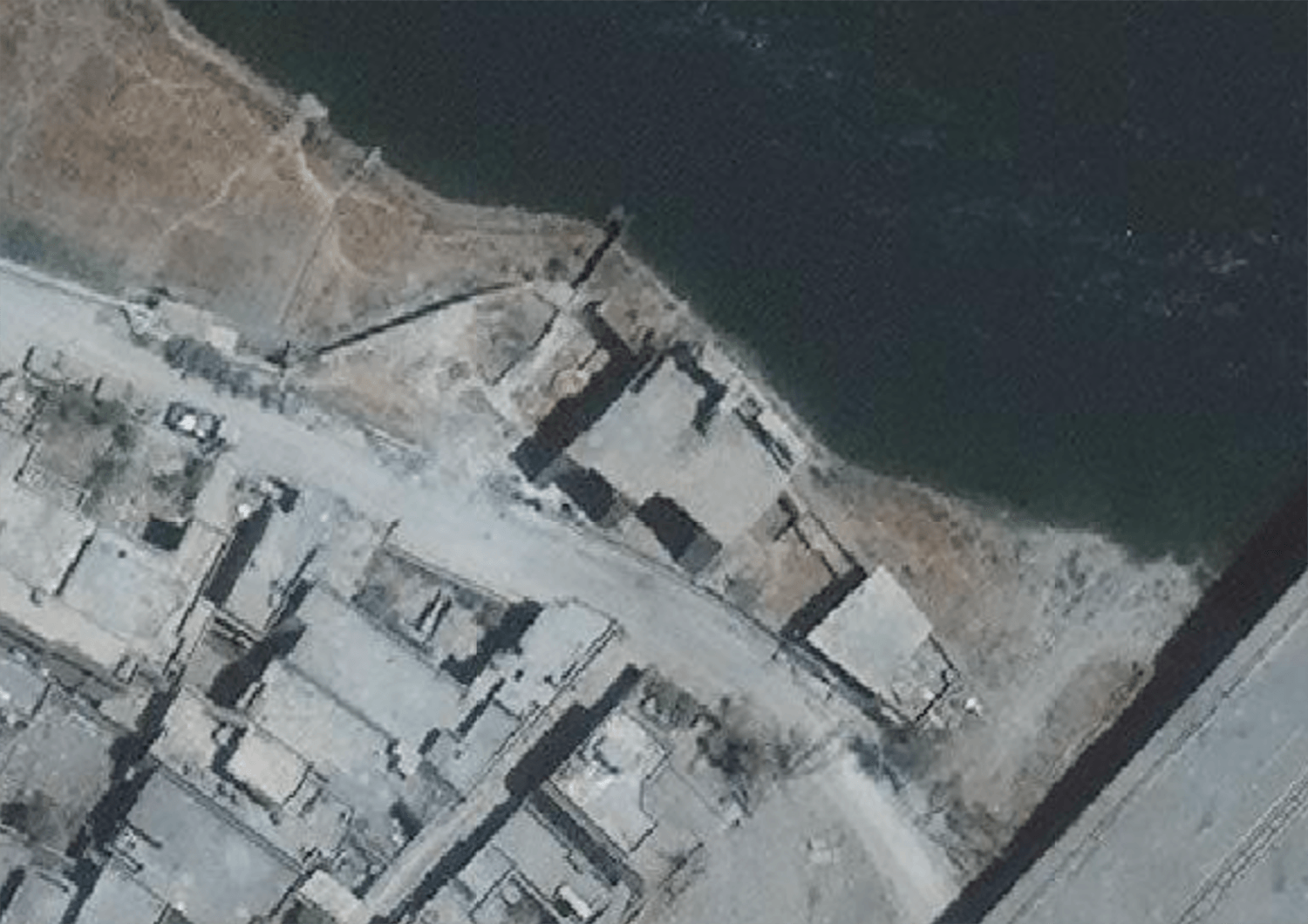
Satellite imagery from July 12 showing the building and Tigris riverbank seen in a video posted of soldiers throwing a detainee off a cliff in west Mosul as well as military vehicles in the vicinity.

Satellite imagery from July 12 showing the building and Tigris riverbank seen in a video posted of soldiers throwing a detainee off a cliff in west Mosul as well as military vehicles in the vicinity.  © 2017 DigitalGlobe
(Beirut) – International observers have discovered an execution site in west Mosul, Human Rights Watch said today. That report, combined with new statements about executions in and around Mosul’s Old City and persistent documentation about Iraqi forces extrajudicially killing men fleeing Mosul in the final phase of the battle against the Islamic State (also known as ISIS), are an urgent call to action by the Iraqi government.
Despite repeated promises to investigate wrongdoing by security forces, Prime Minister Haider al-Abadi has yet to demonstrate that Iraqi authorities have held a single soldier accountable for murdering, torturing, and abusing Iraqis in this conflict.
“As Prime Minister Abadi enjoys victory in Mosul, he is ignoring the flood of evidence of his soldiers committing vicious war crimes in the very city he’s promised to liberate,” said Sarah Leah Whitson, Middle East director at Human Rights Watch. “Abadi’s victory will collapse unless he takes concrete steps to end the grotesque abuses by his own security forces.”
International observers, whose evidence has proven reliable in the past, told Human Rights Watch that on July 17, 2017, at about 3:30 p.m., a shopkeeper in a neighborhood directly west of the Old City that was retaken in April from ISIS took them into an empty building and showed them a row of 17 male corpses, barefoot but in civilian dress, surrounded by pools of blood. They said many appeared to have been blindfolded and with their hands tied behind their back.
They said the shopkeeper told them that he had seen the Iraqi Security Forces’ 16th Division, identifiable by their badges and vehicles, in the neighborhood four nights earlier, and that night had heard multiple gunshots coming from the area of the empty building. The next morning, when armed forces had left the area, he told them, he went into the building and saw the bodies lying in positions that suggested they were shot there and had not been moved. He said he did not recognize any of those killed.
The international observers also saw soldiers from the elite Counter Terrorism Service (CTS) in the area. They contacted Human Rights Watch by phone from the site and later shared five photos they took of the bodies.
On July 17, another international observer told Human Rights Watch they spoke to a senior government official in Mosul who told them he was comfortable with the execution of suspected ISIS-affiliates “as long as there was no torture.” The observer said a commander showed their group a video taken a few days earlier of a group of CTS soldiers holding two detainees in the Old City. They said the commander told them that the forces had executed the men right after the video was taken.
Salah al-Imara, an Iraqi citizen who regularly publishes information regarding security and military activities in and around Mosul, published four videos allegedly filmed in west Mosul on Facebook on July 11 and 12. One video, posted on July 11, appears to show Iraqi soldiers beating a detainee, then throwing him off a cliff and shooting at him and at the body of another man already lying at the bottom of the cliff. Human Rights Watch had verified the location of the first video based on satellite imagery. Other videos showed Iraqi soldiers kicking and beating a bleeding man, federal police forces beating at least three men, and Iraqi soldiers kicking a man on the ground in their custody.
A third international observer told Human Rights Watch on July 18 that they witnessed CTS soldiers bring an ISIS suspect to their base in a neighborhood southwest of the Old City on July 11. The observer did not see what happened to the suspect next, but said that a soldier later showed them a video of himself and a group of other soldiers brutally beating the man, and a second video of the man dead, with a bullet to his head.
“Some Iraqi soldiers seem to have so little fear that they will face any consequence for murdering and torturing suspects in Mosul that they are freely sharing evidence of what look like very cruel exploits in videos and photographs,” Whitson said. “Excusing such celebratory revenge killings will haunt Iraq for generations to come.”
A fourth international observer told Human Rights Watch on July 11 that the day before they had witnessed a group of CTS soldiers push a man whose hands were tied behind his back into a destroyed shop near the main road in the west to the Old City. They said they heard several gunshots, went into the shop after the soldiers had left, and found the man’s body with several bullet holes in the back of his head. They shared the photo of the body.
On July 10, the same observer said they saw Iraqi Security Forces just outside the Old City holding about 12 men with their hands tied behind their backs. They said an officer told them that the military’s 9th Division had detained these men inside the Old City on suspicion of ISIS affiliation. They said they saw the soldiers lead the detained men just out of sight, then heard shots ring out from their direction. The observer was unable to verify what happened.
On July 7, two additional international observers told Human Rights Watch that on different occasions in late June, they witnessed soldiers bring at least five suspected ISIS affiliates out of the Old City to the west, strapped to the hoods of Humvees, when temperatures in the city often reached 48 degrees Celsius, or 118 degrees Fahrenheit.
The nongovernmental organization Mosul Eye has been documenting abuses by all sides in Mosul since 2014, and has posted numerous videos and witness statements about executions on its Twitter feed since July 14, with one reading: “Mass Executions ‘Speicher Style’ [a reference to an ISIS massacre in 2014] for the last survivors of the old city. ISF is killing and throwing bodies of everyone it finds to the river.”
As of July 10, the Iraqi military has prevented access to west Mosul for most journalists, limiting coverage of recent events inside the Old City. Iraqi forces should allow journalists access to west Mosul to report on the conflict and any alleged abuses, Human Rights Watch said.
Throughout the operation to retake Mosul, Human Rights Watch has documented Iraqi forces detaining and holding at least 1,200 men and boys in inhumane conditions without charge, and in some cases torturing and executing them, under the guise of screening them for ISIS-affiliation. In the final weeks of the Mosul operation, Human Rights Watch has reported on executions of suspected ISIS-affiliates in and around Mosul’s Old City.
An Iraqi Ministry of Foreign Affairs representative told Human Rights Watch on July 19 that he would request a government investigation into the allegations. Human Rights Watch has repeatedly raised concerns about allegations of ill-treatment, torture, and executions in meetings with Iraqi officials in Baghdad as well as with representatives from United States-led coalition member countries. Human Rights Watch does not know of a single transparent investigation into abuses by Iraqi armed forces, any instances of commanders being held accountable for abuse, or any victims of abuse receiving compensation.
Iraqi criminal justice authorities should investigate all alleged crimes, including unlawful killings and mutilation of corpses, by any party in the conflict in a prompt, transparent, and effective manner, up to the highest levels of responsibility. Those found criminally responsible should be appropriately prosecuted. Extrajudicial executions and torture during an armed conflict are war crimes.
“Relentless reports, videos, and photographs of unlawful executions and beatings by Iraqi soldiers should be enough to raise serious concerns among the highest ranks in Baghdad and the international coalition combatting ISIS,” Whitson said. “As we well know in Iraq, if the government doesn’t provide an accounting for these murders, the Iraqi people may take matters into their own hands.”

North Korea Prepares for Next ICBM Launch, High Plutonium Production

While there is much chatter with regard to South Korea entering into peace talks with North Korea, a proposal not likely to happen, new launch preparations appear to be underway.

Primer:

Images of North Korea’s main nuclear facility show that the isolated regime has apparently produced more plutonium for its weapons programme than previously thought, a US monitor said, as tensions soar over Pyongyang’s ambitions.

The respected 38 North website, a monitoring project linked to Johns Hopkins university, said Friday that thermal imagery of the Yongbyon nuclear complex appeared to show that Pyongyang had reprocessed spent fuel rods at least twice between last September and June this year.

“The Radiochemical Laboratory operated intermittently and there have apparently been at least two unreported reprocessing campaigns to produce an undetermined amount of plutonium that can further increase North Korea’s nuclear weapons stockpile,” it said.

Wookbox

North Korea deactivated the Yongbyon reactor in 2007 under an aid-for-disarmament accord, but began renovating it after Pyongyang’s third nuclear test in 2013. More here.

US intelligence shows North Korean preparations for a possible missile test

(CNN) has learned that US intelligence indicates that North Korea is making preparations for another intercontinental ballistic missile (ICBM) or intermediate range missile test.

Two administration officials familiar with the latest intelligence confirm there are indicators of test preparations that could lead to a potential launch in about two weeks.
US satellites have detected new imagery and satellite-based radar emissions indicating North Korea may be testing components and missile control facilities for another ICBM or intermediate launch, officials say.
The US is watching in particular for further testing of North Korean radars and communications that could be used in a launch. The next test launch would be the first since North Korea successfully launched an ICBM on July 4.
Officials also say that North Korea is continuing to test components to launch a missile from a submarine but the US intelligence assessment is that program remains in early stages.
At the same time, a North Korean submarine was spotted in international waters engaging in “unusual activity,” two defense officials said.
North Korea’s submarine fleet is believed to encompass around 70 subs, though the majority are quite old and likely cannot fire missiles.
When taken together, these developments are concerning because North Korea says it is trying to develop a missile capable of delivering a nuclear warhead to the United States.
Pyongyang has long maintained the ability to legitimately threaten the United States with a nuclear attack is the only way to protect itself against any US-led attempts at regime change.
Land-based and submarine-based missiles are considered two-thirds of what is known as the “Strategic Triad,” a theory that a state must have land, air and sea based nuclear attack capabilities to successful deter an enemy from trying to attack it.
The latest intelligence about a potential second ICBM test comes as the second highest ranking US military officer has warned Congress that North Korea’s deception techniques to mask their missile launches have grown in sophistication.
“I am reasonably confident in the ability of our intelligence community to monitor the testing but not the deployment of these missile systems. Kim Jong Un and his forces are very good at camouflage concealment and deception” General Paul Selva, vice chairman of the Joint Chiefs of Staff, told the Senate armed services committee on Tuesday.
Selva gave the strongest public indication so far that the US believes the current North Korean ICBM still has limitations, saying that Pyongyang has yet to demonstrate the “capacity to strike the United States with any degree of accuracy or reasonable confidence of success.”
Selva said North Korean guidance and control systems for a long range missile still would have to be improved before a missile could actually strike the US.
When asked about the possibility of a preemptive US military strike, Selva said, “I think we have to entertain that potential option. That would be a policy choice by the President of the United States to execute or not execute that option.”
But Defense Secretary James Mattis has long warned against letting the North Korean situation get to the point of a US military strike and has strongly and publicly advocated for a diplomatic solution led by the State Department.
Selva, who is deeply involved in the US nuclear weapons and missile defense programs, noted a parallel line of effort is underway to “provide for the defense of the United States with a suitable ballistic missile defense system that can handle the low volume at this point of missiles that he (Kim Jong Un) might be able to deploy that could strike us here across all of US territory, Alaska, Hawaii and the lower 48.”
The preparations for a potential new launch come as the US military has observed North Korea carrying out an “unusual level” of submarine activity as well as testing a critical component of a missile that could potentially be launched from a submarine.
Two US defense officials told CNN that that a North Korean Romeo-class submarine is currently engaged in “unusual deployment activity” in the Sea of Japan/East Sea and has been under way for about 48 hours. The US is observing the sub via reconnaissance imagery and the officials said the submarine’s patrol had taken it farther that it has ever gone, sailing some 100 kilometers out to sea in international waters. The submarine’s activity was different than the typical training activity usually observed closer to shore, according to the officials.
The diesel-electric-powered North Korean sub spotted far from port is about 65 meters long and the US does not assess it capable of venturing very far from its home port.
The activity caused US and South Korean forces to slightly raise their alert level, according to one official.
The US military pays close attention to North Korean submarine activity following the 2010 Cheonan incident where a North Korean sub torpedoed a South Korean Naval vessel.
The deployment comes days after Pyongyang tested a critical component for a missile that could potentially be launched by a submarine The test took place on land at the Sinpo shipyard in North Korea. The current US intelligence assessment is that the missile program aboard submarines remains in the very early stages.
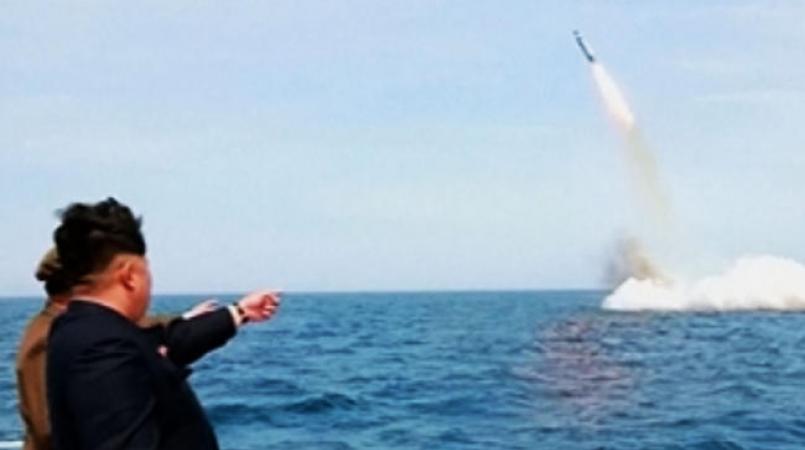
An ejection test in may tested the missile’s “cold-launch system,” which uses high pressure steam to propel the missile out of the launch canister into the air before the missile’s engines ignite, preventing damage to the submarine or submersible barge that would launch the missile. It is the type of technology that allows missiles to be launched underwater from submarines.
Last summer, North Korea conducted what experts believed was its first successful submarine missile test, firing a missile called the the KN-11 or Pukguksong-1.