Kushner in Israel, with ‘Allen Plan’ in Hand?

President Trump’s son-in-law Jared Kushner meets with Israeli Prime Minister Netanyahu hoping for a breakthrough on peace talks between Israel and the Palestinians. After this session, Kushner goes to Ramallah to meet with Palestinian Mahmoud Abbas. This is the 50th anniversary of the 1967 Mideast war where Israel captured the West Bank, East Jerusalem and Gaza.

One of the big issues with the Palestinians is the construction of ‘settlements’ which this site takes extreme exception to that term. The other term used by the Palestinians which should never be accepted is ‘occupation’.

So, as the title of the article includes the ‘Allen Plan’….exactly what is that?

It refers to General Allen and 1967 lines, proposed during Obama’s term as president. Israel is always prepared for these types of meetings and had already formally rejected any re-proposal for The Allen Plan.

Does this look like Israel can defend itself reverting to 1967 lines? Further, that proposal demands Israel to relinquish the most sacred historical territory.
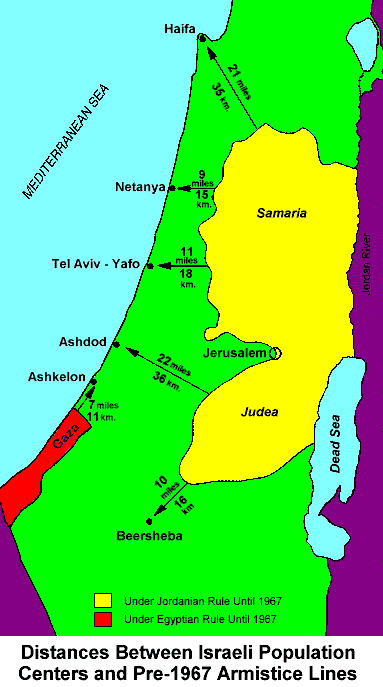
Image result for israel 1967 lines map

Image result for general john allen john kerry

EXECUTIVE SUMMARY: The Trump White House is currently reexamining the Allen Plan, an Obama-era proposal that calls for a Palestinian state in the 1967 borders with no IDF presence whatsoever. This plan is dangerous. If it is implemented, Israel will have to rely on foreign forces for its security, a situation that has not worked in the past. More than that, it is antithetical to the Israeli ethos of self-defense and self-preservation in the Jewish homeland.

Col. Kris Bauman’s appointment as Israel adviser to the US National Security Council is a noteworthy event. He assisted Gen. John Allen in formulating recommendations for security arrangements for Israel in the context of a permanent settlement, to which then-Secretary of State John Kerry aspired. This set of recommendations came to be known as the Allen Plan.

Gen. Allen’s vision was detailed in a comprehensive document prepared at a US research institute by two Israelis and two Americans: Gen. (res.) Gadi Shamni and Nimrod Novik, along with Ilan Goldenberg and Col. Kris Bauman.

The plan envisages a Palestinian state with full sovereignty inside the 1967 borders, its capital in east Jerusalem, with minor modifications for settlement blocs. The plan is based on complete acceptance of the Palestinian demand for full sovereignty. This means no IDF soldiers anywhere in their state, which would extend from the Jordan River to the 1967 line.

In lieu of Israel’s demands regarding defensible borders, which include an Israeli military presence in the Jordan Valley to ensure the Palestinian state’s demilitarization, the plan proposes a varied and complex security solution. One element would be a US military force that would operate in the Jordan Valley. As the document’s Executive Summary states,

The purpose of this study is to demonstrate that well-thought-through security measures in the context of the two-state solution can provide Israelis and Palestinians with a degree of security equal or greater to that provided today by Israel’s deployment into the West Bank…

The basic problem is the notion that Israel will rely for its security on foreign forces. Not only is it difficult to ensure that such forces would fulfill their duty successfully, but it is uncertain whether or not they would stay in place – particularly after they have suffered casualties like those they have suffered in Afghanistan and Iraq over the past decade.

Recall that during the waiting period before the Six-Day War, the security guarantee given by President Eisenhower to Ben-Gurion after the 1956 Sinai Campaign evaporated. When he demanded that Israel withdraw unconditionally from the Sinai Peninsula, Eisenhower promised that if the Straits of Tiran were ever again closed to Israeli shipping, the US would intervene. Yet when Israeli foreign minister Abba Eban came to Washington in May 1967, President Johnson candidly explained to him that Eisenhower’s promise – however estimable – was no longer a practical proposition. With his army bogged down in Vietnam, Johnson apparently could not have gained the nation’s or Congress’s support for an intervention in the Straits of Tiran even if he had wanted to.

The main concern is that the existence of the Greater Tel Aviv area – indeed, the daily routine of the State of Israel – will come to be dependent on the goodwill of foreign forces. That is the heart of the matter. Do we want Israel to be no more than a haven for persecuted Jews where they can subsist under foreign protection? Or do we want Israel to be a place of freedom, a homeland, in which we alone are responsible for our own security and sovereignty?

The authors of the Allen document emphasize that Israel’s security would continue to be based on the IDF’s power. But it is hard to imagine under what circumstances Israel would attain the international legitimacy to pursue an offensive deep within the Palestinian state, should the need arise. Regarding the conditions that could justify an IDF operation in Palestinian territory, the document says:

The Palestinians will never agree to an Israeli right of re-entry, but there could be a side agreement between Israel and the United States on the conditions under which the United States would support unilateral Israeli action. Ultimately, Israel is a sovereign state that enjoys the right of self-defense. Thus, it can unilaterally violate the sovereignty of another state, but with the attendant risks that would have to be weighed by Israeli leadership.

Should the IDF evacuate the territories completely, as envisaged by this plan, the Palestinians would certainly employ their carefully honed tactical and strategic talent for nonaccountability and ambiguity. They would take care to ensure that the Palestinian state cannot be defined as a hostile entity against which a “just war” can be declared. Whether deliberately or not, they would be able to let “rogue,” non-state forces do their work for them, and avoid taking responsibility. What then?

There is also good reason to doubt whether conditions for demilitarization can be maintained. In an era of global arms proliferation, and of forms of smuggling that elude surveillance (as in the flow of weapons to Hamas in Gaza and to Hezbollah in Lebanon), along with increasingly sophisticated local arms manufacture, there is no way to guarantee real demilitarization without a constant effort to keep the territory fully isolated and to operate within it.

We must also take into account the possibility that war could erupt in more than one arena at at a time. If war were to break out with the state of Palestine in the West Bank, it could happen simultaneously in Lebanon, Gaza, and so on. The IDF would be unable to concentrate its efforts in the West Bank arena – which, because of its geographic proximity to Israel’s population centers, could inflict a heavy blow. Under the new conditions of war, which are fundamentally different from those that prevailed in June 1967, reconquering the territory would be incomparably more difficult.

And what of the document’s validity under changing conditions? The security solution the document proposes must be weighed in terms of the time dimension, and in circumstantial contexts that are subject to change. If a solution is responsible and workable, what time span is envisaged? Who knows under what evolving circumstances the solution will be required to provide protection to a state of Israel that has been trimmed down to the coastal plain? Is there not also a need for responsible risk management regarding contingencies that are still beyond the horizon?

We must ask to what extent we ourselves, with the excessive emphasis we have placed on security concerns in recent decades as a key criterion by which to assess any prospective solution, have laid the groundwork for Gen. Allen’s plan. His security document is, after all, intended expressly to offer a technical solution to all the familiar security issues. It would leave the Israeli leadership without the faintest possibility of invoking a security pretext to ward off the “peace solution.”

In describing Kerry’s efforts, Thomas Friedman asserted (The New York Times, February 17, 2013) that in light of Gen. Allen’s solution for Israel’s security concerns, the Israeli government had reached a juncture where it would have to choose between peace and ideology.

Perhaps we have forgotten that protecting the national existence, in terms of how the IDF defines national security, does not pertain solely to ensuring the physical existence of the citizens of the country but also to safeguarding national interests. A national interest – such as the sovereignty of the people of Israel in their capital, Jerusalem – can go far beyond the technical contents of a plan for security arrangements, however worthy. Security is only a means, not an end in itself.

From a practical, professional standpoint, Gen. Allen’s plan leaves much to be desired. But on a deeper level, it completely ignores the possibility that the people of Israel, in renewing their life in their homeland, are motivated by something much greater than the need for a technical solution to security concerns.

The Slow Death of Britain and Europe

There have been a number of terror attacks in recent weeks in Britain and across Europe. No one is willing to discuss the causes for fear of retribution by migrant groups, religious organizations and government leaders.

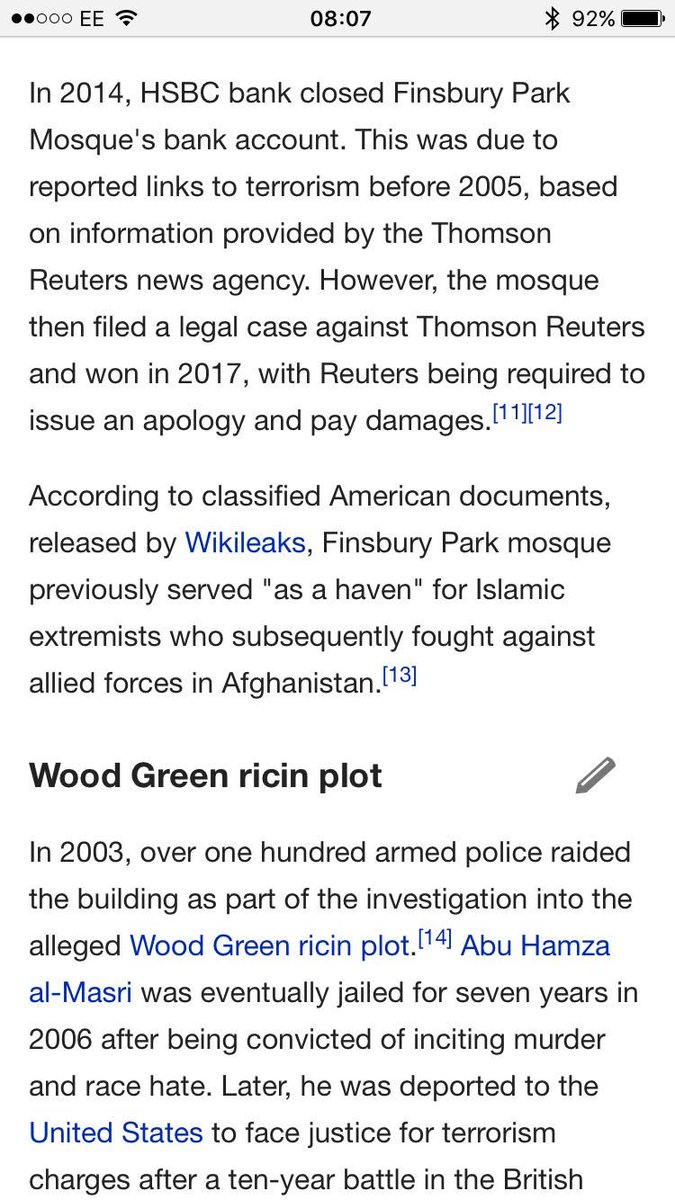
The most recent attack occurred when Darren Osbourne, originally from Whales rented a van and ran into several people outside the Finsbury Park mosque killing one and injuring several others. He is being charged with terror activities. Islamists have been waiting for this reckoning and the powder keg continues to smolder.

The Finsbury Park mosque has a nasty history.

*** Moving on to yet another secret in Britain…

Why Did British Police Ignore Pakistani Gangs Abusing 1,400 Rotherham Children? Political Correctness

A story of rampant child abuse—ignored and abetted by the police—is emerging out of the British town of Rotherham. Until now, its scale and scope would have been inconceivable in a civilized country.  Its origins, however, lie in something quite ordinary: what one Labour MP called “not wanting to rock the multicultural community boat.”

Imagine the following case. A fourteen-year old girl is taken into care by the social services unit of the town where she lives, because her parents are drug-addicted, and she has been neglected and is not turning up in school. She is one of many, for that is the way in Britain today. And local government entities—Councils—can be ordered by the courts to stand in for parents of neglected children. The Council places the girl in a home, where she is kept with others under supervision from the social services department. The home is regularly visited by young men who try to entice the girls into their cars, so as to give them drugs and alcohol, and then coerce them into sex.

***

The girl, who is lonely and uncared for, meets a man outside the home, who promises a trip to the cinema and a party with children of her age. She falls into the trap. After she has been raped by a group of five men she is told that, if she says a word to anyone, she will be taken from the home and beaten. When, after the episode is repeated, she threatens to go to the police, she is taken into the countryside, doused in petrol, and told that she is going to be set alight, unless she promises to tell no one of the ordeal.

Social workers tell girls they cannot help them

Meanwhile she must accept weekly abuse, in return for drugs and alcohol. Soon she finds herself being taken to other towns in the area, and hired out for sexual purposes to other men. She is distraught and depressed, and at the point when she can stand it no longer, she goes to the police. She can only stutter a few words, and cannot bring herself to accuse anyone in particular. Her complaint is dismissed on the grounds that any sex involved must have been consensual. The social worker in charge of her case listens to her complaint, but tells her that she cannot act unless the girl identifies her abusers. But when the girl describes them the social worker switches off with a shrug and says that she can do nothing. Her father, his drug habit notwithstanding, has tried to keep contact with his daughter and suspects what is happening. But when he goes to the police, he is arrested for obstruction and charged with wasting police time.

Over the two years of her ordeal the girl makes several attempts on her own life, and eventually ends up abandoned and homeless, without an education and with no prospect of a normal life.

Impossible, you will say, that such a thing could happen in Britain. In fact it is only one of over 1,400 cases, all arising during the course of the last fifteen years in the South Yorkshire town of Rotherham, all involving vulnerable girls either in Council care or inadequately protected by their families from gangs of sexual predators. Almost no arrests have been made, no social workers or police officers have been reprimanded, and until recently the matter was dismissed by all those responsible as a matter of no real significance. Increasing public awareness of the problem, however, led to complaints, triggering a series of official reports. The latest report, from Professor Alexis Jay, former chief inspector of social work in Scotland, gives the truth for the first time, in 153 disturbing pages. One fact stands out above all the horrors detailed in the document, which is that the girl victims were white, and their abusers Pakistani.

 ***
Sociologists convinced government that the police are racist

Fifteen years ago, when these crimes were just beginning, the Stephen Lawrence Inquiry into the conduct of the British police was made by Sir William Macpherson a High Court judge. The immediate occasion had been a murder in which the victim was black, the perpetrators white, and the behaviour of the investigating police lax and possibly prejudiced. The report accused the police – not just those involved in the case, but the entire police force of the country – of ‘institutionalised racism’. This piece of sociological newspeak was, at the time, very popular with leftist sociologists. For it made an accusation which could not be refuted by anyone who had the misfortune to be accused of it.

However well you behaved, however scrupulously you treated people of different races and without regard to their ethnic identity or the colour of their skin, you would be guilty of ‘institutionalised racism’, simply on account of the institution to which you belonged and on behalf of which you were acting. Not surprisingly, sociologists and social workers, the vast majority of whom are professionally disposed to believe that middle class society is incurably racist, latched on to the expression. MacPherson too climbed onto the bandwagon since, at the time, it was the easiest and safest way to wash your hands in public, to say that I, at least, am not guilty of the only crime that is universally recognised and everywhere in evidence.

Police more concerned with political correctness than crime

The result of this has been that police forces lean over backwards to avoid the accusation of racism, while social workers will hesitate to intervene in any case in which they could be accused of discriminating against ethnic minorities. Matters are made worse by the rise of militant Islam, which has added to the old crime of racism the new crime of ‘Islamophobia’. No social worker today will risk being accused of this crime. In Rotherham a social worker would be mad, and a police officer barely less so, to set out to investigate cases of suspected sexual abuse, when the perpetrators are Asian Muslims and the victims ethnically English. Best to sweep it under the carpet, find ways of accusing the victims or their parents or the surrounding culture of institutionalised racism, and attending to more urgent matters such as the housing needs of recent immigrants, or the traffic offences committed by those racist middle classes.

Americans too are familiar with this syndrome. Political correctness among sociologists comes from socialist convictions and the tired old theories that produce them. But among ordinary people it comes from fear. The people of Rotherham know that it is unsafe for a girl to take a taxi-ride from someone with Asian features; they know that Pakistani Muslims often do not treat white girls with the respect that they treat girls from their own community. They know, and have known over fifteen years, that there are gangs of predators on the look-out for vulnerable girls, and that the gangs are for the most part Asian young men who see English society not as the community to which they belong, but as a sexual hunting ground. But they dare not express this knowledge, in either words or deed. Still less do they dare to do so if their job is that of social worker or police officer. Let slip the mere hint that Pakistani Muslims are more likely than indigenous Englishmen to commit sexual crimes and you will be branded as a racist and an Islamophobe, to be ostracised in the workplace and put henceforth under observation.

Rotherham Town Hall. (Wikipedia) Rotherham Town Hall, Wikipedia

No One Will Be Fired

This would matter less if fear had no consequences. Unfortunately political correctness causes people not merely to disguise their beliefs but to refuse to act on them, to accuse others who confess to them, and in general to go along with policies that have been forced on the British people by minority groups of activists. The intention of the activists is to disrupt and dismantle the old forms of social order. They believe that our society is not just racist, but far too comfortable, far too unequal, far too bound up with fuddy-duddy old ways that are experienced by people at the bottom of society – the working classes, the immigrants, the homeless, the illegals – as oppressive and demeaning. They enthusiastically propagate the doctrines of political correctness as a way of taking revenge on a social order from which they feel alienated.

Ordinary people are so intimidated by this that they repeat the doctrines, like religious mantras which they hope will keep them safe in hostile territory. Hence people in Britain have accepted without resistance the huge transformations that have been inflicted on them over the last thirty years, largely by activists working through the Labour Party. They have accepted immigration policies that have filled our cities with disaffected Muslims, many of whom have now gone to fight against us in Syria and Iraq. They have accepted the growth of Islamic schools in which children are taught to prepare themselves for jihad against the surrounding social order. They have accepted the constant denigration of their country, its institutions and its inherited religion, for the simple reason that these things are theirs and therefore tainted with forbidden loyalties.

And when the truth is expressed at last, nobody is fired, no arrests are made, and the elected Police and Communities Commissioner for Rotherham, although forced to resign from the Labour Party, refuses to resign from his job. After a few weeks all will have been swept under the carpet, and the work of destruction can resume.


Media of The Strange Death of Europe

The Strange Death of Europe is a highly personal account of a continent and culture caught in the act of suicide. Declining birth-rates, mass immigration and cultivated self-distrust and self-hatred have come together to make Europeans unable to argue for themselves and incapable of resisting their own comprehensive change as a society. This book is not only an analysis of demographic and political realities, but also an eyewitness account of a continent in self-destruct mode. It includes reporting from across the entire continent, from the places where migrants land to the places they end up, from the people who appear to welcome them in to the places which cannot accept them. Told from this first-hand perspective, and backed with impressive research and evidence, the book addresses the disappointing failure of multiculturalism, Angela Merkel’s U-turn on migration, the lack of repatriation and the Western fixation on guilt. Murray travels to Berlin, Paris, Scandinavia, Lampedusa and Greece to uncover the malaise at the very heart of the European culture, and to hear the stories of those who have arrived in Europe from far away. In each chapter he also takes a step back to look at the bigger issues which lie behind a continent’s death-wish, answering the question of why anyone, let alone an entire civilisation, would do this to themselves? He ends with two visions of Europe – one hopeful, one pessimistic – which paint a picture of Europe in crisis and offer a choice as to what, if anything, we can do next. – See more at: http://www.bloomsbury.com/uk/the-strange-death-of-europe-9781472942241/#sthash.LFXH2Clt.dpuf

At Least 34 Years of Immigration Debate, Loopholes and Dollars

Image result for executive office of immigration review

The proposed Department of Justice budget request for 2018 for the Executive Office of Immigration is $421.5 million and includes 2600 employees with 831 lawyers. Judges assigned to immigration courts are being hired, shuffled around the country and have in some areas have a five year base backlog.

Image result for immigration court FoxLatino

The Executive Office for Immigration Review (EOIR) was created on January 9, 1983, through an internal Department of Justice (DOJ) reorganization which combined the Board of Immigration Appeals (BIA or Board) with the Immigration Judge function previously performed by the former Immigration and Naturalization Service (INS) (now part of the Department of Homeland Security). Besides establishing EOIR as a separate agency within DOJ, this reorganization made the Immigration Courts independent of INS, the agency charged with enforcement of Federal immigration laws. The Office of the Chief Administrative Hearing Officer (OCAHO) was added in 1987. In 2013, EOIR observed its 30th anniversary.

EOIR is also separate from the Office of Special Counsel for Immigration-Related Unfair Employment Practices in the DOJ Civil Rights Division and the Office of Immigration Litigation in the DOJ Civil Division.

As an office within the Department of Justice, EOIR is headed by a Director who reports directly to the Deputy Attorney General. Its headquarters are located in Falls Church, Virginia, about 10 miles from downtown Washington, DC.

New York City Law Creates Loophole To Avoid Deporting Criminal Illegal Immigrants

A New York City law that reclassifies several low-level offenses as non-criminal went into effect Tuesday, allowing citizen offenders to keep clean records and illegal immigrant offenders to potentially avoid deportation.

The law, passed by the city council and signed by Mayor Bill de Blasio in 2016, allows police to classify trial summonses for petty crimes as civil summonses, rather than criminal summonses. The change would affect crimes including public urination and drinking and staying in the park after dark, DNA Info reports. The change critically affects the impact of an executive order from President Donald Trump this spring ordering the deportation of illegal immigrants convicted of crimes.

Under the new law, illegal immigrants convicted of these crimes would receive a civil rather than criminal summons, which frees local law enforcement from the obligation of reporting the offender’s immigration status to Immigration and Customs Enforcement (ICE).

The law would affect cases such as Alejandro Luna, a former gang member and an illegal immigrant caught in central park after dark June 5 who now faces deportation. This would be Luna’s second deportation, the first came in 2006 after he was convicted of home-invasion and robbery. He then illegally entered the country again only to be detained on the June 5 park offense. More here.

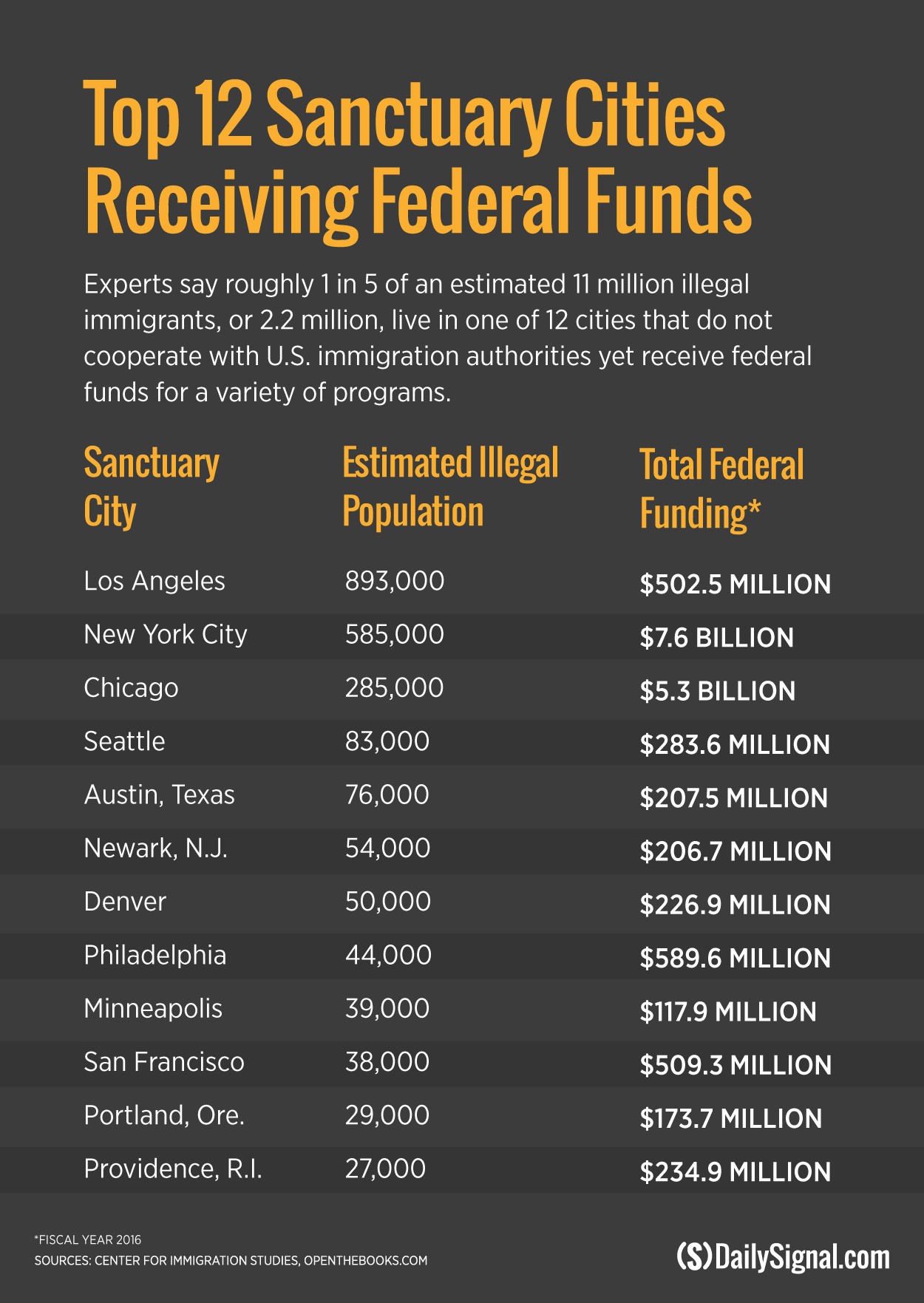
Image result for sanctuary cities

***

Illegals presently have access to government funded healthcare. However:

The ‘Verify First Act’ by Rep. Lou Barletta (R-PA) would subsequently end American taxpayer-funded money going to illegal aliens in the form of healthcare insurance credits. The plan is being supported by NumbersUSA, a group which has staunchly advocated for Trump’s America First agenda.

“We applaud Rep. Lou Barletta for introducing the Verify First Act to ensure that illegal aliens cannot qualify for taxpayer-funded health insurance credits,” NumbersUSA Peter Robbio said in a statement. “We are grateful that the Ways and Means Committee and House Republican Leadership agreed to move this important bill forward.”

Since Obamacare’s enactment, illegal immigrants received more than $700 million in healthcare insurance credits by 2015, according to the Senate Committee on Homeland Security and Governmental Affairs.

In Barletta’s plan, healthcare insurance recipients through the American Health Care Act (AHCA) would have their citizenship and immigration statuses verified by the Social Security Administration (SSA) and the Department of Homeland Security (DHS). More here.

***

In part: Traditional sanctuary policies are often described as falling under one of three categories. First, so-called “don’t enforce” policies generally bar the state or local police from assisting federal immigration authorities. Second, “don’t ask” policies generally bar certain state or local officials from inquiring into a person’s immigration status. Third, “don’t tell” policies typically restrict information sharing between state or local law enforcement and federal immigration authorities. This report provides examples of various state and local laws and policies that fall into one of these sanctuary categories. The report also discusses federal measures designed to counteract sanctuary policies. For instance, Section 434 of the Personal Responsibility and Work Opportunity Reconciliation Act (PRWORA) and Section 642 of the Illegal Immigration Reform and Immigrant Responsibility Act (IIRIRA) were enacted to curb state and local restrictions on information sharing with federal immigration authorities.

State or local measures limiting police participation in immigration enforcement are not a recent phenomenon. Indeed, many of the recent “sanctuary”-type initiatives can be traced back to

activities carried out by churches that provided refuge—or “sanctuary”—to unauthorized Central American aliens fleeing civil unrest in the 1980s.13 A number of states and municipalities issued declarations in support of these churches’ actions.14 Others went further and enacted more substantive measures intended to limit police involvement in federal immigration enforcement activities.15 These measures have included, among other things, restricting state and local police from arresting persons for immigration violations, limiting the sharing of immigration-related information with federal authorities, and barring police from questioning a person about his or her immigration status.16

Still, there is no official definition of a “sanctuary” jurisdiction in federal statute or regulation.17 Broadly speaking, sanctuary jurisdictions are commonly understood to be those that have laws or policies designed to substantially limit involvement in federal immigration enforcement activities,18 though there is not necessarily a consensus as to the meaning of this term.19 Some jurisdictions have self-identified as sanctuary cities.

The federal government’s power to regulate immigration is both substantial and exclusive.23 This authority is derived from multiple sources, including Congress’s Article I powers to “establish a uniform Rule of Naturalization” and “regulate commerce with foreign nations, and among the several states,”24 as well as the federal government’s “inherent power as a sovereign to conduct relations with foreign nations.”

The Supreme Court’s 2012 ruling in Arizona v. United States—which invalidated several Arizona laws designed “to discourage and deter the unlawful entry and presence of aliens and economic activity by persons unlawfully present in the United States”28 as preempted by federal law—reinforced the federal government’s pervasive role in creating and enforcing the nation’s immigration laws.29 “The Government of the United States,” the Court said, “has broad, undoubted power over the subject of immigration and the status of aliens.”30

Yet despite the federal government’s sweeping authority over immigration, the Supreme Court has cautioned that not “every state enactment which in any way deals with aliens is a regulation of immigration and thus per se preempted” by the federal government’s exclusive power over immigration.39 Accordingly, in Arizona the Supreme Court reiterated that, “[i]n preemption analysis, courts should assume that the historic police powers of the States are not superseded unless that was the clear and manifest purpose of Congress.”40 For example, in Chamber of Commerce of the U.S. v. Whiting, the Supreme Court upheld an Arizona law—related to the states’ “broad authority under their police powers to regulate the employment relationship to protect workers within the State”41—that authorized the revocation of licenses held by state employers that knowingly or intentionally employ unauthorized aliens.42 Even though the Immigration Reform and Control Act of 1986 (IRCA) expressly preempted “any State or local law imposing civil or criminal sanctions … upon those who employ, or recruit or refer for a fee for employment, unauthorized aliens,” the Supreme Court concluded that Arizona’s law fit within IRCA’s savings clause for state licensing regimes and thus was not preempted.43

Accordingly, based on current jurisprudence, federal measures that impose direct requirements on state or municipal authorities appear most likely to withstand an anti-commandeering challenge if they (1) are not directed at a state’s regulation of the activities of private parties; and (2) apply to the activities of private parties as well as government actors.

Finally, Congress does not violate the Tenth Amendment when it uses its broad authority to enact legislation for the “general welfare” through its spending power,62 including by placing

conditions on funds distributed to the states that require those accepting the funds to take certain actions that Congress otherwise could not directly compel the states to perform.63 However, Congress cannot impose a financial condition that is “so coercive as to pass the point at which ‘pressure turns into compulsion.’”64 For example, in National Federation of Independent Business v. Sebelius, the Supreme Court struck down a provision of the Patient Protection and Affordable Care Act of 2010 (ACA) that purported to withhold Medicaid funding to states that did not expand their Medicaid programs.65 The Court found that the financial conditions placed on the states in the ACA (withholding all federal Medicaid funding, which, according to the Court, typically totals about 20% of a state’s entire budget) were akin to “a gun to the head” and thus unlawfully coercive.66

violations of federal immigration law may be criminal or civil in nature, with alien removal understood to be a civil proceeding.71 Some immigration-related conduct potentially constitutes a removable offense and also may be subject to criminal sanction. For example, an alien who knowingly enters the United States without authorization is not only potentially subject to removal,72 but could also be charged with the criminal offense of unlawful entry.73 Other violations of the INA are exclusively criminal or civil in nature. Notably, an alien’s unauthorized immigration status makes him or her removable, but absent additional factors (e.g., having reentered the United States after being formally removed),74 unlawful presence on its own is not a criminal offense.

Some jurisdictions have adopted measures that restrict or bar police officers from making arrests for violations of federal immigration law. In some jurisdictions restrictions prohibit police from detaining or arresting aliens for civil violations of federal immigration law, like unlawful presence.75 Other jurisdictions prohibit police from making arrests for some criminal violations of federal immigration law, like unlawful entry.76 Still others prohibit assisting federal immigration authorities with investigating or arresting persons for civil or criminal violations of U.S. immigration laws.77 And some other jurisdictions have prohibitions that are broader in scope, such as a general statement that immigration enforcement is the province of federal immigration authorities, rather than that of local law enforcement.

Some states and localities have restricted government agencies or employees from sharing information with federal immigration authorities, primarily to prevent federal authorities from using the information to identify and apprehend unlawfully present aliens for removal.88 For instance, some jurisdictions prohibit law enforcement from notifying federal immigration authorities about the release status of incarcerated aliens, unless the alien has been convicted of certain felonies.89 Similarly, other jurisdictions prohibit their employees from disclosing information about an individual’s immigration status unless the alien is suspected of engaging in illegal activity that is separate from unlawful immigration status.90 Some jurisdictions restrict disclosing information except as required by federal law91—sometimes referred to as a “savings clause”—although it appears that the Department of Justice has interpreted those provisions as conflicting with federal information-sharing provisions. For the full summary and context with access to footnotes, go here.

Hamas and Gaza, the Shame of Qatar, PA and Egypt

Dealing with Hamas in Gaza includes who pays for the supply of electricity there.

Following an Israeli decision to cut down its electricity supply to the besieged coastal enclave by some 40 percent, Egypt has offered to provide more electricity to Gaza, if Hamas cooperates with Egypt in its harsh ‘counterterrorism’ crackdown, reported Alsharq Alawsat newspaper.

Israeli authorities approved the electricity cuts Monday, upon the request of the Palestinian Authority (PA) in the occupied West Bank, which foots Gaza’s monthly electricity bill from Israel by subtracting from taxes collected by Israel on behalf of the PA.

According to a report Tuesday from the London-based Arabic daily Asharq al-Awsat, Egypt has since offered Hamas an increased electricity supply and more freedom at the Rafah border crossing in exchange for a list of security demands.

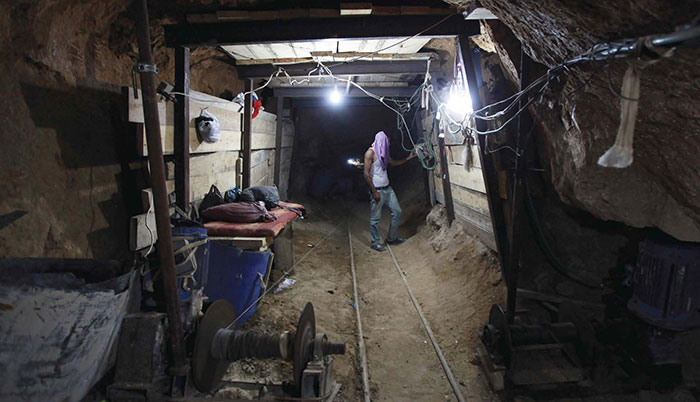
Egypt has reportedly demanded that Hamas hand over 17 men wanted by Cairo on terrorism charges, more protection by Hamas at the border, the cessation of alleged weapons smuggling into the Sinai Peninsula, and information on the movement of “elements” into Gaza via underground tunnels.

Image result for hamas gaza NBC

Tower: The secretary-general of the Red Crescent Society of the United Arab Emirates accused the Gaza-based terrorist organization Hamas on Monday of provoking Israeli forces by firing rockets from a field hospital during Operation Protective Edge in 2014, a war crime under international law, Ynet reported.

According to Secretary-General Mohamed Ateeq Al-Falahi, the Red Crescent’s staff was stationed at a UAE field hospital in Gaza when Hamas fighters began firing rockets from their facilities to provoke an Israeli response.

“This shows (Hamas’s) wicked intentions and how they scarified us,” said Al-Falahi. “They always claim the enemy targets humanitarian envoys, but the betrayal came from them,” he added.

Al-Falahi also accused Hamas of attempting to prevent the distribution of humanitarian aid in Gaza. “What hurts is that the betrayal came from our own people,” he said. “Muslims fighting Muslims, who were giving humanitarian aid to Muslims,” the secretary-general lamented.

This was not the end of Hamas’s hostility towards the group. When they left, Hamas had the Red Crescent targeted by Sinai jihadists, which shot at them and planted landmines in their path. They “accused us of being spies, undercover foreign intelligences who were escaping,” Al-Falahi explained.

When the Red Crescent left Gaza through Sinai, Hamas had apparently informed “extremist militias in Sinai… that there was a group making their way there, so prepare for jihad against them…,” Al-Falahi said. “As we stopped at a grocery store to buy something to eat, they started shooting at us,” he added.

Image result for hamas gaza tunnels Behind

Hamas has long been accused of using civilians and civilian infrastructure as shields, in violation of international law, to provoke a response from Israel and thereby increase the civilian toll for its own political advantage.

Bilal Razania, the brother of a senior Hamas official, told Israeli interrogators last year that Hamas used the Kamal Adwan hospital in northern Gaza as a military base during Operation Protective Edge in 2014. Hamas leaders similarly used Shifa hospital in Gaza City as “a de facto headquarters” during the conflict, The Washington Post reported. A report compiled by the Intelligence and Terrorism Information Center found that Hamas used over 10 hospitals during Operation Cast Lead in 2008 to launch rockets at Israeli towns and attack Israeli troops.

News crews from France 24 and India’s NDTV recorded incidents of Hamas terrorists setting up and firing rockets from positions located near civilians during the 2014 conflict. A year later, a Polish journalist wrote an op-ed describing how Hamas would fire from populated areas.

Hamas, in fact, admitted to using human shields following Operation Protective Edge.

Turkish Thugs Arrested in DC After Erdogan’s Visit

http://asbarez.com/164327/warrants-issued-for-erdogan-goons-dc-officials-confirm/

WASHINGTON — Police say two men have been arrested for their role in a violent altercation outside the Turkish ambassador’s residence during a visit to Washington by Turkey’s president last month.The Metropolitan Police Department said in a brief statement that Sinan Narin had been arrested in Virginia on an aggravated assault charge.

It said Eyup Yildirim had been arrested in New Jersey on charges of assault with significant bodily injury and aggravated assault.

The department released no further details about the suspects but said additional information would be available Wednesday.

U.S. officials had strongly criticized the Turkish government after President Recep Tayyip Erdogan’s security forces pushed past police and violently broke up a protest outside the residence on May 16.

***

(AFP) – US authorities said Thursday they have issued arrest warrants for 12 members of Turkish President Recep Tayyip Erdogan’s security detail accused of assaulting protesters during a street brawl in Washington.

Washington Police Chief Peter Newsham said the 12 were identified in detailed video footage of the May 16 attack on Kurdish and Armenian protesters outside the residence of Turkey’s ambassador, following a meeting between Erdogan and President Donald Trump.

The men, all Turkish citizens, include nine Erdogan security guards and three Turkish police. 

Police outside Turkey's embassy in Washington during a May 16, 2017 visit by Turkish President Recep Tayyip Erdogan. The scene erupted in violence a short time later when members of his security detail brawled with anti-Erdogan demonstrators
Police outside Turkey’s embassy in Washington during a May 16, 2017 visit by Turkish President Recep Tayyip Erdogan. The scene erupted in violence a short time later when members of his security detail brawled with anti-Erdogan demonstrators (AFP Photo/Dave Clark)

Washington (AFP) – US authorities said Thursday they have issued arrest warrants for 12 members of Turkish President Recep Tayyip Erdogan’s security detail accused of assaulting protesters during a street brawl in Washington.

Washington Police Chief Peter Newsham said the 12 were identified in detailed video footage of the May 16 attack on Kurdish and Armenian protesters outside the residence of Turkey’s ambassador, following a meeting between Erdogan and President Donald Trump.

The men, all Turkish citizens, include nine Erdogan security guards and three Turkish police.

“In the United States and particularly in the District of Columbia, we hold our ability to peacefully protest as a sacred right,” Newsham said.

“We do not care particularly what your views are, what you support or what you do not support,” he added.

Video footage of the fracas shows Turkish security aides beating and kicking demonstrators, leaving nine people injured.

The State Department formally protested the attack to Ankara, registering its concern in the “strongest possible terms.”

Newsham did not say how the police hoped to arrest the 12, saying the State Department would determine how to execute the warrants.

In addition to the 12, warrants were issued for the arrest of two Canadian citizens who took part in the brawl. Two Turkish Americans were arrested at the scene on May 16, and two more were arrested on Wednesday.

Washington DC Mayor Muriel Bowser condemned the attack strongly, saying it violated US Constitution’s first amendment right to peaceful protest.

***

The following 14 individuals who are part of Erdogan’s security team have outstanding warrants for their arrests:

  • Turgut Akar, a Turkish security official, charged with misdemeanor Assault or Threatened Assault in a Menacing Manner
  • Ismail Dalkiran, a Turkish security official, charged with misdemeanor Assault or Threatened Assault in a Menacing Manner
  • Servet Erkan, a Turkish security official, charged with felony Assault with Significant Bodily Injury and misdemeanor Assault or Threatened Assault in a Menacing Manner
  • Tugay Erkan, a Turkish security official, charged with felony Assault with Significant Bodily Injury and misdemeanor Assault or Threatened Assault in a Menacing Manner
  • Ahmet Karabay, a Turkish security official, charged with misdemeanor Assault or Threatened Assault in a Menacing Manner
  • Feride Kayasan, a Turkish security official, charged with misdemeanor Assault or Threatened Assault in a Menacing Manner
  • Lutfu Kutluca, a Turkish security official, charged with misdemeanor Assault or Threatened Assault in a Menacing Manner
  • Mustafa Murat Sumercan, a Turkish security official, charged with felony Assault with Significant Bodily Injury and misdemeanor Assault or Threatened Assault in a Menacing Manner
  • Gokhan Yildirim, a Turkish security official, charged with felony Assault with Significant Bodily Injury
  • Ismail Ergunduz, a Turkish security official, charged with felony Assault with Significant Bodily Injury and misdemeanor Assault or Threatened Assault in a Menacing Manner
  • Mehmet Sarman, a Turkish security official, charged with felony Aggravated Assault and misdemeanor Assault or Threatened Assault in a Menacing Manner
  • Hamza Yurteri, a Turkish security official, charged with felony Aggravated Assault and misdemeanor Assault or Threatened Assault in a Menacing Manner
  • Mahmut Sami Ellialti, charged with felony Aggravated Assault and felony Assault with Significant Bodily Injury
  • Ahmet Cengizham Dereci, charged with felony Assault with Significant Bodily Injury and misdemeanor Assault or Threatened Assault in a Menacing Manner