U.S. to Boycott U.N. Human Rights Council Meeting

The Israel apartheid report was authored by Richard Falk, a former U.N. human rights investigator for the Palestinian territories, and Virginia Tilley, professor of political science at Southern Illinois University. Before leaving his post as U.N. special rapporteur on human rights in the Palestinian territories in 2014, Falk said Israeli policies bore unacceptable characteristics of colonialism, apartheid and ethnic cleansing. More here.

Trump Admin to Boycott U.N. Council Over Anti-Israel Agenda

In First, U.S. Will Not Attend U.N. Human Rights Council Meeting

The Trump administration will boycott the United Nation’s Human Rights Council, or UNHRC, due to its efforts to advance an anti-Israel agenda, according to senior administration officials familiar with the effort who spoke to the Washington Free Beacon.

The UNHRC, which includes member countries cited for mass human rights abuses, is poised on Monday to adopt at least five anti-Israel resolutions, prompting outrage in the Trump administration over what officials described as the council’s unjust bias against the Jewish state.

The action on these items has prompted the Trump administration to boycott the council and refuse to attend the Monday meeting, according to administration officials apprised of the situation who spoke with the Free Beacon.

The boycott comes on the heels of the resignation of a Jordanian U.N. official who had sought to advance an anti-Israel agenda opposed by the United States and other nations.

Trump administration officials said the increased pressure on the U.N. is part of a larger effort by U.S. Ambassador Nikki Haley to significantly reform the international organization and root out those who use it as a platform to push anti-Israel initiatives.

On Monday, the UNHRC is set to consider an agenda known as the “human rights situation in Palestine and other occupied Arab territories.” It is said to include several anti-Israel declarations that the Trump administration fiercely objects to.

Senior Trump administration officials who spoke to the Free Beacon said the upcoming resolutions affirm the U.N.’s unacceptable bias against Israel, which remains the only member nation that has specific agenda items aimed against it.

The efforts to criticize Israel threaten the council’s credibility and are said to have motivated the Trump administration to boycott Monday’s meeting.

Haley and other senior administration officials have determined that this anti-Israel bias must be addressed before the U.S. rejoins the council and gives it legitimacy, according to sources.

The Trump administration told the Free Beacon it is fully committed to voting against “every resolution” targeting Israel and that it will encourage allies to do the same.

“The argument that the U.S. has to participate in bodies like the United Nations Human Rights Council or risk losing our influence over it is ridiculous,” said one senior administration official familiar with the boycott. “The UNHRC is, like its predecessor, morally bankrupt and the only good news is that its actions have little practical effect in the real world. We’ve wasted enough time and money on it.”

The declaration signals a vast departure from the Obama administration, which, in its final days in office, helped craft and garner support for a fiercely anti-Israel resolution. The Obama administration’s efforts, which were widely condemned by Israel and U.S. pro-Israel groups, broke with decades of U.S. policy when it promoted this effort.

Newly installed Secretary of State Rex Tillerson stated recently that the United States intends boycott the UNHRC until it implements much needed reforms, chiefly its anti-Israel bias.

The latest move is meant to bolster this policy and send a message that the UNHRC’s bias against Israel must cease before the U.S. considers the group legitimate.

The Trump administration intends to vote against every U.N. resolution against Israel and will urge other nations to do the same, according to officials.

The administration also is pushing other nations to criticize the UNHCR’s anti-Israel bias and promote significant reforms.

*** Just a few days ago VoA reported:

U.N. Under-Secretary General and ESCWA Executive Secretary Rima Khalaf reacts during a news

The head of the U.N. West Asia Commission has resigned under pressure, after refusing to withdraw a controversial report that said Israel has established an “apartheid regime” that discriminates against Palestinians.

Rima Khalaf, a Jordanian who heads the U.N. Economic and Social Commission for Western Asia (ESCWA), told reporters Friday in Beirut that she could not accept a demand by Secretary-General Antonio Guterres for her to withdraw the report.

“I asked him to rethink his decision, he insisted, so I submitted my resignation from the U.N.,” she said.

The report titled “Israeli Practices Toward the Palestinian People and the Question of Apartheid” was published earlier this week, and drew immediate criticism from U.N., U.S. and Israeli officials.

****

United Nations (United States) (AFP) – The United States on Wednesday demanded that UN Secretary-General Antonio Guterres withdraw a report by a UN body accusing Israel of imposing apartheid on the Palestinians.

Guterres distanced himself from the report by the UN Economic and Social Commission for Western Asia (ESCWA) but US Ambassador Nikki Haley said it should be scrapped altogether.

“The United States is outraged by the report,” said Haley in a statement.

“The United Nations secretariat was right to distance itself from this report, but it must go further and withdraw the report altogether.”

The study concluded that “available evidence established beyond a reasonable doubt that Israel is guilty of policies and practices that constitute the crime of apartheid.”

Based in Beirut, ESCWA is comprised of 18 Arab countries, according to its website, which lists the state of Palestine as a full member, and works to strengthen cooperation and promote development.

UN spokesman Stephane Dujarric said “the report as it stands does not reflect the views of the secretary-general” and was done without consultations with the UN secretariat.

One of the authors is Richard Falk, a former special UN rapporteur on Palestinian human rights.

“That such anti-Israel propaganda would come from a body whose membership nearly universally does not recognize Israel is unsurprising,” said Haley.

She described Falk as “a man who has repeatedly made biased and deeply offensive comments about Israel and espoused ridiculous conspiracy theories”.

Haley has accused the United Nations of being biased against Israel and has vowed as President Donald Trump’s envoy to staunchly defend Israel at the world body.

Israel’s ambassador Danny Danon condemned the report, describing it as an “attempt to smear and falsely label the only true democracy in the Middle East by creating a false analogy.”

Danon said to label Israel as an apartheid regime was “despicable” and “a blatant lie.”

The report found that Palestinians were subjected to a “strategic fragmentation” that allowed Israel to impose “racial domination” with different sets of laws by geographic regions.

The analysis showed “beyond a reasonable doubt” that “Israel is guilty of imposing an apartheid regime on the Palestinian people, which amounts to the commission of a crime against humanity.”

The furor came ahead of a Security Council meeting next week to hear the first report from the United Nations on implementing a resolution demanding an end to Israeli settlement building.

***

Member states include the list below and the administrative budget of ESCWA is funded from the financial resources of the United Nations, the major portion of which comes from the contributions of member States.

Member states

Obama Hid Climate Change Money in all Agencies

Primer: Even the Pentagon and General Mattis are part of the Climate Change supporters.

Secretary of Defense James Mattis has asserted that climate change is real, and a threat to American interests abroad and the Pentagon’s assets everywhere, a position that appears at odds with the views of the president who appointed him and many in the administration in which he serves.

In unpublished written testimony provided to the Senate Armed Services Committee after his confirmation hearing in January, Mattis said it was incumbent on the U.S. military to consider how changes like open-water routes in the thawing Arctic and drought in global trouble spots can pose challenges for troops and defense planners. He also stressed this is a real-time issue, not some distant what-if.  

“Climate change is impacting stability in areas of the world where our troops are operating today,” Mattis said in written answers to questions posed after the public hearing by Democratic members of the committee. “It is appropriate for the Combatant Commands to incorporate drivers of instability that impact the security environment in their areas into their planning.” More here from ProPublica.

Image result for obama white house climate change

*** Obama’s Climate Change policy is here.

In November 2014, President Obama announced the United States’ intention to contribute $3 billion to the Green Climate Fund (GCF) to reduce carbon pollution and strengthen resilience in developing countries. The U.S. contribution builds on a bipartisan history of U.S. leadership to support climate action and will leverage public and private finance to avoid some of the most catastrophic risks of climate change. The strong U.S. pledge helped increase the number and ambition of other countries’ contributions and our leadership helped propel initial capitalization of the fund to over $10 billion, a threshold seen by stakeholders as demonstrating serious donor commitment.

*** Image result for obama white house climate change

To Protect Climate Money, Obama Stashed It Where It’s Hard to Find

Bloomberg: President Donald Trump will find the job of reining in spending on climate initiatives made harder by an Obama-era policy of dispersing billions of dollars in programs across dozens of agencies — in part so they couldn’t easily be cut.

There is no single list of those programs or their cost, because President Barack Obama sought to integrate climate programs into everything the federal government did. The goal was to get all agencies to take climate into account, and also make those programs hard to disentangle, according to former members of the administration. In some cases, the idea was to make climate programs hard for Republicans in Congress to even find.

“Much of the effort in the Obama administration was to mainstream climate change,” said Jesse Keenan, who worked on climate issues with the Department of Housing and Urban Development and now teaches at Harvard University. He said all federal agencies were required to incorporate climate-change plans into their operations.

The Obama administration’s approach will be tested by Trump’s first budget request to Congress, an outline of which is due to be released Thursday. Trump has called climate change a hoax; last November he promised to save $100 billion over eight years by cutting all federal climate spending. His budget will offer an early indication of the seriousness of that pledge — and whether his administration is able to identify programs that may have intentionally been called anything but climate-related.

Read more: Trump Said to Drop Climate Change From Environmental Reviews

The last time the Congressional Research Service estimated total federal spending on climate was in 2013. It concluded 18 agencies had climate-related activities, and calculated $77 billion in spending from fiscal 2008 through 2013 alone.

But that figure could well be too low. The Obama administration didn’t always include “climate” in program names, said Alice Hill, director for resilience policy on Obama’s National Security Council.

“Given the relationship that existed with Congress on the issue of climate change, you will not readily find many programs that are entitled ‘climate change,’” Hill, who is now a research fellow at the Hoover Institution, said in an interview. At the Department of Defense, for example, anything with the word climate would have been “a target in the budget process,” she said.

The range of climate programs is vast, stretching across the entire government.

The Department of Agriculture created “climate hubs” to help farmers and ranchers cope with extreme weather. The Department of Health and Human Services began analyzing the effects of climate change on occupational safety. The Bureau of Reclamation started a program called “West-Wide Climate Risk Assessments,” measuring changes to water supply and demand. The Bureau of Indian Affairs created the Tribal Climate Resilience Program. The Agency for International Development created a program to help “glacier-dependent mountain areas” deal with the risk of those glaciers melting.

In other cases, agencies expanded existing programs to account for global warming. In 2012, the Federal Highway Administration made climate-adaptation projects eligible for federal aid. Last year, the Department of Housing and Urban Development awarded $1 billion through its Community Development Block Grant program to projects protecting against climate change-related natural disasters.

Meanwhile, a handful of lesser-known offices saw their funding increase while Obama was in office. The budget for NASA’s Earth Science program increased 50 percent, to $1.8 billion. Funding for the U.S. Global Change Research Program, which is mandated by Congress to report every four years on the state of climate change, rose 45 percent to $2.6 billion. At the National Science Foundation, the geosciences program almost doubled to $1.3 billion.

Republican Demands

Republicans noticed, and tried to force the administration to offer a tally of climate funding. Last December, senior House Republicans sent a letter to Obama’s budget director, demanding that his office report how much federal money had gone toward climate programs in fiscal years 2015 and 2016.

Any cuts may face opposition in Congress, as Democrats and some Republicans support the spending, especially that to help communities withstand floods, hurricanes or droughts associated with climate change. Wednesday, a group of 17 Republicans announced their support for climate science — and policy measures to address it.

“Budget cuts to programs — or elimination of entire agencies — designed to help stem the costs of climate change will only hurt ranchers, agriculture producers, and coastal communities already experiencing the impacts of this global challenge,” Christy Goldfuss, managing director of the Council on Environmental Quality in Obama’s White House, said by email.

‘Gravy Train’

Some in Trump’s party now urge him to use his authority to find those programs, and take them apart.

“The Trump Administration needs to defund the entire apparatus of the climate change federal funding gravy train,” said Marc Morano, a former Republican staffer for the Senate Environment and Public Works Committee. “In order to dismantle the climate establishment, agencies and programs throughout the federal government need to be targeted.”

“The climate funding has spread to almost every aspect of the federal government with sometimes wacky results,” said Morano, who doubts global warming and runs the website climatedepot.com. He cited one example of a Department of Transportation query about the link between climate change and fatal car crashes.

Others argue that the spread of climate programs throughout the federal government simply reflects the evolving nature of the risk.

“It is irresponsible not to examine the possibilities and understand our sensitivity to them,” said Ed Link, a former director of research and development for the U.S. Army Corps of Engineers who led the forensic analysis of Hurricane Katrina’s effect on New Orleans. If federal agencies stop doing that work, he said by email, “shame on them.”

North Korea = Iran, China, Syria, Russia, Egypt

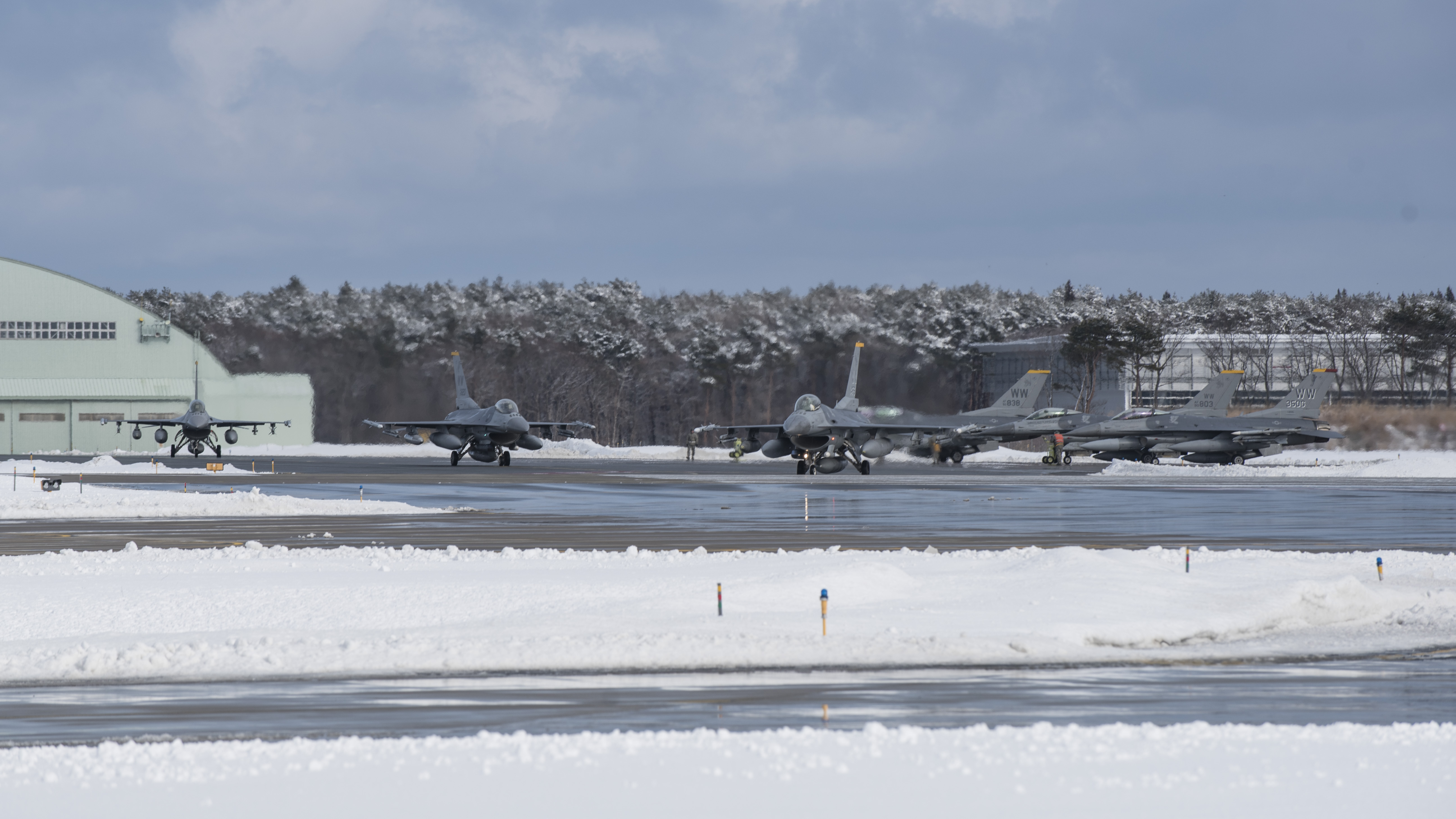
There are many worries about building military actions by North Korea such that deployments of U.S. military assets along with that of Japan, S. Korea and other nations in the region are preparing for various conditions due to continued threats by the DPRK.
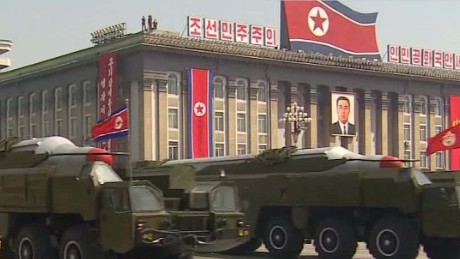
Image result for north korea sanctions CNN

There is a standing sanction program against North Korea, but they are not holding due to Africa.

JOHANNESBURG (AP) — North Korean weapons barred by U.N. sanctions ended up in the hands of U.N. peacekeepers in Africa, a confidential report says. That incident and others in more than a half-dozen African nations show how North Korea, despite facing its toughest sanctions in decades, continues to avoid them on the world’s most impoverished continent with few repercussions.

The annual report by a U.N. panel of experts on North Korea, obtained by The Associated Press, illustrates how Pyongyang evades sanctions imposed for its nuclear and ballistic missile programs to cooperate “on a large scale,” including military training and construction, in countries from Angola to Uganda.

Among the findings was the “largest seizure of ammunition in the history of sanctions” against North Korea, with 30,000 rocket-propelled grenades found hidden under iron ore that was destined for Egypt in a cargo vessel heading toward the Suez Canal. The intended destination of the North Korean-made grenades, seized in August, was not clear.

A month before that, the report says, a U.N. member state seized an air shipment destined for a company in Eritrea containing military radio communications items. It was the second time military-related items had been caught being exported from North Korea to Eritrea “and confirms ongoing arms-related cooperation between the two countries.” Eritrea is also under U.N. sanctions for supporting armed groups in the Horn of Africa.

***  Image result for north korea sanctions
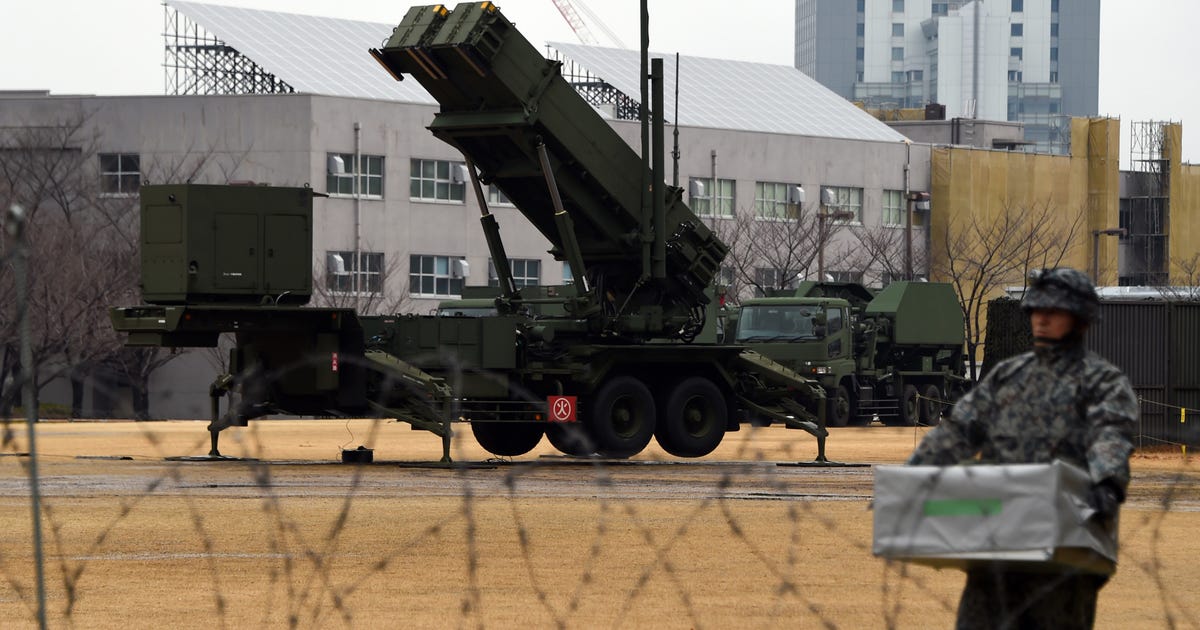
Experts point to China as the father and manager of North Korea and there is real truth to that, yet the collaborations go far beyond China, to include Iran, Syria and Russia and in some cases Egypt. Nearly all of the North Korea country’s communications and Internet traffic is routed through China. Firms that monitor that traffic say it is comparable to only about 1,000 high-speed homes in the United States. 

North Korea has intermediate-range ballistic missiles as well. North Korea has tested nuclear weapons on three occasions; Iran and Syria’s nuclear programs have raised suspicions that those countries are pursuing nuclear weapons. However, Iran has, according to the IC, halted its nuclear weapons program, and Syria does not appear to have an active nuclear weapons program.

Congress has held numerous hearings regarding these countries’ nuclear and missile programs. It has also passed legislation providing for sanctions on countries whose entities assist Iran, North Korea, and Syria to obtain weapons of mass destruction (WMD) and missile delivery systems. For example, the Iran, North Korea and Syria Nonproliferation Act (INKSNA, P.L. 106-178) imposes penalties on countries whose companies’ exports. See report here.

***

Secretary of State Rex Tillerson will warn China’s leaders that the United States is prepared to step up missile defenses and pressure on Chinese financial institutions if they fail to use their influence to restrain North Korea’s nuclear and missile programs, according to several officials involved in planning his first mission to Asia.

Reinforcing military ties, Gen. Joseph F. Dunford Jr., the chairman of the Joint Chiefs of Staff, conducted a 30-minute phone call on Tuesday with his South Korean counterpart, Gen. Lee Sun-jin. A Pentagon statement said the generals discussed the possibility that North Korea could carry out “provocative actions” during the joint American and South Korean exercises now underway, or in April when North Korean authorities commemorate the birthday of Kim Il-sung, the founder and first leader of the country.

Daniel L. Glaser, a former Treasury official who constructed many of the sanctions, and now a principal at the Financial Integrity Network, said in an interview that the largest Chinese banks often shun dealings with North Korea and that some of the smaller ones have little exposure to the American banking system. More here from the NYT’s.

Trump administration officials have signaled there will be even greater financial pressure placed on Beijing if it doesn’t cut off North Korea, a step that risks Chinese retaliation. “We are putting the world on notice: The games are over,” Commerce Secretary Wilbur Ross said while announcing the sanctions on ZTE last week. [….]

U.S. officials said Mr. Tillerson would be discussing North Korea at all his stops in Asia, including the issue of “secondary” sanctions against non-North Korean companies that have been aiding Pyongyang. “All of the existing tools that we have to try to bring pressure on North Korea are on the table, and we’ll be looking to try to see what the most effective combination is,” said a senior U.S. official briefed on the Asia trip.

Republican senators wrote Treasury Secretary Steven Mnuchin last month and called for an investigation into the Bank of China and other Chinese firms for their alleged roles in helping North Korea. [Wall Street Journal, Jay Solomon; link to senator’s letter here]

***

Nuclear Proliferation

Kumsan Trading. Member states are supposed to freeze the assets of, and expel the representatives of, companies involved in North Korean nuclear, missile, and other WMD proliferation. According to the Panel, the Korea Kumsan Trading Corporation is a front for North Korea’s General Bureau of Atomic Energy and helps it procure materials and fund its operations. Kumsan advertises itself online openly as dealing in sanctioned products, including vanadium and precious metals, with locations in both Moscow and Dandong. (Paras. 18-20.)

Korea Mining Development Trading Corp. (KOMID) is North Korea’s main arms dealer. It was designated in 2009 for WMD proliferation, but probably earns most of its revenue through violations of an embargo on conventional arms sales, by selling to governments in Africa and the Middle East. KOMID operates through multiple front companies that do business more-or-less openly in China. China is required to expel the representatives of these companies, but it almost never does. When one of them is exposed, it may revoke a business license or registration, but the operative goes right back into business under a new name at a new address. The Panel also found that at least nine KOMD representatives traveled through China in 2016, despite a requirement that member states deny them entry. (Table 8, Page 68.)

One of KOMID’s fronts is Namchongang Trading, which was designated by the U.N. in 2009 for procuring nuclear-related items. It operates openly in Beijing and Dandong, China, through several Chinese commercial websites. (Para. 156.) Namchongang has also operated as (or in cahoots with) Taeryonggang Trading, Namhung Trading, and Sobaeksu United Corporation, which operates in Beijing, Yingkou and Dandong. The EU designated Sobaeksu in 2010 for “the research and acquisition of sensitive products and equipment.” The Panel suspects that this entire network is involved with KOMID. (Paras. 156-59.) KOMID also does business through a front company called Beijing New Technology. (Para. 163.)

Another KOMID front, Korea Heungjin Trading, which was designated in 2012, for nuclear, missile, and other WMD proliferation, also operates openly in Dandong and Dalian. A North Korean diplomat posted at the embassy in Beijing serves as its director. (Para. 187-89.)

Green Pine Associated was designated by the U.N. in 2012 for its involvement in North Korea’s nuclear, missile, and other WMD programs. It’s still doing business openly in both Beijing, Shenyang, and Hong Kong as Green Pine, Natural Resources Development Investment Corporation, King Helong International Trading, Korea Unhasu Trading Company, and Saeng Pil Trading Corporation. (Paras. 166-83.) Green Pine is the company behind the attempted sale of the lithium from … guess where:

24. The Panel investigated the 2016 attempted online sale of lithium metal by the Democratic People’s Republic of Korea. The enriched lithium-6 isotope, and products or devices containing it, are on the list of prohibited nuclear-related items adopted by the Security Council (see annex 4-4). According to IAEA, lithium-6 is used to produce tritium, an isotope found in boosted nuclear devices. This sales attempt suggests that the Democratic People’s Republic of Korea has access to remaining quantities of the material.

25. Li-6 is advertised for sale by a company of the Democratic People’s Republic of Korea, General Precious Metal, which the European Union has identified as an alias of Green Pine Associated Corporation (Green Pine). Mr. Chol Yun was listed as the contact person of General Precious Metal for sale of the mineral and has an address and phone numbers in Beijing (see annex 4-5). The same name appeared as third secretary of the embassy of the Democratic People’s Republic of Korea in Beijing on an official diplomatic list dated 24 September 2012 (see annex 4-6). The Panel notes a pattern whereby the Democratic People’s Republic of Korea has accredited Green Pine overseas representatives as diplomats. The Panel continues to investigate this diplomat’s involvement in prohibited activities and his possible connection with another prohibited activity (see para. 91).

Korea Ryonha Machinery Joint Venture was designated in 2013 for WMD proliferation, mainly for buying, selling, and manufacturing machine tools used for making both conventional weapons and WMDs. It shows up in POE reports year after year because it continues to operate, and to display its wares at trade shows, in both Russia and China. In 2016, a Chinese company exported several machine tools to North Korea, and the Chinese government was reportedly investigating (!) Ryonha’s involvement. (Para. 196.)

[From the U.N. Panel’s 2014 report]

Training of scientists. The resolutions ban member states from training North Koreans in sensitive technology that could be used for North Korea’s WMD programs. The North Korean universities that train the country’s nuclear and missile scientists have exchange agreements with universities in Russia and China. The Panel asked the Chinese universities to explain, but they never responded. (Para. 135.)

Missile Proliferation

Kwangmyongsong missile parts. Someone, presumably the U.S. Navy, recovered the pieces of a Kwangmyongsong missile North Korea launched in February 2016 and found that it contained “ball bearings and engraved Cyrillic characters … identical to those from the 2012 Unha-3, and a “camera [and] EMI filter” from a “Chinese manufacturer, Beijing East Exhibition High-Tech Technology Co. Ltd.” (Paras. 57-58.) That “someone” also discovered the Pyongyang had imported pressure transmitters from the U.K. and Ireland, via the manufacturer’s distributor in China, via middlemen in China. (Para. 59.) This suggests several layers of violations — China’s failure to expel North Korean representatives of sanctioned entities, to enforce export controls, or to inspect cargo going to North Korea.

Shipment of Scud parts to Egypt. Paragraphs 71-77 of last year’s report discuss a shipment of Scud missile parts to Egypt. Since then, the Panel has determined that the whole scheme was run out of the North Korean embassy in Beijing. (Paras. 88-89.) The shipper was Ryongsong Trading Company, and the seller was Rungrado Trading Company, which you may remember for its human trafficking in Europe. Rungrado was designated by the Treasury Department last year for “the exportation of workers” from North Korea to earn foreign currency for Pyongyang, some of which went to North Korean agencies that were designated for supporting WMD programs. South Korea considers Rungrado to be an alias for Ryongsong. (FN.99.) Although the U.S. Treasury Department routinely designates aliases, it has not designated Ryongsong.

Weapons Trafficking

North Korea is subject to a U.N. embargo on the import, export, sale, or purchase of weapons, including weapons components, technology, services, training, and dual-use items. Since March, China has been required to inspect all cargo “that has originated in the DPRK, or that is destined for the DPRK, or has been brokered or facilitated by the DPRK or its nationals, or by individuals or entities acting on their behalf or at their direction, or entities owned or controlled by them, or by designated individuals or entities, or that is being transported on DPRK flagged aircraft or maritime vessels.”  (Para. 18.) Pretty clearly, that isn’t happening.

Syria rocket shipment. You’ve already read my post on this, right? Last August, Egyptian authorities seized a record haul of North Korean weapons, mostly PG-7 antitank rockets, hidden under iron ore aboard the M/V Jie Shun. I guessed that Syria was the destination because of the geography, but it’s possible that the client could have been Hamas or Hezbollah (which have also been Pyongyang’s arms clients).

This transaction also relied heavily on North Korean agents based in China. The bill of lading lists a shipper whose address is a hotel room in Dalian, a city often used by North Korean operatives. (Para. 63.) The holder of the ship’s compliance document was one Fan Mintan. A second man, Zhang Qiao, was its emergency contact, arranged for the ship’s insurance, and registered the ship’s operator in the Marshall islands. (Paras. 65-66.) Zhang is also involved in the coal trade with North Korea (para. 68), and thus played a role in violating UNSCR 2270 and 2321. He is also linked to another suspected North Korean smuggling ship, the M/V Light. A third man, Li Anshan, whom the Panel links to Ocean Maritime Management, a North Korean shipping company designated by the U.N. for arms smuggling, helped arrange for the Jie Shun’s Cambodian registration.

Eritrea radios shipment and Glocom. I previously posted about Glocom, the Reconnaissance General Bureau front company that manufactured sophisticated military radios and was based in Malaysia. Glocom made headlines after it was exposed just after the assassination of Kim Jong-nam. Starting at Paragraph 72 of its report, the Panel described how Glocom shipped radios to Eritrea. According to the Panel, that shipment “originated in China.”

75. The air waybills listed the shipper as Beijing Chengxing Trading Co. Ltd. According to the Chinese business registry, the company is still active, mainly trading in electronics, mining equipment and machinery (see annex 8-3). Mr. Pei Minhao (???) was listed as a legal representative until 26 February 2016 and still owns most shares in the company (see para. 164).

Glocom had North Korean representatives based in both Malaysia and China; had bank accounts, front companies, and procurement agents in both Malaysia and China; used mostly Chinese suppliers; and shipped its components to Beijing or Dandong for assembly (the report didn’t specify where). (Para. 77-84, 164.) Glocom did most of its business in U.S. dollars or euro through a sanctioned bank, Daedong Credit Bank, “to transfer funds to a supply chain of more than 20 companies located primarily on the Chinese mainland; in Hong Kong, China; and in Singapore.” (Paras. 233-25.)

Naval vessel repair & construction. Last year, the Panel reported that Green Pine had refurbished military patrol boats for Angola in violation of the arms embargo. The parts were shipped from China, the Panel has asked China for an explanation, and China still hasn’t given one. (Para. 103.)

North Korean UAV that crashed in South Korea. A Beijing company, Microfly Engineering and Technology, made it. After that, the trail leads to another Chinese company and two middlemen, who either point fingers at one another or deny all involvement. The Panel asked China to investigate, but China hasn’t responded. (Para. 107.)  More here to FreeKorea, remarkable work.

 

Shady Globalism Hurts Personally When it Involves Water

We witnessed the Flint, Michigan water crisis, where it was just safe to drink and few cared until they did. The water crisis goes far beyond Michigan where drinking water and water for showers, cooking and washing clothes is just not safe. Gray or used water is scooped to flush toilets. Where you ask? California and it was not due to the 5 year drought. The crisis goes beyond California, it is in Arizona and the corn/wheat belt in the middle of the country.

Really? How does globalism fit into the issue?

Big corporations, Wall Street and Hedge Funds as well as Saudi Arabia and Qatar are part of the crisis.

Individual farmers and small agriculture business has faded away, sold out to big Agri-corporations where offers to buy the land is a cover as the water and aquifers are more valuable. Water is the new gold or oil. Urban and suburban areas, just plain people are paying the price to save water for the sake of water to be available for bigger operations. In fact it is so bad, domestic and foreign interests are pumping water in one location and transferring via privately owned pipe to locations up to and perhaps more than 100 miles away.

When it comes to the EPA controlling water access and use, the agency was not wrong but it was actually wrong for reasons far beyond the headlines. The EPA is protecting, controlling and managing water not for the individual but rather for Wall Street firms and foreign investments.

The EPA is not the only agency, it includes the Department of Agriculture. Trump’s nominee for Secretary of Agriculture, Sonny Perdue has not yet been confirmed however Scott Pruitt has been confirmed as Secretary of the EPA.

Saudi Arabia

Exports of U.S. food and agricultural products to Saudi Arabia reached a record $1.5 billion in fiscal year 2014. Major exports include coarse grains, soybeans, dairy products, and vegetable oils.

In September 2012, the United States signed a trade and investment framework agreement (TIFA) with the Gulf Cooperation Council (which includes Saudi Arabia, as well as the United Arab Emirates, Kuwait, Qatar, Oman and Bahrain) to continue expanding and liberalizing trade relations. More here.

Trade is a good thing for sure for farmers but the little guy is shut out of the trade system due to access of water and volume. The United States is feeding the Middle East.

The Office of Agricultural Affairs (OAA) is part of the U.S. Department of Agriculture’s Foreign Agricultural Service (FAS), which has 93 offices covering 171 countries

OAA promotes and facilitates exports of U.S. agricultural products to Saudi Arabia and Bahrain.

OAA promotes exports of U.S. agricultural products by:

  • Conducting and participating in market development activities with non-profit U.S. high value food product and commodity trade associations.
  • Hosting trade promotion events.
  • Identifying possible opportunities for U.S. products, and placing potential importers in contact with U.S. exporters.
  • Recruiting representatives of Saudi food and agricultural product importers to attend major regional and U.S. based food and agricultural shows.
  • Providing match making and trade lead services.

OAA facilitates the export of U.S. agricultural products by:

  • Reporting on market opportunities and conditions.
  • Resolving trade policy issues by working with the governments of the Kingdom of Saudi Arabia and Bahrain, and with the Gulf Standardization Organization (GSO).
  • Counseling and informing exporters and importers of U.S. agricultural products.
  • Developing and maintaining contacts in the food, logistics and agriculture sectors.
  • Coordinating workshops, technical seminars, and other events with non-profit U.S. commodity trade associations and other organizations.

***

The Middle Eastern kingdom, Saudi Arabia, needs hay for its 170,000 cows. So, it’s buying up farmland for the water-chugging crop in the drought-stricken American Southwest. 14,000 acres to be exact. Almarai Co. bought land in January that roughly doubled its holdings in California’s Palo Verde Valley, an area that enjoys first dibs on water from the Colorado River. The company also acquired a large tract near Vicksburg, Arizona, becoming a powerful economic force in a region that has fewer well-pumping restrictions than other parts of the state.

“Southern California and Arizona have good water rights. Who knows if that will change, but that’s the way things are now,” said Daniel Putnam, an agronomist at the University of California, Davis.

Over the last decade, Saudi Arabia and the United Arab Emirates emerged as significant buyers of American hay as their governments moved to curb water use. Together they accounted for 10 percent of U.S. exports of alfalfa and other grasses last year.

The land purchases signal that Almarai doesn’t just want to buy hay; it wants to grow. And it’s not the only Arab-owned Gulf company to take that approach.

Al Dahra ACX Global Inc., a top U.S. hay exporter based in Bakersfield, California, is owned by Al Dahra Agriculture Co. of United Arab Emirates. It farms extensively in Southern California and Arizona and, according to its website, plans to add 7,500 acres in the United States for alfalfa and other crops. The exporter packages crops grown across the West at its two plants in California and one in Washington state.

Most of the farms that Arab companies own worldwide are in developing nations. For instance, Qatar’s sovereign wealth fund has holdings in Latin America and Africa.

But part of the kingdom’s long-term food security strategy means investing in higher-cost countries with greater political stability, said John Lawton, owner of Agriculture Technology Co., a farming company in Saudi Arabia.  More here from CSMonitor.

*** What about household use of water that is not drinkable?

The problem is that the groundwater it is using is unsafe for nearly 800,000 residents, according to the state’s water resources control board, because of longtime contamination from nitrates and arsenic.

That’s meant less drinkable water in California’s struggle to survive more than three years of severely dry weather.

“Most areas affected by contamination don’t have surface water supplies so they have to find new groundwater sources,” said Kurt Souza, a branch chief of the division of drinking water at the California State Water Resources Control Board.

“But that’s not always easy to do,” Souza added. “Sometimes you can find new ground locations for water and sometimes you can’t.”

The lack of rain and subsequent heavy demand on ground wells—which are also facing supply problems—is making a bad situation worse, said Sara Aminzadeh, executive director of the California Coastkeeper Alliance, a statewide advocacy group for safe water. According to the state water resources study, unsafe levels of arsenic are the top contaminant in groundwater supplies, followed by nitrates.

Nitrates are most often traced to farming chemicals and animal waste. Arsenic is found naturally in soil and rock in much of the world and seeps into groundwater.

Chronic low exposure to arsenic has been traced to respiratory problems in children and adults as well as having links to diabetes, cardiovascular diseases and cancers of the skin. More here from NBC, video included.

For more confusion on the shadiness of the whole thing, here are a few additional items. If it is going on in California, perhaps we need to investigate and ask the same questions in other farming regions of the country. Then perhaps we need deeper research out of the EPA and the Department of Agriculture where most of this gained additional traction and success under the Obama administration.

By the way, it was never really about that pesky Delta Smelt fish that the other environmentalists were trying to protect. That was a cover story.

  • The Monterey Amendment: Monterey Amendment ended up in court, challenged by the Planning and Conservation League, Citizens Planning Association of Santa Barbara County, and a small SWP contractor, the Plumas County Flood Control and Water Conservation District.In 2000, a state appeals court agreed with the challengers that the Environmental Impact Report for the amendment did not analyze provisions for completion of the SWP or permanent water shortages.

    In 2003, a settlement was reached that called for preparation of a new EIR, more detailed reporting of the project’s actual delivery capability and public participation on any project amendments.

    DWR in 2007 released a draft EIR, which discusses the project alternatives, growth inducement, water supply reliability, as well as potential areas of controversy and concern. The final EIR was released in 2009. DWR decided to continue to operate the SWP under the existing Monterey Amendment to the SWP long-term water supply contracts, including the Kern Water Bank transfer, and under the Settlement Agreement entered in PCL v. DWR. DWR’s decision was challenged by two groups of plaintiffs on issues relating to the adequacy of the EIR and the validity of the Monterey Amendment. The cases are currently being heard by the trial court. Final resolution of the issues is likely to take a number of years.

  • Roll International Corporation/Kern Water Bank: The Wonderful Company LLC, formerly known as Roll Global, is a private corporation based in Los Angeles, California. With revenues of over $4.8 billion,[1] it functions as a holding company for Stewart and Lynda Resnick, and as such is a vehicle for their personal investments in a number of businesses. The company currently counts as business divisions the following brands: flower delivery service Teleflora, juice company POM Wonderful, bottled water company FIJI Water, Wonderful Pistachios and Wonderful Almonds (formerly Paramount Farms), Wonderful Citrus (formerly Paramount Citrus), sea freight company Neptune Pacific Line, JUSTIN Vineyards and Winery, pest control company Suterra, and in-house marketing agency Wonderful Agency
  • Paramount Farming: Paramount Farming Company, LLC produces almonds, pistachios, and pomegranates in California. It also offers pomegranate, mango, tangerine, blueberry, and cherry juices. The company was founded in 1986 and is headquartered in Bakersfield, California. Paramount Farming Company, LLC operates as a subsidiary of Roll International Corporation.
  • Westside Mutual Water Co., LLC.
  • IN 2014, California will establish statewide management of water pumped from the ground, under legislation signed Tuesday by Gov. Jerry Brown. This really limits household usage and benefits big farming entities.
  • California is sinking even faster than scientists had thought, new NASA satellite imagery shows. Some areas of the Golden State are sinking more than 2 inches (5.1 centimeters) per month, the imagery reveals. Though the sinking, called subsidence, has long been a problem in California, the rate is accelerating because the state’s extreme drought is fueling voracious groundwater pumping. California Sinking Faster Than Thought, Aquifers Could Permanently Shrink
    New NASA imagery reveals that parts of California are sinking at an astonishing rate, with some parts of the San Joaquin Valley sinking as much as 2 inches per month.

    Credit: Canadian Space Agency/NASA/JPL-Caltech

    Editor’s Note: This story was updated at 2:00 p.m. E.T.

    California is sinking even faster than scientists had thought, new NASA satellite imagery shows.

    Some areas of the Golden State are sinking more than 2 inches (5.1 centimeters) per month, the imagery reveals. Though the sinking, called subsidence, has long been a problem in California, the rate is accelerating because the state’s extreme drought is fueling voracious groundwater pumping. 

    “Because of increased pumping, groundwater levels are reaching record lows — up to 100 feet (30 meters) lower than previous records,” Mark Cowin, director of California’s Department of Water Resources, said in a statement. “As extensive groundwater pumping continues, the land is sinking more rapidly, and this puts nearby infrastructure at greater risk of costly damage.” [It’s Raining Spiders! The Weirdest Effects of California’s Drought]

    What’s more, this furious groundwater pumping could have long-term consequences. If the land shrinks too much, and for too long, it can permanently lose its ability to store groundwater, the researchers said.

    The state’s sinking isn’t new: California has long suffered from subsidence, and some parts are now a few dozen feet lower than they were in 1925, according to the U.S. Geological Survey.

    But the state’s worst drought on record — 97 percent of the state is facing moderate to exceptional drought — has only accelerated the trend. To quantify this accelerated sinking, researchers at the Department of Water Resources and NASA’s Jet Propulsion Laboratory in Pasadena, California, compared satellite imagery of California over time. Thanks to images taken from both satellites and airplanes using a remote-sensing technique called interferometric synthetic aperture radar (InSAR), which uses radar to measure elevation differences, researchers can now map changes in the surface height of the ground with incredible precision. For the current study, the team stitched together imagery from Japan’s satellite-based Phased Array type L-band Synthetic Aperture Radar and Canada’s Earth Observation satellite Radarsat-2, as well as NASA’s airplane-based Uninhabited Aerial Vehicle Synthetic Aperture Radar.

    Certain hotspots are shrinking at an astonishing rate — regions of the Tulare Basin, which includes Fresno, sank 13 inches (33 cm) in just eight months, they found. The Sacramento Valley is sinking about 0.5 inches (1.3 cm) per month. And the California Aqueduct — an intricate network of pipes, canals and tunnels that funnels water from high in the Sierra Nevada mountains in northern and central California to Southern California — has sunk 12.5 inches (32 cm), and most of that was just in the past four months, according to the new study.

    The unquenchable thirst for groundwater in certain regions is largely a result of agriculture: Most of the state’s agricultural production resides in the fast-sinking regions around some of the state’s most endangered river systems — the San Joaquin and Sacramento rivers. As the heat and lack of rainfall have depleted surface-water supplies, farmers have turned to groundwater to keep their crops afloat.

    Subsidence isn’t just an aesthetic problem; bridges and highways can sink and crack in dangerous ways, and flood-control structures can be compromised. In the San Joaquin Valley, the sinking Earth has destroyed the outer shell around thousands of privately drilled wells.

    “Groundwater acts as a savings account to provide supplies during drought, but the NASA report shows the consequences of excessive withdrawals as we head into the fifth year of historic drought,” Corwin said. “We will work together with counties, local water districts, and affected communities to identify ways to slow the rate of subsidence and protect vital infrastructure such as canals, pumping stations, bridges and wells.”


Does the White House Know ‘all’ about North Korea?

Check your personal cell phone, who manufactured it… ZTE is the No. 4 smartphone vendor in the United States, selling handset devices to U.S. mobile carriers AT&T Inc (T.N), T-Mobile US Inc (TMUS.O) and Sprint Corp (S.N).

Since 1995, the United States has provided North Korea with over $1.2 billion in assistance, of which about 60% has paid for food aid and about 40% for energy assistance. As of early March 2010, the United States is not providing any aid to North Korea, except for a small medical assistance program. The Obama Administration, along with the South Korean government, have said that they would be willing to provide large-scale aid if North Korea takes steps to irreversibly dismantle its nuclear program. The main vehicle for persuading Pyongyang to denuclearize is the Six-Party Talks, involving North Korea, the United States, China, South Korea, Japan, and Russia. The Talks have not met since late 2008.

North Korea did not militarily threaten the region until the Obama administration. Since, North Korea has taken exceptional steps in the realm of illicit activities, collusion, theft and shadow companies to finesse sanctions. China is essentially in the diplomatic field responsible for checks and balances on North Korea and once again is calling for a truce of sorts. This objective is not new and has failed each time.

Enter Japan, where the Prime Minister, Shinzo Abe who has been in contact with the White House is escalating responsive military actions against North Korea. This could lead to a much more hostile region. It seems that the recent missile launches coordinated with Iran are part of a mission to strike U.S. bases in the region. There are 3 of distinction, however the United States maintains additional joint locations.

Image result for us military bases in japan 2017 Image result for us military bases in japan 2017

Rattled by North Korean military advances, influential Japanese lawmakers are pushing harder for Japan to develop the ability to strike preemptively at the missile facilities of its nuclear-armed neighbor.

Japan has so far avoided taking the controversial and costly step of acquiring bombers or weapons such as cruise missiles with enough range to strike other countries, relying instead on its U.S. ally to take the fight to its enemies.

But the growing threat posed by Pyongyang, including Monday’s simultaneous launch of four rockets, is adding weight to an argument that aiming for the archer rather than his arrows is a more effective defense.

“If bombers attacked us or warships bombarded us, we would fire back. Striking a country lobbing missiles at us is no different,” said Itsunori Onodera, a former defense minister who heads a ruling Liberal Democratic Party committee looking at how Japan can defend against the North Korean missile threat. “Technology has advanced and the nature of conflict has changed.”

*** Meanwhile, as an indication of illicit activities and fraud, below is a sample.

China’s ZTE pleads guilty, settles with U.S. over Iran, North Korea sales

NEW YORK (Reuters) – Chinese telecom equipment maker ZTE Corp <000063.SZ> has agreed to pay $892 million and plead guilty to criminal charges for violating U.S. laws that restrict the sale of American-made technology to Iran and North Korea.

While a guilty plea deals a blow to ZTE’s reputation, the resolution could lift some uncertainty for a company that relies on U.S. suppliers for 25 percent to 30 percent of its components.

A five-year investigation found ZTE conspired to evade U.S. embargoes by buying U.S. components, incorporating them into ZTE equipment and illegally shipping them to Iran.

In addition, it was charged in connection with 283 shipments of telecommunications equipment to North Korea.

“ZTE Corporation not only violated export controls that keep sensitive American technology out of the hands of hostile regimes like Iran’s, they lied … about their illegal acts,” U.S. Attorney General Jeff Sessions said in a statement.

The investigation, spearheaded by the U.S. Department of Commerce, followed reports by Reuters in 2012 that ZTE had signed contracts to ship millions of dollars worth of hardware and software from some of the best-known U.S. technology companies to Iran’s largest telecoms carrier.

The Justice Department noted one Reuters article in its statement announcing the plea deal on Tuesday. The original report can be read here: http://www.reuters.com/article/us-iran-telecoms-idUSBRE82L0B820120322.

The company’s guilty pleas, which must be approved by a judge, will take place in U.S. District Court in Texas. The Shenzhen-based company has a U.S. subsidiary in Richardson, Texas.

In March 2016, ZTE was placed on a list of entities that U.S. firm could not supply without a license. ZTE acted contrary to U.S. national security or foreign policy interests, the Commerce Department said at the time.

ZTE purchases about $2.6 billion worth of components a year from U.S. technology companies, according to a company spokesman. Qualcomm (QCOM.O), Microsoft (MSFT.O) and Intel (INTC.O) are among its suppliers.

Items shipped in violation of U.S. export laws included routers, microprocessors and servers controlled under export regulations.

Authorities said executives at ZTE approved the scheme to prevent disclosure of the sales. The scheme included a data team that destroyed or sanitized materials involving ZTE’s Iran business after March 2012.

“Despite ZTE’s repeated attempts to thwart the investigation, the dogged determination of investigators uncovered damning evidence,” said Douglas Hassebrock, director of the Commerce Department office that led the investigation.

Last year, Commerce released internal documents showing senior ZTE executives instructing the company to carry out a project for dodging export controls in Iran, North Korea, Syria, Sudan and Cuba.

The company on Tuesday agreed to a seven-year suspended denial of export privileges, which could be activated if there are further violations. A denial order would bar the receipt of U.S. origin goods and technology.

The denial order is key to keeping ZTE in line, said Eric Hirschhorn, former Under Secretary at the Commerce Department, who was involved in the investigation.

“If the suspension is removed, they’ll probably be put out of business,” he said.

ZTE also agreed to three years of probation, a compliance and ethics program, and a corporate monitor.

The settlement includes a $661 million penalty to Commerce; $430 million in combined criminal fines and forfeiture; and $101 million paid to the Treasury’s Office of Foreign Assets Control (OFAC). The action marks OFAC’s largest-ever settlement with a non-financial entity.

ZTE also agreed to an additional penalty of $300 million to the U.S. Commerce Department that will be suspended during a seven-year term on the condition the company complies with requirements in the agreement.

In addition to being one of the world’s biggest telecommunications gear makers, ZTE is the No. 4 smartphone vendor in the United States, selling handset devices to U.S. mobile carriers AT&T Inc (T.N), T-Mobile US Inc (TMUS.O) and Sprint Corp (S.N).