An affordable price is probably the major benefit persuading people to buy drugs at www.americanbestpills.com. The cost of medications in Canadian drugstores is considerably lower than anywhere else simply because the medications here are oriented on international customers. In many cases, you will be able to cut your costs to a great extent and probably even save up a big fortune on your prescription drugs. What's more, pharmacies of Canada offer free-of-charge shipping, which is a convenient addition to all other benefits on offer. Cheap price is especially appealing to those users who are tight on a budget
Service Quality and Reputation
Although some believe that buying online is buying a pig in the poke, it is not. Canadian online pharmacies are excellent sources of information and are open for discussions. There one can read tons of users' feedback, where they share their experience of using a particular pharmacy, say what they like or do not like about the drugs and/or service. Reputable online pharmacy canadianrxon.com take this feedback into consideration and rely on it as a kind of expert advice, which helps them constantly improve they service and ensure that their clients buy safe and effective drugs. Last, but not least is their striving to attract professional doctors. As a result, users can directly contact a qualified doctor and ask whatever questions they have about a particular drug. Most likely, a doctor will ask several questions about the condition, for which the drug is going to be used. Based on this information, he or she will advise to use or not to use this medication.
China has been an aggressor when it comes to Taiwan. The two nations have had separate governments since 1949 but under Chinese President Xi, he is determined to have full dominion over the small island nation. Major threats have been prevalent in recent years by China and President Trump took action more than a year ago.
In the last few days, more than 150 Chinese aircraft have challenged Taiwan airspace by flying into the Taiwan Air Defense Zone.
On October 1, China’s National Day, two waves of aircraft flew near Taiwan’s airspace; the first maneuver included 25 jets, and the second one involved an additional 13 planes. In total, the aerial flotilla included 28 Shenyang J-16 multirole fighters, six Russian-made Su-30 multirole fighters, two Xian H-6 long-range bombers, one Shaanxi Y-8 anti-submarine warfare plane, and one Shaanxi KJ-500 airborne early warning aircraft.
And then there were more in the days following.
Yet, Taiwan did respond.
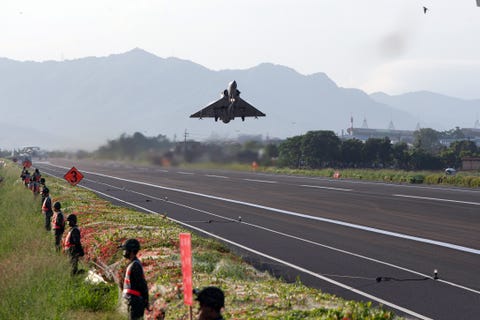
Taiwan’s air force is trained to resist invasion, including operating from strips of highway if air bases are rendered inoperable.
Twitter/ROC Ministry of Defense
***
The Trump administration is said to be encouraging Taipei to purchase dozens of F-16s, a sale that, like other major arms deals, would require congressional approval. The last time the United States sold these fighter jets to Taiwan was 1992. If the sale goes through, it would mark another departure from the Obama administration, which declined to sell the jets to avoid escalating tensions with Beijing. But experts say a sale would be put on hold until after the United States seals a trade deal with China.
WSJ: A U.S. special-operations unit and a contingent of Marines have been secretly operating in Taiwan to train military forces there, U.S. officials said, part of efforts to shore up the island’s defenses as concern regarding potential Chinese aggression mounts.
About two dozen members of U.S. special-operations and support troops are conducting training for small units of Taiwan’s ground forces, the officials said. The U.S. Marines are working with local maritime forces on small-boat training. The American forces have been operating in Taiwan for at least a year, the officials said.
The U.S. special-operations deployment is a sign of concern within the Pentagon over Taiwan’s tactical capabilities in light of Beijing’s yearslong military buildup and recent threatening moves against the island.
The special-operations unit and the Marine contingent are a small but symbolic effort by the U.S. to increase Taipei’s confidence in building its defenses against potential Chinese aggression. Current and former U.S. government officials and military experts believe that deepening ties between U.S. and Taiwan military units is better than simply selling Taiwan military equipment.
The U.S. has sold Taiwan billions of dollars of military hardware in recent years, but current and former officials believe Taiwan must begin to invest in its defense more heavily, and smartly.
“Taiwan badly neglected its national defense for the first 15 years or so of this century, buying too much expensive equipment that will get destroyed in the first hours of a conflict, and too little in the way of cheaper but lethal systems—antiship missiles, smart sea mines and well-trained reserve and auxiliary forces—that could seriously complicate Beijing’s war plans,” said Matt Pottinger, a distinguished visiting fellow at Stanford University’s conservative Hoover Institution who served as a deputy national security adviser during the Trump administration.
Primer question: Will social media shut down this article? It has evidence and comes from renowned scientists including at MIT.
Back in early 2020, during the middle of the nationwide lockdown, this site published two items, here and here regarding the Wuhan Institute of Virology and that bats were in fact at the center of the cause of the pandemic.
Recently, former President Trump told media that the United States should demand at least $10 trillion from China due to the various forms of destruction and death by China. He is right. Frankly, the United States should declare all the debt load that China carries in the form of loans for the United States paid in full. Further, President Trump was exactly right to defund the World Health Organization and in fact it should be criminally charged for death and destruction.
*** The WIV had been genetically sequencing the mine virus in 2017 and 2018, analyzing it in a way they had done in the past with other viruses in preparation for running experiments with them.
For years, concerned scientists have warned that this type of pathogen research was going to trigger a pandemic. Foremost among them was Harvard epidemiologist Marc Lipsitch, who founded the Cambridge Working Group in 2014 to lobby against these experiments. In a series of policy papers, op-eds, and scientific forums, he pointed out that accidents involving deadly pathogens occurred more than twice a week in U.S. labs, and estimated that just 10 labs performing gain-of-function research over a 10-year period would run a nearly 20 percent risk of an accidental release. In 2018, he argued that such a release could “lead to global spread of a virulent virus, a biosafety incident on a scale never before seen.”
Thanks in part to the Cambridge Working Group, the federal government briefly instituted a moratorium on such research. By 2017, however, the ban was lifted and U.S. labs were at it again. Today, in the United States and across the globe, there are dozens of labs conducting experiments on a daily basis with the deadliest known pathogens. One of them is the Wuhan Institute of Virology. For more than a decade, its scientists have been discovering coronaviruses in bats in southern China and bringing them back to their lab in Wuhan. There, they mix genes from different strains of these novel viruses to test their infectivity in human cells and lab animals. source
Now we appear to have video evidence that came from an Australian media source.
As a reminder, the United States was not the only country that not only gave funding to ‘gain of function’ to the WIV but Australia did as well. More research paper summaries are surfacing as well as additional evidence that includes patent applications. The scientific theory now is that the WIV modeled the function of the virus to be more lethal in the transmission of human to human, altering it from animal to human.
So, where is Dr. Fauci on this? His emails did not include anything that resembled an inquiry of gain of function or bats.
that is a bat hanging off the lab workers hat.
***
The Wuhan Institute of Virology (WIV) was found to have filed patents for “bat rearing cages” and “artificial breeding” systems in the months before the coronavirus first emerged last December. WIV has been subject to international scrutiny as it was known to have been carrying out experiments on bat coronaviruses – and is located just miles from Covid’s ground zero.
And the allegations continue despite the World Health Organisation appearing to exonerate the lab in its findings after a mission to Wuhan – which since been branded a “whitewash”.
The new revelations about the bat cages raises more questions about the work the Chinese scientists – lead by Dr Shi Zhengli, known as Batwoman – were doing in the months leading up to the pandemic.
It had previously been denied that WIV was keeping any live bats on site – but an online profile of the lab reportedly claimed it has capacity to keep 12 bat cages.
WIV scientists filed patents in June 2018 and October 2020 for the cages and methods for breeding of bats, which are believed to be the natural reservoir of Covid.
The first patent was filed for “bat rearing cages” which would be “‘capable of healthy growth and breeding under artificial conditions”, reports the Mail on Sunday.
And the second patent relates to a method of “artificially breeding” of wild bats, and in the document it describes bats being “artificially” infected with coronaviruses.
It explains it is hoped the breeding scheme will allow them to create a “brand-new model experimental animal for scientific research”.
The patents raise yet further questions about the work of the shadowy lab which has been accused by the US of having links to the Chinese military.
It comes as the White House said it has “deep concerns” that the Chinese government may have interfered with WHO’s investigation into the origins of Covid.WHO investigator Peter Daszak, who has longstanding links with WIV, had previously claimed no live bats were being kept by the lab.
Last April, he said: “All bats are released back to their cave site after sampling. It’s a conservation measure and is much safer in terms of disease spread than killing them or trying to keep them in a lab.”
In December, he appeared to repeat the claim by stating labs he had worked with “DO NOT have live or dead bats in them. There is no evidence anywhere that this happened”.
Daszak had been a member of the ten-person WHO team who swung its weight behind the Chinese government’s effort to deflect blame over the origins with the virus.
The team all but ruled out the lab leak, suggested the virus may have come from outside of China, and appeared to place their focus on claims the virus may have come from frozen food.And then just days later, WHO investigator Dominic Dwyer backtracked as he said it likely did start in China, and later claimed the Communist Party authorities refused to hand over raw data.
He said: “Why that doesn’t happen, I couldn’t comment. Whether it’s political or time or it’s difficult .
“But whether there are any other reasons why the data isn’t available, I don’t know. One would only speculate.”
The WHO mission was tightly controlled and stage managed by China – and even saw the scientists visits a propaganda museum celebrating Wuhan’s fight against Covid.
The organisation itself is also facing questions about how it handled the early days of the pandemic, being accused by former US President Donald Trump of being “China-centric”.
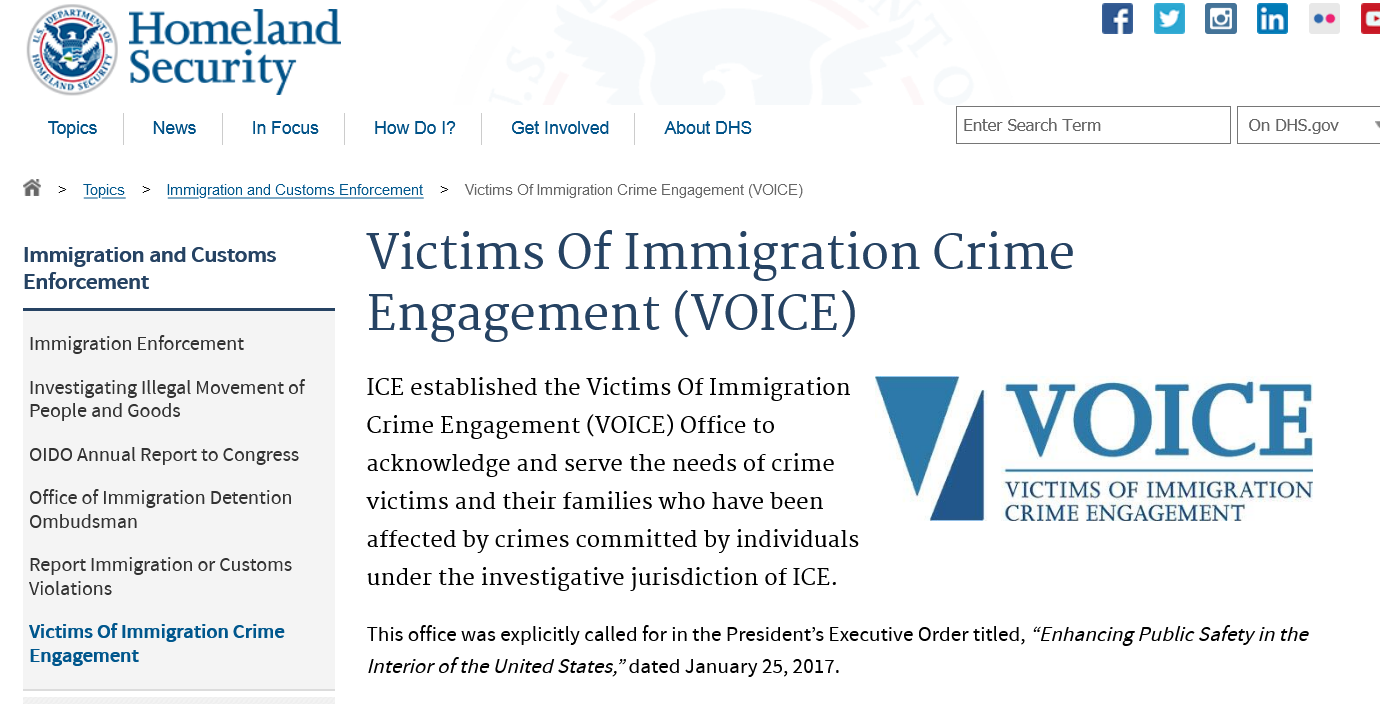
On Friday, the Biden administration announced that it would be closing a government office set up to help victims of crimes committed by immigrants, to be replaced with an office aiding in immigration services, according to the Associated Press.
Created by the Trump administration during his first week in office, the Victim Of Immigration Crime Engagement Office, or VOICE, would be replaced with what the US Immigration and Customs enforcement called a “more comprehensive and inclusive victim support system.”Replacing VOICE is the The Victims Engagement and Services Line, “which will combine longstanding existing services, such as methods for people to report abuse and mistreatment in immigration detention centers and a notification system for lawyers and others with a vested interest in immigration cases,” writes AP.(the website of VOICE before it was closed)“The new office will add a service for potential recipients of visas designated for victims of human trafficking or violent crimes in the United States,” they continue
“Providing assistance to society’s most vulnerable is a core American value. All people, regardless of their immigration status, should be able to access victim services without fear,” said Homeland Security Secretary Alejandro Mayorkas.On Twitter Friday, Stephen Miller slammed the decision to close the office, stating “law enforcement is now forced to aid lawmakers.”**
Biden just closed the DHS office that serves American victims of illegal alien crime (VOICE). It is replaced by a new office to help illegal aliens access free gov’t services, benefits & legal counsel. Law enforcement is now forced to aid lawbreakers. 1/2 https://t.co/lPrZtZfloN
This is in addition to all of the free help illegal aliens already get from mega-billionaires, the ACLU & powerful special interests. Americans have become second-class citizens in their own country. And grief-stricken families, mourning loved ones, are the collateral damage. 2/2
“This is in addition to all of the free help illegal aliens already get from mega-billionaires, the ACLU & powerful special interests. Americans have become second-class citizens in their own country. And grief-stricken families, mourning loved ones, are the collateral damage,” Miller continued.According to the Associated Press, Miller stating that opening the new office would be like the DEA opening “a call center to help drug dealers get lawyers and amnesty for their crimes.” The Department of Homeland Security “is a law enforcement agency, not a legal help center for criminals and lawbreakers.”
There have been several unanimous decisions out of the Supreme Court lately and this one is curious. The progressive Jurist Elena Kagan wrote this on regarding immigrants obtaining a green cards status….simple description….NO, they can’t have one.
Sounds good…but hold on.
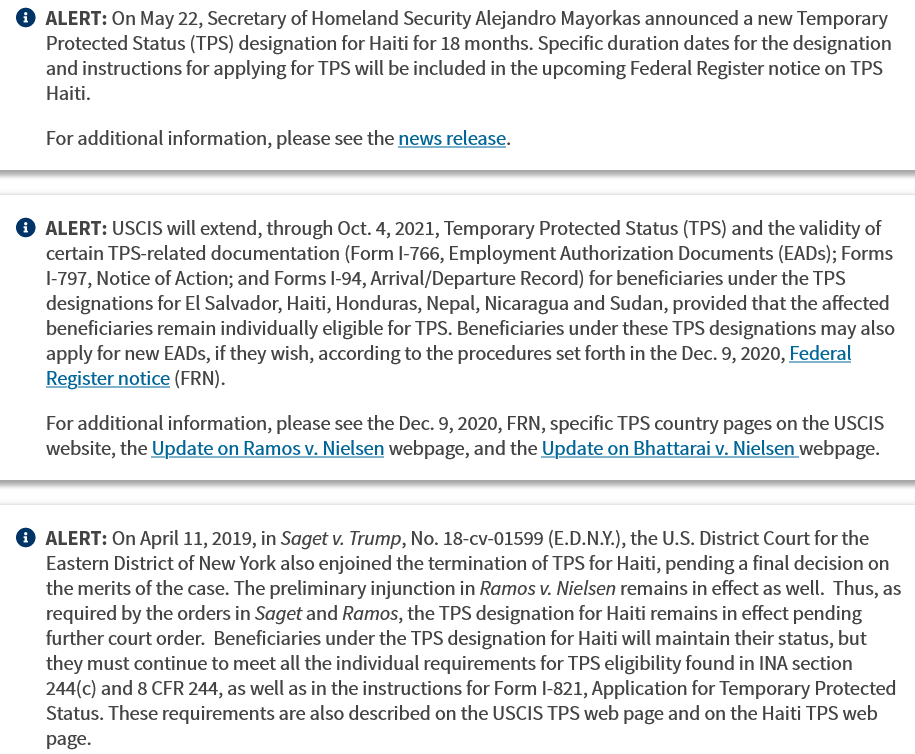
And remember –> The Trump administration has ordered an end to TPS benefits for nearly all immigrants who had them, stating that the program is meant to provide temporary rather than long-term relief. But a series of lawsuits challenging the administration’s decision have blocked those orders from taking effect, giving the vast majority of these immigrants a reprieve until early 2021.
The Supreme Court on Monday dealt a setback to hundreds of thousands of immigrants who have so-called temporary protected status, ruling they can’t have a green card if they entered the country illegally.
That means TPS recipients who entered the county legally as students or tourists, and stayed under TPS may obtain a green card, said Justice Elena Kagan. But the same is not true of those who entered illegally.
“Because a grant of TPS does not come with a ticket of admission,” she wrote in Sanchez vs. Mayorkas, “it does not eliminate the disqualifying effect of an unlawful entry.”
Temporary protected status has been extended to about 320,000 immigrants from El Salvador, Haiti, Honduras, Nepal, Nicaragua and Sudan.
But lower courts had been divided over whether these migrants, many of whom have lived here for decades, may apply for and receive lawful permanent status. Four years ago, the 9th Circuit Court in California ruled that TPS recipients were eligible for green cards even if they entered the country illegally.
The case decided by the Supreme Court began when Jose Sanchez and his wife, Sonia Gonzalez, sought green cards. They arrived from El Salvador in the late 1990s, established lives and careers in New Jersey and had four sons. But they were not lawfully admitted.
Kagan said Congress is considering legislation that would allow such TPS recipients to obtain lawful permanent resident status, but only Congress, not the court, can change the law in this respect.
“Sanchez was not lawfully admitted, and his TPS does not alter that fact,” she wrote. “He therefore cannot become a permanent resident of this country.”
***
When can the Secretary designate a country for TPS?
The Secretary can designate a country for TPS due to:
Ongoing armed conflict (such as civil war),
An environmental disaster (such as earthquake or hurricane), or an epidemic, or
Other extraordinary and temporary conditions.
Who is eligible for TPS?
TPS can be granted to an individual who is a national of a designated country, has filed for status during a specified registration period, and who has been continuously physically present in the U.S. since a designated date.
What are the benefits of TPS?
During a designated period, TPS holders are:
Not removable from the U.S. and not detainable by DHS on the basis of his or her immigration status,
Eligible for an employment authorization document (EAD), and
Eligible for travel authorization.
How many individuals are currently granted TPS?
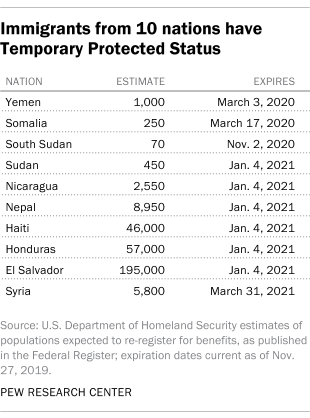
The U.S. currently provides TPS to over 400,000 foreign nationals from the following countries, not including individuals from Venezuela and Burma as they were just recently designated:
TPS holders reside all over the United States. The largest populations of TPS holders live in California (17.95%), Florida (13.75%), Texas (12.88%), New York (12.33%), and Virginia (6.75%). Most TPS holders from El Salvador live in the Washington, DC (32,359), Los Angeles (30,415) and New York (23,168) metropolitan areas. Honduran TPS holders live mostly in the New York (8,818), Miami (7,467) and Houston (6,060) metropolitan areas. Haitian TPS holders live mainly in the Miami (16,287), New York (9,402) and Boston (4,302) metropolitan areas. source
We have no idea how many people have been granted TPS, there are only estimates as noted here.
It is prudent to review several sources for the real evidence and details and most often non-government companies are the ‘go-to’ places for that. Government spins stuff but private cyber experts offer up great context and such is the case below.
The US Cybersecurity and Infrastructure Security Agency (CISA) has issued an Alert that offers a set of best practices to protect against ransomware-induced business disruptions. The Alert was prompted by the attack against Colonial Pipeline, and it includes in its introductory section the preliminary conclusion that DarkSide ransomware affected Colonial’s IT systems only, and had no direct effect on the company’s OT networks. The best practices CISA advocates are familiar. The Alert closes with a statement strongly discouraging any victim from paying the ransom their attackers demand: “Paying a ransom may embolden adversaries to target additional organizations, encourage other criminal actors to engage in the distribution of ransomware, and/or may fund illicit activities. Paying the ransom also does not guarantee that a victim’s files will be recovered.”
FireEye yesterday published a report on DarkSide that emphasizes the group’s ransomware-as-a-service model. It’s a selective operation (criminal applicants for affiliate status are, for example, interviewed before being given access to DarkSide’s control panel) but it’s also not a monolithic one. FireEye’s Mandiant unit currently tracks five “clusters” of DarkSide threat activity. The affiliate model DarkSide uses shares criminal profits: “Affiliates retain a percentage of the ransom fee from each victim. Based on forum advertisements, this percentage starts at 25 percent for ransom fees less than $500,000 USD and decreases to 10 percent for ransom fees greater than $5M USD.”
Colonial Pipeline’s website came back online late yesterday, newly armored with a reCAPTCHA landing page. The company published an update in which it reported progress toward resumption of refined petroleum deliveries, with some 967,000 barrels delivered to Atlanta, Belton and Spartanburg in South Carolina, Charlotte and Greensboro in North Carolina, Baltimore, and Woodbury and Linden (close to the Port of New York and New Jersey). Some lines have been operated under manual control since Monday, at least, and have been moving existing inventory. As the company prepares to restart deliveries, they’ve taken delivery of an additional two million barrels, which they’ll ship once service is restored.
The company appears also to be addressing some concerns about its pipelines’ physical security, having “increased aerial patrols of our pipeline right of way and deployed more than 50 personnel to walk and drive ~ 5,000 miles of pipeline each day.” (hat tip to CyberWire)
Related reading:
Colonial Pipeline using vulnerable, outdated version of Microsoft Exchange: report
Interesting forensic finding on Colonial Pipeline: They were STILL using a vulnerable version of Microsoft Exchange (the same systems exploited by Chinese hackers that was revealed in March), among other notable lapses. Per Coalition. pic.twitter.com/TvsEN8S3Ew
“Energy Sector…developed the 2011 Roadmap to Achieve Energy Delivery Systems Cybersecurity…sector’s vision that “by 2020, resilient energy delivery systems are designed, installed, operated, and maintained to survive a cyber-incident while sustaining critical functions…”