Receiving Social Security Benefits Mentally Unfit for Guns

There are a few databases that are mined for background checks for those applying to own a weapon, never before has the background check include being a Social Security beneficiary.

If Obama has his way and he often does, he considers receiving social security benefits as being a challenge to your mental capacity for failing to manage your own financial affairs.    LET THAT SINK IN

Obama is about attaching a new label to those who have protections under the 2nd Amendment to own a weapon, yet in his psyche, you are mentally unfit already. Next if you are receiving VA benefits, you are classified as unfit to own a weapon.  OH WAIT…

Yes, there are countless people out there that are mentally unfit and should not own a weapon and there are those that just steal weapons from others. But checking the social security database and then government makes the judgment?

Obama pushes to extend gun background checks to Social Security

LA Times:

Seeking tighter controls over firearm purchases, the Obama administration is pushing to ban Social Security beneficiaries from owning guns if they lack the mental capacity to manage their own affairs, a move that could affect millions whose monthly disability payments are handled by others.

The push is intended to bring the Social Security Administration in line with laws regulating who gets reported to the National Instant Criminal Background Check System, or NICS, which is used to prevent gun sales to felons, drug addicts, immigrants in the country illegally and others.

A potentially large group within Social Security are people who, in the language of federal gun laws, are unable to manage their own affairs due to “marked subnormal intelligence, or mental illness, incompetency, condition, or disease.”

There is no simple way to identify that group, but a strategy used by the Department of Veterans Affairs since the creation of the background check system is reporting anyone who has been declared incompetent to manage pension or disability payments and assigned a fiduciary.

If Social Security, which has never participated in the background check system, uses the same standard as the VA, millions of its beneficiaries would be affected. About 4.2 million adults receive monthly benefits that are managed by “representative payees.”

The move is part of a concerted effort by the Obama administration after the 2012 Sandy Hook Elementary School shooting in Newtown, Conn., to strengthen gun control, including by plugging holes in the background check system.

But critics — including gun rights activists, mental health experts and advocates for the disabled — say that expanding the list of prohibited gun owners based on financial competence is wrongheaded.

Though such a ban would keep at least some people who pose a danger to themselves or others from owning guns, the strategy undoubtedly would also include numerous people who may just have a bad memory or difficulty balancing a checkbook, the critics argue.

“Someone can be incapable of managing their funds but not be dangerous, violent or unsafe,” said Dr. Marc Rosen, a Yale psychiatrist who has studied how veterans with mental health problems manage their money. “They are very different determinations.”

Steven Overman, a 30-year-old former Marine who lives in Virginia, said his case demonstrates the flaws of judging gun safety through financial competence.

After his Humvee hit a roadside bomb in Iraq in 2007, he was diagnosed with post-traumatic stress disorder and a brain injury that weakened his memory and cognitive ability.

The VA eventually deemed him 100% disabled and after reviewing his case in 2012 declared him incompetent, making his wife his fiduciary.

Upon being notified that he was being reported to the background check system, he gave his guns to his mother and began working with a lawyer to get them back.

Overman grew up hunting in Wisconsin. After his return from Iraq, he found solace in target shooting. “It’s relaxing to me,” he said. “It’s a break from day-to-day life. It calms me down.”

Though his wife had managed their financial affairs since his deployment, Overman said he has never felt like he was a danger to himself or others.

“I didn’t know the VA could take away your guns,” he said.

The background check system was created in 1993 by the Brady Handgun Violence Prevention Act, named after White House Press Secretary James Brady, who was partially paralyzed after being shot in the 1981 assassination attempt on President Reagan.

The law requires gun stores to run the names of prospective buyers through the computerized system before every sale.

The system’s databases contain more than 13 million records, which include the names of felons, immigrants in the U.S. illegally, fugitives, dishonorably discharged service members, drug addicts and domestic abusers.

State agencies, local police and federal agencies are required to enter names into the databases, but the system has been hampered by loopholes and inconsistent reporting since its launch.

The shortcomings became clear in the wake of the 2007 Virginia Tech shooting, in which Seung-Hui Cho killed 32 people. Cho had been declared mentally ill by a court and ordered to undergo outpatient treatment, but at the time the law did not require that he be added to the databases.

Congress expanded the reporting requirements, but Social Security determined it was not required to submit records, according to LaVenia LaVelle, an agency spokeswoman.

After 20-year-old Adam Lanza killed his mother, 20 children and six school staffers in Newtown in 2012, President Obama vowed to make gun control a central issue of his second term.

The effort fell flat. Congress ultimately rejected his proposals for new gun control legislation.

But among 23 executive orders on the issue was one to the Department of Justice to ensure that federal agencies were complying with the existing law on reporting to the background check system.

One baseline for other agencies is the VA, which has been entering names into the system since the beginning. About 177,000 veterans and survivors of veterans are in the system, according to VA figures.

The VA reports names under a category in gun control regulations known as “adjudicated as a mental defective,” terminology that derives from decades-old laws. Its only criterion is whether somebody has been appointed a fiduciary.

More than half of the names on the VA list are of people 80 or older, often suffering from dementia, a reasonable criterion for prohibiting gun ownership.

But the category also includes anybody found by a “court, board, commission or other lawful authority” to be lacking “the mental capacity to contract or manage his own affairs” for a wide variety of reasons.

The agency’s efforts have been criticized by a variety of groups.

Rosen, the Yale psychiatrist, said some veterans may avoid seeking help for mental health problems out of fear that they would be required to give up their guns.

Conservative groups have denounced the policy as an excuse to strip veterans of their gun rights.

Republicans have introduced legislation in the last several sessions of Congress to change the policy. The Veterans Second Amendment Protection Act, now under consideration in the House, would require a court to determine that somebody poses a danger before being reported to the background check system.

Social Security would generally report names under the same “mental defective” category. The agency is still figuring out how that definition should be applied, LaVelle said.

About 2.7 million people are now receiving disability payments from Social Security for mental health problems, a potentially higher risk category for gun ownership. An addition 1.5 million have their finances handled by others for a variety of reasons.

The agency has been drafting its policy outside of public view. Even the National Rifle Assn. was unaware of it.

Told about the initiative, the NRA issued a statement from its chief lobbyist, Chris W. Cox, saying: “If the Obama administration attempts to deny millions of law-abiding citizens their constitutional rights by executive fiat, the NRA stands ready to pursue all available avenues to stop them in their tracks.”

Gun rights advocates are unlikely to be the only opponents.

Ari Ne’eman, a member of the National Council on Disability, said the independent federal agency would oppose any policy that used assignment of a representative payee as a basis to take any fundamental right from people with disabilities.

“The rep payee is an extraordinarily broad brush,” he said.

Since 2008, VA beneficiaries have been able to get off the list by filing an appeal and demonstrating that they pose no danger to themselves or others.

But as of April, just nine of 298 appeals have been granted, according to data provided by the VA. Thirteen others were pending, and 44 were withdrawn after the VA overturned its determination of financial incompetence.

Overman is one of the few who decided to appeal.

He is irritable and antisocial, he said, but not dangerous. “I’ve never been suicidal,” he said. “To me that solves nothing.”

More than a year and a half after Overman filed his challenge, the VA lifted its incompetence ruling, allowing his removal from the background check system before the VA ever had to determine whether he should be trusted with a gun.

Overman, who hasn’t worked since leaving the military, said he and a friend are now thinking of opening a gunsmith business.
WH: Census to Home Surveys to HUD to Massive Database

In 2013, Congresswoman Maxine Waters appeared on television and spilled the secret.

Did you ever wonder exactly why the White House took control of the U.S. Census in 2010 from the Commerce Secretary? It was a multi-tracked mission that not only included future Gerrymandering efforts, but it was for data-mining housing, and to all patterns of personal life across the country.

The Wall Street Journal reports that the Chinese have hacked databases and has personal data.

It was just a few weeks ago that Housing and Urban Development announced a scheme to racially diversify neighborhoods across the country. Zipcodes appear to be racist and the White House with HUD is working to change that.

So understand these efforts, in 2013 the profiles of cities began where fact sheets have been created.

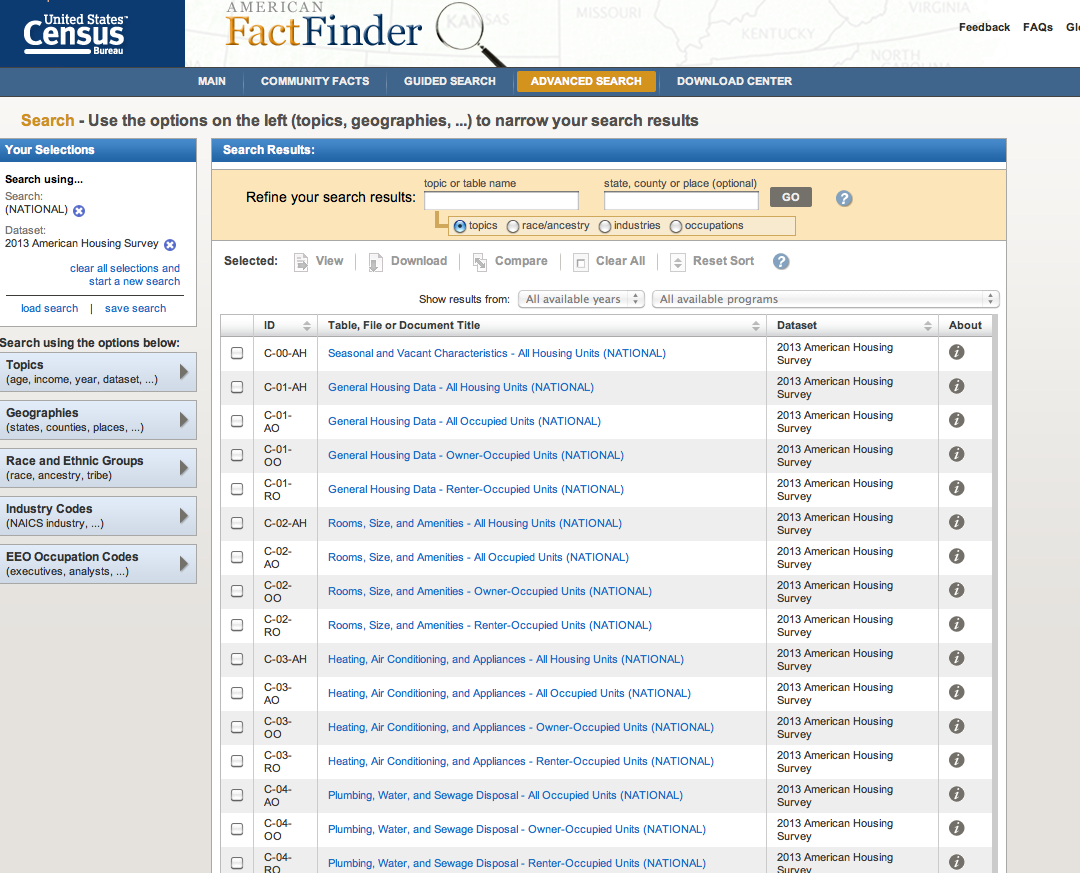
A sample of what they are tracking is found here.

Screen shot 2015-07-18 at 6.07.54 PM


So, when the NY Post publishes this by Paul Sperry, one must take real notice. We have a pattern here.

Obama collecting personal data for a secret race database

A key part of President Obama’s legacy will be the fed’s unprecedented collection of sensitive data on Americans by race. The government is prying into our most personal information at the most local levels, all for the purpose of “racial and economic justice.”

Unbeknown to most Americans, Obama’s racial bean counters are furiously mining data on their health, home loans, credit cards, places of work, neighborhoods, even how their kids are disciplined in school — all to document “inequalities” between minorities and whites.

This Orwellian-style stockpile of statistics includes a vast and permanent network of discrimination databases, which Obama already is using to make “disparate impact” cases against: banks that don’t make enough prime loans to minorities; schools that suspend too many blacks; cities that don’t offer enough Section 8 and other low-income housing for minorities; and employers who turn down African-Americans for jobs due to criminal backgrounds.

Big Brother Barack wants the databases operational before he leaves office, and much of the data in them will be posted online.

So civil-rights attorneys and urban activist groups will be able to exploit them to show patterns of “racial disparities” and “segregation,” even if no other evidence of discrimination exists.

Obama is presiding over the largest consolidation of personal data in US history.

Housing database

The granddaddy of them all is the Affirmatively Furthering Fair Housing database, which the Department of Housing and Urban Development rolled out earlier this month to racially balance the nation, ZIP code by ZIP code. It will map every US neighborhood by four racial groups — white, Asian, black or African-American, and Hispanic/Latino — and publish “geospatial data” pinpointing racial imbalances.

The agency proposes using nonwhite populations of 50% or higher as the threshold for classifying segregated areas.

Federally funded cities deemed overly segregated will be pressured to change their zoning laws to allow construction of more subsidized housing in affluent areas in the suburbs, and relocate inner-city minorities to those predominantly white areas. HUD’s maps, which use dots to show the racial distribution or density in residential areas, will be used to select affordable-housing sites.

HUD plans to drill down to an even more granular level, detailing the proximity of black residents to transportation sites, good schools, parks and even supermarkets. If the agency’s social engineers rule the distance between blacks and these suburban “amenities” is too far, municipalities must find ways to close the gap or forfeit federal grant money and face possible lawsuits for housing discrimination.

Civil-rights groups will have access to the agency’s sophisticated mapping software, and will participate in city plans to re-engineer neighborhoods under new community outreach requirements.

“By opening this data to everybody, everyone in a community can weigh in,” Obama said. “If you want affordable housing nearby, now you’ll have the data you need to make your case.”

Mortgage database

Meanwhile, the Federal Housing Finance Agency, headed by former Congressional Black Caucus leader Mel Watt, is building its own database for racially balancing home loans. The so-called National Mortgage Database Project will compile 16 years of lending data, broken down by race, and hold everything from individual credit scores and employment records.

Mortgage contracts won’t be the only financial records vacuumed up by the database. According to federal documents, the repository will include “all credit lines,” from credit cards to student loans to car loans — anything reported to credit bureaus. This is even more information than the IRS collects.

The FHFA will also pry into your personal assets and debts and whether you have any bankruptcies. The agency even wants to know the square footage and lot size of your home, as well as your interest rate.

FHFA will share the info with Obama’s brainchild, the Consumer Financial Protection Bureau, which acts more like a civil-rights agency, aggressively investigating lenders for racial bias.

The FHFA has offered no clear explanation as to why the government wants to sweep up so much sensitive information on Americans, other than stating it’s for “research” and “policymaking.”

However, CFPB Director Richard Cordray was more forthcoming, explaining in a recent talk to the radical California-based Greenlining Institute: “We will be better able to identify possible discriminatory lending patterns.”

Credit database

CFPB is separately amassing a database to monitor ordinary citizens’ credit-card transactions. It hopes to vacuum up some 900 million credit-card accounts — all sorted by race — representing roughly 85% of the US credit-card market. Why? To sniff out “disparities” in interest rates, charge-offs and collections.

Employment database

CFPB also just finalized a rule requiring all regulated banks to report data on minority hiring to an Office of Minority and Women Inclusion. It will collect reams of employment data, broken down by race, to police diversity on Wall Street as part of yet another fishing expedition.

School database

Through its mandatory Civil Rights Data Collection project, the Education Department is gathering information on student suspensions and expulsions, by race, from every public school district in the country. Districts that show disparities in discipline will be targeted for reform.

Those that don’t comply will be punished. Several already have been forced to revise their discipline policies, which has led to violent disruptions in classrooms.

Obama’s educrats want to know how many blacks versus whites are enrolled in gifted-and-talented and advanced placement classes.

Schools that show blacks and Latinos under-enrolled in such curricula, to an undefined “statistically significant degree,” could open themselves up to investigation and lawsuits by the department’s Civil Rights Office.

Count on a flood of private lawsuits to piggyback federal discrimination claims, as civil-rights lawyers use the new federal discipline data in their legal strategies against the supposedly racist US school system.

Even if no one has complained about discrimination, even if there is no other evidence of racism, the numbers themselves will “prove” that things are unfair.

Such databases have never before existed. Obama is presiding over the largest consolidation of personal data in US history. He is creating a diversity police state where government race cops and civil-rights lawyers will micromanage demographic outcomes in virtually every aspect of society.

The first black president, quite brilliantly, has built a quasi-reparations infrastructure perpetually fed by racial data that will outlast his administration.

Paul Sperry is a Hoover Institution media fellow and author of “The Great American Bank Robbery,” which exposes the racial politics behind the mortgage bust.


Iran Agreement Celebrated by WH, What Others are Doing

While no one has paid much attention beyond Obama spiking the football, it is important to keep a keen eye on those countries affected and the other secret maneuvers the White House is still doing.

1. The National Security Council, the White House and the State Department have delivered the JPOA already to the United Nations before Congress received it, much less can debate it.

2. Those pesky inspections that likely will not happen at all, they certainly wont happen by ANY U.S. personnel. Iran has banned U.S. Inspectors.

3. An Iranian police chief has now been put in charge of Yemen with the West’s approval.

4. There are several additional parts to the JPOA that are under negotiation now, so a full understanding of the whole agreement cannot even be accessed nor achieved.

5. The deal with Iran includes elements to destroy Israel’s ability to defend itself.

6. Saudi Arabia made a decision to NOT wait until Iran get their big cash payload, they are moving ahead in matters with Yemen, Syria and offensive measures with Iran.

7. The White House is now meeting with Saudi Arabia and Israel to re-gen the relationship. A Saudi envoy is in Washington DC for talks and Secretary of Defense has been dispatched to Israel.

8. There are talks to provide Israel with the B-52 bombers and the Bunker Busters have already been upgraded and delivered.

9. Investigations are underway to determine what Iran will buy and stockpile with respect to their missile inventory given that concession.

10. Due to unforeseen future actions by Iran, the Pentagon has war-planners determining all military responses against Iran.

11. Several concerned countries have offered alternative plans to the signed Iran P5+1 deal yet they are being dismissed and or rejected, spelling out larger allied separation from the United States.

12. Future Middle East unrest and attacks are forecasted.

13. Russia is fully empowered with the Iran deal but may have to take a short term financial hit on oil prices.

14. Bashir al Assad of Syria remains in power, gets a financial boost from Iran and the civil war in Syria continues.

15. Allies are at odds over the Iran deal as noted by the clash between the UK and Israel.

16. The arms race in the Middle East has begun such that it includes missiles and purchasing nuclear weapons.

17. The continued divided between the White House and Congress is now permanently broken where Joe Biden has been dispatched to sell it.

18. The Iran lobby money and operations will escalate in Washington DC.

19. By Iran receiving billions, the plotting of future terrorism around the globe is probable.

20. Iran is already threatening those who opposed the deal.

21. Iran is now open for global business and Europe is delighted where they will fund additional aggressions by a rogue country leaving the United States to track covert money, agreements and relationships.

22. Iran and Cuba human rights abuses will continue to be noticed and checked yet will go without consequence.


Iran’s Nuclear Program was Illegal Until it Wasn’t

There have been several UN resolutions with declarations against Iran’s nuclear weapons program.

There have been global sanctions on Iran, until the JPOA was signed on July 14, 2015 where they are being lifted not only by the United Nations and the United States but other nations as well.

Iran was rogue and isolated worldwide until it wasn’t. Iran is now wealthy and will fund future terror around the globe by using the Iranian Revolutionary Guard and dispatched militia teams.

While many are in shock with the text of the JPOA, the matter does not end there, in fact there is a secondary agreement underway.

The International Atomic Energy Agency (IAEA) cannot perform inspections unless nations involved sign off on reasons as to why, where evidence has to be presented to request and inspection. Then a formal application for inspections in writing must be presented to Tehran where up to one month is granted to Iran for approval and may only apply to one or two of the several nuclear sites.

The roadmap or second agreement is being drafted now for presentation, negotiations and approval and this is the core of the matter of the JPOA. Iran wins still but read one.

IAEA Director General’s Statement and Road-map for the Clarification of Past & Present Outstanding Issues regarding Iran’s Nuclear Program

IAEA Director General’s Statement:

“I have just signed the Road-map between the Islamic Republic of Iran and the IAEA for the clarification of past and present outstanding issues regarding Iran’s nuclear programme. The text has been signed on behalf of Iran by the country’s Vice-President, and President of the Atomic Energy Organization of Iran, Mr Ali Akbar Salehi. This is a significant step forward towards clarifying outstanding issues regarding Iran’s nuclear programme.

The Road-map sets out a process, under the November 2013 Framework for Cooperation, to enable the Agency, with the cooperation of Iran, to make an assessment of issues relating to possible military dimensions to Iran’s nuclear programme by the end of 2015.

It sets out a clear sequence of activities over the coming months, including the provision by Iran of explanations regarding outstanding issues. It provides for technical expert meetings, technical measures and discussions, as well as a separate arrangement regarding the issue of Parchin.

This should enable me to issue a report setting out the Agency’s final assessment of possible military dimensions to Iran’s nuclear programme, for the action of the IAEA Board of Governors, by 15 December 2015. “I will keep the Board regularly updated on the implementation of the Road-map.

Implementation of this Road-map will provide an important opportunity to resolve the outstanding issues related to Iran’s nuclear programme.”


Road-map for the Clarification of Past and Present Outstanding Issues regarding Iran’s Nuclear Program:

1. On 14 July 2015, the Director General Yukiya Amano and the Vice-President of the Islamic Republic of Iran, President of the Atomic Energy Organization of Iran, Ali Akbar Salehi signed in Vienna a “Road-map for the clarification of past and present outstanding issues regarding Iran’s nuclear program”. The IAEA and Iran agreed, in continuation of their cooperation under the Framework for Cooperation, to accelerate and strengthen their cooperation and dialogue aimed at the resolution, by the end of 2015, of all past and present outstanding issues that have not already been resolved by the IAEA and Iran.

Joint Statement

by the IAEA Director General Yukiya Amano and the Vice-President of the Islamic Republic of Iran, President of the Atomic Energy Organization of Iran, Ali Akbar Salehi

IAEA Director General Yukiya Amano and the Vice-President of the Islamic Republic of Iran, President of the Atomic Energy Organization of Iran, Ali Akbar Salehi agreed on 14 July 2015 the following

Road-map for the clarification of past and present outstanding issues regarding Iran’s nuclear program

The International Atomic Energy Agency (IAEA) and the Islamic Republic of Iran (Iran) agree, in continuation of their cooperation under the Framework for Cooperation, to accelerate and strengthen their cooperation and dialogue aimed at the resolution, by the end of 2015, of all past and present outstanding issues that have not already been resolved by the IAEA and Iran.

In this context, Iran and the Agency agreed on the following:

1. The IAEA and Iran agreed on a separate arrangement that would allow them to address the remaining outstanding issues, as set out in the annex of the 2011 Director’s General report (GOV/2011/65). Activities undertaken and the outcomes achieved to date by Iran and the IAEA regarding some of the issues will be reflected in the process.

2. Iran will provide, by 15 August 2015, its explanations in writing and related documents to the IAEA, on issues contained in the separate arrangement mentioned in paragraph 1.

3. After receiving Iran’s written explanations and related documents, the IAEA will review this information by 15 September 2015, and will submit to Iran questions on any possible ambiguities regarding such information.

4. After the IAEA has submitted to Iran questions on any possible ambiguities regarding such information, technical-expert meetings, technical measures, as agreed in a separate arrangement, and discussions will be organized in Tehran to remove such ambiguities.

5. Iran and the IAEA agreed on another separate arrangement regarding the issue of Parchin.

6. All activities, as set out above, will be completed by 15 October 2015, aimed at resolving all past and present outstanding issues, as set out in the annex of the 2011 Director General’s report (GOV/2011/65).

7. The Director General will provide regular updates to the Board of Governors on the implementation of this Road-map.

8. By 15 December 2015, the Director General will provide, for action by the Board of Governors, the final assessment on the resolution of all past and present outstanding issues, as set out in the annex of the 2011 Director General’s report (GOV/2011/65). A wrap up technical meeting between Iran and the Agency will be organized before the issuance of the report.

9. Iran stated that it will present, in writing, its comprehensive assessment to the IAEA on the report by the Director General.

10. In accordance with the Framework for Cooperation, the Agency will continue to take into account Iran’s security concerns.


For the International Atomic Energy Agency:

(signed)

Yukiya Amano

Director General


For the Islamic Republic of Iran:

(signed)

Ali Akbar Salehi

Vice-President of the Islamic Republic of Iran

President of the Atomic Energy Organization of Iran


Place: Vienna

Date: 14 July 2015

Pro-Kremlin Machine Right in Front of YOU

Vladimir Putin has his propaganda machine working in full speed. We are being sucked into it and not recognizing the clues much less asking harder questions against his agenda.

There is a two part series on the Pro-Kremlin operation. Part 1 video is here. Part 2 video is here.

Now, the movement behind the machine is something called ‘The Agency’ which is a location in St. Petersberg, Russia called the Internet Research Agency.

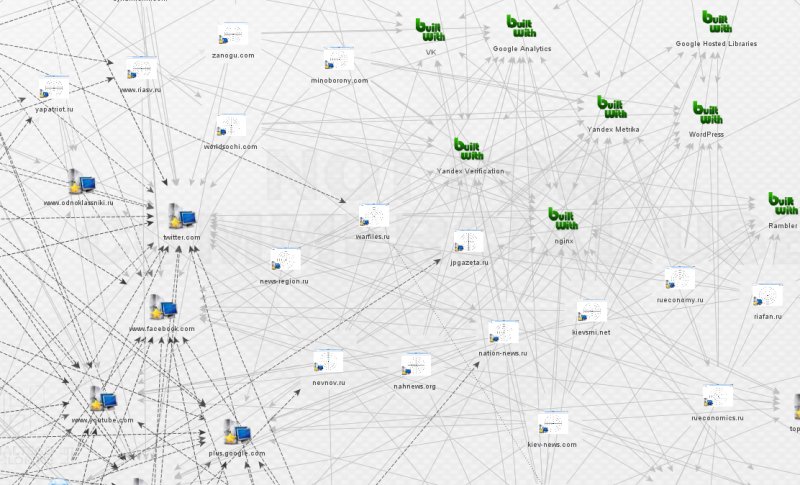
Graph showing shared use of Google Analytics, server software and social media

From DenisonForum: The Agency’s origins can be traced to the 2011 anti-government protests, organized because of the growing evidence of fraud in the Parliamentary elections that year. The protests had been organized largely via Facebook, Twitter, and LiveJournal and the government wanted to ensure that similar protests were far more difficult to put together in the future.  So the next year, Vyascheslav Volodin was named the new deputy head of Putin’s administration and given the task of gaining better control over the internet. In addition to starting the Agency, laws were passed that required bloggers to register with the state and the government was allowed to censor websites without a court order. Putin justified the new laws “by calling the Internet a ‘C.I.A. project,’ one that Russia needed to be protected from.”

The full background investigation on the Internet Research Agency, or rather the Kremlin troll factory is found here.

For the software and internet geeks out there, below is the proof of the machine where evidence was peeled back by using open source analytic tools.

From Global Voices Online: In April of this year, Radio Free Europe/Radio Liberty and the Guardian reported on the website вштабе.рф, a large photo gallery of pro-Russian memes and “demotivator” graphics. Most of these crude caricatures ridicule US, Western, and Ukrainian leaders, whilst portraying Vladimir Putin as strong and heroic.

The site gives no credit or attribution for its design, and offers no indication as to who might be behind it. Intrigued by this anonymity, I used Maltego open-source intelligence software to gather any publicly-available information that might provide clues.

The Secrets of Google Analytics
My use of Maltego revealed that the site was running Google Analytics, a commonly used online analytics tool that allows a website owner to gather statistics on visitors, such as their country, browser, and operating system. For convenience, multiple sites can be managed under a single Google analytics account. This account has a unique identifying “UA” number, contained in the Analytics script embedded in the website’s code. Google provides a detailed guide to the system’s structure.

Whilst investigating the network of sites tied to account UA-53176102, I discovered that one, news-region.ru, had also been linked to a second Analytics account: UA-53159797 (archive).

This number, in turn, was associated with a further cluster of nineteen pro-Kremlin websites. Subsequent examinations of these webpages revealed three more Analytics accounts, with additional sites connected to them. Below is a network diagram of the relationships I have established to date.

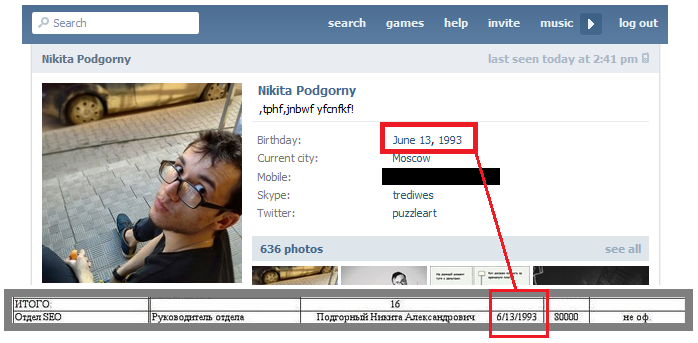
Most notably, Podgorny is listed in the leaked employee list of St. Petersburg’s Internet Research Agency, the pro-Kremlin troll farm featured in numerous news reports and investigations, including RuNet Echo’s own reports.

Podgorny’s date of birth, given on his public VK profile, is an exact match for that shown in the leaked document.

Podgorny's date of birth, as shown on his VK profile, compared with listing in the leaked Internet Reseach Agency document.

Podgorny is also VK friends with Igor Osadchy, who is named as a fellow employee in the same list. Osadchy has denied working for the Internet Reseach Agency, calling the leaks an “unsuccessful provocation.”

*** This internet researcher will continue the investigation and report more. For expanded details on the first cut of the investigation, click here.