An affordable price is probably the major benefit persuading people to buy drugs at www.americanbestpills.com. The cost of medications in Canadian drugstores is considerably lower than anywhere else simply because the medications here are oriented on international customers. In many cases, you will be able to cut your costs to a great extent and probably even save up a big fortune on your prescription drugs. What's more, pharmacies of Canada offer free-of-charge shipping, which is a convenient addition to all other benefits on offer. Cheap price is especially appealing to those users who are tight on a budget
Service Quality and Reputation
Although some believe that buying online is buying a pig in the poke, it is not. Canadian online pharmacies are excellent sources of information and are open for discussions. There one can read tons of users' feedback, where they share their experience of using a particular pharmacy, say what they like or do not like about the drugs and/or service. Reputable online pharmacy canadianrxon.com take this feedback into consideration and rely on it as a kind of expert advice, which helps them constantly improve they service and ensure that their clients buy safe and effective drugs. Last, but not least is their striving to attract professional doctors. As a result, users can directly contact a qualified doctor and ask whatever questions they have about a particular drug. Most likely, a doctor will ask several questions about the condition, for which the drug is going to be used. Based on this information, he or she will advise to use or not to use this medication.
There are countless lawsuits already and here comes another. Several DACA cases have been ruled against by liberal judges. Now Texas has joined other states.
DACA is a request for consideration, it is NOT an automatic approval and it is temporary. See the stipulations here.
Guidelines
You may request DACA if you:
Were under the age of 31 as of June 15, 2012;
Came to the United States before reaching your 16th birthday;
Have continuously resided in the United States since June 15, 2007, up to the present time;
Were physically present in the United States on June 15, 2012, and at the time of making your request for consideration of deferred action with USCIS;
Had no lawful status on June 15, 2012;
Are currently in school, have graduated or obtained a certificate of completion from high school, have obtained a general education development (GED) certificate, or are an honorably discharged veteran of the Coast Guard or Armed Forces of the United States; and
Have not been convicted of a felony, significant misdemeanor,or three or more other misdemeanors, and do not otherwise pose a threat to national security or public safety.
DACA’s criteria were overly broad, and not intended to apply only to children. Under the categorical criteria established in the June 15, 2012 memorandum, individuals could apply for deferred action if they had come to the U.S. before their 16th birthday; were under age 31; had continuously resided in the United States since June 15, 2007; and were in school, graduated or had obtained a certificate of completion from high school, obtained a General Educational Development (GED) certificate, or were an honorably discharged veteran of the Coast Guard or Armed Forces of the United States. Significantly, individuals were ineligible if they had been convicted of a felony or a significant misdemeanor, but were considered eligible even if they had been convicted of up to two other misdemeanors.
The Attorney General sent a letter to the Department on September 4, 2017, articulating his legal determination that DACA “was effectuated by the previous administration through executive action, without proper statutory authority and with no established end-date, after Congress’ repeated rejection of proposed legislation that would have accomplished a similar result. Such an open-ended circumvention of immigration laws was an unconstitutional exercise of authority by the Executive Branch.” The letter further stated that because DACA “has the same legal and constitutional defects that the courts recognized as to DAPA, it is likely that potentially imminent litigation would yield similar results with respect to DACA.”
Based on this analysis, the President was faced with a stark choice: do nothing and allow for the probability that the entire DACA program could be immediately enjoined by a court in a disruptive manner, or instead phase out the program in an orderly fashion. Today, Acting Secretary of Homeland Security Duke issued a memorandum (1) rescinding the June 2012 memo that established DACA, and (2) setting forward a plan for phasing out DACA. The result of this phased approach is that the Department of Homeland Security will provide a limited window in which it will adjudicate certain requests for DACA and associated applications for Employment Authorization Documents meeting parameters specified below.
Please see the USCIS website for the latest information about DACA.
There is a crisis going on at the California border check point where an estimated 200 migrants are attempting to gain entry into the United States by using all tactics stressing our resources and laws.
So, the big question is if these people are desperate to leave their home countries out of fear, crime and corruption, then why have they not visited our embassies in their home countries? They just fled. People fleeing to the United States must and do travel through Mexico. So, where is the humanitarian policy of Mexico to accept these desperate people?
A large number of people attempting to enter the United States come from a handful of countries in Central America such as Guatemala, El Salvador, Honduras and Nicaragua. So, let us examine Honduras as an example. for a summary of the crime and threat assessment in Honduras, go here.
In 2009, Obama cut $200 million in non-humanitarian aid to Honduras. The United States must address stabilizing these countries, rather than allowing their failures and exporting the problem(s) to the United States.
But:
Honduras, one of Latin America’s poorest nations, strives to improve its economic and democratic development with U.S. assistance. The United States has historically been the largest bilateral donor to Honduras. U.S. Agency for International Development (USAID) programs target a variety of sectors including education, health, economic policy, microenterprise, environmental conservation, food security, municipal development, and justice sector reform. USAID has provided more than $3 billion in economic and social development assistance to the Honduran people since it began working in the country in 1961. Currently, programs focus on addressing the main push factors of migration by improving citizen security, reducing extreme poverty, and improving public administration through transparency and accountability reforms. To achieve these objectives, USAID’s efforts address citizen security through community-based crime prevention activities, with a focus on the highest crime neighborhoods and those youth who are most at-risk. Additionally, USAID strengthens local and national governance, as well as civil society monitoring and watchdog organizations; helps the poorest sectors of society increase food security and incomes; supports the sustainable management of natural resources; expands quality basic education and workplace and life-skills training; and improves the quality and participation of local citizens and civil society in decentralized basic services.
In 2017, the U.S. Department of Commerce will be dedicating $1.5 million for a customs and border management program focused on improving trade into Honduras and others parts of Central America. The U.S. Department of Agriculture provided $47 million in 2015-2016 for its two programs that deliver school meals to 53,000 students and increase agricultural productivity and trade.
The United States Armed Forces maintain a small presence at a Honduran military base. U.S. forces conduct and provide logistical support for a variety of bilateral and multilateral exercises–medical, engineering, counternarcotics, and disaster relief–for the benefit of the Honduran people and their Central American neighbors. Through the Central America Regional Security Initiative, the United States supports the Government of Honduras by assisting law enforcement entities in disrupting criminal networks; building investigative, prosecutorial, and judicial capacity; and implementing violence prevention programs for vulnerable communities.
In June 2005, Honduras became the first country in the hemisphere to sign a Millennium Challenge Corporation (MCC) Compact with the U.S. Government. Under the Compact, the U.S. Millennium Challenge Corporation invested $205 million over 5 years to help Honduras improve its road infrastructure, diversify its agriculture, and transport its products to market. In 2013, Honduras received a $15.6 million MCC Threshold Agreement to support Honduran efforts to improve public financial management and create more effective and transparent public-private partnerships.
The State Department website for the embassy in Honduras explains that in order to obtain a visa, the applicant must establish they meet all requirements to receive a visa. The website even includes a ‘visa wizard’ that aids in the application process to determine the specific visa that best fits the case.
There is a fraud unit at all embassies and if fraud is committed during in the visa process, benefits are lost, fines are applied and a jail sentence can be applied.
There is yet another requirement for travel and approval to enter the United States, vaccines.
They include: mumps, measles, rubella, polio, tetanus and diphtheria, pertussis, Haemophilus influenzae/type B, hepatitis A and B, rotavirus, meningococcal disease, varicella, pneumococcal disease, and seasonal influenza.
So, given just the vaccine requirements, detention in either Mexico or the United States for those attempting to enter the United States is warranted. The cost however of medical examinations and detention is significant and government agencies cannot estimate those costs to the taxpayer.
According to the 1951 United Nations Refugee Convention, a refugee is defined as someone who “owing to a well-founded fear of being persecuted for reasons of race, religion, nationality, membership of a particular social group, or political opinion, is outside the country of his nationality, and is unable to or, owing to such fear, is unwilling to avail himself of the protection of that country…”
Asylum seekers have submitted a claim for refugee status and are waiting for this claim to be accepted or rejected.
Refugees and asylees comprise the majority of displaced persons resettled to the United States.
What are the top countries of origin and asylum*?
The top ten countries of refugee origin are Afghanistan, Iraq, Somali, DR Congo, Myanmar, Colombia, Sudan, Vietnam, Eritrea, and China.
The top ten countries of refugee asylum are Pakistan, Iran, Syria, Germany, Jordan, Kenya, Chad, China, United States, and United Kingdom.
* Countries are listed in order from greatest to least number of refugees as of Dec 2010.
Source: UNHCR Global Trends (2010)
Statistics on International Refugees and US Domestic Refugee Admissions:
Source: UNHCR, 2009 Global Trends: Refugee, Asylum-Seekers, Returnees, Internally Displaced and Stateless People
As of 2009, an estimated 15.2 million refugees were located around the world. Of these refugees, 251,500 were voluntarily repatriated to their home nations.
In 2011, the United States accepted 56,424 refugees for resettlement.
Source: U.S. Department of State, Bureau of Population, Refugees, and Migration (PRM), Worldwide Refugee Admissions Processing System (WRAPS)
The U.S. has projected a refugee resettlement ceiling of 76,000 individuals for FY 2012.
Source: Presidential Determination No. 2011-17: FY 2012 Refugee Admissions Numbers
Immigrant, Refugee and Migrant Health Branch (IRMH)
The goal of the IRMH Branch within the Division of Global Migration and Quarantine is to promote and improve the health of immigrants, refugees, and migrants and prevent the importation of infectious diseases and other conditions of public health significance into the U.S. by these groups. To accomplish this goal the IRMH branch plays a significant role in refugee health, both overseas and domestically.
Overseas
IRMH develops and implements the Technical Instructions used by overseas panel physicians who are responsible for conducting the medical examinations for U.S.-bound refugees. The Technical Instructions consist of medical screening guidelines, which outline in detail the scope of the medical examination. The purpose of the medical examination is to identify, for the Department of State and the US Citizenship and Immigration service, applicants with medical conditions of public health concern.
IRMH also maintains an anonymous collection of surplus blood samples from overseas screenings called the Migrant Serum Bank (MSB). Scientists from around the world can request to use the samples for research projects.
Domestic
The Domestic Refugee Health Program facilitates collaboration with state and local health department partners to improve the health care and monitor medical conditions of refugees after their arrival into the United States.
IRMH also maintains the Electronic Disease Notification System (EDN), which notifies states and local health departments of the arrival of refugees to their jurisdictions. EDN provides states with overseas medical screening results and treatment follow-up information for each refugee.
IRMH Partners
To accomplish its goals in refugee health, IRMH works with many external partners:
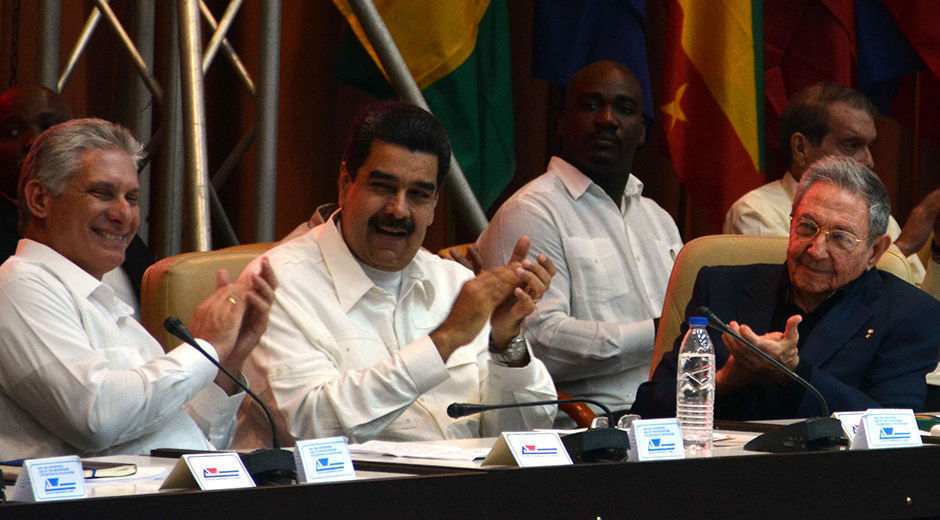
In February of 2013, the 600 members of the National Assembly of People’s Power and the 1600 provincial government representatives voted for Miguel Diaz Canal to be vice president. As of April 2018, Miguel Diaz Canal will reign supreme over Cuba as Raul Castro steps down.
While the Cuban military runs most of the operations in Cuba including all tourism, it is predicted under Miguel Diaz Canal, the junta will expand in Cuba. Cuba remains on the U.S. State Department Tier 2 Watchlist because of human trafficking.
Cuba remains in an economic crisis and has been patching this crisis with oil agreements with Venezuela, attempting to increase agriculture production and applying some reforms. Meanwhile Cuba has asked Australia, Austria, Belgium, Canada, Denmark, Finland, Italy, Japan, the Netherlands, Spain, Sweden, Switzerland and the United Kingdom for debt forgiveness which in total is estimated in the $11 billion range. Russia wrote off $32 billion in Soviet era debt of Cuba in 2014.
As a continued threat to the United States, Russia re-opened a signals intelligence facility at Lourdes and two Russian oil companies, Gazprom and Zarubezhneft have continued offshore oil drilling exploration operations. In 2014, President Xi of China visited Cuba to sign 29 trade agreements along with debt and credit cooperation concessions.
In 2013, a weapons shipment on board a North Korea ship that left Cuba bound for the return to North Korea was discovered raising additional concerns for sanctions violations of both countries. The ship’s cargo was discovered in Panama due to suspicions of carrying illicit narcotics.
In 2009, the Obama administration began a significant shift in policy toward Cuba launching a new beginning which led to the reopening of the U.S. embassy in Havana. Yet nothing in Cuba changed with regard to human rights violations but some dissident prisoners were released and there were some Cuba spies released from the United States back to Cuba. U.S. citizen Alan Gross was also released from prison by Cuba and returned to the United States. In at least four rounds of talks with Cuba to reestablish diplomatic relations with the United States, Barack Obama sent a resolution to Congress to removed Cuba from the designation of a State Sponsor of International Terrorism. There were no objections by Congress and the rescission of this designation was removed.
Further, under Barack Obama many other initiatives were launched including law enforcement cooperation, smuggling prevention, technical exchanges, environmental, banking, maritime issues, counter-narcotics, trade, travel and cyber-crime. Continued health cooperation, direct mail services and oil spill preparedness were all part of the Obama new era policies.
The Trump administration has made statements indicating a reversal to some of the policy changes made during the Obama administration. This also includes operations at Guantanamo Bay.Meanwhile, Cuba still protects fugitives from justice including Assata Shakur also known as Joanne Chesimard that killed a New Jersey State police officer when she was a member of the Black Liberation Army. Another fugitive is William Guillermo Morales, a member of FALN that a domestic terror group convicted in New York for bomb production and weapons charges in cases going back to 1978.
There are continued property claims totaling 5911 where private property and that of U.S. corporations were confiscated by the Cuban government. The value of these claims is in the $10.9 billion and no resolution is in sight.
So, as Raul Castro passe power to a younger groomed and mentored communist, there is no reason to consider that relations and conditions will improve or move closer to a democratic process in Cuba. Not to be overlooked, the matter of a still unclear health attack of U.S. and Canadian diplomats assigned to the embassy in Havana has not been resolved. Both the United States and Canada have removed personnel as a result of debilitating health issues where Cuba has not protected or mitigated these acoustic attacks in and around the homes of diplomatic housing quarters.
Miguel Diaz Canal will continue to carry on the Castro regime and communist party platform. In fact, it is said that Miguel Diaz Canal will in fact be much more of a hardliner than that of the previous Castro regime.
In a videotaped private meeting with Communist Party members, Cuban Vice President Miguel Díaz-Canel — often portrayed as a moderate politician with a quiet disposition — took on an all too familiar hardline tone that offered a rare glimpse into his ideology.
In the video, which has quickly spread across social media platforms, Díaz-Canel lashed out against Cuban dissidents, independent media and embassies of several European countries, accusing them all of supporting subversive projects.
For the United States, he had this message: Cuba will not make any concessions.
“The U.S. government… invaded Cuba, put the blockade [embargo] in place, imposed restrictive measures. Cuba did not do any of that, so in return for nothing they have to solve those asymmetries if they want relations and if they want normalization of the relations,” Díaz-Canel said in the February meeting captured on video and published by Cuban dissident Antonio Rodiles on YouTube this week.
So, all terror roads in the Middle East still lead to Tehran. At the direction of Tehran, Hezbollah, the Iranian militias and the Iranian Revolutionary Guard Corp operations is selection regions across the globe with wild abandon.
January 2018, in a question and answer session: Q: On Iran’s role in Iraq and Syria, do you believe that a land bridge exists between Iran and Syria through Iraq? And, if so, are you concerned about it? Is there anything the United States can do about it?
SEC. MATTIS: No, I don’t — I don’t think there’s a land bridge right now. There’s still enough rough times — you know, rough terrain, rough enemy units that haven’t been cleaned up, and all the usual cleanup going on, and — plus you’ve got the combination of where the people we’re fighting — advising and that sort of thing in Syria are abutting, in some cases, the Russian forces who are helping the regime, abutting the Turkish elements. There’s — I don’t think there’s a land bridge right now.
*** So, while the United States along with France and Britain delivered 105 missiles to take out three chemical weapons locations in Syria, other locations remain in addition to the Assad air assets. Russia, North Korea, and Tehran were all watching for weeks the actions of the West. Russia declares the most recent chemical weapons attack was at the hand of the White Helmets, then it was a ploy by Britain, then it was a CIA operation. Meanwhile, the chemical weapons inspection envoy arriving in Douma, the suburb of Damascus had to find cover after being fired upon.
That brings us back to domestic threats and the strategy as developed by the Trump administration in dealing with Iran and Russia, much less Iraq. Is there one other than the threat of exiting the JCPOA? Not so far it seems. The increasing threat? Satellite land bridges perhaps….from Latin America to covert cells across our homeland.
***
Iranian-backed militants are operating across the United States mostly unfettered, raising concerns in Congress and among regional experts that these “sleeper cell” agents are poised to launch a large-scale attack on the American homeland, according to testimony before lawmakers.
Iranian agents tied to the terror group Hezbollah have already been discovered in the United States plotting attacks, giving rise to fears that Tehran could order a strike inside America should tensions between the Trump administration and Islamic Republic reach a boiling point.
Intelligence officials and former White House officials confirmed to Congress on Tuesday that such an attack is not only plausible, but relatively easy for Iran to carry out at a time when the Trump administration is considering abandoning the landmark nuclear deal and reapplying sanctions on Tehran.
There is mounting evidence that Iran poses “a direct threat to the homeland,” according to Rep. Peter King (R., N.Y.), a member of the House Homeland Security Committee and chair of its subcommittee on counterterrorism and intelligence.
A chief concern is “Iranian support for Hezbollah, which is active in the Middle East, Latin America, and here in the U.S., where Hezbollah operatives have been arrested for activities conducted in our own country,” King said, referring the recent arrest of two individuals plotting terror attacks in New York City and Michigan.
“Both individuals received significant weapons training from Hezbollah,” King said. “It is clear Hezbollah has the will and capability.”
After more than a decade of receiving intelligence briefs, King said he has concluded that “Hezbollah is probably the most experienced and professional terrorist organization in the world,” even more so than ISIS and Al Qaeda.
Asked if Iran could use Hezbollah to conduct strikes on the United States, a panel of experts including intelligence officials and former White House insiders responded in the affirmative.
“They are as good or better at explosive devices than ISIS, they are better at assassinations and developing assassination cells,” said Michael Pregent, a former intelligence officer who worked to counter Iranian influence in the region. “They’re better at targeting, better at looking at things,” and they can outsource attacks to Hezbollah.
“Hezbollah is smart,” Pregent said. “They’re very good at keeping their communications secure, keeping their operational security secure, and, again, from a high profile attack perspective, they’d be good at improvised explosive devices.”
Others testifying before Congress agreed with this assessment.
“The answer is absolutely. We do face a threat,” said Emanuele Ottolenghi, a senior fellow at the Foundation for Defense of Democracies who has long tracked Iran’s militant efforts. “Their networks are present in the Untied States.”
Iran is believed to have an auxiliary fighting force or around 200,000 militants spread across the Middle East, according to Nader Uskowi, a onetime policy adviser to U.S. Central Command and current visiting fellow at the Washington Institute for Near East Policy.
At least 50 to 60 thousand of these militants are “battle tested” in Syria and elsewhere.
“It doesn’t take many of them to penetrate this country and be a major threat,” Uskowi said. “They can pose a major threat to our homeland.”
While Iran is currently more motivated to use its proxies such as Hezbollah regionally for attacks against Israel or U.S. forces, “those sleeper cells” positioned in the United States could be used to orchestrate an attack, according to Brian Katulis, a former member of the White House National Security Council under President Bill Clinton.
“The potential is there, but the movement’s center of focus is in the region,” said Katulis, a senior fellow at the Center for American Progress.
Among the most pressing threats to the U.S. homeland is Hezbollah’s deep penetration throughout Latin America, where it finances its terror activities by teaming up with drug cartels and crime syndicates.
“Iran’s proxy terror networks in Latin America are run by Tehran’s wholly owned Lebanese franchise Hezbollah,” according to Ottolenghi. “These networks are equal part crime and terror” and have the ability to provide funding and logistics to militant fighters.
“Their presence in Latin America must be viewed as a forward operating base against America’s interest in the region and the homeland itself,” he said.
These Hezbollah operatives exploit loopholes in the U.S. immigration system to enter America under the guise of legitimate business.
Operatives working for Hezbollah and Iran use the United States “as a staging ground for trade-based and real estate-based money laundering.” They “come in through the front door with a legitimate passport and a credible business cover story,” Ottolenghi said.
The matter is further complicated by Iran’s presence in Syria, where it has established not only operating bases, but also weapons factories that have fueled Hezbollah’s and Hamas’s war on Israel.
Iran’s development of advanced ballistic missile and rocket technology—which has continued virtually unimpeded since the nuclear deal was enacted—has benefitted terror groups such as Hezbollah.
“Iran is increasing Hezbollah’s capability to target Israel with more advanced and precision guided rockets and missiles,” according to Pregent. “These missiles are being developed in Syria under the protection of Syrian and Russian air defense networks.”
In Iraq, Iranian forces “have access to U.S. funds and equipment in the Iraqi Ministry of Defense and Iraq’s Ministry of Interior,” Pregent said.
The Trump administration has offered tough talk on Iran, but failed to take adequate action to dismantle its terror networks across the Middle East, as well as in Latin American and the United States itself, according to CAP’s Katulis.
“The Trump administration has talked a good game and has had strong rhetoric, but I would categorize its approach vis-à-vis Iran as one of passive appeasement,” said Katulis. “We simply have not shown up in a meaningful way.”
Okay, let us start with ‘catch and release’. Actually under GW Bush and Michael Certoff, it was a policy of ‘catch and return’. That is until many home countries refused to take back their citizens. During that time, the United States had to have detention facilities to house these people until their case(s) could be worked through the varied systems. Then the left decided there needed to be a lawsuit on the whole detention thing. Yup, it went to the Supreme Court and the decision was a time limit of 6 months of detention and then the case had to be resolved. Well, there were not enough judges, so ‘catch and release’ was tried, hoping they would show up to court….well 80% did not show up. Catch and release now remains.
Now we continue to hear new labels applied to people entering the United States by various methods including across the borders, by air and by ship. In fact more enter by air than any other means and overstay the visa. So, advertisement float around the world and especially in Central and South America on who to contact to get to the United States, how much it costs, what to do, what to say, what to have. Yup, advertisements and sadly that does include our diplomatic posts and embassies in regions of conflict(s). The buzzword today is ‘asylum’. Here is the rub on that…
People applying for asylum must first apply after they are provided an alien status and must prove why they cannot be returned to their home country. Over the years, that process has become twisted an no real proof or approval of the application is necessary especially in states where it is well known there are humanitarian issues. It should also be understood that asylum status is NOT a forever status as conditions can change, thus making it favorable for return to the home country. If that still proves impossible, coordination can be made with other countries that are not of origin to accept these people. President Clinton in 1994 when it came to Haitian and Cuban refugees, he worked a deal to have many go to Suriname, Grenada, Barbados and St. Lucia. Further, he did a remarkable and clever thing, for those wanting to get out of their failed home state, he held hearings for their cases in their home country or aboard ships, such that they would not enter the U.S. in the first place.
The United States has about a 16 year waiting list for cases to get through the immigration court process, that is if and when people do show up.
Now for the international pressures of refugees like from Honduras, Guatemala, Syria, Libya or Iran. The United States is a signatory to the United Nations Protocol Relating to the Status of Refugees. That DOES not force the United States to accept any refugee. It is time for the United States to make an annex condition stating a new and updated policy with regard to foreign nationals and refugees.
Check this: The Illegal Immigrant Reform and Immigrant Responsibility Act of 1996 (IIRIRA, P.L. 104-208) made substantial changes to the asylum process: establishing expedited removal proceedings; codifying many regulatory changes; adding time limits on filing claims; and limiting judicial review in certain circumstances, but it did not alter the numerical limits on asylee adjustments. Okay, so we need a quota system perhaps, well we have quota systems, so we need one that is law and enforced.
While we are at it, we need updated and concise cogent definitions of asylum. It cannot just be the word fear….that does not work or apply anymore. Heck people are borrowing children to fabricate a family and claim fear if forced to return…who is lying to who? Ever wonder why these people dont apply to Mexico, Peru, or Sri Lanka for refugee or asylum status? Just being snarky….Read more details here.
Now let us take a sample country like Honduras.
According to the State Department website, Honduras has some of the highest favorabilty ratings to the United States in the Western hemisphere. Sheesh they should…why?
Several of our federal agencies give big money to Honduras like the Department of Commerce and the Department of Agriculture. Then we have this agency that I watch constantly, The Millennium Challenge. Just in 2013 alone, that MCC gave Honduras $15.6 million to improve public financial management and to create more effective and transparent public-private partnerships. What the heck does that mean? Trade between the United States and Honduras in 2015 was $10 billion.
Now, USAID gives money to Honduras, along with climate change money and military subsidies….oh yeah, did you know we have full control of our own air base in Honduras that we kinda share with the Honduran military? We have an estimated 700-1000 military personnel assigned to Soto Cano Air Base, of which our troops were living in air conditioned huts until about two years ago until we built condos for them….this time with running water.
So, what does our military even do in Honduras? Counter-narcotics….oh wait …isn’t that the reason all these Hondurans are leaving due to violent drug operations? We also do medical stuff like pediatric nutrition and dentisty via our military at Soto Cano, as well as weather prediction, fire protection and aircraft maintenance. From time to time we do patrol(s).
So, ask yourself, if the United States was not located in Honduras, or if USSCOM via Joint Task Bravo was not in Honduras for the last 35 years…what state would that state be in today? Well, in 2011, we should remember Operation Castaway. That was the Honduras version of Operation Fast and Furious. Ah yes, we do have FBI and ATF in Honduras even as recently as 2017 where trafficking weapons from places like North Carolina flows in and out of Honduras.
Perhaps is it time we fix the real problems in these home countries with the money we do send there under our management and begin to stop failed nations like Honduras and the exodus problem causing our homeland problems.
Definitions, policies, laws and agreements need to be cleaned up for sure, country by country, document by document, agency by agency.