U.S. Takes Steps on Venezuela and President Maduro

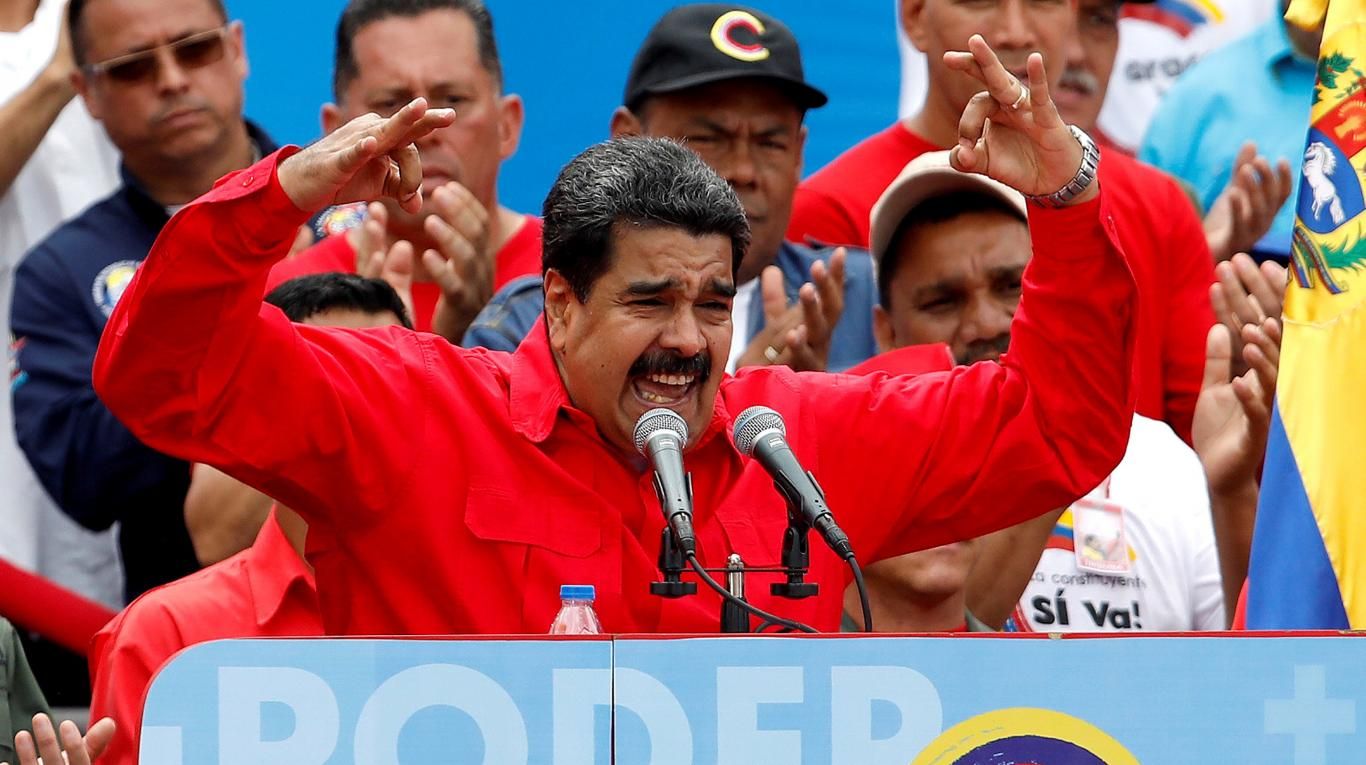
Primer: Venezuela’s diplomatically isolated president got a show of support from his Turkish counterpart Tayyip Erdogan and Argentine soccer legend Diego Maradona on Thursday ahead of a weekend election widely decried as unfair.

The United States, the European Union and major Latin American countries have criticized Sunday’s vote in which leftist President Nicolas Maduro is likely to win re-election to a six-year term. More here.

Venezuelan presidential elections for April 22 — MercoPress  photo

Hundreds protest against ‘fixed’ election in Venezuela: (Reuters) – Several hundred Venezuelan opposition demonstrators blocked traffic in a march to the Organization of American States (OAS) headquarters in Caracas on Wednesday to protest this weekend’s presidential vote, which they say is rigged.

Related reading: Black Market for Food and Medicine

Actually, this is a gesture and for the most part meaningless, because China has first right of ownership and refusal of Venezuela’s oil, however:

President Donald Trump stepped up economic pressure on Venezuela President Nicolas Maduro with an order prohibiting purchases of debts owed to the government, including to the state-run oil company Petroleos de Venezuela.

The executive order, which covers all transactions on any debts owed to the Venezuelan government or state-owned enterprises including accounts receivable, was posted on the Treasury Department website Monday afternoon.

Trump administration officials who spoke on condition of anonymity said the order was intended to restrict the Maduro regime’s ability to liquidate its assets and close off avenues for corruption.

The prohibition on purchases of debts owed to Venezuela specifically includes accounts receivable. One administration official said the action was intended to choke off funding the Maduro regime has been raising by selling off money owed in future to the government and state-owned enterprises in exchange for immediate payment cash.

In response, Maduro expelled U.S. diplomats.

CARACAS (Reuters) – President Nicolas Maduro on Tuesday ordered the expulsion of the top U.S. diplomat in Venezuela in retaliation for a new round of sanctions over Venezuela’s widely-condemned election.

The United States was among a string of countries that did not recognize Sunday’s vote.

The 55-year-old successor to Hugo Chavez won re-election easily, but critics said the vote was riddled with irregularities, from the barring of two popular opposition rivals to the offering of a government “prize” to voters.

President Donald Trump responded with an executive order limiting Venezuela’s ability to sell state assets, heightening pressure on the cash-strapped government.

A press officer for the U.S. embassy in Caracas said she had no immediate comment in response to Maduro’s statements.

Earlier on Tuesday, Venezuela’s foreign ministry called the sanctions “a crime against humanity.” Maduro’s socialist administration, which has long said a U.S.-led “economic war” is to blame for a deep crisis in the OPEC nation, said the new sanctions violated international law.

“Venezuela once again condemns the systematic campaign of aggression and hostility by the U.S. regime to punish the Venezuelan people for exercising their right to vote,” the Foreign Ministry said in a statement. “These arbitrary and unilateral measures constitute a crime against humanity.”

Venezuela’s opposition has accused the Maduro government of behaving immorally and trying to hide shortcomings and corruption behind bombastic rhetoric. The mainstream opposition coalition boycotted Sunday’s vote, calling it a sham aimed at legitimizing Maduro’s rule despite his low popularity.

Among widespread international condemnation of the vote, the European Union said in a statement on Tuesday that the elections did not comply with “minimum international standards for a credible process” and repeated that it would consider the “adoption of appropriate measures.”

The latest U.S. sanctions appeared to target in part Citgo[PDVSAC.UL], a U.S.-based oil refiner owned by Venezuela state oil company PDVSA [PDVSA.UL]. More obstacles to PDVSA’s ability to sell oil abroad could restrict already-dwindling foreign exchange earnings, worsening the economic crisis and pressuring Maduro.

While it only applies to U.S. citizens and residents, a U.S. official told reporters on Monday that the Trump administration has also tried to convince China and Russia to stop issuing new credit to Venezuela. The two have provided billions of dollars in funding for Venezuela in recent years.

But they appeared unlikely to heed the U.S. warnings. Beijing said on Tuesday it believed the United States and Venezuela should resolve their differences via talks, while Moscow said it would not comply with the sanctions.

Accusing U.S. charge d’affaires Todd Robinson of being involved in “a military conspiracy,” Maduro ordered him and another senior diplomat, Brian Naranjo, to leave within 48 hours.

He gave no details of the accusations, but said the U.S. Embassy had been meddling in military, economic and political issues, and vowed to present evidence to the nation shortly.

“Neither with conspiracies nor with sanctions will you hold Venezuela back,” Maduro said, at an event in downtown Caracas at the headquarters of the election board, which is run by government loyalists. Full story here.

al Shabaab Funded by Minnesota Daycare Operations

al Shabaab has operated as a terror organization in East Africa at least since 2012 and has pledged full allegiance to al Qaeda. The translation for the name, al Shabaab is ‘the youth’ or ‘the youngsters’. That is significant in this case. It operates mostly in Somalia and was known for the attack on the Westgate shopping mall in Nairobi, Kenya.

So, we have this extensive case in Minnesota and carry on luggage on flights leaving the United States out of Seattle, with millions of dollars inside.

Millions of dollars in welfare fraud from Minnesota could ...

– For five months, Fox 9 has been investigating what appears to be rampant fraud in a massive state program.

This fraud is suspected of costing Minnesota taxpayers as much as $100 million a year.

The Fox 9 Investigators reporting is based on public records and nearly a dozen government sources who have direct knowledge of what is happening.

These sources have a deep fear, and there is evidence to support their concerns, that some of that public money is ending up in the hands of terrorists.

SUITCASES FILLED WITH MONEY

This story begins at Minneapolis-St. Paul International Airport, where mysterious suitcases filled with cash have become a common carry-on.

On the morning of March 15, Fox 9 chased a tip about a man who was leaving the country. Sources said he took a carry-on bag through security that was packed with $1 million in cash.  Travelers can do that, as long as they fill out the proper government forms.

Fox 9 learned that these cloak-and-dagger scenarios now happen almost weekly at MSP. The money is usually headed to the Middle East, Dubai and points beyond. Sources said last year alone, more than $100 million in cash left MSP in carry-on luggage.

The national, go-to expert on what is behind these mysterious money transfers is Glen Kerns.

“What we were interested in is where it was going,” Kerns said.

He is a former Seattle police detective who spent 15 years on the FBI’s joint terrorism task force, until his retirement.

“It’s an outright crime, it’s unbelievable,” he said.

Kerns tracked millions of dollars in cash that was leaving on flights from Seattle.

It was coming from Hawalas, businesses used to courier money to countries that have no official banking system.

Some immigrant communities rely on Hawalas to send funds to help impoverished relatives back home.

Kerns discovered some of the money was being funneled to a Hawala in the region of Somalia that is controlled by the al Shabaab terrorist group.

“I talked to a couple of sources who had lived in that region and I said, ‘If money is going to this Hawala do you think it is going to al Shabaab?'” said Kerns. “And he said, ‘Oh definitely, that area is controlled by al Shabaab, and they control the Hawala there.’”

He said when the money arrives, whether it was intended for legitimate purposes or not, al Shabaab or other groups demand a cut.

As Kerns dug deeper, he found that some of the individuals who were sending out tens of thousands of dollars’ worth of remittance payments happened to be on government assistance in this country.

How could they possibly come up with such big bucks to transfer back home?

“We had sources that told us, ‘It’s welfare fraud, it’s all about the daycare,’” said Kerns.

FOX 9 REPORTED ON THE FRAUD FIVE YEARS AGO

To better understand the connection between daycare fraud and the surge in carry-on cash, you have to look at the history of this crime.

Five years ago the Fox 9 Investigators were first to report that daycare fraud was on the rise in Minnesota, exposing how some businesses were gaming the system to steal millions in government subsidies meant to help low-income families with their childcare expenses.

“It’s a great way to make some money,” Hennepin County Attorney Mike Freeman said.

In order for the scheme to work, the daycare centers need to sign up low income families that qualify for child care assistance funding.

Surveillance videos from a case prosecuted by Hennepin County show parents checking their kids into a center, only to leave with them a few minutes later. Sometimes, no children would show up.

Either way, the center would bill the state for a full day of childcare.

Video from that same case shows a man handing out envelopes of what are believed to be kickback payments to parents who are in on the fraud.

When asked where the money was going, Freeman said, “I don’t know exactly where it went. But it adds up when you begin to look at how many people were involved.”

FOZIA ALI

One recent federal case points to at least some of the money going overseas.

Fox 9 obtained video of Fozia Ali being sworn in as a member of the city of Hopkins Park Board.

“I will support the constitution of the United States,” she said.

As she was taking her oath of office, she was also under investigation for wire fraud and theft of public money.

“So help me God,” she said during the ceremony.

State and federal agents had already raided Ali’s daycare center in south Minneapolis. The business was suspected of billing the government for more than a million dollars’ worth of bogus childcare services.

“We found records that she was collecting a significant amount of money for a much larger number of children than were actually attending the center,” said Craig Lisher from the FBI. “We are aware that some of the funds went overseas, what she was cashing out, money from the business.”

When asked if he had any idea of what it was going for he said, “I can’t say.” When pressed if he can’t say or doesn’t know he responded, “I can’t say.”

Investigators analyzed Ali’s cell phone to track her activities.

She took a two-month trip from Minnesota to Dubai and then Kenya, staying at times in $800 a night hotel rooms.

She used an app on her phone to bill the state of Minnesota for childcare services while she was out of the country.

Ali pled guilty to the daycare fraud and in March started serving time in a federal prison. She declined Fox 9’s request for an interview.

10 DAYCARES UNDER ACTIVE INVESTIGATION

“We believe that there’s a scope of fraud out there that we really need to get our arms around and ensure that those dollars are going to kids that really need them,” Acting Commissioner for the Department of Human Services Chuck Johnson said.

He told the Fox 9 Investigators his agency has 10 daycares currently under active investigation for fraud.

Fox 9 has learned dozens more are considered suspicious.

Search warrants obtained by the Fox 9 Investigators show each one of the suspect centers has received several million dollars in childcare assistance funds.

According to public records and government sources, most are owned by Somali immigrants.

When asked if the Department of Human Services has any evidence to suggest this looks like organized crime, Johnson responded, “There’s a common pattern in how a lot of these are carried out, but beyond that, not something that I would directly categorize as organized crime.”

Sources in the Somali community told Fox 9 it is an open secret that starting a daycare center is a license to make money.

The fraud is so widespread they said, that people buy shares of daycare businesses to get a cut of the huge public subsidies that are pouring in.

Government insiders believe this scam is costing the state at least a hundred million dollars a year, half of all child care subsidies.

“I don’t think half sounds credible,” Johnson said. “I certainly think that some of the schemes that we’re seeing and certainly the ones that we’ve brought forward already for prosecution involve millions of dollars. I mean this is not a small scale that we’re looking at.”

TRACKING THE MONEY?

Minnesota started aggressively going after daycare fraud in 2014. Back then, it was easier to track the flow of money.

The state would pay a daycare’s bill and within hours of the money showing up in the business’s bank account, funds were being wired to the United Arab Emirates.

Those wire transfers stopped after a few centers were busted.

Which brings us back to those mysterious suitcases at Minneapolis-St. Paul International.

In 2015, investigators documented $14 million in carry on cash. By 2016, it had mushroomed to $84 million. Then last year, $100 million.

A trend all too familiar to former terrorism investigator Glen Kerns.

Fox 9 asked him how likely it is that some of the money is going towards terrorism?

“I say absolutely, our sources tell us that. Good sources, from the community leaders,” he said. “My personal opinion is we need a nationwide task force to clamp down on this type of fraud.”

This crime is spreading. Sources tell Fox 9 fraudsters in other states are now using the Minnesota playbook to rip off millions of public dollars meant to help kids.

*** Where was the FBI, the Minnesota governor, DHS?

– A government whistleblower said he warned upper management at the Department of Human Services about massive daycare fraud more than a year ago.

Emails obtained by the Fox 9 Investigators show the Minnesota government agency was told millions of stolen tax dollars were going overseas and likely a portion of the money was being skimmed by terrorism organizations.

Scott Stillman spent eight years managing the state’s digital forensics lab, meaning he mined data from computers and smart phones.

“I have never seen anything like this level or scope in my 27-year career as an investigator,” he told Fox 9.

When the state started going after daycare centers suspected of fraud, Stillman was directly involved in the investigations.

Some of the businesses were gaming the system to steal millions in government subsidies meant to help low-income families with their childcare expenses.

In many of the cases, parents would check in their children at a daycare, only to leave a few minutes later with the kids and sometimes no children would show up at the center. However, it would still bill the state for a full day of childcare.

Stillman was so alarmed by what he found that in March of 2017 he fired off a series of emails to his supervisors at DHS.

“We are working on and overwhelmed by a significant amount of fraud cases involving organized crime, defrauding hundreds of millions of dollars annually in taxpayer monies,” he wrote.

Stillman read from one of the emails he wrote which the Fox 9 Investigators obtained through a public records request.

DHS took two months before it turned over the emails, and much of what it provided was redacted.

“They were not easy to write,” he said. “But I felt I had an obligation because I think there’s a strong possibility this money is being used against innocent civilians and against our military.”

According to Stillman, he alerted a number of people in DHS including the Commissioner’s Chief of Staff with the following message: “Significant amount of these defrauded dollars are being sent overseas to countries and organizations connected to entities known to fund terrorists and terrorism.”

At a Monday press briefing, the governor told Fox 9 his office was not told about the warnings.

Sources tell the Fox 9 Investigators people within the governor’s office were told about the concerns a couple of years ago.

“My chief of staff, current and previous staff, from what I’m told, did not get any information alleging there was that kind of theft,” Dayton said.

The state currently has 10 daycare centers under investigation for fraudulent billing of childcare services.

Each of the suspect centers has received several millions of dollars in government subsidies.

According to public records and government sources, Somali immigrants own most of the daycare centers.

Fox 9 asked the Department of Human Services about the emails Stillman sent in 2017 and more specifically who, in the chain of command, was aware of them and when.

DHS responded with a statement: “The Deputy Commissioner, communications and legal staff learned there may be emails on this subject when Fox 9 made its data request in March. The then-chief compliance officer was informed at the time the emails were originally sent.”

“I would like to have an independent federal investigation of the handling of DHS programs, specifically daycares and the Medicaid fraud program by Homeland Security of the Department of Justice.”

Stillman is no longer with the state. He resigned from his position in March after 10 years on the job.

Omar Mateen to Larry Nasser, Can the FBI be Fixed?

When agents fail 4 polygraphs and are still on the payroll with security clearance, is the FBI working well? When agents create fake Facebook accounts to leak information, are things working well at the Bureau? When agents fail to stop Omar Mateen, the San Bernardino, California terrorist, are things broken at the FBI? What about the early complaints by parents to the FBI about the rapist/molester Larry Nasser and not getting a call for over a year? Conditions are the Bureau good?

The Michael Horowitz Inspector General report is due at any time. What is unclear is how the FBI will be summarized and why? Was there a full mission change to find domestic terrorists over robbery cases? Did RICO cases get sidelined for the sake of sex traffickers or narcotic cases?

Inspector General reports provide the reason for the investigation and the recommendations to cure the systems. Will that be the case when it comes to hacking over locating foreign spies in our country? Is crime in America so overwhelming that the FBI cannot keep pace and local law enforcement is lagging behind as well including the fact that technology is advancing such that cases should be easier?

You be the judge as you read the following:

The FBI Is in Crisis. It’s Worse Than You Think

TIME: In normal times, the televisions are humming at the FBI’s 56 field offices nationwide, piping in the latest news as agents work their investigations. But these days, some agents say, the TVs are often off to avoid the crush of bad stories about the FBI itself. The bureau, which is used to making headlines for nabbing crooks, has been grabbing the spotlight for unwanted reasons: fired leaders, texts between lovers and, most of all, attacks by President Trump. “I don’t care what channel it’s on,” says Tom O’Connor, a veteran investigator in Washington who leads the FBI Agents Association. “All you hear is negative stuff about the FBI … It gets depressing.”

Many view Trump’s attacks as self-serving: he has called the renowned agency an “embarrassment to our country” and its investigations of his business and political dealings a “witch hunt.” But as much as the bureau’s roughly 14,000 special agents might like to tune out the news, internal and external reports have found lapses throughout the agency, and longtime observers, looking past the partisan haze, see a troubling picture: something really is wrong at the FBI.

The Justice Department’s Inspector General, Michael Horowitz, will soon release a much-anticipated assessment of Democratic and Republican charges that officials at the FBI interfered in the 2016 presidential campaign. That year-long probe, sources familiar with it tell TIME, is expected to come down particularly hard on former FBI director James Comey, who is currently on a high-profile book tour. It will likely find that Comey breached Justice Department protocols in a July 5, 2016, press conference when he criticized Hillary Clinton for using a private email server as Secretary of State even as he cleared her of any crimes, the sources say. The report is expected to also hit Comey for the way he reopened the Clinton email probe less than two weeks before the election, the sources say.

The report closely follows an earlier one in April by Horowitz, which showed that the ousted deputy director of the FBI, Andrew McCabe, had lied to the bureau’s internal investigations branch to cover up a leak he orchestrated about Clinton’s family foundation less than two weeks before the election. (The case has since been referred to the U.S. Attorney’s office in Washington, D.C., for potential prosecution.) Another IG report in March found that FBI retaliation against internal whistle-blowers was continuing despite years of bureau pledges to fix the problem. Last fall, Horowitz found that the FBI wasn’t adequately investigating “high-risk” employees who failed polygraph tests.

There have been other painful, more public failures as well: missed opportunities to prevent mass shootings that go beyond the much-publicized overlooked warnings in the Parkland, Fla., school killings; an anguishing delay in the sexual-molestation probe into Olympic gymnastics doctor Larry Nassar; and evidence of misconduct by agents in the aftermath of standoffs with armed militias in Nevada and Oregon. FBI agents are facing criminal charges ranging from obstruction to leaking classified material. And then there’s potentially the widest-reaching failure of all: the FBI’s miss of the Russian influence operation against the 2016 election, which went largely undetected for more than two years.

In the course of two dozen interviews for this story, agents and others expressed concern that the tumult is threatening the cooperation of informants, local and state police officials, and allies overseas. Even those who lived through past crises say the current one is more damaging. “We’ve seen ups and downs, but I’ve never seen anything like this,” says Robert Anderson, a senior official at the FBI who retired in 2015.

The FBI’s crisis of credibility appears to have seeped into the jury room. The number of convictions in FBI-led investigations has declined in each of the last five years, dropping nearly 11% over that period, according to a TIME analysis of data obtained from the Justice Department by researchers at Syracuse University. “We’ve already seen where the bad guys and witnesses look at those FBI credentials, and it might not carry the same weight anymore,” says O’Connor.

Indeed, public support for the FBI has plunged. A PBS NewsHour survey in April showed a 10-point drop–from 71% to 61%–in the prior two months among Americans who thought the FBI was “just trying to do its job” and an 8-point jump–from 23% to 31%–among those who thought it was “biased against the Trump Administration.”

The FBI, of course, continues to do good work. On April 25, local authorities in Sacramento and the FBI announced the dramatic arrest of the Golden State Killer. That same day it helped bust 39 people in Pennsylvania in a cocaine-trafficking investigation, 14 prison employees in South Carolina in a bribery case and two men in New Jersey in a $5.3 million tax-evasion probe. Assistant FBI Director William F. Sweeney Jr., who runs the New York field office and oversaw the April 9 raid against Trump’s personal lawyer Michael Cohen, says his agents’ response to the turmoil has been to “double down and [say], ‘Hey, we’re gonna keep on moving.’”

Some question whether the FBI has gotten too big and has been asked to do too many things. After 9/11, then FBI director Robert Mueller, who is now the special counsel leading the Russia probe, made massive new investments in counterterrorism and intelligence, shifting resources and investigative focus from white collar crime and bank robberies.

Many of the bureau’s woes developed on Comey’s 3½-year watch. They extend beyond the most visible controversies, like the Clinton email and Russia investigations, to his costly confrontation with Apple over unlocking an iPhone used by one of the terrorists in the San Bernardino, Calif., shooting in 2015, and beyond. Critics say Comey’s penchant for high-profile moral fights has, ironically, undermined the bureau’s reputation. Trump himself has used that line of argument to challenge the FBI.

Democrats have questioned the integrity of the bureau as well, with Clinton and her aides claiming Comey and the FBI helped tip the election to Trump. But the biggest difference between past crises and the current one, according to virtually everyone interviewed for this article, is the President. Trump has continually attacked the integrity of the institution and its leaders, alleging not just incompetence but bad faith in the commission of justice. Ronald Hosko, who retired in 2014 after 30 years at the bureau, compares the moment to a wildfire, saying Trump “is either the spark that creates the flames, or he’s standing there with a can of gas to stoke the flames.”

The bureau’s current director, Christopher Wray, recently said his first priority is to “try to bring a sense of calm and stability back to the bureau.” But the FBI is facing one of the greatest tests of its 110 years. In the coming months, it must fix a litany of internal problems, fend off outside attacks on its trustworthiness and pursue investigations touching on a sitting President, at the same time a growing number of Americans are asking themselves: Can we trust the FBI?

Last May, McCabe, then the FBI’s deputy director, sat down at the table in his seventh-floor office for a meeting with two agents from the inspections division. The agents had some questions about the Clinton Foundation leak just before the election. It was a quick meeting. McCabe, an FBI veteran who rose through the ranks over a 21-year career, told them he had “no idea” where the leak came from. The agents left after just five minutes or so, according to the Inspector General’s April 13 report.

McCabe had offered that same basic assurance months earlier to his boss, then director Comey, investigators said, and had angrily lit into FBI officials under him, suggesting the Clinton leak had come from their offices and telling one senior agent in Washington to “get his house in order.” But as it turned out, McCabe knew exactly where the leak had come from. He personally authorized it, Horowitz’s investigators found, to counter charges that he favored Clinton. (His wife received $467,500 from the PAC of a Clinton ally, then Virginia governor Terry McAuliffe, in a failed 2015 bid for state office.)

The McCabe findings have shaken the FBI. The bureau has massive power, and as a result, it has strict rules. Lying to investigators is considered a dire breach in an organization built on trust. The referral to the U.S. Attorney’s office, which emerged a week after the report was released, could result in charges against McCabe of making a false sworn statement. He has challenged the findings, disputing even the most basic elements, like how many people were in the room. The IG said it did not find many of his objections credible, with some elements contradicted by notes taken contemporaneously by an agent. McCabe previously called his firing part of a “war on the FBI” and the Russia investigation. But viewed against the backdrop of other Horowitz reports, McCabe’s alleged rule-breaking looks like part of a much larger problem.

In September, Horowitz found that bureau investigators had allowed employees with dubious polygraph results to keep their top-secret clearances for months or even years, posing “potential risks to U.S. national security.” In one instance, an FBI IT specialist with top-secret security clearance failed four polygraph tests and admitted to having created a fictitious Facebook account to communicate with a foreign national, but received no disciplinary action for that. In late 2016, Horowitz found that the FBI was getting information it shouldn’t have had access to when it used controversial parts of the Patriot Act to obtain business records in terrorism and counterintelligence cases.

Just as troubling are recent FBI missteps not yet under the IG’s microscope. At 2:31 p.m. on Jan. 5, the FBI’s round-the-clock tip center in West Virginia received a chilling phone call. The caller gave her name and said she was close to the family of an 18-year-old in Parkland, Fla., named Nikolas Cruz. Over 13 minutes, she said Cruz had posted photos of rifles he owned and animals he mutilated and that he wanted “to kill people.” She listed his Instagram accounts and suggested the FBI check for itself, saying she was worried about the thought of his “getting into a school and just shooting the place up,” according to a transcript of the call.

The FBI specialist checked Cruz’s name against a database and found that another tipster had reported 3½ months earlier that a “Nikolas Cruz” posted a comment on his YouTube channel saying, “I’m going to be a professional school shooter.” But neither tip was passed on to the FBI field agents in Miami or local officials in Parkland. After Cruz allegedly killed 17 people with an AR-15 rifle at his old school just six weeks later, the bureau admitted that it had dropped the ball and ordered a full review. “You look at this and say, ‘You’ve got to be kidding me,’” says Anderson, the former FBI official.

The Parkland shooting was only the latest in a string of devastating misses. After Omar Mateen shot and killed 49 people at the nightclub Pulse in Orlando in June 2016, the FBI said it had investigated him twice before on terrorism suspicions, but shut the inquiries for lack of evidence. The year before, after Dylann Roof shot to death nine African-American parishioners at a South Carolina church, the FBI acknowledged that lapses in its gun background-check system allowed him to illegally buy the .45-caliber handgun he used in the massacre. And in 2011, the FBI received a tip from Russian intelligence that one of the Boston Marathon bombers had become radicalized and was planning an overseas trip to join radical Islamic groups. The FBI in Boston investigated him but found no “nexus” to terrorism.

FBI agents at the damaged rear wall of the Pulse nightclub, where Omar Mateen killed 49 people in June 2016

FBI agents at the damaged rear wall of the Pulse nightclub, where Omar Mateen killed 49 people in June 2016
Joe Raedle—Getty Images

The Orlando shooting provoked more second-guessing in late March, when the shooter’s widow, Noor Salman, was acquitted on charges of aiding and abetting him and obstructing justice. The jury foreman pointed to inconsistencies in the FBI’s accounts of the disputed admissions that agents said Salman had made, according to the Orlando Sentinel. The judge also scolded the government after an FBI agent contradicted the government’s earlier claims that Salman and Mateen had cased the club.

The concerns about FBI testimony in a major terrorist prosecution underscore a larger question: Are people less likely to believe what the bureau says these days? In January, a federal judge threw out all the criminal charges against renegade Nevada cattleman Cliven Bundy, his two sons and a supporter who had been in an armed standoff over unpaid grazing fees. Judge Gloria Navarro accused the government of “outrageous” and “flagrant” misconduct, citing failures by both prosecutors and the FBI to produce at least 1,000 pages of required documents. The judge said the FBI misplaced–or “perhaps hid”–a thumb drive revealing the existence of snipers and a surveillance camera at the site of the standoff.

A related case in Oregon, growing out of the 2016 takeover of a wildlife refuge by Bundy’s sons and their followers, has not gone well for the FBI either. An agent at the scene, W. Joseph Astarita, is now charged with five criminal counts after prosecutors say he falsely denied shooting twice at an occupation leader who was fatally shot by police, who said he appeared to be reaching for his handgun during a roadside encounter. The Bundy sons and five supporters who helped in the takeover were found not guilty of conspiracy and weapons charges, in another jarring setback for the government.

Some legal experts and defense advocates see the string of recent not guilty verdicts as a sign that jurors and judges are less inclined to take what the FBI says in court at face value. Data examined by TIME support that conclusion. The number of convictions in FBI-led investigations dropped last year for the fifth consecutive year–from 11,461 in 2012 to 10,232, according to Syracuse University data, which was obtained under Freedom of Information Act requests.

Moreover, TIME’s analysis shows a surprisingly low rate of success for the thousands of cases the FBI investigates and sends to the Justice Department for possible prosecution. Over that same time period, the Justice Department has ultimately won convictions in fewer than half the cases the FBI referred for prosecution, with a conviction rate of 47% last year, the data showed. That fell well below the average of 72% for all agencies. Prosecutors themselves have rejected many of the FBI’s referrals before they ever got to court. The bureau’s low success rate in these cases has remained largely unchanged in recent years.

Federal prosecutors still win the bulk of the thousands of cases they choose to bring based on FBI investigations. Justice Department spokesman Ian Prior says a variety of factors could play into the drop in prosecutions and convictions over the last five years, including “de-emphasizing” some crimes under Obama-era policies and cutbacks in prosecutors in recent years. Prior says that “judging the performance of the FBI based on a minuscule sample of cherry-picked cases” ignores its thousands of annual convictions.

Gina Nichols, a nurse in Minnesota, says she never had strong impressions one way or the other about the FBI until her daughter Maggie Nichols, who was a member of the national gymnastics team, reported three years ago that team physician Larry Nassar had molested her. Gina waited anxiously for the FBI to contact her and interview Maggie. But no one did so for nearly a year as the case languished among different FBI field offices in Indianapolis, Detroit and Los Angeles. Nassar is believed to have molested dozens of additional victims over the course of that year. “It makes you sick,” Gina tells TIME. “I have a child who was sexually abused for 2½ years by an Olympic doctor, and the FBI did nothing.”

The FBI has opened an internal inquiry to determine why the Nassar investigations appear to have dragged on for so long. John Manly, a Southern California lawyer representing many of the women, says he is angry that no one from the FBI has contacted the victims to explain the delay. “Knowing that the best law-enforcement agency in the world knew exactly what he was up to and did nothing–I can’t explain that to them,” Manly says. “You’ve got people who were really hurt here, so fix it,” he says.

Perhaps the easiest problems to address are the internal lapses. Experts say putting assets and management attention back to work on cyber, counterintelligence and traditional crime after Mueller shifted them to counterterrorism would help. “There’s an overextension of the mission,” says Brian Levin, a professor of criminal justice at California State University, San Bernardino, who has worked with the FBI. Most of Horowitz’s reports include measures the FBI can take to address their problems, including stricter rules for investigating polygraph test failures and training to protect whistle-blowers.

A failure of imagination is harder to fix. Mueller’s Russia probe has found that Moscow’s operation against the 2016 election first got under way in 2014, but the FBI failed to grasp the scope and danger of what was unfolding. The bureau missed the significance of the damaging 2015 hack of the DNC database. And when the Russian operation began to heat up in the summer of 2016, the FBI was always a step behind the Russians, struggling to understand intelligence reports they were getting about possible connections between Moscow and Trump aides. The bureau also sat on the disputed “dossier” prepared by former British intelligence officer Christopher Steele.

A report released on April 27 by Republicans on the House Intelligence Committee found that the FBI was slow to confront the election meddling, especially in its failure to notify U.S. victims of Russian hacking quickly enough. The committee also charged that the bureau’s decision to surveil former Trump campaign adviser Carter Page was influenced by politics. At the same time, the GOP has pointed to text messages between FBI special agent Peter Strzok and FBI lawyer Lisa Page, which were critical of Trump–as well as many Democrats–to argue the bureau is fundamentally biased.

FBI Director Wray says the bureau has started “specific activities” to prevent election meddling by Moscow, but outsiders worry that the U.S. remains vulnerable this fall and beyond.

The most important thing the FBI can do to fix itself? Follow its own rules. In his handling of the Clinton email probe ahead of the 2016 election, Comey acted without telling the Justice Department what he planned to do. Comey is expected to come under fire in the upcoming IG report for breaking with Justice Department rules and norms by assuming authority usually held by prosecutors and speaking in public about a case that did not produce criminal charges, sources with knowledge of the report tell TIME. He will likely also be criticized for weighing in so close to the election in a way that could impact the outcome, sources familiar with the investigation say.

On his book tour, Comey has defended his decisions as the best way out of a bad situation. Facing what he called “a series of no-win decisions,” Comey says he did what he thought was necessary and transparent to protect the integrity of both the FBI and the legal process in such a high-profile case.

As he faces the crises at the FBI, Wray has told his senior aides to “keep calm and tackle hard.” Asked if recent misconduct cases concern Wray, FBI spokeswoman Jacqueline Maguire said the bureau’s 36,000 employees “are held to the highest standards of conduct–but as in any large organization, there may be occasions when an employee exercises poor judgment or engages in misconduct.” While she declined to discuss specific cases, Maguire said claims of misconduct are “taken seriously [and] investigated thoroughly,” leading to discipline when needed.

At FBI headquarters, agents and supervisors say they are keeping their heads down and focusing on their investigations. But the building is literally crumbling around them–Comey kept in his office a slab of concrete that had fallen off the side. Designs for a new complex were scrapped in February. Visible across Pennsylvania Avenue from the main entrance, with J. Edgar Hoover’s tarnished name above it, is the gleaming, gold-plated sign on the newly renovated Trump International Hotel.

Trump’s attacks on the FBI have been filled with inaccuracies and innuendo, wrongly claiming on Twitter, for instance, that McCabe was in charge of the Clinton email investigation. Trump makes a point of praising rank-and-file agents, but his punches have landed inside the FBI and out. Some worry the damage may take years to repair. “I fear Trump’s relentless attacks on the institution are having an effect on the public’s confidence in the FBI,” says Matthew S. Axelrod, a senior Justice Department official in the Obama Administration.

Mueller may play an outsize role in how his old agency gets through the current crisis. If the special counsel finds that Russia did collude with members of the Trump campaign–the central question in his investigation–and any perpetrators are charged and found guilty in court, it would rebut Trump’s charges of a “witch hunt.” If Mueller finds no evidence of collusion, or declines to make it public, it would open the door for Trump and his campaign to paint the FBI as a band of partisan hacks with a reputation, as he has tweeted, “in tatters.”

There may be no immediate way to fix a place with as many missions and masters as the FBI. One official, asked what it would take for the FBI to move past all the controversy, paused and said simply, “Time.” Many hope that the extraordinary confluence of events that drew the FBI into the 2016 election will prove to be, as Comey called it, “a 500-year flood” that won’t repeat itself anytime soon.

Others are doubtful. Jeffrey Danik, a retired FBI agent in Florida who now works with whistle-blowers at the bureau, blames the state of affairs on “a severe lack of leadership” and transparency at headquarters in owning up to recent mistakes. Those damaging failures, he says, “have just about pushed our incredible organization over the brink.” For now, everyone inside and out who cares about the reliability of law enforcement in America is left hoping that the bureau has at least started on the road back.

From the APP Store, Notifica ICE Raids

Ah yes those pesky apps found on iTunes and Google Play, funded by George Soros. This app helps illegal immigrants avoid federal immigration authorities. The group behind this scheme is United We Dream and guess what? That organization receives taxpayer funding. Uh huh…

Notifica is a project of United We Dream

***

In Case of an ICE Raid, Undocumented Immigrants Can Use ...

Notifica, is a new app that will act as a panic button for undocumented immigrants who are detained by Immigration and Customs Enforcement (ICE), Wired reports.

To help immigrants who have been detained, the organization United We Dream, which is led by young immigrants, and digital agency Huge developed the Notifica app. When immigrants are detained by ICE their families and loved ones might not even know what happened, but Notifica aims to change that.

“You have the right to be prepared,” says the app’s site. “Be prepared with Notifica, an app that sends out secure messages to your support network when you need it most.”

How The Notifica App Works

With Notifica, users can select contacts they want to notify in case they are taken by ICE. The app allows users to set up a personalized notification to each recipient, for example, a message to your mom or sibling would be different than the one you send to your attorney. After you write the preloaded messages, others will not have access to them and will not be able to read them. There is also a pin that seals off the messages in case your device is lost or stolen.

If the user is taken by ICE, a single click will send all messages via text in less than two seconds. Huge has also launched a phone hotline for those who don’t have a phone in reach but may be able to make a call afterwards. More here.

***

A division of the Justice Department awarded at least $206,453 to the National Immigration Law Center, which advises illegal immigrants on their rights, according to records obtained by Judicial Watch.

The Office of Justice Programs awarded the grants between fiscal years 2008 and 2010, the records cited by the conservative government watchdog group show. That would overlap the administrations of both Presidents George W. Bush and Barack Obama.

One of the projects of the National Immigration Law Center is United We Dream, which describes itself as a youth program for “undocumented” immigrants.

The Laredo Morning Times quoted Adrian Reyna, director of membership and technology strategies for United We Dream, as saying that “when something actually happens, most people don’t know what to do at that moment.”

The Texas newspaper also reported that United We Dream is working on a second version of Notifica that will include the ability to use more languages besides Spanish and English.

The second version, set to be released this summer, would include Vietnamese, Korean, and Chinese. The updated app also will be able to determine where an illegal immigrant is being detained, the newspaper reported.

United We Dream pushes to give legal status to so-called Dreamers, illegal immigrants brought to the United States when they were children. The organization, which has a hotline, advises illegal immigrants against cooperating with agents from U.S. Immigration and Customs Enforcement.

In a press release, the group says: “United We Dream calls on our communities to defend their rights, not open the door to ICE, and to report ICE activities to the United We Dream MigraWatch hotline.”

The April release adds: “United We Dream has also developed the mobile app, Notifica, which immediately alerts your loved ones and legal advocates to the user’s location in cases of detention. Text ‘Notifica’ to 877-877 for a link for download.”

The Soros-backed Open Societies Foundations don’t have a direct role in the app, but doesn’t find it objectionable, said Angela Kelley, the senior strategic adviser on immigration at the Open Society Foundations.

El Chapo Charged on his Drug Empire, but what About Murder?

Remember when Sean Penn decided he could befriend El Chapo Guzman and successfully plotted to interview him? Was Sean Penn ever debriefed by DEA or other law enforcement officials for more intelligence gathering on El Chapo? In fact this case is so dangerous that the jurors are to be sequestered and protected by U.S. marshals.

Related reading: 2009 Indictment from Illinois

Related reading: The case against Guzman in the Eastern District of New York does not have murder charges, only all offenses relating to the drug empire.


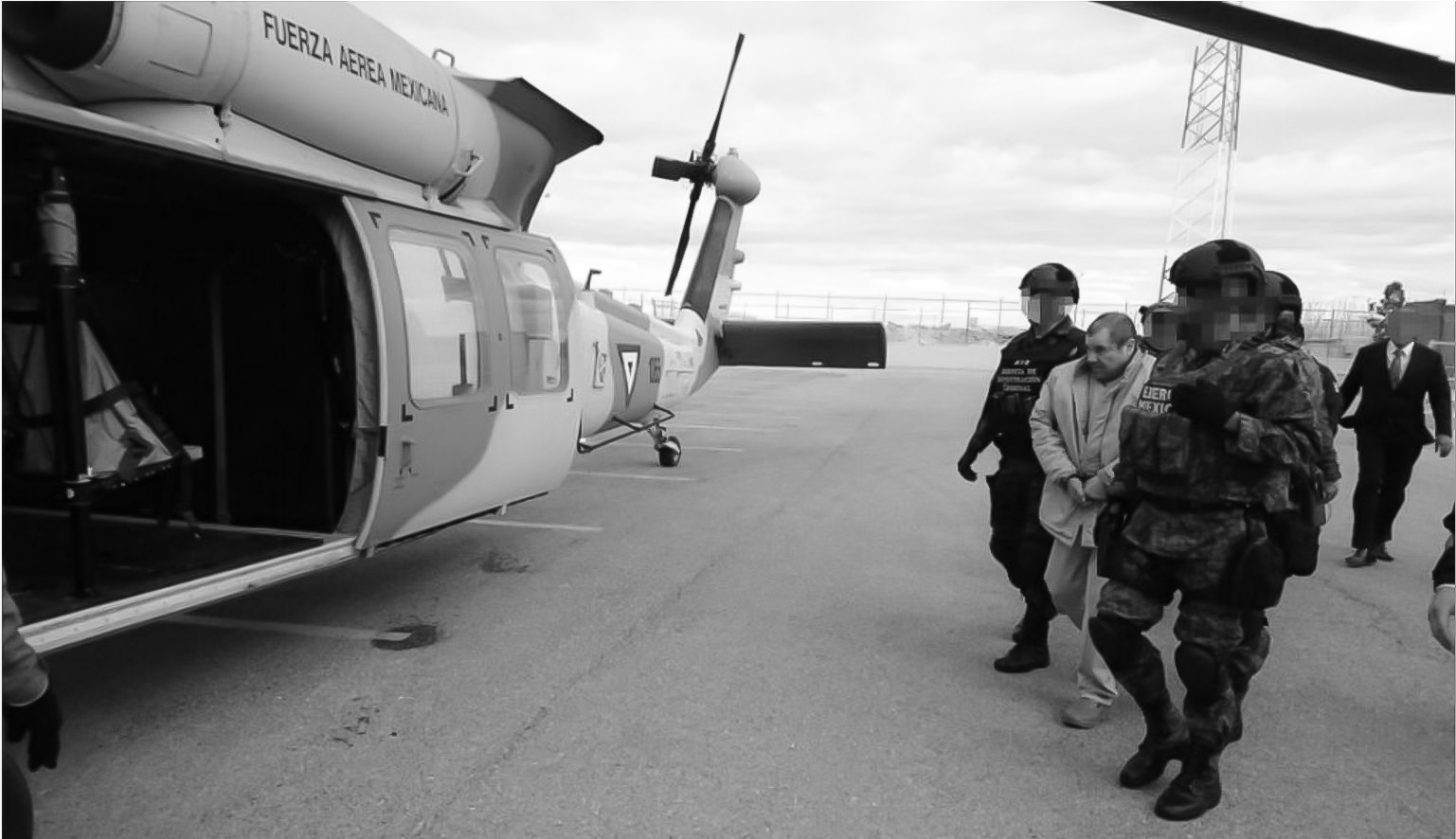
Moving ahead…         Mexico's El Chapo: From most wanted kingpin to extradited ... photo

Mexican drug lord Joaquin “El Chapo” Guzman may face murder charges after several former Mexican police officers accused him of killing six Americans and a DEA agent within a nine-week span in late 1984.

Three former Mexican police officers told the U.S. Attorney’s Office in Los Angeles they witnessed Guzman carry out the killing spree between late 1984 and early 1985. Jorge Godoy, one of the former cops who is now under witness protection, told WFAA that Guzman took pleasure in killing people.

“He likes to cut the people,” Godoy told the news site.

Four Americans who were Jehovah’s Witnesses — Benjamin Mascarenas, 29; his wife Pat Mascarenas, 27; Dennis Carlson, 32; and his wife Rose Carlson, 36 — were murdered during a missionary trip in Guadalajara, Mexico. Godoy said he was the bodyguard of drug kingpin Ernesto Fonseca at the time and the missionaries made the wrong decision of knocking on a drug lord’s door on Dec. 2, 1984.

He told WFAA he saw them rape the women and torture the Americans. He added that Guzman shot each person and watched their bodies fall into an open grave. Former DEA agent Hector Berrellez also said Guzman was involved in their deaths.

“He shot them with his Uzi 9mm and I have witnesses that were there that saw ‘El Chapo’ kill these four Americans after they had been severely tortured,” Berrellez told WFAA. “The women were even raped. We’re talking about an animal here.”

But the killings didn’t end there, according to Godoy. Two other Americans, John Walker, 35, and Albert Radelat, 33, were the crazed drug lord’s next targets in Jan. 30, 1985. Walker was a Vietnam veteran and two-time Purple Heart recipient in Guadalajara writing a novel at the time. He and Radelat went to La Langosta restaurant to have dinner — in what turned out to be a fatal mistake.

Drug lord Rafael Caro Quintero mistook the two for DEA agents and ordered them in the restaurant.

“[Walker and Radelat] passed by me and I said, ‘Oh my God,’” Godoy recalled.

He said Guzman cut Walker’s throat. He then wrapped them and buried the two people in a nearby park, according to the report.

The last killing involved DEA agent Enrique “Kiki” Camarena, who busted the cartel’s marijuana fields and torched 10,000 tons of marijuana that cost them about $5 billion. He and a pilot who took him to the fields were tortured, killed and their bodies dumped on the side of the road. “Absolutely, he [Guzman] tortured both of them,” Berrellez said. “[Guzman] was seen by two witnesses slap, kick and spit in Camarena’s face. He was involved in physically torturing Camarena.”

Camarena’s death sparked one of the biggest manhunts by the U.S. government.

The families of the six Americans told WFAA they want to see “El Chapo” charged with the murders. The drug lord had murder charges dropped before he was extradited to the U.S. The U.S. Attorney in Los Angeles did not comment on the possible charges to WFAA. A spokesman for the U.S. Attorney for the Eastern District of New York, where Guzman is awaiting trial, also declined to comment.

“El Chapo” pleaded not guilty to drug-related charges including money-laundering, use of firearms and murder conspiracy.

*** There is also the case of Rafael Caro Quintero : Despite being wanted in the U.S. for Camarena’s murder, Mexico’s Supreme Court in 2013 overturned the ruling that voided Caro Quintero’s conviction and led to his release. Once freed, Caro Quintero quickly disappeared and his current whereabouts are unknown.

The Drug Enforcement Administration is offering a reward of up to $5 million for information leading to his arrest and/or conviction.

“DEA and Treasury utilize every possible tool to attack and dismantle violent, deadly criminal organizations such as that of Rafael Caro Quintero, who is responsible for the 1985 murder of DEA Special Agent Enrique ‘Kiki’ Camarena,” DEA Deputy Administrator Jack Riley said. “Thanks to this Treasury action, Diana Espinoza Aguilar has been exposed as a key enabler and facilitator for Caro-Quintero and his vicious global drug trafficking and money laundering regime.”

A founder of the now-defunct Guadalajara cartel, Quintero spent 28 years in jail for the 1985 murder of DEA agent Kiki Camarena, but was unexpectedly released in 2013 – to the disgust of the US government – and promptly disappeared. Today the ageing narco is said to be hiding out somewhere in the golden triangle, intent on reimposing old school narco order in Sinaloa. “There is no logic to what is happening,” the record producer said. “The sense I get is of an atmosphere of pending war.” Luís agrees. He spent 10 years as one of El Chapo’s gunmen, loading drugs on to planes heading to the US as well as torturing and killing cartel members who stepped out of line. Luis has retired and complains of nightmare flashbacks to his days as a killer, but he still keeps in contact with the few members of his old crowd who are still alive. They tell him all is not well in the cartel. “Before all the cows went in one direction. Now there are too many cowboys,” he said, sipping a beer and fiddling with a joint. “There will always be drugs moving, for as long as it is not legal, but I see a lot of weakness, a lot of internal disputes and mistreatment of the local population and that creates problems too.” Luis said that while the police were as accommodating as ever, new tactics being used by the federal government were causing problems. Time was, he said, when soldiers would help cartel members load up drug shipments “for a beer and a woman”. Now, however, he said army units were rotated so often that deals with corrupt commanders had to be constantly renegotiated.