An affordable price is probably the major benefit persuading people to buy drugs at www.americanbestpills.com. The cost of medications in Canadian drugstores is considerably lower than anywhere else simply because the medications here are oriented on international customers. In many cases, you will be able to cut your costs to a great extent and probably even save up a big fortune on your prescription drugs. What's more, pharmacies of Canada offer free-of-charge shipping, which is a convenient addition to all other benefits on offer. Cheap price is especially appealing to those users who are tight on a budget
Service Quality and Reputation
Although some believe that buying online is buying a pig in the poke, it is not. Canadian online pharmacies are excellent sources of information and are open for discussions. There one can read tons of users' feedback, where they share their experience of using a particular pharmacy, say what they like or do not like about the drugs and/or service. Reputable online pharmacy canadianrxon.com take this feedback into consideration and rely on it as a kind of expert advice, which helps them constantly improve they service and ensure that their clients buy safe and effective drugs. Last, but not least is their striving to attract professional doctors. As a result, users can directly contact a qualified doctor and ask whatever questions they have about a particular drug. Most likely, a doctor will ask several questions about the condition, for which the drug is going to be used. Based on this information, he or she will advise to use or not to use this medication.
Category Archives: Human Rights Violations United Nations
Defense Minister Annegret Kramp-Karrenbauer said Germany would spend 2% of its economic output on defense by 2031, belatedly reaching the goal set by NATO leaders at a 2014 summit, months after Russia’s annexation of Ukraine’s Crimea peninsula.
“NATO is and will remain the anchor of European security. But it is also clear that Europe must increase its own complementary ability to act,” Kramp-Karrenbauer told a private event to honor NATO Secretary-General Jens Stoltenberg on Wednesday night.
“This starts with the defense budget. We need (to spend) 1.5% by 2024 and 2% by 2031 at the latest,” she said.
***
Germany has prohibited Estonia from shipping weapons to Ukraine. Is Germany agreeable to a Russia/Ukraine military conflict and the destruction of a country’s sovereignty while casualties and refugees are likely? Think about that. Did Germany ever criticize Germany for the poison deaths by Russia of those living in the U.S. and in Britain? How about when Russia shot down a commercial airliner killing all the passengers? What about the countless times Russia threatens allied naval vessels or buzzes military aircraft in sovereign airspace? We also cannot overlook Russian hackers when they struck Ukraine several times. Hello Germany…you out there?
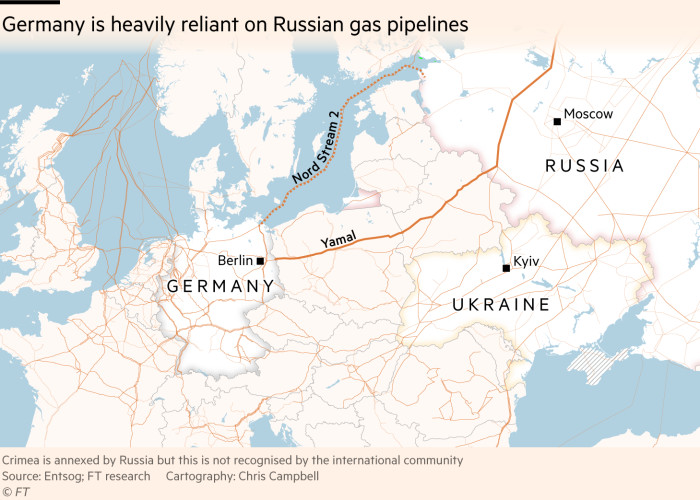
Meanwhile, beginning with Chancellor Merkel and now with Olaf Scholz, Germany has gone more rogue if that is possible which means they are ‘all-in’ with Russia mostly due to needing energy. Under Merkel, Germany is terminating nuclear power as an energy resource and is going in with natural gas and bio-mass along with on shore and off shore wind. Fully going green including solar. source
Meanwhile, remember a few years ago when Germany took in millions of Syrian refugees? Germany has been facing a labor shortage for many years so rather than crafting a domestic policy for the good of Germans, it was decided that refugees and migrants were the solution and this is not a new phenomenon as it began years before with Turks. An aging workforce and a low birthrate caused Germany to go outside the country to get workers. Audi and Mercedes considered this move to be an economic miracle but while some of that has been positive, the larger picture tells another story. Language skills, education, work ethics, bureaucracy, culture and training has been a bigger problem.
Oh….exactly what countries are the best customers for German cars? Yup….Russia and especially China….go figure. That Chinese human rights violation of the million Uighurs in prison and working in slave conditions is not exclusive to China by the way….as German companies profit from exploiting Uighur slave labor. Ever heard of Hugo Boss or Aldi? Yup and then there are American companies doing much the same…such as Nike or Puma, Amazon and Abercrombie and Fitch. Details here.
For more details on the raw truths go here.
Germany’s economic condition relies fully on raw materials from foreign countries and it’s supply chain is much worse than most of Europe or the United States…for this reason, we see how Germany side-steps the NATO doctrine while a few other countries including Finland and Georgia would be good replacements if they meet the fundamental requirements, perhaps even Bosnia and Herzegovina and least of all Ukraine.
Fundamental NATO membership includes the following:
NATO membership is potentially open to all of Europe’s emerging democracies that share the alliance’s values and are ready to meet the obligations of membership.
There is no checklist for membership.
Candidates for membership must meet the following five requirements:
–New members must uphold democracy, including tolerating diversity.
–New members must be making progress toward a market economy.
–Their military forces must be under firm civilian control.
–They must be good neighbors and respect sovereignty outside their borders.
–They must be working toward compatibility with NATO forces.
Again, while these criteria are essential, they do not constitute a checklist leading automatically to NATO membership.
New members must be invited by a consensus of current members.
Decisions to invite new members must take into account the required ratification process in the member states. In the case of the United States, decisions are made in consultation with Congress.
Sanctions kinda work and kinda don’t work…seems in the case of North Korea..they have failed.
In 2017, North Korea tested several missiles demonstrating what seemed to be rapid advances in its military technology.
The Hwasong-12 was thought to be able to reach as far as 4,500km (2,800 miles), putting US military bases on the Pacific island of Guam well within striking distance. source
Later, the Hwasong-14 demonstrated even greater potential, with a range of 8,000km although some studies suggested it could travel as far as 10,000km if fired on a maximum trajectory.
This would have given Pyongyang its first truly intercontinental ballistic missile, capable of reaching New York.
Eventually, the Hwasong-15 was tested, peaking at an estimated altitude of 4,500km – 10 times higher than the International Space Station.
If fired on a more conventional “flatter” trajectory, the missile could have a maximum range of some 13,000km, putting all of the continental US in range.
North Korea continued to develop its nuclear and ballistic missile programs during the past year and cyberattacks on cryptocurrency exchanges were an important revenue source for Pyongyang, according to an excerpt of a confidential United Nations report seen on Saturday by Reuters.
The annual report by independent sanctions monitors was submitted on Friday evening to the U.N. Security Council North Korea sanctions committee.
“Although no nuclear tests or launches of ICBMs (intercontinental ballistic missiles) were reported, DPRK continued to develop its capability for production of nuclear fissile materials,” the experts wrote.
North Korea is formally known as the Democratic People’s Republic of Korea (DPRK). It has long-been banned from conducting nuclear tests and ballistic missile launches by the U.N. Security Council. Since 2006, North Korea has been subject to U.N. sanctions, which the Security Council has strengthened over the years in an effort to target funding for Pyongyang’s nuclear and ballistic missile programs.
The sanctions monitors noted that there had been a “marked acceleration” of missile testing by Pyongyang.
The United States and others said on Friday that North Korea had carried out nine ballistic missile launches in January, adding it was the largest number in a single month in the history of the country’s weapons of mass destruction and missile programs.
CYBERATTACKS, ILLICIT TRADE
The monitors said “cyberattacks, particularly on cryptocurrency assets, remain an important revenue source” for North Korea and that they had received information that North Korean hackers continued to target financial institutions, cryptocurrency firms and exchanges.
“According to a member state, DPRK cyberactors stole more than $50 million between 2020 and mid-2021 from at least three cryptocurrency exchanges in North America, Europe and Asia,” the report said.
The monitors also cited a report last month by cybersecurity firm Chainalysis that said North Korea launched at least seven attacks on cryptocurrency platforms that extracted nearly $400 million worth of digital assets last year.
In 2019, the U.N. sanctions monitors reported that North Korea had generated an estimated $2 billion for its weapons of mass destruction programs using widespread and increasingly sophisticated cyberattacks.
The latest report said North Korea’s strict blockade in response to the COVID-19 pandemic meant “illicit trade, including in luxury goods, has largely ceased.”
Over the years the U.N. Security Council has banned North Korean exports including coal, iron, lead, textiles and seafood, and capped imports of crude oil and refined petroleum products.
“Although maritime exports from DPRK of coal increased in the second half of 2021, they were still at relatively low levels,” the monitors said.
“The quantity of illicit imports of refined petroleum increased sharply in the same period, but at a much lower level than in previous years,” the report said. “Direct delivery by non-DPRK tankers to DPRK has ceased, probably in response to COVID-19 measures: instead, only DPRK tankers delivered oil.”
North Korea’s humanitarian situation “continues to worsen,” the report said. The monitors said that was probably due to the COVID-19 blockade, but that a lack of information from North Korea meant it was difficult to determine how much U.N. sanctions were unintentionally harming civilians.
***
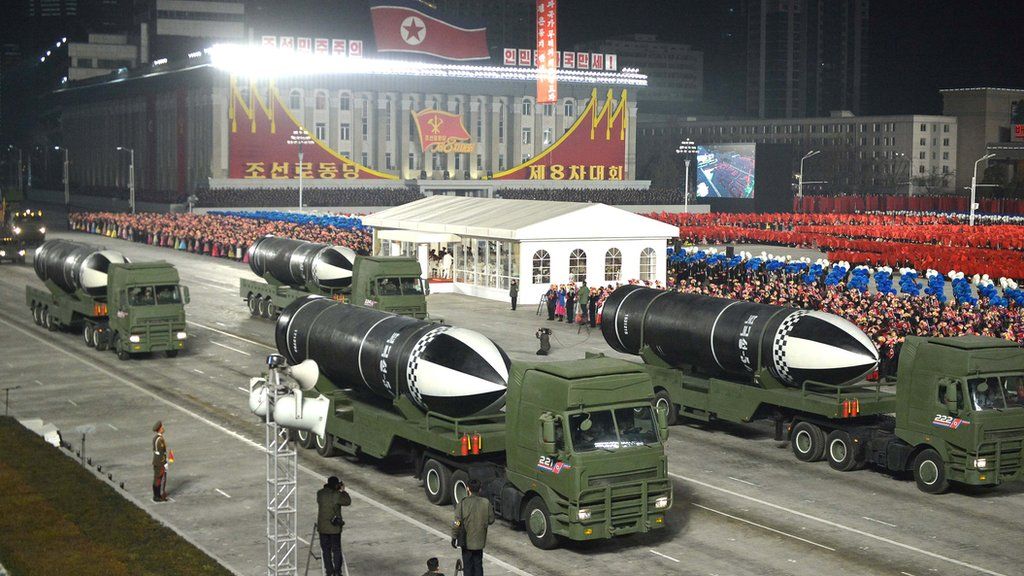
Missiles on display at a January 2021 military parade
“From 2020 to 2021, the number of North Korean-linked hacks jumped from four to seven, and the value extracted from these hacks grew by 40%,” Chainalysis said in a report.
The hackers used a number of techniques, including phishing lures, code exploits and malware to siphon funds from the organisations’ “hot” wallets and then moved them into North Korea-controlled addresses, the company said.
Chainalysis said it is likely that many of last year’s attacks were conducted by the so-called Lazarus Group, a hacking group which the US has applied sanctions against.
The group is believed to be controlled by North Korea’s primary intelligence bureau, the Reconnaissance General Bureau.
The Lazarus Group has previously been accused of involvement in the “WannaCry” ransomware attacks, the hacking of international banks and customer accounts and cyber-attacks on Sony Pictures in 2014.
“Once North Korea gained custody of the funds, they began a careful laundering process to cover up and cash out,” the report on last year’s cyber attacks added.
A United Nations panel that monitors sanctions on North Korea has accused Pyongyang of using stolen funds to support its nuclear and ballistic missile programmes as a way to avoid international sanctions.
Separately, in February last year, the US charged three North Korean computer programmers with a massive hacking spree aimed at stealing more than $1.3bn in money and cryptocurrency. BBC
In July of 2019: Mexico’s Congress passed an asset forfeiture bill; there were no additional changes to Mexico’s counterterrorism legislation in 2019. The government lacked adequate laws prohibiting material support to terrorists and relied on counterterrorism regimes in other countries to thwart potential threats. Additional reading here.
CARTEL monsters have hung nine bodies from a bridge in a chilling warning to rival gangs amid a bloody Mexico turf war.
A tenth victim was also found on a nearby road by horrified residents in the Zacatecas municipality of Cuauhtémoc on Thursday at around 6am.
4
Nine bodies were found suspended from a bridge in the municipality of Cuauhtémoc on ThursdayCredit: Reuters
Officials believe the gruesome display is related to a dispute between cartels in the area Credit: AP
Officials warned the disturbing display was likely to be linked to a savage dispute between ruthless criminal gangs that operate in the area.
The nine bodies were eventually removed from the overpass by police at around 10am local time, as locals went about their day.
According to local media, the majority of the deceased were identified as residents of the small town Cuauhtémoc, which has a population of just 6,660.
“They pay for the sins of others, it is not fair that they do this to us because they pay for the sinners,” one spooked local told TV Azteca Noticias.
Another added: “It’s scary to go out at night. You have to go to sleep early and every night there is noise, motorcycles, screaming, things like that.”
An “intense investigation” was underway, the local government said, although no arrests have yet been made.
***
“Operation Lone Star,” is Gov. Greg Abbott’s evolving and expensive plan to secure the U.S.-Mexico border using thousands of state troopers and Texas National Guardsmen. The operation, launched in March, was initially billed by Abbott as an effort to “deny Mexican Cartels and other smugglers the ability to move drugs and people into Texas,” but has since become a sprawling and controversial experiment in the use of state power to secure an international border.
Democrats have denounced it as illegal and unconstitutional, and called for a Justice Department investigation. Republicans have praised Abbott for taking a stand and pushing the envelope.
Abbott has not asked the Biden administration for permission because he does not believe he needs it. Indeed, the entire operation has been designed to operate exclusively with state resources and agencies, and within the existing confines of state law. That’s both a strength of Abbott’s approach and, as I saw for myself in Del Rio, Texas, a major weakness.
Abbott’s Border Operation Is A Bureaucratic Morass
It’s a weakness because it severely limits what the operation can achieve. The basic idea is that Texas state troopers and National Guard troops will arrest illegal immigrants, who will in turn be prosecuted for misdemeanor criminal trespass in hopes that such prosecutions will serve as a deterrent. Whatever the merits of this approach to border security, it comes with a host of caveats and constraints.
To begin with, Texas is only arresting single adult men, not women, children, or family units, which means the state is targeting the migrant population most likely to be quickly expelled to Mexico under Title 42, the pandemic public health order that allows federal immigration officials to send migrants back over the border with minimal processing. The migrant men arrested by Texas law enforcement, by contrast, will remain in state custody for weeks or longer, rather than being sent back to Mexico.
Up until last week, migrant men arrested under Operation Lone Star who posted bond would be transferred to Immigration and Customs Enforcement, which would typically expel them under Title 42. But last week ICE told the state it would no longer take custody of these migrants. That means Texas will have to transfer them to U.S. Border Patrol, and as of this writing it remains an open question whether Border Patrol will expel them as they would have under Title 42, had federal agents arrested them, or process them as asylum-seekers.
If the latter, then Operation Lone Star might have the unintended effect of rewarding migrants caught by state authorities: once they’re processed and released by Border Patrol to pursue their asylum claims, migrants have legal status, are allowed to work, and can remain in the United States as their case wends its way through federal immigration courts — a process that can take up to five years.
But even before these problems arise there are strict conditions that have to be met before state authorities can even make an arrest. Migrants can only be arrested on private land where landowners have agreed to press charges, and only on those parcels of land where the Texas National Guard has managed to erect temporary barriers, usually some arrangement of concertina wire that migrants must cut or go over, to ensure the trespass charges will stick.
And before Texas National Guardsmen in particular can arrest anyone, they’re supposed to go through 40 hours of police training (in practice, I’m told that it’s more like a day-long training). Also, the migrants who are arrested have to be transported to state prisons that have been retrofitted to comply with state jail standards, since migrants are being held in pretrial confinement. That in turn means all the corrections officers have to be trained as jailers.
On top of all these requirements, the entire operation depends on the willingness of local county attorneys to prosecute a deluge of misdemeanor criminal trespass cases arising from all these arrests. In Kinney County, which has a population of less than 4,000, the county attorney is a young man named Brent Smith who just took office in January and has never before worked as a prosecutor. He now has about 1,300 cases and counting thanks to Operation Lone Star. (For context, in normal times the Kinney County prosecutor would only take on a couple dozen cases per year.)
By contrast, in neighboring Val Verde County, the local prosecutor, David Martinez, a Democrat, has rejected nearly half the cases that have come through his office from Operation Lone Star. Last month, Martinez told a local news station he rejected the cases either because the migrants in question were seeking asylum or because there was some other problem with the case. (He cited one case in which state troopers re-directed a group of migrants to cross onto private property so they could arrest them for trespassing.)
For all this, out of about 1,500 criminal trespass cases filed since July through Operation Lone Star, only about 3 percent have resulted in convictions, according to a recent report by the Wall Street Journal, which also cited court records showing that of the 170 Operation Lone Star cases resolved as of November 1, about 70 percent were dismissed, declined, or dropped. The remaining cases ended in plea agreements, with most migrants sentenced to time already served.
Meanwhile, all of this is costing Texas hundreds of millions of dollars. Earlier this year, Abbott shifted about $250 million in the state budget to launch the operation, and the GOP-led state legislature later approved an additional $3 billion. In Del Rio, you can see these dollars at work all over town: every hotel parking lot is full of Texas state trooper trucks and SUVs. Uniformed National Guardsmen drive around in armored Humvees. Along some stretches of private land near the Rio Grande, sparkling new chain-link fencing topped by concertina wire stretches out for miles.
Locals seem to appreciate the effort and money being poured into their communities, especially landowners who feel betrayed and abandoned by the Biden administration. One woman told me her family’s ranch has been repeatedly vandalized this year by migrants — trashed, in fact, for the first time in generations. When they called Border Patrol, the answer came back that no one could be spared to come out and investigate. Their advice was, stay away from your ranch, or move. Their message was, incredibly, we can’t protect you.
Indeed, under the direction of Biden and Homeland Security Secretary Alejandro Mayorkas, Border Patrol has for the past ten months been overwhelmed with the endless task of processing and releasing migrants as fast as it possibly can, with little time or personnel available for patrolling the border. In Del Rio, I spoke to former Border Patrol chief Rodney Scott, who was forced out by the Biden administration in August, and he said agents are demoralized because they’re unable to do their jobs. Instead of intercepting drug and human traffickers or arresting criminals trying to evade detection — the actual job of Border Patrol agents — they’re stuck processing and transporting asylum-seekers.
Scott sees the border as a “national security issue,” but says the Biden administration has a completely different set of priorities. “Unfortunately since January 20, I haven’t seen a single action or even a single conversation while I was still in the chief’s position, to try to slow the flow to actually create a deterrent to illegal entry,” he says. “Every single action has been to basically be more welcoming. How can we process faster? And that’s just going to continue to be an invitation worldwide.”
Is Operation Lone Star Elaborate Political Theater?
Texas, then, really is on its own. Abbott is right that under the circumstances something must be done by the state, but so far his solution seems overly lawyerly and cautious, designed specifically to pass legal muster and win lawsuits rather than create a real deterrent to illegal immigration.
A cynic might suspect that Operation Lone Star, for all its complex interagency coordination and mass deployment of manpower and expensive price tag, is in the end mostly political theater. Its purpose might not be to secure the border so much as to secure Abbott’s right flank against a pair of Republican primary challengers, former GOP Texas Chairman Allen West and former state senator Don Huffines, who accuse Abbott of being too soft on the border.
Given the resources at Abbott’s disposal, West and Huffines — along with plenty of Texas conservatives who are frustrated about the ongoing border crisis — arguably have a point. Former Virginia attorney general Ken Cuccinelli, who led U.S. Citizenship and Immigration Services under Trump, has argued that border states have a strong constitutional case for securing their own international borders in the face of federal inaction. Cuccinelli and others cite Article I, Section 10, Clause 3 of the U.S. Constitution, which stipulates that no state can engage in diplomacy or war without the consent of Congress, “unless actually invaded, or in such imminent Danger as will not admit delay.”
The ongoing border crisis, which has seen a record 1.7 million arrests at the southwest border in the last 12 months, constitutes both an invasion and an imminent danger that will not admit delay, the argument goes, and states have a right to act. Not only could border state governors like Abbott invoke emergency powers to return illegal immigrants directly to Mexico, state legislatures could pass laws making it more difficult for illegal immigrants to remain in those states, mostly through strict licensure and screening requirements for sponsors and refugee resettlement organizations.
All of these things, and much else besides, lie far outside the scope of what Abbott is doing in Texas. There is no question at this point that Operation Lone Star, whatever its merits, will not significantly change the situation along the Rio Grande. The border crisis created by the Biden administration is here to stay — a new normal along the southwest border for as long as the White House desires it.
What could change that? Texas could. Abbott could. He has already demonstrated an impressive ability to mobilize and deploy thousands of Texas law enforcement and military personnel, along with every manner of vehicles, barriers, and transports. Nothing like Operation Lone Star has ever been undertaken, yet it is too little, too late — too pinched and small-minded a response to a rolling crisis that now appears to be permanent.
Abbott could wield these tools to press the constitutional question about what border states can do when the federal government leaves them to their own devices. If he doesn’t, he might find the people of Texas are ready to listen to someone who will. source
It is not just about batteries for electric vehicles, it is really all batteries and the Obama/Biden administration allowed this nefarious deal to happen.
The Biden family began gifting China with anything it wanted and it continues now in the Biden presidency.
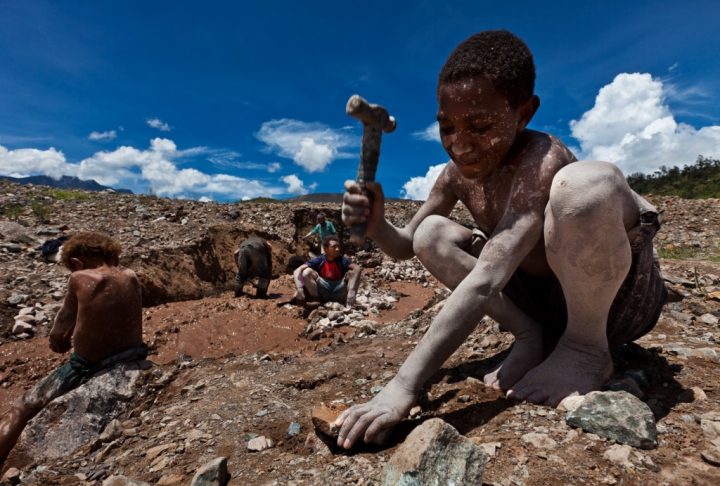
Congo and the cobalt mines employ slaves….even child slaves. so, let’s begin here shall we?
Google parent Alphabet, Apple, Dell, Microsoft and Tesla won’t have to face a class action suit claiming the tech giants bear responsibility for the alleged use of child labour in Congo to mine cobalt, a key ingredient of batteries in electric cars and consumer electronics, a federal court in Washington ruled Tuesday.
An NGO called International Rights Advocates launched the suit in December 2019, on behalf of more than a dozen families of children killed or hurt in the artisinal cobalt mines in the Congo, responsible for more than two-thirds of global production of the metal. source
The president’s son was part owner of a venture involved in the $3.8 billion purchase by a Chinese conglomerate of one of the world’s largest cobalt deposits. The metal is a key ingredient in batteries for electric vehicles.
NYT’s: An investment firm where Hunter Biden, the president’s son, was a founding board member helped facilitate a Chinese company’s purchase from an American company of one of the world’s richest cobalt mines, located in the Democratic Republic of Congo.
Mr. Biden and two other Americans joined Chinese partners in establishing the firm in 2013, known as BHR and formally named Bohai Harvest RST (Shanghai) Equity Investment Fund Management Company.
The three Americans, all of whom served on the board, controlled 30 percent of BHR, a private equity firm registered in Shanghai that makes investments and then flips them for a profit. The rest of the company is owned or controlled by Chinese investors that include the Bank of China, according to records filed with Chinese regulators.
The firm made one of its most successful investments in 2016, when it bought and later sold a stake in CATL, a fast-growing Chinese company that is now the world’s biggest maker of batteries for electric vehicles.
The mining deal in Congo also came in 2016, when the Chinese mining outfit China Molybdenum announced that it was paying $2.65 billion to buy Tenke Fungurume, a cobalt and copper mine, from the American company Freeport-McMoRan.
As part of that deal, China Molybdenum sought a partner to buy out a minority stakeholder in the mine, Lundin Mining of Canada. That is when BHR became involved.
Records in Hong Kong show that the $1.14 billion BHR, through subsidiaries, paid to buy out Lundin came entirely from Chinese state-backed companies.
China Molybdenum lined up about $700 million of that total as loans from Chinese state-backed banks, including China Construction Bank. BHR raised the remaining amount from obscure entities with names like Design Time Limited, an offshore company controlled by China Construction’s investment bank, according to the Hong Kong filings.
Before the deal was done, BHR also signed an agreement that allowed China Molybdenum to buy BHR’s share of the mine, which the company did two years later, the filings show. That purchase gave China Molybdenum 80 percent ownership of the mine. (Congo’s state mining enterprise kept a stake for itself.)
By the time BHR sold its share in 2019, Mr. Biden controlled 10 percent of the firm through Skaneateles L.L.C., a company based in Washington. While Chinese corporate records show Skaneateles remains a part owner of BHR, Chris Clark, a lawyer for Mr. Biden, said that he “no longer holds any interest, directly or indirectly, in either BHR or Skaneateles.” The Chinese records show that Mr. Biden was no longer on BHR’s board as of April 2020. Mr. Biden did not respond to requests for comment.
A former BHR board member told The New York Times that Mr. Biden and the other American founders were not involved in the mine deal and that the firm earned only a nominal fee from it. The money, the former board member said, went into the firm’s operating funds and was not distributed to its owners.
It is unclear how the firm was chosen by China Molybdenum. Current executives at BHR did not return emails and phone calls seeking comment. “We don’t know Hunter Biden, nor are we aware of his involvement in BHR,” Vincent Zhou, a spokesman for China Molybdenum, said in an email.
A dozen executives from companies involved in the deal, including Freeport McMoRan and Lundin, said in interviews that they were not given a reason for BHR’s participation. Most of the executives also said they were unaware during the deal of Mr. Biden’s connection to the firm.
Paul Conibear, Lundin’s chief executive at the time, said it was made clear that China Molybdenum was leading the transaction even though the buyer of Lundin’s stake was BHR.
“I never really understood who they were,” Mr. Conibear said of BHR.
When the mine was sold, Mr. Biden’s father was near the end of his term as vice president. In the run-up to the 2020 presidential election, Hunter Biden’s business ties in China were widely publicized.
But BHR’s role in the Chinese mine purchase was not a major focus. It has taken on new relevance because the Biden administration warned this year that China might use its growing dominance of cobalt to disrupt America’s retooling of its auto industry to make electric vehicles. The metal is among several key ingredients in electric car batteries.
When asked if the president had been made aware of his son’s connection to the sale, a White House spokesman said, “No.”
Treaties and other international agreements are written agreements between sovereign states (or between states and international organizations) governed by international law. The United States enters into more than 200 treaties and other international agreements each year.
The subjects of treaties span the whole spectrum of international relations: peace, trade, defense, territorial boundaries, human rights, law enforcement, environmental matters, and many others. As times change, so do treaties. In 1796, the United States entered into the Treaty with Tripoli to protect American citizens from kidnapping and ransom by pirates in the Mediterranean Sea. In 2001, the United States agreed to a treaty on cybercrime.
Read more about what specific bureaus are doing to support this policy issue:
Office of Treaty Affairs (L/T): The Office of the Assistant Legal Adviser for Treaty Affairs, within the Office of the Legal Adviser, provides guidance on all aspects of U.S. and international treaty law and practice. It manages the process under which the Department of State approves the negotiation and conclusion of all international agreements to which the U.S. will become a party. It also coordinates with the Senate Foreign Relations Committee on issues involving the Senate’s advice and consent to ratification of treaties. Read more about the Office of Treaty Affairs
***
To date, the U.S. State Department has no secured refugee agreements with a permanent status as a result of the Afghanistan refugee crisis. Some countries are cooperating only on a temporary basis while conditions and vetting has been satisfied. This now forces the United States to essentially accept the high majority of the refugees which could exceed perhaps as many as 1.0 million. Today, several of our military bases across the globe and those inside the United States have become refugee camps with no end in sight.
Anyone remember the Syrian refugees and the continuing crisis throughout Europe? Even Germany is deporting Syrian refugees.
Afghans who aided the U.S. war effort can be eligible for special immigrant visas, but those who don’t qualify can look to resettle in the U.S. in other ways.
Earlier this summer, the Biden administration expanded its Afghan refugee program and created a new category for those who worked with U.S.-based news outlets or nongovernmental organizations.
The Biden administration has not announced exactly how many Afghan refugees will be taken in by the U.S., but has committed to resettling up to 125,000 refuges in the 2022 fiscal year.
U.K.
Earlier this month, the U.K. government announced plans to welcome 5,000 Afghan refugees this year and resettle a total of 20,000 Afghans in the coming years.
The Afghan Citizens’ Resettlement Scheme would prioritize women and girls as well as religious and other minorities who are at most risk from the Taliban, the government said.
People believed to have recently arrived from Afghanistan stand in the courtyard of a hotel near Manchester Airport on August 25, 2021 in Manchester, England.CHRISTOPHER FURLONG/GETTY IMAGES
Canada
Canada has said that it will take in 20,000 refugees from Afghanistan, focusing on those in danger from the Taliban, including government workers and women leaders.
The country’s Immigration Minister Marco Mendicino has said Canada would consider taking in additional refugees on behalf of the U.S. or other allies, if asked.
As we face this crisis together, Canada is leading with our commitment to welcome 20,000 refugees who’ve fled Afghanistan, focusing on women and girls, LGBTQ individuals and targeted minorities.
Mexico welcomed a group of 124 Afghan media workers and their families on Wednesday.
The country had accepted its first group of refugees from Afghanistan on Tuesday, when five women and one man arrived in Mexico City, according to the Associated Press.
Mexico’s interior secretary, Olga Sánchez Cordero, said Wednesday that Mexico would grant asylum “to those Afghan citizens who require it.”
Germany
Germany has indicated that some Afghan refugees will be accepted, but numbers have not been specified.
Chancellor Angela Merkel faced criticism after Germany opened its borders to over a million migrants, mostly Syrians and Iraqis, six years ago.
After the Taliban takeover, Merkel said her government was focused on ensuring Afghan refugees “have a secure stay in countries neighbouring Afghanistan.”
France
In a televised address after the Taliban takeover, President Emmanuel Macron said Europe must protect itself from a wave of Afghan migrants.
He said France would “protect those who are in the most danger” but added that Europe “cannot take on the consequences from the current situation alone.”
Pakistan
Most Afghan refugees cross over the border into neighboring Pakistan.
In June, Pakistan’s Prime Minister Imran Khan told The New York Times that the country would seal its border if the Taliban took control as it did not want another wave of refugees from Afghanistan.
The country was already struggling to cope with the estimated three million Afghan refugees already in Pakistan, he said.
Tajikistan
In July, Tajikistan said it was preparing to accept up to 100,000 refugees from its neighboring country.
Uganda
Uganda said it had agreed to a request from the U.S. to temporarily take in 2,000 refugees from Afghanistan. The African nation currently hosts about 1.4 million refugees.
Albania, North Macedonia and Kosovo
Albania and North Macedonia have also accepted a U.S. request to temporarily take in Afghan refugees, accepting 300 and 450 refugees respectively. Kosovo has also agreed to temporarily host refugees headed for the U.S., but numbers have not been specified.
Switzerland
The Swiss government has said it will not accept large groups of refugees arriving directly from Afghanistan.
Austria
Austrian Chancellor Sebastian Kurz has ruled out taking in any more Afghan refugees. In a recent interview, Kurz said Austria had accepted 40,000 Afghans in the past few years, which he described as a “disproportionately large contribution.”
Afghan people climb atop a plane as they wait at the Kabul airport in Kabul on August 16, 2021, after a stunningly swift end to Afghanistan’s 20-year war.WAKIL KOHSAR/AFP VIA GETTY IMAGES
Turkey
Turkey hosts the largest number of refugees out of any country in the world, but has been ramping up construction of a border wall to keep further influxes of migrants out.
There are 182,000 registered Afghan migrants in Turkey and up to an estimated 120,000 unregistered ones, according to Reuters.
But the country’s president Recep Tayyip Erdogan has urged other European countries to take responsibility for those fleeing Afghanistan after the Taliban takeover, saying Turkey had no intention of becoming “Europe’s migrant storage unit.”
Iran
Iran already hosts 780,000 Afghans refugees, according to the U.N. refugee agency.
Emergency tents for refugees were set up in three Iranian provinces which border Afghanistan.
However, Hossein Ghassemi, the country’s interior ministry border affairs chief, has said that any Afghans who have crossed into Iran would be repatriated once conditions improve.
Russia
President Vladimir Putin has said Russia will not accept Afghan refugees because he does not want militants entering the country disguised as refugees.
“We don’t want militants under the disguise of refugees to appear here [in Russia] again,” he said Sunday, according to the TASS news agency.
“We will do everything, in particular in contact with our Western partners, to ensure stability in Afghanistan as well. But we do not want a repeat of the situation of the 1990s and early 2000s.”
Australia
Australia has pledged to take in 3,000 Afghan refugees within an existing annual allocation of its humanitarian visa program. Prime Minister Scott Morrison has indicated the number could be increased, referring to it as “a floor, not a ceiling.”
Meanwhile, the country has also begun a campaign to deter Afghan refuges from trying to reach Australia by boat.
“Australia’s strong border protection policies have not and will not change,” Karen Andrews, Australia’s minister for home affairs, said in a video posted on YouTube Monday.
“No one who arrives in Australia illegally by boat will ever settle here. Do not attempt an illegal boat journey to Australia. You have zero chance of success.”


 source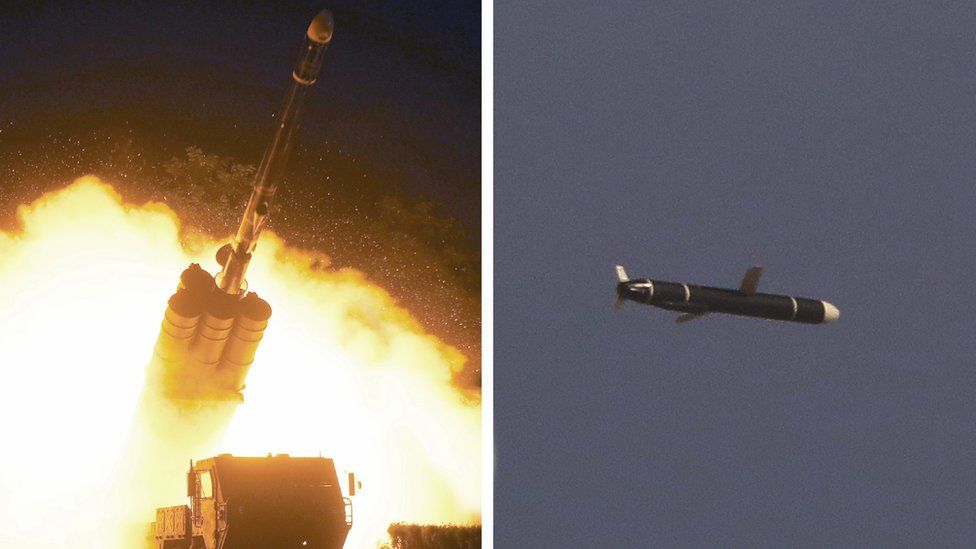
 Missiles on display at a January 2021 military parade