C’mon White House, NEVER Trust China

Primer: Moscow hired thousands of North Koreans to build the infrastructure for the Sochi Olympics. Russia still uses North Korean slaves for mining and forestry. The North Koreans are hired slaves that have to send their pay checks back the the Kim regime. Not to be outdone, Qatar is doing the same with slaves from the DPRK, as they are hired to build the stadium for the FIFA World Cup Soccer games in 2020.

North Koreans are hired out to foreign corrupt governments to work 20 hours a day with a pay rate of $100 per month (US$) and 70% of that goes back to Pyongyang as a loyalty payment.

By the way, China, Kuwait, Libya, Africa, Oman and several other countries hire the slaves and their living conditions don’t even qualify as slums, they are much worse.

So, while there is much worry about the missile and nuclear program at the hands of North Korea, China is a major culprit in full assistance and cooperation in that regard. Further, China has aided North Korea and other terror regimes in skirting not only United States sanctions, but those from applied by other nations.

Over the last eight years, the Obama administration has hardly taken any aggressive stance with regard to North Korea and consequences except to shut off humanitarian exports to the country. President Trump meanwhile is trusting Russia and China to deal with North Korea? Worse mistake yet.

Deeper dive…

The Global Web That Keeps North Korea Running

Pyongyang’s ties with 164 countries help it amass money and know-how to develop nuclear weapons

WSJ: North Korea may be one of the world’s most isolated countries, but the tightening sanctions regime it has lived under for the past two decades is anything but impermeable.

An examination of North Korea’s global connections reveals that even as it becomes increasingly dependent on China, Pyongyang maintains economic and diplomatic ties with many nations. Those links—from commercial and banking relationships to scientific training, arms sales, monument-building and restaurants—have helped it amass the money and technical know-how to develop nuclear weapons and missiles.

The nature and extent of North Korea’s global ties comes from current and formal officials, researchers, North Korean defectors, U.N. decisions, NGO’s and an analysis of economic statistics.

North Korea: What Comes After the ICBM Test?

In some cases, North Korea leans on old allies, particularly those like Cuba from the former Communist bloc, or those like Syria that are similarly hostile to the U.S. In others, notably in Africa, it has more transactional relationships to supply items such as cheap weaponry or military training. In the Middle East, it supplies laborers for construction work and pockets almost all their earnings.

Sanctions against North Korea haven’t been as broad as those applied to Iran over its nuclear program, nor as rigidly enforced.

David S. Cohen, undersecretary of the Treasury for terrorism and financial intelligence during the Obama administration, wrote in an op-ed in April that “North Korea has gotten off relatively easy, especially as compared with Iran.”

Trying to crack down on North Korean business activities is like a game of Whac-A-Mole. North Korean defectors have detailed how the regime uses front companies to conceal its commercial activities in foreign countries, or adopts business names that obscure their identity by avoiding using North Korea’s full name, thereby benefiting from confusion over whether the entity is North or South Korean.

Pyongyang maintains diplomatic ties with 164 countries and has embassies in 47, according to the National Committee on North Korea, a Washington-based nongovernmental organization, and the Honolulu-based East-West Center.

Although it lags far behind China, India has been North Korea’s second biggest trade partner in the past couple of years, buying commodities including silver and selling it chemicals among other goods. Russia has exported petroleum products to North Korea and imported items such as garments and frozen fish. Last year, North Korea attempted to export military communications equipment to Eritrea via front companies in Malaysia, according to a recent U.N. report.

Most North Koreans abroad are involved in providing funds for the state, defectors say. One of the primary roles of North Korean diplomats is to help develop and maintain cash flows for the regime, according to former embassy officials. North Korea missions typically have to be self-financed to maximize revenue for the state, these people say.

In recent months, under pressure from the Trump administration, there are signs more countries have begun to clamp down on North Korea. In February, Bulgaria had Pyongyang send home two diplomats in its embassy in Sofia, in line with U.N. Security Council resolutions passed in September calling on countries to reduce the number of North Korean diplomats abroad.

Italy this year moved four North Koreans studying at the International Center for Theoretical Physics in Trieste to switch to less-sensitive majors in line with a Security Council resolution calling for member nations not to provide education that could aid Pyongyang’s weapons program.

In March, Senegal said it suspended issuing visas for artisans from North Korea’s Mansudae Art Studio, a state-run organization that has erected monumental sculptures across Africa.

This image, from North Korea's KRT, shows what it said was the launch of a Hwasong-14 intercontinental ballistic missile.

This image, from North Korea’s KRT, shows what it said was the launch of a Hwasong-14 intercontinental ballistic missile. Photo: /Associated Press

More than 50,000 North Korean workers are employed abroad, according to the Asan Institute for Policy Studies, a Seoul-based think tank, many in construction or factory jobs. For these workers, wages are paid directly to North Korean officials, raising hundreds of millions of dollars a year for the state, human-rights groups say.

These ties are under scrutiny as Pyongyang’s success at launching a missile that could reach Alaska is escalating the crisis over its weapons program. This week’s missile test took place on the back of a Chinese truck imported to North Korea for logging purposes, according to analysts.

U.N. sanctions are primarily intended to block North Korea’s illegitimate trade and revenue streams that have a suspected link to its weapons programs. The U.N. doesn’t target all of Pyongyang’s business activities abroad, such as the chain of restaurants it operates in Asia and the Middle East, or its dispatch of laborers.

U.S. sanctions go further in trying to disrupt North Korea’s trade and revenue, including a recent move to block access to the U.S. financial system for a bank in China on which Pyongyang relied. The U.S. has sanctioned North Korean leader Kim Jong Un, a move that would freeze any of his assets in America.

Secretary of State Rex Tillerson on Tuesday called on the global community to stop doing business with Pyongyang.

Video from a North Korean state news bulletin Tuesday was said to show leader Kim Jong Un applauding after the launch.

Video from a North Korean state news bulletin Tuesday was said to show leader Kim Jong Un applauding after the launch. Photo: Yonhap News/Zuma Press

This week, Sen. Cory Gardner (R., Colo.), chairman of the Senate Foreign Relations Committee’s subpanel on East Asia, said he was drafting legislation that he says would create a “global embargo” on North Korea.

“We need to shut off North Korea’s access to oil, to trade, to currency, to financial institutions,” he said in an interview Thursday, calling for “Iran-style” sanctions. “They are far from being ‘sanctioned out.’ They are certainly isolated, but they have to recognize they ain’t seen nothing yet.”

China has had close ties to North Korea since the 1950s when it sent troops to fight U.S.-led forces backing the South in the Korean War.

In 2001, China accounted for around 18% of North Korea’s exports and 20% of its imports, ranking behind Japan on both measures, according to customs figures compiled by Harvard University’s Atlas of Economic Complexity.

Since U.N. sanctions on North Korea were tightened in 2009, Japan and other countries have curtailed commercial ties with Pyongyang, leaving China as by far its biggest trade partner.

For the past five years, China has accounted for more than 80% of North Korea’s imports and exports, providing an economic lifeline even as political relations between Beijing and Pyongyang have deteriorated.

During that period, China has imported mostly industrial raw materials from North Korea, especially coal, but also seafood and clothing such as men’s suits and overcoats.

In recent days, President Donald Trump has expressed frustration with China for expanding trade with North Korea despite U.S. appeals to exert more pressure.

China says it enforces U.N. sanctions and since February it has banned imports of North Korean coal—one of Pyongyang’s main sources of hard currency.

However, U.N. sanctions still allow trade that isn’t deemed to benefit North Korea’s nuclear and missile programs, and China’s customs figures show that its exports to North Korea have increased this year. Crucially, China continues to be North Korea’s biggest source of crude oil, according to diplomats and experts on the region.

Much of North Korea’s trade takes place over the 880-mile land border with China, which is porous and sparsely guarded. Small Chinese and North Korean companies quietly ferry coal, iron ore and other resources over the border, far from checkpoints.

U.N. sanctions introduced in March 2016 banned exports of North Korean iron ore unless they were exclusively for “livelihood purposes”—a loophole China continues to exploit.

While North Korea gained notoriety in the early 2000s for state-backed exports of illegal drugs and counterfeit U.S. dollars, Pyongyang has mostly shifted its strategy to allow private North Korean enterprises to take the lead, with the regime collecting bribes from these enterprises in a primitive system of taxation, says Justin Hastings, a lecturer at the University of Sydney who has researched North Korea’s overseas smuggling networks.

The shift in strategy means that North Korea can outsource some of the risk involved in the trade while continuing to fill its coffers.

“North Korea is not infinitely adaptable, but it’s far more adaptable than people have thought and its ability to adapt to sanctions has not been reached yet,” Mr. Hastings said.

One informal Chinese trader that Mr. Hastings interviewed for a soon-to-be-published academic paper was importing truckloads and boatloads of North Korean iron ore and other minerals across the river into China for resale as recently as a year ago, when the interview took place.


Iran and North Korea Historically Team Up on Nukes and Missiles

Iran launched 6 missiles, striking targets in Syria. Revolutionary Guards say in retaliation for last week’s Tehran terror attacks.
Using missiles is  a major escalation of Iran’s role in the Syrian conflict. Until now it provided military advisors, volunteers, money.  The missiles were launched from western Iran, flew over Iraq striking targets in Deir ez Zor, in eastern Syria.  Iranian official Amirabdollahian says attack was  “soft revenge” for twin terror attacks in Tehran last week. 800km away. Israeli defense systems followed the missiles and deemed the operation largely a failure due to some missiles failing and others missing targets.

Image result for u.s. spy satellites north korea

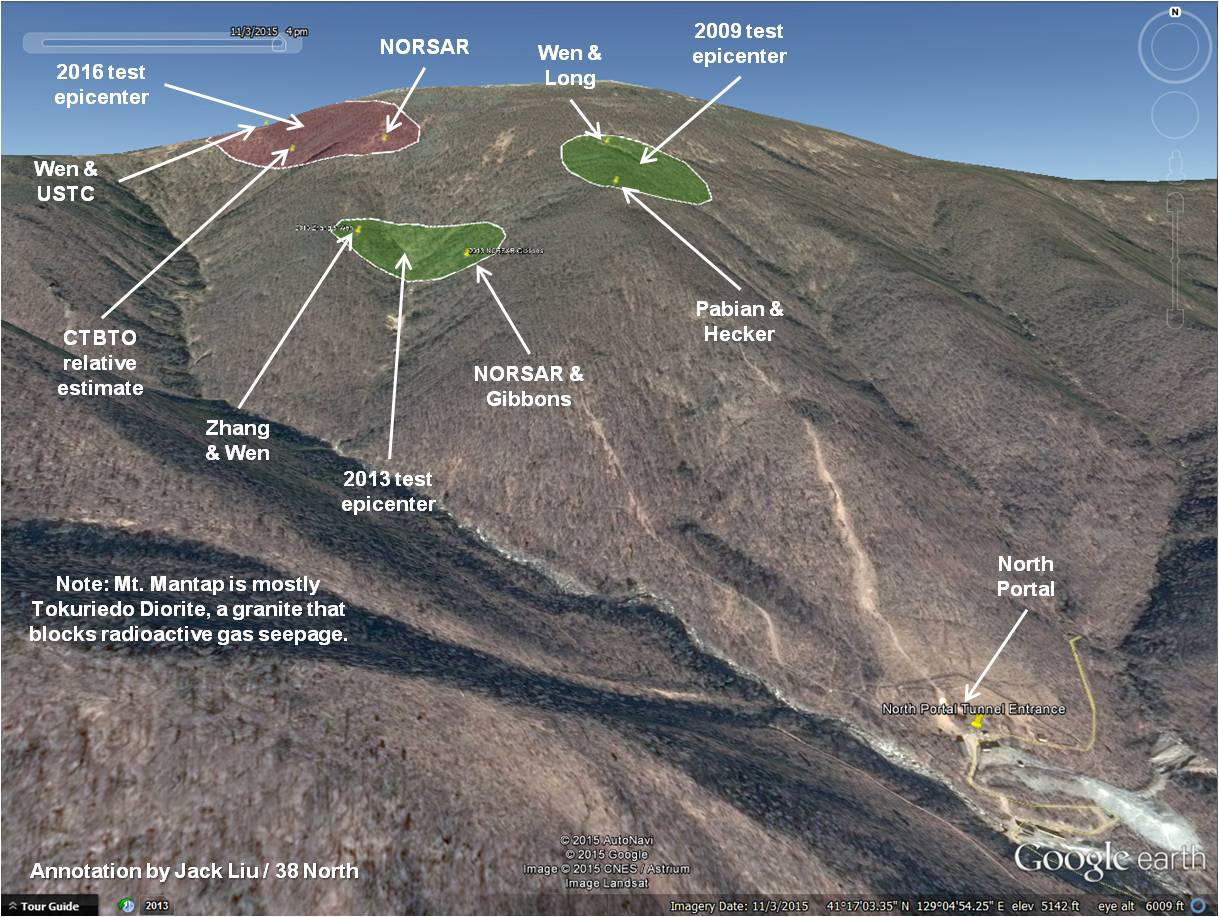
Meanwhile there is some significant activity occurring at a North Korean nuclear test site.  Intelligence officials in the United States and in the region are watching and analyzing the activities including using all high tech systems including spy satellites to determine a probable action by North Korea. There have been recent upgrades and currently several tunnels have seen additional people and vehicle movements.

Image result for north korea nuclear test sites

(CNSNews.com)– Iran has intensified its development of ballistic missiles in recent years, particularly since the conclusion of the nuclear deal, and is doing so with significant collaboration with fellow pariah state North Korea, according to the exiled opposition National Council of Resistance of Iran (NCRI).

The regime has established at least 42 facilities for the production, testing and launching of ballistic missiles, the NCRI reported on Tuesday, revealing for the first time information on 12 previously-unknown sites.

The report was released by Alireza Jafarzadeh, deputy director of the NCRI’s Washington office, at a briefing in Washington.

The revelations come at a critical time, days after the Islamic Revolutionary Guard Corps (IRGC) for the first time fired ballistic missiles from Iranian territory at targets in Syria – ostensibly at ISIS terrorist positions. It’s believed to be the first time Iran has fired missiles at targets beyond its borders since the Iran-Iraq war in the 1980s.

Jafarzadeh said the missiles fired at targets in Syria were launched from an underground IRGC facility called Panj Pelleh, an older site in Kermanshah province in western Iran which he said had been the launchpad for missiles fired at targets in Iraq during the Saddam era.

The new NCRI report also comes shortly after the U.S. Senate passed, by a 98-2 vote, sanctions legislation targeting both Iran’s ballistic missile programs and the IRGC. The Countering Iran’s Destabilizing Activities Act, which Jafarzadeh praised as a good step, has been sent to the House.

The information released Tuesday, based on the opposition group’s sources inside the regime and IRGC, points to Iran having established missile facilities based on North Korean models, with the help of visiting North Korean experts.

“These North Korean experts who were sent to Iran, trained the main IRGC missile experts in IRGC garrisons, including the Almehdi Garrison situated southwest of Tehran,” the report says.

The IRGC has built a special residence in Tehran for the North Korean experts, who have been involved in helping develop warhead and guidance systems for Iranian missiles.

IRGC Aerospace Force personnel regularly visit North Korea to exchange knowledge, the report says.

Defying international condemnation, North Korea’s nuclear-armed regime has carried out a series of missile launches and Kim Jong-un has threatened to soon test an intercontinental ballistic missile (ICBM).

The NCRI report includes satellite imagery and information on the locations of many of 42 identified IRGC-controlled missile-related facilities across Iran – including 12 which the group says have been hitherto-unknown.

The sites include missile manufacturing plants, launching pads, training facilities, missile storage and maintenance units. Some are located or partly located underground, or in mountainous areas.

None of the sites are in eastern Iran. Most are in the central region, or in Iran’s western and southern provinces. The locations of missile launch sites have evidently been selected taking into account potential targets in the Gulf or westward towards Israel and Europe.

“The sites that are involved with deployment, launching operations and testing are on the western side or on the southern border, here, with a clear objective of threatening the neighbors,” Jafarzadeh noted, pointing at the map, observing that Europe and the West lie in that direction too.

“Western countries as well as countries in the region, those are the countries that they threaten, and have been threatening,” he said.

Reaction to missile tests has been ‘mild’

Jafarzadeh said the objective of the ballistic missile program is two-pronged – to deploy shorter-range missiles to threaten their neighbors in the region, and to develop the capability of putting a nuclear warhead on a longer-range missile.

The Joint Comprehensive Plan of Action (JCPOA), the nuclear deal negotiated between Iran and six powers, did not touch on the missile program – at Tehran’s insistence – but the Obama administration asserted that by placing verifiable restrictions on Iran’s nuclear program it shut off all paths to developing a nuclear weapon.

In response to a question, Jafarzadeh said the NCRI does not link the expanding missile work directly to the JCPOA, but “when you lose leverage you want to make up for it somewhere else,” he said of the regime. “There is more emphasis on their missile program now than there was a few years ago.”

He pointed out that the JCPOA left Iran with a lot of “room to maneuver” when it comes to ballistic missile activity, and that international reaction to its missile tests has been “mild, to say the least.”

Of the facilities discussed on Tuesday, one extensive complex (Semnan), in a mountainous area south-east of Tehran, is actively associated with the Organization of Defensive Innovation and Research (Persian acronym SPND), which is believed to be a body tasked with the development of a nuclear weapons capability.

SPND’s existence was first unveiled by the NCRI in 2011, and in August 2014 the U.S. Treasury Department added the organization to its “specially designated nationals” list, making it subject to U.S. sanctions.

“The Iranian regime has remained in power in Iran by relying on two pillars: internal

repression and external export of Islamic fundamentalism and terrorism,” the report states, lumping the ballistic weapons program into the latter “pillar.”

“As the regime becomes more isolated domestically and its grip on Iranian society weakens,

it resorts more frantically to the second pillar of its bid to keep power,” it says.

The report noted that Iran re-asserted its intention to continue advancing its missile program after the U.S.-Arab-Islamic summit in Riyadh last month. The summit saw the U.S. and most of the world’s Sunni Muslim states take a hard line on Iran.

The NCRI called for effective and comprehensive sanctions targeting the ballistic missile program; the designation of the IRGC as a foreign terrorist organization; and for IRGC and proxy militias to be evicted from countries in the region, especially Syria and Iraq.

The NCRI and affiliated People’s Mujahedeen Organization of Iran (MEK) has in the past provided valuable intelligence to the West, including pivotal information in 2002 that exposed nuclear activities Tehran had hidden from the international community for two decades.

The NCRI/MEK was designated a foreign terrorist organization under U.S. law until 2012, and is reviled by the clerical regime in Tehran, not least because it supported Saddam Hussein in his bloody eight year-long war against Iran in the 1980s.

It enjoys strong support from some current and former policymakers from both parties in Washington, as evidenced by the list of confirmed speakers at the NCRI’s annual convention, scheduled for July 1 in Paris.

Among them are former U.S. Ambassador to the U.N. John Bolton, former House Speaker Newt Gingrich, former Homeland Security Secretary Tom Ridge, former FBI Director Louis Freeh, former Attorney General Michael Mukasey, former Sen. Joe Lieberman, former New Mexico Gov. Bill Richardson and former Marine Corps commander Gen. (Ret.) James Conway.

Kushner in Israel, with ‘Allen Plan’ in Hand?

President Trump’s son-in-law Jared Kushner meets with Israeli Prime Minister Netanyahu hoping for a breakthrough on peace talks between Israel and the Palestinians. After this session, Kushner goes to Ramallah to meet with Palestinian Mahmoud Abbas. This is the 50th anniversary of the 1967 Mideast war where Israel captured the West Bank, East Jerusalem and Gaza.

One of the big issues with the Palestinians is the construction of ‘settlements’ which this site takes extreme exception to that term. The other term used by the Palestinians which should never be accepted is ‘occupation’.

So, as the title of the article includes the ‘Allen Plan’….exactly what is that?

It refers to General Allen and 1967 lines, proposed during Obama’s term as president. Israel is always prepared for these types of meetings and had already formally rejected any re-proposal for The Allen Plan.

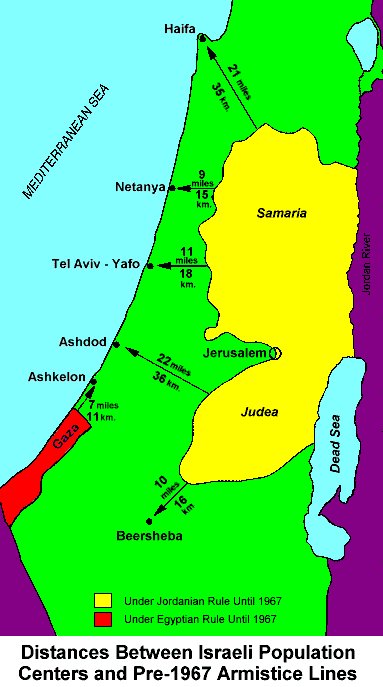
Does this look like Israel can defend itself reverting to 1967 lines? Further, that proposal demands Israel to relinquish the most sacred historical territory.

Image result for israel 1967 lines map

Image result for general john allen john kerry

EXECUTIVE SUMMARY: The Trump White House is currently reexamining the Allen Plan, an Obama-era proposal that calls for a Palestinian state in the 1967 borders with no IDF presence whatsoever. This plan is dangerous. If it is implemented, Israel will have to rely on foreign forces for its security, a situation that has not worked in the past. More than that, it is antithetical to the Israeli ethos of self-defense and self-preservation in the Jewish homeland.

Col. Kris Bauman’s appointment as Israel adviser to the US National Security Council is a noteworthy event. He assisted Gen. John Allen in formulating recommendations for security arrangements for Israel in the context of a permanent settlement, to which then-Secretary of State John Kerry aspired. This set of recommendations came to be known as the Allen Plan.

Gen. Allen’s vision was detailed in a comprehensive document prepared at a US research institute by two Israelis and two Americans: Gen. (res.) Gadi Shamni and Nimrod Novik, along with Ilan Goldenberg and Col. Kris Bauman.

The plan envisages a Palestinian state with full sovereignty inside the 1967 borders, its capital in east Jerusalem, with minor modifications for settlement blocs. The plan is based on complete acceptance of the Palestinian demand for full sovereignty. This means no IDF soldiers anywhere in their state, which would extend from the Jordan River to the 1967 line.

In lieu of Israel’s demands regarding defensible borders, which include an Israeli military presence in the Jordan Valley to ensure the Palestinian state’s demilitarization, the plan proposes a varied and complex security solution. One element would be a US military force that would operate in the Jordan Valley. As the document’s Executive Summary states,

The purpose of this study is to demonstrate that well-thought-through security measures in the context of the two-state solution can provide Israelis and Palestinians with a degree of security equal or greater to that provided today by Israel’s deployment into the West Bank…

The basic problem is the notion that Israel will rely for its security on foreign forces. Not only is it difficult to ensure that such forces would fulfill their duty successfully, but it is uncertain whether or not they would stay in place – particularly after they have suffered casualties like those they have suffered in Afghanistan and Iraq over the past decade.

Recall that during the waiting period before the Six-Day War, the security guarantee given by President Eisenhower to Ben-Gurion after the 1956 Sinai Campaign evaporated. When he demanded that Israel withdraw unconditionally from the Sinai Peninsula, Eisenhower promised that if the Straits of Tiran were ever again closed to Israeli shipping, the US would intervene. Yet when Israeli foreign minister Abba Eban came to Washington in May 1967, President Johnson candidly explained to him that Eisenhower’s promise – however estimable – was no longer a practical proposition. With his army bogged down in Vietnam, Johnson apparently could not have gained the nation’s or Congress’s support for an intervention in the Straits of Tiran even if he had wanted to.

The main concern is that the existence of the Greater Tel Aviv area – indeed, the daily routine of the State of Israel – will come to be dependent on the goodwill of foreign forces. That is the heart of the matter. Do we want Israel to be no more than a haven for persecuted Jews where they can subsist under foreign protection? Or do we want Israel to be a place of freedom, a homeland, in which we alone are responsible for our own security and sovereignty?

The authors of the Allen document emphasize that Israel’s security would continue to be based on the IDF’s power. But it is hard to imagine under what circumstances Israel would attain the international legitimacy to pursue an offensive deep within the Palestinian state, should the need arise. Regarding the conditions that could justify an IDF operation in Palestinian territory, the document says:

The Palestinians will never agree to an Israeli right of re-entry, but there could be a side agreement between Israel and the United States on the conditions under which the United States would support unilateral Israeli action. Ultimately, Israel is a sovereign state that enjoys the right of self-defense. Thus, it can unilaterally violate the sovereignty of another state, but with the attendant risks that would have to be weighed by Israeli leadership.

Should the IDF evacuate the territories completely, as envisaged by this plan, the Palestinians would certainly employ their carefully honed tactical and strategic talent for nonaccountability and ambiguity. They would take care to ensure that the Palestinian state cannot be defined as a hostile entity against which a “just war” can be declared. Whether deliberately or not, they would be able to let “rogue,” non-state forces do their work for them, and avoid taking responsibility. What then?

There is also good reason to doubt whether conditions for demilitarization can be maintained. In an era of global arms proliferation, and of forms of smuggling that elude surveillance (as in the flow of weapons to Hamas in Gaza and to Hezbollah in Lebanon), along with increasingly sophisticated local arms manufacture, there is no way to guarantee real demilitarization without a constant effort to keep the territory fully isolated and to operate within it.

We must also take into account the possibility that war could erupt in more than one arena at at a time. If war were to break out with the state of Palestine in the West Bank, it could happen simultaneously in Lebanon, Gaza, and so on. The IDF would be unable to concentrate its efforts in the West Bank arena – which, because of its geographic proximity to Israel’s population centers, could inflict a heavy blow. Under the new conditions of war, which are fundamentally different from those that prevailed in June 1967, reconquering the territory would be incomparably more difficult.

And what of the document’s validity under changing conditions? The security solution the document proposes must be weighed in terms of the time dimension, and in circumstantial contexts that are subject to change. If a solution is responsible and workable, what time span is envisaged? Who knows under what evolving circumstances the solution will be required to provide protection to a state of Israel that has been trimmed down to the coastal plain? Is there not also a need for responsible risk management regarding contingencies that are still beyond the horizon?

We must ask to what extent we ourselves, with the excessive emphasis we have placed on security concerns in recent decades as a key criterion by which to assess any prospective solution, have laid the groundwork for Gen. Allen’s plan. His security document is, after all, intended expressly to offer a technical solution to all the familiar security issues. It would leave the Israeli leadership without the faintest possibility of invoking a security pretext to ward off the “peace solution.”

In describing Kerry’s efforts, Thomas Friedman asserted (The New York Times, February 17, 2013) that in light of Gen. Allen’s solution for Israel’s security concerns, the Israeli government had reached a juncture where it would have to choose between peace and ideology.

Perhaps we have forgotten that protecting the national existence, in terms of how the IDF defines national security, does not pertain solely to ensuring the physical existence of the citizens of the country but also to safeguarding national interests. A national interest – such as the sovereignty of the people of Israel in their capital, Jerusalem – can go far beyond the technical contents of a plan for security arrangements, however worthy. Security is only a means, not an end in itself.

From a practical, professional standpoint, Gen. Allen’s plan leaves much to be desired. But on a deeper level, it completely ignores the possibility that the people of Israel, in renewing their life in their homeland, are motivated by something much greater than the need for a technical solution to security concerns.

Why is China Protecting North Korea? Reasons Abound

Primer:

The United States Computer Emergency Readiness Team (US-CERT) issued a technical alert about the activity of the North Korea’s ‘Hidden Cobra’ APT group.
The joint Technical Alert (TA) report is the result of the efforts between of the Department of Homeland Security (DHS) and the Federal Bureau of Investigation (FBI).

The US Government has tracked the hacker group as Hidden Cobra, but the APT is most popular as the Lazarus APT Group.

The activity of the Lazarus Group surged in 2014 and 2015, its members used mostly custom-tailored malware in their attacks and experts that investigated on the crew consider it highly sophisticated.

This threat actor has been active since at least 2009, possibly as early as 2007, and it was involved in both cyber espionage campaigns and sabotage activities aimed to destroy data and disrupt systems.  Security researchers discovered that North Korean Lazarus APT group was behind recent attacks on banks, including the Bangladesh cyber heist.

According to security experts, the group was behind, other large-scale cyber espionage campaigns against targets worldwide, including the Troy Operation, the DarkSeoul Operation, and the Sony Picture hack.

The joint alert from the FBI and the DHS further details on the group, including indicators of compromise (IoC) for its DeltaCharlie botnet involved in the “Operation Blockbuster” to power DDoS attacks. More here.

*** Most of North Korea’s cyber operations are located in China hosted on Chinese communications internet/communications platforms. It is espionage of an epic standard. But let us go deeper.

Related reading: The North Korea-Cuba Connection including arms sales

Related reading: DPRK-Cuba relations showcase mutual support and solidarity 

(Remember, Obama removed Cuba in 2015 from the terror list as a means to establish the process to normalize relations)


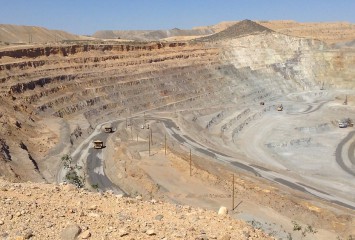
*** Image result for north korea minerals

Few think of North Korea as being a prosperous nation. But it is rich in one regard: mineral resources.

Currently North Korea is alarming neighbors with its frequent missile tests, and the US with its attempts to field long-range nuclear missiles that can hit American cities. A sixth nuclear test could be imminent. An attack on the US or its allies would be suicidal, so Pyongyang probably aims to extract “aid” from the international community in exchange for dismantling some of its weaponry—rewind about 10 years to see the last time it pulled off the old “nuclear blackmail” trick.

 AP

But however much North Korea could extract from other nations that way, the result would pale in comparison to the value of its largely untapped underground resources.

Below the nation’s mostly mountainous surface are vast mineral reserves, including iron, gold, magnesite, zinc, copper, limestone, molybdenum, graphite, and more—all told about 200 kinds of minerals. Also present are large amounts of rare earth metals, which factories in nearby countries need to make smartphones and other high-tech products.

Image result for north korea minerals NKNews

Estimates as to the value of the nation’s mineral resources have varied greatly over the years, made difficult by secrecy and lack of access. North Korea itself has made what are likely exaggerated claims about them. According to one estimate from a South Korean state-owned mining company, they’re worth over $6 trillion. Another from a South Korean research institute puts the amount closer to $10 trillion.

State of neglect

North Korea has prioritized its mining sector since the 1970s (pdf, p. 31). But while mining production increased until about 1990—iron ore production peaked in 1985—after that it started to decline. A count in 2012 put the number of mines in the country at about 700 (pdf, p. 2). Many, though, have been poorly run and are in a state of neglect. The nation lacks the equipment, expertise, and even basic infrastructure to properly tap into the jackpot that waits in the ground.

In April, Lloyd R. Vasey, a senior adviser at the Center for Strategic and International Studies, noted that:

North Korean mining production has decreased significantly since the early 1990s. It is likely that the average operational rate of existing mine facilities is below 30 per cent of capacity. There is a shortage of mining equipment and North Korea is unable to purchase new equipment due to its dire economic situation, the energy shortage and the age and generally poor condition of the power grid.

It doesn’t help that private mining is illegal in communist North Korea, as are private enterprises in general (at least technically). Or that the ruling regime, now led by third-generation dictator Kim Jong-un, has been known to, seemingly on a whim, kick out foreign mining companies it’s allowed in, or suddenly change the terms of agreements.

Despite all this, the nation is so blessed with underground resources that mining makes up roughly 14% of the economy.

A “cash cow”

China is the sector’s main customer. Last September, South Korea’s state-run Korea Development Institute said that the mineral trade between North Korea and China remains a “cash cow” for Pyongyang despite UN sanctions, and that it accounted for 54% (paywall) of the North’s total trade volume to China in the first half of 2016. In 2015 China imported $73 million in iron ore from North Korea, and $680,000 worth of zincin the first quarter of this year.

North Korea has been particularly active in coal mining in recent years. In 2015 China imported about $1 billion worth of coal from North Korea. Coal is especially appealing because it can be mined with relatively simple equipment. Large deposits of the stuff are located near major ports and the border with China, making the nation’s bad transportation infrastructure less of an issue.

For years Chinese buyers have purchased coal from North Korea at far below the market rate. As of last summer, coal shipments to China accounted for about 40% (paywall) of all North Korean exports. But global demand for coal is declining as alternatives like natural gas and renewables gain momentum, and earlier this year Beijing, in line with UN sanctions, began restricting coal imports from its neighbor.

The sanctions game

After North Korea conducted its first nuclear test in 2006, the UN began imposing ever stronger sanctions against it. Last year the nation’s underground resources became a focus. In November 2016, the UN passed a resolution capping North Korea’s coal exports and banning shipments of nickel, copper, zinc, and silver. That followed a resolution in March 2016 banning the export (pdf) of gold, vanadium, titanium, and rare earth metals.

The resolutions targeting the mining sector could hurt the Kim regime. Before they were issued, a 2014 report on the country’s mining sector by the United States Geological Survey noted that (pdf, p. 3), “The mining sector in North Korea is not directly subject to international economic sanctions and is, therefore, the only legal, lucrative source of investment trade available to the country.”

That is no longer the case.

Of course, Pyongyang has grown adept at evading such sanctions, especially through shipping. Glimpses of its covert activities come from occasional interceptions of vessels. Last August Egyptian authorities boarded a ship laden with 2,300 tons (2,087 metric tons) of iron ore heading from North Korea to the Suez Canal (they also found 30,000 rocket-propelled grenades below the ore).

Earlier this year a group of UN experts concluded that North Korea, despite sanctions, continues to export banned minerals. They determined, as well, that North Korea uses another mineral—gold—along with cash to “entirely circumvent the formal financial sector.”

Interested neighbors

Meanwhile China’s overall trade with North Korea actually increased 37.4% (paywall) in the first quarter compared to the same period last year. Its imports of iron ore from North Korea shot up 270% in January and February from a year ago. Coal dropped 51.6%.

North Korea’s neighbors have long had their eyes on its bonanza of mineral wealth. About five years ago China spent some $10 billion on an infrastructure project near the border with North Korea, primarily to give it easier access to the mineral resources. Conveniently North Korea’s largest iron ore deposits, in Musan County, are right by the border. An analysis of satellite images published last October by 38 North, a website affiliated with Johns Hopkins University, showed mining activity was alive and well in the area.

China particularly covets North Korea’s rare earth minerals. Pyongyang knows this. It punished Beijing in March by suspending exports of the metals to China in retaliation for the coal trade restrictions.

Meanwhile Russia, which also shares a (smaller) border with North Korea, in 2014 developed plans to overhaul North Korea’s rail network in exchange for access to the country’s mineral resources. That particular plan lost steam (pdf, p. 8), but the general sentiment is still alive.

But South Korea has its own plans for the mineral resources. It sees them as a way to help pay for reunification (should it finally come to pass), which is expected to take decades and cost hundreds of billions or even trillions of dollars. (Germany knows a few things about that.) Overhauling the North’s decrepit infrastructure, including the aging railway line, will be part of the enormous bill.

In May, South Korea’s Ministry of Land, Infrastructure and Transport invited companies to submit bids on possible infrastructure projects in North Korea, especially ones regarding the mining sector. It argued that (paywall) the underground resources could “cover the expense of repairing the North’s poor infrastructure.”

It was, of course, jumping the gun a bit. For now South Korea—and the world—is stuck with a bully in the mineral-blessed North.

***

China is undergoing a major military build up around the world and has even included collaboration with Pakistan.

The new assessment focuses instead on the buildup on Spratly Islands, noting that previous year the Mischief, Subi and Fiery Cross Reefs, three of the largest outposts, saw the construction of 24 administration buildings, barracks, fixed weapons positions, communication facilities and fighter-sized hangars by China, each of them with runways 8,800 feet long.

While the report notes that China has not undertaken any new land reclamation projects on disputed features in the South China Sea during 2016, it did accuse China of further militarizing the contested Spratly Islands via the construction of 24 hangars capable of housing fighter aircraft, fixed weapons positions, barracks and communication facilities.

Beijing has opposed the deployment of a U.S. missile shield in South Korea to defend against attacks from North Korea, in part because it says it could be used to counter China’s capabilities.

Meanwhile Pakistan itself has not made any comments about this statement.

Published Tuesday, the Pentagon report estimated that China spent US$180 billion previous year on its military – the world’s largest – a figure well over the country’s official US$140 billion defence budget.

The report made “irresponsible remarks on China’s national defense development and reasonable actions in defending our territorial sovereignty and security interests in disregard of the facts“, foreign ministry spokeswoman Hua Chunying told reporters yesterday.

China likely will seek to establish additional military bases in countries with which it has longstanding, friendly relationships“, the report predicts.

China has cited anti-piracy patrolling as one of the reasons for developing what it calls a naval logistics center in Djibouti.

“China’s expanding global economic interests are increasing demands for the [Chinese Navy] to operate in more distant maritime environments to protect Chinese citizens, investments, and critical sea lines of communication”, the report reads.

The defence ministry in a statement refuted the U.S. assessment, saying “China is not doing any military expansion and does not seek a sphere of influence”. Pakistan has also emerged as the biggest market for Chinese arms exports, a focus area in Beijing’s expansion plans, the report titled “Military and Security Developments Involving the People’s Republic of China 2017″, said. He harshly criticized China’s construction in the South China Sea and became the first member of President Donald Trump’s cabinet to lay out a comprehensive strategy on Asia. That region accounted for almost half of China’s over $20 billion in arms exports from 2011 to 2015.

Countries including Pakistan and Afghanistan welcome it as a path out of poverty. “To support this modernisation, China uses a variety of methods to acquire foreign military and dual-use technologies, including cyber theft, targeted foreign direct investment and exploitation of the access of private Chinese nationals to such technologies”, the report said.

Regarding the Senkaku Islands, a group of East China Sea islets controlled by Japan but claimed by the mainland and Taiwan, the Pentagon said that previous year Beijing continued to use law-enforcement ships and aircraft to “patrol” near the islands in an attempt to undermine Japan’s administration of them.

China has also always been a strong military, economic, and diplomatic supporter of Pakistan and is considered Islamabad’s largest trade and defense partner.

Hamas and Gaza, the Shame of Qatar, PA and Egypt

Dealing with Hamas in Gaza includes who pays for the supply of electricity there.

Following an Israeli decision to cut down its electricity supply to the besieged coastal enclave by some 40 percent, Egypt has offered to provide more electricity to Gaza, if Hamas cooperates with Egypt in its harsh ‘counterterrorism’ crackdown, reported Alsharq Alawsat newspaper.

Israeli authorities approved the electricity cuts Monday, upon the request of the Palestinian Authority (PA) in the occupied West Bank, which foots Gaza’s monthly electricity bill from Israel by subtracting from taxes collected by Israel on behalf of the PA.

According to a report Tuesday from the London-based Arabic daily Asharq al-Awsat, Egypt has since offered Hamas an increased electricity supply and more freedom at the Rafah border crossing in exchange for a list of security demands.

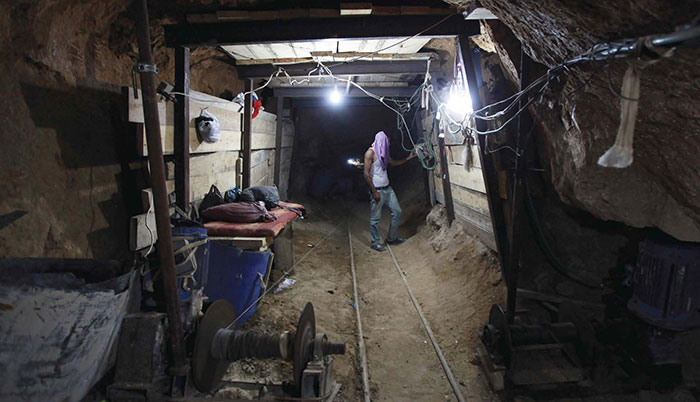
Egypt has reportedly demanded that Hamas hand over 17 men wanted by Cairo on terrorism charges, more protection by Hamas at the border, the cessation of alleged weapons smuggling into the Sinai Peninsula, and information on the movement of “elements” into Gaza via underground tunnels.

Image result for hamas gaza NBC

Tower: The secretary-general of the Red Crescent Society of the United Arab Emirates accused the Gaza-based terrorist organization Hamas on Monday of provoking Israeli forces by firing rockets from a field hospital during Operation Protective Edge in 2014, a war crime under international law, Ynet reported.

According to Secretary-General Mohamed Ateeq Al-Falahi, the Red Crescent’s staff was stationed at a UAE field hospital in Gaza when Hamas fighters began firing rockets from their facilities to provoke an Israeli response.

“This shows (Hamas’s) wicked intentions and how they scarified us,” said Al-Falahi. “They always claim the enemy targets humanitarian envoys, but the betrayal came from them,” he added.

Al-Falahi also accused Hamas of attempting to prevent the distribution of humanitarian aid in Gaza. “What hurts is that the betrayal came from our own people,” he said. “Muslims fighting Muslims, who were giving humanitarian aid to Muslims,” the secretary-general lamented.

This was not the end of Hamas’s hostility towards the group. When they left, Hamas had the Red Crescent targeted by Sinai jihadists, which shot at them and planted landmines in their path. They “accused us of being spies, undercover foreign intelligences who were escaping,” Al-Falahi explained.

When the Red Crescent left Gaza through Sinai, Hamas had apparently informed “extremist militias in Sinai… that there was a group making their way there, so prepare for jihad against them…,” Al-Falahi said. “As we stopped at a grocery store to buy something to eat, they started shooting at us,” he added.

Image result for hamas gaza tunnels Behind

Hamas has long been accused of using civilians and civilian infrastructure as shields, in violation of international law, to provoke a response from Israel and thereby increase the civilian toll for its own political advantage.

Bilal Razania, the brother of a senior Hamas official, told Israeli interrogators last year that Hamas used the Kamal Adwan hospital in northern Gaza as a military base during Operation Protective Edge in 2014. Hamas leaders similarly used Shifa hospital in Gaza City as “a de facto headquarters” during the conflict, The Washington Post reported. A report compiled by the Intelligence and Terrorism Information Center found that Hamas used over 10 hospitals during Operation Cast Lead in 2008 to launch rockets at Israeli towns and attack Israeli troops.

News crews from France 24 and India’s NDTV recorded incidents of Hamas terrorists setting up and firing rockets from positions located near civilians during the 2014 conflict. A year later, a Polish journalist wrote an op-ed describing how Hamas would fire from populated areas.

Hamas, in fact, admitted to using human shields following Operation Protective Edge.