Punish Malaysia due to Funding North Korea?

Maybe there is much more to this story than being reported: Kim Jong Un’s half brother killed in Malaysia, sources report  but read on.
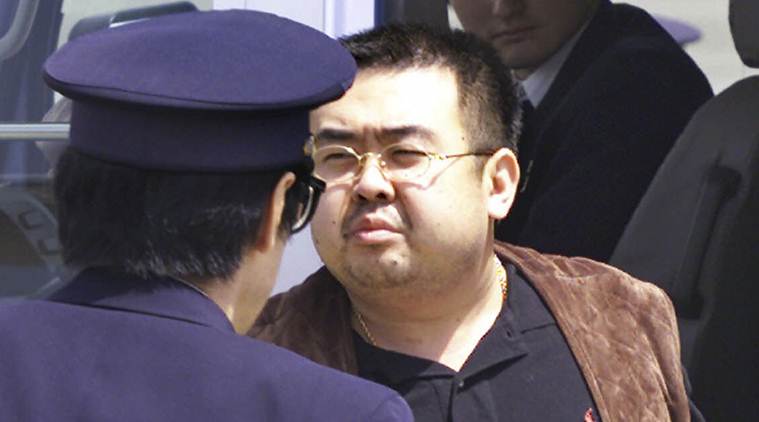
Image result for half brother killed in malaysia IndiaExpress

Exclusive – ‘Dollars and euros’: How a Malaysian firm helped fund North Korea’s leadership

Reuters: Over the past two decades, North Korean-born Han Hun Il, the founding chief executive of a Malaysian conglomerate, funneled money to the leadership in Pyongyang, a North Korean defector, speaking out for the first time, told Reuters.

Malaysian -North Korea

A sign outside the Malaysia-Korea Partners Holdings headquarters in Kuala Lumpur, Malaysia.(Reuters Photo)

Han’s conglomerate, Malaysia Korea Partners (MKP), worked in partnership with Jang Song Thaek, according to Lee Chol Ho, who worked as a trader for Han for nine years until he defected to Seoul in 2010. Jang, the uncle of North Korea’s ruler Kim Jong Un, was considered one of North Korea’s most powerful men until he was executed for treason in 2013.

Reuters was unable to independently confirm Lee’s account of Han’s relationship with North Korea’s leadership, including his assertion that money was funneled to North Korea’s leadership body, the central committee of the ruling Workers’ Party.

Reuters also couldn’t determine how the central committee, which controls North Korea’s highly sanctioned nuclear and weapons program, used the funds from Han or if the payments are continuing.

The new disclosures come at a time when United Nations sanctions monitors are intensifying scrutiny of both Han and MKP.

A February report by experts monitoring U.N. sanctions on North Korea says MKP’s bank subsidiary in Pyongyang is a particular focus. A 2013 U.N. resolution bars foreign companies or foreign joint ventures with a North Korean company from having a financial subsidiary in North Korea.

The U.N. report says the bank, called International Consortium Bank, was established as a joint venture between MKP and Jang’s Sungri Economic Group. The bank is licensed by North Korea’s central bank and registered with the Pyongyang Municipal People’s Committee, it said.

If the U.N. experts find sanctions have been violated, they could recommend the U.N. Security Council blacklist MKP, its executives or one or more of its subsidiaries, subjecting them to a global travel ban and asset freeze.

STRAINED TIES

Han, also known as Dr. Edward Hahn, hung up the phone and blocked a Reuters reporter on his messaging app when contacted for comment.

MKP did not respond to requests for comment on Lee’s assertions. The company issued a statement dated March 23 saying MKP had “no reason to hide the fact” that Han is North Korean. It denied owning ICB or any other North Korean bank and said nobody from the United Nations has contacted the company.

The U.N. said it does not comment on its ongoing investigations.

Lee’s description of how MKP operated appears to shed fresh light on the close ties between Malaysia and North Korea, which have come under strain following the assassination of Kim Jong Nam, the elder half-brother of North Korea’s ruler, with the highly toxic VX nerve agent in February.

Reuters reported in February that North Korea’s spy agency was running an arms export operation out of Malaysia.

Malaysia’s foreign ministry did not respond to Reuters’ requests for comment.


PYONGYANG BANK

MKP, which Han formed in 1996 with his Malaysian partner, Yong Kok Yeap, operates in 20 countries in Asia, Africa and the Middle East, piling up contracts worth at least $350 million, an MKP corporate video and promotional brochures shows.

Yong declined requests to be interviewed.

MKP’s main business is construction, but it is also involved in a number of other activities, including financial services and coal trading, according to U.N. reports, company sources, registration documents and MKP promotional material.

ICB is among several banks the U.N. is currently investigating for possible breaches of various U.N. Security Council resolutions. These include one from 2013 calling on members states to prohibit financial service companies where there are “reasonable grounds to believe that such financial services could contribute to [North Korea’s] nuclear or ballistic weapons programs.”

In its March 23 statement, MKP said its website had been “hacked” to insert ICB under its list of service companies and place a “doctored photograph” of “MKP personnel”, including Yong, visiting ICB’s office in Pyongyang.

A search of archive.org, a database of old websites, shows ICB has been listed on MKP’s website since 2009, including under its earlier name, Sungri Hi-Fund International Bank. As of April 10, ICB was still listed on the website.

In its February report, the U.N. said it had inquired with Malaysia and MKP about ICB and had “yet to receive a reply.”


‘CONTROL TOWER’

Lee said Han had used MKP as the “control tower” of a vast business empire, making him one of the isolated country’s richest men. He said Han began his career in Africa with North Korea’s Reconnaissance Bureau, its premier spy agency.

“When people from the Central Committee visited Malaysia, they only met with Han,” Lee said. “They didn’t even bother to see the ambassador.”

The Central Committee directs the development and financing of North Korea’s nuclear and missile programs, said Michael Madden, a North Korea expert at Johns Hopkins University’s 38 North website.

Once a year, Lee said, high-ranking Pyongyang officials traveled to Kuala Lumpur to meet Han and instruct him to wire money to North Korea via banks in Malaysia.

“It was all dollars and euros,” said Lee.

Lee said Han was part of Jang’s overseas network of businessmen.

Two current company sources said MKP’s fortunes – with the exception of its African businesses – declined after 2013 and Han became an infrequent visitor to Malaysia. They said they didn’t know whether the downturn was related to Jang’s demise.

European Union’s Attention and Dollars on Failing Africa

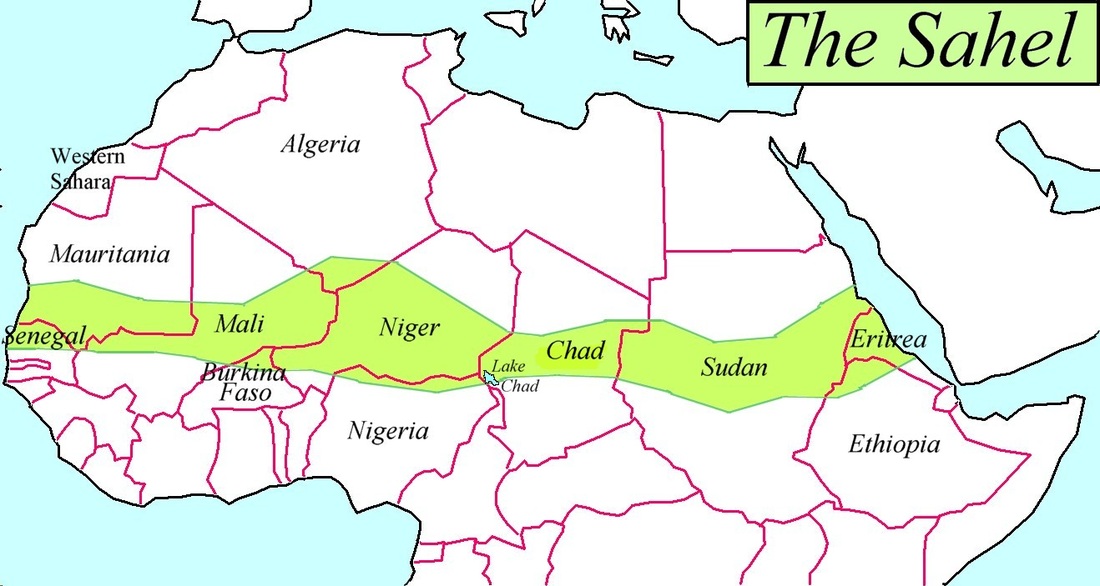
Image result for sahel region

The European Commission has launched an “Emergency Trust Fund for stability and addressing root causes of irregular migration and displaced persons in Africa”, made up of €1.8 billion from the EU budget and European Development Fund, combined with contributions from EU Member States and other donors. The Trust Fund will benefit a wide range of countries across Africa that encompass the major African migration routes to Europe. These countries are among the most fragile and those most affected by migration. They will draw the greatest benefit from EU financial assistance. The countries and regions are:

The Sahel region and Lake Chad area: Burkina Faso, Cameroon, Chad, the Gambia, Mali, Mauritania, Niger, Nigeria and Senegal.

The Horn of Africa: Djibouti, Eritrea, Ethiopia, Kenya, Somalia, South Sudan, Sudan, Tanzania and Uganda.

The North of Africa: Morocco, Algeria, Tunisia, Libya and Egypt.

Neighbouring countries of the eligible countries may benefit, on a case by case basis, from Trust Fund projects with a regional dimension in order to address regional migration flo ws and related cross- border challenges. Read the full document here.

EU Economic and Military Investments in Africa Increase
Africa faces a number of security challenges, from terrorist groups such as Boko Haram and al Shabaab, to civil wars and violent conflicts in South Sudan and Libya, to severe droughts causing hunger crises in Somalia and Yemen.

This instability contributes to migration from Africa to Europe. In addition, a demographic boom is taking hold in Africa, stoking concerns about future mass migration. “Today, Africa is twice the population of Europe. In 2050, it will be four times the population of Europe, and it is projected at the end of this century to be 10 times the population of Europe. … There is a sense in many political circles in Europe that what’s happening today is just the beginning of a much bigger movement that could reach Europe tomorrow,” Philippe Fargues, founding Director of the Migration Policy Centre at the European University Institute in Italy, told The Cipher Brief.

The European Union is intervening. On the migration front, the EU is engaged in Partnership Framework Agreements with several African countries to stem the flow of migrants. “This was followed up with the setting up of the EU Emergency Trust Fund for Africa (a €2 billion aid program aimed at securing African countries’ cooperation in tackling irregular migration), leading to the initial signing of bilateral agreements with Niger, Nigeria, Mali, Senegal and Ethiopia” says the Abuja, Nigeria-based Director of the Centre for Democracy and Development, Idayat Hassan.

Niger, for example, is receiving €610 million to keep migrants from reaching Europe, Hassan says, and German Chancellor Angela Merkel has pledged €17 million to Niger to help develop the Agadez region, a major route for West African migrants.

Germany seems to be leading European action in Africa. Last year, German Development Minister Gerd Müller unveiled a “Marshall Plan” for the continent. “Germany and Europe have an interest to save people’s lives, to limit the effects of climate change and avoid ‘climate refugees,’ to prevent mass migration and to help create a future for Africa’s youth,” said Müller.

Asmita Parshotam, a researcher under the Economic Diplomacy Programme at the South African Institute of International Affairs, tells The Cipher Brief that this plan is intended to “cover a broad range of issues such as trade, increased private investment, bottom-up economic development, entrepreneurship, and job creation and employment.”

In addition to Germany’s unilateral aid to Africa, the EU recently announced its EU External Investment Plan that will help expand Africa’s private sector, with €3.35 billion in funding until 2020 and €88 billion if EU member states fully match that contribution.

The European Development Fund and African Investment Facility also provide economic development assistance from the EU to Africa.

In the development-security aid realm lies the EU Sahel Strategy, launched in April 2015. “The enhancement of security in the region through the fight against terrorism, illicit trafficking, radicalisation and violent extremism, remains the key objective of the EU,” according to a memo on the EU Sahel Strategy from the Council of the European Union.

EU member states also host a number of military bases in Africa. France, Germany, Italy, and Spain all have boots on the ground in Djibouti. France’s presence there is now around 1,700 personnel.

About 3,500 French troops operate in Burkina Faso, Chad, Mali, Mauritania, and Niger, and Gabon is a key base that France has used to send troops to interventions in the Central African Republic. France last year boosted its military presence in Cote d’Ivoire to about 900 men to serve as a forward operating base for West Africa.

The French, along with the Germans, are also in Niger. Germany has an air transport base at the Niamey international airport that supports its increasing troop contribution to the UN’s peacekeeping mission in Mali, a country that underwent a rebellion and coup in 2012 and a serious deterioration in the security environment in January 2013 when terrorist groups – Ansar Dine and the Movement for Unity and Jihad in West Africa, in addition to al Qaeda in the Islamic Maghreb – advanced south.

A majority of UN peacekeeping missions, in which many Europeans are involved, are in Africa.

The question remains, will the EU’s economic and military investment in Africa work in stabilizing a continent plagued by terror, war, drought and famine, extreme poverty, and inadequate governance?

Müller’s “Marshall Plan” acknowledges that African governments must take responsibility for fighting corruption, ensuring good governance, and improving opportunities for women.

The EU has made much of its development aid contingent on African governments’ cooperation in addressing the EU’s security concerns. For example, on migration, Parshotam notes that an EU-Mali deal will give Mali aid in exchange for Mali taking back all citizens whose asylum claims were rejected.

But with African countries that have no stable government to work with, it becomes harder for the EU to invest in and create stability. “Libya is a failing state – there’s no central authority,” Leonard Doyle, Spokesperson of the Director General at the International Organization for Migration, told The Cipher Brief. “So the Europeans have not been able to reach a coherent agreement with Libya [on migration]. Although there is a lot of pressure now, especially militarily, to stop the smugglers, and economically as well, to help Libya get back on its feet,” he said.

“I think we are completely wrong in our policies,” said Fargues. “The amount of money contributed to African development is too small, but also in the short term and medium term, development will not curb migration,” he said, because the African population continues to grow, while Europe’s continues to shrink. “We have to get prepared for migration.”


Unit 450, The Syrian Chemical Weapons Program Details

 Fox News obtained photos of one of Syrian President Bashar al-Assad's close aides who oversaw the country's chemical weapons unit.

If you still think the chemical weapons attack was fake news, read on. Further, it must be stated that the Pentagon and CIA have extraordinary skills and ability to gather quality intelligence, intelligence that was gained under the Obama administration and did not stop the program but rather deferred it to Russia to handle. This was done under threat by Tehran to the Obama White House to leave Assad alone during the JPOA, the Iran nuclear talks. Obama complied.

For Secretary of State Rex Tillerson and for U.S. Ambassador Nikki Haley to lay the blame at the feet of Russia and Iran for the Assad/Syria chemical weapons program was exact and right.

Further in 2013, a Syrian army defector gave testimony to Western officials and the United Nations on the Unit 450 operations.

Bassem Al-Hassan, the head of the Syrian clandestine unit for special assignments, was appointed the position after Muhammad Suleiman, another key aide to Assad, was assassinated in his home in August 2008, Western intelligence sources told Fox News.

The close aide to Assad had been on the U.S. radar, and is one of the individuals named on the Office of Foreign Assets Control Specially Designated Nationals and Blocked Persons List (SDN). The list names individuals and companies who pose as a national security threat to the U.S.

Hassan is also considered a very close friend and contact to Qassem Soleimani, the Iranian Revolutionary Guard general, and has connections with Russian officials.

Western intelligence sources said Hassan was the head of Unit 450, Syria’s chemical weapons unit, and was responsible for any activities, including producing and ordering the weapons for the department.

Syria agreed in 2013 to destroy its stockpiles of chemical weapons as part of a deal brokered between former President Barack Obama and Russian President Vladimir Putin. A year later, then-Secretary of State John Kerry said that Syria’s chemical weapons were “100 percent” destroyed.

The statement came into question on Tuesday when a chemical weapons attack in an opposition-held town in northern Syria killed more than 80 people, including at least 30 children. The U.S. blamed Assad for the attack.

President Trump on Friday authorized to launch 60 U.S. Tomahawk missiles on the Shayrat air base, southeast of Homs, in retaliation to the chemical weapons attack. The Pentagon said the airstrikes will not eliminate the country’s chemical weapons supply completely, but reduce the government’s ability to deliver them.

Elite Syrian Unit 450 Scatters Chemical Arms Stockpile

Assad Regime Has Moved Weapons to as Many as 50 Sites

2013: A secretive Syrian military unit at the center of the Assad regime’s chemical weapons program has been moving stocks of poison gases and munitions to as many as 50 sites to make them harder for the U.S. to track, according to American and Middle Eastern officials.

The movements of chemical weapons by Syria’s elite Unit 450 could complicate any U.S. bombing campaign in Syria over its alleged chemical attacks, officials said. It also raises questions about implementation of a Russian proposal that calls for the regime to surrender control of its stockpile, they said.

U.S. and Israeli intelligence agencies still believe they know where most of the Syrian regime’s chemical weapons are located, but with less confidence than six months ago, U.S. officials said.

Secretary of State John Kerry met Thursday in Geneva with his Russian counterpart to discuss a road map for ending the weapons program. The challenges are immense, Mr. Kerry said.

The U.S. alleges a chemical-weapons attack by the Syrian government on Aug. 21 killed more than 1,400 people, including at least 400 children. Syrian President Bashar al-Assad on Thursday again denied any involvement in a chemical attack, but he said his government was prepared to sign an agreement banning the use of chemical weapons. Syrian officials couldn’t immediately be reached for comment on the weapons.

Unit 450 – a branch of the Syrian Scientific Studies and Research Center that manages the regime’s overall chemicals weapons program – has been moving the stocks around for months, officials and lawmakers briefed on the intelligence said.

Movements occurred as recently as last week, the officials said, after Mr. Obama said he was preparing to launch strikes.

The unit is in charge of mixing and deploying chemical munitions, and it provides security at chemical sites, according to U.S. and European intelligence agencies. It is composed of officers from Mr. Assad’s Alawite sect. One diplomat briefed on the unit said it was Alawite from “janitor to commander.”

U.S. military officials have looked into the possibility of gaining influence over members of Unit 450 through inducements or threats. “In a perfect world, you would actually like to co-opt that unit. Who cares who pays them as long as they sit on the chemical weapons,” said a senior U.S. military official.

Although the option remains on the table, government experts say the unit is so close-knit that they doubt any member could break ranks without being exposed and killed.

The U.S. estimates the regime has 1,000 metric tons of chemical and biological agents. “That is what we know about. There might be more,” said one senior U.S. official.

The regime traditionally kept most of its chemical and biological weapons at a few large sites in western Syria, U.S. officials said. But beginning about a year ago, the Syrians started dispersing the arsenal to nearly two dozen major sites.

Unit 450 also started using dozens of smaller sites. The U.S. now believes Mr. Assad’s chemical arsenal has been scattered to as many as 50 locations in the west, north and south, as well as new sites in the east, officials said.

The U.S. is using satellites to track vehicles employed by Unit 450 to disperse the chemical-weapons stocks. But the imagery doesn’t always show what is being put on the trucks. “We know a lot less than we did six months ago about where the chemical weapons are,” one official said.

The movements, activities and base locations of Unit 450 are so sensitive that the U.S. won’t share information with even trusted allies in the opposition for fear the unit would be overrun by rebels, said current and former U.S. officials.

The U.S. wants any military strikes in Syria to send a message to the heads of Unit 450 that there is a steep price for following orders to use chemical weapons, U.S. officials said.

At the same time, the U.S. doesn’t want any strike to destabilize the unit so much that it loses control of its chemical weapons, giving rebels a chance to seize the arsenal.

Attacking Unit 450, assuming we have any idea where they actually are, would be a pretty tricky affair because”¦if you attack them you may reduce the security of their weapons, which is something we certainly don’t want,” said Jeffrey White, a veteran of the Defense Intelligence Agency and a defense fellow at The Washington Institute.

Within Syria, little is known about Unit 450 or the Syrian Scientific Studies and Research Center. One of the buildings is in a sprawling complex on the outskirts of Damascus.

Even high-ranking defectors from the Syrian military that form the core of the rebel insurgency – including those who served in units trained to handle chemical attacks – said they hadn’t heard of Unit 450.

The Pentagon has prepared multiple target lists for possible strikes, some of which include commanders of Unit 450.

But a senior U.S. official said no decision has been made to target them, reflecting the challenge of sending a message to Unit 450 without destabilizing it.

In some respects, officials said, the hands-on role that Unit 450 plays in safeguarding the regime’s chemical weapons secrets makes it too valuable for the U.S. to eliminate, even though the U.S. believes the unit is directly responsible for the alleged chemical weapons abuses.

The Syrian Scientific Studies and Research Center answers only to Mr. Assad and the most senior members of his clan, according to U.S. and European officials. Attack orders are forwarded to a commanding officer within Unit 450.

If the Russians clinch a deal for Mr. Assad to give up his chemical weapons, any prospective United Nations-led force to protect inspectors and secure storage sites would likely need to work closely with Unit 450 and the research center, current and former administration officials said.

Gen. Martin Dempsey, the chairman of the U.S. military’s Joint Chiefs of Staff, has said that President Barack Obama directed him to plan for “a militarily significant strike” that would deter the Assad regime’s further use of chemical weapons and degrade the regime’s military capability to employ chemical weapons in the future.

But officials said the U.S. doesn’t plan to bomb chemical weapons sites directly because of concerns any attack would disperse poison agents and put civilians at risk.

In addition to satellites, the U.S. also relies on Israeli spies for on-the-ground intelligence about the unit, according to U.S. and Israeli officials.

Though small in size, Unit 450 controls a vast infrastructure that makes it easier for the U.S. and Israel to track its movements. Chemical weapons storage depots are guarded by the unit within larger compounds to provide multiple layers of security, U.S. officials said.

Whenever chemical munitions are deployed in the field, Unit 450 has to pre-deploy heavy equipment to chemical mixing areas, which the U.S. and Israel can track.

Unmasker/Leaker, was it Susan Rice?

Primer: On Septmber 12, 1992, Susan Rice married her Stanford romantic interest, Ian Cameron, who was working as a television producer in Toronto for the Canadian Broadcasting Corporation. The couple lived in Canada until 1993, when Rice took a job with the National Security Council in Washington, D.C., under President Clinton.

The 5 Sunday talk shows, Benghazi was due to an video lady, who also told us that Bowe Bergdahl served with honor and distinction…yeah that was Susan Rice….


Social media blew up late Sunday night with the notion that Susan Rice was the leaker. Okay, so is there evidence? Well, no smoking gun yet…but where are the dots leading us?

Mike Cernovich is a journalist, documentary filmmaker, wrote a piece that pointed to Ambassador Rice, who was also on president Obama’s national security council at the White House.

Susan Rice, who served as the National Security Adviser under President Obama, has been identified as the official who requested unmasking of incoming Trump officials, Cernovich Media can exclusively report.

The White House Counsel’s office identified Rice as the person responsible for the unmasking after examining Rice’s document log requests. The reports Rice requested to see are kept under tightly-controlled conditions. Each person must log her name before being granted access to them. Upon learning of Rice’s actions, H. R. McMaster dispatched his close aide Derek Harvey to Capitol Hill to brief Chairman Nunes.

 ***

The U.S. intelligence official who “unmasked,” or exposed, the names of multiple private citizens affiliated with the Trump team is someone “very well known, very high up, very senior in the intelligence world,” a source told Fox News on Friday.

Intelligence and House sources with direct knowledge of the disclosure of classified names told Fox News that House Intelligence Committee Chairman Devin Nunes, R-Calif., now knows who is responsible — and that person is not in the FBI.

***

Resurgent writes for us: Susan Rice Sought Trump Data From Intelligence Reports. Is This Why The CIA Wanted Ezra Cohen-Watnick Ousted?

Eli Lake has an explosive report on who in the Obama Administration was seeking Trump staffers’ names in intelligence reports. Turns out it was Susan Rice.

White House lawyers last month discovered that the former national security adviser Susan Rice requested the identities of U.S. persons in raw intelligence reports on dozens of occasions that connect to the Donald Trump transition and campaign, according to U.S. officials familiar with the matter.

The pattern of Rice’s requests was discovered in a National Security Council review of the government’s policy on “unmasking” the identities of individuals in the U.S. who are not targets of electronic eavesdropping, but whose communications are collected incidentally. Normally those names are redacted from summaries of monitored conversations and appear in reports as something like “U.S. Person One.”

Now, there is an interesting other nugget in Lake’s report.

The person charged with investigating the unmasking was Ezra Cohen-Watnick, the National Security Council’s senior director of intelligence. This is relevant because of this report from the Politico.

President Donald Trump has overruled a decision by his national security adviser, Lt. Gen. H.R. McMaster, to sideline a key intelligence operative who fell out of favor with some at the Central Intelligence Agency, two sources told POLITICO. On Friday, McMaster told the National Security Council’s senior director for intelligence programs, Ezra Cohen-Watnick, that he would be moved to another position in the organization.

So the guy who uncovers Rice’s connection suddenly falls out of favor with the CIA, which pressures McMaster to remove him?

Hmmmm . . .

What are the odds of that?

*** More from Bloomberg:

Rice’s requests to unmask the names of Trump transition officials does not vindicate Trump’s own tweets from March 4 in which he accused Obama of illegally tapping Trump Tower. There remains no evidence to support that claim.

But Rice’s multiple requests to learn the identities of Trump officials discussed in intelligence reports during the transition period does highlight a longstanding concern for civil liberties advocates about U.S. surveillance programs. The standard for senior officials to learn the names of U.S. persons incidentally collected is that it must have some foreign intelligence value, a standard that can apply to almost anything. This suggests Rice’s unmasking requests were likely within the law.

The news about Rice also sheds light on the strange behavior of Nunes in the last two weeks. It emerged last week that he traveled to the White House last month, the night before he made an explosive allegation about Trump transition officials caught up in incidental surveillance. At the time he said he needed to go to the White House because the reports were only on a database for the executive branch. It now appears that he needed to view computer systems within the National Security Council that would include the logs of Rice’s requests to unmask U.S. persons.

The ranking Democrat on the committee Nunes chairs, Representative Adam Schiff, viewed these reports on Friday. In comments to the press over the weekend he declined to discuss the contents of these reports, but also said it was highly unusual for the reports to be shown only to Nunes and not himself and other members of the committee.

Indeed, much about this is highly unusual: if not how the surveillance was collected, then certainly how and why it was disseminated.

U.S. Israel Facing Down Iran in Syria, Golan, Yemen

Over the past six years, Iran has played a key role in propping up the embattled regime of Bashar al-Assad in Syria, by sending Islamic Revolution Guards Corps (I.R.G.C.) military personnel as well as recruiting, funding, training and leading an extensive network of Iraqi, Lebanese, Pakistani and Afghan Shiite militia forces. Now that Iran’s ally in Damascus is in control of Syria’s key population centers, the Islamic Republic and its regional proxies are already planning to consolidate their presence in Syria for the long haul to secure Tehran’s geopolitical interests in the broader region. This has alarmed the United States and regional countries – particularly Israel, which is increasingly worried about the presence and influence of the Lebanese Hezbollah and other Iran-backed forces along its northern border with Syria. One prominent Iran-controlled militia group, for example, announced earlier this month that it had created a new brigade of well-trained combatants to fight Israel and reclaim the strategic Golan Heights from the Jewish state.

Israel, the real enemy 

On March 29, Harakat al-Nujaba, an Iraqi militia group that fights under the I.R.G.C.’s leadership in both Iraq and Syria, said that Israel, not Sunni militants, is the real enemy and sought Damascus’s permission to fight Israeli forces stationed in the Golan region. “The Golan Liberation Brigade will fight shoulder to shoulder with its brothers in the Syrian Army. The axis of resistance is working on the main goal, which is the Palestinian issue. And these efforts have a great impact on reshaping the regional map by annihilating the occupying Zionist regime,” Nasr al-Shammari, the Nujaba’s deputy military chief said in an interview with Iran’s Mehr News Agency. “The weapons of the resistance and Islamic and Arab armies should target this regime. With this in mind, the Harakat al-Nujaba announced that a brigade should be set up to liberate Golan,” he added. “If this regime is destroyed, regional problems will be resolved completely.”

Shammari also claimed that Shiite militia groups forced the “occupying” U.S. forces to withdraw from Iraq and are able to replicate that success against Israel. “We are waiting to confront the Zionist regime instead of combating Takfiri groups in the region and their evil arms.”

Golan Liberation Brigade 

The Nujaba movement announced three weeks ago that it had established a new brigade to seize the Golan Heights – claiming that “latest victories” against the Islamic State and Sunni rebels in Iraq and Syria have allowed the group and its allies to focus on Israel. Leaders of the group claimed that members of the new brigade are highly-trained, well-equipped and capable of fighting the Jewish state. “Israel is weaker than a spider web. Islamic resistance is capable of confronting the axis of evil and annihilating the occupying Zionist regime,” Nujaba’s Secretary-General Akram al-Kaabi told Lebanon-based Arabic-language al-Mayadeen news network.

Image result for Golan Liberation Brigade

The creation of the Golan Liberation Brigade further alarmed Israeli leaders about the increasing presence and influence of the Lebanese Hezbollah and other I.R.G.C.-supported groups in southwestern Syria. Israeli Prime Minister Benjamin Netanyahu during his recent trip to Moscow sought assurances from Russian President Vladimir Putin to prevent Iran from taking advantage of the conflict in Syria to station its proxies permanently on Israel’s northern border. “I made it clear to President Putin our resolute opposition to the consolidation of Iran and its proxies in Syria,” he told reporters after the meeting. “We see Iran trying to build a military force, military infrastructure, with the intention to be based in Syria, including the attempt by Iran to build a seaport. All this has serious implications in terms of Israel’s security.”

Given Israel’s military superiority in the region, Iranian proxies cannot seize the strategic Golan region. Also, the regime of Bashar al-Assad is still fighting for its survival against a wide range of Sunni rebel groups and is unlikely to engage in a self-defeating war with Israel. But Israeli leaders are worried that Iran and its proxies are expanding the Southern Lebanon front to the Golan Heights – threatening Israel’s security and stability. The fact that Iranian-sponsored Iraqi militia groups and the Afghan Fatemiyoun Division fighting in Syria have close operational links with Hezbollah, has added to Israeli concerns. Moreover, senior I.R.G.C. commanders have recently visited the Syrian-controlled regions of the Golan Heights on military and reconnaissance missions.

I.R.G.C. commanders have talked about helping Damascus reclaim the Golan region from Israel for almost three decades. Last year, Brigadier General Ali Asghar Gorjizadeh, a senior I.R.G.C. commander and a veteran of the Iran-Iraq war, claimed that the Syrian government had refused Tehran’s offer in the 1980s to send an I.R.G.C. battalion to help the Syrian Army to “liberate” the Golan Heights. But he explained that the I.R.G.C. has, over the past decades, used the Syrian territory to train anti-Israel “resistance forces,” particularly the Lebanese Hezbollah. And now that the six-year Syrian civil war has allowed the I.R.G.C. to gain a significant military footprint inside Syria, it is no surprise that the I.R.G.C. will seek to use its powerful Shiite proxies such as the Nujaba group to threaten the Israeli security.

Regional Threat 

The remarks by Nujaba leaders also indicate that the mission of Iran-sponsored Shiite militia groups will not remain limited to Iraq and Syria. Nor will the group only threaten the security of Israel in the future. I.R.G.C.-affiliated militia commanders in Iraq, for example, have already turned attention to their Iraqi rivals as the Islamic State is on the verge of collapse in Mosul. They have also made threats against regional Sunni states, particularly Saudi Arabia. Recent reports also suggest that the I.R.G.C. and Hezbollah are increasingly training and deploying Afghan and Arab Shiite militiamen to support Houthi rebels in Yemen. Iraqi Popular Mobilization (P.M.F) units with close ties with Iran have also stepped up anti-American propaganda in Mosul and across Iraq – posing threat to the safety of American military advisers that are helping the Iraqi security forces on the ground.

Image result for Harakat al-Nujaba SouthFront

Harakat al-Nujaba 

Harakat al-Nujaba – also known as Harakat Hezbollah al-Nujaba – is a prominent Iraqi sectarian group that operates under the leadership of I.R.G.C. Quds Force commander Qassem Soleimani. It has been fighting in Syria since 2013. The leader of the group, Akram al-Kaabi, makes no secret of his allegiance to Iran’s Supreme Leader Ali Khamenei or his close relationship with Soleimani. The I.R.G.C. uses the Nujaba group and other powerful Shiite units within Iraq’s Popular Mobilization Forces (P.M.F.) not just to fight the Islamic State, but also as a pressure tool against the Baghdad government, regional Sunni states, and the United States. Kaabi once famously stated that his forces would topple the Baghdad government if ordered by Khamenei. Unlike some other P.M.F. units that receive their political and religious guidance from Iraq’s top cleric Grand Ayatollah Ali Sistani, Kaabi has repeatedly made it clear that he only emulates Khamenei. Kaabi has recently declared that he will deploy more forces Syria to fight alongside the I.R.G.C. forces and Syrian Army once the Islamic State is defeated in Mosul.

Anti-American, anti-Israeli propaganda 

Recently, the I.R.G.C.-affiliated media outlets have raised the profile of the Nujaba group, and senior Iranian leaders have held meetings with its top commanders. Indeed, the press conference in which Nujaba announced the creation of  the Golan Liberation Brigade was organized by the Tasnim News Agency, which is a prominent I.R.G.C. media outlet. By focusing their propaganda against the U.S. and describing Israel as the “real enemy,” Iranian leaders are trying to justify their involvement in foreign conflicts and to convince the Iranian people and Muslims around the world that the Islamic Republic is the standard-bearer and true defender of Islam. But such claims ring hollow when most victims of the I.R.G.C.’s military adventurism and proxy wars are Muslims.

***

‘Al-Sharq Al-Awsat’ Report Specifies Locations Of Foreign Military Bases In Syria, Says Syria Is Turning Into Brittle Federation That Can Fall Apart At Any Moment

MEMRI: On March 14, 2017, the London-based daily Al-Sharq Al-Awsat published a report giving the location of military bases of various foreign forces in Syria, including the U.S., Russian and Turkish forces. According to the report, the locations of the bases reflect the influence-zone of each country, and that Syria is gradually becoming a loose federation of ethnic states that can fall apart at any moment.

The following are excerpts from the report:

Source: infopls.com

“In the lost time between the Geneva and Astana conferences, the superpowers turned to expand their influence-zones in Syria by establishing numerous military bases which, according to experts, effectively pave the way towards a political solution based on a federation and the division [of Syria]. Until now Moscow and Washington were the major players in this theatre alongside Iran, but recently Ankara decided to establish many military bases of its own in the region known as the Shield of the Euphrates, in order to ensure itself a front-row seat at the international negotiation table…

“Russia is the only [country] that has [openly] announced more than once that it has two bases [in Syria]: an airbase in Khmeimim in the Latakia area and a naval base in Tartus, which is its only [base] on the Mediterranean and is planned to be its biggest naval base… According to various sources, Moscow  recently expanded its presence in Damascus, in the rural area east of Homs and in the rural area [near] Aleppo, and there are [also] Russian headquarters in the Kurdish-held areas in northern Syria that are part of the American influence-zone.

“Washington is keeping mum about the location of [its forces] in Syria [that number] over 900 troops. Last week it announced it was dispatching 400 Marines to Syria in order to support local forces in the battle for Al-Raqqa, the stronghold of the ISIS organization. According to reports, the [U.S.] troops that arrived began establishing a military base from which artillery attacks will be made on ISIS positions 32 km away. The U.S. has established its military bases in northern Syria, mostly in the areas controlled by their allies, the Kurdish People’s Protection Units. The most prominent of these bases are Rmeilan Base in the northeastern tip [of the country], near the Iraqi border, and a base that has been established in the city of ‘Ain Al-Arab (Kobane). According to Kurdish sources, the Americans have other bases in Syria, one of them in Hassakah.

“The single British base in Syria is in near Al-Tanf on Syria’s border with Jordan and Iraq, in the Al-Hamad desert region in the southeast of Homs district, 240 km from Palmyra.

“Iran has two military bases [in Syria], one in the Damascus international airport, which is the headquarters of Iran’s Islamic Revolutionary  Guards Corps (IRGC) [in Syria], and another in the Azzan Mountain [area] near Aleppo.”