Mexican Drug Cartels Worldwide, Even Australia

9NewsAustralia: Mexican drug cartels have infiltrated Australia and are supplying bikies, Middle Eastern gangs and Asian triads with cocaine and ice, according to a new report.

The cartels have made Australia a prime target because of “significantly higher” drug prices on our shores compared to the US and South America, The Daily Telegraph quotes a University of Canberra report as saying.

The report found a kilogram of cocaine in Australia can fetch up to $350,000, while the same amount would fetch around $73,000 in the United States.

“Their presence threatens to not only increase the supply of illicit drugs in Australia but encourage turf wars and increase the amount of guns in the country,” associate professor Dr Anthea McCarthy-Jones, and the report’s author, said.

Mexico is the world’s largest producer of ice, according to a 2015 United Nations report.

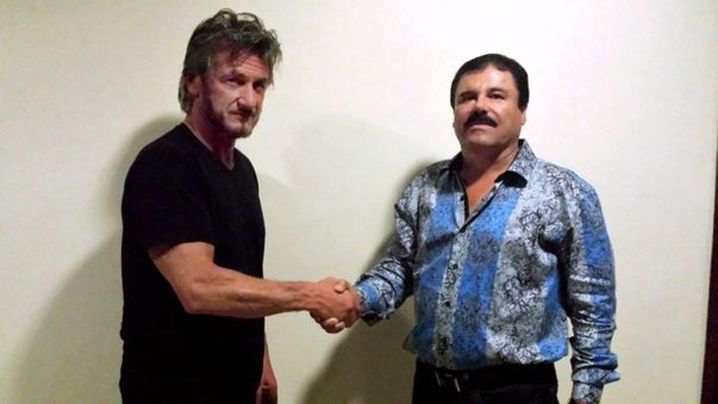
Actor Sean Penn with El Chapo shortly before he was recaptured. (Sean Penn/Rolling Stone)

Actor Sean Penn with El Chapo shortly before he was recaptured. (Sean Penn/Rolling Stone)

Drug importation offences in NSW have increased by 10.7 percent each year for the past 10 years, according to the NSW Bureau of Crime Statistics and Research.

Mexican drug cartels are some of the most violent and notorious in the world.

The head of the Sinaloa cartel, Joaquin ‘El Chapo’ Guzman, was recaptured in Mexico in January after being on the run for six months.

He is believed to be behind thousands of drug-related murders in the Mexico and the US.
Read more at http://www.9news.com.au/national/2016/05/09/06/28/mexican-drug-cartels-supplying-bikies-with-ice-report#WhI71ukRs8xZTLDk.99

Mexican drug cartels and dark-networks: an emerging threat to Australia’s national security

Over the past decade Mexican drug cartels’ power and the violent struggles between them have increased exponentially. Previously Mexico, and in particular the border regions with the US, were the key battle grounds for control of distribution routes. However, today Mexican drug cartels are now looking abroad in an attempt to extend their operations. This expansion has seen several cartels moving into lucrative international markets in Europe and the Asia Pacific.

It is in this context that Australia has now become a target of several Mexican cartels. They have already established linkages in the Asia Pacific and are further attempting to strengthen and expand these — with a particular focus on penetrating the Australian market. These developments show how Mexican drug cartels operate as ‘dark-networks’, successfully creating a global system that seeks to capture new markets, and further extend their control and dominance of the flow of illicit drugs around the world.

Full white paper document here.

  Source: Strategic and Defence Studies Centre (ANU) Owning Institution: Australian National University

For Australia, the emergence of Mexican drug cartels in local markets presents not only criminal but strategic challenges. The size of these operations, their resources and ‘dark-network’ structure makes

them a difficult opponent. Their presence threatens to not only increase the supply of illicit drugs in Australia, but encourage turf wars, increase the amount of guns in the country, tax border security resources and threaten the stability and good governance of South Pacific transit spots.

This represents the end of Australia’s ‘tyranny of distance’, which previously acted as a buffer and protected Australia from the interests of remote criminal groups such as the Mexican cartels.

The PR and Resurgence of al Qaeda

The re-emergence of al Qaeda under the leadership of bin Ladin again?

Courtesy of Heavy: Hamza bin Laden, son of deceased al-Qaeda leader Osama bin Laden, released an audio message encouraging lone wolf attacks in the West today. See photos of the heir to terror here. In a new audio message purportedly released by Hamza bin Laden, Hamza urges all “mujahideen” to travel to Syria to fight. Hamza was groomed by his father to be the heir of the bin Laden brand of terrorism. Hamza is 25 and was not present during the 2011 raid on his father’s compound. (YouTube)
****

He was killed in the raid in Abbottabad, well maybe not. So the hunt was on. Seems he has surfaced.

Pakistan officials say Hamza bin Laden, perhaps Osama’s most militant son, escaped the raid that killed his father. David A. Graham reports on why having this bin Laden on the loose could be dangerous. Plus, full coverage of Osama bin Laden’s death.

DailyBeast: Hamza bin Laden was supposed to be a dead man. As the Obama administration made jubilant remarks in the wake of Osama bin Laden’s death, counterrorism adviser John Brennan told reporters that the young man had been killed alongside his father.

Then the story changed: It was Khaled bin Laden, not Hamza, who was killed. That might have been the end of the story, but now reports out of Pakistan suggest the tale is even more elaborate: Not only was Hamza not killed, but he escaped in the midst of the raid.

****

(CNN)One of Osama bin Laden’s sons could be expanding his role as a terrorist spokesman, with al Qaeda this week releasing another video that features his voice.

On Monday, an audio recording surfaced in which Hamza bin Laden calls for unity among jihadi militants in Syria, who currently fight under competing banners ranging from ISIS to al Qaeda. He also calls for jihad against Israel and its American backers to “liberate” Palestine, according to a translation by the SITE Intelligence Group.
It is his second such recording in less than a year, and could represent an effort by al Qaeda to capitalize on the impact of the bin Laden name.
“Obviously, he has the family name,” said CNN national security analyst Peter Bergen. “He’s now playing a propaganda role, and he’s a lot younger than some of the other leaders of al Qaeda, in their 50s or their 60s.”
Hamza bin Laden is believed to be in his early or mid-20s, and could represent al Qaeda’s next generation.
“From a very early age, his father was kind of grooming him,” said Bergen, who just published the book “United States of Jihad.” “Hamza has been very much indoctrinated with the whole jihadi kind of message. He’s a true believer. I think that makes him a concern.”
Hamza bin Laden was not at his father’s compound at the time of the raid by American special forces in 2011 — unlike one of his brothers, who was killed there. Papers found at the compound indicate that Hamza had been sent off for terrorist training.
“Just a month before the raid on Osama bin Laden’s compound, we know Hamza was somewhere else in Pakistan being trained by al Qaeda leadership,” said Thomas Joscelyn, a terrorism researcher with The Long War Journal. “He was receiving high-end explosives training.”
But it is not clear whether Hamza bin Laden now has an operational role in planning terrorist attacks, or whether his role is primarily focused on Qaeda’s propaganda operation.
According to Joscelyn, “al Qaeda is saying, ‘This is the new generation of jihadi leadership. This is the new bin Laden, who is going to ultimately lead us into the future.”
One U.S. intelligence official tells CNN that Hamza bin Laden currently has a relatively small role in the organization, but that al Qaeda could be grooming him for possible future leadership positions.

“I don’t think he’s necessarily going to run al Qaeda tomorrow,” said Bergen, “but the family name, the fact that he’s a younger guy, the fact that he’s a true believer — all that suggests that he likely will play an important role in al Qaeda going forward.”
While al Qaeda’s subsidiary franchises have been thriving in Yemen, Syria, and North Africa, al Qaeda’s parent organization in Pakistan has lost a number of top leaders, many of them to American strikes.
Showcasing Hamza bin Laden, according to another U.S. intelligence official, “appears to be an attempt by al Qaeda to fill gaps in its ever-dwindling bench.”
****

Al Qaeda magazine calls for targeting American business leaders

FNC: The latest issue of Al Qaeda’s online magazine Inspire released Saturday calls on would-be jihadis to undermine the American economy by targeting business leaders and entrepreneurs, according to analysts who monitor web chatter from the jihadist organization.

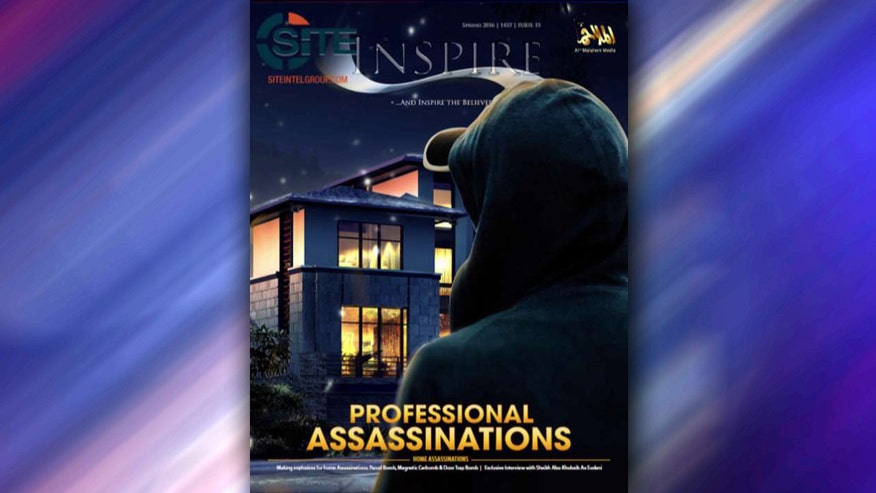
The newest edition obtained by the Middle East Media Research Institute (MEMRI) features a cover with the headline “Professional Assassinations” and the subhead “Home Assassinations,” which the depiction of a hooded killer watching an upscale home from the outside.

Additional photos include in the issue include one of Microsoft founder Bill Gates splatted in blood with a pistol nearby. The magazine is published by Al Qaeda’s main affiliate located in Yemen, Al Qaeda in the Arabian Peninsula.

MEMRI quotes Inspire’s editor, Yahya Ibrahim, as opening the issue by saying “assassination is an effective toll in warfare,” and notes that “The prophet ordered the killing of many criminal leaders using this method … And here we are, following the footsteps of the prophet on how he dealt with his enemies and friends.”

Ibrahim adds in this issue that the focus of the previous issue of Inspire was what he called “workplace” assassinations, and hopes to expand on the same topic in the current issue, which AQAP hopes will lead to training and preparing a more “professional” type of lone wolves.

Insight from Tom Joscelyn, senior fellow for the Foundation for Defense of Democracies


“We will never put down our weapons until we fulfill what Allah wants from us. We are determined to keep fighting and striking Americans with operations by organized jihadi groups and by Lone Jihad, [and] pursuing America in its homeland — by the will of Allah,” MEMRI quotes Ibrahim as saying.

MEMRI also said an analysis of the issue “provides detailed information and instructions on preparing for and carrying out various targeted assassinations. It stresses that an assassin should possess different options to carry out an attack, which gives him or her a greater chance for success, and elevates the operation to a more ‘professional’ level.”

In addition to the main section on professional assassinations, the magazine also features a section on bomb-making and encouraging  radical Islamic terrorists to emulate the Palestinian stabbings of Israelis by walking up to Americans and stabbing them to death.

AQAP was the first to use English publications to reach out to supporters in the West, with the launch in 2010 of its English-language magazine, Inspire.

The online magazine featured commentary by a radical U.S.-born cleric, Anwar al-Awlaki, who was also killed in a U.S. drone strike in Yemen in 2011.

Millennium Challenge Corporation, Billions go Offshore

President’s Budget Includes $1.25 Billion for Millennium Challenge Corporation

The current Millennium Challenge Corporation CEO is Dana Hyde.

Hyde grew up in a small town in eastern Oregon and received her undergraduate degree in political science from UCLA.

From 1989 to 1991, Hyde served as a legislative assistant for the American Israel Public Affairs Committee (AIPAC). She subsequently worked on President Bill Clinton’s first campaign for the White House. After Clinton’s inauguration, Hyde served as special assistant to the president in the White House Office of Cabinet Affairs, coordinating policy initiatives with the chiefs of staff of national security agencies. She remained in that post until 1995. She later served as special assistant to the Deputy Attorney General in the Clinton Justice Department.

She received her law degree from Georgetown and passed the bar in 1997. From 1998 to 2000, Hyde worked as an attorney at the law firm Zuckerman, Spaeder. Then, from 2001 to 2002, she practiced law as part of the international arbitration group at WilmerHale. She also worked in London for the firm of Wilmer, Cutler & Pickering.

One of Hyde’s most prominent roles was as counsel to the 9/11 commission, where she served from 2003 to 2004. She focused on crisis management issues and the immediate response of the White House, the Pentagon, and the Federal Aviation Administration to the attacks.

After leaving the commission, Hyde was executive director of the Partnership for a Secure America. This organization has as its goal the advancement of bipartisan work on national security and foreign policy issues.

In 2009, after serving on the Obama-Biden transition team, Hyde was named a senior advisor for management and resources at the State Department. Then, in 2011, Hyde moved to the Office of Management and Budget, becoming associate director for general government programs.

Justification document for Congress

Where We Work

MCC forms partnerships with poor countries that show they are committed to good governance, economic freedom, and investing in their citizens. Click here to see the countries and then remind yourself about the terror and corruption in each.

Initiatives

Since its creation in 2004, MCC has been advancing and accelerating the conversation on aid effectiveness.

MCC is committed to helping our partner countries adapt to climate change and mitigate emissions through climate resilient, low carbon economic development.

Country ownership—or country-led development—has been broadly embraced by the international donor community as a critical element of international development aid.

One of MCC’s core principles is that aid is most effective in countries with a sound commitment to accountable and democratic governance.

MCC has been at the forefront of transparency in delivering aid.

MCC works with partner countries to integrate internationally-accepted principles of environmental and social sustainability into the design and implementation of compacts.

Controlling corruption a key indicator in selecting countries for compact eligibility and throughout the compact lifecycle. MCC—with the MCAs—promotes measures to prevent, detect and combat corruption before it occurs and to address problems after they emerge.

With its partner countries in the lead, the MCC portfolio of investments has been on the forefront of addressing food security priorities since MCC’s first compact in 2005.

MCC recognizes that gender and social inequality are significant constraints to economic growth and poverty reduction.

MCC leads the charge to uncover the best data available to fight corruption by partnering with experts to form a Governance Data Alliance. MCC and the alliance are committed to filling the gaps for measuring governance.

MCC has obligated nearly $3 billion for trade capacity building in AGOA countries on infrastructure like roads and power, on upping productivity of small and medium-size businesses and export-heavy sectors, and leveraging policy and regulatory reforms.

Through its compacts in partner countries, MCC has committed approximately $1.5 billion to support Power Africa, the U.S. Government’s effort to double access to electricity in sub-Saharan Africa.

MCC supports its partner countries in their efforts to achieve the SDGs and improve the lives of their people by fighting poverty through inclusive economic growth.

MCC applies the principles of economic growth, strong policies, country-led plans and rigorous evaluation to create a more stable and prosperous future for the world’s poor.

Development needs around the world will not be met by foreign assistance alone. Official development assistance must increasingly catalyze other resources to finance development – including private-sector investment. Here’s one way MCC is doing just that.

In selecting partner countries, MCC relies on independent public data that captures as clearly as possible the actions governments take to fight corruption. MCC is seeking improved and expanded indicators from the institutions that produce this data.

NGO consultations are at the core of MCC’s compact development process. By listening to the voices and experience of the broader NGO community, MCC leverages all available expertise from others to maximize our investments.

MCC has been at the forefront of transparency in delivering aid.

MCC and other U.S. Government agencies have joined together to coordinate Partnership for Growth (PFG), a partnership between the United States and a select group of high-performing developing countries to accelerate and sustain broad-based economic growth.

Smart Aid Series

Since its founding, MCC has sought innovative ways to reduce poverty through economic growth. Smart Aid brings together development practitioners and MCC staff to share best practices, lessons learned, and engage in a dialogue to effectively move aid forward.

Country Scorecards

The country scorecards consolidate an individual country’s scores for each of the policy indicators MCC uses to determine eligibility for its assistance programs. By using information collected from independent, third-party sources, MCC allows for an objective comparison of all candidate countries.

 Filter by

100 Years old, Sykes Picot Debate Heats Up

The Islamic State (IS) group wilfully defies any frontier blocking its route to an Islamic caliphate. According to Tarek Osman, author of Islamism, we are only part-way through a revolution with no clear endgame.“Sykes-Picot was a pillar of a system in the Middle East that we are watching fall apart today, as something new is being formed. Right now, we’re in a fluid, chaotic phase and a new system will not emerge for a number of years,” Osman told Middle East Eye. More from MiddleEastEye.

More on Sykes-Picot: The Agreement as Written

As I noted in my first post on the Sykes-Picot Agreement, which was concluded a century ago this month, “Sykes-Picot” has become a convenient shorthand for the entire constellation of agreements and understandings that contributed to the postwar settlement, agreements spread out from as early as 1915 to as late as 1939, or even later if we include the partition of Palestine. In coming days I’ll be dealing with the actual agreements, but first let’s look at the real Asia Minor Agreement negotiated between Sir Mark Sykes and M. François Georges-Picot in 1916 and what borders it actually envisioned.

Britain and France began discussions of a post-Ottoman settlement on November 23, 1915, with Georges-Picot negotiating with Sir Arthur Nicolson, soon replaced by Sir Mark Sykes,. At that time efforts by David Lloyd George and Herbert Samuel to promote a Jewish state in Palestine were already under way, and Sir Henry McMahon in Egypt was already committing Britain to support an independent Arab state in correspondence with Sharif Hussein of Mecca. Another round of negotiations took place in December, and in February 1916 Sykes visited Petrograd to meet with Russian Foreign Minister Segey Sazonov. Negotiations with the Zionists and the commitments to Sharif Hussein were known to Sykes.
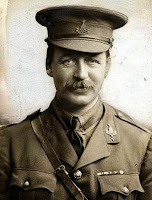
Sir Mark Sykes
F. Georges-Picot

The basic text was ready by May. On May 9, French Ambassador to London Paul Cambon transmitted it in a letter to British Foreign Secretary Sir Edward Grey, who returned it  with approval on May 16. Signed May 19 and with a formal exchange of notes May 2, the precise date that should be “celebrated” as the centenary is a little slippery.

The agreement’s text is below after the map. Although the agreement gives lip service to the idea of an “independent” Arab stste, it would be subordinate to British and French zones of influence, and both had zones in which they claimed direct control. Britain and France made a umber of guarantees to each other (Palestine would be under international control but with Britain controlling Haifa, Acre, a railway to Egypt and a future railway to Iraq.)

Both parties seemed to recognize that the agreement had potential conflicts, but it was a secret agreement, and intended to remain so. As I’ve tried to make clear, I’m not defending Sykes-Picot, which was imperialist arrogance at its worst;I’m simply saying that, except for a general roe for France in Syria (but then including Mosul) and Britain in Iraq. The status of Mosul and Palestine would be among the first things to change, and of course the whole disposition of Anatolia would change.

One thing that would speed the unraveling of the details of  Sykes-Picot was its sudden revelation by the Bolsheviks in November 1917, which we’ll discuss in Part 3.
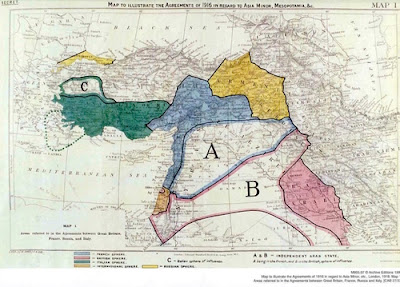
Text of Sykes-Picot Agreement

It is accordingly understood between the French and British governments:
That France and Great Britain are prepared to recognize and protect an independent Arab states or a confederation of Arab states (a) and (b) marked on the annexed map, under the suzerainty of an Arab chief.
That in area (a) France, and in area (b) great Britain, shall have priority of right of enterprise and local loans. That in area (a) France, and in area (b) great Britain, shall alone supply advisers or foreign functionaries at the request of the Arab state or confederation of Arab states.

That in the blue area France, and in the red area great Britain, shall be allowed to establish such direct or indirect administration or control as they desire and as they may think fit to arrange with the Arab state or confederation of Arab states.

That in the brown area there shall be established an international administration, the form of which is to be decided upon after consultation with Russia, and subsequently in consultation with the other allies, and the representatives of the Shariff of Mecca.
That great Britain be accorded (1) the ports of Haifa and Acre, (2) guarantee of a given supply of water from the Tigris and Euphrates in area (a) for area (b). His majesty’s government, on their part, undertake that they will at no time enter into negotiations for the cession of Cyprus to any third power without the previous consent of the French government.

That Alexandretta shall be a free port as regards the trade of the British empire, and that there shall be no discrimination in port charges or facilities as regards British shipping and British goods; that there shall be freedom of transit for British goods through Alexandretta and by railway through the blue area, or (b) area, or area (a); and there shall be no discrimination, direct or indirect, against British goods on any railway or against British goods or ships at any port serving the areas mentioned.

That Haifa shall be a free port as regards the trade of France, her dominions and protectorates, and there shall be no discrimination in port charges or facilities as regards French shipping and French goods. There shall be freedom of transit for French goods through Haifa and by the British railway through the brown area, whether those goods are intended for or originate in the blue area, area (a), or area (b), and there shall be no discrimination, direct or indirect, against french goods on any railway, or against French goods or ships at any port serving the areas mentioned.
That in area (a) the Baghdad railway shall not be extended southwards beyond Mosul, and in area (b) northwards beyond Samarra, until a railway connecting Baghdad and Aleppo via the Euphrates valley has been completed, and then only with the concurrence of the two governments.
That Great Britain has the right to build, administer, and be sole owner of a railway connecting Haifa with area (b), and shall have a perpetual right to transport troops along such a line at all times. It is to be understood by both governments that this railway is to facilitate the connection of Baghdad with Haifa by rail, and it is further understood that, if the engineering difficulties and expense entailed by keeping this connecting line in the brown area only make the project unfeasible, that the French government shall be prepared to consider that the line in question may also traverse the Polygon Banias Keis Marib Salkhad Tell Otsda Mesmie before reaching area (b).

For a period of twenty years the existing Turkish customs tariff shall remain in force throughout the whole of the blue and red areas, as well as in areas (a) and (b), and no increase in the rates of duty or conversions from ad valorem to specific rates shall be made except by agreement between the two powers.

There shall be no interior customs barriers between any of the above mentioned areas. The customs duties leviable on goods destined for the interior shall be collected at the port of entry and handed over to the administration of the area of destination.
It shall be agreed that the french government will at no time enter into any negotiations for the cession of their rights and will not cede such rights in the blue area to any third power, except the Arab state or confederation of Arab states, without the previous agreement of his majesty’s government, who, on their part, will give a similar undertaking to the french government regarding the red area.
The British and French government, as the protectors of the Arab state, shall agree that they will not themselves acquire and will not consent to a third power acquiring territorial possessions in the Arabian peninsula, nor consent to a third power installing a naval base either on the east coast, or on the islands, of the Red Sea. This, however, shall not prevent such adjustment of the Aden frontier as may be necessary in consequence of recent Turkish aggression.
The negotiations with the Arabs as to the boundaries of the Arab states shall be continued through the same channel as heretofore on behalf of the two powers.
It is agreed that measures to control the importation of arms into the Arab territories will be considered by the two governments.
I have further the honor to state that, in order to make the agreement complete, his majesty’s government are proposing to the Russian government to exchange notes analogous to those exchanged by the latter and your excellency’s government on the 26th April last. Copies of these notes will be communicated to your excellency as soon as exchanged. I would also venture to remind your excellency that the conclusion of the present agreement raises, for practical consideration, the question of claims of Italy to a share in any partition or rearrangement of turkey in Asia, as formulated in Article 9 of the agreement of the 26th April, 1915, between Italy and the allies.

His Majesty’s Government further consider that the Japanese government should be informed of the arrangements now concluded.

Teach Younger Voters Hillary’s History

This will not be in any chronological order:

Paula Jones lawsuit

ChinaGate

TrooperGate

Mena Airport Drug Scandal

Rose Law Firm

WhiteWater and Savings and Loan

Hillary’s Radical Summer, Black Panthers

Hillary’s College Thesis, Saul Alinsky

White House TravelGate

Vince Foster is Dead

HillaryCare

Bill, Jeffrey, Planes and Sin Island

Yes, Bill was Impeached

Clinton did Steal White House Stuff

Clinton Showdown with FBI Liaison

Bill Clinton let bin Ladin Go

Bill Ordered Sandy to Stuff the Documents in his Pants

Need more? Okay, one more?

They Stole all the ‘W’s…. lots of damage


Whitewater: Twelve Versions of Hillary Clinton Draft Indictment, 451 Pages, Withheld By National Archives

JudicialWatch: New details continue to emerge from Judicial Watch’s Freedom of Information Act fight with the National Archives over the release of draft indictments of Hillary Clinton in the Whitewater case. According to the Archives, release of the indictments—drafted by an independent counsel examining the Clintons’ relationship to a corrupt Arkansas S&L and an alleged cover-up—would violate grand jury secrecy and Mrs. Clinton’s personal privacy. FOIA request denied.

Judicial Watch declined to take “no” for an answer, and so off to court we went. The case is now in the hands of a federal judge.

In the course of litigation, new facts have come to light. Under FOIA, the Archives must produce a “Vaughn Index”—a tantalizing and at times maddening document. A Vaughn Index is the government saying: we are not giving you the documents, but here is an “index” of what we are not giving you, and why we are not giving it to you. Your tax dollars at work.

In the National Archives Vaughn Index for the case, we learn that the government is sitting on at least twelve versions of the the draft indictment of Mrs. Clinton, including one “listing overt acts.” From the public record, we know that the Whitewater case centered around whether Mrs. Clinton, while First Lady, lied to federal investigators about her role in the corrupt Arkansas S&L, concealed documents (including material under federal subpoena), and took other steps to cover-up her involvment. Prosecutors ultimately decided not to indict Mrs. Clinton, concluding that they could not win the complicated, largely circumstantial case against such a high-profile figure.

The draft indictments range from three to forty pages—the former likely excerpts or “scraps” from longer documents, the Vaughn Index indicates. Some of the drafts doubtless are copies but many clearly are not. A total of 451 pages of draft indictments are being withheld by the Archives.

In its final brief in the case, Judicial Watch took a wrecking ball to the Archives’ grand jury secrecy and personal privacy claims. Judicial Watch noted “the truly enormous quantities of grand jury material already made public” in the independent counsel’s final report. Judicial Watch provided the court with a detailed list of grand jury and non-grand jury material that had already been made public. If there ever was a valid claim to grand jury secrecy in this closely scrutinized case, it is long gone.

The Judicial Watch brief noted that the Archives “fails to identify a single, specific privacy interest Mrs. Clinton still has in the draft indictments” following publication of the independent counsel’s report and “hundreds of pages of grand jury materials, non-grand jury materials, and independent counsel legal theories and analysis that are already in the public domain.”

A typical FOIA privacy claim centers on unwarranted invasions of personal privacy. But in Mrs. Clinton’s case, the brief noted, the Archives “makes no claims that disclosure of the draft indictments will reveal any particular personal, medical or financial information about Mrs. Clinton, much less anything intimate or potentially embarrassing.”

Mrs. Clinton of course is one of the most famous women in the world, a former First Lady, senator and secretary of state, and the Democratic Party’s presumptive nominee for president of the United States. The findings of an investigation into whether Mrs. Clinton told the truth to federal investigators and withheld evidence under subpoena while she was First Lady is clearly matter of public interest as voters weigh her suitability for the highest office in the land.