Hillary Granted Big $$ to Yunus and Grameen Bank

Pssst, Stanley Ann Dunham, Barack’s mother also had historical connections to Grameen Bank. The audio and article are found here.

Even more from the Huffington Post: President Obama’s Mother, Hillary Clinton and Muhammad Yunus: Microcredit and Grameen in the U.S.

Thank you Secretary of State, Hillary Clinton, for your wonderful speech last Friday, January 23rd.

We have, with President Obama, someone who believes in development and diplomacy. Coming to the State Department yesterday sent a very strong signal. A few of you may even know, as I mentioned in my testimony before the Foreign Relations Committee, that the President’s late mother was an expert in microfinance and worked in Indonesia. I have been involved in microfinance since 1983, when I first met Muhammad Yunus and had Muhammad come to see us in Arkansas so that we could use the lessons from the Grameen Bank in our own country. I was actually looking forward to being on a panel with the President’s mother in Beijing on microfinance.

You were very warmly welcomed by foreign service workers who have been struggling through eight years of the US losing its moral footing in the world. You brought up a favorite subject, microcredit, and two of my favorite people (along with yourself), President Obama’s late mother, Ann Dunham Soetero, and Muhammad Yunus, my “boss.”

One of those helping President Obama’s late mother organize that meeting was Lawrence Yanovitch now heading up Poverty issues at the Gates Foundation. He spoke to me about his work with Ann Dunham Soetero when in Paris last year. This Obama victory is also a victory for her and her work with microcredit.

Microcredit is not the only answer but it surely should be an important part of not only how we restructure our own American economy, but how we support others around the world.

Microcredit helps women. Microcredit helps fight against fundamentalism and violence against women, children, immigrant communities, and makes the business-model approach to ending poverty a human one.

Muhammad Yunus’ work with the Grameen Bank has now made it to the US with Grameen America. Organizations such as the Grameen Foundation have been replicating this model around the world.

President Obama’s late mother “got it,” Hillary Clinton “got it”…years before others. Now let’s grow it at home and around the world. It’s one banking system that is actually working. What other bank these days is made up mostly of women borrowers and can claim a 98-99% payback rate? Surely not Citibank!

EXCLUSIVE: Disgraced Clinton Donor Got $13M In State Dept Grants Under Hillary

Thank you to DailyCaller News Foundation: Hillary Clinton’s Department of State awarded at least $13 million in grants, contracts and loans to her longtime friend and Clinton Foundation donor Muhammad Yunus, despite his being ousted in 2011 as managing director of the Bangladesh-based Grameen Bank amid charges of corruption, according to an investigation by The Daily Caller News Foundation.

The tax funds were given to Yunus through 18 separate U.S. Agency for International Development (USAID) award transactions listed by the federal contracting site USAspending.gov.

They highlight how Clinton mixed official government business with Clinton Foundation donors. Yunus gave between $100,000 to $300,000 to the foundation, according to the Clinton Foundation website.

Groups allied to Yunus received an additional $11 million from USAID, according to the contracting website. Yunus had business relationships with all of them.

For more than 30 years, Yunus oversaw the distribution of Grameen Bank “micro-credit loans” to the poor to set up small businesses. He was eventually regarded as a saint among many anti-poverty activists.

But he also got a big helping hand over the three decades Bill and Hillary Clinton actively promoted him and repeatedly showcased him as a celebrity figure at major Clinton Foundation functions.

The former president is credited with launching a personal lobbying campaign to press the Nobel Committee to award its peace prize to the Yunus. It did so in 2006.

Secretary Clinton’s mixing of official work with foundation donors is reportedly the focus of a second, less publicized FBI public corruption investigation of the former secretary of state. The more widely known FBI probe focuses on her use of a private email server located in her New York residence to conduct official government business.

“Presumably if The Daily Caller News Foundation has this information, then the FBI has it,” said Robert T. Hosko, former assistant director of the Bureau’s criminal division. “Certainly, the FBI would want to know the nature of these relationships,” he told TheDCNF.

“That’s precisely the sort of thing that the FBI would be looking at and should be looking at to determine whether there’s an official act of corruption,” he said.

The FBI declined comment, saying, “we generally do not comment on whether or not we’re conducting a particular investigation.”

Clinton was not shy about using her post as America’s chief diplomat on behalf of Yunus and Grameen Bank when the Bangladesh government announced an investigation into multiple allegations of financial mismanagement by the political activist.

Clinton rocked the Bangladeshi political establishment when she publicly intervened on behalf of Yunus in 2011 as the South Asian government prepared to launch its probe.

With Bangladesh Foreign Minister Dipu Moni — also a woman — at her side, Clinton said at a State Department news conference that “we have expressed directly to the government our concern and hope that the Grameen Bank … is able to continue to function productively on behalf of the people of Bangladesh.”

Emails from Clinton’s private server disclose that Bill and Hillary Clinton closely monitored the Bangladesh government’s investigation of Yunus, who is a high-profile fixture at most of the Clinton Foundation’s major gatherings. The foundation features him at 37 places on its website.

David Bossie, president of the conservative activist group Citizens United and a long-time Clinton critic, called for the FBI to look into possible conflicts of interest linked to the long association between Yunus and the Clintons.

“The mixing of State Department and U.S. government business with Clinton Foundation donors and interests is a prime example of what the FBI could be investigating in addition to the private email server setup.” Bossie told TheDCNF.

The Clinton-Yunus relationship dates from Bill Clinton’s tenure as Arkansas governor, when he and Hillary fell in love with the concept of micro-credit loans. Yunus, then a Bangladesh economist, has championed the micro-credit cause through Grameen Bank since 1978.

Things went terribly wrong for Yunus and Grameen Bank about five years ago when a number of independent authorities decided to take a closer look at the bank and the 50 inter-related enterprises Yunus created, most of which operate in Third World countries where there is little financial oversight.

Former Secretary Clinton and her husband closely followed Yunus’ mounting problems. A June 11, 2012 email from Amitabh Desai, the foundation’s foreign policy director, for example, alerted Hillary Clinton of a Yunus response to the Bangladesh investigation.

“In case you haven’t seen it already, WJC wanted HRC and you to see this,” Desai said in the email routed through Cheryl Mills, Hillary Clinton’s chief of staff, and Huma Abedin, her deputy chief of staff. “WJC” is Bill Clinton and “HRC” is Hillary Clinton.

Hosko said the email “is potentially an indicator of the co-mingling of state business with the Clinton Foundation. It is very concerning.”

Clinton’s aid to Yunus also included 18 grants, contracts and loans awarded to two of his America-based foundations, the Grameen Foundation USA and Grameen America, according to USASpending.gov.

The awards, totaling $13 million, were issued by the U.S. Agency for International Development, the development arm of the State Department, beginning when Clinton became secretary of state. Another $11 million in federal funds went to organizations allied with Yunus.

When asked to explain the Yunus grants and loans, USAID Spokesman Raphael Cook said the agency didn’t have the “manpower” to respond to questions about the transactions.

Other federal agencies also opened their coffers to Yunus after Clinton entered the administration. The Department of Treasury awarded a $600,000 grant directly to Grameen America under a fund designed to boost financial institutions in community development. A Treasury Department spokesman declined to provide any details beyond the fact the funds were for activities in New York.

A series of Small Business Administration grants to Grameen America also began in July 2011, totaling $934,000. Those grants were for “salaries and expenses” for the foundation to operate its New York offices where Clinton once a U.S. senator.

In addition to being revered among anti-poverty activists, Yunus was popular among elements of the Bangladesh military. When a group of generals overthrew the Bangladesh government in January 2007, Yunus considered establishing a new political party to lead the new military-led government, thereby legitimizing the coup.

The BBC reported April 7, 2007, that “the army would sponsor Nobel Peace prize winner Dr. Muhammad Yunus as a new leader.”

Sabir Mustafa, the BBC’s Bengali Service editor, added that “Dr. Yunus is still viewed as a credible candidate by elements in the army.” In the end, Yunus opted not to create the new party.

The Grameen Foundation, USA did not respond to a request for comment from TheDCNF. Neither did spokesmen for the Clinton presidential campaign or the Clinton Foundation.


China’s Cyber Attack on Pentagon Missile Defense Daily

So, where are the strongly worded letters, the condemnation, the sanctions the counter-measures?

Cyber-warfare, industrial espionage, economic warfare.


November 2015:

WASHINGTON (Reuters) – The U.S. military on Sunday hailed the success of a complex $230 million test of the U.S. missile defense system that it said showed the ability of the Aegis and THAAD weapons systems to identify and destroy ballistic and cruise missiles at once.

The test was conducted near Wake Island in the western Pacific Ocean around 11:05 p.m. EDT by the U.S. Missile Defense Agency, U.S. European Command, U.S. Pacific Command, the Ballistic Missile Defense System Operational Test Agency and the Joint Functional Component Command for Integrated Missile Defense.

“This was a highly complex operational test of the BMDS which required all elements to work together in an integrated layered defense design to detect, track, discriminate, engage, and negate the ballistic missile threats,” MDA said in a statement released late Sunday.

The Missile Defense Agency website.

Admiral: China Launching Cyber Attacks on Missile Defense Nets ‘Every Day’

Cyber threat comparable to Iranian, North Korean missile danger

FreeBeacon: Chinese military hackers are conducting cyber attacks on the Pentagon’s Missile Defense Agency networks on a daily basis and will soon shift to hacking into networks of missile defense contractors, the admiral in charge of the agency told Congress on Thursday.

Vice Adm. James D. Syring, the MDA chief who is in charge of building multi-billion dollar anti-missile defenses, told a House hearing that while his networks are successfully fighting off the cyber attacks, missile defense contractors need to improve their network security.

The three-star admiral said the threat of Chinese cyber attacks was equal to North Korean and Iranian missile threats.

“I view the cyber threat that I specifically face with MDA and the systems we are fielding on par with any ballistic missile threat that either Iran or North Korea possess,” Syring said.

Asked by Rep. Mike Rogers (R., Ala.), the chairman of the House Armed Services subcommittee on strategic forces, if he is fighting off cyber attacks from Chinese military hackers, Syring answered: “Yes, sir.” He limited his comments and said he would provide details of the cyber threats during a later closed-door session of the subcommittee.

“We have taken inordinate steps to protect both our classified and unclassified networks from attack, [with] constant 24/7 monitoring with teams in place plus good material protections of those systems,” he said.

“My biggest concern remains in our cleared defense contractor base and their protections,” Syring added, noting that Chinese efforts to break into missile defense networks are relentless.

“They are continuing to try and attack my government networks, every day, classified and unclassified,” he said. “But where they’re going next and we’ve gotten examples of this is to my cleared defense contractors with the unclassified controlled technical information.”

Bolstering the network security of contractors is a high priority across the entire ballistic missile defense system, he said.

Foreign states are seeking to penetrate missile defenses and other weapons systems to steal technology and data for use in their own weapons. They also seek to disrupt or destroy the systems in the event of a crisis or conflict.

A report by the Defense Science Board warned in 2013 that critical U.S. weapons and other military systems are vulnerable to cyber attack.

“The United States cannot be confident that our critical Information Technology (IT) systems will work under attack from a sophisticated and well-resourced opponent utilizing cyber capabilities in combination with all of their military and intelligence capabilities (a ‘full spectrum’ adversary,” the report concluded.

Syring said in prepared testimony his agency is deploying upgraded command and control systems with better security against cyber attacks. Missile defense personnel also are being trained to prevent cyber intrusions.

“We know that malicious cyber actors are constantly attempting to exfiltrate information from U.S Industry,” Syring stated. “We will continue to work with the defense industrial base, the FBI, and other partners to identify these issues and raise the costs of this behavior to those responsible, in coordination with national authorities and in accordance with national policy.”

Syring said a key objective is hardening U.S. missiles defenses for future conflicts, which will likely involve cyber attacks against its networks.

“We must build resilient cyber defenses that are capable of detecting and mitigating threats without impeding operations in order to ‘fight through’ the cyber threat,” he said.

Two exercises simulating cyber attacks on missile defense networks were held last year. Another exercise is set for next month.

To prevent cyber attacks through equipment and parts, MDA is tightening the security of its suppliers.

“We also have a rigorous cyber and supply chain risk management inspection program to examine everything about our systems, from the truck to supply chain, to the fielded operational ability,” Syring said.

Chinese agents were detected spying on the U.S. missile defense interceptor base at Fort Greely, Alaska, several years ago, according to defense officials.

Barry Pike, executive officer for the U.S. Army’s missiles and space program, said during the House hearing that foreign military threats are growing with the emergence of synchronized air, missile, cyber, and electronic warfare attacks.

“Across all Army [air and missile defense] programs, we are improving our resilience and ability to mitigate cyber and electronic warfare attacks,” he stated in prepared testimony.

Rogers, the subcommittee chairman, said in opening remarks at the hearing that after eight years of President Obama’s administration “our nation’s security is in more jeopardy than any time in recent memory.”

“North Korea, Iran, Pakistan, Russia, and China are all advancing their ballistic and cruise missile programs, along with weapons of mass destruction programs, to put our military, our allies, and our homeland at risk,” Rogers said.

“At the same time, President Obama has cut missile defense practically every year he’s been in office,” he added. “America’s enemies know an opportunity when they see one; our allies see they are on their own.”

Disclosure of the Chinese hacking against missile defenses comes as Syring and other military leaders revealed the Pentagon is working on its own cyber weapons that could be used to disable or destroy missiles prior to launch.

Details about what the Pentagon calls “left-of-launch” measures remain classified but are said to include cyber attacks and other electronic warfare measures against missile launch controls and other information systems.

Pre-launch cyber attacks against missiles are designed to bolster other missile defenses, including lasers and anti-missile interceptors, that can attack enemy missiles in the early, middle, and late stages of flight, while decreasing costs.

China is developing both missile defenses and anti-satellite missiles that employ similar technologies and are known to be targeting U.S. and allied computer networks to steal technical information useful in developing its weapons.

China also has targeted U.S. and foreign suppliers that provide equipment and material used in missile defenses.

A briefing in 2014 by Joyce Corell, a senior U.S. counterintelligence official, identified numerous pathways used by foreign states to penetrate the U.S. supply chain.

“We have more than enough evidence to know the threat is real and dangerous, but we will inevitably have difficulty predicting targets and assessing impacts,” she stated in a briefing slide.

The 28 Missing Pages: 911

At issue here is why stop with declassifying these 28 pages, why no declassify the complicity of Iran and a few of the 9/11 attackers? One thing leads to another.

28 Pages

Former Sen. Bob Graham and others urge the Obama administration to declassify redacted pages of a report that holds 9/11 secrets

Kroft/CBS: In 10 days, President Obama will visit Saudi Arabia at a time of deep mistrust between the two allies, and lingering doubts about the Saudi commitment to fighting violent Islamic extremism.

It also comes at a time when the White House and intelligence officials are reviewing whether to declassify one of the country’s most sensitive documents — known as the “28 pages.” They have to do with 9/11 and the possible existence of a Saudi support network for the hijackers while they were in the U.S.

preview28pages0.jpg

For 13 years, the 28 pages have been locked away in a secret vault. Only a small group of people have ever seen them. Tonight, you will hear from some of the people who have read them and believe, along with the families of 9/11 victims that they should be declassified.

Bob Graham: I think it is implausible to believe that 19 people, most of whom didn’t speak English, most of whom had never been in the United States before, many of whom didn’t have a high school education– could’ve carried out such a complicated task without some support from within the United States.

Steve Kroft: And you believe that the 28 pages are crucial to this? Understand…

Bob Graham: I think they are a key part.

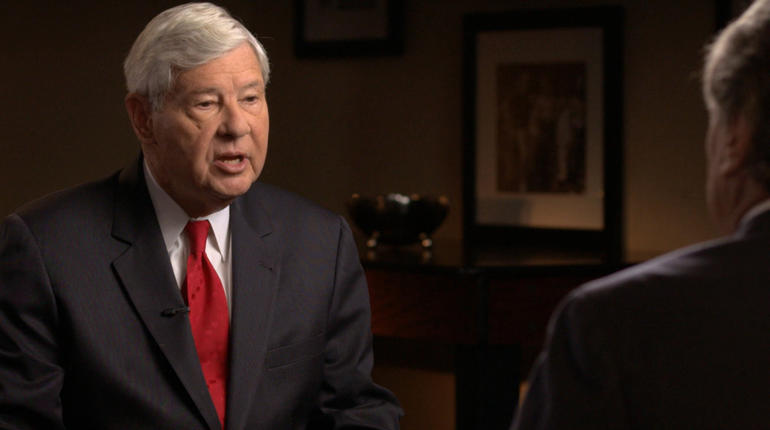
Former U.S. Senator Bob Graham has been trying to get the 28 pages released since the day they were classified back in 2003, when he played a major role in the first government investigation into 9/11.

Bob Graham: I remain deeply disturbed by the amount of material that has been censored from this report.

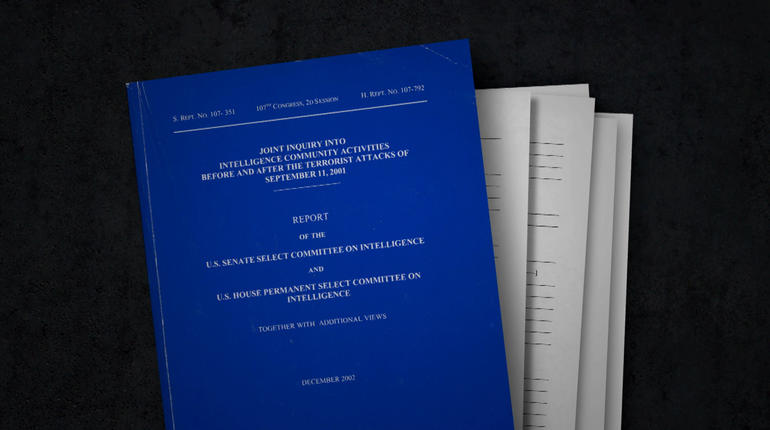
At the time, Graham was chairman of the Senate Select Committee on Intelligence and co-chair of the bipartisan joint congressional inquiry into intelligence failures surrounding the attacks. The Joint Inquiry reviewed a half a million documents, interviewed hundreds of witnesses and produced an 838 page report — minus the final chapter which was blanked out — excised by the Bush administration for reasons of national security.

“I remain deeply disturbed by the amount of material that has been censored from this report.”

Bob Graham won’t discuss the classified information in the 28 pages, he will say only that they outline a network of people that he believes supported the hijackers while they were in the U.S.

Steve Kroft: You believe that support came from Saudi Arabia?

Bob Graham: Substantially.

Steve Kroft: And when we say, “The Saudis,” you mean the government, the–

Bob Graham: I mean–

Steve Kroft: –rich people in the country? Charities–

Bob Graham: All of the above.

Graham and others believe the Saudi role has been soft-pedaled to protect a delicate relationship with a complicated kingdom where the rulers, royalty, riches and religion are all deeply intertwined in its institutions.

preview28pagesnew.jpg

Bob Graham

CBS News

Porter Goss, who was Graham’s Republican co-chairman on the House side of the Joint Inquiry, and later director of the CIA, also felt strongly that an uncensored version of the 28 pages should be included in the final report. The two men made their case to the FBI and its thendirector Robert Mueller in a face-to-face meeting.

Porter Goss: And they pushed back very hard on the 28 pages and they said, “No, that cannot be unclassified at this time.”

Steve Kroft: Did you happen to ask the FBI director why it was classified?

Porter Goss: We did, in a general way, and the answer was because, “We said so and it needs to be classified.”

Goss says he knew of no reason then and knows of no reason now why the pages need to be classified. They are locked away under the capital in guarded vaults called Sensitive Compartmented Information Facilities, or SCIFs in government jargon. This is as close as we could get with our cameras — a highly restricted area where members of Congress with the proper clearances can read the documents under close supervision. No note-taking allowed.

Tim Roemer: It’s all gotta go up here, Steve.

Tim Roemer, a former Democratic congressman and U.S. ambassador to India, has read the 28 pages multiple times. First as a member of the Joint Inquiry and later as a member of the blue-ribbon 9/11 Commission which picked up where Congress’ investigation left off.

Steve Kroft: How hard is it to actually read these 28 pages?

Tim Roemer: Very hard. These are tough documents to get your eyes on.

Roemer and others who have actually read the 28 pages, describe them as a working draft similar to a grand jury or police report that includes provocative evidence — some verified, and some not. They lay out the possibility of official Saudi assistance for two of the hijackers who settled in Southern California. That information from the 28-pages was turned over to the 9/11 Commission for further investigation. Some of the questions raised were answered in the commission’s final report. Others were not.

Steve Kroft: Is there information in the 28 pages that, if they were declassified, would surprise people?

Tim Roemer: Sure, you’re gonna be surprised by it. And, you’re going to be surprised by some of the answers that are sitting there today in the 9/11 Commission report about what happened in San Diego, and what happened in Los Angeles. And what was the Saudi involvement.

Much of that surprising information is buried in footnotes and appendices of the 9/11 report — part of the official public record, but most of it unknown to the general public. These are some, but not all of the facts:

In January of 2000, the first of the hijackers landed in Los Angeles after attending an al Qaeda summit in Kuala Lumpur, Malaysia. The two Saudi nationals, Nawaf al-Hazmi and Khalid al-Mihdhar, arrived with extremely limited language skills and no experience with Western culture. Yet, through an incredible series of circumstances, they managed to get everything they needed, from housing to flight lessons.

Tim Roemer: L.A., San Diego, that’s really you know, the hornet’s nest. That’s really the one that I continue to think about almost on a daily basis.

During their first days in L.A., witnesses place the two future hijackers at the King Fahd mosque in the company of Fahad al-Thumairy, a diplomat at the Saudi consulate known to hold extremist views. Later, 9/11 investigators would find him deceptive and suspicious and in 2003, he would be denied reentry to the United States for having suspected ties to terrorist activity.

Tim Roemer: This is a very interesting person in the whole 9/11 episode of who might’ve helped whom– in Los Angeles and San Diego, with two terrorists who didn’t know their way around.

Phone records show that Thumairy was also in regular contact with this man: Omar al-Bayoumi, a mysterious Saudi who became the hijackers biggest benefactor. He was a ghost employee with a no-show job at a Saudi aviation contractor outside Los Angeles while drawing a paycheck from the Saudi government.

Steve Kroft: You believe Bayoumi was a Saudi agent?

Bob Graham: Yes, and–

Steve Kroft: What makes you believe that?

Bob Graham: –well, for one thing, he’d been listed even before 9/11 in FBI files as being a Saudi agent.

On the morning of February 1, 2000, Bayoumi went to the office of the Saudi consulate where Thumairy worked. He then proceeded to have lunch at a Middle Eastern restaurant on Venice Boulevard where he later claimed he just happened to make the acquaintance of the two future hijackers.

Tim Roemer: Hazmi and Mihdhar magically run into Bayoumi in a restaurant that Bayoumi claims is a coincidence and in one of the biggest cities in the United States.

Steve Kroft: And he decides to befriend them.

Tim Roemer: He decides to not only befriend them but then to help them move to San Diego and get residence.

In San Diego, Bayoumi found them a place to live in his own apartment complex, advanced them the security deposit and cosigned the lease. He even threw them a party and introduced them to other Muslims who would help the hijackers obtain government IDs and enroll in English classes and flight schools. There’s no evidence that Bayoumi or Thumairy knew what the future hijackers were up to, and it is possible that they were just trying to help fellow Muslims.

The very day Bayoumi welcomed the hijackers to San Diego, there were four calls between his cell phone and the imam at a San Diego mosque, Anwar al-Awlaki, a name that should sound familiar.

The American-born Awlaki would be infamous a decade later as al Qaeda’s chief propagandist and top operative in Yemen until he was taken out by a CIA drone. But in January 2001, a year after becoming the hijackers’ spiritual adviser, he left San Diego for Falls Church, Virginia. Months later Hazmi, Mihdhar and three more hijackers would join him there.

Tim Roemer: Those are a lot of coincidences, and that’s a lot of smoke. Is that enough to make you squirm and uncomfortable, and dig harder– and declassify these 28 pages? Absolutely.

Perhaps, no one is more interested in reading the 28 pages than attorneys Jim Kreindler and Sean Carter who represent family members of the 9/11 victims in their lawsuit against the kingdom. Alleging that its’ institutions provided money to al Qaeda knowing that it was waging war against the United States.

Jim Kreindler: What we’re doing in court is developing the story that has to come out. But it’s been difficult for us because for many years, we weren’t getting the kind of openness and cooperation that we think our government owes to the American people, particularly the families of people who were murdered.

The U.S. government has even backed the Saudi position in court–that it can’t be sued because it enjoys sovereign immunity. The 9/11 Commission report says that Saudi Arabia has long been considered the primary source of al Qaeda funding through its’ wealthy citizens and charities with significant government sponsorship. But the sentence that got the most attention when the report came out is this:

“We have found no evidence that the Saudi government as an institution or senior Saudi officials individually funded the organization.”

Attorney Sean carter says it’s the most carefully crafted line in the 9/11 Commission report and the most misunderstood.

Sean Carter: When they say they found no evidence that senior Saudi officials individually funded al Qaeda, they conspicuously leave open the potential that they found evidence that people who were officials that they did not regard as senior officials had done so. That is the essence of the families’ lawsuit. That elements of the government and lower level officials sympathetic to bin Laden’s cause helped al Qaeda carry out the attacks and help sustain the al Qaeda network.

Yet, for more than a decade, the kingdom has maintained that that one sentence exonerated it of any responsibility for 9/11 r­­egardless of what might be in the 28 pages.

Bob Kerrey: It’s not an exoneration. What we said–we did not, with this report, exonerate the Saudis.

Former U.S. Senator Bob Kerrey is another of the 10-member 9/11 Commission who has read the 28 pages and believes they should be declassified. He filed an affidavit in support of the 9/11 families’ lawsuit.

Bob Kerrey: You can’t provide the money for terrorists and then say, “I don’t have anything to do with what they’re doing.”

Steve Kroft: Do you believe that all of the leads that were developed in the 28 pages were answered in the 9/11 report? All the questions?

Bob Kerrey: No. No. In general, the 9/11 Commission did not get every single detail of the conspiracy. We didn’t. We didn’t have the time, we didn’t have the resources. We certainly didn’t pursue the entire line of inquiry in regard to Saudi Arabia.

Steve Kroft: Do you think all of these things in San Diego can be explained as coincidence?

John Lehman: I don’t believe in coincidences.

John Lehman, who was secretary of the Navy in the Reagan administration, says that he and the others make up a solid majority of former 9/11 commissioners who think the 28 pages should be made public.

John Lehman: We’re not a bunch of rubes that rode into Washington for this commission. I mean, we, you know, we’ve seen fire and we’ve seen rain and the politics of national security. We all have dealt for our careers in highly classified and compartmentalized in every aspect of security. We know when something shouldn’t be declassified. An the, this, those 28 pages in no way fall into that category.

Lehman has no doubt that some high Saudi officials knew that assistance was being provided to al Qaeda, but he doesn’t think it was ever official policy. He also doesn’t think that it absolves the Saudis of responsibility.

John Lehman: It was no accident that 15 of the 19 hijackers were Saudis. They all went to Saudi schools. They learned from the time they were first able to go to school of this intolerant brand of Islam.

Lehman is talking about Wahhabism, the ultra conservative, puritanical form of Islam that is rooted here and permeates every facet of society. There is no separation of church and state. After, oil, Wahhabism is one of the kingdom’s biggest exports. Saudi clerics, entrusted with Islam’s holiest shrines have immense power and billions of dollars to spread the faith. Building mosques and religious schools all over the world that have become recruiting grounds for violent extremists. 9/11 Commissioner John Lehman says all of this comes across in the 28 pages.

John Lehman: This is not going to be a smoking gun that is going to cause a huge furor. But it does give a very compact illustration of the kinds of things that went on that would really help the American people to understand why, what, how, how is it that these people are springing up all over the world to go to jihad?

Tim Roemer: Look, the Saudis have even said they’re for declassifying it. We should declassify it. Is it sensitive, Steve? Might it involve opening– a bit, a can of worms, or some snakes crawling out of there? Yes. But I think we need a relationship with the Saudis where both countries are working together to fight against terrorism. And that’s not always been the case.

71 Years Ago: Buchenwald – April 15, 1945

Ed Murrow Reports From Buchenwald

Permit me to tell you what you would have seen and heard had you had been with me on Thursday. It will not be pleasant listening. If you are at lunch, or if you have no appetite to hear what Germans have done, now is a good time to switch off the radio for I propose to tell you of Buchenwald. It is on a small hill about four miles outside Weimar, and it was one of the largest concentration camps in Germany, and it was built to last.

As we approached it, we saw about a hundred men in civilian clothes with rifles advancing in open-order across the field. There were a few shots. We stopped to inquire. We’re told that some of the prisoners have a couple of SS men cornered in there. We drove on, reached the main gate. The prisoners crowed up behind the wire. We entered. And now, let me tell this in the first-person, for I was the least important person there, as you can hear.

There surged around me an evil-smelling stink. Men and boys reached out to touch me. They were in rags and the remnants of uniforms. Death had already had marked many of them, but they were smiling with their eyes. I looked out over that mass of men to the green fields beyond, where well-fed Germans were ploughing. A German, Fritz Kersheimer, came up and said, “May I show you around the camp? I’ve been here for ten years.” An Englishman stood to attention saying, “May I introduce myself? Delighted to see you. And can you tell me when some of our folks will be along?” I told him, “soon,” and asked to see one of the barracks. It happened to be occupied by Czechoslovakians. When I entered, men crowded around, tried to lift me to their shoulders. They were too weak. Many of them could not get out of bed. I was told that this building had once stabled 80 horses. There were 1200 men in it, five to a bunk. The stink was beyond all description. When I reached the center of the barracks, a man came up and said, “You remember me, I am Patr Zenkl, one time mayor of Prague.” I remembered him, but did not recognize him. He asked about Benes and Jan Masaryk. I asked how many men had died in that building during the last month. They called the doctor; we inspected his records. There were only names in the little black book, nothing more — nothing of who had been where, what they had done or hoped. Behind the names of those who had died there was a cross. I counted them. They totaled 242, two hundred and forty-two out of 1200 in one month.

As I walked down to the end of the barracks, there was applause from the men too weak to get out of bed. It sounded like the hand-clapping of babies, they were so weak. The doctors name was Paul Heller. He had been there since ’38. As we walked out into the courtyard, a man fell dead. Two others–they must have been over 60–were crawling toward the latrine. I saw it, but will not describe it.

In another part of the camp they showed me the children, hundreds of them. Some were only six. One rolled up his sleeve, showed me his number. It was tattooed on his arm. B-6030, it was. The others showed me their numbers. They will carry them till they die. An elderly man standing beside me said, “The children–enemies of the state!” I could see their ribs through their thin shirts. The old man said, “I am Professor Charles Richer of the Sorbonne.” The children clung to my hands and stared. We crossed to the courtyard. Men kept coming up to me to speak to me and touch me, professors from Poland, doctors from Vienna, men from all of Europe. Men from the countries that made America.

We went to the hospital; it was full. The doctor told me that two hundred had died the day before. I asked the cause of death. He shrugged and said: “Tuberculosis, starvation, fatigue, and there are many who have no desire to live. It is very difficult.” Dr. Heller pulled back the blanket from a man’s feet to show me how swollen they were. The man was dead. Most of the patients could not move.

As we left the hospital, I drew out a leather billfold, hoping that I had some money which would help those who lived to get home. Professor Richer from the Sorbonne said, “I should be careful of my wallet if I were you. You know there are criminals in this camp, too.” A small man tottered up, say, “May I feel the leather, please? You see, I used to make good things of leather in Vienna.” Another man said, “My name is Walter Roeder. For many years I lived in Joliet. Came back to Germany for a visit and Hitler grabbed me.

I asked to see the kitchen; it was clean. The German in charge had been a Communist, had been at Buchenwald for nine years, had a picture of his daughter in Hamburg. He hadn’t seen her in twelve years, and if I got to Hamburg, would I look her up? He showed me the daily ration: one piece of brown bread about as thick as your thumb, on top of it a piece of margarine as big as three sticks of chewing gum. That, and a little stew, was what they received every twenty-four hours. He had a chart on the wall; very complicated it was. There were little red tabs scattered through it. He said that was to indicate each ten men who died. He had to account for the rations, and he added, “We’re very efficient here.”

We went again into the courtyard, and as we walked, we talked. The two doctors, the Frenchman and the Czech, agreed that about six thousand had died during March. Kershenheimer, the German, added that back in the winter of 1939, when the Poles began to arrive without winter clothing, they died at the rate of approximately nine hundred a day. Five different men asserted that Buchenwald was the best concentration camp in Germany; they had had some experience of the others.

Dr. Heller, the Czech, asked if I would care to see the crematorium. He said it wouldn’t be very interesting because the Germans had run out of coke some days ago, and had taken to dumping the bodies into a great hole nearby. Professor Richer said perhaps I would care to see the small courtyard. I said yes. He turned and told the children to stay behind. As we walked across the square, I noticed that the professor had a hole in his left shoe and a toe sticking out of the right one. He followed my eyes and said, “I regret that I am so little presentable, but what can one do?” At that point, another Frenchman came up to announce that three of his fellow countrymen outside had killed three SS men and taken one prisoner.

We proceeded to the small courtyard. The wall was about eight feet high. It adjoined what had been a stable or garage. We entered. It was floored with concrete. There were two rows of bodies stacked up like cordwood. They were thin and very white. Some of the bodies were terribly bruised, though there seemed to be little flesh to bruise. Some had been shot through the head, but they bled but little. All except two were naked. I tried to count them as best I could, and arrived at the conclusion that all that was mortal of more than five hundred men and boys lay there in two neat piles.

There was a German trailer, which must have contained another fifty, but it wasn’t possible to count them. The clothing was piled in a heap against the wall. It appeared that most of the men and boys had died of starvation; they had not been executed. But the manner of death seemed unimportant. Murder had been done at Buchenwald. God alone knows how many men and boys have died there during the last twelve years. Thursday, I was told that there were more than twenty thousand in the camp. There had been as many as sixty thousand. Where are they now? As I left the camp, a Frenchman who used to work for Havas in Paris came up to me and said, “You will write something about this, perhaps?” And he added, “To write about this, you must have been here at least two years, and after that–you don’t want to write any more.”

I pray you to believe what I have said about Buchenwald. I have reported what I saw and heard, but only part of it. For most of it, I have no words. Dead men are plentiful in war, but the living dead, more than twenty thousand of them in one camp. And the country round about was pleasing to the eye. And the German were well-fed and well-dressed. American trucks were rolling toward the rear filled with prisoners. Soon they would be eating American rations, as much for a meal as the men at Buchenwald received in four days.

If I have offended you by this rather mild account of Buchenwald, I’m not in the least sorry. I was there on Thursday, and many men in many tongues blessed the name of Roosevelt. For long years his name has meant the full measure of their hope. These men who had kept close company with death for many years did not know that Mr. Roosevelt would, within hours, join their comrades who had laid their lives on the scales of freedom.

Back in 1941, Mr. Churchill said to me with tears in his eyes, “One day the world and history will recognize and acknowledge what it owes your President.” I saw and heard the first of that installment at Buchenwald on Thursday. It came from men from all over Europe. Their faces, with more flesh on them, might have been found anywhere at home. To them, the name Roosevelt was a symbol, a code word for a lot of guys named Joe who are somewhere out in the blue, with the armor, heading east. At Buchenwald they spoke of the President just before he died. If there be a better epitaph, history does not record it.


Christian Militia Fighting Islamic State

To stop the Christian genocide in Iraq:

New York Cardinal Timothy Dolan, chair of Catholic Near East Welfare Association, is traveling to Iraqi Kurdistan this week, according to a press release from the organization.

The cardinal is traveling with CNEWA board member Bishop William Murphy of Rockville Centre; CNEWA President Msgr. John Kozar; and executive director of Catholic Charities for the New York archdiocese, Msgr. Kevin Sullivan.

According to the press release, the purpose of this pastor visit is fourfold:

  • Demonstrate solidarity with the families — many of whom are Christian — displaced when ISIS swept through northern Iraq in summer 2014. The delegation will visit displaced families taking refuge in camps and villages; stop at schools, nurseries and clinics serving their needs; and pray together in the celebration of the Divine Liturgy.
  • Show gratitude and solidarity with the caregivers — the priests, sisters and laity who, although displaced as well, have responded in meeting the needs of those expelled by ISIS. The pastoral visit will highlight the efforts of the religious sisters and parish priests who have partnered with CNEWA in setting up schools, nurseries and clinics.
  • Demonstrate solidarity with and support for the leadership of the local church. The delegation will spend time with the patriarchs and bishops of the Chaldean and Syriac Catholic churches, the Syriac Orthodox Church and the Assyrian Church of the East.
  • Assert the Christian commitment to support all those wounded by ISIS: Christian, Muslim and Yazidi.

The Christian militia fighting IS

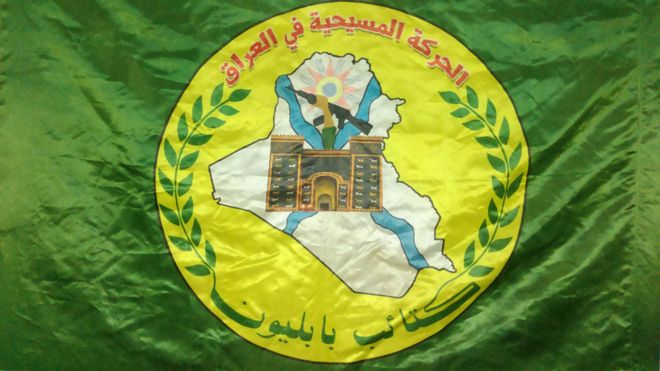
The flag of the Babylon Brigade

BBC: A group of Christians in Iraq have formed their own militia to protect people from the so-called Islamic State group. The leader of the Babylon Brigade says they were left with no choice but to take up arms when IS fighters targeted Christians.

There’s a striking picture on the wall. It shows an untarmacked road, scorched by sunlight, leading to a small village with a mountain range behind it. And all along the side of the road there are crosses every 100m – taller even than lamp posts.

“Christian village,” a guard mumbles. “Near Mosul.”

We are in the Baghdad headquarters of the Iraq Christian Resistance, Babylon Brigade. They are a militia, although they prefer the phrase popular mobilisation unit. Whatever the language, about 30 of these outfits have sprung up in the past couple of years and between them they have 100,000 armed volunteers. They were formed to block the advance of the so-called Islamic State group when it swept through north and west Iraq in 2014, even threatening Baghdad. When the Iraqi national army collapsed the militias stood firm.

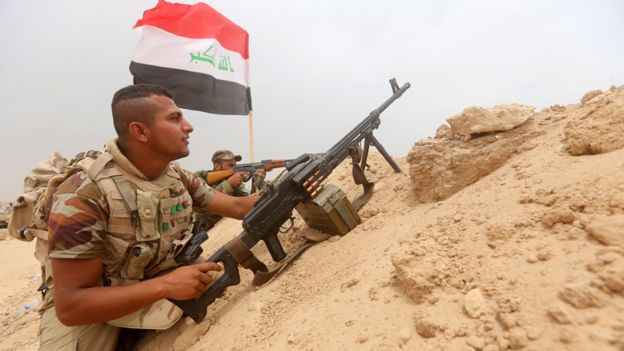
Shia fighters from the popular mobilisation units hold a position on the Tharthar frontline on the edge of Anbar province, 120km north-west of Baghdad, on June 1, 2015.

Getty: Shia fighters from a popular mobilisation unit hold a position north of Baghdad, June 2015

Most are Shia Muslim. A handful are Sunni Muslim, one is Christian – the Babylon Brigade.

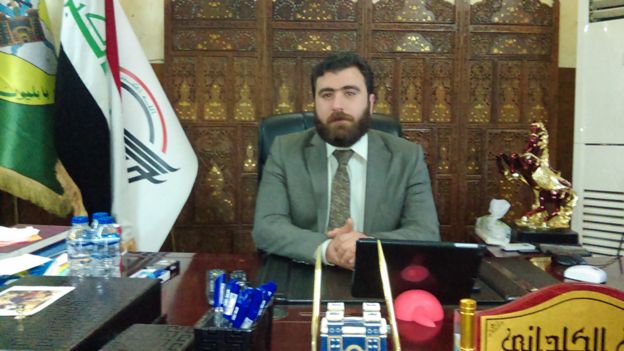
The other pictures on the wall are photographs, all depicting the Babylon Brigade’s leader and the man I have come to meet, Rayan Al-Kildani. Kildani in military fatigues, Kildani with shades, Kildani meeting some important people, Kildani looking contemplative, Kildani looking determined.

And then the man himself arrives with a small entourage, most of them in suits but one young man with a wispy beard is in military clothing.

I’m not sure how seriously to take Kildani. The militias have persuaded the central government to cover their expenses and as a result they are, taken altogether, receiving about $1.4bn (£1bn) a year. For a militia leader like Kildani it’s more than $600 (£450) per man per month. Good money. There are stories about people renting a house in Baghdad, gathering a few people together, announcing they have formed a militia and going to the government to apply for the funds.

“How many men have you got?” I ask.

“That’s a military secret,” he says.

Really? I saw another man from the militias the day before and he was quite open about numbers. I’d been a little surprised when that militiaman apologised for his English saying it should have been better given that he was from Wembley in North London.

Kildani in his office

“Really, Wembley? By the football ground?” I had said.

“Yes, my wife and children are still there.”

Anyway he’d seemed happy to talk numbers. So I press Kildani again.

“Hundreds of men or thousands?”

“Many.”

“Weapons?”

“Rockets,” he says. “Medium ones. This is war. You can’t fight a war with rifles.”

“So, a Christian militia,” I remark.

“What Islamic State was doing to the Christians is terrible,” he says. “They are the devil.”

“Your militia has fought?”

“We fight side by side with the Muslim militias,” he says, claiming: “We are the first Christian power in Iraqi history.”

And then: “I know the Bible says that if you get hit on one cheek you should offer the other. But we have really good defence forces now. No-one is going to do anything bad to the Christians. Some Christians had their homes taken over. I have personally been to those houses to tell the new people living there to get out. Christian suffering is over.”

One of his four phones rings. He glances at the incoming number, grunts and gives it to someone to answer.

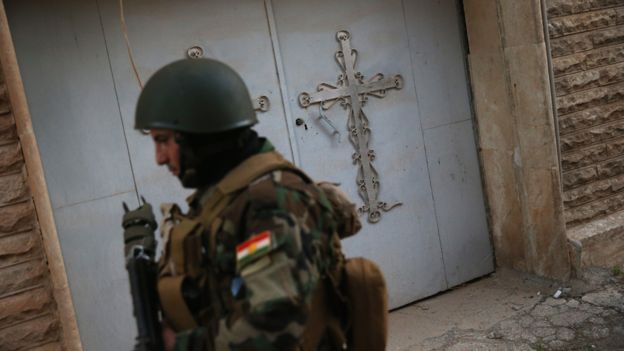
A Christian militiaman patrols through the abandoned Assyrian streets of Telskuf on 4 November, 2015 near the frontline with ISIS fighters in Telskuf, northern Iraq.Image copyright Getty Images
Image caption A Christian militiaman patrols through the abandoned streets of Telskuf, November, 2015

“What about the commandment: Thou shalt not kill?” I ask.

“You are a Christian?” Kildani asks, somewhat doubtfully.

“Church of England,” I offer.

Kildani nods as if that explains it.

“He’s a Protestant,” someone says with a note of disapproval. “Sectarianism runs deep in Iraq,” I think. But of course I don’t say that.

Kildani turns to me again: “We have to fight. We have to defend ourselves.”

And then, to my surprise, he adds: “Jesus himself told us that if you don’t have a sword you should go out and buy one.”

I cast my mind back to my schooldays of Bible study but can’t remember Jesus telling people to arm themselves.

“Did he really say that?”

“It’s in the Bible,” Kildani insists.

“Matthew,” one man says. “Luke,” says another. “Matthew and Luke,” they both say. I looked doubtful.

Kildani glances over to one of his assistants who is playing a game on his phone.

“Find it!” he orders.

The young man with the phone walks over to me. He has the verse on his screen in Arabic.

It is Luke chapter 22, verse 36: “If you have a purse, take it, and also a bag; and if you don’t have a sword, sell your cloak and buy one.”

Turns out theologians have been arguing about the verse for centuries. Is that a real sword? Or a metaphorical one? Kildani is in no doubt. He says he and his men are out on patrol. And they’re armed.