
Russia possibly mapping underwater internet cables in Mediterranean
WT: Approximately one year ago, the Russian navy caused quite a stir by hanging around internet cables in the Atlantic for some period of time.
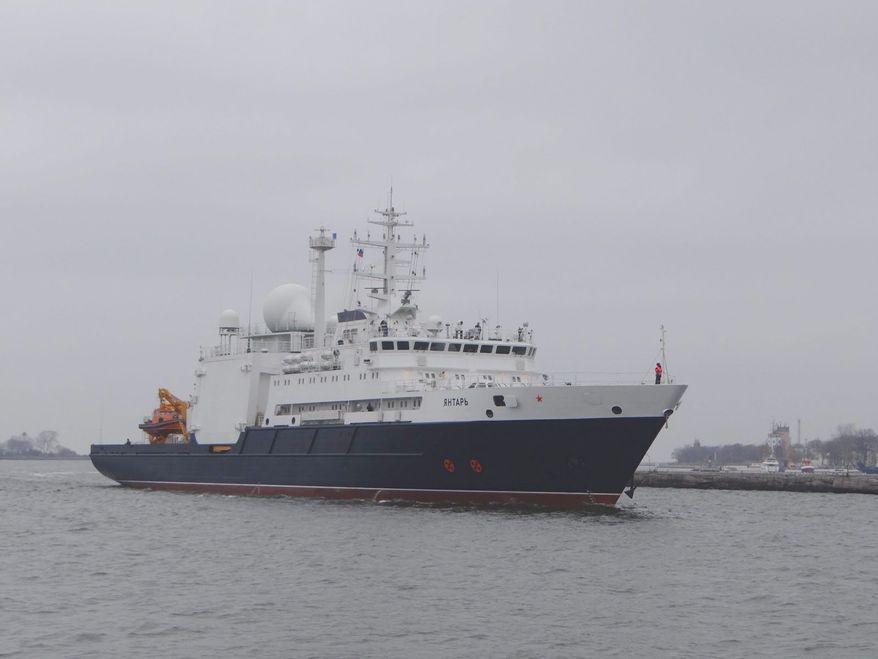
Steffan Watkins, an open-source intelligence analyst who monitors Russian ship movements, said the Russian navy sends vessels such as Yantar to the region to check on existing U.S. underwater sensors or cables that have been detected previously. The ships also search for new equipment on the sea floor that would reveal U.S. operations.
The accusation was the Russians were mapping the cables in order to be able to sever them in times of conflict.
The Russian fleet in the Mediterranean seems to be doing the same thing this week over cables off the Syrian coast.
News.com.au writes, “Author and military analyst H.I. Sutton is one of several observers who have noted the unusual activity of a suspected Russian survey ship, the Yantar, in waters between Cyprus, Syria, Lebanon and Turkey in recent weeks.
It’s reported positions have been coinciding with the tracks of three major undersea fibre-optic cables. Mr Sutton’s blog suggests the extremely slow speed and frequent stopping of the ship suggest it could be deploying a submersible to the sea floor.”
If internet cables were severed that were supporting Western information flow, this could cause great economic disruption and take a very long time to repair, especially in time of war.
It seems likely that Russia wants this capability to inflict great damage on the European and American economies if need be.
Another possibility is that the Russian navy could be deploying devices to monitor information through the cables for espionage reasons.
(Bloomberg) — U.K. warships are monitoring a Russian aircraft-carrier group sailing past Britain’s eastern coast to the Mediterranean Sea to supplement President Vladimir Putin’s forces in the region, as international condemnation mounts of Russia’s military campaign in Syria.
A photo taken from a Norwegian surveillance aircraft shows a group of Russian navy ships in international waters off the coast of Northern Norway on October 17, 2016. 333 Squadron, Norwegian Royal Airforce/NTB Scanpix/Handout via Reuters
The deployment signals Putin’s determination to assert Russian interests as U.S. and European leaders accuse him of war crimes and dangle the threat of sanctions in response to the bombing of Aleppo by Russian warplanes.
Putin floated a possible extension of a cease-fire for the besieged Syrian city during a late-night meeting in Berlin on Wednesday with French President Francois Hollande and German Chancellor Angela Merkel that she portrayed as testy. Merkel and Hollande will meet again in Brussels on Thursday for a two-day summit of the EU’s 28 leaders that will consider a common response to Russia’s actions in support of Syrian President Bashar Al-Assad.
“We must show a robust and united European stance in the face of Russian aggression,” U.K. Prime Minister Theresa May told reporters as she arrived for her first summit. While Britain is leaving the EU, until it does “it’s vital that we work together to continue to put pressure on Russia to stop its appalling atrocities, its sickening atrocities in Syria,” she said.
May’s comments hint at the growing outrage over the bombing by Russian and Syrian forces of Aleppo, where some 275,000 inhabitants remain trapped. Syria’s government opened two crossings for fighters who want to leave the rebel-held eastern part of the contested city, a day after announcing a three-day humanitarian pause to its offensive.
Northern Fleet
Russia’s Northern Fleet, based at Severomorsk near the Finnish border, said last week that a naval group had set out for the northeast Atlantic en route to the Mediterranean “to ensure naval presence in the important areas” of the seas, according to the TASS news agency. The ships include the Admiral Kuznetsov, Russia’s only aircraft carrier.
“When these ships near our waters we will man-mark them every step of the way,” U.K. Defense Secretary Michael Fallon said in an e-mailed statement on Thursday. “We will be watching as part of our steadfast commitment to keep Britain safe.”
Russia said last month that its permanent naval group already stationed in the Mediterranean numbers about 10 warships and support vessels. Igor Konashenkov, a Defense Ministry spokesman in Moscow, declined to comment on the additional deployment.
Russian Responsibility
Speaking after the Berlin talks that stretched into early Thursday, Putin said Russia would halt its bombing of Aleppo as long as “terrorist forces” aren’t active. At a separate news conference alongside Merkel, Hollande said Putin didn’t specify how long such a cease-fire might last. “We hope it’s as long as possible” to allow for humanitarian aid to reach all parts of the city, he said.
European foreign ministers will work on getting aid to the area, which would “at least be a first step that we haven’t seen in a long time,” Merkel said. “It was right to use this blunt language” in the talks with Putin because “Russia bears a clear responsibility in Syria, including exerting influence over” Assad, the German leader said.
Merkel and Hollande kept the threat of sanctions against Russia on the table, while saying the focus had to be on helping civilians in Aleppo.
Hollande said that at best the European Union could target individuals, while Merkel limited herself to saying that “you can’t deny yourself the option.” Either way, any sanctions would require the approval of all 28 member states and the most ardent support for such an approach came from the U.K, which has voted to leave the bloc. Russia already is under EU and U.S. sanctions for its encroachment on Ukraine.
“The conclusion in the European Union is that we don’t believe in new sanctions at this phase because we already have sanctions and these run until the end of January,” Finnish Prime Minister Juha Sipila said in an interview in Helsinki on Wednesday. “In December or January we will have a discussion about the future of sanctions.’’
Minsk Accord
The Syria talks followed a discussion on Ukraine that was also attended by Ukrainian President Petro Poroshenko. Merkel and Poroshenko said the four leaders agreed to work on a “road map” of measures to advance last year’s Minsk accords for ending the conflict in eastern Ukraine between government forces and Russian-backed separatists.
In Brussels, Estonian Prime Minister Taavi Roivas, whose country borders Russia, said EU leaders must deliver “a very clear message to both the Syrian regime and its allies, mainly Russia.” He compared Aleppo with the Chechen capital, Grozny, that was reduced to rubble by Russian aerial bombing in the 1990s. “This is absolutely unacceptable,” Roivas said.
Category Archives: UN United Nations Fraud Corruption
Mastermind of Europe’s Terror Attacks Identified
U.S. Identifies Key Player in ISIS Attacks on Europe
Frontline: Almost a year after Islamic State terrorists killed 130 people in Paris, U.S. intelligence agencies have identified one of the suspected masterminds of that plot and a follow-up attack in Brussels.
U.S. counter-terror officials said the man, who goes by the name Abu Sulaiyman al Fransi (Abu Sulaiyman, the Frenchman) is a 26-year old Moroccan who once served in Afghanistan as a soldier in the French Foreign Legion. He did prison time for drug running before going to Syria in 2014 and joining ISIS, according to U.S. officials and French court documents. His real name is Abdelilah Himich, according to U.S. counter-terror officials.
Despite his relative youth, Himich’s military experience and knowledge of France have made him a key figure in the Islamic State’s external operations unit, which has led a terror campaign against Europe, officials said. He is thought to be in Syria.
“We believe he is one of the top guys involved in spearheading the Paris attack and the Brussels attacks,” a U.S. counter-terror official said. “He was involved in creating that infrastructure” of the external operations unit.
U.S. and European counter-terror officials were interviewed for this story as part of a report by ProPublica and FRONTLINE about terrorism in Europe.
Officials acknowledged that they have struggled to pin down details about the identities and activities of the ISIS planners. U.S. and European counter-terror officials note that several Islamic State fighters have used the nom de guerre Abu Sulaiyman al Fransi. (The nickname is spelled in a number of ways, U.S. officials say.) In the past, he has variously been described by European officials and media reports as a blond convert and a former physical education teacher.
But U.S. officials said there was strong evidence indicating that the senior French fighter in question is Himich. They said French intelligence has been informed of that assessment and agrees with it.
Click here to see the full documentary.
European counter-terror officials interviewed by ProPublica earlier this year said they also suspect that a militant known as Abu Sulaiyman the Frenchman helped to plan the Paris and Brussels attacks. But they did not disclose his full identity.
Officials said that months of investigations and intelligence work in Europe and the Middle East have begun to shed light on the command structure of what the Islamic State calls external operations. The predominantly Arab leaders of ISIS have given senior and mid-level European fighters considerable autonomy to select targets and decide details of plots in their home turf, according to Western counter-terror officials.
Nonetheless, the ISIS unit that plots attacks overseas is also quite bureaucratized, according to U.S. intelligence officials. The unit exerted increasingly direct control over plots in Europe starting in 2015, according to Western counter-terror officials, and is part of an ISIS intelligence structure known as the Enmi.
“ISIS-directed plots in Europe have usually involved several planners and organizers who might change for each project,” said Jean-Charles Brisard, the chairman of the Center for the Analysis of Terrorism in Paris, who has been studying the unit. “It’s more a team process than a single mastermind’s plan.”
Abu Mohamed al-Adnani, a Syrian who served as a spokesman for the Islamic State, was a top figure overseeing external operations, counter-terror officials say. A U.S. drone strike killed Adnani in August.
There is hard evidence that another ISIS militant in Syria, a man known as Abu Ahmad, played a hands-on role in the Paris and Brussels cases, according to European counter-terror officials. A laptop computer recovered by Belgian police after the Brussels bombings in March contained encrypted communications detailing Abu Ahmad’s direct role in the plot.
During the four months after the Paris attacks, Abu Ahmad discussed targets, strategy and bomb-making techniques from Syria via encrypted channels with survivors of the terrorist cell who were hiding in Brussels. The fugitive suspects referred to Abu Ahmad as their “emir,” or leader, according to Belgian counter-terror officials.
The communications in the laptop indicate that the original plan was to hit France again, European officials say. When Belgian police closed in, however, Abu Ahmad told the fugitives to strike in Brussels instead, officials said. The suicide bombings killed 32 people at the airport and a subway station on March 22.
Abu Ahmad was described by two captured ISIS fighters as a lead planner of the Paris massacre as well. The suspects, an Algerian and a Pakistani, told interrogators that Abu Ahmad chose and prepared them for the plot last fall, and sent them to Europe posing as Syrian refugees, according to European counter-terror officials.
When the two landed in Greece in October, however, Greek border guards discovered they were not Syrian, and held them for a few weeks, according to European and U.S. counter-terror officials. After being released, the duo communicated with Abu Ahmad, who sent them money and instructions not to join the rest of the attackers, according to officials. The two suspects were arrested in Austria in December.
The men described Abu Ahmad as a Syrian, according to European counter-terror officials. But the recovered clandestine communications with the plotters in Europe indicate clearly that he speaks French, raising questions about his true nationality, the officials said.
“He has to be French, or speak French well,” a European counter-terror official said. “They use French slang.”
The investigation shows that Abu Ahmad worked with the senior fighter known as Abu Sulaiyman al Fransi, according to European and U.S. counter-terror officials. During the massacre at the Bataclan concert hall in Paris, witnesses overheard gunmen talk to each other about calling a person named Abu Sulaiyman, according to European and U.S. officials.
Himich, the man identified by U.S. intelligence as Abu Sulaiyman, has an unusual story. He was born in Rabat, Morocco, in 1989, according to U.S. counter-terror officials and French court documents. His family emigrated when he was an adolescent to Lunel, a southern French town about 20 miles from Montpellier, officials say.
Lunel has a population of about 25,000 and a rich history as a Jewish cultural center in medieval times. The town has a large population of Muslim descent as the result of immigration from North Africa beginning in the 1960s.
In 2006, Himich’s name appeared in a Lunel high school newspaper as the author of an article about teenage drinking. Although he went to school in France, he remains a Moroccan citizen, according to officials and court documents. In 2008, he joined the French Foreign Legion, a legendary and hard-nosed force whose soldiers come from all over the world.
Himich “distinguished himself during various missions in Afghanistan,” according to the court documents. In 2010, however, he deserted, according to the officials and documents.
“Wanting to attend the burial of his father, he left his post without authorization,” the documents say. “After his return to France, he did vocational training to work in the security field and also considered becoming a nurse.”
A year later, he got in trouble with the law. French customs police intercepted him arriving on a train from Amsterdam at the Gare du Nord station in Paris on Dec. 13, 2011, according to court documents. Police discovered he was carrying a backpack containing 2.6 pounds of cocaine with a street value of about $55,000. He also tested positive for cocaine and marijuana.
Himich testified that he had met a Senegalese man at a hookah bar in Paris, and told him he needed money because he had left the Foreign Legion. Himich said the man hired him to bring a package from Rotterdam, offering to pay $1,600. Himich, whom the documents describe as “adopting an arrogant attitude” during a court hearing, denied knowing that the package contained drugs.
Himich spent five months in jail. He was convicted in April 2013, and sentenced to three years in prison with a year suspended, according to the documents, though it appears he did not spend much more time behind bars. It was his first criminal conviction. He appears to have followed a classic trajectory from crime into radicalization.
Despite its picturesque setting, Lunel has made headlines as a hub of extremism. By 2015, at least two dozen young people — of North African descent as well as Muslim converts — had left Lunel to fight in Syria, where at least six of them died.
Himich joined that exodus in early 2014, according to U.S. counter-terror officials. He rented a car and drove via Italy, Greece and Turkey to Syria, according to Brisard. That route is popular with Syria-bound jihadis who travel with their families, according to Italian police. Himich has a wife and two children, officials said.
In Syria, Himich first fought in an Al Qaeda-linked group, officials say. Then, like many extremists in Syria, he moved to the increasingly powerful Islamic State. He soon became a battlefield commander, according to U.S. officials and Brisard, the French counter-terror expert.
“He was quickly promoted by ISIS to lead one of its fighting brigades in the first half of 2014,” Brisard said. “His rapid rise within ISIS could be explained by his military service in the French Foreign Legion.”
France and Interpol have issued warrants for Himich’s arrest on suspicion of terrorist activity, according to U.S. officials.
Investigators believe Himich is among a group of ISIS militants in their 20s and 30s, predominantly Francophones, who plot against Europe. The group also includes two Muslim convert brothers from Toulouse, Fabien and Jean-Michel Clain, according to counter-terror officials. Fabien Clain is believed to be the Frenchman who read the official statement in which the Islamic State claimed responsibility for the Paris attacks, officials say.
The Clain brothers surfaced in an investigation in 2009 of a French-Belgian extremist network. Suspects in that case had been investigated for a bombing in Cairo and, according to investigators, told Egyptian interrogators they had discussed a potential attack on the Bataclan, the nightclub that was hit in 2015. The suspects allegedly saw the Paris concert hall as a Jewish target because the owners were Jewish and the venue had hosted pro-Israel events.
Given his military experience, Himich’s stature is likely to grow after the recent deaths of Islamic State leaders in U.S. air strikes, officials said.
“He’s probably one of the most important Frenchmen in ISIS, especially after the death of Adnani,” the U.S. counter-terror official said.
Even Russian Diplomats in DC are Trolling Obama Admin
The Russian embassy in Washington tweeted at US’s Kerry, UK’s Johnson, saying Grozny is peaceful and modern
In 2003, the UN called Grozny the most destroyed city on earth

MEE: Russia’s embassy in Washington, DC, trolled the US and UK in a tweet on Monday, comparing its bombing of the Chechen capital of Grozny 16 years ago to its offensive on Syria’s Aleppo today.
In 2003, the United Nations described the Chechen capital Grozny as the most destroyed city on earth. Thirteen years later, the UN envoy to Syria warned that Aleppo may be totally destroyed in two months.
Russia besieged and bombed Grozny for months during the Second Chechen War to capture the city from rebels, including Islamist militants. While observers have drawn parallels between the Chechen capital and Aleppo to condemn Moscow, the Russian embassy in Washington used the comparison to make a case for the Kremlin’s intervention in Syria.
Russia, whose forces are fighting in support of the Syrian government, is leading a bombing campaign against rebel-held east Aleppo.
The embassy tweeted photos of the rebuilt Chechen city, addressing US Secretary of State John Kerry and British Foreign Minister Boris Johnson.
“#Grozny today is a peaceful, modern, and thriving city. Ain’t that a solution we’re all looking for? @JohnKerry? @BorisJohnson? | #Aleppo,” the embassy wrote in the tweet.
***
#Grozny today is a peaceful, modern, and thriving city. Ain’t that a solution we’re all looking for? @JohnKerry? @BorisJohnson? | #Aleppopic.twitter.com/4VWOyVudGX
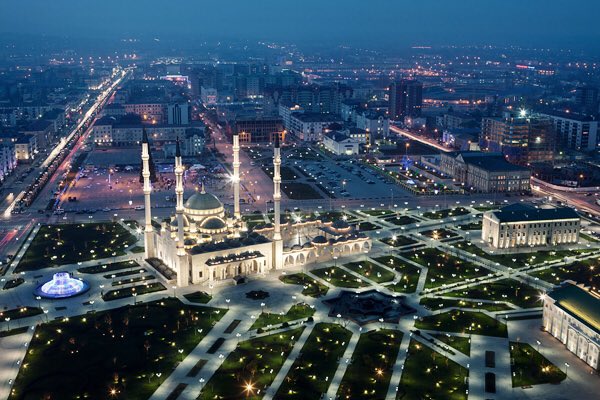
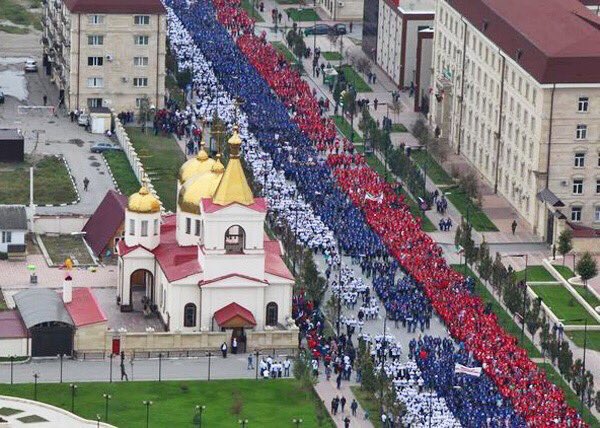
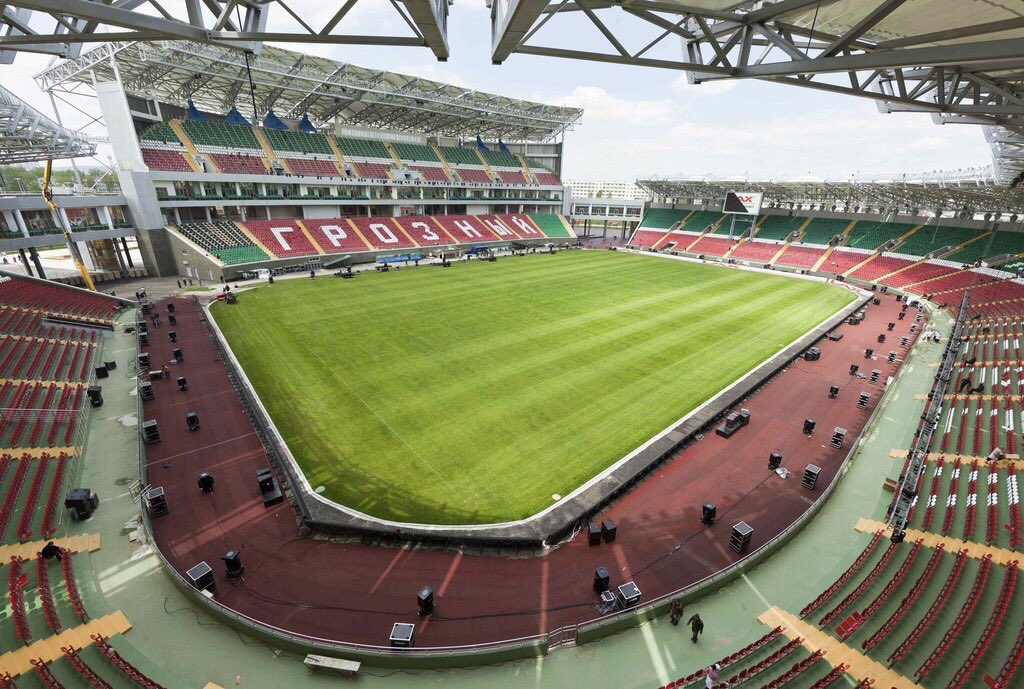
Internet users were quick to point to the misery brought to Chechnya by the Russian war.
***
In its sick trolling, @RusEmbUSA seems to have lost the images of what it is responsible for in #Grozny. #Russia brings war, not peace.pic.twitter.com/BJrlVAkfr2
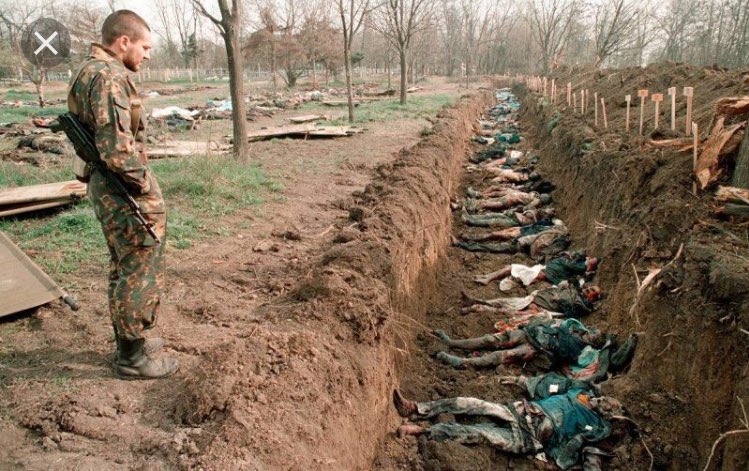
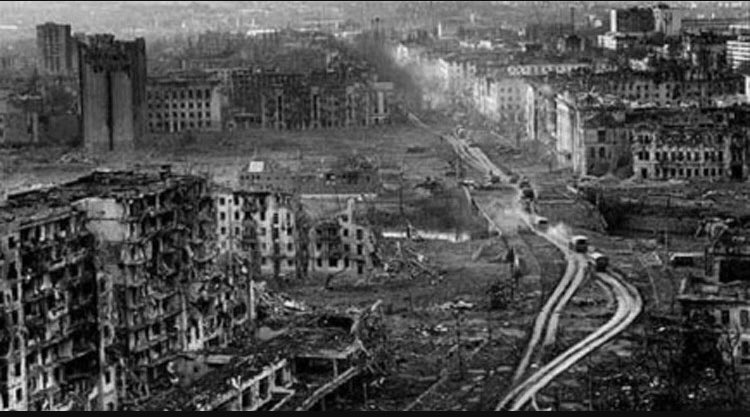
The Russian army and pro-Moscow Chechen forces fought off separatists and Islamists to take control of Grozny in a campaign that started in 1999. The war ended the Chechen de-facto autonomy and returned the region to Moscow’s control.
“Russian forces have committed grave abuses, including war crimes, in their campaign in Chechnya,” reads a 2000 Human Rights Watch report. “In Grozny, the graffiti on the walls reads ‘Welcome to Hell: Part Two,’ about as good a summary as any of what Chechen civilians have been living through in the past five months.”
After the war, dozens of mass graves containing the remains of civilians were discovered across Chechnya.
“@RusEmbUSA, above how many mass graves are these nice buildings erected?!.. @JohnKerry @BorisJohnson,” a visiting scholar in Carnegie’s Middle East Programme, tweeted in response to the embassy’s tweet.
Twitter has been used as a medium for political statements between officials and states in recent regional spats.
Last week, Iraqi Prime Minister Haider al-Abadi tweeted at Turkish President Recep Tayyip Erdogan to taunt him about his video call message during the failed coup in July after the latter told him to “know his place” in a dispute about the presence of Turkish forces in northern Iraq.
Russia Prepared for War, What we Should Know
I have been asked several times in the last month if we are prepared for nuclear war with Russia. My responses have consistently been yes but the United States is always prepared and the likelihood of a nuclear conflict is slim. Sure, there is always that threat, yet it is just that, a threat.
Related reading: Russia’s Use of Military Power in Ukraine
This site has published countless items in recent months regarding Russia and the most important of all of them is the Gerasimov Doctrine, a paper that very few have read. Okay, while it is important, below will summarize some items in cliff note fashion.
In July 2015, Putin stated that:
recent events show that we cannot hope that some of our geopolitical opponents will change their hostile course any time in the foreseeable future … we must respond accordingly to this situation … and take additional systemic measures in all key areas … [to] preserve our country’s social, political and economic stability. Much here will depend on consolidating the efforts of our state institutions and civil society and concentrating resources in priority areas.117 (Chatham House)
Steps to a war footing: Recently, Moscow ordered an nationwide military drill for several important reasons. 1. It needed it as a test to determine flaws. 2. The drill was part of the normal propaganda machine where, your government cares deeply about you.
There have been bunkers built and tours provided, there has been training for school children and the applications gas masks, directions throughout the country and who is in charge and has authority, the movement of nuclear weapons to other locations and missile testing.
***** But with all this chatter, are we at a point of a Cuban missile crisis? Well…all the symptoms are there and increasing for sure and American citizens should take notice. However….go slow, be measured and understand more of what needs to be understood and that is Russia itself. She is not a big threat to America as she is to Eastern Europe and Europe proper.
A recent NewsMax article noted that Russia has deployed warships to the English Channel and that Russia was on a economic war-footing. What is an economic war-footing? It has several definitions but most is can this country feed the hungry during a prolonged conflict and Russia will inflict financial damage to her adversaries. Ukraine and regions of Europe could be sacrificial lambs due to stopping energy resources such as gas and oil.
Let’s look closer at Russia:
****
Military and security mobilization
In part from Chatham House: The military aspects of Russia’s mobilization include the transition of the military and civil defence forces on to a war footing.37 This is largely a task concerned with complex administration – storing supplies and equipment; organizing and concentrating forces; coordinating men, equipment and transport with their missions; and deploying these assets as needed.
But it is also about the evolving conceptualization of the structure and role of the Russian armed forces. Thus the theme of mobilization sheds light on some enduring questions for the Russian leadership that go beyond the simple idea that mobilization is administration and ‘a staff problem’.
Indeed, mobilization has traditionally been related to how Moscow thinks about contemporary and future war. It has long been associated with the modernization of Russia’s armed forces, as the leadership has sought to work out the kind of force structures necessary to minimize the country’s weaknesses and maximize its advantages over opponents.
Facing a Turbulent Time:
Mobilization, with Difficulty Gerasimov’s brief discussion of mobilization in his February 2013 article has been almost entirely overlooked in the Western debate about Russian actions. Yet it is revealing, and offers a means of understanding the thinking of the Russian leadership and its actions during the past five years, and the direction in which it is taking Russia. Indeed, the ‘Gerasimov doctrine’ is best understood as a portent not of ‘hybrid’ warfare, but of Russian state mobilization. It discussed moving the economy on to a war footing, and pointed to the discussion of mobilization as preparedness, even readiness, proceeding before the outbreak of war.
At heart, Russian state mobilization is, in effect, grand strategy in emergency circumstances. Its implementation reflects a deliberate attempt to generate power and an acknowledgment of the problems that Moscow faces, both in terms of a complex and potentially hostile international environment and the dysfunctionalities of the Russian system. Mobilization is also about conceptualizing contemporary and future war, and preparing for the many and multifaceted challenges it poses. In current circumstances, this means both military combat readiness and the resilience and coordination of the wider system, including the MVD, security and investigation services, and other ministries.
Where are we, then, in terms of Russian mobilization? Given the definitions above, it appears that the Russian leadership is currently operating in the ‘mobilization preparation’ phase. It is taking measures to mobilize the economy, armed forces and state institutions, including explicitly stated actions to prepare Russia for the transition to war. In this it is moving towards a ‘mobilization readiness’ framework. In early 2014 Gerasimov stated that the General Staff had received additional powers for the coordination of federal organs, and that, ‘just in case’, a range of measures had been developed to ‘prepare the country for the transition to conditions of war’.113 Putin had used the same terminology following the Zapad-2013 exercises, and even earlier.114
This process has been under way for some time. If many in the West see relations with Russia in a post-Ukraine, post-2014 context, the Russian leadership is operating in a longer time frame that, though it has roots stretching back over a decade, is perhaps best depicted as a post-Arab Spring context. It is worth restating Gerasimov’s line in his article in February 2013 that ‘mobilization and concentration is not part of the period after the onset of the state of war, as in 1914, but rather unnoticed, proceeds long before that’.115 It is important to read this whole summary for context and perspective.
****** One last item and most significant, don’t underestimate the pro-active measures and defense systems of the United States. It is about the Navy and this summary will offer some comfort. You ask about the weakness of Obama making any decisions and signing his authorization? Sure, he is weak, but there are some thresholds he cannot ignore as Commander in Chief. It is the Pentagon and the Intelligence community that will prove the next measure to the National Security Council along with the House and Senate Arms Services Committee.
About this New Secretary General at the United Nations
He joined the Socialist party in 1974 – the same year five decades of dictatorship came to an end in Portugal – and soon became a full-time politician. In 1992 he became secretary general of the Socialist party, in opposition at the time. Guterres led the party to victory in the next general election in 1995, becoming prime minister.
Then Mr Guterres, fluent in Portuguese, English, Spanish and French, turned his attention to the world of international diplomacy, becoming the UN’s high commissioner for refugees in 2005. More here from BBC.
Antonio Guterres will serve as the 9th Secretary General and he has been assigned some key items as he begins this new role.
- He is to bridge all the divisions of the General Assembly.
- He is to be the peacemaker for countries such as Syria, Yemen and South Sudan.
- To fulfill all the items listed in his own vision statement.
António Guterres
Se
Challenges and Opportunities for the United Nations
“We the peoples”
The United Nations Charter is an achievement exceptional in the annals of history. Seventy years after being adopted, its validity remains undiminished. The Charter is the source of the United Nations’ unique legitimacy and provides guidance for its every activity. All its signatories decided to abide by its purposes, principles and provisions to “achieve international cooperation in solving international problems”.
The UN is the institutional expression of the international community, the cornerstone of our international system and the key actor of effective multilateralism. It is the essential instrument of member States to confront common challenges, manage shared responsibilities and exercise collective action, in an enduring quest for a peaceful, inclusive and sustainably developed world, in which international law and the dignity and worth of the human person are fully pursued.
Challenges
Understanding global mega-trends is crucial. We live in times of multiple, evolving and mutually-reinforcing shifts. These dynamics, of geopolitical, demographic, climatic, technological, social and economic nature, enhance threats and opportunities on an unprecedented scale.
Globalization and technological progress fostered extraordinary economic growth and created conditions for unparalleled reduction of extreme poverty and generalized improvement of living standards. But their unbalanced nature led to high income concentration and extreme inequality, and made exclusion even more intolerable. Exclusion, competition over dwindling resources and shortcomings in governance undermine social cohesion and institutional robustness, further contributing to the eruption of violent conflicts.
In addition to traditional threats to international peace and security, the nature of conflict is changing, with a multiplicity of armed actors, many employing asymmetric methods.
Terrorism, international organized crime and illicit trafficking pose real threats. Devastating epidemics loom persistently on the horizon. Climate change affects economies and peoples, their lands, oceans and seas. More and more States are turning to the oceans as a source of economic and social development, while realizing that their resources have to be developed in a sustainable manner.
Against this background, the UN faces new challenges in ensuring peace and security, promoting sustainable development, protecting human rights and delivering humanitarian aid.
Connecting the dots
The UN is uniquely placed to connect the dots to overcome these challenges. To succeed, it must further strengthen the nexus between peace and security, sustainable development and human rights policies – a holistic approach to the mutually-reinforcing linkages between its three pillars.
The 2015 landmark agreements on sustainable development, notably the Agenda 2030, the Paris Climate Agreement and the Addis Ababa Action Agenda lay out a clear strategy for action. They represent a unique opportunity that must be seized. Achieving these important goals has direct implications for peace and the realization of human needs and fundamental rights. For many it means survival.
Now that we know what, we must work on how. With clear priorities, tangible benchmarks and the power to mobilize all stakeholders, promoting national ownership and ensuring no-one is left behind. The reform and fine tuning of the UN Development System should be pursued to deliver full support to member States. With the horizon of 2030 the focus is on action and the watchword is implementation, implementation, implementation.
It’s widely recognized that there is no peace without development and no development without peace; it is also true that there is no peace and sustainable development without respect for human rights. Based on its acquis and normative framework, the UN human rights system has a key role to play in strengthening member States’ capacity to comply with their human rights obligations, without discrimination. The SG should ensure the mainstreaming of human rights across the whole UN system, notably through the Human Rights Up Front initiative, preventing violations and abuses, ensuring accountability and addressing the plight of victims.
The UN must be at the forefront of the global movement towards gender equality, an inalienable and indivisible feature of all human rights and fundamental freedoms: progressively moving from perceiving women and girls as a subject of protection to promoting their empowerment; from an isolated focus on women to gender mainstreaming.
Similarly, fully respecting the humanitarian principles and the autonomy of the humanitarian space, it is clear that there is no humanitarian solution for humanitarian problems. The solution is always political. And the protracted nature of present humanitarian emergencies also requires a medium and long-term resilience and development perspective.
Three concrete examples, discussed in the preparatory work of the upcoming World Humanitarian Summit, demonstrate how dots can be connected:
- More than bridging a traditional gap, humanitarian and development actors must work together from the very beginning of a crisis, ideally contributing to prevent it;
- States that are the largest recipients of refugees, pillars of regional stability and first line of defense of our collective security, should be a priority of development cooperation and UN agencies´ support, even if middle-income countries;
- Development cooperation policies must take much greater account of human mobility. Migration should be an option, not a necessity; out of hope, not despair.
The Centrality of Prevention
The world spends much more energy and resources managing crises than preventing them. Thus the UN must uphold a strategic commitment to a “culture of prevention”, pledged in 2005 but yet to materialize.
First, we need a surge in diplomacy for peace. Under the guidance of the Security Council and in accordance with the Charter, the SG should actively, consistently and tirelessly exercise his good offices and mediation capacity as an honest broker, bridge builder and messenger of peace. Full use should be made of the Organization’s convening power, as a forum for dialogue, to ease tensions and facilitate peaceful solutions.
Second, the reviews on peacekeeping, peacebuilding and on women, peace and security create a unique opportunity to develop a comprehensive, modern and effective operational peace architecture, encompassing prevention, conflict resolution, peacekeeping, peacebuilding and long-term development – the “peace continuum”.
Those reviews should not be artificially treated as a package, but strategies and policies must converge. The UN should ensure the primacy of political solutions at all stages, promote preventive approaches, mainstream human rights, and foster inclusive engagement and empowerment of women and girls. Full participation of women is essential to the success of any peace process.
People in need of protection are not getting enough. The most vulnerable, such as women and children, are an absolute priority. We must make sure that when someone sees the Blue Flag she or he can say: “I am protected”.
Third, further investment in capacity and institution-building of States is another central element of prevention, promoting inclusive and sustainable development, overcoming fragilities and strengthening the ability of Governments to address the needs of their people and respect their rights.
Fourth, prevention is also crucial to combating terrorism. Force must be used when necessary and in accordance with the Charter, but let us not forget that it is also a battle for values; our common battle. Terrorist attacks target not just their direct victims, but all who subscribe to the purposes and principles of the Charter. The international community has the legal right and the moral duty to act collectively to put an end to terrorism “in all its forms and manifestations, committed by whomever, wherever and for whatever purposes”. In doing so, we shall neither concede to fear nor abdicate our values.
Fifth, values are, indeed, the defining argument and the vital strength in our collective mobilization against intolerance, violent extremism and radicalization. To prevent them, we need to foster inclusion, solidarity and the cohesion of multiethnic, multicultural and multi-religious societies.
This is also the best antidote to racism, xenophobia, islamophobia and anti-semitism.

Informal Dialogue at UN AG. Photo LUSA.
Coordination and Partnerships
Global coherence demands a permanent strategic cooperation culture at all levels. The key to further enhancing UN’s effectiveness is attitude: cooperation instead of duplication, sharing instead of competing, and collective responsibility instead of circumstantial individual interests. This requires leadership and more and better coordination – delivery-centered, not process oriented.
Breaking silos requires accountability at three levels: system-wide; within each UN institution regarding its mandate; and how each of them contributes to the performance of the whole system. The Chief Executive Board and the Senior Management Group must be the beacons of the strategic coherence of the UN’s operational dimension.
To ensure effective multilateralism, the UN needs to develop a strong culture of partnership at three levels:
First, increasing cooperation with regional organizations, as foreseen in Chapter VIII of the Charter. They are essential actors in conflict prevention and resolution, in peace operations and promotion of development and human rights. The relationship with the African Union deserves particular commitment.
Second, strengthening partnerships with International Financial Institutions, seizing synergies of working together in addressing global and local challenges.
Third, enhancing engagement with civil society and the private sector. Their role providing global public goods must be fully recognized. Relevant UN organizations should develop strategic cooperation with their civil society partners. Since there can be no poverty eradication without generation of wealth, we should further promote the UN Global Compact, highlighting the mutual benefits of corporate responsibility.
Reform and Innovation
The future of the UN will be determined by its readiness to change and adapt, in full respect of the provisions of the Charter and the competences of the main bodies. The SG must promote reform and innovation, focused on delivery and results.
Reform is not a onetime action, it is a permanent attitude to make the UN less bureaucratic and more efficient, productive and field oriented; to simplify processes, eliminate redundant structural costs and make full use of modern technology and innovation.
As chief administrative officer, the SG must maintain unwavering commitment to transparency, accountability and oversight.
Moreover, the SG must stand firmly for the reputation of the UN and its dedicated staff. Leading by example and imposing the highest ethical standards on everyone serving under the UN flag. In particular, elevating the prestige of the blue helmet, the soldier standing for peace, and eradicating, once and for all, the exploitative and abusive conduct of those UN agents who do not represent what the Organization stands for.
Staff policies need to address substantial gaps in gender equality and regional diversity. Given that previous commitments to gender parity were not fulfilled, the SG should present and implement a road map for gender parity at all levels, with clear benchmarks and timeframes within the next mandate, giving priority to senior staff selection. In particular, parity should henceforth be respected in the appointments by the SG of members of the Chief Executive Board and the Senior Management Group. And a clear shift in this direction is required in the selection of Special Representatives and Envoys. A similar commitment is necessary to move consistently into regional equilibrium in senior appointments.
The SG should further enhance the Organization’s communication capacity. The UN must communicate in ways that everybody understands and use the most modern digital platforms, reaching out to common citizens and making the most of its unique and powerful brand.
Values
Peace, justice, human dignity, tolerance and solidarity are enshrined in the Charter and bind us together. These values are central to all cultures and religions in the world and are reflected in the Holy Books – from the Qur’an to the Gospels and the Torah, from the Upanishads to the Pali canon.
As Kofi Annan put it, “of course having such common values does not solve all problems, or eliminate the scope for different societies to solve them in different ways.(…) Each society should be given the space, not to distort or undermine universal values, but to express them in a way that reflects its own traditions and culture.”
In times of insecurity, when people feel uncertain about their future, when anxieties and fears are promoted and exploited by political populists, old-fashioned nationalists or religious fundamentalists, the success of the UN and the international community lies in our common commitment to our common values. The UN must be proud of its diversity. A diversity that only enriches the strength of the expression of our common humanity.
António Guterres
General designate of the United Nations