
Clinton’s Shadow Diplomat: Thomas Pickering and Russia’s Pipeline Sales to Iran…

CenterforSecurityPolicy: “Clinton’s Shadow Diplomat” is a hard-hitting investigative report from the Center for Security Policy, exposing the ties of former Ambassador Thomas Pickering to a Putin-linked Russian company that sold oil and gas pipelines to Iran and Syria when Pickering was on its Board of Directors. The report reveals Pickering’s overlapping roles: as Clinton’s Foreign Affairs Policy Advisor, as an Advisory Board member for two Iranian advocacy groups, as a paid Director for a Russian firm selling pipeline to Iran and Syria, as a paid consultant to Iranian aircraft contractor Boeing, and as a Senate committee hearing witness, all with a common goal of ending economic sanctions on Iran and reversing U.S. Iran policies.
As meticulously documented in “Clinton’s Shadow Diplomat,” Pickering was a paid Director for the Russian-owned company Trubnaya Metallurgicheskaya Kompaniya (TMK) from June 30, 2009 to June 26, 2012. TMK is majority-owned by Russian billionaire oligarch Dmitry Pumpyansky, a close Putin ally.
The investigation discovered extensive proof of TMK’s business dealings in Iran and Syria while Pickering was on the Board, including a financial offering disclosure, catalogs, marketing materials, websites, press releases, legal documents, reports from the steel industry press and Iranian customer websites. Sales of oil and gas pipelines to Iran were specifically prohibited under U.S. laws and executive orders.
According to TMK’s records, Pickering attended 143 of the 145 TMK Board meetings. Pickering is estimated to have been paid over half a million dollars for his service to TMK, based on TMK’s compensation rules.
“Clinton’s Shadow Diplomat” documents TMK’s relationships with three Iranian customers, all listed by the Treasury Department’s Office of Foreign Assets Control (OFAC) as “Specially Designated Nationals” during the years Pickering served on the Board: the National Iranian Oil Company (NIOC), Petropars, and Pars Oil and Gas Company.
The investigation also shows TMK’s relationships with three Syrian customers listed by OFAC as “Specially Designated Nationals” in 2011, while Pickering was on the Board: the Syrian Gas Company, the Syrian Petroleum Company, and the Al Furat Petroleum Company. U.S. persons are generally prohibited from conducting any kind of business with “Specially Designated Nationals.”
Thomas Pickering was appointed by Clinton as Chairman for the Benghazi Accountability Review Board three months after he left TMK. Starting in December 2011, he also served in official capacity on Clinton’s Foreign Affairs Policy Board. Emails released from Clinton’s private server show that Pickering was emailing and meeting with Clinton and her staff from the beginning of her time as Secretary of State, arguing for an end to economic sanctions on Iran, during the same years he was on TMK’s Board of Directors.
“Clinton’s Shadow Diplomat” raises questions for the American public and policymakers about Thomas Pickering’s and Hillary Clinton’s priorities. Did they put America’s interests first, or those of Iran and Russia?
****
Pickering was briefly the president of the Eurasia Foundation, a Washington-based organization that makes small grants and loans in the states of the former Soviet Union.
Former Ambassador Thomas Pickering agreed in May 2013 to be a director of Luxoft Holding Inc., which was incorporated by Mossack Fonseca in the British Virgin Islands. CHRIS USHER AP
As Russian software company Luxoft prepared to offer shares on the U.S. stock market, its executives turned to a well-known U.S. diplomat.
Thomas Pickering, a former U.S. ambassador to Russia who also served as undersecretary of state for political affairs under President Bill Clinton, agreed in May 2013 to be a director of Luxoft Holding Inc. a month before the company’s debut on the New York Stock Exchange. The relationship between Luxoft and Pickering, whose diplomatic career spans six presidents and four decades, is detailed in the massive Panama Papers leak and comes amid a global debate over the role of offshore companies. Luxoft is incorporated in the British Virgin Islands. More here from McClatchy/MiamiHerald.
****
Anyone find it curious that Luxoft just happened to be protected from the U.S. sanctions list due to the Russian invasion of Crimea and Ukraine? Barack Obama signed a couple of Executive Orders against Russia in 2014 as published here by the U.S. Department of Treasury and the U.S. State Department, but Luxoft was exempt.
Luxoft Gains in U.S. as Sales Shielded From Sanctions while this company has an intriguing business model:
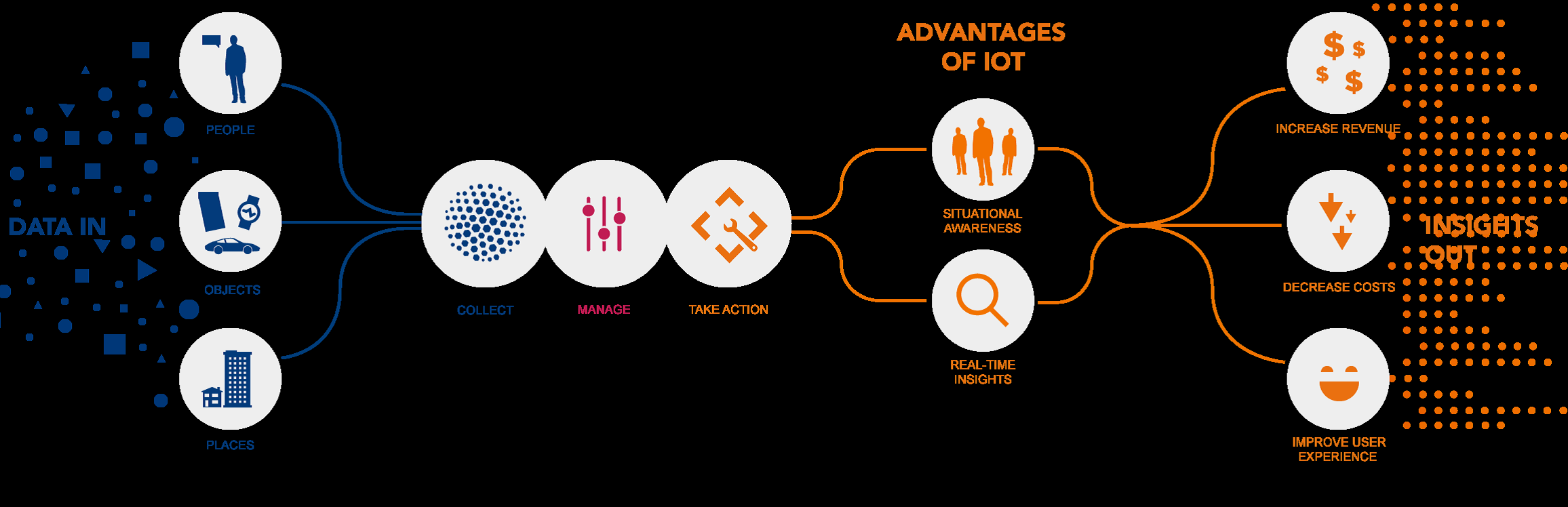
Industries / areas:Aerospace & Defense, Automotive, Banking and Financial Services, Education, Entertainment, Industrial, Insurance, Media, Publishing, Retail / Distribution, Science and Research, Software and Technology, Telecom, Transportation, TravelGlobal headquarters: Moscow RussiaWorldwide office locations:New York, Seattle United States US; Kiev, Odessa, Dnepropetrovsk Ukraine UA; London United Kingdom GB; Bucharest Romania RO; Ho Chi Minh City Vietnam VN; Eschborn/Frankfurt Germany DE; Krakow Poland PL; Singapore Singapore SGRussian office locations:St. Petersburg Russia RU, Omsk Russia RU, Dubna Russia RU*****The United States last week experienced the largest intrusion of the internet affecting social media platforms and Internet Service Providers. The further investigations found that specific malware was used via the pathway of the ‘Internet of Things’. IoT is all those other appliances that are attached to the internet for communications.So this slide is rather fascinating and may have some clues to domestic cyber threats and risks…LUXOFT HORIZONTAL TECHNICAL EXCELLENCE – IOT PRACTICE
While it’s called the Internet of Things, it’s really about the data you gather from those connected “things” and the derived insights that help you make improvements to your business – new service offerings, transformed product lines, and improved time-to-market.
IOT can help you transform your business.
Category Archives: UN United Nations Fraud Corruption
The New Drug Cartel Generation and Weapons
Northwest Mexico Erupts in Violence in Next Generation Cartel Wars
InSight: A bloody cartel war raging in the state of Baja California Sur hints at the new strategies and alliances forming as Mexico‘s fragmented underworld reorganizes.
A Zeta magazine investigation into drug war violence in the city of La Paz, the capital of Baja California Sur, has revealed how a spate of macabre murders is connected to a campaign waged by a new alliance between the Jalisco Cartel– New Generation (CJNG) and the remnants of the Tijuana Cartel against Los Dámaso, a network connected to the Sinaloa Cartel.
According to Zeta, the CJNG and Tijuana Cartel factions are operating under the name the Tijuana Cartel– New Generation (CTNG) and have been kidnapping, torturing and murdering rivals in an attempt to seize control of local drug sales and distribution.
Their targets, according to a Zeta source from the local Public Security Coordination Group (Grupo de Coordinación de Seguridad Pública), are rival hitmen, operatives that have switched sides, plaza chiefs linked to the Sinaloa Cartel and local drug distributors. Their aim is not only to remove these people but also to obtain information on the large scale Sinaloa distributors that continue providing drugs to the region.
However, the source said, identifying the relationship between the local criminal cells and larger cartels is difficult due to the fragmented nature of the current underworld and the constantly shifting allegiences of local networks.
InSight Crime Analysis
The battle for La Paz reflects a new dynamic in the Mexican underworld, as fragmented remains of once all-powerful cartels confront or ally themselves with new players as they compete for control of local as well as transnational criminal markets.
The relatively new CJNG has been one of the most expansionist groups in Mexico in recent years, and it is little surprise that it has now moved into Bajo California Sur. It was once believed to be in alliance with the Sinaloa Cartel, but there are now growing signs the organization is looking to capitalize on what appears to be a fragmentation of the Sinaloa Cartel in the wake of the capture of the cartel’s most prominent leader, Joaquin “El Chapo” Guzman.
SEE ALSO: Jalisco Cartel – New Generation Profile
In contrast, the Tijuana Cartel has been in long term decline, and so an alliance with an up-and-coming group such as the CJNG represents the remaining cartel factions’ best chance of clinging on to some level of criminal power.
Los Dámaso, meanwhile, have long been operatives for the Sinaloa Cartel. However, there have been numerous reports suggesting the network has been in conflict with other Sinaloan factions.
As highlighted by Zeta’s source, these national actors are increasingly dependent on alliances with local criminal cells that have more autonomy and less loyalty to larger organizations than in the past. This makes for a much more complex and often chaotic dynamic in this latest generation of Mexico‘s cartel wars.
*** 
Juan Cedillo : Improvised armored vehicle captured from the Zetas cartel.
Time Magazine has provided more information:
As Mexican gangsters shot it out with troops in the border city of Reynosa this month, residents posted warnings on social media of where not to drive. Not only was the gunfire itself a problem but cartel gunmen had covered some roads with perilous spikes that they call ponchallantas or “tire punchers.” The hazard can appear suddenly as the cartels have customized vans with tubes that eject the spikes. If a car drives into them too fast, it can spin into a lethal crash. Gangsters also set grounded vehicles on fire, creating more debris in the way of security forces.
The tire punchers used in the April 17 firefight, in which soldiers arrested an alleged kingpin called José Tiburcio Hernández, are the latest example of the homemade battle technology developed by Mexico’s cartels. Gangsters have also built fighting vehicles with four inch-thick armor, sometimes referred to as “monsters” or “narco tanks.” And in October, police in the western state of Jalisco even busted a clandestine factory where traffickers assembled their own assault rifles.
The development of this narco technology south of the Rio Grande has grabbed the attention of U.S. security thinkers such as Robert Bunker, an external researcher for the U.S. Army War College. He compares it to the homemade war tools used by insurgent forces round the world. “Each battle technology has been adapted to both the conflict environment and the ideological and illicit economic motivations of the irregular forces,” Bunker says. “Caltrops and spike traps have been a component of warfare going back to the ancient Greeks. In many ways, we can think of them as pre-modern landmines.”
While there is no declared war in Mexico, fighting between rival cartels and the security forces has claimed more than 83,000 lives since 2007, according to a count by Mexico’s federal intelligence agency. Gangsters use traditional weapons, including Kalashnikovs, which are often smuggled from the United Sates. The Bureau of Alcohol Tobacco and Firearms has traced 73,684 guns seized in Mexico to U.S. gun sellers since 2009. Cartels also have rocket-propelled grenades, which may be stolen from Central American military caches.
However, it is harder for them to buy actual military vehicles leading to them inventing their own. The Zetas cartel, which was led by former soldiers, first developed its own armored vehicles, both converting regular trucks and building others from scratch. Their “monsters” resemble machines from the fantasy road wars of Mad Max, with gun turrets, battering rams and walls of armor.
The Mexican army has taken many of these makeshift tanks off the road, holding more than 40 of them in its base in Reynosa. But some are still at large and causing havoc. Last year, a Zeta monster attacked a hotel in the border town of Ciudad Mier, where executives from the oil services multinational Weatherford were staying. (The executives were shaken but unscathed).
Furthermore, vigilante groups that formed to fight cartels also built their own armored vehicles. “We were going into heavy gunfire and we needed protection. So we made these monsters of our own, based on the vehicles that the Zetas had built,” said Francisco Espinosa, a cattle rancher turned vigilante. With the help of local metal workers, they also used thick layers of armor, and added some of their own features such as mobile sand trenches.
The gun factory busted in October belonged to rising gang called the Jalisco New Generation Cartel. The cartel has gained infamy for a series of attacks on Mexican officials, including an ambush on April 7 that killed 15 policemen. Hidden in two farm houses in the tequila-producing region, the factory used industrial metal cutters and blow torches to assemble AR15 rifles from components. “It’s highly sophisticated machinery with very precise software that allows them to make the cuts to finish the guns, which work perfectly,” Jalisco Attorney General Luis Carlos Najera said.
The factory likely uses gun parts that are sold on line, producing untraceable AR15’s, says Bunker, the security scholar. “I consider it conceptually sophisticated but not technologically sophisticated. The next step in this process will be the addition of a 3D metal printer. I’m sure this will come in time as more of these improvised arms factories spring up, metal printer technology matures, and prices for them drop.”
The cartels’ ability to make their own guns, customized vehicles and spike ejectors make them difficult for Mexico’s government to wipe out. Under President Enrique Pena Nieto, troops have arrested a string of cartel leaders, including the head of the Zetas and Sinaloan chief Joaquin “Chapo” Guzman. This has helped reduce the total number of homicides, which went down from a peak of more than 22,000 in 2011 to 15,649 last year, according to a police count. But incidents such as the chaos in Reynosa and ambushes in Jalisco continue to shake the nation.
Bunker warns that cartels may keep on developing their battle tech. They could use drones for surveillance in the near future, giving them a fighting edge. Mexican gangsters have also used small car bombs, and could potentially harness bigger improvised explosive devices like those in the Middle East. “One area that we should keep an eye on is car bomb and IED use potentials,” Bunker says. “I could envision IEDs being placed in a city or town under certain circumstances.”
Declarations of the Syrian Coalition for Aleppo vs. Russia

Segment 2 of this broadcast is with 2 Syrians in Aleppo describing conditions and the bombardment by the Assad regime and Russia.
Hundreds of people in the besieged parts of Aleppo on Thursday took to the streets to protest against Russia’s planned ‘evacuation’ of besieged parts of the city. Protestors called for toppling the Assad regime and the ousting of the Russian and Iranian invaders from Syria.
The residents saw in the brief pause of the Russian bombing campaign an opportunity to express their defiance to the Russian onslaught on their city. Protesters gathered in Alshaar neighborhood, waving banners and shouting slogans-in Arabic and English-expressing their opposition to Russia’s plans and their insistence on remaining in the city.
Many protestors said they had no plans to leave the city despite the ferocious onslaught by the Assad regime and its allies. “Even though the regime and Russia have mercilessly bombarded us, we’re not going to leave,” one of the protesters told reporters.
On Thursday, the Syrian Coalition said that the proposal put forward by the United Nations on Aleppo is flawed and is not based on the relevant UN resolutions on Syria, stressing that the proposal was made whilst mass forced displacement operations are being currently carried out by the Assad regime in the Damascus suburbs.
Secretary of the Syrian Coalition’s political committee Riad Hasan said that the UN proposal on Aleppo talks about the evacuation of rebel fighters from eastern Aleppo while ignoring the delivery of humanitarian aid or guarantees for protection of the aid convoys.
Hasan stressed that the UN proposal and the meetings held in Geneva on Wednesday completely ignored the main cause of the deteriorating humanitarian situation in Aleppo, namely the continued war crimes by the Assad regime and its Russian allies. The Assad regime and Russia’s air forces carry on with their relentless bombing campaign on Aleppo, targeting mainly vital civilian facilities such as hospitals and bakeries and using internationally banned weapons against civilian areas.
Hasan said that the UN special envoy to Syria Staffan de Mistura called for the exit of Fatah al-Sham Front fighters from Aleppo while turning a blind eye to the presence of 18,000 mercenaries belonging to the Iranian Revolutionary Guard and the Iraqi Popular Mobilization militias who are fighting alongside regime forces in Aleppo and committing the most heinous war crimes in the city and its countryside.
Member of the Coalition’s political committee Riad Seif said that the main goal of the Russian aerial campaign on Aleppo is to force civilians living in the rebel-held parts to leave their homes as part of the massed forced displacement campaign carried out by the Assad regime in different areas including the Damascus suburbs of Moadamiya, Qudsayya, and Daraya. Although Fatah al-Sham Front does not have any presence in these suburbs, its residents were forced to agree to an evacuation deals under the threat of besiegement and starvation.
Seif pointed out that “Russia is directly responsible for undermining chances of a political solution and for the collapse of previous truces as its intervention in Syria is aimed at assisting the regime in its mass forced displacement policy and at propping up the Assad regime.” (Source: Syrian Coalition)
The Syrian Coalition and the Free Syrian Army said the United Nations has become a tool in the hands of Russia which uses it to serve its plans. In a joint statement released on Friday, the Syrian Coalition and the FSA groups said that the UN continues to ignore Russia’s crimes and its violations of international law in Syria.
The statement described the initiative put forward by the UN to resolve the situation in Aleppo as flawed and said that it plays into the Assad regime’s plans to empty the city of its indigenous population.
The Coalition and FSA groups reaffirmed support for any serious initiative aimed at lifting the sieges; allowing the delivery of humanitarian aid to the besieged areas, including Aleppo; the evacuation of the wounded and sick; and the full implementation of UN Security Council resolution 2254 (2015) and other relevant resolutions.
The statement urged the UN to make “a thorough and real reconsideration of its positions and performance on Syria after the election of a new secretary-general.”
“The UN has been treating the executioner and the victim as equals, and its positions on Syria has helped the Assad regime and the Iranian-backed terrorist militia to execute their plans and provided a cover for Russia’s war crimes for which there has been so far no condemnation,” the statement added.
The statement pointed out that the UN initiative does not include any provision dealing with the delivery of humanitarian aid and is focused on the evacuation of a limited number of the most critically wounded.
“Meanwhile, the Russian invaders and the Assad regime have put increased pressure on the residents of eastern Aleppo through military operations and security measures to force them to leave their homes along with the rebel fighters. Therefore, the UN initiative is flawed, and instead of preventing forced displacement, it plays into the Assad regime’s plans to empty Aleppo of its indigenous population.”
The Coalition and FSA made it clear that the initiative was made whilst mass forced displacement operations are being carried out by the Assad regime in the Damascus suburbs of Moadamiya, Qudsaya, and Alhama in a repeat of the Daraya scenario. “All this has taken place amid complete silence by the United Nations which has so far failed to act in line with its responsibility to protect civilians.”
“Moreover, the UN initiative does not offer any guarantees for the safety of the wounded or their carers, thus putting them at the risk of being arrested or killed by the Assad regime.”
The statement concluded by stressing that the UN has a responsibility of to stop the serious military escalation by Russia in Aleppo as well as other parts of Syria and its use of internationally banned weapons, including bunker-buster bombs, napalm, incendiary bombs, and chemical weapons. “Crimes of genocide and war crimes against Syrian women and children must no longer be tolerated and its perpetrators must be punished.” (Source: Syrian Coalition)
Meet Monzer al Kassar: Jailed Arms Trafficker to Global Hot Spots
Photo: NBC
Monzar al Kassar was accused of being a key player in the Iraq insurgency. Indeed, he barely raises his grey eyebrows at the latest charges by the Baghdad government, which says he was a key associate of the family of a brother of Saddam Hussein.
The Observer tracked him down to his lavish, 15-suite residence, designed like a Renaissance palazzo overlooking Puerto Banus. Guards swing the gates open to allow guests into the estate, where there is a swimming pool built like a four-leaf clover. Three Spanish mastiffs prowl during the night to deter uninvited guests.
Inside the palace, a grand piano is showcased at the bottom of a marble staircase under a domed skylight. In the grand salon, silk flowers are arranged in a giant Chinese vase in front of a marble fireplace. Statues of servants holding lamps stand before the massive drapes, and on the wall are murals of African servants in turbans, carrying platters of fruit.
Photographs furnish a stark reminder of just who Kassar is. One is of him shaking hands with Uday Hussain, Saddam’s brutal son, killed in the months after the invasion. Another photo shows the two men together with an Arab musician. Kassar says he met Uday when he was sponsoring the Iraqi football team.
In a cabinet nearby is a picture of him holding hands with Hassan Aideed, son of Farah Aideed, the now-deceased Somali warlord portrayed in the film Black Hawk Down. ‘A good man,’ says Kassar. (He has been implicated in shipping arms to Somalia, in violation of an international embargo.)
The warlord Aideed is just one of his eclectic group of acquaintances, and Kassar insists that, in fairness, there are many less controversial ones. On the mantelpiece is a photo of Kassar with a Spanish intelligence official and Mustafa Tlas, the former defence minister of Syria. Then there is the photo, taken at a gala fundraiser in Marbella, of him standing next to ageing country music singer Kenny Rogers. Yet on a massive coffee table is a photo of Kassar hugging Palestinian terrorist Abu Abbas, former leader of the Palestinian Liberation Front. The picture was taken about 15 years ago, in South Yemen, and shows the portly Abbas smiling and sitting on a chair with Kassar in a tight embrace. Abu Abbas was apprehended in Baghdad in 1993 and died after a year in US custody. For more details and a timeline, Guardian published this summary.
The Court’s decision in the case of the United States v. al Kassar is found here.
The background on how the takedown of Monzar al Kassar:
Known as the Prince of Marbella, al Kassar sits in a prison in South Carolina for the conviction of several international crimes, most of all arms trafficking.
Since in or about the early 1970s, MONZER AL KASSAR, a/k/a “Abu Munawar,” a/k/a “El Taous,” the defendant, has been an international weapons trafficker. During this time period, KASSAR has been a source of weapons and military equipment for armed factions engaged in violent conflicts around the world. Specifically, KASSAR has provided weapons and military equipment to such factions in Nicaragua, Brazil, Cyprus, Bosnia, Croatia, Somalia, Iran, and Iraq, among other countries. Some of these factions have included known terrorist organizations, such as the Palestinian Liberation Front (“PLF”), the goals of which included attacks on United States interests and United States nationals.
al Kassar was snared in a plot to sell weapons to FARC, a terror organization in Columbia with a 50 year history of Marxism and a global narcotics network.
**** In part from a site known as DeepCapture:
It is nice to know that Monzer al-Kassar has been arrested and that he is no longer described as the “Prince of Marbella,” but in charging him only with the one crime that he did not commit, the DOJ seems to be covering up (or at least neglecting to publicize, much less prosecute) the many crimes (from terrorist atrocities to narco-trafficking and destructive financial crime perpetrated against the American economy) that he did commit during his long and colorful career as one of the world’s most prominent oligarchs.
In addition, it is possible that Monzer al-Kassar was finally arrested in 2008 only because of his importance to the Syrian government (he was, indeed, one of Syrian President Assad’s most important associates), and because the U.S. government had decided at that point to lend its support to the jihadi guerrillas who were then already gearing up to overthrow the Syrian government. Those jihadis, of course, are now (with U.S. support) fighting the Syrian military under the banner of an “Arab Spring” campaign for freedom and democracy.
In any event, Monzer al-Kassar accomplished much over his career, and with few exceptions, the major U.S. news organizations have yet to give him any credit for these accomplishments. One exception, as I mentioned before, was Forbes Magazine. In 2004, Forbes (without otherwise providing the details of Monzer al-Kassar interesting biography) reported that Monzer al-Kassar not only had ties to Osama bin Laden, but was involved, along with two British citizens—Jared Brook and Lincoln Fraser—with a “high flying financial outfit” called Imperial Consolidated Group.
Imperial Consolidated was involved in multiple destructive financial crimes, most of them involving pump and dump schemes and the “bust-outs” of publicly listed companies in Europe and the United States. All told, Imperial Consolidated looted at least $300 million from the Western financial system. The British miscreants were charged for their involvement in this monumental criminal enterprise, and, meanwhile, they had sued Monzer al Kassar for slander, accusing him of telling people that Imperial Consolidated had fronted arms sales to Osama bin Laden. The merits of that lawsuit remain unclear, but it is clear that Monzer al-Kassar was himself involved with Imperial Consolidated (though he has never been charged on any count other then selling weapons to undercover DEA agents).
Meanwhile (to cite just one more accomplishment), Monzer al-Kassar had long been one of the world’s leading counterfeiters of American currency. His fake U.S. $100 bills were of such high quality that they were known as “Supernotes,” and he created such vast quantities of them that they had a negative impact on the value of the U.S. dollar. As early as 1996, Kenneth Timmerman, a reporter for Time magazine and The Wall Street Journal, prepared an official document for U.S. Congressman Spencer Bacchus outlining the details of Monzer al-Kassar’s counterfeiting operation. This report was promptly deposited in a trash can somewhere in Washington. (This site has quite a summary defined in chapters, where more information is in fact provided)
**** From PBS in part:
While building the case, Spain requested that Switzerland seize Al Kassar’s bank accounts. Swiss officials then opened their own preliminary inquiry into money laundering, lack of vigilance in financial operations, and fraudulent documents and foreign certificates. Following this inquiry, Swiss authorities began to investigate Al Kassar’s arms sales using Swiss banks.
Questioned on December 9, 1993, by Swiss prosecutors, Al Kassar explained that he was a diplomatic representative of Yemen in Poland and therefore could not answer questions about government-to-government affairs. A search of Al Kassar’s Spanish address revealed documents confirming his relationship to the Croatian Zeljko Mikulic and containing the codes used for the ship’s contents: “Tea” meant TT pistols (Tula-Tokarev pistols, developed in the U.S.S.R. in the 1930s and subsequently manufactured by other Eastern Bloc countries), and “tea bags” meant bullets.
Bassam Abu Sharif was questioned by Swiss officials while passing through Geneva in 1994. He claimed that he had only met Al Kassar once in 1979 and twice thereafter. He explained that he had been asked by the Yemeni government to use his bank account to transfer money for an arms sale organized by the Yemeni ministry of defense to buy arms for Bosnia and Croatia. He said that he learned only later that Al Kassar had organized the sale.
A Determined Swiss Prosecutor Freezes Al Kassar’s Millions
Geneva Cantonal prosecutor Laurent Kasper-Answermet upheld his 1992 freeze on $6 million belonging to Al Kassar, arguing that his financial investigation found the funds to have come from criminal activities. The financial side of an arms deal leaves a paper trail, whereas arms hidden in shipping containers, guerilla armies and corrupt government officials leave none. In 1998, a Geneva appeals court upheld the seizure but released $3.7 million not directly linked to the arms deal.
“If Yemen does a deal with Bosnia and Croatia, how can I control it?” asked Al Kassar, dismissing accusations that he is an embargo-busting arms dealer. Under existing legal controls, his question is reasonable.
The case is the first of its kind in Switzerland and is expected to set a precedent. The arms did not touch Swiss territory and did not involve Swiss citizens or the country in any way other than through its banking system. Switzerland is not directly affected by the small-arms trade but has an interest in maintaining the respectability of its banking system. Such cases, as well as that of Leonid Minin ,an Israeli citizen arrested in Italy for selling Ukrainian weapons to Liberia and Sierra Leone, are pushing existing legislation in new directions in an attempt to discourage the illegal arms trade.
Al Kassar has lost successive court appeals and has one final chance to have his $2.3 million returned in an appeal to a Swiss federal court.
Matthew Brunwasser is a freelance journalist based in Bulgaria. He worked as field producer on FRONTLINE/World’s “Gunrunners” story.
NEXT – SARKIS SOGHANALIAN:
The Cold War’s Largest Arms Merchant
Links relevant to this article: Monzer Al Kassar and the Iran-Contra Affair
In Chapter 8 of the Final Report of the Independent Counsel for Iran/Contra Matters, the authors allege that Monzer Al Kassar made $500,000 selling arms to supply the Contras.Al Kassar in Argentina
This Middle East Intelligence Bulletin report describes the investigation into Al Kassar’s involvement in the Buenos Aires bombings of the Israeli Embassy and the Jewish Cultural Center, unsolved 10 years later. The report also describes Al Kassar’s possible connection to President Carlos Menem and the shipment of arms to Croatia.Al Kassar and President Menem
This article from Argentina’s La Nacion describes the political price Carlos Menem paid for his alleged involvement with Al Kassar and the 6000-ton shipment of Argentine arms to Ecuador and Croatia. (La Nacion, April 15, 2001)Al Kassar Fights Back
The Independent (U.K.) documents the public falling-out between Al Kassar and his former business partner, U.K. investment firm Imperial Consolidated Group. Al Kassar says the firm wanted him to sell arms to Osama bin Laden back in January 2001. The firm denies his accusation. (Independent, January 21, 2001)Al Kassar’s Estranged Business Partner
Offshore Business News and Research offers a portrait of Imperial Consolidated’s questionable offshore business. A glance at the links under the heading “Regulatory Problems” shows that their deal with Al Kassar was only part of their portfolio.U.S. Senate Investigation Into the Bank for Credit and Commerce International
This 1992 Senate committee report recommended further investigation into BCCI’s “relationships with convicted Iraqi arms dealer Sarkis Soghanalian, Syrian drug trafficker, terrorist and arms trafficker Monzer Al Kassar, and other major arms dealers.” This decade-old investigation sheds some light on the history and interconnectedness of illegal arms dealers.

Obama Directs Intelligence to be Shared with Cuba
Ah what?
In part from CubaToday: Diaz-Balart, a member of the House Defense Appropriations Subcommittee, said Cuba shares intelligence with Russia and Iran, among others. Earlier this year, Gen. James Clapper, the director of national intelligence, told the Senate Armed Services Committee that Cuba was among four countries that pose the greatest espionage threat to the United States. The others were Russia, China and Iran.
“The threat from foreign intelligence entities, both state and non-state, is persistent, complex and evolving,” Clapper testified in a February hearing on “Worldwide Threats.” “Targeting collection of U.S. political, military, economic and technical information by foreign intelligence services continues unabated.”
Over the course of five decades, Fidel Castro built one of the world’s most active intelligence services, whose missions included spying on U.S. military facilities in South Florida and infiltrating leading Cuban exile organizations in Miami. More here.
Previously on this site, it was published that Cuba’s largest source of revenue is stealing and selling intelligence and secrets to enemies of the United States.
Now it appears, Barack Obama is not finished with his new friends in Cuba and handing off gifts to them.
Today, I approved a Presidential Policy Directive that takes another major step forward in our efforts to normalize relations with Cuba. This Directive takes a comprehensive and whole-of-government approach to promote engagement with the Cuban government and people, and make our opening to Cuba irreversible. Read more here.
It gets worse…..
China and Russia have maintained a sophisticated spy base in Cuba for many years.
The White House
Office of the Press Secretary
October 14, 2016
Presidential Policy Directive — United States-Cuba Normalization
October 14, 2016
SUBJECT: United States-Cuba Normalization
I. Introduction
On December 17, 2014, I announced that the United States would chart a new course with Cuba, ending an outdated policy that had failed to advance U.S. interests and support reform and a better life for the Cuban people on the island over several decades. Under the new policy, the United States expands and promotes authorized engagements with Cuba to advance cooperation on areas of mutual interest, and increase travel to, commerce with, and the free flow of information to Cuba. The objective of the new policy is to help the Cuban people to achieve a better future for themselves and to encourage the development of a partner in the region capable of working with the United States to confront regional challenges, such as climate change, disease, and illicit trafficking.
Endogenous changes underway in Cuba offer opportunities to advance U.S. interests and shift away from an embargo, which is an outdated burden on the Cuban people and has impeded U.S. interests. My Administration has repeatedly called on the Congress to lift the embargo. United States policy is designed to create economic opportunities for the Cuban people; promote respect for human rights; further advances on regional security and defense issues, such as health, law enforcement, and migration; and pursue cooperation with the Cuban government that can strengthen our leadership in the hemisphere. We recognize Cuba’s sovereignty and self-determination and acknowledge areas of difference. We seek to address such differences through engagement and dialogue, and by encouraging increased understanding between our governments and our peoples.
The large Cuban-American community in the United States has an integral role to play in normalization, and in reconciliation between members of the diaspora who left Cuba and those who remain on the island. Normalization necessarily extends beyond government-to-government rapprochement — it includes rebuilding bridges between individuals and families.
This directive: (1) describes the U.S. vision for normalization with Cuba and how our policy aligns with U.S. national security interests; (2) assesses progress toward normalization; (3) describes the current and foreseen strategic landscape; (4) describes priority objectives for normalization; and (5) directs actions required to implement this PPD.
II. Vision for United States-Cuba Normalization
The vision of the United States for U.S.-Cuba normalization is guided by the following national security interests, as described in the 2015 National Security Strategy:
- The security of the United States, its citizens, and U.S. allies and partners.
- A strong, innovative, and growing U.S. economy in an open international economic system that promotes opportunity and prosperity.
- Respect for universal values at home and around the world.
- A rules-based international order that promotes peace, security, and opportunity.
Our vision for U.S.-Cuba normalization reflects my Administration’s support for broad-based economic growth, stability, increased people-to-people ties, and respect for human rights and democratic values in the region. In the long-term, the United States seeks the following end-states:
1. Enhanced security of the United States and U.S. citizens at home and abroad. We seek to ensure U.S. citizens traveling to Cuba are safe and secure and the United States is protected from: those seeking to exploit increased connectivity for illicit ends, irregular migration, and natural or man-made hazards. Our policy advances bilateral cooperation in areas of mutual interest, including diplomatic, agricultural, public health, and environmental matters, as well as disaster preparedness and response, law enforcement, migration, and other security and defense topics. Our policy also supports increased cooperation with Cuba on regional initiatives on behalf of these interests.
2. A prosperous, stable Cuba that offers economic opportunities to its people. Increased travel and economic interconnectedness supports improved livelihoods for the Cuban people, deeper economic engagement between our two countries, as well as the development of a private sector that provides greater economic opportunities for the Cuban people. Efforts by the Cuban authorities to liberalize economic policy would aid these goals and further enable broader engagement with different sectors of the Cuban economy. United States policy helps U.S. businesses gain access to Cuban markets and encourages the sustainable growth of the Cuban economy. The U.S. private sector, scientific and medical researchers, agriculture industry, foundations, and other groups have new avenues for collaboration that can provide opportunities for Cuban entrepreneurs, scientists, farmers, and other professionals. At the same time, increased access to the internet is boosting Cubans’ connectivity to the wider world and expanding the ability of the Cuban people, especially youth, to exchange information and ideas. The United States is prepared to support Cuban government policies that promote social equality and independent economic activity.
3. Increased respect for individual rights in Cuba. Even as we pursue normalization, we recognize we will continue to have differences with the Cuban government. We will continue to speak out in support of human rights, including the rights to freedoms of expression, religion, association, and peaceful assembly as we do around the world. Our policy is designed to support Cubans’ ability to exercise their universal human rights and fundamental freedoms, with the expectation that greater commerce will give a broader segment of the Cuban people the information and resources they need to achieve a prosperous and sustainable future. In pursuit of these objectives, we are not seeking to impose regime change on Cuba; we are, instead, promoting values that we support around the world while respecting that it is up to the Cuban people to make their own choices about their future.
4. Integration of Cuba into international and regional systems. We seek Cuban government participation in regional and international fora, including but not limited to, those related to the Organization of American States (OAS) and Summit of the Americas to advance mutually held member objectives. We believe that a Cuba that subscribes to the purposes and standards of such fora will benefit, over time, from bringing its domestic economic and political practices in line with international norms and globally accepted standards. Our policy strengthens the U.S. position in international systems by removing an irritant from our relationships with our allies and partners and gaining support for a rules-based order.
III. Progress Toward United States-Cuba Normalization
Since the United States announced on December 17, 2014, that it would chart a new course with Cuba, we have re-established diplomatic relations and have made progress toward the normalization of our bilateral relationship. We opened our respective embassies, six U.S. cabinet secretaries visited Havana, four Cuban ministers visited the United States, and I became the first sitting U.S. President to visit Cuba since 1928. We established a Bilateral Commission to prioritize areas of engagement, and we concluded non-binding arrangements on environmental protection, marine sanctuaries, public health and biomedical research, agriculture, counternarcotics, trade and travel security, civil aviation, direct transportation of mail, and hydrography. We launched dialogues or discussions on law enforcement cooperation, regulatory issues, economic issues, claims, and internet and telecommunications policy.
Given Cuba’s proximity to the United States, increased engagement by U.S. citizens, companies, and the nongovernmental sector holds extraordinary promise for supporting our national interests. Bearing in mind the limits imposed by the Cuban Liberty and Democratic (LIBERTAD) Solidarity Act of 1996 (“Libertad Act”) and other relevant statutes, the Departments of the Treasury and Commerce implemented six packages of regulatory amendments to the Cuba sanctions program, easing restrictions on travel, trade, and financial transactions. United States individuals, firms, and nongovernmental organizations are availing themselves of these regulatory changes to visit Cuba, and authorized travel to Cuba increased by more than 75 percent from 2014 to 2015. Future U.S. citizen travel will be supported by scheduled air service, which began in August 2016, and the first U.S. cruise liner visited Cuban ports in May 2016. We also commenced direct transportation of mail between our two countries, and U.S. telecommunications firms established direct voice and roaming agreements with Cuba. For its part, the Cuban government has continued to pursue incremental economic reforms and launched more than 100 public Wi-Fi hotspots across the island.
These developments lay the foundation for long-term engagement with Cuba that advances U.S. interests. But we have a great deal more to do to build on that foundation based on a realistic assessment of the strategic landscape surrounding normalization.
IV. Strategic Landscape
Cuba is experiencing several transitions in areas such as leadership, the economy, technological development, civil society, and regional and global integration. Cuba’s leaders recognize the need to transition to the next generation, but they prioritize gradual, incremental changes to ensure stability.
Cuba has important economic potential rooted in the dynamism of its people, as well as a sustained commitment in areas like education and health care. Yet the Cuban government faces significant economic challenges, including eliminating its dual-exchange-rate system, making its state-run enterprises more efficient and transparent, developing a financial system that provides expanded services to individuals and the private sector, and reducing its reliance on foreign subsidies. Cuba remains highly dependent on food and energy imports, yet must cope with limited sources of hard currency to pay for import needs. Significant emigration of working age Cubans further exacerbates Cuba’s demographic problem of a rapidly aging population.
A series of statutes limits U.S. economic engagement with Cuba, precluding a complete lifting of restrictions on U.S. travel to Cuba, prohibiting United States Government export assistance and the provision of U.S. credit for Cuban purchases of agricultural commodities, and requiring that the embargo not be suspended or terminated unless the President determines that a transition or democratically elected government has come to power in Cuba.
Due to Cuba’s legal, political, and regulatory constraints, its economy is not generating adequate foreign exchange to purchase U.S. exports that could flow from the easing of the embargo. Even if the U.S. Congress were to lift the embargo, Cubans would not realize their potential without continued economic reform in Cuba. Cuban government regulations and opaque procurement practices hamper transactions with U.S. companies that would be permitted under U.S. law.
Normalization efforts have raised Cubans’ expectations for greater economic opportunities. With an estimated 1 in 4 working Cubans engaged in entrepreneurship, a dynamic, independent private sector is emerging. Expansion of the private sector has increased resources for individual Cubans and created nascent openings for Cuban entrepreneurs to engage with U.S. firms and nongovernmental organizations. We take note of the Cuban government’s limited, but meaningful steps to expand legal protections and opportunities for small- and medium-sized businesses, which, if expanded and sustained, will improve the investment climate.
Cuba is not a member of international financial institutions (IFIs), such as the International Monetary Fund, the World Bank, and the Inter-American Development Bank, which could provide expertise and potentially finance economic reforms and viable investment projects.
Although Cuba has reached agreement with several creditor nations on bilateral debt relief through restructuring and forgiveness, it remains in default to the United States Government on pre-Cuban revolution bilateral debts and does not participate in international capital markets. Cuba and the United States are both members of the World Trade Organization (WTO); however, neither country applies the agreement to the other because of the U.S. embargo toward Cuba.
Rapprochement has enabled us to increase our engagement with Cuba on regional issues such as the Colombia peace process and healthcare in Haiti, and has undermined an historic rallying point for regimes critical of the United States. Although Cuba has expressed no interest in participating in the OAS, it did attend the Summit of the Americas in 2015. We also welcome engagement between Cuba and other U.S. allies from around the world, including our European and Asian treaty allies. At the same time, we recognize that Cuba and the United States will continue to have differences on many regional and global issues.
U.S. engagement with the Cuban government will also be constrained by Cuba’s continued repression of civil and political liberties. We anticipate the Cuban government will continue to object to U.S. migration policies and operations, democracy programs, Radio and TV Marti, the U.S. presence at the Guantanamo Bay Naval Station, and the embargo. The United States Government has no intention to alter the existing lease treaty and other arrangements related to the Guantanamo Bay Naval Station, which enables the United States to enhance and preserve regional security.
In this strategic environment, the policies and actions the United States pursues to advance our vision for U.S.-Cuba normalization will significantly shape the future of bilateral and regional relations, as well as our shared security and prosperity.
V. Six U.S. Objectives for the Medium-Term U.S.-Cuba Relationship
To advance the four end-state goals associated with our strategic vision for U.S.-Cuba normalization, the United States will move concurrently on the following six priority objectives:
1. Government-to-Government Interaction
We will continue high-level and technical engagement in areas of mutual interest, including agriculture, the economy and small businesses, transportation, science and technology, environment, climate, health, law enforcement, migration, national security, disaster preparedness and response, and counterterrorism. Through the Bilateral Commission, we will identify and prioritize areas of collaboration and engagement that advance our end-state goals. Stronger diplomatic ties will enable constructive engagement on bilateral differences, including our democracy and broadcasting programs, while protecting our interests and assets, such as the Guantanamo Bay Naval Station. We will utilize engagement to urge Cuba to make demonstrable progress on human rights and religious freedom. As the United States and Cuban governments build trust through more frequent engagement, we will increasingly conduct working-level interactions between Cuban ministries and U.S. agencies and departments that lessen the need for high-level conversations on routine matters. Given the lack of diplomatic relations over the past several decades, we will seek broad engagement across the Cuban government, including ministries and local officials. When appropriate and legally available, we will engage with Cuba to normalize trade relations fully.
2. Engagement and Connectivity
The United States will continue to encourage people-to-people linkages through government and privately sponsored exchanges, including those involving educational, cultural, business, science, environment, technology, and sports. As permitted by law, we will continue to support the development of scheduled and chartered air service and maritime links, including ferries. An ongoing partnership with the Cuban-American community is of particular importance given Cuban-Americans’ strong family and socio-cultural ties, as well as their natural role as citizen-ambassadors. We will facilitate opportunities for Cuban-Americans to rebuild and create new bonds with family to support reconciliation. To facilitate Cuba’s goal of increasing its internet access from 5 percent to 50 percent of the population by 2020, we will seek the establishment of a bilateral working group to expand internet connectivity. We will seek opportunities that enable U.S. foundations and universities to establish linkages with Cuba.
3. Expanded Commerce
The United States Government will seek to expand opportunities for U.S. companies to engage with Cuba. The embargo is outdated and should be lifted. My Administration has repeatedly called upon the Congress to lift the embargo, and we will continue to work toward that goal. While the embargo remains in place, our role will be to pursue policies that enable authorized U.S. private sector engagement with Cuba’s emerging private sector and with state-owned enterprises that provide goods and services to the Cuban people. Law enforcement cooperation will ensure that authorized commerce and authorized travelers move rapidly between the United States and Cuba. Although we recognize the priority given to state-owned enterprises in the Cuban model, we seek to encourage reforms that align these entities with international norms, especially transparency.
United States regulatory changes have created space for the Cuban government to introduce comparable changes. In tandem with the Department of the Treasury’s regulatory change to expand Cuba’s access to the U.S. financial system and U.S. dollar transit accounts, the Cuban government announced in early 2016 plans to eliminate the 10 percent penalty on U.S. dollar conversion transactions, subject to improved access to the international banking system. We will sustain private and public efforts to explain our regulatory changes to U.S. firms and banks, Cuban entrepreneurs, and the Cuban government.
4. Economic Reform
While the Cuban government pursues its economic goals based on its national priorities, we will utilize our expanded cooperation to support further economic reforms by the Cuban government. Recent exchanges among financial service institutions and regulators have provided greater mutual understanding of our respective financial system and economic priorities. We will undertake government-to-government dialogues to discuss options for macro- and microeconomic reform, with the goal of connecting the changes in U.S. policy with Cuban reforms in a manner that creates opportunity for U.S. firms and the Cuban people.
If and when the Congress lifts the embargo, my Administration will engage with the Congress and stakeholders on preparatory commercial and economic exchanges and dialogues. My Administration would then similarly engage the Congress on the substance and timing of a new bilateral commercial agreement to address remaining statutory trade requirements.
5. Respect for Universal Human Rights, Fundamental Freedoms, and Democratic Values
We will not pursue regime change in Cuba. We will continue to make clear that the United States cannot impose a different model on Cuba because the future of Cuba is up to the Cuban people. We seek greater Cuban government respect for universal human rights and fundamental freedoms for every individual. Progress in this area will have a positive impact on the other objectives. We will encourage the Cuban government to respect human rights; support Cuba’s emerging, broad-based civil society; and encourage partners and nongovernmental actors to join us in advocating for reforms. While remaining committed to supporting democratic activists as we do around the world, we will also engage community leaders, bloggers, activists, and other social issue leaders who can contribute to Cuba’s internal dialogue on civic participation. We will continue to pursue engagements with civil society through the U.S. Embassy in Havana and during official United States Government visits to Cuba. We will seek to institutionalize a regular human rights dialogue with the Cuban government to advance progress on human rights. We will pursue democracy programming that is transparent and consistent with programming in other similarly situated societies around the world. We will utilize our increased ability to engage regional partners, both bilaterally and through regional bodies, to encourage respect for human rights in Cuba. We will consult with nongovernmental actors such as the Catholic Church and other religious institutions. Finally, we will work with the European Union and likeminded international organizations and countries to encourage the Cuban government to respect universal values.
6. Cuban Integration into International and Regional Systems
We will expand dialogue with Cuba in the organizations in which it already holds membership, such as the WTO and the World Customs Organization (WCO), and we will encourage Cuba to move toward rules-based engagement, subject to statutory requirements. We will encourage Cuba to bring its legal framework, particularly its commercial law, in line with international standards. We will encourage Cuba to meet WCO standards for supply chain security. To the extent permitted by and consistent with applicable law, we will facilitate integration into international bodies, including through the use of technical assistance programs. We will pursue cooperation with Cuba on regional and global issues (e.g., combating the Ebola outbreak and the Colombia peace process). Ending the embargo and satisfying other statutory requirements relating to trade will allow the United States to normalize trade relations with Cuba.
VI. Policy Implementation
1. Roles and Responsibilities
To facilitate the effective implementation of this directive, departments and agencies will have the following roles and responsibilities, consistent with the relevant legal authorities and limits:
The National Security Council (NSC) staff will provide ongoing policy coordination and oversight of the implementation of this PPD and the overall Cuba strategy as necessary.
The Department of State will continue to be responsible for formulation of U.S. policy toward and coordination of relations with Cuba. This includes supporting the operations of Embassy Havana and ensuring it has adequate resources and staffing. Other responsibilities include the issuance of nonimmigrant and immigrant visas, refugee processing, promotion of educational and cultural exchanges, coordination of democracy programs, and political and economic reporting. State will continue to lead the U.S.-Cuba Bilateral Commission and coordinate a number of dialogues, such as the Law Enforcement Dialogue, annual migration talks, and meetings to resolve outstanding claims.
State will continue to co-lead efforts with the U.S. Agency for International Development to ensure democracy programming is transparent and consistent with programming in other similarly situated societies. State will coordinate efforts to advance science and technology cooperation with Cuba. State will support telecommunications and internet access growth in Cuba and provide foreign policy guidance to the Departments of Commerce and the Treasury on certain exports, financial transactions, and other license applications.
The U.S. Mission to the United Nations (USUN), in coordination with State, will oversee multilateral issues involving Cuba at the United Nations. USUN will identify areas of possible collaboration with Cuba that could help foster a more collaborative relationship between the United States and Cuba at the United Nations. The USUN will also participate in discussions regarding the annual Cuban embargo resolution at the United Nations, as our bilateral relationship continues to develop in a positive trajectory.
The Department of the Treasury is responsible for implementation of the economic embargo restrictions and licensing policies. The Treasury will continue its outreach to help the public, businesses, and financial institutions understand the regulatory changes. The Treasury will continue to review and respond to public questions and feedback on regulations and public guidance that could be further clarified and to discuss with State any novel license requests that the Treasury receives from the public to determine whether such requests are consistent with the regulatory changes and existing law. The Treasury will make use of available channels for bilateral dialogue to understand Cuba’s economic and financial system and encourage reforms and will continue to engage in dialogue with the Cuban government about our regulatory changes.
The Department of Commerce will continue to support the development of the Cuban private sector, entrepreneurship, commercial law development, and intellectual property rights as well as environmental protection and storm prediction. If statutory restrictions are lifted, Commerce will promote increased trade with Cuba by providing export assistance to U.S. companies. In the meantime, Commerce will continue a robust outreach effort to ensure that U.S. companies understand that U.S. regulatory changes provide new opportunities to obtain licenses or use license exceptions to increase authorized exports to Cuba, including to Cuban state-owned enterprises that provide goods and services to meet the needs of the Cuban people. Additionally, Commerce will continue to engage in dialogue with the Cuban government about our regulatory changes, as well as the need for simplification of the Cuban import process, transparency in Cuban business regulations, and other steps that will lead to full realization of the benefits of our regulatory changes.
The Department of Defense (DOD) will continue to take steps to expand the defense relationship with Cuba where it will advance U.S. interests, with an initial focus on humanitarian assistance, disaster relief, and counternarcotics in the Caribbean. The DOD will support Cuba’s inclusion in the inter-American defense system and regional security and defense conferences, which will give Cuba a stake in hemispheric stability. The DOD will continue to make contingency preparations and support the capacity of the Department of Homeland Security and State to address mass migration and maritime migration issues pursuant to Executive Orders 12807 and 13276 and consistent with other applicable interagency guidance and strategy.
The Department of Homeland Security (DHS) will engage, together with the Department of Justice, with the Cuban government to combat terrorism and transnational organized crime. In support of U.S. security and foreign policy objectives, DHS will develop protocols for investigative cooperation with Cuba in coordination with other departments and agencies. The DHS will strengthen the security and efficiency of cross-border supply chains and travel systems in support of people-to-people engagement and authorized U.S. trade with the Cuban private sector. The DHS will safeguard the integrity of the U.S. immigration system, to include the facilitation of lawful immigration and ensure protection of refugees. The Secretary of Homeland Security, the United States Government lead for a maritime migration or mass migration, with support from the Secretaries of State and Defense, will address a maritime migration or mass migration pursuant to Executive Orders 12807 and 13276 and consistent with applicable interagency guidance and strategy.
The Department of Justice (DOJ) will engage, together with DHS, with the Cuban government to combat terrorism and transnational organized crime. The DOJ will work with Cuba to expand security and law enforcement cooperation, increase information sharing, and share best practices with Cuban counterparts. This work will build upon, and strengthen, current law enforcement cooperation with Cuba under the umbrella of the U.S.-Cuba Law Enforcement Dialogue and its various working groups, which focus on counterterrorism, counternarcotics, cybercrime, human trafficking, and other areas of criminal activity.
The Small Business Administration (SBA) will continue to engage with the Cuban government, entrepreneurs, small businesses, and cooperative enterprises. The SBA will support exchanges with the Cuban government in areas of mutual interest, particularly on formalization of small businesses and to spur the growth of new enterprises.
The Office of the United States Trade Representative will provide trade policy coordination in international fora and, consistent with statutory requirements and restrictions, prepare for negotiations to normalize and expand U.S.-Cuba trade.
The Department of Agriculture (USDA) will work to increase U.S. food and agricultural exports to Cuba by building market opportunities, improving the competitive position of U.S. agriculture, and building Cuba’s food security and agricultural capacity, while protecting plant, animal, and human health. USDA will work with the Government of Cuba to advance cooperation outlined in the U.S.-Cuba agricultural memorandum of understanding signed in March 2016. The USDA will build the U.S.-Cuba trade and development relationship to the extent permitted by and consistent with applicable law.
The Department of Health and Human Services (HHS), in accordance with the June 2016 memorandum of understanding between HHS and the Ministry of Public Health of the Republic of Cuba, will collaborate with Cuban counterparts in the areas of public health, research, and biomedical sciences, including collaboration to confront the Zika virus, dengue, chikungunya, and other arboviruses. The HHS will promote joint work, such as development of vaccines, treatments, and diagnostics; partner with Cuba to prevent, detect, and respond to infectious disease outbreaks; collaborate in the field of cancer control, treatment programs, and joint research; and exchange best practices related to access to healthcare.
The United States Agency for International Development (USAID) will coordinate with departments and agencies the United States Government’s response to unplanned environmental occurrences, such as natural or manmade disasters. The USAID will co-lead efforts with State to ensure that democracy programming is transparent and consistent with programming in other similarly situated societies.
The Department of Transportation (DOT) will continue to develop air and surface transportation links between the United States and Cuba in support of transportation providers, authorized travelers, and commerce, while providing required regulatory and safety oversight of transportation providers and systems.
The Office of the Director of National Intelligence (DNI) will support broader United States Government efforts to normalize relations with Cuba, with Intelligence Community elements working to find opportunities for engagement on areas of common interest through which we could exchange information on mutual threats with Cuban counterparts.
The Department of the Interior (DOI) will continue cooperation with Cuba on marine protected areas and continue to engage Cuban counterparts to finalize arrangements on wildlife conservation, terrestrial national protected areas, and seismic records.
2. Congressional Outreach
Strong support in the Congress for U.S.-Cuba normalization would contribute to the speed and success of the aforementioned goals, particularly with respect to the embargo and adequate embassy staffing. We will seek to build support in the Congress to lift the embargo and other statutory constraints to enable expanded travel and commerce with Cuba and accelerate normalization. We will regularly engage with Members of Congress and staff on challenges and opportunities in Cuba, advocate for United States Government policies and sufficient staff and resources to implement the aforementioned goals and policy priorities, and encourage and facilitate congressional travel to the region.
3. Monitoring and Oversight
The Interagency Policy Committee (IPC), or its future equivalent, will have primary responsibility for coordinating and overseeing the implementation of this policy. The NSC staff will convene regular IPC and Deputies Committee meetings as necessary to monitor implementation and resolve obstacles to progress. The following departments and agencies will designate senior individuals responsible for managing policy implementation in their agency: State, the Treasury, Commerce, DOD (Office of the Secretary of Defense and Joint Staff), DHS, DOJ, USDA, HHS, DOT, USUN, the Office of the United States Trade Representative, USAID, SBA, and DNI.
4. Previous Guidance
Executive Order 13276, Delegation of Responsibilities Concerning Undocumented Aliens Interdicted or Intercepted in the Caribbean Region, dated November 15, 2002, and Executive Order 12807, Interdiction of Illegal Aliens, dated May 24, 1992, remain in effect.
BARACK OBAMA