An affordable price is probably the major benefit persuading people to buy drugs at www.americanbestpills.com. The cost of medications in Canadian drugstores is considerably lower than anywhere else simply because the medications here are oriented on international customers. In many cases, you will be able to cut your costs to a great extent and probably even save up a big fortune on your prescription drugs. What's more, pharmacies of Canada offer free-of-charge shipping, which is a convenient addition to all other benefits on offer. Cheap price is especially appealing to those users who are tight on a budget
Service Quality and Reputation Although some believe that buying online is buying a pig in the poke, it is not. Canadian online pharmacies are excellent sources of information and are open for discussions. There one can read tons of users' feedback, where they share their experience of using a particular pharmacy, say what they like or do not like about the drugs and/or service. Reputable online pharmacy canadianrxon.com take this feedback into consideration and rely on it as a kind of expert advice, which helps them constantly improve they service and ensure that their clients buy safe and effective drugs. Last, but not least is their striving to attract professional doctors. As a result, users can directly contact a qualified doctor and ask whatever questions they have about a particular drug. Most likely, a doctor will ask several questions about the condition, for which the drug is going to be used. Based on this information, he or she will advise to use or not to use this medication.

Trump not Taking Sides, Took a Side Against Kurds

Hey President Trump, fire Brett McGurk. Qassem Suleimani has been declared a terrorist and has countless sanctions, why is he allowed to travel including 3 trips to Moscow?

Why is the United States neutral?

Kirkuk, home to some 1 million Arabs, Kurds, Turkmen and Christians, has been at the heart of a long-running dispute between the autonomous Kurdish region and the central government in Baghdad. Both are close allies of the U.S. There are 35 million Kurds in 4 countries, they are essentially stateless….McMaster, you out there? What say you?
photo

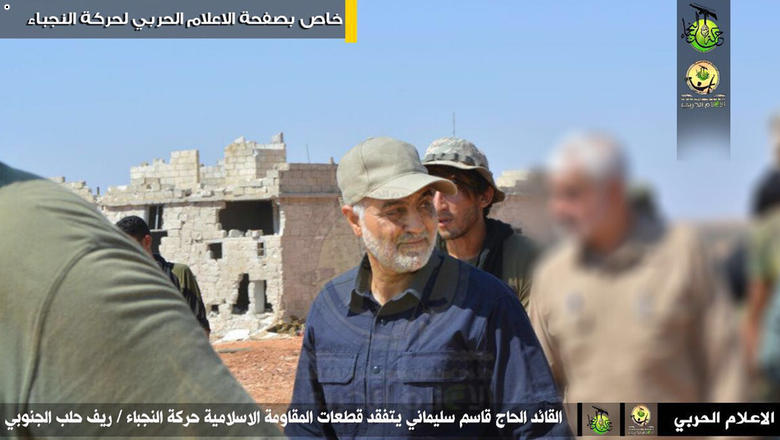
On Sunday, Qassem Suleimani, Iran’s chief spymaster, travelled to the Iraqi city of Sulaimaniya to meet with the leaders of the Patriotic Union of Kurdistan, or P.U.K., one of the two main Kurdish political parties. For years, the P.U.K. and its sister party, the Kurdish Democratic Party, or K.D.P., have been struggling to break away from the rest of Iraq and form an independent state. A Kurdish republic is opposed by all the region’s countries—the governments in Baghdad, Turkey, and Iran—which fear that sizable Kurdish minorities in all three nations will begin to act autonomously.

It is not known what Suleimani—the Middle East’s most cunning operative—told the P.U.K.’s leaders. But, within hours, their fighters began abandoning their posts, making way for Iraqi military units just across the front lines. Not long after, Iraqi forces took over the former Kurdish positions and a stretch of oil fields near the city of Kirkuk. With the Iraqi Kurds now split in two—the P.U.K. on one side and the K.D.P. on the other—hopes for an independent Kurdish state appear to be fading fast. “It was a horrible, horrible betrayal,” a senior official in the Kurdish Regional Government told me.

“Everyone is calling it the P.U.K. drug deal,” a former senior American official who works in the region told me. Notably, many P.U.K. units refused the order to stand down and fought the oncoming Iraqi units.

Last week, Iraqi military units began massing near the Kurdish-Iraqi border. The Iraqi units are dominated by “popular mobilization forces,” which is another way of saying Iranian-trained militias that operate inside Iraq. Those militias—controlled by Suleimani—are staunch backers of the Shiite-led government of Prime Minister Haider al-Abadi, in Baghdad. Most of these groups have dark pasts; the main militia that moved into Kurdish territory this morning was Asa’ib Ahl al-Haq, which battled American soldiers in Iraq during the war there. Its leader, Qais Khazali, is believed to be the principal planner of the kidnapping and execution of four American soldiers in Karbala in 2007. The military operation in the Kurdish region is very much a joint Iraq-Iran project; the flag of Asa’ib Ahl al-Haq was planted at one of the Kurdish bases that was taken over. Also accompanying Iraqi forces in Kirkuk was Abu Mahdi al-Muhandis, an Iraqi militia commander convicted of bombing the American Embassy in Kuwait in 1983; he has been designated a terrorist by the United States government. More here from NYT’s.
photo

***  Iraq Shiite Hashd al-Shaabi enters Yezidi town of Sinjar following Peshmerga withdrawal. Hashd al-Shaabi group cuts electricity in Kirkuk city as it seeks to take control of Kurdish Peshmerga positions. Iraqi military says it has seized large oil fields near Kirkuk from Kurdish forces.

***

How bad was it and where does this go for the Kurds?

The game of brinkmanship blew up in the faces of Baghdad and Irbil on October 16 as talks gave way to fighting in south Kirkuk and Tuz Kharmato in Salahaddin.

At the start of October 15, the central and Kurdish regional governments were in the middle of heavy talks to resolve the crisis in Kirkuk. The problem started when Prime Minister Haidar Abadi mobilized the joint forces and demanded that the Kurds withdraw from areas they occupied in 2014 including several military bases, an airport and the Bai Hassan and Avana oil fields in southern Kirkuk. Baghdad demanded that the Kurds abide by the constitution and cancel the results of the September independence referendum. It also accused the Kurds of moving in fighters from the Turkey’s Kurdistan Workers’ Party (PKK) into Kirkuk in a bald attempt to get Ankara more involved in the dispute. The Kurdistan Regional Government (KRG) rejected those calls as the Kurdistan Democratic Party (KDP) and Patriotic Union of Kurdistan (PUK) met in Dokan. Talks were held there because the KDP and PUK were so far apart on this crisis. The KDP has been steadfast in rejecting any terms set by Baghdad. It has also been beating the war drum accusing the Abadi government of acting like the Baath and constantly warning that the federal government was going to attack Kirkuk. The PUK on the other hand is divided. Many in the party’s leadership are open to making compromises, but others such as Kirkuk Governor Najmaldin Karim and Vice President Kosrat Rasul are siding with the KDP and calling for a defense of Kirkuk. Iranian General Qasim Suleimani of the Quds Force was also in Kurdistan, while America’s Brett McGurk arrived in Baghdad, both trying to mediate. There were reports on social media that the PUK had made a local deal to allow the federal forces into certain areas of the province, but that broke down and fighting ensued.

There were clashes in both southern Kirkuk and Tuz Kharmato in Salahaddin. First, the government had given the Peshmerga until October 15 to withdraw from several positions in Kirkuk. That expired, and talks were still going on between both sides. On October 16, the Golden Division, the army’s 9th Division, and Federal Police began advancing along two axes from Dibis in the west and Hawija in the south towards the K1 military base and the Bai Hassan and Avana oil fields. When the Golden Division entered an industrial district fighting broke out that included mortars and artillery. There were also clashes in Tuz Kharmato, and the Hashd were said to be moving to cut the road from there to Kirkuk.

There are various factors leading to this huge breakdown in Iraq, but there’s also a good chance that the conflagration won’t last. First, Kurdish President Massoud Barzani pushed through the independence referendum on his own without consulting with other Kurdish parties, but rather assuming they would all come on board, which they didn’t. There was also no preparation for Baghdad’s response, and the KDP constantly attacked the federal government for not following the constitution and being a reincarnation of the Saddam regime. Second, Prime Minister Haidar Abadi was put under intense pressure by parliamentarians demanding the Kurds be punished for the election. Abadi had to respond to the KRG as a result imposing a flight ban, talked about shutting down border points, etc. Third, he took it from those measures that were largely symbolic to demanding that the Kurds withdraw from southern Kirkuk to their pre-2014 positions, which was a huge escalation and threatened a military confrontation. That blew up in his face. All the while, Baghdad and Irbil offered talks, but on terms that neither would agree upon. The Americans started off telling the Kurds not to hold the referendum, to offering to defuse the situation, but came in too late. With fighting underway Washington is likely to pressure the two sides to halt. However, getting the two sides to come together and achieve anything substantial will be hard at best as the political repercussions of this clash will run deep.

Should Voting Machines be Part of Critical Infrastructure?

At present, there are sixteen critical infrastructure sectors, including twenty subsectors that are eligible to receive prioritized cybersecurity assistance from the Department of Homeland Security. The existing critical infrastructure sectors are:

  • Chemical
  • Commercial Facilities
  • Communications
  • Critical Manufacturing
  • Dams
  • Defense Industrial Base
  • Emergency Services
  • Energy
  • Financial Services
  • Food and Agriculture
  • Government Facilities
  • Healthcare and Public Health
  • Information Technology
  • Nuclear Reactors, Material, and Waste
  • Transportation Systems
  • Water and Wastewater Systems

***

Related reading: Hacker study: Russia could get into U.S. voting machines

WE: op election officials from around the country met this weekend to create the formal organization to hash out what powers and lines of communications the Department of Homeland Security should have after the department designated voting systems in the states and territories as “critical infrastructure” earlier this year.

By voting to adopt a charter for a “Government Coordinating Council,” the secretaries of state now have a group that has an official channel and a single “voice” to communicate with DHS.

The move marks the first major step in the coming together between the nonpartisan National Association of Secretaries of State, or NASS, and DHS, amidst a contentious and sometimes mistrusting year.

“The other importance of the coordinating council actually being formed, is that there is so much activity on the federal level regarding legislation, I think this will give us, hopefully, a venue to help us inform members of the U.S. Senate and House of Representatives that states are taking an active role and we are doing a lot to prepare ourselves for the 2018 elections and beyond,” said NASS President and Indiana Secretary of State Connie Lawson.

Lawson and six other secretaries of state were in Atlanta this weekend for the first real efforts at coordinating between the states and DHS.

Although DHS has insisted from the start their “critical infrastructure” designation doesn’t give them any actual powers or authority over state and local voting systems, local officials have been wary. They say they can’t be sure DHS wasn’t encroaching on authority reserved explicitly to the states until DHS had clearly delineated their mission and what they hoped to accomplish with the critical infrastructure tag.

NASS and even U.S. senators and representatives expressed serious concern that although DHS knew for months about attempted “hacks” around the time of the 2016 elections, the affected states weren’t notified by DHS until this past September.

When the local election officials were finally notified, it immediately generated headlines around the country that “21 states” were the victims of some kind of hacking attempts on their voting systems, or on computer systems that may have been linked to the same offices as the voting systems.

However, in the intervening weeks, at least four states have come forward – California, Texas, Wisconsin, and Arizona – and disputed to some degree the DHS finding that they were the victims of a hack attempt.

Elected officials on Capitol Hill were upset as well when the “21 states” news broke.

“It’s unacceptable that it took almost a year after the election to notify states that their elections systems were targeted, but I’m relieved that DHS has acted upon our numerous requests and is finally informing the top elections officials in all 21 affected states that Russian hackers tried to breach their systems in the run up to the 2016 election,” said Sen. Mark Warner, D-Va., who serves on the Senate Intelligence Committee, which has taken an active role in trying to look at election vulnerabilities from 2016 in order to create more voting security in the future.

Lawson said NASS officials were still concerned about the lack of communication, but were also not trying to harp on the topic at this weekend’s meeting in Atlanta.

“I can’t say we’ve set it [communications issues] aside, but I can say we are just trying to make sure that things like this don’t happen again, that we all use the same terminology, that there’s a chain of communication that needs to take place,” Lawson told the WashingtonExaminer.

“We’re cautiously optimistic that things are going to get better,” she said.

Besides discussing the communications issues and communications chains in the event of problems in the future, Lawson said the coordinating council also discussed goals and deliverables.

“Those are just big, high-level pictures,” Lawson said.

“And then, who’s going to do the work, and how are we going to make sure that DHS has the support they need to stand up this coordinating council.”

“It was a logistical issue just being able to get everybody here because there wasn’t an official council at the time,” Lawson added later.

Secretary of Homeland Security Jeh Johnson originally made the critical infrastructure designation in the last days of the Obama administration. However, not long after, then-DHS Secretary John Kelly said the Trump administration had no plans to rescind the designation.

Apart from DHS, representatives from Election Assistance Commission were in attendance as well.

“State and local officials have already taken a number of steps to improve the security of the nation’s elections, and under the Government Coordinating Council we will be able to further leverage resources and our collective expertise,” said Bob Kolasky, the acting deputy under secretary of the DHS National Protections and Programs Directorate in a statement.

“The security of the nation’s elections are critical to our democracy, and DHS stands ready to support this important mission through exercises, information sharing, and technical cyber analysis and expertise.”

Trump vs. Iran vs. Europe

Primer: From BBC/

Iran has been blamed for a major cyber-attack on Parliamentary email accounts, including those of cabinet ministers.

Whitehall officials say Iran was behind a “sustained” cyber-attack on 23 June with hackers making repeated attempts to guess passwords of 9,000 accounts.

Up to 30 accounts are thought to have been compromised.

Security sources now believe the attackers came from Iran, although none of the information appears to have been used and the motive remains unclear.

BBC security correspondent Gordon Corera described the June attack as “not especially sophisticated” but told BBC Radio 4 it was a sign that Iran was becoming “more aggressive and capable as a cyber power”.

***  photo

And Britain still stands with the JCPOA?

Source: President Trump’s decision to decertify does not withdraw the U.S. from the Joint Comprehensive Plan of Action (JPCOA). Congress will now debate whether the U.S. should continue sanctions relief. Trump’s strategy also promised that the U.S. would focus more broadly on addressing Iran’s destabilizing behavior in the region, among other aspects.

President Hassan Rouhani slammed Trump’s speech and new strategy, and claimed that Trump has only distanced himself from his European allies and unified Iran. UK Prime Minister Theresa May, German Chancellor Angela Merkel, and French President Emmanuel Macron stressed their commitment to upholding the JCPOA in a statement following Trump’s speech.

  • European leaders issue statement following Trump’s speech. UK Prime Minister Theresa May, German Chancellor Angela Merkel, and French President Emmanuel Macron issued a joint statement conveying their commitment to the JCPOA following President Trump’s announcement that he will not certify that the deal is in the national security interests of the U.S. The European leaders cautioned President Donald Trump and U.S. lawmakers to carefully consider the implications of taking actions that could undermine the JCPOA, such as “re-imposing sanctions [that were] lifted under the [JCPOA].” They also expressed their concern about Iran’s ballistic missile program and disruptive regional activities, stating that they “stand ready to take further appropriate measures to address these issues.” European leaders have voiced their continuous support for the JCPOA. Several European countries have signed a myriad of financial deals with Iran since the implementation of the JCPOA in January 2016. The imposition of new sanctions or the reintroduction of previously lifted sanctions could imperil existing and future deals reached between Europe and Iran. (GOV.uk)


Drug Czar Nominee, Trump vs. 60 Minutes

photo

Primer: The Drug Enforcement Administration has proposed hiring its own prosecutor corps to bring cases related to drug trafficking, money laundering and asset forfeiture — a move that advocacy groups warn could exceed the DEA’s legal authority and reinvigorate the 1980s-era war on drugs.

Citing the epidemic in opioid-related overdoses, the DEA said it wants to hire as many as 20 prosecutors to enhance its resources and target the biggest offenders. The DEA said the new force of lawyers “would be permitted to represent the United States in criminal and civil proceedings before the courts and apply for various legal orders.” The agency would use money it gets from companies that manufacture and dispense certain kinds of prescription drugs under the federal Controlled Substances Act.

From the Federal Register

Joe Manchin calls Trump to pull drug czar nomination

Sen. Joe Manchin urged President Trump on Monday to withdraw his nomination for drug czar, Rep. Tom Marino, after a report noted he was the chief backer behind legislation that made it more difficult for the federal government to go after prescription drug companies for suspicious narcotic shipments.

Manchin does not mention in his letter that at the time he also had voted in favor of passing the bill, which received unanimous support in the Senate and was signed into law by former President Barack Obama.

“Congressman Marino led the effort in Congress to move through a bill that has made it significantly harder for the Drug Enforcement Agency to enforce our nation’s anti-drug diversion laws,” Manchin, D-W.Va., wrote to Trump in a letter. “For years, wholesale drug distributors were sending millions of pills into small communities – far more than was reasonably medically necessary.”

Manchin was responding to a report published Sunday by the Washington Post and CBS “60 Minutes,” which concluded that the Ensuring Patient Access and Effective Drug Enforcement Act of 2016 made it so the DEA could no longer bring enforcement actions against opioid distributors who give the painkillers to corrupt doctors and pharmacists.

As a result of the legislation one prescription opioid company shipped 20 million doses of oxycodone and hydrocodone to pharmacies in West Virginia between 2007 and 2012, including 11 million doses in a county where 25,000 people lived, according to the news investigation.

Trump tapped Marino, a Pennsylvania Republican, in September to lead the Office of National Drug Control Policy, which administers programs aimed at combating opioid abuse, including through drug monitoring programs or helping people access treatment.

“The head of this office … is a key voice in helping to push and implement strategies to prevent drug abuse, stop drug trafficking, and promote access to substance use disorder treatment,” Machin said, adding that the Washington Post report “calls into question Congressman Marino’s ability to fill this critical role in a manner that will serve the American people and end the epidemic. Congressman Marino no longer has my trust or that of the public that he will aggressively pursue the fight against opioid abuse.”

The opioid epidemic, which started after doctor overprescribing of prescription painkillers, resulted in more than 33,000 deaths in 2015, according to the Centers for Disease Control and Prevention. Because of such CDC reports, lawmakers were aware of the rising death toll and the contribution of the prescription drug industry to the trend when Obama signed the bill in April of 2016.

Many patients who were prescribed the drugs to treat pain then moved onto the drug’s cheaper alternative, heroin, which comprised an increased proportion of such deaths. West Virginia, in particular, has been hit hard, with 700 people dying from opioid overdoses in 700, according to Manchin’s office.

Trump Sanctions IRGC, Iran’s Terror History

For a list of sanctions placed on Iran, Hezbollah and the Iranian Revolutionary Guard Corps, go here.

Today, President Trump delivered his talk about formally decertifying the JCPOA and naming all of the IRGC a terror organization, finally. This is a significant decision and it puts countries like Iraq, Yemen, Syria and Lebanon on notice to purge all IRGC from their territories.

Earlier this week, the Trump administration was laying the groundwork as it related to Hezbollah by offering a reward for 2 Hezbollah leaders.

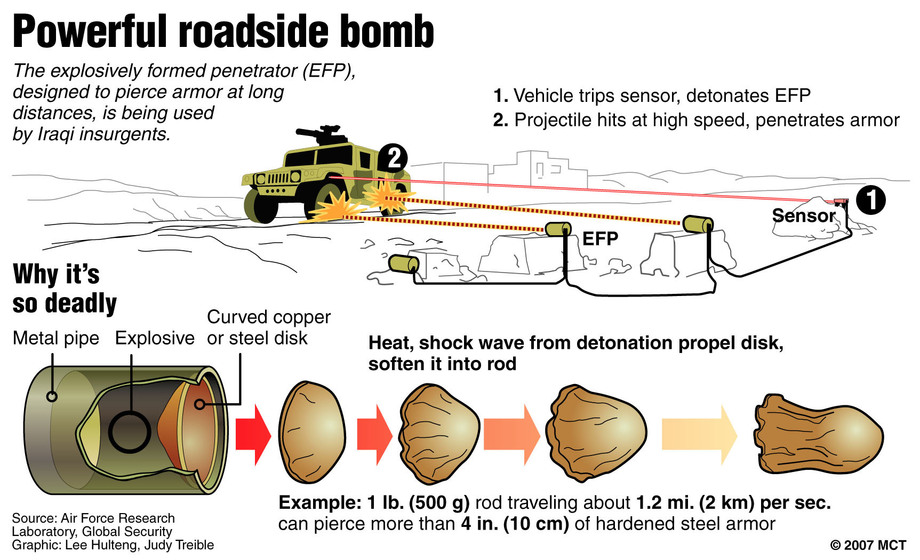
None of these actions are without future conflict and militancy by Iran. Just in recent days, the Iranian militia in Iraq it appears has been planting advanced EFP’s, where one did in fact kill an American military soldier that was on a major road in Salahuddin province, north of Baghdad

“It was a classic ambush spot,” White said of the assault site, adding that the penetrator used was steel. Operation Inherent Resolve spokesman Army Col. Ryan Dillon did not cast blame on any particular actor on the battlefield telling the Washington Post, “investigations are continuing into the type and quality of the bomb to better determine where it originated. To say whether or not ISIS did it or not — we have not determined that yet. We are not ruling anything out.”

Chairman of the Joint Chiefs of Staff Marine Gen. Joseph Dunford told Congress in 2015, “I know the total number of soldiers, sailors, airmen and Marines that were killed by Iranian activities, and the number has been recently quoted as about 500,” in a reference to EFP use in Iraq.

“What makes E.F.P.’s so deadly is that they form “slugs” at detonation that maintain their shape over distances of over 100 yards or more, traveling at speeds of nearly a mile per second. This allowed insurgent forces to hide these weapons far from the road, better camouflaging them and making them far more deadly,” The New York Times explained in 2013. More here.

  photo

Related reading: Trump Decertifying and Re-tooling Iran Nuclear Deal

Treasury Designates the IRGC under Terrorism Authority and Targets IRGC and Military Supporters under Counter-Proliferation Authority

10/13/2017

WASHINGTON – Today, the U.S. Department of the Treasury’s Office of Foreign Assets Control (OFAC) designated Iran’s Islamic Revolutionary Guard Corps (IRGC) pursuant to the global terrorism Executive Order (E.O.) 13224 and consistent with the Countering America’s Adversaries Through Sanctions Act.  OFAC designated the IRGC today for its activities in support of the IRGC-Qods Force (IRGC-QF), which was designated pursuant to E.O. 13224 on October 25, 2007, for providing support to a number of terrorist groups, including Hizballah and Hamas, as well as to the Taliban.  The IRGC has provided material support to the IRGC-QF, including by providing training, personnel, and military equipment.
Additionally, today OFAC designated four entities under E.O. 13382, which targets weapons of mass destruction proliferators and their supporters, for their support to the IRGC or Iran’s military.
“The IRGC has played a central role to Iran becoming the world’s foremost state sponsor of terror.  Iran’s pursuit of power comes at the cost of regional stability, and Treasury will continue using its authorities to disrupt the IRGC’s destructive activities,” said Treasury Secretary Steven T. Mnuchin.  “We are designating the IRGC for providing support to the IRGC-QF, the key Iranian entity enabling Syrian President Bashar al-Assad’s relentless campaign of brutal violence against his own people, as well as the lethal activities of Hizballah, Hamas, and other terrorist groups. We urge the private sector to recognize that the IRGC permeates much of the Iranian economy, and those who transact with IRGC-controlled companies do so at great risk.”
IRGC
The IRGC was designated today for the activities it undertakes to assist in, sponsor, or provide financial, material, or technological support for, or financial or other services to or in support of, the IRGC-QF.  The IRGC, which is the parent organization of the IRGC-QF, was previously designated pursuant to E.O. 13382 on October 25, 2007, in connection with its support to Iran’s ballistic missile and nuclear programs, and pursuant to E.O. 13553 on June 9, 2011 and E.O. 13606 on April 23, 2012, in connection with Iran’s human rights abuses.
The IRGC has provided material support to the IRGC-QF, including by providing training, personnel, and military equipment.  The IRGC has trained IRGC-QF personnel in Iran prior to their deployments to Syria, and has deployed at least hundreds of personnel from its conventional ground forces to Syria to support IRGC-QF operations.  IRGC personnel in Syria have provided military assistance to the IRGC-QF, and have been assigned to IRGC-QF units on the battlefield, where they provide critical combat support, including serving as snipers and machine gunners.
Additionally, the IRGC has recruited, trained, and facilitated the travel of Afghan and Pakistani nationals to Syria, where those personnel are assigned to, and fight alongside, the IRGC-QF.  The IRGC also has worked with the IRGC-QF to transfer military equipment to Syria.  The IRGC used both IRGC bases and civilian airports in Iran to transfer military equipment to Iraq and Syria for the IRGC-QF.
Further, while it is group think to bid Senator Corker good riddance, there is yet a fact that Corker introduced in 2015 INARA, legislation that Trump is advancing and included in his talking points regarding Iran.

Iran Nuclear Agreement Review Act of 2015

(Sec. 2) This bill amends the Atomic Energy Act of 1954 to direct the President, within five days after reaching an agreement with Iran regarding Iran’s nuclear program, to transmit to Congress:

  • the text of the agreement and all related materials and annexes;
  • a related verification assessment report of the Secretary of State;
  • a certification that the agreement includes the appropriate terms, conditions, and duration of the agreement’s requirements concerning Iran’s nuclear activities, and provisions describing any sanctions to be waived, suspended, or otherwise reduced by the United States and any other nation or entity, including the United Nations; and
  • a certification that the agreement meets U.S. non-proliferation objectives, does not jeopardize the common defense and security, provides a framework to ensure that Iran’s nuclear activities will not constitute an unreasonable defense and security risk, and ensures that Iran’s permitted nuclear activities will not be used to further any nuclear-related military or nuclear explosive purpose, including any related research.

The Secretary is directed to prepare a report assessing:

  • the Secretary’s capacity to verify Iran’s compliance with the agreement,
  • the adequacy of the agreement’s safeguards to ensure that Iran’s permitted activities will not be used to further any nuclear-related military or nuclear explosive purpose, including research; and
  • the International Atomic Energy Agency’s capacity to implement the required verification regime.

In preparing a report the Secretary shall assume that Iran could:

  • use all measures not expressly prohibited by the agreement to conceal activities that violate its obligations under the agreement; and
  • alter or deviate from standard practices in order to impede verification efforts.

The foreign relations committees shall hold hearings and briefings to review an agreement during the 30-day period following the President’s transmittal of such agreement.

The congressional review period shall be 60 days for an agreement, including all materials required to be transmitted to Congress, that is transmitted between July 10, 2015, and September 7, 2015.

The President may not waive, suspend, reduce, provide relief from, or otherwise limit the application of statutory sanctions with respect to Iran or refrain from applying sanctions pursuant to an agreement prior to and during the transmission period and during the congressional review period.

The President may not waive, suspend, reduce, provide relief from, or otherwise limit the application of statutory sanctions with respect to Iran or refrain from applying sanctions pursuant to an agreement for:

  • 12 days after the date of passage of a congressional joint resolution of disapproval, and
  • 10 days after the date of a presidential veto of a congressional joint resolution of disapproval.

Specified deferrals, waivers, or other suspensions of statutory sanctions are excepted from such prohibitions.

It is the sense of Congress that:

  • the sanctions regime imposed on Iran by Congress is primarily responsible for bringing Iran to the table to negotiate on its nuclear program;
  • these negotiations are a critically important matter of national security and foreign policy for the United States and its closest allies;
  • this Act does not require a vote by Congress for the agreement to commence;
  • this Act provides for congressional review, including for approval, disapproval, or no action on statutory sanctions relief under an agreement; and
  • even though the agreement may commence, because the sanctions regime was imposed by Congress and only Congress can permanently modify or eliminate that regime, it is critically important that Congress have the opportunity to consider and take action affecting the statutory sanctions regime.

An action involving statutory sanctions relief by the United States pursuant to an agreement or the Joint Plan of Action:

  • may be taken if, during the review period, Congress enacts a joint resolution stating that Congress favors the agreement;
  • may not be taken if, during the review period, Congress enacts a joint resolution stating that Congress does not favor the agreement; or
  • may be taken if, following the review period, there is not enacted any such joint resolution.

The President shall keep Congress fully and currently informed of all aspects of Iranian compliance with respect to an agreement.

The President shall:

  • within 10 days of receiving information relating to a potentially significant breach or compliance incident by Iran submit it to Congress;
  • within 30 days after submitting such information determine whether it constitutes a material breach or compliance incident and report that determination to Congress as well as Iran’s action or failure to act that led to the material breach, actions necessary for Iran to cure the breach, and the status of Iran’s efforts to cure the breach; and
  • at least every 180 days thereafter report to Congress on Iran’s nuclear program and compliance with the agreement.

The President shall keep Congress fully informed of any initiative or negotiations with Iran concerning Iran’s nuclear program, including any new or amended agreement.

The President shall, at least every 90 days, determine whether the President is able to certify that:

  • Iran is fully implementing the agreement,
  • Iran has not committed a material breach of the agreement,
  • Iran has not taken any action that could significantly advance its nuclear weapons program, and
  • suspension of sanctions against Iran is appropriate and proportionate to measures taken by Iran with respect to terminating its illicit nuclear program and vital to U.S. national security interests.

It is the sense of Congress that:

  • U.S. sanctions on Iran for terrorism, human rights abuses, and ballistic missiles will remain in place under an agreement;
  • issues not addressed by an agreement on Iran’s nuclear program, including compensation for Americans held in captivity after the seizure of the U.S. Embassy in Tehran, Iran, in 1979, the freedom of Americans held in Iran, the human rights abuses of the government of Iran against its own people, and the continued support of terrorism by the government of Iran, are matters critical to ensure justice and U.S. national security, and should be addressed;
  • the President should determine the agreement in no way compromises the U.S. commitment to Israel’s security, nor its support for Israel’s right to exist; and
  • in order to implement any long-term agreement reached between the P5+1 countries and Iran, it is critically important that Congress have the opportunity to review any agreement and take action to modify the statutory sanctions regime imposed by Congress.

If the President does not submit such certification or has determined that Iran has materially breached an agreement, Congress may initiate within 60 days expedited consideration of legislation reinstating statutory sanctions against Iran. Sets forth House and Senate provisions regarding such expedited consideration.

Nothing in this Act shall be construed as:

  • modifying the President’s authority to negotiate, enter into, or implement executive agreements, other than the restrictions on implementation of the agreements specifically covered by this Act;
  • allowing any new waiver, suspension, reduction, or other relief from statutory sanctions with respect to Iran under any provision of law, or allowing the President to refrain from applying any such sanctions pursuant to an agreement during the period for congressional review;
  • revoking or terminating any statutory sanctions imposed on Iran; or
  • authorizing the use of military force against Iran.