Even Russia is Cheating When it Comes to Gold

In 2012, a Russian agent (spy) who worked for a bank as cover was arrested in New York. The criminal complaint is here.

Then there were the Russian gangs (mafia) in New York in the last decade.

A former correspondent for the venerable emigre newspaper “Novoye Russkoye Slovo,” Grant has cultivated convicted murderers and extortionists as sources and landed interviews with notorious reputed crime kingpins like Ukrainian-born Semion Mogilevich, listed by the FBI on its “10 Most Wanted” list of fugitives.

When bodies began piling up in the turf wars that rocked Russian-speaking New York neighborhoods like Brighton Beach in the 1990s, it was Grant that U.S. journalists turned to to make sense of the murky motivations and underworld machinations behind the bloodshed.

Putin’s agents in America have been very busy.

Ever since Putin reclaimed the presidency last year, the trampling of the rule of law has only accelerated. It is now being used to stifle the last remnants of political opposition. There are lots of recent examples, like the bogus charges brought against Alexei Navalny, the heroic investigative blogger, and the posthumous case currently being prosecuted against, believe it or not, Sergei Magnitsky. And then there’s the case of Dmitry Gudkov and his father, Gennady.
Both men were opposition politicians in Russia’s Duma. Both supported the Sergei Magnitsky Act, which President Obama signed in December and which freezes the U.S. assets of Russian government officials who are labeled “gross human rights violators.” Putin and his underlings are understandably threatened by the new law. They have retaliated by passing a bill banning the adoptions of Russian children by Americans. (That’s right. The Putin government is getting back at the United States by punishing Russian orphans.) Gennady Gudkov, a former K.G.B. official, had built a security company, Oskord, with some 4,000 employees. Last summer the government conducted an “inspection” and found the company to have committed numerous violations. It quickly put Oskord out of business. Two months later, a committee of the Duma charged Gudkov with violating Duma rules and tossed him out of Parliament. More details here.


Would those Russian diamonds be fake by chance in New York?


Zerohedge: Over the past several years, incidents involving fake gold (usually in the form of gold-plated tungsten) have emerged every so often, usually involving Manhattan’s jewerly district, some of Europe’s bigger gold foundries, or the occasional billion dealer. But never was fake gold actually discovered in the form monetary gold, held by a bank as reserve capital and designed to fool bank regulators of a bank’s true financial state. This changed on Friday when Russia’s “Admiralty” Bank, which had its banking license revoked last week by Russia’s central bank, was reportedly using gold-plated metal as part of its “gold reserves.

According to Russia’s Banki.ru, as part of a probe in the Admiralty bank, the central bank regulator questioned the existence of the bank’s reported quantity of precious metals held in reserve. Citing a source, Banki.ru notes that as part of its probe, instead of gold, the “regulator found gold-plated metal.”

The Russian website further adds that according to “Admiralty” bank’s financial statements, as of August 1 the bank had declared as part of its highly liquid assets precious metals amounting to 400 million roubles. The last regulatory probe of the bank was concluded in the second half of August, said one of the Banki.ru sources. Another source claims that as part of the probe, the auditor questioned the actual availability of the bank’s precious metals and found gold-painted metal.

The website notes that shortly before the bank’s license was revoked, the bank had offered its corporate clients to withdraw funds after paying a commission of 30%. This is shortly before Russia’s central bank disabled Admiralty’s electronic payment systems on September 7.

Admiralty Bank was a relatively small, ranked in 289th place among Russian banks in terms of assets. On August 1 the bank’s total assets were just above 8 billion roubles, while the monthly turnover was in the order of 40-55 billion rubles. The balance of the bank’s assets was poorly diversified: two-thirds of the bank’s assets (4.9 billion rubles) were invested in loans. The rest of the assets, about 30%, were invested in highly liquid assets.

Or at least highly liquid on paper: according to Banki.ru the key reason for the bank’s license revocation was the central bank’s insistence that the bank had insufficient reserves against possible loan losses.

The Russian central bank has not yet made an official statement.

The first question, obviously, is if a small-to-mid level Russian bank was using gold-plated metal to fool the central bank about the quality of its “gold-backed” reserves, how many other Russian banks are engaged in comparable fraud. The second question, and perhaps more relevant, is how many global banks – especially among emerging markets, where gold reserves remain a prevalent form of physical reserve accumulation – are engaging in comparable fraud.

Finally, what does this mean for gold itself, whose price on one hand is sliding with every passing day (thanks in part to what is now a record 228 ounces of paper claims on every ounce of physical gold as reported before), even as it increasingly appears there is a major global physical shortage. If the Admiralty bank’s fraud is found to be pervasive, what will happen to physical gold demand as more banks are forced to buy the yellow metal in the open market to avoid being shuttered and/or prison time for the executives?

CyberCaliphate Hacks Govt Emails of the Brits

Just a few weeks ago, a Brit who was head of the ISIS cyber-hacking team was killed by a drone. Without much news or fanfare, there is coordination and key reasons why some are targets while others are not. Such is the case with Junaid Hussain.

Raqqa is Being Slaughtered Silently

Hussain Junaid posts on Twitter, was not just words, they were messages to ISIS fighters around the world, giving them orders on how to move against the targets. His job was not only to send encrypted messages, but he was one of the largest financiers of ISIS through hacking bank accounts and stealing its money for ISIS.
Junaid Hussein AKA British nicknamed Abu Hussein, is of Pakistani origin, He was a young man in his 20’s who descended from the British city of Birmingham. He was a former detainee, arrested in 2012 after stealing private information from the Internet and hacking British ex Prime Minister Tony Blair account.
Hussain posted in the past several Tweets that preceded ISIS operations in Europe and America, and adopted few minutes after they have occurred, as happened on the 3rd of May when the attack on the Prophet Muhammad exhibition in Texas.
The Independent British newspaper, revealed that “Abu Hussein” is responsible for the deployment ISIS ideas in his homeland «Britain» and all Western countries, through posting jihadi slogans constantly online specially on social networking sites, like saying: “someday ISIS flag will be held over Downing Street and the White House.”
Hussain was also responsible of the training of electronic army of ISIS, in order to expand their activity in the cyberspace and gain new financial resources.
His first lesson given to his trainees was t hacking Central Command of the US Army social networking site “Twitter”, and video sharing site on the Internet, “YouTube”, in January 2015.
The hackers published tweets though the hacked accounts declaring that the electronic Khilafa was responsible for the attack, and sent messages to the American soldiers. Also, they published lists of names of ISIS commanders includes personal information.
Hussain was known to have high capability of changing his position and hide well, to escape the coalition air strikes. He used to move very carefully with 4 cars, each going to a different place. He didn’t spend more than 6 hours in one place, and stayed underground.
All this didn’t allow him to stay alive serving ISIS, because the coalition forces managed yesterday to kill him after attacking a group of cars near Abu Al Haif gas station in the city of Raqqa. According to our correspondent in the city ”The air forces targeted a car near the gas station, which killed 3 people, one of them is a high profile”. They our source confirmed that the person who died is in fact Junaid Al Hussain, with two of his men, one of them is European.
ISIS has not declared His death, despite all the services he provided to them. Rumors inside Al Raqqa says that Hussain managed to get ISIS a huge amount of money, through hacking, but yet, no statements from ISIS were issued to announce his death.

ISIS hackers violated top secret British Government emails

cyber-caliphate-analysis-6

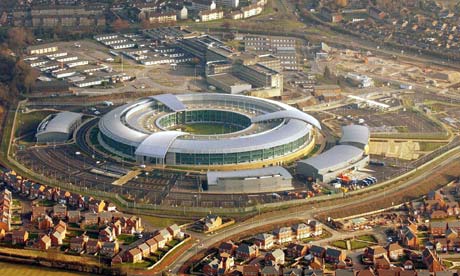
According to an investigation by the GCHQ intelligence agency ISIS hackers targeted information held by some of David Cameron’s most senior ministers.

According the experts at the British Intelligence GCHQ, ISIS hackers intercept top secret British Government emails.

The investigation conducted by the GCHQ allowed the British intelligence to uncover a serious breach, terrorists linked to the ISIS have been targeting email accounts held by some of David Cameron’s most senior ministers, including the Home Secretary Theresa May.

The hack could have exposed confidential information related to the British Government and members of the Royal family, at the Time I’m writing there aren’s information related to the data accessed by the ISIS hackers.

“It is understood that at least one of the plot’s ringleaders was killed by a drone strike in an operation disclosed by the Prime Minister this week.” reported the Mirror.

The news doesn’t surprise media, Government entities, politicians and military organizations are privileged targets for the ISIS sympathizers that use the web for intelligence gathering on potential targets. In May Pro-Isis Hackers belonging to Cyber Caliphate hacking team threaten ‘Electronic War’ on US and Europe.

GCHQ against pedophilies

In May, GCHQ warned Whitehall security officials about ISIS plans to attack British targets.

Although no security breach occurred to the Government email systems, officials were told to tighten security procedures.

The Mirror makes explicit reference to the “changing passwords,” not referring the adoption of further defense mechanisms to protect the email accounts, such as two-factor authentication.

Unfortunately, the ISIS is continuing ti develop its cyber capabilities, in the past they demonstrated a mastery of technology for both propaganda and hacking purposes. In June, ISIS supporters were spreading online a collection of tutorial titled the Book of Terror to teach how Hack a Wi-FI network and which are main spying tools.

Among the group of hackers that claim to be affiliated with the ISIS there is a collective of hackers calling themselves the “Islamic State’s Defenders in the Internet,” also known as Cyber Caliphate. The group, which was involved in the hijacking of social media accounts belonging to the US CENTCOM, released a propaganda video threatening cyber attacks anticipating the operation of the terrorists in the Internet.

At the end of August, one of the most popular ISIS hackers, Junaid Hussain, was killed in a US targeted air strike in Syria. The hacker was actively recruiting ISIS sympathizers and according to the British intelligence he directed a plot to kill the Queen.

Now Hiring, Clinton Email Handlers

This appears as though a payroll cost to hire these people could be in the range of $500,000. Send the bill to the Clinton Foundation.

(By the way, as you read below, Janice Jacobs was the woman who did the Lois Lerner, IRS emails)

Is it only me that wonders how come no one is talking about a search warrant or gathering the meta-data from Hillary’s Blackberry phone, her iPhone and her iPad? It is notable, all photos of Hillary communicating have been through portable devices and not on a laptop or desktop computer. Hello???

As the world turns in Washington DC, the State Department is spun out of control.

Exclusive: U.S. to shift 50 staff to boost office handling Clinton emails

The U.S. State Department plans to move about 50 workers into temporary jobs to bolster the office sifting through Hillary Clinton’s emails and grappling with a vast backlog of other requests for information to be declassified, officials said on Tuesday.

The move illustrates the huge administrative burden caused by Clinton’s decision to use a private email address for official communications as secretary of state and a judge’s ruling in a Freedom of Information Act (FOIA) lawsuit that they be released.

Clinton on Tuesday for the first time apologized for her use of private email, telling ABC News: “That was a mistake. I’m sorry about that.” The news channel reported the comment before broadcast of the full interview at 6:30 p.m. ET.

The extra staff will not work on the monthly, court-ordered release of Clinton emails, which are being handled by about 20 permanent, and 30 part-time, workers, officials said. The new staff will fill in for those workers and may also handle other Clinton FOIA requests.

The front-runner to be the Democratic presidential candidate in the 2016 election has been heavily criticized since it emerged in March that she used the private set-up rather than a government-issued email address.

In a notice to employees on Sept. 2, the State Department advertised for people with skills in coordinating and assessing FOIA requests and deciding if information may be declassified and released to the public.

The notice, a copy of which was obtained by Reuters, is entitled “Enhancing Transparency: Immediate Detail Opportunities At State” and calls for workers to apply for reassignment for 9 to 12 months. Applications are due on Thursday and the agency plans to make selections by Sept. 18.

In addition to filling in for workers pulled from their normal duties to handle the crush of work from the Clinton emails, officials said the extra staff would help the department grapple with a surge in FOIA requests more generally, related litigation and a huge backlog of information requests.

On Tuesday, Secretary of State John Kerry announced that he was naming Ambassador Janice Jacobs to serve as the State Department’s “transparency coordinator” to help the agency respond to FOIA and congressional requests more efficiently.

Embedded image permalink

The agency had an overall backlog of 10,045 FOIA requests at the end of fiscal year 2014 on Sept. 30, up about 15.8 percent from the previous year, according to its FOIA reports.

There is more of course…..

Lawsuit asks how Clinton lawyer got OK to store classified emails

A new lawsuit is demanding that the State Department explain how Hillary Clinton’s private attorney, David Kendall, got permission from the State Department to retain copies of Clinton’s emails after the agency determined some of them were classified.

The suit was filed Monday in U.S. District Court in Washington by freelance journalist David Brown, who sent State a Freedom of Information Act request last month asking for all records about the decision to allow Kendall to retain a thumb drive containing copies of about 30,000 emails Clinton turned over to State in December.

Kendall said in a letter to Congress recently that on July 8, the State Department provided him and his law partner Katherine Turner with a safe to hold the drive. He said both he and Turner have “TOP SECRET” clearances.

After a request from the FBI to return all copies of the emails, Clinton instructed Kendall to give up the thumb drive, which he did in early August.

Lawyers who represent clients in national security cases say it’s highly unusual for a private attorney to be given permission to hold classified records.

“If one of us tried to do this, we’d have our clearance yanked that very day and have a search warrant served on us and something different happened here,” said Brown’s attorney Kel McClanahan. “Not only agree did [State] allow him to maintain these records, but it’s unclear if they even pushed back. … We decided somebody needs to get to the bottom of what exactly happened here. What is it: favoritism or did David Kendall somehow satisify some requirement that others of us never even knew to aim for?”

Kendall and the Clinton campaign did not immediately respond to requests for comment on the case.

State agreed to “expedite” Brown’s FOIA request, but has not released any records about the agency’s decisionmaking on the issue, according to Brown’s complaint (posted here).

A State spokesman declined to comment, citing a policy of not commenting on ongoing litigation.

Brown’s work has appeared previously in the Atlantic and just Tuesday on the New York Times op-ed page. The former Army paratrooper is–under the pseudonym D.B. Grady–also the co-author with Marc Ambinder of a 2013 book on government secrecy, “Deep State.”

Read more: http://www.politico.com/blogs/under-the-radar/2015/09/lawsuit-asks-how-clinton-lawyer-got-ok-to-store-classified-info-213425#ixzz3lCnNCQ00

Read more: http://www.politico.com/blogs/under-the-radar/2015/09/lawsuit-asks-how-clinton-lawyer-got-ok-to-store-classified-info-213425#ixzz3lCnEF5oR


Example: Depths of Chinese Hacking the U.S.

Former Top FBI Lawyer and Counterintelligence Official Admits Chinese Hacked His Home Computer

September 8, 2015

China Allegedly Hacked Top Former FBI Lawyer 

Jeff Stein, Newsweek

Marion “Spike” Bowman, a top former FBI lawyer and U.S. counterintelligence official who heads an influential organization of retired American spies, says a hacker from China penetrated his home computer, beginning with an innocent-looking email last spring.

“It was an email supposedly from a woman in China, and I exchanged correspondence with her a couple of times,” says Bowman, who was deputy general counsel to three FBI directors between 1995 and 2006. “She sent me a document that a friend of hers had supposedly written, in English, and wanted my opinion on it,” he tells Newsweek. She also sent him her picture.

“I never got around to replying, so I never heard from her again,” says Bowman, who went on to become deputy director of the National Counterintelligence Executive, which is tasked with developing policies to thwart foreign spies and terrorists.

But then, a week ago, he says, he got another message from China via his email account at George Washington University, where he has lectured on national security law since 2003.

“It was apparently from a university in China asking me come to speak at a conference on the environment”—not even remotely one of his areas of expertise, Bowman says. He called the FBI.

After a forensic examination of his machine, the FBI told him “they had found a malware type that’s designed to find out what’s on my computer,” Bowman says. “It wasn’t anything to infect it.” Still, just being able to read the contents of a target’s computer can reveal lots of valuable information like emails and documents, contact files with phone numbers and other personal data, like home addresses.

“Somebody who really knows what they’re doing” can wreak havoc, he says.

The FBI didn’t tell him exactly who was behind the hack, he says, “but they think they identified the woman” in a picture she sent along with one of her emails last spring. “It was somebody that they knew,” Bowman says. “I didn’t inquire any further.”

Before joining the FBI, Bowman was a Navy lawyer assigned to advise SEAL teams on clandestine operations, among other sensitive matters. His portfolio at the FBI gave him intimate knowledge of the details of operations to counter threats from foreign spy agencies.

“I still carry lots of deep Cold War secrets in my head,” he says, although not on his computer. But he is still very active in national security circles as chairman of the board of directors of the Association of Former Intelligence Officers, an organization with several thousand members nationwide, about half of them former CIA personnel.

Bowman’s revelation follows several months of bad news about the vulnerability of government computers to foreign hackers, the latest being a report published Monday saying that Chinese and Russian intelligence agencies are “aggressively aggregating and cross-indexing hacked U.S. computer databases” to catch American spies working overseas. China-based hackers breached about 22 million files held by the federal Office of Personnel Management, officials say.

“At least one clandestine network of American engineers and scientists who provide technical assistance to U.S. undercover operatives and agents overseas has been compromised as a result” of the Russian and Chinese exploitation of the files, the Los Angeles Times reported, citing two U.S. officials.

The story, Bowman says, was “pretty much on target.”

*** It obviously is much worse than we know for the Obama administration to sign off on a sanction and or other consequence ahead of the Xi’s visit to the United States next week.

U.S. may punish Chinese hacking before Xi’s visit

Imposing sanctions before this month’s summit could derail other priorities.

Top government officials are floating the idea of retaliating within the next week to Chinese cyberattacks, possibly by imposing targeted sanctions on some officials and firms, people familiar with the discussions say. But outside experts say it would be wiser to wait until after this month’s White House summit with Chinese President Xi Jinping.

“I heard from one person that it could be as early as next week,” Jim Lewis, director of the Center for Strategic and International Studies’ Strategic Technologies Program, told POLITICO. He added, “I still think it would be best to wait for the summit.”

Calls for U.S. retalation to Chinese hacking have risen to a furor since the China-linked breach of highly sensitive security clearance forms from 21.5 million current and former federal employees, disclosed in June.

But imposing sanctions before the late-September summit would risk derailing a serious conversation on cyber issues along with myriad other topics, including China’s economic troubles, Chinese belligerence in the South China Sea and cooperation on climate change.

Some China watchers even suspect that the White House is trying to improve its bargaining position in advance of the summit by floating the possibility of sanctions in a serious way.

“My sense is that they’re floating the idea to try to create some kind of leverage in the meetings,” said Adam Segal, a China scholar and director of the Digital and Cyberspace Policy Program at the Council on Foreign Relations.

If the White House did impose sanctions before the meeting, it would be deeply embarrassing to the Chinese and to Xi personally and risk the Chinese doing something to downgrade the summit’s importance, Segal said. “I think if they’re going to do it before the summit, they’ve got to be prepared for the summit to really take a downward turn,” he said.

Business leaders are also dubious about imposing sanctions before Xi’s visit.

The White House should use the summit “as an opportunity to engage in effective dialogue on the cyber issue. If sanctions jeopardize that opportunity, we’d rather see them put it off,” the leader of a major industry organization said in an interview, speaking without attribution because he was speculating about government policy.

If the White House ultimately imposes targeted sanctions, the association leader added, the sanctions should be “based on transparent, credible evidence that’s legally sound.” They should also be designed with a clear path forward that, ultimately, leads to fewer China-linked cyberattacks, he said.

“Most business executives we’ve spoke with felt the indictments against Chinese PLA officers didn’t meet that test,” he added, referring to the May 2014 U.S. indictments of five hackers employed by China’s People’s Liberation Army. That was the Obama administration’s most significant diplomatic strike against Chinese hacking to date.

“[The indictments] didn’t seem to advance anything and they seemed to increase tension rather than reduce it around the issue,” the official said.

In the wake of the OPM hacks, some political leaders have called for much more belligerent responses to Chinese hacking. They include GOP White House contenders Mike Huckabee, who has urged the U.S. to hack back against the communist nation, and Wisconsin Gov. Scott Walker, who has suggested canceling the Obama-Xi summit entirely.

But even cyber hawks warned that aggressive action could backfire in advance of the summit.

“I think everything is going to basically be on hold until the Iran deal goes through and until after President Xi comes to meet with [President Obama],” said Rep. Dutch Ruppersberger (D-Md.), who was formerly ranking member on the House Intelligence Committee.

Ruppersberger added that “we have to eventually draw a line on cyberattacks,” and that the U.S. bargaining position relative to China may be improved now because of the tailspin in the Chinese stock market and other financial difficulties.

The White House has routinely declined to speak publicly about the possibility of sanctioning China for cyberattacks or any more forceful follow-up to the PLA indictments. Press secretary Josh Earnest has said several times that Obama plans to raise cyber concerns with Xi during their summit.

“There’s no doubt that the president will certainly raise, as he has in every previous meeting with his Chinese counterpart, concerns about China’s behavior in cyberspace,” Earnest said during an Aug. 26 news conference.

White House officials have determined they must respond to China’s hacking of OPM, but have been debating for months what the appropriate response should be and when to impose it, Lewis said.

The option of targeted cyber sanctions, which Obama created by executive order in April, has long been on the table along with additional indictments or some form of diplomatic protest, he said.

White House officials have fingered China for the OPM hack anonymously but have not done so, thus far, on the record.

A forceful response to the OPM hack and to Chinese theft of U.S. companies’ intellectual property and trade secrets has also been delayed by more pressing diplomatic priorities, Lewis said, including securing Chinese cooperation for a deal to halt Iran’s nuclear weapons program

“This administration has done more than any other on cybersecurity, but, in a lot of cases, it ends up being No. 2 because of the need to get agreement on other things,” Lewis said. “Cyber always ends up coming in second place, particularly when it comes to China.”


China Russia Military Parade, During Economic Spiral

In part LATimesPresident Xi Jinping announced Thursday that China will cut its military by 300,000 troops, a significant reduction in one of the largest militaries in the world and a move that the Chinese leader called a gesture of peace. China’s ruling Communist Party staged a massive military parade in central Beijing, sending a stream of goose-stepping troops, tanks, and ballistic missiles down a major east-west thoroughfare as fighter jets zoomed overhead trailing multicolored smoke.

Xi’s speech kicked off the parade — officially called the “Commemoration of the 70th anniversary of the Victory of Chinese People’s Resistance Against Japanese Aggression and World Anti-Fascist War.”

An estimated 12,000 troops – about 1,000 of whom hailed from Belarus, Cuba, Tajikistan, and other countries – marched along the 10-lane Changan Avenue from the commercial center Wangfujing to Tiananmen Square, about 1.5 miles away. They were joined by 200 fighter jets and 500 pieces of military hardware, including tanks and ballistic missiles.

Representatives from 49 countries were in attendance, including Russian leader Vladimir Putin, South Korean President Park Geun-hye and U.N. Secretary General Ban Ki-moon.

Rory Medcalf, head of the national security college at Australian National University, said that Beijing may have decided to cut 300,000 troops “in the name of efficiency and cost saving so that the defense budget can be reallocated to 21st century capabilities.” More here.

The friendship between Russia’s Putin and China’s Xi is becoming strained

BEIJING: They have met more than a dozen times and stood shoulder to shoulder during Thursday’s military parade here. But the once-vaunted relationship between the Chinese president, Xi Jinping, and Russia’s leader, Vladimir Putin, has come under strain as the economies of their countries have faltered.

Two landmark energy deals signed last year for Russian natural gas to flow to China have made little progress and were barely mentioned when the two men met for talks after watching the show of weapons Thursday on Tiananmen Square. The bilateral trade that was predicted to amount to more than $100 billion this year instead reached only about $30 billion in the first six months, largely because of a reduced Chinese demand for Russian oil.

Putin has enjoyed basking in the stature of Xi, who leads one of the world’s largest economies. But with the recent stock market turmoil in China and the slowest economic growth in a quarter-century, Beijing will be unable to provide the ballast Putin has sought against economic sanctions imposed on Russia by Europe and the United States after its annexation of Crimea, not to mention plummeting oil prices worldwide.

“Russia was dependent on China growing and driving the demand for its commodities: oil, gas and minerals,” said Fiona Hill, a Russia specialist at the Brookings Institution in Washington. “China was an alternative to Europe.”

The linchpin of the relationship between Xi and Putin was a May 2014 accord on a 30-year deal for China to buy natural gas from fields in Eastern Siberia, for a reported $400 billion with first delivery between 2019 and 2021. During the signing in Shanghai, Putin bragged that the deal was an “epochal event,” and expressed relief that Russia, under pressure from European sanctions, would be able to diversify its gas sales. More details here.

Analysts: Beijing Parade a ‘Bazaar’ of Stolen Technology

Saibal Dasgupta, Voice of America

The massive military parade in Beijing this week showcased China’s latest weapons, unveiling many to the public for the first time. But weapons experts say the systems on display showed hallmarks of China’s reputation for stealing technology and adapting it to its requirements.
 
The show involved long, medium and short range missiles, a range of tanks and 200 fighter aircraft. The Chinese government said that all the equipment had been made indigenously, attesting to the success of the country’s military industrial capability and the estimated $145 billion spent on the military in 2015.

“The parade was a bazaar of stolen intellectual property,” said Michael Raska, senior fellow at the Singapore-based Institute of Defense and Strategic Studies.

The researcher said it is possible to identify components and designs in different equipment, which have been sourced from other countries in a dubious manner.

Cloned Technology

Citing a specific example, Raska said, “The HQ-6A launchers that we saw at the parade are based conceptually on the cloned Italian Alenia Aspide missile, itself which is based on the US RIM-7E/F Sparrow.”

Raska said the Chinese J-15 naval fighter is based on adaptation of Russia’s Sukhoi Su-33.
 
The United States has repeatedly accused China in recent years of cybertheft of U.S. technology and weapons systems on a grand scale. U.S. defense contractors have alleged that China’s J-31 stealth fighter is largely based on stolen technology of the U.S. F-35.

The United States last year said that Chinese army hackers had stolen trade secrets from six U.S. nuclear, steel and clean-energy companies, directly resulting in “substantial” loss of jobs, competitive edge and markets.
 
“This is a case alleging economic espionage by members of the Chinese military… to advantage state-owned companies and other interests in China,” then-U.S. Attorney General Eric Holder said.

But Raska said China has passed the stage where they were “emulators and copiers” and reached what experts describe as the point of “IDAR,” which means identify, digest, absorb and reinvest technologies.
 
Mix-and-Match

Analysts said it is not easy for countries and companies that produced an original technology to prove that it was stolen by China. Component designs are mixed and matched across different categories of weapons before they are remodeled and manufactured in China.
 
China may also be using its diplomatic relationships with countries that have acquired Western weapons and do not mind passing on acquired technologies to Chinese scientists.
 
But even with such technology sharing from countries friendly with China, Jagganath Panda, a research fellow at the Institute of Defense Studies and Analysis, said the country’s investments in its military have paid off.

“We need to accept that China has been hugely successful in developing a strong military industrial production capability,” he said.
 
In recent years China has sold drones, warships, submarines and air defense systems to developing countries, becoming the world’s third largest arms exporter behind the United States and Russia.
 
Indeed, one major point of Thursday’s military parade may have been to display the country’s newest advanced systems to interested buyers, and bolster China’s reputation as an emerging military power.