
Russia: The Troll State

Saint Petersburg (AFP) – Lyudmila Savchuk says it was money that wooed her into the ranks of the Kremlin’s online army, where she bombarded website comment pages with eulogies of President Vladimir Putin, while mocking his adversaries.

“Putin is great,” “Ukrainians are Fascists,” “Europe is decadent”: Savchuk, 34, listed the main messages she was told to put out on Internet forums after responding to a job advertisement online.

“Our job was to write in a pro-government way, to interpret all events in a way that glorifies the government’s politics and Putin personally,” she said.

Performing her duties as an Internet “troll”, Savchuk kept up several blogs on the popular Russian platform LiveJournal, juggling the virtual identities of a housewife, a student and an athlete.

I could not be happier that a doctoral student at the University of California, Berkeley wrote this piece below as he is quite right and it must be understood. His study has validated the propaganda item noted above.

If you as a reader want to further understand Vladimir Putin and is mission leading Russia, to know his background is key. That is found here.

Russia has propaganda operations that literally troll events in the United States and in fact creates them causing alarm and worry for American citizens that pay attention. Well done to Andrew Kornbluth.

AtlanticCouncil: In the eighteen months since Russia annexed Crimea, the world has been alternately captivated and bewildered by the wild swings and sudden shifts that describe Russian foreign policy under President Vladimir Putin. Particularly alarming for those who fear a direct clash between Russia and the West has been Putin’s tendency to swerve between antagonism and conciliation, or—even more bizarrely—to pursue both simultaneously.

In an attempt to put a name to this behavior, a variety of epithets, from “rogue state” to “spoiler,” have been dusted off and applied to the present Russian government. But insofar as the current state of Putin’s Russia represents a new kind of autocracy, none of these labels do justice to its innovative nature. Perhaps a better indication of what drives this system can be found in the Russian government’s well-documented embrace of Internet “trolling,” which corresponds surprisingly well to the seemingly random and contradictory fluctuations of the country’s relations with the outside world.

In its most basic form, trolling refers to the phenomenon of Internet users who post inflammatory messages in online forums like comment sections and social media threads with the aim of antagonizing others. Although most trolling is idle provocation, the Kremlin was famously revealed in the last year to be paying large numbers of professional “trolls” to both write and up-vote posts praising Russia’s occupation of Ukrainian territory and condemning its critics. But how can trolling be a technique of rule?

To begin with, trolls, regardless of the anger they unleash online, are not people who want to definitively cut themselves off from the real world. Trolls seek instant gratification and attention by spreading vitriol on the Internet, but resume their normal lives offline. With this in mind, Russia’s sudden intervention in the war in Syria can be understood as the latest in a long line of trolling campaigns, beginning with the suspension of foreign adoptions three years ago. These acts were intended to needle the West and cheer Russians, but without risking an actual breakdown in foreign relations (in this respect, the war in Ukraine proved to be a serious miscalculation).

The label of “rogue state” is therefore misplaced when it comes to Russia, which clearly desires to win readmission to the “clubhouse” of world powers. Thus the bombing of Syrian rebels, for all the consternation it has caused, has been accompanied by thinly-veiled pleas for Western governments to lift the isolation imposed on Russia over the Ukrainian crisis.

Trolling is also an effective substitute for constructive activity. By tormenting others, trolls create the illusion of action and assuage their own nagging feelings of powerlessness. Likewise, Putin’s military adventures in Ukraine and Syria have been remarkably successful at distracting attention from the worsening decay of Russia’s human and economic capital.

But the satisfaction derived from trolling is inherently short-lived. To sustain their short attention spans, trolls must constantly find new and varied ways to bait their opponents. Hence the dizzying pivot from promoting the so-called “People’s Republics” of Donetsk and Luhansk, which were banished from the headlines almost overnight, to heralding the creation of an “anti-terrorist coalition” in Syria.

Unfortunately, trolling is a tactic that cannot serve as a platform for a long-term vision or strategy. In place of ideology-based opposition to the West, Russia’s troll state offers up only irascibility and schadenfreude, the glee derived from other people’s frustrations. Perhaps it could not be otherwise. After all, Russia’s elite depends on the West—for recreation, money-laundering, medical treatment, and the education of its children. In many ways, Russia’s rulers have more in common with the West’s upper class than they do with the pensioners scraping by in the Moscow suburbs.

The danger, of course, is that even bloodless trolling can unintentionally escalate into life-or-death confrontation, a risk that was made real when, after months of Russian incursions into foreign airspace from the Baltics to Japan, Turkey shot down a Russian bomber passing over its territory. But the state’s reliance on trolling in an ideological vacuum gives some cause for hope. After all, a sustained and sober response, both online and in real life, is often sufficient to curb trolling. In the commotion set off by Russia’s Syrian interlude, many seem to have forgotten that limited sanctions and diplomatic ostracism appear to have persuaded the Kremlin to restrain its forces in the Donbas region. Although the conflict in eastern Ukraine continues to claim lives on a daily basis and has flared back up, no major offensive has been launched since February 2015.

To think of Russia as a troll state is not to assume that it has no real goals or that its targets are chosen purely on a whim. It does, however, help to explain a style of statecraft that might otherwise seem increasingly irrational and unpredictable. Certainly, the Russian public delights in the spectacle of their President poking Western leaders in the eye. And Putin does seem to have hit on something fundamental about the age we live in. As the unexpected popularity of Donald Trump’s run for the American presidency has demonstrated, trolling is a political technique perfectly suited to more than one easily-bored, confrontation-hungry modern society.
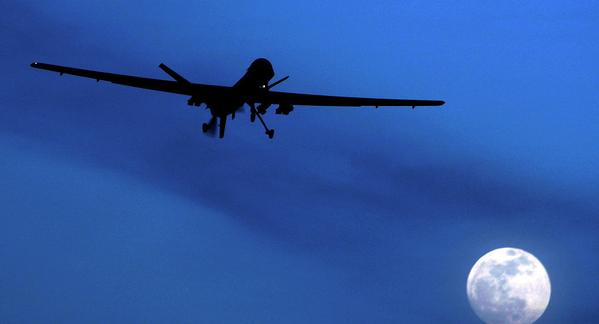
Drug Traffickers Hacking Surveillance Drones

DefenseOne; The drug cartels aren’t just buying golden Uzis anymore. As the U.S. Customs and Border Protection agency, or CBP, has upped its drone patrols along America’s Mexican border, narcotics traffickers have responded with expensive technology of their own.

The U.S. Department of Homeland Security and local law enforcement confirmed that Drug Traffickers are hacking surveillance drones on the border.

Small drones are another powerful tool used by the US Department of Homeland Security to monitor its borders, but drug traffickers already adopting countermeasures. In order to avoid surveillance, drug traffickers are hacking US surveillance drones used to patrol the border.

US surveillance drones

According to Timothy Bennett, a Department of Homeland Security program manager, drug traffickers are using technology to spoof and jam the US surveillance drones.

“The bad guys on the border have lots of money. And what they are putting money into is spoofing and jamming of GPSs, so we are doing funding to look at small UAS that we can counter this,” Bennett said during a panel at the Center for Strategic & International Studies. 

The principle behind the GPS spoofing attack is that sending to control system of the drone fake geographic coordinates it is possible to deceive the onboard system hijacking the vehicle in a different place for which it is commanded. Non-military GPS signals are not encrypted, this makes drones vulnerable to this kind of attacks.

Using jamming techniques against drones, it is possible to interrupt the GPS receiving transmitted to the UAVs. In this scenario the aircraft could potentially lose the capability to monitor its route and to calculate its location, altitude, and the direction in which it is traveling.

Both attack techniques are adopted by drug traffickers that belong to well-funded organizations that has access to modern advanced hacking technology.

DHS hasn’t provided further details on the attacks, but Bennett confirmed that the attacks are interfering with the operations conduced by members of the law enforcement.

“You’re out there looking, trying to find out this path [they’re] going through with drugs, and we can’t get good coordinate systems on it because we’re getting spoofed. That screws up the whole thing. We got to fix that problem,” Bennett told Defense One.

Iran to Increase Power of Destructive Missiles

For additional reference on Iran’s compliance and sanction money, the International Monetary Fund releases are here.

TEHRAN (FNA)- The destruction power and precision of Iran’s missiles will increase, Defense Minister Brigadier General Hossein Dehqan said Saturday following the recent presidential decree that required the defense ministry to speed up development of Iran’s missile capability.  

“Following o the president’s letter, we held numerous meetings with the executive officials, commanders and officials in the missile sector and decided work out appropriate plans as soon as possible to enhance the defensive power and capability as well as the effective deterrence power of our missiles contrary to the will of the hegemonic system which seeks to restrict the Islamic Republic militarily,” Dehqan told reporters in Tehran on Saturday.  

He also underscored the country’s serious intention to further develop its missile power.  

Stressing that the defense ministry seeks to optimize its ballistic missiles in different aspect, Dehqan said, “Increasing the precision-striking, destructive and blast power of our missiles… are among the defense ministry’s plans in the missile field.”  

In his letter on Thursday, President Rouhani noted the United States’

“hostile policies and illegal and illegitimate meddling against Iran’s right to develop its defensive power”, and ordered the defense minister to accelerate production of various types of missiles needed by the Iranian Armed Forces more powerfully.  

“As the United States seems to plan to include the names of new individuals and firms in its previous list of cruel sanctions in line with its hostile policies and illegitimate and illegal meddling in the Islamic Republic of Iran’s right to reinvigorate its defense power, the program for the production of the Armed Forces’ needed missiles is required to continue more speedily and seriously,” President Rouhani’s written order to the Defense Minister read.  

President Rouhani’s decree came in reaction to the US Treasury Department’s announcement that it is preparing sanctions on two Iran-linked networks helping develop the missile program.  

The presidential decree also required the defense ministry to think of new missile production programs at a much wider scale in case Washington continues its sanctions policy against Iran’s defense industries.  

“In case such wrong and interventionist measures are repeated by the United States, the Defense Ministry will be duty-bound to make use of all possibilities to bring up new planning to develop the country’s missile capability,” it stressed.  

The president further described Iran’s defense capabilities as a contributor to regional stability and security, and not a threat to any other state or party. Rather it is a means to “safeguard the country’s sovereignty, independence and territorial integrity and to combat the evil phenomenon of terrorism and extremism in line with common regional and global interests”.  

President Rouhani further reminded that Tehran has time and again underlined all throughout the nuclear negotiations with the six world powers – that ended up in the nuclear deal in Vienna in July – that it would “never negotiate with anyone about its defense power, including the missile program, and would never accept any restriction in this field, emphasizing its entitlement to the legitimate right of defense”.  

“It is crystal-clear that Iran’s missile program is not at all a part of the Joint Comprehensive Plan of Action (JCPOA) – also known as the nuclear deal – and this is acknowledged by the US officials as well,” said the decree, and added, “As repeatedly stated, nuclear weapons have no room in Iran’s defense doctrine, and therefore, the development and production of Iran’s ballistic missiles which have never been designed to carry nuclear warheads, will continue powerfully and firmly as a crucial and conventional tool for defending the country.”  

According to Washington officials, the US is preparing sanctions against firms and individuals in Iran, Hong Kong and the United Arab Emirates over alleged links to Iran’s ballistic missile program, a move seen by many in and outside Iran as a major blow to the nuclear deal between Tehran and the

5+1 group of powers that include the US, Russia, China, France and 5+Britain plus Germany.  

Under the planned restrictions, the US or foreign nationals would be barred from doing business with the firms and people in the networks. US banks would also freeze any US-held assets.  

The Washington’s antagonistic move comes after Iran took the first two major steps under the nuclear deal – that included reducing the number of its operating centrifuge machines from around 10,000 to 6,000 and sending its over 8.5 tons of low-enriched uranium stockpile to Russia.  

Once Iran takes out the heart of its Heavy Water Reactor in Arak and the International Atomic Energy Agency (IAEA) confirms implementation of these three steps in coming weeks, Iran will be through with fulfilling its undertakings, and it will be the United States’ turn to hold up its end of the bargain and remove all the sanctions against Iran, according to the deal.  

But now with the US intensifying sanctions against Iran, those who stood against the deal in Tehran are rallying increasing support for their pessimistic views about Washington’s loyalty to the deal.  

After Iran reduced its centrifuges to around 6,000 last month, the US imposed a new sanction against Iran through changes in its Visa Waiver Program.  

The US senate passed a bill related to the Visa Waiver Program (VWP) which allows citizens of 38 countries — namely European states, Australia, Japan and South Korea — to travel to the United States without having to obtain a visa but excludes from this program all dual nationals from Iran, Iraq, Syria and Sudan, and anyone else who has traveled to those countries in the past five years.  

The bill is seen by the EU as a serious effort to deter expansion of economic and tourism ties between Europe and Iran after the removal of the sanctions against Tehran. Senior EU officials have voiced strong protest at the US for its biased action against the block and are running debates with counterparts in Washington to drop the bill.


Putin Announces U.S. as a Threat to Security

Heh….Obama is no threat to anyone except Christians,legal gun owners and to taxpayers. But in case you are inclined to do some copying and pasting, here is the document. The United States under Barack Obama has refused to remain on a global stage and work to find peace through diplomacy or even militarily. Putin continues to challenge NATO and Putin will continue to be aggressive towards NATO members.

The document outlines the national interests and strategic priorities of the nation. Putin signed the executive order Thursday, establishing a new posture toward the NATO bloc, which has seen its relationship with Russia deteriorate since the crisis in Ukraine, which began in 2014.

Russian news agency Tass quotes the strategy, which cites a NATO military buildup, and “the alliance’s approach to Russia’s borders,” as a threat to Russia’s national security. The document says the organization is illegally extending its reach.

Putin Names US As Threat To Russian National Security In New Strategy Document

Durden/Zerohedge: It’s no secret that relations between Moscow and the West have deteriorated the post-Cold War lows.

The annexation of Crimea and the conflict in Ukraine have pushed the two sides to the brink of a Baltic battle while Russia’s intervention in Syria changed the West’s calculus when it comes to pushing for regime change in the Mid-East.

Earlier this year, in a hilariously accurate assessment of US foreign policy, Vladimir Putin’s Security Council issued a statement entitled “About The US National Security Strategy“. Here are some notable excerpts (translated):

The armed forces are considered as the basis of US national security and military superiority is considered a major factor in the American world leadership. While maintaining the continuity of the plants to use military force unilaterally and anywhere in the world, as well as to maintain a military presence abroad…


Significant efforts by the US and its allies will be directed to the formation of anti-Russian policy states, with which Russia has established partnership relations, as well as to reduce Russian influence in the former Soviet Union.


Continue the policy of preserving the global dominance of the United States, increasing the combat capabilities of NATO, as well as to strengthen the US military presence in the Asia-Tihokeanskom region. Military force will continue to be considered as the primary means of ensuring national security and interests of the United States. 


Becoming more widespread to eliminate unwanted US political regimes acquire advanced technology “color revolutions” with a high probability of their application in relation to Russia.

Thus, the strategy was developed on the basis of American exceptionalism, the right to take unilateral action to protect and promote the interests of the United States in the world and bears the active anti-Russian charge.

In other words, Moscow views US foreign policy as decidedly Russophobic and The Kremlin pretty clearly sees Washington as a threat to Russia’s security. Well on New Year’s Eve, Vladimir Putin made it official by signing a new appraisal of his country’s national security which, for the first time, lists the US as a threat. Here’s Reuters:

The document, “About the Strategy of National Security of Russian Federation”, was signed by President Vladimir Putin on New Year’s Eve. It replaces a 2009 version, endorsed by then- President Dmitry Medvedev, the current prime minister, which mentioned neither the United States not NATO.


It says Russia has managed to heighten its role in solving global problems and international conflicts. That heightened role has caused a reaction by the West.


“The strengthening of Russia happens against the background of new threats to the national security, which has complex and interrelated nature,” the document goes on to note.


Conducting an independent policy, “both international and domestic” has caused “counteraction from the USA and its allies, which are striving to retain their dominance in global affairs.”


That in turn is likely to lead to “political, economical, military and informational pressure on Russia.”

The document also implicates Washington in staging “anti-constitutional coup d’etat in Ukraine”, which is of course true. The result: a protracted civil war and a US puppet government that is less popular than its Russia-backed predecessor.

The document also reiterates Russia’s concerns about the expansion and strengthening of NATO. Here’s an excerpt:

The buildup of the military potential of the North Atlantic Treaty Organization (NATO) and vesting it with global functions implemented in violations of norms of international law, boosting military activity of the bloc’s countries, further expansion of the alliance, the approach of its military infrastructure to Russian borders create a threat to the national security.”

The references are to the multiple war games and snap drills NATO has conducted near Russia’s borders over the past nine months and to the inclusion of Montenegro in the alliance (documented here).

Of course one doesn’t necessarily have to interpret the document in the way the Western media has. Compare and contrast the following two headlines, the first from Reuters and the second from Sputnik:

Those two pieces refer to the very same document although you wouldn’t know it by what’s implied. Here are some excerpts from the Sputnik piece:

The strategy defines main venues of Russia-US partnership on the global arena as the improvement of mechanisms of arms controls, the strengthening of mutual trust measures, joint efforts in the area of WMD non-proliferation, expanded cooperation in the fight against terrorism as well as in the resolution of regional conflicts.


“Russia supports the strengthening of mutually-beneficial cooperation with the European countries, the European Union…with the goal of developing a transparent system of collective security in the Euro-Atlantic region based on clearly-defined legal agreements,” the text of the document, posted on Thursday on the government’s legal information portal, says.


According to the document, Russia continues to view NATO expansion and military activities near Russian borders as a major threat to its security and a violation of international laws, but is ready to develop relations with the Alliance in the interests of the European security.

The takeaway here probably isn’t whether or not the US is listed as a “threat” to Russia’s national security but rather that The Kremlin if officially recognizing Russia’s role in a kind of new world order wherein all matters of geopolitical significance are no longer decided in Washington.

In other words, the era of unipolarity and US hegemony (which has lasted nearly a quarter century) has come to an end and Russia’s discussion of the backlash from the US and NATO isn’t so much an effort to cast aspersions (i.e. to call this country or that country “a threat”) as it is to outline and assess the new reality.

Cheyenne Mtn: Pentagon Went Pro-Active, EMP

Given the recent missile tests by Iran and North Korea, there is cause for attention, further, Russia is never out of the equation. Paying attention to offensive measures and completion dates is an indication of the Pentagon having clues, seeing violations of agreements and resolutions and adversarial military build up of advanced technology.

Pentagon Moves More Communications Gear into Cheyenne Mountain

The gear is being moved into Cheyenne Mountain to protect it from electromagnetic pulses, said Adm. William Gortney, commander of U.S. Northern Command and NORAD.

“[T]here is a lot of movement to put capability into Cheyenne Mountain and to be able to communicate in there,” Gortney said Tuesday during a news briefing at the Pentagon.

Electromagnetic pulses, or EMPs, can occur naturally or by manmade devices such as nuclear weapons. For years, the Pentagon has been working on building weapons that could fry the electronic equipment of an enemy during battle.

“Because of the very nature of the way that Cheyenne Mountain is built, it’s EMP-hardened,” Gortney said. “It wasn’t really designed to be that way, but the way it was constructed makes it that way.”

Being able to communicate during an EMP attack is important, Gortney said.

“My primary concern was: ‘Are we going to have the space inside the mountain for everybody that wants to move in there?’ … but we do have that capability,” he said.

Last week, the Pentagon awarded defense firm Raytheon a $700-million contract to install new equipment inside the mountain. The company said the contract, which runs through 2020, will “support threat warnings and assessments for the North American Aerospace Defense Command Cheyenne Mountain Complex.”

The Pentagon’s March 30 contract announcement said Raytheon will provide sustainment services and products supporting the Integrated Tactical Warning/Attack Assessment (ITW/AA) and Space Support Contract covered systems. “The program provides ITW/AA authorities accurate, timely and unambiguous warning and attack assessment of air, missile and space threats,” it said.

Since 2013, the Pentagon has awarded contracts worth more than $850 million for work related to Cheyenne Mountain.

The Colorado complex is the embodiment of the Cold War, an era when bunkers were built far and wide to protect people and infrastructure. Cheyenne Mountain was the mother of these fallout shelters, a command center buried deep to withstand a Soviet nuclear bombardment. The complex was locked down during the Sept. 11, 2001, attacks on New York and Washington.

Air Force Space Command runs the mountain and maintains sleeping quarters, fresh water and a power station that would be used during an attack.

Almost a decade ago, NORAD pulled most of its staff out of Cheyenne Mountain and moved its command center into the basement of a headquarters building at nearby Peterson Air Force Base. Since then, Cheyenne Mountain has served as a back-up site.

Now the Cheyenne Mountain staff is set to grow again. Still, the command center at Peterson will remain operational, Gortney said.

In June 2013, then-U.S. Defense Secretary Chuck Hagel gave a speech in front of the mammoth blastproof doors on the roadway leading into the mountain.

“These facilities and the entire complex of NORAD and NORTHCOM represent the nerve center of defense for North America,” he said at the time.

***

MissileThreat: The U.S. has no ballistic-missile early-warning radars or ground-based interceptors facing south and would be blind to a nuclear warhead orbited as a satellite from a southern trajectory. The missile defense plans were oriented during the Cold War for a northern strike from the Soviet Union, and they have not been adapted for the changing threats.

The Pentagon was wise to move Norad communications back into Cheyenne Mountain and to take measures elsewhere to survive an EMP attack. But how are the American people to survive? In the event of a yearlong nationwide blackout, tens of millions of Americans would perish from starvation and societal chaos, according to members of the Congressional EMP Commission, which published its last unclassified report in 2008.

Yet President Obama has not acted on the EMP Commission’s draft executive order to protect national infrastructure that is essential to provide for the common defense. Hardening the national electric grid would cost a few billion dollars, a trivial amount compared with the loss of electricity and lives following an EMP attack. The U.S. also should deploy one of its existing transportable radars in the Philippines to help the ground-based interceptors at California’s Vandenberg Air Force defend the country against an attack from the south.

Congress also has failed to act on the plans of its own EMP commission to protect the electric grid and other civilian infrastructure that depends on a viable electric grid—such as communications, transportation, banking—that are essential to the economy. In recent years, the GRID Act, the Shield Act, and the Critical Infrastructure Protection Act have gained bipartisan and even unanimous support in the House, yet they died in the Senate.

States are not waiting for Washington to act. Maine and Virginia have enacted legislation and undertaken serious studies to consider how to deal with an EMP attack. Florida’s governor and emergency manager are considering executive action to harden their portion of the grid. Colorado legislators are holding hearings on legislation to protect their citizens. Texas, North Carolina, South Carolina, Indiana, Idaho and New York have initiatives in various stages to deal with an EMP attack.