America First Must Build a New Shipping Canal for the Supply Chain

Since 2020 up to now, we in America have suffered through supply chain shortages adding in the matter of ransomware of the Colonial pipeline and now the largest meat processor.

A cyberattack on JBS, the largest meat producer in the world, forced the shutdown of American slaughterhouses, and the closures may be spreading. JBS’s five biggest beef plants in the U.S. halted processing following the weekend attack, equal to one-fifth of all of America’s meat production. Slaughter operations across Australia were also down and one of Canada’s largest beef plants was idled. The prospect of more extensive shutdowns is upending agricultural markets and raising concern about food security as hackers increasingly target critical infrastructure. Livestock futures slumped while pork prices rose. JBS told the White House that the cyberattack, like several previous ransomware assaults, probably originated in Russia.

There are shortages of chicken, chlorine, flour, lumber, computer chips, rare earth minerals like cobalt, rental cars, palm oil, truck drivers, diapers and appliances to list a few. Just imagine the impact of pharmaceuticals via China.

Consider the supply chain dangers if sea shipping was slowed or stopped. Consider the Panama Canal. Why worry?

China is the short answer. And China hates the United States.

In part:

Beijing is currently the second or third largest trading partner with the countries of Central America.  Chinese investment in Central America is present in infrastructure projects in Honduras, Nicaragua, Costa Rica, and Panama, and there are plans for further investment in El Salvador and Guatemala.  Excluding a contemplated US $50 billion dollars in a canal project in Nicaragua, Chinese investment in Central American infrastructure has totaled approximately US $2 billion thus far.

In a further demonstration of growing ties between the PRC and the countries of Central America, Costa Rica, Panama, and El Salvador have each broken relations with Taiwan to establish diplomatic ties with China.  Other countries in the region could soon follow suit.

Panamanian “Panda Bonds”

Sino-Central American investment is being actively pursued in Panama.  The country is one of the nations in Latin America that is part of an ambitious program that Beijing has undertaken in the region.

The PRC’s “Silk Road” initiative is a trading and infrastructure plan that aims to connect Asia, Europe, Africa, and Latin America in the same way that the trade route existed during ancient times.  In addition to this initiative, further Chinese investment in Central America will result from the Panamanian government’s issuance of US $500 million of “Panda Bonds” in 2018.  Panda Bonds are Chinese renminbi-denominated bonds from a non-Chinese issuer that are sold into the Chinese market.  Panama issued them in order to take advantage of China’s lower borrowing costs.

***

China’s advancement in Central America dates back to 2007, when Costa Rica became the first Central American country to establish diplomatic relations with Beijing. Since then, economic relations between both countries have developed, helping to promote China’s regional brand. Economically, China has presented itself as an attractive partner. In 2008, China purchased Costa Rican bonds in excess of $300m, offered the country aid worth $130m, and funded the $105m construction of the Estadio Nacional. Meanwhile, on March 2 Chinese state media claimed that China will finance the expansion of a highway connecting Costa Rica and the Caribbean.

Chinese activity in Costa Rica is not limited to finance. In terms of culture, students at the University of Costa Rica can study Chinese and enrol in Chinese cultural programmes. The Chinese government has also promoted the development of Chinatown in San José, Costa Rica’s capital.

What is the solution?

America First should consider mobilizing a real infrastructure operation that would build a new shipping canal that would be technologically more advances and handle larger ships. Where to put it? Nicaragua.

Really? Yes, beat China at their own game and do it fast. The Nicaragua Canal was proposed and backed by Chinese investors and was to be completed in 2020 at an estimated cost of $50 billion.
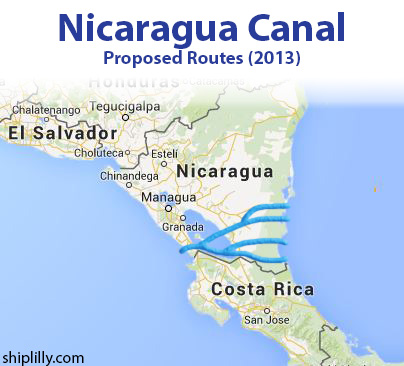
Nicaragua Canal Proposed Routes

Can you see the natural location for such a shipping canal?

This would also stabilized Latin American countries with economic space and stem the immigration chaos. This time, don’t give the canal away either. The cost? Perhaps a mere $15 billion and these days that is much less than the Biden administration budget has proposed to spend…that pesky $6 trillion.

Has China placed some military operatives in Latin America to protect Chinese investments otherwise known as debt trapping? Seems a legit question especially when the left-leaning think tank Foreign Policy Magazine explains the context just as recently in June of 2020.

Furthermore, Iranian warships are headed to Venezuela with 7 high speed missile boats on board. Additionally, China continues to make plays in the energy sector in Cuba. More debt trapping? Yes.

The America First Policy Institute needs to do some immediate forecasts for national security reasons. The AFPI, which holds a stellar staff list has one particular section called ‘Center for New Frontiers’.

America was not founded to restore an imagined past, but to move its people into a bright and brilliant future. In this first half of the twenty-first century, the United States stands on the precipice of an array of extraordinary possibilities. Dreams from our yesterdays — interplanetary travel, autonomous vehicles, subterranean transit systems, artificial intelligence, 3D printing, organ regeneration, extraordinary new power sources, and beyond — are poised to enter our tomorrows. The America First Policy Institute (AFPI) will research and develop policies that nurture America’s experimental spirit.

A new infrastructure plan such as a shipping canal is just the cure for future supply chain protections and stabilizing countries in our own hemisphere when other key industries and manufacturing must relocate to either or both Central America and back to the United States.

Fauci Lands Book Deal, What about Wuhan?

Dr. Anthony Fauci landed a book deal and will be the subject of a documentary featuring his work during the COVID-19 pandemic despite his constant flip-flopping on virus-related topics such as prolonged lockdowns, school reopenings, and the origins of the coronavirus.

“Expect the Unexpected: Ten Lessons on Truth, Service, and the Way Forward,” the National Institute of Allergy and Infectious Diseases (NIAID) director’s book, will be published by National Geographic Books and available to the public by as early as November 2.

“In his own words, world-renowned infectious disease specialist Anthony Fauci shares the lessons that have shaped his life philosophy, offering an intimate view of one of the world’s greatest medical minds as well as universal advice to live by,” the book description on Amazon reads. More book details here.

Dr. Fauci is the highest paid government employee and frankly should be prosecuted that is before he is fired.

*** Fauci said he tested negative for coronavirus Saturday ...

Related reading:

In a newly resurfaced paper from 2012, Dr. Anthony Fauci argued that the benefits of gain-of-function research are worth the increased risk of a potential pandemic-causing lab accident.

The Weekend Australian unearthed a paper Fauci wrote for the American Society for Microbiology in October 2012 in which he argued in support of gain-of-function research. Such research involves making viruses more infectious and/or deadly. Experts have raised the possibility that the COVID-19 pandemic could have originated from a potential lab leak at the Wuhan Institute of Virology in Wuhan, China, where gain-of-function experiments on bat coronaviruses have been conducted.

***

Here is a tip sheet for the gigantic number of questions that still need to be asked about the China virus.

Since we don’t trust U.S. media sources and rightly so, it is prudent to go elsewhere in the world and learn what other experts know. Additionally, it is important to add in other U.S. agencies that have a conduit to all things China virus.

Consider the following below:

  1. How about USAID?

    PREDICT is enabling global surveillance for pathogens that can spillover from animal hosts to people by building capacities to detect and discover viruses of pandemic potential. The project is part of USAID’s Emerging Pandemic Threats program and is led by the UC Davis One Health Intitute.

    PREDICT was initiated in 2009 to strengthen global capacity for detection and discovery of viruses with pandemic potential that can move between animals and people. Those include coronaviruses, the family to which SARS and MERS belong; paramyxoviruses, like Nipah virus; influenza viruses; and filoviruses, like the ebolavirus.

    Working with partners in over 30 countries, the project is investigating the behaviors, practices and ecological and biological factors driving disease emergence, transmission and spread using the One Health approach.

    Through these efforts, PREDICT has improved global disease recognition and has developed strategies and policy recommendations to minimize pandemic risk. Read more here.

  2. From a media source in India in part:This research paper has been published by a newspaper in Australia. It has been said that the discussion of using the coronavirus as a biological weapon started in China in 2015 itself. At that time, scientists of China’s People’s Liberation Army (PLA) and senior health officials in China had prepared a research paper, titled “The Unnatural Origin of SARS and New Species of Man-Made Viruses as Genetic Bio-weapons”.

    This means that in the year 2019, when the first case of coronavirus came to light in the city of Wuhan, China, a research paper was already prepared 4 years before that and it was prepared by the Chinese army scientists and senior health officers. More details here.

  3. How about a media source from Taiwan?TAIPEI (Taiwan News) — Amid concerns about the safety and efficacy of Sinopharm’s COVID-19 vaccine, the history of the company’s lab in Wuhan has raised suspicions among biowarfare experts, the U.S. government, and the Taiwanese military over whether it continues to serve as a dual-use biological warfare (BW) facility for the People’s Liberation Army (PLA).

    In 1993 and again in 1995, China declared the Wuhan Institute of Biological Products (WIBP), the hub of Sinopharm’s COVID-19 vaccine development, to be one of eight dual-use BW research facilities under its “national defensive biological warfare R&D program.” Although China has denied having an “offensive” biological warfare program since signing the Biological and Toxin Weapons Convention (BTWC), also known as the Biological Weapons Convention (BWC), in 1984, the U.S. State Department in 2005 alleged that “China maintains some elements of an offensive [biological weapon] capability in violation of its BTWC obligations” and repeated the same charges in 2010, 2012, and 2014. The .pdf summary is found here –> https://idsa.in/system/files/jds/jds_9_2_2015_DanyShoham.pdf

  4. How about British Intelligence?The former head of Britain’s Secret Intelligence Service (MI6), Sir Richard Dearlove, said that the question of a lab leak has become an “intelligence issue” in which British spies may need to “incentivise” defectors within the communist country to come forward and reveal the truth of the origin of the Wuhan virus.

    A senior Whitehall security source told the Daily Telegraph — a newspaper with close ties to the ruling Conservative government — that British intelligence investigators are working alongside their American counterparts to uncover the real origin of the pandemic.

    “We are contributing what intelligence we have on Wuhan, as well as offering to help the American to corroborate and analyse any intelligence they have that we can assist with,” said the source.

    “What is required to establish the truth behind the coronavirus outbreak is well-sourced intelligence rather than informed analysis, and that is difficult to come by.”

    Sir Richard Dearlove, who has been a vocal proponent of the idea that the virus emanated from the Wuhan laboratory, said that many scientists refrained from backing the idea out of fear of appearing to side with former President Donald Trump. source

  5. How about Ft. Detrick? That is the location for the National Biodefense Analysis and Countermeasures Center, which by the way is under the supervision of DHS…  NBACC’s 160,000 square-foot facility and 51,927 square feet of lab space includes two centers: the National Bioforensic Analysis Center (NBFAC), which conducts technical analyses in support of federal law enforcement investigations, and the National Biological Threat Characterization Center, which conducts experiments and studies to better understand biological vulnerabilities and hazards. NBACC is committed to maintaining a culture of safety. Its fully accredited, state-of-the-art lab facilities are at the biosafety levels (BSL) 2, 3, and 4, providing the highest standards of safety and experimental capability available. Its BSL-4 accreditation allows NBACC to perform R&D on pathogens for which no vaccine or treatment exists and makes it one of seven such facilities in the United States. NBACC is a partner in the National Interagency Confederation for Biological Research at Fort Detrick. This consortium includes the Centers for Disease Control and Prevention, Food and Drug Administration; National Cancer Institute; National Institute of Allergy and Infectious Diseases Integrated Research Facility; Naval Medical Research Center Biological Defense Research Directorate; U.S. Army Installation Management Command; U.S. Army Medical Research and Materiel Command; U.S. Army Medical Research Institute of Infectious Diseases; and U.S. Department of Agriculture Foreign Disease-Weed Science Research Unit. As an interagency partner, NBACC coordinates a range of scientific, technical, operational, and infrastructure-related activities that enhance scientific collaboration and productivity. The fact sheet is here.
  6. We have forgotten the Chinese scientists and other operatives working at U.S. universities or other American agencies. Harvard University Professor and Two Chinese Nationals Charged in Three Separate China Related Cases
  7. Anyone asking questions of the Rocky Mountain Laboratories in Montana? NIAID’s Rocky Mountain Laboratories (RML) in Hamilton, Montana, produced images of the novel coronavirus (SARS-CoV-2, previously known as 2019-nCoV) on its scanning and transmission electron microscopes on Tuesday, Feb. 11, 2020. SARS-CoV-2 causes COVID-19 disease, which has grown to be a global public health emergency since cases were first detected in Wuhan, China, in December 2019. RML investigator Emmie de Wit, Ph.D., provided the virus samples as part of her studies, microscopist Elizabeth Fischer produced the images, and the RML visual medical arts office digitally colorized the images.
  8. There is the University of Texas, the University of Alabama and last but not least the University of California at Irvine.

There are likely around thousands that know more but they remain silent. Why?


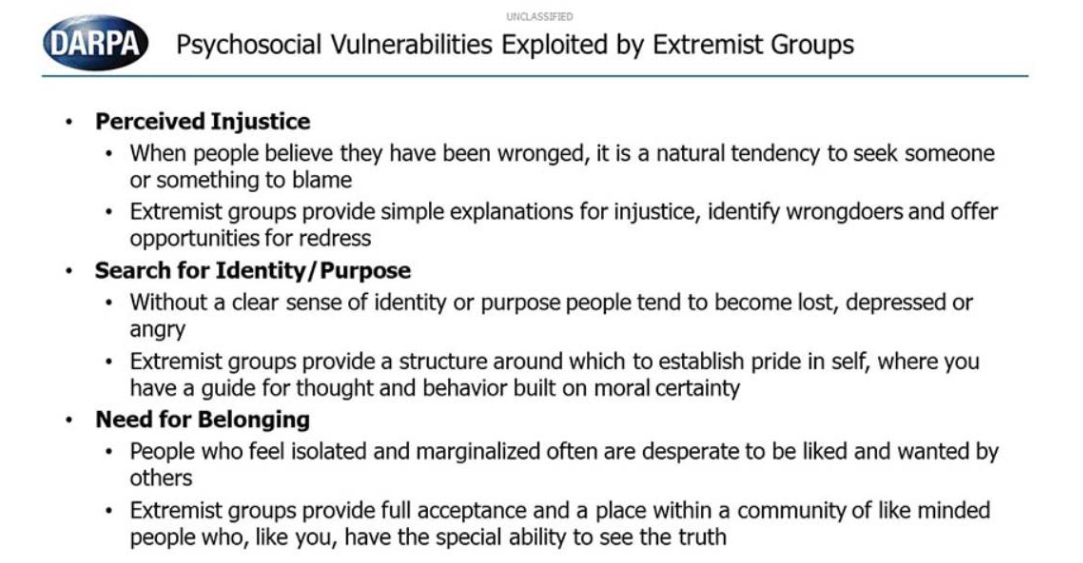
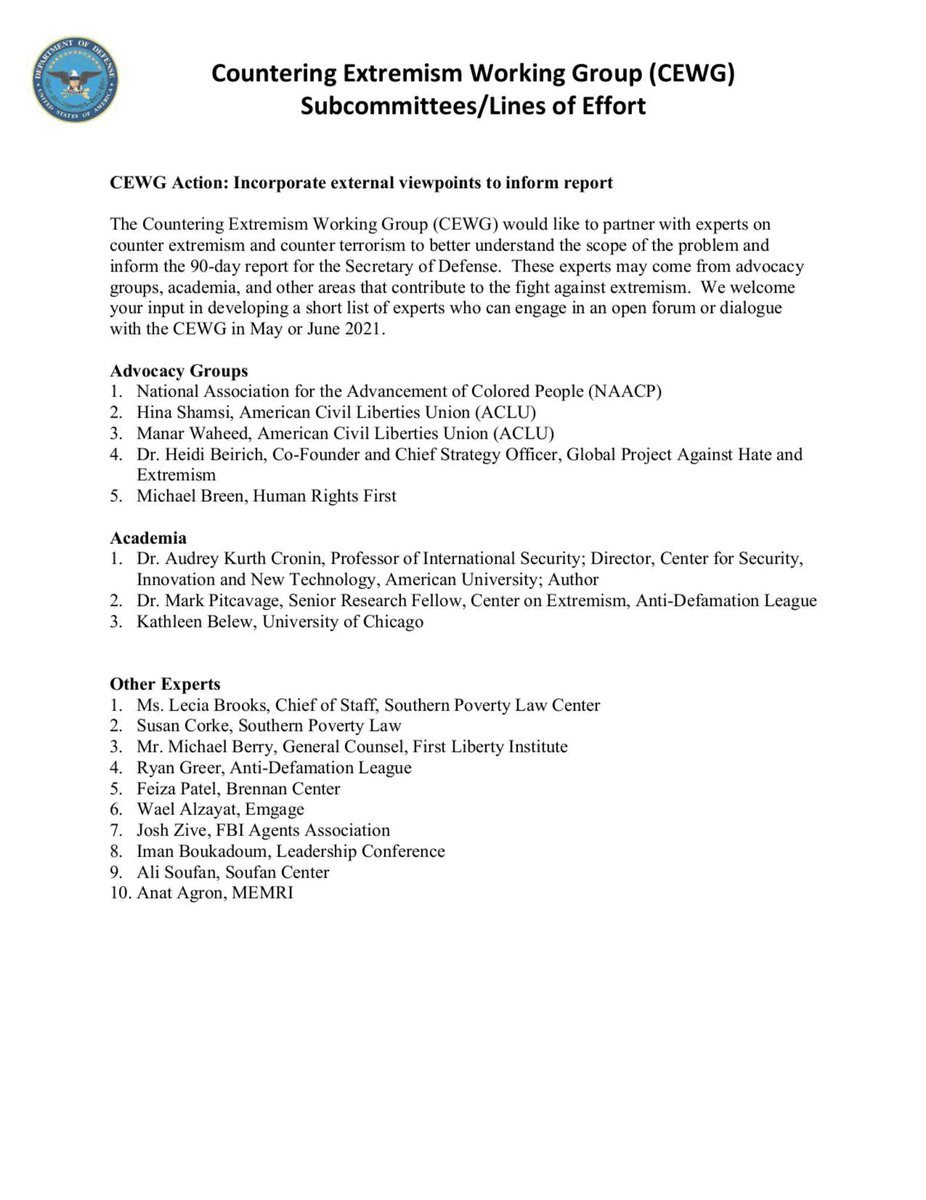
Details on the Pentagon Targeting Extremism

Image

Your task is to check out the resumes of each of these people. For further context keep reading.

*** The 17 page DARPA document is here.

Flags from the left-wing Antifa movement. Depictions of Pepe the Frog, the cartoon character that’s been misappropriated by racist groups. Iconography from the far-right Proud Boys, including the phrase “stand back and stand by” from former President Donald Trump.

They are all signs that extremists could be infiltrating the military, according to internal training materials that offer a more detailed view into the array of radical groups and ideologies the Pentagon is trying to keep out of the ranks.

“There are members of the [Department of Defense] who belong to extremist groups or actively participate in efforts to further extremist ideologies,” states a 17-page briefing obtained by POLITICO that was compiled by the DoD Insider Threat Management and Analysis Center, which is part of the Defense Counterintelligence and Security Agency.

“Be aware of symbols of far right, far left, Islamist or single issue ideologies,” it warns, stressing that members of the military and civilian personnel have “a duty and responsibility” to report extremist behavior or activity.

The materials were prepared as part of a broader Pentagon effort to crack down on extremists who may be lurking inside the military after dozens of ex-service members were arrested for their roles in the Jan. 6 attack on the U.S. Capitol to stop the certification of the presidential election.

The prevalence of extremists in the Defense Department appears to be small. For example, the 222,000-strong Marine Corps recently reported that it kicked out four members last year for extremist activity.

But the Pentagon says one is too many and the true numbers are not known because adherents who have been recruited by extremist groups or encouraged to enlist often organize and communicate in secret.

“No one truly knows,” Audrey Kurth Cronin, the director of American University’s Center for Security, Innovation and New Technology, told a House panel this week. “No serious plan can be built without defining the scope of the problem.”

The internal training materials focus on extremist behavior and symbolism — of all different stripes — and point out the risk of making false assumptions about people who do not pose any threat. This includes pointing out that religious conservatives are often mistakenly lumped together with white supremacists or other extremists.

The Department of Homeland Security has said white supremacist extremists are the most lethal terror threat facing the U.S. And while Republicans accused far-left groups such as Antifa of taking part in the insurrection, FBI Director Christopher Wray told lawmakers this month there’s “no evidence” those groups played a role.

Last month, Defense Secretary Lloyd Austin ordered a force-wide stand down requiring all units to discuss the threat of extremism within 60 days.

He called it the first step in “a concerted effort to better educate ourselves and our people about the scope of this problem and to develop sustainable ways to eliminate the corrosive effects that extremist ideology and conduct have on the workforce.”

The stand downs also include “listening sessions” to hear from Pentagon personnel about their experiences with activity, such as one held on Friday by a unit of the Army’s 101st Airborne Division.

The department published broad guidance for commanders to address address extremism, which focuses on reinforcing the military’s core principles enshrined in the oath they take to the Constitution and several case studies of military members who were prosecuted for engaging in extremist activity or plotting with radical groups.

But those materials did not identify specific threat groups, and Austin has provided wide leeway for individual units and commands to address the challenge as they see fit.

The internal briefing shared with POLITICO was compiled by the human resources office at the Defense Advanced Research Projects Agency, a small Pentagon agency of several hundred military personnel, civilian employees and contractors that manages research into breakthrough technologies.

Pentagon spokesman Jamal Brown noted that military units and individual components have been given broad authority to tailor their own approaches to addressing the extremist threat with their employees. He could not immediately say how many personnel have received this specific information and deferred questions about it to DARPA.

Jared Adams, a spokesperson for DARPA, explained in an email that “our training module was copied verbatim from the material provided by the DOD Insider Threat Management & Analysis Center of the Defense Counter Intelligence and Security Agency.

“We did not add any symbols and used all the imagery provided,” Adams said.

The briefing was sent to civilian employees as part of required training across the department for “Extremism and Insider Threat in the DoD.” Adams said it is required training to be completed by this month. Employees have to digest the material and then answer some questions.

The more detailed materials break down extremist movements into three main categories, including “Patriot” extremism, anarchist extremism, and ethnic/racial supremacy.

More here from Politico.

Biden Ignoring Ukraine in Favor of Russia

The real hurt and consequence is Ukraine as you read on.

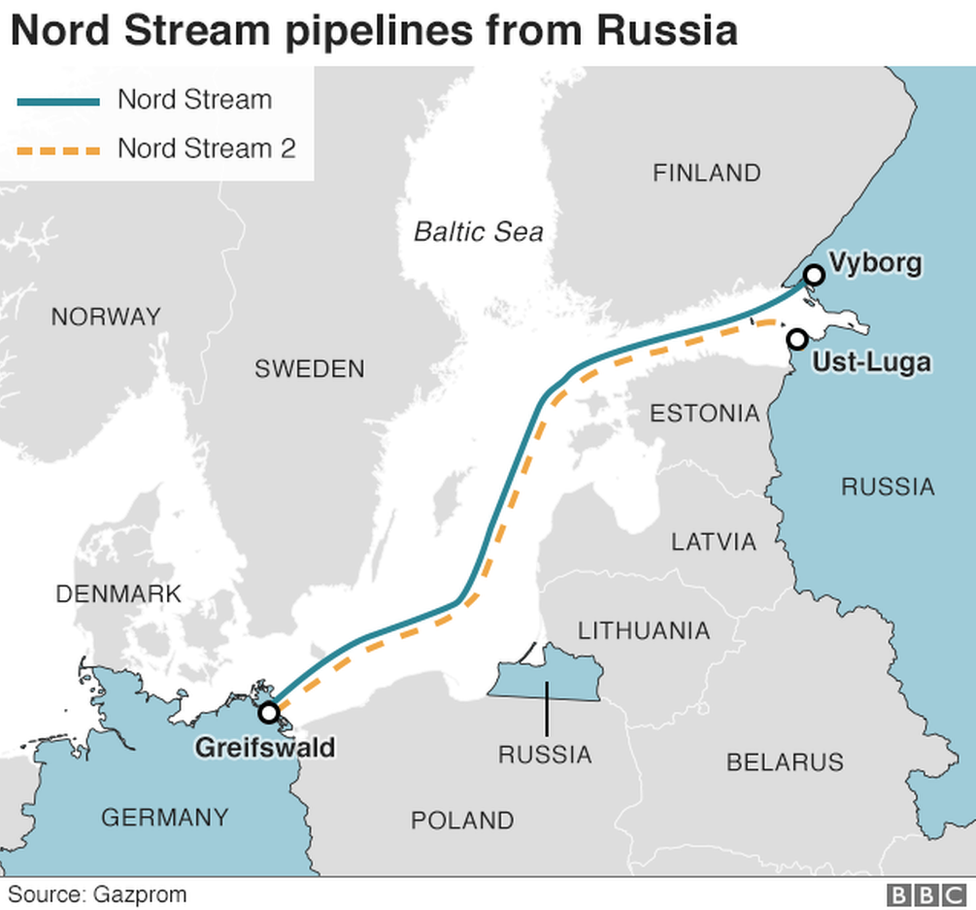
The Biden administration has waived sanctions on a company building a controversial gas pipeline between Russia and Germany.

The US also lifted sanctions on the executive – an ally of Russia’s Vladimir Putin – who leads the firm behind the Nord Stream 2 project.

The move came in a report on Russian sanctions delivered to Congress by the Department of State.

Critics say the pipeline is a major geopolitical prize for the Kremlin.

The project, which would take gas from the Russian Arctic under the Baltic Sea to Germany, is already more than 95% complete.

The Department of State report notes that Nord Stream 2 AG and its chief executive, Matthias Warnig, a former East German intelligence officer, engaged in sanctionable activity.

Nord Stream 2: Biden waives US sanctions on Russian pipeline - BBC News

How it bypasses Ukraine further putting Ukraine into a financial crisis –>

Ukraine crisis: Europe's stored gas high as prices soar - BBC News

But it concludes that it is in the US national interest to waive the sanctions.


The Department of State also imposed sanctions on four Russian ships involved in the building of Nord Stream 2, though detractors said that would not be enough to stop the pipeline.

Meanwhile:

Ukrainians breathed a collective sigh of relief last month when Russian President Vladimir Putin said he would withdraw the majority of more than 100,000 troops that had been shifted to the Russian-Ukrainian border. So did the U.S., NATO and the rest of Europe.

But nobody should be breathing easy: Putin isn’t one to stay on the retreat. So, where should we expect his next provocation? Very likely, the waters of the Black Sea.

Russia invaded Ukraine in 2014 and carved off the strategically vital peninsula of Crimea, the largest land grab from a sovereign state in this century. Since then, he has supplied money, training, arms and military advisers to separatist forces in the Donbas region of southeast Ukraine.

The recent buildup was probably a signal to the West of how relentless Putin will be on pressuring Ukraine, and of his deep opposition to it joining the North Atlantic Treaty Organization. It was also a distraction from his persecution of opposition leader Alexey Navalny, and played well with Putin’s base in Russia, where his approval rating soared during the Crimea annexation. Finally, the buildup allowed the Russian military a pretty effective practice run, in case Putin does decide to roll the dice and invade across the border.

Although one should never underestimate Putin’s ability to surprise his geopolitical rivals, this doesn’t seem like the moment for a full-blown land incursion. Putin is already financially overextended with his overseas adventures. Reconstructing Syria will come with a huge bill. Support to Ukrainian separatists is expensive. He has a great appetite for expensive new weapons (militarizing space, for example). And he remains under significant sanctions from the West. source

***

Seems President Biden got the lobby memo to support Moscow.

OS: Biden has not made any moves that would prevent completion of the pipeline, which would transfer natural gas from Russia to Germany while bypassing Poland and Ukraine. That’s a win for both Berlin and Moscow. It’s also a win for Washington lobbyists.

Companies involved with the pipeline spent more than $1 million lobbying on sanctions and other issues related to the project through the first three months of 2021.

Nord Stream 2 AG spent $840,000 on lobbying in the first quarter of 2021, on pace to surpass its nearly $3.6 million lobbying spending last year. The Swiss firm is wholly-owned by Russia’s state-run energy firm Gazprom. Alexei Miller, Gazprom’s executive chairman, is longtime Putin ally, as is Nord Stream CEO Matthias Warnig.

The company spent $600,000 to dispatch Vincent Roberti, a top lobbyist and prolific Democratic donor. Roberti reported lobbying on “issues related to the U.S. position toward the Nord Stream 2 pipeline, including potential financial sanctions affecting the project.” The firm spent another $240,000 to dispatch BGR Group’s Walker Roberts, a former Republican staffer for foreign affairs congressional committees.

Other foreign firms are also dispatching lobbyists to advocate for the pipeline. Five foreign companies partnering on the project — Austria’s OMV AG, the Netherlands’ Shell International, France’s ENGIE, and Germany’s Wintershall and Uniper SE — hired lobbyists at McLarty Inbound to lobby the State Department and the National Security Council. They collectively paid the firm more than $840,000 for lobbying in 2020 and $210,000 in the first quarter of 2021.

McLarty managing partner Richard Burt, the former U.S. Ambassador to West Germany and a member of several influential Washington think-tanks, reported lobbying for a slate of foreign companies that have partnered on the project on “Russian sanctions issues” and “natural gas as an element of European energy security.” Burt donated $2,000 to Biden’s 2020 campaign and $10,000 to pro-Biden super PAC Unite the Country while he was a registered lobbyist for foreign companies partnering with Nord Stream on the pipeline. Biden’s campaign had not refunded Burt’s money at the time of publication, more than 6 months after the donations were given, despite pledging to reject lobbyist donations.

Because firms working for proponents of the pipeline registered under the Lobbying Disclosure Act instead of the Foreign Agents Registration Act, details of which government officials the lobbyists met with remain hidden from the public.

Lobbyists for private entities that would otherwise be required to follow FARA disclosure requirements may choose to instead register under the LDA with the House Clerk’s Office and Secretary of the Senate so long as the “principal beneficiary” of the influence operation is not a foreign government or political party. Nord Stream is owned by a Russian state-run firm, but the Kremlin has insisted the pipeline is a “commercial project.”

Your Questions Ready when the UFO Report is Released?

The anticipation is growing as we wait for the report that is slated to be released June 1st. Take notes from the text below if you want some details beyond flying saucers and green people…

The sightings which are not only common in the United States but they too are reported by other countries across the globe. Will these sightings be fully explained? Not likely. So here is a primer for the reader to consider:

    1. We are often told that the weird things in the heavens above are weather balloons, so just accept that answer. Well, there are balloons in the skies and they are not commonly for weather. In fact, those balloons have some very secretive objectives.

      These high-altitude balloons are the property of Raven Aerostar, a division of Raven Industries, based in Sioux Falls, South Dakota. In recent years, Raven Aerostar has been known for its collaboration with Google’s parent company Alphabet in Project Loon, an ambitious venture intended to extend Internet access to rural areas. The “Loon balloons” were designed by Raven Aerostar to fly at high altitude for extremely long durations. Project Loon announced it would shut down in January this year, despite making significant technical strides. Since then, Raven Aerostar has continued to develop its balloon technologies for other sectors, notably in the realm of intelligence and defense.

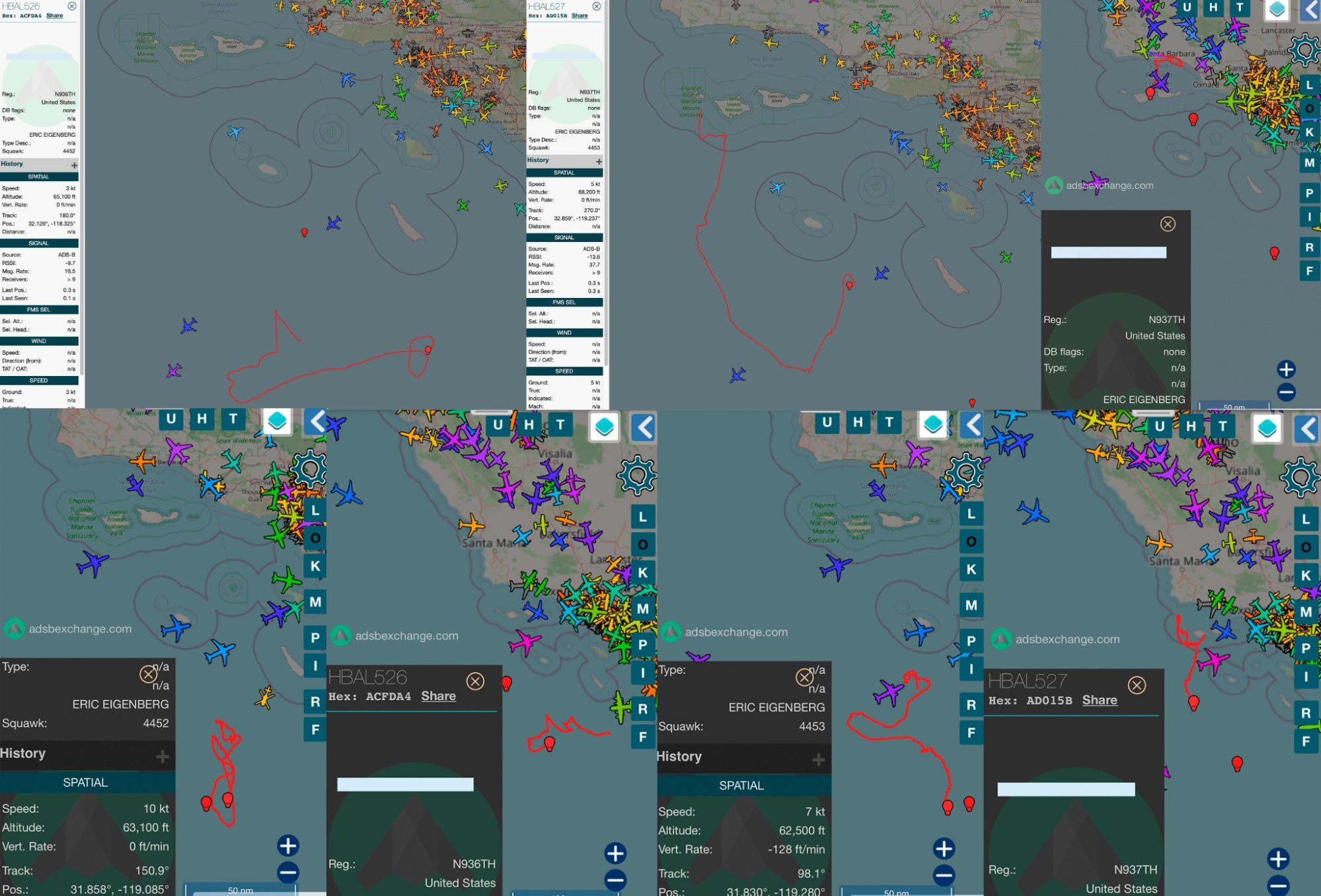
      ADSBExchange.com

      The high altitude balloons as seen on flight trackers off Southern California. They have caught people’s attention especially due to the fact that they can stay on station for long periods of time, seemingly flying against the prevailing winds in the area.

      The vehicles appear to be derivatives of Raven Aerostar’s Thunderhead balloon system. The Thunderhead balloons are designed to be able to persist over an area of interest in order to carry out a wide variety of tasks. According to the company, common applications include intelligence, surveillance, and reconnaissance (ISR) missions and acting as communications relays. Additionally, the balloons can also serve roles in augmenting navigational systems.

      Their recent appearance over both coasts of the United States appears to be a test of exactly this networking capability. Federal Communications Commissions records reflect an approved license for one of Raven Aerostar’s subsidiaries, Aerostar Technical Solutions, to fly balloons within a two hundred-mile radius around Vista, California from May 9th until May 30th this year.

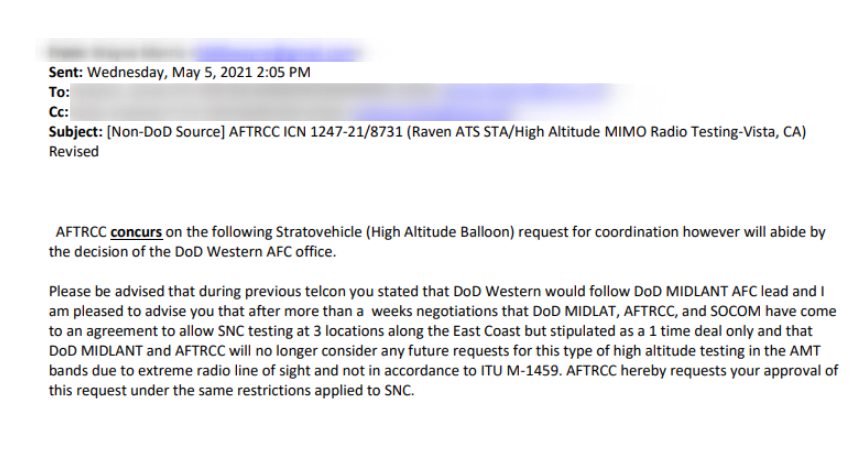
      The stated purpose is to test networked radio systems, the Silvus 4400E and Silvus 4200E, on the high altitude balloons. Although the application only lists the California locations, further correspondence in FCC records show a conversation about permitting additional locations on the East Coast:

      Official Email

      The company appears to have aggressively pursued its balloon testing in recent years, with experimental radio license applications dating back until at least February 2020. Balloon tests had previously been approved and conducted across the Southeast and Southwest. For example, residents of Jackson, Mississippi may have noticed a meandering balloon track around May 4th this year. Click here for more crazy details.


    2. In December 2020, the government enacted the Intelligence Authorization Act, which called for the release of an unclassified and all-sources report on unidentified aerial phenomenon (UAP) — the official military term used for unidentified flying objects. The act was included in the mammoth appropriations bill that also included financial aid checks for people living with the economic fallout from Covid-19.The report will include a thorough analysis of
      1. Available data
      2. Intelligence reporting on UAPs

      It will be presented to the congressional intelligence and armed services committees on UAPs.

      When the Pentagon officially released the footage of the unidentified aircraft last year, the agency admitted that the videos aren’t exactly sure what is going on in the video, and that they cannot explain how the crafts are able to pull such maneuvers.

      It remains unclear whether the government believes these to be sightings of foreign aircrafts using technologies unfamiliar to the United States, or whether they believe the craft are not of this world.

What else should we be asking? Well, the military and the intelligence community has some exceptional tools that are helpful in this quest so we may wonder if they are used in processing this report. Tools such as Geo-Spatial, DARPA, and then the known and unknown tools of the Space Force.

There is spacial wide-and communications, satellites (beyond line of sight) and geospatial intelligence that could or should be exploited in this mission of identification.

But wait…there are non-government agencies as well that often contract to government agencies such as Maxar.

From a 2019 blog post on the Maxar site is the following for consideration:

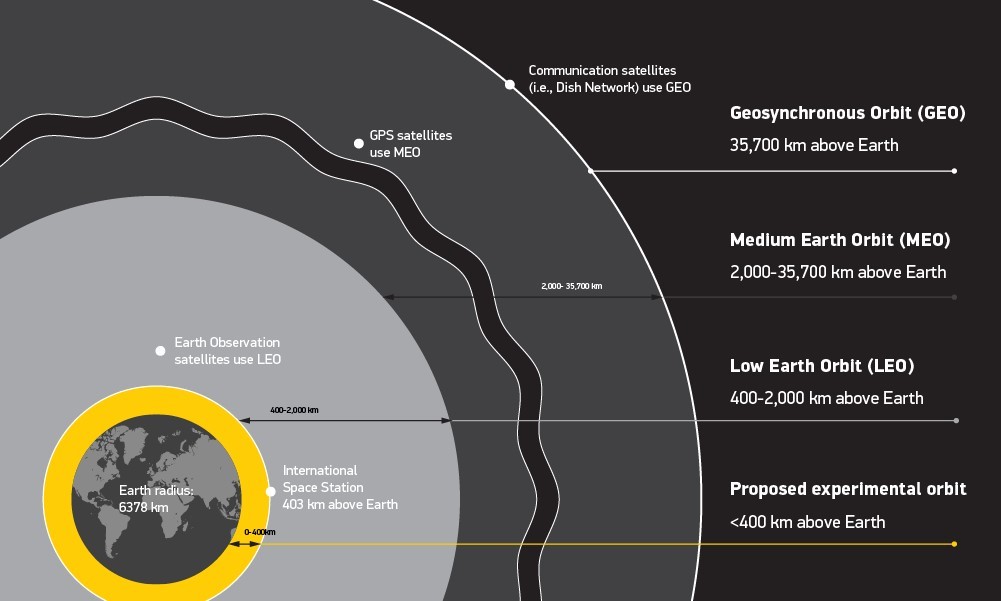
The Space Safety Coalition (SSC) issued the “Best Practices for Sustainability of Space Operations.” This document, co-signed by 21 space companies, advocates that any spacecraft operating at 400 kilometers or more above Earth should include a propulsion system for maneuvering, allowing each spacecraft to move itself out of a potential collision path instead of relying on others to always maneuver around it, as well as a number of other common sense principles. This will create a safer space environment for all to operate in now and for generations to come.

Maxar Technologies fully endorses the “Best Practices for Sustainability of Space Operations” and encourages Congress to introduce legislation based on these best practices. Below is Maxar’s reasoning for supporting the “Endorsement of Best Practices for Sustainability of Space Operations.”

We rely on space for our everyday lives. Weather satellites enable us to forecast the next snowstorm, so we can stock up on food. GPS lets us navigate to a new destination, using maps that come from imaging satellites. GPS also provides the precise timing used for banking transactions and to make it possible for cell phones—and banking transactions—to work. And, of course, there is NFL Sunday Ticket on DirecTV.

Space is also a big place. To put this into context, between the lowest practical orbit (350 km above Earth’s surface) and geostationary orbit (100 times further up, at 35,000 km), the volume of “near Earth” space is about 270 times the volume of Earth! Current estimates indicate there’s 29,000 objects that are 4 inches or bigger being tracked in that space [1], so it seems like it would be pretty empty and we don’t have to worry about collisions, right?

Well, not exactly. There’s another aspect of space: orbital velocity. Satellites in space don’t stand still, but zip around in their orbits at high speed. In low earth orbit (closest to Earth’s gravitation pull), this is around 7.6 km/sec, or over 16,000 miles an hour! If two objects in space collide, it’s not a gentle nudge but rather a big resounding KABOOM. This results in a lot more small pieces of debris that need to be tracked. If you’re lucky, the collision may knock off a corner of your solar array, like happened when Maxar’s WorldView-2 satellite was hit back in 2016 by a small piece of debris. Fortunately, this had no impact on WorldView-2’s ability to operate. If you’re unlucky, you get a collision like the one between a defunct Russian Cosmos satellite and an Iridium communications satellite back in 2009, which was responsible for nearly doubling the amount of debris in that orbital band.

I’ve mentioned there are about 29,000 tracked objects in space. But there are a lot more pieces too small to track – an estimated 166 million pebble sized pieces [1] are zipping around in space.

While the probability of one of these pieces hitting a satellite is small (on the order of a million to one chance), each collision makes the problem worse. There’s actually a term for this, the Kessler Syndrome, in which each collision makes the problem exponentially worse. We don’t want that to happen, because if it did, it could make certain regions of near Earth space completely unusable for satellites or humans.

Fortunately, we’re quite a long time away from space becoming unusable. Companies are creating new ways to track objects on orbit, including a new commercial solution Maxar is testing, which is the first step in containing the space debris problem. But space, similar to other common areas (like the oceans), requires responsible actions by all space operators to keep it usable for future generations. This is where rules of the road come in, and I’d like to lay out a few common sense ones:

  • Propulsion. Spacecraft operating above 400 km altitude should be required to carry propulsion to executive timely and effective avoidance maneuvers. It’s simply not acceptable for a satellite operator to place the burden of avoiding a collision on other satellite operators; it’s everyone’s responsibility. This is why SSC‘s “Best Practices for Sustainability of Space Operations” advocates for spacecraft operators to adopt space operations concepts that enhance sustainability of the space environment. Why 400 kilometers? It’s a natural dividing line; the International Space Station operates at 403 km altitude (nobody wants to see the movie “Gravity” played out in real life), and below 400 km, atmospheric drag is enough to make those orbits “self-cleaning” (see below).
  • Encryption. Satellites with propulsion should be required to have encryption and authentication on their command link, to ensure that only the satellite operator can control how the propulsion is used. We don’t want a hacker to take control of a satellite and maneuver it into the path of another one to cause an intentional collision.
  • Navigation. Satellites with propulsion should be able to determine their position, and the operators of these satellites should be required to share this position data (along with any planned maneuvers) with a central repository, such as the Combined Space Operations Center (formerly known as the Joint Space Operations Center [JSpOC]), to facilitate safe navigation by all satellite operators. The U.S. government is working on a plan to move this repository to a civilian agency, such as the U.S. Department of Commerce, to enable a more open and accessible repository for all global satellite operators. This is akin to the use of automatic identification system (AIS) transponders in ocean-going vessels, which broadcast their location to other ships using AIS to enable safe navigation, and the data is available publicly online.
  • Littering. Satellites and launch vehicles need to be designed so they do not throw off debris during or after launch. While already largely adopted, it’s important that launch providers and space operators have a plan to deorbit launch materials at the end of their life or move them to a safe orbit that’s out of the way and won’t have collision risks.

We could, however, designate the region below 400 km altitude as an “experimental” zone where the above requirements would not be imposed. These orbits are low enough that any debris will tend to reenter Earth’s atmosphere, burning up within weeks to months, making them much less of a concern. And few, if any, commercial or government satellites operate at those altitudes. Leaving the below-400 km region available without the above restrictions makes operating in space still affordable for operators of the growing number of inexpensive, experimental or educational cubesats.

The commercial and government use of space is accelerating rapidly. It’s time we have a way to regulate space traffic, just like how traffic on Earth is controlled. Even though the first gas-powered automobile was created in the 1880s, it took until the 1910s (three decades!) to bring some sensibility to who had the right-of-way on the road with the invention of the stop light.

Maxar along with the other co-signers of the SSC believe it’s time to bring sensibility to space. We’re asking the U.S. space industry to unite behind these best practices and talk to their senators and representatives about introducing legislation that reflect these best practices. We ask our international industry partners to bring these ideas to their respective governments for consideration. The “Best Practices for Sustainability of Space Operations” is a starting point to getting rules of the road established in space – but, in the big picture, all four common sense principles I’ve outlined above need to be implemented to keep space a safe environment available now and in the years to come.