An affordable price is probably the major benefit persuading people to buy drugs at www.americanbestpills.com. The cost of medications in Canadian drugstores is considerably lower than anywhere else simply because the medications here are oriented on international customers. In many cases, you will be able to cut your costs to a great extent and probably even save up a big fortune on your prescription drugs. What's more, pharmacies of Canada offer free-of-charge shipping, which is a convenient addition to all other benefits on offer. Cheap price is especially appealing to those users who are tight on a budget
Service Quality and Reputation
Although some believe that buying online is buying a pig in the poke, it is not. Canadian online pharmacies are excellent sources of information and are open for discussions. There one can read tons of users' feedback, where they share their experience of using a particular pharmacy, say what they like or do not like about the drugs and/or service. Reputable online pharmacy canadianrxon.com take this feedback into consideration and rely on it as a kind of expert advice, which helps them constantly improve they service and ensure that their clients buy safe and effective drugs. Last, but not least is their striving to attract professional doctors. As a result, users can directly contact a qualified doctor and ask whatever questions they have about a particular drug. Most likely, a doctor will ask several questions about the condition, for which the drug is going to be used. Based on this information, he or she will advise to use or not to use this medication.
Category Archives: Human Rights Violations United Nations
“Putin’s inner circle is already subject to personal U.S. sanctions, imposed over Russia’s 2014 annexation of Ukraine’s’ Crimea region,” the Reuters news agency points out. … “But the so-called ‘oligarchs’ list’ that was released on Tuesday … covers many
people beyond Putin’s circle and reaches deep into Russia’s business elite.”
Prime Minister Dmitry Medvedev is among the 114 senior political figures in Russia’s government who made the list, along with 42 of Putin’s aides, Cabinet ministers such as Foreign Minister Sergey Lavrov, and top officials in Russia’s leading spy agencies, the FSB and GRU. The CEOs of major state-owned companies, including energy giant Rosneft and Sberbank, are also on the list.
So are 96 wealthy Russians deemed “oligarchs” by the Treasury Department, which said each is believed to have assets totaling $1 billion or more. Some are the most famous of wealthy Russians, among them tycoons Roman Abramovich and Mikhail Prokhorov, who challenged Putin in the 2012 election. Aluminum magnate Oleg Deripaska, a figure in the Russia investigation over his ties to former Trump campaign chairman Paul Manafort, is included.
Russian Deputy Prime Minister Arkady Dvorkovich dismissed the list as simply a “who’s who” of Russian politics. He told Russian news agencies Tuesday he wasn’t surprised to find his name on the list, too, saying that it “looks like a ‘who’s who’ book.” Dvorkovich stopped short of saying how Russia would react to it, saying the Kremlin would “monitor the situation.” More here.
*** So when there are murder cases of Russian asylees in Britain, what are the agencies in the United States thinking?
Well there was Mikhail Lesin, a former friend of Putin found dead in his hotel in Dupont Circle, Washington DC. Then there was Operation Ghost Stories, the massive spy swap.
Imagine what the context and case reference is for the FBI when it comes to Russian operations in the United States and in allied countries.Or how many planes have been shot out of the sky where clues and evidence point to Russia? More explained in video below.
Beyond the attempted assassination of Skripal and his daughter in Salisbury two weeks ago, there was yet another confirmed death.
Whoever is behind the murder of a prominent Russian exile, who believed he was on a Kremlin hit list, managed to get inside his home without breaking in, police believe.
Nikolai Glushkov, 68, was found dead at home last week at his home in southwest London, and officers are now hunting for the culprits. His official cause of death is “compression to the neck.”
Before his death, Glushkov warned that a close friend of his had been murdered, and that he would be next.
In a Monday morning update on the investigation, the Metropolitan Police said they examined Glushkov’s house and found no signs of forced entry.
Activists say South African authorities are tacitly approving attacks on the country’s white farmers, with one being murdered every five days, and the police turning a blind eye to the violence.
The white nationalist lobbying group AfriForum says that when lawmakers passed a motion last month which could see land being seized from farmers without compensation, it sent a message that landowners could be attacked with impunity.
It said there have been 109 recorded attacks so far in 2018 and 15 farm murders, meaning that this year, one white farmer has been killed every five days.
In a statement, Ian Cameron, AfriForum’s Head of Safety said: “Our rural areas are trapped in a crime war. Although the South African government denies that a violence crisis is staring rural areas in the face, the numbers prove that excessive violence plague these areas.”
Gabriel Stols, 35, told the Independent how his younger brother Kyle, 21, was shot dead by four people on a game reserve near Bloemfontein.
“What is happening to us is torture, it is slaughter, it is brutal, it is revenge. The world doesn’t know what is happening in South Africa,” he said.
Hannetjie Ludik, 56, from Pretoria, told the paper that three armed men broke into her family’s house, stole money and raped her.
South Africa’s president Cyril Ramaphosa said the government did not condone attacks or the the seizure of white-owned farms and insisted there would be no repeat of what happened in Zimbabwe a generation ago.
But AfriForum says that the parliament’s bill has led to a culture of revenge among those spoiling for a redistribution of land in a country where some 80% of people describe themselves as black African, but only 1.2% of that community own the country’s rural land.
Julius Malema, the head of South Africa’s ultra-left Economic Freedom Fighters party (EFF), has called for land to be taken off white farmers. REUTERS/Siphiwe Sibeko
The policy was proposed by the leader of the Economic Freedom Fighters (EFF), Julius Malema who says redistributing land can correct historical injustices.
While there is broader political support for the move, a more measured approach is being called for by Kenneth Meshoe, the head of the African Christian Democratic Party, who told The Independent he believes in land distribution, although he says it should not be taken without compensation
“People like Malema who are promoting hate speech should not be allowed,” he added.
Thousands of people have signed a petition asking Donald Trump to let white people in South Africa to migrate to the U.S.
He provocatively said that such people could be helped from “a civilized country like ours”, sparking anger from South Africa’s Foreign Ministry which called for a retraction.
The fact-checking website, Africa Check, concluded in May 2017 that getting an accurate statistic on the country’s farm murder rate, which it estimated at 0.4 murders per 100,000 people, was “near impossible”.
Gareth Newham from South Africa’s Institute for Security Studies, told the Guardian there was no evidence white farmers were targeted any more than anyone else.
*** The world is silent on this….question is why?
In 2017:
The couple, who had lived in the area for 20 years, were tied up, stabbed, and tortured with a blowtorch for several hours. The masked men stuffed a plastic bag down Mrs Howarth’s throat, and attempted to strangle her husband with a bag around his neck.
The couple were bundled into their own truck, still in their pyjamas, and driven to a roadside where they were shot. Mrs Howarth, 64, a former pharmaceutical company executive, was shot twice in the head. Mr Lynn, 66, was shot in the neck.
Miraculously he survived, and managed to flag down a passer-by early on Sunday morning. Mrs Howarth, who police said was “unrecognisable” from her injuries, had multiple skull fractures, gunshot wounds and “horrific” burns to her breasts.
“Sue was discovered amongst some trees, lying in a ditch,” writes Jana Boshoff, reporter for the local Middelburg Observer newspaper. “Her rescuers managed to find her by following her groans of pain and then noticing drag marks from the road into the field.
In any other country, such a crime would be almost unthinkable. But in South Africa, these kinds of farm attacks are happening nearly every day. This year so far, there have been more than 70 attacks and around 25 murders in similar attacks on white farmers.
Earlier this month, for example, 64-year-old Nicci Simpson was tortured with a power drill during an attack involving three men at her home on a farm in the Vaal area, about two hours drive from Johannesburg.
When paramedics arrived, they found three dead dogs, and the woman lying in a pool of blood, spokesman Russel Meiring told News24. “They used a drill to torture her,” police spokesman Lungelo Dlamini said.
There are several human rights groups operating in the Middle East reporting on civil war and military conflict casualties. Yes, the United Nations is reporting also, including being in theater…but reporting is just reporting while people die, become sick and are displaced such as living under ground for safety as best they can.
The Violations Documentation Center in Syria has filed with evidence to the United Nations Security Council that 59 reports of napalm attacks by the Syrian government and Russian forces, resulting in 6 fatalities. Yes….NAPALM
US Defence Secretary Jim Mattis has warned Syria it would be “very unwise” to use poison gas in Eastern Ghouta amid reports of chlorine attacks.
Mr Mattis did not say President Trump would take military action, but the US struck Syria last April after a suspected gas attack in northern Syria.
Fierce fighting is continuing and the Syrian army says it has surrounded a major town in the rebel-held enclave.
More than 1,000 civilians have been reported killed in recent weeks.
The Syrian military has been accused of targeting civilians, but it says it is trying to liberate the region – the last major opposition stronghold near the capital Damscus – from those it terms terrorists.
The persecution and genocide of Christians across the world is worse today “than at any time in history,” and Western governments are failing to stop it, a report from a Catholic organization said.
The study by Aid to the Church in Need said the treatment of Christians has worsened substantially in the past two years compared with the two years prior, and has grown more violent than any other period in modern times.
“Not only are Christians more persecuted than any other faith group, but ever-increasing numbers are experiencing the very worst forms of persecution,” the report said.
The report examined the plight of Christians in China, Egypt, Eritrea, India, Iran, Iraq, Nigeria, North Korea, Pakistan, Saudi Arabia, Sudan, Syria and Turkey over the period lasting from 2015 until 2017. The research showed that in that time, Christians suffered crimes against humanity, and some were hanged or crucified. The report found that Saudi Arabia was the only country where the situation for Christians did not get worse, and that was only because the situation couldn’t get any worse than it already was.
The authors criticized the administration of President Donald Trump for not holding Saudi Arabia accountable for its human rights violations and instead focusing on the trade relationship between the two nations. In May 2017, Trump signed a $110 billion arms deal with Saudi Arabia during his first overseas trip in office.
The report put special focus on Middle Eastern countries like Iraq and Syria, where the authors argued Christians would have been entirely wiped out if it weren’t for military action and the assistance of Christian humanitarian organizations, like Aid to the Church in Need.
“The defeat of Daesh [the Islamic State militant group] and other Islamists in major strongholds of the Middle East offers the last hope of recovery for Christian groups threatened with extinction,” the report found. “Many would not survive another similar violent attack.”
Relatives of Coptic Christians who were killed during a bus attack surround their coffins during their funeral service, at Ava Samuel desert monastery, in Minya, Egypt. Getty Images
The report, which was released in November 2017 but received renewed attention this week, is based on research in the countries and testimony from victims. It detailed attacks against Coptic Christians in Egypt and monasteries burned in Syria.
In Africa, the report focused on countries like Sudan, where the government ordered that churches be destroyed, and Nigeria, where ISIS-affiliated groups like Boko Haram have led a surge in attacks on Christians. In Eritrea, hundreds of Christians have been rounded up and imprisoned over the past year because of their faith.
The report also documented numerous case studies in which Christians in countries such as India and Nigeria were murdered or beaten for practicing their faith.
Indian Christians gathers at St. Teresa’s Church for the midnight Christmas mass in Kolkata, India. Getty Images
“A Christian pastor in India was left in a coma after being beaten in a ‘planned’ attack apparently carried out by Hindutva extremists,” the report noted. “Before slipping into unconsciousness, the pastor told police that the attack was religiously motivated.”
“You must never come to our village to pray. You should never enter our village,” the men told the pastor, according to the report.
In late October, Vice President Mike Pence pledged that the Trump administration would redirect aid money formerly given to the United Nations to the U.S. Agency for International Development, a move that was meant to appease Christian organizations that say the U.N. isn’t doing enough for persecuted Christians.
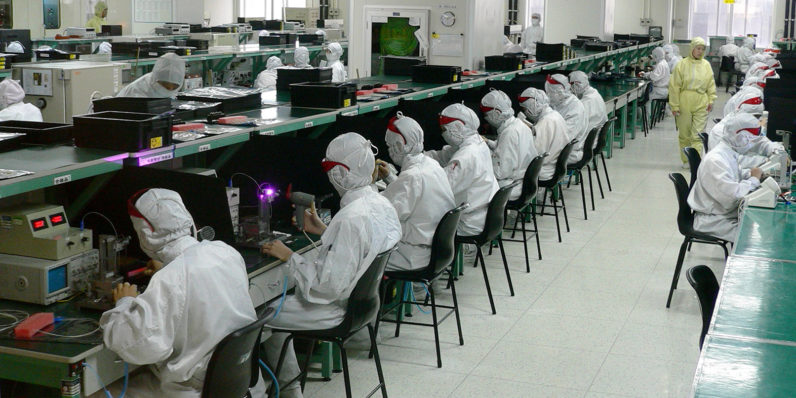
Primer: Pegatron, the factory at the corner of Xiu Yan and Shen Jiang roads is one of the most secretive facilities at the heart of iPhone production and covers an area equal to almost 90 football fields. In the center is a plaza with a firehouse, police station and post office. There are shuttle buses, mega-cafeterias, landscaped lawns and koi ponds. The grey and brown-hued concrete buildings are meant to evoke traditional Chinese architecture. The brand-new Shanghai Disneyland, which opens its doors in June, is a 20-minute drive away.
Inside, the factory still hides a secret, according to China Labor Watch. Base pay remains so low that workers need overtime simply to make ends meet, the advocacy group said. It said 1,261 pay stubs from Pegatron’s Shanghai facility from September and October 2015 show evidence of excessive overtime. Pegatron, an Asustek spinoff, is the world’s biggest contract electronics manufacturer after Foxconn, according to Bloomberg Intelligence. More here.
With China, however, a different story has emerged. Apple has been criticised for blocking Chinese users’ access to the Apple News app and for removing VPN apps from the App Store in China. The changes being made to iCloud are the latest indication that China’s repressive legal environment is making it difficult for Apple to uphold its commitments to user privacy and security. What do these changes mean and what options do Apple’s customers have to protect themselves?
What is happening to Apple’s iCloud service in China?
On 28 February, Apple will transfer operation of its iCloud service for Chinese users to a Chinese company, Guizhou-Cloud Big Data Industry Development Co., Ltd (“GCBD”). The concept of iCloud and other Cloud computing services can be quite confusing to some, especially if it is something completely new to you. It is very interesting to look into. As many of us use services like this to store our files and photos, it makes sense to know what this is all about. Why not look into a site like https://www.salesforce.com/what-is-cloud-computing/ to stay informed.
The move will affect any photos, documents, contacts, messages and other user data and content that Chinese users store on Apple’s cloud-based servers. New Chinese legislation enacted in 2017 requires cloud services to be operated by Chinese companies, meaning companies like Apple must either lease server space inside China or establish joint ventures with Chinese partners.
How does storing user data in China put individuals at risk?
Domestic law gives the Chinese government virtually unfettered access to user data stored inside China without adequate protection for users’ rights to privacy, freedom of expression or other basic human rights. Chinese police enjoy sweeping discretion and use broad and ambiguously constructed laws and regulations to silence dissent, restrict or censor information and harass and prosecute human rights defenders and others in the name of “national security” and other purported criminal offences. As a result, Chinese Internet users can face arrest and imprisonment for merely expressing, communicating or accessing information and ideas that the authorities don’t like.
Furthermore, China’s Cyber Security Law requires network operators to provide “technical support and assistance” to law enforcement and state security agents. That means that when the authorities come to GCBD requesting information about an iCloud user for the purposes of a criminal investigation, the company has a legal obligation to provide it and few, if any, viable legal avenues to challenge or refuse the request.
Apple says it has control over encryption keys and that it won’t allow backdoors. Won’t that protect users in China?
It all depends on the circumstances under which the company will allow GCBD – and the Chinese authorities – access to intelligible decrypted data on iCloud users. When users accept the terms of service for iCloud in China, they agree to allow their information and content to be turned over to law enforcement “if legally required to do so”. Significantly, from now on Apple will store the encryption keys for Chinese users in China, not in the US – making it all but inevitable that the company will be forced to hand over decrypted data so long as the request complies with Chinese law.
Given that many provisions of Chinese law offer inadequate protection to privacy, freedom of expression and other rights, simply checking whether government information requests comply with Chinese law doesn’t address whether complying with the request might contribute to human rights violations. Apple hasn’t confirmed whether or how it will assess whether government information requests might violate users’ human rights. We won’t really know how Apple will respond until it’s put to the test, and unfortunately that’s probably just a matter of time.
As for “backdoors”, or technical measures that would allow law enforcement or other government agencies to access unencrypted user data without having to ask for it, Apple’s commitment to prevent their use is admirable. But the commitment is meaningless if law enforcement can get the companies to decrypt user information simply by saying that it is for a criminal investigation.
What should iCloud users inside China do to protect themselves?
The best way to protect your personal information from being accessed by the Chinese government is to avoid storing it on servers inside China. Users with a credit card and billing address outside China can use those to register their accounts and keep storing their iCloud data outside China. Otherwise, the only option available to Chinese users is to delete their iCloud accounts and permanently opt out of the service. (Apple has provided instructions for how to do so here.) Individual users should seriously consider the risks involved and come to their own decision, but Apple should protect Chinese users by switching iCloud off by default and giving users very clear warnings about the risks they may face by opting in to the service.
How can ICT companies act responsibly when operating in China?
Companies have a responsibility to respect all human rights wherever they operate in the world. Users of their products and services need to be given clear and specific information about risks they might face to their privacy and freedom of expression in China, and what action the company is taking in response. Companies should carry out regular and verifiable human rights impact assessments and demonstrate publicly that they have oversight, due diligence and accountability measures in place to ensure respect for human rights. Finally, companies should do everything they can to influence the Chinese government to protect and respect human rights and speak up and challenge government actions when they threaten human rights. If a company finds that it is unable to mitigate the high risk of human rights violations, it may be forced to decide not to operate in China.
Apple’s official website declares: “At Apple, we believe privacy is a fundamental human right.” It remains to be seen whether Apple can put its words into action.
How about some White House officials visit Houston…
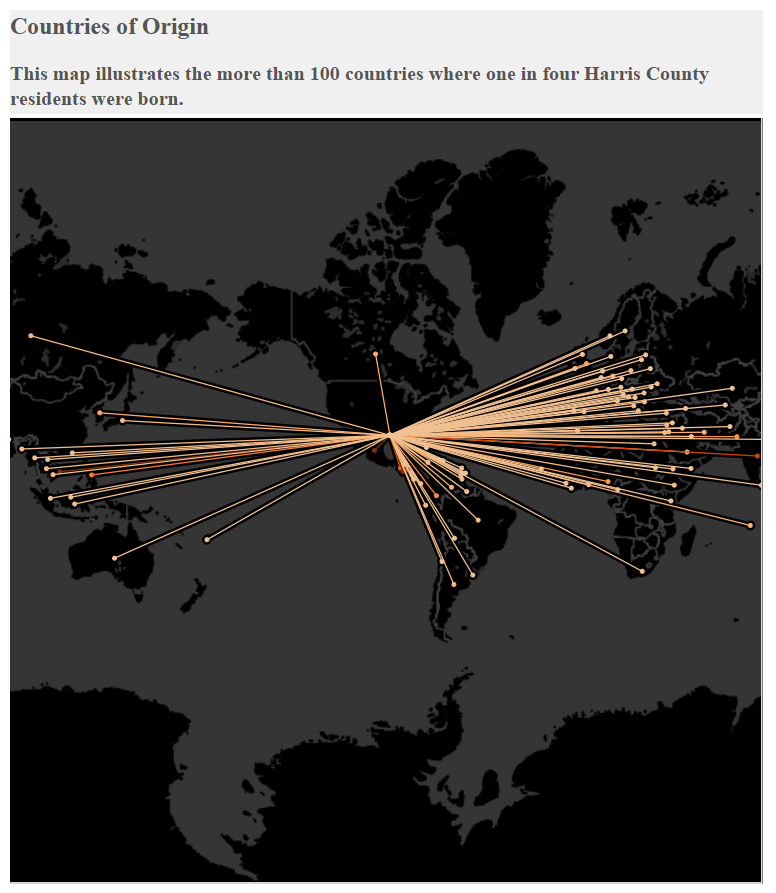
More than 100 countries are represented in Houston. Routinely ranked top in the country for job growth, with a school system where 80 percent of students are disadvantaged. For details, go here.
Lee High School for instance has 1700 students, a Vietnamese principal and student are from 40 different countries.
Immigrant-rights activists who are U.S. citizens and who are supporting the Dreamers will also cancel their membership in the Democratic Party in order to make their point, the organizations said.
Monday marked six months since Mr. Trump announced a phaseout of the Obama-era DACA deportation amnesty. The president had said Congress should use the phaseout period to approve a new plan, with full congressional authorization, to grant DACA recipients legal status.
Mr. Trump offered a middle-ground approach, but the security enhancements went too far for Democrats, while his proposed amnesty for illegal immigrants went too far for many Republicans, and the bill stalled.
While Democrats have blamed the GOP, activists made clear Monday they will pin some of the blame on Democrats.
“The Democrats made the calculation to kick the can down the road and allow hundreds of thousands of us undocumented youth to live in uncertainty. We are anxious and we are scared of being torn away from their homes and our community”, said Maria Duarte, one of 683,000 people covered by DACA.
DNC Chairman Tom Perez, though, said Mr. Trump is the problem, calling his phaseout “cruel and reckless.”
“Donald Trump’s decision to end DACA created an unnecessary crisis that has left hundreds of thousands of Dreamers uncertain about their future. And now his arbitrary deadline has passed without any action from the president or Republicans in Congress,” Mr. Perez said in a statement.
The protesters Monday were part of the Seed Project, which staged a march from New York to Washington late last month, in anticipation of the March 5 deadline.
The protesters said they expect Congress to pass a “clean” bill granting perhaps 2 million illegal immigrants citizenship rights — without agreeing to any other provisions such as Mr. Trump’s planned border wall or changes to legal immigration policy.
Work permits expiring March 31 are automatically extended through Sept. 27
WASHINGTON—Current beneficiaries of Temporary Protected Status (TPS) under Syria’s designation who want to maintain their status through Sept. 30, 2019, must re-register between March 5, and May 4, 2018. Re-registration procedures, including how to renew employment authorization documentation, have been published in the Federal Register and on the USCIS website.
USCIS will issue new EADs with a Sept. 30, 2019, expiration date to eligible Syrian TPS beneficiaries who timely re-register and apply for EADs. However, given the timeframes involved with processing TPS re-registration applications, USCIS is automatically extending the validity of EADs with an expiration date of March 31 for 180 days, through Sept. 27.
To be eligible for TPS under Syria’s current designation, individuals must have continuously resided in the United States since Aug. 1, 2016, and have been continuously physically present in the United States since Oct. 1, 2016, along with meeting the other eligibility requirements.
On Jan. 31, Secretary of Homeland Security Kirstjen M. Nielsen announced her determination that the conditions supporting Syria’s TPS designation continue. The secretary made her decision after reviewing country conditions and consulting with appropriate U.S. government agencies. Before the 18-month extension ends, the secretary will review conditions in Syria to determine whether its TPS designation should be extended again or terminated.