A big hat tip to Molly Ball for her work on this. This is a very long read. But you will cheat yourself if you don’t read the whole essay and take notes. If you really want to understand the players, the manual and the machine, the timelines and the money and most of all where the power was/is along with all that was mobilized, read on.
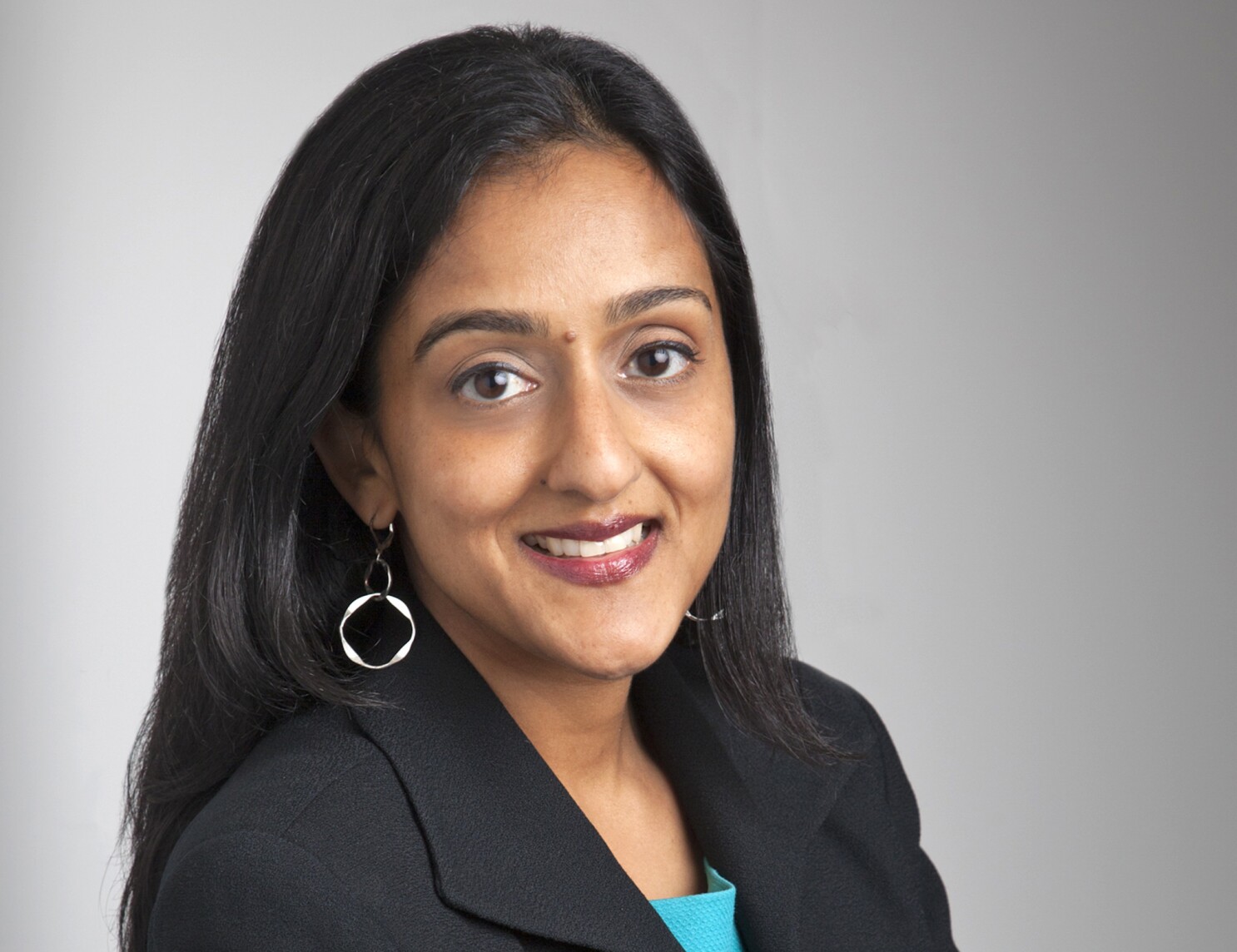 Anita Gupta, has a long history beginning with Obama
Warning: Anita Gupta now works for Biden at the Justice Department. It is remarkable how media and democrat operatives are so aggressive in defending the election results. It actually comes down to exposure….have your pen and paper handy.
As Trump said, this can never happen again and there is little time left from now to the mid-term election. When Mark Zuckerberg dishes out $400 million for election aid when the Federal government already has big money allocated for that, bigger questions surface. Did any of Zuckerburg’s money pay off judges?
 source
TIME: A weird thing happened right after the Nov. 3 election: nothing.
The nation was braced for chaos. Liberal groups had vowed to take to the streets, planning hundreds of protests across the country. Right-wing militias were girding for battle. In a poll before Election Day, 75% of Americans voiced concern about violence.
Instead, an eerie quiet descended. As President Trump refused to concede, the response was not mass action but crickets. When media organizations called the race for Joe Biden on Nov. 7, jubilation broke out instead, as people thronged cities across the U.S. to celebrate the democratic process that resulted in Trump’s ouster.
A second odd thing happened amid Trump’s attempts to reverse the result: corporate America turned on him. Hundreds of major business leaders, many of whom had backed Trump’s candidacy and supported his policies, called on him to concede. To the President, something felt amiss. “It was all very, very strange,” Trump said on Dec. 2. “Within days after the election, we witnessed an orchestrated effort to anoint the winner, even while many key states were still being counted.”
In a way, Trump was right.
There was a conspiracy unfolding behind the scenes, one that both curtailed the protests and coordinated the resistance from CEOs. Both surprises were the result of an informal alliance between left-wing activists and business titans. The pact was formalized in a terse, little-noticed joint statement of the U.S. Chamber of Commerce and AFL-CIO published on Election Day. Both sides would come to see it as a sort of implicit bargain–inspired by the summer’s massive, sometimes destructive racial-justice protests–in which the forces of labor came together with the forces of capital to keep the peace and oppose Trump’s assault on democracy.
The handshake between business and labor was just one component of a vast, cross-partisan campaign to protect the election–an extraordinary shadow effort dedicated not to winning the vote but to ensuring it would be free and fair, credible and uncorrupted. For more than a year, a loosely organized coalition of operatives scrambled to shore up America’s institutions as they came under simultaneous attack from a remorseless pandemic and an autocratically inclined President. Though much of this activity took place on the left, it was separate from the Biden campaign and crossed ideological lines, with crucial contributions by nonpartisan and conservative actors. The scenario the shadow campaigners were desperate to stop was not a Trump victory. It was an election so calamitous that no result could be discerned at all, a failure of the central act of democratic self-governance that has been a hallmark of America since its founding.
Their work touched every aspect of the election. They got states to change voting systems and laws and helped secure hundreds of millions in public and private funding. They fended off voter-suppression lawsuits, recruited armies of poll workers and got millions of people to vote by mail for the first time. They successfully pressured social media companies to take a harder line against disinformation and used data-driven strategies to fight viral smears. They executed national public-awareness campaigns that helped Americans understand how the vote count would unfold over days or weeks, preventing Trump’s conspiracy theories and false claims of victory from getting more traction. After Election Day, they monitored every pressure point to ensure that Trump could not overturn the result. “The untold story of the election is the thousands of people of both parties who accomplished the triumph of American democracy at its very foundation,” says Norm Eisen, a prominent lawyer and former Obama Administration official who recruited Republicans and Democrats to the board of the Voter Protection Program.
For Trump and his allies were running their own campaign to spoil the election. The President spent months insisting that mail ballots were a Democratic plot and the election would be “rigged.” His henchmen at the state level sought to block their use, while his lawyers brought dozens of spurious suits to make it more difficult to vote–an intensification of the GOP’s legacy of suppressive tactics. Before the election, Trump plotted to block a legitimate vote count. And he spent the months following Nov. 3 trying to steal the election he’d lost–with lawsuits and conspiracy theories, pressure on state and local officials, and finally summoning his army of supporters to the Jan. 6 rally that ended in deadly violence at the Capitol.
The democracy campaigners watched with alarm. “Every week, we felt like we were in a struggle to try to pull off this election without the country going through a real dangerous moment of unraveling,” says former GOP Representative Zach Wamp, a Trump supporter who helped coordinate a bipartisan election-protection council. “We can look back and say this thing went pretty well, but it was not at all clear in September and October that that was going to be the case.”
This is the inside story of the conspiracy to save the 2020 election, based on access to the group’s inner workings, never-before-seen documents and interviews with dozens of those involved from across the political spectrum. It is the story of an unprecedented, creative and determined campaign whose success also reveals how close the nation came to disaster. “Every attempt to interfere with the proper outcome of the election was defeated,” says Ian Bassin, co-founder of Protect Democracy, a nonpartisan rule-of-law advocacy group. “But it’s massively important for the country to understand that it didn’t happen accidentally. The system didn’t work magically. Democracy is not self-executing.”
That’s why the participants want the secret history of the 2020 election told, even though it sounds like a paranoid fever dream–a well-funded cabal of powerful people, ranging across industries and ideologies, working together behind the scenes to influence perceptions, change rules and laws, steer media coverage and control the flow of information. They were not rigging the election; they were fortifying it. And they believe the public needs to understand the system’s fragility in order to ensure that democracy in America endures.
THE ARCHITECT
Sometime in the fall of 2019, Mike Podhorzer became convinced the election was headed for disaster–and determined to protect it.
This was not his usual purview. For nearly a quarter-century, Podhorzer, senior adviser to the president of the AFL-CIO, the nation’s largest union federation, has marshaled the latest tactics and data to help its favored candidates win elections. Unassuming and professorial, he isn’t the sort of hair-gelled “political strategist” who shows up on cable news. Among Democratic insiders, he’s known as the wizard behind some of the biggest advances in political technology in recent decades. A group of liberal strategists he brought together in the early 2000s led to the creation of the Analyst Institute, a secretive firm that applies scientific methods to political campaigns. He was also involved in the founding of Catalist, the flagship progressive data company.
The endless chatter in Washington about “political strategy,” Podhorzer believes, has little to do with how change really gets made. “My basic take on politics is that it’s all pretty obvious if you don’t overthink it or swallow the prevailing frameworks whole,” he once wrote. “After that, just relentlessly identify your assumptions and challenge them.” Podhorzer applies that approach to everything: when he coached his now adult son’s Little League team in the D.C. suburbs, he trained the boys not to swing at most pitches–a tactic that infuriated both their and their opponents’ parents, but won the team a series of championships.
Trump’s election in 2016–credited in part to his unusual strength among the sort of blue collar white voters who once dominated the AFL-CIO–prompted Podhorzer to question his assumptions about voter behavior. He began circulating weekly number-crunching memos to a small circle of allies and hosting strategy sessions in D.C. But when he began to worry about the election itself, he didn’t want to seem paranoid. It was only after months of research that he introduced his concerns in his newsletter in October 2019. The usual tools of data, analytics and polling would not be sufficient in a situation where the President himself was trying to disrupt the election, he wrote. “Most of our planning takes us through Election Day,” he noted. “But, we are not prepared for the two most likely outcomes”–Trump losing and refusing to concede, and Trump winning the Electoral College (despite losing the popular vote) by corrupting the voting process in key states. “We desperately need to systematically ‘red-team’ this election so that we can anticipate and plan for the worst we know will be coming our way.”
It turned out Podhorzer wasn’t the only one thinking in these terms. He began to hear from others eager to join forces. The Fight Back Table, a coalition of “resistance” organizations, had begun scenario-planning around the potential for a contested election, gathering liberal activists at the local and national level into what they called the Democracy Defense Coalition. Voting-rights and civil rights organizations were raising alarms. A group of former elected officials was researching emergency powers they feared Trump might exploit. Protect Democracy was assembling a bipartisan election-crisis task force. “It turned out that once you said it out loud, people agreed,” Podhorzer says, “and it started building momentum.”
He spent months pondering scenarios and talking to experts. It wasn’t hard to find liberals who saw Trump as a dangerous dictator, but Podhorzer was careful to steer clear of hysteria. What he wanted to know was not how American democracy was dying but how it might be kept alive. The chief difference between the U.S. and countries that lost their grip on democracy, he concluded, was that America’s decentralized election system couldn’t be rigged in one fell swoop. That presented an opportunity to shore it up.
THE ALLIANCE
On March 3, Podhorzer drafted a three-page confidential memo titled “Threats to the 2020 Election.” “Trump has made it clear that this will not be a fair election, and that he will reject anything but his own re-election as ‘fake’ and rigged,” he wrote. “On Nov. 3, should the media report otherwise, he will use the right-wing information system to establish his narrative and incite his supporters to protest.” The memo laid out four categories of challenges: attacks on voters, attacks on election administration, attacks on Trump’s political opponents and “efforts to reverse the results of the election.”
Then COVID-19 erupted at the height of the primary-election season. Normal methods of voting were no longer safe for voters or the mostly elderly volunteers who normally staff polling places. But political disagreements, intensified by Trump’s crusade against mail voting, prevented some states from making it easier to vote absentee and for jurisdictions to count those votes in a timely manner. Chaos ensued. Ohio shut down in-person voting for its primary, leading to minuscule turnout. A poll-worker shortage in Milwaukee–where Wisconsin’s heavily Democratic Black population is concentrated–left just five open polling places, down from 182. In New York, vote counting took more than a month.
Suddenly, the potential for a November meltdown was obvious. In his apartment in the D.C. suburbs, Podhorzer began working from his laptop at his kitchen table, holding back-to-back Zoom meetings for hours a day with his network of contacts across the progressive universe: the labor movement; the institutional left, like Planned Parenthood and Greenpeace; resistance groups like Indivisible and MoveOn; progressive data geeks and strategists, representatives of donors and foundations, state-level grassroots organizers, racial-justice activists and others.
In April, Podhorzer began hosting a weekly 2½-hour Zoom. It was structured around a series of rapid-fire five-minute presentations on everything from which ads were working to messaging to legal strategy. The invitation-only gatherings soon attracted hundreds, creating a rare shared base of knowledge for the fractious progressive movement. “At the risk of talking trash about the left, there’s not a lot of good information sharing,” says Anat Shenker-Osorio, a close Podhorzer friend whose poll-tested messaging guidance shaped the group’s approach. “There’s a lot of not-invented-here syndrome, where people won’t consider a good idea if they didn’t come up with it.”
The meetings became the galactic center for a constellation of operatives across the left who shared overlapping goals but didn’t usually work in concert. The group had no name, no leaders and no hierarchy, but it kept the disparate actors in sync. “Pod played a critical behind-the-scenes role in keeping different pieces of the movement infrastructure in communication and aligned,” says Maurice Mitchell, national director of the Working Families Party. “You have the litigation space, the organizing space, the political people just focused on the W, and their strategies aren’t always aligned. He allowed this ecosystem to work together.”
Protecting the election would require an effort of unprecedented scale. As 2020 progressed, it stretched to Congress, Silicon Valley and the nation’s statehouses. It drew energy from the summer’s racial-justice protests, many of whose leaders were a key part of the liberal alliance. And eventually it reached across the aisle, into the world of Trump-skeptical Republicans appalled by his attacks on democracy.
SECURING THE VOTE
The first task was overhauling America’s balky election infrastructure–in the middle of a pandemic. For the thousands of local, mostly nonpartisan officials who administer elections, the most urgent need was money. They needed protective equipment like masks, gloves and hand sanitizer. They needed to pay for postcards letting people know they could vote absentee–or, in some states, to mail ballots to every voter. They needed additional staff and scanners to process ballots.
In March, activists appealed to Congress to steer COVID relief money to election administration. Led by the Leadership Conference on Civil and Human Rights, more than 150 organizations signed a letter to every member of Congress seeking $2 billion in election funding. It was somewhat successful: the CARES Act, passed later that month, contained $400 million in grants to state election administrators. But the next tranche of relief funding didn’t add to that number. It wasn’t going to be enough.
Private philanthropy stepped into the breach. An assortment of foundations contributed tens of millions in election-administration funding. The Chan Zuckerberg Initiative chipped in $300 million. “It was a failure at the federal level that 2,500 local election officials were forced to apply for philanthropic grants to fill their needs,” says Amber McReynolds, a former Denver election official who heads the nonpartisan National Vote at Home Institute.
McReynolds’ two-year-old organization became a clearinghouse for a nation struggling to adapt. The institute gave secretaries of state from both parties technical advice on everything from which vendors to use to how to locate drop boxes. Local officials are the most trusted sources of election information, but few can afford a press secretary, so the institute distributed communications tool kits. In a presentation to Podhorzer’s group, McReynolds detailed the importance of absentee ballots for shortening lines at polling places and preventing an election crisis.
The institute’s work helped 37 states and D.C. bolster mail voting. But it wouldn’t be worth much if people didn’t take advantage. Part of the challenge was logistical: each state has different rules for when and how ballots should be requested and returned. The Voter Participation Center, which in a normal year would have deployed canvassers door-to-door to get out the vote, instead conducted focus groups in April and May to find out what would get people to vote by mail. In August and September, it sent ballot applications to 15 million people in key states, 4.6 million of whom returned them. In mailings and digital ads, the group urged people not to wait for Election Day. “All the work we have done for 17 years was built for this moment of bringing democracy to people’s doorsteps,” says Tom Lopach, the center’s CEO.
The effort had to overcome heightened skepticism in some communities. Many Black voters preferred to exercise their franchise in person or didn’t trust the mail. National civil rights groups worked with local organizations to get the word out that this was the best way to ensure one’s vote was counted. In Philadelphia, for example, advocates distributed “voting safety kits” containing masks, hand sanitizer and informational brochures. “We had to get the message out that this is safe, reliable, and you can trust it,” says Hannah Fried of All Voting Is Local.
At the same time, Democratic lawyers battled a historic tide of pre-election litigation. The pandemic intensified the parties’ usual tangling in the courts. But the lawyers noticed something else as well. “The litigation brought by the Trump campaign, of a piece with the broader campaign to sow doubt about mail voting, was making novel claims and using theories no court has ever accepted,” says Wendy Weiser, a voting-rights expert at the Brennan Center for Justice at NYU. “They read more like lawsuits designed to send a message rather than achieve a legal outcome.”
In the end, nearly half the electorate cast ballots by mail in 2020, practically a revolution in how people vote. About a quarter voted early in person. Only a quarter of voters cast their ballots the traditional way: in person on Election Day.
THE DISINFORMATION DEFENSE
Bad actors spreading false information is nothing new. For decades, campaigns have grappled with everything from anonymous calls claiming the election has been rescheduled to fliers spreading nasty smears about candidates’ families. But Trump’s lies and conspiracy theories, the viral force of social media and the involvement of foreign meddlers made disinformation a broader, deeper threat to the 2020 vote.
Laura Quinn, a veteran progressive operative who co-founded Catalist, began studying this problem a few years ago. She piloted a nameless, secret project, which she has never before publicly discussed, that tracked disinformation online and tried to figure out how to combat it. One component was tracking dangerous lies that might otherwise spread unnoticed. Researchers then provided information to campaigners or the media to track down the sources and expose them.
The most important takeaway from Quinn’s research, however, was that engaging with toxic content only made it worse. “When you get attacked, the instinct is to push back, call it out, say, ‘This isn’t true,’” Quinn says. “But the more engagement something gets, the more the platforms boost it. The algorithm reads that as, ‘Oh, this is popular; people want more of it.’”
The solution, she concluded, was to pressure platforms to enforce their rules, both by removing content or accounts that spread disinformation and by more aggressively policing it in the first place. “The platforms have policies against certain types of malign behavior, but they haven’t been enforcing them,” she says.
Quinn’s research gave ammunition to advocates pushing social media platforms to take a harder line. In November 2019, Mark Zuckerberg invited nine civil rights leaders to dinner at his home, where they warned him about the danger of the election-related falsehoods that were already spreading unchecked. “It took pushing, urging, conversations, brainstorming, all of that to get to a place where we ended up with more rigorous rules and enforcement,” says Vanita Gupta, president and CEO of the Leadership Conference on Civil and Human Rights, who attended the dinner and also met with Twitter CEO Jack Dorsey and others. (Gupta has been nominated for Associate Attorney General by President Biden.) “It was a struggle, but we got to the point where they understood the problem. Was it enough? Probably not. Was it later than we wanted? Yes. But it was really important, given the level of official disinformation, that they had those rules in place and were tagging things and taking them down.”
SPREADING THE WORD
Beyond battling bad information, there was a need to explain a rapidly changing election process. It was crucial for voters to understand that despite what Trump was saying, mail-in votes weren’t susceptible to fraud and that it would be normal if some states weren’t finished counting votes on election night.
Dick Gephardt, the Democratic former House leader turned high-powered lobbyist, spearheaded one coalition. “We wanted to get a really bipartisan group of former elected officials, Cabinet secretaries, military leaders and so on, aimed mainly at messaging to the public but also speaking to local officials–the secretaries of state, attorneys general, governors who would be in the eye of the storm–to let them know we wanted to help,” says Gephardt, who worked his contacts in the private sector to put $20 million behind the effort.
Wamp, the former GOP Congressman, worked through the nonpartisan reform group Issue One to rally Republicans. “We thought we should bring some bipartisan element of unity around what constitutes a free and fair election,” Wamp says. The 22 Democrats and 22 Republicans on the National Council on Election Integrity met on Zoom at least once a week. They ran ads in six states, made statements, wrote articles and alerted local officials to potential problems. “We had rabid Trump supporters who agreed to serve on the council based on the idea that this is honest,” Wamp says. This is going to be just as important, he told them, to convince the liberals when Trump wins. “Whichever way it cuts, we’re going to stick together.”
The Voting Rights Lab and IntoAction created state-specific memes and graphics, spread by email, text, Twitter, Facebook, Instagram and TikTok, urging that every vote be counted. Together, they were viewed more than 1 billion times. Protect Democracy’s election task force issued reports and held media briefings with high-profile experts across the political spectrum, resulting in widespread coverage of potential election issues and fact-checking of Trump’s false claims. The organization’s tracking polls found the message was being heard: the percentage of the public that didn’t expect to know the winner on election night gradually rose until by late October, it was over 70%. A majority also believed that a prolonged count wasn’t a sign of problems. “We knew exactly what Trump was going to do: he was going to try to use the fact that Democrats voted by mail and Republicans voted in person to make it look like he was ahead, claim victory, say the mail-in votes were fraudulent and try to get them thrown out,” says Protect Democracy’s Bassin. Setting public expectations ahead of time helped undercut those lies.
The alliance took a common set of themes from the research Shenker-Osorio presented at Podhorzer’s Zooms. Studies have shown that when people don’t think their vote will count or fear casting it will be a hassle, they’re far less likely to participate. Throughout election season, members of Podhorzer’s group minimized incidents of voter intimidation and tamped down rising liberal hysteria about Trump’s expected refusal to concede. They didn’t want to amplify false claims by engaging them, or put people off voting by suggesting a rigged game. “When you say, ‘These claims of fraud are spurious,’ what people hear is ‘fraud,’” Shenker-Osorio says. “What we saw in our pre-election research was that anything that reaffirmed Trump’s power or cast him as an authoritarian diminished people’s desire to vote.”
Podhorzer, meanwhile, was warning everyone he knew that polls were underestimating Trump’s support. The data he shared with media organizations who would be calling the election was “tremendously useful” to understand what was happening as the votes rolled in, according to a member of a major network’s political unit who spoke with Podhorzer before Election Day. Most analysts had recognized there would be a “blue shift” in key battlegrounds– the surge of votes breaking toward Democrats, driven by tallies of mail-in ballots– but they hadn’t comprehended how much better Trump was likely to do on Election Day. “Being able to document how big the absentee wave would be and the variance by state was essential,” the analyst says.
PEOPLE POWER
The racial-justice uprising sparked by George Floyd’s killing in May was not primarily a political movement. The organizers who helped lead it wanted to harness its momentum for the election without allowing it to be co-opted by politicians. Many of those organizers were part of Podhorzer’s network, from the activists in battleground states who partnered with the Democracy Defense Coalition to organizations with leading roles in the Movement for Black Lives.
The best way to ensure people’s voices were heard, they decided, was to protect their ability to vote. “We started thinking about a program that would complement the traditional election-protection area but also didn’t rely on calling the police,” says Nelini Stamp, the Working Families Party’s national organizing director. They created a force of “election defenders” who, unlike traditional poll watchers, were trained in de-escalation techniques. During early voting and on Election Day, they surrounded lines of voters in urban areas with a “joy to the polls” effort that turned the act of casting a ballot into a street party. Black organizers also recruited thousands of poll workers to ensure polling places would stay open in their communities.
The summer uprising had shown that people power could have a massive impact. Activists began preparing to reprise the demonstrations if Trump tried to steal the election. “Americans plan widespread protests if Trump interferes with election,” Reuters reported in October, one of many such stories. More than 150 liberal groups, from the Women’s March to the Sierra Club to Color of Change, from Democrats.com to the Democratic Socialists of America, joined the “Protect the Results” coalition. The group’s now defunct website had a map listing 400 planned postelection demonstrations, to be activated via text message as soon as Nov. 4. To stop the coup they feared, the left was ready to flood the streets.
STRANGE BEDFELLOWS
About a week before Election Day, Podhorzer received an unexpected message: the U.S. Chamber of Commerce wanted to talk.
The AFL-CIO and the Chamber have a long history of antagonism. Though neither organization is explicitly partisan, the influential business lobby has poured hundreds of millions of dollars into Republican campaigns, just as the nation’s unions funnel hundreds of millions to Democrats. On one side is labor, on the other management, locked in an eternal struggle for power and resources.
But behind the scenes, the business community was engaged in its own anxious discussions about how the election and its aftermath might unfold. The summer’s racial-justice protests had sent a signal to business owners too: the potential for economy-disrupting civil disorder. “With tensions running high, there was a lot of concern about unrest around the election, or a breakdown in our normal way we handle contentious elections,” says Neil Bradley, the Chamber’s executive vice president and chief policy officer. These worries had led the Chamber to release a pre-election statement with the Business Roundtable, a Washington-based CEOs’ group, as well as associations of manufacturers, wholesalers and retailers, calling for patience and confidence as votes were counted.
But Bradley wanted to send a broader, more bipartisan message. He reached out to Podhorzer, through an intermediary both men declined to name. Agreeing that their unlikely alliance would be powerful, they began to discuss a joint statement pledging their organizations’ shared commitment to a fair and peaceful election. They chose their words carefully and scheduled the statement’s release for maximum impact. As it was being finalized, Christian leaders signaled their interest in joining, further broadening its reach.
The statement was released on Election Day, under the names of Chamber CEO Thomas Donohue, AFL-CIO president Richard Trumka, and the heads of the National Association of Evangelicals and the National African American Clergy Network. “It is imperative that election officials be given the space and time to count every vote in accordance with applicable laws,” it stated. “We call on the media, the candidates and the American people to exercise patience with the process and trust in our system, even if it requires more time than usual.” The groups added, “Although we may not always agree on desired outcomes up and down the ballot, we are united in our call for the American democratic process to proceed without violence, intimidation or any other tactic that makes us weaker as a nation.”
SHOWING UP, STANDING DOWN
Election night began with many Democrats despairing. Trump was running ahead of pre-election polling, winning Florida, Ohio and Texas easily and keeping Michigan, Wisconsin and Pennsylvania too close to call. But Podhorzer was unperturbed when I spoke to him that night: the returns were exactly in line with his modeling. He had been warning for weeks that Trump voters’ turnout was surging. As the numbers dribbled out, he could tell that as long as all the votes were counted, Trump would lose.
The liberal alliance gathered for an 11 p.m. Zoom call. Hundreds joined; many were freaking out. “It was really important for me and the team in that moment to help ground people in what we had already known was true,” says Angela Peoples, director for the Democracy Defense Coalition. Podhorzer presented data to show the group that victory was in hand.
While he was talking, Fox News surprised everyone by calling Arizona for Biden. The public-awareness campaign had worked: TV anchors were bending over backward to counsel caution and frame the vote count accurately. The question then became what to do next.
The conversation that followed was a difficult one, led by the activists charged with the protest strategy. “We wanted to be mindful of when was the right time to call for moving masses of people into the street,” Peoples says. As much as they were eager to mount a show of strength, mobilizing immediately could backfire and put people at risk. Protests that devolved into violent clashes would give Trump a pretext to send in federal agents or troops as he had over the summer. And rather than elevate Trump’s complaints by continuing to fight him, the alliance wanted to send the message that the people had spoken.
So the word went out: stand down. Protect the Results announced that it would “not be activating the entire national mobilization network today, but remains ready to activate if necessary.” On Twitter, outraged progressives wondered what was going on. Why wasn’t anyone trying to stop Trump’s coup? Where were all the protests?
Podhorzer credits the activists for their restraint. “They had spent so much time getting ready to hit the streets on Wednesday. But they did it,” he says. “Wednesday through Friday, there was not a single Antifa vs. Proud Boys incident like everyone was expecting. And when that didn’t materialize, I don’t think the Trump campaign had a backup plan.”
Activists reoriented the Protect the Results protests toward a weekend of celebration. “Counter their disinfo with our confidence & get ready to celebrate,” read the messaging guidance Shenker-Osorio presented to the liberal alliance on Friday, Nov. 6. “Declare and fortify our win. Vibe: confident, forward-looking, unified–NOT passive, anxious.” The voters, not the candidates, would be the protagonists of the story.
The planned day of celebration happened to coincide with the election being called on Nov. 7. Activists dancing in the streets of Philadelphia blasted Beyoncé over an attempted Trump campaign press conference; the Trumpers’ next confab was scheduled for Four Seasons Total Landscaping outside the city center, which activists believe was not a coincidence. “The people of Philadelphia owned the streets of Philadelphia,” crows the Working Families Party’s Mitchell. “We made them look ridiculous by contrasting our joyous celebration of democracy with their clown show.”
The votes had been counted. Trump had lost. But the battle wasn’t over.
THE FIVE STEPS TO VICTORY
In Podhorzer’s presentations, winning the vote was only the first step to winning the election. After that came winning the count, winning the certification, winning the Electoral College and winning the transition–steps that are normally formalities but that he knew Trump would see as opportunities for disruption. Nowhere would that be more evident than in Michigan, where Trump’s pressure on local Republicans came perilously close to working–and where liberal and conservative pro-democracy forces joined to counter it.
It was around 10 p.m. on election night in Detroit when a flurry of texts lit up the phone of Art Reyes III. A busload of Republican election observers had arrived at the TCF Center, where votes were being tallied. They were crowding the vote-counting tables, refusing to wear masks, heckling the mostly Black workers. Reyes, a Flint native who leads We the People Michigan, was expecting this. For months, conservative groups had been sowing suspicion about urban vote fraud. “The language was, ‘They’re going to steal the election; there will be fraud in Detroit,’ long before any vote was cast,” Reyes says.
He made his way to the arena and sent word to his network. Within 45 minutes, dozens of reinforcements had arrived. As they entered the arena to provide a counterweight to the GOP observers inside, Reyes took down their cell-phone numbers and added them to a massive text chain. Racial-justice activists from Detroit Will Breathe worked alongside suburban women from Fems for Dems and local elected officials. Reyes left at 3 a.m., handing the text chain over to a disability activist.
As they mapped out the steps in the election-certification process, activists settled on a strategy of foregrounding the people’s right to decide, demanding their voices be heard and calling attention to the racial implications of disenfranchising Black Detroiters. They flooded the Wayne County canvassing board’s Nov. 17 certification meeting with on-message testimony; despite a Trump tweet, the Republican board members certified Detroit’s votes.
Election boards were one pressure point; another was GOP-controlled legislatures, who Trump believed could declare the election void and appoint their own electors. And so the President invited the GOP leaders of the Michigan legislature, House Speaker Lee Chatfield and Senate majority leader Mike Shirkey, to Washington on Nov. 20.
It was a perilous moment. If Chatfield and Shirkey agreed to do Trump’s bidding, Republicans in other states might be similarly bullied. “I was concerned things were going to get weird,” says Jeff Timmer, a former Michigan GOP executive director turned anti-Trump activist. Norm Eisen describes it as “the scariest moment” of the entire election.
The democracy defenders launched a full-court press. Protect Democracy’s local contacts researched the lawmakers’ personal and political motives. Issue One ran television ads in Lansing. The Chamber’s Bradley kept close tabs on the process. Wamp, the former Republican Congressman, called his former colleague Mike Rogers, who wrote an op-ed for the Detroit newspapers urging officials to honor the will of the voters. Three former Michigan governors–Republicans John Engler and Rick Snyder and Democrat Jennifer Granholm–jointly called for Michigan’s electoral votes to be cast free of pressure from the White House. Engler, a former head of the Business Roundtable, made phone calls to influential donors and fellow GOP elder statesmen who could press the lawmakers privately.
The pro-democracy forces were up against a Trumpified Michigan GOP controlled by allies of Ronna McDaniel, the Republican National Committee chair, and Betsy DeVos, the former Education Secretary and a member of a billionaire family of GOP donors. On a call with his team on Nov. 18, Bassin vented that his side’s pressure was no match for what Trump could offer. “Of course he’s going to try to offer them something,” Bassin recalls thinking. “Head of the Space Force! Ambassador to wherever! We can’t compete with that by offering carrots. We need a stick.”
If Trump were to offer something in exchange for a personal favor, that would likely constitute bribery, Bassin reasoned. He phoned Richard Primus, a law professor at the University of Michigan, to see if Primus agreed and would make the argument publicly. Primus said he thought the meeting itself was inappropriate, and got to work on an op-ed for Politico warning that the state attorney general–a Democrat–would have no choice but to investigate. When the piece posted on Nov. 19, the attorney general’s communications director tweeted it. Protect Democracy soon got word that the lawmakers planned to bring lawyers to the meeting with Trump the next day.
Reyes’ activists scanned flight schedules and flocked to the airports on both ends of Shirkey’s journey to D.C., to underscore that the lawmakers were being scrutinized. After the meeting, the pair announced they’d pressed the President to deliver COVID relief for their constituents and informed him they saw no role in the election process. Then they went for a drink at the Trump hotel on Pennsylvania Avenue. A street artist projected their images onto the outside of the building along with the words THE WORLD IS WATCHING.
That left one last step: the state canvassing board, made up of two Democrats and two Republicans. One Republican, a Trumper employed by the DeVos family’s political nonprofit, was not expected to vote for certification. The other Republican on the board was a little-known lawyer named Aaron Van Langevelde. He sent no signals about what he planned to do, leaving everyone on edge.
When the meeting began, Reyes’s activists flooded the livestream and filled Twitter with their hashtag, #alleyesonmi. A board accustomed to attendance in the single digits suddenly faced an audience of thousands. In hours of testimony, the activists emphasized their message of respecting voters’ wishes and affirming democracy rather than scolding the officials. Van Langevelde quickly signaled he would follow precedent. The vote was 3-0 to certify; the other Republican abstained.
After that, the dominoes fell. Pennsylvania, Wisconsin and the rest of the states certified their electors. Republican officials in Arizona and Georgia stood up to Trump’s bullying. And the Electoral College voted on schedule on Dec. 14.
HOW CLOSE WE CAME
There was one last milestone on Podhorzer’s mind: Jan. 6. On the day Congress would meet to tally the electoral count, Trump summoned his supporters to D.C. for a rally.
Much to their surprise, the thousands who answered his call were met by virtually no counterdemonstrators. To preserve safety and ensure they couldn’t be blamed for any mayhem, the activist left was “strenuously discouraging counter activity,” Podhorzer texted me the morning of Jan. 6, with a crossed-fingers emoji.
Trump addressed the crowd that afternoon, peddling the lie that lawmakers or Vice President Mike Pence could reject states’ electoral votes. He told them to go to the Capitol and “fight like hell.” Then he returned to the White House as they sacked the building. As lawmakers fled for their lives and his own supporters were shot and trampled, Trump praised the rioters as “very special.”
It was his final attack on democracy, and once again, it failed. By standing down, the democracy campaigners outfoxed their foes. “We won by the skin of our teeth, honestly, and that’s an important point for folks to sit with,” says the Democracy Defense Coalition’s Peoples. “There’s an impulse for some to say voters decided and democracy won. But it’s a mistake to think that this election cycle was a show of strength for democracy. It shows how vulnerable democracy is.”
The members of the alliance to protect the election have gone their separate ways. The Democracy Defense Coalition has been disbanded, though the Fight Back Table lives on. Protect Democracy and the good-government advocates have turned their attention to pressing reforms in Congress. Left-wing activists are pressuring the newly empowered Democrats to remember the voters who put them there, while civil rights groups are on guard against further attacks on voting. Business leaders denounced the Jan. 6 attack, and some say they will no longer donate to lawmakers who refused to certify Biden’s victory. Podhorzer and his allies are still holding their Zoom strategy sessions, gauging voters’ views and developing new messages. And Trump is in Florida, facing his second impeachment, deprived of the Twitter and Facebook accounts he used to push the nation to its breaking point.
As I was reporting this article in November and December, I heard different claims about who should get the credit for thwarting Trump’s plot. Liberals argued the role of bottom-up people power shouldn’t be overlooked, particularly the contributions of people of color and local grassroots activists. Others stressed the heroism of GOP officials like Van Langevelde and Georgia secretary of state Brad Raffensperger, who stood up to Trump at considerable cost. The truth is that neither likely could have succeeded without the other. “It’s astounding how close we came, how fragile all this really is,” says Timmer, the former Michigan GOP executive director. “It’s like when Wile E. Coyote runs off the cliff–if you don’t look down, you don’t fall. Our democracy only survives if we all believe and don’t look down.”
Democracy won in the end. The will of the people prevailed. But it’s crazy, in retrospect, that this is what it took to put on an election in the United States of America.