Cuba Agrees to Host Chinese Spy Base

First there was a full-throated denial by Adm. Kirby from the White House Press Room that the story the Wall Street Journal reported was true. Then a couple of days later, Adm. Kirby walked it back and attempted in national security platitudes to explain why he initially denied the story. Then the White House decided to blame the Trump administration stating that China has had a base in Cuba since 2019. If that was true, then why would the Biden administration lift some sanctions on Cuba?

Well….no , under the Trump administration, that is not accurate either. Perhaps China only has had radar surveillance installation since 2018. but you can bet that since Russia has had a spy base in Cuba known as the Lourdes signals intelligence facility, they are not only collaborating but perhaps co-locating especially since Beijing and Moscow have nurtured a a friendly business relationship without limitations. However, no one is putting China and Cambodia in the conversation…that is right, China has a secret base there too, called the Ream Base. .Satellite imagery of Ream Naval Base from 5 February 2023, annotated to show the shape of the pier extension. Original image courtesy of BlackSky


Lourdes

Russia 'to reopen Lourdes spy base in Cuba' - BBC News 2014 source

Beyond the Wall Street Journal doing great work, then comes the Miami Herald with more.

The CIA and Office of the Director of National Intelligence declined to comment. The Cuban government also pushed back against the initial WSJ report calling it “totally false and unfounded information” in a statement made by the Vice-minister of Foreign Affairs, Carlos Fernández de Cossío.

Regardless of Cuba’s sovereign rights in defense matters, the official said, Cuba rejects “any foreign military presence in Latin America and the Caribbean, including that of numerous United States military bases and troops, especially the military base that illegally occupies a portion of the national territory in the province of Guantánamo.” While China might be already collecting intelligence on the U.S. from its commercial facilities in the region, having a signals-intelligence facility “adds to China’s capabilities, especially in times of war,” said Evan Ellis, professor at the U.S. Army War College Strategic Studies Institute, which monitors China’s relationship with Latin America and the Caribbean. “I think it telegraphs Chinese willingness in the current difficult environment between our two countries to take some of these bolder steps and their sense, with their growing military power and economic power and the perception of the U.S. democratic disarray, that they can take these steps that maybe a decade ago, they would not have risked,” Ellis said. “It’s not that big of a threshold that they’ve crossed, but it is significant,” he added.

The news follows intense speculation that Russia, not China, was planning to reopen its Soviet-era espionage base in Lourdes, a town near Havana, which it shut down in 2002. High-ranking Russian national security officials and diplomats have been traveling to the island recently and the two governments appear as close as ever, with Cuban leaders offering public support for Russia’s invasion of Ukraine. But when publicly asked about reopening the Lourdes base during his trip to Havana in April, Russian Foreign Minister Sergei Lavrov did not directly address the question. And despite several economic agreements recently announced by Russian and Cuban authorities, including land-lease deals, the news about a Chinese spy base speaks to the realities on the ground: The island is desperate for cash as its economy continues sinking. Russia had limited resources even before embarking on a war against Ukraine — and China can pay. On May 20, Cuba’s Interior Minister, Gen. Lázaro Alberto Álvarez Casas, met with China’s Minister of Public Security, Wang Xiaohong. “China stands ready to work with Cuba to implement the important consensus reached by the leaders of the two countries and deepen pragmatic cooperation in various fields, especially in law enforcement and security,” a Chinese government statement said.

The news about the spy base comes as the Biden administration has been taking steps to improve its strained relationship with China, which is considered the United States’ primary military and economic rival. At the same time, State Department officials and members of Congress have been raising concerns about China’s increased influence in Latin America and the Caribbean. China has become South America’s largest trading partner and has exploited the Biden administration’s reluctance to new trade deals and has inked a free trade agreement with Ecuador, while Uruguay and Panama are in line, U.S. Rep Maria Elvira Salazar, a Miami Republican, said during a congressional hearing she chaired on Wednesday. “That is very troublesome,” Salazar said, blaming the Biden administration for ignoring the pleas of allies in the region with conservative governments “to the benefit of our enemies.”

When asked by representative Warren Davidson, R-Ohio, why the United States has seemed to become “more passive” and allowed China to increase its influence in the Western Hemisphere, the State Department’s top diplomat for the region acknowledged the administration needs to act with a sense of urgency. “This is the most challenging moment I have seen in 30 years in our hemisphere, and we have to do everything that we can to help our neighbors and our partners around the region to succeed and resist these strategic competitors from outside,” Assistant Secretary for Western Hemisphere affairs Brian Nichols said. The China deal also complicates U.S. policy towards Cuba.

The administration has lifted some restrictions on flights and remittances, resumed the family reunification program for Cubans and reestablished migration and law enforcement talks with the Cuban government. But it stopped short of easing other embargo restrictions and removing Cuba from the list of countries that sponsor terrorism, which the Cuban government had made a condition to improving relations. The cozying up to Russia and China indicates the Cuban government has chosen to seek further support from its longtime political and ideological allies rather than pursuing normalization of relations with the U.S. at a time Cuban authorities perceive their grip on power is at risk. Cuba is facing its worst economic crisis in decades and serious political challenges from a population that has taken to the streets to protest and demand regime change. Ebrahim Raeisi, the president of Iran, another major U.S. adversary, is set to travel to the island after visiting Venezuela and Nicaragua next week. The strategy suggests something else: The Cuban military is calling the shots on the island, not the civilian team led by Cuba’s handpicked president, Miguel Díaz-Canel. If true, the deal with China shows “Cuba’s desperation. It’s the same thing with Russian investors. Cuba is looking for cash where it can get it,” Ellis said. “Cuba also understands the limits of the Biden administration.

With the Republicans in control of the House in Washington, with Biden being more conservative, with a sense of lessons learned that the Obama opening was seen as ‘we gave up too much and receive too little from Cuba,’ there’s an understanding in Cuba that they’re not going to get much more out of Washington.” Latin America’s sharp turn to the left and the consolidation of power by Nicolás Maduro in Venezuela also gives Cuba confidence to do bolder things, Ellis said, while noticing that island has not gone that far as to sign military agreements with Russia or receive Russian weapons. Florida Republicans in Congress quickly reacted to the report on the China espionage base deal to highlight what they said is an increasing national security threat coming from Cuba. “The threat to America from Cuba isn’t just real, it is far worse than this,” Sen. Marco Rubio tweeted. “But to date, not only does the Biden White House not care, they have people who actually want to appease the regime.” “The Cuban regime is auctioning off land to the Russians, hosting the Iranians, and letting the Chinese open a base to spy on the U.S.,” Salazar tweeted. “Just 90 miles from our coast, the dictatorship has opened the door to our greatest enemies!” Later on Thursday, Rubio, who is the Vice Chairman of the Select Committee on Intelligence and the committee’s chairman, Mark R. Warner (D-VA), issued a statement urging the Biden administration “to take steps to prevent this serious threat to our national security and sovereignty.” “We must be clear that it would be unacceptable for China to establish an intelligence facility within 100 miles of Florida and the United States, in an area also populated with key military installations and extensive maritime traffic,” they said.

Read more at: https://www.miamiherald.com/news/nation-world/world/americas/cuba/article276215936.html#storylink=cpy


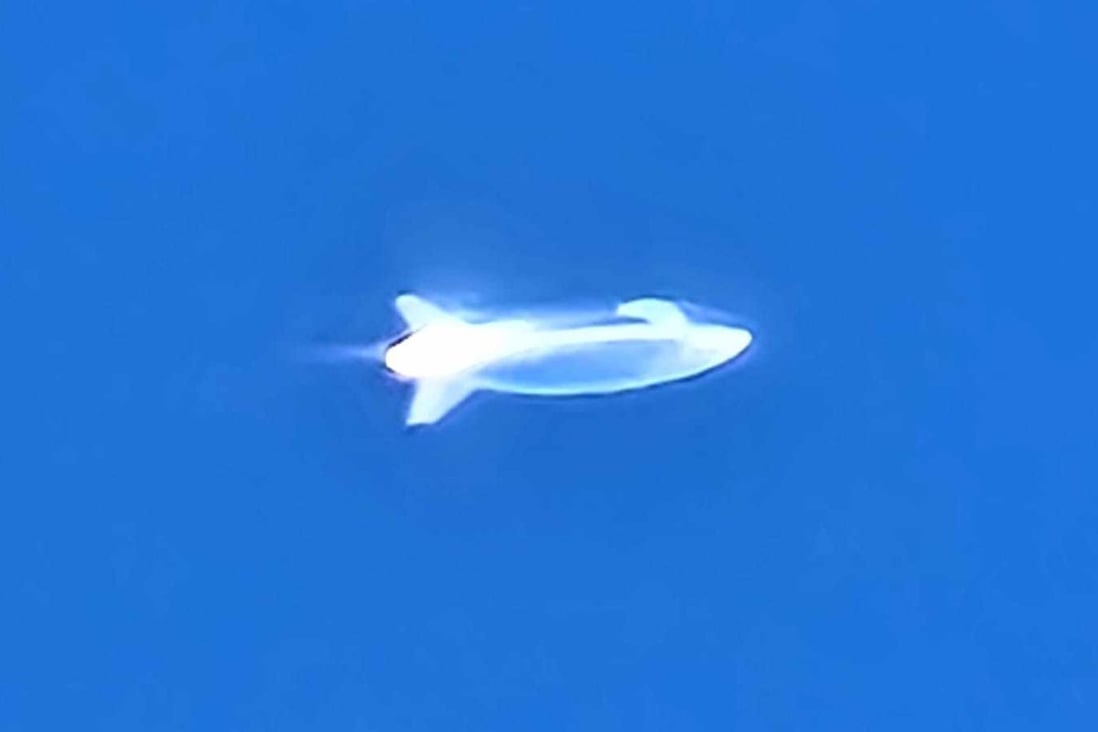
The Mysterious Chinese Space Plane no One Talks About

Except for a congressman that sent me a text tied to this only this morning.China is paying Cuba to host a spy/eavesdropping facility in Cuba to monitor communications, phone calls and even satellite transmissions. How is that for a country that is just a competitor as Joe Biden tells us?

***

The second orbital mission of China’s robotic space plane has come to a close. It is called Known as Shenlong (“divine dragon”). It docked with or otherwise captured a separate object on multiple occasions, managed by China Aerospace Science and Technology Corporation.

The mysterious reusable vehicle touched down Monday (May 8) at the Jiuquan Satellite Launch Center in northwest China, wrapping up a 276-day mission to Earth orbit, according to China’s state-run Xinhua news agency.

“The success of the experiment marks an important breakthrough in China’s research on reusable spacecraft technologies, which will provide more convenient and affordable round-trip methods for the peaceful use of space in the future.”

The space plane launched from Jiuquan on Aug. 4, 2022, kicking off a mission short on details but long on intrigue.

On Oct. 31, for example, the vehicle ejected something into orbit. Some experts speculated that the object was a service module, possibly indicating that the space plane was getting ready to return to Earth.

Others posited that the new free flyer was a small satellite designed to monitor the Chinese space plane — perhaps the correct guess, given how much longer the robotic spacecraft stayed aloft.


***

Experts think the Chinese space plane is likely similar to the Boeing X-37B, a U.S. space plane that debuted in 2010. Kevin Pollpeter, a research scientist at the Center for Naval Analyses, told Nature.com that the reveal of X-37B sparked concern within the Chinese government over the craft’s military potential. It’s possible that this spurred the country’s space program, which is closely tied to its military, to start developing its own version, Pollpeter said.

Like the X-37B space plane, the Chinese craft appears to be uncrewed and relatively small. It probably first flew in September 2020, making a short two-day stint into orbit before returning to the ground. Its most recent mission began in August 2022, when it took off on a Long March 2F rocket from the Jiuquan Satellite Launch Center in northern China, according to a report from the Washington, D.C.-based Center for Strategic and International Studies (CSIS). The  exact purpose of the mission remains unclear.

According to the CSIS report, the craft released an “object” into orbit sometime in October. The object apparently disappeared in January, only to suddenly reappear on satellite tracking radar in March. Experts believe this could indicate that the plane has some sort of satellite removal capability, such as a robotic arm.

“[The Chinese] have been working a lot with robot arms in other contexts, like the Chinese space station,” Jonathan McDowell, an astrophysicist at the Harvard & Smithsonian Center for Astrophysics, told Nature.

If that’s the case, then the plane’s primary purpose might be to repair damaged satellites or remove orbital debris. However, this does not rule out military capabilities — either for the Chinese space plane or for the X-37B. Until more details come out, however, the best we can do is speculate. Source and more reading.

Image source

China Warning to America, Prepare to Live off the Land

It is a major cyber attack discovered by Microsoft. It was discovered while we were all watching that ‘silly spy balloon’ as Biden called it. The attack is called Volt Typhoon, so be on notice America. The Biden White House has said nothing….

Microsoft has uncovered stealthy and targeted malicious activity focused on post-compromise credential access and network system discovery aimed at critical infrastructure organizations in the United States. The attack is carried out by Volt Typhoon, a state-sponsored actor based in China that typically focuses on espionage and information gathering. Microsoft assesses with moderate confidence that this Volt Typhoon campaign is pursuing development of capabilities that could disrupt critical communications infrastructure between the United States and Asia region during future crises.

Volt Typhoon has been active since mid-2021 and has targeted critical infrastructure organizations in Guam and elsewhere in the United States. In this campaign, the affected organizations span the communications, manufacturing, utility, transportation, construction, maritime, government, information technology, and education sectors. Observed behavior suggests that the threat actor intends to perform espionage and maintain access without being detected for as long as possible.

To achieve their objective, the threat actor puts strong emphasis on stealth in this campaign, relying almost exclusively on living-off-the-land techniques and hands-on-keyboard activity. They issue commands via the command line to (1) collect data, including credentials from local and network systems, (2) put the data into an archive file to stage it for exfiltration, and then (3) use the stolen valid credentials to maintain persistence.

***

Dark Reading in part published the following:

China-sponsored threat actors have managed to establish persistent access within telecom networks and other critical infrastructure targets in the US, with the observed purpose of espionage — and, potentially, the ability down the line to disrupt communications in the event of military conflict in the South China Sea and broader Pacific.

The first signs of compromise emerged in telecom networks in Guam, according to a New York Times report ahead of the findings being released. The National Security Agency discovered those intrusions around the same time that the Chinese spy balloon was making headlines for entering US airspace, according to the report. It then enlisted Microsoft to further investigate, eventually uncovering a widespread web of compromises across multiple sectors, with a particular focus on air, communications, maritime, and land transportation targets.

A Shadow Goal? Laying Groundwork for Disruption

The discovery of the activity is playing out against the backdrop of the US’ frosty relations with Beijing; the two superpowers have stalled in their diplomacy since the shooting down of the balloon, and has worsened amidst fears that Russia’s invasion of Ukraine could spur China to do the same in Taiwan.

In the event of a military crisis, a destructive cyberattack on US critical infrastructure could disrupt communications and hamper the country’s ability to come to Taiwan’s aid, the Times report pointed out. Or, according to John Hultquist, chief analyst at Mandiant Intelligence – Google Cloud, a disruptive attack could be used as a proxy for kinetic action.

“These operations are aggressive and potentially dangerous, but they don’t necessarily indicate attacks are looming,” he said in an emailed statement. “A far more reliable indicator for [a] destructive and disruptive cyberattack is a deteriorating geopolitical situation. A destructive and disruptive cyberattack is not just a wartime scenario either. This capability may be used by states looking for alternatives to armed conflict.”

Andersen Air Force Base in Yigo, Guam Anderson Air Foce Base/source

Dubbing such preparations “contingency intrusions,” he added that China is certainly not alone in conducting them — although notably, China-backed APTs are typically far more focused on cyber espionage than destruction.

“Over the last decade, Russia has targeted a variety of critical infrastructure sectors in operations that we do not believe were designed for immediate effect,” Hultquist noted. “Chinese cyber threat actors are unique among their peers in that they have not regularly resorted to destructive and disruptive cyberattacks. As a result, their capability is quite opaque.”

An Observed Focus on Stealth & Spying

To achieve initial access, Volt Typhoon compromises Internet-facing Fortinet FortiGuard devices, a popular target for cyberattackers of all stripes (Microsoft is still examining how they’re being breached in this case). Once inside the box, the APT uses the device’s privileges to extract credentials from Active Directory account and authenticate to other devices on the network. Read more here. 

Officials Confirm Chinese Balloon Collected Intelligence from Several Sensitive Sites

The administration came out with several lies abut the balloon and continued to claim it had limited value to the Chinese. Chairman of the Joint Chiefs additionally along with other military officials provided China with off-ramps stating the balloon had a glitch and went astray and further told the White House not to shoot it down due to the potential debris field. The Pentagon assessed that the balloon uncovering important information was not great. Even more terrifying is what China has planned with the intelligence gathered and what other rogue/enemy nations have access.

A balloon flies in the sky over Billings, Montana, US, February 1, 2023 in this picture obtained from social media. (Chase Doak/via Reuters)

Now, April 3, 2023, NBC has officially reported some truths.

The Chinese spy balloon that flew across the U.S. was able to gather intelligence from several sensitive American military sites, despite the Biden administration’s efforts to block it from doing so, according to two current senior U.S. officials and one former senior administration official.

China was able to control the balloon so it could make multiple passes over some of the sites (at times flying figure eight formations) and transmit the information it collected back to Beijing in real time, the three officials said. The intelligence China collected was mostly from electronic signals, which can be picked up from weapons systems or include communications from base personnel, rather than images, the officials said.

The three officials said China could have gathered much more intelligence from sensitive sites if not for the administration’s efforts to move around potential targets and obscure the balloon’s ability to pick up their electronic signals by stopping them from broadcasting or emitting signals.

The National Security Council referred NBC News to the Defense Department for comment. The Defense Department directed NBC News to comments from February in which senior officials said the balloon had “limited additive value” for intelligence collection by the Chinese government “over and above what [China] is likely able to collect through things like satellites in low earth orbit.”

China has said repeatedly that the balloon was an unmanned civilian airship that accidentally strayed off course, and that the U.S. overreacted by shooting it down. Officials have not said which company, department or organization the balloon belonged to, despite several requests for comment by NBC News.

After the balloon was shot down in February, Biden administration officials said it was capable of collecting signals intelligence.

The balloon had a self-destruct mechanism that could have been activated remotely by China, but the officials said it’s not clear if that didn’t happen because the mechanism malfunctioned or because China decided not to trigger it.

The balloon first entered U.S. airspace over Alaska on Jan. 28, according to the Biden administration, which said it was tracking it as it moved. Within the next four days, the balloon was flying over Montana — specifically Malmstrom Air Force Base, where the U.S. stores some of its nuclear assets.

The real damage assessment at this point cannot be measured but clearly China spied successfully and will heads roll? Nah…

Biden Admin Using Taxpayer Dollars to Fund CCP Research at UVA

With the decades of proof of the intellectual theft and espionage by the Chinese inside the United States, the Biden administration is not protecting America at all in fact helping to fund the Chinese Communist Party operations inside the United States.

During the Trump administration, espionage was so dangerous, two embassies were shuttered. Then there is the matter of Tik Tok….but now this? Is this a John Kerry climate agenda item and is it going on at other U.S. universities or institutions?

The Free Beacon reports:

The Biden administration is using taxpayer cash to fund a University of Virginia climate change partnership with a Chinese Communist Party-controlled school that conducts research for China’s military.

President Joe Biden’s National Science Foundation last year awarded more than $130,000 to the University of Virginia to conduct climate change research with Beijing-based Tsinghua University, federal spending disclosures show. Tsinghua University, which counts Chinese president Xi Jinping among its alumni, will work with University of Virginia researchers to chart the global “transition to a low-carbon economy,” according to the grant description.Board Approves 'Great and Good' Strategic Plan for University of ... UVA source

Tsinghua University is funded by China’s Ministry of Education and maintains a “CCP Committee” that keeps the school “in accordance with President Xi’s hopes.” It also holds “secret-level security credentials” for classified military research, trains students for China’s nuclear weapons program, and has allegedly carried out cyberattacks for the Chinese government, according to the Australian Strategic Policy Institute. It is also one of several Chinese universities under the supervision of the communist nation’s State Administration of Science, Technology, and Industry for National Defense, a CCP agency that works to deepen university involvement in the defense sector.

The National Science Foundation’s decision to fund the partnership with Tsinghua calls into question the foundation’s vetting process as it enjoys a record-high budget. The bipartisan CHIPS Act, which Biden said would help “counter China,” authorized $80 billion in funding for the National Science Foundation to invest in research and development. But in the case of its University of Virginia grant, the foundation found working with the Chinese on climate change “worthy of support.”

For American Foreign Policy Council fellow Michael Sobolik, the foundation’s decision to use “taxpayer money to facilitate research cooperation with a People’s Liberation Army-affiliated university” is “questionable at best.”

“We’ve seen time and again how the CCP leverages people-to-people ties to further its malign influence within the United States,” Sobolik told the Washington Free Beacon. “When you’re in the midst of a cold war, you can’t play both sides of the ledger. The sooner we accept that reality, the better.”

The National Science Foundation downplayed Tsinghua’s role in the project, with research security strategy and policy chief Rebecca Keiser saying the Chinese school’s involvement stems from “researcher-to-researcher collaboration.”

The foundation “has instituted a first-in-government analytics process to identify research security concerns and ensure transparency when assessing proposals and awards to ensure that any international collaboration provides mutual benefit,” Keiser said in a statement. “In any international research collaboration, [the National Science Foundation] only funds the U.S. side.”

The grant, which started in October and runs through 2026, funds University of Virginia research into “the transition to a low-carbon economy.” Tsinghua and a second Chinese partner, the China University of Petroleum-Beijing, will conduct similar research in China, the results of which “will be used to develop a U.S.-Chinese collaborative course on climate leadership skills.” That collaboration, the grant says, “will lead to better strategies for lowering emissions in the United States that are complementary to those in China.” China is by far the biggest polluter in the world—in 2019, it emitted more greenhouse gases than all developed nations combined.

This is not the first time the University of Virginia has partnered with Tsinghua. The two schools are exchange partners, and the University of Virginia’s engineering department in 2017 developed a “teaching collaboration” with Tsinghua that saw students from both schools pair up for homework assignments. That project, however, does not appear to have received federal money. Beyond the October grant, the National Science Foundation has only funded projects linked to Tsinghua on two other occasions—once under Biden last June and once under former president Barack Obama in April 2011. Both of those grants, which went to Boston University and Drexel University, respectively, funded academic workshops that included participants from Tsinghua.

A University of Virginia spokesman defended the university’s work with Tsinghua, arguing that because the project “does not involve critical technologies or military applications,” it does not compromise U.S. national security interests.

“An important part of researching global challenges like climate change is working with institutions around the world to compare the effects of a warming climate and the efficacy of different proposed solutions,” university spokesman Brian Coy said. “As part of those efforts, we take seriously our responsibility to operate within all U.S. laws and regulations regarding the protection of intellectual property and U.S. national security interests.”

“Our university collaborates closely and transparently with federal regulatory and law enforcement partners in order to ensure our collaborative research efforts contribute to human understanding of global challenges without compromising our interests as a nation,” Coy said.

The university’s partnership with Tsinghua could attract scrutiny from Republican Virginia governor Glenn Youngkin. “Since being elected, the governor has taken steps to protect Virginians from the malign influence of the Chinese Communist Party,” Youngkin spokesman Christian Martinez told the Free Beacon. “Through his TikTok ban on all state devices and networks, prohibiting foreign adversaries, including China, from acquiring the commonwealth’s agricultural land, requesting Fairfax County schools cut ties with CCP-linked entities, and preventing a Trojan horse deal for a CCP-linked battery manufacturer to produce electric vehicle batteries propped up by U.S. tax incentives, the governor has made it clear that there is no room in Virginia for the Chinese Communist Party.”

National Science Foundation director Sethuraman Panchanathan, who serves at the pleasure of the president, in 2014 was put on the foundation’s National Science Board by Obama. Then-president Donald Trump in June 2020 went on to elevate Panchanathan to foundation director. Biden has appointed 10 of the National Science Board’s 24 members.


While the National Science Foundation’s grant did not send federal money directly to Tsinghua, the Chinese university has received money from American actors in the past. The Bill and Melinda Gates Foundation—one of America’s largest liberal nonprofits—gave Tsinghua more than $1.5 million in 2021, the Free Beacon reported in January.