Oh, It was the Kuwaiti that Bought THAT House

Al-Sabahs’ parties are so popular is that they are lavish. The ruling Al-Sabah family is extremely wealthy, thanks to Kuwait’s oil reserves, one of the largest in the world. When I called Buffy Cafritz, a longtime D.C. socialite, she read me a menu she’d saved from a recent luncheon at the embassy. “She served asparagus vichyssoise and sea bass and pureed potatoes and a raspberry sorbet,” Cafritz says, adding, “I remember she had a pretty tablecloth.”

Georgetown doyennes like Sally Quinn have been complaining for years that socializing in Washington has become aggressively partisan. But Al-Sabah invites Democrats and Republicans, no matter which party is in power. During the Bush years, she arranged benefits to raise money for malaria and education of Afghan women, a cause that Laura Bush championed. In 2009, in line with the newly elected Obama administration’s focus on the environment, she hosted a benefit to celebrate Earth Day, where she honored Leonardo DiCaprio and Hillary Clinton. “She is very astute,” McBride told me. “She pays attention to the issues that are important to the White House at the time and really tries to support those issues, so she marries the social and substantive perfectly. People who are engaged in these issues at higher levels of government will be there.”

But the big draw is undoubtedly the guest list. Al-Sabah skillfully brings together heavyweights from all arenas—including A-list actors, corporate tycoons, and people from the nonprofit world—which guests say offers huge appeal compared with the dreary wonky affairs that pass for Washington social life.

There is much more to this family but now you can begin to see how life rolls in Washington DC. Just ask John Kerry’s wife….

Kuwaiti Embassy buys one of the most expensive homes in Washington

Will that be paper or plastic?

WaPo: The house that Giant built will soon be in new hands. Fessenden House, the former home of Giant Food heir Samuel Lehrman, was purchased by the Kuwaiti Embassy in a deal closed last month, according to a deed filed with the D.C. Office of Tax and Revenue.

There’s no word on whether the 22,000-square-foot manse will become the new home of Kuwaiti Ambassador Salem Al-Sabah and his wife, Rima, the power couple who have dominated the invitation-you-can’t-refuse dinner party circuit since arriving in 2001.

When we contacted the embassy, a representative said staff had “been instructed not to give out any information” about the sale. Reached via phone, Rima Al-Sabah, who counts Teresa Heinz Kerry as a close personal friend, offered “no comment.” But according to the Washington Business Journal, the home sold for $18 million.

Fessenden (so named because it’s the largest/fanciest property on the Upper Northwest street of the same name) was originally listed for $22 million in March. The $18 million price tag makes Fessenden one of the priciest single-family real estate transactions in the District last year. The former Textile Museum building, which also hit the market at $22 million, sold in May for $19 million.

Just five minutes from the embassy’s new Fessenden property, the Sabahs regularly host Washington’s VIPs at the ambassador’s modern residence on Tilden Street in Forest Hills, a tony neighborhood chockablock with grand embassy homes. Folks with last names such as Kerry, Clinton, Biden, Bush, Powell and Pelosi have been known to rub elbows with Catherine Zeta-Jones, Leonardo DiCaprio and Michael Bolton at the Sabah residence. The parties that the ambassador and his wife throw are noticeably lavish, with Mrs. Sabah overseeing nearly every detail, including devising the perfect mix of A-listers and politicos from either side of the aisle.

Islamic State Academies for Jihad and Bombmaking

Footage of ISIS weapons lab shows construction of heat-seeking missiles, car bombs

FNC: New images of what is being called a “jihadi technical college” in the ISIS terror group’s de facto capital shows that the group is capable of producing key components for advanced weaponry, including surface-to-air missiles.

Footage of the weapons lab in Raqqa, Syria was obtained by Sky News and shows that ISIS scientists have managed to produce a homemade thermal battery for use in surface-to-air missile systems. That had previously been thought impossible for terror groups without any military infrastructure to accomplish.

The footage shows that ISIS can recommission thousands of missiles prevously thought unusable and target passenger and military aircraft.

Sky News reports that terror groups had previously been able to build the weapons, but storing them and maintaining the thermal battery was difficult to do.

“What this video shows is that ISIS are leagues ahead of their terrorist predecessors,” Chris Hunter, a former bomb technician with the United Kingdom Special Forces, told Sky News. “Their advanced knowledge of weapons engineering, coupled with their seemingly limitless ability to reverse engineer and recondition weapons (which until now intelligence agencies had considered obsolete and beyond repair) kept me awake all night.”

Sky also reported that the ISIS “research and development” team has produced remote control cars to act as mobile bombs, complete with “drivers” — mannequins with self-regulating thermostats that produce the heat signature of humans, allowing the car bombs to evade sophisticated scanning machines that protect military and government buildings in the West.

The Sky report was based on eight hours of unedited training video that was seized by the Free Syria Army when it captured an ISIS trainer making his way toward Europe via Turkey.

An ISIS defector in Turkey told Sky News that a top secret training program was known about in Raqqa, his home town. He confirmed the program was designed to carry out attacks in Europe and further afield.

“If [attacks were] meant internally. they could send someone to set an explosive device or wire a car as they are able to do this [openly],” the defector said. “But doing such a program and documenting it was meant to target a large number of people and in more than one location.”

***

How ISIS Schools Little Boys to Be Suicide Bombers

ISTANBUL — They call them the “cubs of the caliphate” and one of them, a French national who looked like a 12-year-old, was filmed last week shooting an accused spy in the forehead, then pumping additional rounds into his body.

In the execution video posted by the extremists a new militant song can be heard playing in the background: “We have come, we have come, we have come, as soldiers for God. We have marched, we have marched, we have marched, out of love for God. We know religion, we live by it; we build an edifice, we ascend it. We deny humiliation we have experienced; we put an end to idolatrous tyranny.”

He is not the first child soldier to be showcased by the jihadists carrying out executions in scenes that invoke the bestial madness of Cambodia’s Khmer Rouge in the 1970s. And likely he won’t be the last as the so-called Islamic State, widely known as ISIS, becomes ever more systematic recruiting and brainwashing any children it can get hold of, whether they’re the children foreign fighters brought along with them or local kids from Iraq and Syria.

Universities Hide 100,000 Foreign White-Collar H-1B Employees

So, exactly which agency has sent a memo to selected universities across the country to hide these numbers? Who issued this edict? Heh….only one guess.

In order to hire an H-1B worker in place of a U.S. citizen or green card holder, the hiring company must show that there is no “minimally qualified” citizen or green card holder to take the job. Recruiting such minimally qualified candidates is generally done through advertising: if nobody responds to the ad then there must not be any minimally qualified candidates. Example: Employers are posting jobs that don’t really exist, seeking candidates they don’t want, and paying for bogus non-ads to show there’s an IT labor shortage in America. Except of course there isn’t an IT labor shortage.

Universities Hide Workforce of 100,000 Extra Foreign White-Collar H-1B Employees

Industry executives and university advocates have successfully duped nearly every reporter, editor and anchor nationwide about the scale and purpose of the H-1B professional outsourcing program.

Breitbart: The journalists–and Americans—have been kept in the dark while universities and many allied name-brand companies have quietly imported an extra workforce of at least 100,000 lower-wage foreign professionals in place of higher-wage American graduates, above the supposed annual cap of 85,000 new H-1Bs.

Less than one-sixth of these extra 100,000 outsourced hires are the so-called “high-tech” computer experts that dominate media coverage of the contentious H-1B private-sector outsourcing debate.

Instead, the universities’ off-the-books H-1B hires include 21,754 professors, lecturers and instructors, 20,566 doctors, clinicians and therapists, 25,175 researchers, post-docs and biologists, plus 30,000 financial planners, p.r. experts, writers, editors, sports coaches, designers, accountants, economists, statisticians, lawyers, architects, computer experts and much else. The universities have zero legal obligation to recruit Americans for these jobs.

These white-collar guest-workers are not immigrants — they are foreign professionals hired at low wages for six years to take outsourced, white-collar jobs in the United States. Many hope to stay in the United States, but most guest-workers return home after six years.

These white-collar guest-workers are the fastest-growing portion of the nation’s unrecognized workforce of roughly 1.25 million foreign college-grade temporary-workers, and they’s replacing experienced American professionals — plus their expensively educated children, and the upwardly striving children of blue-collar parents — in the declining number of jobs that can provide a rewarding and secure livelihood while the nation’s economy is rapidly outsourced, centralized and automated.

The American professionals who are displaced from these prestigious university jobs don’t just go into the woods and die. They flood down into other sectors, such as advocacy and journalism, or step down to lower-tier colleges and companies, where the additional labor-supply drives down white-collar wages paid by other employers.

So how does this off-the-books army of foreign professionals get to take jobs in the United States?

The Fake H-1B Cap

The media almost universally reports that the federal government has set a 65,000 or 85,000 annual cap on the annual number of incoming H-1B white-collar professionals.

Here’s the secret — the H-1B visas given to university hires don’t count against the 85,000 annual cap, according to a 2006 memo approved by George W. Bush’s administration.

Basically, universities are free to hire as many H-1Bs as they like, anytime in the year, for any job that requires a college degree.

The university exemption is so broad that for-profit companies can legally create affiliates with universities so they can exploit the universities’ exemption to hire cheap H-1B professionals. From 2011 to 2014, for example, Dow Chemical, Amgen, Samsung and Monsanto used the university exemption to hire 360 extra H-1B professionals outside the 85,000 annual cap.

That’s not an abuse of the law. It is the purpose of the 2006 memo, and it is entirely legal — providing the foreign professional allocates at least 55 percent of his or her time to work with a research center that is affiliated with a university. Even if an H-1B working at a university’s medical center is hired away by a company that works with the medical center, he’s still exempt from the annual cap.

Each foreign professional with a H-1B visa can stay for three years, and then get another three-year H-1B visa.

All told, the universities and their corporate allies brought in 18,109 “cap exempt” new H-1Bs from January to December 2015. They brought in 17,739 new H-1Bs in 2014, 16,750 in 2013, 14,216 in 2012, 14,484 in 2011, and 13,842 in 2010, according to a website that tracks the visas, MyVisaJobs.com. That’s an accumulated extra resident population of up to 95,140 foreign professionals working in universities in 2015.

Here’s a partial list of H-1B approvals, sorted by university for 2013 and 2014.

The MyVisaJobs.com website shows that the University of Michigan got 165 new H-1B hires in 2014. Harvard brought in 162, Yale hired 132, and so forth. Over the five years up to 2015, Johns Hopkins University accumulated a battalion of roughly 885 new H-1B professionals. That’s 885 prestigious and upwardly mobile jobs that didn’t go to debt-burdened American college-grads.

Iran unveils second underground missile site

Oh, wonder if the Obama will give Tehran an Academy award for Iran’s theatrics, behavior and violations.

DUBAI (Reuters) – Iran unveiled a new underground missile depot on Tuesday with state television showing Emad precision-guided missiles in store which the United States says can take a nuclear warhead and violate a 2010 U.N. Security Council resolution.

The defiant move to publicize Iran’s missile program seemed certain to irk the United States as it plans to dismantle nearly all sanctions on Iran under a breakthrough nuclear agreement.

Tasnim news agency and state television video said the underground facility, situated in mountains and run by Iran’s Revolutionary Guards, was inaugurated by the speaker of parliament, Ali Larijani. Release of one-minute video followed footage of another underground missile depot last October.

The United States says the Emad, which Iran tested in October, would be capable of carrying a nuclear warhead and U.S. officials say Washington will respond to the Emad tests with fresh sanctions against Iranian individuals and businesses linked to the program.


Iran’s boasting about its missile capabilities are a challenge for U.S. President Barack Obama’s administration as the United States and European Union plan to dismantle nearly all international sanctions against Tehran under the nuclear deal reached in July.

Iran has abided by the main terms of the nuclear deal, which require it to give up material that world powers feared could be used to make an atomic weapon and accept other restrictions on its nuclear program.

But President Hassan Rouhani ordered his defense minister last week to expand the missile program.

The Iranian missiles under development boast much improved accuracy over the current generation, which experts say is likely to improve their effectiveness with conventional warheads.

The Revolutionary Guards’ second-in-command, Brigadier General Hossein Salami, said last Friday that Iran’s depots and underground facilities are so full that they do not know how to store their new missiles.

***

Iranian-Saudi Tensions May Distract Iran’s Efforts to Attack Israel

InvestigativeProject: The dramatic escalation in the Iranian-Saudi Arabian rivalry poses critical potential ramifications for Israeli national security, according to the former head of Israel’s National Security Council, Yaakov Amidror.

Amidror – also formerly the head of Israeli military intelligence – told the Jerusalem Post that he expects the Iranian-Saudi crisis to prolong the Syrian civil war, leading both sides to increase support for their respective proxies in that country.

Such a scenario can intensify Israeli concerns of unpredictable and radical terrorist organizations consolidating bases of operations on the Jewish state’s northern borders.

However, other analysts view Syrian fragmentation as a strategic benefit – at least temporarily removing Syria as a conventional military threat and forcing Iranian proxies, including Hizballah, to divert resources and manpower to the Syrian front instead of conducting major attacks against Israel.

According to this perspective, Iran will also be more preoccupied with confronting Saudi Arabia in other regional theaters – including Bahrain, Yemen, and Iraq.

“That doesn’t meant they won’t do anything [toward Israel]. This doesn’t mean, for instance, that this will influence Hezbollah [backed by Iran] not to carry out revenge attacks against Israel. But it means that whenever there is something, there will be someone in Iran who will say that they have other problems to think about; we will not be the only issue they will be focusing on,” Amidror said.

This assessment supports other analyses that believe Hizballah failed to effectively retaliate to Israel’s reported assassination of arch-terrorist Samir Kuntar. On Monday, Hizballah detonated a large explosive on the Israel-Lebanon border, targeting two military vehicles. Israel said it suffered no casualties. The Israel Defense Forces (IDF) followed with artillery fire against Hizballah targets in Lebanon, but limited its response to avoid escalating tensions.

The relatively weak show of force from Hizballah suggests that the terrorist organization continues to be bogged down in the Syrian civil war, unwilling and incapable of seriously challenging Israel at the moment. Fighting in Syria has cost Hizballah as much as a quarter of its fighters, Israeli military affairs journalist Yossi Melman points out.

Those losses “neutralized the Shi’ite-Lebanese organization’s ability to act against Israel,” he writes. At the least, it makes the prospect of opening a second front with Israel less appealing. Hizballah still enjoys an arsenal of more than 100,000 rockets it can fire at Israel when it opts for a confrontation.

Even though Hizballah and other Iranian proxies continue to enhance their presence in the Golan Heights for the purposes of targeting Israel, recent Iranian-Saudi tensions will likely force terrorist organizations at Iran’s behest to focus more of their efforts and resources on other fronts beyond the Jewish state.


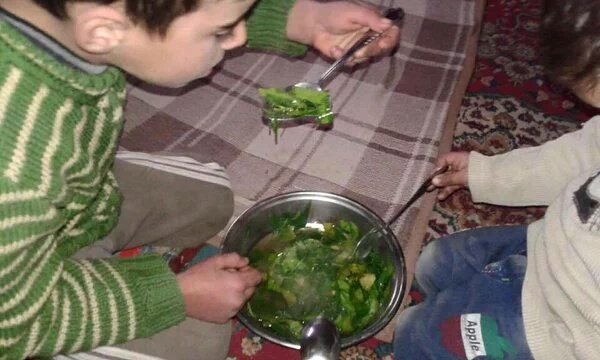
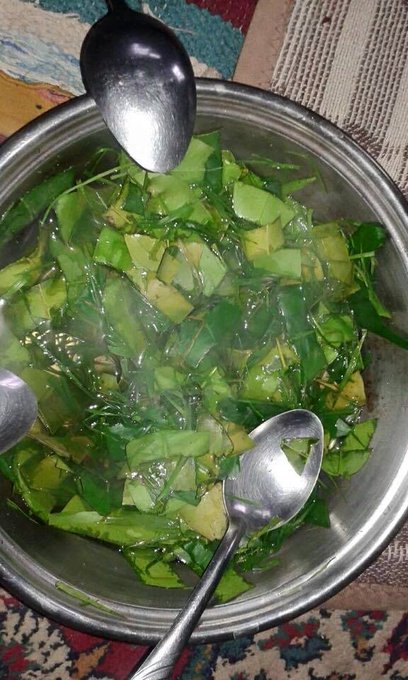
Putin/Iran Support Assad and Children Eat Leaves and Die

War criminal charges for Assad, the Iranian Mullahs or even Putin? Nah….but why not? Where is the United Nations Human Rights Council, heck where is Samantha Power or Barack Obama? (rhetorical)

Obama’s redline?

A fact-finding mission of the Organization for the Prohibition of Chemical Weapons (OPCW) has found indications that some people in Syria were exposed to sarin gas, according to a report to the UN.

The findings were presented in the latest monthly report on Syria from chief of the OPCW Ahmet Uzumcu.

According to the report, the mission to Syria was looking into charges by the Syrian government that chemical weapons were used in 11 instances. The report did not specify when the alleged chemical attacks occurred.

“In one instance, analysis of some blood samples indicates that individuals were at some point exposed to sarin or a sarin-like substance. Further investigation would be necessary to determine when or under what circumstances such exposure might have occurred,” Uzumcu was quoted as saying by Reuters. Much more here. 

‘Children Are Eating Leaves Off The Trees’: The Nightmare of The Siege of Madaya, Syria

ViceNews: In the early hours of Sunday morning, a pregnant woman and her daughter tried to sneak out of Madaya, a mountain village perched in the snow-capped peaks of southwestern Syria.

As they reached the southern edge of town, someone tripped over a landmine, and the loud blast alerted a nearby Hezbollah checkpoint of their escape. The fighters opened fire, and between the explosion and the barrage, both mother and daughter died.

Desperate escape attempts like this one — which was reported by the UK-based Syrian Observatory for Human Rights, and confirmed to VICE News by local residents — have become more and more common in Madaya, a village of 40,000 that’s been under siege since July by a combination of Syrian forces loyal to President Bashar al-Assad and his ally, the Lebanese militia Hezbollah.

In the past month alone, 31 residents have died from starvation, or in attempts to run the Hezbollah-manned blockade that encircles the town. A report compiled by the Syrian-American Medical Society and made available to VICE News found that a kilogram (two pounds)of flour now retails for around $100, while the average Syrian makes less than $200 each month.

“I had strawberry leaves for dinner today,” Rajai, a 26-year old English and math teacher in Madaya, told VICE News by phone, asking that his name be withheld for security reasons. “I haven’t had a real meal in three months.” Since the siege began in July, he’s lost 50 pounds. “Kids are eating leaves off the trees, and the very old and very young are dying,” he said.

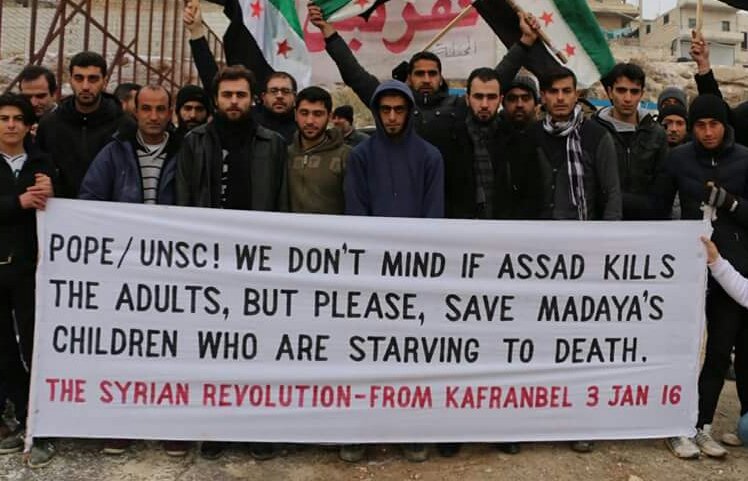
As the death toll mounted in December, residents of Madaya began posting desperate pleas on social media, along with disturbing images, reminiscent of Nazi concentration camps.
 

View image on Twitter View image on Twitter

Embedded image permalink

In a picture dated January 3, a group of young men hold a poster in English pleading with the UN and the Pope to do something to lift the siege.


According to Rajai, the Assad regime is punishing his hometown for its participation in the Syrian uprising in 2011. When peaceful protesters took to the streets in the nearby city of Zabadani in April 2011, Rajai joined in. “We wanted to clean this country of Assad,” he said. He was arrested and tortured. Now, after five years of civil war, his outlook is bleak.

“In the early days of the revolution, we used to say no one could be made to feel hungry or afraid,” he said. “But now we know we were wrong.”

Madaya lies on a strategically key line in Syria’s ballooning multi-front, multi-party civil war. The town is nestled within the Qalamoun mountain range, alongside the Lebanese border, less than 30 miles (50 km) from the capital Damascus. Stamping out unrest in Qalamoun, said Joshua Landis, the head of the Center for Middle East Studies at the University of Oklahoma and editor of the blog Syria Comment, is key to the regime’s survival. “If rebels there broke out, they’d have a straight corridor to Damascus,” he said.

In the early years of the revolution, many of the mountain villages along the Lebanese border sided against the Assad regime, throwing in their lot with the expanding constellation of rebels who took up arms across the country.

As the revolution grew more violent, the Syrian-Lebanese border became a key route for arms smugglers, who were funneling weapons dangerously close to the Syrian capital. Assad and his Iranian, Russian, and Lebanese allies made securing that border zone a top priority — more pressing even than retaking northern territory from groups like the Islamic State and al-Qaeda’s Nusra Front.

So with the help of the Lebanese militia Hezbollah, Assad has been brutally crushing restive zones along the mountain range by setting sieges reminiscent of medieval warfare. Besides checkpoints and minefields, the regime and its allies employ brutal blockades that prevent food or water from reaching the isolated towns.  “They are starving people into submission,” Landis said. “It’s a very old tactic.”

In September, Hezbollah moved into the town of Zabadani, just two miles (three km) north of Madaya, and the town’s only real lifeline to the outside world. A few beleaguered rebel fighters were allowed safe passage out thanks to a deal brokered by Turkey and Iran.

As Hezbollah stormed the city, it forced people it considered hostile to move to Madaya, a tactic residents say was designed to separate out pro-regime and anti-regime civilians. Loay, a 28-year old student in Zabadani, was forced to relocate to Madaya with his mother when Hezbollah took over his town. “They said: go to Madaya,” he told VICE News by phone. “There you will die, from starvation.”

In Madaya, he said, it’s like “another world.” “Everyone,” he added, “is starving.”

Loay’s mother Umm Mohamad, 52, also hasn’t had a meal in months. “My only dream is to have a piece of bread,” she said.

Syrian human rights groups are watching Madaya with horror. “They are making it into a big prison and suffocating the area,” Dr. Ammar Ghanem, a Syrian physician who grew up in the area, told VICE News. A member of the Syrian-American Medical Society’s board, Ghanem still has family stuck inside, and has been monitoring the humanitarian situation from afar. “The regime want people to die there,” he said.

Medical services in the town are meager. “They have no supplies, and no training — one of their only doctors is a veterinarian who is now operating on humans,” Ghanem said. “We would like to send in supplies, but of course, we cannot get through the blockade.”

The United Nations has struggled to get any aid into the besieged town. In October, it managed to secure safe passage for a shipment of biscuits to Madaya and Zabadani. But the food turned out to be expired.

Over the past three months, the Assad regime has prevented any additional shipments, essentially signing death warrants for dozens of children and elderly civilians in the coldest months of the winter.

But there are also very practical reasons for the siege. Hezbollah is trying to trade the civilians in Madaya for the well-being of Shiite civilians under siege by rebel forces in the northern cities of Kafrayya and Fua. “It’s a negotiating ploy,” Landis said. “Basically Hezbollah is taking hostages.” Indeed, in September, members of Ahrar al-Sham, the militant Sunni group that’s blockading the Shiite villages, began negotiating with the Syrian regime to simultaneously lift both sieges. Though the negotiators were able to arrange for the safe passage of some fighters from Zabadani, so far, the deal has yet to bear fruit for the embattled civilians.

Though the siege undoubtedly takes a humanitarian toll, multiple residents in Madaya told VICE News that fighters with Ahrar al-Sham are present in the town. The group fights with Al-Qaeda in the north of Syria. But Landis, the Syria expert at the University of Oklahoma, stresses that the men who joined Ahrar in Madaya are most likely not ideologues. “They are fighting for their lives,” he said. “They’ll make alliances with whoever they think will save them.”

As the siege grinds on, civilians are increasingly losing hope, and fear their plight will always be in the shadow of the war up north against the Islamic State. “Sure, people may read about us if you write something,” Rajaai, the teacher, told VICE News. “But when they finish reading, they’ll forget us.”