An affordable price is probably the major benefit persuading people to buy drugs at www.americanbestpills.com. The cost of medications in Canadian drugstores is considerably lower than anywhere else simply because the medications here are oriented on international customers. In many cases, you will be able to cut your costs to a great extent and probably even save up a big fortune on your prescription drugs. What's more, pharmacies of Canada offer free-of-charge shipping, which is a convenient addition to all other benefits on offer. Cheap price is especially appealing to those users who are tight on a budget
Service Quality and Reputation
Although some believe that buying online is buying a pig in the poke, it is not. Canadian online pharmacies are excellent sources of information and are open for discussions. There one can read tons of users' feedback, where they share their experience of using a particular pharmacy, say what they like or do not like about the drugs and/or service. Reputable online pharmacy canadianrxon.com take this feedback into consideration and rely on it as a kind of expert advice, which helps them constantly improve they service and ensure that their clients buy safe and effective drugs. Last, but not least is their striving to attract professional doctors. As a result, users can directly contact a qualified doctor and ask whatever questions they have about a particular drug. Most likely, a doctor will ask several questions about the condition, for which the drug is going to be used. Based on this information, he or she will advise to use or not to use this medication.
One man’s trash is the National Archives’ treasure.
After more than 80 years, an old logbook containing the initial descriptions of U.S. vessels after the Japanese attack on Navy Yard Pearl Harbor in 1941 was recovered, the National Archives recently announced. The logbook covers the 16 months before and after the attack that was the catalyst for the U.S. entry into World War II.
Its whereabouts can be traced back to the moment it was plucked from a trash bin in the 1970s at the old Norton Air Force Base in San Bernardino, California, by Oretta Kanady, The Washington Post first reported.
In an interview with the Post, Kanady’s son, Michael William Bonds, said she found it in the bin while working as a civilian employee and thought it looked interesting. She asked if she could have it, and it remained in her possession until her death in 2000. Bonds then inherited it.
“In the last few years, I’ve moved here, moved there, it’s just been in a box,” Bond’s told The Post. “I hadn’t really looked at it.”source is the Washington Post
The book is in good condition, and while it may not alter the basic understanding of the events of Pearl Harbor, where more than 2,400 sailors, Marines, soldiers and civilians were killed after Japanese war planes attacked U.S. military installations near Honolulu, it helps to verify the story of the day that lives in infamy.
“We have nothing, nor does the nation have anything similar to this,” Mitchell Yockelson, an investigative archivist at the National Archives, stated as the book was unveiled at the Archives facility in College Park, Maryland.
The Dec. 8, 1941 entry for the “Log Book U.S. Navy Yard Pearl Harbor.” (National Archives)
Logbooks, used by the Navy, were brief daily records of events and observations. In the case of “Log Book, U.S. Navy Yard Pearl Harbor,” it documented several of the ships that were at Navy installation the day of the Dec. 7 attack.
Dec. 5, 1941, records the arrival of the battleships Arizona and Oklahoma. Both were famously sunk just two days later.
On Dec. 8, one day after the attack that left the harbor — and a nation — reeling, the logbook recorded that at 07:35 that the damaged battleship USS Utah “appears to be drifting out in the channel, recommend tug be sent to secure it alongside quay.”
Other notations from that day include:
At 21:30: “Tower reports fire at ammunition depot.”
At 22:15: “Fire at Hickam field secured.”
Interestingly, the pages for Dec. 6 and 7, and into the 8th, have brown stains splattered across their sheets.
“That’s another question that we’ve been wondering” about, Yockelson said during the unveiling. “We like to think that maybe … somebody was so agitated at what went on that he spilled his thermos.”
A fully digitized copy of the logbook is available online.
***
The logbook covers the status of vessels in the yard during the period from March 1941 to June 1942, a period of extremely rapid and momentous events. During the time period when the first entries, the U.S. was on a peacetime footing and was in diplomatic talks with Japan; nine months later, Japanese forces attacked Pearl Harbor and the U.S. entered the war; and by the end of the logbook, just seven months further on, the U.S. Navy won strategic victories at the Battle of the Coral Sea and the Battle of Midway, and was gearing up to retake the Solomon Islands.
It also shows the Pearl Harbor yard’s essential work in repairing Navy warships after the Japanese attack, putting cruisers and destroyers back in the fight after severe damage. Within six months, the yard had taken in and redelivered the damaged battleships Pennsylvania, Maryland, and Tennessee; cruisers Honolulu, Helena, and Raleigh; destroyers Helm and Shaw; and three auxiliaries, all fully repaired or patched up for transit for permanent repairs. More here.
Microsoft is using engineers in China to help maintain the Defense Department’s computer systems — with minimal supervision by U.S. personnel — leaving some of the nation’s most sensitive data vulnerable to hacking from its leading cyber adversary, a ProPublica investigation has found.
The arrangement, which was critical to Microsoft winning the federal government’s cloud computing business a decade ago, relies on U.S. citizens with security clearances to oversee the work and serve as a barrier against espionage and sabotage.
But these workers, known as “digital escorts,” often lack the technical expertise to police foreign engineers with far more advanced skills, ProPublica found. Some are former military personnel with little coding experience who are paid barely more than minimum wage for the work.
“We’re trusting that what they’re doing isn’t malicious, but we really can’t tell,” said one current escort who agreed to speak on condition of anonymity, fearing professional repercussions.
The system has been in place for nearly a decade, though its existence is being reported publicly here for the first time.
Microsoft told ProPublica that it has disclosed details about the escort model to the federal government. But former government officials said in interviews that they had never heard of digital escorts. The program appears to be so low-profile that even the Defense Department’s IT agency had difficulty finding someone familiar with it. “Literally no one seems to know anything about this, so I don’t know where to go from here,” said Deven King, spokesperson for the Defense Information Systems Agency.source
National security and cybersecurity experts contacted by ProPublica were also surprised to learn that such an arrangement was in place, especially at a time when the U.S. intelligence community and leading members of Congress and the Trump administration view China’s digital prowess as a top threat to the country.
The Office of the Director of National Intelligence has called China the “most active and persistent cyber threat to U.S. Government, private-sector, and critical infrastructure networks.” One of the most prominent examples of that threat came in 2023, when Chinese hackers infiltrated the cloud-based mailboxes of senior U.S. government officials, stealing data and emails from the commerce secretary, the U.S. ambassador to China and others working on national security matters. The intruders downloaded about 60,000 emails from the State Department alone.
With President Donald Trump and his allies concerned about spying, the State Department announced plans in May to “aggressively revoke visas for Chinese students” — a pledge that the president seems to have walked back. The administration is also trying to arrange the sale of the popular social media platform TikTok, which is owned by a Chinese company that some lawmakers believe could hand over sensitive U.S. user data to Beijing and fuel misinformation with its content recommendations. But experts told ProPublica that digital escorting poses a far greater threat to national security than either of those issues and is a natural opportunity for spies.
“If I were an operative, I would look at that as an avenue for extremely valuable access. We need to be very concerned about that,” said Harry Coker, who was a senior executive at the CIA and the National Security Agency. Coker, who also was national cyber director during the Biden administration, added that he and his former intelligence community colleagues “would love to have had access like that.”
It is difficult to know whether engineers overseen by digital escorts have ever carried out a cyberattack against the U.S. government. But Coker wondered whether it “could be part of an explanation for a lot of the challenges we have faced over the years.”
Microsoft uses the escort system to handle the government’s most sensitive information that falls below “classified.” According to the government, this “high impact level” category includes “data that involves the protection of life and financial ruin.” The “loss of confidentiality, integrity, or availability” of this information “could be expected to have a severe or catastrophic adverse effect” on operations, assets and individuals, the government has said. In the Defense Department, the data is categorized as “Impact Level” 4 and 5 and includes materials that directly support military operations.
John Sherman, who was chief information officer for the Department of Defense during the Biden administration, said he was surprised and concerned to learn of ProPublica’s findings. “I probably should have known about this,” he said. He told the news organization that the situation warrants a “thorough review by DISA, Cyber Command and other stakeholders that are involved in this.”
In an emailed statement, the Defense Information Systems Agency said that cloud service providers “are required to establish and maintain controls for vetting and using qualified specialists,” but the agency did not respond to ProPublica’s questions regarding the digital escorts’ qualifications.
It’s unclear whether other cloud providers to the federal government use digital escorts as part of their tech support. Amazon Web Services and Google Cloud declined to comment on the record for this article. Oracle did not respond to requests for comment.
Microsoft declined to make executives available for interviews for this article. In response to emailed questions, the company provided a statement saying its personnel and contractors operate in a manner “consistent with US Government requirements and processes.”
Global workers “have no direct access to customer data or customer systems,” the statement said. Escorts “with the appropriate clearances and training provide direct support. These personnel are provided specific training on protecting sensitive data, preventing harm, and use of the specific commands/controls within the environment.” In addition, Microsoft said it has an internal review process known as “Lockbox” to “make sure the request is deemed safe or has any cause for concern.” A company spokesperson declined to provide specifics about how it works but said it’s built into the system and involves review by a Microsoft employee in the U.S.
Over the years, various people involved in the work, including a Microsoft cybersecurity leader, warned the company that the arrangement is inherently risky, those people told ProPublica. Despite the presence of an escort, foreign engineers are privy to granular details about the federal cloud — the kind of information hackers could exploit. Moreover, the U.S. escorts overseeing these workers are ill equipped to spot suspicious activity, two of the people said.
Even those who helped develop the escort system acknowledge the people doing the work may not be able to detect problems.
“If someone ran a script called ‘fix_servers.sh’ but it actually did something malicious then [escorts] would have no idea,” Matthew Erickson, a former Microsoft engineer who worked on the escort system, told ProPublica in an email. That said, he maintained that the “scope of systems they could disrupt” is limited.
For 150 years, the Little Sisters of the Poor have been faithful to the religious doctrine, that is until the Obama administration sued them in 2014. The Obama Department of Justice forced the healthcare plan of the Little Sisters of the Poor to use subsidized drugs for contraception and abortion.
And so it goes even today…another appeal is underway…
A federal court has ruled against the Little Sisters of the Poor in their long-running legal dispute over government contraception mandates, dealing a blow to the religious order of sisters even after multiple court victories, including at the Supreme Court.
The legal advocacy group Becket said on Aug. 13 that the U.S. District Court for the Eastern District of Pennsylvania ruled in favor of both New Jersey and Pennsylvania in finding that the federal government had not followed protocol when issuing exemptions to contraceptive requirements, including for the Little Sisters.
The district court said that a set of religious exemptions granted by the federal government during the first Trump administration were “arbitrary [and] capricious” and failed to adhere to the requirements of the federal Administrative Procedure Act.
The court has vacated those exemptions “in their entirety,” the Aug. 13 ruling said.
Diana Thomson, a senior attorney with Becket, told CNA that the case is the same one that saw the Little Sisters win a victory at the U.S. Supreme Court in 2020 when a majority of the court’s justices said the exemptions to the contraceptive mandate were legal.
She described the procedural questions in the Aug. 13 ruling as “cutting-floor arguments” that the states had largely ignored several years ago.
“Instead of dropping the case, Pennsylvania and New Jersey revitalized their cutting-floor arguments that they chose not to pursue at the Supreme Court last time and brought them in the district court,” she said.
The district court accepted those arguments “even though the Supreme Court already blessed the rules,” Thomson said.
The court is “trying to find a loophole” to the 2020 Supreme Court ruling, she said.
New Jersey and Pennsylvania had brought the lawsuit against multiple federal agencies and officials, though the Little Sisters of the Poor were attached to the lawsuit as “defendant-intervenors.”
The sisters will appeal the ruling, Thomson said.
“I assume the Trump administration will appeal also,” she said. “But the Little Sisters’ appeal is already on file.”
“We will appeal all the way to the Supreme Court if we have to,” she said.
In a separate statement, Mark Rienzi, the president of Becket and the lead attorney for the Little Sisters, said it was “bad enough that the district court issued a nationwide ruling invalidating federal religious conscience rules.”
“But even worse is that the district court simply ducked the glaring constitutional issues in this case after waiting five years and not even holding a hearing,” he argued.
“It is absurd to think the Little Sisters might need yet another trip to the Supreme Court to end what has now been more than a dozen years of litigation over the same issue,” he said, adding: “We will fight as far as we need to fight to protect the Little Sisters’ right to care for the elderly in peace.”
Only recently did Mexico agree to extradite 26 cartel leaders to the United States which actually is the second time in just a few months. We often wonder why it takes so long to get Mexico to cooperate much less build cases in a court of law to ensure a win. Well, for some background, Associated Press has published the following, which is a good explanation…so read on.
It begins with a car accident two years ago in Tennessee….
In part from the AP: The cases, as outlined in court documents, provide a glimpse into how drugs produced by violent cartels in large labs in Mexico flow across the U.S. border and reach American streets. They also highlight the violent fallout that drug trafficking leaves in its path from the mountains of Mexico to small U.S. towns.
“These cases in particular serve as a powerful reminder of the insidious impacts that global cartels can have on our local American communities,” Matthew Galeotti, acting assistant attorney general in charge of the Justice Department’s criminal division said in an interview with The Associated Press. “The chain started with a violent cartel in Mexico and it ended with law enforcement being shot at in a small town.”
United Cartels is an umbrella organization made up of smaller cartels that have worked for different groups over time. It holds a fierce grip over the western state of Michoacan, Mexico.
United Cartels is not as widely known as Jalisco New Generation, but given its role as a prolific methamphetamine producer, it has become a top tier target for U.S. law enforcement. It was one of eight groups recently named foreign terrorist organizations by the Trump administration.
A car crash and an abandoned protective case
The case goes back to 2019, when two dealers got into a car accident in a small town outside Knoxville, Tennessee, according to a search warrant affidavit filed in court. While fleeing the scene of the crash, they threw a hardened protective case filled with meth behind a building before being caught by police, according to court documents.
Authorities began investigating, using wiretaps, search warrants and surveillance to identify a man believed to be leading a major drug ring in the Atlanta area: Eladio Mendoza.
The investigation into Mendoza’s suspected drug operation led law enforcement in early 2020 to a hotel near Atlanta. During their surveillance, authorities spotted a man leaving with a large Doritos bag. Troopers tried to stop the man after he drove from Georgia into Tennessee but he fled and fired an AK-style rifle at officers, hitting one in the leg before another trooper shot him. Inside the bag, police found meth and heroin, and identified him as a low-level dealer for Mendoza’s drug ring, court records say.
Weeks later, authorities searched properties linked to Mendoza and seized phones. They discovered messages between Mendoza and a close associate of “El Abuelo,” the leader of United Cartels, that showed the drugs were coming from Mexico, according to the court records. On one of Mendoza’s properties, investigators found a tractor trailer that had crossed from Mexico days earlier. When they searched it, authorities seized 850 kilograms of meth hidden in the floor of the truck and discovered more drugs inside a bus and a home on the property, court papers say.
Mendoza fled the U.S. a short time later and returned to Mexico, where he was killed by cartels leaders angry that U.S. authorities had seized their cash and drugs, according to prosecutors.
Cartels are targeted with terrorist designations
The case represents the latest effort by the Republican administration to turn up the pressure on cartels through not only indictments of the groups’ leaders but sanctions. The Treasury Department is also bringing economic sanctions against the five defendants as well as the United Cartels as a group and another cartel, Los Viagras.
“We have to pursue these criminals up and down the chain to make sure that the end result doesn’t result in violence and narcotics distribution on our streets,” Galeotti said.
In addition to “El Abuelo,” those facing U.S. indictments are Alfonso Fernández Magallón, or Poncho, and Nicolás Sierra Santana or “El Gordo,” who authorities say lead smaller cartels under the United Cartels organization. The two other defendants are Edgar Orozco Cabadas or “El Kamoni,” who was communicating with Mendoza, and Luis Enrique Barragán Chavaz, or “Wicho,” who serves as Magallón second-in-command, according to authorities.
The Trump administration has seen major cooperation from Mexico in recent months in turning over cartel leaders wanted by U.S. authorities.
“We’re working with the Mexican authorities to pursue these individuals,” Galeotti said. “We continue to work proactively with them, and we expect that they’ll be helpful with us in securing the presence of these individuals in United States courtrooms.”
Yes, it is an epidemic that no one mentions anymore, much less the media…but below are some facts. The cars are in fact stolen and even transported and sold with the original owners personal items still in the vehicle….yeesh
Let’s begin here…
Len Green of Toronto woke up to a very surprising call early one morning. A year ago, thieves had snagged his Acura from his driveway. The caller, David Common of the CBC, was sitting in Green’s old car. He’d found the stolen car in Africa.
Common asked, “Does this look like your car?” Green confirmed, “That’s it!”
After Common filmed a walk around the vehicle parked in Ghana, Green said, “I can’t believe it. And my documents and everything are still in there (the glovebox). That’s crazy.”
It’s certainly crazy. But Green is far from alone.
The billion-dollar industry hiding in plain sight
Auto theft in Canada and the U.S. is one of organized crime’s favorite side hustles. And business is booming. Detective Mark Haywood of Peel Police put it plainly: “A large portion of them are actually leaving the country.” He added, “You’ll see about 80 percent of them going out through the ports.”
Deputy Chief Nick Milinovich explained why: “It’s much easier to sell 15 cars on the black market than it is to sell 15 keys of cocaine or 15 illegal guns.” He added, “Last year in 2022 there was over a billion dollars worth of vehicles that were stolen across Canada.”
You read that right. Over one billion in losses. In Toronto alone, thieves took 27,000 cars in a single year. That’s one stolen every 17 minutes. And where do those cars go?
According to Haywood: “We’re seeing a lot of them go to the UAE to Dubai. Nigeria is a hotbed for that. Ghana is another place they’re ending up in.”
***
TRENTON— Attorney General Matthew J. Platkin and the Division of Criminal Justice announced charges today against 11 people for their roles in an auto theft ring that allegedly targeted high-end vehicles, burglarized homes to get the key fobs needed to steal the cars, stored the vehicles in parking garages in the Bronx, New York, and eventually shipped them to West African countries.
Promoters or organizers of the enterprise allegedly identified their targets – including Land Rovers, Mercedes Benzes, and BMWs – for theft crews that would allegedly then steal the vehicles. Investigators identified 43 stolen New Jersey vehicles valued at approximately $3.65 million in two parking garages on Jennings Street and Third Avenue in the Bronx.
“While car thefts in New Jersey have decreased significantly over the past year and have continued to decrease in 2025, we are committed to reducing them further. This case is about more than just the theft of vehicles, it is about stealing people’s sense of security and safety,” said Attorney General Platkin. “No one should be afraid that a thief will enter their home while they are sleeping to find their key fobs to steal their car, as is alleged in this case. So, we are working collaboratively to use every tool we have to return that sense of safety and security to our communities – including new laws, new technology, and information sharing between law enforcement agencies and between states to shut down car theft operations.”
“This is a case that shows what can be done when we work with our law enforcement partners at every level,” said DCJ Director Theresa L. Hilton. “This was a complex criminal enterprise that specifically targeted and stole high end vehicles to be shipped to overseas buyers. Working together, we were able to charge these defendants with serious crimes carrying lengthy prison sentencing exposure.”
“This case reflects how car theft today is a global enterprise,” Bronx District Attorney Darcel D. Clark said. “Millions of dollars worth of stolen vehicles—including a $475,000 Rolls Royce—were taken to a Bronx parking garage that defendants used as a showroom. The vehicles wound up in shipping containers in Elizabeth and then in West Africa. My Office, specifically, Assistant District Attorney Jessica Lupo, a Deputy Chief in the Trial Division, worked with NYPD Auto Crime and NJ Attorney General Matthew Platkin to identify and dismantle this group. We will not tolerate auto crime in the Bronx.”
According to the charging documents in this case, beginning in July 2024, law enforcement agencies identified a criminal enterprise that allegedly coordinated the theft of motor vehicles from Morris, Essex, Mercer, Middlesex, and Burlington counties. The stolen vehicles were allegedly “fenced” in the Bronx, for ultimate sale overseas. The members of the conspiracy also allegedly facilitated financial transactions as part of the criminal activity.
Theft crews would allegedly steal the requested vehicles, commonly from residences, and transport them to the Bronx, where middle-level and high-level fences would receive the cars, pay the theft crews, store the vehicles in the identified parking garages to avoid detection, and arrange for the disposition of the vehicles overseas, most often to West African countries. Port Elizabeth, NJ
Several allegedly stolen vehicles previously located in the garages on Jennings Street and Third Avenue, in the Bronx, were later recovered from shipping containers at ports in Elizabeth, New Jersey, and Staten Island, New York. The containers, and the stolen vehicles inside, were destined for West African countries.
Members of the alleged enterprise (see attached chart) include promoters/organizers, high and mid-level fences, and theft crews.
The promoters/organizers of this scheme, “Big G” and “E” remain unidentified.
Defendant Issa Yara was identified as a high-level fence. The investigation revealed that Yara was allegedly in repeated contact with members of the motor vehicle theft crews, exchanging text messages that identified target vehicles and the prices for them. For example, texts in January 2025 specifically referenced “cady,” “x7,” x3,” “X5,” and “Benz,” all of which refer to various types of high-end vehicles, including Cadillac, BMW, and Mercedes Benz. Investigators recovered additional texts requesting information about models and years of vehicles, buying and selling vehicles, coordinating payment, and locations of targeted vehicles.
Defendants Mamadou Camara, Moussa Doumbia, Arona Amadou, Mouslim Ouedraogo, and Moubarak Djibril were identified as middle-level fences. Camara was allegedly in repeated contact with members of the motor vehicle theft crews. Investigators learned Camara allegedly handled the receipt and purchase of stolen vehicles from theft crews, and that the crews dealt with Camara rather than “Big G” directly, who would also be present nearby. For example, the investigation revealed that, following the theft of a 2023 BMW X7 by codefendant Jahquil Louis and his crew, there were multiple calls between Louis and Camara from the time of the theft through the vehicle arriving at the Jennings Street Garage. Camara was captured on video surveillance at the Jennings Street garage operating multiple vehicles stolen from New Jersey.
Defendants Louis, Jomar Ocasio, Daniel Deleon, Quadir Williams, and an unnamed juvenile were identified as members of motor vehicle theft crews. On January 5, 2025, a 2024 BMW X5, valued at approximately $89,000, was stolen from Pompton Plains, Morris County. The homeowner reported a burglary after hearing people in his home, finding his back window broken, and the key fob and vehicle missing. Surveillance captured three suspects near the rear door. Phone records placed Deleon near the scene at the time of the theft.
In another example, on December 30, 2024, a 2024 BMW X7, valued at approx. $52,150, and a 2021 Audi SQ8, valued at approx. $52,360, were stolen from East Windsor, Mercer County. Surveillance captured three suspects entering the occupied home, where they stole a Gucci purse, Gucci wallet, Valentino wallet, $400 in cash, a driver’s license, a N.J. Firearms ID card, and the vehicles. Louis’ phone placed him near the area of the burglary and near the Jennings Street garage. The stolen X7 was later recovered on February 25, 2025, from a container destined for Ghana, Africa, from a port in Elizabeth.
Theft crews were paid for the stolen vehicles with cash from money wired from West Africa to the mid-level and high-level fences. The total value of the stolen vehicles linked to specific residential burglaries by the theft crews operating as part of this enterprise was approximately $542,295.
All defendants are charged with first-degree racketeering.

 source is the Washington Post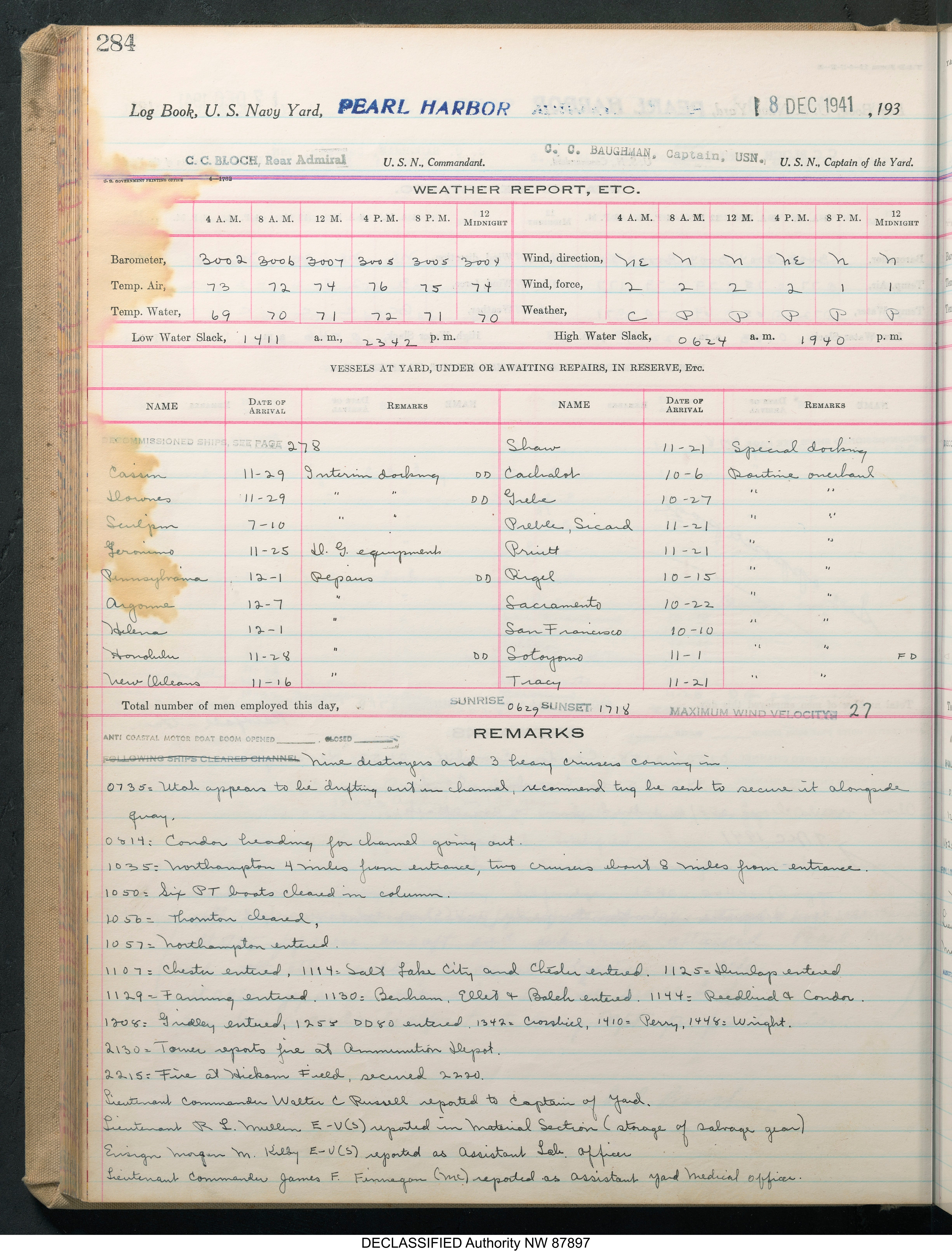


 Port Elizabeth, NJ