
FBI/NSA Versus Encryption, Investigating Plotting Attacks

Perspective only: Paris Attack and operating in a realm before any attack

NSA chief: ‘Paris would not have happened’ without encrypted apps

Michael Isikoff

Chief Investigative Correspondent

National Security Agency Director Adm. Michael Rogers warns that encryption is making it “much more difficult” for the agency to intercept the communications of terrorist groups like the Islamic State, citing November’s Paris attacks as a case where his agency was left in the dark because the perpetrators used new technologies to disguise their communications.

In an exclusive interview with Yahoo News, Rogers confirmed speculation that began right after the attack: that “some of the communications” of the Paris terrorists “were encrypted,” and, as a result, “we did not generate the insights ahead of time. Clearly, had we known, Paris would not have happened.”

Rogers’ comments were made on Friday, just days before the FBI obtained a court order requiring Apple to provide a “backdoor” into the data on the iPhone of one of the shooters in the San Bernardino, Calif., terror attack in December — an order the company is resisting. But his remarks are likely to fuel the debate over encryption that has sorely divided the U.S. intelligence and law enforcement community, on one side, and privacy advocates and U.S. technology companies. (A spokesman for the NSA had no comment today on the court order or on Apple’s response.)

Rogers has at times sought to steer a middle ground in this debate, acknowledging that encryption is “foundational to our future” and even saying recently that arguing about it “is a waste of time.” In the Yahoo News interview, he frankly acknowledged, “I don’t know the answer” to unencrypting devices and applications without addressing the concerns over privacy and competitiveness, calling for a national collaboration among industry and government officials to solve the problem.

But he left little doubt about the impact encryption is having on his agency’s mission.

“Is it harder for us to generate the kind of knowledge that I would like against some of these targets? Yes,” Rogers said. “Is that directly tied in part to changes they are making in their communications? Yes. Does encryption make it much more difficult for us to execute our mission. Yes.”

Rogers also provided new details about his agency’s efforts to implement the USA Freedom Act, a law passed in the wake of the Edward Snowden disclosures, which he said has made it “more expensive” for his agency to access the phone records of terror suspects inside the United States and has resulted in a “slightly slower” retrieval of data from U.S. phone companies.

But Rogers said the delay in retrieving phone records is measured “in hours, not days or weeks,” and he has not yet seen any “significant” problems that have “led to concerns … this is not going to work.”

“When I say more difficult to do the job, it’s certainly a little slower,” he said. “There is no doubt about that. It is not as fast.”

The new law — which has become a contentious issue in the presidential campaign — requires the NSA to get a secret court order to retrieve individual domestic phone records rather than collecting them in bulk and storing them in agency computers, as it had been doing before the Snowden disclosures. Critics, such as Sen. Marco Rubio, charge that the act has weakened the country’s defenses in the face of the mounting threats from the Islamic State and other terror groups.

But Rogers confirmed for the first time that the law was used successfully by the NSA after the San Bernardino terror attack to retrieve the phone records of the two perpetrators, and the agency “didn’t find any direct overseas connections.” Those records provided “metadata” — the time and duration of phone calls — but not the content of emails and text messages that the FBI is seeking by requiring Apple to unlock one of the iPhones. The FBI is continuing its efforts to track down who the two shooters “may have communicated with to plan and carry out” the attack, according to a court filing Tuesday.

Rogers’ comments came during a rare and wide-ranging interview inside the “Battle Bridge,” a special NSA situation room at its headquarters in Fort Meade, Md., equipped with teleconference screens to the White House and secure facilities around the world. It was built after the Osama bin Laden raid for use during international crises.

The former Navy cryptographer described a far-reaching reorganization of the electronic spying agency — dubbed NSA21 — that he is implementing this month to cope with evolving new national security threats. Chief among them: persistent cyberattacks from “nation state actors,” who he said are repeatedly hacking into — and Rogers believes laying the groundwork for manipulation of — the nation’s critical infrastructure systems, such as the electrical grid, the banking system and the energy sector.

Those foreign powers — widely acknowledged to be Russia, China, Iran and North Korea, although he wouldn’t name them — are “penetrating systems, what we think is for the purpose of reconnaissance. To get a sense of how they are structured. Where are their vulnerabilities? What are the control points that someone would want to access?”

While Rogers said he was “not going to get into specifics,” U.S. officials have confirmed that those attacks included an Iranian hack into the computer system of a New York dam that alarmed White House officials in 2013 and a highly sophisticated Russian infiltration of an unclassified Pentagon Joint Staff computer network that prompted the NSA director to shut down the entire network for two weeks last summer.

“This is not episodic or short-term focused,” said Rogers, who also serves as commander of the U.S. Cyber Command. “My sense is you are watching these actors make a long-term commitment. How do we ensure we have the capability to potentially impair [their] ability to actually operate?”

Yahoo News asked Rogers what motivated the attacks.

“I believe they want to have the capability, should they come to a political decision, that they in some way want to interfere with the United States or send a message to us,” he said.

One question Rogers pointedly declined to address is whether any overseas intelligence services had penetrated Hillary Clinton’s unsecured private email server — a scenario that former Defense Secretary Robert Gates recently said was “highly likely.”

“It’s something I’m not going to get into right now,” he said when pressed by Yahoo News as to whether such a penetration had taken place.

Rogers’ answer to the threat of foreign cyberattacks, incorporated into NSA21, is to create a new Directorate of Operations by merging the agency’s Signals Intelligence directorate — its electronic spying arm, which intercepts hundreds of millions of telephone calls, emails and text messages around the globe — with its smaller Information Assurance arm, which works with private industry to defend U.S. computer networks.

The proposal has prompted criticism that it will heighten suspicions of the NSA, making private companies even less willing to cooperate with the agency for fear of being seen as part of its massive global surveillance mission.

“I have to admit, it was something I spent a lot of time, as did the team, thinking about,” Rogers said when asked about the criticism. He added later, “I certainly acknowledge that there are some who would argue, ‘Hey, but you have this perception battle.’ My statement to that would be, ‘We have that perception battle every single day of the year, given the fact that the NSA, we acknowledge, works in both the offensive [signals interception] and defensive [cybersecurity] structures.’”

Dealing with the “perception” of the NSA as an unchecked surveillance colossus has been Rogers’ principal challenge since he took over the agency nearly two years ago during the biggest crisis in its history — the aftermath of the Snowden leaks, described by his predecessor, Gen. Keith Alexander, at the time as “the greatest damage to our combined nation’s intelligence systems that we have ever suffered.”

A congenial career Navy cryptologist who previously was commander of the Navy’s Fleet Cyber Command, Rogers has sought to repair the agency’s image and mend fences with Capitol Hill, striking a noticeably more measured and less combative tone in his public statements than Alexander did.

But when pressed about the lingering impact of the Snowden disclosures and persistent questions among privacy advocates and members of Congress about the NSA’s continued “incidental” collection of U.S. citizens’ communications, Rogers was unyielding and unapologetic.

He twice refused, for example, to shed any light on how many Americans’ emails and phone calls are “incidentally” collected by the NSA in the course of intercepting the communications of foreign targets. “We don’t talk about the specifics of the classified mission we do,” he said. He declined to explain why such information would be classified but insisted that access to those communications by the FBI is governed by legal processes.

Rogers warned that terrorist groups such as the Islamic State are moving to encrypted apps and networks, the so-called dark Web — a trend he asserted was “accelerated” by the Snowden disclosures.

“The trend has happened much faster than we thought,” he said. “And the part that is particularly discouraging to me is when we get groups, actors, specifically discussing the [Snowden] disclosures saying, ‘Hey, you need to make sure you don’t do X, Y or Z, or you don’t use this, because remember we know the Americans are into this.

“You’ve seen al-Qaida expressly, for example, reference the [Snowden] disclosures. You’ve seen groups — ISIL does the same — talk about how they need to change their discipline, need to change their security as a result of their increased knowledge of what we do and how we do it.”

But while many experts have argued that the movement toward encryption is the inevitable result of evolving new technologies, Rogers pointed to Snowden.

“No one should doubt for one minute there has been an impact here,” Rogers said. “I will leave it to others to decide right, wrong, good or bad. But there shouldn’t be any doubt in anybody’s mind that there has been an impact as a result of these disclosures.”

Rogers has strong feelings about what should happen to Snowden, who remains in Moscow, hailed around the world by many civil liberties groups, receiving accolades and awards (and financial compensation for speeches he delivers via Skype) — all while remaining a fugitive from U.S. justice. Rogers has not seen “Citizenfour,” the Oscar-winning documentary by Laura Poitras that presents the former NSA contractor as a courageous whistleblower, and he says he will “probably” not see the upcoming film “Snowden,” due in theaters this May, by Oliver Stone.

Asked about proposals that Snowden should receive some sort of leniency as part of a deal that would bring him home, Rogers talked about the concept of “accountability.” He recalled a conversation he had with his father about the My Lai Massacre when he joined the Naval ROTC in the post-Vietnam era in 1981.

“Dad, what do you do when you get an order that you think is immoral, unethical or illegal?” he said. “And my father, something I’ll always remember, said to me, ‘Michael, you must be willing to stand up and say, “This I will not do.” But Michael, you must also be willing to be held accountable for the decision you have made. And don’t ever forget, son, responsibility and accountability are intertwined. And it ain’t one or the other. It’s about both.’ And that seems to have been forgotten in all of this.”

Genocide Label for ISIS? Kerry Unsure

What happened to Bashir al Assad and the genocide happening to Syrians?

Kerry weighs ‘genocide’ label for Islamic State

Secretary of State John Kerry signaled today that he plans to decide soon whether to formally accuse the Islamic State of genocide amid what sources describe as an intense debate within the Obama administration about how such a declaration should be worded and what it might mean for U.S. strategy against the terrorist group.

“None of us have ever seen anything like it in our lifetimes,” Kerry said during a House subcommittee hearing Wednesday about beheadings and atrocities committed by the Islamic State.

But in response to questioning by Rep. Jeff Fortenberry, a Nebraska Republican who has been spearheading a resolution in Congress demanding the administration invoke an international treaty against genocide, Kerry was careful not to tip his hand on what has turned into a thorny internal legal debate with political and potentially military consequences.

Saying the department was reviewing “very carefully the legal standards and precedents” for a declaration of genocide against the Islamic State, Kerry added that he had received “initial recommendations” on the issue but had then asked for “further evaluations.”

In his first public comments on the issue, Kerry said he “will make a decision on this” as soon as he receives those evaluations. He didn’t elaborate on when that might occur.

The administration’s plans to invoke the powerfully evocative genocide label — an extremely rare move — was first reported by Yahoo News last November. But at the time, the State Department was focused on restricting the designation to the Islamic State’s mass killings, beheadings and enslavement of the Yazidis — a relatively small minority group of about 500,000 in northern Iraq that the terrorist group has vowed to wipe out on the grounds they are “devil worshipers.”

The disclosure set off a strong backlash among members of Congress and Christian groups who argued that Islamic State atrocities against Iraqi and Syrian Christians and other smaller minority groups also deserved the genocide label. Some conservatives even chastised the administration for displaying a “politically correct bias that views Christians … never as victims but always as Inquisition-style oppressors.”

The issue has since made its way into the presidential campaign; Sen. Marco Rubio has signed a Senate version of a House resolution, co-sponsored by Fortenberry and Rep. Anna Eshoo, for a broader genocide designation that incorporates Christians, Turkmen, Kurds and other groups. Hillary Clinton has also endorsed such as move. In response to a question from a voter at a New Hampshire town hall last December about whether she believes Christians as well as Yazidis should be declared victims of genocide, she said, “I will, because we now have enough evidence.”

A Iraqi Yazidi woman and her children took refuge at the Bajid Kandala camp in Dohuk, Iraq, after fleeing Islamic State jihadists. (Photo: Ahmad Al-Rubaye/AFP)

But administration sources and others intimately familiar with the internal debate say the issue has proven more complicated. While ISIS has openly declared its intention of destroying the Yazidis, they argue, the terrorist group’s leaders have not made equally explicit statements about Christians even while committing killings, kidnappings, forced removals and the confiscation and destruction of churches aimed at Christian groups. As a result, administration officials and State Department lawyers have weighed labeling those acts “crimes against humanity” — a step that critics have said doesn’t go far enough. “We’ve been trying to tell them, crimes against humanity are not a bronze medal,” said one administration official, contending that it should not be viewed as a less serious designation.

Kerry seemed to hint as much in his responses to Fortenberry at Wednesday’s hearing, noting that Christians in Syria “and other places” have been forcibly removed from their homes. “There have been increased, forced evacuations,” he said. “No, its not — they are killing them in that case — but it’s a removal and a cleansing, ethnically and religiously, that is equally disturbing.”

At the same time, two sources familiar with the debate said, Pentagon officials have expressed concerns that a genocide designation would morally obligate the U.S. military to take steps — such as protecting endangered populations or using drones to identify enslaved women — that could divert resources from the campaign to defeat the Islamic State. (An administration official told Yahoo News Wednesday that any such concerns have not been raised in “interagency” discussions over the genocide issue. “There is no resource issue,” the official said.)

In fact, many legal scholars say, there is considerable debate about just what practical impact a genocide designation would have. It would be made under a loosely worded 1948 international treaty that compels signatory nations, including the United States, “to prevent and to punish” the “odious scourge” of genocide defined as acts “committed with intent to destroy, in whole or in part, a national, ethnical (sic), racial or religious group.” As documented by Samantha Power, now the U.S. ambassador to the United Nations, in her 2002 book, “A Problem from Hell,” President Clinton’s Secretary of State Warren Christopher, resisted labeling the mass murder of the Tutsis in Rwanda in 1994 as genocide for fear, as one State Department memo put it at the time, “it could commit [the U.S. government] to actually do something.”

But 10 years later, Secretary of State Colin Powell declared the killings of non-Arab people in Darfur to be genocide — the first time the U.S. invoked such a declaration during an ongoing conflict. But he did so only after receiving a secret State Department memo concluding the designation “has no immediate legal — as opposed to moral, political or policy consequences for the United States.”

Administration officials have argued they are already taking extraordinary steps to protect threatened minorities in Iraq, pointing to, for example, the 2014 evacuation of Yazidis from Mount Sinjar — and that a genocide designation wouldn’t change that. White House press secretary Josh Earnest said as much when he was pressed on the issue during a recent White House briefing during which he said a genocide designation is “an open question that continues to be considered by administration lawyers.”

“The decision to apply this term to this situation is an important one,” Earnest said during a Feb. 4 briefing. “It has significant consequences, and it matters for a whole variety of reasons, both legal and moral. But it doesn’t change our response. And the fact is that this administration has been aggressive, even though that term has not been applied, in trying to protect religious minorities who are victims or potential victims of violence.”

The Wilful Reckless Handling of Classified Docs in DHS too?

Okay, so we have had the issue at the U.S. State Department and now the Department of Homeland Security, so it begs the question, what other agencies? Further, Iran, Russia, China and North Korea are likely loving this.

Security? Heh….

Homeland Security Is Spilling a Lot of Secrets

By

Bloomberg: The Department of Homeland Security suffered over 100 “spills” of classified information last year, 40 percent of which came from one office, according to a leaked internal document I obtained. Officials and lawmakers told me that until the Department imposes stricter policies and sounder practices to better protect sensitive intelligence, the vulnerabilities there could be exploited. Not only does this raise the threat that hostile actors could get their hands on classified information, but may lead to other U.S. agencies keeping DHS out of the loop on major security issues.

A spill is not the same as an unauthorized disclosure of classified information. A Homeland Security official explained that spills often include “the accidental, inadvertent, or intentional introduction of classified information into an unclassified information technology system, or higher-level classified information into a lower-level classified information technology system, to include non-government systems.”

Examples include: using a copier not approved for the level of classified information copied; failing to properly mark a classified product; transmitting classified information on an unclassified system like Gmail; or sending classified information to someone who, while having the proper level of clearance, is not authorized to read a section of information sent to them, the official said.

There were 119 of these classified spills reported throughout the Homeland Security Department in fiscal year 2015, according to the internal document, which itself is unclassified. The section with the most spills by far was the Office of Intelligence and Analysis, headquartered at building 19 of the Nebraska Avenue Complex in Washington, led by retired General Francis Taylor. This office is composed mostly of intelligence analysts assigned to produce and review classified reports that are often the work of other intelligence agencies, including the Central Intelligence Agency and the Office of the Director of National Intelligence.

One senior Homeland Security official told me that the intelligence and analysis office at DHS suffers from lax enforcement of the established policies and practices to protect classified information. This official said the numbers of classified spills in the internal report only represents those incidents that were officially reported, and the actual number is much higher.

S.Y. Lee, a department spokesman, told me that DHS does not comment on reports of leaked information, but that the department is currently having mandatory employee training sessions on the handling of classified and sensitive information.

“We take any report of mishandling of information very seriously, and when violations are discovered, the Department takes immediate, appropriate actions to address the situation,” he said. “DHS takes the protection of all our assets very seriously, and will continue to evolve our training and remediation efforts to address security needs and accountability to the American public.”

Experts on government secrecy and classified information handling told me that the number of spills alone does not directly prove that there is a larger cultural or policy problem at DHS. But there is a history of carelessness with e-mail at the department, and this new finding combined with anecdotal reports of bad practices indicate that there should be more investigation the intelligence and analysis division in particular.

“At a minimum, this raises a question about what’s going on at this corner of the agency,” said Steven Aftergood, director of the program on government secretary at the Federation of American Scientists. “If it is happening disproportionally in one part of the agency, that may mean that remedial measures are needed there, including security training, better oversight and similar steps.”

Spillages are a normal part of the classification system at the DHS and elsewhere, and there are formal procedures for addressing them because it’s understood that you cannot eliminate human error, he said. But if one intelligence shop is mishandling information from another part of the government, that could cause real problems in the interagency cooperation and intelligence-sharing.

“If they have a reputation as a shop with unreliable security, other agencies are going to think twice about sharing their most valuable information with Homeland Security,” Aftergood said. “It can hurt other agencies and it can rebound on them. It’s bad all around and should be corrected.”

Johannes B. Ullrich, dean of research for the SANS Technology Institute, said that it’s probable most of the classified spills were unintentional and the result of sloppiness more than anything else. But lax enforcement of policies meant to protect sensitive information also presents an opportunity for exploitation by malicious actors.

“If it’s accepted practice that you print documents and scan them in, for example, then it’s much easier for an insider to take advantage of that,” he said. “By reducing the unintentional spillage you make it easier to find the intentional ones.”

The House Homeland Security Committee is currently pushing DHS to implement new systems for monitoring employees who handle classified information. Last November, the House passed the DHS Insider Threat and Mitigation Act, which was sponsored by Representative Peter King, chairman of the Homeland Security Committee’s subcommittee on counterterrorism and intelligence. The bill would require Taylor, among other things, to develop a timeline for deploying workplace monitoring technologies, employee awareness campaigns, and education and training programs related to potential insider threats to the department’s critical assets. The Senate Homeland Security Committee marked up a companion bill earlier this month.

“In recent years, the department has made progress installing limited monitoring technology, but much more needs to be done,” King said in a statement. “Results from the existing systems demonstrate the need for more auditing and education for DHS employees.”

Classified spills are a government-wide problem and there’s no way to know if the incidents at the DHS intelligence shop have been exploited. But unless that office and the government as a whole does a better job of protecting classified information, it’s just a matter of time before real damage is done to U.S. national security

European Union: 10 Days to Collapse, $1.4 Trillion Euros

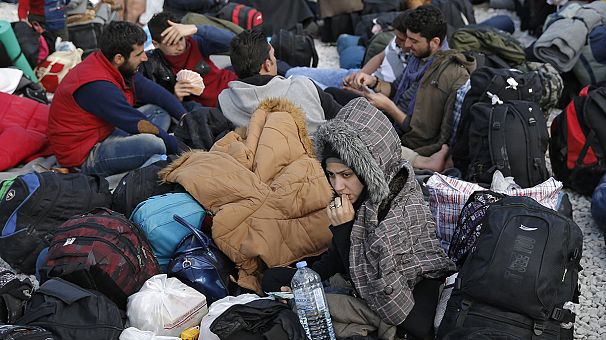
EU has 10 days to see progress on migrant crisis or Schengen unravels: EU commissioner

BRUSSELS (Reuters) – European Union has 10 more days to see significantly lower inflows of migrants and refugees from Turkey “or else there is risk the whole system will completely break down”, EU Migration Commissioner Dimitris Avramopoulos said on Thursday.

Avramopoulos was speaking after the bloc’s justice and home affairs ministers met in Brussels on Thursday in an effort to put a European solution to the crisis in place. A growing number of EU states are resorting to unilateral border tightening, unraveling the continent’s free-travel Schengen zone.

The study estimated that under a worst case scenario, in which the reintroduction of controls at EU borders pushed import prices up three percent, the costs to the bloc’s largest economy Germany could be as much as 235 billion euros between 2016 and 2025, and those to France up to 244 billion.

At a minimum, with import prices rising one percent, the study showed that a breakdown of Schengen would cost the EU roughly 470 billion euros over the next decade.

The cost would climb to 1.4 trillion euros, or roughly 10 percent of annual gross domestic product (GDP) in the 28-member EU bloc, under the more dire scenario.

“If border controls are reinstated within Europe, already weak growth will come under additional pressure,” said Aart De Geus, president of Bertelsmann.

Schengen was established over 30 years ago and now counts 26 members, 22 of which are EU members. But the system of passport-free travel has come under severe pressure over the past half year due to a flood of migrants entering Europe, mainly from the Middle East and Africa.

To stem the tide and to ensure they have an overview of who is entering their territory, many countries within Schengen have reintroduced border controls in recent months, leading to fears the whole system could collapse.

Underscoring the urgency of the issue, Germany’s Interior Minister Thomas de Maiziere told public broadcaster ARD on Sunday that EU member states, which have been squabbling for months over how to tackle the migrant crisis, must agree a common approach within two weeks if they wanted to avoid such a fate.

In addition to being a devastating symbolic setback for Europe, a collapse of Schengen would increase the amount of time it takes for goods to be transported across European borders, raising costs for companies and consumers.

The Bertelsmann study, conducted by Prognos AG, estimated that the minimum costs to Germany and France would be 77 billion euros and 80.5 billion euros, respectively, over the period to 2025.

A collapse of Schengen would also increase costs for countries outside the zone, with the combined burden on the United States and China over the next decade estimated at between 91 billion and 280 billion euros, according to the study.

More here.

*** EU’s migration system close to ‘complete breakdown’

EuroNews: The EU’s migration system is on the point of complete breakdown, according to a top European Commission official.

Dimitris Avramopoulos, the European Commissioner for migration, issued the stark warning after a meeting between EU interior ministers on Thursday.

“In the next ten days, we need tangible and clear results on the ground, otherwise there is a danger, there is a risk that the whole system will completely break down. There is no time for uncoordinated actions,” he told reporters in Brussels.

A number of EU countries have introduced border checks amid disagreements over how to best handle the huge influx of refugees and migrants into Europe.

Austria irked some EU officials by calling a mini summit with Western Balkan nations – without inviting Greece or Germany

The Austrian government has also set a daily cap on how migrants per day are allowed to enter the country, ignoring a warning from European Commission lawyers

“We have to recover our ability to act – and that will only be possible when the European external border is protected,” said Johanna Mikl-Leitner, the Austrian interior minister.

“If Greece stresses over and over again that it is not possible to protect the Greek border…we have to ask the question if it’s possible that the external border of the Schengen area stays in Greece.”

The Schengen area is a passport-free travel zone including 26 countries, of which 22 are EU member states.

But the migration crisis, which saw more than a million people reach Europe last year, has left some observers to question whether the whole system may be at risk.

The influx of migrants has exposed divisions between EU governments, which are trading accusations of blame and resulting beggar-thy-neighbour policies to tighten border controls.

Belgium became the seventh Schengen member on Wednesday to introduce border checks as it became clear that a court in Lille would order the partial demolition of the infamous Calais ‘Jungle’ refugee camp.


For Afghanistan, we Need Charlie Wilson

Anyone in Congress remember Charlie Wilson without the booze and women of course. Why you ask? Deja Vu for sure….1980.

While Russia has won Syria, could it be they are about to declare victory in Afghanistan as well?

From Russia with Bullets: Moscow Gifts Kabul 10,000 AK-47s


TheDiplomat: Wednesday, Afghanistan accepted a gift of 10,000 AK-47s and millions of rounds of ammunition from Russia. In recent months there has been much discussion about increased Russian engagement with Afghanistan, although Moscow’s cooperation with Washington’s initiatives–such as peace talks with the Taliban–remains seemingly out of the question.

Speaking at a ceremony to accept the weapons gift, Afghan National Security Adviser Mohammad Hanif Atmar said: “This important donation is from an important friend of Afghanistan in a crucial time for Afghanistan and the region.”

Twenty-seven years ago this month, the final Soviet troops withdrew from Afghanistan, where they’d been fighting a war for a decade. The communist government of Muhammad Najibullah, which they left in Kabul held out for three more years until the collapse of the Soviet Union cut off the financial inflow from Moscow, estimated at $3-4 billion annually, and the mujahedin closed in. More here.

Sidebar: The Afghan forces and the United States have pulled back from Helmand Province….

Russia Pulls Back From Cooperating With U.S. on Afghanistan

KABUL, Afghanistan — For all the conflicts in the world in which Washington is at odds with Moscow, the deteriorating security situation in Afghanistan has been one area where the Obama administration’s interests and Russia’s concerns coincide.

Disputes over the wars in Ukraine and Syria had not stopped the governments from cooperating on counternarcotics and securing military supply lines. But after initial success on those fronts, Russia now seems to be disengaging with both the United States and the American-backed Afghan government.

On an old Cold War battlefield where Russia fought a nearly decade-long war against United States-supplied fighters, Moscow has a new strategy: the cold shoulder.
“We won’t join the useless events, and we’ve already told the Americans,” President Vladimir V. Putin’s envoy to Afghanistan, Zamir N. Kabulov, told Russian state news media this month. Russia, he said, would sit out any talks between the Taliban and the Afghan government in Kabul, backed by the United States, Pakistan and China.
“Honestly speaking, we’re already tired of joining anything Washington starts,” Mr. Kabulov said. The Kremlin, he added, “has no desire to participate in what the Americans organize ‘on the fly’ just for their own pre-election interests and where they give us the role of extras on the set.”
The government of Mr. Putin has instead decided to address on its own what it sees as the immediate security threat from the chaos in Afghanistan and the emergence there of militants other than the Taliban, especially those from the Islamic State.
Russia has reinforced its largest foreign military base in Tajikistan, along the border with Afghanistan, and the Russian military has held regular exercises with Tajik soldiers. The Kremlin has committed $1.2 billion to train and equip the Tajik Army, forming a new bulwark in Central Asia north of Afghanistan.

Mr. Kabulov also recently disclosed that Russia had opened direct channels to the Taliban to exchange information about militants in northern Afghanistan allied with the Islamic State. (The Taliban have denied being in touch with Moscow.)
Afghan officials worry that a breakdown of consensus among the international powers with an interest in Afghanistan, and the establishment of direct contacts with those governments and the insurgent Taliban, would undermine the government in Kabul.
They are also concerned that the Russian government’s recent moves are motivated by forces outside their control, such as a lack of a clear American strategy and Mr. Putin’s tense relationship with the United States.
“Bilaterally, we have struggled to convince the Russians on certain issues because they increasingly see us only as part of this larger game with the United States,” said one senior Afghan official, who spoke on the condition of anonymity for fear his comments would further stoke the mistrust in Moscow.


The Kremlin’s recent moves are seen as a shift from the role Russia played during 14 years of NATO presence in Afghanistan — one of guarded cooperation marked by frequent contradictions.

Even as Moscow was alarmed by the presence of nearly 140,000 Western troops in its backyard, often deriding the mission as a failure, Mr. Putin’s government was happy to let the American-led coalition contain the common threats posed by Al Qaeda and the Taliban, and by drugs, of which Afghanistan produced plenty that are trafficked and consumed in Russia.
In a little more than a year since the end of the NATO combat mission in Afghanistan, the fighting here has intensified, shifting to the north along the 1,250-mile border with three Central Asian states Russia still considers as its underbelly. The Taliban briefly overran the city of Kunduz last fall.
The top American general here offered contradictory statements about the insurgent group. In a hearing at the Senate Armed Services Committee this month, the commander of United States and NATO forces in Afghanistan, Gen. John F. Campbell, said, “Our country has made a decision that we are not at war with the Taliban.” Just days later in Kabul, he said the Taliban were the enemy.
The Russian government does not fear a direct threat from the Taliban as much as it is worried about Central Asian fighters who could use Afghanistan as a staging ground to penetrate Russia’s borders. One group of particular concern is the Islamic Movement of Uzbekistan, some factions of which have pledged allegiance to the Islamic State. Afghan officials have also reported the presence of militants from Tajikistan, Chechnya and Chinese Uighurs, many who relocated to Afghanistan from Pakistan’s tribal areas.
Fighting drug trafficking rings that partially fund the Afghan insurgency had been an area of common interest for the Russians and the Americans, said Yuri V. Krupnov, an adviser to the head of Russia’s antidrug agency, Viktor P. Ivanov. But that stopped when the United States Treasury Department in 2014 imposed sanctions on Mr. Ivanov, a close associate of Mr. Putin’s.
“Washington had no dialogue with us, and just asserted its interests and sovereignty, and was uninterested in the views of Russia or anybody else,” Mr. Krupnov said, adding, “The Obama administration buried this promising line of cooperation. All room for cooperation is exhausted.”
The alliance between the foreign militants in Afghanistan may not be as threatening as Russia fears. In Badakhshan Province, the number of foreign fighters is estimated to be about 500, some traveling with their families, Taliban commanders there say. The largest group is Tajik fighters, followed by Uzbeks from the Islamic Movement of Uzbekistan. Chechens and Uighurs have a smaller presence.
The militants from Central Asia have been problematic to their Afghan Taliban guests, the local commanders say, because they use harsher methods, and, somewhat scandalously, are more relaxed in how they observe Islam. On top of all of that, the local Taliban have grown furious that some of their guests have recently warmed toward the Islamic State, which they see as intruding on their turf.
“The Quetta Shura insisted that we treat them nicely, that they need our cooperation, but they have a lot of shortcomings,” said Malawi Amanuddin, the Taliban’s shadow governor in Badakhshan. “They say they are waging jihad, but their women here walk around not covering themselves according to Islamic hijab.”
It is these internal rifts, perhaps, that have encouraged Russian officials to explore their channels directly with the Taliban and drive a wedge deeper between the militants who threaten Russia and their Afghan hosts.
“The official position, and this is from the Ministry of Foreign Affairs, is that Russia is risking a lot and has nothing to gain” from cooperating with the United States, Aleksei V. Malashenko, a researcher at the Carnegie center in Moscow, said in a telephone interview. “We couldn’t agree on Georgia, on Ukraine and on Syria; why get involved in another conflict where we cannot agree?” he said, describing the Russian position as “let the Americans boil.”