
Beyond U.S. Campaigning: ISIS Killed 300

ISIS executes 300 Iraqis in Mosul, including activists and former soldiers

ARA News 

ERBIL Extremists of the Islamic State (ISIS) have executed some 300 Iraqi people in Mosul city of the northwestern Nineveh province, an official said on Sunday.

The victims included civilian activists and former members of the Iraqi army and national security.

Official spokesman of the Iraqi army in Nineveh Mahmoud Souraji confirmed the execution of 300 people at the hands of ISIS militants in Mosul over the last few days.

“The terror group has conducted the executions at different locations across Mosul,” he said. “Most of the victims were killed inside the group’s detention centers in the city and its surroundings.”

According to Souraji, who spoke to the local Sumariyah television on Sunday, the majority of those executed were former members of the national security and the Iraqi governmental troops.

“Among them were also a number of media activists who have been detained by the terror group (ISIS) last week in separate raids,” the official said.

Souraji, who based his information on ISIS-linked sources in Mosul, pointed out that the executions were carried out by firing squad.

The victims were reportedly exposed to torture at the hands of foreign jihadis of ISIS before being executed. They have been buried in mass graves in Mosul suburb.

*** While the State Department says much of what is on the internet about Islamic State winning is false, heh….well, killing 300 is significant. Further, what is the leadership of Islamic State doing now….

An Account of Abu Bakr al-Baghdadi & Islamic State Succession Lines

by Aymenn Jawad Al-Tamimi

Abu al-Waleed al-Salafi, whose complete history of Jamaat Ansar al-Islam I have previously translated, has also written Twitter essays on Islamic State leader Abu Bakr al-Baghdadi and compiled lists of names of individuals who came to hold key positions within the ranks of the Islamic State and its leaders. I have translated these essays below.

I do not necessarily vouch for all the information presented here and working out exact datings can be difficult. Nonetheless I have tried to summarize the most important information in a table below. Explanatory notes of my own occur in square brackets. If more data become available I will add them to this post as updates.

Readers should pay particular attention to cases of overlap: that is, where an individual holds more than one leadership position in the organzation. Of interest also is the shift to the establishment of a military council during Abu Bakr al-Baghdadi’s tenure as overall leader.

Leader Abu Mus’ab al-Zarqawi Abu Hamza al-Muhajir Abu Omar al-Baghdadi Abu Bakr al-Baghdadi
Overall deputy Abu Anas al-Shami, Abu Muhammad al-Lubnani, Abu Talha al-Ansari Abu Abd al-Rahman al-Fellahi

Abu Hamza al-Muhajir

Hajji Bakr

Abu Muslim al-Turkomani

Abu Ali al-Anbari [aka Abu Abd al-Rahman al-Afri]
Iraq deputy Abu Muslim al-Turkomani Abu Fatima al-Jiburi
Syria deputy Abu Ali al-Anbari Abu al-Athir al-Absi [previously linked to Syrian Majlis Shura al-Mujahideen & ISIS wali of Aleppo province]
War Minister (followed by head of Military Council) Abu Hamza al-Muhajir Al-Nasir li-Din Allah Abu Sulayman Hajji Bakr

Abu Abd al-Rahman al-Baylawi

Abu Muslim al-Turkomani

Abu Saleh al-Obaidi

Hay’at al-Arkan Abu Ahmad al-Alwani Abu Omar al-Hadithi
Media Abu Maysara al-Iraqi Abu Muhammad al-Mashhadani

Abu Abdullah al-Jiburi/Ahmad al-Ta’i

Abu Muhammad al-Adnani

Abu al-Athir al-Absi/Bandar Sha’alan/Dr. Wa’el al-Rawi

Security Abu Muhammad al-Lubnani Abu Ahmad al-Badri [Syria]

Abu Omar al-Turkomani [Iraq then general]

Abu Muhannad al-Suwaydawi

Abu Ali al-Anbari

Iyad al-Jumaili

Shura Council Abu Mus’ab al-Zarqawi Abu Abdullah al-Baghdadi

Abu Abd al-Rahman al-Ansari

Abu Arkan al-Ameri Abu Bakr al-Khatouni

Translation of Text by Abu al-Waleed al-Salafi

-Abu Bakr al-Baghdadi is not a person of random pulse but rather has attained knowledge that his peers could not enjoy since he has known well the schools of Sufi thought and the Ikhwan [Muslim Brotherhood] and he was a jihadi before the fall of Baghdad originally.

-Abu Bakr al-Baghdadi has an attractive charisma and a calm composure that is impossible to compare, for you find him speaking in high quality language, attractive calmness and the tone of the one victorious even in the harshest circumstances.

– Psychological analysis of Abu Bakr al-Baghdadi’s personality points to a truth not accepting debate: and it is that he is a personality that does not speak frivolously, but rather he is a man who does not speak a word unless he implements it.

Abu Muhammad al-Adnani “seeks to inspire zeal in the soul.”

– I have analysed the speeches of Baghdadi and Adnani psychologically more than once, and I found a result: that Adnani’s speech seeks to inspire zeal in the soul, while Baghdadi’s speech seeks to inspire calm.

– Abu Bakr al-Baghdadi, despite the fact that he studied at the hand of the Ikhwan and the Maturidis in university, apart from the fact that he took their thoughts to benefit from them, but he was very different from them in ideology.

– Baghdadi was known for his firmness in the field of da’wa since the days of the Ba’ath in Iraq, and this personality of his enabled him to be a Shari’i official. Then he gradually moved up the ranks till he reached the leadership.

– Baghdadi did not suddenly attain the leadership or in the darkness of oppression, as some journalists narrate, but rather he gradually moved up in a number of positions until he reached the leadership, and this is a well-known matter.

– Baghdadi got involved in jihadi formations since the fall of Baghdad in 2003, and it is not as some reports relate that he was far from the field.

– Baghdadi was a student of Shari’i knowledge, and he combined academic study in university with study at the hands of the mashaykh, and he was outstanding in study of the Qur’an.

Mugshot of Abu Bakr al-Baghdadi, 2004.

– Baghdadi was from Jaysh Ahl al-Sunna wa al-Jama’at, then [late 2006] he became a Shari’i official in the Dawlat al-Iraq [Islamic State of Iraq], then courier official, then an official of the Shari’i committees, then subsequently amir of the Dawla.

– Baghdadi sought ‘Ilm [Islamic knowledge] at the hands of mashaykh from many schools of thought, and this was a cause in the formation of his personality, as he sought ‘Ilm at the hands of Abu Abdullah al-Mansur, the amir of Jaysh al-Mujahideen [cf. here]

– Before the fall of Baghdad, Baghdadi had an Islamist direction that no one could condemn, but rather he was given the nickname by those who know him as “The Believer,” not to mention his status as a preacher in one of the mosques of Baghdad.

– Baghdadi operated in the ranks of ‘Ansar al-Tawheed’, one of the formations of Jaysh al-Mujahideen, while Baghdadi’s sister married the amir of this faction [c. 2005]

– Baghdadi entered prison in 2004, and he was imprisoned in Bucca in Basra, south of Iraq. And his entry into prison was a new point in his life that drew up his future subsequently.

– Baghdadi’s charisma made him qualified to be a person of importance inside the prison, for he was the side that would resolve disputes between adversaries, just as he would guide them in prayer.

– Baghdadi’s personality made the situation suitable for there to be a type of connection between military officers and Shari’i leaders in al-Qa’ida, especially after the repentance of these officers from the Ba’ath. READ MUCH MORE HERE.
The Kremlin’s War Propaganda

Many in the West, from leaders to citizens are often freaked out at what is published on tens of thousands of websites including media sites. One can never know the extent of propaganda much less which are the nuggets of truth. When it comes to Russia, they are professional trollers, ambassadors of information warfare. Verification of information, checks on people, dates and locations are required. Admittedly, this is almost impossible due to a aggressive news cycle that never ends, events occur too fast. Yet, advancing propaganda is done at a peril to false information. Below will describe this dynamic.

Another reference to an article is also posted below that does explain Ukraine and Crimea demonstrating the depths of concocted and false information.

MoscowTimes: Several years ago, I traveled to the taiga in the republic of Altai with a former KGB officer who had worked in military propaganda during the war in Afghanistan. While we drank tea beside the campfire one night, he described in detail the principles of military propaganda. Today, I see that the Kremlin is implementing all of those principles in its information campaign surrounding the Ukrainian crisis.

In authoritarian countries like Russia, independent information is losing out to mass propaganda, and whole populations have become victims of brainwashing.

The main objective of war propaganda is to mobilize the support of the population — or in the case of Ukraine, an expansionist campaign. It should also demoralize the enemy and attract the sympathy and support of third countries. Widespread support among Russians for the military operations in Crimea and its ultimate annexation indicate that the Kremlin has succeeded in its first two objectives but has gained little ground on the third.

Moscow accomplished this by using seven basic methods:

First, it is necessary to convince the general population that the government is acting correctly and that the enemy is guilty of fomenting the crisis. That is why the Kremlin places the full blame for the entire Ukrainian crisis on the Maidan protesters and what it calls the Western-backed Ukrainian opposition. Moscow conspicuously leaves out the fact that former Ukrainian President Viktor Yanukovych himself provoked the crisis by ruining the country’s economy, double-dealing with the European Union and engaging in corrupt deals while also permitting extreme corruption among members of his family and inner circle.

To incite hatred for the enemy and deflect attention away from Yanukovych’s flaws, the Kremlin says the new government in Kiev, dominated by the main opposition groups, is linked to everything that is despised and vilified in Russia: fascists, extremists, the U.S. and the West in general. It is necessary to paint the Western enemy as the aggressor.

Second, the Kremlin created myths about the terrible persecutions of the Russian-speaking population in Ukraine, particularly in Crimea. Federation Council speaker Valentina Matviyenko even came up with a story about victims of such aggression that nobody has been able to corroborate, saying there were casualties among locals in Simferopol from a Kiev-backed attempt to take over a police building. The claim was never verified.

The main idea behind such claims is to find just the right balance between truth and fiction. Nazi Propaganda Minister Joseph Goebbels once said that if you add one-fourth of the truth to three-fourths of a lie, the people will believe you. Hitler and Stalin applied the principles and techniques of war propaganda on a national scale.

Third, the enemy must be demonized. Just about anything will work, from alleging that one of the leaders of the opposition, acting Prime Minister Arseniy Yatsenyuk, is a Scientologist, or showing medical records that another leader was treated for a psychological disorder. NTV and other state-controlled television stations have been at the forefront in spreading these smear campaigns.

If an actual radical or nationalist can be found among the enemy’s ranks, such as Right Sector leader Dmitry Yarosh, this is like manna from heaven for propagandists. Although they represent fringe factions, they are turned into the face of the enemy. The entire opposition, which in reality includes a wide range of moderate forces,  is presented as “fascist” and “neo-Nazi.”

Fourth, the authorities always disguise their aggressive actions as a humanitarian mission. “We have to protect defenseless Russians at the hands of fascists. They are in danger of being beaten and killed,” propagandists say.

Fifth, the Kremlin has attributed its own cynical methods to the enemy. For example, if Moscow intends to annex part of a brotherly, neighboring country, it must first accuse the U.S. and the authorities in Kiev of striving for world domination and hegemony, while depriving Russia of its ancestral territories and its righftful sphere of influence in its own backyard.

Sixth, the authorities must present all of their actions as purely legal and legitimate, and the actions of the enemy as gross violations of international law. That is why President Vladimir Putin refers to the “legitimate and inherent right of Crimeans to self-determination” — the same right he strongly denied to the people of Chechnya and Kosovo.

According to this logic, the parliament’s unanimous vote to strip Yanukovych of his authority on Feb. 22 was illegal, while the referendum for secession in Crimea — which violated the Ukrainian Constitution — is completely legal and legitimate.

Seventh, the success of war propaganda depends entirely on its totalitarian approach. The authorities must shut down every independent media outlet capable of identifying and exposing the propagandists’ lies. That is why Ukraine blocked Russian television. It also explains why Moscow is cracking down on Dozhd television and why it recently replaced the head of Lenta.ru with a ­Kremlin-friendly editor-in-chief.

Information warfare is well known throughout the world and is used by all leading countries. The U.S. government successfully used the same principles when it bombed Yugoslavia and invaded Grenada, Panama and Iraq. The difference, of course, is that the U.S. government does not own mainstream media outlets, so their ability to manipulate the truth is less effective.

Take, for example, the Iraqi invasion in 2003. Within a relatively short time period after the invasion was initiated, leading Western media went the complete other direction by criticizing the U.S. government for misleading the public on the Iraqi weapons of mass destruction that were never found. This self-correction process does not occur in Russia, where the main media outlets are state-controlled.

In authoritarian countries like Russia, independent information is losing out to mass propaganda, and whole populations have become victims of brainwashing. Politicians speak about the need for peace even while stirring up war hysteria. And that means the likelihood of war is far closer and more real than many might imagine.

Vladimir Ryzhkov, a State Duma deputy from 1993 to 2007, is a political analyst.

*** Ukraine war points all the way to Putin, even while he played a role of a victim.

dve-bs

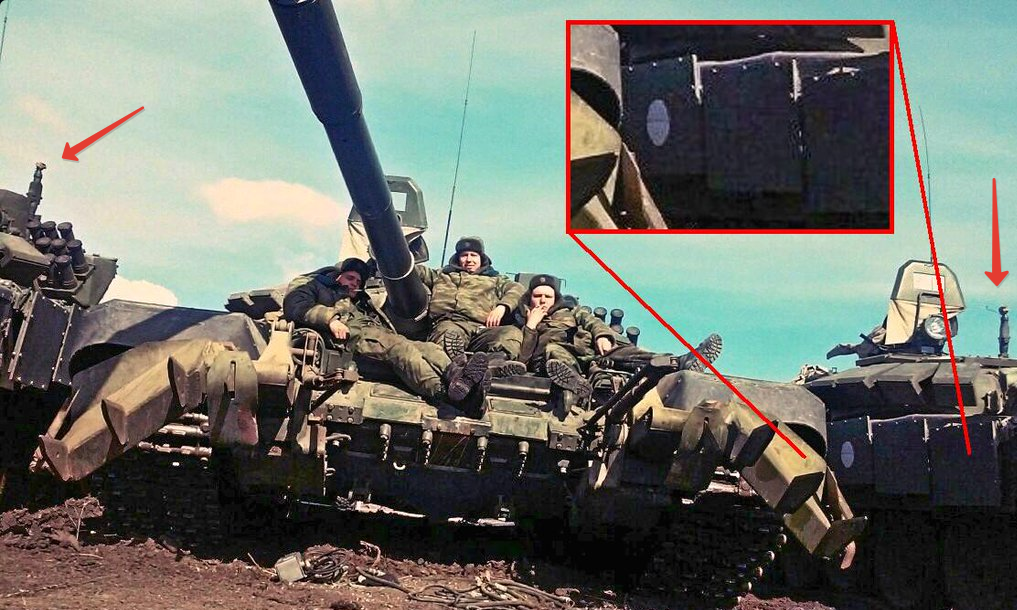
In February 2015, pro-Russian separatists aided by Russian troops took the strategic railway hub of Debaltseve in Eastern Ukraine, forcing Ukrainian forces to withdraw.

This investigation intends to prove the decision to take Debaltseve and close the “Debaltseve pocket” was taken at the highest level of the Russian state. Explaining Russian leadership’s actions requires a look back to the international situation in late 2014 — early 2015

(full summary with proof and photos)

After Angela Merkel canceled the Normandy format meeting in Astana and Vladimir Putin wasn’t invited to the 70th anniversary of Auschwitz liberation, a major escalation started in Donbass (mid-January 2015). The main fighting took place around Debaltseve, which is a major transportation hub, giving Donetsk a railway link with Luhansk and Russia. Russia’s 5th and 6th Separate Tank Brigades were proven to have taken part in the battle. During the battle, a serviceman of the 6th brigade Evgeniy Usov got a shrapnel wound and arrived to Moscow’s military hospital named after Burdenko no later than February 14, 2015. No later than February 21, 2015, he was visited by Russia’s Defense Minister Sergey Shoigu, who awarded Usov with a watch bearing a Russia’s Ministry of Defense logo.

We believe the facts mentioned above prove that the decision to escalate the conflict in Ukraine and attack Debaltseve was taken in the highest ranks of the Russian authorities. Given that the Debaltseve offensive started while Russia’s and Ukraine’s presidents were conducting negotiations, it is hard to believe this decision could have been taken by anyone than Russia’s president Vladimir Putin. Such an initiative from Russia’s Minister of Defense could have severely hampered Putin’s negotiation efforts, which is why we believe that the decision to attack Debaltseve and close a pocket around Ukrainian forces was personally taken by Russia’s President Vladimir Putin. This decision was a reaction to the actions of the Normandy Four and was used as leverage against Ukraine’s President Petro Poroshenko and leaders of the West. Full article here.

The DoJ Hacked, DHS Files Compromised

Hackers leaked DHS staff records, 200GB of files are in their hands

A hacker accessed an employee’s email account at the Department of Justice and stole 200GB of files including records of 9,000 DHS staffers and 20,000 FBI employees.

SecurityAffairs: Yesterday, the data related a Department of Homeland Security (DHS) staff directory were leaked online, a Twitter account shared the link to an archive containing 9,355 names.

The responsible for the data leakage first contacted Motherboard to share the precious archive.

Each record of the DHS Staff Directory includes name, title, email address, and phone number.

Going deep in the archive it is possible to note that it includes information of DHS security specialists, program analysts, InfoSec and IT and also 100 employees with a title “Intelligence”.

The same Twitter account has announced later the imminent release of an additional data dump containing 20,000 FBI employees.

DHS firewall

Are the records authentic?

Motherboard that obtained the archive reached the operations center of the FBI, and in one case the individual who pick up the phone presented himself with the same name associated with that number in the archive. A similar circumstance occurred with a DHS employee, Motherboard so confirmed that the information is legit.

Which is the source of data?

According to Motherboard, a hacker accessed an employee’s email account at the Department of Justice. As proof, the hacker sent the email message to Motherboard’s contributor Joseph Cox directly from the compromised account.

“A hacker, who wishes to remain anonymous, plans to dump the apparent names, job titles, email addresses and phone numbers of over 20,000 supposed Federal Bureau of Investigation (FBI) employees, as well as over 9,000 alleged Department of Homeland Security (DHS) employees, Motherboard has learned.” wrote Cox in a blog post.

“The hacker also claims to have downloaded hundreds of gigabytes of data from a Department of Justice (DOJ) computer, although that data has not been published.”

The hacker first tried to use the compromised credentials to access a DOJ staff portal, but without success, then he called the department directly and obtained the access through social engineering techniques.

The hacker accessed the DoJ intranet where the database is hosted, then he downloaded around the, out of 1TB that he had access to.

“I HAD access to it, I couldn’t take all of the 1TB,” the hacker told to MotherBoard.

The hackers confirmed his intention to release the rest of the data in the near future.Which is the motivation behind the attack?

It is not clear at the moment why the hacker released the archive, surely it’s not financially motivated. The hacker only left the following message when has leaked the data-

“This is for Palestine, Ramallah, West Bank, Gaza, This is for the child that is searching for an answer…” which are the verses of “Long Live Palestine”

The only certainty right now is that similar incidents are becoming too frequent, apparently the government staff is not properly trained on the main cyber threats or the hacking technique. Similar incidents show the lack of knowledge on the most basic security measures.
Whenever a hacker leaks so sensitive data, I think the number of his peers who had access to the same information with the intent to use them in other attacks or resell them, perhaps to a foreign government.

Pierluigi Paganini

*** As a reminder, in 2014 a much more dangerous hack intrusion happened at the DHS:

The Department of Homeland Security (DHS) alerted critical infrastructure operators to recent breaches within the sector – including the hack of a U.S. public utility that was vulnerable to brute-force attacks.

This week, the Industrial Control Systems Cyber Emergency Response Team (ICS-CERT), a subgroup of DHS, revealed information about the incidents in a newsletter (PDF).

According to ICS-CERT, industrial control systems were compromised in two, new incidents: one, involving the hack of an unnamed public utility, and another scenario where a control system server was remotely accessed by a “sophisticated threat actor.”

After investigating the public utility hack, ICS-CERT found that the system’s authentication mechanism was susceptible to brute-force attacks – where saboteurs routinely run through a list of passwords or characters to gain access to targeted systems. The control system used a simple password mechanism, the newsletter revealed.

In

Hey Janet and Jeh, How do you Square This?

May 2015, speech in part: DHS Secretary Jeh Johnson, “The FBI continues to identify, investigate, interdict and help the Department of Justice prosecute attempted terrorist plots to the homeland. With the help of DHS, the FBI has also made a number of arrests of those who attempt to become foreign fighters, before they can get on an airplane and leave the country.

In reaction to terrorist groups’ public calls for attacks on government installations in the West, and following the attack last fall in Ottawa, I directed that our Federal Protective Service enhance its security and presence at federal office buildings around the country. This enhanced security remains in place.

In reaction to terrorists’ public calls for attacks on U.S. military installations and personnel, the Department of Defense has enhanced its security at bases in the U.S.

Given the new reality of the global terrorist threat — which involves the potential for small-scale homegrown attacks by those who could strike with little or no notice, we are working in closer collaboration with state and local law enforcement. Given the nature of the evolving threat, the local cop on the beat may actually be the first to detect a terrorist attack on the homeland.

So, as often as several times a week, the Department of Homeland Security and the FBI share terrorist threat information and intelligence with Joint Terrorism Task Forces, state fusion centers, and local police chiefs and sheriffs.” Full speech here and note the some of the attendees.

Maybe we should be seeking a subpoena of Janet Napolitano and Jeh Johnson.

***

Enter Philip Haney, again:

DHS Official: I Was Ordered to Purge Records of Islamic Terror Ties
A veteran official with the Department of Homeland Security claims he and other staff were ordered to destroy records on a federal database that showed links between possible jihadists and Islamic terrorist groups.

“After leaving my 15-year career at DHS, I can no longer be silent about the dangerous state of America’s counter-terror strategy, our leaders’ willingness to compromise the security of citizens for the ideological rigidity of political correctness—and, consequently, our vulnerability to devastating, mass-casualty attack,” the former employee, Patrick Haney, wrote in an explosive column that was published late Friday on The Hill website.

Haney alleges that the Obama administration has been “engaged in a bureaucratic effort” to destroy the raw material and intelligence the Department of Homeland Security has been collecting for years, leaving the United States open to mass-casualty attacks.

His story starts in 2009, when during the holiday travel season, a 23-year-old Nigerian Muslim,  Umar Farouk Abdulmutallab, boarded Northwest Airlines Flight 253, with explosives packed in his underwear and the hopes of slaughtering 290 travelers flying on Christmas Day from the Netherlands to Detroit, Michigan. Passengers subdued the jihadist and he was arrested, thwarting the plot.

After the attempt, Haney writes, President Barack Obama “threw the intelligence community under the bus for its failure to ‘connect the dots,’ saying that it was not a failure to collect the intelligence that could have stopped the attack, but rather “‘a failure to integrate and understand the intelligence that we already had.'”

But most Americans were not aware that the Department of Homeland Security’s employees suffered enormous damage to their morale from Obama’s words, Haney said.

Further, many were infuriated “because we knew his administration had been engaged in a bureaucratic effort to destroy the raw material — the actual intelligence we had collected for years, and erase those dots. The dots constitute the intelligence needed to keep Americans safe, and the Obama administration was ordering they be wiped away.”

Just one month before the attempted attack, Haney said, his DHS supervisors ordered him to either delete or modify the records for several hundred people tied to Islamist terror organizations, including Hamas, from the Treasury Enforcement Communications System, the federal database.

Those records give DHS the ability to “connect dots,” explained Haney, and every day, the agency’s Custom and Border Protection officials use the database while watching people who are associated with known terrorist affiliations seeking patterns that could indicate a pending attack.

“Enforcing a political scrubbing of records of Muslims greatly affected our ability to do that,” said Haney.

“Even worse, going forward, my colleagues and I were prohibited from entering pertinent information into the database,” he wrote.

And even weeks after the attempted Christmas Day attack, Haney said, he was still being ordered to delete and scrub terrorists’ records, making it more difficult to connect dots in the future.

The number of attempted and successful Islamic terrorist attacks kept increasing, notes Haney, including the 2013 Boston Marathon bombing, conducted by Dzhokhar and Tamerlan Tsarnaev; Muhammad Youssef Abdulazeez’ shooting of two military installations in Chattanooga, Tennessee last year; the attack conducted by Faisal Shahzad in May 2010; Detroit “honor” killer Rahim Alfatlawi in 2011; Amine El Khalifi, who plotted to blow up the U.S. Capitol in 2012; and Oklahoma beheading suspect Alton Nolen in 2014.

He believes it is “very plausible” that one or more of those homeland incidents could have been prevented, if DHS subject matter experts had been allowed to keep doing their jobs.

“It is demoralizing — and infuriating — that today, those elusive dots are even harder to find, and harder to connect, than they were during the winter of 2009,” Haney concluded.


The Unknown Soldier in St. Louis

Hey VA, how about you prove he wasn’t in the service…sheesh

1944, Philippines: Emil Limpert

He was patched up in a jungle tent and sent back to his unit. He received help from a veterans group and was able to provide plenty of documentation.  Limpert, a bit of a packrat, saved all his old paperwork.  He had his discharge papers, a roster of those injured in the attack, and the X-ray taken of his leg after he returned home.  On top of that he had the two bronze stars and the purple heart he earned in combat.

All that information was, with the help of a veterans service group called AMVETS, was sent to the Veteran’s Administration to apply for benefits.  After two months of waiting he received a letter from the VA saying he needed to provide more proof.

VA demands proof World War II combat vet with Purple Heart served in military

Fox2: The Veterans Affairs Department refuses to pay benefits to a World War II vet in his 90s who was wounded in combat and earned a Purple Heart.

Fox 2 Now in St. Louis reports that after Emil Limpert submitted an application for benefits to the Department of Veterans Affairs he was told he needed to provide more proof that he was in the military.

“I get this letter that says we can’t accept it because we’ve got no record of you being in the service,” he told the station. “I guess I’m the unknown soldier.”

He was wounded in a foxhole in the Philippines in 1944.

“There were four guys in there, and two guys got killed,” he told the station. “And then the other guy, he got his leg… Oh, hell. I guess he lost his leg. It was slit in four places where a grenade hit between us and I got one in my leg.”

Limpert said he waited until now to apply for benefits because he is down to nothing.

He and his wife live in an assisted-living facility outside St. Louis.

“We got rid of our car, we got rid of our house,” he said. “I got rid of money I had in bonds and stocks and now I need help.”

His application included plenty of documentation, including discharge papers, the names of his foxhole pals and the X-ray of his wounded leg. The proof also included his Purple Heart and two Bronze Stars he received in the Pacific.

Fox 2 reported the VA letter asks Limpert to submit affidavits from fellow service members, most of whom are dead, or the location of the hospital where he was originally treated.

“There ain’t no hospital,” he told the station. “We were in the jungles.”

The station reported that Limpert’s military records were apparently among the millions destroyed in a massive fire in Overland, Missouri, in 1973.

The station also reported that it sought comment from the VA in Washington without success.

Limpert has now turned to his local senator for help in the matter.